

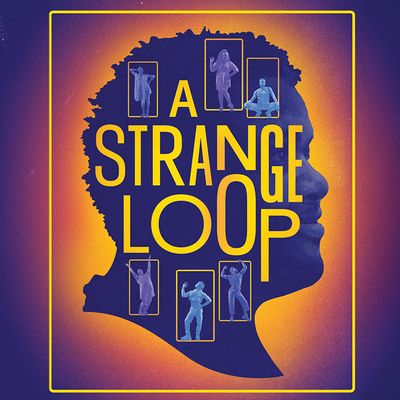
A Strange Loop, the most TONY-nominated show of the season, hits Broadway by storm! This episode features a discussion on this latest hit Broadway show... Read More
From the show: Half Hour with Jeff & Richie (Post-Show Broadway Discussions and Interviews)
Featured Shows
About
A Strange Loop, the most TONY-nominated show of the season, hits Broadway by storm! This episode features a discussion on this latest hit Broadway show. Jeff and Richie dive into a conversation on how meaningful and powerful this show is for our current theatre climate, and how important it is for everyone to see such a moving and groundbreaking piece of American Musical Theatre.
Share with us, your thoughts, on A Strange Loop on our Instagram page. @halfhourpodcast
*This podcast will include spoilers*
Thanks for listening! Please leave us a review with what you think about the podcast.
Follow us on Instagram: @halfhourpodcast
Follow us on TikTok: @halfhourpodcast
Visit our website: www.twoworldsentertainmentllc.com
If you liked this episode, don't forget to subscribe to this podcast and leave us a review.
Share your thoughts with us on this episode below:
On Instagram: @halfhourpodcast
On TikTok: @halfhourpodcast
On our website: www.twoworldsentertainmentllc.com
Transcript
This transcript was automatically generated and might contain errors.
[0:08] Richie Grasso: Hello and welcome to Half Hour, an entertainment podcast through Two Worlds Entertainment.
[0:13] Jeff Malone: I'm Jeff.
[0:14] Richie Grasso: And I'm Richie. Here to bring you all the casual conversations on the show's concerts, music events, and films that we see and observe throughout our career.
[0:23] Richie Grasso: We would like to warn you all that this episode will feature spoilers.
[0:28] Jeff Malone: So if you have not seen the material we are talking about today, we're just warning you.
[0:33] Richie Grasso: You have been warned there will be many spoilers throughout this podcast.
[0:36] Jeff Malone: So you have now been warned.
[0:38] Richie Grasso: Today we are talking about the new Broadway musical, A Strange Loop, that's on Broadway at the Lyceum Theater right now in New York City.
[0:46] Jeff Malone: A Strange Loop has book music and lyrics by Michael R. Jackson.
[0:50] Jeff Malone: It featured choreography by Raja Feather Kelly and direction from Stephen Brackett.
[0:57] Jeff Malone: With 11 Tony nominations, this show has...
[1:00] Richie Grasso: And I think it's the most Tony-nominated show this season.
[1:04] Jeff Malone: A Strange Loop has 11 nominations. They are best musical, best original score, best book.
[1:12] Jeff Malone: We have actor in a leading role, Joaquel Spivey. We have John Andrew Morrison, actor in a supporting role, L. Morgan Lee, actress in a supporting role, Arnou Fall Maldonado for scenic design, Jen Shriver for lighting design, Drew Levy for sound design, Stephen Brackett for director, and Charlie Rosen for orchestration.
[1:32] Richie Grasso: So those are all the Tony nominations that this has.
[1:44] Jeff Malone: And our last show before...
[1:45] Richie Grasso: It was our last pre-Tony show, I think.
[1:49] Jeff Malone: No, we got a lot of shows coming up, I'm sure this summer moving forward, but because Tony Awards are very soon.
[1:53] Richie Grasso: So we really wanted to make sure we got in and saw this before the Tony Awards.
[1:57] Jeff Malone: So, what are your overall thoughts on this as a piece?
[2:00] Richie Grasso: And by the way, it also has won the Pulitzer Prize for drama as well.
[2:03] Jeff Malone: And I'll talk about that over here. So many, so many great things. Overall thoughts was that this is a great musical, it's a great current musical, I think, and super important to be on the stage right now.
[2:16] Richie Grasso: I was very happy that it was on the stage, and I really enjoyed it, like my overall...
[2:16] Jeff Malone: Yeah, I did too. It was a really packed house. There was a lot of laughter, there was a lot of shock moments and gasps.
[2:28] Richie Grasso: I loved seeing us go on the roller coaster of emotions.
[2:34] Richie Grasso: I'm learning a lot. I'm feeling like there's things, some things I'm laughing at, and I'm like, oh, I get this, and then something I was like, oh, this is new to me.
[2:47] Richie Grasso: And I feel like I was on an up and down roller coaster in a good way of feeling like, oh my god, I'm hysterically laughing. And now I'm like, oh, I'm really... this is sad, and now I'm quiet, and now the audience is laughing again, and I think it was just nice to kind of see this journey.
[3:01] Jeff Malone: But really from the lens of a person who is a voice on Broadway that maybe we don't see or hear enough of, and I think that's why this is so important right now, you know.
[3:12] Richie Grasso: I think what's really interesting is we have the writing from Michael R. Jackson here, it was done so well in the sense of the title of the show, A Strange Loop, and what does that mean to you from the beginning?
[3:25] Richie Grasso: And also then what does the material in the show really do for you as an audience viewer?
[3:32] Jeff Malone: And I think, like with the strange loop, I went in like, okay, I don't know what this is. Like, is it going to be a strange loop? Is it your day-to-day thing? Is it happening? Wash, rinse, repeat? Which is kind of like where I feel like we went with the show.
[3:46] Jeff Malone: But also, I think we moved into the material here, and what he's doing with the material is that there's like an uncomfortability factor in the show.
[4:00] Richie Grasso: And you want to kind of laugh in the beginning, and then you start realizing like maybe I shouldn't be laughing.
[4:09] Richie Grasso: And it's not just about like, you know what I'm saying? Like I think that it's like okay, we're going on this strange loop, and I'm trying to put words...
[4:24] Jeff Malone: Okay, okay. Well, I feel like what's happening here is you're taking someone's voice and their journey, and you're taking the audience for the ride, and you don't know who's in the audience, and there's all sorts of people coming to Broadway shows, and you're allowing them to see life from a different perspective from a different lens.
[4:42] Richie Grasso: Something like Rent talked about AIDS in the early to mid-90s, and that was really cutting edge too, because it wasn't being talked about on a major Broadway commercial stage, and that was really cutting edge, right?
[4:53] Jeff Malone: AIDS is talked about a lot in this show too.
[4:56] Richie Grasso: And I think that sometimes some of the biggest and best shows are doing things that have never been done before, and what has come before it.
[5:03] Richie Grasso: And look at what Book of Mormon does. It really pushes the envelope on language, on sexual things and words that are being used, and uncomfortability.
[5:14] Jeff Malone: I remember seeing them, wow, this is really whoa, you know.
[5:17] Richie Grasso: So I think that's what this is going the next step.
[5:20] Richie Grasso: We're going to that, and what do they talk about in this show a lot? He talks about the leading character being an overweight black queer man telling his story about writing a musical in Broadway.
[5:30] Jeff Malone: That is a very specific lens that we're looking at this through.
[5:35] Richie Grasso: And you see how his family reacts to something like that, how the general public, as he's an usher in a Disney show, his name is Usher, he is an usher.
[5:44] Jeff Malone: That's very cool to me.
[5:46] Richie Grasso: I think that's what you were... what I was trying to say there too.
[5:49] Jeff Malone: So you took a right, I don't know why I was drawing a blank.
[5:52] Richie Grasso: I'm just like, yeah, that for it is that exactly what you're saying.
[5:57] Richie Grasso: We've had certain topics, and right now I think black voices want to be heard on the Broadway stage.
[6:04] Jeff Malone: And what Michael is saying here is like, and also big black queer boys want to be heard because he feels like that's not really represented in the industry.
[6:15] Richie Grasso: And it calls it out in the industry. They're shouting that out directly to the audience of how does a white audience or a lot of react to something like this?
[6:25] Jeff Malone: How does an industry that's predominantly white or older, you know, take something like this?
[6:31] Richie Grasso: And I think that we're sitting there in the audience hearing them speak directly to us in many ways at many times, of course, and you see the people that are sitting around you, and how are they kind of handling the material that's happening on stage?
[6:44] Jeff Malone: And one of the things I wrote down that I wanted to say to you is like I think there is the big call out here to the theater industry to actually say, okay, we have to hear everything on the Broadway stage.
[6:58] Richie Grasso: It can't just be the typical golden age musical theater show on there or the movie to musical production, and now it's like, no, this is great writing that was off Broadway, and now it's on Broadway, and there's a certain Broadway audience out there that writers always feel like they need to cater to.
[7:20] Jeff Malone: And this is a show that's saying, no, no, no, we don't need to cater to you all the time.
[7:25] Richie Grasso: You can come and see the show, but maybe be a little bit more aware and open to seeing something like this.
[7:31] Jeff Malone: I thought the way that the show used the voices and the ensemble of the seven of them used speaking, it's Greek chorus, it works in theater, it has worked in theater for hundreds and hundreds of years to bring like a chorus, you know, that is going to play multiple roles in the show.
[7:47] Richie Grasso: That worked really well for me.
[7:49] Richie Grasso: I thought their vocals, the vocal arrangements of them, there's a vocal support of his solo singing, which is most of the show, right?
[7:56] Jeff Malone: Yeah, really worked.
[7:58] Richie Grasso: They brought a lot of humor, they were all representing different parts of his brain.
[8:03] Richie Grasso: Who was good, who was not, who was leading him in the right direction, who was not.
[8:07] Jeff Malone: That was very interesting to me, showing his journey.
[8:10] Richie Grasso: And I thought that was a really smart musical theater tool to use to tell this story.
[8:14] Jeff Malone: Could this show have had 25 people in the ensemble telling these?
[8:18] Richie Grasso: Of course it could have. It could have done traditional.
[8:20] Jeff Malone: We've seen so many shows like that.
[8:22] Richie Grasso: Right. This was something different that we didn't...
[8:23] Jeff Malone: And they didn't need that.
[8:24] Richie Grasso: It's not because it was his thoughts.
[8:27] Jeff Malone: You know, the show really focuses around him and then his thoughts around him.
[8:33] Richie Grasso: It was cutting edge, it was new, it was different.
[8:35] Richie Grasso: It was a way to tell a story that I didn't know what to go in to expect, right?
[8:40] Jeff Malone: And I remember feeling like, oh, this is not your traditional book musical, but it's a musical, and the music is good and it's well written, and I enjoy this, and I'm learning, and we can always be learning as theater goers, as a society, and I'm just learning, and of course, something like this belongs in a commercial space, right?
[8:58] Richie Grasso: And it deserves to run a long time and win all the awards because it's doing cutting edge things.
[9:04] Jeff Malone: I speak of cutting edge, I wanted to talk about something really quick.
[9:06] Jeff Malone: I know we have a few things we want to talk about. I want to talk about the Pulitzer Prize.
[9:10] Jeff Malone: That's a very, very, very, very big award to receive for a play or a musical for drama.
[9:15] Jeff Malone: There have only been 10 musicals to win the Pulitzer Prize in almost 100 years.
[9:20] Richie Grasso: Many, many times it's a play.
[9:22] Jeff Malone: This is the 10th musical to win the Pulitzer Prize.
[9:26] Jeff Malone: I like my theater history all, so you're getting a little theater history lesson here in a minute.
[9:31] Jeff Malone: From the 1930s to the 2020s, there have been only 10 musicals.
[9:35] Jeff Malone: And I'm gonna name the other nine and realize what some of these shows have done in terms of when you hear the name of the show, oh yeah, was that a cutting edge show at the time?
[9:44] Jeff Malone: And by the way, it's roughly every 10 or so years.
[9:49] Jeff Malone: Lately, it's been a little bit of shorter, but from the 1930s all the way up to like recently, it's been about every 10 years a musical gets pulled.
[9:56] Jeff Malone: The first musical to win is in 1932, Gershwin's Under the Icing.
[10:00] Jeff Malone: So Gershwin's, of course, like big name in the 1950s.
[10:03] Jeff Malone: South Pacific wins the Pulitzer Prize in the 1940s, Fiorello, 1962, How to Succeed in Business Without Really Trying, 1976, well, which is a different structure, right?
[10:15] Richie Grasso: For a brawler show, right?
[10:16] Jeff Malone: Yeah, 1976, a chorus line, very different structure of it telling a story, right?
[10:21] Jeff Malone: 1985, Sunday in the Park with George, 1996, Rent.
[10:26] Jeff Malone: 2010, Next to Normal, 2016, Hamilton, and now 2020, A Strange Loop. So, as you can hear, you know, 2020, 2010, 2016, 2020, those are shorter. But when I hear most of those titles, I say, oh, oh yeah, what a groundbreaking piece of theater that was. How do you and by the way, Oklahoma won a special Pulitzer Prize in 1944? So and that was a big deal show too of the time. When you see the longevity of musicals winning Pulitzer Prizes, which are not many, over a hundred years almost, only 10, you realize, oh yeah, like of course A Strange Loop learned from the Jonathan Larsons that came before. Learned from the Sondheims that came before. I saw Rent-esque moments in A Strange Loop. I totally saw you.
There were Sondheim moments in here. There was such, he is so smart, Michael R. Jackson, to have written this piece and learned. There's a lot of Company-esque vibes here with these vignettes and stylizing it like that, having this Greek chorus. It just tweeted. And he knows how to write a musical.
[11:37] Richie Grasso: Yeah. And I think that's what was so beautiful because it was like he's taken so much from what he's learned, and he's been able to add it in great ways to his story. Not just throw it into a musical, but add it to his own story. We, right when we were watching, um, Tick Tick Boom, and they were telling the Jonathan Larson character, right? They're like, well, just write what you know. Yeah. And then he wrote Rent. And I always find that some of the biggest writers and some of their most successful things were things that they knew. When you look at Rent, and that's what he wrote, but he knew. Don't you think this is like exactly like A Chorus Line was from stories of people that he knew? Just tell the story of what you know.
Lynn Manuel's big first groundbreaking piece, In the Heights, that's just what he knew. But what's the thing? I think that's so smart to write what you know and really put your heart into the, but it works when you write what you know, but it also works because he didn't just write this for himself. Right. Everyone goes through a strange loop every single day. And I think that's what's so interesting about this piece. It's like, yes, what we're watching is the strange loop of Usher. But Usher is all of us. Usher is everyone, because everyone goes through their strange loop every single day, but it's just going to be different. And I think that's what's, we all have thoughts. Right. You know, right now you and I have thoughts of what are we gonna say next?
Right. Are we gonna say the right thing? Are we gonna say the wrong thing? And who are we going to please from our actions? Right. And I think that's really what comes down to with Usher. Is like he's trying to please everyone else but himself.
[12:51] Jeff Malone: Yeah. And who keeps finishing last? Right. You know? Right. And the influence his family has, the influence, the random thoughts he has on the subway or when he's writing. And the random person who comes up to him at The Lion King when he's ushering that. But also, how is he supposed to live in society? You know, and I think he takes like, oh, okay, the doctor told me I need to go hook up with someone, or I'm not allowed to listen to this music because it's white girl music, or oh, I have to write this show because my family loves Tyler Perry and Gospel. You know, right? And he doesn't want to do any of that. And of course, speaking of he being Usher is being played right now as Tony nominated is um Jack Will Spivey.
But we did not see him. We saw the understudy, who was Kyle Ramar Freeman, who was amazing. Amazing. I mean, you really are carrying the show and to understudy it. It just opened, you know, to go on. I mean, you can see that they are working the whole time. It was also a show that only ran about an hour and 40 minutes, no intermission, and it felt like it was a law, it felt longer in a good way. I mean, I felt like it was a really fully formed. When I hear of a show that's only 90 minutes or a little over 90 minutes, I'm like, oh, this must be pretty rushed. I didn't feel like it was rushed.
[14:25] Richie Grasso: Um, I know we're jumping around a lot to a lot of different topics here, but I think that another interesting topic is the commentary on people within the LGBTQ community. There's multiple references that Usher has of the white gay man being the top of this, whatever he looks at this community, right? Where, uh, and he doesn't, and he has issues with that, but doesn't necessarily have issues with his inner white girl and how he resonates in a way, or he does in some way, but he resonates with the inner white girl. So there's different types of people that he resonates with and doesn't resonate with, and I think that's really interesting commentary through. If I feel like I kind of received this that way, I think he kind of comes to terms with like he wants to be the, what the inner white girl is, is like it's like the top of that food chain.
Yeah, like the white feminine, like, uh, feminist movement woman is like, what does that mean? And I think he kind of comes to terms with no, that's doing the same thing. Right. If I want to be that, it's still like everyone wants to get to the top.
[15:33] Jeff Malone: Yeah, yeah. You know, and then, and what is at the top? Yeah, yeah. You know, and, and, and what, and I also thought there was a ton of family influence throughout this, too. I thought it was so smart that his family were named after The Lion King characters. Because I was like, they were like Rafiki this and Simba that, or whatever. And I was like, and we're, and I was like, what? It took me a second. I was like, are they referring? Why are they? And I was like, oh, wait, he's an usher on The Lion King on Broadway. And he's also like ushering his family. And he feels like he's this ringleader, sort of usher to these family characters who all have these wild scenes and moments and things that they're saying.
And he, in this piece, equated them to the same character names as The Lion King. I thought that was very interesting. I'm very smart to write it like that. Okay, but did he do that as the show he's writing? Are the family's names are the, because a lot of the times we're going through, it's a, it's like a show within a show within a show. Right, and that's the loop. Yeah. Is that feeling of like where are we now? Are we in the show or are we in the show's show or the next show show show? Where are we in the process? And he's writing it, right? Because one of the things is like, I don't know if the family scenes are ever real or if those are just his thoughts, or if they are just what he's been through in the past.
[16:51] Richie Grasso: I think some of those scenes, like he's the conversations with the mother, the conversations with the father. Some of these conversations I feel like he is resonating with. When you go to the family moments, I did feel like the first half of the show we were laughing so much, and there was so much humor that then slowly towards the second half of the show, it got serious and it got serious and it got serious. I would have appreciated a little more comedy evenly scattered throughout. It doesn't have to be perfect like that, but I just thought we didn't really, the last 30 to 40 minutes of the show didn't get too humor-filled. And then we had that major moment, the set is revealed, and there's this huge gospel number about AIDS and all this stuff, and you're, and I'm sitting there, I'm like, oh, this is that uncomfortability factor. Yeah, this is so interesting to me. And halfway through the song, I'm like, what are, what's going on right now? I'm like, I am, I did I get lost? I might be lost right now, and that's okay.
[17:41] Jeff Malone: Um, but then he was like, this is what I would write if I had to write the Tyler Perry gospel play. And the audience applauded there, I think. And they're like, oh, we get it now, kind of thing. Because he would be writing it real. Yeah, yeah. Which is one thing I want to bring up on the set and the directing of this show. It's like, okay, we sat in the balcony in that. Yeah, we did not have great seats for this. And that's okay. We wanted to just get in and get a seat before the Tonys. We didn't care where we were sitting, but yeah, we did not have good seats for this. And the set was great, but some of the lighting, there was issues with the lighting for me because it kept hitting me in the face wrong.
Yeah, yeah. And I was almost blinded at certain times. And a lot of what was happening in the gospel number, because of the way the set was designed and kind of, um, just put up there. We missed the whole topic. Upstairs half because of sitting where we're sitting. And I've seen that Lyceum stage before. It's huge, and I don't understand why so much was blocked off for people that were sitting up in the balcony.
[18:46] Richie Grasso: And it was not directed for me, it was directed for the orchestra. Right. And I don't really understand why that happens. And that's just a call out on the director here. It has nothing really to do with the show itself. But this is like, I think directors need to move around a theater to make sure if something's happening on stage, everyone can see it. Because for me, that show was not directed for everyone. Well, in the theater. I noticed a few things. The proscenium in that theater is way, way, way, way high. So the proscenium goes up as high as we were up there. Right. And so I'm like, okay, in the first most of the show, there's half of the stage is cut off. It's truncated. Yeah. And I understand that you're trying to keep this small feel, but then you have to realize when you're transferring from an off-Broadway house or in regional theater to a Broadway house, all these Broadway theaters are huge.
You can make it feel intimate in other ways. There's nothing wrong with that. But when you're sitting upstairs and there's a mezzanine and a balcony in that theater, it's not just one level upstairs. We're upstairs. There's a lot of people up there. It's not like it's two rows. You know, when you go, you know, but I'm like, yeah, I mean, listen, I've taken a lot of directing classes. One of the things I have learned in my directing training is you need to move around a house and see this place. Obviously, yeah, do you need to only cater to the people upstairs? No, you want to cater, obviously, the people who spent a lot of money to sit downstairs. I get that. However, I have seen shows where I've sat upstairs and I felt just as intimate with what was going on and I was way upstairs versus downstairs.
[20:16] Jeff Malone: Well, yeah, and everything happened so, it almost happened like everything kind of set-wise happened in the middle of the stage. So when you cut all of that off, my whole visible line was taken away. So, you know, Company had a very similar size, uh, very similar set, and it wasn't cut off. No, it wasn't. And the orchestra was actually upstairs. So we were actually up there looking at them across when we were sitting up there, right? So you have to invent the stage to, you can keep it intimate in these big Broadway houses, but yes, you have to move around different levels and different seating areas and make sure that all of your audience can see everything. And, uh, I did feel like it was so condensed that we were, we were getting a lot of things cut off way up there.
[20:57] Jeff Malone: And I don't feel that for every show. And it shouldn't be about how much paid for a ticket, either. Because if we spent eighty dollars on those tickets, it's no different than someone spending one hundred sixty.
[21:05] Richie Grasso: Well, and I yeah, I and I think that is an issue with some of these smaller shows, you know, that's it. I'm just saying it's something to be mindful. I mean, like you said, a question to the director: did you move around the theater when you were directing it and coming up with the set ideas? And I, like I said, we've sat upstairs in a lot of things, and I've had no problem, so I feel like, and even in that theater, I've sat up there and seen shows that I've had no problem, so I feel like, yeah. But I mean, overall, I understand that you want to keep this flowing and moving throughout these different scenes do quickly move, and you want it to not be like massive scenery changes coming in and out, but and then that big set comes in as well.
[21:49] Jeff Malone: I don't even need a set. That's the point. But when you're creating something for me to see, and I can't see it now, yeah, it's an issue. Well, especially when upstairs there was the casket, right? And there was someone's name written, and we couldn't even read who they that's what I think took me so long to understand that song. Are we talking about the funeral of him or the cousin, or I believe it was a cousin that died in the family earlier?
[22:11] Richie Grasso: Yeah, right. So I was like, oh no, they're singing about him. Okay, wait, what are those three doing up there? And it was like this big piece of scenery that came out so late in the show. I'm like, oh okay. Right. So it just right, right. But and uh go kind of let's move back into the score a little bit here.
[22:27] Jeff Malone: Yeah. And like, let's talk about these actual. I love the score. Yeah, I love the score. I thought all the music worked really well. And what's funny is like some may say, oh, well, it seems a bit repetitive at times. Well, that's the purpose of the loop. Right, it's the loop, it's the loop, and it's so catchy throughout the whole thing. We were listening to the soundtrack, it's not fully out yet, but yeah, some of the I was like, oh, this is really catchy. And you hear more of the words because a lot of what's happening on the stage is happening very fast, so sometimes you may miss things, and some of it's so funny and so clever.
[22:59] Richie Grasso: It is very fast. And there was a couple times like, oh, I gotta listen to this recording and get every word that's being spoken and sung here because there's a lot of fast movement throughout. And I did think that the book was just done really well. Yeah, it's something that's one of the strengths for me of the whole piece is the book. Yeah, sometimes I feel like we're seeing shows lately, and it's like, oh but the book was bad. And yes, I was like, oh no, the book was really good. Yeah, and it's nice to see that because sometimes these shows just completely forget about the book.
[23:27] Jeff Malone: Right. I also really liked El Morgan Lee's performance. I thought she was so funny throughout the whole piece. John Andrew Morrison was really great throughout those are the other Tony nominees in the piece. Everything that was Tony nominated is worth deserving, I think totally you know I want to go back to one thing we were talking about in the beginning here, and go back to this call out to the theater industry because I feel like this is kind of like what a lot of the material is in here, and it's kind of like the perfect show to do this, but in this show, there's language, there's a lot of sexual conversations happening, and a lot of people that's what I feel like makes people uncomfortable when you start using bad language and you look and you start talking about sex, people immediately probably put a wall up or something like this.
[24:19] Richie Grasso: But do you think this material is going to help the industry? Like, is there a call out happening where people are gonna be like, oh okay, let's actually think about things here, or because of some of the stuff in the show, people are gonna overlook it.
[24:36] Jeff Malone: It's gonna be overlooked. No, I think this is a direct call out to some of the problems in the industry, and I think there's a lot of a to me, there's a difference between yes, an article can be written about it. Yes, there can be speech award speeches made about it, there can be people writing about it and saying, but to perform it live eight times a week on a stage for thousands and thousands and thousands of people and speak your message through your art form, that is power. That is strength, and I think that is a direct call out to an industry and its problems in a really strong way.
[25:08] Richie Grasso: Well, I think it's major, yes. The show is on Broadway. That's what I'm saying. It's here, it's out there, it's big, it's queer. And I'm talking about random, like Mary Sue sitting in the middle of the audience, and she goes and sees the show, kind of with no context. And is she, and but she has walls up about you know sex and things like that. Is she gonna leave that theater and say, wow, I'm changed, or is she gonna be like that? Was really rude that they said the F-word on stage.
[25:40] Jeff Malone: Yeah, I'm sure you'll get a mix of people feeling a mix of different things. You hope you can change minds in a way. You hope you don't know what people are going to react in some ways as this runs longer and longer. I mean, I hope people are more open.
[25:52] Richie Grasso: Yeah, for sure. For sure. Because I mean, there is a and there is a there is a sex scene on stage where they're actually having or you know, they're portraying a sexual intercourse, and I say that's a moment too where people might feel uncomfortable regardless of how it's happening anytime sex is on stage. But I say bravo to them because it needs to be because guess what? Ten years ago, or however many years ago, when they did it on Spring Awakening, people were uncomfortable, but they watched it, and guess what? It's happening here too.
[26:21] Jeff Malone: And that's when I was talking about earlier was uncomfortable uncomfortability in the theater. Is that okay?
[26:27] Richie Grasso: Yeah, I think it is. I think you can go to we had Saw the Music Man six days prior to this. How amazing of an art form in an industry when I can go see The Music Man and I can see A Strange Loop in the same week and feel very different things of emotions, of learning, of educating and into entertainment, enjoyment in two very, very, very different shows, playing a few blocks away from each other. That is the magic of this industry.
[26:53] Jeff Malone: And that's what I think is amazing is yes, you can be really comfortable in the theater, and you can be really uncomfortable in the theater and learn from the uncomfortability. Learn from those gray areas. Learn and be educated and especially be told to be when more shows keep coming out that are similar to A Strange Loop, we start getting more comfortable as an audience. We start going because guess what? As audiences, we need to be a little bit more like okay. I'm ready to go see a think piece today or a thought piece on something that I'm not familiar with because that's why I go to the theater, not because oh, I just want to go to the theater to be entertained.
[27:30] Richie Grasso: But I think that shows that start uncomfortable, but then over time eventually become comfortable, that's in a way a success story. I had someone recently tell me, Rent's like safe now to do anyway. I'm like, what do you mean? Like, oh, high schools do it. I'm like, yeah, they have like a high school version of it. Like, yes, like Rent, I remember when Rent was so cutting edge, and you were like, oh my god, you know, and now Rent is just and there's nothing wrong with that. In a way, you've gotten to a point where those subject matters, I mean, the racism that's talked about in South Pacific when that won the Pulitzer. That was a big deal in the 50s. Now South Pacific. Like South Pacific. Like, like you know, so I'm saying, like, this, we've learned so much from these shows, and when you see something, we'll 20, 30 years ago come from now, and we'll be like, oh, strangely, yeah, I let it's a great piece.
[28:20] Jeff Malone: Well, you well, and everyone's still saying that now, but I'm saying is how do we make audiences more comfortable with subject matter that will then make them more comfortable in their everyday lives? Let the art form teach and educate. And I think it's great. I think it's really great.
[28:35] Richie Grasso: Exactly. So my goodness, we're out of time here. Look at this. We're talking about all these things and just flying by. All right, conclusion. Conclusion thoughts. Go.
[28:46] Jeff Malone: Conclusion is I really enjoyed the show. I really enjoyed the material that's being talked about, sung about, all of these things that are here. I think this is a show for the future of Broadway. I think as audience members, this is what audiences are going to be demanding more and more of because it's so good. It's so, it just makes you feel. And you know me, I'm a big theater going where I feel something from a piece. And I'm not saying that's not from stuff from behind. I'm saying that the future should make me feel.
[29:23] Richie Grasso: Let's make sure there's room at the table, the Broadway table for every person and every voice. Let the voice be heard. Let the revivals come, let the plays and the musicals come, let the new dark, cutting-edge things come, let the comedies come, let the tragedies come, let it all come to the front and let everybody see everything. Sometimes I hear when people say, I just saw Wicked for the eighth time. I'm like, that's great. I love Wicked, but there's like forty-one Broadway theaters and countless off-Broadway theaters. Learn. If you love theater, there's so much to see and learn. And this really taught me a lot of the way I people perceive themselves and life. And I was entertained at the same time and I learned a lot.
It's a really, really great piece. And everyone really should be going to see this. I mean, I'm telling you right now, I think it's going to win a lot of Tony Awards, and I think it's going to be a tough ticket. I do think it's not in the biggest Broadway house. It's in a big house, but it's not in the biggest one. I think tickets are gonna be tough and rightly so because it deserves to sell out every night.
[30:27] Jeff Malone: So well, thank you all so much for listening. We hope you enjoyed today. Make sure you check out @halfhourpodcast on Instagram, TikTok, Facebook, Twitter, all those places for the latest. We're bringing some more pop episodes back in in the few weeks. We have the Tony Awards coming, so we'll have a big episode coming up out on that. Plus more shows coming. I know this summer already we have some new shows announced for the next Tony season, which starts basically now and goes until next spring. So we're looking forward to bringing more conversations on that. But yeah, Two Worlds Entertainment at Half Hour Podcast. Go check it out.
[31:01] Richie Grasso: Signing off for now, until next time, I'm Richie.
[31:05] Jeff Malone: And I'm Jeff.
[31:06] Richie Grasso: Okay, saying taught.
© Broadway Podcast Network, All Rights Reserved