

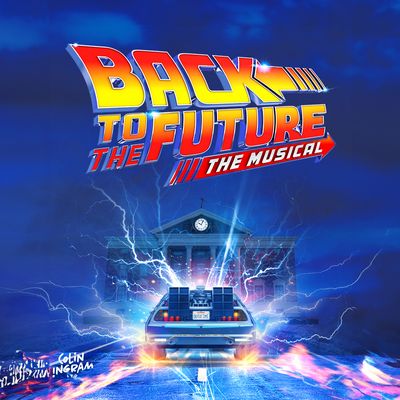
In this week's episode, we have a candid exploration of the new Broadway musical Back To The Future. Join us as we dive deep into the show's performances and themes, offering an analysis that challenges the notion of its place on the Broadway stage... Read More
From the show: Half Hour with Jeff & Richie (Post-Show Broadway Discussions and Interviews)
Featured Shows
About
In this week's episode, we have a candid exploration of the new Broadway musical Back To The Future. Join us as we dive deep into the show's performances and themes, offering an analysis that challenges the notion of its place on the Broadway stage. We raise thought-provoking questions, engaging in a lively debate about whether this nostalgic journey truly belongs in the realm of Broadway. We examine the technical elements versus the creative choices, critically evaluating the execution of the production. As we dissect the sources of inspiration behind the show's creativity, we uncover the hits and misses contributing to its overall impact. Furthermore, we shed light on the financial success of Back To The Future and its significance within the Broadway landscape. If you're ready for a raw and unfiltered discussion about this latest production, join us for this eye-opening episode. Listen in now and be part of the conversation!
If you liked this episode, don't forget to subscribe to this podcast and leave us a review.
Share your thoughts with us on this episode below:
On Instagram: @halfhourpodcast
On TikTok: @halfhourpodcast
On our website: www.twoworldsentertainmentllc.com
Transcript
This transcript was automatically generated and might contain errors.
[0:00] Jeff Malone: Welcome to another episode of Half Hour with Jeff and Richie, the podcast where we dig deep into the shows on Broadway.
[0:06] Richie Grasso: This week we're discussing the new Broadway musical, Back to the Future.
[0:10] Jeff Malone: We know it was an 80s film classic, but how does it transfer to the stage?
[0:15] Richie Grasso: Let's find out.
[0:16] Jeff Malone: I'm Jeff, a music industry producer and manager.
[0:20] Richie Grasso: And I'm Richie, a theater director and producer.
[0:22] Jeff Malone: Let's dive into Back to the Future on Broadway.
[0:29] Richie Grasso: Half hour.
[0:34] Jeff Malone: Hello, everybody. We're gonna get right into Back to the Future now, right?
[0:40] Richie Grasso: So, Jeff, for those who might not be familiar with this musical, can you give us a brief rundown of Back to the Future and what it's all about?
[0:49] Jeff Malone: Yes, I can tell you that Back to the Future, the musical started in London. It is currently still running their Olivier Award-winning show. Um it is now currently playing at the Winter Garden Theater on Broadway. It has a book by Bob Gale, who did the movie, and has music and lyrics by Alan Silvestri and Glenn Ballard, who um Alan Silvestri worked on the film as well. Uh this stars Roger Bart and Casey Likes. We have some choreography by Chris Bailey, and it is directed by John Rando.
[1:20] Richie Grasso: Uh okay. Um, wow, I don't know. I think we're gonna just kind of roll with this because I have so much to say, and I'm actually kind of a little heated about some of what I'm gonna say. So I just want to start overall by saying I just want I I just want to start by saying something. For those of you listening, my purpose in the next 30 minutes is not to sit here and poo-poo for lack of a better word, in industry or people who are working hard. And I never want someone to say, oh, well, why are you being so rough or mean to an industry that's trying to come back from that? I need people to listen to me right now and understand that I support this industry so much. I I've worked in theater my whole life.
I only want the best for theater. I see people working really hard on that stage for two hours and 40 minutes. So this has nothing to do with hard work. This has nothing to do with, oh, no, and someone's not doing something right. Because there is some really great vocal talent on that stage and people behind stage to make those special effects work. Please don't get me wrong and misconstrue what I'm about to say. I just have to say that. And maybe there's some other things that I liked about this too that I'll get to eventually. But I just wanted to start with that, Jeff. I don't know if you feel the same way. We are both working so hard here, as is so many people. And then the point of our podcast is never, ever, ever to sit here and say someone is bad or I want it closed, or this is that is, I am not gonna put that negative energy in the world.
I'm gonna put constructive criticism into the world and ask the questions that are hard and say the things that maybe everyone doesn't want to say all the time. I'm not sugarcoating, I'm just gonna sit here and say it is, but I just had to kind of start by saying that. And whether you do agree or disagree, there we go.
[3:03] Jeff Malone: I do agree with you on giving that little disclaimer, which we forgot in the beginning. There will be spoilers in this podcast episode. So if you are still looking to check out Back to the Future the musical first, go check that out and then come back and listen to the podcast because we are going to go on a deep dive into this show.
[3:24] Richie Grasso: That being said, take it away. I'm gonna start by saying this. The last 10 minutes of this show are technologically remarkable. I can only imagine what a stage manager is doing backstage during the last 10 minutes of this show. And when the audience's applause, and I think even the pit was applauding, and I saw people like you could, we were sitting way over to the side. I can kind of see people backstage. I feel like everyone's holding their breath for those few. You know, I'm talking about flying back home, playing the um power of love song. He comes back from the future. They get in the car, the car, yes, I'm the spoiler alert. Here we go. The car flies at the end. It flies over the audience.
It spins upside down with actors in it. The lights are going, the sound is going. And I'm like, I'm like, wow. Like this is what I waited for. And I was blown away by the last 10 minutes of this show. Espe even to the bows, because back in time has been stuck in my head this whole entire time. So I will start by saying kudos to technological advances on a Broadway stage. That is what I am waiting for. Do I think that a whole an audience should be waiting two hours and 20 minutes to get to the last 10 minutes of the show? Absolutely not. And so 5% of this show is amazing. 95% of the show is not working. There is a lot of things not working. And it's now really starting to annoy me because we're really cutting corners now in this art form to make something work.
[4:55] Jeff Malone: Well, it's a big question, like that we have to talk about in this industry because does special or do special effects make a musical a good musical? Well, you have to realize that some shows it does, some it doesn't. Phantom has special effects, but Phantom's a good show. So I don't think the special effects take away from Phantom. Do you understand what I'm saying?
[5:20] Richie Grasso: Yes, but I'm gonna rephrase that again and say, are we going to Broadway for special effects?
[5:26] Jeff Malone: I think some audiences are.
[5:28] Richie Grasso: Okay, well, that's a shame because it's a shame. It's a shame because now we're dumbing down the audience because wow, there's a car on stage. I don't think that makes it a good musical. I'm sorry, but when you have special effects like Elphaba flying up into the rafters and she's singing a really well-written song, that's the kind of special effect that I want to see happen on the stage. Not just a car on stage taken directly from the movie, because I'm pretty sure we've read that, right? That it's like coming from one of the theme parks or the movie or something like that. And to see that on the stage. Great. I could see that at Universal Studios. I saw that. I really between the audience that was there and the show that I was seeing, I felt like I wasn't even in New York anymore. I was kind of really disheartened by the extreme sloppy, lazy musical writing.
[6:24] Jeff Malone: Yeah. This meet and let me say something, because I come from a music background. Adding key changes into songs is one of my favorite things of all time in a musical. I love a good key change. When there are 47 key changes in a musical, and you think that's the way to, oh well, the song's kinning a little. So let's end the last 30 seconds of the song by adding a key change in. I'm so sorry. No, no, no, no, no, no. That is not working for me. There were so many, I was like, okay, what? Are you beating this over the me over the head with this?
[6:55] Richie Grasso: He's giving he's giving the passionate tone to that.
[7:01] Jeff Malone: Yeah, I'm just you know why I'm so bothered because you mentioned earlier dubbing down the audience, and I said, Yeah, we are not trusting our audiences anymore. We are not saying the audience understands what we're doing here. Why don't we write a good song? Why don't we tell why do we have to break there? Is this like, well, let's break the fourth wall and look at the audience and do look at me, I just made a joke all the time.
[7:25] Richie Grasso: Oh my gosh. Really, all the time?
[7:26] Jeff Malone: So I want to go into something here because this is a major part about the plot of this. So we're taking back to the future and the plot of the film.
[7:37] Richie Grasso: Why are we taking a direct translation of the movie straight to the stage?
[7:44] Jeff Malone: Because I think we got the movie word for word.
[7:47] Richie Grasso: Word for word. There was like almost no dialogue change.
[7:51] Jeff Malone: Yeah, it was word for word, and then music was included into this now. And I'm just saying to myself, why? Like, why did we not find the good moments of the movie and take that and expand on it? Instead, we just got the same scene over and over again.
[8:11] Richie Grasso: And we did recently watch the movie. We watched it for reference just to see, and we're just getting like, oh, okay, um, that's that, that's that. And actually, from an editing perspective here, what they did do was they tried to just go PC on certain areas from the film.
[8:30] Jeff Malone: So instead of including everything, they said, Oh, wait, we shouldn't really do that anymore because that didn't age well.
[8:36] Richie Grasso: Fine.
[8:37] Jeff Malone: That's fine, but then you just try to take it and you kind of change the story in like weird ways.
[8:47] Richie Grasso: Yeah, like I think, for example, like, and and what also bothered me is we have some really talented actors on the stage who I if listen, Roger Bart, biggest fan. I love that guy.
[9:00] Jeff Malone: Yeah.
[9:01] Richie Grasso: And Casey Likes so talented. The I it you would have thought a director told them, and I know a director didn't tell them this. I mean, I hope not, but I you would think a director said, just play it like Michael J. Fox and Christopher Lloyd, because that's what the audience wants to see, and just do it like they did.
[9:04] Jeff Malone: You would have thought that because Roger Bart made it his own at times.
[9:23] Richie Grasso: Casey Likes, I was like, are you imitating the exact vocal inflection of Michael J. Fox the whole time?
[9:30] Jeff Malone: Yeah, I think you know, I was talking with a friend after the show, and I was kind of just saying, like, I I really didn't like this, so like I'm probably not the best person to talk about this because I do know that there are plenty of people that do like this show. But I said something about when we see these adaptations of like film to stage, it's like some of them are they get it, some of them, it's like we're inspired by the film, we're inspired by the book.
[10:01] Richie Grasso: Let's take this and find the right parts.
[10:04] Jeff Malone: With this, it's almost like the nostalgia of this film can't be touched. It's like if the audience goes and it's not exactly like the movie, they're gonna be mad.
[10:18] Richie Grasso: And then the opposite for the Broadway fan, because I think the Broadway fan goes to this and says, What's the point of this? But I also think there's something to be said about people sitting in a room and saying, I'm going to go see Back to the Future. It's a musical on Broadway, and someone's saying, What? Singing and dancing, yeah. And so I almost feel like the creators and the writers are a step ahead and say, we know people are gonna mock this. We know people are going to think this is corny and cheesy and stupid. Let's just keep going with that because people are going to see it because it's the movie. Like, what is stopping Star Wars from coming next? What is I'm not kidding. Like, I'm really not kidding.
I don't know where we draw the line. Because anything popular, people take, and it's the same movie, people. They take it to the stage. And let me tell you something else, Jeff. The money talks. Because this is making over a million dollars a week. So someone could turn and say, Richie and Jeff, it's making a million dollars a week. What are you talking about? It's clearly successful. And what I'm trying to say is I do not equate a longevity of financial success to a good show. Because there are plenty of good shows that didn't run very long time on Broadway. But I think this is what's kind of like bursting our bubble here or lighting our fire and talking about this in the way that it is because the dumbing down of the audience is oh wait, I'm only gonna take a risk on Back to the Future because I know Back to the Future and I know what I'm gonna get.
And then it's a creative team saying, we don't really have to do anything because this audience just wants, you know, Back to the Future on the stage, and they want to see a car fly. So they'll pay $150 to go see it. But we're paying $150 to see a theme park show that if it was in a theme park, you would get it with your ticket price, which is a hundred and fifty dollars to go to a theme park. So now we're paying, and this is like what the Broadway community is talking about. Some of the greats are like, all right, well, this is just becoming a theme park town and a Vegas, you know, industry of what's going on the stage. And you know, Miss Patti LuPone, you call her out here, but she's not calling her out at all.
I'm 100% supporting what she's saying. She literally left the industry because she can't handle what's happening in commercial Broadway. And she said, take me down to East Fourth Street, throw me in a small hundred seat theater and give me a new work. This woman is on her own tour right now, singing her own music in her own time because she can't believe what's happening. I get it. I get it. And listen, not everything on Broadway is bad. There's some amazing things on Broadway, right? But when you have this sitting up there, I say to myself, I don't understand. And then I think what bothers me even more is like audiences are leaving, and I don't know if people are are. I think people, when you talk about dumbing down an audience, I feel like robots are walking out of there.
And they're like, that's good. Oh, there's the taxi. I'm brainwashed. Let me go to my hotel and let me go back to my town. And I saw Back to the Future on Broadway. Was it good? Um, yeah. Like, I don't I don't think there's a lot of things. But it's like so many other things than that, too. It's like we're leaving, and it's like, let me get the t-shirt now because I love this so much, and let me get the socks and let me get the vinyl and let me get the car and let me get this. They literally have a souvenir shop right outside of the theater for you to buy more Back to the Future merch. And it just it makes sense because the collector industry is what's going to Broadway right now. You know, that 80s, 90s crowd is going to Broadway, and they love that.
They love their cult films. They don't want them touched. They don't want it, you know, any different because that's too much for them. Change is too much for them. And that and that's becoming the new norm. And I know I feel like now we're really just talking about society as a whole, but I feel like, yeah, you can't change anything with anyone anymore. And then when people make changes that are smart, that makes sense. People like read it to filth. And it's like, but then I think something should change. I don't know. It really depends on what we're talking about. But when you look at the society here because the show was created in the way that it's created because of society. Because the creatives say we don't have to do much and we can be lazy with the writing and we could be lazy with the music and lyrics.
Then that's what we're gonna give them because they don't really care. They just want to see a great light show, they just want to see great tech. They don't care about the costumes, they don't care about the choreo anymore. Let's throw in some Broadway moments for the Broadway people so we can shut them up and then you know move on. But let me ask you a question. But they're laughing all the way to the bank. All the way to the bank. And they're saying, you know what? Who cares about the theater community? Because all of these people have jobs on the stage, they're not going anywhere anytime soon, and everyone should just be happy. But I'm not happy because the other shows on Broadway that can't get an audience because no one wants to take a risk on them, have to close.
Yep. Let me ask, and let me say something. Let me I'm gonna be a devil's advocate for a second. I'm gonna say, Jeff, I don't really see a lot of Broadway. I like movies. I went out, had a drink or two with a friend, a coworker. We had a long day at work. Work is really stressful lately. I am exhausted. I had a free night out from the kids. I went with a friend, I got these great tickets, love the movie, and I escaped into silly, fun, showy, glitzy Broadway theater, and I left and I went to bed, and I woke up the next day and I told five people about it because I was an escape from my life and politics and work and family and whatever I'm dealing with in my life. And I was back into and I had oh, and I felt like I was an 80s kid again.
Oh my god, the 80s. That's so funny because I'm not sure if you said that to you because someone is gonna say that to you at some point. What do you say back to someone who says exactly what I just said? Because that's what most of the audience might be.
[16:27] Jeff Malone: I would say I'm glad you enjoyed it.
[16:30] Richie Grasso: Okay. I don't really have anything else to say to them because I don't think they're on the same level of me as critiquing a show. But then they say, but then you say, Oh, well, you know, there's this really new work down the street called Kimberly Akimbo, and the talent is amazing, and the writing, it's so sad, but it's happy and fun, but it's so sad. Well, no, I would say to them, Oh, if you enjoyed Back to the Future, there's three other shows that are you know giving you that escapism on Broadway well that I think are a little bit more creative. You could have gone to see Anne Juliet, you could have gone to see Shucked, or you could have gone to see Once Upon a One More Time. And I'll say it, I think Once Upon a One More Time, even though it's Britney Spears music, takes it and puts it into a little bit more of a creative story.
But it was an original and but it was an original concept, original idea. Back to the Future in the 80s for a movie was an original. And I always say this: the movie's good. I like the movie Back to the Future. I'm gonna be honest, at the very end, and there was a little bit of a moment in this in the stage show, which I thought could have been heightened more because we're literally on in a musical on stage where drama can be heightened. But in the movie, when um the when Marty McFly's parents are standing there and they're like, Thank you, Marty, and they're like, Will we ever see you again? And he was like, Yeah, and I was like, Oh, this is like really like really smart, like that his parents are there, and like I love that moment.
I just was completely kind of run over in the play, but I think there's some good substance there, but when you exact replicate it on the stage, and you just throw these stupid one-liners out there, and we're like, ha ha ha, that was so funny. And I don't know. I'm like, this is wasting my time. I am wasting my time.
[18:14] Jeff Malone: Well, it it's this whole thing about movies happens all the time because everything wants to become a musical these days, right? So, but it will always come down to me. What were you inspired by in the film that you could take and put into the music? Uh into the music of a musical. If you're gonna make it a musical, that's what I'm saying. So when you have shows that have done this really well, like Thoroughly Modern Millie, Hairspray, Legally Blonde, even American Psycho. You have these shows that found the real raw moments in the film part, and they expanded on it, and they turned it into some sort of a masterpiece that deserved to be on the stage. I don't think that Back to the Future found that.
[19:10] Richie Grasso: I can't, it's hard for me to go see Some Like It Hot and Juliet and some of this amazing new, even and Once Upon a One More Time, and then go see this like choreography in Back to the Future that's just like step touch, step yeah, they're working hard. I'm not saying the actors aren't. I'm sorry, but we're in the school dance scene. And how many times did they just throw a girl up the air? Right. Meanwhile, it was like up and down. And then you have like Power of Love, Johnny Be Good. You have you have Back in Time, some of the iconic songs from the film, which of course they work. They worked 30, 40 years ago, they're gonna keep working. Everyone loves it. Of course they're gonna work, but that's the only thing that works is taking something that was exactly like I don't know.
I just I just thought this was so like, and this is another thing. Our writers sitting in the room saying, like, all right, they're gonna pay us millions. I guess we gotta, you know, write some music here. And meanwhile, I know so many people working so hard in their bedrooms writing music every day to get multiple works on stage or even to be seen or heard. And then here's people sitting getting paid boatloads of money, like, oh wait, he's got that girlfriend. I guess um, uh, we'll write some like 80s ballad uh about that.
[20:27] Jeff Malone: Yeah, let's write it. And then it's like, oh wait, the family. And let's talk about the family. In the movie, I kind of had this feeling that like he was the family was tragedy.
[20:37] Richie Grasso: Yeah.
[20:38] Jeff Malone: That the father is still bullied, the mother drinks, the brother and sister can't get their lives together. They live in this house and they're like stuck. And Marty's like, oh my gosh, my family, like, what happened to my family? And instead, the stage show mocked it. She's blowing bubbles in her vodka drink, and people are laughing. The brother is working at McDonald's and people are laughing. And the George McFly, well, I'll give credit where credit is due. He did exactly what the guy in the movie did, but to the point where the audience was hysterically laughing, and I'm like, why didn't you make it your own? You just played a nerdy guy, and you're on stage so much. You didn't have an opportunity to break free from that movie mold for two seconds.
And then there's this song about how they're all struggling, and I'm like, we're laughing at this family. I thought the point was that the family is tragedy, and that then they're this successful family at the end because he changed their lives. Where was the potential for that to be a dramatized moment? Oh my gosh, I'm just getting so frustrated thinking more and more about this, right?
[21:42] Richie Grasso: I don't know. Like, there's so many things that are from even from a casting perspective here, I don't understand why we cast the same people to make it even look like it. The Biff looked like he came right out of the movie.
[21:56] Jeff Malone: It's like George looked like he came right out of the movie. Even the costuming of Robert Bart or Roger, uh, Roger. It's like identical. Even the costumes. Because people would say, oh, you changed it. It's so iconic. How could you change the yellow coat at the end? How could you change Marty's red lifesaver jacket? You know, this is just what people, this is just what they want. And guess what? I guess it's what they want. Like, okay, I'm someone who comes from the world where most of the time act one either ends in a two-mo for me, it's two things. It's oh my gosh, they're gonna go do the thing, and we're gonna find out in act two. Or, oh my gosh, what just happened? Blackout intermission.
And this was like Beli Falls, blackout. And I was like, oh, and I literally thought in my head, oh, I wonder how they like what's the gonna be the OMG moment at the end of Act One. And then the house lights came up. And I was like, wait, wait, wait, wait, wait, wait, wait. That's where you decided to put the end of Act One, like nothing worked. It just kept getting worse and worse and worse for me. And I was like, this is the writing of this makes no sense.
[23:08] Richie Grasso: I think we looked at each other at the intermission, and I said, that's where they're cutting in this. But I just and I will say something. You know what? There is a big fan base for this. So anyway, we can't really say much more about that. This has a huge fan base.
[23:23] Jeff Malone: Yeah, even someone got proposed at the theater during this, uh, in intermission. It's an interesting spot to get proposed at. But sure, you know, if this has some sort of a connection to you, you're gonna love it. I do, uh, before like because I know we're getting close to the end here, I do want to say, like, what worked for you, if anything.
[23:45] Richie Grasso: Jelani Remy playing Goldie Wilson Marvin Berry, and the expansion of that character and the vocals that he's putting out 100% is working for me.
[23:56] Jeff Malone: Yeah, that guy's song is like, yes, like, yes, Jelani. Well, he's killing the song. The song's not that good, but the song's not good, but they expanded that role as I wanted to. Yeah, that's working. I think the lighting sound design execution of the special effects is working. It could have been so much worse. And when we are begging for more scenic design and we're begging for more immersive moments, and you bring the car to us and you go one step further by spinning that car upside down with them in it, and they're suspended in it. I'm like, that's really cool. So, like, good for you from a design perspective. But I think, but if we're craving more design, and like that's the best part of the show, then that's masking a bigger problem.
[24:42] Richie Grasso: Oh, of course. And I will also say this. Putting full production ensemble of 10 or 20 people in a number, thank you. Because I'm kind of sad to see when you see these productions where like there's six people in the ensemble. So you're hiring people, you're putting these big, big, big vocal powerhouse ensembles together. I don't think any of the songs are good, but you're pumping vocal out, you're pumping big choreo out. And I do like that in a splashy show. I haven't seen that in a long time. But that being said, I will say, from a written perspective of putting the ensemble in and also a directed portion of this, it just didn't make sense. We're just throwing people on the stage. And okay, here's something, you know, like a little bit of a question on why didn't they do this?
So this had every right to have so much camp brought into this production, right? And I think it did at times, but then I didn't really know if we were supposed to think it was camper. And it just sat in the safest area of camp that it possibly could from the right the writing of like women smoking cigarettes and the doctor says it's healthy, and also we're gonna put unleaded gas into our car because that's what we're gonna call it.
[26:09] Jeff Malone: Or let it gas or whatever. Um, and we're gonna eat pancakes every day because that's healthy, you know, like because this is exactly how the lyrics were in the song.
[26:21] Richie Grasso: Yeah, but like, why didn't that even go more over the top? I feel like I wanted this to be if we're gonna go corny, I wanted it to be really, really corny, and instead it was like we're gonna play safe corny. Like where Shucked is corny and it works. This was like, oh, Shucked is on Broadway right now. Our coriness is going to be like a little corn cob. And yes, and that's gonna take over. And this just was like nothing was over the top in an 80s classic like this, it should be over the top. Would you look at something like Wedding Singer? That was over the top, and it had all of the right moments from the movie, which I believe someone from this team also did The Wedding Singer. Um, it just worked then. That's it. I do think that Roger Bart does it over the top at times because he brings some of that camp comedy because he is who he is, and I think he is a good fit for that role, but it just didn't make it its own.
[27:21] Jeff Malone: Oh, you there's a ballad he sings about being the dreamer for people, and I was like, Oh, at the beginning, I was like, Oh, that's nice. Like, he's a scientist in town that's misunderstood, and even 30 years ago and today, no one lists he's kind of but go with that. Right, but you can make that your own. He made that role his own. He wasn't trying to be a carbon copy of what Robin Williams did on the stage, right? So I felt like this was how many people from this film are we just gonna make copy and paste into the musical? Yeah, because no one made their roles their own, everyone played them exactly the same. It's like they watched the movie and said, Oh, okay, I can do that.
[28:02] Richie Grasso: Yeah, hate to say it, but that's what that's what it was.
[28:05] Jeff Malone: Yeah, yeah. Talented cast, but they weren't given the opportunity, clearly, to really expand on what they could have.
[28:14] Richie Grasso: So my gosh, we're almost out of time here. This is flying by. Uh, let's just do some wrap-up final thoughts here on Back to the Future of the Musical on Broadway.
[28:26] Jeff Malone: Okay. For you, sum it up in one line.
[28:31] Richie Grasso: Okay, let's think. I did not enjoy this. In most ways, it's not working, but clearly, financially it is working. And I am just exhausted from this. That's I don't know. It's a weird sentence, but that's I'm just I'm a little upset. I'm upset that this is what is making it. I don't know what else to say. And I just hope this is not in 20 years from now what 35 of the 41 Broadway theaters have in it. Because right now it's got like five of the 41 theaters have this. So, uh, I just am a little I'm a little disappointed. I'm very disappointed. Uh, but it's working and it's bringing money in, and like you said, it's higher hundreds of people are employed. And but I'm not gonna always say that everything I'm not gonna always say, well, at least 100 people. Yes, I'm always gonna say 100 people are employed, but it this is not creatively what should be on Broadway, and it's just really disappointing. It's disappointing.
[29:27] Jeff Malone: I'll say that. I'm very disappointed.
[29:30] Richie Grasso: One line turns into one paragraph.
[29:32] Jeff Malone: No, you know me. Go with your one line. Here we go.
[29:36] Richie Grasso: One line. This is a universal theme park show that has great moments and bad moments. And if you saw this in the theme park, I'm pretty sure most of you would leave it intermission.
[29:51] Jeff Malone: Yep. Yep. I said what I said, okay. Um, and there we go. That wraps up our discussion for this episode. We hope you enjoyed our trip and discussion to Back to the Future the Musical on Broadway.
[30:08] Richie Grasso: And remember, we want to hear from you. Continue the conversation with us on Instagram and TikTok at Half Hour Podcast.
[30:15] Jeff Malone: And let us know your thoughts on Back to the Future and any other Broadway shows that you'd like us to discuss.
[30:21] Richie Grasso: If you enjoyed our show today, please do leave us a review. Your feedback helps us bring more Broadway to you.
[30:25] Jeff Malone: And remember, you can listen to our past episodes and stay tuned for upcoming ones as well.
[30:30] Richie Grasso: So until next time, I'm Jeff.
[30:32] Jeff Malone: And I'm Richie saying ta-ta.
[30:35] Richie Grasso: Bye.
© Broadway Podcast Network, All Rights Reserved