

In this weeks podcast, Jeff & Richie discuss:The careers of two of their favorites Dolly Parton and Taylor Swift.Thanks for listening! Please leave us a review if you love our Theatre & Pop conversations... Read More
From the show: Half Hour with Jeff & Richie (Post-Show Broadway Discussions and Interviews)
Featured Artists
About
In this weeks podcast, Jeff & Richie discuss:
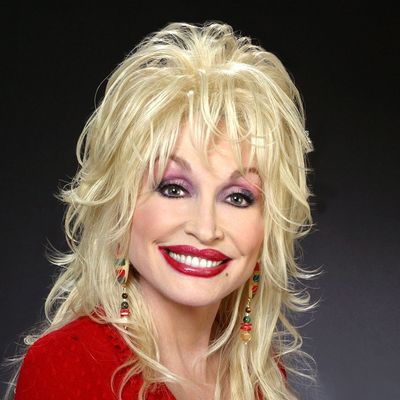
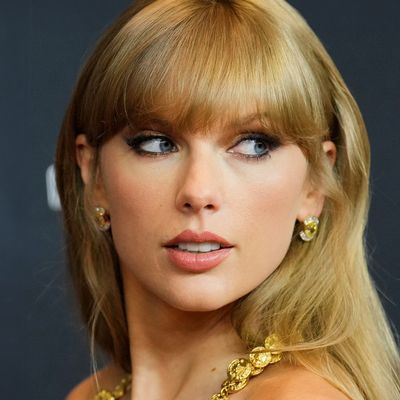
The careers of two of their favorites Dolly Parton and Taylor Swift.
Thanks for listening! Please leave us a review if you love our Theatre & Pop conversations.
Follow us on Instagram and TikTok: @halfhourpodcast
More Half Hour Podcast
Visit our website: www.twoworldsentertainmentllc.com
If you liked this episode, don't forget to subscribe to this podcast and leave us a review.
Share your thoughts with us on this episode below:
On Instagram: @halfhourpodcast
On TikTok: @halfhourpodcast
On our website: www.twoworldsentertainmentllc.com
Transcript
This transcript was automatically generated and might contain errors.
[0:08] Richie Grasso: Hello and welcome to Half Hour, an Entertainment Podcast through Two Worlds Entertainment.
[0:13] Jeff Malone: I'm Jeff.
[0:14] Richie Grasso: And I'm Richie.
[0:15] Richie Grasso: Here for our very special edition of Battle of the Divas podcast today.
[0:20] Richie Grasso: Normally we're bringing you podcast episodes on pop music and the latest pop music and Broadway shows and the latest Broadway shows. Today we're giving you a very special episode.
[0:28] Richie Grasso: We're going to Battle of the Divas. If you look back in some of our old podcasts, you'll see we did this a few months ago. We did the battle of Kelly Clarkson versus Barbara Streisand.
[0:38] Richie Grasso: And if you want to hear more about that, go check out that episode. We had a lot of fun doing that.
[0:43] Richie Grasso: But what we like to do with this series, we bring it back every few months, is to talk about two divas or famous singers in two maybe similar but maybe different arenas of performance. And we talk about them.
[0:55] Richie Grasso: And usually the person I'm talking about is someone I'm a big fan of, and the person Jeff's talking about. So last time I talked a lot about Barbara Streisand and all her accolades. You had talked a lot about Kelly Clarkson.
[1:06] Richie Grasso: We talked about their similarities, their differences, and um, and what makes them a diva, a great diva, and why we like them so much. So it's all light, it's all funny, it's simple.
[1:15] Richie Grasso: It's not too don't think battle is like, you know, we hate one person or the other. It's not about that. But we like to kind of put two people up against in these conversations and talk about them.
[1:25] Richie Grasso: So today we're talking about two major divas in the music performance space. Similar because they both come from country music backgrounds. Whether they're currently still doing country music, some are, some are not. Um, we're gonna talk about them today.
[1:40] Richie Grasso: So today we are battling Dolly Parton versus Taylor Swift. We hope you like both of these.
[1:46] Jeff Malone: Who's battling who?
[1:47] Richie Grasso: Yeah, well, Jeff is going to be talking all about Miss Taylor Swift and giving us some.
[1:52] Jeff Malone: Yeah.
[1:52] Richie Grasso: And I will be talking about Dolly Parton. So last time I started with Barbara, and then you went to Kelly. I think this time we're gonna have you start with Taylor Swift, and then I'll go with my Dolly facts.
[2:05] Richie Grasso: And this is just an opportunity for our listeners to get to know a little bit more about these singers and these people, some of their accolades, some of their accomplishments, personal life, professional life, everything in between, and talk about what makes them popular, maybe why you are a big fan of Taylor. I'm a big fan of Dolly, and we'll go from there.
[2:21] Richie Grasso: So we hope you enjoyed listening to this today. I'm gonna pass the baton over to Jeff. And Jeff's gonna give you everything you need to know about Miss Taylor Swift. So take it away.
[2:31] Richie Grasso: And one thing to say too. I think this is a fun thing to do because it's women's history month.
[2:35] Jeff Malone: It is women's history month.
[2:36] Richie Grasso: We're talking about two women, and we have you have Taylor on your shirt. I have Brittany on my shirt if you're watching the YouTube video.
[2:42] Richie Grasso: So we have all the women diva women uh. We're very big fans of women artists.
[2:46] Jeff Malone: Yes, we are.
[2:48] Richie Grasso: We talk a lot about the women artists. We love them in this house.
[2:52] Jeff Malone: Okay, Jeff Taylor, here we go.
[2:54] Jeff Malone: Taylor Swift. Where do I begin? Okay, well, let's start with a little bit of a background here. Uh Taylor Swift, born on December 13th, 1989 in West Reading, Pennsylvania.
[3:05] Jeff Malone: Uh, she grew up in West Reading and then relocated to Nashville at the age of 14 to pursue her career in country music. She signed a songwriting deal with Sony Music Publishing first in 2004, which is a major thing for songwriters.
[3:21] Jeff Malone: And then she signed a recording deal with Big Machine Records in 2005. She then went to release her debut studio album, Taylor Swift in 2006. And I'll run through the studio albums here first, just so we can uh get up to date on where Taylor Swift has been.
[3:38] Jeff Malone: In 2006, she released Taylor Swift with the singles Tim McGraw, Teardrops on my guitar, Our Song. Then in 2008, she released Fearless, which has Love Story and You Belong With Me. Speak Now in 2010, which has like Mine, Mean and Sparks Fly.
[3:53] Jeff Malone: Red in 2012, which has We Are Never Getting Back Together, 22, the big song All Too Well, and I Knew You Were Trouble. Then in 1989, she shifted from her country pop to more of her pop space, which she had Shake It Off, Blank Space, Out of the Woods, Wildest Dreams, Style, Reputation in 2017 that has Endgame, Delicate, Look What You Made Me Do.
[4:19] Jeff Malone: Lover in 2019, which has Lover, Me and the Man, Folklore in 2020, Cardigan, and Evermore in 2020, which has Willow. So those are her full-length studio albums, and she has now gone on to re-record two of those albums, which we'll get into a little more detail on why she's doing this in just a bit.
[4:38] Jeff Malone: But she had re-released Fearless in 2021 and Red in 2021. And some just, you know, big Diva Powerhouse things here for her. Taylor Swift has won 11 Grammys, which three of them were for Album of the Year.
[4:53] Jeff Malone: She is currently tied with all other artists that only have three albums of the year, like someone like Frank Sinatra has three. No one has more than three. So she sits in that space right now.
[5:06] Jeff Malone: Um she has an Emmy Award. She has 34 American Music Awards, that's the most by any artist. She has 25 Billboard Awards, most by any woman. And she holds 56 Guinness World Records.
[5:19] Richie Grasso: I didn't hear her Tony Award styles.
[5:22] Jeff Malone: I don't think she has a Tony Award.
[5:23] Richie Grasso: Not yet.
[5:23] Jeff Malone: Maybe one day.
[5:24] Richie Grasso: Not yet. Or an Oscar. We gotta get her into that space a little bit, maybe.
[5:29] Jeff Malone: Okay. Yeah, a Rolling Stone named Taylor Swift on two of its greatest lists. Blank Space sits on the 100 greatest music videos of all time. And Blank Space and All Too Well are named on the 500 Greatest Songs of All Time.
[5:43] Jeff Malone: And she is the only female act to have received more than 100 million global streams on Spotify in a single day, with over 122 million streams on November 11th, 2021. Swift broke the record for highest grossing North American tour of all time with her Reputation Stadium tour, which we saw, and is the world's highest grossing female touring act of the 2010s.
[6:07] Jeff Malone: She has the most entries and the most simultaneous entries for an artist on the Billboard Global 200 with 69 singles and 31 songs respectively. Wow.
[6:19] Jeff Malone: So that is a little bit of Taylor Swift in a nutshell. I mean, I could go on and on with the records that she's broke. Um albums and personal life. What else?
[6:30] Richie Grasso: Well, other than her music career, could you tell us about family life, personal life, her things she does outside of music, anything like that?
[6:37] Jeff Malone: Yeah, so she has mother and father. She has a brother, she has a boyfriend who sometimes we speculate are they engaged. She does a lot, I think, for women in the space of music and business.
[6:54] Jeff Malone: She is definitely one to say, own your own things, own your own work, own who you are as a career person. And that's something that I feel like I look up to in her. I really respect her artistry in what she does there.
[7:10] Richie Grasso: Yeah. What's your what do you think is future for her? What do you what do you?
[7:14] Jeff Malone: I mean the sky's the limit for someone like her? But what is the next five years, the next 20 years, the next 30 years for her?
[7:21] Jeff Malone: It's see, I feel like with Taylor Swift right now, we're in this space of she wants to own everything that she's done in as an artist. So right now, after leaving Big Machine, she's now gone on to sign a record deal where she owns both her songs and her studio recordings.
[7:39] Jeff Malone: So the the the compositions and the the um studio recordings. Right now, Big Machine owns it for the first six, and now she's re-recording so that she can own all of the things, hence why Fearless and Red was re-recorded. She has four more to do.
[7:54] Richie Grasso: Okay.
[7:55] Jeff Malone: And I feel like over the next five years, she's going to take back what is hers, and then we're going to get this new redefined Taylor Swift that can breathe. And what I mean by that is someone who is just happy in the work that they're making.
[8:11] Jeff Malone: They're not making it for anyone but themselves and the fans, uh, not for the man, hence one of her songs uh that she had released. I think something that I love about Taylor Swift too is that she I read an article a long time ago that she never wants to do the same thing twice.
[8:32] Jeff Malone: So when she starts maybe getting bored of a certain genre that she's working in, she's going to explore something else. You know, she started with country, she moved into country pop, then she moved into strict pop, then she got into a little bit more of a let's call it like pop, hip-hop-ish thing on reputation, more angst into just happy love songs into now alternative.
[8:58] Jeff Malone: So we've watched Taylor move through these specific genres as an artist, and I'm just saying, hmm, what is next? Are we going to go into more of a theatrical Taylor soon? Maybe. I keep hoping. I really do.
[9:13] Jeff Malone: I think the way that she writes a song really works well in the theater space as well. So I think if I want to pick something in the next five to ten years, Taylor Swift's gonna write the musical. And it's not going to be someone writing a musical about Taylor Swift's life with Taylor's music music. She's going to write an original music.
[9:31] Jeff Malone: Uh uh musical, a la like Sara Bareilles writing music for Waitress.
[9:35] Richie Grasso: Waitress.
[9:36] Jeff Malone: Yeah.
[9:37] Richie Grasso: Okay. What do you, after hearing all of these things, what do you think about Miss Taylor?
[9:41] Jeff Malone: What I've learned is that she clearly learned from Barbara and Dolly. Um, no, yes, I I'm always impressed by Taylor Swift. I think she's wonderful. I just want to see what's coming.
[9:54] Jeff Malone: I think that crossing over from country music to pop music is fine. It works for her. Could she be doing things in the film space? Could she be doing things in the theater space? Could she be doing, you know, when you look at people who've come before her with all this success, a lot of them, not all of them, but a lot of them do things in those spaces.
[10:12] Jeff Malone: So it'll be cool to see what she did cats, so she did that. She worked with Andrew Lloyd Webber on a new song for that. So that's really cool.
[10:20] Jeff Malone: I think she did as an actor. She was in that, right?
[10:22] Richie Grasso: And then she, yeah.
[10:23] Jeff Malone: So and writing the original song. Yeah, I think that's an interesting take, you know.
[10:28] Richie Grasso: Do we see her more in like a Barbara style um directing or starring, starting producing?
[10:33] Jeff Malone: Right.
[10:33] Richie Grasso: Or starring, starting producing.
[10:36] Jeff Malone: Right, right.
[10:37] Richie Grasso: Um, yeah, and I think I and collaborate. I think she she has her team, which is great. I like to see her collaborate with more people. I think that can be really cool.
[10:46] Jeff Malone: Oh, yeah.
[10:48] Richie Grasso: Um, and and the philanthropy that she works with and the things that she supports and her mission is nice, it's important. As an overall question to you for Taylor, um, what what do you kind of praise or wish you could see more of her as a performer, actor, songwriter, singer? What do you kind of feel like she brings to the table?
[11:12] Jeff Malone: I think she brings a sense of um this might be an odd word to use, but a sense of like decorum and tact. I feel like she she has a class to her. She can be a little dark and sexual and it works. She can be like squeaky clean and it works. She can be upbeat pop and it works. She can be sad, country and it works. And she dips and dabs in those places. Does do I think she pushes boundaries like a Beyoncé or a Lady Gaga does? No, I don't think she maybe she doesn't want to, maybe she doesn't need to. I don't think she pushes the envelope on extremism with language, with sexuality, with um that style of music. But that's okay. Because I think she draws a bigger pull of people that way. And I think she's able to, you know, you we can't ignore the fact that when we were at her concert, there was a lot of children and families and parents there, and may not see that as much as some other pop stars concerts.
And there's nothing right or wrong about that. That's just a statement I'm making because I think that she does. I think if I was a parent and I had young children and they wanted to listen to her music, I'd probably be like, Oh, oh yeah, cool, compared to can I go listen to blah blah blah or another artist? So, yes, I think she's doing that right. I think she's doing that well. And she should just keep going. She should keep writing, she should keep doing she will. She's really motivated. And um I give her a lot of credit for that.
[12:37] Richie Grasso: With the decorum, do you think that's her playing it safe so that she can appeal to more people, or that's just her as an artist?
[12:44] Jeff Malone: I think it's both.
[12:45] Richie Grasso: Yeah.
[12:46] Jeff Malone: I think I'm not, I don't want to sometimes. Oh, if you say this artist plays it safe, that denounces that they maybe are doing something wrong. I don't think there's something wrong with artists doing things a little safer sometimes. Well, a lot of people G-rated and a little all around American all-worldly, not like, oh, a niche market of music for a specific group of people to listen to at a specific venue in a specific way. She's really approachable. I think what some people like to do is they like to bring this word calculated when it comes to Taylor Swift, that everything she does is very calculated. It's thought out. Even her fans like to bring in the whole idea of Easter eggs into her music and albums, and when she's going to release something, that she's always dropping a hint.
I think that's just her playing to the fandom, the to the Swifties, because it's giving them what they want. But when you hear this word calculated, I sometimes say, why? When she makes statements about, you know, LGBTQ rights or her political stance on things, why is that calculated? Why is it just not received and said, okay, that's her opinion? It's like, oh no, because she finally made a statement about someone like Trump, or she finally made a statement about COVID or you know, gay rights. Why is that calculated only now? You know, why is it like why can't it just be okay? She said it. Yeah. You know, on that's like I think a personal life question, you know. Can artists make comments about political things?
[14:28] Richie Grasso: Right.
[14:28] Jeff Malone: And I think, and and and that does spin into Dolly a little bit because she does really stay out of that. Right, which I think. Um, yeah, I don't I think like I said, I don't I think some artists that great break ground and speak out all yeah, like go for it, do it. But then there's I think there's also something to be said about people who have lifelong careers who I don't want to say play it safe because I'd have such a negative connotation, but I'll transition to Dolly now because it's kind of time to do that now because Dolly Parton is someone who never in oh Lord, how old 75, I think she is, has uh never goes into politics or enters that yeah arena. And but I also don't look at Dolly Parton as like safe in terms of the accomplishments she's made.
No, so it's interesting how the word safe can be used. But I will go into Dolly Parton a little bit because we're gonna transfer this over. And we'll talk about Tiller and Dolly at the end together, but um, because at the same time, we are here at Dolly Parton, Dolly Parton, born January 19th, 1946. She's an American singer-songwriter, actress, and businesswoman, known primarily for her work in the music country music space.
[15:36] Richie Grasso: Um, she has sold more than 100 million records worldwide.
[15:41] Jeff Malone: Um, she has had 25 songs reach number one on the Billboard Country Music Charts, which is a record for a female artist, and she's tied with Reba McIntyre for that record.
[15:50] Richie Grasso: Wow.
[15:51] Jeff Malone: She has 44 career top 10 country albums, a record for any artist. And she has 110 career charted singles over 40 years.
[16:02] Richie Grasso: Wow.
[16:03] Jeff Malone: She has garnered 11 Grammy Awards and 50, that's 5-0, 50 Grammy nominations, including the Lifetime Achievement Award. And is one of only seven female artists to win the Country Music Association's Entertainer of the Year Award. In 1999, she was inducted into the Country Music Hall of Fame. She has composed over 3,000 songs, including I Will Always Love You, which is the uh song known by Whitney Houston. Um, Jolene, Code of Many Colors, and Nine to Five, those are her biggest songs.
[16:34] Richie Grasso: She also um is in a select group of people to have received at least one nomination for an Academy Award, a Grammy Award, a Tony Award, and an Emmy Award.
[16:42] Jeff Malone: So she's been nominated for all of those.
[16:44] Richie Grasso: Wow.
[16:45] Jeff Malone: Um, which is rare. Um, as an actress, because she's also dipped and dabbed in that a little bit. We've seen her in some films as nine to five, classic, best little whorehouse in Texas, which is so great, and a musical that really should come back to Broadway because it's a great, great show. And we shouldn't have to be.
[17:18] Richie Grasso: She was in Steel Magnolias, 1989.
[17:20] Jeff Malone: Oh my gosh, great movie.
[17:22] Richie Grasso: Straight Talk in 1992 and Joyful Noise in 2012. Umplishments. She's done such amazing things in her career with music, but I really really commend her on the things she's done outside of music. One more thing about music, the theme song to the 1980 film, 9 to 5, right? Um, she was in Jane Fonda, Lily Tomlin. Um, it not only reached number one on the country chart, but in February of 1981, it reached number one on the pop and the adult contemporary charts.
[17:52] Jeff Malone: So it gave her a triple number one hit.
[17:54] Richie Grasso: Wow.
[17:54] Jeff Malone: I think that's really, really amazing. Um, and everyone knows nine to five, and everyone loves that song. And so to hit top in three charts, pretty impressive. Um super, super impressive. What I find the most impressive about her is this constant, you know, she's a songwriter, she's done some amazing things with that, but her philanthropy is fantastic. Um, she has the Dollywood company, so she operates, you know, that she she's invested so much into business with that. She's um operate that the Dollywood company operates the theme park Dollywood. She operates a dinner theater, she all operates Dolly Parton's Stampede Show out in the in uh Pigeon Forge in the Smoky Mountains, which is I've seen it.
I did not get to go to Dolly. I did go to Dollywood. Maybe I'll do a whole episode on that. I've been to Dollywood, I saw her Stampede Show. There's the Water Park Dollywood Splash Country, there's the Dream Moor Resort and Spa, all in Pigeon Forge. Um, she's created this um amazing. You she grew up very, very poor in Pit in the Great Smoky Mountains and Pigeon Four. She create the amount of employment that she has created and the amount of economy and business that she's brought to that town by doing something like that. Like, what artist does has done something like that? Has created an entertainment resort and theme park and Stampede Dinner Theater show, and just created this employment opportunity for hundreds of hundreds of people.
In Dollywood, you walk around Dollywood, and there are bluegrass bands playing throughout the park all day long. The employment of artists. I mean, I think that's such a philanthropy in that way. She works so hard at that. She also has created the Dollywood Foundation. So it's a literacy, her literacy program, Dolly Parton's Imagination Library, is a part of the Dollywood Foundation. What it does is it mails one book per month to each enrolled child from the time of their birth until they enter kindergarten. And currently over 1,600 local communities provide this library to 850,000 children each year across the United States, Canada, UK, Australia, and Ireland. And so here's someone who's had like such success, continues to have success because she just released an album, what, like last week?
Like, so she's constantly putting music out. She stays completely out of politics. She doesn't, we have no idea if this woman is the most liberal person on the planet or the most conservative person on the planet. And yet she has the support of conservative people, the gay community, people in cities, people in the country, people internationally. It's pretty astonishing. And so when I say play it safe, she certainly never played it safe with her career, the choices and acting and music and the accolades and her money. I mean, another thing I'll say about her money, in response to the COVID-19 pandemic, she donated one million dollars towards research at Vanderbilt University Medical Center, encouraged those who can afford it to make similar donations towards the vaccine. She's like a huge supporter of like getting that vaccine started. So, like, how amazing that this woman can do what she's done.
[20:58] Richie Grasso: She certainly hasn't played it safe. But in terms of politics or pushing an envelope or doing something with cursing or sexuality, or you know, I it's in some of my research, I realized, you know, she was asked multiple times to appear on Playboy magazine, and she didn't. Uh, she did one cover, I should say. She did one cover. Um, she was in the bunny outfit in the October 1978 issue. Um, so I guess that was like the safer, you know, not to keep using that word. Was it October? You said October of 1970. Halloween. Yeah, so it was like she always safe moment. She turned down offers for, yeah. Also, you know, she was she grew up very, very, very poor. She was one of 12 children, I believe. And she also um she has a husband, Carl Dean, married in 1966.
We almost never see him. He doesn't join her in the spotlight, and that's between the two of them, and that's okay. You know, maybe personal life and political spectrum opinions don't always have to be, you know, look at all I mean, here's someone who's so successful who didn't need to push the envelope or try something, but but is so entertaining and so kind. I mean, one of the I have to say, one of the kindest and most generous um musicians, I mean, ever. Well, I don't know, I know a lot of celebrities donate money to great places. I don't know someone who not only does that but says, wait, I don't want to just donate the money. Let me create the foundation, let me educate children with reading, let me employ thousands of people in a small town in the middle of Tennessee.
Let me not go put an amusement park in Orlando or LA or New York, let me go put the amusement park here. Right. And and it gets visitors, millions of people go there a year. I mean, she and so I'm very impressed. I I there's there's no doubt that someone like Taylor Swift must look at someone like her and say, Oh, what has come before me and how do I continue that?
[22:48] Jeff Malone: Oh, for sure. One of my questions to you was do you think Dolly has paved a way for Taylor to business, this country pop?
[22:55] Richie Grasso: A hundred percent. And do you think Taylor almost looks up to her as like a um a template?
[23:03] Jeff Malone: Yeah, but even people like Miley Cyrus does. This is Miley Cyrus' godmother, right? Uh, there's definitely a acknowledgement of what has come before.
[23:12] Richie Grasso: Right. I think more though, on a Taylor doesn't seem to be one that really puts a lot out into the world in terms of her personal life.
[23:22] Jeff Malone: What you see in her life is her as an artist.
[23:25] Richie Grasso: Which is Dolly.
[23:26] Jeff Malone: Which is very similar to Dolly.
[23:27] Richie Grasso: Which is really Dolly. And I that's why I see like Taylor, like started, I and I don't know. Maybe you know this maybe like, but but like Taylor started organizations similar to this or continues supporting Dolly. So like, you know, the philanthropy is so astonishing to me. And it's really, really, really important. And you can also have your cake and eat it too. You have she has her own label, Dolly Records. Do it. Like, I mean, she she sold a hundred million records. I mean, worldwide. I mean, this was way before streaming, and it's impressive. So I I look at her and I say, she's so joyous. Yes, Taylor, don't donate, give, and and then continue to create and star in some movies and get some awards and make it awesome. I think that's something to go back to your question earlier for Taylor. Something is where is she going in the next five to ten years? Is I think it's going to be down this road.
[24:22] Jeff Malone: Sure.
[24:23] Richie Grasso: As an artist, it's her time to start giving back in a way. Like, how does she help her fans? Where did she come from, etc.? So similar to Dolly, maybe Taylor will have a Taylor would. Or a Taylor Taylor theme park. You know, she has so much around her that she could totally do it. Um, not to say, like, hey, let's just be a carbon copy of Dolly Parton. But I do think right now, where we've seen Taylor, when she came out of her big machine days and she started going into her new deal, like with Lover, it's when we started seeing more of her activism start. I when we watched that documentary on Taylor, Miss America.
[25:00] Jeff Malone: Yeah.
[25:01] Richie Grasso: Um, I was like, oh, okay. We see that she's a real person. We see that she wants to do things, and especially when she had people around her telling her, Taylor, don't say that. You're gonna you're gonna get some fans that are gonna get angry at you. And she's like, No, I need to make my statement on this. And I think that's also big for an artist. I know Dolly likes to stay out of something like that, but at the same time, I like seeing when artists make their opinions and statements. It's not to taint someone's opinion, it's not for me to be like, oh, okay, I agree with Taylor now. So guess what? I'm gonna be a hardcore liberal or I'm gonna be a hardcore Republican. Like, that's not what it's about. It's just saying this is her stance. And I think every artist has the right to make a decision on it.
[25:39] Jeff Malone: Of course. And I also think it's important to dip and dab in other industries. Like Dolly has really worked her way into film.
[25:45] Richie Grasso: Yeah. And then when they want to do nine to five on Broadway, and she writes all the additional music for it. Good for you. Like, that's awesome. And you get into the Broadway space for a little bit, and then you go to the pot, and then you release some of the album, and she just she and she's still working. How amazing that this woman keeps working and giving her money and then working and working. Um, she's I read an interview somewhere where it says she's up at like 3 a.m. every day working. Like that's her time. She's like, the best time a day to work is between like 3 a.m. and 5 a.m. It's like quiet.
[26:14] Jeff Malone: Yeah, oh Lord, no. I wish I could have been early.
[26:17] Richie Grasso: Um, but you know, yeah, she's she's a true American gem. And I could totally see us in 50, 60 years from now talking about someone like Taylor and saying, Wow, what an amazing person. I think what's nice to talk about both of them is like the word diva. And what does the word diva mean when it comes to both of them? This is not diva like when people originally thought about that word, like someone who's dramatic, dramatic. No, like I I associate the word diva with powerhouse. Like these are two powerful women in the music industry that own so much of what they've created now. And they and they pave the way for other women and other business women to do the same thing.
[26:59] Jeff Malone: Yeah. And that's what I think so special about both of them. And it's not to really pin them up as a battle, but it's to say like older generation, newer generation learning from each other and helping the next generation to come, you know. And even as so much as um there's a Taylor Swift exhibit in the country music hall of fame. I've been there too, and they and there's a whole exhibit there where she talks about, you know, educ you know that it's an educational area for kids and people to learn. But it's also nice to say like Dolly can create music that everyone can listen to and and and that and do that, but then also like give books to kids who can't read or like don't have access to books.
Like, how important is that? We forget that sometimes that's a need. And to be able to say, yes, you are going to be guaranteed a book for your child one month every year until they're five years old. Like what a blessing that someone could do something like this with their with their char with their hard work and their, you know, to come from nothing and and and just to grow is is phenomenal. So then also comes from the word education. And I think what both of them bring to this is they want to help educate people to help them make better decisions and not do things because that they are not educated.
[28:12] Jeff Malone: Right. Right.
[28:13] Richie Grasso: And I think that's a word that we forget to use a lot in this country is like, hey, let's educate ourselves before we act. Yeah. Let's not just react to things, let's educate and then act. Yeah. And I think that's what both of those, both Dolly and Taylor bring to this space, you know. Yeah. They made it, they had things done dirty to them in the industry, and then they learn from it, and now they are here to help others learn from it as well.
[28:41] Jeff Malone: Yeah. You know, so it's good.
[28:43] Richie Grasso: Oh, we're out of time. Time flies here. We're talking about all this. So recap, Taylor versus Dolly thoughts.
[28:51] Jeff Malone: My recap. I I feel like I kind of summed it up already, but I think both of them are really great powerhouses in the music industry. I love seeing powerful women take a stand for certain rights, and they want to see other artists do well in the space. Um, I like to make the statement that Taylor Swift is the music industry currently. Uh but bold statement is the music no, but do you think that this lets Taylor Swift fit in to our space of our glorified divas?
[29:24] Richie Grasso: Yeah, sure. I mean, this and when you see someone as successful as this and as these people, it's nice, you know, we say battle of the divas, but it's really just to talk about, and we're not comparing them or contrasting them, we're just kind of sitting here and saying, here's two people someone you really like and someone I really like, and a lot of times I like some of the older singers, and sometimes you like some of the newer ones, and and and we talk about them. Well, we like to bring that theatrical element because obviously Dolly has already dabbled in the theater world, and uh I like to bring the pop space. So you know, bringing education to someone from the past, someone who's in theater, and bringing someone in the pop space who many of you know about, but also like they're they stand up to the past.
[30:05] Jeff Malone: Right, they are the future too.
[30:07] Richie Grasso: So guess what? We're talking about Dolly, who came out many, many years ago. And guess what? In 30 years, who's gonna be sitting in our seats talking about Taylor with someone else who's new? I think that's what's cool.
[30:19] Jeff Malone: It's very cool.
[30:20] Richie Grasso: And that kind of leads to my recap too. Just two really talented people and who work hard at what they do and then pass that baton, pass that torch to their foundations, to their charitable organizations, to other artists, and continue working.
[30:36] Jeff Malone: Yeah, and don't just say, Oh, I'm done singing now. I'm not gonna, you know, continue to work, continue to create, continue to write. I mean 3,000 songs. I mean hello. You know, 3,000.
[30:44] Richie Grasso: So anyway, well, listen, everyone, we hope you enjoyed our special Battle of the Divas podcast today. Please follow us on Instagram at Half Hour Podcast through Two Worlds Entertainment at Two Worlds Ent. You can follow us on Instagram, Facebook, Twitter. You can also find us on TikTok, where we got some awesome content there as well. At half hour podcast. So more pop music to come, more Broadway shows coming, lots of upcoming episodes. We hope you enjoyed this special episode today. Signing off for now saying ta-ta. I'm Richie.
[31:16] Jeff Malone: And I'm Jeff. Ta-da.
[31:18] Richie Grasso: Bye.
© Broadway Podcast Network, All Rights Reserved