

Jeff and Richie welcome Douglas Lyons to discuss Beau the Musical, currently onstage in New York. Douglas opens up about the creative process, how his background as an actor shapes his writing, and why intergenerational queer stories matter... Read More
From the show: Half Hour with Jeff & Richie (Post-Show Broadway Discussions and Interviews)
Guests
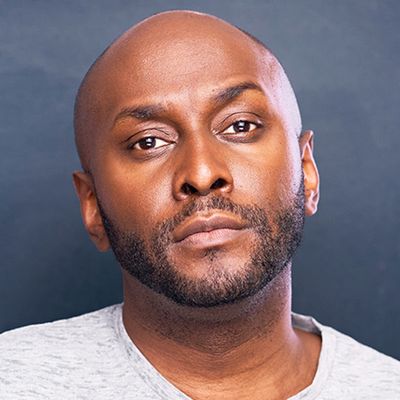
About
Jeff and Richie welcome Douglas Lyons to discuss Beau the Musical, currently onstage in New York. Douglas opens up about the creative process, how his background as an actor shapes his writing, and why intergenerational queer stories matter. We also talk about collaboration with directors and creative teams, plus Douglas’s upcoming projects. Join the conversation and let us know your take on Beau the Musical.
Follow and connect with all things @HalfHourPodcast on Instagram, TikTok, and YouTube. Share your thoughts with us on our podcast cover post on Instagram.
Transcript
This transcript was automatically generated and might contain errors.
[0:00] Jeff Malone: Welcome to Half Hour with Jeff and Richie.
[0:02] Richie Grasso: I'm Jeff.
[0:02] Richie Grasso: And I'm Richie.
[0:03] Jeff Malone: And today on our show, we welcome a very special guest, Douglas Lyons.
[0:07] Douglas Lyons: Thank you for having me.
[0:09] Jeff Malone: Yay.
[0:10] Jeff Malone: So Douglas Lyons is a two-time Emmy nominated writer, composer, actor, and playwright. He's the creative force behind the off-Broadway hit Beau the Musical, now playing at Theater 154. Douglas made his Broadway playwriting debut with Chicken and Biscuits, earning a GLAD nomination. And his latest play Table 17 was a New York Times Critic's pick. He's also performed in the original Broadway cast of Parade, Beautiful, the Carole King musical, and The Book of Mormon. And as a composer-lyricist, his work has been featured on Apple TV, Nickelodeon, and BET Plus. Douglas is a true multi-hyphenate developing new works for stage and screen and is deeply committed to telling stories that celebrate identity, family, and resilience. What a bio that is.
[0:48] Richie Grasso: Lovely.
[0:49] Douglas Lyons: Thank you.
[0:50] Jeff Malone: So, Douglas, we like to start things off with can you tell us a little bit more about how you got started in the theater industry and what were some of your early experiences that drew you to storytelling on the stage?
[1:04] Douglas Lyons: Awesome. So I'm from New Haven, Connecticut, and the Schubert Theater is a touring house downtown. And at 16, the National Tours of Cats and Rent came through the Schubert. And I'm a preacher's kid, raised in the church, grew up singing and like the dancing school. I didn't have like formal acting training yet until college. But I saw Cats and I was like, what are they doing? Why are they prancing around? Why are they wearing so much makeup? They're strange, but like this is all the things that I do, you know, that I've been sort of flirting with. So that was a turning point in my life. And that Rent tour I would join three years later when I took a year off at the Hart School to join the National Tour of Rent. So that was one of my first like imprint theater experiences that made me go, I could maybe fit into that wacky world.
[1:55] Richie Grasso: Yeah, that's me.
[1:56] Douglas Lyons: Amazing.
[1:57] Richie Grasso: I love that.
[1:58] Douglas Lyons: It's all about Cats.
[1:59] Richie Grasso: Yeah.
[2:00] Douglas Lyons: It's really about the Jellicle Ball, you know what I mean?
[2:02] Richie Grasso: All the time.
[2:04] Douglas Lyons: And so you're going from like actor to playwright to actor. Are you kind of going back and forth throughout your career? Are you saying, like, this is the time I'm acting now, I'm a playwright? Or do you kind of volley both back and forth?
[2:16] Douglas Lyons: It has to do with schedule and opportunity. So some of it is strategic. So during the pandemic, I had the blessing of working on Frogword Rock in the writer's room. And then out of the pandemic, we had shot a Beau film, Chicken and Biscuits had gone to Broadway. And then I sort of had a break and I was starting to write Table 17 and Parade came about. It's one of the shows I did at the Hart School. And I was like, Michael, you know, how do you need me? Like, I'll do anything. I would love to be a part of it. So that happened. And then in the middle of the fall of 22, going into 23, we heard that the strikes were happening. So schedule-wise, with my management, it was like, well, maybe let's do this Broadway show before the strikes occur because you're not going to be able to work over there. So it's really like, where's the coin? And where's the industry right now? And so I did Parade, which was incredible, and then I wrote Table 17 backstage at Parade.
[3:12] Richie Grasso: Wow.
[3:13] Douglas Lyons: And that started the next chapter.
[3:14] Richie Grasso: Yeah.
[3:15] Jeff Malone: That's so cool. Very, very cool. Well, I do want to dive into some Beau the Musical chat. So for those of you listening, Beau the Musical is playing off-Broadway and has a concept book and lyrics by Douglas Lyons with music by Ethan D. Pakchar and Douglas Lyons, and it's directed and choreographed by Josh Rhodes. We saw it last week. We loved every second of it. It's brilliant storytelling, just from the story to the music to the way this is woven through this like concert style feel and setting in this awesome space downtown. And it's so personal and resonant. I found that it's such a deeply personal story. And so I would love to know a little bit about where you got the concept of the show. Like, where did this idea come from? And what inspired you to tell Ace's journey in this way?
[3:57] Douglas Lyons: For sure. So I saw the final dress of Once when I was doing Book of Mormon because Steve Kazi invited me. And having done Rent, I knew the amount of love that that show gives to an audience. And I wanted to create basically a queer baby of Rent and Once. That was like the experiment when I got the residency at the director's company. And so the only thing I knew about the concept was that this band would rock out, and these actors that really play every single note would step out and have scene work. Like that I knew. And whatever the story was, because I didn't really know where the story was going to go, but that all these actors would participate as like fragments of his life. And I saw a buddy of mine, Harley J, do a concert at Rockwood Music Hall, and it was him, his wife, and a pianist, and he told the story about his grandfather, and then he went into a song.
And I was like, how gentle, how beautiful that transition. And so that's how the beginnings of Beau began. And then, you know, you pour some of your queerness in there and some of your story and some trade from high school, you know, all things. You just pour it in there.
[5:02] Douglas Lyons: Yeah, you pour it in there a little bit and you stir it up, and then you take the brilliance of these actor musicians, and it explodes in love. And I think that's what's happening right now.
[5:11] Richie Grasso: Yeah, we really gelled with how this story explored queer identity and generational sexuality as well. And it really felt like honest and healing in a way. How did your own experiences in life kind of shape this story as well?
[5:30] Douglas Lyons: Well, music has always been my outlet. Music has healed me with things that I didn't understand, like theater, like doing the national tour at 19 and being like, what is sexuality? Like, what is bisexual? What is pansexuality? Oh my God, I'm around these new experiences. And so I think Ace's development as a human being and music being his language to find self is very mirroring to my own journey. I actually don't play an instrument. So I'm a composer that writes and, you know, pop music, they call it top line, which is melody and lyric. But I became my own Ace at 25, you know, healing myself after a very tough breakup. And I never imagined it would lead to this sort of musical theater writing career.
[6:17] Richie Grasso: That's very, very cool. And like Jeff said, we love that this explores the queer identity and the generational sexuality because I find that so many times, you know, not to say like, oh, we're talking dealing with like a grandfather's sexuality from like the 70s, but we don't think a lot of times of grandparents or great-grandparents in that way. A lot of times I find, and this is just what I find in theater, we're talking about queer stories, maybe from like, you know, the last 20 or 30 years or maybe 40 years, but when you go really far back and you see like two generations, not just mom or dad, but the generation before that, I thought that was what stood out to me as something remarkable because a lot of times we're talking about our own identity or maybe one step off the family tree.
But to go to and was very inspiring to me. So I guess my question is where do you see audiences taking that? And what conversations do you hope the show sparks about queer legacy and family tree like that?
[7:11] Douglas Lyons: Well, also, you know, if we're really tapping into the T of it within the queer community, that generation, the double generation, they couldn't be themselves necessarily, number one. And also like older queer men now, you know, I would say, and this is a broad statement, but like, you know, unless you're in the daddies, you're not looking for them. You're not looking at them, right? It's so like body culture and all this stuff. And so I think there is a whole community of people that could not be themselves. And what you get to see in this musical is like the pouring of love from two generations into the now, right? And that I don't know, people ask, this might be a little bit of a spoiler, but like, why doesn't Bo talk about his sexuality?
And many of them couldn't. And I don't want to give this false narrative that just because we can, they could. So you have to honor the people who never got the chance and take their lack of strength and make it yours. So it was important to me that we showcase that as well because a lot of people lived that but couldn't live it, you know.
[8:16] Richie Grasso: Especially since we're talking about times even before the 1970s when there were people who there wasn't not as much videotape and photos and documentation of maybe what people were going through. But of course, queerness has existed. And so it was important to tell this different steps of that. And it was also interesting to see this difficulty that the mother was dealing with. That like it was almost like to get past the mother to the grandfather, there was this like big hurdle. And I find so a lot of times I'll talk to people in the queer community and like, oh, I have an amazing relationship with my grandma or my grandpa or my great aunt or my great uncle. And sometimes, and of course, maybe they do with their parents' generation too, but there was just something really inspiring to me about just this multiple generations of the story that I thought was really, really cool.
[9:00] Douglas Lyons: Yeah, it's about finding your people and the people that get you. And sometimes that's not immediate family, sometimes it's a family friend. But like we all have that Bo. Sometimes that Bo is our good friend, sometimes it's an aunt, sometimes it's a stranger, you know, and sometimes you are the Bo for somebody else, you know, as well. So yeah, I like that it's not, you know, a lot of queer stories become either, you know, an epidemic story about the struggle in the 80s and HIV and AIDS, or like it has to be glitter and rainbow flags and drop splits and stuff. And like I think this show encapsulates a different humanity of queerness that a lot of us have seen or experienced firsthand in the South, which is also different than, you know, being in LA or New York.
[9:46] Richie Grasso: Right.
[9:46] Douglas Lyons: Yeah.
[9:48] Richie Grasso: We also found that the relationship between Ace and Bo was obviously moving in so many different ways. Can you talk a little bit more about the importance of intergenerational connection in the queer community? And how do you really want people to kind of take that away on the stage?
[10:05] Douglas Lyons: I think if so, interestingly enough, there has been a mother-daughter pair who has seen Beau nine times already. And apparently, because I haven't met them, by the end, I like made sure they got a playbill that was signed so that she had it because we knew they weren't going to be in town next week. But I was like, they'd come nine times. Like how what why? You know, I'm like the analytics in me is like, can we study why? Like, why did it grab them? But I think I think I want Beau to be a safe haven that, like, even if a really butched father does not know how to talk to his child about their queerness, that they can come watch the play, and that can break open a conversation, right? So I think it's I know it's multi-generational because we've seen older queer men wiping tears and like young Gen Z kids like rocking out in the same audience.
If anything, I want the play to be an offering of love and conversation. You know, like I love putting on really cool shows, but how can the show break open something within our humanity? And then that's what I want Beau to do.
[11:11] Richie Grasso: And it's so clear that this was a really wonderful creative team that worked together here. You know, I've seen Josh's work, and I always say when I'm directing something myself or I'm seeing direction, a lot of times we'll talk on the podcast about shows, and I'll say, Jeff, the whole show took place in one part of the stage, or like the whole show is just down center the whole time. Like, why? You have a whole stage to use. And like I thought that every inch of this space for Beau was used perfectly over there, down here, through there, and it just immersed you, not where it was like overbearingly immersive, but it was like you kind of had to be like paying attention, looking, and it the creative teams clearly trusted the audience to be like, hey, we're gonna jump timeline here, we're gonna jump different characters playing and like jump on the roller coaster and let's go.
And I loved that. I just felt that whether it was you or Ethan or Josh or a combination of those people with others, I just would wanted to know if you could talk a little bit more about what your collaboration process was like with your creative team.
[12:08] Douglas Lyons: For sure. It's so I mean, we've done Beau for seven years now, seven, eight years. So we had two readings in 2018. We had a workshop, like developmental production at the Adirondack Theatre Festival in 2019. We shot a feature film of it right out of a pandemic in 21. We had another reading of 2023, and then we, you know, are having this, you know, world premiere production now. And so there's been lessons along the way, not only in staging, but in like instrumentation. So if you listen to our world premiere recording on Sony Masterworks, plug plug, those orchestrations are actually different than ATF and this production.
[12:48] Douglas Lyons: So every time we do Beau, we're listening for a way to make it even fresher. And the really cool thing about this audition process is that we found instrumentalists and musicians that were so advanced that we actually made the parts harder. So you're hearing something that literally is brand new to the world. When it comes to the staging, and I'll be real, when we rehearsed on the set at Out of the Box, which is really cool, but the set was being built. Like every night you'd come in and there would be like, oh, that's a new poster, or like the lockers weren't there for a long time till tech. And so when Josh was like, I'm gonna put them on the lockers, and I was like, You're gonna do what? Like I'm afraid to get up there.
But then it becomes magical, you know what I mean? And the audience just doesn't know where the next entrance is gonna come from. There's six different entrances to the stage. So it was a constant collaboration and like Adam Honore when he did with the lights, like watching them time and time again, and how like he will snap into an iris to represent loneliness in one moment, and it's like aligning and aligning with the story. We have a really, really great team that was committed to making everything specific, down to the costume design.
[14:01] Douglas Lyons: Yeah, yeah, yeah. It really was. And as the creator, a big part of the creation team here, how much trust and kind of creativity do you like to give to your director and the rest of your team? You know, where you kind of step back and say, like, hey, your turn to kind of like put a vision to this. It has to feel good to everybody. Now I'm a person who's like, let me hear it once the way that I wrote it. Girl, just give it to me once. We all got, you know, we all got ideas, but I got, you know, my name's on this, but let me hear it once. And then, you know, and then we can, you know, pitch it and play, which is a big part. Like, as we were putting up the show, it was like, you know, at one point they needed to tune one of the guitars. And Chris was like, can we take the guitar off here? And I was like, no. But like it needed to happen. And then by the second show, like, that was obviously necessary. So you gotta, you have to make it a playground for everybody.
[14:59] Douglas Lyons: Yeah. And out of that, if you're listening, you know, I call myself a listener in the preview period. It's like if a moment's not working or people are confused, it's my job to make it better. So it was kind of all hands on deck. And I think that's how we got to where we are, is that I don't have all the answers. I know that, but I know what I know, and I know what I want to try. And then if it doesn't work, then we can play. You know what I mean? And how has your experience as an actor kind of influenced your experience as a writer? Because I know, like, are you taking your experiences acting saying, Oh, I can I like do you when you're acting in a piece, are you thinking as a playwright or when you're a playwright, you're thinking as an actor? Are those interchangeable for you depending on the project?
[15:39] Douglas Lyons: So one has educated the other. The actor in me now understands when I pick up a script, the intention of the writer. Right? Because there's always an intention when I write something. And also in the writing of it, if you were to get a glimpse into my office, which I'm in right now, at two o'clock in the morning as I'm doing a rewrite, I look insane. Because I'm like, what'd you? I don't know, baby. Like, I'm talking to myself. So that's just how it happens. So by the time it actually gets to the actor's hands, it's lived in because it's been through my body. I'm like, I've created my own iambic pentameter, actually. So the way that the lilt of the line is has a very specific rhythm. And it's contemporary, but like that kind of care has gone into the writing.
So I've tried to like really snap into my craft over the years because I don't have a writing degree. I have a BFA in musical theater. So I take it very seriously and I try to offer something to an actor that sets them up for success from day one.
[16:40] Richie Grasso: That's pretty cool. And you've written for TV with Fraggle Rock, you've written for Broadway with Chicken and Biscuits, and written for Off-Broadway now for both Table 17 and Beau the Musical. Which is your favorite area to write for?
[16:58] Douglas Lyons: I love composing, but the system of theater can be so slow. Okay. Yeah. And the coin is different. I like a writer's room because it's not your job to have the best answer, it's your job to contribute to the whole. And so that's really cool that like there are episodes on Fraggle where it wasn't my episode, but a line, a joke pitch that I made is in that episode. So you always feel a part of.
[17:27] Douglas Lyons: I really like it all. The theater is a constant love because you walk in, like the other night I went to the show because I had some friends there, and in the final scene, I can hear people sniffling. I just arrived at the theater, but I'm like, they're crying. They've been here for 90 minutes and they're crying. And we as a collective did that. That's powerful stuff at a time that feels so uneasy. So I actually like the impact of it all, but I like television because in a writer's room, or even if you're, you know, I'm developing some TV right now, you're working with these producers, and it's like, how can we, you know, make you know theater is like who's gonna pay for it? Right, right, right. Very different, right?
[18:08] Richie Grasso: Right. Right. Yeah. And speaking of looking forward, you with other projects, what could you say are other projects you have coming up that you're allowed to talk about? And also to piggyback on that, what is next for Beau the Musical if you're allowed to say anything now at this time?
[18:22] Douglas Lyons: For sure. I have other projects at this play, Don't Touch My Hair, which we did at I Am a Theater Company in Los Angeles, which is a part of the trilogy of plays for black women. Table 17, Don't Touch, and Chicken and Biscuits. Oh, cool. Yeah, family is chicken, don't touch is friendship, and Table 17 is love, and black women are centered on each. So there's that. So I'm trying to bring that to New York in some capacity. I'm a part of a really big musical that I'll tell you after we end this. That will be making its way around the country, and then I have a new play in my back pocket that I'm working on, and I have two like TV developmental deals, one with Maximum Effort, Ryan Reynolds' company, and one at Skydance.
So I'm in my like developmental era. And for Beau, you know, she's selling out. I don't know what's happening, but there will be more. This is like not the end, definitely. So we're looking maybe international, you know. You know, we'll see. I'm all about again, listening. What if the audience want? I would hate to go to Broadway and not do, you know, do great just because of where the industry is. So, but this is not over yet to quote Parade.
[19:35] Richie Grasso: Okay, there we go. I mean, I can't wait to listen to it.
[19:38] Douglas Lyons: Yeah, yeah. I feel like it's gotta not be over yet, because it's gotta keep finding it. And I've never been to that theater downtown. That's a cool immersive small space down there. But like, could it go to a bigger space? Sure, go uptown, sure. Like I totally could see that. I also would want something maybe immersive that like an actual bar to take over. Yeah, that could be really cool. I could see that.
[19:59] Richie Grasso: Love that. I love all these updates. That's so great. So we like to wrap up our episodes with asking our guests a fun behind-the-scenes story on any show they've done or worked on in their career, could be as an actor or a playwright. A lot of our guests that listen like to hear fun things that happen in theater live. It could have been during a live performance or during a rehearsal process. So if you have any story you're able and willing to share on the mic now, we'd love to hear it.
[20:25] Douglas Lyons: It's actually Beau related. And I think it's really inspiring for actors who go through the process of like developing something and then not going forward with it, et cetera. So we had auditions for this production, and we've done so many productions that there's a lot of alumni. But for this specific production, we were seeking for some of the tracks, understudies, and standbys. It's our first time having these incredible standbys. So a good buddy of mine, Jeremy Savelovitz, unfortunately, who was done like two years, three years of the show, maybe more, like five, was not cast in this production. And it broke my heart. But in the run of the show, there came a day that was gonna be a Friday, potentially that someone was gonna be out, someone was not ready to go on.
The standby, one of the standbys was already on. We were gonna have to cancel the show. So on a Tuesday night, I called him and I was like, Hey, bruh, what's going on? He was in Florida at the time. He was like, I'm free until our closing date. I said, would you? He was like, if you need me, I'm there. On Wednesday, he got the official offer. On Thursday, he was on a flight. On Friday, he was on stage.
[21:39] Douglas Lyons: Wow. And so it's a testament of like when something is meant for you, it will come back to you. It's always yours. And also for actors, like, though it may not be the moment you want it, it might turn into something else, and you just can't foresee what it's gonna be. And so I'm proud of him because he made his Off-Broadway debut and we went to college together. And so, yeah, that's a really beautiful story. And he rocked, you would not have known he was not in the band two days prior.
[22:01] Richie Grasso: Wow. That I think stories like that are so amazing because it does remind people that like what's going on on stage is like living and breathing live. Like this is not like a movie. You know, we've become such a culture, nothing wrong with movie and TV culture, but we've become a perfecting everything in even a recording or anything you see on screen to go out to see a live show and realize like, yeah, these are people that every day something, God forbid, you know, could happen, and who's in the wings or not in the wings, ready to kind of go on, right?
[22:28] Douglas Lyons: Yeah, and like if you stay ready, young God, get ready. You know what I mean? And yeah, and like sometimes, like, you know, something may pass you, but I mean, honestly, in my career, there have been moments, and I like to tell this story as well. When I was backstage at Beautiful, I was up for Charlie and the Chocolate Factory, Kinky Boots, like Hamilton, like so many projects that I did Ain't Too Proud, six callbacks, one on a two-show Saturday. I did not get that job, and half of my dressing room got that job. And at the moment, one day I like cried. Like I just cried. I was like, this sucks. But what I didn't foresee is I was at my writing desk, my writing desk of my future. Right. Because Chicken and Biscuits, Beau, Polka Dots were written between 2013 and 2019. And if I had gotten those other jobs, I would not have written my current life. So it's actually it was protection at the time that I did not get those because I could not have foreseen either.
[23:31] Richie Grasso: Look at that. And up and up for you because I feel like the sky's the limit. I just hope I keep seeing your name. By the way, you're on stage or writing. I mean, we've just been following you and your work, and I think Chicken and Biscuits might have been the first thing we saw back after. Was that one of the first shows to open?
[23:47] Douglas Lyons: Yeah, it was August, late August, September of 21. Like you had to show that you were vaccinated, you had to wear a mask. Yeah. It was nuts.
[23:57] Richie Grasso: Yeah, yeah. And it wasn't a show that you sat like quietly putting yourself. It was very different having a laugh in your mask.
[24:04] Douglas Lyons: Right, right.
[24:05] Richie Grasso: But I remember that. And then Table 17, of course, we loved. Carry On, Carry Out, we're huge Carry On fans here at Half Hour.
[24:11] Douglas Lyons: Yeah, like amazing. So it's all good things. So we do wish you the best. And where before we get ready to sign off, where can people find you on the socials?
[24:20] Douglas Lyons: Douglas Sings on the Twitter. I'm still on the Twitter.
[24:24] Richie Grasso: Okay.
[24:24] Douglas Lyons: Chocolate Hipster on Instagram. And then look me up on TikTok. I don't know what I'm doing on that platform. I just I don't understand it.
[24:30] Richie Grasso: But I don't know if most people know what they're doing on that platform.
[24:36] Douglas Lyons: They do whatever sticks.
[24:38] Richie Grasso: Right. There we go. All right. Good, good, good. Well, that's awesome. Well, thank you so much for coming. We really appreciate you swinging by Sunday Half Hour today. We'll definitely have to have you back sometime when we see your. And we can't wait to see what Beau and all these other shows Legacy has moving forward. So exciting.
[24:50] Douglas Lyons: Table 17 is going to the Geffen in the fall.
[24:53] Richie Grasso: Yay. Amazing.
[24:54] Douglas Lyons: Okay, amazing. Good to hear that.
[24:56] Richie Grasso: Oh, that's awesome.
[24:57] Douglas Lyons: Yeah, yay.
[24:58] Richie Grasso: Well, that's all for today's episode of Half Hour. We thank you all so much for listening. We hope you enjoyed our conversation with Douglas Lyons. In the description, we'll share all the information on where you can learn more about Beau the Musical and how to get tickets.
[25:09] Jeff Malone: Yes, and to all our listeners, if you have any suggestions for future episodes or future guests on future episodes, we'd love to hear from you. And you can connect with us on Instagram at Half Hour Podcast.
[25:19] Richie Grasso: Thanks so much for joining us today, Douglas.
[25:21] Douglas Lyons: Thank you for having me.
[25:23] Jeff Malone: Thank you.
[25:23] Richie Grasso: I'm Richie.
[25:24] Jeff Malone: And I'm Jeff.
[25:25] Richie Grasso: Saying ta-ta for now.
© Broadway Podcast Network, All Rights Reserved