

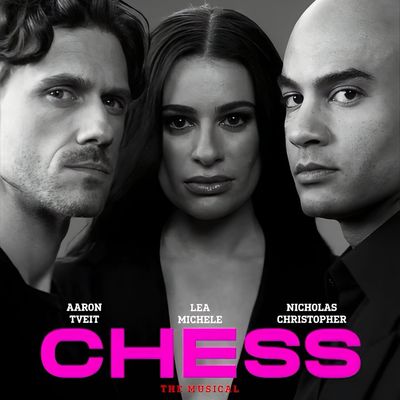
In this episode of Half Hour, we take a deeper dive into the new Broadway revival of CHESS at the Imperial Theatre, examining how the latest book rewrites and the use of a narrator reshape the show’s Cold War love triangle... Read More
From the show: Half Hour with Jeff & Richie (Post-Show Broadway Discussions and Interviews)
Featured Shows
About
In this episode of Half Hour, we take a deeper dive into the new Broadway revival of CHESS at the Imperial Theatre, examining how the latest book rewrites and the use of a narrator reshape the show’s Cold War love triangle. We look at how the score by Benny Andersson, Björn Ulvaeus, and Tim Rice now sits alongside the revised scenes, asking whether the music and storytelling finally feel in sync.
We discuss the overall production under director Michael Mayer, from the staging and design team to what’s working in the casting, with particular attention to Nicholas Christopher’s Anatoly and Hannah Cruz’s Svetlana. Along the way, we raise the question of whether Broadway audiences are being dumbed down, dig into this revival’s Tony chances, and wrap up with their “Half-Minute” segment, each highlighting one specific moment that stayed with us.
Follow and connect with all things @HalfHourPodcast on Instagram, TikTok, and YouTube. Share your thoughts on this production in the comments on Spotify, and let us know what you would like us to cover next. If you enjoy these post-show conversations, follow Half Hour and leave a rating and review so more theater lovers can find the podcast.
Transcript
This transcript was automatically generated and might contain errors.
[0:00] Jeff Malone: Welcome to Half Hour with Jeff & Richie, the podcast where we explore the latest shows we see, sharing our insights and opinions on the performances, storylines, and everything in between. In today's episode, we're discussing the 2025 Broadway revival of CHESS, playing at the Imperial Theatre in New York City. Whether you cannot catch the show in person or you want to expand your thoughts after seeing it, this episode is for you. And as always, we want to inform you that this episode will contain spoilers, so if you're ready to dive into this production, stick around with us. I'm Jeff.
[0:29] Richie Grasso: And I'm Richie, and we're thrilled to be your hosts for today's episode. But before we start the conversation about CHESS, here are a few words from our advertisers.
[0:35] Jeff Malone: Welcome, everyone, to a new episode of Half Hour with Jeff & Richie. Today, we're discussing CHESS. Let the games begin. This fall, or this past fall, Tony Award winner Aaron Tveit, Emmy Award nominee Lea Michele, and breakout powerhouse Nicholas Christopher star on Broadway in CHESS, the iconic musical where power and passion collide, and the stakes couldn't be higher. It's America versus Russia at the World CHESS Championship, where the espionage and romance are as complicated and exhilarating as the game itself. For the two players and the woman torn between them, everything personal, professional, and political is at risk, and nobody's rules are the same. With a legendary score by ABBA's Benny Andersson and Björn Ulvaeus, lyrics by Emmy, Grammy, Oscar, and Tony winner Tim Rice, and a new book by Emmy winner Danny Strong, direction by Tony winner Michael Mayer, CHESS is the must-see Broadway event of the season, says the press.
[1:23] Richie Grasso: All right, well, let's get into our theater hot take for CHESS. So my hot take here for CHESS is two things. One, I still hate narrators and musicals. And two, Nicholas Christopher's performance as Anatoly is definitely going to be the performance that everyone should be watching out for in the leading actor in a musical category at this year's Tonys.
[1:48] Jeff Malone: Totally agree with those two things. I will say that this musically is aesthetically pleasing. I think there's a great score. It's nice to see this back on Broadway again. However, I did have some issues with some of the staging, some of the new book changes, some of the choreography. A little bit of everything was a little more mid-level for me, but I will say I really like this score. So that was a plus of this. So we'll dive into some of those moments now.
[2:18] Richie Grasso: Yeah, let's get into the plot concept book and music of this musical. So this is a revival. Yeah, I think in the 80s when this came, this was really groundbreaking. It was during the Cold War. We're using chess as this way of telling the story, but with this 80s synth kind of pop sound for Broadway. Some big anthem ballads. I think that's some great moments. And it's also political, and it's talking about what's going on in the world at that time. And I think that it was probably ahead of its time in the 80s. It was somewhat of a flop. And we haven't seen much of it since. It has a cult following of sorts. There's been some big concert productions all over the world over the last 30, 40 years.
I don't think we've ever had a Broadway revival of this before. So when I heard that the revival of this was coming, I was like, okay, this is cool. I hear a lot of summer stocks doing this and regionals doing this from time to time. There's definitely, you know, and I know they changed the book a little bit and they adapted it and edited it and cleaned it up a little bit and just gave some songs to different characters and kind of spruced it up in that way.
[3:22] Jeff Malone: I will say that to me, the plot and the concept already works. It was already working. This idea that like these people are going to be the pawns in the chess game, both figuratively, politically, romantically. There's all these different layers to it. It's very filmic in the way the story is told with these different locations. I think it works. And so the book adaptations of like adding this narrator in, moving the songs around, I didn't think it neither helped nor hurt. I think it just kind of was just added. And I think that the narrator, to me, I mean, I can go on and on about narrators and musicals in general, but to me, you have a Greek chorus of ensemble and a narrator. I've never seen both before.
I mean, I'm sure that's happened before, but I feel like it's either like you have a narrator or you have a Greek chorus because Greek choruses are like narrators. So I don't really under, in a way. So I don't know why we're like adding layers and layers of like, let's tell the story to the audience this way and then this way. Oh, and let's make sure they don't forget this. Let's remind them they're in a musical and constantly being taken out of it. That concept of like, let's tell them all about the Cold War and that this is a musical and I'm going to be the fun narrator to break the ice. Like, no, we don't need that here. This story and show works, I think, without that needed add for a narrator. So this concept became less concept-y and more like book, musical, plot, narrator, instead of like trusting the audience with the concept itself.
[4:56] Richie Grasso: Yeah, well, it felt like, how do we put chess on the stage in 2025 and let people understand it? Like, it made me question like, oh, are we not really taught about the Cold War enough for people to understand it? And then like to kind of see the history of this whole piece, you know, this was in London first in 1986 and then it was on Broadway in 1988. And we already know from that production to Broadway, it was heavily reworked for the American audience. And it, you know, it didn't do well when it first opened, but it does have this cult following. And I was reading that it has a cult following because people like to talk about the actual production of chess that they saw and compare the differences with it.
And I think what this production is now doing, too, is it's comparing and adding to that cult-ness of it. That like, oh, I love chess. It's amazing. And now I saw this one and I'm so intrigued to see what they did differently. It almost feels like we're never going to get a locked production of chess because it's always going to have these reworkings, kind of similar to like Merrily We Roll Along. It was like changed so many times from like when it flopped to where it finally got to its production in, what was that, 2023, I believe, or 2024. I don't remember. But that became like the staple show now. People were like, wow, they finally got Merrily right. I don't know if we finally got chess right.
[6:14] Jeff Malone: Yeah, because I feel like we're still like, it seems like we'll talk about the ensemble in a little bit, but the ensemble seems oddly used in this piece, where the first half of the show, they're in some songs, but then they're sitting. And I'm trying to wonder, like, who are they when they're sitting on the couches? Are they the audience on stage? Are we watching the action? So much of the action is dead center, down dead center the whole time. We have this whole set that's barely used. And we have the ensemble, but then the ensemble kicks it off of that, too, with this like crazy choreo out of nowhere. And then we see another choreo number later. But like, the ensemble is oddly used throughout.
And I don't think that it was clear who they are, what they're supposed to be. They should have been the muses of sorts, the narrators of sorts, instead of having this additional narrator, who Bryce is great, but I just don't think that really works for me, because I think I can follow this. But if someone could argue, no, no, no, this is really complicated. And we need to make sure audiences understand the Cold War. No one's going to get it. But then I'm like, but then you're not trusting the story. You're not trusting the music to tell the story. I'm wondering if they're saying, oh, there's going to be stars in this. And so a bunch of tourists are going to come see this. And so like, we need to just make this really, really clear, because it was a flop all those years ago, like, what we're trying to do.
And then they at the same time removed this chess aspect of it. There was no black and white stage, which a lot of times you see in productions. The people feeling like pawns moving across the chess board was the whole concept a long time ago, the literal chess and the figurative chess. And instead, it became like that all got thrown out the window with this red floor, but then the people are in black or white clothing, but they're not really... I don't know if the concept of chess really stayed much, because if you don't know that they're playing the game of chess, I don't know where else other than them saying it in the World Championship moments, it just seems like we're not doing the concept anymore. So that's a choice.
[8:09] Richie Grasso: Right. So I think if we kind of go back to the book of this musical, though, and the music and lyrics now, what do you think is actually working in this rendition of chess?
[8:20] Jeff Malone: Well, I think the music intertwined with the plot is working. I think the orchestra on stage helps us remind us that the music is a major character here, the music is good. But again, it was almost like they built the set for the orchestra, and the actors were barely on it besides a couple times. But it was almost like, let's feature the orchestra, make them look really cool in the lighting. So now we're talking about a concert. So now I feel like I went to go see chess in concert. That's what it felt like. And I think this totally, totally works in concept form of a concert, because you feature that music. But I didn't see any differences between the concert version of chess and this Broadway revival of chess, because it felt very like, come on, sing the song, go off.
Come on, sing the song, go off. The book scenes were just down center. And then we go off. But I think that goes back to the book here in general. I mean, it's a love story kind of trifecta here, really focused around Florence, who is in love with both male leads here and decides and they're, they're from both countries. So she has to decide who she wants to be with. And she's also the pawn in the game here with what's going on between the USA and Russia. And it just feels like, I don't know, I don't know if I believe the story enough. The love story enough, like in these book scenes, like I thought like, if we were going to get some rewrites here and bring this more modern-ish, it wasn't going to be that we were bringing it more modern with today's political time period that we were getting from the narrator for people to connect the dots that, oh, like history's kind of repeating itself. But then we have like the Trump and Biden references constantly, it seems like unnecessary because it just, I don't know, it just seems so unnecessary. Some of the added narrator moments.
[11:17] Richie Grasso: This show in so many different ways. She is owning that character. She is acting through song. She is giving us most of the depth here instead of just walking down Center Park and barking it. I'm so connected with her. She's such a dark horse in this Broadway industry right now, and we need to, need to use Hannah Cruz more in the upcoming production.
[11:46] Richie Grasso: They're the standouts for me. They're the stars. I think Aaron and Leah sing well. Yeah, their acting didn't really quite where I didn't really believe all the things they were struggling with and the difficulties because it seems so rushed and surfacey, but they're singing it great. I mean, all four of those people are vocal powerhouses, and it's amazing to see that. I just think Hannah really pulls it out of the water, as does Nicholas Christopher.
[12:09] Richie Grasso: Nicholas Christopher has this moment towards the end of the show where he's holding this like sick note, and he's like on the floor, and it's when they're in the green square, and they're at the game, and he's like not screaming, but he's like singing this high, long note for what felt like five minutes, and I felt like it was the longest I've ever heard someone hold a note without taking a breath, and I was like, okay, he's a machine. It's insane what he's doing. Also, Anthem at the end of Act One is gorgeous. It's one of my favorite songs in the show. He sings it so well. It's a brilliant way to end Act One. I just think he's totally one to watch out for in the Tonys this year. No doubt.
[12:45] Jeff Malone: No doubt at all. And, you know, we talked a little bit here about like, not that they weren't working here with Lea Michele and Aaron Tveit, but there was a missing connect, I think, with their acting performance in this.
[12:59] Jeff Malone: And I don't know if that comes down to the direction of the piece, or I don't know if that's coming down with what they're actually being told to do with also the choreography, but it just felt very like concert style with them where they were just going down, singing their ballad, or singing their song, and leaving, and I'm like, wait, there's no movement happening with them. There's no, there's a lot of like high school hand moments where they're like, and I'm like, that seems very amateur.
[13:29] Richie Grasso: Also, yes, and I will say like with the new book and the direction of the choreography, listen, I've seen shows where I don't see direction or choreography or book, and I'm like, I don't know what's going on. I know what's going on here. They made choices, right, to leave the ensemble on stage the whole time, to put the scenes down front and center the whole time, to put the orchestra on stage, to put this narrator in and give him these like one-off liners that are going to make the audience, those are choices. So it's not like there was no choices made. It's very clear they made all these choices, or I'm looking at it like, I don't agree with a lot of these choices, because to me, I think the ensemble, I think back to the Jessica Vosk, Muni 2023 chess, and I think back to the video clips that I've seen of the way that that ensemble is working around the actor, circling her, engaging with her on nobody's side, and it's black and white stage, and they're circling, and they're thrashing their bodies, and it's this difficult, and Leah singing it is like, in this revival, is like on stage alone, and the ensembles behind her are barely doing anything until the end of the song, and she's just down center, and then someone else's story at the end of act two, down center, everything's just down center, sing, and then go, and then walk, walk, walk, walk, walk, watching them walk off stage for five seconds, that was a choice.
[14:41] Richie Grasso: I don't really get that from a directorial standpoint, because again, you're giving us the concert version of chess.
[14:48] Jeff Malone: Yeah, well, it's hard, because that's the first thing I said to you when we left the theater, I said, wow, this really just felt like an encores production, and there's nothing wrong with that, if it was an encores, but for this to feel like a stage concert version of the show, it didn't really live up to what I was expecting on Broadway right now.
[15:07] Richie Grasso: Not when you see what Jamie Lloyd just did with Sunset Boulevard, I'm sorry, you could have engaged the ensemble much more in projections, in visuals, in movement, and more scenery coming in and out, maybe, or maybe the orchestra not being seen, I don't know, there's so many things we could have done with that.
[15:23] Jeff Malone: Right, I didn't mind the orchestra being on stage as much, I more minded the fact that maybe they felt like it was too repetitive to have the whole chess movement happening on stage, but for someone who has never seen a production of this, I look at this and I say, that was a missed opportunity for me, I wanted real chess movement happening on the stage, the show was called chess.
[15:43] Richie Grasso: Yeah, and I will say like the orchestra on stage was, I will say from a scenic, you know, going into some of the design, from a scenic design, it was cool, if you're in the orchestra, I would love to know if you love or hate sitting like that, like shoulder to shoulder in a big U like that. It sounded great. So from a sound design perspective, I thought it was one of the stronger pieces I've seen for sound, although the whole show is just very loud, always, but at least it's balanced and mixed, so I can hear everything pretty clear.
[16:08] Jeff Malone: Yeah, using full winds, full orchestration, string instruments, they're using full orchestration, which is really great. And so if they're on stage, they're seen well, I think orchestra wants to be lit and seen when they're on stage, but then like that was a choice, but then that filled the stage and there was really nothing else to do with the actors besides the actors walking up on stage. Sometimes the actors walking up on that runway a little bit, but I will say from a, I wasn't even that obsessed with the costumes. I thought the simplicity of the costumes felt concerty again, even with the ensemble just being in the gray, but I will say it's lit really well.
[16:42] Richie Grasso: The lighting is incredible. You feel like you're at a rock concert, but then at times you feel like you're at a Broadway show. I do think it's lit well. I always praise lighting designers who are working with sets that are like skeletal, that feel like, hey, there's not that much to work with here besides a psych in the back and a bunch of LED mover lights have fun, you know? And I think with Michael Mayer's direction here, I usually like it. I mean, everyone knows I'm a huge fan of Spring Awakening and I loved what he did with that show. Bringing people on stage, that was a very bare stage, but focused in where those kids were on that stage in Spring Awakening.
[17:19] Richie Grasso: And I even enjoyed American Idiot where it was like scaffolding and a lot happening and very rock concert-esque. And I just thought like this, there was a missing thing that normally he brings to a show that makes it his that I just don't think was here.
[17:34] Jeff Malone: And when we get to Lauren's choreo, I don't know really where I stand with her in her choreography because I've seen a few shows with her now and I kind of am getting her style. There's a lot of hand choreo that's happening, which feels like, not that it's easy, but for the people and the talent that are up on that stage, it looks too easy. And I don't need high energy choreography all the time. I don't need it like Casey Nicholaw's Next Level. I want storytelling happening.
[18:08] Richie Grasso: But she brings it in One Night in Bangkok. And I will say that's a great number. That's the best choreo in the show. I think it's sick. It's amazing. But then everything else seems a little like jolty and stiff and simple. And when you go back to that Jessica Vosk production at the Muni where she is doing Nobody's Side, I'm watching that choreo and I'm saying, okay, I understand the story that's happening here. What side is she taking? There's so much, I'm on this side. Boom, boom. Which is chess. The game of chess is literally. And so when you put them alone on stage to sing these ballads, I don't know where the conflict or the internal struggle is because it's just like you're in an audition room singing a song by yourself or you're on stage at a concert.
[18:47] Jeff Malone: At least when Celine Dion belts, she has a microphone to hold in her hand. So they don't even have that. So that was a big problem with Lea Michele's performance. It's hands, hands. She's using her hands all the time when she's singing. Put your hands down for three seconds. What are you reaching for the whole time in every song? Putting your hands up and down.
[19:06] Richie Grasso: And I just didn't know if I totally bought that she needed to pick a side. It already seemed like she was done with Freddie. And that she was already on to Anatoly. She didn't give me the build that I really needed with that character. And also, she didn't give me the build to like kind of be hangry enough at Anatoly's, you know, wife. And they're supposed to have such a moment there. And I think that like Hannah Cruz really kind of gets that. But like is only matched by what energy from Lea in that. And that seemed off.
[19:47] Richie Grasso: And then I also I just think like the plot was for a show that is this long. It took us a while to get into the plot. The musical numbers were great plot development in some ways. But again, I think that comes back to the score. I think this concept and the original meat and potatoes, for lack of a better term, here is there. It's a show that works and it's selling and it's great music. And I will keep saying I think the best part of the show is the music. I think it's great.
[20:11] Jeff Malone: I feel like for myself, I would love to see what an analysis is, though, like with bringing this narrator into the piece. Did that add more to this book and like make this show even longer because it was really long? Or what did they remove and like give to him? Like that would be very interesting to kind of see.
[20:33] Jeff Malone: Welcome back to Half Hour with Jeff and Richie. We're diving into the new revival of CHESS on Broadway, and there's so much to unpack.
[20:45] Richie Grasso: Absolutely, Jeff. This production at the Imperial Theatre has made some significant changes, especially with the book rewrites and the introduction of a narrator.
[20:57] Jeff Malone: Right, and it really reshapes the Cold War love triangle at the heart of the story.
[21:05] Richie Grasso: It does. The score by Benny Andersson, Björn Ulvaeus, and Tim Rice has always been iconic, but now it feels like the music and storytelling are finally in sync.
[21:17] Jeff Malone: I agree. The direction by Michael Mayer has brought a fresh perspective to the staging and design as well.
[21:25] Richie Grasso: And let's talk about the casting. Nicholas Christopher as Anatoly and Hannah Cruz as Svetlana are standout performances.
[21:35] Jeff Malone: They really are. Their chemistry adds depth to the narrative, making the stakes feel even higher.
[21:45] Richie Grasso: Speaking of stakes, do you think Broadway audiences are being dumbed down with these changes?
[21:53] Jeff Malone: That's a great question. I think there's a balance to strike between accessibility and maintaining the complexity of the story.
[22:05] Richie Grasso: Exactly. And with the Tony Awards coming up, this revival's chances are definitely worth discussing.
[22:13] Jeff Malone: For sure. It seems like there's a lot of buzz around it, and I think the changes could play a significant role in its reception.
[22:25] Richie Grasso: Let's wrap up with our "Half-Minute" segment. What was one specific moment from the show that stayed with you?
[22:33] Jeff Malone: For me, it was the moment when Anatoly sings about his internal conflict. It was so powerful and really resonated with the audience.
[22:45] Richie Grasso: I loved the staging during that number. The visuals complemented the emotional weight of the song perfectly.
[22:57] Jeff Malone: Absolutely. It’s moments like that that remind us why we love Broadway.
[23:05] Richie Grasso: Well, that wraps up our discussion on CHESS. Thanks for joining us today!
[23:13] Jeff Malone: Be sure to follow us on social media and let us know your thoughts on this production.
[23:25] Richie Grasso: And if you enjoyed this episode, please leave us a rating and review.
[23:33] Jeff Malone: Until next time, keep celebrating the magic of Broadway!
© Broadway Podcast Network, All Rights Reserved