

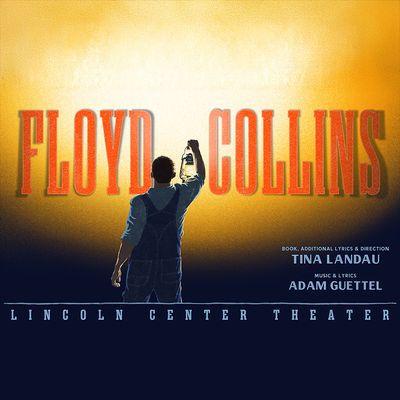
In this episode, we discuss the Broadway revival of Floyd Collins at the Vivian Beaumont Theater. We cover the show's historical background, Jeremy Jordan's performance, Adam Guettel's musical score, and the production design... Read More
From the show: Half Hour with Jeff & Richie (Post-Show Broadway Discussions and Interviews)
Featured Shows
About
In this episode, we discuss the Broadway revival of Floyd Collins at the Vivian Beaumont Theater. We cover the show's historical background, Jeremy Jordan's performance, Adam Guettel's musical score, and the production design. We also share our thoughts on the Tony nominations and how the show connects with audiences.
Follow and connect with all things @HalfHourPodcast on Instagram, TikTok and YouTube. Share your thoughts with us on Floyd Collins on our podcast cover post on Instagram.
Transcript
This transcript was automatically generated and might contain errors.
[0:00] Jeff Malone: Welcome to Half Hour with Jeff and Richie, the podcast where we explore the latest shows we see, sharing our insights and opinions on the performances, storylines, and everything in between.
[0:08] Richie Grasso: In today's episode, we're discussing the Broadway production of Floyd Collins playing at the Vivian Beaumont Theater in New York City.
[0:14] Jeff Malone: Whether you cannot catch the show in person or you want to expand your thoughts after seeing it, this episode is for you.
[0:19] Richie Grasso: And as always, we want to inform you that this episode will contain spoilers.
[0:22] Jeff Malone: So if you're ready to dive into this production, stick around with us.
[0:25] Jeff Malone: I'm Jeff.
[0:26] Richie Grasso: And I'm Richie, and we're thrilled to be your hosts for this episode.
[0:29] Jeff Malone: But before we start the conversation about Floyd Collins, here are a few words from our advertisers.
[0:33] Richie Grasso: Welcome everyone to a new episode of Half Hour with Jeff and Richie.
[0:36] Jeff Malone: Today we're discussing Floyd Collins.
[0:38] Richie Grasso: Floyd Collins is based on the true story of a cave explorer in Kentucky, 1925.
[0:43] Jeff Malone: While chasing a dream of fame and fortune by turning Sand Cave into a tourist attraction, Floyd Collins himself becomes the attraction when he gets trapped 200 feet underground.
[0:52] Richie Grasso: Alone, but for sporadic contact with the outside world, including his brother Homer, Floyd fights for his sanity and ultimately his life as the rescue effort above explodes into the first genuine media circus.
[1:03] Jeff Malone: Reporters and gawkers from around the country descend on the property, fueling the hysteria and manipulating the nation into holding its collective breath.
[1:11] Richie Grasso: Floyd Collins, featuring a haunting exploration of the American Dream by Tina Landau, and a glorious folk and bluegrass-inspired score by Adam Guettel's, tells the transcendent tale of a true American Dreamer.
[1:23] Jeff Malone: All right. Broadway hot take for Floyd Collins.
[1:27] Richie Grasso: My hot take here is that I think that Jeremy Jordan's's giving a great performance, but ultimately I was not fully invested in this musical.
[1:38] Jeff Malone: I would agree with you on that. My hot take is it's like a lukewarm take. I feel like this was not quite my show.
[1:45] Richie Grasso: Jeremy Jordan's is doing some great things in it. Taylor Trensch is as well. But I don't really know if I just really enjoy this production or this show. Even though the story is very captivating, it didn't really do much for me.
[1:58] Jeff Malone: Let's get into this debate here on what we think. Well, when we first talk about just plotted concepts, let's talk a little bit about the history of Floyd Collins.
[2:05] Richie Grasso: So Floyd Collins is a musical that Tina Landau and Adam Guettel's worked on together a long time ago in the 90s. And this show makes an off-Broadway debut. I think it was like a college project for them. It became an off-Broadway debut and it found this amazing cult following.
[2:19] Jeff Malone: Yeah. And I won't tell our listeners how old we were in the 90s, but I will tell you that I wasn't listening to Floyd Collins in the 90s, okay?
[2:26] Richie Grasso: But he only knew what Disney on Broadway was. Maybe that at most for theater.
[2:31] Jeff Malone: So with Floyd Collins, it was off-Broadway. I believe it was Playwrights Horizons. It had this kind of cult following, and then we never really heard about it again anymore.
[2:40] Richie Grasso: And Adam Guettel goes on in the early 2000s to Light in the Piazza, wins Tony Awards. And I will say that I think that's out of all of Adam Guettel's's works, that's my favorite.
[2:49] Jeff Malone: I never saw it, but I listened to it. And Victoria Clark and Kelli O'Hara, it's a gorgeous story. I think his orchestrations and his music are beautiful.
[2:56] Richie Grasso: For those of you who don't know, Adam Guettel's is the son of Mary Rogers. Mary Rogers is the daughter of Richard Rodgers. So this is a third-generation Broadway composing team.
[3:04] Jeff Malone: Oh, team, well, of chain of family, right? Which is kind of cool. But also, well, that's neither here nor there when it comes to this, I think.
[3:13] Richie Grasso: Adam Guettel's also did The Days of Wine and Roses last year, which we saw. We also kind of had a lukewarm vibe with that, even though it was like amazing Kelli and Bryan stuff going on in that.
[3:21] Jeff Malone: Same thing with this. Like, while I think that there's some great acting here, the show itself, I think it's kind of cool to take a story and it's so ironic to me.
[3:31] Richie Grasso: Is it an ironic? I don't know. That Floyd Collins and Dead Outlaw are probably at the same time right now when we're talking about two really bizarre stories of men, actually similar time period, the turn of the century, the early 20th century or so, 20s and 30s, where someone has died in a very obscure way that was fascinating to people.
[3:51] Jeff Malone: For Floyd Collins, this was a true story of a man who went down in the cave and died and lived down there for a while before he died. And the media and fascination with it, I think this production does well where they get the media involved and they come and they kind of barricade around this attraction and they're trying to control to think like the only way news was spreading at the time was the 1920s was newspapers and word of mouth.
[4:16] Richie Grasso: And to think that that many people in Kentucky of all places came here to kind of figure out what was going on and make it like if it was today, well, actually, here's something I could kind of compare it to the submarine that sank with the Titanic, right? We were all not with the Titanic, went down to explore the TikTok. Remember, there was like people alive in the submarine, we didn't know where they were, and then they wound up dying at the ocean floor.
[4:38] Jeff Malone: Well, yeah, and I think it exploded, but yeah, but different, but similar that we became fascinated with that. But that was fascination within minutes, because we all knew what was going on. This took a long time and he was down there for days, Floyd Collins we're talking about.
[4:50] Richie Grasso: So I think this concept is kind of cool. And I think that some of the songs are nice. I don't really think this is my favorite Adam Guettel's score. I love the last song. I actually love the first song when he's climbing through everything. And we'll get to the production in a second, but I just wanted to know kind of what your thoughts were, Jeff, on like, what do you think of this as a concept of a show itself?
[5:11] Jeff Malone: I think this has every right way of setting up to be a great concept for a show. I don't know if like if I listened to this more or if I studied it a little bit more, if I would think that is there an issue with this production, or is there an issue with the show?
[5:27] Richie Grasso: And I think like most of my struggles with this is gonna come in the discussion of the production part of this because I do think it's set up, you know. Like you brought up Dead Outlaw being here in the same season, and what I think Dead Outlaw does really well in terms of it being like more boppy, like in your face in an invested Broadway musical. This is like the complete opposite with the way that it's written.
[5:56] Jeff Malone: You know, how do you take something where a man who is stuck in a cave who can't really move, well, can't move because a rock is on his leg, and make that interesting, you know, and I feel like that's where I disconnected from this because there's still so much going on above ground versus what's going on underground and or in the cave that could have been explored more.
[6:23] Richie Grasso: Well, I think it becomes so much about Floyd Collins' character and what Jeremy's doing, but we lose him a lot because he's underground and we're finding out what's going on above ground. And unfortunately, I didn't really care enough about what was going on above ground. Like there were some relationship issues with family and media, and the contractors coming in and trying to fix it and get him out, and it was cool, but I just was more interested in him and what he was going through down there and the people visiting him.
[6:50] Jeff Malone: That song that he has with his brother is really nice. There are some nice moments, but we don't get enough of that. We're getting so much of this, like the mom and the dad and the daughter, and a lot of to me, it seemed filler, and yeah, the songs seemed filler with the media on the ground level too.
[7:07] Richie Grasso: Yeah, I feel like there's a lot of plot issues with the show. There's character development that doesn't happen. And you kind of ask the question, like, why did we create that character? I mean, obviously, this is a true story, so like they exist, but like we didn't dive into them more. You didn't build a connection with them more. Maybe you weren't supposed to.
[7:32] Jeff Malone: I mean, I think you somewhat build a connection with Jeremy, and that's why I think like he's giving well, Floyd Collins, but and Jeremy's playing him, and I think you somewhat build a connection with him, but I still didn't really get to the point in this piece. And I think, you know, I've talked to a lot of people who said, Oh, I loved it in the 90s, and this production's not really working. Or I was obsessed with the score, and I don't know if I...
[7:55] Richie Grasso: So there was a following for this at one time, and maybe this was a cool experimental, off the cuff kind of show at the time, and maybe we would have been those people, and I was like, wow, this is a cool thing, right? When you go to I'm so sorry, Lincoln Center, and you put this on a grandiose stage, I think expectations don't meet reality.
[8:19] Jeff Malone: And I think I want to kind of go into that. So why don't we go right into the score?
[8:22] Richie Grasso: Before we do that, yeah. I do want to just talk about the score slightly, since that's part of this here.
[8:29] Jeff Malone: I'm finding with Adam's score, this might be a love or you hate it kind of relationship for many people.
[8:37] Richie Grasso: And I don't know why I kind of fall on the I don't gel with how he orchestrates things in his scores.
[8:47] Jeff Malone: The same way that I didn't with Days of Wine and Roses. I feel like sometimes there's a lot of chaos that doesn't feel controlled within his writing.
[8:56] Richie Grasso: Whereas when you look at other people who I don't know if you would say write in the similar style or like write with like chaos, like Jason Robert Brown kind of writes with chaos sometimes. Leonard Bernstein does with some of the wonderful talent score we just heard, but I think what Adam does is Adam doesn't really give us linear, yes, he doesn't give us the beginning, the middle, and the end of a song.
[9:21] Jeff Malone: I feel like he tries to do this like let's kind of go on a wild journey with the song, not necessarily lyrically, but with melody line and with filler instruments, and it just feels like wait, what was and then when the song ends, I'm almost like, wait, the song ended? Oh, okay, oh, wait, what was I supposed to be? Like, I'm not saying it's more advanced for the common ear, but maybe you really have to be orchestral, because a lot of modern orchestral is this.
[9:46] Richie Grasso: If you listen to like a lot of modern writers of orchestra, even modern opera, a lot of it is that feeling. It's not that steady Rosernhamstein or that steady opera. It's gonna have that vibe.
[9:59] Jeff Malone: So does it work with that folk infusion here? At times I think it does. And then I get to a song, I'm like, wait, what was that?
[10:06] Richie Grasso: So it's very hit or miss for me.
[10:08] Jeff Malone: The way it's composed, yeah. I mean, I get it. I just find it the traditional theater person, are they loving it or are they kind of confused?
[10:18] Richie Grasso: But then you get even farther away to like the average theater goer and they're listening to what's composed in this in the score, and you're like, no, there's no way they get it.
[10:33] Richie Grasso: Oh, of course. Where we have like verse chorus, first course chorus, pop song, pop song, pop song, which is nothing wrong with that, but it's just that's what people listen to now on the radio. And but I find like even when you look at Sondheim and the way that he still had a linear flow to his and told a story. I didn't really find that all of Adam's score here tells a story. So that was like a bit of an issue for me.
[10:57] Jeff Malone: Yeah. So that means I think it's a great time to transition into this production. Um, and we'll talk about active performances, the direction, and some design topics here. But first, we're gonna take a quick break.
[11:10] Richie Grasso: Okay, so let's get into this production because I think that you and I are gonna make lots of comments here. I think that there were some good acting moments. There were three actors that stood out to me. I'll talk about them in a second. I think some design choices worked. But what it felt like, and Tina Landau just did this, she also just did Redwood, similar to what I was saying about her direction of Redwood. This felt like, yeah, just put a tree on the stage. Yeah, let's just put him on the corner of the stage and make a hole in the middle of the ground. It just seems very like, sure, throw the towel in. Let's and I'm not saying the work ethic is throwing the towel in. They're all working very hard to put this up. I get that.
[11:48] Jeff Malone: Yeah, I don't think there was anything. It just seems like there wasn't like okay. I don't know if this is bizarre to think, but there was a part of me that heard this was going to the Vivian Beaumont and thought we were gonna be like watching caves be built on stage.
[12:01] Richie Grasso: And that we were gonna be cross when the boat of King and I came out, when the glorious spinning set of My Fair Lady, when we had that in South Pacific, I know you didn't see that. There was a beach, and the sand went up to the ocean at the back. It was in that, you know, that's like one of my favorite Broadway houses, the Vivian Beaumont, right? It just to keep it open like that. Yes, it did give that feel like we're in these great plains of Kentucky, and there's like you can see for miles, and it's this flat land, and I get it. But I wanted to see cavernous, but I wanted to see built things where we as the audience were in the caves with them, and we just totally didn't get that because it wasn't the concepts.
[12:39] Jeff Malone: I'm kind of disappointed if you want me to be the right word there, because this is a dots scenic design.
[12:47] Richie Grasso: Yeah, which I usually love, which we've been very impressed with lately. So, you know, we saw them at Big Gay Jamboree and we loved it. The Romeo and Julia scenic design we really enjoyed, and now like this one, I was sort of let down. And who knows what the collaboration process was with this with Dots and Tina Landau. And I feel like their modern approach with the scenic design was not explored far enough.
[13:17] Jeff Malone: And like you're saying, it felt like easy roots were taken out, and they played with lighting, and yes, they had some set prop things that kind of like led it there. And like it didn't really feel like they got innovative or creative with like him actually being in the cave.
[13:34] Richie Grasso: Right. And it seemed like we were watching a low budget production of like, well, if they crawl out down the hole over there, they're gonna come up over here, and then there he is. Right. Great. We just created the it just I'm not saying everything in Lincoln Center needs to be grandiose, but even their plays, skin of our teeth, uh, even the all the tech elements of the Robert Johnny Jr. play we just saw, um, McNeil. There's definitely high level there, and I understand this is the end of an artistic director, and we're getting a new artistic director next year.
[14:03] Jeff Malone: So this is like the last show, so maybe we are on just the cusp of transition.
[14:06] Richie Grasso: Like we were just talking about Encores. That's the that wonderful time was the last show. Now we're on the cusp of a new season. It seems like actually ironically, the last show of Encours and the last show of this uh of that artistic director of Encores and the last show of the artistic director of Lincoln Center seems to be like, yeah, whatever happens, like cool. Have a great summer. Bye. It just seemed like really rushed.
[14:27] Jeff Malone: Yeah.
[14:27] Richie Grasso: And it doesn't seem like you go went out with a bang here. And I just feel like with the the direction seems the laziest to me. I'm not saying Tina's direction is lazy, I'm just saying it seemed like it. I was really, really, I felt like the energy in that audience was very low.
[14:44] Jeff Malone: It seemed to be weighted down.
[14:46] Richie Grasso: I understand this is a sad story, and this is difficult to portray emotion like this, but the actors are what's bringing the energy. Who who says the famous line of like sometimes you need to let someone else touch your work?
[15:01] Jeff Malone: Yeah, I don't know, but I've heard that before.
[15:03] Richie Grasso: Or like play around with it, and it almost feels like Tina, you had Redwood uh this season, and now you also have Floyd Collins this season. Floyd Collins is your baby, Redwood was also your baby. She invested a lot of time into writing both of these pieces too, which is important to say. But where do you let a director come in to kind of help explore your vision of the piece?
[15:25] Jeff Malone: And it's and you I really feel like you can feel that.
[15:29] Richie Grasso: Like, I don't feel like from between Redwood or Floyd Collins that the scenic time was the scenic design was fully fleshed out, and it felt like it needed more. And I think the audiences are feeling that. And it's also like in the beginning when he was climbing through and he was actually flown and there was pieces moving, and he was crying. I was like, oh, this is cool. I actually loved the first 10 minutes. I was like, oh, we're gonna like not know where he is on the stage right now because it's gonna be so dark, and we're gonna give this vision of different levels that he's actually climbing through caves.
[15:58] Jeff Malone: I was like, cool.
[15:59] Richie Grasso: And then the second he got stuck in that cave for the rest of the show, I found it to be so odd that we were just watching him sit there and the people are just walking around the stage, but he's right there. But like what a missed opportunity because you already said he flies, they fly him around, right? He's going through this cave, and why couldn't we suspend our disbelief or whatever of him being stuck in the cave, but it was up like reverse, like the cave is actually above and the people are down below, and you had to like crawl the opposite direction, or something like bring us out of the that the theater of the Vidyan Beaumont for a second and give us some perspective, which is what Stranger Things is actually doing right now.
[16:39] Jeff Malone: We're getting different perspectives of locale what's up, what's down, what's coming towards us, what's not.
[16:45] Richie Grasso: Like when you see the high tech elements of Harry Potter and Stranger Things, to think that this you would think Lincoln Center would have had a similar budget to have done something. This just looks like how are you charging the ticket price? Let alone the orchestra's also, I don't know the exact number, very small, but that's what the score calls for. But when we even saw Camelot with an open stage, we still had a huge orchestra.
[17:04] Jeff Malone: Yeah.
[17:05] Richie Grasso: So it just seemed like we are cutting corners left and right, and the ticket price is still the ticket price. So I'm just not understanding this.
[17:12] Jeff Malone: No, I just feel like like thinking outside of the box. This is like such a big thing that we've been saying a lot recently is like when it comes to the direction and the scenic design of many shows, why are we not thinking outside of the box?
[17:27] Richie Grasso: Like you are given this big stage. Lincoln Center stage is huge. You can do so much. And to not use that, and he's literally looks like he's sitting on a like recliner throughout the whole the whole show.
[17:43] Jeff Malone: Like if you have him up or even over to the side in a cave, build it out. Show us like what that is. It's funny because we are kind of in a cave in the Vivian. We have all sunken under the ground, literally walking down to our seats.
[18:00] Richie Grasso: Right. I just thought we were to win more concept of that versus a traditional Broadway house. But doesn't it kind of make so much more of an impact if like he's up high and like life is still continuing underneath him?
[18:12] Jeff Malone: Yeah.
[18:13] Richie Grasso: Or above him. I mean, obviously, you couldn't put him down in the ground because then people would be like,
[18:18] Jeff Malone: Yeah.
[18:18] Richie Grasso: But I thought with that sunken pit, I would have thought we would have had something like we he was we were all looking down into the pit and he's down there. I don't know. I thought there would have been cool things. Maybe they tried some of that. Who knows?
[18:28] Jeff Malone: You know, going to some of the actual performances, I will say there were three people that stood out for me.
[18:32] Richie Grasso: Jeremy did stand out for me. Um, I did I was very impressed with Jason Gautier in this. I've seen him in a lot of things, he's great, but I think he really brought a level to this supporting role as the brother, um, as someone who had to really help keep public relations at bay, and it was this focus that like the brother was gonna save the legacy of his brother Floyd down there.
[18:52] Jeff Malone: Right.
[18:53] Richie Grasso: Um, I was very impressed with that, and then the third person, Taylor Trench, who I've seen in a lot of things, really owning his scenes, owning what he's doing, playing this character that's kind of all over the stage, and I just think that those three men in particular stood out for me.
[19:06] Jeff Malone: Everyone else was fine, those are the three that stood out for me.
[19:09] Richie Grasso: Yeah, they definitely stood out to me as well. I know a lot of people have been giving this chatter of like, oh, this role is the role for Jeremy. Of like, does he get a Tony win here? And we'll talk about that in a second. But I did it I also agree, Jason was pretty great as the brother, and I do feel like you had the most development with Taylor's character.
[19:30] Jeff Malone: And him in that role, just you felt a little bit of like what he was trying to accomplish there.
[19:38] Richie Grasso: You know, the one media person turned to like invest it in, like really actually trying to help Floyd.
[19:44] Jeff Malone: Right, right.
[19:45] Richie Grasso: And it there was almost, I feel like at times one too many supporting characters. Like there was so now the mother singing, and oh the daughters, and now we have this guy. It just seemed like so much for not too long of a show either.
[19:57] Jeff Malone: Right.
[19:58] Richie Grasso: And I feel like, you know, it's Lizzie McAlpin in this um this role. I feel like it was fine. Vulcoli felt a little off.
[20:08] Jeff Malone: Um, but the character is kind of just written like you don't care.
[20:14] Richie Grasso: Yeah.
[20:15] Jeff Malone: Yeah.
[20:15] Richie Grasso: And I feel like that was a big thing for me with this production. Is by the end, I was like, I don't know if I really cared.
[20:21] Jeff Malone: Yeah.
[20:22] Richie Grasso: Whereas I did well, and when we talk about our Dead Outlaw podcast, there was we left that show being like, wait, I think they care about this character, right? Or do I care about the other people in his life? Or do I care about what you know? You you leave and you say, What do I care about? There's so many shows like, oh my god, I feel for these people. This I'm like, okay, sad story, American history in a way, 1920, someone died in the cave. Okay, but when you compare the two um characters, why you might gel a little bit more with Dead Outlaw, and it's something we should definitely talk about on that podcast episode, though, is I don't know if it's necessarily you're caring about him versus what you're caring about, what it means to live and then die.
[20:59] Jeff Malone: And this is doing the same thing, but I feel like it's missing that one little moment of like he didn't do anything before getting stuck in the cave. So there was no connection for us to connect with the remote.
[21:13] Richie Grasso: Right. We didn't see his family relations. So we didn't see moments where he connected with those people.
[21:18] Jeff Malone: Right. So in Dead Outlaw, we did a little. So that was different. You learn about his upbringing. And I feel like you don't learn about Floyd's upbringing enough for you to actually care about like, oh, this life is ending. But you obviously care, but he when he especially I did think the night the strongest directorial moment for me was when he walked towards that backstage and he was singing that last song and he just walked into the light. That was a beautiful way to end the show, I will say that.
[21:41] Richie Grasso: Yeah. Um, but yeah, well, I do want to move on to some Tony talk. We the Tony nominations just came out. This did get some nominations. I want to talk a little bit about that as well as our experience of the show. So why don't we take another quick break and we get back? We'll move into that right after a word from our sponsors.
[21:54] Jeff Malone: Okay, Tony nominations came out. Floyd Collins on Broadway has received six nominations. It did get best revival of a musical. For those of you wondering why revival, even though it's its first time on Broadway, it had a commercial run off Broadway. Same thing with the last five years. When something has a run off Broadway, last five years was not nominated this time, but I'm saying it would have been in the revival category. Floyd Collins was considered revival because it had a commercial run already. With a long time span of more productions after it.
[22:24] Richie Grasso: Right. So if it went straight to Broadway from being off Broadway, it would have been considered a new music.
[22:30] Jeff Malone: Like Dead Outlaw.
[22:31] Richie Grasso: Correct. But because there have been notable productions of Floyd Collins after this, it puts it into revival category.
[22:38] Jeff Malone: Exactly. So this did get a Tony nomination for Best Revival of Musical. It did get a Best Orchestrations nomination for Bruce Bruce Collins, uh Best Sound Design of the Musical, Dan Moses Schreier. Best lighting design of the musical, which is also the projection. So the two of them were nominated together under this category, Scott Zelinski and Rui Hornson. Uh Best Performance by an Actor in a Featured Role in a musical for Taylor Trent, and Best Performance by an actor in a leading role in the musical for Jeremy Jordan's. Thoughts on those six nominations.
[23:11] Richie Grasso: Jeremy, I think was expected. I'm very happy to see Taylor there. Lighting is fine. And sound.
[23:21] Jeff Malone: Sound, yes. Or I think the echoing thing was kind of cool. And that's kind of hard to design in a big space like that. Um orchestrations. I mean, it wasn't a huge orchestra, but to make a small orchestra sound that way was pretty impressive, I think. And then Best Revival. Yeah, I mean, it's gonna get orchestrations because it's probably one of the biggest orchestra pieces that we have. Um this season. But there's a lot of shows that are and it was probably re uh expected revival. I think like it probably just got in by the skin of its teeth for revival.
[23:53] Richie Grasso: Um, because I think once upon a mattress would have also been considered that, and then last five years, which I knew was not gonna get any love. But uh but I will say part of me really thought that Jason Gautier could have been supporting nominated. To me, it was between Jason and Taylor. I was wondering if they were both gonna get it. I'm surprised to see Taylor get it over Jason, because I think Jason's role seemed a little bit bigger, but I was so impressed with what Taylor did that I'm like happy to see. I think it's his first Tony nomination.
[24:21] Jeff Malone: I think why Taylor gets in there though, is the acting performance from this piece as well. Uh I think Jason is a little bit more um his character is just a little bit more straightforward, whereas there's more depth to Taylor's character. Um, so that's why I would see that happening. I think uh, you know, it's a good thing. I don't even know about what's gonna win though.
[24:43] Richie Grasso: I don't know what's gonna win either, because let's talk about the performance by an actor with Jeremy Jordan's. You know, I look at this and I say, you know, James Monroe Eigelhart already has a Tony, and Jonathan Groff already has a Tony. But like Jeremy does not. And Jeremy was not, to me, the fact that he was not nominated for Gatsby but nominated for this doesn't quite make sense to me. I think he had more to do and worked harder vocally in Great Gatsby.
[25:04] Jeff Malone: Yeah.
[25:05] Richie Grasso: And the fact that he was snubbed there, but he's getting this. Listen, I'm happy he's getting the nomination. Does that man deserve a Tony one day? Sure. He can carry a show. He's very impressive like that. It'll be interesting to see with Andrew Duran, too. Like that's that category is very and Darren Chris. The category is very stacked. I think it's tough category. I think you're really falling in with those three names with Darren, Andrew, and um Jeremy. All of them are like ready for their Tony. They're at like the touching point for their Tony. Andrew had just come from Shucked. I think he was also nominated.
[25:37] Jeff Malone: It might have been, yeah.
[25:39] Richie Grasso: Um, I don't know the last thing Darren was in though.
[25:43] Jeff Malone: He was into that Buffalo, American Buffalo.
[25:45] Richie Grasso: Yes. And then he also did Little Shop off Broadway, went and filtered in there. Didn't he want Tedwig?
[25:52] Jeff Malone: He did go into Hedwig.
[25:53] Richie Grasso: So in terms of like originating a role, um, it could be his moment. I also think he is a favor to win, like a favorite to win.
[26:03] Jeff Malone: Um but I also look like then I see like what Jonathan Groff's doing in Justin Time. He's working that whole show, but he did just win last year. So it's the same thing with like with Audra having all her Tonies, does Audra win the tone just because do you do Tony voters take that into consideration and say, well, they have eight Tony's already? They have or seven to or they have one already. Like give it to someone. I don't know if that's not Tony Voters' thing. It's gonna be interesting with Jonathan Groff now because just in time is not nominated for Best Musical. So they're not going to be performing at the Tony's.
[26:30] Jeff Malone: So they're not going to be able to showcase.
[26:33] Richie Grasso: But by then the votes are already in. But yes, yes. But it's going to look like the setup is for maybe happy ending with Darren or Jeremy and Floyd Collins or Andrew and Dead Outlaw.
[26:51] Jeff Malone: Yeah, I think Jeremy could win it. Um, I don't it could even win sound design, it could win orchestration. I don't know if it'll win best revival. I mean, we also have Sunset and Gypsy as Best Revival. You know, I could see those kind of maybe winning over this. And the same thing with um featured here for Taylor. I mean, like we have Jeb in Dead Outlaw, which is also like really carrying that show along with Andrew, and you also have Jack Malone and Operation Mits Me, which I think is the favorite to win.
[27:19] Richie Grasso: Yeah, maybe.
[27:20] Jeff Malone: And so it'll be tough. And it's good to see Floyd Guns get nominated. I think I under agree with the majority of these nominations.
[27:25] Richie Grasso: Yeah, uh, it did not get a best direction nomination, it didn't get any other supporting character nominations, it didn't get scenic design, you know.
[27:32] Jeff Malone: So I know correct me if I'm wrong. Many times the best director, like who's nominated for best director, and then the show is also nominated.
[27:43] Richie Grasso: Many times, yes, just like whatever wins score, a lot of times we'll also win best musical. Not always, though.
[27:48] Jeff Malone: Yeah, it it's not always that way. So a big thing last year was Dania Tamer won and Outsiders won, but it did not win score because the SUFs won score. So it's I think so. So it's interesting to see that, yeah, you could also not win score and win best musical.
[28:03] Richie Grasso: So, but also it it comes down between the director for musical and revival art, the same category.
[28:11] Jeff Malone: Correct, it's different, right?
[28:12] Richie Grasso: So could Jamie Lloyd win for Sunset Boulevard? I mean and oh yes, and then Sunset doesn't win revival or it does, it'll be interesting. Well, I'm just saying, like uh the chances of it, whatever wins revival and whatever wins best musical, usually one of those directors would probably be winning.
[28:29] Jeff Malone: Right, right. So like Floyd Collins Director's not nominated. Um George C. Wolf's not nominated for um for Gypsy, but Jamie Lloyd is for Sunset.
[28:37] Richie Grasso: Right.
[28:38] Jeff Malone: So yeah, it's gonna be interesting. But Michael Arden's for maybe at the ending right, Michael Arden and David Cromo for Dead Outlaw, Jamie Lloyd for Sunset Boulevard. I mean, like you have some of the big names there already with the the front runners in those categories.
[28:51] Richie Grasso: So and uh any other experience?
[28:55] Jeff Malone: I just feel like uh like I said, the energy seems low in Lincoln Center. Usually you'll go to the spring show at Lincoln Center and it's just packed and it was some empty seats, and I was like, it's a Friday night we went, and I was like, Yeah, come on, I don't know what's going on here, but maybe it'll pick up.
[29:08] Richie Grasso: Yeah, I mean, it's gonna be very interesting to see like what happens with Lincoln Center. We already know the rumors bustling around that ragtime's coming and not sure. There are some leaks that have been out there with like postings and things like that. But I my bigger question to you though is what is Lear really going to bring to Lincoln Center, and how does she get out of this whole encourse style?
[29:36] Jeff Malone: Um well, she she can put the orchestra on stage all she wants, which is great, but we have a beautiful, lovely, gorgeous sunken pit where the stage comes out and we see so we might be going back to, you know, I don't know. I remember that I believe it was under Lear's artistic direction that we were supposed to have the thoroughly modern Millie reworked uh revival and that never came, so maybe that's like it'll be you know, Lincoln Center. This kind of thing. But I'm thinking about like grandiose productions, Lincoln Center style. Is she directing or is she giving that to other directors? And are we getting the big lavish scenic design that we Lincoln Center has been knowing?
[30:11] Richie Grasso: Oh, yeah, it'll be interesting. So we'll have to wait the summer out and see.
[30:14] Jeff Malone: So oh my gosh, just about out of time. What are your final thoughts on Floyd Collins and Robin?
[30:19] Richie Grasso: Yeah, I mean, in terms of all of the musicals, revival and new musicals this season. This is pretty low on my list because I just was not a huge fan of the score. Um and the overall story was like interesting, but like it just not enough for me to be like raving about this production.
[30:40] Jeff Malone: Yeah, it was okay for me. There was moments and the whole thing overall didn't really work for me. But uh if people enjoy the if you're a follower of this show for a long time and you enjoy the story and the music, then go check it out. And it's always nice to go to Lincoln Center, you know.
[30:53] Richie Grasso: Of course. If you can. Uh, but hopefully it does well with the Tony's, and we wish the whole show the best of luck as they continue. I think they're going till July, I want to say it runs till. So hopefully it'll go strong for the remainder of the room.
[31:03] Jeff Malone: That does wrap up our discussion of this episode. We hope you enjoyed our deep dive into Floyd Collins. Remember, we want to hear from you. Continue the conversation with us on Instagram and TikTok at half hour podcasts. And drop us a comment on Spotify and let us know your thoughts on Floyd Collins. And please leave us a review. Your reviews mean so much to us. Remember, you can listen to past episodes and stay tuned for the many upcoming ones as well. Until next time, I'm Jeff.
[31:24] Richie Grasso: And I'm Richie saying ta ta for now.
[31:26] Jeff Malone: Bye.
© Broadway Podcast Network, All Rights Reserved