

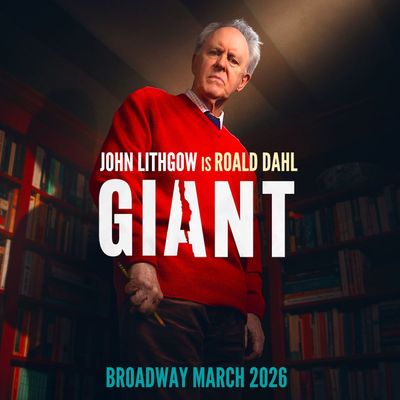
In this episode of Half Hour, we discuss the Broadway production of Giant, now playing at the Music Box Theatre. Written by Mark Rosenblatt and directed by Nicholas Hytner, the play centers on a pivotal chapter in the life of Roald Dahl, examining the tension between artistic legacy and personal controversy... Read More
From the show: Half Hour with Jeff & Richie (Post-Show Broadway Discussions and Interviews)
Featured Shows
About
In this episode of Half Hour, we discuss the Broadway production of Giant, now playing at the Music Box Theatre. Written by Mark Rosenblatt and directed by Nicholas Hytner, the play centers on a pivotal chapter in the life of Roald Dahl, examining the tension between artistic legacy and personal controversy. We take a deeper dive into the play’s structure and focus, breaking down how its contained timeline shapes the narrative and leaves space for audience interpretation. We also discuss John Lithgow’s performance as Dahl, and how the production balances charm, discomfort, and confrontation in its portrayal. The conversation explores the design, direction, and overall staging choices, as well as the production’s reception and Tony Awards recognition, including nominations for Best Play and Best Direction. We consider how Giant positions itself within the current Broadway landscape and what it asks of its audience.
Follow and connect with all things @HalfHourPodcast on Instagram, TikTok, and YouTube. Share your thoughts on this production in the comments on Spotify, and let us know what you would like us to cover next. If you enjoy these post-show discussions, follow Half Hour and leave a rating and review so more theater lovers can find the podcast.
Transcript
This transcript was automatically generated and might contain errors.
[0:00] Jeff Malone: Welcome to Half Hour with Jeff and Richie, the podcast where we explore the latest shows we see, sharing our insights and opinions on the performances, storylines and everything in between.
[0:08] Richie Grasso: In today's episode, we're discussing the Broadway production of Giant playing at the Music Box Theatre.
[0:12] Jeff Malone: Whether you cannot catch the show in person or you want to expand your thoughts after seeing it, this episode is for you.
[0:18] Richie Grasso: And as always, we want to inform you that this episode will contain spoilers.
[0:21] Jeff Malone: So if you're ready to dive into this production, stick around with us.
[0:24] Jeff Malone: I'm Jeff.
[0:25] Richie Grasso: And I'm Richie, and we're thrilled to be your hosts for this episode.
[0:27] Richie Grasso: But before we start the conversation about Giant, here are a few words from our advertisers.
[0:32] Jeff Malone: Welcome everyone to a new episode of Half Hour with Jeff and Richie.
[0:35] Richie Grasso: Today we're discussing Giant.
[0:37] Jeff Malone: A world-famous children's author under threat, a battle of wills in the wake of scandal, and one chance to make amends.
[0:43] Richie Grasso: Following an acclaimed West End run and three Olivier Awards, Giant tells the story of Roald Dahl and the true scandal that shook his legacy.
[0:51] Jeff Malone: All right, so let's get into the overall thoughts on the plot and concept of Giant.
[0:56] Richie Grasso: So going into Giant, I did not know anything about what I was going to experience. I knew this was about Roald Dahl. A lot of us know who Roald Dahl is, right? I did not know this side of it, and I went in very blind on purpose to kind of learn and see how the play was going to teach me this.
[1:12] Richie Grasso: And I think this was a prime example of a really cool way to say, like, hey, here's this way we know this, but let's pan over here for a second and talk about this. Similar to how we talk about rather than telling the whole life story of someone on stage, why don't we tell this one specific time in this person's life? This just so happens to be really heavy, really dark, really serious. And I think there's this like incredible, like, wait a second, that Roald Dahl? I don't think I know another Roald Dahl. Like you're talking about the Roald Dahl of like the famous children's books of many years that like thousands and probably millions of children have read. Constant film adaptations and stage adaptations and multiple times where there's so many people reading these books over so many years, and you're like, whoa, didn't see that coming.
[2:01] Richie Grasso: I didn't know this, and I'm sure this has been known for a long time. And it took this play to really be like, wow, educate me on this. And I love when theater can educate me on something. So I will say that that was really, really incredible that the playwright and the director and the team took this on. Just to take this subject matter on and to tell this story in this way, really captivating and really incredible.
[2:24] Jeff Malone: Yeah, I found that this was an interesting, like from the whole plot and concept here of taking someone who at a time, like if this was today and this was coming out, and he was saying the things that he was saying that he said in the 80s, like I think you know, cancel culture would really have come after him in a very different way. And I think, you know, when you look at the time periods from then and to now, it's so much easier for word to get around about someone who is a public figure and the choices that they're making around things that are happening in politics and just saying things that are wrong about people in general, right?
[3:05] Richie Grasso: And I found it fascinating that the playwright gave a note in the playbill that said, well, a lot of this is a play, you know, and there's a lot of events that happen throughout. There are two things that are stuck true. And is it was his review of the book and it was that last phone call. And I believe it said word for word. Yes. So I think that's I actually loved that I knew that, and that I read that before going in. So when we got to the end, and I was like, oh, there's this phone call. I really listened to every single word. And the fact that we end the show like that, I'm like, oh my gosh. Like, I wonder what it would have been like if I was like, okay, and then I learned after. But I think I liked knowing going in that that was the word for word truth of what this man said to this person on the phone.
And I was like, wow, that is wild and crazy. And then the play kind of ends shortly after that, and you're like, you're just shell-shocked. You're like, okay, what? Like, that is wild that someone's speaking like that and saying these horrible things. And that's a famous children's author, not to mention, then you have like famous John Lithgow in this role who we've all seen. So there's like, we're like, whoa, I'm just like, theater can make us really uncomfortable at times. I think this is a prime example of the show that it doesn't, we don't have to sit super comfortable and like laugh or cry, or oh, like this was something we're like, whoa, no, we should sit here and learn this and witness this, and like, whoa, and leave there like a little like okay, yeah, yikes, you know.
[4:27] Jeff Malone: Well, I think, you know, like taking a little bit of a deeper dive into this, you know, with the playwright writing a piece like this, you must feel like the intention is around like how do we or should we separate the art from the individual? Right? I think that's the big question here. And I think many people would probably sit in a seat and they have to have a conversation around this, and they would say, I'm not separating the art from the individual. Why are we going to enjoy art from someone whose morals are not aligned with what they're writing?
[5:04] Richie Grasso: Mm-hmm. And growing up as a child, after Roald Dahl had passed, and going through school systems where we were told, read Charlie and the Chocolate Factory, we're reading Matilda, we're reading, uh God, uh The Witches, right? That was and that was the book that was being talked about in this early to mid 80s setting of this play. That it was like, is that code for something? And he's like, what are you talking about? And she's like, I it people are not really a big fan of witches. And then there's a movie adaptation of Witches, and we read Witches like, so I am a child of post the eighties, and here's an example of like all of us reading these books not knowing this, or maybe people did know that like, and I think I could be wrong, I think kids are still reading these books.
So here's an example of like have some people stopped selling his books? Sure. I'm sure there are. Are some people telling their kids not to read them? Sure. I would think that that is happening. But by the masses, these books and stories are still mass produced and put out into the public. But it's very interesting. Right.
[6:00] Richie Grasso: But I feel like if you go back to what's actually being discussed here, is around someone, Roald Dahl, who said who made comments that were not really probably aligned with the work that he was putting out, and someone was calling him out for it. And could that get out to enough people? I think is like really getting talked about, right? Because, like we're talking about, as we moved through the nineties after his death, no one was talking about him in that way. It was almost shoved down our throats in a way to read Matilda and James and the Giant Peach and Charlie and the Chocolate Factory. And then for people to take that source material and then turn them into films. And not only just films for adults, but films for children and also musicals.
Like this legacy has moved on and lived on. For someone probably to say, like, why are we still doing things with Roald Dahl's material? I'm actually gonna make a play about it now and call him out for what he said in the, and the irony is that those stories are about mostly what people being kind and respectful and being a good person and fighting through the thick of life and the, you know all the difficulties that the main character, usually a child, has to go through to get to being deserving of being a good person. And I think of Matilda, James and the Giant Peach, and Charlie and the Chocolate Factory, those three big ones where the central character is this like going to strive to be the best person they can be.
And then you're like, whoa, and he's saying what now? Like it's just like night and day in terms of just like the emotions of that, and the, uh it was just fascinating that a playwright took this spin on it.
[7:44] Jeff Malone: Yeah, I think it was pretty fascinating. Where I would say, like, why I think this play is kind of also standing out really well, is because this is like not, I mean, like you have to kind of separate what's the fact and the fiction here. Like we're told that you know, the review and the call are what's fact. It happened. And then let's like let's overdramatize this now and say that this all happened in one night. Probably is the fiction portion of this. Sitting down for lunch in the space to have the publishers come and talk to him about saying you need to apologize for what comments you made. There is probably the fiction in this and the overdramatizing of this, which is more interesting, I think.
Maybe, or maybe this is a real, maybe there were multiple reporters. Maybe this was one person, maybe it wasn't in his house. Like, you know, who knows what the details are of that. But the setting of the house in the summer and the renovation work being done is kind of metaphor of just the change that maybe he was maybe he didn't believe this in his youth, and then it was in his older age. He seemed so curmudgeonly and old man, uh hates the world kind of vibe at the end there. And it's like you never really think of that as like a children's book author. Usually, like they, I would think, age gracefully, like with their work being their light, but I mean, fascinating.
[8:59] Richie Grasso: I feel like when we get into the production of this, I think there's so many things that are getting represented on the stage. But one last thing, like I kind of wanted to touch on too here is when you look at the playwright, you would say, like, why? Okay, what was the meaning behind actually writing this play? Was it there to cancel Roald Dahl? Or are we using Roald Dahl as the example for the future? We now are moving into a time where many public figures, whether they're celebrity, singer, writer, are voicing their opinions on things that are happening in the world today. And I think like using Roald Dahl as an example is like what was said and what were the consequences? And it actually didn't really seem like there were any consequences to this.
It's almost something that I would relate to something today, where you have like people that are very adamant about J.K. Rowling and the canceling of her for the things that she said. And I would look at that and I would say, yeah, but people still are separating Harry Potter, the art from the things that she has said. And it feels like that's what happened with Roald Dahl as well. And I feel like that's what the playwright's kind of message to get across here is like, you know, are we separating the art from the artist? And like, hey, did you all know this? And I'm gonna shine light on this and expose this. It's been a long time since he passed, and I think people need to know something like this. And let's tell it in a play, not a documentary and not a book, but like, nope, we're gonna put this live on stage.
[9:59] Jeff Malone: Right, and I would say, too, did he do enough in here for like for quote unquote, maybe the takedown of Roald Dahl? I don't know. I don't necessarily know if I left that theater saying like he or or the playwright did enough. But sometimes I think a play doesn't have to beat you over the head with a message. I think the message was very clear, and it was one of those like, hey, I just told you something. Now you go and you take with it what you want. Oh and you make decisions and about what you're gonna do based on what I just told you. That's a great way for to educate an audience in theater. I think it was like, hey, you could think this, this is what happened. I'm gonna tell you what actually was said verbatim word for word. This is, and we're gonna put great actors in here and put this play on and do it, and now you take it. It's totally doing that job.
[11:14] Richie Grasso: Yes, it definitely having me say, oh, I need to go do my own research now on this because this is a rabbit hole of, uh, you know, words that are coming out here and, uh, you know, history that is totally undoing for me, right?
[11:30] Jeff Malone: So anyway, I think this is a great time to take a quick break, and when we get back, we're gonna get into our conversation about the overall production.
[11:39] Jeff Malone: So let's get into this production here now with the direction, active performances, and the design.
[11:44] Richie Grasso: Okay, and we're back.
[11:44] Richie Grasso: And let's start off with the direction.
[11:45] Jeff Malone: Yeah, so we have the director here is Nicholas Hytner, who is Tony nominated for the direction of this play this season. I think what Nicholas does really nice is moves the people throughout the space. There is an opportunity to sit them front and center the whole time. They are front and center a lot, but moving them through the whole space was nice. I think the plastic tarp that was kind of this like that's outside, you know, they're coming in and out of the outside, things are happening out there. We don't really see, but we hear, we can't even, you know, we can kind of see through it, but we can't. Kind of is a metaphor for this play. Like we're hearing things, and I think the set and the staging and all of it just was a big metaphor, including the title of this play too. Like what that means, giant, right? There's so much hidden stuff there.
[12:28] Richie Grasso: So I think from a director's perspective, and it was also, I don't know if you notice this, and this kind of goes into the sound design. Other than some tool hammering and some noise, right? That was happening throughout. There was no, and we've seen plays where there's like a ton of pre-show music and a ton of exit music and a ton of intermission music, and it's like, or scene change music. This was like lights down, start the play, end of act one, lights up. It was very clean with the lights up, lights out. And I think that was intentional. We could have had all this music playing, and so listen, nothing wrong with setting a scene with song. We've seen a few plays like that. Right. But I do feel like sometimes we've it's been happening more and more to include music happening throughout the piece to kind of maybe enhance what's being said on the stage.
And I don't know if that was needed in a play like this, because I do want to go back to what you're talking about here with the direction and the scenic design here as being a metaphor. I think there's so much that's happening on that stage around the construction or the deconstruction of what's happening to him as a person, as well as what's happening into the life around him. And who knows if you know they were renovating the house when you know this was all happening. I think like, but looking at that, it helps with saying, oh, this is almost like the takedown or the go through the bones of what has been, and like let's renovate it now. So going through there and like the renovating of what Roald Dahl was known as to who he actually is.
Not to mention giant refers to BFG, big friendly giant. That's a book of his. I think there's some play on words there with that, but also, a lot of times it's ironic that you know, in fairy tales, we always talk about giants are big, scary, big, scary, but in Roald Dahl's book, we learn that he's a big friendly giant. Oh, he's and then we see him, and like he's this monster. Ironically wrote a book about a friendly giant, yet he is this monstrous giant that wants to take people down and be aggressive.
[14:28] Jeff Malone: And he's also really tall, John Lithgow.
[14:30] Richie Grasso: We're gonna talk about his performance in a second.
[14:32] Jeff Malone: And how it almost looked like the tables were lowered to make him look taller, and he had this tall presence of commanding a space, getting what he wants.
[14:40] Richie Grasso: I'm in charge, I'm the giant.
[14:42] Jeff Malone: Totally read that way in this.
[14:44] Richie Grasso: And we talk about John's performance.
[14:45] Jeff Malone: It was one of the strongest performances I've seen this year.
[14:48] Richie Grasso: He's very captivating.
[14:49] Jeff Malone: I've seen him before.
[14:50] Richie Grasso: He's very, very good at what he does.
[14:52] Jeff Malone: Very good.
[14:53] Richie Grasso: Um, and I'm watching this like, oh, this is a frightening character.
[14:57] Jeff Malone: This is crazy.
[14:58] Richie Grasso: But what you're doing with that role is amazing.
[15:01] Jeff Malone: And you're captivating, as John Lithgow, we all know, is just up there like I'm like, ooh, you're like evil.
[15:09] Richie Grasso: Like you're being like, you know.
[15:11] Jeff Malone: You know, you really have to study what he's doing because he has to bring charm, but he's also bringing this cruel side and they're coexisting within each other.
[15:21] Richie Grasso: So how to kind of take down as an actor, you know.
[15:25] Jeff Malone: I think the charming side of him is what people would probably say is most known around his legacy around creating these children's stories.
[15:36] Richie Grasso: Well, and not to mention when you think of like the typical cliché Disney villain of sorts, right?
[15:40] Jeff Malone: They're usually like obviously these evil people, but they have this like maniacal, humorous laughter to them.
[15:46] Richie Grasso: And there were moments when he would be like laughing, oh, the sorbet, and like it was like that evil villain at the buffet at the banquet kind of thing.
[15:54] Jeff Malone: And it was like he got to have his cake and eat it too, and he was so mean to people and picks up the phone whenever he wants.
[16:00] Richie Grasso: Even if you notice at the very end of the play, after that crazy phone call, he's like, we're gonna get married now.
[16:06] Jeff Malone: And he and she doesn't know yet what's coming, but like she's gonna go, we're gonna get married, yeah.
[16:10] Richie Grasso: We'll get married.
[16:10] Jeff Malone: He's like, oh, look, he gets to get married, it's until when, right?
[16:13] Richie Grasso: Like, when does someone call him out?
[16:15] Jeff Malone: And this reporter did, who's Aya Cash, who is a Tony nominee as well.
[16:19] Richie Grasso: Jesse Stone, the reporter, strong performance.
[16:22] Jeff Malone: I think the strongest thing I saw her do was the very end of act one.
[16:26] Richie Grasso: She was very, very passionate with him, and I'm really getting their point across.
[16:30] Jeff Malone: Right.
[16:31] Richie Grasso: And she could have left and then doesn't, and then is gonna leave, and then gets help.
[16:36] Jeff Malone: There's this like metallic pull to like wanting to continue this conversation and not just be like, oh, okay, I'm out of here.
[16:43] Richie Grasso: Right, right.
[16:44] Jeff Malone: It's very interesting.
[16:45] Richie Grasso: The playwright.
[16:46] Jeff Malone: I think that goes back to where he did such a great job because there is that charming side.
[16:51] Richie Grasso: He, uh, she was even charmed by him at many times.
[16:54] Jeff Malone: Yeah, you know, when they're talking about her son and how he had some sort of a warm place in his heart for the son, and but still made the comments after it was like he would take so many steps forward to then like crush it by saying something that was wrong, all because she was Jewish, and she came into the piece, I think, with an intention of like, hey, I want to like call him out and talk to him about like what he said and stuff.
[17:20] Richie Grasso: Maybe she thought there was a chance that he was gonna be like, you know what?
[17:23] Jeff Malone: You're right, that was crazy.
[17:24] Richie Grasso: I'm gonna apologize and I'm sorry.
[17:26] Jeff Malone: And look at the wonderful things I've done with my writing, and I'm getting older now, and maybe I should have, maybe I went too far.
[17:32] Richie Grasso: He wouldn't, he wouldn't give up on it.
[17:34] Jeff Malone: He dug his heels further into the ground, and John Lithgow proved in the acting that he can keep that character so dug down.
[17:42] Richie Grasso: Very, very strong.
[17:43] Jeff Malone: All the acting, I thought everyone was very strong.
[17:45] Richie Grasso: This directing, this design, this whole piece was really well executed.
[17:49] Jeff Malone: I can tell this was successful in the West End.
[17:52] Richie Grasso: It came here, it had a lot of good stuff happening there.
[17:55] Jeff Malone: And I think this translated really very well to Broadway.
[17:57] Richie Grasso: People are seeing it, it got good reviews.
[17:59] Jeff Malone: It did.
[18:00] Richie Grasso: And I did want to point out too, Elliot Levy, who won the Olivier Award for his role of Tom Mashler.
[18:05] Jeff Malone: You know, I thought he was also great in this role.
[18:08] Richie Grasso: I was actually kind of like looking at this and saying, you know, when we got into the Tony Talk, I was a little bit shocked that he maybe was not considered in this because I was like, that was a great performance.
[18:18] Jeff Malone: That's a hard thing.
[18:19] Richie Grasso: He has a role that he has to portray, still defending his client in a time where like, you know, we really need someone to be, you know, better or more politically correct when they're speaking about things, and to have to defend that until he, you know, he even had a breaking point at the end where like he could not deal with that anymore and did not want to be a part of it in that way.
[18:43] Jeff Malone: Yeah.
[18:43] Richie Grasso: So, you know, overall, I think it is a pretty great production in this season, uh, total.
[18:50] Jeff Malone: And I agree with you.
[18:51] Richie Grasso: I think, you know, people are seeing this, they're actually gonna be live streaming this.
[18:54] Jeff Malone: Um, I didn't know that.
[18:55] Richie Grasso: Not live recording it.
[18:57] Jeff Malone: They are doing a pro shot of this, and I forget, you know, I can go look it up after for everyone who's listening, but they are doing a pro shot, and I don't know if it's gonna be filmed for movie or um for where on streaming, but it's one of those places that was announced, along with Fallen Angels announced that as well this season.
[19:14] Richie Grasso: So, you know, it's great when you hear something like that.
[19:16] Jeff Malone: This is a short-run play with a star vehicle right now with John Lithgow in this.
[19:22] Richie Grasso: So, to do something like that for more people to see, I think is super important.
[19:26] Jeff Malone: Totally.
[19:26] Richie Grasso: Totally.
[19:27] Jeff Malone: All right.
[19:27] Richie Grasso: Well, let's take another quick break, and when we get back, we're gonna get into our own questions about the show.
[19:31] Jeff Malone: Some Tony talk and our final half minute.
[19:36] Richie Grasso: Okay, and we're back.
[19:37] Jeff Malone: So let's kick things off with Tony talk, right?
[19:39] Richie Grasso: So we have four Tony nominations.
[19:42] Jeff Malone: Best play.
[19:43] Richie Grasso: We have John Lithgow for leading performance.
[19:45] Jeff Malone: Uh, Aya Cash for supporting.
[19:47] Richie Grasso: And we have Best Direction by Nicholas Hytner.
[19:49] Jeff Malone: Yes.
[19:50] Richie Grasso: So four nominations, all very well deserving.
[19:53] Jeff Malone: Um, I could see all four of those categories kind of going to them at some point.
[19:57] Richie Grasso: I will say with John Lithgow, to me, it seems to be between John Lithgow and Nathan Lane for best performance in the leading male category for play.
[20:05] Jeff Malone: They're just neck and neck.
[20:06] Richie Grasso: They're carrying their shows.
[20:08] Jeff Malone: Um, they're doing great stuff in really big heavy roles.
[20:13] Richie Grasso: I think that's gonna be really tough for sure.
[20:15] Jeff Malone: And for best play, you know, I see this in uh, going head to head right now with the Ball of Stars.
[20:22] Richie Grasso: I mean, we've officially seen everything in the play category now, so we can easily say now where we think this might be going.
[20:29] Jeff Malone: Um, you know, it's also up against Liberation and Little Bear Ridge Road, and Liberation still, I think is a big contender in my book as well.
[20:38] Richie Grasso: So we'll see.
[20:39] Jeff Malone: You know, I always find it very interesting when the Olivier plays come to Broadway and they don't kind of line up exactly the same.
[20:49] Richie Grasso: So it's kind of, you know, we're two different audiences, Broadway and the West End.
[20:54] Jeff Malone: Exactly.
[20:54] Richie Grasso: I mean, yeah, this is getting a lot of Tony buzz.
[20:57] Jeff Malone: I think it'll be interesting to see if it wins any of these four.
[21:00] Richie Grasso: Um, there's so many plays this season.
[21:02] Jeff Malone: Revivals as well.
[21:03] Richie Grasso: And when you look at direction, that includes the revivals as well.
[21:07] Jeff Malone: And when you look at leading actor in a play, that includes the revivals as well, right?
[21:10] Richie Grasso: So, like these be there's a lot to include here.
[21:13] Jeff Malone: Um, it's definitely tough.
[21:16] Richie Grasso: You know, I think right now the front runner for me is Joe Mantello and directing of a play.
[21:21] Jeff Malone: So, you know, I just think that's where it's falling for me.
[21:24] Richie Grasso: Yes, this year.
[21:25] Jeff Malone: So we'll see what happens there.
[21:27] Richie Grasso: When you talk when you we kind of take a step back, when you look at a play like this and you say, you know what I said earlier, we could have watched a whole play about Roald Dahl's life and writing all these books, and instead we focus on this end of his life moment, this very serious thing that it seems like a lot of people knew about or a lot of people didn't know about, but that we're just gonna expose that.
[21:46] Jeff Malone: Do you like theater like this?
[21:48] Richie Grasso: Do you think we see enough of this?
[21:50] Jeff Malone: Do we not see enough of this?
[21:52] Richie Grasso: And when you look at someone's life, like we're talking about, you know, the um, the Judy Garland movie or the Judy Garland play when we just focus on the end of her life and at those dark, sad days where she was really struggling, right?
[22:05] Jeff Malone: And sometimes directors and writers like to find like a dark thing.
[22:10] Richie Grasso: When you look at Judy Garland, oh my god, this wonderful life, wonderful, and then get to the darkest part of her life, which is actually what her family always kind of said, like please just let watch her movies and stuff.
[22:20] Jeff Malone: Like, why are we focused on that?
[22:21] Richie Grasso: When we look at this, do you ever wonder if the Roald Dahl estate is like, okay, like are they trying to ignore this, or do they or do they not like this happen?
[22:29] Jeff Malone: I would wonder how many more stories people have like this that we're either not telling or that we're afraid to tell, or that we're like, oh, well, that'll ruin.
[22:36] Richie Grasso: Like, we've heard a lot of things about Walt Disney um over the years that he has said things and did things in his career, but we don't really talk about that.
[22:44] Jeff Malone: A lot of famous people who ironically work in these like children, theater, music plays have these like odd, bizarre, crazy backstories and moments.
[22:55] Richie Grasso: What do you just think about that in general?
[22:59] Jeff Malone: I look at something like this, and first off, to kind of like summarize in different areas here.
[23:03] Richie Grasso: One, I love when plays are written like this.
[23:07] Jeff Malone: I love that it's a moment in time, it's not just a biography, you know, Wikipedia page on the stage.
[23:14] Richie Grasso: This is giving us some homework to do after the play as well.
[23:18] Jeff Malone: It leaves you open to kind of make your own decisions.
[23:21] Richie Grasso: But this is also about legacy.
[23:23] Jeff Malone: This is about a legacy that was created that was not kind of told to us in the way that maybe we should have, especially as children reading these books.
[23:36] Richie Grasso: I, you know, one thing I said to you after leaving the show was there are so many artists out there creating, creating musicals, creating plays, creating books, creating TV shows, creating films that never even make it to the masses.
[23:54] Jeff Malone: So I kind of sit on the line of there are so many other artists out there that we could be reading and consuming that if someone like Roald Dahl is making anti-Semitic comments and proud of what he had to say, then it's now your job to say, I don't want to be part of that.
[24:18] Richie Grasso: And if you do want to be part of that, that's up to you.
[24:21] Jeff Malone: And you can say, guess what?
[24:22] Richie Grasso: I'm gonna do the next adaptation of The Witches or Charlie and the Chocolate Factory, or I'm gonna go look for someone else that's creating.
[24:30] Jeff Malone: And I look at today and I say, we're in the day of recycling old source material over and over and over again when there are so many of us that are new and young and looking at creating new material that are not even given a chance, but someone like Roald Dahl is still.
[24:49] Richie Grasso: Why?
[24:50] Jeff Malone: Because it's the easy way out.
[24:52] Richie Grasso: Well, no, let's have the conversation and say, you know what?
[24:55] Jeff Malone: I'm not gonna do Roald Dahl um source material anymore because I don't agree with his past.
[25:01] Richie Grasso: And I feel like that's where this play is really leaving something like that for me.
[25:06] Jeff Malone: And it makes me say, I need to do better homework for the people that are creating and making sure that it aligns with me.
[25:14] Richie Grasso: Yeah.
[25:14] Jeff Malone: Right?
[25:15] Richie Grasso: I mean, like what else can you say?
[25:17] Jeff Malone: Yeah.
[25:18] Richie Grasso: But that's how I feel.
[25:19] Jeff Malone: Great perspective on that, Jeff.
[25:20] Richie Grasso: Yeah, for sure.
[25:21] Jeff Malone: Well my gosh, just about out of time.
[25:26] Richie Grasso: That was that was a we're gonna go to our half minute segment now.
[25:29] Jeff Malone: Where for 30 seconds, if we could say anything to the cast crew creative team of the show, what would we say for 30 seconds?
[25:34] Richie Grasso: Yes.
[25:35] Jeff Malone: Would you like to go first?
[25:36] Richie Grasso: Sure.
[25:36] Jeff Malone: All right.
[25:37] Richie Grasso: So, Jeff, if you had 30 seconds with the cast crew creative team of Giant, what would you say to them in 30 seconds and go?
[25:44] Jeff Malone: I would say that to the playwright directly, I would say I'm kind of really in awe of creating something like this because I think it's making me open my mind bigger and deeper into the art that is created in this world.
[26:00] Richie Grasso: And I think we all can be doing a better job at like what we say, what our real true feelings are, and what we consume by people, and knowing that maybe the art should not be separated from the talent.
[26:13] Richie Grasso: There we go.
[26:14] Jeff Malone: 30 seconds, nice job.
[26:16] Richie Grasso: Okay, so for 30 seconds, if you had some time with the creative team, what would you say?
[26:23] Jeff Malone: I'm really impressed when plays can teach people things and educate people things, but allow them to witness also good scene work and dialogue and staging and the theatricality of it, which doesn't take away from what is being said.
[26:37] Richie Grasso: This is important to tell this story because we're learning someone's past, and I didn't know a lot of this, and it opened my eyes, and I learned things from it.
[26:45] Jeff Malone: And I didn't feel like this was like trying to skew away from it.
[26:48] Richie Grasso: We were going to the serious dark place of it.
[26:51] Jeff Malone: And kudos to the playwright and the creative team for executing this in the strong way.
[26:55] Richie Grasso: Yeah.
[26:55] Jeff Malone: There we go.
[26:56] Richie Grasso: Okay.
[26:57] Jeff Malone: All right.
[26:57] Richie Grasso: Final thoughts on Giant on Broadway, Jeff.
[27:00] Jeff Malone: Again, I feel like, you know, this we're getting close to the end of this run anyway with Giant.
[27:06] Richie Grasso: So if you have the chance to see it, you should definitely go check it out.
[27:08] Jeff Malone: But they are doing some sort of a live stream.
[27:10] Richie Grasso: So again, I'll bring that up, and you know, we'll share that eventually when they uh you know put that out there.
[27:15] Jeff Malone: But I think this is something that you know most people should watch.
[27:18] Richie Grasso: I think it's a very big speaking topic to kind of have bigger conversations about around, you know, people's words.
[27:28] Jeff Malone: Words matter.
[27:30] Richie Grasso: And the words that Roald Dahl wrote in the books mattered the same way the words that he wrote outside of the books.
[27:37] Jeff Malone: And said.
[27:38] Richie Grasso: Uh-huh.
[27:38] Jeff Malone: Yeah, exactly.
[27:39] Richie Grasso: Said and uh what he said and what he wrote.
[27:42] Jeff Malone: Yeah.
[27:42] Richie Grasso: So, you know, I think that should be talked about.
[27:46] Jeff Malone: I agree.
[27:47] Richie Grasso: And I think that this play stands out as dealing with serious subject matter, making people uncomfortable, having this dialogue and conversation, and realizing what happened and what is could be happening with others, but just on this specific person.
[28:03] Jeff Malone: It's captivating.
[28:04] Richie Grasso: It's good theater.
[28:05] Jeff Malone: It's theater that works in this way.
[28:09] Richie Grasso: And I didn't need the whole life story of Roald Dahl on stage like this.
[28:13] Jeff Malone: I'm glad we focused on this very uncomfortable, serious, difficult moment.
[28:17] Richie Grasso: So definitely.
[28:19] Jeff Malone: Well, that wraps up our discussion for this episode.
[28:21] Richie Grasso: We hope you enjoyed our deep dive into Giant.
[28:23] Jeff Malone: And remember, we want to hear from you.
[28:25] Richie Grasso: Continue the conversation with us on Instagram and TikTok at Half Hour Podcast.
[28:29] Jeff Malone: And drop us a comment on Spotify and let us know your thoughts on Giant.
[28:33] Richie Grasso: Please also leave us a review.
[28:34] Jeff Malone: Your reviews mean so much to us.
[28:36] Richie Grasso: And remember to subscribe to our channel for all past and future episodes.
[28:39] Jeff Malone: Until next time, I'm Jeff.
[28:40] Richie Grasso: And I'm Richie saying ta ta for now.
[28:42] Jeff Malone: Bye.
© Broadway Podcast Network, All Rights Reserved