

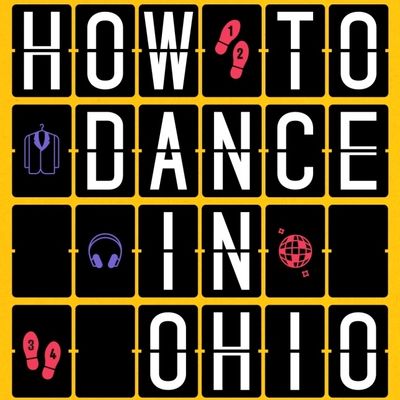
In this episode, we discuss the new Broadway musical "HOW TO DANCE IN OHIO" at the Belasco Theatre in NYC. We cover the plot, adaptation from documentary to stage, direction by Sammi Cannold, our favorite cast members, and where we see pop music going on Broadway... Read More
From the show: Half Hour with Jeff & Richie (Post-Show Broadway Discussions and Interviews)
Featured Shows
About
In this episode, we discuss the new Broadway musical "HOW TO DANCE IN OHIO" at the Belasco Theatre in NYC. We cover the plot, adaptation from documentary to stage, direction by Sammi Cannold, our favorite cast members, and where we see pop music going on Broadway. Subscribe to our channel for all things theatre.
If you liked this episode, don't forget to subscribe to this podcast and leave us a review.
Share your thoughts with us on this episode below:
On Instagram: @halfhourpodcast
On TikTok: @halfhourpodcast
On our website: www.twoworldsentertainmentllc.com
Transcript
This transcript was automatically generated and might contain errors.
[0:00] Jeff Malone: Welcome to another episode of Half Hour with Jeff and Richie, the podcast where we deeply dive into the shows we see.
[0:06] Richie Grasso: This week we are discussing the heart-filled new Broadway musical, How to Dance in Ohio.
[0:11] Jeff Malone: Want to know our thoughts on this intriguing adaptation from the award-winning HBO documentary? Then join us for the next 30 minutes.
[0:18] Jeff Malone: I'm Jeff, a music industry producer and manager.
[0:21] Richie Grasso: And I'm Richie, a theater director and producer.
[0:23] Jeff Malone: Let's explore how to dance in Ohio.
[0:29] Richie Grasso: Half hour.
[0:34] Jeff Malone: Welcome to today's show, everyone. As always, we need to just warn our listeners that there will be spoilers in our discussion about this show in this episode.
[0:41] Richie Grasso: So if you want to go see it first, that's totally cool. Go check it out and then come back and listen to the episode or not, but we're just letting you all know that you have been warned.
[0:50] Jeff Malone: Today we're here to discuss a story of courage, connection, and the power of dance in the new musical, How to Dance in Ohio.
[0:57] Richie Grasso: The musical is currently playing at the Belasco Theater in New York City. It's based on the real life experiences of seven autistic young adults preparing for a spring formal dance at a group counseling center in Columbus, Ohio.
[1:10] Jeff Malone: This has book and lyrics by Rebecca Greer Milasik, music by Jacob Yandura. It's directed by Sammi Cannold, and it just opened on Broadway.
[1:18] Richie Grasso: We were at one of the final preview press performances for this. Uh lots of thoughts here on this. Um what a what an impactful show. But I just want to kind of dive kind of first into some plot and thoughts.
[1:30] Jeff Malone: So let's kind of start with just overall thoughts.
[1:33] Richie Grasso: Yes. Um, okay, so let's start here where uh we actually watched the documentary, just so everyone knows first.
[1:42] Jeff Malone: We watched it a few months ago before because we were like, oh, let's see what this is actually about. And do we think it's going to work for the stage?
[1:49] Richie Grasso: And I feel like after watching the documentary, I was like, oh, this definitely has great potential to be on the stage. There's so much going on here.
[1:59] Jeff Malone: And then we get to this musical, and I feel like it's kind of middle of the road for me. I think it hit the mark in some spaces, and then in some parts it did not.
[1:59] Richie Grasso: And I feel like that's what we're gonna get into here.
[2:15] Jeff Malone: Totally. Right. So I think overall the plot on this show, I think is great. And a lot of like you already explained the plot in the about section here. We're following seven autistic young adults on how they're preparing to really enter the world and figure things out.
[2:35] Richie Grasso: It's you know a coming of age piece that I think is really smartly done. Um, but it just you know, it's just a little middle of the road for me.
[2:44] Jeff Malone: Well, let's go into that a little bit. I I did really like the documentary a lot. I actually cried at the end of the documentary. I thought it was beautiful.
[2:49] Richie Grasso: I thought it was just real, and it was just a camera rolling while parents and these young adults were learning life. The counseling center was a wonderful warm place for them.
[3:03] Jeff Malone: The counselor was wonderful and warm, and it concluded with this dance, and everyone was happy. And yes, there wasn't major villains or any major turns of plot points or drama.
[3:17] Richie Grasso: It was just, of course, there was a few dramatic moments, there was a few scary moments, there was a few sad moments, but overall it was just a simple telling of the lives of these people.
[3:28] Jeff Malone: And so when I heard this was coming to Broadway, I was like, okay, this is cool, this is gonna work really well. I what I praise the Broadway show most is employing seven autistic actors as these characters, and seeing that representation on stage is so important.
[3:45] Richie Grasso: As I always say here, everything is meant to be on stage, especially on a Broadway stage. And so when I was going into this, I was like, this is wonderful.
[3:54] Jeff Malone: And so then we see the piece on stage, and I'm and I will be honest with you, I was really blown away with some things like the set, the lighting, the costumes, the design of this was really great.
[4:05] Richie Grasso: I liked the turntable stage. I loved how everything came on and off, describing that and brought us to different locales. It wasn't projection, projection, projection, which we rely on so much, as we talked about with Sipam a lot.
[4:18] Jeff Malone: And so I just felt like I was watching a really well crafted and well designed piece. And it was directed and staged and choreographed to the fullest at a Broadway level.
[4:29] Richie Grasso: And I look at the talent up there and I say, wow, everyone can sing and act pretty well here. Like this is actually impressive quality.
[4:39] Jeff Malone: So I wanted to start with that and say I think the quality of design and execution of what we saw up there was really, really wonderful.
[4:48] Richie Grasso: And then I get so and then I look at the plot and I say to myself, whoa, whoa, whoa, plots changed from the documentary, which is fine. But there was a lot of things that occurred where music was then placed in where I didn't think music necessarily needed to be, and music kind of trumped story and story changed.
[5:12] Jeff Malone: We barely had time at the dance at the end. The therapist was really villainized, and we're gonna talk about that in a minute.
[5:21] Richie Grasso: And so overall, I did look at the book and the lyrics and the music, and I said, this is not quite at the level that I thought it was going to be from a substance standpoint, from an actual subject matter of literal words and music.
[5:38] Jeff Malone: That makes sense. And I think that's fine. And something that I'm thinking about here, because we've been pondering on this show for a little bit, is I wonder, okay, so the actors come out in the beginning of the show and they tell us that things that this is based on a true story, and you know, but things are kind of embellished a bit for dramatic effect for the theater, which is fine.
[6:02] Richie Grasso: And I guess, like, do you feel like they're telling us that so that we don't compare it too much to the documentary?
[6:08] Jeff Malone: I do know how many people told me they saw this and they didn't even know there was a documentary, didn't even see the documentary. That's why there's a part of me that didn't think that was the reason.
[6:16] Richie Grasso: No, but I'm saying for people that have seen the documentary, do you think they're telling it like, hey, don't compare this too much to the documentary?
[6:24] Jeff Malone: Maybe. But I feel like we are gonna compare it a little bit to the documentary because I feel like so much of the plot and the realness of the documentary was kind of lacking in this show.
[6:36] Richie Grasso: So when we go into the book here, something that we feel like we would have been inspired by might have been removed, and we're kind of asking ourselves why.
[6:45] Jeff Malone: It's important to tell the audience at something like this that there is accessibility resources, there's cooldown spaces, that this is what we were about to experience, and I get that.
[6:57] Richie Grasso: And so in the beginning, when they came out and said, Hi everyone, we're here to at the power of me, I was like, well, oh, trust your audience a little bit. Like, we know where we are, we're gonna, we we're good, but then I realized, okay, maybe not everyone here has been to a Broadway show before.
[7:02] Jeff Malone: Maybe not everyone here is understanding what's about to happen on stage, and maybe there was a little bit of an educational moment that needed to happen there at the beginning.
[7:17] Richie Grasso: So I'm a little torn on that because I never, I usually never it's kind of like not to compare it all, but it's kind of like when Pearlie started and all the actors came out and they put their costumes on the costume, like, oh, okay, we're telling a story, but then they never like finished that.
[7:32] Jeff Malone: So I kind of get annoyed when these shows start with, like, hey, we're about to tell a story, or hey, we're gonna show you we're putting our costumes on, or we're telling you what's about to happen. I'm always a big fan of trust the audience, and please just trust who's that we're sitting here spending money to sit here and watch the show, and that we know, but maybe not everyone knows, and that's why they did that at the beginning.
[7:52] Richie Grasso: So I'm very torn on the in the beginning. Do we describe what we're about to do or not moment? Still torn.
[7:59] Jeff Malone: I get.
[7:59] Richie Grasso: Yeah. But I do want to kind of go into this like adaptation from documentary to the stage now.
[8:05] Jeff Malone: And how is the transition from documentary to the stage? How is that handled for you?
[8:12] Richie Grasso: I felt so much for those parents in that documentary. I didn't really feel much for the parents in the stage version.
[8:20] Jeff Malone: I felt like the parents were place card holders in the show. I, if you're not, and the sub substance that they gave the parents didn't work as much for me.
[8:28] Richie Grasso: I didn't feel for them as much. Yeah, unfortunately. I thought I did feel for the seven leads.
[8:34] Jeff Malone: I completely disagree with the use of the therapist in the stage production. I loved the therapist in the documentary. Loved, love, love, love, love.
[8:43] Richie Grasso: And the whole thing with the daughter coming home and the plot disagreement with the daughter. That was so unnecessary for the stage, I thought.
[8:50] Jeff Malone: Let's just, why are we even speaking talking about this?
[8:54] Richie Grasso: They use the therapists as the like, oh, the therapist made mistakes, which is what maybe people do in situations like this. But why of all people, the therapists probably wouldn't and shouldn't be making those mistakes, like inviting press in, saying the wrong things, allowing the press to do that.
[9:12] Jeff Malone: That was it just seemed very out of left field for me. Maybe if a parent did that, or not even a parent, maybe a parent of a par a neighbor, another community member. Why did they villainize the therapist?
[9:24] Richie Grasso: It was so sad that they made him this like bad when he said he called the college behind the student's back. The therapist would never do that, I don't think.
[9:35] Jeff Malone: And I just didn't like how they used the therapist and the parents in this. It wasn't what I thought it was gonna be.
[9:41] Richie Grasso: And I just thought it was not quite what I would have done in the writing or direction.
[9:48] Jeff Malone: We'll be right back.
[9:52] Richie Grasso: Welcome back.
[9:53] Jeff Malone: Right. And I feel like with the plot on this, that is something like I don't know. I guess I should say. I don't know why some of these dramatic moments were brought into the piece when they weren't there.
[10:07] Richie Grasso: And for me, it took away from the main characters. I think that we got to spend more time with the main characters in the documentary and learn more about them and figure out what they're trying to do in this world and how it works for them.
[10:28] Jeff Malone: And instead, I feel like it was that we had a focus on the therapist, a focus on the therapist with the relationship with his daughter. Sometimes we had these moments of the parents, and it just felt like that's what was unnecessary. It felt like they were characters that kind of almost shouldn't have been in the show. And they're in the documentary, it's fine, but I think that took away from us learning more about the seven autistic young adults. And they were wonderful. And I actually think some of their songs, I wouldn't say all of their songs, unfortunately, but some of their songs really spoke to me. And I was really getting to learn about these people. And I said, okay, this is kind of cool.
We're musicalizing their stories. Some songs really fell flat for me. I know "Building Momentum" is really sticking with me in my head, and I actually really like that. We're gonna talk about the more in a little bit, but that song really stuck with me. And "Tomorrow Night," I think it's the opening of Act Two. I did like the music in Act Two actually a little more than Act One. I liked the dancing at the end, the song they're all singing at the dance. So I did like where the direction of some of it was going in Act Two. I didn't really, we got to the end of Act One. I was like, whoa, whoa, whoa, this is in our mission already? I didn't feel like a buildup to an end of Act One moment. So I didn't really feel the book and the lyrics and the music did much for me at Act One, but I did like what was happening in Act Two.
And I guess if we're enhancing the show for the stage, that's where you're supposed to enhance the show. Having a great Act One finale where you're like left on a cliffhanger is where you're supposed to be like, oh wow, okay, I'm really excited for what's gonna happen next. And instead, we're kind of just left there, and it felt like they just threw an intermission in there because they had to.
[12:20] Richie Grasso: And I guess the real question here is do you think they were successful in enhancing the story from the documentary?
[12:29] Jeff Malone: Somewhat. I will not say 100% yes or 100% no. I think that this could have gone much worse. It could have gone much better. And I think that this, the book, I think that what we're dealing with here is just a book and music and lyrics that were fine. Like it almost didn't feel fully ready yet to come. Yeah. It needed just like another pass around before like really coming there because I feel like there were things that could have been edited still out, or new things brought in to really enhance the story. And I also feel like maybe we could have had more. Where was like a, I am always a big fan of like a big, beautiful sweeping ballad of emotion. And where was the one character that was like, I guess "Building Momentum" is kind of the 11 o'clock number in a way for that character?
But I was looking for something a little, we're gonna talk a little bit towards the end about pop music scores in general, the Broadway sound. I feel like the sound is just like the modern musical theater sound is a bump b-b-bump b-everything has to be like the, I don't think everything or the ballad is I'm good, uh like a simple melody with a very simple lyric, and the lyric is I don't know. It's either everything is simplified. I don't think everything needs to be Stephen Sondheim or Jason Robert Brown, but well, like maybe let's just kind of talk about pop music in general right now, because we're also gonna talk about the music by Jacob Yandora and the lyrics by Rebecca.
[14:02] Richie Grasso: Yep.
[14:03] Jeff Malone: And the sound is very current. Let's talk about that first. It is a sound that we're hearing. It's very like Pasek and Paul, Dear Evan Hansen style, it's very like Joe Iconis in like it's like a little like "The Prom." You know, it's "The Prom." It is that. I'll put this in the same category as those kinds of shows. What I feel like in pop music right now is it hasn't really found its like smart moment, I guess I can say, because the sound is sounding a little like, and it's repetitive and catchy and it makes sense, but then the lyrics aren't translating into that. But they all sound the same. And so sometimes I appreciate when we have like a jazz number or a rock number or a Broadway '40s toppy kind of mo.
I like different motifs of sounds in a score. And I feel like if you look at something like, if you look at "Company" from Sondheim, for example, there's like bada baby booby, but like there's that '40s song, right? And then there's the like being a lot like there's different versions of sounds, and so I don't understand why we don't get that in this modern score for "How to Dance in Ohio," it just all sounds the same to me. Because I feel like the answer to this is these new composers aren't really finding their theme, I should say. When you think about some of the great composers in here of like the Sondheims, and when you hear a Sondheim score, you know it's a Sondheim score. I wouldn't know that this was a Jacob Yandora score, is what I'm saying.
Because it sounds very similar to all of the pop stuff, and he hasn't really found, oh, okay, this is what I, this is how I'm gonna write it, and this is how I'm gonna pull this in. And it happens in pop music in general. When you hear pop music, I'm pretty sure you can't tell what a Max Martin score, like a pop Max Martin pop song is versus what like a Shellback's pop song is, and these are big pop producers because they all just steal from each other. But I'll say something. When you have someone like Pharrell, who's a producer in pop music, he has a very specific thing that he does in all of his songs. It's a repetitive beat that he plays five times on loop at the front of every song. So as soon as you hear the song, you know that that's a Pharrell produced song.
So it goes boom, boom, boom, boom, boom, bum, bum, bump, bump, bump. Or is it bum bum bum bum bum? It might sound crazy or something like that. So you know exactly what I'm talking about. As soon as you hear that, you know it's Pharrell. So what I'm saying here now in the Broadway space, though, is if we're gonna be writing music like this, you have to find something that's gonna be your theme to put in there. What's your mark? But I also feel like what is kind of working right now on Broadway, and we'll get back to "How to Dance in Ohio" in a second, but what kind of is working is already written pop songs that are reorchestrated for the stage because I'm loving the "Anne Juliet" orchestrations, I'm loving the "Moulin Rouge" orchestrations, and I loved the "Once Upon a One More Time" orchestrations.
It's not an exact replication of the pop song because it's Broadway orchestrated for a dance choreo story plot moment. That what I think is excelling in this industry right now, and unfortunately, the only new scores that I think are really excelling right now are things that are crafted in a way that like Janine Tesori did with "Kimberly Akimbo" or this, some, the Mark Shaiman and Scott Whitman, something like "Hairspray." Like when I'm hearing crafted scores, but this like let's put a keyboard, a drummer, and a guitar, and let's just put pop scores together and let's write eight or ten or twelve songs and they all almost sound the same. I don't think that's working for me. And so that for this, for "How to Dance in Ohio," I feel, but I want to kind of go into direction a little bit because I want to talk about how I think what Sammi Cannold did with this is she worked the stage.
I've seen her works before. I believe this is her Broadway debut. She knows what she's doing as a director on stage. I was not like, oh, here we go, projections, or like roll the bed out in the blackout, now roll the bed like it. It wasn't any of that. Everything flowed, and I felt like we were moving from the mall to the bedroom to the therapy room to the, and everything flowed nice, and I felt like I actually will say for a two and a half hour show, it didn't feel like two and a half hours. It kind of moved nice, and I was like, okay. So what for what Sammi was given, she really worked well with these actors and with what she was given. And that's a, that's a sometimes we want to say, oh, a show is really good or a show is really bad.
We kind of put the book, the music, the lyrics, and the direction all in one. This is where I'm gonna separate that. I'm gonna say, I think the direction really stood out over unfortunately what I didn't think was the strongest book lyric or music score. And she worked that strong, I think.
[19:05] Richie Grasso: Yeah, she definitely is talented, and she's going to be a horse to watch in the director space.
[19:11] Jeff Malone: Totally. I think totally and especially because effortlessly moving the whole time. If you can move a show along and the audience doesn't feel bored, I'm gonna pat you on the back there and say, that's some great directing. I was not bored, like you said. I was definitely interested in seeing what was happening on the stage. There's lots of, you know, thought-out lighting design happening in here. There's thought out movement happening on the stage, and I think it was also really thought out for the audience that's attending this show, which was great. So yeah, bravo to Sammi.
[19:52] Jeff Malone: We'll be right back. Let's jump back into things. And who stood out for you cast wise in this?
[20:01] Richie Grasso: I have two standouts. One being Liam Pierce is a star to be already a star. I hope he soars in this industry because I was just staring at him and saying, oh, I, I'm just blown away by your acting and your singing. And he has a song in Act One that was okay, but I did really like his "Building Momentum." He's great, and he stood out for me, and I really liked him. The other standout for me, who I didn't think got the greatest song, but I really loved and who has an amazing voice is Darlisia Circe, who is one of the moms in the show.
[20:38] Richie Grasso: She I was like, yeah, and I look at her credits and she was in Ragtime, she was in a bunch of shows. I'm like, yes, you have you are so talented. Oh, she melt. Yeah. And I wouldn't say the greatest song when her and the other moms sing in the Macy's department store, but she was real I've actually that was one of the parents I felt warmth for, I felt for, and I really really appreciated her. So Liam and Darlisia were standouts for.
[21:00] Jeff Malone: Yeah, we're not gonna get into parent songs and Broadway musicals because we say the same thing every time.
[21:05] Richie Grasso: Yeah. When someone can master a parent song and a Broadway musical, I'm gonna say you're the greatest thing of all time. But uh I highly agree with Liam Pierce being a huge standout. He plays Drew, I think his vocal tone is amazing. He has some great acting skills going on. He's definitely gonna be one to watch on the Broadway stage um as an up and comer, especially in the male space. So bravo to that. Um, I also really liked Ashley Wool. She plays Jessica. It's just she is she's another one. She's the one that you hear in all of the ads singing, and like Tommy, we have so much in common, which is super catchy. I will say that there are a few standout songs in the show, though. Not all of the music um didn't stand out.
There they have a couple of hits in this show. So going back to music on there because building momentum and so much in common, there is great potential with those. I think for the Broadway space, a lot of um people are gonna be hearing those songs in auditions now. It's just something that's definitely gonna happen. It's like it's the new Dear Evan Hansen, and then lastly, Madison Kopeck who plays Meredith. I'm gonna say this about Madison. I think that she was the one who really brought character development to the role.
[22:30] Richie Grasso: And you speak her song. Yes, you felt what was happening on that stage, and you watched the arc of her because she was shy, she was the first one coming to these group meetings, and she brought that. And you know, I kind of felt with all of the characters, they were a little bit of everyone from the documentary. They weren't all focused on like I'm specifically playing Jessica from the documentary. I have her name, but she wasn't all of Jessica. She had moments from this actor, she had moments from this one, she had moments from that one. And but Madison really, I think understood the assignment of like, I need to play someone who's a little bit more shy and timid, and like build this and then build this to the dance of like actually liking Drew and wanting to maybe date Drew.
Who knows? But like you felt for her. And by the end, I was like, when I see them on the end, and it's that final scene, which I think was beautifully directed. I'll go back to that on Sammy. It's perfect, like they're looking at each other, and you don't know what's gonna happen next. Are they gonna kiss? Are they gonna do anything? They're just looking at each other, and boom, blackout, beautiful.
[23:49] Jeff Malone: Yeah, and so in some ways the character development was working for a character like that. And then some characters, I was like, where is the character development here? It seemed inconsistent. And I will also say this. If the show if the show is titled How to Dance in Ohio, and the whole purpose of this show is to go to a dance.
[24:11] Richie Grasso: I know what you're gonna say.
[24:13] Jeff Malone: Well, and we are doing this in the art form of musical theater, which is usually heavily reliant on dance. I don't understand why we barely saw a song about learning how to dance, dancing through there's a song in Wicked called Dancing Through Life at the Ozdust Ballroom, and we have an eight minute dance number about literally dancing. I don't understand why we were rushed to the end with like, oh, and now we're gonna dance, and they all dance, but in the documentary, a lot of them struggled with that, and we saw the dance lessons they were taking. That was a complete missed opportunity. You're literally doing a show titled How to Dance in Ohio. And it was all about the emotions and all the things and life, and I get it, that's important.
But like maybe one character could have been focused on I gotta get my dance steps right? And maybe the whole thing was gonna be about getting the and at the end they get the dance steps. Maybe something like that. That was missed for me. I I thought the choreography was okay. The movement of some things was okay. Um, but I I just I just thought that was missed. And I know I went off topic a little bit, but not really, because I would I'm I was gonna ask you, what would you have done differently in the show? And let's also talk about the marketing here a bit about the show. But yeah, I where was the dancing?
[25:23] Richie Grasso: Yeah. I I mean there was dancing, but like, where was the dancing? There was like red choreography, and I don't know if that was a choreography movement or a direction movement, but there was so much movement of red chairs that I was like, can we just stay still for a second? Like, I the earlier I praised the movement of the piece from scene to scene, but there was a lot of like, okay, now the chairs go here, now the chairs go there, and it was fine until I was like, can we dance a little? Can we stylistically move them a little bit instead of chairs on, chairs off, spinning chairs, spinning chairs?
[25:57] Jeff Malone: Yeah. I don't know. I that was just something to me that was a little, but and honestly, I wouldn't have done that much with the design of this. I like I said, I think the designers did the best they could with what they were given. And I would have instead went back to more of a book doctor, show doctor approach with book and lyric and music, because I think what those performers are doing on stage is wonderful with what they are given.
[26:22] Richie Grasso: Yeah. And they are talented. I just wish they were given a little bit more of a stronger substance. I think actually what I would have done differently was I probably would have made the focus more on probably two or three of the actors and let them have more character development with still including the more ensemble style of the autistic actors, but not so much of like them all being individualized and having a storyline because I don't think there was enough time. And where some characters were fully developed and rounded out at the end. I don't think you know, I don't want it to feel like a movie at the end where it's like, okay, now we're just gonna tell you what happened with the other actors because I also feel like that's a disservice to their storyline.
So I I probably would have cut down like and picked a more focal point on two or three, and then still have everyone else in the show. And how do those characters add to those two or three main characters? That's where I feel like it was kind of missing in terms of the book. Anyway, that's probably all I would have done differently.
[27:35] Jeff Malone: Yeah, and and just to we're almost out of time here, but just to wrap up the overall experience, I looked around this audience and I saw so many wonderful people loving it. I it was such a mix of people of from all different backgrounds who were really shouting and screaming and loving and vocally reacting and applauding. It's clearly being liked, and people are enjoying it. Looking at this from a different lens, right? Of uh, I'm I'm critiquing some of the plot and some of the the structure of this piece, but the heart is there. What a heart. I haven't seen a show with this much heart in quite a long time. The love and the the passion for human connection and and love for people is is there.
It's warmth. It's so right. You can't deny that there isn't a heart in the show because there is, and if anything, some of the feeling that just being in that seat and feeling the audience around me and feeling how they're reacting to the show was everything for me. Because, you know, I turned and looked at you at the end and I said, This made me feel something. You know, is the actual book and score perfect? Not really, but you know, it has potential. The whole show really has potential, and it's definitely groundbreaking in the space of this should you know have more people see it.
[28:56] Richie Grasso: Oh wow, we are just about out of time here. This flew by. So we're gonna uh get ready to wrap up here with some of our overall thoughts on How to Dance in Ohio. Jeff, you go first.
[29:04] Jeff Malone: My one, two, three on the show is it, you know, there is a heart here. The directing is great, the set is great, and these autistic young performers are giving their all in this show, and you can see how passionate they are about putting this show on the stage. And the feeling of everyone in that audience was just something else for me. And I highly recommend seeing this if you're looking for something new and something that's breaking barriers in the Broadway space. It is heartwarming, it is warm. I I like I said, I do think there's some structural issues with it. I don't think it's a perfect show, but I love the representation. I love that we're bringing that to the front and we're putting that on the mainstream Broadway space.
It's very important, and we're educating people. Educating uh audiences, and we're learning. And and I felt like I learned things from this. And there's a heart to it. Like I said, you know, any show can be broken down into this doesn't work, this doesn't work, this doesn't work. But overall it's a piece warm, a heartwarming piece. Heartwarming. Really, really, really nice. And I and I just love seeing the representation. I do.
[30:18] Richie Grasso: Same. So that does wrap up our discussion for today and this episode. We hope you enjoyed our deep dive into How to Dance in Ohio on Broadway. Don't forget, we want to hear from you. Continue the conversation with us on Instagram and TikTok at Half Hour Podcast. And let us know your thoughts on How to Dance in Ohio. If you enjoyed our show, please leave us a review. Your feedback helps us bring more theater to you. And remember, you can listen to past episodes and stay tuned for upcoming ones as well. Until next time, I'm Jeff.
[30:44] Richie Grasso: And I'm Richie saying ta-ta.
[30:46] Jeff Malone: Bye.
© Broadway Podcast Network, All Rights Reserved