

In this episode of “Half Hour,” we discuss New York City Center’s Annual Gala Presentation of In the Heights, the Tony Award-winning musical by Lin-Manuel Miranda and Quiara Alegría Hudes that opens City Center’s 2026–2027 season... Read More
From the show: Half Hour with Jeff & Richie (Post-Show Broadway Discussions and Interviews)
Featured Shows
About
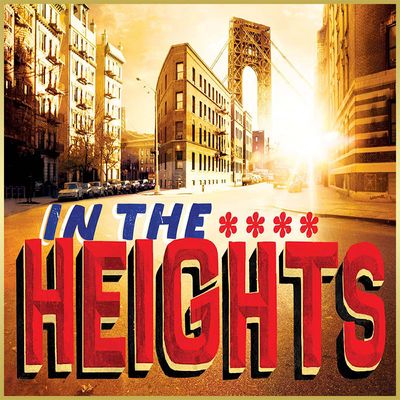
In this episode of “Half Hour,” we discuss New York City Center’s Annual Gala Presentation of In the Heights, the Tony Award-winning musical by Lin-Manuel Miranda and Quiara Alegría Hudes that opens City Center’s 2026–2027 season.
City Center gala productions are here and gone in a matter of weeks, and this one closes November 15. Whether you’re deciding if it’s worth a ticket or you won’t make it before it closes, you want to know one thing: does this new staging live up to the show you love, and could it have a life on Broadway?
We break down David Mendizábal’s direction, Mayte Natalio’s choreography, and the full orchestra on the bridge, plus standout performances from Matte Martinez as Usnavi, Natalie Venetia Belcon as Abuela Claudia, Ashley De La Rosa as Vanessa, Aaron James McKenzie as Benny, Ivan Hernandez as Kevin, Ishmael Gonzalez as Sonny, and Linedy Genao as Daniela. We also talk about why the show still feels timely, how the stage show compares to the film, and what’s coming next in City Center’s Encores! season. And we ask the big question: what would you do with $96,000?
Follow and connect with all things @HalfHourPodcast on Instagram, TikTok, and YouTube. Share your thoughts on this production in the Spotify comments, and let us know what you would like us to cover next. If you enjoy these post-show discussions, follow Half Hour and leave a rating and review so more theater lovers can find the podcast.
Transcript
This transcript was automatically generated and might contain errors.
[0:00] Jeff Malone: Welcome to Half Hour with Jeff & Richie, the podcast where we explore the latest shows we see, sharing our insights and opinions on the performance of storylines and everything in between.
[0:07] Richie Grasso: In today's episode, we're discussing the New York City Center Annual Gala Presentation of In the Heights. Whether you cannot catch the show in person or want to expand your thoughts after seeing it, this episode is for you.
[0:18] Jeff Malone: And as always, we want to inform you that this episode will contain spoilers. So if you're ready to dive into this production, stick around with us. I'm Jeff.
[0:25] Richie Grasso: And I'm Richie, and we're thrilled to be your hosts for this episode today. But before we start the conversation about In the Heights, here are a few words from our advertisers.
[0:33] Jeff Malone: Welcome everyone to a new episode of Half Hour with Jeff & Richie. Today we're discussing New York City Center's production of In the Heights.
[0:41] Richie Grasso: Three sweltering July days in Washington Heights. Usnavi runs the corner bodega and keeps the block caffeinated while dreaming of a life back in the Dominican Republic. Around him, a close-knit, multi-generational community chases its own versions of the American dream. Tina comes home from college carrying a secret. The Rosarios fight to keep their business afloat. Vanessa wants out of the neighborhood, and Abuela Claudia holds everyone together with paciencia y fe, patience and faith. When a winning lottery ticket and a citywide blackout hit the block, everyone has to decide what home really means. Set to a mix of Latin rhythms, hip-hop, and classic Broadway sound, it is a celebration of Latina culture, community, and the courage to dream.
[1:22] Jeff Malone: All right, so let's get into our bold statements for City Center's production of In the Heights. You know, this was my first time seeing a fully professional production of In the Heights, and I have to say that I loved it. It had so many great moments in here, and I'm very proud of what everyone is doing up on that City Center stage right now, so I highly recommend people go and check this out.
[1:46] Richie Grasso: Totally agree. I think this is exactly what we needed. I loved this production of In the Heights. I think this is exactly what the New York City theater scene wanted in this fall. It's something joyous and fun, and I just can't wait to dive in and talk more about this, because I thought everything about this was so, so well done.
[2:03] Jeff Malone: Okay, so let's get into the overall plot and concept of In the Heights, because I'm sure there's many people that have not seen this show. So we know In the Heights had this very strong 2008 original Broadway run, wins the Tony Award for Best Musical. Since then, we've seen high schools, colleges, community theaters, regional theaters producing this show. It is such a celebration of life. It's Lin-Manuel Miranda's first main, big musical to hit the Broadway stage, and was so successful for its time, and I think to see all these years later, what are we, about 18 or so years later, to bring this back is just such a wonderful, wonderful thing, and it brings a new generation of people to the text.
[2:43] Richie Grasso: You know what I liked about this, and when you go into the text of this show, there's so much of the "I want" characters in this show. There's so much for us to write off the bat. It's typical Lin-Manuel style. I've only seen Hamilton, and then obviously he's gone into the whole Disney world of creating new shows, but when I look at this, I can see how he has such a style in how he writes, and how he creates a story here. It's so influenced from previous theater history. We have a huge opening number where we're telling you everything that's going to happen in the show, and meeting the different characters that are in this show as well, and they all have this dream and "I want" moment in In the Heights that I'm like, oh, okay, that's great.
You really have to pay attention. You really have to say, oh, I'm following each different character along here now, or you can start saying, oh, who do I resonate with, and who do I find interesting in this show, and I think that's what he does really well in his opening number and in his opening writing styles.
[3:51] Jeff Malone: I think one thing Lin-Manuel Miranda really does well is he knows what came before him. I've always said this about his work, and he understood the art form, and we talk a little bit about this with Rodgers and Hammerstein kind of creating this balance of the art form, as we know it today, in a way they were one of the main architects of the musical theater art form, and then when you had someone like Stephen Sondheim come on and kind of change that up a bit and ruffle feathers a little bit and kind of change the style a little bit but do it in his own way. I think what Lin-Manuel Miranda does really well is he kind of does both. He keeps a good structure to the musical theater art form, but he also brings his own sound, his own voice into this and tells a story of a community of people, and I watch this community of people telling this story, and I say, wow, this is a story of the American dream told from a different lens, told from a perspective of people trying to achieve what they want in life, and all the characters in this story do it in a different way and have different dreams throughout, and I think one thing this show does really well as well is present the community aspect of a society of people.
[5:05] Richie Grasso: When I think of Fiddler on the Roof doing the same thing, presenting, kind of like a narrator to the audience and telling, hey, here's our town, here's our story, I feel like that's what Usnavi and Tevye have similarities, is this like, hey, I'm going to kind of tell you what's going on in our world here. This is our street, this is what everyone wants, and everyone in Fiddler wants something a little different, too. Everyone in In the Heights wants something different, too, so he understood what came before, yet he then put this show on the scene, and in a way, I think this show kind of broke new ground for the art form with a new sound of music. We totally put this wonderful, wonderful choreography and rhythmic beauty with instrumentation and vocal, and put this out, and I remember thinking when I saw the original Broadway cast of this, thinking, wow, this is game-changer.
This is a new way for musical theater to go, and what has come since, of course, Hamilton and some of his other pieces, but what has this allowed other composers to do, is create the, like, Broadway has many sounds. Broadway can sound so different, and in different stories, with different forms of music, and I think that's what's really important about this piece, too.
[6:16] Jeff Malone: You know, what I like, too, with In The Heights, truly, is that it has this whole question for each character in the show about, should I stay, or should I go? And what does that mean to each one? And how do you feel like that really represents from, like, this show being on in 2008 versus, like, now, in 2026?
[6:39] Richie Grasso: In some ways, I think it's always timely, and then in some ways, I feel like this piece can always speak to the next generation, because the piece deals with intergenerational growth. We have children and youth in Washington Heights, then we have the parents and the middle-aged characters, and then we have Abuela and some of the older characters, and it shows how things have changed over those three generations, yet they're all still living in this same world, in the same block, in the same area. So I almost feel like when you jump almost 20 years later, you can say, yep, some of this is still the same, some of this is different, but nothing feels extremely dated here. I feel like when you jump 20 years, if you jump from the 60s to the 80s, the 60s could feel dated.
If you jump from the 80s to the 2000s, the 80s could feel dated. I feel like jumping almost 20 years, there's not a ton of things that have really become extremely dated. I think there's still this, like, want of starting your own business, going to college, growing old with your family, wanting to stay close to your family and your culture, but also wanting to go and explore the world. And what does it mean to be in the heights? Of course, and I feel like that's why there's such a message, because you have the Latin community that has immigrated here to New York or anywhere in America, and they all had this longing to start a new life somewhere else. They had to leave their country, and then they come here, and they're having this whole moment of like, oh, well, no, maybe now I want to go back.
Maybe I want to go back to my roots, or maybe I want to start and do something new somewhere else. Maybe I want to go to college. Maybe I want to move to a different part of the city. But they have this longing to continue to stay part of the community that is in the heights, and you see so much of that in there that they're like, no, wait, I love it here, but also I want to get out of here, but also, wait, no, I love it here, and I love the people that are around me, and we've created so much of a community here. So I find that really fascinating in this piece. I find that to be this big question that keeps getting asked is like, why do you want to leave in the first place? What is your reasoning to want to leave versus stay in?
And I think some people, and it's not every character in the show. It's not every single one that is saying like, oh, I want to leave. Some love it. Some are like, no, we've made our home here, and this is what we're so happy with, which I find that is like such a big message to take here, right?
[9:18] Jeff Malone: I also think what this does is this puts the Latino culture on the map for musical theater. Now, did West Side Story do that too? Of course, and look at what someone like Chita Rivera did in the musical theater art form and what her career did. But this really was the next level of bringing representation and culture to the mainstream Broadway stage. And it is so impressive to see it written this way, acted this way, performed this way, designed this way. It is an extremely impressive musical theater piece. And I do think when we look back in musical theater history, this piece stands as a pillar of a turning point in the art form. It really does. Let alone, yes, the story is amazing. The music is amazing. But I think what it did in history, in the musical theater art form of history.
[10:09] Richie Grasso: I really do. I think it was groundbreaking. I think it was a game-changer. There are really great moments as well in the second act that work and continue to tell the story, and I think the story wraps up well. But you can see that this is his first work. And then when you move into something like Hamilton, you see how much he has grown, but how he's kept so much of his style and influence in that piece, which is why, you know, we would relate him to other writers and composers in here like Stephen Sondheim or Rodgers and Hammerstein that have kept their style of writing and their similar motifs throughout their works going on. And I think that is such a great ode to the musical theater world.
So I'm very fascinated to see, like, you know, when he went into film, you still continue to hear that style in there. And now we're going to be getting Warriors in the spring. So I can't wait to see does he still follow along in his style of writing because that is where I'm like, oh, it could happen or he could change it up. It will be very interesting to see.
[11:35] Jeff Malone: Totally. Yeah, for sure. You know, I definitely think it would be very interesting to see for sure. All right. Well, I think this is a great time to take a quick break. And when we get back, we're going to get into this overall production of In the Heights at City Center for their gala production.
[11:46] Jeff Malone: OK, and we're back. So let's get into the overall production here of In the Heights at City Center. This is their gala production, which they do one every year. And this one, I mean, is great. Totally. I mean, if we started just with the director in general, we have David Mendizabal, who was of Mexodus, directing this production. I thought all the direction of this was seamless. I know that we have the orchestra on stage for the City Center productions. First of all, it's always so important to highlight the orchestra and to remind the audience of what is going on with this music, to have that full orchestra up there. You know, a lot of times I've seen revivals of things that strip down the size of the orchestra.
This is a full orchestra up there. And putting them on the bridge is very cool. And making the bridge that diagonal cut in the middle of the center of the stage was also a wonderful design. But I think the way it's directed, where there's people coming in and out from all over this bridge, up on the bridge, down the ladders, to the left, to the right, the center, we're using the full space and nothing feels 2D. Everything feels really wonderfully designed and directed and flowing. You would think they were rehearsing this for months and months and months, how comfortable everyone seemed to be. And if this was to ever do like a Broadway transfer, I feel like they could bring, you know, the original had like, it was basically this, a street corner, and there was the bridge in the background.
I think the bridge coming forward and being the focal point and putting the orchestra on the bridge, and directing the actors up and down and through and to show the different levels was really strong. Bringing the storefronts on and off, I just thought all of this flowed really nicely.
[13:23] Richie Grasso: Yeah, I would agree with that. I think making the bridge become a real big scenic moment in the scenic design here was important. Because what does that bridge represent? Well, it represents the leaving, coming and going of the Heights. That Washington, George Washington Bridge there and the Heights takes you out, actually, literally into another state. And it's that connection to the rest of the world, to how people come and go. And so it's totally visual.
[13:53] Jeff Malone: Right. So that to me, I was like, wow, when they, you know, the curtain goes up after like, the bodega, you know, is the first thing that we see. And then it goes up. And then now here we go. And we're seeing this bridge. That's the first thing I said is like, oh, okay. That is such the focal point here and such the message within the show that I think it is important in the scenic design to actually have that there. And, you know, we have this opening number and I think which is directed so well in Usnavi telling the story here and the cast coming out and bringing all of the Latin culture into that original piece is so moving to also see that now on and in front of that bridge.
[14:37] Richie Grasso: Totally. And when you see City Center productions, a lot of times you have to remind yourself that these are supposed to be elevated concert stagings, right? But then you see this full-out costume design, this full-out choreography. I mean, when we talk about the choreography, Maite Natalio choreographing this piece so strong, the visuals we're getting, the shapes and the arc of story and narration with choreography is brilliant here. And they're going full out in the choreography of this piece. They're not just doing one or two numbers, and then everyone's kind of standing around. No, this is like choreography. It's brilliant. I just think that the choreography is so strong in this.
[15:17] Jeff Malone: Really? I agree with that. And it lends itself so well to the ensemble that is really working so hard in this piece. And that's another thing I want to highlight in here with the ensemble, because when we first saw the cast announcement for In the Heights, we didn't really see a lot of huge Broadway names getting cast in this show, which I think is great because I think what this piece really does is it should be highlighting and starring, you know, new talent that needs to be on a stage. And I was happy to see that because this ensemble is really enjoying themselves. There was so much energy. It feels like there is so much relation to In the Heights as well, like that they feel so passionate about it.
[15:59] Richie Grasso: Totally, totally. And when you're talking about some of the casting, who are some standouts for you of people that you thought were really, really strong in this production?
[16:08] Jeff Malone: Well, first off, I'm going to Ashley De La Rosa, who is playing Vanessa. I think that vocally she is out of this world, and I think she is acting really well in this role as well. I'm watching her. I am seeing facial remarks and reactions that are so Vanessa-like that I'm so excited to see that. We just recently saw her in Buena Vista Social Club, and to see her now on this stage in this role, two very different moments for her in this recent season.
[16:42] Richie Grasso: Totally agree. She's very strong in this. She sounds vocally amazing. She's so wonderful in this character. I totally agree with that. I would also say Natalie Venetia Belcon, so strong as Abuela. She's from Tony award-winning performer from Buena Vista Social Club, coming to do this role, which is a big number of Abuelas, and then is not in a ton of act two, spoiler alert, but she is so pivotal to the plot. Her character is so important and reminds us what people are going through, what elderly are going through at this time, and the struggles they've gone through, and what their purpose is in the roles of the other characters in this show. Natalie is just a very, very strong performer. She sings this so well. She's just very beloved on the Broadway stage, and it's so great to see her. I mean, her Buena Vista Social Club performance is brilliant, and then to see this, just a very, very strong performer.
[17:41] Jeff Malone: Yeah, it's interesting for her, too, as an actor, and watching her over the years and what she has been cast in, and to see her have this renaissance in the theater world right now, especially from coming way back from Avenue Q, where she played Gary Coleman. It's such an interesting journey for her.
[18:00] Richie Grasso: Totally. Her roles have just been wonderful, and she's just captivating in what she does. I'm very, very impressed by her. I would also say Matt Martinez as Usnavi was another standout for me. Really strong. I thought he brought this great, like, I'm going to do a little bit of Lin-Manuel, but I'm going to do my own thing, too, and I think that's really nice and smart. I love the very end when he puts the hat on, which is such an ode to Lin's original character with the hat, and at the very, very end, he just put the hat on. It was like a tipping of the hat to the original. I thought that was really great.
[18:28] Jeff Malone: Yeah, it's an interesting kind of conversation to have, because when Lin puts himself in the show, it kind of, like, makes you always think about him, and then anyone else that kind of comes to do the role after him, you kind of say, like, oh, are they playing it like Lin, or are they doing it in the style of Lin, which, like, I think Matt really kind of added his own style to this as well. He was funny. There was a comedy in there that he brought to the role, and he really was tackling the songs. I think he really welcomed us into the show as well in such a great way.
[19:03] Richie Grasso: Totally, totally. I would also say, too, I just wanted to do shoutouts to Ivan Hernandez. Very, very strong. He's doing great stuff in Schmigadoon, and then to see him in this role, his voice is amazing, and I just, like, I'm really captivated by his performance. There was one moment he had this really angry line, and he turned and just yelled, and I was like, oh, he's, like, really in this. I just thought he was really, really strong. I also want to highlight Aaron James McKenzie in here, who plays Benny. I think, vocally, he was soaring throughout this piece. A great standout there, and I also really want to talk about Ishmael Gonzalez, who plays Sonny in this piece. You know, I will say, at first, I thought the comedy was going to be way too over the top.
He started at a hundred, but once I really lent myself into what he was doing here, I thought it was great. It was this great comedic relief, and almost new 2026 style to Sonny that I think the show needed. It added, like, a heart to the piece, and he really kind of, like, became a star within the whole show.
[20:11] Jeff Malone: Yeah, he's got great one-liners throughout. We want him on stage throughout the whole piece. He brings this charm.
[20:18] Richie Grasso: To the whole group of people, he's really, really strong too. And I just have to do one more shout out. I think Daniella, Lina DiGeneaio, I just love Daniella in this show. I thought she was bringing some funny moments. She's got a lot of great stuff. That hair salon song, "Nomadiga," and I just, I just think she's fun. I haven't seen her in a while on a show. And so I just, it was really nice to see her up there in this like really fun role. And you could tell when a performance is having a lot of fun in their role. I thought it was really great. I mean, that is probably in a handful of one of my favorite musical theater songs. So, you know, it's like one of those things where it kind of like doesn't really serve a huge purpose in the show, but it is comedic relief.
It's funny and it's like it works. And yes, it kind of does drive, you know, Nina's story a little bit when she's like telling everyone that she is dropping out of school. But I think, yeah, it's just one of those songs that like, I think lives on its own. And you don't get a lot of musical theater songs that I think live on their own outside of a show. So that to me totally works. So totally good stuff. All right. Well, I think it's time to take another quick break. And when we get back, we'll get into our own questions about In the Heights and where we think this might go next.
[21:27] Jeff Malone: Okay, and we're back. So let's get into our own questions about In the Heights. And also, let's start things off with where we think In the Heights might go next. Well, I remember leaving this performance and saying to you, this could go right to Broadway right now as is. It's ready. A lot of times I see City Center shows, I'm like, well, if they change that, that and that, then fix that. And then it'll go to Broadway. This is just ready. I think scenic design, choreography, costumes, casting, you could just uplift this and put it right in the theater. And I think this spring would be great to bring it right now. Putting this on Broadway this spring, we just lost a Broadway revival for The Fulmonte that's no longer coming now this season.
We had also heard a few months ago that Dreamgirls was no longer coming this season. So do we have some revivals already this season? Sure. We have The Sound of Music in this season. We have Evita in this season. We have The Fantastics and Damn Yankees. So we have plenty of Broadway revivals for musicals, but I think this could totally come and do it. And if it did, it would be interesting because as people have been saying, it would be an opportunity for Lin-Manuel Miranda to have all three of his major works on Broadway at the same time, which I think would be fascinating. Well, with Warriors actually being a new piece, but Hamilton is still, of course, running strong and then maybe In the Heights coming.
We'll see. I don't know. I haven't heard much of it's coming or not, but I just think if I read that announcement, I would be like, yep, totally makes sense. The audiences want this. This is a great cast. Run it, even if it was a limited run for a few months in the spring, whatever it was, it would be great to find. There are a few open Broadway theaters this spring still with things that are not announced. So I think it could totally do a revival.
[23:14] Richie Grasso: Yeah. I feel like people are hungry for this show. I think that there's such a love for In the Heights as well. Anytime you hear it running in a regional area, it's always selling out. So for it to come back and maybe even just do, yeah, like you're saying, a limited run on Broadway, I could totally see it happening as is. I think that this is giving a great opportunity for new talent also to come to the Broadway stage, but also like it is very timely right now to have a piece like this on Broadway, especially when there is this like, stay, go versus like people that are saying, no, like you need to go. And like, that's not okay. So bringing a piece on to Broadway that is highlighting and representing the Latin culture, I think is very important right now as well, as it always is.
So I think like, yes, this could easily transfer. There are open theaters that are available as well for it even to do a limited run. So I wouldn't see why not. And to have three different shows on Broadway at the same time with Warriors, Hamilton, and In the Heights, I think that would also be like a nice notch in the belt for Lin-Manuel, right? I mean, it's great.
[24:35] Jeff Malone: There's a few open theaters this spring still with things not announced. What would you say are theaters that you could potentially maybe see this go to?
[24:42] Richie Grasso: Well, listen, I know that Billy Crystal's 860 is playing until February, I believe now, but I easily think that this could transfer to the Imperial Theater if it needed to.
[24:53] Jeff Malone: That would be very cool.
[24:54] Richie Grasso: I think it would work well, but we'll see. And how do you think that the In the Heights legacy lives with knowing that it had such a successful Broadway production and then had this big movie with Jon M. Chu directed, which had slight changes here and there. Some songs changed a little bit. The idea of Usnavi narrating to the children and telling the story, that was a different film. What works in the film versus the stage now that you've kind of seen both productions?
[25:23] Jeff Malone: I think I wasn't raving about the film after I saw it. I thought that there were some interesting things that Jon M. Chu did, but also some of the CGI work that was brought into there, and some of the taking me out of the element just didn't work for me. But when I look at it, I say, oh, okay, there were some things cut. Maybe I guess I understand why it was cut, but it felt like some of the story was missing from the film. So it had me have a different reaction when I saw it now in the stage production of this, because I felt like there was more that I learned and was able to kind of dive into. So I definitely feel like I'm leaning more towards, I enjoy the stage production more than I enjoyed the film of this, because I actually was waiting for certain moments that I remembered from the film to happen. And I was like, oh, wait, no, it didn't happen in that way. So I was like, oh, okay. I mean, yeah, I think like this works better.
[26:20] Richie Grasso: And you've seen all three. Yeah, the original, and now this, and then the film, they're all doing slightly different things. And I like that. I think a piece can grow and breathe and move along with different directors. I think when you have different directors staging this and different casts, I think it breathes, but it also keeps and holds true to its original rooted heart of the piece, which is really important. I was also going to say this earlier. I feel like Lynn has such references to Cole Porter and take the A train, and It's a Wonderful Life, and refers to older things, too. And when you listen to Usnavi in a lot of those raps, and you really listen to the hip hop and some of what Usnavi's saying, you're like, oh, there's some cool Easter eggs of references. And I think that keeps the charm of it. And as this ages on, this piece always kind of goes back to the root of charm and heart, which is really, really impressive.
[27:12] Jeff Malone: Yeah. And before we wrap up with this episode, I think a big question, and a question to everyone, is if you won $96,000 tomorrow, what would you do with it?
[27:26] Richie Grasso: And what would you do with it? Oh, my gosh. I would buy some fun things, I guess. But then I would also probably invest it in a show, maybe, because I think it would be cool to put some of that money into the art form of musical theater and productions and keep the theater going. That's probably what I would do.
[27:41] Jeff Malone: Yeah. And would you do the same?
[27:48] Richie Grasso: Now that you say it, I feel like I would want to keep reinvesting in the art form, because I think the easy thing to say, very similar to Usnavi, would be like, oh, I want to go on a trip somewhere, or I want to go back home. And when you think about it, you're like, no, I'm home. And I think for us, home is really in the theater community. And I feel like, yes, reinvesting that money would be a big thing to do.
[28:12] Jeff Malone: Yeah. That's great. That's great. Oh, my gosh. We're just running out of time. What are your final thoughts on City Center's production of In the Heights? We've become very big fans of seeing works at City Center, whether it is the gala productions or the encore productions that they do so well. And it just warms my heart that so many of these shows can continue to live on and have such big moments. And maybe they continue back to Broadway, or they were just a moment in time that got to highlight the piece again, which is really nice. So I think that this is a great moment for everyone to go see another work at City Center with In the Heights, because the production is great. I love everything City Center does.
Every time I walk in there, I'm like, oh, we're getting some great stuff. You can tell that it's an energy of like, we put this on in a couple of weeks. We only run it for a couple of weeks. There's high energy here. And I think that this production of In the Heights has the energy, has the heart, has the charm. It's very, very strong. I think everyone should go see it because who knows if it's going to transfer or not. But it is running for a decent amount of time. It's a three week run, which is rare for the City Center shows. Usually there's one or two.
[29:27] Richie Grasso: Especially for the gala production. Usually it's only the one week.
[29:30] Jeff Malone: Yeah. Yeah. So or sometimes two. So that's why the fact that it's three. And then the season is amazing. We have You're a Good Man, Charlie Brown in February. We have Let Him Eat Cake in March, which is a Gershwin piece. And then we have Kiss of the Spider Woman in April into early May. So I think—
[29:42] Richie Grasso: For the Encores productions.
[29:46] Jeff Malone: For the Encores productions for their season, which are three very different shows. I think it'll be very exciting to see what the rest of the season looks like for them. But for their gala, yes, this was very strong and everyone should really try their best to get to this before it closes. It's really, really wonderful.
[29:57] Richie Grasso: Yeah. So. Good stuff. Well, that wraps up our discussion for this episode. We hope you enjoyed our deep dive into In the Heights. Remember, we want to hear from you. So continue the conversation with us on Instagram and TikTok at Half Hour Podcast and drop us a comment on Spotify and let us know your thoughts on In the Heights. Please also leave us a review. Your reviews mean so much to us. And remember to subscribe to our channel for all past and future episodes. Until next time, I'm Jeff.
[30:23] Richie Grasso: And I'm Richie saying ta-ta for now. Bye.
© Broadway Podcast Network, All Rights Reserved