

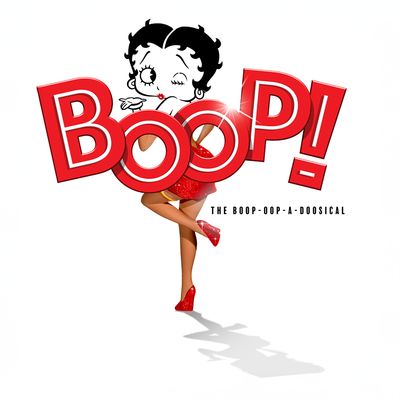
In the episode, Jeff and Richie are joined by Jerry Mitchell to discuss the journey of Boop! The Musical from concept to stage. Jerry reflects on his career highlights, the creative process with the Boop team, and the impact of community initiatives like Broadway Bares... Read More
From the show: Half Hour with Jeff & Richie (Post-Show Broadway Discussions and Interviews)
Guests

Featured Shows
About
In the episode, Jeff and Richie are joined by Jerry Mitchell to discuss the journey of Boop! The Musical from concept to stage. Jerry reflects on his career highlights, the creative process with the Boop team, and the impact of community initiatives like Broadway Bares. The episode explores the casting of Jasmine Amy Rogers, the lessons from the Chicago run, and the show’s ongoing evolution as it made it to Broadway. Join us for a conversation about passion, collaboration, and the art of making musicals.
Follow and connect with all things @HalfHourPodcast on Instagram, TikTok, and YouTube. Share your thoughts with us on Boop! The Musical on our podcast cover post on Instagram.
Transcript
This transcript was automatically generated and might contain errors.
[0:00] Jeff Malone: Welcome to Half Hour with Jeff and Richie.
[0:02] Richie Grasso: I'm Jeff.
[0:02] Richie Grasso: And I'm Richie.
[0:03] Jeff Malone: And today on our show, we welcome a very special guest, Tony Award winner, Jerry Mitchell.
[0:08] Jerry Mitchell: Thank you so much. I'm such a fan.
[0:10] Jeff Malone: Jerry Mitchell is a two-time Tony Award-winning director and choreographer, celebrated for his dynamic work on Broadway hits like Kinky Boots for Best Choreography, and also Tony nominated as director for the revival of La Cage aux Folles for Best Choreography. He's known for shaping blockbuster musicals, including Pretty Woman, On Your Feet, and Legally Blonde, Tony nominated for both choreography and direction. Over his 35-year career, Jerry has contributed to more than 50 Broadway, West End, and touring productions, earning a reputation as one of the hardest working and most inventive figures in the theater.
[0:42] Jerry Mitchell: Mitchell's choreography credits span Hairspray, The Full Monty, Gypsy, The Rocky Horror Show, Never Gonna Dance, Dirty Rotten Scoundrels, Catch Me If You Can, with multiple Tony and Olivier nominations along the way. All Broadway, he's choreographed Hedwig and the Angry Inch and Jeffrey, and for film, he created memorable dance sequences in Scent of a Woman, In and Out, and Dropped Dead Gorgeous. He is also the creator of the annual Broadway Bears Burlesque Fundraiser for Broadway Cares Equity Fights AIDS, which has raised millions for charity and earned him a special Tony Award in 2023. Currently, Jerry is on Broadway with Boop! The Musical, with his Tony nomination for Best Choreography, and he's developing new projects like The Devil Wears Prada and Becoming Nancy for the stage.
[1:23] Richie Grasso: Wow, that's the bio of bios.
[1:25] Jerry Mitchell: Yes.
[1:25] Richie Grasso: It's a lot.
[1:27] Jeff Malone: It's amazing. And you know, we were just talking about we're going to talk about Broadway Bears a little bit later, but we've never been to Broadway Bears. So that's like on our list to get there.
[1:34] Jerry Mitchell: Yeah.
[1:34] Richie Grasso: This year you're coming.
[1:35] Jeff Malone: We gotta get there.
[1:36] Jerry Mitchell: Okay.
[1:37] Richie Grasso: We always say we're gonna go. And then like it just comes and goes, and we're like, we gotta go.
[1:41] Jerry Mitchell: We're gonna go.
[1:42] Richie Grasso: We're gonna go.
[1:42] Jerry Mitchell: I'm gonna make sure you're there.
[1:44] Richie Grasso: Yes.
[1:45] Jeff Malone: Oh, and first, congratulations on this new Tony nomination for your choreography.
[1:50] Jerry Mitchell: Thank you. It's never, it never gets old.
[1:53] Jeff Malone: Oh, I love that. Um, so Jerry, we like to start things off. And before we get into Boop!, can you take us back to the beginning? What was your first big break into the industry?
[2:03] Jerry Mitchell: Oh, my first big break into the industry. I guess my neighbor in my lovely apartment, Michael Mayer, saw my production of Follies at the Paper Mill Playhouse starring Ann Miller. I'd already been working with Andrew Lippa, who was working with Michael on this revival of You're a Good Man, Charlie Brown. And Andrew had written several of the opening sequences to Broadway Bears, and he brought him out to see the show because he said you should hire Jerry to choreograph Charlie Brown. And Michael made me that offer, and that was my first Broadway show, winning two Tony Awards, one for Kristen and one for Roger. So it was, yeah, it was kind of magical; that was a really important step.
[2:53] Richie Grasso: That's amazing. They always say getting your foot in the door is the first step, and that was it. And I know one of your performing credits, even before directing choreography, was Will Rogers Follies.
[3:04] Jerry Mitchell: Yes.
[3:05] Richie Grasso: And I always say that's like one of my favorite Tony performances, and I have been asking the whole world and putting into the energy of the universe when we're getting a Will Rogers Follies revival on Broadway one day. I'm like praying for that.
[3:17] Jerry Mitchell: I had a meeting with Tim McGraw.
[3:19] Richie Grasso: Oh, but it's not happening.
[3:21] Jerry Mitchell: But it is fun. I said I was way too young to be there for the original, so I watched the Tony performance many times, and I want that re-envisioned on Broadway, like ASAP. It was a spectacular production.
[3:35] Richie Grasso: Oh my god.
[3:36] Jerry Mitchell: Yeah. But going on to Boop! The Musical. So we're talking about Boop! here. We saw this a few weeks ago, had no idea what to expect. We went in just being like, love this cartoon. Let's see what's happening. We really didn't do like any homework before we went in, and we were just blown away by every single department and aspect of this. And just from taking this iconic cartoon character of the 1930s, bringing this vibrant modern New York scene here. So I would love to know a little bit more about how you got involved in the project and what excited you about directing and choreographing this and how this project kind of began.
[4:09] Jerry Mitchell: Well, Bill Haber, the producer, was the guy who reached out to me. And I've known Bill Haber. Strangely enough, I was going to choreograph Spamalot on Broadway. And I was also choreographing Dirty Rotten Scoundrels at the same time with Tony nominee David Yazbeck. And our second collaboration with Jack O'Brien, the director. And we had already done the show at the Old Globe when I got offered Spamalot, and I said yes to Mike Nichols and Bill Haber. And then the schedules showed up on my desk, and they were exactly the same schedule. Oh, previews, tech, everything was the same. And I went back to Bill and I said, I can't do this because I won't be able to be in both theaters at the same time.
And I just need to be there for David and for Jack. So I'm gonna have to bow out. And he said, okay. And then he couldn't find a choreographer, couldn't find a choreographer, couldn't find a choreographer. I was working with the union, the SDC, doing this thing called Dance Break, which allowed young choreographers a chance to show two numbers to the community. We paid for everything and gave them a break and people seeing their work and maybe getting hired. In that first season of Dance Break, Casey Nicholaw did two numbers. Okay, Casey was a friend because we were dancers together on Broadway. Yeah, yeah. And so I said to Bill, I said, You should have Mike meet with Casey. He'd be a perfect match.
He's an older dancer like myself. He's done millions of tech rehearsals. He'll really be able to help Mike. And Casey met with him at Trattoria del Arte, and he hired him, and Casey left me two bottles of wine and a note, and that's history.
[5:53] Jerry Mitchell: Oh my god. So that's my relationship with Bill. Okay. Then I did Nora Ephron's play Imaginary Friends, which Bill produced. And then he sent me this material. It wasn't the material that's on stage, but he sent me some original stuff that David had been writing and Susan. And when I heard the music, I thought, well, I want to meet David Foster because he can write a show tune. And I was really, and I just got up and I wanted to dance, right? Which is always dangerous to listen to the music first before you hear the story or read the story because it's always about the story. So, but I had the meeting, and I basically said in the meeting, if you want me to do this, we have to start from scratch. We have to start all over with a new story because the story they had wasn't at all good. And so we started working on it, and we brought in Bob Martin to write that story, and that was the beginning of it. That's how I got involved.
[7:03] Richie Grasso: Uh, that's great. And for those who are listening here and who don't know much about the show, David Foster does write the score. Susan Birkenhead writes the lyrics, and Bob Martin was writing the book. What was your process like actually working with all three of them in developing what's now on the stage?
[7:20] Jerry Mitchell: Bob and I had worked together. We had done Halftime, and we had worked, you know, we just knew each other from the industry and business and other things we had worked on, readings, and Suze and I knew David was the only one I didn't really know. But David's process as a record producer is he works individually, right? So being a collaborator was a new thing for him. And I worked on getting him involved in being part of that storytelling, and he really rose to that occasion. I had the same experience with Cyndi Lauper, right? On Kinky Boots, and have had it with other pop writers, but David really was, you know, he was into it. He was willing to deliver what needed to be delivered. And there were many songs that got eliminated, cut, and then he would rewrite me a new song, and he would rewrite me a new song.
And you know, I once met with, I was working on a revival of Ballroom with the Bergmans, and it never came to fruition, but it was Tyne Daly and Greg Jbara; it was spectacular. And I was at the Bergmans' house out in California; they had written some new songs. Marvin Hamlisch was writing the new material. And I went in to meet with them, and I'll never forget Marilyn Bergman saying, You don't like the song. She could read it on my face. And I said, Well, it's not that I don't like it; I'm not sure it's delivering what the character needs to say at this moment. She said, Okay, we'll write you a new one. She said, Jerry, don't ever be afraid to tell us you don't like the song. As I'm staring at 13 Oscars on the wall, or however many they have.
Right. And then she said, Come on downstairs; I'll make you lunch. And then she made me this amazing pasta. I mean, it was one of those moments in your life when you just go, okay, this is what collaboration is about. It's about continuing to write until you get it right. And that's the gig.
[9:24] Richie Grasso: It's amazing. And I think that the music does tell this. You know, I love in the flow of this musical Boop!, it's not just, oh, I feel like I'm watching a Betty Boop episode. Or in a way, I kind of am, but it's her going to New York, and I, and I, there was a moment at the end where I kind of choked up a little bit. I don't know why I got emotional, but maybe because everyone thinks, oh, it's fun and dancy, and maybe, but when she leaves to go back home, I was like, oh my gosh. Because I thought I'm watching this, and I'm like, she'll just stay. She loves New York; she found the boy, so she's just gonna stay now. But these people are at home, can't survive without her. There was this beautiful, there was this beautiful to me. And when she goes home and like changes her own world, that was so special to me. And I just thought the flow of the music with that plot just worked really well. I just like it.
[10:15] Jerry Mitchell: I mean, that last 15 minutes of the show when she's on the roof with Ainsley, and he says, You're more real than most of the people I meet. I get choked up because, you know, you think about it, and it's very real. I mean, look, it's a musical comedy; it's a musical of a cartoon character. You can't get there without Jasmine Amy Rogers.
[10:38] Richie Grasso: Right.
[10:38] Jerry Mitchell: Jasmine Amy Rogers, you know, I want her to win every Tony Award, all of the Tony Awards.
[10:48] Richie Grasso: Yes.
[10:48] Jerry Mitchell: She deserves it. It's an original role. It's original music. It's an original scene. It's an original character. It has never been done in a movie. It has never been done in a revival. It has never ever been done. And I'm saying it. I don't care. I love all those other ladies. I think they're brilliant. Right. During a movie performance, they're doing. I saw Patti LuPone do Sunset Boulevard, and guess what? She should have won a Tony Award. Right. And luckily, and she should have won a Tony Award. And guess what? My girl, my girl, Bernadette Peters was up for the Tony Award for Gypsy. And she got a rave review in the Times. And she lost to my other girl, Marissa Jaret Winokur, who was doing an original role in an original musical called Hairspray. Right. Right. Right. Anything's possible. Anything.
[11:36] Richie Grasso: And that's what I was about to say. Jasmine Amy Rogers, she's making waves as Betty Boop. She's getting standing ovations every single night since the nomination.
[11:40] Jerry Mitchell: Every single night.
[11:46] Richie Grasso: She's Tony nominated for this performance. What? Talk us through like what was the audition process like? Was it an open call for Betty? Did she come out of the woods?
[11:52] Jerry Mitchell: I met Jasmine in 2019. I cast her in Becoming Nancy when I did it down at The Alliance.
[12:01] Jerry Mitchell: Okay. We did the production at The Alliance. We were slated to come to Broadway. We were in a workshop on Friday the 13th when the pandemic shut Broadway down. We had our workshop showing in New York City that day. And then the world stopped. Right. All of us, the writers, continued to work on Zoom as everybody did. And then we got an offer to do it in London. And I said we should take it because London in the UK is where this story originates, and we should go there and do the show. So we did it out of town. Now we're waiting for our London transfer theater. And, but that's where I met Jasmine. And I knew I got her right out of school, and I knew she was special then. And so then when we were developing Boop!, I had her read the role of Trisha.
So in the first reading, Trisha was 19, and she was Carol's daughter. And after that reading, I called Bob up and I said, She's got to be living with her auntie in Harlem. She's obsessed with Betty Boop. We don't know what happened with the parents. We don't need to explain it. We just need to know she's orphaned, living with her auntie, because that's happening every day in America. Kids are living with their relatives because of whatever reasons. And I said, and she's obsessed with Betty Boop because her aunt's busy doing something else. So that's where she puts all of her energy, and then she needs her. And so the obsession is real. And so that got rid of Jasmine because she had to be 14. I moved her to a 14-year-old.
[13:36] Jerry Mitchell: Okay. So then I was searching for two people. Right. And then Jasmine's voice, Jasmine sang those songs. The Angelica Hale, Trisha had two songs. Jasmine sang the shoot out of them. And so I knew David liked her voice, so I brought her in. She completely failed her first audition. Completely failed it. Then second and third audition, and the fourth or fifth audition, I said to my associate director, DB Bonds, I said, She's, I'm, I think I'm cramping her style. She knows me too well, and she's trying to please me. She wants to please you, right? She will work hard to please you. I said, I'm gonna remove myself from the audition for a while. You work with her. And so I did for two auditions, and DB worked with her.
And he called me right after he said, She was completely different when you left the room. She was able to just, and I said, Great, do it again, do it again. And then I came to the last audition, I said, I'm hiring you. I said, You don't have to convince me. All you have to do is go in there and tell those producers, I'm Betty Boop, and you need to hire me today. Show me that confidence, and this role is yours. And she did, and that was the end of it.
[14:47] Jerry Mitchell: Amazing. She left the room, and Bill Haber turned to everybody and said, "Well, that's Betty Boop." And I said, "I told you. It is. It really, really is." That's an incredible story. Wow. It's amazing. And now, with the show having the out of town first, what in Chicago? Um, and then before transferring to Broadway, what do you feel like you really learned from this out of town in Chicago? And then, like, kind of what transitioned or any changes, like major changes that happened when it transferred to Broadway? You know, for me as a director choreographer, um, I am always trying to tell the story, right? And so the opening number, the big opening number, little versatility, all in the black and white world.
When I heard the song, I thought to myself, okay, my job is to make sure every person in the audience believes that Jasmine, as Betty Boop, is the star of this world. I said, So I have to do a production number of production numbers that presents her front and center as the star of this massive film studio making these shorts. And that's what I did. And I achieved that, absolutely. And in Chicago, they were going crazy. And they were going crazy in New York. We opened the second act and we didn't have that number. We didn't have the audience responding the way they responded to versatility and being comfortable understanding that they were in a Jerry Mitchell musical, and the production numbers were going to be big, fast, furious, colorful, and so much fun, you're gonna want to come back and see him again.
Oh, yeah. And not be ashamed of that, right? Right. So also I learned the tools I had. I had been working with Finn Ross, who did the video projections, and David who lives here in New York, Finn is in London. So David's set was designed. Then I'm working with Finn on how the video can help me tell the story. So I'd send him video clips of my dancers in the room dancing to the music, and then he'd make a little video with some screens behind my dancers and send it back to me. Very cool. And we could do notes back and forth about oh, I like that, I don't like that, because I wanted all that stuff figured out before I got into tech, because you only have two weeks and you got a lot to do. But what I learned in Chicago was how quickly I could transition from a black and white cartoon world to the real world in color.
And I said, We're missing an opportunity to open the second act using this technology and also telling the story, which is everyone's looking for Betty now. Right. People in the real world are looking for Betty because she's a star and she just revealed herself at the club. Right. And the people in the black and white world are looking for Betty. So what if? I said, just what if I had everybody standing in a line? Half of them are facing downstage and half are facing upstage. And the ones facing downstage who are singing to us are in color, and the backs of the other people are color. And when they flip, everybody's in black and white, and now I'm in the black and white world. I know the video screens can change with me.
Can if you can make the cut, we've all seen the costumes where the bride and the groom thing. I said, What if it's this way? And it's black and white world and color world. And so I said to Greg, before we pull the plug on this, and we spend however much money it's gonna cost to do that. Go get me some sweatpants. Get some gray sweatpants and some color sweatpants, cut them in half, sew them back together. I'll get four dancers, we'll go in a room and we'll test it. I got a video of that. Standing in gray that's amazing. Doing that in sweatpants, and I thought, this is gonna work. This is gonna work. It was incre it was so Greg Barnes brilliant, like the design is brilliant. And I'm watching this and I'm saying, you know, when I'm directing things, I'm like, okay, what when you see two worlds of people, usually what would be the not the easier way of like stage right is gonna be black?
Oh, and stage left is gonna be, and they're just gonna talk against maybe, right? I don't know. But this was just this brilliant when it came out. I'm like, I wonder, I might jaw Jeff, right? I my jaw was on the floor. I'm like, this is my favorite production number of like the whole season. Like, I'm not kidding. Because I was like, and it's just brilliant because it also reminds you how important the black and white world is. We never forget about that world. I think that's really, really important. That it's not just in the beginning of the show and at the end of the show. And they're all and just the flipping of that. I watched that clip on Instagram probably three to four times a day. Like I'm such a it also gave it also gave my leads Faith and Steven a production number to lead, which they didn't have in Chicago.
So you didn't lose them either, right? And and her need to find Betty to help him see her so she can maybe hook back up with him, right? Right. So that was important too. And so all of those threads got tied together leaving Chicago. I started that production number last March. Not this March, last March. Oh, right. We left Chicago in December. I went into the studio in March and got right to well, I went to London first because I did a I did a reading of the new Prada, which is now on stage in the U in the UK. Right. So I did a reading with Vanessa Williams and the cast, all the new material, five new songs from Elton John. And then I came here and went into the studio and started work on my changes for Broadway.
Oh my god. And that was first and foremost. And also Zayn Mark, my dance arranger. And you know, we were just all in there working together on what this production number could be and the sound of it. I found a I found a song called Rhythm is Our Business, and I sent it to David and an old, you know, uh jazz tune. It's fabulous, fabulous. And I said, it should sound like this. And so that was the, you know, we had all the elements and all the departments focusing on this new idea. And um it really turned out fabulous. It's amazing. I mean, it's truly amazing. And on top of that, you know, you've worked on so many other projects that are just big names. Kinky Boots, Pretty Woman, On Your Feet, Devil Wears Prada in London, right?
How do you choose your projects? And you know, do you get a lot coming your way? And it's hard to kind of choose. Is it based on timing? Like, what is the choice method for me? Mostly I have to love something about it. Right. I really have to love something about it, and also, it depends who the who are the people I'm gonna be working with, right? Because I really wanna it takes a lot of time to do a musical. You're gonna be with these people for a really long time. So I want to have a good time and I want to be with people I want to be with. And that's part of it, right? So yeah. It's a great, great, great. And how long do you feel like the process from start with Betty? Well, we start I I think it was like six or seven years, right?
And of course, again, over the pandemic, where everybody was stalled for I'm gonna say 18 months of like very little work, even though you're doing work and you you have to be together to really do the work, right? So that's part of it. Nice. And uh and speaking of Broadway Bears too, um, this has become an institution in within the Broadway community and it's raised millions for charity. What do you feel like this legacy means to you with this? Well, you know, for me two years ago, because Billy got the Isabel Stevenson last year, Billy Porter and I got it the year before. When they told me I was getting the Isabel Stevenson Tony Award, I was yeah, it meant more, it's meant more to me almost than any Tony Award I've ever won.
Because you can't win that. You have to actually do the work, and the work meaning the work that doesn't really give anything back. You're you're doing it because you're trying to do something. I was that kid who used to collect money in the fishbowl for for the muscular dystrophy telethon in my neighborhood. So it was sort of ingrained in me for my family, that community meant something. And you know, you said I've been doing this for 35 years, but I've actually been doing it for 45 years. Because the first six years I was a dancer in Broadway shows. Then I left to be a choreographer at 26, and I was an associate for 17 years to everybody from Michael Bennett, Jerry Robbins, Anna White, Joe Layton, Ron Field, George Faison, Michael Peters.
I mean, just you name it, right? And 17 years associate and assistant. And then I got my, and then when I was in Will Rogers, right after that, I got my break and did um Charlie Brown and a lot of movies in there. But the community, it's all this is my family. And I had to do something to help. I couldn't, I couldn't just sit around. So I put on a show. And because I happened to be naked at the time in the Will Rogers Follies, I put on a naked show. But I've always been a fan of burlesque, right? And burlesque isn't just stripping, burlesque is comedy. That's why I love burlesque, right? So just to just to think, you know, most AIDS fundraisers die out after about 10 years. Do you know if you look at them, a lot of them like the dance-a-thon is gone, the walk-a-thon's not what it was, the bike-a-thon's finishing.
Stripping doesn't go away. Everybody wants to see gorgeous people take their clothes off. Yeah. But if you can do it and have a reason behind it, I think that's been sort of, and also all the young people in shows, they don't get to dance the way they get to dance in Broadway Bears. And they don't get to dance with their friends who are in other shows. Right. Right? Uh and the other benefits. And also, I was that. I was a dancer. I stripped in the first Broadway Bears. I know what it's like to get up there and feel like you're really giving back. And so it's very special. It's incredible. It's got such a legacy. It's just a wonderful, wonderful thing for the community. Along with all your other work you're doing, it's just so nice to see the dedication to that, too.
Yeah. Um, it's wonderful. I know we're almost out of time, but I did we did have a final, final question. I know this flies by half an hour. We love to ask people to come on our podcast a fun behind the scenes story on any show you've either been in or have directed or choreographed. It could be any show, uh, anything you're allowed to say that our audience loves to hear behind the scenes silly stories. Anything you're willing to share. I have a million silly stories. But um, maybe this information. Uh so I'm gonna give a shout out to my production stage manager of Boop, Bonnie Becker. Okay, so Bonnie Becker is one of the greatest production stage managers I have ever worked with, and I think anybody in the industry will tell you that.
So we were out of town with Legally Blonde, and at the end of Act One, Chico, the dog that Bill Bertalone found me, who was playing Bruiser, was supposed to run out to Laura Bell Bundy. Laura Bell was supposed to grab the dog and go, then before and raise the dog over her head. Blackout, right? My first Broadway show I ever saw was The Whiz with Stephanie Mills. And when the dog ran out, I I'll never forget it. So I was trying to recreate that moment in my head. Bill's in the wings, and he's going, "The dog ain't coming, the dog ain't coming." The dog was scared because it was the first preview. And first preview in San Francisco, the dog was not coming out. And Laura's kind of seeing out of the side of her eye, no dog, no dog.
And she's going, "Shit, what do I do?" Sorry. And she jumps in the air, and as she jumps in the air in high heels, Bonnie calls blackout. And I'm at the back of the house and I scream. That's the oh my god, and I said, "That's staying in the dog's cut." I think that's the coolest ending when she's in the air and we blackout her out. Oh, I ran backstage and I said, "Laura, are you safe? Can you jump in those high heels in a blackout?" She said, "Sure." And I said, "We're keeping it." Oh. That's amazing. I love things like that. You know, it's so funny because the mistake ended up being that great moment. Isn't that crazy? And it's so funny. I always say the legally blonde music. Well, there's like a I don't know if you even know this.
I feel like there's like this hidden movement to try to get that show revived on Broadway soon. I see people, I saw someone at a restaurant once they had a t-shirt on it said revive legally blonde. And I'm like, I have one. Okay, okay. Because I I want I need one so bad. And I asked him, I was like, "Hey, what's that all about?" He's like, "Oh, they sell these trips. There's like this small movement of people like dying to get that back on Broadway." I get I get so many messages you can't. Okay, good, good. Because I am on that train. Will Rogers Follies Legally Blonde get it back on Broadway? I am there. I am doing whatever needs to happen to get those shits. I'm with you 100% of the way. Love them.
Love them. I never saw legally blonde. Oh my god. It's first of all, it's one of the best written shows, and it did not get its just desserts when it opened. I yes, it is so well. And you know why? Because it's 20 some years later, it's almost 20 years later, and it's still the same. It still holds up. There's high schools doing it. They even have a junior version, I think. Middle school's doing it. I mean, it works, people love it. I just think there's a heart to that. I love that show so much. I did watch the MTV show though. Oh, yeah. Just never went to see it. I was like, I don't know why. Yeah. So it's well, Jeff, it's gonna come back to Bry, so we're gonna I'm well we do have to wrap up, unfortunately.
This was so so fun. How can people find you and on an Instagram or just wherever social media and follow you? Jamie, Jamie Prad on Instagram. That's my my work. My work. Cool. Amazing. Yay. I'm such a fan. You guys are great. I really love your authentic take on musicals.
[29:01] Jerry Mitchell: My pleasure. Well, I'm gonna definitely see you at Broadway Bears in a month.
[29:06] Richie Grasso: Oh yeah.
[29:07] Jeff Malone: Okay, let's do it. Thank you all so much for joining us today. We hope you enjoyed our conversation with Jerry Mitchell. In the description, we're gonna share all the information where you can learn more about Boop! The Musical and where to get tickets as well. And to all our listeners, if you have any suggestions for future episodes, you can connect with us on Instagram at Half Hour Podcast. Thanks everyone for joining us. Yay, and signing off for now, I'm Richie.
[29:29] Jeff Malone: And I'm Jeff. Saying Tatop now.
© Broadway Podcast Network, All Rights Reserved