

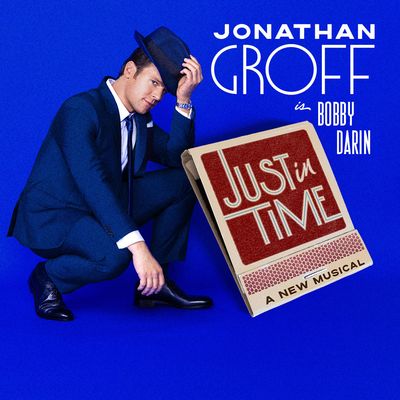
In this episode of Half Hour with Jeff & Richie, we dive into the Broadway musical Just In Time at Circle in the Square. We break down how the show reimagines the biopic musical, focusing on Bobby Darin’s rise from East Harlem to stardom, and explore what makes this production stand out on Broadway right now... Read More
From the show: Half Hour with Jeff & Richie (Post-Show Broadway Discussions and Interviews)
Featured Shows
About
In this episode of Half Hour with Jeff & Richie, we dive into the Broadway musical Just In Time at Circle in the Square. We break down how the show reimagines the biopic musical, focusing on Bobby Darin’s rise from East Harlem to stardom, and explore what makes this production stand out on Broadway right now. We talk about Jonathan Groff’s dynamic, Tony-worthy performance as Darin, Gracie Lawrence’s scene-stealing turn as Connie Francis, and how the immersive nightclub design puts you right in the middle of the action. Plus, we get into the show’s fresh approach to storytelling, the emotional punch of the music, and our predictions for the Tony Awards. Tune in for our honest take on the performances, the creative team’s choices, and why Just In Time is a must-see for theater fans.
Follow and connect with all things @HalfHourPodcast on Instagram, and YouTube. Share your thoughts with us on Just In Time on our podcast cover post on Instagram.
Transcript
This transcript was automatically generated and might contain errors.
[0:00] Jeff Malone: Welcome to Half Hour with Jeff & Richie, the podcast where we explore the latest shows we see, sharing our insights and opinions on the performances, storylines, and everything in between. In today's episode, we're discussing the Broadway production of Just In Time, playing at Circle in the Square Theatre in New York City. Whether you cannot catch the show in person or you want to expand your thoughts after seeing it, this episode is for you. And as always, we want to inform you that this episode will contain spoilers, so if you're ready to dive into this production, stick around with us. I'm Jeff.
[0:25] Richie Grasso: And I'm Richie. We're thrilled to be your hosts for this episode, but before we start the conversation about Just In Time, here are a few words from our advertisers.
[0:32] Jeff Malone: Welcome, everyone, to a new episode of Half Hour with Jeff & Richie. Today, we're discussing Just In Time. Look out! Jonathan's back! Tony Award winner Jonathan Groff returns to Broadway this spring as Bobby Darin, the legendary singer whose short but remarkable life took him from teen idol to global sensation. Developed and directed by Tony Award winner Alex Timbers, Just In Time is an exhilarating new musical that immerses audiences in an intimate swinging nightclub complete with a live big band, a stellar ensemble cast, and iconic Bobby Darin hits including Beyond the Sea, Mack the Knife, Splish Splash, and Dream Lover. Discover the man behind the music, a once-in-a-lifetime talent who knew his time was limited and was determined to make a splash before it was too late.
We have Just In Time book by Warren Light and Isaac Oliver, based on an original concept by Ted Chapin, with choreography by Shannon Lewis, and as I said earlier, developed and directed by Alex Timbers.
[1:25] Richie Grasso: All right, Broadway hot take for Just In Time. I'm gonna go out and say this boldly, that this is the best biopic musical that I have ever seen.
[1:35] Jeff Malone: Took the words right out of my mouth. I went into this not knowing what to expect whenever you see a biopic musical, but my hot take here is this is one, not only one of the best biopic musicals I've ever seen, this is one of the greatest performances I've ever seen of Jonathan Groff. He should just be given the Tony Award for this. I think two years in a row, he deserves this. He's really, really incredible up there. I'm blown away by this whole production. I want to go back so bad, and I can't wait to dive into this a little bit more.
[1:59] Richie Grasso: Yes, let's do it. So we talk about biopic musicals, we talk about plot and concept. You know, we've been hearing lingerings of a Frank Sinatra musical coming at some point to Broadway. The big band names, but even just the shares and the Carole Kings of the world and the Temptations, we've had so many of these before. They sell tickets, people like to see the stories, but a lot of times they seem really stiff, and they seem really like, I'm here to record a record. No, you're not. What's your name? We got to change your name, and it seems so stiff, and then they go into a song, and then they go back to these kind of stiff, rough book scenes. But when I see Circle in the Square, immersive nightclub experience, and it's not the Dean Martin, Frank Sinatra, even though those were incredible singers of the time.
We're taking a singer that's just, I don't want to say Bobby Darin was one step below them, but in terms of longevity of career, you know, we don't know much about Bobby Darin other than these few hits. And I think it's fascinating to see that we go in, and already from the beginning, the concept is, hi, I'm Jonathan Groff. And we're like, wait, what? And you're like, I'm playing Bobby Darin today, and I'm going to tell you his story. And let's all be on the same page that we're in the basement of Wicked. I love that line. And we're going to just tell this story. And this man's story is really sad. It's also beautiful and wonderful, but there are some difficulties here. And we're going to mix in some of those great songs, and we're going to put the big band, and you're going to have a cocktail at the table here, and we're going to have a nice day. That feels already so good. And what do I say here all the time? It knows exactly what it wants to be. This show knows exactly what it wants to be.
[3:38] Richie Grasso: Well, I think the big thing in terms of biopic concept musicals here, and the writing in it, and the book scenes, if you think back to what was probably one of the big first successes, what would you say, Jersey Boys? Probably one of the, I mean,
[3:56] Jeff Malone: yeah. And that was very narrator heavy with book scenes that just, and it was successful, but it seemed a little different. But it was new, and it worked, and people loved it. And it was like, oh, Frankie Valli and the Four Seasons. Oh my God, we love it. It's so great. And it became the model and the cookie cutter for everything after it. I mean, I think the first one that I saw was Beautiful, the Carole King musical. And I was blown away by that when I first saw it, because I was like, oh, this is really cool storytelling. And Jessie Mueller was amazing as Carole King. And then I started realizing that there was a formula that was getting put out here between seeing Jersey Boys, and seeing Beautiful, and then seeing Summer, the Donna Summer musical, and then seeing Tina, and then seeing Cher, and seeing MJ, and seeing The Temptations, Ain't Too Proud.
And I'm like, oh, okay, so we're just going to keep wash, rinse, repeating the same formula of something that is fine, but it just felt like, okay, let's just get it on the stage and take every little detail from Wikipedia and put it up there. So where I was completely blown away from the actual concept of the writing in this was like, no, we're going to tell you that Jonathan Groff is playing Bobby Darin. Hi, I'm Jonathan. I'm already telling you I'm going to impersonate him. And I think it was not about him being Bobby Darin. It was about him finding the good parts of Bobby Darin's life and playing a kind of respect to him. And playing him in scenes, of course, in songs and telling the story in a respectful way.
And even knowing that we're going to submerse ourselves in a nightclub. Yes, we're in a theater, but we're going to pretend. We're going to do theater, and we're going to pretend here. We're going to understand that we're all on the same page.
[6:07] Richie Grasso: Right. Because I tell this story. Because I think in the writing, though, yeah, originally you're like, oh, why are we saying that it's Jonathan Groff? And why are we saying that everyone else is kind of like who they are just playing these roles? Because that's what it is. And that's like what you're doing anything that is not. It is a narrator, but he's narrating as Jonathan Groff. And then at the end, he kind of goes back. I love that we get some direction here where there's a bookend and we start with the concept. And we've talked about some directors in this podcast here who don't end the concept. He ends the concept, changes back into Jonathan and says, we all came together here and how special is this? And it just felt like we buttoned it nice.
[6:45] Jeff Malone: Yeah. It was interesting because I read one of the reviews and they were talking about how, oh, it's like clearly Alex Timbers and Jonathan Groff love Bobby Darin. And then it was said like, oh, but are we supposed to love him? Because it seemed like he was kind of mean to the women in his life. And they kind of gloss over that in a way. But I don't know. Did you feel like that?
[7:02] Richie Grasso: What when I when we saw the Louis Armstrong musical and 80 percent of the musical focus on his relationships and not really about anything else, I remember leaving and saying, why are we focusing so much on the four women that he married with this show? I think we just lightly touch on the relationship with the mother and the sister, the relationship with Connie Francis, the relationship with Sandra Dee enough. And then we go on to his musical career. And it was about yet he does have some difficult paths with some of the relationships with these women in his life. But he's also dealing with health problems. He's also dealing with trying to be successful in a short amount of time. He's told that he's only going to live to 16.
He winds up living more than that to 37. I think it just sprinkles enough of his life that we're not just getting the career. We're not just getting the romance. We're not just getting the health problem. I think it's just a nice, even pacing of everything.
[7:52] Jeff Malone: Yeah. So nothing really stands out as something really bothersome. And I feel like what I think I love most about the writing in this is they found a kind of love of what he loved. He wanted to be an entertainer. He wanted to figure it out and be massive. And this was in the time of like, oh, music and charting and being successful, but also like mimicking everyone else, like everyone when Elvis was the big thing, like they just wanted to become another Elvis. And there was this moment of like figuring out, like, how do I define my own sound during a time where everything was sounding the same? And I think they really found that and captured that and told that in the story because it helps you and inspires you to kind of want to create in this space.
[8:46] Richie Grasso: Totally. And so I do want to kind of dive into this space and some of the design as well as these incredible, incredible actor performances here. So why don't we kind of transition over to that now? And then we'll listen to a few, take a quick break and listen to some ads from our sponsors.
[8:59] Jeff Malone: And we're back. So when we look at, I want to kind of talk about some of this direction and design. So Alex Timbers, a visionary, he knows what immersion is. He knows how to immerse us just enough. Moulin Rouge immerses us in a different way than Rocky did with the build out of the boxing ring that we had, you know, and then-
[9:18] Richie Grasso: And here lies love.
[9:18] Jeff Malone: Right. Here lies, oh my gosh, what about that immersion? So when Circle in the Square comes through, I always say, if you're getting Circle in the Square, use that to the benefit of Circle in the Square. Put that audience all around. You have the big bands up there. The scenic design and the lighting design is so cohesive because the lights are like in the scenery. So we have this scenic design by Derek McLean, lighting design by Justin Townsend, and then Kath and Zuber's like gorgeous costumes of this time period with the backup dancers as well. They're called the Greek chorus, right? The muses, which I love that concept that they're throughout all-
[9:52] Richie Grasso: The sirens.
[9:52] Jeff Malone: The sirens, not the muses, sorry. The sirens, yes. And everything is just working so effortlessly together. The back walls of the Circle in the Square audience are like decor'd out for the nightclub with the lighting and this mood music jazz playing, this cabaret tables that are drilled to the floor because when we got up, we were sitting towards the front and we went to go take a picture. I was like, wait, these tables and chairs don't move, which I think totally helps for actor safety as well as just moving the actors through the piece. But when you look at this whole design come together, it was amazing to me that Alex Timbers doesn't say, well, I'm going to stage something there and then I'm going to stage something there.
And it's really either there or there. Instead it was like, no, why don't we put them at a cafe table in the middle of the cafe tables at one point? Why doesn't Connie Francis sing over there and Jonathan's up on the steps diagonally behind? There was just so much inclusion of all the spaces. The aisles were used. You're-
[10:46] Jeff Malone: Really feeling like you're sitting at the Copa or you're sitting in these spaces. He's up on the table dancing, standing up there. The dancers move through. I'm just some people, you know, get too overwhelmed with immersion. I hear that with Stranger Things right now, probably that some people feel too much. This doesn't feel like too much to me. This feels like just enough of look around you and see where you are in this time period in this location.
[11:10] Richie Grasso: Yeah, I mean, when it comes down to direction, you really look at this space and you are fully directed as soon as you walk into this theater. And like you're saying, it can kind of confuse someone at first because it's not your traditional theater space. It's more like a nightclub. But you know, theater has always happened in more like dinner style or nightclub settings. So like, I think we're just bringing this here to now a Broadway setting.
[11:39] Jeff Malone: Right. And when you look at this, you're immediately brought into the lighting, you're immediately starting to change your mood as you go in because you're like, oh, now I'm here. This is going to be great. I love this like whole big band stuff. What Alex does so well is like, you're already looking at everything when you come in. You're not just like sitting in your seat and like, all right, let me look at the playbill now. You're already starting to look at like, oh, okay, that's the big band stage. Something is going to happen over here. Are they going to be in the aisles? Because like, oh, now we have these tables. How is this going to be used? It's like the perfect setup for someone's mind who's already being like, oh, okay, what's going to happen?
[12:22] Richie Grasso: And not to mention that, you know, Alex is dealing with a famous person's shorter life. If Bobby Darin lived to 80 or 90 years old, my question would be, would we need to have seen the whole 80 to 90 year lifespan? Instead, we're looking at a shorter lifespan, which is unfortunate, but we're able to move things along and don't feel like we're watching. All of a sudden we jumped 30 years and now they're elderly. Like we had that with Louis Armstrong a little bit. We had that with some of the Temptations a little bit and the Jersey Boys. But I always say like, why don't we just focus on one specific time of this person's life? His life was short. So we were able to see the plot and his love life and everything, the things with his mother and his sister being the, spoiler alert, the sister being the mother and that whole, really being his mother and the grandmother being the grandmother and all that. It's just, that was the, everything moved and flowed so well here for me.
[13:18] Jeff Malone: Right. Well, with the book, it could have easily been like what you're talking about. If he did have a longer life, sure. Would they have tried to tell the whole story? But I don't know. There was something about this, which was not just about his life story. It was about—
[13:33] Richie Grasso: Highlights of his life.
[13:34] Jeff Malone: His highlights, but also like what contributed to his career and the drive he had, because yes, he was told he was going to have a short life. So he had to come up with what he was going to do in that short period of time, just in time.
[13:49] Richie Grasso: Right, right, right. And so like we get there and it is the driving force for someone to do what they need to do. Let's go talk about some of these actor performances that I feel really drive some of this. The elephant in the room here, Jonathan Groff.
[14:05] Jeff Malone: Did you like it?
[14:06] Richie Grasso: Oh gosh, I loved everything.
[14:07] Jeff Malone: Did you love it?
[14:08] Richie Grasso: Yes. Jonathan Groff, to me, I've seen grow and mature. And I think him going to TV and doing Looking was such a maturity for him. Then we go into Hamilton and we're like, wow, what a cool role.
[14:20] Jeff Malone: You have to start with Spring Awakening.
[14:21] Richie Grasso: Well, we go way back to Spring Awakening, right.
[14:22] Jeff Malone: And then Glee.
[14:23] Richie Grasso: And then Glee, right. There was a lot, right. All very different things. Then we go recently to see Merrily We Roll Along. And I'm just blown away, crying my eyes out at the end of that, knowing that he is just carrying a show. And he wins a Tony Award, which we've been waiting for the Jonathan Groff Tony Award. Now that we're recording this before Tony nominations come out, there's a high chance, I think, that he will be nominated. And I really do think there's a high chance that he will win. I think Tom Francis is a really close contender. I also think Jeremy Jordan's a really close contender. But when I look at these leading men, and Darren Criss, when I look at what Jonathan is doing here, he has charm.
He has charisma. He makes it look so easy. He's got that wonderful vocal on these famous songs. I'm watching this scene with him and Sandra Dee at the top of Act Two, and I'm like, oh my gosh, I really think that these two are in love with each other. I'm blown away by that La La Land style dancing, period, feel. I just think this man can do no wrong. And I think he has such a career ahead of him, even though he's had so much already.
[15:32] Richie Grasso: We always kind of say, oh, who are the leading men in Broadway right now? And I really think he is sealing the deal with being this leading man because of the performances that he gives. Fully pushing yourself into this role as Jonathan Groff and as Bobby Darin are like two major things. And watching him, he really does it. But he just has such a stage presence that it doesn't match so many other people because it's like next level.
[16:02] Jeff Malone: Yeah. It's professionalism. It's maturity. It's not diva. It's just, I'm going to work at this. And you can tell he's worked on his dance skills with the way he's dancing up there. He's carrying a show, which he did with Merrily. He did even, I don't even necessarily carry Hamilton. He had some great moments in that, but he did have to carry in a way, Spring Awakening a lot. Looking, he was the central character of Looking.
[16:27] Richie Grasso: He's a charm, even in something that you don't see him in, in Frozen.
[16:32] Jeff Malone: Right. Oh, right. Talking about other people, I want to save someone for last, but Emily Burgle is a sister. Wonderful. The supporting ensemble of the women and the men are great. And they're playing a million characters. So Bravo, like so many things that there's changing in and out of, just out of this world.
[16:44] Richie Grasso: Yeah. You have Michelle Park. I mean, I'm so sorry, Michelle Park, the Broadway career this woman has had, she's up there doing these nightclub acts. Like she wishes she was at the Copa. She's singing so eloquently. She plays his mother. She's so warm and caring that scene where he's talking to her and he pauses and he looks at her and says, I'm just taking a pause here because I just don't want this moment to end with my mom here. I was like, oh my gosh, Michelle Park is wonderful. And I did really enjoy her. Emily Burgle as well. Erica Henningsen as well. Go Blue, a fellow Michigan alum of mine. I went to school with Erica. She's wonderful. Sandra Dee, a very famous Hollywood. And I wonder if like many people know a lot about her. Well, we know of the reference of her in the Grease look at me. I'm Sandra Dee. And everyone says, oh, do they realize that that was a real person?
[17:38] Jeff Malone: Right. And who actually was Bobby Darin's spouse who did movies with Rock Hudson and big, big famous movies of the time. She was the Hollywood it girl. And then when we start out to in Just In Time in Italy and it's beautiful and there she is in the pink and there's the florals and it just feels so good. And I think he has a great relationship with her. I think Erica does some wonderful things here. The supporting characters are really great. However, yes, there is a supporting character who stands out to me as I was gripping the handle of my seat. A season standout. Because I said, if this girl does not at least get nominated for supporting and hopefully win supporting actress in a musical, it is I'm so sorry, Gracie Lawrence playing Connie Francis. What? Where did she come from, Jeff? Please tell me everything about her, because about Lawrence, I am just stunned, stunned by this woman.
[18:38] Richie Grasso: I mean, I want to go back to the show, obviously, to see Jonathan again, just to see Gracie Lawrence, who just was on Kelly Clarkson singing one of the songs. What do we, what do you think of her?
[18:51] Jeff Malone: Speechless, because this performance was just out of this world. We're sitting right in front of her. Okay, she's looking directly at us. But there is a scene this scene probably will give me the chills and tears for a very long time. Because Jonathan's one side of the room. She is the other side of the room. She's singing this song on Ed Sullivan, a song that she wrote about Bobby Darin, because she's Connie Francis. And the emotion and the storytelling that they do through this song cannot be compared to anything, because I believed every last bit of it. And she is belting her face off in a way that I'm like, oh, she has to be like, over the top giving so much effort. But she makes it like feel like, it's easy.
[19:45] Richie Grasso: You know, when we speak about our half hour podcast is run through our business, Two Worlds Entertainment. And some people ask us why Two Worlds? I say, well, it's the hybrid of theater and pop that Jeff and I feel so strongly about. We both feel like those worlds should be hybrid more. Have you ever seen something more hybrid than someone like Gracie Lawrence, who has a pop music background, playing a pop singer of a time, but doing it in this musical theater professional way? I've never seen the mix better of healthy singing, great acting, but with this, this subtle pop flair that I'm like, oh my gosh, you are playing a pop star of her time. Connie Francis was the first female to chart a number one single ever on the Billboard chart.
And Connie Francis is still living. And Connie Francis, I hope can come see this show. I understand that her end of her friendship with Bobby Darin, and she wanted to be in the really, Connie Francis wanted to be in the relationship with him and couldn't, and they never were. And as Bobby is now gone, and Sandra Dee is now gone, and here's Connie Francis still living on earth as we speak right now, and her career, and just what Gracie is doing to play complete respect and homage to this person. I was just, I just, I'm not kidding when I say I have to go back to the show just to see her sing this big Connie Francis number. But not just sing, act, because it's very easy for someone to book a gig as a pop star on Broadway because it sells tickets.
She is booking this gig, but she is also acting here. She is not just a pop star. She, like you said, is taking the best parts of pop music and the best parts of theater, and she learned how to give that performance. I'm blown away. When I'm watching a performance, and I use the analogy of my heart's in my throat, because I do feel like my heart is in my throat, the last five minutes.
[22:03] Richie Grasso: But she is singing directly to Jonathan. Jonathan's on our other side, so we can't see how he's reacting. And I wanted to look. But I did not want to take my eyes off of Gracie in that moment. Because I'm watching her and I'm saying, she is so invested in delivering this song that it didn't matter what was happening to him. But I would go back to see this to watch it from his perspective now. Or to sit in the spot in the theater just to see what it looks like maybe from a different angle too. But not like to have his direct angle because like Gracie's singing directly to me. Now what I did glance back a couple times and he was heartbroken. Heartbroken. You could see that he was. And she was heartbroken.
Yeah, it was very difficult for them and they had to move on with their lives because of different things happening in their lives. They were young and their father was a big presence of every reason why not. And things like that. So all these performances just stunning, stunning, stunning stuff. I know we want to kind of transition into some Tony talk and our experience of the show. So let's go over there now. But before we do, here's a few words from our sponsors.
[23:08] Jeff Malone: And we're back. Tony Awards, please throw many things to this production. Please. I actually do think this show, I think it got great reviews for the most part, except for Jesse Green giving it a mixed review, of course. But between what he has given critics picks versus what he's given mixed reviews is very interesting to me. But whatever. We can't hold the New York Times to the highest level all the time. Everything else really was raving about this piece. And I really think we're raving about it because it is a time that we're doing something different with a biopic type musical. So that being said, I think that this is going to be very well received at the Tony Awards. I think so. Best musical, I hope.
When it comes for the nomination. So I do think best musical, best direction, for sure. I think it could get a choreo nomination. We have an interestingly pretty light year of choreo for a lot of shows. Well, this I think should be highlighted in terms of choreo with Shannon Lewis here. I mean, you have to choreograph now. In this immersive space, not in a big blank open stage. That's one level. Right. And it's not directing a huge cast, choreographing a huge cast here on stage. It's choreographing like vignette style scenes through an audience. It's definitely tough and hard. And I do think she will be nominated as well. I also think this could get a lighting nomination. All the design nominations.
Scenic design, costumes. It's going to, I think, do very well in terms of the creative side of things. But in terms of actors. Book of musical. I do think Jonathan will be nominated for supporting. I highly think that Gracie Lawrence could get a nomination here. Potentially Erica. Or Michelle. And Michelle. I think they all have great moments. I do think Gracie has probably the strongest moment in the scene, in the whole show.
[25:05] Richie Grasso: Um, so I would love to see her get nominated as well. Totally. I agree with all that. And I think in terms of the experience of the show, you're going to get that immersive experience. You're going to be transported to a time. I always say that that time period of music to me was really special. Yeah. And it was special to our parents and it was special to our grandparents. And I will say, talking about experience, at one point we had to turn a couple of times and Jonathan was in the aisles and he talks at the end about how we'll never have this audience together like this again. In this exact way this show is done. In this exact specific performance. And that won't be replicated ever again.
Because every performance will be slightly different. And let's take that in. And I looked and I saw a woman crying a few rows back. And for whatever reason she was crying. Maybe she has connection to Bobby Darin's music. Maybe she thinks of her parents. When we look at these biopic musicals, a lot of time I feel like, Jeff, we leave and I'm like, oh that was nice. I wonder what it was like at that time. Or, oh my grandma would like that. But I left there feeling such respect for these people at this time. This industry. This music industry that is nothing like what it was at the time now. And respect for what it took for people to go through health issues. To die when you die. You know, Bobby Darin's child is still living.
It would be interesting to know what that perspective is on this. We talk about Connie Francis still being living. What respect did this creative team do to this show? And what does this music mean? You know, I was going to ask you one final question. Bobby Darin didn't have thousands of hits. He had four or five really big hits. And obviously they're highlighted here. Do you have a favorite Bobby Darin song out of these? One that just sits higher above the rest for you?
[27:00] Jeff Malone: I used to be a wedding DJ. So I played a lot of Bobby Darin. I played a lot of Bobby Darin because there's something about "Beyond the Sea" or "Mack the Knife" that just gets people on the dance floor. Probably either one of those. I think I have a new appreciation for like "Splish Splash." Yeah, that was cool. I will say "Dream Lover" to me just out of all his songs just sits a little bit above the rest. I hear that song. It's fun. We're clapping. But you know, the lyric, I want a dream lover so I don't have to dream alone to me just is so beautiful and sad and charming. And I just think "Dream Lover" is a gorgeous song. They're all great. But I think there's something that Jonathan does with that song that just puts it into a new wheelhouse for everyone.
And just in terms of my own experience at the show as well, I feel there is a certain energy that's coming out in that theater that you don't get all the time in Broadway. Sometimes in Broadway, it's very like, oh, you know, just push play. And like, okay, and when's the show going to be over? This is one of those shows where I kind of feel like, oh, you never wanted it to end because there was just a certain there was like this certain like feeling just being there, where it was like, oh, no, this is it. You know, and for just to keep going straight through it just like, it's great. And I'll say really quick before we wrap up here, do we now you know, there's a lingering of the Frank Sinatra music.
I don't mean to keep comparing Bobby Darin to Frank Sinatra, two very different people. But in terms of the style of music, does this pave the way for the Frank Sinatra, the Rat Pack, I will say, right, the Frank Sinatra, Dean Martin style of those jazz? Are we going to get this resurgence of like jazzy nightclub? Because we see it in some pop singers nowadays, that like smoother vocal, that jazzy, riffy kind of sound kind of reemerging. The Frank Sinatra musical is in the wings. We know it is. Is that going to be successful as this if they do it the same way? Is that the next thing?
[29:10] Richie Grasso: I don't. Here's my issue. We don't want a replica of this again. Right. So Frank Sinatra musical should do its own thing. You want a creative team to fully invest themselves into doing something different and new with Frank Sinatra. Don't give me Frank Sinatra in a nightclub now because it worked for us. Because then that's how I feel like, okay, we're just going to be lazy again and do something because someone else did it. But then it'll be interesting to see, do we get a proscenium style of that? Do we get the whole life story? Is whoever's playing Frank narrating it? You know, Frank's daughter or Nancy Sinatra rather, you know, is, I believe, investing and producing. So what is that perspective, right?
Not to, like I said, not to compare, but I just thought, I just think to see the big band, the jazz, the Bobby Darin, that jazz music, and it works. Now what for biopics? I mean, we're going to see more probably like this. Yeah. I don't think anyone really is fully bitten off of like the whole Alex Timbers, like Lane, except for, you know, Cats and the Jellicle Ball is they gave us immersive theater in their own way. Um, downtown. So we'll see how that comes to Broadway and like the cabaret and probably is the other one. And like, I know that over in London and like the West End stuff, they're doing really like immersive stuff. So we'll see. I don't think anyone in America, the American Broadway scene is really kind of fully diving into the immersive stuff on Broadway.
At least some stuff off Broadway is happening. And then you see the Dolly Parton musicals coming. We know that you see Sutton Foster's doing readings for a biopic of a, I believe a famous country singer. I forget who. So you're seeing, and the Frank Sinatra musicals, they're in the wings. I think this tests the waters for audiences and we see what happens. We're always going to, you know, we had Hell's Kitchen on Broadway right now, the Alicia Keys, you know, we see it and it's, and so I think people still want it. So it'll be interesting, but this was just cutting edge for me. I'd never seen a biopic musical like this. I was blown away by this.
[31:03] Richie Grasso: Oh my gosh. Just about time. Final thoughts on Just In Time on Broadway. I don't really think we like this show at all. Just kidding. One of the highlights, definitely this season, there was so much this season. So for this to stand out and be something that I'm going to highly recommend, I'm going to probably tell everyone to go see it because I loved it.
[31:22] Jeff Malone: Yeah. And I think I'm going to go tell people to see it and then invite me so that I can go again. Because I, this, there's always a show every season where I'm like, I'm going back. Like I know I'm going back. And for me so far, it's boop. Like I have to go back to that. And this, and I know these are big splashy shows. Like there's so many shows I wish I could go back to. Well, sometimes it's hard because we want big splashy on Broadway. It's Broadway. We're not always getting it. But you want good splashy. You don't want messy splashy. You don't want, oh gosh, you know. So I loved this. Go see this, please. If you can, everyone, it was truly incredible. And I hope, I wish the best for the show.
I really do. That does wrap up our discussion of this episode. We hope you enjoyed our deep dive into Just In Time. And remember, we want to hear from you. Continue the conversation with us on Instagram and TikTok at Half Hour Podcast. And drop us a comment on Spotify and let us know your thoughts on Just In Time. And please leave us a review. Your reviews mean so much to us. Remember, you can listen to past episodes and stay tuned for the many upcoming ones as well. Until next time, I'm Jeff.
[32:13] Richie Grasso: And I'm Richie, saying ta-ta for now. Bye.
© Broadway Podcast Network, All Rights Reserved