

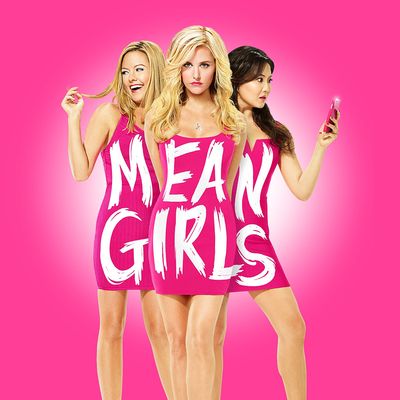
In this episode, we discuss the 2024 movie musical MEAN GIRLS and dive into its captivating world of high school drama and catchy tunes. Join us as we explore the movie's plot, the iconic characters of Cady and Regina, the direction, actor performances, and design, and Paramount's tricky yet effective marketing strategies that brought the film to the spotlight... Read More
From the show: Half Hour with Jeff & Richie (Post-Show Broadway Discussions and Interviews)
Featured Shows
About
In this episode, we discuss the 2024 movie musical MEAN GIRLS and dive into its captivating world of high school drama and catchy tunes. Join us as we explore the movie's plot, the iconic characters of Cady and Regina, the direction, actor performances, and design, and Paramount's tricky yet effective marketing strategies that brought the film to the spotlight. Whether you're a die-hard fan of the original movie, the musical, or a newcomer to the Mean Girls universe, this episode has something for everyone. Don't forget to subscribe to our channel for all things theatre.
If you liked this episode, don't forget to subscribe to this podcast and leave us a review.
Share your thoughts with us on this episode below:
On Instagram: @halfhourpodcast
On TikTok: @halfhourpodcast
On our website: www.twoworldsentertainmentllc.com
Transcript
This transcript was automatically generated and might contain errors.
[0:00] Jeff Malone: Welcome back to Half Hour with Jeff and Richie, the show where we peel back the curtain on the latest and greatest in musical theater and movie musicals.
[0:07] Richie Grasso: Today we're unpacking the glitz, glamour, and drama of the new movie musical MEAN GIRLS.
[0:13] Jeff Malone: I'm Jeff, a music industry producer and manager.
[0:16] Richie Grasso: And I'm Richie, a theater director and producer.
[0:18] Jeff Malone: So if you love the Broadway musical MEAN GIRLS, or if you're just a fan of the original flick, come join us for the next half hour.
[0:18] Richie Grasso: Half hour.
[0:32] Jeff Malone: Hello everybody. Just a heads up. We're not holding back on spoilers in this episode.
[0:37] Richie Grasso: So if you haven't caught the film yet, now's your chance to hit pause and go check it out.
[0:43] Jeff Malone: So I think many people have probably seen MEAN GIRLS in some way or form. So we don't really need to get too much into the about this show. So let's just jump right into this and let's talk about this fresh take on MEAN GIRLS. How do you feel that this stacks up to the Broadway show and the beloved 2004 movie?
[1:02] Richie Grasso: So I think it's kind of a nice, you know, it's interesting because this might be like a shock to many, or maybe not a shock to many, but I wasn't like a really big fan of this movie in 2004. I saw it, I saw bits and pieces of it, then I saw it. I know it's very quotable. I think it's fun. I understand the message of it. I don't really think it's the greatest movie I've ever seen. I wasn't obsessed with it. So then it came to Broadway, and I actually liked the musicalization of it. Some songs I liked better than others, but overall I thought it was a pretty good translation from film to here. Now we're going back and we're taking this new musical and this movie and kind of hybriding it and putting this new movie out, which is like it's not quite the original, but it kind of is.
But it's also, don't forget, all based on a book. So there's like something going on there. And then there's this stage musical which Tina Fey and her husband produced and wrote. And now it's like not billed as a musical, which we're gonna talk about later. And there's a lot going on. So overall, I'm just kind of I feel like everything's thrown in a blender and mixed up, and kind of whatever you pour into the smoothie glass is what you're gonna get. It's kind of how I feel. So I love about this latest film version. So I look at it and I'm like, sure. Fun time at the movies, laughed, enjoyed it, didn't hate it, didn't love it, wasn't obsessed with it. I just was like, okay, cool, got it.
[2:27] Jeff Malone: I think that's fair. Do you know what I mean? I do think it's fair to say that. You know, what I find so interesting about this film, and now, well, the original film, the musical, and now this film again. It's like Tina Fey's been involved the whole time. She's been in it. The only thing she probably hasn't been in is what the musical part of it. So it's interesting to see like her involvement with this. It's just like almost like her baby for so long. And to see how she's kind of changed the story a little bit with the times. So, you know, it's one thing, I don't know. I feel like sitting there and watching this film, I kind of was like, hmm. I'm gonna take all of my, you know, emotions of loving the original film, and then also like loving the musical, and I'm just gonna like leave that out because I was one of those that did really enjoy the musical.
Um, and I'm just gonna take this and kind of see what it is for what it is. And once I was able to do that, I actually really enjoyed this film. But let's talk a little bit about some of these changes that you're talking about with Tina Fey, because how do you feel like Katie Heron and her story has evolved or changed? Because from the movie to the musical to now, this?
[3:44] Richie Grasso: Well, first of all, from the original movie to the musical alone, the internal monologue narration was almost omitted because you're telling a live story on stage now. Well, I think that's the biggest change. And it's like it kind of asks the question of like Katie's inner monologues throughout the first. Katie. Katie. Oh my god, I'm getting confused now. Katie's Katie. Is her um her inner monologue is getting kind of removed from the beginning, which was such an amazing like plot point because everything you hear is what she's internalizing inside. And then when we went to the movie musical, uh the stage musical of this, it was kind of taken and it was given to Damien and Janice. And Damien and Janice kind of narrate this whole story from like her inner monologue.
So that right away totally stripped so much away from her character right when it went to the stage. And now what I feel like Tina's doing in this again is she's still removing that kind of whole plot point of this inner monologue away from it. So it's like, I don't know. I feel like I'm gonna say this, I wasn't the biggest fan of Katie's character in this movie musical. Yeah, Katie is played by Angourie Rice. I wasn't a huge fan of her. I thought she was okay, and I hate to say this, but I feel like anybody could have just stood in there. And when you look at the Broadway run with Erica Henningson, who was so talented and so great on stage. I went to school with Michigan with Erica. She's so talented, she's on a million shows. I just think that that was really powerful, and I didn't really think that the Katie character was really anything much in this latest film version.
[5:35] Jeff Malone: Agreed, because I think what they did with it for the stage, it worked by bringing Damien and Janice into being bigger characters where they were voicing all of Katie's thoughts almost. It's like that worked then. But now when we're going back to the big screen, you kind of you have that window again to um have her inner monologues, and instead they decided that's where we're just gonna put the music.
[6:01] Richie Grasso: Right. Which a lot of times ballads or solos in musical theater kind of count as an internal monologue, so sometimes it did translate correctly. Um, and then a lot of the focus came to Regina, right? And I think that is the biggest part to this whole plot in general, is that Regina was made to be kind of the lead almost in both the stage and in this new movie. She's still like Rachel McAdams in the original film is like an icon as Regina. She's made that role, and then Taylor Louderman coming in and doing it in the stage, which Renee Rapp ended up taking over on the stage, so it's kind of cool. And I got to see Renee Rapp. Yeah. So I saw Taylor too. And I saw Taylor, and I saw, I mean, we've all seen uh Lizzie Lowe, uh Rachel McAdams play in the original film to now see Renee Rapp bring her take.
And I think it was cool because she wasn't in the run for that long because COVID happened and shut down the show. So it was like she was on the stage for a little bit and then she was cast in the movie. And I was like, Oh, that's super interesting. Because I think that she was one of the only people, besides like Ashley Park from the original production that was cast in this movie. But it's a little bit of like the villain kind of takes the center stage.
[7:18] Jeff Malone: Yeah. Um, and when I look at Little Mermaid, I just think Ursula's like great. When I look at Aladdin, I'm like, great Aladdin, but Jafar is really cool. Like, awesome Belle, but Gaston's got a great number. Like, so there's a lot of times, not to compare this to a Disney show, but there's a lot of times we're like, yeah, let's look at the villain a lot here, because I think there's a lot to going on there. And so that's what they kind of skewed towards for sure.
[7:38] Richie Grasso: Well, I just find it interesting because I feel like there was more character development added to Regina's character in both the stage production and this new movie, and where character development was taken away from Katie though. Uh Katie. Oh gosh, I'm gonna do that. I'm gonna I'm gonna do it the whole episode. But I wanted to kind of move into the direction they're all all the overall performances and designs. We'll be right back.
[8:05] Jeff Malone: Welcome back. How did you feel the direction from Samantha Jean and Arturo Perez Jr. Since this was both their directorial debut? How do you feel they did um as movie directors here?
[8:17] Richie Grasso: I thought it was choppy, I thought it was okay. There was it was almost like when we got to um Revenge Party or Someone Gets Hurt when that when the lights go down and they all are in the house right after Halloween and and Renee Rapp's walking around and there's all this choreo and lighting and direction and camera work. I'm like, oh my gosh, did they just spend a week filming that? Nice, and then then we go 20 minutes and I'm like so there was inconsistency, and it was clear that they only put a lot of time and energy to me, it seemed in certain moments of the film instead of a whole film in general. And maybe, like, are you nervous doing this with Tina Fey involved? And well, I don't know, you know, because I think Lauren Michaels was producing too FMSNL.
I'm pretty sure he was involved too. Like the musicals, you know, that's a big comedy names to kind of have to please. My overall feeling on it though, is that like the Color Purple, there were directorial moments for these music scenes that were directed like music videos once again. When you watched some of these scenes, like Revenge Party lives on its own, you could take that right out of the movie and put that up on YouTube, and people will watch it. The same thing until Someone Gets Hurt, Renee's song. Cut that out of the movie, put it up on YouTube, and it's gonna be a hit. And I'm sure they're gonna do that with a many of these songs. Aside from that, too, all of the music was completely changed from the stage.
[9:45] Jeff Malone: Yeah, and I and I do have a little bit of an issue with some of that because I I'm gonna save that to the end because I want to talk about that at the end. Let's save that because I want to get to some cast things first. We're gonna compare and contrast. Let's go to cast. Who are standouts for you? What did you think of Angourie Rice as Katie, Renee Rapp as Regina George, and some of the other characters? Who are your standouts?
[10:08] Richie Grasso: Uh my big standout is Renee. She owned this film. People are going to love her. She has a huge fan base. I loved it. Um, while Kelly Spivey and both as Damien and Janice, I think they also were scene stealers every single time. Which it's the same thing for the um the stage production. It was the same way. Damien and Janice kind of steal the show there when it was um Gray Henson and Barrett playing those roles, they stole it.
[10:44] Jeff Malone: It was so great, and they have such great moments in here.
[10:47] Richie Grasso: Um, I was a little disappointed that Damien didn't get more music time, especially since he's like a Tony Award winner from Broadway singing his face off for two and a half hours in Strange Loop for a year, you know. Like, you know, you would think they would have featured more of him. Like, but he's like bringing the comedy, and other than that, I mean, no one else really blew me away. I felt bad for people like Phoebe Wood and Avantica, whose characters kind of were really stripped down. Very stripped down. And I thought they were almost had to overact them because they were not given enough time on stage. I thought, you know, and especially from the film, I should say the 2004 film. They're such iconic characters.
The stage production, they also there's so much development with them, whether you like their music or not, it is there, and there's so much with them because I think the plastics as a whole are big in all of the other productions, and this time they were kind of like an afterthought.
[11:41] Jeff Malone: Yeah, because in the original film and in the Broadway show, they're very afraid of the plastics. They're very you stay away from them. I didn't really feel like everyone felt comfortable enough to stay away from them in this new movie. Maybe that was a purposeful choice.
[11:55] Richie Grasso: Maybe. But the Aaron Samuels didn't really stand out for me, and um the I will say one thing about Busy Phillips. She's in her own. She's fun. It was fine, kind of it was a little too Amy Poehler at times. Yeah, and it would have been it would have been the perfect moment for her to like really just do something a little different with the character, but she kind of in a way made it her own, but also I will I've always said this. Virginia George's mom is my favorite character in the whole thing.
[12:26] Jeff Malone: Yeah, but also I love it. But I'll say something. I feel like her character was also stripped down a little bit from yes, you know, it wasn't outrageous. And I think this movie was missing a little bit of like things just being outrageous. Because in 2000, in the 2004 film, when you're watching so much of the bullying and stuff like that, you're like, oh wow, this is like actually really happening in the real world, but and it was also outrageous at times. So where this didn't feel that way, this felt very like safe.
[13:00] Richie Grasso: You know, I will agree with you on all the casting things. I think I agree with the people that stood out. It is also really nice to see Tina Fey and Tim Meadows up there doing their roles again. Um, and that they're partners in the characters are partners in the show, is kind of cool to see that.
[13:16] Jeff Malone: Yeah. Um, and I also thought it was really cool to see Lindsay Lohan appear at the very end, and Tina Fey said in an interview, when you don't expect cameos at the end of a film, there she is. And that was I think purposefully done that they threw her in way at the end, makes complete sense. I thought it was a very smart, especially if you didn't know there was leaks that she was in it, but um, it was like, oh, if you didn't know she was gonna be there, and then she's the mathlete moderator at the end, very cool choice.
[13:41] Richie Grasso: Well, you had said something to me, and you were like, Oh, there's a surprise in the film, and I had no idea what it was. I didn't even put two and two together that it was going to be her, so I actually had that wow factor of like at the end she's there, and I'm like, oh, how smart to put her as like the person running the mathlete event.
[13:59] Jeff Malone: So, yeah, it was cool. But how do you feel like the set costumes and overall look of this film kind of hit the mark or didn't hit the mark?
[14:08] Richie Grasso: So, for me, I thought was interesting was obviously we're set in the modern day, so phones are bigger. Phones were still around in 2004 with the film, but it was like landline, three-way calling, things like that. But when things went viral in the school, they showed that through social media and phones. And even to the point where she didn't go to a photocopier and photocopy the burn book, and she took pictures of it or left it there in the school, and everyone went up and took pictures of it with their phone. To me, that's really smart. It's smart writing and it's smart direction to take this film. And maybe if they would do it again in another 20 or 30 years, maybe there'll be something else that's new that there's a way that news translates through a school.
Um, so there were definitely some great choices in that costumes, scenery, lighting. I the movie um video music video style filming of it was kind of cool. The camera work with the different editing of it. It was fine. It was nice. I don't think anything was outlandishly crazy. I thought the costumes were fine. I think Renee Rapp's character really stood out because I remember the plastics in 2004 being everything was very prim and proper and tight skirts and and and fitted things, and everything was so like oh, we are because in 2004 that's what was maybe, right?
[15:20] Jeff Malone: Yeah, even the Broadway musical kind of did that.
[15:24] Richie Grasso: The tight white pants that um she would wear with the pink heel. Right. And then with Renee, it was very like what a lot of Gen Z kids wear today in school are like a baggier clothing or that or the off-the-shoulder sweatshirt or the high rise pants, like the things that are more in so that was smart costume design, I thought. And I thought they took it to the modern day, for the most part, pretty smart like that.
[15:49] Jeff Malone: I feel like I'm gonna disagree with you a little bit on the costumes.
[15:54] Richie Grasso: I almost felt like they were a little cheap looking.
[15:57] Jeff Malone: Okay.
[15:58] Richie Grasso: And of all of the three characters that should not look cheap, it should be the plastics because they're always there to separate themselves from the rest of the school. And I feel like if they were walking down the hallway with the rest of the school, they didn't stand out. They just blend in. And that would have been my only call out. Like, like Regina's rich, and she didn't look rich at times. She looked like she was at, you know, shopping at Urban Outfitters. And where was like the brand of Regina being there? You know, that was the only thing I would say, like looked kind of like low budget. So other than that, I thought there were some pretty cool moments in terms of like set and design there and how the musical numbers were um filmed. But that that was really it.
[16:49] Jeff Malone: Yeah, yeah. And the differences between the stage and the film versions, some of it translated, some of it didn't. What did you think overall in terms of like how different this was from the Broadway show versus maybe how similar it was?
[17:01] Richie Grasso: Okay, so this is what I'm gonna say again about like this film. I think this film is meant to live on its own. And by Tina Fey even saying like this is a hybrid between the musical stage musical and the original 2004 film, I really got the effect that this was a hybrid. And it yeah, I think it leads to a bigger question that we're gonna talk about a little bit later. But when you take all of that away and you look at this as it's a blend of the two movies, I think they did a pretty decent job with like getting it to that point.
[17:36] Jeff Malone: And I agree with some of what you're saying, and then I have a whole opinion on this whole thing taking a step back and looking at this with a wider lens.
[17:36] Richie Grasso: I have a whole different opinion on the thing in general. So, yes, the specific film, sure, there was some nice things going on. I think I have a problem with everything that led up to it.
[17:55] Jeff Malone: Okay.
[17:56] Richie Grasso: So let's kind of go into this. My the marketing of this, my experiences with this.
[18:02] Jeff Malone: We'll be right back.
[18:06] Richie Grasso: Let's jump back into things.
[18:08] Jeff Malone: So should we talk about first? Because I feel like there's two things.
[18:13] Richie Grasso: Let's talk about the marketing of them. Actually, it's three things. Let's talk about the marketing. Let's talk about how it was actually presented. And then also let's talk about fan feedback here. Because there's like and let's take the fan feedback for the end and our feedback for the end too.
[18:26] Jeff Malone: Yeah.
[18:26] Richie Grasso: So what if you follow timeline? This comes to Broadway, it sells tickets, it does very well. It actually gets a ton of Tony nominations and doesn't win one. Disappointing. It runs and then it closes.
[18:40] Jeff Malone: Due to the pandemic.
[18:42] Richie Grasso: Yeah, it's close. So I'm like, okay, it closes. So now then we hear a movie musical version is coming. And we hear, if you I don't know if you remember this, it was gonna go direct to streaming. And apparently this past summer, they tested it with a bunch of audiences in theaters, and audiences took to it. And the last minute Paramount said, nope, let's put it in the movie theaters instead. They didn't do a Christmas release. It was January, Martin Luther King weekend. Kind of makes sense because a lot of people are like dumb with the holidays, looking for stuff to do on the weekends laying low. And it did so well in the box office. Um it got well, it got mixed reviews through reviews, but financially speaking, it did very well.
[19:22] Jeff Malone: Here's my problem.
[19:25] Richie Grasso: It definitely has done financially well because it's already made back its money double. Yeah, but maybe it was a slightly lower budget film for director streaming, and now they're making their money. You know, I don't know. But here's my problem with it. I'm really kind of sick and tired of people thinking that they can just change the definition of something to please them. This is a movie musical. So, like, let me just just hear me out. This was when she's sitting there and she starts immediately going, oh, your hair looks good, push back when I was five. I felt that that's literally the definition of a musical when you start singing your emotions in a solo song. And then when she's on the swing and we go into montage moments.
So don't tell your audience at $18 a ticket that it's one thing, and then people go and then they hear it's another thing. Own what, no, wait, hold on. I'm not done. I'm gonna finish my thoughts. Own what this is. And I'm kind of getting a little sick and tired of, oh, well, let's make it a musical for Broadway, but then let's not say it's a musical. You used actual literal songs. I don't care if you change the orchestrations, I don't care if you change the lyrics. You took songs from a Broadway musical, multiple, and throughout the plot told a story through a song, which is what a musical is. And this whole even color purple, not saying it was a musical and then actually making any music. I don't like that deception.
Call it what it is and own what you're doing. Be proud that it's a musical. Own the fact that your husband Tina Fey wrote this music, and he is going to be billed as that, and you're telling the story through music. I'm so sick and tired of hiding behind the well, it's not really, especially when Glee and high school musical, the musical of the series, and all the and Broadway is booming with musical theater. How could you hide like that?
[21:19] Richie Grasso: I'm disappointed that there was such misguided information with this. And then everyone's like, oh, it's a musical, but no, it's not, but it is. But even the head of Paramount saying, I'm not really sure. Yeah, it's not really. Come on, we are smarter than that. And I'm gonna go back to what I always say here on Half Hour Podcast, which Patty LePone just said this week. Trust your audience. Trust them that they're gonna hear that this is a movie. Do I do you ever see a horror movie come out, Jeff? And you say, well, it's kinds of a horror movie, but it's not really. It's a little suspenseful. And oh, one time someone will stab someone and there will be blood and it will be horror and someone's gonna scare you.
But it's not a horror movie, by the way, Jeff. Because it's not coming because it's not a heart. Has ever hurt. And to me, it's like, no, we do have subgenres of film for a reason to people to maybe understand if it's a rom com, it's a horror, it's drama. And to me, I sit here and I say, you don't trust your audiences that they're gonna come enjoy this movie, and instead they're gonna bad talk it because it's a musical, but it was successful as a musical on Broadway. I don't know. I'm a little burned by it, just a little bit, because I think the art form worked in some ways, but then in some ways you're gonna say, no, it's not gonna work. But then people still like the music and listen to it.
Actually, I just read that the streams of the Broadway soundtrack skyrocketed. People went to go listen to the more upbeat orchestrations, which were omitted from the movie. So I'm disappointed in that aspect of the whole way this rolled out. That was what was most disappointing. Sorry, that was really long. Now I would love to hear what you have to say.
[23:01] Jeff Malone: So dramatic. Listen, I hear you, but I think that you have to look at things a little bit differently here. Because you're talking about things that are leading to successes in other ways. The musical was successful, and the original Broadway cast recording is successful. We should be happy that listen, many schools and stuff like that might go do this show now. And that the original Broadway cast is getting streamed because people are probably listening to it because they want to hear what the original sounded like, and now what does the movie sound like? They had to change the music in some form of a way to kind of make this more of a successful movie. Because most of the Broadway music was not going to work in this film. It was gonna come off as corny, cheesy, and the way that they did change some of the music, I do think actually worked. And I would listen to it in my car.
[23:59] Richie Grasso: Disagree. Disagree. Some of these slowed down acoustic coffee shop vibes of some of this slow music with every song almost. I'm like, that was what I was so disappointed. Was I missing the splash. I know, but that might get played at a coffee shop now where the Broadway cast recording, would it? So now if you're making two versions of the Broadway cast recording and the movie, no one's gonna listen to it, period. Look at something like Chicago. Chicago is campy, corny, cheesy Broadway cast recording. The movie is hot, sexy, and like great, and people listen to that. They're two very different takes on that musical.
[24:43] Jeff Malone: Yes, but the in 2001 or whatever Chicago came out, which was one of the first big musicals of a long time when there was a long pause in the 80s into the 90s. I don't think those producers said, let's just call it Chicago and let's cut some songs and let's not put any songs in the trailers.
[25:02] Richie Grasso: But they did only but they did only call it Chicago. But it was a movie musical that did extremely well. And they were then proud of that. They got very lucky with that being successful. And they presented it as Chicago. If we went back to the trailers for that, I would love to see how they pitched you on it. I remember it. It's like this has to.
[25:40] Jeff Malone: And I think there's more of that. And the fear of the general public putting down the art form of musical theater than there is. That's how I think it is. Question now. Are you happy that more people saw this movie? Or would you be happier if them presenting it and less people saw it?
[26:00] Richie Grasso: I don't work in the film industry enough to know that. Yes, I'm happy that it's successful. I'm happy that people are seeing singing and dancing on film. Of course, I will always be. But I don't want to ever have to feel like I need to say, oh, well, at least there's a musical out there now. There now, there's so many musicals out there. I'm just saying, I think there should just be more pride in what is being put out in calling it a musical. There should just be more pride.
[26:24] Jeff Malone: Plenty of people knew it was a musical, though, that it was gonna have musical numbers. You knew it was, I knew it was. Plenty of people knew that it was going to be a musical. Some people didn't, and that's where I want to talk about the fans quickly before we have to go. Fans are either loving it or they're hating it. The fans at the Broadway musical, I see them all talking about it, and they're saying they absolutely hate the film because it's not the Broadway musical. And then new fans that didn't like the Broadway musical and saw this actually like it because they think the music enhanced the movie. So you're getting a different take on this. And you know, and then you get some people in the middle that are like, we didn't know it was a movie musical, so we're gonna like leave and skedaddle.
But like, here's what I'm gonna say. If you want to watch the original film, go watch it. If you want to see the stage production, I don't know, find a regional theater that's doing it. But this is a different take on it, and I don't think it is as bad as people are making it out to. And I don't think it's bad. I just think that I don't want to see the trend of movie musicals being like, we're gonna do Wicked, but it's not really a musical. Like, come on, like, of course it is. So just and I'm pretty sure that's gonna roll out this year as like this is Wicked, the movie musical, based on the Broadway musical. Period. And then people will go see it, or they won't. I don't know what else to tell you. Like, right, but at this point at this point, if you don't know Wicked's a musical, then I don't know, you're living under a rock.
[27:51] Richie Grasso: So I don't know. With Wicked, but Wicked is already its own other things because we're gonna have Wicked Part one, and who even knows what the trailer for Wicked's going to be. It's probably gonna be like, you know, Cynthia Erivo with a green face walking into shock, no music or anything, and then Christmas or Thanksgiving. Whatever it's happening. And then what are you gonna say?
[28:15] Jeff Malone: Yeah, yeah. You know, yeah. We have to say. I'm I'm a fan of put work out there and own what you're doing and call it what it is, and then let the audiences decide for themselves. We see it all the time on Broadway. A show comes, and we always sometimes say, oh wow, the marketing of that show is so smart. And then we see it in some people at the argument. Wait, that was what that show was about. The marketing didn't tell me that. And this is not just in film. Music, television, marketing is a big deal. And I think it's a really, really big deal in this case.
[28:49] Richie Grasso: And I think that they just but I'm gonna say something. Clearly, their marketing of this worked. They created the money that came in. They created drama and they created buzz around the fact of like whether to call it a musical or not. Good press or bad press of whatever it was, has people talking about it, and people went and saw it. So I will also say that I understand, and no one needs to really call me out and say, Richie, stop thinking so black and white with it's either a play or a musical or a movie. I understand that. How many times do we see something on Broadway or even off Broadway? Like, well, it was a play with some music, but it wasn't a musical, but it was actually an immersive experience.
I get it. The art form is molding and meshing, and I get, and that's kind of cool in a way, and kind of exciting. Why do we have to follow the norms of it's only this or it's only this? I get it. I'm just saying this because it was based on an actual stage musical where the music was actually put in a musical format already by Tina Fey's husband, and then it came here, and it's like, change the orchestrations, cut songs, don't tell people it's a musical, advertise it differently. And that to me looks like we're hiding. And it looks like there's shame. And that's what I'm just saying. That's all I'm saying with this specific example.
[29:59] Jeff Malone: It's what it's seeing. Right. You can say all you want, but it worked. And that's what I've done. I'm pulled in a lot of money. But that's how I think it's a good idea. And the same goes for Color Purple. It had an amazing Christmas opening. So listen, and there's others that are coming that are not getting presented as musicals. The next Joker that Lady Gaga's gonna be in is a musical. Nobody knows it. What do you have to say about that? You know, right.
[31:26] Richie Grasso: Yeah. So we'll be interesting to see for sure. Oh my gosh, we're running out of time here. Chatting and chatting away. Um final thoughts, final thoughts on the movie MEAN GIRLS, the movie musical 2024 go.
[31:38] Jeff Malone: Final thoughts is what I gave. I think that if you like the movie, if you like the stage production, or you don't like either, and you want a different experience, you should check it out. Have your own opinion. Don't care what the critics think, you know? It's just your chance to go and see something different. And I do think there's a lot of talent in this film that should be seen and respected, you know. Yeah, I enjoyed it. I didn't think it was the best thing I ever saw. I didn't hate it. It was nice. Um, Tina Fey's created a whole thing here. Good for her, you know. She's very smart. Um, and a few things I wasn't a big fan of, but I did laugh a couple times. So it was nice. And that's my thoughts.
[31:49] Jeff Malone: Yes. Until next time, I'm Jeff.
[31:51] Richie Grasso: And I'm Richie saying ta-ta for now.
[31:54] Jeff Malone: Bye.
© Broadway Podcast Network, All Rights Reserved