

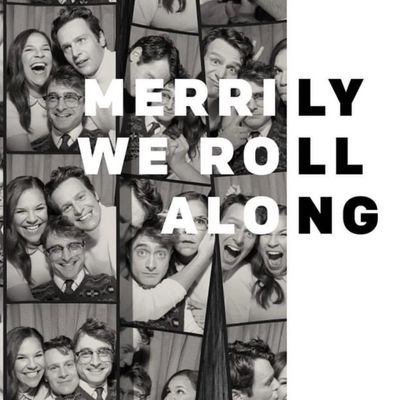
In this episode, we discuss the 2023 Broadway revival musical MERRILY WE ROLL ALONG, currently playing at the Hudson Theatre in NYC. Join us as we dive into the plot, Maria Friedman's direction, the incredible cast and standout performances, and our deeper thoughts on the overall meaning of the show... Read More
From the show: Half Hour with Jeff & Richie (Post-Show Broadway Discussions and Interviews)
Featured Shows
About
In this episode, we discuss the 2023 Broadway revival musical MERRILY WE ROLL ALONG, currently playing at the Hudson Theatre in NYC. Join us as we dive into the plot, Maria Friedman's direction, the incredible cast and standout performances, and our deeper thoughts on the overall meaning of the show. We wrap up with our quick 1, 2, 3 final thoughts that you won't want to miss. Whether you're a seasoned theater enthusiast or a casual fan, this episode is sure to spark your interest in this captivating production. Don't forget to subscribe to our channel for all things theatre!
If you liked this episode, don't forget to subscribe to this podcast and leave us a review.
Share your thoughts with us on this episode below:
On Instagram: @halfhourpodcast
On TikTok: @halfhourpodcast
On our website: www.twoworldsentertainmentllc.com
Transcript
This transcript was automatically generated and might contain errors.
[0:00] Jeff Malone: Welcome to another episode of Half Hour with Jeff and Richie, the podcast where we deeply dive into the shows we see.
[0:06] Richie Grasso: This week we're thrilled to discuss the new Broadway revival of MERRILY We Roll Along.
[0:11] Jeff Malone: Curious about our takes on Sondheim's score and the reverse storytelling.
[0:15] Richie Grasso: Stick with us for the next 30 minutes.
[0:17] Jeff Malone: I'm Jeff, a music industry producer and manager.
[0:20] Richie Grasso: And I'm Richie, a theater director and producer.
[0:22] Jeff Malone: Today we're rolling back the years with MERRILY We Roll Along.
[0:29] Richie Grasso: Half hour.
[0:34] Jeff Malone: Welcome back, everyone. Before we dive in, remember our discussion is full of spoilers.
[0:39] Richie Grasso: So if you haven't seen this show yet and prefer to go in fresh, see it at the Hudson Theater, and then come back for our full breakdown.
[0:47] Jeff Malone: Today's episode focuses on the Broadway revival of MERRILY We Roll Along, the Stephen Sondheim and George Firth musical that's famously told in reverse.
[0:56] Richie Grasso: With Maria Friedman's acclaimed direction, the show has captivated audiences, especially with standout performances from Daniel Radcliffe, Jonathan Groff, and Lindsay Mendez.
[1:04] Jeff Malone: And we just like to say when we saw this, we did not see Lindsay Mendez.
[1:08] Richie Grasso: We had her understudy on. I hope I'm saying her name correctly. Ali Ta Ali Taha.
[1:12] Jeff Malone: I'm saying that correctly. She was wonderful. And she was in for Lindsay.
[1:16] Richie Grasso: Also, just wanted to let you all know the show also stars Crystal Joy Brown, Katie Rose Clark. We have choreography by Tim Jackson, and as I said earlier, direction by Maria Friedman's, playing at the Hudson Theater in New York City until I believe July 2024 is when it's currently scheduled to end.
[1:33] Jeff Malone: So wow.
[1:35] Richie Grasso: Yes, let's go into this.
[1:36] Jeff Malone: Yes, we're going to give the quick little rundown though. Merrily is about three friends navigating their lives and careers in show business.
[1:43] Richie Grasso: But what's unique is that we start at the end of the story and move backward to see how they got there.
[1:49] Jeff Malone: It's a poignant look at how ambitions and choices shape friendships over time.
[1:55] Richie Grasso: Which I think that's a great about section for this show because let's get right into the plot and our thoughts on this show. How do you think that they did with this 2023 revival of MERRILY We Roll Along?
[2:10] Jeff Malone: Well, I like to remind a lot of people that this is actually based on a play. There was a play version of this MERRILY We Roll Along with the same title, same thing. It was just a play that started and then moved its way backwards.
[2:24] Richie Grasso: So I don't want to steal the George Firth thunder, because obviously he created this wonderful musical out of it, but the concept is based on the play. It's a famous play; a lot of people have read it. It hasn't really been on Broadway since I want to say the 30s or 40s, I think it was when it was last on Broadway.
[2:39] Jeff Malone: But this MERRILY is set in a different later time, the 60s, the 50s, the 60s, the 70s, right? Just shifted in time.
[2:45] Richie Grasso: So it actually would be really interesting to see this show done in a modern time, like starting in the 2020s, maybe a movie backwards, you know, it could constantly keep doing that, right?
[2:57] Jeff Malone: Maybe they'll do that for the movie.
[2:57] Richie Grasso: Oh, maybe yeah, they are doing that. There's a movie version of this coming along, yeah, which is taking 20 years to film purposefully because of the 20 years frame.
[3:09] Jeff Malone: So I'm fascinated with those plots. I first of all, I will say I loved everything about this. This is the first revival. There's been multiple off-Broadway and City Center and multiple reincarnations of this, but this totally works in this revival.
[3:22] Richie Grasso: I think what Maria Friedman's has done with the direction is brilliant. I think the acting is wonderful, and I will never understand when people long ago said it was ahead of its time, or that people said they were confused, or that the creative teams long ago and Hal Prince did long ago said people were confused, or he was worried people would be confused.
[3:48] Jeff Malone: To me, it's like crystal clear that we moved backwards because they say like 1973, 1972, 1970, like the narrators for the ensemble literally say it. And like it's not extremely challenging to follow.
[4:04] Richie Grasso: So I don't know. If it is, I'm sorry, maybe you need to read up on it before going. I don't know because I don't even know much about this going, and I kind of totally understood what was happening the whole time. I don't know.
[4:17] Jeff Malone: Well, this I did. Well, this is now we've watched the documentary on this and the whole thing.
[4:22] Richie Grasso: There is a documentary about the original.
[4:25] Jeff Malone: Yes, we watched the documentary about the original and the making of this musical with Sondheim and Hal Prince and just how like messy it was.
[4:36] Richie Grasso: Like we, they didn't know how to direct it, the original, and the original was in 1981. So they didn't know what to do here. It was kind of like gut-wrenching watching them go through this too, because I feel like it's like the first time you really, or the first time that I personally really sat and saw the creative process in going to a show.
[4:58] Jeff Malone: And obviously, you see things with like A Chorus Line, and they have a similar documentary out there on how that was created and casting that show.
[5:07] Richie Grasso: And for me, and then we saw, I we didn't when was the off-Broadway revival that we saw? I want to say it was a few years ago, maybe 2018, 2019, somewhere around there.
[5:14] Jeff Malone: I want to say.
[5:19] Richie Grasso: And I think Roundabout did it, right?
[5:20] Jeff Malone: Yeah.
[5:20] Richie Grasso: And it was great. You know, because I mean seeing this show for the first time and like really starting to get into Sondheim's catalog, for me, this plot easily became like my favorite Sondheim show.
[5:35] Jeff Malone: And really is old Seba.
[5:38] Richie Grasso: Yes.
[5:39] Jeff Malone: Because I find this piece to be so creative. And obviously it's like inspired by the play, but to see this and for him to still write the music and lyrics that he does for this show in reverse.
[5:54] Richie Grasso: I think it's like even more challenging for someone to kind of like he's writing music of anger because you know, we're following a group of three friends who at one point in their life, at the very end of the show, we find out that that's how they meet and become friends, and they're happy, but we're seeing it in reverse.
[6:15] Jeff Malone: So he has to write his angry music in the beginning of the show. He has to write the highest pieces that most people write for the end of the show; he has to write them for the beginning of the show.
[6:25] Richie Grasso: And I just think it's so cool because how many times, and I think that this might be a big reason why people don't really like this show. It's that how often do friendships like this exist, and how often did the choices in your life really kind of affect that friendship?
[6:45] Jeff Malone: So it's just like, and I think what was difficult about the original production was they used teenagers and young adults, and then they old played them when they were in their 30s and 40s, and then it ended with them young.
[6:58] Richie Grasso: So, right off the bat, this revival in 2023 seems to have worked so well because we're using all people generally of the same age range in the 30s and 40s, so it's just adult professional actors, not other than Frank Jr., the little boy, of course.
[7:14] Jeff Malone: There's all these actors that are of age, not teenagers or young adults, right?
[7:20] Richie Grasso: So then I remember hearing the original, they were like, let's put them all in t-shirts with their name on it because everyone's playing, and then let's have bleachers and lockers because they're in school.
[7:28] Jeff Malone: Like there was so much going on that I remember going to intermission at this revival we just saw, Jeff, and saying to you, like, it's just tell the story.
[7:36] Richie Grasso: Just use the ensemble to narrate it and play the multiple supporting roles when you need a waiter, when you need a friend at the piano, when you need a this, when you do that, and just tell the story.
[7:46] Jeff Malone: It's simplified in this revival that we don't need bells and whistles.
[7:50] Richie Grasso: We don't need to like I always say on this podcast, beat over the head the message, or like spell it out to the audience or stupefy the audience even more.
[7:59] Jeff Malone: No, we just need to just tell the story.
[8:01] Richie Grasso: And I think what Maria Friedman's did really well here is she just looked at the story and said, There's wonderful music. The script is written really well. It's written cohesively. There's the right song in the right place. Just tell the story.
[8:15] Jeff Malone: Don't give me a million projections and a million different crazy things.
[8:21] Richie Grasso: It just was beautiful to the case.
[8:22] Jeff Malone: Well, let me stop you first before you get too far into that. Why do you feel like they couldn't tell the story originally?
[8:31] Richie Grasso: I think because maybe in the 80s, when theater was doing this, like, let's drop chandeliers and let's put turntables on stage and let's be the next big thing.
[8:40] Jeff Malone: Maybe Sondheim and Hal Prince were trying to like do something wild with this reverse storytelling in a different exotic way, or maybe in a different avant-garde way by putting young people in roles and this whole young cast, or putting them with t-shirts with their names on them, or trying something really edgy and different.
[8:59] Richie Grasso: Whereas I feel like then I'm watching this revival and I'm saying to myself, it's just a story. I don't need all these different ways of telling it, just tell it.
[9:08] Jeff Malone: And I think with that what Maria has done here, and what Jonathan and Daniel and Lindsay have done here is they trusted their audience to just follow along.
[9:16] Richie Grasso: Even the ensemble. But that's what I'm saying. With this piece itself, the story is already creative enough that you don't need the bells and whistles in a piece like this.
[9:28] Jeff Malone: And where I'm gonna highlight something that Maria Friedman's is doing here is have fun with the ensemble.
[9:36] Richie Grasso: There, because this has every part of being like the three main characters are the shining stars in this whole thing. But she took a great leap here in using that ensemble to really help tell the story as well, with amazing scene changes during some of the most amazing music and lyrics by Sondheim.
[9:58] Jeff Malone: It just worked in that way.
[10:00] Richie Grasso: So, but because we're doing this in reverse, the story doesn't need anything else.
[10:05] Jeff Malone: It's already kind of too tricky for the average theatergoer to follow because they have to focus on that itself. So don't throw us around by like putting kids in there who wouldn't make sense, or just changing the actors; find actors that can play 20 years' worth of the same role.
[10:27] Richie Grasso: And when you mentioned things like set and lighting, like it just worked so well. Pieces came on and off. It was kind of this like unit, like house apartment, but we knew that we were in multiple different houses and apartments throughout different time periods. The costume design was brilliant and beautiful because the '50s clothing was different than the '60s, different in the '70s. That clothing changed quite a bit during that time, and they highlighted that well.
[10:48] Jeff Malone: And I just think overall, to see a successful revival of this, that you know, we saw we know the original Chicago wasn't a very successful show, and that revival now is so much more successful. This does sometimes happen. And what's actually sad is that it was the last collaboration for the most part, I believe, between Hal Prince and Stephen Sondheim in the '80s when this kind of fell apart. And unfortunately, the show within the show here is these friendships falling apart.
[11:15] Richie Grasso: And that's why when I think about this, I say, in the beginning, it's really sad. I actually think the beginning's really sad and the end's really sad. And they're both poignant in their own ways. But when you're in the beginning and there's arrogance and there's one-liner nastiness, and people are being rude, and you're like, whoa, we're starting the show with this, and how sad.
[11:36] Jeff Malone: And then you get to the end, and there's these like bright-eyed and bushy-tailed young kids like coming to the city, and I'm like literally crying. I'm just like so sad for them. I just find the ending of the show... We can get to the ending in a second because there's so many other things we talk about, but I just think the ending is really beautiful, but also really sad.
[11:54] Richie Grasso: We'll be right back.
[11:58] Jeff Malone: Welcome back. But that gets into the whole point of this. It's like they build that for you to be sad. Because you're sad in the beginning because you know the friendships are ending, and you have to watch them early on, but you then have to rewatch the whole story on how they got to their friendship ending.
[12:18] Richie Grasso: So you're even more sad because when you see them so young and hungry and happy, and like they're just so ready to be like the three best friends, when all of the challenges happen in this show, it's like, oh, that's why it hits you so hard. And I think it hits people like us harder because when you have friendships in your life that sometimes dwindle like this, and you create these relationships, you always go back to that question on how did it happen? How did it get here? Why did it end?
[12:48] Jeff Malone: And when you look at these three leads and you see Mary and Charlie and Frank, and you realize, oh, they're all so different. But Charlie and Mary kind of stay friends throughout most of it. It's really Jonathan Groff, and we're gonna I want to talk a little bit now just about some cast and some standout performances here. The three of them are working so hard, but it really Jonathan really carries the show.
[13:09] Richie Grasso: To me, Jonathan Groff is a major standout, it's a major feather in his cap of performances for me, and out of the many things I've seen him do on film and on stage. And I think he's really grown here. I also did really like Daniel Radcliffe. I did like Lindsay's understudy. They were wonderful, but Jonathan to me is holding this together, and I'm seeing that character is tough, man, right? It's just really tough.
[13:33] Jeff Malone: For Jonathan, I think for Jonathan, it really is a role that is slightly different for him, not fully, because it's a little bit of Jonathan doing Jonathan up on that stage. But the difference here, I think, and why his performance is really standing out is that he is always the nice guy. And here in this show, he has the nice guy look and he has the nice guy appeal. But deep down inside, he hurts so many people throughout this show.
[14:05] Richie Grasso: And he's so in love with his career that nothing is gonna stop it. And in a way, I think what's fascinating about his character is you could argue that he changes the most, and you could also argue that he changes the least, depending on the way you look at it, which is why I think a fantastic costume design is that he, unless I'm mistaken, I think he stays in a white button-down shirt and black pants the whole show, give or take the style of the shirt.
[14:41] Jeff Malone: He is a constant black and white. While everyone else changes costumes throughout 20 years, he... because I remember getting towards the end of the show and he's like writing at the piano in the early days. I'm like, why is he in the white button-down shirt still? And then at the end, when they're stargazing and they're up in the middle of the night, and Daniel's character comes in and Mary comes in and they're in their pajamas. I'm like, why is he not in his pajamas?
[15:04] Richie Grasso: And I'm like, because they kept him in this steady, white and black, clean-cut look that kind of is timeless, a white shirt and black pants, and that it does kind of highlight in a way, I think that from a directorial lens and a costume design lens, that he didn't really change. And then maybe everyone else thought he did because he was career-driven from the start. He just unfortunately hurt people along the way.
[15:25] Jeff Malone: And I'm not justifying what he does with his marriages and his kids and his friends. I'm just saying he did in a way change, and then he did in a way not change. Which I think is a good topic to discuss in more detail because I always look at that with many people in general, and like obviously, this is like to kind of showcase something like that.
[15:47] Richie Grasso: The words when you say to someone, oh, you changed. What does that mean? Well, it means did the person think that they changed, or did they really change? Or both, right? There's no true answer to that.
[16:06] Jeff Malone: Yeah, because someone feels like they could be living their authentic life. And I think what's interesting with Jonathan's character, Frank, he doesn't change. If you study him and watch him early on, he's obsessed with being famous, even in the last scene, which is really the first scene of them meeting. He wants it, he craves it.
[16:29] Richie Grasso: Which is why I think it ends with the stars illuminating the house, which I thought was a brilliant moment, because he was a star dreamer from the start. And he knew the stars were where he would be, he would be a star. And he is a star at the beginning of the show.
[16:45] Jeff Malone: And you stars also probably also represent a little bit of like all of the people that you will meet will help you kind of hit to who you are. And the choreography staging of the act one finale when he's like, go on a cruise, get out of town, go relax. And you see Charlie and Mary fighting through people just to get to the end of to wave to him as he goes on the boat, and they're fighting and they're fighting to get to the front, and then like blackout, end of act one.
[17:12] Richie Grasso: Oh, I love that. And then as he's left alone at the very end of the show, it shows that he kind of was alone, even though he had a child and wives and friends, he still felt alone because he had to... well, there's a famous saying, what is the famous saying? It's very lonely at the top.
[17:31] Jeff Malone: They always say if you make it, you know, and I think they're writing it in a line somewhere where he says it's not as lonely at the top, but you know, something about that. You know, his character is fascinating to me, and I think Jonathan was really, really wonderful to play that.
[17:43] Richie Grasso: In addition to, I loved Crystal Joy Brown. I loved her act two opener belt number. I loved her character, how transformative she was throughout. And Katie Rose Clark too. She sings "Not a Day Goes By," which is maybe one of my top five Sondheim ballads. I love that song so much.
[18:01] Jeff Malone: To see these other supporting roles, really, really wonderful, let alone the ensemble and what the ensemble's doing. I loved watching some of the ensemble moments in there. I just thought the whole cast was wonderful. Everyone stood out to me, and there was not a weak link anywhere to be had.
[18:18] Richie Grasso: Yeah, Crystal Joy Brown really kind of is at the top in here for me as well, because she actually both characters, Gussie Carnegie and Beth Shepard, they really... they're not in the show a ton, but they're in the show enough where they both have moments where they have to show different emotions.
[18:43] Jeff Malone: And again, I feel like the two characters, like when she sings "Not a Day Goes By" the first time, it is sad and it is gut-wrenching. And then "Not a Day Goes By" is so different when she first sings at the second wedding.
[18:58] Richie Grasso: At the wedding, because it means something so different. And how and when Mary is singing it, sitting there next to her, looking at Frank and that whole longing that she has for it, which is like probably why it's one of your favorite songs, because like look at how much that one song can have so many different meanings throughout the course of life.
[19:18] Jeff Malone: Yeah, yeah. And how does that really affect you? And I think what's cool with Gussie is like you watch her whole arc in reverse as well, very differently, but she has her own music of anger and like happiness and stardom and fame.
[19:31] Richie Grasso: And you know, it's so interesting because when you see her later in the party when they first meet, when Frank first meets her, she's like the top. And then it's so interesting because, like, later in the show, or earlier in the show, you learn about like, oh, okay, well, Frank does her dirty like he does everyone else, and she's just angry, but now Frank's at the top, and like, where is she going?
[19:57] Jeff Malone: Yeah.
[19:58] Richie Grasso: And it's so... that's why like everyone's always liked to be like, why is that your favorite song? That I'm showing? It's the show that makes you think so much.
[20:06] Jeff Malone: Yeah, it does.
[20:06] Richie Grasso: It makes you work smart as an audience and follow along and see how things happened and how they kind of in a way all become slightly happier with each other as we move further, further along.
[20:20] Jeff Malone: And that kind of goes into some of these music and lyrics a little bit. Let's jump back into things. There are standout Sondheim songs here in this show. I know I mentioned "Not a Day Goes By." I like "Our Time." I love the way that ends Act Two. I also love "Old Friends" because they sing that in this really vaudevillean, old campy musical theater way, which I think highlights the fact that this song is timeless because their friendship is timeless-ish, right? And the song highlights it's like an upbeat, eh? "Old friend, hey." Oh, it's something you could sing for a hundred years and it would sound like an old song, and then they say, "Who's like us? Damn few," but that, in other words, to show how unique their friendship is, but how many other issues do they have with other friends? There's so much to the lyric, and I love "Old Friends." I love that song. I think it's a really well-written song.
[21:26] Richie Grasso: Yeah, because so many times it was for them to kind of get out of the situation they were in and to remind them that they are friends. And until they weren't. And to see that Charlie is nowhere to be found at the beginning of the show because they ended that friendship long ago, even though they did probably shows together and everything. And then Mary is so embarrassed by how she behaved because of that friendship with trying to keep up with him. It's so sad, the whole thing. The music and lyrics do really help the storytelling a lot. And I think that's like one of the sometimes like greatest things is he really writes a cohesive score. You know, when we have all of these transitions and the transition songs just keep bringing in that theme, it just works.
You know, it helps you remember as well. Like, oh, okay, it's the same theme over and over again. It's repetitive, it's what we talk about in the pop space of like what should be in a musical. And I think Sondheim really knew how to blend that pop repetitive style of then also turning it into a theatrical score, you know.
[22:35] Jeff Malone: Sure, sure. And I also feel like there's enough ensemble, there's enough ballad, there's enough up tempo, there's enough, there's just a little bit of everything, and it's beautiful. And I love that it's getting this fresh breath, breath of fresh air, you know, all these years later. And I see it's selling so well financially. It's doing so. I hope it does really well at the Tony Awards this year, and I say to myself, what would help Princess Sondheim think all these years later to see this show as successful as it is? Um, I would I do want to kind of talk about that in general of like the marketing and the overall brand of this show was done so smart because this had an out of town in London, right?
[23:19] Richie Grasso: What's this? I believe it was off-Broadway. Last year was off-Broadway. I it might have been in London, but I definitely know last year was off-Broadway. I don't know if it was with the same actors in London, but I feel like she first directed a version of maybe did a production of this in the West End. Then they came over here and did the off-Broadway production. So, from a marketing standpoint, what this show is doing is so smart because they built the hype for this show because of the off-Broadway sold-out run of this and creating that demand of wanting to see Daniel Radcliffe, wanting to see Jonathan Groff, wanting to see Lindsay Mendez. It just made so much sense for them to say, "Oh, okay, we have a huge demand for this show.
Let's go to a Broadway house." And then obviously the Hudson Theater, perfect. The Hudson Theater is doing everything right, I think right now, with the overall experience of walking into that theater. It's probably one of my favorite theaters to walk in. It's beautiful. It's an old theater too. It has the perfect blend of nostalgia and class in there, you know, with people probably look at this so silly, but like the glassware with the drinks, yeah, cute. And it's like it brings back that whole like, oh, it's a night out at the theater, and this is the perfect show to kind of be there right now, and it just works. And their branding is just great. I love it.
[24:40] Jeff Malone: And it's interesting because I know some people will say, "Oh, well, are we going to have every Sondheim show come back down to Broadway?" Because like he passed away. So now every show. And I'm like, well, we're really doing well here with it because I mean, people forget Stephen Sondheim was involved in the "Into the Woods" revival before he died. And he was just starting to get involved in the rehearsals of "Sweeney" before he died. There was he was they were getting these shows ready before he even knew he passed. So it's not like this is all coming out of nowhere. But yes, we are seeing the resurgence of the Sondheim 2.0 all these years later with these shows. I mean, there's nothing wrong with that because "Company" saw "Sweeney Todd," "Merrily We Roll ALONG," "Into the Woods."
There's also we had "A Little Night Music" a few years back, "Follies" a few years back, and there's so many. And I've been in the park with George, "Sunday in the Park with George" had come back. Which I think didn't that reopen the Hudson?
[25:39] Richie Grasso: It might have, yeah.
[25:40] Jeff Malone: Yeah. So I feel like it's good storytelling, it's good writing. We even have "West Side Story" come back recently, and "Gypsy" always comes back. I feel like we'll get that again soon. "Assassins" off-Broadway a couple of years ago, we saw. Who's ever listening? Can we get a revival of "Follies," please? Thanks. Yes, of that show. So it's wonderful. And I think, and going just kind of coming back to this before we wrap this up, I feel like what makes this production so special is we've all aged with friends, with career, with family, with spouses, or with children. We've all had some sort of relationship in one of those ways, and things have changed. And isn't it interesting to see what that would look like if you looked back on your life five years ago, 10 years ago, 15 years ago?
What would you have changed? What would you have done differently? What happened? And "Merrily We Roll ALONG," but we're rolling backwards. It's a wonderful concept of the original play, the concept of this, and this is just a fresh revival of it that is working. And I'm just so happy. And like I said earlier, I don't cry a ton at shows. I do sometimes. I tear up sometimes. It just depends on the show. Um, this I was just really the tears were flowing through. I was really moved by the end of this. And I just find it to be tragic in the way at the end, even though it's beautiful, it's just kind of sad for me. I don't know, but I love the beauty of it. And I don't, and not many people write like Stephen Sondheim and George Furth did with this.
[27:02] Richie Grasso: So he at least he at least cries once a year at some show.
[27:07] Jeff Malone: Once you always a show in a season I cry at for many reasons. But yes. When I start hearing the sniffles, I'm like, oh, it's coming. Yeah, it's usually and to me, it's sometimes either on the end of Act One or the end of Act Two. But yeah. Oh, amazing. Oh my gosh, we're almost out of time. I can keep talking about this all day. This was so, so wonderful. But let's wrap this up a little bit. Yes, let's give us the quick one, two, three on why people should go see "Merrily We Roll ALONG" and our thoughts. I'll go first. Um, everyone should go see this because it is my favorite Sondheim show, and I'm telling you to go see it. But um, I really think that this is a great story for people to see. I think it's a big reflection piece for people as well.
When you go and you look at something like this, how many times are we saying, "Oh, how did that happen?" Or "How did this go?" "How did we get here?" And you don't do enough analyzing of your past to see how you got to today in the future, and I think that's the beauty of what "Merrily We Roll ALONG" really brings. So I highly, highly, highly recommend it. It's the first major revival of this classic show. The audiences are loving it. If you're seeing that it's like wildly sold out, which I know it is, book a ticket three or four months in advance on a random day just to get the ticket. You know, it's wonderful. All three of them are working so hard up there. The ensemble. I like I said, I'm blown away by Maria Friedman's's direction of this.
And there's such a heart here, and I love the way this is told. It's the fresh, clean way. And it's a classic. It's a classic. I hope more people do this show. Um, we don't just harp on the original being a flop because this is just such a different production. And it's Sondheim, and I'll always appreciate a Sondheim revival. I think we're always gonna see Sondheim revivals. Always. And I think we'll always see this too. So it's a wonderful, wonderful piece. I really, really enjoyed it. And definitely go check it out at the Hudson Theater. It is only playing until I want to say July 2024. So you only have a few more months.
[29:12] Richie Grasso: Which was an extension. It was uh, I will make a bold statement here though. I do think we finally can take "Merrily We Roll ALONG" out of the flop musicals genre.
[29:24] Jeff Malone: Totally. I don't think we should be calling it a flop anymore because overall the musical is great, and with very successful productions running of this, I don't think it's a flop musical at all.
[29:35] Richie Grasso: Right, right. And I love seeing new generations appreciating it too. It's wonderful. So I think well, that does wrap up our discussion on the episode today of "Merrily We Roll ALONG." We hope you enjoyed our deep dive into the show. Don't forget, we want to hear from you. Continue the conversation with us on Instagram and TikTok at Half Hour Podcast, and let us know your thoughts on "Merrily We Roll ALONG." If you enjoyed our show, please leave us a review. Your feedback helps us bring more theater to you. And remember, you can listen to our past episodes and stay tuned for some upcoming ones as well.
[30:05] Jeff Malone: Yes, until next time, I'm Jeff.
[30:08] Richie Grasso: And I'm Richie saying ta-da for now.
[30:10] Jeff Malone: Bye.
© Broadway Podcast Network, All Rights Reserved