

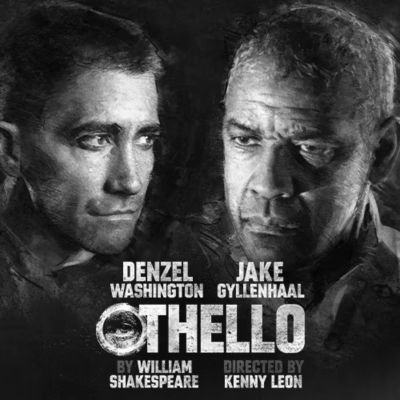
In this episode, we break down the Broadway revival of Shakespeare’s OTHELLO at the Ethel Barrymore Theatre, starring Denzel Washington and Jake Gyllenhaal. We tackle the impact of casting Hollywood stars in classic roles, the curious omission of Shakespeare’s name from the playbill, and the puzzling decision to set the story in 2028... Read More
From the show: Half Hour with Jeff & Richie (Post-Show Broadway Discussions and Interviews)
Featured Shows
About
In this episode, we break down the Broadway revival of Shakespeare’s OTHELLO at the Ethel Barrymore Theatre, starring Denzel Washington and Jake Gyllenhaal. We tackle the impact of casting Hollywood stars in classic roles, the curious omission of Shakespeare’s name from the playbill, and the puzzling decision to set the story in 2028. We share our honest reactions to Kenny Leon’s direction, the production design, and how strict audience policies affected the overall experience. Plus, we debate the show’s Tony Awards chances and what this production means for the future of Shakespeare on Broadway.
Follow and connect with all things @HalfHourPodcast on Instagram, and YouTube. Share your thoughts with us on OTHELLO on our podcast cover post on Instagram.
Transcript
This transcript was automatically generated and might contain errors.
[0:00] Jeff Malone: Welcome to Half Hour with Jeff and Richie, the podcast where we explore the latest shows we see, sharing our insights and opinions on the performance of storylines and everything in between.
[0:08] Richie Grasso: In today's episode, we're discussing the Broadway production of Othello playing at the Ethel Barrymore Theater in New York City.
[0:13] Jeff Malone: Whether you cannot catch the show in person or you want to expand your thoughts after seeing it, this episode is for you.
[0:18] Richie Grasso: And as always, we want to inform you that this episode will contain spoilers.
[0:22] Jeff Malone: So if you're ready to dive into this production, stick around with us.
[0:25] Jeff Malone: I'm Jeff.
[0:25] Richie Grasso: And I'm Richie, and we're thrilled to be your hosts for this episode.
[0:28] Richie Grasso: But before we start the conversation about Othello, here are a few words from our advertisers.
[0:33] Jeff Malone: Welcome everyone to a new episode of Half Hour with Jeff and Richie.
[0:36] Richie Grasso: Today we're discussing Othello.
[0:38] Jeff Malone: Tony, an Academy Award winner, Denzel Washington, stars as Othello, the noble Moor of Venice and commanding warrior general.
[0:45] Richie Grasso: Opposite him, Tony and Academy Award nominee Jake Gyllenhaal portrays Iago, the ambitious lieutenant and masterful manipulator.
[0:52] Jeff Malone: Spurned for promotion, Iago's relentless quest for vengeance against Othello and his wife Desdemona, portrayed by Molly Osborne, plunges them into a shocking web of deception and betrayal.
[1:03] Richie Grasso: Othello is directed by Tony Award winner Kenny Leon.
[1:06] Jeff Malone: All right, Broadway hot take for Othello. I feel that my hot take is did we need Othello on Broadway in 2025, or was this just a major cash grab?
[1:20] Richie Grasso: I was actually gonna say the same thing. My hot take is this seemed I would have probably rather preferred to see Othello like in a small hundred-seat black box theater with non-famous people in the roles.
[1:33] Jeff Malone: I don't really think we needed all this star-studded casting. This production doesn't seem to work very well for me.
[1:40] Richie Grasso: The strongest thing I think is the actual Shakespearean text.
[1:45] Jeff Malone: Uh yeah.
[1:46] Richie Grasso: So let's dive in.
[1:48] Jeff Malone: Okay.
[1:48] Richie Grasso: Let's get into it. So, first of all, speaking of Shakespearean text, I find it very interesting that it is not mentioned in this playbill that Othello is written by William Shakespeare.
[1:58] Jeff Malone: Really?
[1:58] Richie Grasso: I don't know if that's a complete oversight. I'm looking at the major billing page and it says Denzel Washington, Jake Gyllenhaal in Othello, and it lists the actors.
[2:06] Jeff Malone: And all other than saying Shakespeare consultant James Shapiro, because there was a consultant on there, it does not say by William Shakespeare.
[2:15] Richie Grasso: Have we completely gotten so into the whole public domain of Shakespeare that we don't even need to list his name anymore?
[2:25] Jeff Malone: I mean, do we just assume when we see Romeo and Juliet and Othello and Macbeth and Hamlet, that we just assume that Shakespeare wrote it and we don't even mention his name anymore?
[2:33] Richie Grasso: I feel like I would need to probably go back and look at the Romeo and Juliet playbill now and see if it mentions it.
[2:40] Jeff Malone: And I go back to it because Othello is not my favorite Shakespeare. It's a good Shakespeare. I think it's well written. I think there's some cool plot.
[2:49] Richie Grasso: Yeah.
[2:49] Jeff Malone: Um, I don't find it to be my favorite because it's not as dramatic as the serious Macbeth's and Hamlets for me. It's not as comedic as the Comedy of Errors or the um Love's Labor's Lost or uh Twelfth Night, or you know, even Midsummer Night's Dream to some of the other big names, right?
[3:06] Richie Grasso: Like I don't I don't find I find this to be like at times it's funny, but then it's kind of serious, and then it like ends with all this death.
[3:13] Jeff Malone: So I don't think it's personally my favorite Shakespeare play.
[3:16] Richie Grasso: Yeah, I think from a concept, I find the show a little hard to get into in the beginning, like listening and meeting all the characters and figuring out what's happening.
[3:27] Jeff Malone: I you know, we're probably gonna get into the production side of this pretty quickly, but like just from this concept, you know, it's directed by Kenny Leon. I read that he says that this play is set in 2028.
[3:39] Richie Grasso: You would never know.
[3:39] Jeff Malone: Other than the projection of the game that says in the near future, right?
[3:45] Richie Grasso: Right. And I don't know what I'm supposed to take away from that. It's it's one of the director things I'm gonna bring up.
[3:51] Jeff Malone: But from a concept here, if I look at this and I say, okay, what is his reasoning for making this set in 2028? I would never know.
[4:00] Richie Grasso: Right. On top of there's war, we're in Italy, there's drama, but like, are we assuming that there will be a war in Italy in 2028? I don't know what the—
[4:09] Jeff Malone: Right.
[4:10] Richie Grasso: Like, I think when you take something that's from so long ago, like, how does it equal out? Other than like, and these are production things, but like they're wearing like army uniforms, and like, are we American?
[4:27] Jeff Malone: Hmm.
[4:28] Richie Grasso: Like, how do how is that changing the concept?
[4:30] Jeff Malone: Right. It we didn't change the setting because it still says the setting is still set in Italy, which is when the play is where the play is set.
[4:37] Richie Grasso: I find But they're not like it's not an Italian army. We don't know, but they don't look like it, they're dressed like Americans.
[4:45] Jeff Malone: Right.
[4:46] Richie Grasso: Well, I think it could be up for interpretation, assuming that they're an Italian army, maybe. I also look at this and I say, the plot of this is kind of cool. Like it's kind of ooh, like Iago is the one that kind of sets a lot of this up.
[5:02] Jeff Malone: There's a lot of miscommunication, there's a lot of pointing fingers. I think the ending is so like borderline cool, but also a little like whoa, when he kills his wife, kills himself, hurts these everyone's like killing each other.
[5:17] Richie Grasso: I always wonder like what's the point of this? Like, when you look at Romeo and Juliet, okay, you kind of understand what they're trying to do. When you look at Macbeth, Hamlet, I look at this and I'm like, okay, it's just not my favorite Shakespeare.
[5:27] Jeff Malone: And I look at this and I say, did we need the star-studded casting? Do we need the major Broadway production of this? Whose idea was this? Of course, it belongs on Broadway. I think all Shakespeare belongs on Broadway.
[5:35] Richie Grasso: But I just look at this and I say, it's a cool plot. But what I said in my hot take is how much more interesting would this be if we were set in a downtown, small off-Broadway space with actors that were not famous, and we were in a more intimate setting, and we were watching this like unravel.
[5:57] Jeff Malone: So it's interesting here because I feel like with Iago, it's like figuring out how to climb his way to the top. And he's creating this whole scenario here about like how does he get uh take down Othello? And for the most part, it wins other uh it works, other than the fact that he gets stabbed, he gets wounded, and does not come into power.
[6:21] Richie Grasso: Right, and who's left dead is Othello and Desdemona. That's the point I think the piece is trying to make is that uh a little uh Othello and Desdemona are dead, and they were the leaders or the uh or him and his wife, and so now we're left with and they and that he killed him, Othello killed himself and killed his wife.
[6:39] Jeff Malone: Yeah, Cassio Iago's still there, and then what, right?
[6:44] Richie Grasso: So it's a power play, right? I understand the point of the play. I wonder how this relates to modern society. A lot of times we see Shakespeare and we say, Oh, it makes sense to put this play on Broadway now because blank when Romeo and Juliet was on Broadway in the same season, and it was about like the youth and the Gen Z aspect of love.
[7:00] Jeff Malone: I was like, okay, this is like a telling way of telling this. But when you look at Othello, I'm like, what was the point? Are we starting to say we're gonna be in war in four years? There's gonna be betrayal, no one's gonna trust each other. Is that the world we live in now where no one trusts anyone? Is that the whole point of this?
[7:14] Richie Grasso: Well, I think how it worked with Romeo and Juliet and this whole like revolting, like children Gen Z type piece was like you knew that that's what it wanted to be. You knew that it was like they are changing the text in certain ways to make it form for this modern Gen Z audience, and still telling the story of Romeo and Juliet.
[7:38] Jeff Malone: Whereas what I'm struggling with here is I didn't see the full vision of modernizing this Othello. It still felt period with weird moments of modernization in it.
[7:51] Richie Grasso: Right? Like it was like, okay, we're almost there, but you're not telling us enough. You're not taking this old text and turning it into like a real moment for us in 2025 or 2028, whichever this actually is, because I wouldn't know it didn't look like 2028.
[8:11] Jeff Malone: And that's why that does kind of reflect onto some of the direction and the design choices here.
[8:18] Richie Grasso: So I want to go into that and the acting, of course. So let's go and kind of shift over there. Um, take a quick break, and when we get back, we'll go into some of this direction actor performances and design of Othello.
[8:28] Jeff Malone: Okay, and we're back.
[8:29] Richie Grasso: So I it seems to me that Kenny Leon directs this and just kind of puts actors on a bare stage with there was a few to me, very unnecessary things happening here.
[8:42] Jeff Malone: The whole like blackout modern music is playing, but then all of a sudden there's like classical movie orchestral music playing, but then at intermission, we have like modern music again.
[8:53] Richie Grasso: This I know that was a sound design thing, but the sound design seems all over the place to me.
[8:58] Jeff Malone: Yeah.
[8:58] Richie Grasso: And then we're at this like ending where we're in the bedroom, and if we know Othello, we know that Desdemona's gonna die in the bed in Othello, and this is the final scene.
[9:06] Jeff Malone: But they bring this big curtain in and this big bed, and we're watching her get into the bed behind this curtain that's down for about 17 and a half seconds, and then the curtain flies out, and we have this orchestral movie score playing, which seems borderline comedic.
[9:24] Richie Grasso: Like, why are we being so dramatic with this big bed? Nothing makes any sense in the way this like ending happened.
[9:31] Jeff Malone: The direction was so like two actors on a bare stage the whole time. Pull them left, pull them right, put them, but it was like front and center speaking the whole time.
[9:41] Richie Grasso: It seems very amateur to me. Really struggling here with Kenny Leon's vision and direction in this piece.
[9:47] Jeff Malone: And like, listen, Kenny's kind of always hit or miss for us when we talk about his direction.
[9:52] Richie Grasso: And I look at this, and this whole play feels like, hey, I have stars in the show, people are gonna come see it anyway. And like uh let's just have them come out and park and bark it on the stage, read their monologues, and move on.
[10:07] Jeff Malone: Well, it almost seems like, oh, it doesn't matter what I do with the direction because we're all gonna just talk about Denzel Washington and Jake Gyllenhaal anyway.
[10:15] Richie Grasso: Right. And since Shakespeare is so good, and these two actors are so good. I'm not saying he cashed it in, but it looks like Kenny just kind of sat there and said, Yeah, just kind of stand there. Yeah, let's just kind of put the bed center and why don't we just kind of have that? It didn't seem to have any sort of vision. It was almost like it wasn't directed. You know what I mean? Like the actors got together and did what they thought would work best with some designers. I'm not trying to be disrespectful to Kenny. I think he's got a really accomplished career, he's a Tony Award winner. Some of the pieces that I've seen of his have been great, not all. I did not really like his Hour Town recently, but I liked Pearlie. So like I think there's some things that hit or miss for me. This just didn't seem to be directed in the way that it probably should have for the caliber that we're at.
[11:00] Jeff Malone: Right. Like, if we're spending all of this money to come see the show, you would expect that like it's not we're just coming to spend the money to see Denzel Washington on the stage and Jake Gyllenhaal on the stage. I've seen Jake Gyllenhaal on stage before, and I didn't spend $300 to go see him. You know, I think like what what's the point here? And I'm looking at this and I'm like thinking that this should be mastered direction with a beautiful scenic design and amazing performances by every actor on that stage that wants to be doing this and feels like they're doing it together. And I didn't feel that. I'll go across the street or a few blocks down to John Proctor, and I see kids cohesive on a stage giving more than half of those actors were giving on that scene.
[11:48] Richie Grasso: And then it also feels like actually very funny you brought that up because we have Natasha Katz lighting and John Proctor, and we have Natasha Katz lighting and Othello. I would have never I love Natasha Katz. I think she is one of the greatest lighting designers we have. She is so accomplished. And I've seen so many shows. I guarantee you, every year you've seen three, four shows lit by Natasha. She's so wonderful at what she does. But when I see these two pieces, I say, was one like your artistic vision where you worked with Dania and you worked with the Kimberly and the playwright and the actors to make this amazing piece? And was Othello like, oh, there's the big paycheck. Let me just put some lights up and kind of make it look moody at times and dark and edgy.
But then, like in the big scene at the end where they're killing each other, I can't see anything. And I think I understand the point is that they're in like a dark alley and it's not supposed to be. But like West Side Story Act One finale is a dark alley with the stabbing with Bernardo, and I can still see who's killing who. So like I don't understand why the lighting was so big white light the whole time until it's like dark at the end. It didn't, it wasn't Natasha's greatest work for me, and I was disappointed because it seemed like again, here's the stars, they need to be well lit so everyone can see them. Just put them up there and let's just throw lights up there. But let's feel like you a dictor uh directorium here.
[13:07] Jeff Malone: I've heard many times people say, Well, whatever happens on that stage is up to the director. The director at the end of the day approves everything. So you any designer choice that's up there, the director not necessarily overrides, but will work with the donor and say, hey, work with the designer and say, Hey, that's not really working. Can we talk about it? Or but if it's anything that's yes, in theory, anything that's happening on stage a director has allowed. Yeah. That's the bottom line. So what I'm saying is if you were directing something and you said, Well, why are they in the dark? Wouldn't you go to your lighting designer and say, they can't be in the dark? It was it must have been okay for Mr. Leon to say that's okay.
Okay, so I rest my case there by saying whatever is happening on this stage right now is approved by Kenny Leon. And I think that he approved anything or didn't approve anything at all. And we could even talk about some. I mean, the costumes were fine, it was a military piece. I didn't think Desdemona's costumes were anything to write home about, and she's a leading female Shakespearean character, and you would have thought that for someone of her stature, she could have been in something a little bit nice. She changed her costume a lot, but I didn't think she had anything. But she felt like she was in a different time period next to everyone else that's wearing these military. And you have Didi Ayite doing a costumes, which again, we've seen some great things, but this just didn't seem to do anything for me. It seemed very basic.
[14:35] Richie Grasso: Yeah. On top of the scenic design by Derek McLean, wow, that was the most disappointing to me, I think, out of all the design. We're seeing these pillars slide on and off, but they're not really filling the space. It's this big hollow gray space. I can't really tell if we're at a military base, we're in a bedroom, but then we're like outside. There's like a there's a walkway above the top that's used once. Uh everything just seems so hollow and so uh empty. It didn't make any sense the set to me. I just thought it was a very bizarre because I don't think that this play was actually decided on where it was actually setting. I we have costumes from people in one part of the world, we have a set from here.
And listen, if this is his approach that he went with the same way that he did Our Town, and he pulls little things from everywhere and he puts it into the show in his like troop style um direction, I don't think it works. It kind of worked in Pearlie in the beginning, but then in Our Town, when we have every different decade in here in costumes, it just it feels very messy. If I was making a soup and I put 35 seasonings into the soup, I don't know how that soup would taste, versus if I just put like five or six. It tastes very um right. Do you understand what I'm saying? Like to just dump all these ideas in. And to be honest, how many times do I sit here at this podcast, Jeff, and I say, Oh, that was a design team that was working together?
This didn't seem like that. This seemed like almost, and I hate to, I don't mean to be disrespectful, but this almost kind of seems like no one talked before the first dress rehearsal. And everyone went in their corner and worked on what they needed to, and then came together for tech week and just put up what they thought was best for the show. Because at the end of the day, there's the paycheck. It's gonna make millions of millions and millions of dollars, and people will like it no matter what, because it's Denzel and Jake. I mean what it feels like. I'm not saying that's what happened. It was great. It was great seeing them on a stage, but you wish you saw them with a vision on this. This felt stiff, it felt boring, and it it lacked the vision. You can do a minimal production of Othello, no one has a problem with that. But when you try to make it something that it's not, it feels that way.
[16:48] Jeff Malone: And then we go into the actor performances here, and I look at it and I say, you know, Jake's fine. Yeah, Jake does nice things. I don't know. Jake mostly carry uh well, I mean, I think Jake does what he can. I think he's fine in what he does. I don't think he's winning a Tony Award for this, but I think that he's enjoyable up there. I think Andrew Burnap is enjoyable. I've always liked things Andrew Burnap does. Molly Osborne to me, uh seemingly uh okay, like sure. I don't think there was anything there that was really I think she gets better at act two than she was. Yeah, it was fine. It wasn't anything extremely, you know, she has a difficult, she has she has a difficult relationship with Othello, and I and I understand that.
And then when you get to Denzel, Denzel's a really prolific actor of our time. I've seen him do like incredible things on film. But this was seemed to be like the same thing I said about Jake. Like, okay, you're up there, you're Denzel, you're playing Othello, you're not really doing anything extremely different. You're just, I just feel like with all these people, it was like just go up there and do what you kind of do. I think it kind of feels like none of them actually want to be doing it. Yeah, it's almost like, well, this is your paycheck for the next four months. So you may as well just like I don't know, people are gonna buy it. And and people, and this did get mixed reviews. Yeah. And it'll be interesting to see how this does with Tony Award season.
Yeah. But it was just I'm just sitting here very lukewarm on the whole thing. Yeah, and in the overall ensemble, I mean, like, they have great moments. Most of them are good to look at. I mean, there was there's not a lot for them to do. No. So they're just it's kind of just simple. I just feel like for a play that it felt like I was there for six hours. Yeah. Because it shouldn't have moved that slow. Right. So lots of things there. I didn't I didn't hate it. I always think Shakespeare is well written and can be done well, but it just didn't really do much for me.
[18:42] Richie Grasso: So all right. Well, let's get into our own experience at the show, and then also maybe some Tony talk. Um, but we'll be right back.
[18:51] Jeff Malone: And we're back. So let's talk about our own experience at this show because this is an interesting one. We um we have the phone case. Um this was a phone in the case. So let's first start with we got online to get into the theater at 12:25 for a one o'clock matinee, and we got to our seat at about 12:57. It took us a full 30 minutes to get from the street inside because you're dealing with a lot of people who don't understand that not only you have to get through security and bag checks, and there's people with bags that they have to go through. On top of it, there is the land lander. Is that the name of the or um forget the name of the company that they use to put the phone into the case and then they lock it.
Let's call it phone locker. Phone lock. They put it in so you cannot use your phone the whole time. They ask you to turn your phone off first before putting it in the pouch, and yet there's still people's ring chimes going off, like someone walked in front of their front door 50 miles away, and their phone's being alerted with the chimes in the middle of the theater, and they can't even get into their pouch to turn it off.
[19:54] Richie Grasso: He's not lying. And we also got to intermission where someone in front of you was just using their phone and either forgot to put it in a pouch or didn't tell someone. So, like nobody's following these rules. It's taking people forever to get into their seats. And then you get in and they're rushing you. And they're they have to start on time. You're gonna be sitting and you're gonna be watching the whole first act from uh standing. So what what felt un what's getting to be borderline enjoy unenjoyable, and this is not for all Broadway shows, because how many Broadway shows can we just walk right in, have a nice experience?
[20:26] Jeff Malone: But with these really star-studded high-profile shows, the line moves slow, security is slow, the phone case is confusing to people. It's rush to the bathroom, rush to your seat. We must start the show on let's go sit, go, sit up, okay, go ding dong ding. Go back to your everything, and then and then get out, go, we're done. It just seems so not enjoyable for the amount of money you're spending on this.
[20:47] Richie Grasso: Yeah, people are spending five to six hundred dollars on an orchestra seat to this, and it's like cattle being herded in and herded out. It's what it feels like. And I don't feel like that at every Broadway show. But this one I felt really rushed and really, that kind of unfortunately caused a somewhat unenjoyable experience of this.
[21:04] Jeff Malone: Yeah, like I don't think people are realizing like how they're starting this out, and when they're rushing you, and it's taking over almost a half an hour to just get into the building, like that is stressful to people.
[21:20] Richie Grasso: Yes. Especially elderly or people who don't do this very often and they don't understand that their phone has to go here and their backpack listening. And we're not in we didn't just see this show like and it just opened. Like they're running a few weeks.
[21:33] Jeff Malone: Yeah, yeah. So it feels like, come on, let's get it together if you're gonna be putting these practices into play. And I mean, like, we're in the business tourist spring season, like right before Tony's. Like, it's only gonna keep getting busier until the Tonies are over.
[21:48] Richie Grasso: And speaking of the Tonies. What do you go there? Do this will get some nominations. I don't think it's winning. I don't think this season's winning this, but this show's in an interesting position because one, it closes on the night of the Tony.
[22:01] Jeff Malone: Yes.
[22:02] Richie Grasso: Well, the day of the Tony.
[22:03] Jeff Malone: Right.
[22:04] Richie Grasso: So like if it wins Tony's, no one will see then the Tony winning performances if they haven't yet seen it. I don't know if that is a good thing or a bad thing for this show. It's happened for many shows. I think like do they nominate Denzel and do they nominate Jake because they want them there?
[22:22] Jeff Malone: Maybe. And I think like the Tony's kind of work in that way.
[22:25] Richie Grasso: Yeah, they put the stars in that they go, and it's a high-profile thing for the Tony Awards. Right. Does that mean they're gonna win? Probably not. I don't know. I can't really see the Tony voters getting behind most of um who would be nominated here. Maybe Andrew if they do nominate him.
[22:40] Jeff Malone: Um if they're kind of considered supporting, I think.
[22:44] Richie Grasso: Yeah. So if they're considered supporting, does this get a best revival nomination? Maybe. I don't think we have that many play revivals this season. Um, you know, that does it get a best director nomination? I don't I don't really think so compared to what I'm seeing Stranger Things doing for best play direction.
[23:00] Jeff Malone: Well, I think when you think about direction, he has three plays in this season. He has Our Town. He has Our Town, Home, and Othello now. And to me, if I had to choose which one I think is best directed, even though I wasn't really that into Our Town, I would say that had more of a concept and a vision to it than home and then this.
[23:18] Richie Grasso: So the chances of Kenny being nominated for something are very high. We have three plays in one season. Right. Um, there are still a lot of plays in this season because I think uh there is John Proctor, which I think Dania will get nominated for. I think O'Mary, Sam Pinkleton is gonna get nominated for. Um, if it was over the Shakespeare thing, I would nominate uh Sam Gold for Romeo and Juliet.
[23:43] Jeff Malone: I also think that Hills of California was directed really well. I think that English was directed really well. I like Eureka Day's direction. I think really job. Uh the list goes on and on. There was a love, there's a lot of great direction happening this year.
[24:00] Richie Grasso: And I don't know if like this is the best thing to say, but like I think Kenny needs like a little break. Kenny's working every single year, and like I feel like some of his direction choices are getting a little tired in like he's been doing the same thing over and over again. And like maybe he needs to go back to the drawing board and start thinking outside of the box of like how could he have made Othello really amazing?
[24:28] Jeff Malone: Um, instead of just let me direct Othello.
[24:30] Richie Grasso: Right. Because it he's falling in line with some of the other directors who kind of are doing the same thing. When you have like the Jack O'Brien's who do the same thing over and over again, or like the Bartlett Chairs, and you're like, okay, take a break, come back with something big and grand, and let someone else direct next season.
[24:46] Jeff Malone: Kind of like what I say about Taylor Swift. Maybe she doesn't need to put three records out in one.
[24:51] Richie Grasso: Good. Yeah. No, but you're she's on a break. It's in any industry. When you're when you're over, you do you do. You need to be putting three Broadway shows out in one season. Do you need to? When there's like hundreds and hundreds of directors that can be directing these pieces, why do you have to do two or three or four?
[25:10] Jeff Malone: Right, but we say that about any director.
[25:12] Richie Grasso: Right. And I'm not saying that they can't, I'm just saying I it's shows in the work. Some shows look better than others. Right. And so, yes, do I think Tony O nominators will give this some love? Yes, I don't think it's gonna win much. Um, it was a lukewarm production for me. I understand they the way they were doing it, we're putting stars in, telling Othello, there's a lot of things going on here. I didn't hate the piece. I just look at it and I say, I'm not really sure if everything works.
[25:37] Jeff Malone: I think when it comes to the piece though, the expectation was high for the price of this ticket and what we were thinking getting with the stars. So we've had plenty of stars on Broadway before where you've had to pay a lot of money, but sometimes the productions are grandiose and worth it. You know, when you spend a lot of money to see Bet Midler in Hello Dolly, or you spend a lot of money to see Hugh Jackman and Sutton Foster and The Music Man, or you spend all the time. There's a lot of stars like the money to also go see Nicole Scherzinger and Sensei Boulevard. Listen, like those have visions. We'll talk about Jamie Lloyd in the minimal kind of way that he directs, but there's so much direction happening on the stage, and I think that's the disconnect.
[26:27] Richie Grasso: Like Kenny, if you're gonna follow that kind of model in like doing a minimal production, well, then you gotta direct it. You really have to direct your actors on that stage. And it didn't feel that way. You know, and I have a big question here because it's Shakespeare, right? And every summer we get Shakespeare in the park.
[26:48] Jeff Malone: Which is visionary in its way because they're always really cool. But we haven't had it for a while.
[26:52] Richie Grasso: Right. And now we're having our first year back this summer. And I wonder, do you think we're gonna continue to see this much Shakespeare on Broadway? Or do you think we're gonna get a little pause since that Shakespeare in the Park is back?
[27:06] Jeff Malone: I wondered with Shakespeare in the Park being back, if we'll have a lighter pause with the Shakespeare coming now, because we have the two this year. We always seem to have Shakespeare a lot. But yeah, Shakespeare in the park is a very special thing in New York where you're seeing the outdoor theater in the new renovated space now and in Shakespeare told in a different way. You'll always see Shakespeare on Broadway. Maybe it won't be every year, but yeah, we might go back to now this like it's in the park now, we don't need it on Broadway every time.
[27:32] Richie Grasso: Yeah, you know, and those things are always star-studded in the park. Uh, you know, it already is a huge cast that's gonna be in this one this summer. So it's like, yeah, I mean, I just thought about it like I was like, oh, we've been having all the Shakespeare. I wonder if this is like, oh, okay, maybe we'll we'll get a little break now on Broadway with like having so much. But you know, it's uh it's everywhere. And it's a very ironic that Shakespeare in the Park, well, I don't know if it still will be, but it was always free. Or it was like almost all it was like a lottery, or it was it was hard to get tickets, but it was always a cheap or free ticket. And ironically, we're seeing Othello where they don't even mention Shakespeare's name in the playbill, and they're charging three, four, five, six hundred dollars. Isn't that very interesting?
[28:11] Jeff Malone: I find that fascinating that we're talking about the same play right here, where one is a free opportunity in the park, and one is going to want to charge you $500 to sit and see it in a Broadway house. Only in New York is where you're gonna see that of the sentence that I just spoke. So listen, I have a lot of we could have a whole conversation about equity in the Broadway space where who gets to see what, when, where, why, and how for another day?
[28:35] Richie Grasso: Yeah.
[28:36] Jeff Malone: So there it is. And the time has cut me off. So let's go to final thoughts on Othello on Broadway Jeff.
[28:45] Richie Grasso: There's so much that has opened this season between musicals and plays, and I don't think Othello needs you to see it unless you are dying to see it. I would highly suggest you going to see something else. I look at it like does Shakespeare always belong on Bravo? Yes. If you're gonna really give us a vision and you're really gonna push an awesome vision for a production of Shakespeare, awesome. But it's also okay to do Shakespeare just set in the Shakespearean times with Shakespearean costumes and do it that way too. We sometimes forget about that. Oh, it's in the public domain. Why don't we set it in the future? Why don't we set it in New Orleans 1940s? Why don't we say and that's so cool and visionary?
But this came like, oh, I have a vision. Let's not quite hit the vision, but let's just make all this money. I'm saying go back to doing Shakespeare in the literal Shakespearean period. Why not? Try that for a change. I actually feel like I probably would have liked this more if it was just done in the Shakespearean time of this production. And I would have loved to have seen seasoned actors like Denzel and Jake really find that. Then having to play this modernized version of it.
[30:03] Jeff Malone: Right. Yeah, that's very fascinating. So that does wrap up our discussion of the episode today. We hope you enjoyed our deep dive into Othello on Broadway. And remember, we want to hear from you. Continue the conversation with us on Instagram and TikTok at Half Hour Podcast. Drop us a comment on Spotify and let us know your thoughts on Othello. Please leave us a review as well. Your review means so much to us. And remember, you can listen to our past episodes and stay tuned for our upcoming ones as well. Until next time, I'm Jeff.
[30:27] Richie Grasso: And I'm Richie saying ta-ta for now.
[30:29] Jeff Malone: Bye.
© Broadway Podcast Network, All Rights Reserved