

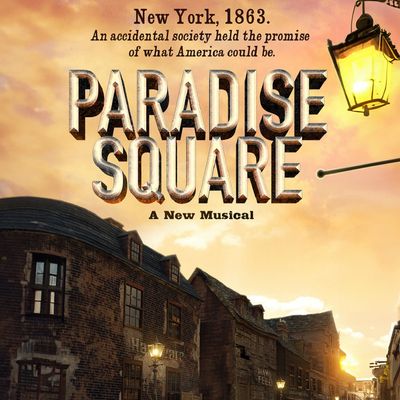
This week's episode dives into a discussion on the latest new original Broadway Musical to hit NYC, PARADISE SQUARE. In this episode, Jeff and Richie discuss how this new period piece (set during the Civil War in NYC in 1863) is standing in today's current world... Read More
From the show: Half Hour with Jeff & Richie (Post-Show Broadway Discussions and Interviews)
Featured Shows
About
This week's episode dives into a discussion on the latest new original Broadway Musical to hit NYC, PARADISE SQUARE. In this episode, Jeff and Richie discuss how this new period piece (set during the Civil War in NYC in 1863) is standing in today's current world. Discussions include how factors like music and dancing emphasize the plot, how certain character performances can drive the story, and how stories about subject matter like this are important for today.
Share with us, your thoughts, on Paradise Square on our Instagram page. @halfhourpodcast
*This podcast will include spoilers*
Thanks for listening! Please leave us a review with what you think about the podcast.
Follow us on Instagram: @halfhourpodcast
Follow us on TikTok: @halfhourpodcast
Visit our website: www.twoworldsentertainmentllc.com
If you liked this episode, don't forget to subscribe to this podcast and leave us a review.
Share your thoughts with us on this episode below:
On Instagram: @halfhourpodcast
On TikTok: @halfhourpodcast
On our website: www.twoworldsentertainmentllc.com
Transcript
This transcript was automatically generated and might contain errors.
[0:07] Richie Grasso: Hello, and welcome to Half Hour, an entertainment podcast through Two Worlds Entertainment.
[0:12] Jeff Malone: I'm Jeff.
[0:13] Richie Grasso: And I'm Richie.
[0:14] Jeff Malone: And we're here to bring you casual conversations on the shows, concerts, movies, events that we see and observe throughout our careers.
[0:21] Richie Grasso: We would like to let you know that this conversation will feature spoilers on what we are about to talk about.
[0:26] Jeff Malone: So if you have not seen the content that we're discussing today, please make sure you pause right now and go see it and then come back because we are warning you there will be lots of spoilers here today.
[0:36] Richie Grasso: Today we are talking about the brand new Broadway musical Paradise Square at the Ethel Barrymore Theater in New York City.
[0:44] Jeff Malone: This is, uh, we actually are seeing one of the first productions, um, one of the first performances of this Broadway production. It did have an out-of-town tryout. It is here now, um, only a few weeks in, fresh on a new run, and we are really, really excited to be talking about that today and happy to have seen it.
[1:01] Richie Grasso: Um, a few bits of information. Paradise Square is a new musical with a book by Christina Anderson, Craig Lucas, and Larry Kerwin, with music by Jason Howland, and lyrics by Nathan Tyson and Masy Asare, conceived by Larry Kerwin, additional music by Larry Curran, inspired in part by the songs of Stephen Foster.
[1:21] Jeff Malone: With scenic design by Alan Moyer, costume design by Tony Leslie James, lighting design by Donald Holder, sound design by John Weston, projection design by Wendell K. Harrington, and Sean Edward Boyle.
[1:34] Richie Grasso: We have lots of Heron Makeup, Matthew B. Armin Trout, Special Effects, Gregory Mee. We have, uh, Irish and Hammerstep choreography by Garr Coleman and Jason Remus.
[1:43] Jeff Malone: We have, uh, the musical staging by Alex Sanchez, production stage manager Karen Meek. Music supervision, music direction, and orchestrations by Jason Howland, and Jason Allen wrote the music.
[1:53] Richie Grasso: So who is music supervising, writing the music, directing the music, and orchestrating the music? It's all Jason Howland.
[1:58] Jeff Malone: Choreography by Bill T. Jones, directed by Moises Kaufman. This had its world premiere in January 2019 at Berkeley Rep Theater. And it's based on the musical Hard Times.
[2:10] Richie Grasso: So it's based on another musical, which is kind of cool. So we will, we won't have to go too much into the plot because if you're listening to this, then you've seen it, I hope. There's no streaming option for this. There's no other production anywhere. This is just the Broadway production. So I'm just letting you all know that.
[2:25] Jeff Malone: This is set in the Civil War. It's a period piece musical set in 1863, which is kind of right smack in the middle of the Civil War, I think. I think it was kind of just getting started, maybe around that time.
[2:36] Richie Grasso: And New York. And I think it's so interesting when we think of Civil War, we think of Gettysburg, we think of the South, we think of the Mason-Dixon line, we think of things like that. When we think of New York, we sometimes forget what was going on in New York during that time, right? And this really explores the immigration status of a lot of people, people migrating north, uh, and what the city was dealing with. And I think that's very, very, very cool.
[2:58] Jeff Malone: And Paradise Square is based on a real actual part of Manhattan that was a place where two different cultures were kind of coming together here: the African-American community and Irish immigrants, along with other immigrants. I mean, mainly talking about Irish in this piece. But it was cool to see those two worlds, no pun intended, there were two worlds, coming together and experiencing life together and love and living and respecting. Respecting and having a safe space to live their life.
[3:31] Richie Grasso: Um, I think what's fascinating to me, we'll just get into the musical in a second, but I think what's fascinating to me about doing something like this is we're taught so many textbook things in school about the Civil War. And we forget the underground safe spaces for people. And that there were really wonderful people creating safe spaces for the gay community, for the black community, for the immigrant community, for the Jewish community, for so many communities of people, there were safe places for people to gather and live their life, mainly in quiet and underground. And so I think it's nice to celebrate the really good things happening in war and in times of that.
[4:15] Jeff Malone: So I will say that the premise of this, the idea of this, the story of this is, I think timely and important and a part of American history. That why not, why not educate people on something like this? Right. And of course, it's a part of American history because, watch this, was in Civil War 1863. And then watch how far we've come from that, but how close we still are to it. It was only 150 years ago, maybe 160 years ago. It wasn't that long ago. Right, but if you relate it to things that happened in the 70s and the 80s and the 90s and 2000s, every decade has something needs a place, a safe place for a group of people to hide or feel welcome or be themselves.
[4:59] Richie Grasso: Yeah. Yeah. And that's what I find also interesting about this piece. It's like, yeah, I didn't go in expecting to kind of hear a story like this.
[5:03] Jeff Malone: Yes.
[5:09] Richie Grasso: And I think it was important to tell the story with as many people on stage. I think it was really great. I mean, there had to have been over 30 people in this show, which for a Broadway show nowadays is usually pretty rare to see that.
[5:19] Jeff Malone: Yeah, it was a lot.
[5:20] Richie Grasso: It was a lot of people. I will say at this performance, the role of Annie Lewis, one of the leading roles, we saw played by Kennedy Cowell, um, not Chilena Kennedy. So that was, um, one thing I wanted to say. She was wonderful. Kevin called her wonderful. Her sister is our is a singer, uh, from our concert when we did our rework concert, yes, Caitlin.
[5:41] Jeff Malone: Yes.
[5:41] Richie Grasso: Yes, shout out. So, uh, yeah, we've worked with her sister before for sure. Um, let's do a few shout-outs on some of these performances. Well, actually, what are your thoughts as a whole, as a musical? Now we talked about how important and wonderful this story is. How did this work for you as a musical, just from start to finish and your overall thoughts on a stage musical production?
[6:00] Jeff Malone: Hmm. I feel like I'm gonna go more in depth throughout this podcast. But as a whole, I guess I'm a little on the fence with the production.
[6:09] Richie Grasso: Okay.
[6:09] Jeff Malone: Um, because I don't know if it was fully ready for its Broadway run yet. I think there were a lot of great moments, but I do think it needs some editing at times. And I can go into more detail about this, but it's good. It wasn't spectacular.
[6:25] Richie Grasso: Uh-huh.
[6:25] Jeff Malone: So that's my kind of like on the fence. For me, I feel like, well, it was two, it runs two hours and 45 minutes, which is pretty long. Unless I'm seeing like Les Miz, which comes in around that time, uh, Phantom might come in around. Some of the, some shows do, like, don't get me wrong. And I've seen, I even think like the producers comes in at that time. Like some big mega shows too come in long like that. But when you're seeing a lot of shows, but those are mega shows that have been running for so long, and they're edited and they're clean and crisp and cut. I'm saying this, this could have been trimmed. I think they could have removed it.
[7:00] Richie Grasso: And some of the music was wonderful. I will say I really loved some of it. I was really honing in on the lyrics and this and the music. It was really nice. I thought it was just a little too long, and the plot, which wasn't too thick of a plot, could have been told a little shorter. I'm not saying it needed to be as short as a whole one act. It should be two acts. Well, I find that sometimes with new shows and new works like this, we try to hit the boxes. So meaning how much choreo can I get on the stage? How many musical numbers can I get on the stage? How many people can I get on the stage? How many lighting effects can I get on the stage? How much scenery can I get on the stage? So it looks like there's more than there actually is.
And unfortunately, I think that's kind of what this show comes down to. How much could we throw at an audience to maybe distract them from something that might not be the best show? And I, and have I seen worse things than this? Sure. You know, um, I don't think it's a bad show.
[7:56] Jeff Malone: No, it's, I actually enjoyed the show.
[8:00] Richie Grasso: Right, that's like you had a lot of moments.
[8:02] Jeff Malone: Yeah, there were some wonderful moments. I mean, um, we have like Joaquina Calicongo was just brilliant in the role. I thought she was so commanding in what she did. Her songs were wonderful, she has a tremendous voice. Um, she plays Nellie O'Brien, the, uh, bar owner's wife.
[8:19] Richie Grasso: And let's talk about the bar for a second. Here's my thoughts. When you think, when you see something like Hades Town, where it takes place mainly in this like main scenery, and you have this huge, wonderful, beautiful set. Yeah, to me, it's like the name of this show is Paradise Square. It's about this bar at the five points here in Paris, and the name is Paradise Square. If the name of your show is Paradise Square and most of your show is taking place in the bar, wouldn't you have this really beautiful, elaborate, detailed set? I mean, like there was like a few bottles sitting behind the bar. It was this like light, uh, spinning thing. It just seemed like bare bones, like a skeleton of a bar.
[9:00] Jeff Malone: And I'm thinking to myself, if a lot of people went here, there would be a lot more tables and chairs, and it'd be food and drinks, and it'd be this big, it would be like detailed the set.
[9:09] Richie Grasso: Yeah.
[9:10] Jeff Malone: And the set seemed like, uh, I know there was like the wall was projection use, uh, in the back, um, but that seemed really exposed, and they could have built, I just feel like this set was like 80% done. I feel like it wasn't 100% done. And when I can see into the wings, which I could, and I was sitting center, and I could see some crew back there, and I know they're in previews right now, but I could see some people, I'm like, I don't, are there scenery sight line issues here? I could only imagine what the people way left and way right were seeing if we were sitting center in scenes.
[9:37] Richie Grasso: There were definitely, yeah.
[9:38] Jeff Malone: I mean, at one point I saw five crew members literally walk onto the stage and pull the scenery off. And it was like, but it was an automatic moving stage for a lot of them. So I wasn't understanding. Wait, if it's moving on the tracks, it's either two things. One, they actually do that, or two, the tracks weren't moving. It didn't work, right? Whatever. So interesting there, but um, yeah, why don't we go through some of the casts?
[10:05] Richie Grasso: Yeah, I mean, we could talk, we were just talking a little bit about um Joaquina. I mean, yeah, we've seen her in Slave Play, she was in Color Purple. This is a, I think a Tony nominated performance for her.
[10:16] Jeff Malone: I could totally see her getting Tony nominated for this. To me, her big numbers, the end of act one and the end of act two, they were like so close to busting through the wall, and they didn't go 100% for me. They were like great, and I was like, wow, what a good song, wow, what a good voice. But I wasn't like, whoa, oh my god. It didn't leave me like, oh, it just was like, okay, wow, she's great, period. Like, you know, that was just like how I felt leaving, and she's so wonderful in the show. I just wish I don't want to say she was holding back, but I wish there was a little more of like a punch through on the emotion of some of those songs.
[10:52] Richie Grasso: But do you think that was the so the two songs are Heaven Save Our Home? That was the end of Act One. And then the end of Act Two is Let It Burn. So do you think it was the song though?
[11:03] Jeff Malone: Probably. It was probably both. I mean, maybe it was, yeah. Did the song have the building? I'm not really, I'm not saying it's her, right? It seemed like the song didn't push through. I mean, we're talking about, I mean, we're talking about the composer here. The composer Jason Howland, who writes the musical Little Women, who how to give Sutton Foster the Act One finale song Astonishing, which I think is one of like the greatest songs ever written as an Act One finale, because I think Astonishing is brilliant. And it builds and it builds and it builds and it builds and it's there. And I was like, where was that for the Act One finale song? It was close. Don't get me wrong, it was really close. It was like a great song, but it wasn't like what I'm here from the color purple or some of these like Or like actual burn from Hamilton. Yeah, when it pushes through the pushes through, if that makes sense, you know.
[11:53] Richie Grasso: I right, and I didn't know how I didn't personally know how to feel while she was singing. I'm like, I want to feel for her. She's giving me the emotion, she's belting her face off, but I don't know if the song does the justice for her that she needs.
[12:12] Jeff Malone: I'm gonna blame the song. I mean, unfortunately, I'm gonna blame the song for the story. Because you even said it yourself during this her husband just dies, and then we have a song about how do we save our home? To me, I didn't really understand. Like she lost this husband who we had a whole song with earlier in the show. And then she talks about how do we save this home? And I'm like, I understand this was her home with her husband, so I understand the ties that he has to this home. But wouldn't the song have been I would have wanted the song to be like, wow, life is really hard for me right now. I'm mourning, but I'm gonna pick up my pieces, and I'm going to go through life as a strong woman, and I'm going to do this instead of like save us.
You know, it seemed a little like I'm gonna try my and it was like it's interesting. Choices for the writing to take her, put her on a bench drinking, right? Sad about her husband, talking and then not have a moment. And then right, and then she's talking to, and it's about the other character and saving him, and then she sings her song. I was like, something about the structure of that didn't work for me and a flow.
[13:15] Richie Grasso: But this is going back to what I said earlier about let me check the boxes. So we needed to have the opening number be big and vibrant and get you into the show, and then we needed that act one finale that was strong and powerful in this, and then fun opening act two, where we end act uh the the whole show with a power ballad, 11 o'clock number, boom, she's done. Yeah, and it's like I I just find sometimes these structures of these shows, it's like they just try to hit the boxes. Like, open up with townspeople, let's say we're gonna tell the story, we tell the story, and then we also end it. And that's our story. Yeah, we did it. Yeah, it's kind of like it seems a little lazy.
[14:02] Jeff Malone: Yeah, I I I thought the when the show first started with the video of the present day, I thought it was gonna be kind of cool. It was gonna be like, if you know the musical Aida, it starts in them in the museum in the present day, and then you go back in time to tell the story of Aida, and then you go back at the very end, you come back to the present day. I didn't feel like we bookended that. We started, we see like Starbucks, and we see the modern Paradise Square. Why don't we end the show with and and what is Paradise Square today? I mean, we know it's gone, right? But what what and how do we live this legacy on and what is the what do we take as an audience into the future? Well, think of like in the heights, in the heights does that somewhat a little bit where he's telling the story throughout and like from his start, and then who is he telling the story to at the end?
Yeah, you know, where was this? Where where was that moment of like the modern day learning about the ground that they're either working on, living? Especially since you did it with projections at the very very beginning. You have the projections to do it, you know. It kind of like we kind of like forgot at the end, and then it was just like the Paradise Square went away, and then they sang about it, and then it would end it. I'm like, okay, but we you started the show with the present day. Why don't you bookend it? I don't know. That's what I would have thought of. For us, we were like, okay, does Paradise Square still exist? Yeah, and we were like kind of looking at it.
[15:08] Richie Grasso: Right. Like, if you're gonna start the show with the modern day, tell us a little like yeah, we might want to teach us for 30 seconds about like this is where it is today. This was the street corners that it was at. Who lives there now? Yeah, yeah. What were what community of people live there now, right? You know, um, going back to actors though, for a second, I will say, yes, um, there was some Sidney DuPont and AJ Shively are dancing their bodies off in the show. They are killing it. Every other song, they're dancing, dancing, dancing. And we'll get to the dancing in a second, because I think that's a really killing it, the reverence. Nathaniel Stampley's voice is unbelievable. I I I was just like, can we get a big song from him?
Like a big, big solo. I was really hoping for that. He's really talented. And I think that was one thing that they didn't really know what to do with the characters. Obviously, we know that Nellie O'Brien is like the lead. Yeah. And she gets her moments. But everyone else kind of had like I hate to say it, but like almost half-assed moments. They were short, there was a lot of short quick songs instead of a few big songs.
[16:16] Jeff Malone: I will also say this. Was there comedic relief at times? Yes. I was really looking for like a saloon comedy number, particularly from the Annie Lewis character, because she had such great, like, I'm gonna, she's got the gun, she's she's got having the baby. And I was like, this could have been the like um uh like the many a new day from Oklahoma, like the the girl number, or it could have been like the uh just a comedy number. She could have talked about how I run this place and I'm or like um that away from curtains, right? Like the saloon, the big comedy number, and I feel like the big numbers were all about like getting the fest started and the dancing and like and how and showing the culture, which is so important, and I'm glad we did that for so many times.
But I would have loved one, I mean, when you do big shows, you always want that one number that like if you're gonna do a show for two hours and 45 minutes, I'm sure you can find four or five minutes to do a really big slapstick, fun comedy number. And I don't know. I guess it wasn't a comedy subject matter, but I I don't know.
[17:19] Richie Grasso: Well, that's where I kind of sit on the fence with period pieces to begin with, because we've had a couple of these now come, and it's either we try to be so literal with the period piece, or we just go full musical. Okay. So it's like we have amazing grace, and it's like so period, and then we have something rotten, which is so like comedy. Right. There's the middle ground. Well, I will say, like, Le Miz is really sad, but Master of the House is like this huge comedy number. But that's musical, you know? That's the moment in musical that we need. Oliver is really sad at times, but um papa is this like awesome bar number. Like in the it kicks off act two. It this like it means nothing to the plot.
Master of the House kind of does, but like some of these big songs, we if if you're doing a two-hour truncated show, sure, got that number. But I'm saying if you're gonna do all these songs, I just I would have loved some, and it could have been dancing and it could have been fun. And I just think it would have been funny if there was some like comedy one-liner zingers in there from a character, and we were just like laughing, they were all drinking and having a good time. Yeah, the good times there were shown, but it just I would have maybe liked something like that.
[18:29] Jeff Malone: Yeah, I'm I agree. Let's talk about dancing though. Yes. Um we we have a few, it's interesting when I look through the play, but Bill T. Jones does the choreography, wins a Tony Award for Fela, wins a Tony Award for a spring awakening, is a brilliant choreographer. I I think the choreography that he puts on the on his stages are brilliant. We have Irish and Hammerstep choreography by Garrett Coleman and Jason Remus. And then we have musical staging by Alex Sanchez. So essentially, based on the billing that I'm seeing here, I'm seeing four choreographers slash staging people. And in addition to a director, right? So there's a director, and there's four people doing choreo. Are there different styles of dance represented here?
Yes. Do I think they bring those in together? There was some songs, I think it was maybe the opening, where they like intertwined both so well. And I was like, oh my gosh, this is brilliant. Like the Irish step dancing, all and and the um all the different cultures of dance coming together. And then there were so many songs where it was like just one or just the other. And to me, I was blown away by the Choreo. I definitely think it will get a Tony nomination. It was really, really wonderful. Did I think that there was maybe, I don't want to say too much, but was there a little bit every single song that these two dancers, Sidney DuPont and A.G. Shively had, they were dancing. And I'm like, I don't know if we need that in every single song you're doing. You know what I mean?
[19:57] Richie Grasso: Yeah. I find so I think dance represents something in this show that's kind of under, you know, underlying here, where we're like, what dance is representing the cultures coming together and developing new, a new culture together. And what I think they were trying to throw in our face at times was okay, this number is getting driven by the dance.
[20:28] Jeff Malone: This dance is explaining the number. And I just I don't, that's where I think it was coming too much. Because in the moments where we're supposed to be having a moment with someone who's singing, there's dance happening. And it was a distraction at times for me. So I don't know. It works in some songs. It for sure works. But then it was like every song was about the dancing. And it was like, once again, I think we could have it, it works, it was just a lot. It was a lot, and I was like, wow, they're dancing again. Okay, wow, this is really, really great. The dance, it's weird. It almost made it seem like these guys were coming to New York to become dancers.
[21:10] Richie Grasso: Yeah, I know, I know.
[21:11] Jeff Malone: And I was like, this is not the plot. Yeah, this is not what this is about. To me, if you're gonna do an extremely dance-heavy show like this, and you're gonna set it in a period, yeah. Move that set way back and clear your stage when West Side Story does the ballet, the stage is clear in Carousel when they do the ball. You give your dancers like to me, I would have like do an homage to old musical theater and do like an eight-minute, huge bare stage dance number if I walked away. And showcase that and take us out of it for a second and let us drift into this beautiful instead of here's three minutes of dance, here's four minutes of dance, here's two minutes of dance, here's four minutes of dance. It was you know what I'm saying?
[21:51] Richie Grasso: Yeah, well, the other issue for me is I can't stand when people are standing on a stage and they look like they're in a high school musical production.
[22:01] Jeff Malone: Why?
[22:02] Richie Grasso: Because of the way they're standing, they're just standing there. I think that's bad direction. Get them off the stage or get them in the dance number.
[22:09] Jeff Malone: Yeah, that's a musical thing.
[22:11] Richie Grasso: Well, it's hard when you're doing these bar scenes and bystanders are drinking and eating and watching, and I get it, it's too literal, but I'm watching a musical. I want to see what I want to see. In America, they're not standing on the stage looking at five people dancing, they're all dancing.
[22:26] Jeff Malone: Yeah, yeah, yeah.
[22:27] Richie Grasso: Right, right, right. They're all dancing.
[22:29] Jeff Malone: Well, I will say it was very dance-heavy, and they're doing the dance well.
[22:33] Richie Grasso: It is choreographed very well, yeah, and the cultures of music intertwined with the different styles of dance are cool because how many times do you see a musical and it's like all contemporary or it's all tap?
[22:43] Jeff Malone: Yeah, or it's all jazz.
[22:45] Richie Grasso: And I did feel like there was like odes to some Agnes DeMille, some um uh a little bit of uh Fosse at times, even. I mean, there was definitely odes to the um cultures, of course. I mean, it goes back to that, but there was like a little bit of theater at dancing at times too. It was a little bit of everything, you know.
[23:03] Jeff Malone: Yeah, I thought what was also really cool is just like the meeting of dance in general.
[23:07] Richie Grasso: Yeah.
[23:07] Jeff Malone: So we have the Irish step dancing, and we have the African culture dancing, and they're meeting together. And at one point during the fesh, you see that they had both been influenced by each other. They're both almost dancing the same way.
[23:23] Richie Grasso: Yeah.
[23:23] Jeff Malone: Because they well, it shows that these two different communities that maybe we would have never thought really actually um lived and worked and gathered together like that. It means we're more similar than we are different as we in a world, in the world today. As we are so divided today in the world, we realize look how similar we are. We all celebrate. How many times do you go to different weddings? And when you and the culture wedding has a dance.
[23:49] Richie Grasso: Yeah.
[23:49] Jeff Malone: It's we all have dance. The Italians have the Tarantella, uh, Jewish culture has like the horror, right? Like Irish has the wonderful Irish step dancing. Like every culture has different dances that represent their culture. We're all so much more similar than we are different. And it was cool to see these two cultures coming together and learning about that. And learning about things like the draft and how African-American peace uh people couldn't be drafted at that time, but wanted to go into war and fight.
[24:15] Richie Grasso: And they were saying I had a few lines like that.
[24:17] Jeff Malone: The draft was 25 to 45, and how people didn't want to go and these and the and the insurrection that happened, and that was cra I didn't even know like this huge deadly insurrection happened in New York.
[24:28] Richie Grasso: I isn't it crazy I didn't know that.
[24:29] Jeff Malone: Right. Um, you know, and and we think of the civil war as like the battlegrounds, the battle. Well, a hundred and something people died in New in the middle of Manhattan because of an insurrection. I mean, that's crazy that a lot of people don't know that. And to tell that story, I think it's very important. And I think one thing that's kind of overlooked in this musical, too, is like they're singing this song about wanting to fight for the country.
[24:49] Richie Grasso: Well, half are singing about how they don't want to fight for the country, and the other half are singing about what they do want to fight for the country, which is very interesting because at that time African American men were not allowed to fight in the war.
[25:02] Jeff Malone: They were not allowed to get drafted, and they were not allowed to fight.
[25:05] Richie Grasso: Yeah.
[25:06] Jeff Malone: And the Irish, Polish, German, all of those immigrants were drafted, or did want to fight, or had to fight in the war, and they didn't want to.
[25:06] Richie Grasso: They didn't want to fight for their freedom.
[25:19] Jeff Malone: Why?
[25:20] Richie Grasso: Because they were already free.
[25:21] Jeff Malone: Yeah.
[25:22] Richie Grasso: And the African American culture was not free. They were still slaves in the South. This is why we're fighting this war.
[25:29] Jeff Malone: Yeah. And it was just interesting that they did want to actually fight. They were like, no, let me go fight in the battle.
[25:36] Richie Grasso: And it was interesting that people and rich people are able to pay their way out.
[25:39] Jeff Malone: Yes.
[25:39] Richie Grasso: And there was things like that.
[25:41] Jeff Malone: Yes.
[25:42] Richie Grasso: Which is very interesting today that we're still dealing with things like this, where it's a rich man's world.
[25:48] Jeff Malone: And I will say something else. I really, really want to bring up this point that we're getting close to the end here. When you see love songs on stage, and you see people falling in love, and you see two people, and maybe they're both white, or they're both black, or they're white and black, or whoever's playing the character, it's about the love. This was one of the first times I have ever seen on a mainstream Broadway stage a love song written for interracial couples, sung by interracial couples.
[26:15] Richie Grasso: Not like, oh, well, it's a love song in like The Music Man, and it just so happens that they're both white or they're both black, or one's white, and one's black. I'm not talking about that. I'm talking about like this song was written for an interracial couple to sing about their love for each other over a hundred years ago.
[26:31] Jeff Malone: That is amazing, amazing to me. I was so blown away by the beauty of that, though, and I was awestruck by that. And I was just so enthralled by look at these all these couples, and when they would do the slow dancing, the intimate slow down, like, oh my gosh, how beautiful that is. And you see all these interracial couples falling in love together, which at the time, like, wow, wow. Like, because this is where we go back to on period in general. We normally don't think about these things actually happening during that time.
[27:01] Richie Grasso: So it was nice actually know, like, yes, it was 1863, but yes, there were LGBTQ couples out there. Yes, there was interracial couples out there. There were people living out of telling the story. There were here's the story of a black woman owning a bar in Mintown Manhattan in Manhattan, like, yes, tell these stories. Yes, tell these stories, yes, tell these stories. And I do think that this story is important. And if this one doesn't last, keep telling stories like this.
[27:31] Jeff Malone: Yeah.
[27:32] Richie Grasso: Because there's probably something else out there just as good that could be told in the same way.
[27:37] Jeff Malone: Yeah, yeah, for sure.
[27:38] Richie Grasso: So wonderful.
[27:40] Jeff Malone: Oh, we're just about out of time. These half hours fly by.
[27:43] Richie Grasso: I do. Well, what's your recap? Your one-minute recap roundup on the show as a whole and thoughts.
[27:50] Jeff Malone: Okay. Recap is not perfect, not bad. I sit on the fence. I do think most people should go and see this show. I mean, I don't know if everyone's going to love it. I think you have to be kind of that theater mind to really dive into it and see what the show is bringing. But I do think there's a lot of great moments happening on this stage. And definitely Joaquina Kalukango, yes.
[28:15] Richie Grasso: Calicongo.
[28:16] Jeff Malone: Definitely go and see for her.
[28:18] Richie Grasso: Yeah, she's amazing.
[28:24] Jeff Malone: I think there's a lot of things. I mean, it's still in preview, so there could be editing. So things that we're talking about now might not even be in the show anymore. But uh I do think there's a lot of great moments, and it's very um current uh to our time right now, you know, with uh potential war happening in this world. It it's I'm sitting there and I'm like, oh wow, this is very it just fits the time.
[28:48] Richie Grasso: Yes.
[28:49] Jeff Malone: I will say in a world where we're constantly seeing pop musicals and or mu or you know, jukebox musicals, I should say, and movies to stage, movies to stage, to see a really original show like this is refreshing, it's timely, it's what Broadway needs. Coming back with Broadway reopening again, it's a huge if you like big spectacle dance numbers, if you like a great story, it's really important. I don't think it's perfect. I do think it has a few moments where it really needs to be tightened up and cleaned up. If they could trim about 15 minutes off of it, I think it would really help and just tighten it up a little bit, and we'll see if they do. But um overall, I didn't I didn't hate it. I thought it was nice, and I do recommend people go see it. It was it's an important story and really, really important to design choices and acting choices here and uh support these shows. I really hope people do.
[29:36] Richie Grasso: Yeah, it's a show that's gonna need the support. It's a huge cast and a huge team.
[29:42] Jeff Malone: Yeah, so you know, give them your money.
[29:45] Richie Grasso: Yeah, give them your money.
[29:47] Jeff Malone: All the shows are coming back, everybody.
[29:49] Richie Grasso: I know.
[29:50] Jeff Malone: Well, that's just about out of the time of all the time we have today. So we hope you enjoyed listening. Please check us out. We're on all the social medias: Facebook, Twitter, Instagram, and now TikTok at Half Hour Podcast.
[30:02] Richie Grasso: That's at Half Hour Podcast.
[30:03] Jeff Malone: You could also follow us Two Worlds Entertainment at Two Worlds Ent. Get the latest on what we're doing with Two Worlds Entertainment and the latest on our podcast episodes. We have some more Broadway shows coming up. We have some more pop music coming up. We have lots of things. The spring is here and the world is happening with entertainment.
[30:21] Richie Grasso: So we are happy for that.
[30:23] Jeff Malone: So thank you all for listening. Uh we hope we uh have you join us again next time. And until then, I'm signing off for now.
[30:29] Richie Grasso: I'm Richie.
[30:30] Jeff Malone: And I'm Jeff.
[30:31] Richie Grasso: Saying ta-ta.
© Broadway Podcast Network, All Rights Reserved