

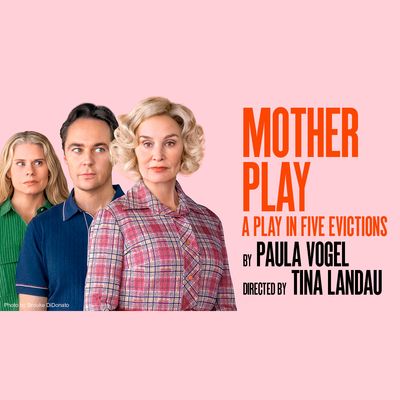
In this episode, we discuss the new play from Paula Vogel MOTHER PLAY. Please note that this episode will contain spoilers about the show. If you haven't seen the show yet, you can catch MOTHER PLAY playing at the Helen Hayes Theatre... Read More
From the show: Half Hour with Jeff & Richie (Post-Show Broadway Discussions and Interviews)
Featured Shows
About
In this episode, we discuss the new play from Paula Vogel MOTHER PLAY. Please note that this episode will contain spoilers about the show. If you haven't seen the show yet, you can catch MOTHER PLAY playing at the Helen Hayes Theatre.
Follow and connect with all things @HalfHourPodcast on Instagram, TikTok, and YouTube. Please share your thoughts on MOTHER PLAY on our podcast cover post.
Transcript
This transcript was automatically generated and might contain errors.
[0:00] Jeff Malone: Welcome to Half Hour with Jeff and Richie, the podcast where we explore the latest shows we see, sharing our insights and opinions on the performances, storylines, and everything in between.
[0:10] Richie Grasso: In today's episode, we discuss the new play, MOTHER PLAY on Broadway.
[0:14] Jeff Malone: Whether you cannot catch the show in person or want to expand your thoughts after seeing it, this episode is for you.
[0:19] Richie Grasso: And as always, we want to inform you that this episode will contain spoilers.
[0:23] Jeff Malone: So if you're ready to dive into this production, stick around with us.
[0:26] Jeff Malone: I'm Jeff.
[0:27] Richie Grasso: And I'm Richie, and we're thrilled to be your hosts for today's episode.
[0:30] Jeff Malone: So let's start the conversation about MOTHER PLAY, a play in five evictions.
[0:50] Richie Grasso: Pulitzer Prize winner Paula Vogel has written a bitingly funny and unflinchingly honest new play about the hold our family has over us and the surprises we find when we unpack the past.
[1:01] Jeff Malone: It's 1962, just outside of DC. Matriarch Phyllis, played by Jessica Lange, is supervising her teenage children, Carl, played by Jim Parsons, and Martha, played by Celia Keenan-Bolger, as they move into a new apartment.
[1:13] Richie Grasso: Phyllis has strong ideas about what her children need to do and be to succeed, and woe be the child who finds their own path. Fostered by gin and cigarettes, the family endures or survives the changing world around them, blending flares of imaginative theatricality, surreal farce, and deep tenderness.
[1:28] Jeff Malone: This beautiful roller coaster ride reveals timeless truths of love, family, and forgiveness.
[1:34] Richie Grasso: Okay, thanks for sharing those details. And as always, let's start with our bold statement about the piece and see how that unfolds into our discussion.
[1:44] Jeff Malone: Who should go first?
[1:45] Richie Grasso: Maybe I'll go first.
[1:47] Jeff Malone: You can go first.
[1:47] Richie Grasso: Okay. My bold statement about MOTHER PLAY is that it is a very well-written play that is mostly poorly executed on the stage in this production.
[2:00] Jeff Malone: Yes.
[2:01] Richie Grasso: And bold statement, MOTHER PLAY is currently the Jessica Lange show.
[2:08] Jeff Malone: So that's two different things, and I think similar in a way too. So we should really dive into that a little bit for sure.
[2:15] Richie Grasso: Let's dive into that with some just overall thoughts on plot and concept from a play perspective. So I feel like with a little bit more history to our listeners today, Paula Vogel has been on the record saying that she's been trying to write MOTHER PLAY for years, and that this is kind of the start to two of her previous plays, if you want to connect the dots, and this is how we can kind of get into the concept.
[2:42] Jeff Malone: But it's The Baltimore Waltz and How I Learned to Drive as kind of like bringing leading into MOTHER PLAY.
[2:49] Richie Grasso: So with that, I feel like that kind of changes a lot of people's opinions on MOTHER PLAY. And I don't know if it really fully changes mine. So if we're getting into the concept here of the show, you know, it's a MOTHER PLAY, it's a matriarchy, like the matriarch of Jessica Lange playing this character, and like that she does really well, but kind of very typecast in many different ways in this role, I would say.
[3:27] Jeff Malone: Right.
[3:28] Richie Grasso: And either being happy with them or not happy with them. And I just felt, I feel like from the concept point of view, if Paula had put this play out many years ago, it might have had a different impact. And I feel like right now, this concept is kind of getting lost among plays that have kind of done this already, and also just is not fully standing out for me in this Broadway season.
[3:55] Jeff Malone: Well, I think because the description I just read to you talks about this being imaginative theatricality, surreal farce, deep tenderness, and the beautiful roller coaster ride of that. To me, I almost feel like I wish it chose one of them.
[4:09] Richie Grasso: Right.
[4:09] Jeff Malone: Could we have a lot of things? Way too many different things going on. When you look at the history of plays, most plays a long time ago were categorized as comedy or drama. We're coming into this new post-world sense of writing plays where there's a little bit of everything. Sometimes we even see that in musical theater, right? There in I would use Kimberly Akimbo as an example of a show that kind of blends the comedy with the sadness and the blend of that.
[4:32] Richie Grasso: I don't know why it is for me that sometimes I'm very like cookie cutter sometimes, and I know I shouldn't be like this in all the ways I look at pieces, but when I look at Sweeney Todd, how dark that is, but there's comedy. Of course, there should be comedy and drama, and of course, there can be drama and comedy. This flip-flops so many times that I didn't know, whoa, whoa, whoa, we're talking about AIDS and someone dying, whoa, whoa, whoa. And then we have like this projection of cockroaches running around the house, and we're supposed to laugh at it. And there's this like blend of like, I'm not sure what to feel throughout most of this, but I will say, kind of just talking about overall concept, Paula Vogel knows how to write.
[5:07] Richie Grasso: Paula Vogel wrote How I Learned to Drive and Baltimore Waltz, amongst many others, which those two are probably my favorites of hers. She's very clearly established and knows exactly what she's doing. So from a writing perspective, a play in five evictions, showing the different homes over time and the growth totally works. Like some things really work here. And I think there were a few one-liners that were really like, ooh, I like the way that was written. So I did like that from a structured standpoint. And the concept works. The concept does work. The concept totally works. Like I think there were some nice moments. I wasn't sitting here hating this at all. I also wasn't sitting here like it was almost like clear that we were eventually gonna see how this was gonna end.
[5:46] Jeff Malone: Of course, we have these two children who are trying to live their life. And I think what's so interesting is with the mother, it's ironic that she wants this life for her children in the way she wants it. Meanwhile, her life is screwed up. And she is living this life of like the martini in one hand, the cigarette in the other. Where is she? What is she? There's no money, you know. And so there's like, well, look at your life. You want your kid's life to be better than you are, sure, but that doesn't mean it needs to be the way you want it to be. And these two siblings really come close together because of that. And I believe some of this is loosely based on Paula's actual life. I would think so because both of those plays are somewhat loosely based on her life as well. So, you know, you write what you know. We always talk about that, right? What you know, and I think that's why it works so well for Paula, you know.
[6:37] Richie Grasso: Right.
[6:38] Jeff Malone: But here's the thing, are we relying on Paula's past work to kind of say this is already great? And this is Paula's first cold open of a show on Broadway. So it's like it never had those moments off-Broadway to kind of get any feedback on. And I don't know, and we'll get into the cast in a little bit, but I don't know. Are we relying on these three big name stars in this show to kind of elevate it at the same time? I also wonder if that's doing a little bit of a disservice to the work. Because I feel like we're going in with high expectations that there's going to be a lot happening in this play. And I kind of felt from the writing of this, I didn't really leave feeling much. Which is unfortunate because if you look at a play like Torch Song Trilogy, ironically, on the same stage in the latest revival, and we know that difficult scene that the son has with the mother at the end.
We've had the difficult mother-son scenes. I'm not saying we can't keep having them. This was a really, really difficult time. I get it. I respect how bold people were at this time to live their truth and live their life at a time where families were not accepting that. And don't get me wrong, we have seen this before. We can't, we are seeing it now. And guess what, Jeff? We're gonna keep seeing this because this is what people like to see family drama, but also keep, but also a sense of, oh, I can relate to that mother, I can relate to that son, I can relate to that sister, I can relate to this because maybe parts of this story people can really relate to. So there's nothing against this story being told. Like I said in my bold statement, I have many problems with the way this was executed, which we'll get into in a second, but I don't think that there's anything wrong with this being told this way.
[8:26] Richie Grasso: It is a cyclical circle of life moment when we see at the end that she's dying and who's there, the sister who's not even remembered because the son is gone. And what does the mother say? Where is my son who is long past on? You know, there's a lot of that in the world, you know, and so of course it's a reflection of at least art imitates life, life imitates art, and so, of course, you're gonna see something like this, and it is gut-wrenching and heartbreaking at times, but we see it a lot.
[8:55] Jeff Malone: We do, we do, and I guess that's where I'm feeling probably a little bit underwhelmed with the overall piece because I wanted, and maybe I'm being biased in this. Is it something that we need, you know, a big argument in every family drama play? You know, I just didn't feel like we really got to any of those moments. And by the end, you almost want the forgiveness moment to be more powerful that I don't think it really happened. Because you know, when you have Martha basically forgiving her mother for all of the trauma that she's basically caused her and her brother in life, I just don't know if it really just like hit that for me.
[9:34] Richie Grasso: Mm-hmm.
[9:34] Jeff Malone: Well, let's dive a little bit now further into some of the execution of this play. We want to, yeah, because I could, I think that this could be a big part here because how the show was executed in our opinions. But I think you look at this and you say, okay, to me, most of the design didn't work.
[9:56] Richie Grasso: I agree.
[9:57] Jeff Malone: I don't think, but there were ideas there that should have worked and didn't, and I hate to say that, but for example, all the different light fixtures hanging above the stage, bringing down different light fixtures for different scenes, kind of really cool.
[10:13] Richie Grasso: But didn't.
[10:13] Jeff Malone: Cool and smart because anytime you see a light fixture, the first thing you kind of say to yourself is, oh, when is that from?
[10:23] Richie Grasso: Yeah, yeah, yeah.
[10:24] Jeff Malone: Right. And then you see, and I was like, it didn't really work 100% because then you had the scenery, and they moved the same pieces of scenery around in different spike marks, and all I was wondering the whole time was, oh my gosh, is Jessica gonna get that on its spike? Oh, is Celia gonna get that on its spike? Did Jim land that on the spike? That's all I thought during the scene changes, which I'm on, and during scene changes, I'm supposed to be encompassed in the story. I'm supposed to be seeing what's next, I'm supposed to be feeling the next energy. And it's like, okay, we moved the bookshelf over there now. And I get it. It was this very abstract sense of like blank wall in the back. We see the wings, we see all the clutter, we're supposed to see everything.
I get it. To me, I would have not done that. It just didn't work for me. I felt like we were watching, I mean this with all respect. I feel like we were watching a college thesis play on a low budget of a five locale piece because that's how low budget theaters move pieces to show.
[11:20] Richie Grasso: Oh, yeah, the same furniture moved in five different ways. So cool, so inventive, so low budget and awesome.
[11:25] Jeff Malone: And I'm like, we're at Second Stage on Broadway with Academy Award winners on stage. I don't really know if that worked. And so the scenery and the way it was lit in general, too. I just found like I almost kept wondering. And I feel like this is the big thing we're gonna talk about here. We have direction by Tina Landau. We have scenic design by Davidson, and we have lighting design by Jen Tree.
[11:48] Richie Grasso: We'll be right back.
[11:52] Jeff Malone: Welcome back. And I don't know if all three of them were necessarily on the same page when it came to this play. Especially, but even sound design, you want to know why I'm gonna say that? Because "Moon River" was played throughout the piece, and I love that song. And it was like played, but then it was like not really, it was like kind of in and out. I would have really used that song to highlight the emotion that Jessica Lange's character felt throughout the piece instead of lightly playing it sometimes. And then there was this like some of the lighting, I don't know if light cues were just late or they were just oddly. We'd be watching a bare stage, and there'd be like a hard round light around one person and then not on another.
I don't know. I just didn't really find that the, it seemed like not done. It seemed like we were in a small space, not on Broadway, experimenting with the work, figuring out what worked and what didn't. The cockroaches thing with the projection was funny for a minute, and then it just got really overplayed. I'm like, why are we sitting here playing to a tourist trap audience about cockroaches crawling on a garbage pile? And I get the point of it, right? She mailed the cockroaches to the tenant, the landlord. I get that, and that was actually kind of funny. But didn't it add to you kind of, it cheapened it? There was something about it that it wasn't working because it sort of just for me, it felt like, oh, why are we doing this?
It looks fake, it doesn't seem realistic. I mean, we're teetering on like the realness of this play versus the oddness of this play. I don't know. For me, I thought it didn't work, and it wasn't getting the laughs that I think its intention was. The laughs were almost like, oh, that's awkward, or oh, that's funny. And I just feel like even in like the dancing section with the disco, like pulling the curtain in, and then like they're dancing. And I actually thought that was kind of cute for a minute. The mother went and danced, but then there was like, I don't know. I found that the emotions of this whole thing did not work in the shifts. They're dancing, and all of a sudden, who is your sister kissing over there?
And I'm like, oh, what? Now we're okay, and now she left. I don't know, like it just didn't seem to like flow. I guess that's the big word here is flow. Nothing seems to flow right. And then we got to the point where, like, when she finds out about her son and that he's dying, she's like standing way in the back and she's crying. Like, why didn't Celia's character say, Mom, sit down?
[14:20] Richie Grasso: Yeah.
[14:20] Jeff Malone: We have to have a really difficult conversation. And then, like, that moment was over, and then we moved on. And like, wait, whoa, whoa, whoa, whoa.
[14:26] Jeff Malone: I just, and I hate to say this because I've seen Tina Landau's work, but nothing really worked cohesively in the direction here. I just found this to be oddly timed, oddly spaced. Nothing seemed to listen, pull down. I am such a fan of when you have intimate scenes, there's only three people in this play. You do not need to use the whole stage at all times in a play. Pull us down. We are sitting in one of the smallest theaters on Broadway. Pull people downstage left, downstage right. Let us feel with you for a minute. This wide open space is set most of the time, even in a small space. I don't know. I would have liked to see this in the round. I would have liked to see this pulled down. It just didn't seem designed or directed appropriately for me. I just feel like it was all over the place in that aspect, which is a shame, unfortunately, to Paula's writing, because I thought there were some nice moments that I didn't think Paula's work exuded correctly.
[15:27] Richie Grasso: Yeah. And we're also going into another part of here in this is the whole narration, once again. We're seeing this in this show. Random times of narration just happening throughout a piece. Takes me out of like, oh, here we go. I really hope in the next Broadway season the narration is removed. Because we're seeing way too much. Again, it's like serious scene going on, and then let's turn and it's like, oh, and then my mother did this. I don't understand why we're doing that. Is this new? Is this like maybe we're just seeing it too often, but you know, it's gonna lead into some of the character choices and that we have from these actors here. And you know, we have Celia Keenan Bulger playing Martha, the daughter, we have Jessica Lang playing Phyllis the mother, and we have Jim Parsons playing Carl the son.
So here's three actors who all do one specific type of acting very well. Celia's a little different. I actually thought Celia was really growing into some deep stuff here, and I actually didn't like Celia in a lot of this. But when Jim does the same thing on TV and just repeats it here, and Jessica does the same thing on TV and repeats it here. I say to myself, oh, this is what the audience wants then. They want Big Bang Theory, Jim. They want American Horror Story Jessica to do the same thing. Now I know Jessica has a career outside of American Horror Story, I know she's done some things, but don't get me wrong. I agree. You have these three, you know, seasoned actors here. You know, Celia coming from To Kill a Mockingbird.
You have Jim coming from Boys in the Band, and Jessica playing from Long Day's Journey, like from recent Broadway, and I feel like all three of them are bringing some of that. You know, Celia did the same thing in To Kill a Mockingbird narrating, but also being a child, growing older in the piece, the same thing here, being a child, growing older in the piece, and it just I don't know.
[17:31] Jeff Malone: Also, also as a family, you have to look at something and say, what's the text here of it being mother play? And who is mother when? When are they owning that? Is he mother? Is she mother? Is Jessica mother? And you almost didn't fully believe the family dynamic between the three of them. I did at times. I just wish there was more like a hug. Maybe there was no it was inappropriate for the mother to have a moment with her kid because she was so far removed. But I, you know, there were moments where, like, of course, listen, Jessica Lang, when you said this is the Jessica Lang show, of course it is. She's so good at that one character. Like doing the whole drunk, angry, nasty, but kind of funny, but like the way this woman drinks a martini and lights a cigarette is like one for the books.
I've never seen someone on stage do it. She brushes her hair back, she's a mess, she's in the outfit, the wig. She does it so well, Richie. Like, of course, that's what we wanted to see live on stage. But when I saw her in Long Day's Journey Tonight, I remember saying to myself, oh, this is different for her. She's playing this really calm, reserved, monologue-driven character, and she won a Tony Award for that because it was so different. So if Jessica wants to do this the rest of her life, sure. Listen, we just saw her in Feud season one and two. We keep seeing her appear in a lot of things where she's doing the same overbearing with almost with a southern accent almost at all times. And it's fine and it works, but there's no could this let me ask you, could this have been different? Could she have played this different? Or was the script just calling for her to do stock American Horror Story, Jessica Lang? Or Ryan Murphy, Jessica Lang, I guess I should say.
[19:15] Richie Grasso: I think this is portraying, like, you know, the mother of all mothers now. I feel like is Jessica Lang in terms of actors. And with this, it's like, hey, Jessica, come in. You're gonna come do this role, and you're gonna do it in the way that everyone wants to see you do it. I think that's another big factor here you have to look at. Everyone wants to see Jessica play Jessica.
[19:36] Jeff Malone: Yeah. And it works. It does. I mean obviously it works because she's but I was saying that. But I'm not like blown away by it because Sarah Paulson inappropriate is doing Sarah Paulson inappropriate, but she's doing at a 110, which is like what's gonna probably gonna get her the Tony. And Jessica is not doing Jessica at 10. Jessica was probably doing it at like an 80. And looking at someone like Jim, there was one line Jim had, which was his best line, which is when he storms out of the apartment and slams the door and screams. I felt chills there because I was like, oh, he couldn't say it to her face. He had to leave the set in the hallway and scream at his mother. And I thought that was the best acting we got out of Jim with him not even being on stage. I hate to say that. But every other thing he did was like the funny Jim. But it's like the same thing.
[20:26] Richie Grasso: Yeah, and now we're gonna go see him play the narrator in Our Town, which is like usually not comedic, which is usually like a very stoic like storyteller. Well, maybe he'll play it like that. Yeah, I don't know. Hopefully that's the expectation that you want that he's gonna do something different and show diversity in his acting skills. But this is the same Jim that I feel like we had in The Boys in the Band. So and in general, I feel like are the three of them working well together?
[20:53] Jeff Malone: Yeah. I mean, listen, we saw this in a almost late preview, so they've been doing it long enough. I just I just don't understand. I just thought they were c they're they're working as best as they can with their direction, but the direction is stiff. It's move here, it's say this line, it's move here. I just want it like even when Celia was with her at the wheelchair at the end, I just wanted a hug. I just wanted a hug from these people. I don't know. I don't think that would have been so much to ask. I know these were difficult relationships, and maybe that was uncalled for to hug each other in times when the mother was really difficult. Um which kind of leads into now like overall experience and like what's the future of a play like this.
[21:31] Richie Grasso: We'll be right back. Let's jump back into things. I mean, my overall experience looking around and feeling the audience around me, they didn't seem sold on the play. You know, if we were getting How I Learned to Drive, which was such a different feeling when you were in that theater, I don't feel like it was the same thing. And I think we're teetering on like, is this a sellout with the cast that we're trying to get tourists into these seats, which is working, but you know, even having like a school group around me, I don't know if like they necessarily are getting it. And it also comes down to the text. Like I said earlier, I find that this text is almost verging on being a little dated for the generation now, because some of this has become so normalized that it's almost like you don't really feel for it anymore.
And is that sad to say? No, I but I also wonder if Ness if you could have done something where like maybe there could have been an epilogue scene with a child of today hearing about her or his great grandmother or great aunt who was this person and saying, like, mom or aunt, so and so like really that and maybe say, Yeah, this was the time, and how lucky you are to have ex maybe there could have been a full circle moment there at the end instead of just making this set in the period and then like, but she connected to the youth. I get it, it's tough.
[23:01] Jeff Malone: And also, kind of going back to what you're saying about narration. There are some shows where narration totally works. I actually think in Cabaret, it totally works because he's the MC. That's the whole point of the show. When you're seeing a play like Fiddler on the Roof and Tevye's talking to the audience, like, this is my family, you know, it's kind of funny and it works. But then think of like, what if West Side Story had a narrator? You would be like, What? Like, you know, I think of some big epic pieces, and I think like what even plays, it doesn't have to be musical theater. Like, why do we need this narrator all the time? And we are seeing it so often, so often. I don't even know the last play I saw that didn't have a narration.
If you actually want me to be honest, it will be interesting when we see some other plays like Uncle Vanya coming up, and some of the are we gonna need this narrator all the time? I don't know what why that is becoming such an overused type of thing.
[23:49] Richie Grasso: But not only that, it's like narration narrators don't even exist, we hear in some things. We've heard now that the narration part of Lampico was added last minute. Yeah, the narrator in Harmony was added last minute, and it's like we really are not trusting the audiences to understand and put themselves into the content that they're viewing, and instead we have to force feed them something to explain. I don't I have a very big issue that we have to figure out how to explain the text that someone is listening to. You're sitting there for an hour, 90 minutes, two hours, two and a half hours. If you can't sit there and figure out the text that's being explained to you, then we're doing something wrong.
[24:33] Jeff Malone: Well, especially when you look at old plays, like even murder mysteries, like I get the Christie's The Mousetrap. Obviously, you wouldn't have a narrator because you're trying to figure out who did it at the end, but could you imagine? Like, I what I don't know. But I feel like that's the direction we're going into. Like Romeo and Juliet just announced coming. Are we gonna have a narrator narrating the whole show for us? Come on. And I understand that it helps sometimes because I do think narration really works sometimes. But out of the last time. If the narrator is built into the text, but Tevye in Fiddler on the Roof and the MC in Cabaret is built into the text. That's why I think it works there.
It doesn't work when you have the not having one of the characters just come in and narrate it for themselves. But Celia narrating here, and I know we're almost out of time, but Celia narrating here was like Paula, Tina, Celia. Let Celia tell the story through the dialogue.
[25:24] Richie Grasso: Right. Why does she need to be opening up a box at the beginning and then pack it? We understand. We get it. Put her in a costume that makes it sound like we're in the present day, or if you have to throw the year up behind them. Because listen, I'm not opposed to that. You want to throw why couldn't we just throw the year up every time they change and let us know we're in a new year? Make it simple. I don't know.
[25:54] Jeff Malone: Right. Like how Marilee's just.
[25:54] Richie Grasso: Right. And then it works there.
[25:56] Jeff Malone: But it works. Right.
[25:57] Richie Grasso: It's part of the music.
[25:58] Jeff Malone: And like, there you go.
[26:00] Richie Grasso: Yeah.
[26:00] Jeff Malone: How, like you said, it would be so much more impactful and powerful if she just opened up the box. You realize it's a memory play, and we go down that path with them. Not, hey, I'm gonna tell you my story.
[26:17] Richie Grasso: Yeah.
[26:17] Jeff Malone: Yep.
[26:17] Richie Grasso: It's just like, come on.
[26:19] Jeff Malone: Yeah.
[26:19] Richie Grasso: And so I mean, and wait, one thing I did want to say. What do you think a future like this? The future of a play like this is beyond Broadway? Is it a movie? Is it regional?
[26:35] Jeff Malone: It's regionals and college theaters doing it the same way on a low budget and finding some great local actors to do it. And I I don't think the texts have always been kind of like that, I think, like being done regionally, being done in community theaters and college theaters and high schools.
[26:50] Richie Grasso: Right. So there's great context here to be studied and reviewed because obviously it it's a period story and it's a family drama that you know works, but you know, just wasn't blown away.
[27:04] Jeff Malone: Yeah. Oh my gosh, we're almost out of time. Let's wrap up our final thoughts here on MOTHER PLAY.
[27:10] Richie Grasso: Yes, here we go. I'd say again, Jessica Lang's show. If you want to go see Jessica Lang be mother, she will be mother of all mothers for always. Um and some great writing from Paula always. I will always praise Paula and her writing. I loved How I Learned to Drive so much. Um, but this, you know, it just sits like on the fence for me overall.
[27:35] Jeff Malone: Totally agree. It's on the fence for me. It's a nicely written piece by Paula. It's well acted by Jessica. Uh it's the Jessica show. She's doing brilliant stuff up there, uh, as she always does. But I just thought the whole concept and the whole blending of direction and design didn't really work for me. And I found it being a little too like, let's get some tourists in and make some money for a second stage theater, unfortunately. Um that's how I feel. And people will spend the money to go see Jessica Lang live because there are people really love her. And uh that's how I kind of felt. What if I saw this at Playwrights Horizons, if I saw this downtown at the public theater, I think I would have felt differently. I think it could have, and the last thing I say is I think it should have gone off Broadway first. I do. I think it should have done a small downtown run somewhere first. So but here we are.
[28:19] Richie Grasso: So there's that does wrap up our discussion for this episode today. We hope you enjoyed our deep dive into MOTHER PLAY. We will share the link with ticket information in our description. Don't forget, we want to hear from you. Continue the conversation with us on Instagram and TikTok at Half Hour Podcast and let us know your thoughts on MOTHER PLAY. And if you enjoyed our show, please leave us a review. Your feedback helps us bring more theater to you. Remember, you can listen to past episodes and stay tuned for upcoming ones as well. Until next time, I'm Jeff.
© Broadway Podcast Network, All Rights Reserved