

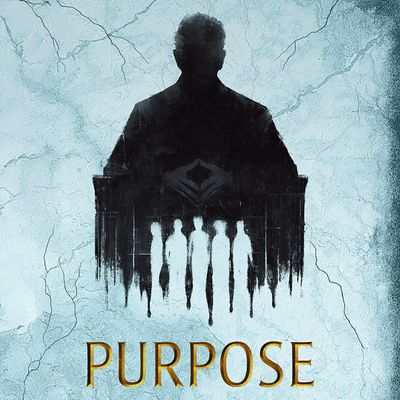
In this episode, we dive into the Broadway play PURPOSE by Brandon Jacobs-Jenkins at the Hayes Theatre in NYC. We explore the intricate plot, character dynamics, and how the play blends humor and drama... Read More
From the show: Half Hour with Jeff & Richie (Post-Show Broadway Discussions and Interviews)
Featured Shows
About
In this episode, we dive into the Broadway play PURPOSE by Brandon Jacobs-Jenkins at the Hayes Theatre in NYC. We explore the intricate plot, character dynamics, and how the play blends humor and drama. We discuss Phylicia Rashad's direction, standout performances, and the themes of family legacy and personal purpose. Tune in for our take on this must-see play.
Follow and connect with all things @HalfHourPodcast on Instagram, and YouTube. Share your thoughts with us on PURPOSE on our podcast cover post on Instagram.
Transcript
This transcript was automatically generated and might contain errors.
[0:00] Jeff Malone: Welcome to Half Hour with Jeff and Richie, the podcast where we explore the latest shows we see, sharing our insights and opinions on the performances, storylines, and everything in between.
[0:08] Richie Grasso: In today's episode, we're discussing the new Broadway play Purpose, playing at the Hayes Theater in New York City on Broadway.
[0:14] Jeff Malone: Whether you cannot catch the show in person or you want to expand your thoughts after seeing it, this episode is for you.
[0:19] Richie Grasso: And as always, we want to inform you that this episode will contain spoilers.
[0:23] Jeff Malone: So if you're ready to dive into this production, stick around with us.
[0:26] Jeff Malone: I'm Jeff.
[0:26] Richie Grasso: And I'm Richie, and we're thrilled to be your hosts for this episode.
[0:29] Richie Grasso: But before we start the conversation about Purpose, here are a few words from our advertisers.
[0:34] Jeff Malone: Welcome everyone to a new episode of Half Hour with Jeff and Richie.
[0:37] Richie Grasso: Today we're discussing Purpose.
[0:39] Jeff Malone: From the Tony Award-winning playwright of Appropriate, Brandon Jacobs-Jenkins, and directed by two-time Tony Award-winning Felicia Rashad comes Purpose.
[0:47] Richie Grasso: For decades, the influential Jasper family has been a pillar of black American politics. Civil rights leaders, pastors, and congressmen.
[0:54] Jeff Malone: But like all families, there are cracks and secrets just under the surface.
[0:58] Richie Grasso: When the youngest son Nazareth returns home to Illinois with an uninvited friend in tow, the family is forced into a reckoning with itself, its faith in the legacies of black radicalism.
[1:07] Jeff Malone: Spirited, hilarious, and filled with intrigue.
[1:14] Richie Grasso: Alrighty. So let's start with our hot take on Purpose.
[1:17] Jeff Malone: I'll go first. I think that Purpose is a must-see play this season.
[1:22] Richie Grasso: I feel that Brandon Jacobs-Jenkins' writing is masterful, weaving together comedy, drama, and social commentary all into one.
[1:31] Jeff Malone: Yeah, I would totally agree with that. It's another slam dunk for Brandon Jacobs-Jenkins.
[1:36] Richie Grasso: He was put on the map with Appropriate last year. I think he's done it again with this play.
[1:42] Jeff Malone: It's this beautiful blend of drama with comedy that I think some of the best plays incorporate both in sometimes back and forth.
[1:50] Richie Grasso: It felt good. It was a wonderful production overall. One of the stronger plays of the season. Super looking forward to diving into this right now.
[1:57] Jeff Malone: Alright, let's get into it. So let's start with our overall thoughts on the plot and concept here.
[2:03] Richie Grasso: You know what was nice about this is when we had Appropriate, it was a white family that was dealing with racial issues of the past.
[2:13] Jeff Malone: Uh, and we had a lot of that. With this play, we now have a black family dealing with issues of America, of black culture, of women's and men's issues, and issues of all sorts of levels here, right?
[2:29] Richie Grasso: So I feel like we were seeing a lot. And I think what was nice about this is we were just seeing drama unfold in a really familial way and political way.
[2:42] Jeff Malone: It was a piece that kind of allowed me to sink in and say, okay, where are we going with this? How does this start? Where's the middle? Where's the end? And it kind of took me on a journey where I didn't have to overthink. I kind of just got to see it unfold.
[2:57] Richie Grasso: Yeah. And it just like slowly, this family rope unraveled and unraveled to some physical hitting by the end of Act One, all the way to serious drama, but mixed with comedy. I just thought this was refreshing to tell a story like this that didn't necessarily root itself in anything too heavy, although it was heavy enough.
[3:21] Jeff Malone: I don't know if that makes sense. I just feel like sometimes you see dramas and they're so heavy, and you're like, oh my gosh. This was heavy in a way that was like, okay, there's problems here. They can fix these problems, but will they fix these problems? Who's causing the problems? It's generational issues. There's a lot of things going on here, but it didn't feel overwhelming at the same time.
[3:43] Richie Grasso: I feel like what Brandon here is doing as a playwright is taking the complexities of being a public figure in this space now, from the civil rights movement all the way through politics as a black family. And with Sonny being the father here, he has created this image, and we're really starting to study how and watch what happens unfold in this piece.
[4:07] Jeff Malone: Don't you kind of feel like there's a lot going on there? He's created an image, and now we're moving to his son, Junior, and he is messing everything up that his father has created.
[4:19] Richie Grasso: There's a way of legacy here that is now having the name tarnished. Whereas then the other son who's the narrator, Naz, kind of has this different trajectory where he's a photographer and he doesn't really have a spouse or children or anything, and he's trying to figure out his own life and two different brothers going down two different paths.
[4:36] Jeff Malone: While the mother and the father of this family are trying to hold on to these, why are we at the house again? The mother constant I think the mother, um, Latanya Richardson Jackson plays Calladine. I think she has some of the most influential one-liners of this play as a matriarch of this family. Like, you're keeping your grandkids from me, or like, when are you gonna have a spouse? Things that like mothers maybe say to their adult children all the time.
[4:59] Richie Grasso: Right. Uh, and there's that complexity level, whereas the patriarch of the family, yes, like Sonny's also giving this sense of, well, why are my kids doing this? What's the next chain of command? I've worked so hard, so now you have to work so hard. So there were these levels that just weren't met by the children, and the children almost brought this comedic element to it, like, well, what am I supposed to do about this? Why are my parents treating me like this?
[5:22] Jeff Malone: Totally. And one thing I really felt that was in the writing here was he has created this fictional family. And for a moment, uh while I was sitting in the theater, I was like, hmm, is this a real family?
[5:35] Richie Grasso: Yeah. Because he made it feel so real. And I was like, oh, I feel like this is someone that I should know. And why don't I know this? It almost made me think back to history, and we're like, were we taught this? Were we not taught this? Because they have all of the famous public figures like Martin Luther King up on the wall. And I'm like, oh, okay, they must all be part of this.
[5:55] Jeff Malone: Right, right. And it and it's convincing. And I think through the acting, and I think through the playwright, there's definitely the convincing. Then you have characters coming in. And I think what's nice about the way this play is written is not every character is in every scene the whole time. Naz is, and I think that's nice that he narrates throughout and comes through as that voice.
[6:15] Richie Grasso: It almost kind of felt like at times a drama sitcom of sorts. Where like we were in a living room, and then like, weren't there, there were definitely sitcoms, I feel like um of the 80s and 90s, maybe maybe the 90s in particular, where like there would be a narrator to the camera.
[6:32] Jeff Malone: Yeah. Like I'm thinking of um, what was the Frankie Muniz uh like Malcolm in the Middle?
[6:32] Richie Grasso: Malcolm in the Middle, or even like Fresh Prince of Bel Air. Wasn't Will Smith talking to the audience at times?
[6:41] Jeff Malone: So I'm thinking of like those that this kind of felt like it was an homage to.
[6:45] Richie Grasso: Yeah, something like where you would like, hey, welcome to my life. Like, here I'm gonna tell you about my family. It kind of felt like that at times too.
[6:51] Jeff Malone: Right. And that was clearly in the uh the way it was written when you look at that, and when you look at Naz and you're like, okay, I didn't mind him as the narrator in the beginning because it was the comedic relief throughout the piece.
[7:06] Richie Grasso: And how that was written was fine. I think where maybe in the writing this kind of got a little slower was when we come back in act two. Like act one was strong.
[7:15] Jeff Malone: Yeah. Very strong. Act two seemed to drag a little bit more than act one.
[7:21] Richie Grasso: And it was way more heavier on the narration than it was the actual scene dialogue. And I was wishing that the narration and the narrator would dial back a little bit because if you're trying to give the narrator the sense of like, let me explain to you what's going on here, then we should be trusted enough to then kind of see what happens.
[7:40] Jeff Malone: I don't know if we need the narrator as much in act two. And I've spent a lot of time in this podcast talking about the overuse of narrator. I don't think it's overused here. I think it's fine. But I think it's interesting that like we need we didn't need the narrator as much. The whole like lights change, he's in a special light, we've broken the mold of the plot for him to talk to us for a few minutes, probably one too many times in this.
[8:04] Richie Grasso: Just one too many times. I mean, the play was running quite long too. So I would say any recommendation of that would have been to trim back on that a little bit, maybe.
[8:11] Jeff Malone: And then why do you feel though humor was brought into this piece? Because otherwise it would have felt too heavy.
[8:17] Richie Grasso: It would have felt like nothing is of relief here.
[8:21] Jeff Malone: Right. And it clearly with this family, there was success, there was happiness, people were living their life. I think Carrie Young brought a lot of comedy into her playing. We'll talk about her in a bit.
[8:33] Richie Grasso: But I thought I think these characters all brought a sense of listen, we're human beings. Family drama is also, families a lot of times also have comedic moments. But actually, what we found comedic was not necessarily what they were finding comedic. The fighting at the dinner table was brought to comedic relief by Naz turning to us and saying, uh-oh, what's going on now? That made us that's where the narration worked.
[8:57] Jeff Malone: It made us feel like, oh, okay, we could laugh now, right? Because he just said something crazy and she just said something crazy. But Naz said it's okay to laugh now. So that's why I think like the narrator worked there, but in those, like, let me pop out and just talk to you for three seconds, versus let me give you a four-minute monologue.
[9:14] Richie Grasso: And I think that's where it was, it actually was nice that his back was to the audience and he was part of the audience. Could have been a Felicia direction or could have been a Brandon writing that the only person whose back was to us was Naz for him to literally turn and be like, hey, I'm sitting in the audience with you here. I'm at the table in your seat. That was a cool moment.
[9:33] Jeff Malone: But like I think it is funny though, because when you see it from his point of view, we're supposed to watch it almost from his point of view. We're supposed to really dive into this family and kind of see everything, and also how he relates any political family where this resonates.
[9:51] Richie Grasso: Right. Don't you feel like it doesn't just matter to them? This is any family, and how uh they don't want their name tarnished in it.
[9:59] Jeff Malone: Yeah. Yeah. Yeah. You know. I mean, I think overall, this concept and this plot and this piece just like it coming from Steppenwolf, I think that it's really great that this piece had some legs before it came to Broadway.
[10:12] Richie Grasso: It had some out of town. It came here, it's working. And I think it's nice to see like right away, Brandon Jacobs-Jenkins has got another piece on Broadway too. He's wonderful at what he does.
[10:23] Jeff Malone: I thought the narration of this and the writing of this, and we'll and the title is interesting too. And I think we should talk about that towards the end. We'll get to that. But I want to talk about why this is called Purpose too.
[10:32] Richie Grasso: Right. And we did say last year we're gonna see a lot of Brandon Jacobs-Jenkins on the stage. And look at that. After Appropriate and now here we are with the And this was in development for a few years. It's not like you know, I think last year, as Appropriate was on Broadway, but he had already written this in order, you know.
[10:47] Jeff Malone: So alright. Well, let's get into the direction performances and design of this piece.
[10:52] Richie Grasso: But before we do that, here are a few messages from our sponsors.
[10:57] Jeff Malone: Okay, so we're gonna get into the direction performances and design. We'll start off with direction with Felicia Rashad.
[11:01] Richie Grasso: I mean, Felicia Rashad is an amazing actor, right? We've seen her in The Cosby Show and directing in Broadway. She's got Tony Awards. It's nice to see her directing now.
[11:14] Jeff Malone: And I always think actors who are directors, like, what are they bringing to the table from their experience as an actor?
[11:20] Richie Grasso: I thought that this was full use of the stage. We had people down hallways, up staircases, in dining rooms, in living rooms. I feel like she used this space well.
[11:27] Jeff Malone: The narration came in and out. I thought there was a nice concept here, a unit set used. We weren't only living on one side of the stage the whole time.
[11:36] Richie Grasso: I thought she brought the elevated moments up and the calm moments down. She brought us on that journey. I thought she moved the narrative along.
[11:44] Jeff Malone: So I do I thought this was very well directed. I'm very impressed.
[11:46] Richie Grasso: I thought it was directed really well too. I think that she knew how to engage us as an audience. We do have this beautiful scenic design here, which we'll get to in a second.
[11:55] Jeff Malone: But yes, I think bringing in the narrator at certain times, bringing that lighting down, freezing the cast could feel like an easy way out, but I think it was done smartly, where we then have the scenes happening up full in a lot of different ways that just kept you captivated the whole time.
[12:14] Richie Grasso: This was a long play.
[12:16] Jeff Malone: It was long.
[12:16] Richie Grasso: And it didn't feel super long. Especially that dinner scene, which was a lot of back and forth. And you know, that dinner scene is relatable to so many people.
[12:25] Jeff Malone: And this and I like how usually a dinner table scene will be like they're all facing three sides of the table, and then the one like, and where are the audience? And it would feel like stiff. This was like them actually sitting at dinner.
[12:36] Richie Grasso: And if you were sitting, we were kind of center. If you were sitting on the side, you may not have been able to see everyone's face at all times, but it was organic feeling.
[12:42] Jeff Malone: Well, it's actually funny because uh speaking of dinner scene, we saw Cult of Love here last that was supposed to have a dinner scene, and it didn't.
[12:50] Richie Grasso: And now there's one you're right because you thought there was right, exactly. And we get a dinner scene, and uh, you know, right.
[12:57] Jeff Malone: I mean, and going to the design, I think it was nice. I thought the there was two design things that I thought were really working well. The paintings and portraits of these leaders on the wall were almost this looming presence that they were being watched at all times by Martin Luther King Jr. by these prominent figures in history that are like watching, and it almost felt like it was this sense of like, don't mess up, we're watching you, you're the next generation. How are you passing the torch?
[13:25] Richie Grasso: And it seemed like kind of ominous and a little scary at times, like whoa, they were always kind of being like admired and watched and looked over.
[13:37] Jeff Malone: It's a good way to look at it. The scenic design is by Todd Rosenthal. I do agree with you on that because what when you think of that, it's like this is a black family who has idolized so many public figures in this space, and yes, they are up on that wall, and they even have a scene that happens in this play where they talk about how like they grew up with having these black public figures on their wall.
[14:01] Richie Grasso: Well, and Carrie Young's character says that she can't believe she's in the house, and they were like, How do you even know that? And she's like, I studied this in my school. Like, and I know all these people are on your wall, and you were in our school, and like it was nice to see that admiration from someone in this family.
[14:21] Jeff Malone: We'll talk about actor performance in a second. She was really, really but it also just makes you think a little bit too about like what we put on our own walls.
[14:28] Richie Grasso: Yeah.
[14:28] Jeff Malone: As a person, like who do we idolize and put up on like literally right behind us with music and Broadway behind you? We do it too, like in any way. So it's like, and in our careers. So in this family, they're going through a political career, and that's who they idolize and have on their walls.
[14:48] Richie Grasso: The other um part of the scene design I thought was so minor, but I thought was really impressive. I don't even know if you noticed this, but it snowed the whole show. And there was like all this snow just coming down. And I was like, that's kind of cool when you see that. It was happening in Cult of Love too. But for this show, it was like there's a snowstorm, they're not gonna be able to leave. And it was cool that you just it wasn't like a projection, it looked like there was snow, and it just added this element of like, oh, you feel like you're in the house and like they really can't leave. And I just think like moments like that when you're lighting homes and you're adding moments like snowfall in. I just think that adds a great level to it. Just something so small, but I thought I noticed it.
[15:26] Jeff Malone: Yeah, totally. What do you think about some of the performances of the what were some standout actor performances here for you?
[15:32] Richie Grasso: Listen, I think they all did a really great job in this play. So I kind of feel like we're gonna touch on each one of them. But with John Michael Hill as Nas Nazareth, um, he really was able to bring in that humor. I think he stands out as a narrator and the son of Sonny. I mean, it's a hard role, and I think he has a lot of complex issues that he goes through through this piece that I think he was able to go there. You kind of are wondering, he's like on his own path of being a photographer and living somewhere else and what he wants to do with his life, and maybe taking himself away from his family name to then go down through a bigger story plot about him actually standing up for his family. So yeah, I think he's a journey. He really brought that whole part to this role, I think.
[16:25] Jeff Malone: I think so too. I thought he was very strong to have to carry a lot of this show. I mean, Carrie Young can do no wrong. I think she's so talented. She's in another great role. She's not, she's more of a supporting role in this than a leading, but she's really bringing those comedic moments and those like she's almost like us as the audience up there. Like, I'm new here. If you really watched her in that dinner scene, it was like she was watching a tennis match back and forth. Like, where do I like? Am I cool here? Like, I'm stuck here in a snowstorm. Am I good? And we don't know a hundred percent. And she kind of spills the beans on what she's going through trying to have a child, and then Naz gets upset with her and all that.
She has a quite interesting arc here. I thought Kara was great. She's always great. There's one thing I'm gonna say about Kara Young that is like such a strong feature that she has. As an actor, she is always so engaged with whatever is happening on that stage. And you watch her, and she's acting the whole time. It is a great trait to have as an actor.
[17:25] Richie Grasso: Totally. And the facial responses, listening, acting, going for it. Like, do it. There's so many times we see people up on a stage and they're just not invested in what's happening.
[17:38] Jeff Malone: Right. Play the part. Be the role, create the character. And she does it. And she really does. And I and there's another person that really stands out to me here.
[17:49] Richie Grasso: Yes.
[17:50] Jeff Malone: And that is Alana Arena's plays Morgan Jasper. To me, it's it's a mix of her brilliant acting in this role mixed with the way it's written. We're talking about this woman that we don't see for the first like 45 minutes of the piece. She comes down in the sunglasses. Iconic. She's at the table in the sunglasses, and we still don't know who she is. But when she takes those sunglasses off and she's eating, and and we we've been painted a not great picture of her by this family. And then you're and you're thinking, okay, she must just be this like outcast in the family. For her to sit there and give the one-liner she's giving and then go on the rant and then get into the fight. I was like, oh my God, I wanted her more on the stage.
And then you see her more in act two later, but she was captivating. I was really interested in her character and her performance, really the most out of anyone. I thought her perspective of this family was fascinating. There takes a lot for you to walk into a play that's been going on and then steal that moment. And she does it effortlessly.
[18:59] Richie Grasso: Yes. And I just think like her and the mother have such tension. And I I even the father and everyone, I I just thought that the my favorite scene in the whole thing was the end of Act One Dinner scene. I could go back right now and watch that every day. I just thought that was such a great scene. From even the things that they're saying, you're like And the whole thing about the book, and she sent the letters to him in jail, and they're like, oh God, the book. I mean, it was just so funny. And it did you know what's also so smart about the writing is didn't you always feel like whenever someone said something, you were like, oh, I'm on their side now. And then someone else says something like, oh no, no, no, I'm on their side now.
And it wasn't about choosing sides as much as it was like you never felt like, oh, I I'll never understand that character. I always felt like there was at least one line from some character that'd be like, oh, no, they're right. And then like, oh, no, no, no, no, no. Now they're right. And it kind of was cool as an audience to feel like you always were on someone's side at some point. Some characters more than others. But did you feel that?
[20:01] Jeff Malone: The way you're putting it now, sure. I do get it. But also, like, I'm it's making me think a little bit more about like politicians in general. And as soon as they something, you kind of say, Oh, do I agree with them? But it's also like, how many times do you hear a story and you hear someone's side and you're like, oh, I get that. And then you hear the other side of the story and you're like, oh, wait, what? No, I get that. Right. And they always say, What, there's three sides to every story, right? There's one one. And then what did that person say?
[20:29] Richie Grasso: Yeah. But I always feel like I'm watching this and I'm like captivated by, oh, the dad's making some really good points. The mom, oh, you feel for the mom. And then you're like, no, I feel for the wife. Like, and then you feel for Carrie Young's character who's like in it. And then now it's like, oh my God, poor now. Like, you just felt for all the characters at some point, which is what I think makes great playwriting. How do you leave a why why leave a play feeling like, oh, the whole time I just like that one character? That's not what dramas and comedies are about all the time.
[20:55] Jeff Malone: Right. So really cool stuff. Um, but I do want to get into a little bit of like the name of this play, why this play sits well on Broadway right now, and our experience of the show in general. So why don't we dive over there now?
[21:08] Richie Grasso: Let's do it. But before we do that, let's take a listen to some words from our sponsors.
[21:13] Jeff Malone: And we're back. So purpose. I want when I first saw this, I was like, oh, what a title. And I and I I see it now, and I say, I guess it comes down to like what is the purpose of these people's roles in this family? What is the purpose of their careers? And maybe what is their life's purpose? Right. What do they feel like their Naz has such a difficulty figuring out what his purpose in life is, but he finds photographing nature's beauty to be his purpose. Whereas parents think it should be going into politics or having a spouse or having kids or you know, and there's this whole moment about asexuality and how the father doesn't maybe quite understand Naz's asexuality. But Naz doesn't need to because they the parents almost say, like, are you straight?
Are you gay? What's going on? And they're like, No, he's like, I just want to live my life without being labeled. And what is that purpose? What's the purpose of the mother and father in this family trying to be matriarchs and patriarchs of the family? Well, that's their purpose. That right. And and there is a lot in the word purpose that you're even talking about because yes, Naz is going through figuring out what his purpose is in life, and he likes it. It doesn't align with his family, though. The mother and father, Claudine and Sonny, their purpose was to procreate to continue their legacy on within this political realm. Okay. And they're having it happen with one son, and then they wanted Naz to go through a more pastor role, which didn't work.
Right. And I think when they look at it, underneath them, there's nothing. This is almost like the purpose of the legacy is ending with them. At a time where people are having maybe less children or not following in the footsteps of their parents and grandparents' careers, and there's pe there's tectonic plates shifting in families. There's also the argument to be made, can you have a purpose in life even though others disagree with your purpose in your family? Sure, of course, right? So we're talking about like, does purpose have to always align with others? What is your purpose? Do you need to have a purpose figured out? No. Or are you finding your purpose? We already learned that in Avenue Q. And Avenue Q is a whole song about purpose and I was waiting for that.
Um and well, and actually in Avenue Q, it's about someone who's right out of college, doesn't know if they found their purpose. Right. So there's also a whole element we haven't even talked about yet about the father's purpose as being retired and the beekeeping. And what is the purpose of that? And he has this wonderful monologue with the end where he talks about the bees work together to create. And it is my job to nourish this beehive. And when the son ruined it, he thought, and it was just mirroring exactly what the family was going through.
[24:06] Richie Grasso: Exactly. Which was smart playing back is the whole idea around the purpose of them creating. Because did the son ruin the bees according to the father? Yes. But the father said, no, the bees must be kept this way. And instead, it was like that's what the father wanted of his children. Instead of saying, well, but but but the actual bees and what they do in society was reflective of what this family was going through in society and the purpose of this family, the purpose of the bees. The beekeeping was a very cool visual um metaphor throughout this whole piece. I thought that was very smart of Brandon to kind of put that into the play, right?
[24:45] Jeff Malone: I wanted to bring that up earlier. But yeah, I agree with that. And uh when we think about Tony's for this uh production, where are we going with this?
[24:54] Richie Grasso: Best play nomination for sure.
[24:55] Jeff Malone: Okay. I do think we could get Felicia Rashad a best director of a play nomination.
[25:00] Richie Grasso: Okay. Uh I think Kara could be a supporting nomination. I think um, I mean, it's hard because it's like they're almost all supporting roles in a way, except I think John Michael Hill who plays NAS could be a leading actor.
[25:14] Jeff Malone: Yeah, I think it would be a leading potential. I don't know. This is we talk about this, you know, we have some underdogs in the season now with plays, and we also have a full fall that I wonder if it's going to get forgotten or not. Um, when you have scenic design potential for sure, but then you look at that scenic design of Hills of California as well. I mean, we had some big play scenic design. You had scenic design there. You have the scenic design from Cult of Love, which is a very similar look to this show. I don't see a lot in Othello right now when it comes to a scenic design, but we haven't seen it yet. English, maybe. I mean, that was a quite a the set too. That was a you know great set.
I think uh there's John Proctors, the villain is having a uh the stranger things. I mean, I know. I think everyone is kind of forgetting about Stranger Things as a play. We haven't seen much yet on production photos of that and what that's gonna do to the other than what it was in the West End. But like I think everyone should probably think that Stranger Things is the one to watch, although who knows? Not everything gets well received as much um when it comes here from the West End. But I do think especially if uh Jesse Green reviews it. Well, I do think purpose is gonna hold its own. I think there it's a strong piece. It's selling well right now. People are really enjoying it. Got good reviews.
I think this is going to be a strong thing for second stage. I think everyone should really go see this. I think it's really, really great. And it's just um it's it's a mix of like it makes you ponder, it makes you think, but it also is entertaining. It's good drama.
[27:02] Jeff Malone: Yeah. It almost I do feel like it could have trimmed like 10 minutes off. I think it ran two hours and 45 minutes.
[27:08] Richie Grasso: Yeah. And they were billing it as maybe closer to 2 30. And for a play that's long. But hey, listen, we people sit through three-hour Shakespeare plays. Why can't we sit through those two, right?
[27:16] Jeff Malone: Yeah, for sure. But um my gosh, just about a time here. What are your final thoughts on purpose of the role AJ?
[27:23] Richie Grasso: I I'll go back to what I said earlier. I highly recommend adding purpose to your um roster this season. I think it's a great new work by Brandon Jacobs-Jenkins, and it's a great cast, it's a great story, and there's a lot to think about and ponder around family legacy in this country.
[27:43] Jeff Malone: So totally. I think this is really eye-opening, and it makes you think and it makes you wonder, and it makes you just remember where we are in society right now. It's and how family dramas can evolve on Broadway and add comedies. This is a great piece. It's a it just makes me think, and it makes me feel and it makes me wonder, and there's a lot of thoughts that go into the piece like this. And I enjoyed it, and I think people should go see it. I really, really did. And I loved the mix of emotions that are felt with it too.
[27:47] Richie Grasso: Yeah. I probably will say if I go back to the award side of things, I do think they will get nominated as a full production. Sure. They probably needed to tighten act two slightly to really hit it out of the park, in my opinion.
[28:16] Richie Grasso: That's nice. So it's a good piece. Well, that does wrap up our discussion of this episode. We hope you enjoyed our deep dive into purpose. Remember, we want to hear from you. Continue the conversation with us on Instagram at Half Hour Podcast. Drop us a comment on Spotify and let us know your thoughts on purpose. If you enjoyed our show, please leave us a review. Your feedback helps us bring more theater to you. And remember you can listen to past episodes and stay tuned for the many upcoming ones as well. Until next time, I'm Jeff.
[28:38] Richie Grasso: And I'm Richie saying ta-ta for now.
[28:40] Jeff Malone: Bye.
© Broadway Podcast Network, All Rights Reserved