

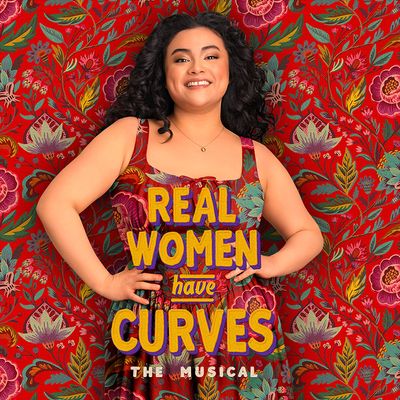
In this episode of Half Hour with Jeff & Richie, we discuss the new Broadway musical Real Women Have Curves at the James Earl Jones Theatre. We break down the show’s themes of cultural representation, community, and ambition, and talk about how the music by Joy Huerta and the direction by Sergio Trujillo shape the production... Read More
From the show: Half Hour with Jeff & Richie (Post-Show Broadway Discussions and Interviews)
Featured Shows
About
In this episode of Half Hour with Jeff & Richie, we discuss the new Broadway musical Real Women Have Curves at the James Earl Jones Theatre. We break down the show’s themes of cultural representation, community, and ambition, and talk about how the music by Joy Huerta and the direction by Sergio Trujillo shape the production. We also look at the performances, including Tatianna Córdoba as Ana García and Justina Machado as Carmen García and consider what the show’s Tony nominations mean for its future. Join us as we explore how Real Women Have Curves highlights the importance of diverse storytelling on Broadway.
Follow and connect with all things @HalfHourPodcast on Instagram, TikTok, and YouTube. Share your thoughts with us on Real Women Have Curves on our podcast cover post on Instagram.
Transcript
This transcript was automatically generated and might contain errors.
[0:00] Jeff Malone: Welcome to Half Hour with Jeff and Richie, the podcast where we explore the latest shows we see, sharing our insights and opinions on the performances, storylines, and everything in between.
[0:08] Richie Grasso: In today's episode, we're discussing the Broadway production of Real Women Have Curves, the Musical, playing at the James Earl Jones Theatre in New York City.
[0:14] Jeff Malone: Whether you cannot catch the show in person or you want to expand your thoughts after seeing it, this episode is for you.
[0:19] Richie Grasso: And as always, we want to inform you that this episode will contain spoilers.
[0:23] Jeff Malone: So if you're ready to dive into this production, stick around with us.
[0:26] Jeff Malone: I'm Jeff.
[0:26] Richie Grasso: And I'm Richie, and we're thrilled to be your hosts for this episode.
[0:29] Jeff Malone: But before we start the conversation about Real Women Have Curves the Musical, here are a few words from our advertisers.
[0:34] Richie Grasso: Welcome everyone to a new episode of Half Hour with Jeff and Richie.
[0:37] Jeff Malone: Today we're discussing Real Women Have Curves the Musical.
[0:40] Richie Grasso: Anna Garcia dreams of flying away. When her family's East Los Angeles garment business receives a make-or-break order of 200 dresses, Anna finds herself juggling her own ambitions, her mother Carmen's expectations, and a community of women all trying to make it work against the odds.
[0:55] Jeff Malone: Real Women Have Curves is based on the play by Josefina Lopez that inspired the iconic hit HBO film and has music by Grammy award-winning composer Joy Huerta and is directed by Tony Award winner Sergio Trujillo.
[1:07] Richie Grasso: Broadway hot take for Real Women Have Curves the Musical. I'm gonna go out and say that I had a lot of fun here in my hot take, and I thought that the music is full of bops, and I left there happy.
[1:22] Jeff Malone: Good.
[1:23] Richie Grasso: It does have a joy to it, has a great message. It wasn't my favorite show of the season. I didn't hate it. I thought there was like such heart, actually, some more heart in this show than I've seen in a lot of shows this season.
[1:36] Jeff Malone: A joyous heart and a really, really strong message with wonderful representation and a good strong sense of storytelling and community. It was nice, and I'm looking forward to kind of seeing how we can kind of flush that out here today.
[1:48] Richie Grasso: Here we go.
[1:49] Jeff Malone: Yeah. So we look at the overall plot and concept and score here. This was an HBO film. The thoughts of musicalizing this was very cool. You know, I'm looking at the creative team on this, and just everyone from designers to producers to arrangers, such wonderful representation here of all these people.
[2:06] Richie Grasso: A lot of times I open a playbill and I see the same person doing the lighting, the same person doing the music arrangements. When you see women and women of color and men of color all working here behind the scenes on this, I'm just really, really impressed with this.
[2:19] Jeff Malone: And it just feels good to see a fresh new show on Broadway with a lot of people making probably debuts and telling the story this way, and there's nothing against the people who do shows and they're doing their eighth lighting design of the season or their tenth wigs of the season. There's nothing wrong with that. But it's just nice to see something like this.
[2:38] Richie Grasso: Yeah. And I think that when you take something that's an HBO film who has a plot, and that and you're, you know, this was also like not set in New York. This is not set in your typical, I have so many new musicals like set in New York. This was Los Angeles. This was a family struggling in the 80s, where it's when it's set.
[2:54] Jeff Malone: And yet I'm watching this and I'm like, wow, so many things happening today in our world, all these years later, when they refer to like the Reagan administration of the 80s and the difficulties of that that people had to go through. And now here we are today in the modern day, many years later, with some different struggles, but also similar struggles of what it takes for people to thrive in their families, in their societies.
[3:19] Richie Grasso: And even though all the turmoil and the difficult things happening in this plot, these women in this shop had like so much joy. I was just really, really impressed with the—I just can't keep saying the word—stop saying the word joy. Because it was like so joyous, their energy, you know.
[3:34] Jeff Malone: Yeah, I thought that, you know, taking the source material and turning this into a musical and creating a team to do that, I thought is really rewarding to see a piece like this. I think that there's a lot of heart in the actual story here because like this is an American dream story and coming here as immigrants and then creating a life is something that we don't see on Broadway enough.
[4:00] Richie Grasso: I think, you know, we've seen it in some works, but like this is now like a new modern musical that has written music and a story from the people that need to write it. You know, so and I think it's more even more telling now because I don't know when they started writing this, but bringing it into 2025 with everything going on especially around immigrants and what like current political administrations want to do in still deporting people and you see that in here. I mean, I think it's very important for the community to still see what's happening.
[4:41] Jeff Malone: That's why I think like, yeah, there's comedy in this in the writing, there's fun things that are happening in the writing as well, but like there's still the serious subject matter. And any musical theater that I think is written well will have moments where you suspend the plot for a minute and you have a fun song.
[5:02] Richie Grasso: Right, and we had so many of those songs there. When we kind of go into a little bit of the score, the score is infused with wonderful culture and has some wonderful use of instrumentation, ballads and up-tempo dance numbers and stand and sings. You had a little bit of everything.
[5:16] Jeff Malone: What was impressive was when you had women's issues being sung about and spoken. There wasn't really much for the male characters in the show. And that was really okay. There was not no sense where I was like, oh, I wish I heard more from the dad or the boyfriend. It's really like no offense to those characters. Like they were great for where they—but it was really about I wanted to know all those women's stories at those sewing tables. And I wanted to know her story and her mother's story and her sister's story. Like that family's story was so important to me.
[5:43] Richie Grasso: And some of these songs just really would say, oh, let's kind of like take a break from the plot for a minute and just realize what joy—again, joy—can be brought to this.
[5:52] Jeff Malone: Yeah, I found there to be a lot of comedy in the music, and like you're saying too. I think that a lot of these songs were written for women and by women, you know, when you have Real Women Have Curves being a song in the show and being comfortable in your body, especially when you know, a plot point in this is being someone who is of Hispanic descent, who then tries to whitewash herself and become a CEO, and then tells everyone in the factory to do the same thing, and they kind of come back with that empowerment moment of saying, no, I'm fine in my own skin and how I look, and I'm happy. I don't want to lose my roots.
[6:33] Richie Grasso: Right. That's important, right? And when we talk about score, we can't not talk about this act two showstopper song when in the middle of act two, kind of towards the beginning of act two, but it's kind of towards the middle. I—and I'm gonna look up the name of the song right now because I don't have here, but it was a standing ovation in the middle of the show.
[6:55] Jeff Malone: Yeah.
[6:55] Richie Grasso: It was, I believe it was "Curves," right? And they're literally, I was just like, okay, I'm enjoying the show or watching it, I'm seeing the plot. And we get to the—they have halfway through act two, and they're like taking their clothing off to expose just their undergarments. Spoiler alert. And I was like, oh my gosh, these women are not just these characters, these actors on stage are so comfortable and confident to do this. I don't even know, I don't know many people who would do that.
[7:26] Jeff Malone: Yeah.
[7:27] Richie Grasso: And especially if the script is calling for it, and for them to just go down to their undergarments like that and be just out there on a Broadway stage eight times a week doing that. Wow. Like, of course, any actor, there's nudity in shows, and we see that, and then maybe it's one person, or but to see the ensemble do that, that was a standing ovation mid-show. I was like, yes, ladies, this is just so powerful.
[7:48] Jeff Malone: There were two moments that there were standing ovations. Yes, it was during "Curves," and then there was another song, and I don't know the title, but it was about menopause.
[7:58] Richie Grasso: Uh-huh.
[7:58] Jeff Malone: And I saw some other women stand up and applaud that. And I think like it's such an important thing to kind of discuss a little bit more around like they're already dealing with so much with being immigrants in this country. And they also still are dealing with everyday issues that everyone else in this country deals with.
[8:24] Richie Grasso: So it's like that layer on top of it. And you know what's nice is I feel like there were people in the audience that were just seeing really strong presentation of themselves or people in their families or people in their cultures and communities up there. That was really important. How many times have you seen a show, Jeff? And you're like, oh my gosh, this character is literally—I get that character. I get that character.
[8:46] Jeff Malone: Right.
[8:48] Richie Grasso: Not every show, but there will be shows where like some people just connect with a character because that is just whoa. I've gone through that, or I know someone who's gone through that. Comedic or dramatic.
[8:57] Jeff Malone: Totally.
[8:58] Richie Grasso: It was just nice to see people reacting the way that they were to this. It was really heartwarming. And I feel like with the actual book here as well, they did something that was super important. But they tied so much Spanish into the musical as well.
[9:12] Jeff Malone: Yeah.
[9:17] Richie Grasso: And if you know Spanish, I'm sure like that meant so much more to you because now you're getting a show that's in like Spanglish. And for those that don't know Spanish, like I've always struggled with learning Spanish, but still you almost like know what they're saying in the piece. But I think it's like more impactful even when I don't know. Because it's like that kind of like boundary of like, oh, the same way when they immigrate here, it's like, oh, I don't know English, and I have to live my day-to-day life. And it's the same way this, where you're listening and you're like, oh, I don't know what they're actually saying, but like it's important. Everything about this is important, and I think it's really nice, good transition time for us to kind of start going over into some of the direction and the actor performances and some of the design choices that were made here too.
[10:06] Jeff Malone: So why don't we go over there to a quick break and then we'll be right back?
[10:09] Richie Grasso: So we're back. So I think that one thing I'll say is I was very impressed with the colors on stage.
[10:16] Jeff Malone: Yeah, I thought we had some wonderful sense of costumes and lighting. I actually loved the proscenium being like a projector wall. We saw florals and we saw butterflies and things, and it was just—they had moments where they lifted the sheet up and they were projecting on the sheet. It was very immersive in that way.
[10:31] Richie Grasso: I thought the scenic was nice and the way they moved from location to location, the lighting, the costumes, all of that seemed to flow well, and it was directed nice, it was very cohesive. Everything flowed so nice. I just thought that aspect and aesthetic was really strong.
[10:45] Jeff Malone: Yeah, between the direction and the choreo, I thought that there were some great moments in there. And then working with the design team to bring those colorful moments, I think it was what was needed in a piece like this. I think that that's what makes great production photos too and entices people to come. And when you see a lot of these production numbers and the production photos, like it looks like an interesting musical for people.
[11:02] Richie Grasso: Right.
[11:09] Jeff Malone: You know, and when you're there, yeah, these women are working, they are doing the dancing, they are giving you a show. And I think, yeah, you could definitely tell that this creative team worked together on this.
[11:23] Richie Grasso: Oh, yeah, I loved that. And I even loved like when the dresses flew in like that. Like this is all about the dresses, and then the dresses they were wearing and the dresses that they were going to be giving for this job. Like the plot, also, like 200 dresses, the pressure they felt, almost not getting paid, having to fight. I could only imagine the such difficult things that businesses have to go through, and people just say, oh, I'm not gonna pay you for that, or no, it's not what I want. Like, people are horrible like that, and it just shows the personal lives of these people need relied on this job and this money to get this done, right?
[11:52] Jeff Malone: I think at times sometimes this production may have felt like it's slightly—"is" the right word?—dated. I don't—I didn't feel like I was trapped in the 80s. Like when we saw ironically on the same stage, like Heart of Rock and Roll, that was like 80s, 80s, 80s. I just didn't feel like—it's not like the time period. I feel like more for a while, maybe like late 2000s or early 2010s, we were getting a lot of like cookie-cutter kind of shows like this. And I feel like it verges slightly on that in terms of the design, and like it looks beautiful, but I just wonder if like people are not raving about some of those elements because it feels like it may have been done before.
[12:36] Richie Grasso: Yes.
[12:37] Jeff Malone: The story, no, right? But just like the overall production. I don't want to say it was safe in that way, but it wasn't like groundbreaking in terms of anything else with that. But it was nice because it was cohesive.
[12:46] Richie Grasso: Right.
[12:47] Jeff Malone: How many shows have we seen this year? I'm like, well, was the director even in the room when that happened? Like this actually felt.
[12:51] Richie Grasso: Right.
[12:51] Jeff Malone: It was still a cohesive piece, but I think what I'm saying is like when you're looking for the next like groundbreaking kind of show, I don't know if this hit that mark.
[13:00] Richie Grasso: Right.
[13:01] Jeff Malone: Right. And then when we go, you know, transitioning in some of the acting, I will say that I thought some actor performances were a little stronger than others. At times I felt like the singing was strong. At times I felt some supporting characters were actually overshadowing some leading characters. I had sometimes I felt like the book scenes were like, let's get through them quick because we gotta get to another song.
[13:19] Richie Grasso: So I felt like if there was one thing that I was a little more on the fence about was some of the pacing with it.
[13:24] Jeff Malone: Yeah.
[13:24] Richie Grasso: Who were standouts for me? Well, Justina Machado is wonderful as the mother. She's a Tony nominee now. I actually think she had some wonderful songs, and I think she was very, very strong.
[13:34] Jeff Malone: Yeah.
[13:34] Richie Grasso: The sister, Florencia Cuenca, had a kind of a difficult role. She had a big number to sing at one point. She was great, and Tatiana Córdoba, very strong. I thought the three of them held a lot of it together.
[13:48] Jeff Malone: Yeah, I think that Tatiana had a great role in this whole piece.
[13:53] Richie Grasso: I think that she sang it really well. I think she has the full American dream. She is the legal citizen in the country, so she plays even in a harder role, trying to like understand everyone else in the show, and like how do they kind of go day to day? So yeah, I think she did a great job. I thought that she did have a great connection with her mom, who's played by Justina Machado, and yeah, I think like all three of them really focused there, and there were some great supporting characters as well. I think they all really understood the assignment in terms of like being these women working in the factory.
[14:34] Richie Grasso: Yeah, and I thought Carla Jimenez was a great standout for me. I really enjoyed it. All of them really had the comedy in that piece. Um, there was also diversity amongst the women in the ensemble in terms of age, in terms of even the styles of clothing they wore and their expression and what was more feminine, what was more masculine. I just thought that aspect of it was really smart. You know, how many times do you see like a musical and it's like I know these are like older supposed big thirely modern million? All the typists are the same person, or like you go to like an ensemble and all the dancers look the same. This was like, no, this was what a real shop would look like. People would look different and dress different and be working in the shop like that.
[15:12] Jeff Malone: Right.
[15:12] Richie Grasso: I liked that realistic sense of it. Um, but yeah, I thought this acting through song and the song moments were stronger than some of the book scenes. I will say some of the book scenes to me felt a little surfacey with some of the acting in terms of they were saying some really serious things, but I just thought that it wasn't really going to an extremely rooted place, but then the song took us to the rooted place, so I was appreciated, or the comedic place. So I thought the songs carried a little better than the book of the show for me, in a way.
[15:40] Jeff Malone: Right.
[15:41] Richie Grasso: I think where in some scenes that probably not that they felt rushed, but maybe they did. There wasn't enough chance for you with some of the book scenes to actually really connect, I think, with the actors. And it then would go into song. And the song didn't always match the book scene that it came out of.
[16:07] Jeff Malone: Yeah, yeah.
[16:07] Richie Grasso: There was a little that was a little jarring to the at times.
[16:11] Jeff Malone: Right.
[16:11] Richie Grasso: So that could kind of feel a little bit harder in this production overall that I feel like maybe that's what you know some people didn't connect with in the nominating committee for the Tonies, because we'll get into the Tonies eventually and um see like what they were nominated for versus what they weren't. But I will say, yeah, Sergio's directing and choreographing this, he's great. He's got he was not nominated for either of those categories for this for Tony's. Um, but he's very, very good at what he does. I think he pulls a show together nicely.
[16:43] Jeff Malone: Yeah, you know.
[16:43] Richie Grasso: Um you have you even have at the top of this, you know, Barry and Fran Weisler's lead producers on this, they're really seasoned producers, right? So I mean, you this team all together had some really strong stuff, the mixture of hair, wig, makeup design, costume, lighting, scenery. I mean, it was Natasha Katz lighting too, which I was just saying, oh my gosh, when you see someone doing like their eighth show, Natasha was like the veteran lighting director here, lightning designer here, but then you had like other people in here working on all these look at all the people in the playbook who did arrangements, dance arrangements, orchestrations, music supervision, like a lot of people went into the music of this.
[17:16] Jeff Malone: I love seeing a big music team.
[17:18] Richie Grasso: But that's because I do think that the music was the real focus in here. We're getting a really different score for Broadway, um, who most are not writing like this.
[17:29] Jeff Malone: No, right, right.
[17:29] Richie Grasso: I think you know, when we immediately think like Hispanic scores, you go right to Lemon Well, and then like who else is writing like that?
[17:38] Jeff Malone: Right.
[17:39] Richie Grasso: I mean, but I mean, and and Hispanic representation on Broadway is growing and it should be growing. We've had like a lot of people will think West Side Story or In the Heights or West Side Story and Lights, but there's so many more things, those are just big pillar shows of time of representation. But this is the future telling all these stories. It doesn't need to be the music man's of the world all the time. You know, and written by the community, though.
[18:02] Jeff Malone: Right.
[18:03] Richie Grasso: Not necessarily just people saying they're writing about a community that they don't necessarily belong to. This was the community feel of it.
[18:09] Jeff Malone: Right.
[18:10] Richie Grasso: And I and speaking of community, this doesn't knock it at all, but I could totally see community theaters and regional theaters and high schools like doing this. This would feel so good in a community that has strong Latino roots to it, you know.
[18:22] Jeff Malone: And I think that's that's really important too.
[18:24] Richie Grasso: Yeah, you know. So let's go into some Tony talk and let's go into a little bit of our experience of the show. Uh, because we had a very special guest sitting behind us in the show.
[18:30] Jeff Malone: Oh, yeah.
[18:33] Richie Grasso: Let's do it. Let's go there. But before we go there, here's a few words from our advertisers.
[18:37] Jeff Malone: Okay, and we're back.
[18:38] Richie Grasso: So Tony Talk Time. This show did receive two Tony nominations. It won it received a nomination for best original score written for the theater, and it uh and it received a best performance by an actor in a featured role, an actress in a featured role in a musical for Justina Machado.
[18:54] Jeff Malone: Yeah.
[18:54] Richie Grasso: I think um this is probably the big snub show of the season for many. I think that many people thought that this was going to get a best musical nomination. Um, I think it they probably thought it was going to get way more costumes. I mean, it's a show literally about making dresses, yeah. So get a costume nomination, and did they not get a best musical nomination.
[19:17] Jeff Malone: Yeah, no, it didn't uh didn't.
[19:18] Richie Grasso: Uh direction, choreography, it did not, no design.
[19:22] Jeff Malone: Right.
[19:22] Richie Grasso: It was just these two. And so listen, I will say score, cool. Because look at all the people that went into writing this score. Like, that's amazing that you got a Tony nomination for score. I think. I think the score is fun.
[19:32] Jeff Malone: Yeah.
[19:32] Richie Grasso: I think that's important. I think that's great that they got that. I think it's going to be put into a tough year, though, because to win in score when you're going up against Maybe Happy Ending and you're going up against Dead Outlaw now, two shows that are both nominated for Best New Musical. Uh, even Death Becomes Her.
[19:50] Jeff Malone: I think now, you know, this is a tough time for Real Women Have Curves.
[19:55] Richie Grasso: Yeah, yeah. Because it's a very saturated season. You need the Tony's. And if you don't get them, and your show is already kind of struggling because this has not been doing well in terms of the grosses. We've seen them, you know, it needs word of mouth. It doesn't have well, they're not gonna have a slot now on the Tony Awards performance, which helps ticket sales so much because they're not nominated for best musical.
[20:19] Jeff Malone: Right.
[20:20] Richie Grasso: And also, like in a time when like Maybe Happy Ending was like on the chopping block, it built this big word of mouth and it made its way all the way to Tony's. They were like the big underdog of the season. Now, when you have Dead Outlaw that just came in, and it gets the Tony nominations that it needs, even though it's performing in the same way as Real Women Have Curves. And now people are gonna go see it.
[20:47] Jeff Malone: And well, we as we're talking today, they just announced when at the day of recording this, Redwood is now announced an early, very early closure, and they got no Tony nominations.
[20:57] Richie Grasso: So there's always casualties when it comes to that.
[21:00] Jeff Malone: Right.
[21:00] Richie Grasso: With Real Women, they probably have the capital to at least get to Tony's. I mean, they have to last another month, but they definitely need a fan base to start going. And right now it's going to turn into everyone that hasn't seen the five nominated musicals or the five nominated revivals or plays. Everyone rushes to go see those now.
[21:19] Jeff Malone: And Justina Machado being Tony nominated, I think is great. I think she was really strong at carrying the family together. And it was nice to see that nomination.
[21:27] Richie Grasso: The leading female did not get a nomination, but look at leading actress in a musical right now. How extremely saturated that category is this year.
[21:35] Jeff Malone: Yeah, because both for Maybe Happy Ending, I know a lot of people are very upset that Helen was not nominated. And I think right now, too, she was another contender for Tatiana was a contender for a leading actress in a musical. Let alone there was Sutton Foster, Bernadette Peters left off that list, Dina Lindzel, like big names were left off that list this year.
[21:55] Richie Grasso: So nails.
[21:56] Jeff Malone: So yeah, I mean, this was a tough, tough year for that. And I think that two Tony nominations are better than none because a ton of shows didn't even get anything. So I would hope that this show revels in that, promotes that, gets butts in seats, as I say, to get people there. Try to get on, you know.
[22:12] Richie Grasso: I like I saw some of the shows now are starting to do the Good Morning Americas and the Today Shows and the Jimmy Fallon performances. Like, try to get on those.
[22:22] Jeff Malone: I think when you always look at a show like this, they I know they had an out-of-town, and it did get rave reviews out of town. Like, but I don't know if you look at a show like this and you immediately say, Oh my gosh, let me bring this show to Broadway during the busiest season. It doesn't give it its chance to really like incubate and like grow and become a staple. Because I think this has every intention of being a musical like that.
[22:54] Richie Grasso: But I look at something like this and I say, Hey, sometimes Broadway is too big, and this show would be perfect over a new world stages right now.
[23:05] Jeff Malone: Right.
[23:06] Richie Grasso: Right. But I even say the same thing about like other shows, like Smash didn't really have a big out-of-town tryout. It comes, it's kind of not uh not it got like very few Tony nominations as well. Like, but even Dead Outlaw having the downtown run, everyone ran to that and went to that. I was like, oh my gosh, this is like kind of cool. And then when it got to Far Pro, I was like, whoa, now it's a bro, like the buzz was happening.
[23:27] Jeff Malone: But then Death Becomes Her and boop had major out-of-towns, buzz was happening in Chicago where they were doing it but you have so many different components that you're looking at. Like Dead Outlaw, yes, had the New York City word of mouth buzz that's now going there. But they've also been struggling in terms of people either liking it or not liking it. It is a theater person show, but it's also not a theater person show.
[23:51] Richie Grasso: Correct.
[23:51] Jeff Malone: So that's a conflicting point that it has. Whereas when you do have Death Becomes Her, it's this big spectacle thing. They did their Chicago out of town. It already built so much of a following, especially within like the gay community that are like, oh my god, we love Megan Hilty, we love Jennifer Samard, and we love Michelle Williams from Destiny's Child. So it's like, okay, this is like every kind of component of like getting them there.
[24:18] Richie Grasso: And for Megan and Jennifer, who are both Broadway stars to be nominated is a big deal.
[24:23] Jeff Malone: Yeah, you know, so I think producers have a very hard job right now because Broadway opens and closes very frequently compared to what it normally does.
[24:34] Richie Grasso: Yes, it's quite because it's expensive. And if you can't figure out how to build your audience, you're gonna struggle.
[24:40] Jeff Malone: Listen, the James Earl Jones is becoming the new theater that like everybody's pumping through shows. There's two or three shows a year, then now they can't get something to sit there.
[24:48] Richie Grasso: And it's a gorgeous theater.
[24:50] Jeff Malone: It's just recently renovated.
[24:51] Richie Grasso: Yeah, brand new. Gorgeous theater. We were sitting in the mes in the front row.
[24:55] Jeff Malone: Which is like the best seat in the show.
[24:56] Richie Grasso: And we realized like, oh, okay, we're not. Almost at the level of the like you're just right there. It's not like you're high up there.
[25:00] Jeff Malone: Yeah, they're like, sing to me, Louise.
[25:02] Richie Grasso: But not only that, who is sitting behind us that we see diagonally behind us is I'm so sorry, Mr. Andrew Lloyd Webber.
[25:09] Jeff Malone: Yes.
[25:10] Richie Grasso: So the this show, if you're listening, if anybody in the show is listening, Andrew Lloyd, you probably already know this. Andrew Lloyd Webber was at your show. The fact that you have a brand new show on Broadway, and Andrew Lloyd Webber, I mean, that is, you know, there's not many of the great, I don't even know if Andrew Lloyd Webber's considered golden age. He's kind of on the cusp of like the next generation. But when the greats are sitting at your show, Andrew L. Webber is there to watch a new musical, and out of 41 Broadway theaters, that's the theater he decided to go to on how many days he's in New York when he comes here.
[25:38] Jeff Malone: Right.
[25:38] Richie Grasso: That's kind of cool. And he stayed the whole time and he seemed to enjoy it, and it was great. And so I hope he did. But it's it's nice that could you imagine me, Andrew Lloyd Webber and be like, oh, am I gonna go see a new show?
[25:47] Jeff Malone: Yeah, you should.
[25:48] Richie Grasso: Like Steven Sondheim would go see new shows. Well, I think it's important. I mean, Andrew's still writing, and uh and he's writing modern. So when you've seen School of Rock and you see Bad Cinderella, he is writing in the modern style. So to still be on it and seeing what people are putting out there, I think it's important.
[26:05] Jeff Malone: Yeah, yeah.
[26:06] Richie Grasso: So it was very cool that he was there.
[26:07] Jeff Malone: Yeah.
[26:08] Richie Grasso: Awesome, awesome stuff.
[26:11] Jeff Malone: What are your final thoughts on Real Women Have Curves?
[26:14] Richie Grasso: I do think that this show has a heart. It does have a space on Broadway where I think many people should still try to see it if they can. Um because and if they want to, because it was fun. I think the message really is important, and especially in today's day and age.
[26:33] Jeff Malone: I agree.
[26:33] Richie Grasso: It's got such joy, such heart, such life to it. It's an important story to tell. Maybe not the most perfect musical to some of the reviewers or some of the people coming. It didn't really get the Tony buzz that it needed, but but it's got some Tony nominations, and it's got some people going, and people are cheering and loving it. So, you know, go go check it out. Go check out something new and original. Yes, the big splashy things on the other side of Broadway are really great too, but this is something that needs those people to come and support it.
[27:01] Jeff Malone: And it's an important story. We should always be telling stories.
[27:02] Richie Grasso: Especially too, because we had many groups of women around us. And the last time, like I really felt like we had groups of women was when we saw Sus.
[27:09] Jeff Malone: Yeah, and that was a great feeling too to be sitting there a part of that historic show.
[27:13] Richie Grasso: Right. So when you have these empowerment shows, I think it's like really important.
[27:17] Jeff Malone: Totally. No, it's so true.
[27:19] Richie Grasso: Well, that does wrap up our discussion for this episode. We hope you enjoyed our deep dive into Real Women Have Curves, the musical. And remember, we want to hear from you. Continue the conversation with us on Instagram and TikTok at Half Hour Podcasts.
[27:30] Jeff Malone: And drop us a comment on Spotify and let us know your thoughts on Real Women Have Curves the Musical.
[27:35] Richie Grasso: Also, please leave us a review. Your reviews mean so much to us. And remember, you can listen to past episodes and stay tuned for the many upcoming ones as well.
[27:41] Jeff Malone: Until next time, I'm Jeff.
[27:42] Richie Grasso: And I'm Richie saying ta ta for now.
[27:44] Jeff Malone: Bye.
© Broadway Podcast Network, All Rights Reserved