

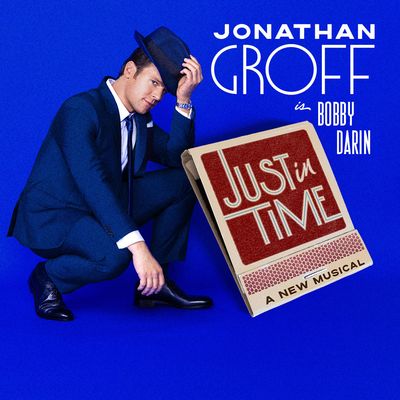
This week, we’re joined by Shannon Lewis, the choreographer behind the new musical Just In Time. Shannon talks about her early days as a dancer, how she developed her style, and what it’s like working with Alex Timbers and Jonathan Groff... Read More
From the show: Half Hour with Jeff & Richie (Post-Show Broadway Discussions and Interviews)
Featured Shows
About
This week, we’re joined by Shannon Lewis, the choreographer behind the new musical Just In Time. Shannon talks about her early days as a dancer, how she developed her style, and what it’s like working with Alex Timbers and Jonathan Groff. We get into the unique aspects of immersive theater and how choreography changes when the audience is part of the action. Shannon also shares what she learned from Susan Stroman and offers advice for performers.
Follow and connect with all things @HalfHourPodcast on Instagram and YouTube. Share your thoughts with us on Just In Time on our podcast cover post on Instagram.
Transcript
This transcript was automatically generated and might contain errors.
[0:00] Jeff Malone: Welcome to Half Hour with Jeff & Richie. I'm Jeff.
[0:02] Richie Grasso: And I'm Richie. And today on our show, we welcome a very special guest, Shannon Lewis. Shannon, welcome to our show.
[0:05] Shannon Lewis: Hey, guys. I'm so excited to be here.
[0:08] Jeff Malone: Yay. Thank you for being here. Shannon Lewis is a creative force in the world of musical theater and dance. She's currently the choreographer of the new Broadway musical, Just In Time, the Bobby Darin bio-musical starring Jonathan Groff and directed by Tony Award winner Alex Timbers, playing at the Circle in the Square Theater on Broadway in New York City. Shannon's career spans over 25 years, including performing in 10 Broadway shows, most notably her iconic performance of I Gotcha in the original cast of Fosse. She's also choreographed for television hits like Saturday Night Live, The Tonight Show with Jimmy Fallon, and Last Week Tonight with John Oliver. As the founder of Firestar Creative, Shannon produces and develops innovative projects across theater, film, and live events. Originally from Toronto and now a proud New Yorker, Shannon's work has been seen everywhere from Carnegie Hall to viral TV moments. What a bio. That's wonderful.
[0:59] Shannon Lewis: Hey, did I really do all that? Wow.
[1:04] Richie Grasso: So many great things to start talking about, but we did want to start things off with how you first got started in the theater industry and what was a defining moment for you.
[1:14] Shannon Lewis: Oh, my gosh. How did I get started? I actually have a pretty great story about how I was brought to New York. I had danced my whole life. None of my family was ever in show business or danced or did anything, so I was kind of like this weird, crazy alien child of my family that did all these gymnastic things and all this dance stuff, and I just loved doing it. My family was like, okay, she's doing this. I don't think anyone ever thought I was ever going to make it my whole career. I had a huge interest in law, and I wanted to be a lawyer, and I even had a scholarship. But dance, when you're doing it and when you're at your peak, it's important to follow that path, so that became pretty clear that I was starting to get more professional work as a dancer in my late teens, my mid to late teens.
I happened to be discovered in a job by a casting director that was looking for people to audition for the Toronto company of Crazy for You. They had been running on Broadway for a couple of years, and it was a big humongous hit giant dance show, Susan Stroman, her big splash on Broadway. I auditioned for Susan Stroman, and she was very intrigued by me because I was quite raw at the time. I didn't really have a lot of experience, but I guess I just had raw talent. I fit the mold of exactly what she needed, what they were looking for, which was someone who could do gymnastics. There's this toe tap in the show where you have taps on your pointe shoes, and I could weirdly do that too. You had to be a certain height, and I was the right height.
She was interested in me and brought me back in a couple of times, and I didn't end up getting the job in Toronto. I thought, well, that was that, and I went on and was in Toronto auditioning around and going to school. Then I got a call that Susan Stroman would like to see me again, but this time, she couldn't make it into Toronto, and would I mind flying to New York to meet her. So I flew to New York, and I auditioned on stage of the Shubert Theatre where Crazy for You was playing on Broadway. I was in my late teens, and I thought, this is going to be the only time I ever get on Broadway, so I better remember this. It was myself and one other woman who were auditioning for this part. I didn't know what part it was.
It was just an audition. They ended up cutting her and keeping me for a longer time. It was just me on the stage by myself, which is a crazy experience. That is how auditions used to go on Broadway, used to be actually on the stage of the theatre, which is amazing. Very old school kind of Broadway audition vibe. They said thank you, and I got back on the plane, and I flew home, and then I was walking through my dorm room door, and my phone was ringing, and it was the stage manager. He said, Shannon Lewis, and I said, oh, I'm so sorry. Did I forget something at the theatre? He said, yeah, you forgot your contract on Broadway because we want to hire you. I said, no, I didn't audition for Broadway.
He said, yes, you did. It's a crazy story. I know it never happens like that. I was like, what? I had to pull out of university. I moved to New York the next week, and I was in the show two weeks later. I was on Broadway before I'd ever even seen a Broadway show in my life.
[4:33] Jeff Malone: Oh, my gosh, and to think now you're working in a different way on Broadway alongside Susan Stroman, who's also choreographing and directing between New York lately and Smash lately. I mean, that's probably pretty cool for you, too.
[4:43] Shannon Lewis: Oh, it's unbelievable. It's such a full circle moment, and she's such a... I worked for her outside of Crazy for You. I worked for her a bunch of times, also notably in Contact. I ended up playing the girl in the yellow dress and the wife and the girl on the swing at different points on Broadway. She and I have a wonderful history, and she's such an icon and a trailblazer for female choreographers and female creatives. I just am so honored that she's still working and watching her still be incredible. Every time I run into her, she's always so supportive. It's such a cool connection that we have, for sure.
[5:18] Richie Grasso: Oh, I love that. It's amazing. Well, we're going to dive into some Just In Time now. We saw Just In Time last week. Floored and blown away. I'm just loving the award nominations you all are getting and the amazing reviews last night, these reviews.
[5:33] Shannon Lewis: Thank you. Yes. It's truly just an incredible experience. We see so many biopic musicals on Broadway. This doesn't seem like one to me. I left there saying to Jeff, I've never walked out feeling like I'm watching something so original and new. Of course, it is a new concept, but it's about someone famous. It just doesn't feel like your typical biomusical. I was just blown away by it. I know you're working with the incredible Alex Timbers, who's just a visionary, and he's just incredible too. What was it like collaborating with Alex and bringing this project together and how you got into this project to begin with?
[6:11] Shannon Lewis: First of all, I'm so glad to hear that you enjoyed it. I think we can all say that when you are in the theater with the audiences, they're going bonkers for this. It's an experience in the theater. It's like a rock concert in there. I think you walk into the theater and it's this nightclub that you don't expect, this retro. The entire place is this moody lighting and music is playing. It's really an experience. I think people are really getting on that ride and they're really just going on the journey with us, which I feel is very unique. I've not experienced this type of an audience reaction to a show before, which I think is exactly what we wanted it to be. We wanted people to be transported.
Alex is really at the forefront of that, obviously. He brought me into the project when they hadn't really had a choreographer yet. They had been in workshops, readings, and development for a long time, but they hadn't put it on its feet really in a real meaningful way. He had an idea to sort of expand the idea of how dance could be utilized. He had this idea of this immersive staging that he wanted to do that he's so visionary. He does this in many shows, but he really wanted the Circle in the Square. Once they got that, he was like, I have this idea to make it immersive. He saw in my work that I could help him develop this movement vocabulary that would go throughout the entire show, that every character, that every cast member would utilize this movement vocabulary in some way, that it would be sewn together so seamlessly.
Also, he had an idea for these three backup singers in the show that were just female backup singers in Bobby's sort of Copa performances or nightclub performances, that they could be expanded to help narrate the story and tell the story and be actual characters in the story. They could be performing with him on Ed Sullivan. They could be his conscience. They could be narrators. They could be prop handers, anything like that. They're called the sirens in the show. There's three women, Christine Cornish, Julia Grondin, and Valeria Yamin. Incredible, all three of them. Incredible, talented people. Just so wonderful for me, too, because in my own career as a dancer, I was asked to do much more than just dance always.
I think the best Broadway dancers are actors first. Obviously, they have to sing just as well as the singers, and they have to do this incredible kind of dance, and that was something that I was known for in my career. So bringing it forward and now evolving it now in this time with these incredible, talented, younger people is incredible. They really are kind of a heartbeat in the show that the audience can follow, and that Bobby and Jonathan, the role of Jonathan Groff slash Bobby Darin, can actually utilize to tell the story. So that's what Alex really wanted to talk to me about in the beginning, and then we found that that concept just kind of evolved and grew over time, and now the whole show really moves. It has urgency. It has charm and wit, and the movement is, I think, a big part of that.
[9:24] Richie Grasso: They're like a new style of a Greek chorus.
[9:24] Shannon Lewis: That's correct. Yes, I really think that, and they're actually named in the show with their own names because, as you know, in the show, we start off in 2025 with Jonathan Groff as Jonathan Groff at the Circle in the Square with these three women who are named as their names, and then we delve back into time, and then we go back and we start to play Bobby Darin, and I think the audience really loves that, too, that they're unexpected. We start with Jonathan doing Jonathan, and then all of a sudden, you realize you're watching Bobby Darin, and you're like, wait, how did that happen? And then you go on the ride.
[10:03] Shannon Lewis: You've been working with Bobby Darin for a long time. How do you feel like working with him has influenced your choreography and the energy just in general?
[10:34] Shannon Lewis: Bobby Darin is a wonderful person. He's so warm and generous and electrifying. His emotions are right under the surface, but yet he is powerful and you relax when he's on stage because you trust him. He is all of that in person as well. He's the person that you think must be a jerk, and he's not. He's a fully formed, wonderful human that just happens to be one of the most talented people I've ever met in my life.
[11:01] Shannon Lewis: He's just an incredible person. Our work together was incredibly formative for the show because he wanted to come at it from a place of dance and because Alex had this idea to involve the Sirens and also have these production numbers be danced fully by Jonathan as Bobby Darin and really expand what dance would do in our show, that Jonathan really wanted to do it right.
[11:29] Shannon Lewis: We started with a dance workshop where I pitched a bunch of concepts for things like Splish Splash or Lazy River. There's a really fun little vaudevillian dance that you've seen the show so you know that we do in that night. I had that concept. I said, Bobby Darin did a lot of these Andy Williams type shows where they would just start doing a weird dance and they all kind of did it together. It's the most charming thing in the world.
[11:54] Shannon Lewis: We started working on things like that and Jonathan confided in us that he'd always wanted to do a big dance show and that he was chomping at the bit. So we dove into some real prep time and some real training. We ended up doing 10 plus weeks of just private training, he and I, in the studio.
[12:15] Shannon Lewis: He learned my warm up, which is like a great sort of technical preparation for dance and doing eight shows a week and getting your body ready and your mind ready for that amount of choreography too. Then we started really evolving the choreography in the show and really pushing it and seeing how far he could go. He's basically now doing the same steps on stage that the professional dancers are doing behind him. It's incredible.
[12:41] Shannon Lewis: That's not something to take lightly. It's not like we did 10 weeks and I taught him how to dance. He obviously had talent before and he tap danced before in his career, but this is something that he's never done. It really is evolving it and the dance really has a storytelling element to it.
[12:57] Shannon Lewis: So it's fascinating to watch him use his body now in this way that he was telling me the other day that he feels like he was ignoring this whole instrument before, which I thought was hysterical because I think he's one of the most incredible performers I've ever seen up until this point.
[13:16] Shannon Lewis: Now he has this other tool that he's using his body and things like Mac the Knife. He uses restraint and subtlety to tell the story. We start the story where Bobby Darin is younger and more ambitious and very bouncy and very full of energy in life. As he goes through his story, he matures and also his health deteriorates.
[13:35] Shannon Lewis: So we played around with what would that be and how can we still tell the story in a dynamic way, but using stillness and dynamic energy to focus it down and make it more mature. So it's been a real amazing journey with him. I can't say enough about him. He's just a real touchstone for me.
[13:54] Shannon Lewis: And it's interesting too because with this immersive nightclub experience, when I walked in, we sit and we see the tables and chairs and I see the main stage, but then I see the other small stage on the other side of the theater and then I see the main stage with all these levels and all these steps and platforms.
[14:09] Shannon Lewis: And I think to myself, well, choreography, what is the average person think? A big bare stage, a flat surface with the numbers on the front and your marks and you'd make your pictures and this is so not that.
[14:23] Shannon Lewis: And so when I see what is being done all over this theater from a movement choreography perspective, I can't help but sit here and wonder and ask you this question. What is it like when you get the set design, you get, okay, this is what I'm working with, the literal space. Does that just completely as a choreographer say, wow, I have to think outside the box in a million different ways now to move people cohesively in this space?
[14:48] Shannon Lewis: Yeah. I mean, honestly, it was pure excitement because it's the kind of situation and challenge that I think every choreographer would want. I certainly would. I love thinking outside of the box. I love evolving the way we tell stories, especially because of so much of my work in television, film, on SNL and everything that I look through a lens differently.
[15:12] Shannon Lewis: I look at proscenium, I look at dance and figure out how to frame it and change it and edge it up a little bit. So this was a perfect marriage for me of what I do on television, film and what I do in theater. It's a perfect marriage of it. The lens in television, film, you tell the audience where to look and you give them the focus that you want.
[15:32] Shannon Lewis: In proscenium theatrical choreography, there's a lot going on. It's how you build the staging to focus the energy. So I'm really using both of those skills at once here. We ended up doing a workshop and then a full rehearsal period on the set. We had the set built in the basement of a church, this huge basement of a church, and we created the show in the immersive setting.
[15:57] Shannon Lewis: We didn't have to make it on a proscenium and then deconstruct it and pull it apart. It was actually created with the cafe tables, with the different playing spaces, and that was really formative for us. It became very clear that if this person over here is doing this song and we have somebody on the other side, how do we make sure that we tell the audience in a very clear way, this is the information we want you to hear, this is what we want you to see, and then how to connect those things.
[16:27] Shannon Lewis: With dance or with the sirens, utilizing the sirens focus or any of that stuff, it was ever-changing, and I will tell you that it changed in a very, very detailed, nuanced way up until opening night. It continued. We were honing it and honing it and working on it and working on it until we literally had to stop working on it.
[16:49] Shannon Lewis: For me, that's the dream. You never really finish your work. You just have to open in the best way, in the most wonderful way. We were just continually taking that marble block and tapping it down and making our statue out of it as best we could up until the very last second.
[17:10] Shannon Lewis: I think we've come up with something pretty fun to watch at the very least, and I think also the storytelling of the space really makes you feel like you're in the world and you really care about these characters and you really go on the ride with them.
[17:26] Shannon Lewis: Do you feel like there was a production number that you found slightly more challenging than another?
[17:33] Shannon Lewis: For different reasons. All the production numbers are very challenging. Splish Splash is a storytelling piece, as you've seen. It's when Bobby Darin finally breaks through and has his big hit. We show the progression of him hitting and then getting bigger and bigger and bigger and adding a set piece and adding dancers and adding props and adding all kinds of things.
[17:58] Shannon Lewis: Then realizing that he's stuck in the golden handcuffs, that he's stuck in this place that he never wanted to be a teen idol and now he's a teen idol. That one required quite a lot of work and there's many parts to that number. It's one of the more complicated tech pieces in the production numbers of our show.
[18:17] Shannon Lewis: There's things like Lazy River where it starts in a very pedestrian way and then it turns into the fantasy in Bobby's mind of what it could be and we act that out. Things like Mack the Knife where it's such an iconic song and piece of music that people really wait for. You play two notes of that song and people are applauding.
[18:41] Shannon Lewis: How do you make it dance without taking away from the darkness? You have to lean in. We found that Bobby Darin used to wear fedoras and specifically a trilby, which is a short brim fedora.
[18:56] Shannon Lewis: I brought that in to rehearsal and I said, I think this is a way to interpret the darkness by putting a hat on and peering under the brim of this hat and that became our focus for that number. Each production number definitely had its challenges.
[19:15] Shannon Lewis: I'll mention too in act two when Sandra Dee and Bobby are falling in love and they get married, they fall in love and get married in one number. That's musical theater. They also work their way from one huge stage on one side of the theater through the cafe tables and end up on another stage on the other side. They do all of that.
[19:37] Shannon Lewis: It looks pedestrian, but it's musical and it's all choreographed from beginning to end. We didn't want to take away from the sweet charm of them falling in love or the surprise of them getting married at the end, but I think that was one that was really challenging for me to just find the right tone of movement. When you have this iconic person at this iconic time in American music history, let alone American history, and for someone who was young and died at such a young age.
[23:37] Shannon Lewis: And just please let them go about their thing and be respectful. We haven't had anybody be disrespectful to them in that way; everyone really gets on board and is there because they want to be there. It's been kind of cool to watch. You know, it's live theater, right? So the "anything can happen" part of it, the "be here now" of it all is what we wanted it to be. We don't want people to feel like they can't express themselves or whatever, but I think we found a nice balance between safety for the actors and enjoyment for the audience.
[24:36] Jeff Malone: It's so great hearing all these stories from Just In Time and your whole creative process here. We're getting close to the end of this episode, but we do have two final questions that we want to ask you, starting with: what advice would you give to young performers or choreographers hoping to carve out a unique path in today's industry?
[24:49] Shannon Lewis: I mean, my first thing when I'm asked this question is always like there is no right way to get where you want to go. Everybody's path is going to look different; everyone's journey is going to look different; everyone's skill set is different; everyone's opportunity is different. So, you know, looking at someone and not trying to model after someone's journey is not, for me, the way. I mean, look at my story—it's a crazy story. I just wanted to be in the right place at the right time and be ready. That was my goal because I didn't know how I was going to get where I was going to go, but I knew that I could control myself and how I was at auditions or how I was in those opportunities that came.
So that, to me, is number one. And then number two is if you're not finding the opportunity, make it yourself. You know, I think now we live in a world where you can make a video, you can make a film, you can write a show and do it somewhere for friends and family or whatever. I think you're not locked into this ladder of climbing the ladder of power; there are many ways to get where you want to go now. So have a strong vision, know who you are, do the work, you know, and go. That's what I say.
[26:08] Jeff Malone: And one final, final question. We always like to ask our guests for one really funny, silly, or could be zany, or could be interesting behind-the-scenes story of a show you've worked on, whether it be Just In Time or any show that you're allowed to tell on the mic. Our audience loves to hear the behind-the-scenes fun stories. Anything you're willing to share as a quick story before we wrap?
[26:29] Shannon Lewis: I mean, there are so many that I could tell you that I can't tell you on this podcast, unfortunately. But there's one that really springs to mind, which is when I was performing the role of the wife in Contact, which we spoke about with Susan Stroman. That role never leaves the stage; it's a brilliant role. There are many monologues, and you get up and dance, and you're mostly sitting at a table at an Italian restaurant with this big 1950s dress with all this crinoline and everything underneath it. The first moment of dance for that character, she's been sitting for a while, and you kind of stand up and then take a big step and do an arabesque. I was an understudy; I was going on a lot. I was the standby for that role for a while, and then I took it over for a minute, and I had gone on a lot.
I had an understudy costume, and I got to that moment in the show where I had to stand up and dance this big moment, and I stood up and I stepped through a gigantic hole that no one knew was underneath my dress in the crinoline, and I ripped it as I did my arabesque. Then it started to unravel in like a giant train trail that I was then like dancing with. I had this like seven-foot unraveling dress that I was taking all over the stage with me. I was trying to wrap it around my arm and I wrapped it around my neck, and it was a crazy experience. I never left the stage, so at one point I had to crawl under a table in the storytelling. I had to crawl under a table, and another dancer was under there, and we ripped it off together, and I came out and it was gone.
[28:02] Jeff Malone: Oh my gosh, wow! Live theater.
[28:06] Shannon Lewis: It was a pretty extreme moment, but I'll never forget it. Whenever I'm working with young actors or anyone that has a moment on stage that didn't go their way, I'm like, "Listen, it never goes the way—it's live theater. You have to be ready for anything." I tell them that story; I don't think anything could ever be worse than that.
[28:26] Jeff Malone: What a story! It does remind you that in live theater, anything can happen, right?
[28:30] Shannon Lewis: That's right.
[28:31] Jeff Malone: Oh my gosh. Shannon, where can people find you on social media, or is there an Instagram where people can follow you and your work?
[28:39] Shannon Lewis: Yes, Instagram, real shanlu is my handle, and I have a website, shannonlewis.net, that has lots of links to all kinds of things if you want to go down a deep dive. I am the choreographer of the film unit of SNL, and so any of those pre-taped music video style digital shorts, those are usually all me when there's choreography. If you're watching the show and you see that, you're watching my work, so that's a good way of seeing it too.
[29:04] Jeff Malone: We're big SNL fans.
[29:05] Shannon Lewis: Oh, thanks.
[29:06] Jeff Malone: We love it.
[29:07] Shannon Lewis: The craziest job in the world, but I'm so honored to be there.
[29:10] Jeff Malone: Oh, that's so wonderful. And everyone, please go check out Just In Time; it's a remarkable production. We wish you the best of luck with the Tony Award nomination.
[29:19] Shannon Lewis: Oh, thank you.
[29:20] Jeff Malone: And just the lovely time of year here with theater, where there's so much accolade and celebration.
[29:24] Shannon Lewis: Thank you. I'm so proud of it, and I'm so happy that you enjoyed it, and I think the audiences are enjoying it too, and that's just the best reward I could ever have for all of this hard work.
[29:37] Jeff Malone: Totally amazing. Well, we do have to wrap up, and we are out of time now, and that is all for today's episode of Half Hour with Jeff and Richie. We thank you all so much for listening.
[29:45] Richie Grasso: Yes, we hope you enjoyed our conversation with Shannon Lewis, and in the description, we'll share all of that information on where you can find more about Shannon Lewis and Just In Time.
[29:53] Jeff Malone: And fellow listeners, if you have suggestions for future episodes, please connect with us on Instagram as well at Half Hour Podcast.
[29:57] Richie Grasso: So thanks so much for joining us today, Shannon.
[30:02] Shannon Lewis: Thanks for having me.
[30:03] Richie Grasso: Thank you, thank you! And signing off for now, I'm Richie.
[30:05] Jeff Malone: And I'm Jeff.
[30:06] Richie Grasso: Saying ta ta for now.
© Broadway Podcast Network, All Rights Reserved