

In this Spotlight Series episode of “Half Hour,” we expand the conversation with Tony Award-winning director and choreographer Jerry Mitchell about his work on The Devil Wears Prada and the process of reimagining a familiar story for the West End stage... Read More
From the show: Half Hour with Jeff & Richie (Post-Show Broadway Discussions and Interviews)
Guests
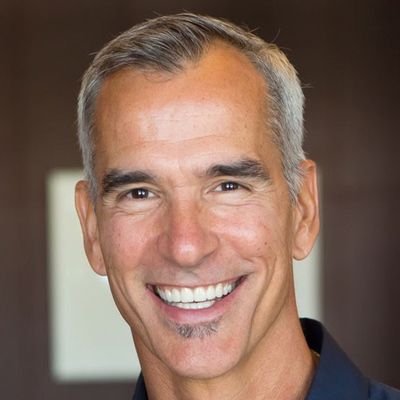
About
In this Spotlight Series episode of “Half Hour,” we expand the conversation with Tony Award-winning director and choreographer Jerry Mitchell about his work on The Devil Wears Prada and the process of reimagining a familiar story for the West End stage.
Mitchell discusses joining the project, returning to Elton John’s early demos, and finding the emotional center of the musical through Andy Sachs’ journey. He also breaks down the work behind major stage moments, from transitions and act endings to the fashion-driven visual language of Paris and the Met Ball. The conversation includes his approach to casting Vanessa Williams as Miranda Priestly and the collaboration behind a production that brings together music, choreography, costumes, design, and storytelling.
We also speak with Mitchell about the future of The Devil Wears Prada, the development of Coyote Ugly, the national tour of BOOP! The Musical, Broadway Cares/Equity Fights AIDS and Broadway Bares, and his hopes for a future Legally Blonde revival.
Follow and connect with all things @HalfHourPodcast on Instagram, TikTok, and YouTube. Share your thoughts on this conversation in the Spotify comments: What part of Jerry Mitchell’s creative process stood out to you, and who would you like “Half Hour” to feature next? If you enjoy these discussions, follow “Half Hour” and leave a rating and review so more theater lovers can find the podcast.
Transcript
This transcript was automatically generated and might contain errors.
[0:00] Jeff Malone: Welcome to Half Hour with Jeff and Richie. I'm Jeff.
[0:04] Richie Grasso: And I'm Richie. And today on our Spotlight Series, we welcome a very special guest, Tony Award-winning director and choreographer Jerry Mitchell. Jerry, welcome back to Half Hour Podcast.
[0:15] Jerry Mitchell: Hi, I'm so happy to be back with you guys. Thank you.
[0:20] Jeff Malone: Well, I'll read your bio again because I love reading your bio.
[0:24] Jerry Mitchell: Oh my God. Yeah.
[0:25] Jeff Malone: So we have Jerry Mitchell, a Tony Award-winning director and choreographer whose work has helped define contemporary musical theater. He won Tony Awards for Best Choreography for La Cage aux Folles and Kinky Boots and received a 2023 Isabel Stevenson Tony Award in recognition of his more than three decades of service to Broadway Cares, Equity Fights AIDS. As director and choreographer, Jerry's Broadway credits include Kinky Boots, Legally Blonde, Pretty Woman: The Musical, On Your Feet, and Boop: The Musical, which earned him a 2025 Tony nomination for Best Choreography. Boop completed its Broadway run in July 2025 and is now headed out on a national tour. His choreography credits also include Hairspray, The Full Monty, Gypsy, The Rocky Horror Show, Never Gonna Dance, Dirty Rotten Scoundrels, Catch Me If You Can, and You're a Good Man, Charlie Brown.
His work extends off-Broadway into film, including Hedwig and the Angry Inch, Jeffrey, Scent of a Woman, In and Out, and Drop Dead Gorgeous. Jerry conceived and created Broadway Bares as the annual burlesque fundraiser for Broadway Cares, Equity Fights AIDS and continues as its executive producer. Since its beginnings in 1992, the event has raised more than $33 million for the organization. He is currently directing and choreographing the West End production of The Devil Wears Prada: The Musical, which is scheduled to run at London's Dominion Theatre through February 2027 currently, and he also continues to develop new work, including Becoming Nancy and Coyote Ugly. So there we go. Next time I'm on this podcast, please, let's just say, go to the first time he was on it and you'll hear the bio. So we can save time.
[1:46] Richie Grasso: We can save time.
[1:47] Jeff Malone: Exactly, exactly. But it's a lovely bio. So now we're going to dive right in. So Jeff and I were in London this summer. We saw a bunch of theatre. We love West End theatre, and one show we had to check out was The Devil Wears Prada Musical, which, as many of you know, is a famous movie. This Devil Wears Prada 2 movie just came out. The Devil Wears Prada Musical, music by Elton John. And we know that it had an out-of-town tryout in Chicago, where it was originally started to be developed and produced before you joined on board, Jerry, as the director and choreographer. So we wanted to talk a little bit from the start of how you got involved when it started in Chicago. We know that the West End has a new team, new cast, how you got started in this and what that journey was like from the start for you.
[2:33] Jerry Mitchell: The Devil Wears Prada is a film that I fell in love with, like most people. And so when it was announced way, way, way, way, way back, I remember, I think Paul Rudnick was first writing it. And I knew about it, heard a little bit about it, never really gave it much thought. And then it was running in Chicago. And Kevin McCollum, the producer, is a good friend and asked me if I would go and see it in Chicago and give him my thoughts. So I went and saw it. This was after, which happens in our business quite often. I mean, actually, I learned that from Jerry Robbins and from Michael Bennett and from Tommy Tune. You know, you often go to see productions of your friends and your colleagues who you've worked with as a trusted friend when they want advice or how can I make this, what's the next step?
What would you suggest? And Kevin and I go back a long time. Actually, the very, very first production of Rent, which I was also called in on to ask about choreography. But Kevin and I go way back, and he's been a huge supporter of Broadway Bares. And so I went and saw the show. I went to Chicago, which, you know, I love Chicago. I take all my shows there, go out of town to Chicago to try everything out. A lot of us do, although it's getting more and more expensive to do that these days. So I went to Chicago, saw the show and came home and gave Kevin some thoughts and some ideas about what I think could make it a stronger production because I know they were moving on. And then what happened was Kevin called me about a month later and said, hey, Elton is coming to town.
It was around the holidays. And I think he was singing to open the Saks Fifth Avenue windows or whatever that event is. He was singing a song and they were giving a donation to his Elton John AIDS Foundation charity. So I went to meet Elton and David at the hotel. Of course, I'll meet Elton. And we talked and we talked and we talked. And at the end of the discussion, he basically said to me, we're going to do a production in London, a new production. And would you be interested in helming the production? And the first thing I said to him, I said, will you write me some additional music, songs? And he said, yes. And we shook hands. And that was the end of it. And that was sort of how it happened. And that was how I joined the team. And the rest is history, I guess, from there.
[5:16] Jeff Malone: So when you joined on in the project with that, what would you say some of the material that you kind of needed to rethink versus what you saw in Chicago?
[5:22] Jerry Mitchell: Well, the first thing I asked Elton as a composer, and he actually suggested it, was to share all of his demos that he had written with Shana up until this point for The Devil Wears Prada. So I got to hear those original demos and the original inspiration behind the songs and the music. And some of them just, you know, when I work with anyone on a musical, a composer, I listen to their arrangements and their original demos. And I usually listen to them over and over and over and over as a director, choreographer, until I start to form visual ideas in my head about how I want to try and help take this music and put it on stage to tell the story. And so that was really helpful to me to hear those original demos. Giles Martin, who worked with him on a lot of that studio stuff, and then, you know, getting the chance to hear that stuff and then start to think about how I was going to stage, choreograph, and create The Devil Wears Prada for a production in London.
[6:37] Richie Grasso: So were you able to bring your own creative team members in? Like, how much freedom did you have to bring in your own people with this?
[6:44] Jerry Mitchell: Yeah, well, basically, when I said yes to work on this with Elton and Kevin and Jamie Wilson, who's the producers in London, and I said, if I'm going to do this, I need to start over, and I need to start fresh from my perspective. And one of the things you asked was, what were the additional ideas that I had? And I remember in one of my meetings with Elton and Kate Weatherhead, who wrote the book, and Shana was on Zoom, I think, I said, you know, there's a lot of similarities between the character Andy Sachs and the character Elle Woods in Legally Blonde. You know, most musicals, the heroine is usually someone determined, positive, you know, vulnerable, wanting something, and either getting it, not getting it, selling out, not selling out, you know.
And I thought, you know, this is really her story. It's not Miranda's story. It's Andy Sachs' story. So I said, I need to hear from her at the end of the first act. I need to hear if she is going to actually... Miranda has this wonderful line in the film, and also in the stage show. They're at the Met Ball, at the Met Gala, and she says, I need the best and brightest to join me in Paris, and that's you. And you need to tell Emily tonight, right? Well, how do you respond to that? What's the response to that? And I think that's where a musical does what a musical does. It's not a close up. And I thought, am I a Miranda girl? Am I going to be a Miranda girl? That was the song I wanted to end the act.
And so I played him "So Much Better" from Legally Blonde. Thank you, Larry and Nell. He listened to about 30 seconds of it. He said, okay, yeah, I get it. I get it. I get it. And of course, that's such a great, great song for Elle Woods and Legally Blonde in musical theater, brilliance by Larry and Nell and Heather. And I wanted something equal from the voice of Elton John and Shana, and now Mark, who came on as an additional lyricist, to give this character this decision-making moment where she says, heck yes, I'm going to be a Miranda girl, right?
[9:15] Richie Grasso: Yeah, it's funny that you say that, because we actually talked a little bit about that on our episode, which has not come out yet. But when it does, you'll see like, one of the things I said to Richie was I felt like Andy Sachs was actually expanded more as a character in this musical versus how she is kind of portrayed in the film. So and we had rewatched the film before going and seeing the musical just to see like, what is kind of different here and where I think Miranda is kind of the character in the film. Andy really gets to shine in this musical. And I liked that that was kind of the opportunity given to her. So it was nice to see that. And it was that song that ends the first act, and also the song at the end of the second act, which was a song that Elton and Shana had already written, "What's Right For Me." But how we got to "What's Right For Me," and how that became her definition of defining herself as a writer for me. And I'm going to write this book.
[10:20] Jerry Mitchell: And how would that become The Devil Wears Prada was what I wanted to do with that number in this musical. And I decided, and also, look, I'm Jerry Mitchell. I do musicals. That's what I do, right? So I don't end a musical on a simple, quiet note. I end an act with a bang because I want to end acts with a bang. If the story doesn't end with a bang, I still feel like I want to end this evening. Thank you for coming. You spent good money and now go home. How does this affect your life? How do you move forward from this story? And what I've said in our past episode about this too, which I really appreciate with your direction as well and so many things I've seen you do is you move us through this story and it's not sitting and it's not stagnant or heavy.
I see a lot of shows where we're sitting in a four or five minute number. I'm like, what's going on with the plot here? But everything is moving and then you heighten things and especially with the runway scenes and those epic costumes. And I remember turning to Jeff and I said, in the middle of the show, they didn't have the playbills in London like we do here in New York. So I'm like, I leaned to Jeff and I didn't look at everyone in the creative. I said, I think this is a Gregg Barnes costume. And I swear I said that. And I look over and I'm like, there it was because I saw Boop and I always can tell when it's a Gregg Barnes show because the costumes are insane in this. I mean, they're gorgeous, gorgeous, gorgeous in the best way.
[12:00] Jerry Mitchell: Well, first of all, thank you for what you said. And obviously you guys see a lot. I mean, you see everything. You understand as a lover of theater, but also as people who have experienced so much of theater and so much of musicals. Musicals are built on transitions. And especially today, and it was Michael Bennett really who took the modern musical and made it seamless from curtain up to the end of the first act, curtain up to the end of the second act, like a film. It doesn't have those stalled moments where you're waiting for scenery to change. And directors and choreographers today have to work in that capacity because that's how we get our information, entertainment information. It isn't usually in blackouts.
It's usually in seamless acts. And so I learned all of that working as an assistant and working as Jerry Robbins' assistant and growing up in that period of creating new musicals. And so it's just intrinsic in the way I approach a show and how do I get to the next storytelling beat as quickly and as efficiently as possible and hopefully have not left anything behind and given it to the audience in the order in which it works for this particular story on stage. So transitions are so important to me and transitions become ideas that my creative team helped me realize. And no one is better than Greg Barnes. I mean, when we get to Paris, I said, all I need is I need one girl and an Eiffel Tower appearing out of nowhere in that outfit that is based on an Alexander McQueen runway show with the Philip Treacy hat, that whole Paris thing.
And as we worked on it, Greg and I were trying to find color and how color can define each fashion show differently so we're not repeating ourselves. How can the fashion in a musical today work when we're talking about another period, early 2000s, and not be so crazy that in a four-year run of a musical, knock on wood, or a three-year run or a five-year run or whatever you're lucky enough to get, that you don't have to redo the clothes every year because you went crazy and did something today that doesn't work in a four-year span or a five-year span. These things are all part of the discussion that we went through. I don't know. Obviously, Paris is red, white, and blue. The Met Ball, I wanted Miranda in red.
It's the devil wears Prada. I knew I wanted her in red, right? And of course, Greg and I love the color red. Lola, come on. Vivian, come on. We love red. So I said, I knew I wanted her in red, which meant no one else on stage could be in red. And I said, so the colors of the ball, obviously, the two girls are going to be in something black. So why don't we make it black and gold with hints of red? And the only person from head to toe in red, like the queen, is Miranda. And that number, I think, turned out spectacularly on stage. And Greg's work is just brilliant. And it was all based on Elton and Shana's song. Listening to the song, I visualized how it would start in the office and then in an instant change to the gala with Nigel in one of those Andre Tali capes, you know.
And I wanted to create that and then have it all stop when she arrives at the top of the staircase. And yeah, all of that transition is Tim and Greg and Bruno and myself and working on how do you spin that? Which musicals can do so beautifully when the team is working together to make it all happen, right?
[16:17] Jeff Malone: Yeah, definitely.
[16:18] Jeff Malone: And speaking of Miranda, I wanted to bring up something about casting because, you know, in Out of Town, there was Beth Leavel, who we love, like Broadway royalty.
[16:25] Jerry Mitchell: Love, love, love, love, love, love, love.
[16:27] Jeff Malone: Love, love her. And so now we have Vanessa Williams, who's still in it, who we saw, who is a name amongst TV and Hollywood and Broadway. And she's a star. And I saw in an interview she had done recently how she's trying to do this different than Meryl Streep because she doesn't want to just copy what Meryl Streep did. And I love that she brought her own energy to this character. And I was just curious to know, like, do you feel like this role needs to be played by a name, a star, someone who can bring that star presence like Meryl Streep did, like Vanessa clearly is? Because it's such an iconic character that we all know.
[17:00] Jerry Mitchell: Well, let's face it, Miranda is a star. Anna Wintour is a star. She's a celebrity. She's a fashion icon celebrity star, right? So any woman who steps into that role has to have star power. Beth Leavel is a star, in my opinion. You know, so what led me to Vanessa was I'd only worked once with Vanessa in Broadway Bears. She did Broadway Bears for me. Vanessa is a beauty queen. She is runway ready. It's who she is. That is in her DNA. And my experience working with her on Prada, I can't praise her enough. She worked every second in the rehearsal room. If she wasn't in a scene with me, she was in the back corner with her script, studying her lines, working on her character. And she brought, my opinion is that we're not doing a film, so it can't be small.
And I've worked with Meryl, by the way, who's also brilliant, right? But there's a difference for the camera and the stage. And Vanessa is giving a much harder, much more tough, much more, she's tough up there. She scares those girls and she scares the audience. And you're so delicious. And she's so, when she puts on her sunglasses and disappears, you scream for her. And I gave her the best entrance any star could ever have in a musical. That is the entrance, I will say.
[18:50] Jeff Malone: Come on. When we did that, when I created it in my head, I called Billy Porter, first person I called. We talk all the time. And I said, Billy, you're going to hate me. I gave her a better entrance than you.
[19:00] Jerry Mitchell: It is iconic. I was like, as soon as I saw her head, I'm like, oh my gosh, this is the entrance. I'm waiting for the entrance. And she came right up. I was like, the sunglasses and all, she's amazing. Yeah, that's really cool.
[19:13] Jeff Malone: Yeah. And with a show like this, you know, this had the out of town in Chicago and now it's running in the West End in London. What do you kind of feel like is really resonating with the London audiences versus like what the American audience might potentially resonate with?
[19:35] Jerry Mitchell: Well, first of all, if I've learned anything from all the other musicals I've brought to stage, I've learned that the more the audience knows the film, the harder it is to get away from it. And I don't have to try so hard to do that. I have to honor the film. Mike Nichols, 90% of your job is casting, right? So if you cast it right. I knew I needed an Andy who could sing the heck out of those songs. And I needed an Emily who could sing the heck out of that act one opener that I wanted to do with a cast on her leg in a bed and with a bunch of interns. And it's an incredible number. It's one of the funniest numbers and one of the best act two openers I've ever had the chance to stage. And just so pleasing to the audience because you love that character so much and that character because of Mark and Kate.
[20:41] Jerry Mitchell: We were out of town and Shana was doing Suffs and they got this idea to give her, after we did the number and the hot nurse was involved, to give her a fabulous end to her story that we don't get in the first film or an end to this part of her story. Who rhymes Gautier? Who rhymes that? It's brilliant. It's brilliant. It was so delicious to do that character. We were out of town. I'm getting off track now, but we were in Plymouth. We went out of town in Plymouth. There's still, by the way, so much that I want to do before it comes to America. I have things that I'm changing. We're getting ready to open the show in Germany. Greg has redone every one of the fashion shows. Not changed them, but taken them up like three more notches because we ran out of time.
We were on a very tight schedule, to be honest with you. We all had other jobs and then suddenly this happened and we all came together. We did it out of town in Plymouth. We brought it into the West End and we finished the show and we went, okay, we're 80%. Now we're working on the things for the future. We were in Plymouth and the show started with the music. You see the red picture and then you go to the apartment. The sign was there and you walk in and there's that sign and the red light. It's all very, very the devil. It's very dark. Nobody was laughing in the beginning of the show and I thought, I need to tell the audience they can laugh. I said, I have an idea. It was not unlike my idea that I came up with and got Harvey on board with in Kinky Boots by having Don come out and address the audience with the phone call, the phone situation.
Turn off your phones and now the show starts and you got a laugh out of Don. You said, we're going to laugh tonight. I said, well, who better than Emily? Amy, the original Emily for me, had never done anything like that in front of an audience. I said, this is what you're going to do. You're going to walk up the aisle. The phone's going to ring. You're going to answer it and you're going to close the phone. You're going to say to the audience, well, we all know who that was, right? You're going to talk about Miranda was on the phone and she's telling you guys to turn your phones off and all of that. Kate was there and I said, well, how about take a picture of me with a sign because everybody likes to get pictures at the tops of shows now.
Come on, get your cameras out. Get your cameras out. Take a picture. Okay, now put your cameras away, god damn it. Sorry for my French. Put your cameras away. You two with the fake Louis Vuitton bag, right? It allowed the audience to laugh and to automatically love Emily before she's even into the story, but she is into the story. She's talking to Miranda. So, finding ways to break the fourth wall and invite the audience into the evening and let them know, we're going to take care of you, right? You're going to have a good time. Sit back, relax and enjoy the show, right? So that was a big thing that changed the tone of the way it started.
[24:24] Jerry Mitchell: And so, two-part question here. You're saying this show is potentially going now to Germany and a lot of people have been wondering and whatever you're allowed to say or not even know yet maybe, but two parts. First part of the question is, what's the Devil Wears Prada future in America? Are we getting Broadway? Are we getting a tour? Are we getting the rights for high schools and community theaters to do it? And then kind of piggybacking on that, what's next for you in terms of beyond Devil Wears Prada, Devil Wears Prada for you, but also other projects coming up that you're allowed to-
[24:50] Jerry Mitchell: Right. So, I will answer this very colorful question. I didn't get involved with the Devil Wears Prada only to do it in London. As we know, the second film came out. The title is Beloved and I love the film. And I also love Elton's music and Shana and Kate and Mark and all of the work that we've put into this musical. It deserves to have people see it. So, we're opening in Germany in December and it's going to be spectacular. And then we're talking about future productions all over the world and certainly America's one of them. But what's going on with me, I'm developing Coyote Ugly also with Jamie Wilson and Kevin in London right now. We're in our second workshop in October. Diane Warren is writing the music.
Vicki Stone and Regina, who wrote the original film, are working on the book. And we did one reading already and it was quite spectacular. Diane had given us about six or seven songs. There are a couple of songs from the film we're incorporating and we're developing that and having a lot of time. And because it isn't as well as a known film as that, more like Kinky Boots in the sense that it had its thing, I'm able to get away from that story a little bit more and bring that story into today and how women, I'm telling the ladies who are writing it, all ladies who are writing it and this lady who's directing it, I say, how do you want Violet to be seen? And how do you want Lil to be seen? I mean, let's talk about that.
Let's make that work for today's ladies who are seeing this musical. So it's a whole, that's a whole, it's been so much fun. And Boop is getting ready to go out on a national tour. And my dear friend, D.B. Bonds, who's my associate on so many things, and John Rua, who was an associate on Boop, are doing the festival this next weekend up in Hudson. They're directing it and choreographing it. I'm sort of overseeing it, but the work has been spectacular. Their work has been spectacular. And yeah, so I'm keeping busy with all that stuff. And we saw Broadway Bears this past June, which was incredible. And I mean, it just keeps growing. Two and a half million dollars. Two and a half million dollars. It was amazing. Crazy. Broadway Bears. Amazing.
[27:32] Jeff Malone: Yes. We are almost out of time, but we always like to ask our guests before we go, one really funny, silly behind the scenes story that you're allowed to tell on the mic from Devil Wears Prada's experience. Our listeners just love to know behind the scenes stuff. So anything you're willing to tell us before we go.
[27:47] Jerry Mitchell: Well, we were one silly thing. There are many, many silly things, but I don't know that it's silly, but Tim and myself, and we had worked on the set. And like I said, we were working quickly and we were in Plymouth. And when we had the opening, that opening, we were still trying to find it and discover it. We didn't have an apartment for them to be in. There were no walls. There was no, there were no walls or no bed or no kitchen or no little studio apartment that you're in when you're in your salad days and you have no money. And she was just singing on a big empty stage and the girls would come down in red and the sign would fly out and the walls, and then some of the guys would push on a bed.
And I went, oh, we've got to do better than this. We have to do better than this. And that's when we created the little apartment and made the girls sort of disappear. Here's this wall of girls and they just sort of fold. And then they're in this teeny tiny apartment. And it just, it was learning the vocabulary of how we wanted to tell the story. And it was very funny to see it on just two guys pushing on a bed. I went, oh my God, we have to do better than that. That was my bad. I love it. I love it. It's good stuff.
[29:07] Richie Grasso: I know we're just about out of time. We love having you on here talking about this and all of your projects. We love following all these projects and we just wish you the best with much success.
[29:18] Jeff Malone: And you have a big question, right?
[29:23] Richie Grasso: I do have one big question. I asked you this last time and I know I'm probably going to get the same answer, but I'm just sitting here on the edge of my seat, waiting for the Legally Blonde Broadway revival. I don't know what's going on. I'm waiting. I know London UK is doing a tour or something. I've seen that. I'm waiting for the Legally Blonde Broadway revival. I'm just waiting.
[29:38] Jerry Mitchell: Isn't it crazy? It's like, you know, you're getting up there when every show you've ever done is being revived. They're doing Charlie Brown at Encores! They're doing the full Monty at Roundabout. There's been rumors of Hairspray for a long time. And Legally Blonde, well, listen, no one's more excited about the possibility of a Legally Blonde revival. I'm ready. I'm ready. I'm ready. I just love that show so much. I'm ready and I think the rest of the world is ready too. It said last time, I see those t-shirts, Revive Legally Blonde. Someone's putting t-shirts out there. I have one. There is some silent movement for that, I trust.
[30:31] Jeff Malone: Yeah. Oh my gosh, good stuff. Well, that is all for today's Spotlight Series episode of Half Hour. We thank you all so much for listening today and we hope you enjoyed the conversation with Jerry Mitchell. In the description, we'll share all information on where you can learn more about the Devil Wears Prada and how to get tickets. And to our listeners, if you have any suggestions for future interviews, we'd love to hear from you. You can connect with us on Instagram and TikTok at Half Hour Podcast.
[30:51] Jerry Mitchell: Thanks so much for joining us today, Jerry, again.
[30:54] Jerry Mitchell: Thanks, Jeff. Thanks, Richie.
[30:56] Richie Grasso: Yes. Yes, I'm Richie.
[30:57] Jeff Malone: And I'm Jeff.
[30:58] Jeff Malone: Saying ta-ta for now.
[30:59] Jerry Mitchell: Bye.
© Broadway Podcast Network, All Rights Reserved