

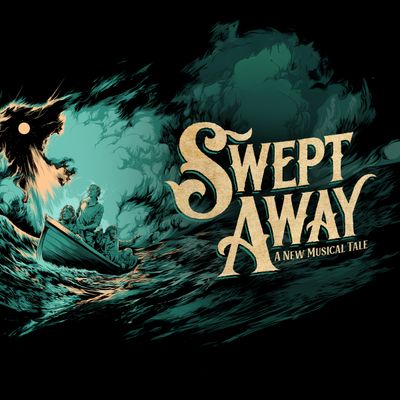
In this episode, we're swept into the world of SWEPT AWAY, the innovative new musical playing at the Longacre Theatre on Broadway. This unique jukebox musical, featuring the haunting melodies of the Avett Brothers, reimagines the genre with its compelling narrative of survival and morality... Read More
From the show: Half Hour with Jeff & Richie (Post-Show Broadway Discussions and Interviews)
Featured Shows
About
In this episode, we're swept into the world of SWEPT AWAY, the innovative new musical playing at the Longacre Theatre on Broadway. This unique jukebox musical, featuring the haunting melodies of the Avett Brothers, reimagines the genre with its compelling narrative of survival and morality. We dive deep into the show's plot, exploring its themes of human nature in extreme circumstances, and discuss how the music enhances the storytelling. From the atmospheric direction and design to the nuanced performances and evocative choreography, we break down what makes this production stand out. Is "Swept Away" charting a new course for Broadway, or does it leave audiences adrift? Tune in for our take on this thought-provoking theatrical experience and what it reveals about the evolving landscape of musical theater.
Follow and connect with all things @HalfHourPodcast on Instagram, and YouTube. Share your thoughts with us on SWEPT AWAY on our podcast cover post on Instagram.
Transcript
This transcript was automatically generated and might contain errors.
[0:00] Jeff Malone: Welcome to Half Hour with Jeff and Richie, the podcast where we explore the latest shows we see, sharing our insights and opinions on the performances, storylines, and everything in between.
[0:10] Richie Grasso: In today's episode, we're discussing the new Broadway musical SWEPT AWAY, currently playing at Longacre Theatre in New York City.
[0:16] Jeff Malone: Whether you cannot catch the show in person or you want to expand your thoughts after seeing it, this episode is for you.
[0:22] Richie Grasso: And as always, we want to inform you that this episode will contain spoilers.
[0:26] Jeff Malone: So if you're ready to dive into this production, stick around with us.
[0:29] Jeff Malone: I'm Jeff.
[0:29] Richie Grasso: And I'm Richie, and we're thrilled to be your hosts for this episode.
[0:32] Jeff Malone: But before we start the conversation about SWEPT AWAY, here are a few words from our advertisers.
[0:41] Richie Grasso: Half hour.
[0:53] Jeff Malone: From the chart-topping folk rock band, the Avett Brothers comes a spellbinding tale of shipwreck, salvation, and brotherhood set on the high seas.
[1:01] Richie Grasso: An odyssey of mythic proportions.
[1:03] Jeff Malone: SWEPT AWAY features a book by Tony Award winner John Logan, direction by Tony Award winner Michael Mayer, and choreography by Tony Award nominee David Newman.
[1:12] Richie Grasso: So once again, in this episode, we're talking about the Broadway production of SWEPT AWAY.
[1:19] Jeff Malone: And we're gonna start with our hot take.
[1:22] Richie Grasso: So I'm gonna go first with my hot take on this. I feel like this is one of those jukebox musicals that everyone kind of needs to set aside their bias on jukebox musicals because SWEPT AWAY is really reinventing this genre, and it's using the Avett Brothers music to create such a visceral gut-wrenching experience that I feel like will leave anyone that sees this gasping for air.
[1:45] Jeff Malone: I do think that's a great hot take. I think this show really let me sink into an original story of sorts. You know, you say jukebox musical, but it almost doesn't feel like that because this was such a concept album for something like this. And it felt like it was just this wonderful hybrid of story, music, captivating acting, all blended together in something that just really works for the stage and designers working together so well that it's what theater's all about for me. So I'm really looking forward to kind of diving in more on this.
[2:22] Richie Grasso: Let's dive into diving in, no pun intended. All right. So, you know, as always, let's start kind of with the plot and concept here. You know, right away, we're talking about a story that explores survival, morality, and human nature in a very extreme circumstance. So you have to really kind of invest yourself and dive your into that kind of plot alone, right? And I feel like we're really rooted here in this storyline around survival, and what do you need to do to survive, especially during this time period in history, you know, working on the farm or being a whaler, which, you know, that's something you don't really traditionally think about anymore. But just wanting that kind of like human experience. And I feel like that's where I was really captivated right away in this piece.
[3:18] Jeff Malone: I think what's interesting is that you have this like what I think is based on a somewhat true story of a shipwreck from the whale hunting times of the late 1800s, right? Off the New England shores, mixed with this like concept album of longing, of hope, of salvation, forgiveness, redemption. There's so many biblical terms, right? To kind of encompass into this. So you have these people taking this like story, and then, but yet it feels so original and fresh that I feel like, yeah, there's so many human qualities here. I learned a lot about life on a boat, like going through difficult, very, very difficult tragedy and what that does to the human mind, the soul, the body. And you're watching this 90-minute show, which just unravels in the best way and develops.
And I just think the concept of it is like, let's just tell this story in 90 minutes and let's not beat the audience over the head with a ton of plot, a ton of character relations. Let's just kind of give them the bare bones here of the case.
[4:23] Richie Grasso: Yeah, because I don't think it was needed, you know. I think when you look at this from the concept standpoint, you know, you're taking a story, or you're actually kind of creating a story because I'm sure there's really not much history in a piece like this that you can kind of like go in and do your own research on. You kind of get to be that person now, especially from the book writing standpoint. And you get to say, all right, we know this happened, and we know this happened. So what do we kind of imagine happened now? You know, it's a shipwreck. Let's kind of think about what happens here with survival. And we know that there's people that have survived from the shipwreck. You know, mostly everyone died, but there are still some that lived.
And let's create a story around that. See, that's like the kind of theater for me that really takes it to the next level. It's creative, it makes me think outside of the box. And yes, are we using and incorporating the Avett Brothers music into this? Yes, but also I would say, in terms of mainstream, I'm sure there are many people that know who the Avett Brothers are, but in the Broadway space, I'm sure there are many that don't know who they are. And this music probably feels new and fresh, and they're now taking this music in, they're incorporating it in here to help tell the narrative of this piece.
[5:48] Jeff Malone: And I've said many times on the podcast, I'm kind of getting a little sick and tired of the constant overuse because that's what I think it is of folk rock music, these folk rock sounds and so many shows on Broadway. But to me, and I'm not a big Avett Brothers fan, I don't know their music very well, but I was encompassed by every single song here because I thought the song was working for this genre, the plot, it moved the plot, it made you think there was great acoustic guitar and vibes of instrumental, not to mention glorious harmonies amongst this male ensemble, and I just feel like it was working in a time where I'm always like, come on with the folk score. You know, I've said on the podcast before here, I'm not the biggest fan of Hadestown.
I like Hadestown, I'm not trying to compare this to Hadestown, but I like Hadestown, but I don't love it like so many people love it. I just would never connect it really well with that folk sound of that show, or it's jazz folk, I guess. This just connected with me in a different way, and it may be that to do with the lyrics, yeah. You know, I think it had to do with the lyrics, and actually, you know, the writers here looking at the lyrics and actually learning how to tell an emotional arc with these characters. You know, they brought us on the journey. They introduced the characters early on into the piece. You were able to kind of start connecting with them, figuring out who is someone that you want to be interested in. But they also didn't create storylines with more of the crew, which I actually thought was done purposefully right.
[7:24] Richie Grasso: Because why do we need to connect with more crew members? And I think that's a big question to ask because one might say, oh, well, why didn't they have more character development with, you know, everyone else on the ship? But it wasn't needed because they were gonna ultimately die anyway. So why connect with them? It was like one of those moments where you're like, no, focus on the four characters. You have your captain, you have your mate, and you have your big brother, and you have your little brother. And it's like just connect with those four people. And it's like one of those things that we've talked about before, too, with like Ragtime and like not having names. The fact that they like didn't have names made it so much more interesting.
Not to mention the four people left in the boat at the end are four very different people that are literally trapped on a boat together. And who decides to do what and when and what who has religious background? You know, also this being this swept away title means so much, literally being swept away, but the love of the women at the home that the one character had, feeling that love romance being swept away. The captain feeling like his life is being swept away from him by saying that the whaling industry is ending because of whale oil, kerosene oil. You know, the late 1800s was such a, I've said this before about many shows that are set at the turn of the century. It was such a changing time for people, especially in America, that you were seeing religious undertones changing in American society.
You were seeing literal jobs and family life and just change. And so that swept away feeling of what does that mean for my soul, my body, my mind, my heart to feel change. I mean, and then when you see how some of them survive, some of them don't, some of them lived a longer time, some of them didn't. And then there's this ghostly presence of the other three telling John Gallagher Jr.'s character to tell our story.
[9:20] Jeff Malone: I like how they kept saying, no, no, no, don't stop, keep going, tell them how it ended. I like what a creative way in bringing that because you know, we talk about narration all the time, and I wasn't bothered by the narration in this piece. You know, is it kind of a little cookie cutter in some ways by saying, like, okay, this guy's about to die, and he needs to like kind of get his secrets off his chest on like the way that he continued to live after the shipwreck? But it was like fine because he didn't continue narrating throughout the piece. We were able to remove that during, and it just was in the beginning and the end with the ghostly figures come in and say, tell our story and then finish our story, and instead, it didn't need to be like the whole time, you know, John Gallagher's character, and we'll get into the whole production of this, but the character of me really was able to come and only have those two moments of narration. The rest of it was just the story playing out, and that is all we needed as the audience.
[10:32] Jeff Malone: Well, I do want to really get into some of these actual performances and the direction and design of this for sure. So let's kind of dive into that now. Um, but before we do, here's a few messages from those that make the show possible.
[10:43] Jeff Malone: And we're back. So when I look at I look at something like the um Michael Myers' direction here, and I say, you know, we've seen a lot of his work. He's worked, he's a Tony Award-winning director. He's worked on many shows from my oh my gosh. Thoroughly Modern Millie, Spring Awakening, The Funny Girl Revival, The Little Shop of Horrors off-Broadway revival currently. He's done a lot of work. It's clearly someone who knows how to put a production on its feet and how to move actors about a space. And also clearly someone who works well with the design, because there was something really chilling and haunting about just being there. I don't know if you felt this like walk into the theater, see a body on stage with his face covered.
The haunting when the boat lifts midway through the show and you see this grate on the floor, but then the men come crawling through it and up above it, the boat that's spinning, this green and blue ambient lighting, almost like at any point someone could just scare you and pop out. There were these black drapes that were hanging around the stage, like what's behind there. It was just so eerie to me and chilling. Not to mention the let so the lighting and the the set and the sound design, but I will say these Susan Hilfordy costumes are stunning because how easy would it be to just put people in slacks and a shirt, throw them on a boat. There was this pristine level of eye that was like there's a belt buckle there, there's a boot there, there's a belt there, there's a suspender there, there.
There's a color. Okay, let me put it in the colour. It was there was a well, I was gonna say there was a color palette where there almost was no color palette. If you look at a picture of them all, you'd say, Well, they're all in the same color wheel, but in a way they weren't because there was all these different hues and shades of blues and grays and browns. And I was like, this is like a brilliant costume design.
[12:37] Richie Grasso: Yeah, but that's how you know that it's someone that does know how to look at a color palette and actually see what complements each other at the same time looking different but unique. But I also was gonna say it was so clean that it was so dirty at the same time.
[12:51] Jeff Malone: Yes, yes. Like I'm saying the detail was so clean, but uh the whole time I looked at John Gallagher and his image and the way that they had him dressed, and I said, Oh, like he looks so clean, but so dirty.
[13:07] Richie Grasso: Yeah.
[13:07] Jeff Malone: And like he looks like he belongs on the crew, and that's great. And you know, I'm gonna praise Michael Meyer here. This in in this production at least, you know, because it has everything that he's done been amazing. Not everything, but he does have an eye and he does have a vision. And I feel like he was really able to look at this production. And yes, I'll say it did have two out of towns, which is great. Um, and they were able to probably clean up a lot of it along the way. But I'm gonna say Michael Meyer really really was able to put everyone in the same room and create a finished piece that really looked cohesive. And like you said, from the costumes to the lighting design to the scenic design, which I was blown away by um, this scenic design, creating that water look and the shipwreck just was next to level in terms of like what we want on a Broadway stage, you know, creating that eerie feeling of cast members coming back from the dead, um, and creating this rock almost concert-looking style lighting that was so needed in this with the music that it worked, you know.
[13:23] Richie Grasso: And I feel like when you see aquatic settings on boats in musical theater, you kind of immediately go to like Anything Goes or Little Mermaid, which are so squeaky clean, you know, nautical journeys, and this was so not that you know there's a shipwreck in Little Mermaid, too, but that's so Disney-fied. And this is just so so gritty and dirty, and it makes you realize this is probably how these people lived on this boat. You know, they spent it, it it this production taps into the the mental side of being in the ocean for a long period of time.
[14:56] Jeff Malone: Yeah, they're spinning on that boat slowly. There's miles and miles of water, no land, no food, no water. When it rained, you believed they wanted every single drop of that water that was falling off. When you get to the harrowing dark ending of this cannibalism state, it was a moment where we didn't need to see the blood and gore. We just needed to hear the details of the scripture, the scripted narrative to understand. There was one line that hit me was like the bones and flesh rotting in the sun sitting on the bottom of the boat. And you believed it was there. You believe it because when you read a book and you read that, you believe it. So why can't I hear an actor say that and believe it?
I don't need to see bloody, gory things like teeth on Broadway, which is camp, or Little Shop of Horrors on Broadway, which is camp. That's bloody gory camp. This is not camp at all. So it makes sense to have something portrayed in that style. And then we do get to that ending where he steps forward and he steps away, and that platform comes down, and you're just lifted by this music. It just seems like I don't know. I just was really captivated by the whole thing.
[16:05] Richie Grasso: Yeah, before it before we move into those um actor performances, I do want to also praise David Newman's choreography.
[16:12] Jeff Malone: Yeah.
[16:12] Richie Grasso: Because you know, I don't think we really got to talk about choreography yet. And this is such a major portion of this. And this is someone that didn't say, Let me just throw MOOCs up onto the stage. They actually worked with the sound that they were given. They created story through the dance. And that's what you need on a Broadway stage. You really do, you know. It was like I wanted the big chorus numbers, you know, and in every way, it kind of felt like it was a big flashy 40-second street number happening on that stage. And you're like, you with way less than you know, the amount of people that would be on a 40-second street. But not necessarily pulling us out of plot, but just reminding us of where we are and what style of music would be it was also so great to see.
Like, I didn't think that those numbers took us out of that moment. I actually felt like they were actually performing the numbers for everyone on that stage. You know, like you didn't have to suspend your disbelief that it wasn't happening because it felt like it was happening, and it also showed the connection that this crew had with each other, where it had different themes of like um eroticness in a way and love for each other, but also like you're my bud, and this is like the work that we have to do, and it it just really gave you that vision that you were like, what was it like?
[17:43] Jeff Malone: And when you go to some of these actor performances too that we were mentioning earlier, you talk about the four leads John Gallagher Jr., Stark Sands, Adrian Blake Ensko, and Wayne Duval. All such different actors, but all working so well together. I mean, to me, I I do it, I did really enjoy Stark Sands. I did really enjoy Adrian Blake Ensko. The brothers were great.
[18:05] Richie Grasso: Yeah, true.
[18:06] Jeff Malone: They were brothers. And their relationship was so strained, but also it worked for the plot, and you believed, and when he you think they're gonna sacrifice the brother, and then he actually slits his own throat. I did not see that coming.
[18:20] Richie Grasso: Yeah, I mean, you know, you have that moment, uh, I guess, where you really dig deeper into the plot of this, and you say, Why did he sacrifice himself? He is the older brother. What would you do in that situation? You want your little brother to live, you think he has so much more to give in life, and then you find out later that you know he has some life after this. But then you also look at something where, like, if you he is such a religious character, it kind of compares to the martyrdom of the Jesus sort of give his life for his family, and uh, there's a little bit of that, right? There's so much religious undertone here for sure.
[19:00] Jeff Malone: The sacrifice that they give. Um, I will say Wayne Duval as the captain was really great to me. I think there was something about an older gentleman on stage like that portraying this different generation of you know, you hear his character goes back home, sees his wife and kids, can't bear it, and then leaves and then dies. Very sad. His character was very, but there was also that like harrowing sense of you respect me and call me sir, and you only come speak to me as the captain when I ask you to. And then he has this like, No, there must be survivors out there because a captain goes down with his ship, and I I have not died yet. So there must be survivors. There was that he was just a great character, I thought.
[19:37] Richie Grasso: Yeah.
[19:37] Jeff Malone: Um and not to mention John Gallagher Jr. here. Let's of course talk about him.
[19:40] Richie Grasso: Well, let's mention him.
[19:43] Jeff Malone: He is, I mean, to me, this is very clearly a Tony Award nomination potential for him. He is a Tony Award winner. He's very, very, very, very, very good at what he does.
[19:54] Richie Grasso: Yeah.
[19:54] Jeff Malone: Well, uh, I mean, it this will be a moment of you either love him or you hate him. He's giving an accent that probably is not the one that many want to stand and listen to. But I think that it's needed because he creates this whole character arc that you're like, wow, he, you know, he's been in the ring here for a while. He sees this new fresh blood. He also kind of wants to taint the blood. He almost kind of acts as the devil throughout the whole piece periodically. And you know, he has his song about the devil in him, and what does he need to do? And then that's where you know he's giving that deeper performance that it probably is the Tony Award-winning performance right now so far for me, um, in this season, from what I've seen.
And you get to the end, and you're like, oh, he needed to be cleansed of everything. He needed to let all of this out to be forgiven for his sins. Because I think he actually wanted to be. And I think he comes from a mysterious past too, his character, where you're like, What's his backstory?
[21:01] Jeff Malone: Yeah.
[21:02] Richie Grasso: Where did he come from? You know, he tells us he tells us a lot that he did things he didn't want to do.
[21:06] Jeff Malone: Well, right, right, right. And he's great, he's he's a reason why, if anyone should go see this, is to see John Gallagher Jr. doing some incredible stuff here.
[21:13] Richie Grasso: Yeah.
[21:15] Jeff Malone: Well, and the whole production. I mean, it's really just I was blown away by this from that standpoint where I was like, I didn't know what to expect. I was hearing the rumors and feedback from you know its last out of town. And after seeing this, like I totally understand why.
[21:32] Richie Grasso: Well, let's go into some of our own experiences on the show. Some Tony talk here, some fun facts about the show. But first, here's a few messages from our sponsors.
[21:41] Jeff Malone: All right, moving forward, we kind of lightly already talked about the Tony talk earlier. Do I see this getting a best musical nomination? Yes. Do I see John Gallagher Jr. getting a best Tony nomination for best actor in a musical? Yes. Um, I don't know if this is eligible for score because it's based on something that already existed, so it wasn't really written for this theater. Um direction, sure. Design, sure. I think it could definitely be up there for lighting many things.
[22:06] Richie Grasso: Light many things. Um it seems like people were enjoying it around us too at the experience of the show. You know, my question for you, Jeff, would be I keep hearing people who have seen it, and we haven't heard the official reviews yet as we're recording this, the reviews are not out yet. Um, but when the time people are hearing this, the reviews will be out. But in the word of mouth, I've heard some people say, Oh, I didn't like it. I I didn't like it at all. I couldn't understand it, I couldn't follow it. It wasn't my type of music, blah blah blah blah blah. And then I do hear people say they love it. So when you hear these mixed reactions, what do you say to someone who for you, someone who loves it so much? What do you say to someone who just doesn't like it?
[22:47] Jeff Malone: All right. I mean, I I don't really know other than I'm not gonna change someone's opinion on whether they liked it or not. You know, I would want to have a deeper conversation with them on figuring out what they didn't connect with and why, you know, it's not a traditional Broadway musical. So when you look at something like this, you really have to say, let your guard down and watch the art that someone has created. You know, I think sometimes the Broadway bubble is so tight on what we think is good versus what we don't think is good and that it needs to fit in a specific mold. You know, I look at this and I say, yeah, this sits on the outside slightly, but if you really dive deep into it, it has many of the components of being an amazing Broadway musical.
You know, and I don't know what the longevity of a show like this is, but I will say my experience walking into this show, I said, wow, you know what? This musical genre is getting a very different crowd into the Broadway theater right now. You know, I didn't feel like it was your traditional old crowd, it was young, it was people that definitely like the Avett Brothers music. You know, it was people that are definitely probably into the nautical scene, and they're it seemed like they enjoyed it.
[24:10] Richie Grasso: Totally. And some interesting out-of-town reviews on this, looking about some fun facts. The Washington Post held SWEPT AWAY is transfixing and vibrant, declaring it has proved itself seaworthy. However, in the Berkeley production, it's all mixed reactions with reviewers enjoying the music and performances, but feeling some of the characterization wasn't thorough enough for the emotional climax. I kind of disagree with that because I feel like we got just enough character development. But I will say, listen, if you look at those two reviews, because those were two out of town reviews, which is why you know I wanted to include them in this. I said, I wonder if they took those notes, because I did feel like there was characterization with the characters that we needed to connect with. And it allowed you as an audience to leave some for the imagination. Let you kind of figure out these people on your own, too, you know.
[24:59] Jeff Malone: And for the as for the casting process, John Logan, the book writer, adapted the setting to a New England-based whaling expedition inspired by the Avett's distinctly American sound. The Avett Brothers were impressed by Logan's presentation, the story's depth and humanity. Yeah, it was clearly like an album concept mixed with this like New England whale story. And John Logan's a great book writer and knows how to develop plot just enough. But that's the creative process that I think you want to hear, you know, being inspired by something and not being so literal with like saying, okay, let's just put their concept album up on the stage. No, they created a full story around it. And then when you look about the lead actors, you know, director Michael Meyer insisted on retaining these original lead actors from Berkeley and Washington, DC productions for the Broadway run, reflecting on the cohesive vision shared by those involved in this production.
[25:49] Richie Grasso: See, I think if something's working out of town enough and you've put actors in from the ground floor of a project, I think it's respectful enough to keep them on. A lot of times in Broadway, you see, oh, um, Beth Leavel's out and Vanessa Williams is in, right? Or um, even I've been reading or hearing lately, like Joy the musical out and out of town. Now there might be someone else taking that into the same.
[26:12] Jeff Malone: No, no, I totally agree that what he's doing there with this in taking those lead actors and having them part of the process through the two out of towns to the Broadway run, made it for a completely different experience because they were able to now live and breathe this production.
[26:29] Richie Grasso: Right. And it got to the Broadway moment for them.
[26:33] Jeff Malone: Yeah. So my goodness. Wow, we're just about out of time. So getting ready to wrap up our thoughts here on SWEPT AWAY, a new musical tale on Broadway at the Longacre Theater. Jeff, final thoughts.
[26:48] Jeff Malone: You know, I think that this is a musical that you really need to go in, you need to pay attention to, you need to have a great experience, and you need to kind of leave it there saying, What were they telling me at the end there? There's such a moment of forgiveness and surrender and survival that I think really just added to this whole experience.
[27:12] Richie Grasso: I agree. I enjoyed this. I think this is something that New York theater audiences are gonna like and should really check out. It's it's you have to go in with an open mind, not be digging and looking for all this. Give me this, give me that. Wait, what's happening here? What's that? Just kind of clear your mind a little bit and just witness something that might be very different for the Broadway stage and soak in lyrics, soak in melodies, harmonies, some beautiful visionary design, and just and 90 minutes.
[27:39] Jeff Malone: Yeah, listen, I'm kind of on for the 90-minute no intermission lately, or or hour 45, no intermission. See, I think when you get two hours longer, you need the intermission, but when you can get under the two hours, an hour 45, hour 40, or an hour 30, and just sink into a story. I like it. I think with these creatives right now, and I agree with that. When you look at something like this, and what you're saying, in making it a you know, 90 minutes or hour 45, that's fine. If you need to stop your show for whatever reason, like I think Wicked's a great example where you end it at Defying Gravity in that moment, that's great. It works in that sense. But if you're gonna fill your show with a lot of fat that you need to trim, you know, like this show didn't have any fat.
Maybe Happy Ending didn't have any fat. You know, it got to the points that we needed to get to. We didn't need to fill it with you know numbers that didn't add to the plot. And I think we're getting better at that sometimes with some of these shows.
[28:38] Richie Grasso: Well, it's almost like I feel like, and to kind of wrap on this, but it's like, can we just have like the golden age revivals that are the three-hour shows or the new works that are the 90-minute shows, right? Like, I don't know if we need the new musicals that are two hours and 45 minutes long. Is that weird? Like to me, I will sit through a three-hour revival of Oklahoma. Yes, I will, because I think that is what I'm expecting. You're gonna go to Lincoln say, I will sit through the almost three-hour Ragtime, right? Like, I will sit through that because I'm expecting that, but with the new stuff, and I'm not saying new stuff's not eligible or warranted to have a long, long story to be told.
I'm just saying something about kind of speeding up the story a little bit is okay. And if it's gonna be two hours or two hours, even two hours and 15 minutes, okay. That's shorter than a two-hour 45. Hey, from a producer's perspective and a marketing perspective, it might be able to get other time slots in there. You know, maybe we might see some curtains starting at six and then another one starting at 8:30 in one night. Maybe we do already have some off Broadway that does like 5 p.m. and 8 p.m., yeah, you know, or things like that. So it's interesting how the land landscapes changed. You know, a lot of times probably shows actually used to start a long time ago, 8:30, and then it was 8:15, and then it became eight, and then it became 7:30, and now we're at seven.
And guess what? I think some probably shows like Aladdin or Chicago do 6:30 currents on some Sundays or yeah, but think about it. You know, these 90 minute shows, and this SWEPT AWAY is a great example. If it they were starting a curtain at 8:30, and they had one previously at you know 6:30. Um you're now out at 10 o'clock. A lot of it comes down to the union contracts, how much time they need in between shows. Yeah, not only the actors union, but the stage end union, musicians union, the ushers. You know, a lot of people are working, uh uh the bartenders, these people need to you know reset for the next show and things.
[30:30] Jeff Malone: I always think well, we were last thing we were at is showing sleep. They could have two casts, yeah. Or or like when you whenever they shoot like the Rockettes, you know, or whenever they like shoot the confetti into the uh audience. I always you know what I always think. This is just like the theater. I always think, oh my gosh, they got to clean all this up before the night show. Like if it's a matinee and all this confetti, I'm like, oh my god, they have a whole cleaning crew that's gotta come in here now, anyway.
[30:54] Richie Grasso: Not to end SWEPT AWAY on that. That there was no confetti at the end of SWEPT AWAY, I'll tell you that.
[30:58] Jeff Malone: No, um, anyway. Uh thank you so much for listening. That does wrap up our discussion of this episode. We hope you enjoyed our deep dive into SWEPT AWAY. We'll share the link with Ticket for patient in our description. And remember, we want to hear from you. Continue the conversation with us on Instagram at Half Hour Podcast and let us know your thoughts on SWEPT AWAY. If you enjoyed our show, please leave us a review. Your feedback helps us bring more theater to you. And remember, you can listen to our past episodes and stay tuned for upcoming ones as well. Until next time, I'm Jeff.
[31:26] Richie Grasso: And I'm Richie saying ta-ta for now.
[31:29] Jeff Malone: Bye.
[31:30] Richie Grasso: Yeah.
© Broadway Podcast Network, All Rights Reserved