

Highlighting America’s fraught relationship with guns, this episode features true stories from Houses on the Moon’s gUN COUNTRY, based on the accounts of those whose lives have been impacted by guns... Read More
From the show: Houses on the Moon
Guests
About
Highlighting America’s fraught relationship with guns, this episode features true stories from Houses on the Moon’s gUN COUNTRY, based on the accounts of those whose lives have been impacted by guns. In “I Did Not Kill Brian,” Brenda Currin shares how a late night home intrusion and her decision whether or not to pick up the loaded shotgun in the dresser drawer ties into her own dark family history. Ajia Gibson’s story “The Hollow” (told by Emily Joy Weiner), recalls how the hunger for answers and accountability in the wake of her mother’s accidental gun-related death divided Ajia and her family. Jeff joins Aija and Brenda in conversation about crafting their stories and considers how art might play an invaluable role in America’s struggle with gun violence.
Transcript
This transcript was automatically generated and might contain errors.
[0:00] Jeffrey Solomon: There's someone in my house. For an eternity I'm caught in that doorway between gun and no gun. I know how to use it. Now's the time. Get it. I didn't want to sit around and be sad about it. I didn't want to talk to therapy groups. I just wanted things to change because I didn't want to see anybody else's family go through this.
[0:26] Jeffrey Solomon: You're listening to Houses on the Moon Podcast. The unheard voice. Amplified. Making a home for stories in uncharted space since 2001. This is Jeffrey Solomon, co-founder of Houses on the Moon Theatre Company in New York City. On this episode of Houses on the Moon Podcast, we'll hear a true story about a gun and a decision of a lifetime from Brenda Currin and another from Aya Gibson about a bullet that changes the trajectory of her life. Both of these true stories were developed in our gun country storytelling workshops. A heads up, some material may be disturbing to some listeners. After the stories, we'll be joined by Aya and Brenda to talk more about guns in America and the creative process in shaping their narratives. So stick around.
[1:30] Brenda Currin: Late Sunday afternoon, summer, circa 1955. The tobacco farm in Oxford, North Carolina. Daddy gets the shotgun and asks me if I'd like to go down to the pond and kill water moccasins with him. Yes, sir. Thank you. Daddy pumps in the ammunition, takes his stance, his finger ready to squeeze the trigger. I stand quiet and still, keeping my distance from him. Sure enough, down below, making their way to the surface of the pond is a nest of about 20 water moccasins, ugly as they are, poisonous, swarming furiously for food. He and I are close enough that we can see their cottony mouths. Daddy gets a bead on one of them. Bang! One cotton mouth exploding becomes a kaleidoscope of bloody serpents. Daddy, positively lighthearted now, empties the shell, loads another round, pumps it in, and ceremoniously presents me with the shotgun, positioning it gently into my shoulder. You're ready, he says.
[3:18] Brenda Currin: We had played a game of scrabble, not as tame as it sounds, nothing with Bess was. Like with everything, she was out for the kill, plying me with whiskey while she sipped a Coca-Cola and smoked an American spirit blue. Her trademark was a yellow rawhide jacket beaded and stitched with fringe from the forearms and a large black cowboy hat. She also kept a loaded pistol in the top drawer of her nightstand by the bed. Bess won hands down, and I was already regretting I'd given her the damn game for Christmas. She put the whiskey away while I took Sweetie out for her last walk. Back inside, Bess, Sweetie, and I retired to the back of the house, a New Orleans style arts and crafts house with a small front porch, double parlors in the front, and a guest room off one of the parlors.
I don't know how long we'd been asleep when we were awakened by Sweetie's low growl. Bess sits bolt upright. Something's wrong. In a flash, she's out of the bed and leaves the room. Sweetie follows. I lay there, my eyes fixed in the dark. Moments pass. Did you leave the door to my house unlocked? Oh man, I'm afraid I did. Because there's someone in my house. And she leaves again. There's someone in my house. Still frozen. I have to do something. I have put Bess's wife in danger. I need to get the gun. I get up, but I start to walk out of the bedroom without getting the gun from the nightstand. For an eternity, I'm caught in that doorway between gun and no gun. I know how to use it. Now's the time.
Get it! And I leave the gun in the drawer. I walk out through the door away from the gun and towards the danger. I inch closer to the sound of Sweetie's growl, clearly coming from the guest room. I approach the door. I see the beams from Bess's flashlight directed towards the bed, the footboard of which is blocking my view. But on the floor I see two huge feet and huge shoes are attached to huge legs. Is he dead? Sweetie starts crazy barking, and all of a sudden a giant attached to the huge shoes, feet and legs is upright and lunging towards me. Beth snaps on the lights, and before my eyes have even adjusted, I see an overgrown boy of about sixteen. Bess appraises the situation quickly. Dude, you are in the wrong house.
He's disoriented, terrified, and drunk. What is your name? He's too scared to form words. Okay. Let's just say your name is Brian. Bess has this weird habit of simply deciding what someone's name is. What are you doing here, man? I I thought this was my house, I'm sorry. Well, where is your house? Then what are you doing alone in New Orleans on Christmas night, buddy? I I came in with some guys that we were at Rocco's, but they left without me. Why did they do that? Bess goes, oh, for crying out loud. I swear to God, I am going to have Rocco's liquor license revoked for serving minors. She puts the coffee on. Brian, are you sober enough to tell me you were dressed so I can call a cab? He starts to cry as the reality sinks in.
I I don't have any money. Stop crying, son. We've got you covered. Bess and I sit in the front parlor sipping coffee with Brian and wait for the taxi. Now that he's stopped crying, I'm ready to start. I know for certain, had I taken the gun from the drawer, I would have killed this kid.
[3:33] Brenda Currin: Growing up, my dad kept a loaded pistol underneath the mattress on his side of the bed. It was there when I made my parents' bed or changed the sheets, which I would do when, say, Mama was in the hospital recovering from one of her nervous breakdowns. I would hear awful things at night, and I would escape under my own mattress, praying to Jesus it would stop. In the morning, my mother would be crying at the stove over the French toast with two black eyes. Fact is, he could have killed her at any point. All of us, really. My two little sisters and me, all of us. I can imagine the terror that she lived under with that loaded gun underneath the bed where she slept. And the older I get, the more haunted and just mad about it I am.
I've had a recurring nightmare most of my adult life. It's always in that house. He stomps through my room in his boxer shorts, raving. I don't care who I wake up. I get under my mattress knowing I should do something. He shouts, get up, I want to show you something. I obey. I get up, follow him into the room where my mother is shaking, begging me to go back to my room. I get the gun under where he kept it under his side of the mattress, and I shoot him dead. In the end, it was my dad who killed himself with that gun he kept under the mattress on his side of the bed. Back to Christmas night, New Orleans, 2002. This is the house where I did not kill Brian. Years have passed. Sweetie died of old age.
Bess and I, as they say, have moved on, but we're still good friends, keep in touch. Often at the end of what has been a day of failure, misery, and self-recrimination, I hear myself say out loud the words, but I did not kill Brian. Or the times when I'm feeling euphoric with life and all's right with the world. Yes, those times may get punctured by reality, regrets or guilt about this and that. But they do not get broken into by thoughts of Brian's mother. Unbearable. If I had killed her son. On that Christmas night of 2002, I did not take the convenient loaded gun to confront an intruder. I did not become the second killer in my family.
[11:18] Jeffrey Solomon: Next up is a story by Aya Gibson. We met Aya in 2013 on a cold winter day in Connecticut at a rally for gun safety. She was wearing a button on her winter coat that said ask, and so we did. We learned that she was passionate about a campaign to get adults to ask the simple question Is there a firearm in your home? Anytime children were gathering to play. We also learned her activism was connected to a deeply personal story she had never before shared publicly. For this episode, Aya asked Emily Joy Weiner to tell her story in her place. Emily is the co-founder and artistic director of Houses on the Moon Theatre Company. After the story, Aya will join us in conversation to talk about her life and her activism around gun violence. And now, here's Aya Gibson's The Hollow.
[12:08] Aya Gibson: I grew up in New Orleans. My parents were from overseas. They had come to the U.S. as children with their families to escape the war. The communists in Latvia and the Nazis in Holland. And eventually they were brought together. My father is a painter, and we grew up in a house with a studio inside of it. My parents were really um passionately in love, really, really cute and sweet. And we did all these adventurous things together as a family. When I was five years old, my sisters and I helplessly watched my mother die in an accidental shooting. The teenager next door picked up his aunt's loaded firearm from her bedside table and accidentally fired it. The bullet went through two windows and landed in my mother's head.
It shot and killed my mom. We were raised to think it was a freak accident and to come up with um coping strategies about how mommy is an angel, and sometimes God lets things like this happen and so forth. My father was away at work for the day. My sisters and I were home with my mother who was pregnant with her fourth child.
[13:21] Aya Gibson: We heard loud shots, ran to the front of the house where my younger sister, one year old, was crying. And there was my mother lying in a pool of her own blood. My older sister who was seven and I tried desperately to clean up her blood with paper towels from the kitchen. We were trying to save her life. I remember thinking that if only we could stop the blood, she would be okay. She would she would get up. I remember my neighbor picking up my baby sister. I remember the policeman picking me up. I remember his rough uniform against my cheek. I remember looking at his face as he looked down at my mother. I remember turning my face away. I remember her beautiful hands while she was playing the piano or her hugging me, swinging in the fabric of her skirt as she sat and talked on the phone, bringing snacks to my classroom.
My family won't talk about it at all. For me, the way to deal with this was just to make change. I didn't want to sit around and be sad about it. I didn't want to talk to therapy groups. I just wanted things to change because I didn't want to see anybody else's family go through this. My younger sister is glad I'm working through my issues. My older sister, she can't believe it's as simple as a firearm. My father has seen so much tragedy in his lifetime that he is unable to organize his thoughts. He sent me this email. Dearest Aya, I know how you feel about all of that gun business. But there is also reality laced with various facts that originate from various locations. The following fact comes from me.
The population of Latvia at my birth was three million. Upon the Russian communist invasion in 1940, the communists confiscated all guns they could find in Latvia and then proceeded to exterminate one third of the population, as well as sending many to Siberia from where a few returned. The same took place in all of Eastern Europe after Roosevelt at Yalta gave all of it to Stalin. Another fact is that in Switzerland, every family is required to possess a gun after intense training as to its use. There is extremely little gun crime there. I hate all violence as much as you do, and wish there were no guns, swords, spears, stones that can fall on your head, and water where no one can drown. But it ain't so.
Since the day my mom died, over a million more Americans have also been killed by a firearm. Every life that is ripped away because of a bullet. It hurts as much as much as watching my mom be killed. And after Newtown, I didn't want to leave my children. Every time I would hug anyone in my family, it just felt like I could smell them bleeding. All of that, um it never goes away. It's it's always somewhere close. And my heart is broken for all who will have to go through this, and those who just keep getting added to it over and over and over again. It hurts when someone turns a cold shoulder or a deaf ear to gun violence, but it never hurts as much as it does when it's my own family. Because they know they know the pain, the fear, the smell of blood of someone you love, the hollow left by the bullet in her right temple above her ear. That hollow. I live with that hollow. And all of those sounds, smells, fears, loss. I live with that hollow.
[19:05] Aya Gibson: This is the Houses on the Moon Podcast.
[19:14] Jeffrey Solomon: This is the Houses on the Moon Podcast. I'm Jeffrey Solomon. After we recorded their stories, I talked with Brenda Currin and Aya Gibson about their lives and their thoughts on guns in America. We hear first from Brenda Currin, who wrote and told, I did not kill Brian. You know, in listening to Aya's story, the hardest for me, too, is uh talking to my own family about their views because they're gun owners, and um it's not that I begrudge them that. Anyway, there's just a lot of feelings. You bring up a very important point. In Aya's story, it's so frustrating and so painful that she sees it differently from her dad, and that she can't get through to her dad on this issue. And a lot of America stands in her dad's shoes. It's as if we're on two parts of an unbridgeable chasm. Do either of you think storytelling has the possibility to bridge that chasm?
[20:26] Brenda Currin: Absolutely. And art too. Um, and I think what I found kind of poignant about the moment, I mean, when you all um approached me about talking about my story, was that it felt like a turning point in America, and that you all were leaders in that you really kind of took this issue which was gripping our nation, and you were going to make you were going to address it through art and storytelling, which is one of the most emotive forms of communication that exists. And I think that was part of the reason why I felt like it was the appropriate time, and then also, of course, the safe space that you all created. But I I think it's a it's a pivotal way to change people's minds.
[21:13] Jeffrey Solomon: Brenda, can you talk about the decision not to get that gun from the nightstand that day when it seemed you had an intruder in the house?
[21:25] Brenda Currin: There was a man who was angry at one of our Connecticut showings, and he gave me a hard time. And he said, Well, what if someone was there and would kill your friend, Bess? And that was an absolutely legitimate question. It could have been the case that I could have, had I gotten the gun and there was real danger, I could have saved Bess's life. Or my own.
[21:49] Aya Gibson: Brenda, what do we make of this self-defense argument? Or what do you what do you make of the self-defense argument? We know that when people are confronted with a shooter, that we seize up with fear most of the time, and even people who are great shots don't frequently hit the shooter. They they miss or they drop the gun or something else happens. So I don't think it's a it's so easy as a black and white issue is you have a gun, you win, or the other person has a gun and they win.
[22:20] Jeffrey Solomon: I uh you wrote this story back in 2013, and I wonder how has your family evolved in terms of this issue? Has there been change? Has the conversation uh progressed for it?
[22:33] Aya Gibson: It has, and thank you so much for bringing that up. Um I think it has all across the board in America. Um, but it's been really beautiful to see the transformations in my own family. Um, my older sister has two young twin boys now, and she's very uh vocal about her feelings on gun violence and that there needs to be better restrictions. My younger sister is a full-on activist. She goes to marches and participates in her own right, and then she also has done a bit of research on sort of the personal family issues surrounding my mother's death. I think my father is now reached a point in his life where he's ready to maybe get rid of some of his firearms. Most of my family, my immediate family has worked in academia for a long time, and I think that the school shootings becoming so prevalent and frequent really got to them because academia has always been sort of a seemingly safe space where people feel or I think you know, people felt that they they're not touched by by gun violence in the same way that people who are, you know, maybe on the street or in gang uh heavy areas might be.
[24:20] Aya Gibson: She says so poignantly when people say, I can't imagine your pain, and she says, Well, imagine it, imagine it, because it could happen to you. To learn more and to connect with support and advocacy resources dealing with gun violence, visit us at houses on the moon.org and click on the link for gun country.
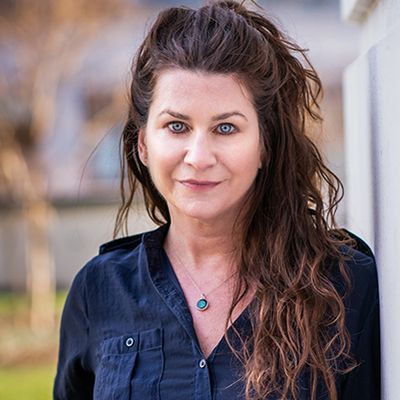
[24:41] Jeffrey Solomon: Brenda Currin is an actor. She was awarded an OB for her performance in My Sister in This House. Her film credits include the adaptation of Truman Capote's In Cold Blood, The World According to Garp, and Reds. Brenda co-adapted Eudora Wealthy Stories for the Stage, which she performs nationally. She's a proud member of the Houses on the Moon family of artists. Aya Marie Ozalts Gibson is an artist and designer working in both fine art and the applied arts. Her work has been published in the New York Times, Curb National, and Rizzoli books. She was instrumental in passing the Connecticut Act concerning gun violence prevention in 2013, one of the most comprehensive pieces of state legislation on gun violence prevention ever enacted.
Emily Joy Weiner is an actor, director, and theater maker who is currently developing a new play called Shared Sentences. The League of Professional Theater Women recently honored Emily with the Josephine Abidi Award for her role in the creation of multicultural works. The Houses on the Moon podcast is produced by Will Coley with original music by Raleigh Neal II. Special thanks to the Lane Key Family Foundation and to the Broadway Podcast Network for making this program possible. The artistic director of the Houses on the Moon Theater Company is Emily Joy Weiner, managing director Kevin Connor. If you want to learn more about Houses on the Moon, please visit us at Housesonthe Moon.org and follow us on Instagram or Facebook. I'm your creative director and host, Jeffrey Solomon. Thanks for listening, everyone. Keep your ear to the ground.
© Broadway Podcast Network, All Rights Reserved