

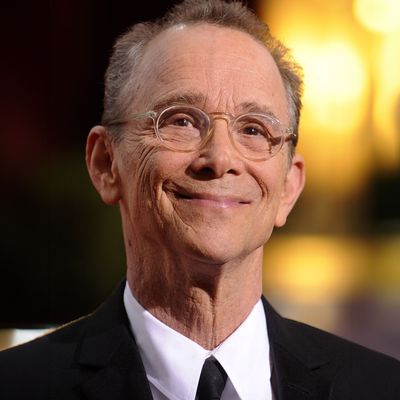
After quite the hiatus, Fergie is back full force with Joel Grey’s episode of The Muppet Show. Fergie discusses even MORE changes in the opening and re-emphasizes the frequents efforts of the creative team trying out new things... Read More
From the show: It's Time to Meet The Muppets
Guests
Featured Shows


About
After quite the hiatus, Fergie is back full force with Joel Grey’s episode of The Muppet Show. Fergie discusses even MORE changes in the opening and re-emphasizes the frequents efforts of the creative team trying out new things. The switch-up in the UK Spot for this episode and why it happened! Lastly, Fergie has a nervous breakdown over the proper pronunciation of Snufflepagus’s name! This episode’s Muppet History segment honors and reflects over the legacy and work of Jerry Nelson.
Here are the links that were references in the episode:
- When the River Meets The Sea - Jim Henson’s Memorial (Emmett Otter’s Jug-Band Christmas)
- I Give To Thee - Fraggle Rock
- Lambaba - Sesame Street
- Truro Daydreams (Info page on Muppet Wiki)
- Little Red - Jerry Nelson in the Studio
- Get Yourself Free - Jerry Nelson in the Studio
- Noah’s Ark - Jerry Nelson in the Studio
Follow Fergie L. Philippe
- Twitter @fergsters95
- Instagram @fergsters95
- TikTok @fergsters95
For more info on this podcast, visit bpn.fm/muppets and follow along on instagram @meetthemuppetspod (all lowercase).
This podcast is a Proud Member of Broadway Podcast Network!
Transcript
This transcript was automatically generated and might contain errors.
[0:05] Fergie L. Phillipe: It's time to meet the Muppets, so let's turn on the mic for Muppet Show beginners and experts alike.
[0:13] Fergie L. Phillipe: Run on and join the party that's only just begun.
[0:18] Fergie L. Phillipe: Let's smile for a while.
[0:20] Fergie L. Phillipe: It's time to have some fun.
[0:22] Fergie L. Phillipe: We're taking air show tonight.
[0:27] Fergie L. Phillipe: And then it's time to meet the Muppets all over again.
[0:33] Fergie L. Phillipe: So take a break and take a load off.
[0:36] Fergie L. Phillipe: Let's all take a ride in a Muppet Stic time machine with Ergy as your guy.
[0:42] Fergie L. Phillipe: So no more hesitation.
[0:44] Fergie L. Phillipe: Let's start the episode.
[0:46] Fergie L. Phillipe: We're moving right along.
[0:48] Fergie L. Phillipe: Let's get this show out on the road.
[0:57] Fergie L. Phillipe: Yo, yo, yo, yo, what's up, y'all?
[1:02] Fergie L. Phillipe: Woo!
[1:03] Fergie L. Phillipe: It's been a minute, huh?
[1:05] Fergie L. Phillipe: Yeah, it's it's it's it's been a minute.
[1:07] Fergie L. Phillipe: Um please forgive my absence.
[1:10] Fergie L. Phillipe: Uh things have gotten a little hectic, and so I kinda had to put the podcast on pause just for a little bit.
[1:17] Fergie L. Phillipe: But I am back.
[1:19] Fergie L. Phillipe: I am back, we are back.
[1:20] Fergie L. Phillipe: This is it's time to meet the Muppets with your host, Fergie L. Philippe, where we recap and deep dive through the Muppet show in as close to chronological order as possible.
[1:29] Fergie L. Phillipe: Today we're gonna be talking about star of stage and screen, Mr. Joel Gray, mostly known for his Oscar, Tony, and Grammy award-winning performances, the MC in the Candor and Ebb musical and its film Cabaret.
[1:43] Fergie L. Phillipe: Uh Joel Gray has a decorated career and is a legend in the entertainment field, but specifically the Broadway field.
[1:50] Fergie L. Phillipe: Uh, he's also played Amos in Chicago, Moonface Martin in Anything Goes, and of course, originated the role of the wizard in Wicked.
[1:58] Fergie L. Phillipe: Um, but before we jump into a little bit of Joel Gray, we are gonna do a little bit of Muppet History.
[2:06] Fergie L. Phillipe: I tried to, you know, I actually just right now, just five seconds ago when I said Muppet history like that, I tried to see if I could start a new thing and I didn't I did not like it.
[2:15] Fergie L. Phillipe: So we're not gonna do that.
[2:16] Fergie L. Phillipe: Uh this Muppet History.
[2:18] Fergie L. Phillipe: Welcome to Muppet History.
[2:20] Fergie L. Phillipe: Today I actually really wanted to talk about Jerry Nelson.
[2:25] Fergie L. Phillipe: Um Jerry Nelson was one of the original core Muppet performers.
[2:30] Fergie L. Phillipe: Um and you know I should actually explain that a little bit.
[2:34] Fergie L. Phillipe: So whenever I talk about the original core Muppet performers, there are six or seven uh guys, men that many think about when talking about the original Muppet performers and that includes Jim Henson, Frank Oz, Jerry Nelson, Richard Hunt, Steve Whitmire, and Dave Goles.
[2:55] Fergie L. Phillipe: Uh I believe that is six.
[2:57] Fergie L. Phillipe: And um obviously they are not the only ones.
[3:00] Fergie L. Phillipe: Of course there is Fran Brill, of course there is Louise Gold and Catherine Mullen, and um oh my god, who else is there?
[3:09] Fergie L. Phillipe: There's Martin P. Robinson, there's Kevin Clash, there's all these different, you know, people who have gone through history.
[3:14] Fergie L. Phillipe: There's Pam Marciero, there is Camille Bernard, there are all these different um Muppet performers who have come through, but whenever discussing you know the Muppet Show characters, um these six men are really talked about the most um because they kind of really led the charge on the majority of these characters that we know and love from the Muppet Show.
[3:38] Fergie L. Phillipe: Um and Jerry Nelson is one of my favorites of that group, and you know, he was somebody that um and and still is somebody that I draw a lot of deep um personal inspiration from.
[3:54] Fergie L. Phillipe: Um I'll just I'll just jump in.
[3:59] Fergie L. Phillipe: Um Jerry Nelson was born in 1934 in Tulsa, Oklahoma.
[4:03] Fergie L. Phillipe: Uh Jerry Nelson was interested in puppetry when he was pretty young, actually.
[4:08] Fergie L. Phillipe: Um, but he he was mostly uh interested in marionettes, even owned a couple while he was growing up.
[4:14] Fergie L. Phillipe: As he got older and kind of moved more into uh kind of performer role, he ended up actually working for Bill Baird, who is a legendary marionettist.
[4:24] Fergie L. Phillipe: Um you can actually hear about this uh kind of experience of working with Bill Baird and his audition process on Matt Vogel's podcast Below the Frame.
[4:34] Fergie L. Phillipe: Um he uh was working with Bill Baird uh and his legendary puppet company, um, and you know around the sixties he actually started working on and off with Jim Henson.
[4:47] Fergie L. Phillipe: Uh and it was while he was still working for Bill, and Bill was actually very gracious about letting Jerry go um work for Jim because he really enjoyed Jim's work.
[4:57] Fergie L. Phillipe: So then uh in the 70s, Jerry joined Henson Associates full-time and began performing for Sesame Street.
[5:05] Fergie L. Phillipe: Um he would also actually end up taking over the duties of right handing for Rolf uh while they were performing on the Jimmy Dean show.
[5:12] Fergie L. Phillipe: That's because of a whole thing because Frank was drafted and then he like failed the physical and anyway.
[5:18] Fergie L. Phillipe: But even when Frank came back, um Jerry was still uh performing right hand for Rolf.
[5:26] Fergie L. Phillipe: Um and then after that, you know, uh Jerry was going on to play roles like Featherstone and Robin and Hay Cinderella and the Frog Prince, Thog and the Great Santa Claus Switch, uh T R Caleb Styles in the Muppet Musicians of Bremen.
[5:39] Fergie L. Phillipe: And when uh Henson was hired for the first season of Saturday Night Live to do Land of Gorge, Nelson performed the role of Scred.
[5:47] Fergie L. Phillipe: Um, and you know I've talked about Land of Gorge before as being one of those moments and kind of one of those shows where there was a lot of unsureness and perhaps not the most uh positivity associated with um Land of Gorge and Saturday Night Live's collaboration, but you know, one of the most iconic moments uh in Henson history and from that first season is actually um Lily Tomlin and Scred singing I Got You Babe uh and I'll actually provide a link to that in the show notes because it actually is really really sweet.
[6:20] Fergie L. Phillipe: Um after that Nelson kinda went on to performing, you know, bigger and and more uh pronounced roles, like the titular role in Emmett Otter's Jug-Band Christmas.
[6:35] Fergie L. Phillipe: Um he funny enough wasn't a part of the first season of Sesame Street, but he joined the second season and he stayed with the show for over 40 years.
[6:46] Fergie L. Phillipe: Um Jerry's repertoire of characters included Count Von Count, Harry Monster, Sherlock Hemlock, Little Jerry, Amazing Mumford, Mr. Johnson, or Fat Blue, all those sketches with Fat Blue and and um Grover, that Jerry Nelson plays, uh the Fat Blue character, um Frazzle, which Frazzle is what a character.
[7:08] Fergie L. Phillipe: The traumatized me, yet I was in love with him so much as a kid.
[7:11] Fergie L. Phillipe: Um for those who don't know, Frazzle was that like orange monster on Sesame Street that literally like that that's all he talked like um that was very clear wasn't it uh he also performed Biff one half of the two headed monster and was the OG Mr. Snuffleupagus before Martin P. Robinson took it over.
[7:31] Fergie L. Phillipe: Okay, hold on.
[7:33] Fergie L. Phillipe: Okay, sorry, non sequitur because I have to talk about this because I just took off my glasses.
[7:33] Fergie L. Phillipe: I have to talk about this.
[7:38] Fergie L. Phillipe: I'm very upset.
[7:40] Fergie L. Phillipe: As I've been writing the show notes I was like oh I don't actually know how to spell Snuffleupagus and I realize I think I've been saying Snuffy's name wrong my entire life Snuffleupagus is spelled S N U F F L E U P A G U S not P H A G U S which means technically the pronunciation is Mr. Snuffleupagus not Mr. Snuffleafugus and I'm very distraught by this because I'm sure many of us believe it is pronounced Snuffleafugus and maybe somebody can come out there and be like no Fergie you're not crazy it's Snuffleupagus but I think it's Snuffleupagus and I'm I'm I'm quite upset by it and I'm not gonna continue this rant any longer because this is dedicated to Jerry Nelson's wonderful life but I'm I'm pretty tight about that.
[8:36] Fergie L. Phillipe: Anyway um obviously Jerry joined the Henson staff in London when they went to go film the Muppet Show and I mean his repertoire of characters for that, of course, include Sergeant Floyd Pepper, Crazy Harry, Pops, uh Lou Zealin, Robin, Louis Kazagar, Camilla the Chicken, Dr. Julius Strange Pork, uh, and Pigs in Space, uh Speaking Space, Dr. Julius Strange Pork on Pigs in Space, and Uncle Deadly.
[9:06] Fergie L. Phillipe: And of course, he was the narrator for everything.
[9:10] Fergie L. Phillipe: Pigs in space.
[9:13] Fergie L. Phillipe: And of course, Veterinarians Hospital, the continuing story.
[9:17] Fergie L. Phillipe: That's all Jerry Nelson.
[9:19] Fergie L. Phillipe: I mean, the man of a thousand voices, truly.
[9:21] Fergie L. Phillipe: Um, after that, Jerry went on to Fraggle Rock and played Gobo Fraggle and also played Pagorg.
[9:28] Fergie L. Phillipe: Um and then after that, you know, when when Richard Hunt passed away, Jerry took on Statler.
[9:35] Fergie L. Phillipe: Um, and all of that to say that, you know, Jerry's capacity and ability to take on all of these different characters.
[9:45] Fergie L. Phillipe: All of these characters I just said that have such distinct and unique sensibilities about them that they do not feel alike in any way is such a testament to who Jerry was and his talent and his ability and how much he was able to how much mileage he was able to get out of all of these different characters.
[10:08] Fergie L. Phillipe: It's really um something wonderful and something that many puppeteers study frequently, especially when it comes to character building, specifically.
[10:17] Fergie L. Phillipe: Um so towards the mid-2000s, uh Jerry started struggling with some health issues that eventually prohibited him from performing physically, but he continued to voice his characters practically until he died.
[10:30] Fergie L. Phillipe: Um, and the way that this would work, um, this specifically happened a lot with Matt Vogel, who ended up taking over a lot of his characters.
[10:38] Fergie L. Phillipe: Um, but Jerry would be off to the side with a microphone and kind of uh say his lines, and then Matt with the puppet on, whether it's the count, whether it was Harry, you know, specifically a lot for the for the count.
[10:52] Fergie L. Phillipe: Um, he would catch the lines and kind of puppeteer while Jerry voiced him.
[10:55] Fergie L. Phillipe: Um, and then after um Jerry unfortunately um passed away, uh Matt went on and kind of took on a lot of, if not all of Jerry's um, legacy characters.
[11:06] Fergie L. Phillipe: Um August 23rd, 2012, um, Jerry Nelson died of complications of chronic obstructive pulmonary disease.
[11:18] Fergie L. Phillipe: Um, and he also struggled with uh some cancer.
[11:22] Fergie L. Phillipe: Um but you know Jerry's legacy is is not just one of like a magnitude of talent, you know, that can't be matched, which is true, but but it's of a soulful and stirring musician, an actor, a human, and it's rare that we hear from Muppet performers who knew Jerry well who don't speak with a fondness that's laced with the heaviness of grief.
[11:51] Fergie L. Phillipe: It's so clear that there was such a deep well, and there still is a deep well of affection and love, and just still mourning over his loss and over who Jerry was.
[12:07] Fergie L. Phillipe: I mean, every performer has a beautiful story about either what Jerry gave them, whether it was emotionally or physically, or you know, in presence in performance.
[12:17] Fergie L. Phillipe: And I think that his effect on the Muppet legacy is studied today by all puppeteers and and Muppet, you know, connoisseurs alike.
[12:26] Fergie L. Phillipe: It's not really a secret, and it's not a surprise that Jerry is a genius, but the jovial spirit that he clearly like carried with him.
[12:35] Fergie L. Phillipe: Uh it it shines through all of his numerous and good lord.
[12:41] Fergie L. Phillipe: There were numerous characters.
[12:43] Fergie L. Phillipe: Um and it was a glimpse into the heart of gold that he clearly possessed, and you can feel that in so many of his performances.
[12:50] Fergie L. Phillipe: I once shared a performance of him um singing Ain't Misbehaven.
[12:54] Fergie L. Phillipe: Um or maybe I just I might I might not have shared it, but I was just saying how much I I love that performance.
[13:00] Fergie L. Phillipe: Um and I'll I'll I'll leave a link to a couple of songs that he does um, whether it's on Fraggle or it's on Sesame or it's on on Muppets, like, you know, there's just so much that he has to offer um as a performer that lets you know the kind of person he is.
[13:16] Fergie L. Phillipe: And of course, you know, he has his own incredible album called Truro Daydreams that is just absolutely stunning that um uh Kevin Clash and and Matt Vogel and they kind of got together.
[13:28] Fergie L. Phillipe: Kevin Clash specifically kind of really made sure that it was produced and it happened, and you know, they got some of the Sesame Street band members and some of Jerry's band members from, he used to live in Cape Cod and he had a lot of performances out there and he had a band out there, so some of his members came by and, you know, a lot of the performers helped on the track, like Kevin and Fran Brill. There's some actually great video footage that Stephanie Debruso and Craig Shannon took that's on YouTube if you ever want to see some behind-the-scenes photos or some behind-the-scenes footage of that recording session, which I'll also post to the link below.
[14:06] Fergie L. Phillipe: Um you know, all of his characters still live on, fortunately. Like I said, Matt Vogel um has taken over a majority of his characters. Um, but you know, his golden voice will always live in and his performance, you know, his physical, you know, technique and manipulation performance will always live on on the hundreds of hours of material that is available. Um of course on the numerous musical numbers that he performed for the Henson Productions. Um so uh I just wanted to take this moment. Um Rest in Paradise, Mr. Nelson. I wish I had had the honor to meet you. Um and I'm sending love and you know, consistent condolences to his um wife, Jan Nelson, and of course to all those who love Jerry and worked with Jerry and you know Miss Jerry. Um let's move on to the show, shall we?
[15:09] Fergie L. Phillipe: Um so as we uh jump into the opening, um, we actually have a little bit of a change. So just a reminder, um the this was the third episode to be filmed, Joel Gray, and remember that the first two episodes were Julia Prouse and Connie Stevens, right? They filmed those two episodes in the beginning of the year, January, right? Uh during their break of Saturday Night Live. They went back to New York, took a break, workshopped, looked through the episodes that they just filmed, you know, looked at the footage, kind of reworked a bunch of stuff, came back to London in May to film the rest of the season.
[15:47] Fergie L. Phillipe: So there are a few changes in the episode that we kind of see. The biggest one being in the opening. Um, after that section of Kermit going to introduce our guest star, that's what I'm here to do. So it really makes me happy to introduce to you Mr. Joel Gray. Uh we see a preview of the show itself, um, as opposed to before, uh, where it's kind of just uh well, that's not true because in the in in Connie Stevens, it's the end of the number, but in Juliet Prouse, uh it's it's kind of just a moment that she has with the Muppet characters.
[16:19] Fergie L. Phillipe: And in some of the cases, you know, it's just you know, the guest star having like a moment with the Muppet characters, but it kind of goes back and forth between either that or an actual section from the show. But this one's a little bit different because uh the theme music cuts out and we hear the two big numbers in the show, which is Razzle Dazzle, the last number, and Willkommen, which is his um his kind of opening number. It's not the opening number of the show, but it's his opening number.
[16:45] Fergie L. Phillipe: Um as soon as that section is over, Kermit comes back out and says, Our show tonight will feature some stuff that looks like this, and then it is a small preview of the opening number of the show, Comedy Tonight. Um, no other episode ended up doing this. Um and again, you know, uh just consistently, I'm gonna be saying this a lot, especially for this first season, it's all about them trying new things, seeing what might flow, what might work, what might not work.
[17:16] Fergie L. Phillipe: Um, and it's again, you know, especially because this these first few episodes, I think this is episode five, you know, we've been really looking at these episodes kind of out of order, and so um there's a consistency of non-consistency. You know what I'm saying? There's just a lot of not really um getting a solid feel for what the show is gonna be in this first season. Um, because even when we get into the second season, then we're gonna have to address the new opening and the character, you know, the new character designs and all of these different things.
[17:46] Fergie L. Phillipe: And so um it again, it's just one of those things that it keeps getting exciting to see the new things that they tried. Um also uh this is the only episode to include Jane Henson, Jim Henson's wife, on the performer billing. Uh she had enjoyed performing up until they were like you gotta do vo like, you know, until she they had to do voices for the characters, and she did not like that.
[18:13] Fergie L. Phillipe: Um but yeah, this is the only episode that Jane Henson is like technically listed as a performer. Also, even though we just had a whole thing about Jerry, uh even though we had a whole thing about Jerry, Jerry is not in this episode. Uh he doesn't come in for the first four episodes that they record, or maybe it's the first six episodes, and so um, yeah, so you know, still early on in terms of um kind of everything, everything.
[18:49] Fergie L. Phillipe: Like, that's not it's not changing. I don't know why I'm trying to make it sound like this whole big thing. It there's trying new crap all the time, and some of it works and some of it doesn't. Um moving on to the opening number. The opening number is uh Comedy Tonight, which is a song by Steven Sondheim, brilliant, prolific musical theater writer, who wrote uh this song for a musical called The Funny Thing Happened on the Way to the Forum.
[19:14] Fergie L. Phillipe: Um, this number has so much chaotic energy that gives me a lot of anxiety, honestly. I cannot say that I enjoy this number. However, there are some really interesting things about the kind of uh culture of Muppet zaniness, and I think some of like the origins of that here. I mean, there's it's you can take it as far back as the Wilkins and Wunkins coffee commercials, you know, as far as like the zaniness and the insanity, but there's something really interesting about this number.
[19:44] Fergie L. Phillipe: Um the Muppet Mania as we know it today, or or how it kind of became popularized on the show isn't really solidified in this number. This is a little bit more robust, it's a little bit darker, um, it's a little bit more twisted, and it even plays a little bit into um the scary element of the Muppet monsters, and there's, you know, a lot of explosions, and again, it's very intentionally dark.
[20:11] Fergie L. Phillipe: Um for a few reasons. Um one, I think most importantly, it's an establishing feature on the Muppet Show of doing the inverse of what the musical number was originally intended to do. So comedy tonight, it's a horror, you know, it's like a horror musical number with monsters and explosions and violence. Um that is a very typical thing, um that happens on the Muppet Show.
[20:33] Fergie L. Phillipe: Another one that I'm thinking of is like later, I think in season five, they um they try to do another opening another show from Kiss Me Kate. And the whole idea is that Lou Zealin, Link Hogthrob, Gonzo, Rizzo, I think Fozzie are trying to put up a musical number, and uh Beauregard and Beaker are back there trying to, you know, deal with the curtains, and they keep messing up the number.
[21:00] Fergie L. Phillipe: Like they keep ruining it, and so all these curtains come down, set pieces fall, and all this stuff, and so it's this idea of like, okay, just another regular show, but nothing is going right, and there's nothing regular about it. So again, this idea of inverse, uh, is very consistent on the Muppet Show, and it's a very, you know, kind of uh common ground that they head to for a lot of their comedic bits.
[21:19] Fergie L. Phillipe: So I think that's definitely part of what's feeding into the energy that's happening in this opening number. Number two, um the Muppet monsters play very interestingly in the function of the show and within the Muppet troop in general. Over the years the Muppet monsters kind of smooth out, but the first few years and you know, on the Ed Sullivan special and and Ed Sullivan Days in general, we really see these like kind of gruff and tough and really ugly monsters.
[21:48] Fergie L. Phillipe: You know, even in the early days of like Sesame Street, the monsters were similar and they were kind of, you know scary. And even in some cases, again, Frazzle. Something wrong with I don't I'm I I don't I love Frazzle, but I don't dig him. You know what I'm saying? You know, when you like love somebody but you don't like them, that's exactly what I feel about Frazzle. I love Frazzle, but I don't I don't like you, Frazzle at all.
[22:15] Fergie L. Phillipe: Um and and slowly with Sesame Street, obviously it's gonna it's been taken in a very different direction with the way that we see like Rosita and Elmo and Zoe and Grover and Cookie Monster, they're very different from the way that some of the monsters were originally interpreted. But when I think about the monsters in the Muppets, well, I think they end up softening too, I think there is an element of them trying to still maintain the kind of gruff and tough nature about them.
[22:42] Fergie L. Phillipe: I think on Sesame Street, the reality that the the monsters could hurt you or could scare you or could be a threat to you is immediately neutralized, and that's not something that you have to worry about. On the Muppets, that's not necessarily the case. Um, you look at somebody like the Luncheon Monster or the Beautiful Day Monster, or, you know, even Thog, even though Thog is a sweetheart, or not not Thog, Sweetems.
[23:03] Fergie L. Phillipe: You look at these characters, and there has to be an element of, ugh, I don't know if they're gonna do something to me in order for the jokes associated with those Muppets to work. And so I think this is kind of an era where we're seeing um where we're seeing kind of the formulation of that and seeing how those monsters.
[23:25] Fergie L. Phillipe: And again, you know, I always preface this in all of my episodes like I could be overthinking all of this, but this is what goes on in my brain when I watch the Muppet Show. Um but but I think that's kind of where the origins of some of these some of the functionality of how the monsters work within the Muppet world come from. I think it starts with sort of numbers like these and kind of being like, okay maybe that was too far.
[23:47] Fergie L. Phillipe: Maybe it was too rough and gruff. Maybe we need to kind of, you know, slow it down or maybe we need to soften it a bit or you know we need to take it in another direction. Um another thing about this number that I really um have found more interesting than a lot of the other episodes I've been watching is the technique is not as strong as a we come to see it later on.
[24:12] Fergie L. Phillipe: We talked a little bit about the Muppet technique. And specifically if we're looking at the lip sync if you look at the first season of the Muppet Show or the even the first season of Sesame Street and then you compare it to Muppets Take Manhattan or the Jim Henson Hour uh Muppet Family Christmas some of their later specials, you know, the technique is very different, and it's clear that after 20 years of working with puppets, they got better, obviously.
[24:36] Fergie L. Phillipe: But there is something very interesting about how necessarily that technique shifts. Um, obviously, Jim and Frank are kind of the most solid in terms of their technique because they've been working on it the longest, I would imagine. Um, and and Richard Hunt really has some strong technique behind that too. And and by that point, if we're in 76, I think Richard joined the company in 70, 71, maybe even earlier than that.
[25:06] Fergie L. Phillipe: Um, and so he's he's been doing it for you know, I would say less than 10 years, but you know, encroaching on about 10 years. Even so, Richard has some of the strongest technique of all the Muppet performers, um, in when it comes to lip sync. And it's really interesting to to watch that.
[25:25] Fergie L. Phillipe: Um again, it's it's just one of those fun things to watch and to kind of see like later episodes, because I've been going back and forth between season one for the show, and then season five just because I haven't watched a lot of it, and and seeing the growth that occurs um is is obviously very exciting.
[25:42] Fergie L. Phillipe: Um, and then again, a non sequitur, seeing how technique has transitioned over decades, you know, we're looking at the technique of the 70s right now, but um a brand new show just came out, which everybody should see. If you are not seeing the show, you have to see it. Donkey Hody on PBS.
[25:59] Fergie L. Phillipe: Um, it is uh from Fred Rogers Productions based on the character Donkey Hody. That's D-O-N-K-E-Y H O D I E. Obviously a play on words of Donkey. Um, the show is I mean, the show is fantastic, it's so fun, it's so cute, it's so pure. I I'm loving watching this show.
[26:20] Fergie L. Phillipe: Um But what is astonishing to me, especially having been, you know, wrapped up in the world of of Muppets right now for the podcast, the technique on Don Quixote is so intensely proficient and so intensely good. The lip sync technique, the arm work uh armrod work, uh I mean the the camera work is just so solid.
[26:45] Fergie L. Phillipe: It freaks me out a bit. In a good way. Like it's it's obviously incredible technique. We've you know gotten this far and have been i we. Uh puppeteers in general, especially those who are working on their shows, have been working for so long. It's like, you know, of course it's gonna get impressive to a point, but but it is really like kind of freaky to look at how it looks now and looking at it back from the 70s when it's a little bit more uh robust and a little bit more kind of um sloppy, but not in a way that is like uh unprofessional or not good, just in a way that it's a little bit more uh raw.
[27:24] Fergie L. Phillipe: That's the word I'm looking for. Um and I it's just interesting. It's so fascinating to observe and to see like the connections between a lot of the stuff that you see in these origins of you know Henson and Frank Oz and Nelson and you know Richard and seeing what they have going on right now and seeing how it informs the work that's happening today.
[27:46] Fergie L. Phillipe: You know, maybe the lip sync technique or the armrod work isn't as you know, succinct and it's not as specific as it is now, but the emphasis of character, how you're moving your heads, how you are getting emotion out of a character based on movement, all of that stuff is informing what the technique looks like now.
[28:03] Fergie L. Phillipe: And so to make those to have been making those connections recently has been really interesting. I'm very tongue-tied today, as you can see. Um moving on from the opening number, we go to the backstage plot. This time, Fozzie has a new act. Jokes on any subject and on the spot. Now, this running gag does not go well. Everyone at some point literally yells at him to stop. He gets so annoying in this episode with these jokes. Um this uh kind of joke uh is most likely based on a comedian named Mori Amsterdam who was on the Dick Van Dyke show. Uh he kind of trademarked this bit in his own act. Um, and so it's it I'm guessing it's a little bit of a tribute um to Mr. Amsterdam uh through this. Um so yeah, so that's basically the bit.
He comes in, does jokes to a bunch of other people, and then you know, eventually at the end, everybody yells at him and tells him to stop. Oh, Fozzie Ba-da-pa-da-bum bum. We move into at the dance. It's the same old, same old. Um just thought Mildred and George are such great characters. God, they're so funny. Um, and then at the end, when Mildred uh gets her head stuck in the chandelier, and George is trying to spin her, and oh, that's comedy. That's great comedy. And she is just stuck up in there and can't move. Too funny. Too, too, too, too, too, too, too funny. Um next we move into uh Muppet News Flash. Um Which, you know, is great. Again, another one liner. I love the one-liners that they do.
Uh Bafo, Human Cannonball. Great stuff. Um It's just a good. Again, like when the jokes are really short, they're always really good. Um not that jokes can't be longer. I've explained this a million times, but short jokes are always good jokes. That's just never gonna fail for me.
[30:08] Fergie L. Phillipe: So then we get out of the Muppet News Flash and we go into Joel Gray's uh opening number or his first number in the show. Uh Wheel Common, which is the opening number of the musical Cabaret. Uh Cabaret's written by uh well, music wise, it's written by uh John Kander and Fred Ebb. Uh incredible musical. Joel Gray's performance in that, you know, the movie, if you haven't seen it, him and Liza Minnelli, future guest of the Muppet Show. Um, and it's just it's brilliant. Uh directed by Bob Fosse. Um great movie, great show, great role. Joel Gray is incredible. Um this number is so much fun. Like, just like such a big fun Muppet number. There are so many great characters in this. Dr. Teeth, Zoot, Janice, uh, Gonzo is in this uh uh Kermit's in this at some point.
He has a really great moment where um he goes, I am your host, and Joel Gray says, I am your guest. And Kermit's just like, alright, I hear you, and he leaves. Um, but you know, there's just a lot of really cute fun moments like this. Um, like I, you know, maybe you're listening to this because you know me from the Muppet world, or maybe you know me from the Broadway world, but this was my introduction to Joel Gray. Um, and there's actually uh uh quite a number of um there's quite a number of Broadway legends who kind of come through uh the Muppet Show that I was exposed to because of it, you know, Leslie Uggams, Pearl Bailey, uh, Liza Minnelli, Bernadette Peters, um, a lot of these guys, um, not so much Bernadette Peters, but definitely Leslie Uggams, Pearl Bailey and and um Joel Gray and Ben Vereen, I discovered them through the Muppet Show.
[31:52] Fergie L. Phillipe: Um, and so I uh it's really funny for me because when I would see them or hear about them from Broadway people, I was always relating to them through the Muppets as opposed to the other way around, which is what I think most people do. Um so yeah, it's it's it's really funny to kind of rewatch this episode thinking about the first time I saw this episode and not knowing any idea about who Joel Gray is and now after all this time watching it again, not only knowing who Joel Gray is but the impact he's had on the Broadway community, knowing the history behind many of the shows that he's been a part of and and you know all of these different things. It's just it's really um it's really wonderful.
I had the same thought when I went to go see a play before the pandemic happened called The Minutes by Tracy Letts, which was a phenomenal play. Um and Austin Pendleton was in it. Austin Pendleton, for those who don't know, is a brilliant actor who's done a lot of work with Steppenwolf Theater in Chicago, but he also plays Max in the Muppet movie, um Doc Hopper's kind of assistant slash driver.
[32:49] Fergie L. Phillipe: And I know Austin Pendleton from that. That's how every time I see him I just hear, but you promised me a reward. That's all I can see in my head whenever I see him. Um that and his performance in Christmas with the Cranks, which girl good movie. Um but again, you know, it's always funny to see some of these stars who I've s who I first encountered on the Muppet Show um when I see them in the element that they're actually more well known for because I can't relate to them from that. I can only relate to them from their uh experience with the Muppets. Um anyway, uh Joel Gray is another guest who really plays off the Muppets, gets exactly what they are, and it all just completely works. He has a really funny moment with Gonzo where Gonzo screams in his ears.
Um there's just a lot of things happening in Wilkommen that just you know it's so natural, it's so uh intrinsic to him as a performer, and I think Broadway performers in general, or performers in general, uh not so much singers but actors.
[33:53] Fergie L. Phillipe: Um, but the reason I say stage performers is because I think there is a level of weirdness and strange behavior that all theater people just are accustomed to that, you know, I'm sure it wasn't hard for them to adjust to speaking to a puppet. So I think that's part of the reason that he works so well with them. Um after Wilkommen, we go into funny enough, right after Wilkommen, it goes uh into the talk spot. Well, there's a bit with Fozzie and Hilda and crap because of that awful bit that he's doing. Um, but it goes into the talk spot, and I'm just now realizing the talk spot is a bit. I don't know how I never realized it. The talk spot is not genuine. The talk spot is a written bit. Um I don't know how I'm just realizing this, but it's it's it's a really good one. You know, it's this idea that Kermit's trying to get to know the guest star, but the guest star, there's always something funny that happens.
[35:00] Fergie L. Phillipe: Um, and especially with this, and so it it's not a legitimate copycat of like the host, like a Conan O'Brien or uh uh uh a Jack Parr or a Johnny Carson trying to talk to the guest. It's a play of that. It's a simulation, it's a it's a parody of that almost in a lot of ways. Um and this one specifically, you know, it was very clear to me in in this episode because there's that whole thing where, you know, Kermit basically says everything about Joel Gray's life and then says, tell me about you. And Joel Gray's like, well, you already did. Um and it it was really the first time that the light bulb kind of flicked off, flicked flick wow, flicked off, flickered off, and I was like, oh, this was a written bit.
[35:46] Fergie L. Phillipe: Um next. I don't even know what to call this because it gets a little complicated. So we get into this number called Pacalafica, which was written by Irving Taylor uh on his album Terribly Sophisticated Songs. It was uh popularized by this artist named Soupy Sales. I got nothing for you on anything I just said, those are just the facts. Um cute song, Jim is you know, Jim Henson is a very cute man, and I love watching him perform anything. So, this number was actually recorded to be the UK spot, but it ended up being traded out with the Sherlock Holmes sketch, which we'll get to in a minute. Um, and according to a Muppet Morsel, which was from the DVD of season one of the Muppet Show, shout out to all the OGs who bought that in 2006. Woo-whoop. Uh, it's because they had decided that the episode was short on songs, um, that that the Sherlock skit becomes the UK spot.
[36:38] Fergie L. Phillipe: So UK spots were almost strictly musical numbers. Um the fact that they kind of switched it out with a comedy sketch is just very interesting to me. Um, next we go into Wayne and Wanda. I'm sorry. It's not really funny to anyone else but me. I oh god. God, it's so good. Um I was at I was at Disney World recently, and I obviously went to go see Muppet Vision 3D, and I mean the one of my favorite Muppet jokes of all time is when Sam is like, please do not take off your glasses, or you have the potential to trip or fall. And Gonzo is coming in, you know, showing what can happen if you wear the glasses, and he's like, What are you doing? And Gonzo's like, well, I'm showing them how you can trip if you wear your glasses.
[37:36] Fergie L. Phillipe: He goes, Will you stop this foolishness? And then Gonzo says, What kind of foolishness would you like to see? That is such a great, great joke. That is such a beautifully written joke. Oh, and it's so peak Muppet. I literally have like chills because I'm laughing so much. That is so funny. And I did not stop laughing at that for so long. Whew, I need to get that out of my system. We get into Wayne and Wanda. We love Wayne and Wanda. Wayne and Wanda is so funny. I love the quick structure of these numbers. I've said this a million times, but as soon as the joke lands, it is out. The sketch is over. It's so unbelievably solid, and I love how much they lean into that.
[38:35] Fergie L. Phillipe: And maybe, you know, I haven't watched a lot of television from this time. Like right now, I've been watching a lot of Carol Burnett. But the thing with Carol Burnett was that all of her sketches went on for so long because and they were so structured and they were so well written that they could, but with the Muppet Show, like I say this all the time, but the way they lean into understanding as soon as it's funny, we don't have to keep ringing it out. We don't have to keep trying to get laughs. Like if it's funny, we've done the job. Move on. Um, and there are some cases where they can kind of keep it going and keep it going based on what the structure of the bit is, but you know, something like a Wayne and Wanda or a newsroom, you know, or news flash, like the jokes work in one line, they work in one bit, and then it's done. And that is so good.
[39:22] Fergie L. Phillipe: And I don't think a lot of comedians or people who are writing for comedy always uh trust in that. You know, they don't always trust in, you know, once the joke is good, it can be good enough is just what it is. You don't have to keep trying to put a joke on top of a joke on top of a joke. Um, so we love Wayne and Wanda. Um next we go into uh what what is known as the blackout sketch. Um so a blackout, a little history lesson for y'all, a blackout is actually a kind of form of sketch that's used in comedy. These sketches are really short, uh, they would be buttoned with a blackout at the end, or if you're doing it, this is uh if if it was on stage, but if it's on TV, it kind of cuts straight to a commercial break.
[40:06] Fergie L. Phillipe: Um, and the TV show Laugh-In, um, an old kind of sketch comedy TV show really solidified this form uh for television. And uh a few of them, you know, happen in the first season, but they kind of die out a bit. You know, there's one with the Juliet Prowse episode where she's wearing the scarf and it turns into a monster, and then it, you know, it kind of ends. Um going back to this idea that the Muppet Show is really leaning into kind of the music hall uh vaudeville style, this really plays into that, and it really leans into the style. Um again, I you know, it kind of dies out, but I really I really uh like that they try to do this.
[40:44] Fergie L. Phillipe: Um and again, this is another one where a piece of costume turns into something and leaves. Gonzo's always taking things too literally, you know, Joel is trying to tell him, like, hey, it's just figure speech. Um, and then, you know, blah blah blah. He says uh one that doesn't bite the hand that feeds him, nor does it talk through one's hat, and the hat chimes in and says, You can speak for yourself. And then that's the end of the joke. Funny joke, one bit out.
[41:16] Fergie L. Phillipe: So then um we get into Fozzie's uh monologue. Oh boy, poor Fozzie. Um, Frank Oz is uh such a master manipulator, and his character work is what sh like the thing about Frank Oz is that I think what makes Frank Oz one of the most genius performers of all time and why he's hailed as the most as the greatest Muppet performer sometimes is because of his combination of character and his manipulation.
[41:48] Fergie L. Phillipe: Both of them are so strong and they work in tandem so well. And I would argue to say that his character work is definitely what is stronger, but his manipulation work is so fantastic, and I love watching his technique. Um, and in this sketch you can really see it. And even though this incarnation of Fozzie doesn't end up really come to fruition, we end up kind of moving into another version of Fozzie. There is a very solid sense of who this character is. Um with that in mind, the lip sync and the handwork is just absolutely fantastic, and the camera work specifically, you know, that's such an important part of the Muppet technique is being able to look down the barrel of the frame, being able to be center, being able to work the entirety of the frame to your advantage to make the world that you're trying to exist in as um as um as realistic as possible.
I think is is just very um is very impressive, and obviously, you know, Frank is a is brilliant at that. Um Statler and Waldorf are so damn mean. Like, like these old ass men pay money to roast this bear, and I mean like roast him, hurt his feelings. He said, give me any word. They said amoeba. Why did they choose violets? This is so disrespectful. They know Fozzie can't do crap with Amoeba. So they are so mean. Um it's obvious it's very obvious Statler and Waldorf are awful people, but I just I found myself saying that out loud, like, damn. Y'all are horrible. Um, but with that in mind, you know, one of the things that I've been saying a lot, especially when Fozzie does kind of his bit in the beginning, and the joke works.
I've always been saying I don't think Fozzie should be funny. I think that takes away from his character. I am here to eat my words. I'm here to eat my hat. As Sam the Eagle does in the Elm John episode. Um I am here to be wrong. I actually think Fozzie being funny at certain moments is incredibly essential to his character.
[44:15] Fergie L. Phillipe: And I say that be and and this episode proved it to me because he finally gets it right during the monologue. He gets a joke and it works. And it is so charming and so encouraging, and it really made me understand, like, okay, that's that's the whole point of Fozzie. The point of Fozzie is not even that he's not funny. The point of Fozzie is that Fozzie will never stop trying. And obviously it's charming, obviously it's adorable, and that's what we love about Fozzie, but that's that is that is the crux to his character. It's the fact that he will never stop trying. He will always do his best to um make that joke work or to make his act better. He cares so much about performing. Um, and that's the root of the comedy.
The root of the comedy isn't that he's not funny. The root of the comedy is that Fozzie will try whether he's good or whether he's horrible. And that's what makes the the kind of the dichotomy of his character in this episode so great, because he has this entire arc of telling all these horrible jokes on the spot that everyone hates, and everyone's like, please shut up. And then he gets on stage and he does it, and it's what makes you not sick of his character. What makes you not it's what makes you not want to kill him. It what it's what makes you want to give him a big hug and love him.
[45:39] Fergie L. Phillipe: Um and so I I take it back. I take back what I said that Fozzie's not supposed to be funny. Fozzie can be funny sometimes. It's definitely funnier when he's not funny, but um he can be funny. And I apologize for saying Fozzie shouldn't be funny. That was wrong of me. I've had some time to reflect. Let me stop. Uh uh, we get out of this and we go into the Sherlock Holmes sketch. Okay, there is so much to say about this, I'm very excited. So this was the UK spot. Every single time there has been a UK spot on the Muppet Show, it follows directly after a commercial. But this is the only one to kind of come later in the program, most likely because it wasn't intended to be the UK spot. So the way that UK spots work, uh, as I just said, is that they're supposed to come after a commercial.
And because there are less commercials aired in London than on American television, um, they always needed to have another number. It was always usually a musical number, um to fill in that time slot, which was usually somewhere between two and three minutes, maybe s maybe sometimes four, but usually two to three minutes. Um and they needed something to fill in that time, and so the UK spots are what come into play.
[46:50] Fergie L. Phillipe: Um in this sketch, Rolf plays Sherlock Holmes and Baskerville Howan plays Watson. Um also John Lovelace plays Watson in this, but throughout the show's history, he's kind of played by multiple people, and I think if you are a true Muppet fan, you really know that like Jerry Nelson, nine times out of ten plays this dog, uh Baskerville Hound, who's playing Watson in this. Um So they've they've come to this estate to solve the murder of Lord Bottomly. Which they first is assume uh they first assume it's the butler, which is Gorgon Heap, a a giant purple monster played by Frank Oz. They think that he is, you know, the person in question, but it turns out that Wayne from Wayne and Wanda is playing Lord Bottomly.
When Sherlock accuses the butler, uh kind of due to the fingerprints on the glass that was Mr. Bottom Lee's, the butler eats the glass. When Sherlock finds the photo of the murderer, the butler eats the photo of the murder. When he, you know, it continues in basically Gorgon Heap, aka the Butler, eats the weapon. He also eats the maid, as played by Miss Piggy. Rolf as Sherlock, uh, you know, with all the evidence gone, basically, is like, well, uh since there's no evidence, obviously it's Watson. Watson is horrified. He is also then eaten. Uh the butler says he's tough, and with Watson gone, it is settled there is no murder. Uh that is also when Wayne, uh, or Mr. Bottomly sneezes.
[48:14] Fergie L. Phillipe: Um this sketch is one of those sketches where multiple jokes play out at the same time. Um and it's really funny. Um, they really and part of it's because it's like a storied sketch, but you know, there are only a few times that I can recall, and they do it a lot, but there are only a few times where they have like a storied out sketch with the characters um that aren't recurring, like, you know, Veterinarians Hospital, Pigs in Space, uh Bear Patrol, all of these different things. Um But this is one where the it's kind of a standalone and it's just really it's just really well done. It's really funny. Um, really strong. Really good sketch writing. Uh, you know, very clear what the joke is from the beginning of the sketch. Um, kind of the idea of like the bumbling idiot, uh that's playing Sherlock Holmes with Rolf.
[49:14] Fergie L. Phillipe: Um, there's just a lot of really good elements writing-wise happening in this sketch. Um, so we get we we move out of that, we go. We go into sorry, I'm actually laughing at the sketch after this. Um, but uh the the next thing we see is actually another news flash. This one is a bit longer, um, and it's not really it's I don't think it's good. Um it's it's you know, the newsman reporting that New York's being held hostage and only has enough food and water for ten more days. I don't know. I don't know. It just it the bit runs it way too long, and it's like I said, I think with things like newsflash, like the shorter they are, I think the the comedically the stronger they become. Um, and I think as the seasons go on, obviously they kind of latch on to that idea.
[50:00] Fergie L. Phillipe: Um what I was laughing at earlier um is that the next thing uh before we go into the closing number, the next thing we see is um Gonzo about to do his stop letting this man on stage. This man is a menace. He comes on stage and he is trying to demolish this automobile to the tune of the Anvil chorus. The Anvil chorus from an opera by Giuseppe Verdi. Um It's just so stupid. Um it's like I always say the bit works because it lasts so short. As soon as soon as the bit, like the idea that, oh my god, he sucks, and they start booing him. Gonzo immediately comes in. Yo Goles, golds! What do you know about great art? Every time. Always funny, always, always funny. Uh Joel Gray comes in and you know, is like, you should give him a little bit of Razzle Dazzle, which is from the Candor and M musical Chicago, arguably the most popular song in the show, next to all that jazz, which is the opening number.
[51:13] Fergie L. Phillipe: Um, you know, Joel Gray is so classic Broadway. Um, just like nostalgic and pure escapism, like what what this this like very classic, like show business. Um I just love him, and I love this number. It's so fun. Um whoever plays Zoot sings when they're not supposed to, and then they react. And I can't remember what part of the song it is, but please go back and watch. Um, there's actually a famous picture of all of the Muppet perform a famous picture? Calm down, Friggin. There is a picture of the Muppet performers doing this song, and everybody's playing a different role. But who's ever whoever is playing zoot sings at a part when they're not supposed to, and you can see Zoot like react like, oh shoot, I wasn't supposed to sing. And I don't know if that was on purpose or an accident. Either way, it's hilarious. And I hope it was a mistake, and I love because there is a lot of you know, you get to see some of the mistakes that happen, and I love that.
[52:24] Fergie L. Phillipe: I just love it. Um another interesting point, because it's only the third episode, I'm I'm curious about what production within the workshop was looking like because there's not a lot of new puppets or puppets that we associate with the ensemble of the Muppet characters. Like, we see a lot of characters that typically don't perform in the ensemble numbers of these uh numbers. We we see, you know, Zoot and Janice and uh all kinds of people that you know usually have their own role in a specific part of the show. Um, so I'm curious about if they were making as many puppets during this time, which I'm guessing they weren't because it's you know right in the beginning, but um it's just really interesting. And with that, that was such a horrible way to end it. But that's the end. That is the end of this episode.
[53:17] Fergie L. Phillipe: Um, Joel Gray, obviously a great episode. Um, lots of fun with this one, lots of fun facts, uh, some great moments. And then next week, we got Ruth Buzzy. Can't wait to get into the infamous Around the Corner of Sesame Street actress who has got a great episode. Um, I'm very excited to get into that next week. That's gonna be a lot of fun. Um as always, if you want some more Muppetational fun, head over to Muppet Wiki Tough Pigs, which is now combined with Muppet Mindset, uh, Muppet History, uh on Twitter and on Instagram.
[53:49] Fergie L. Phillipe: And now Muppet History has their own podcast. Make sure you go listen to Muppet History the Podcast. If you want more podcasts, just specifically about Puppets Below the Frame by Matt Vogel, Under the Puppet by Grant Pacioco, getting filled up with Disney Dan Becker and Nate Beagle, and of course, Puppeteers, which I actually just appeared on. Go ahead and head over to Puppeteers with Adam Krutinger and Cam Garretti and listen to my episode. We had a lot of fun, uh kind of talking about my path to doing this podcast and to puppetry and Hamilton and all kinds of stuff. And so head over there and and listen to that great episode and all their great episodes.
[54:23] Fergie L. Phillipe: Um also if you want some more pop culture, Disney theme park stuff, head over to the DJ Bob Show uh and on YouTube, look up Defunct Land, Yester World, Theme Park History, and of course Disney Dan, aka Dan Becker from Getting Felt Up. If you want to follow me, hit up my Twitter, my Instagram, and my TikTok, all at Fergsters95. That is F as in Frank E R G S as in Susie T-E-R-S 95. Again, that's F E R G S T E R S 95. Uh, and if you want more info on the podcast and on all the other podcasts at the Broadway Podcast Network, which we are proudly a part of, please go to B P N dot F M and to get to my podcast specifically, go to B P N dot F M slash Muppets.
[55:08] Fergie L. Phillipe: And of course, follow along our Instagram page at Meet the Muppets Pod, all lowercase. M-E-E-T-T H E M U P P E T S P O D. This has been It's Time to Meet the Muppets. I'm your host, Friggie L. Philippe. I will see you all next week. Bye bye. We're moving right along. Let's get this show out.
© Broadway Podcast Network, All Rights Reserved