

Over the course of Jay Binder’s career, Binder Casting has cast nearly one hundred Broadway shows. On this week’s episode of Jay Binder... A Life in Casting, Jay reminisces with our host, Mark Peikert, about working beside Jerome Robbins, Twyla Tharp, and Arthur Laurents... Read More
From the show: Jay Binder… A Life in Casting
Guests


Featured Shows

About
Over the course of Jay Binder’s career, Binder Casting has cast nearly one hundred Broadway shows. On this week’s episode of Jay Binder... A Life in Casting, Jay reminisces with our host, Mark Peikert, about working beside Jerome Robbins, Twyla Tharp, and Arthur Laurents. Laura Benanti guest stars and shares Jay’s impact on her career— from her first Broadway show at the age of seventeen to her Tony award winning performance in Gypsy.
Transcript
This transcript was automatically generated and might contain errors.
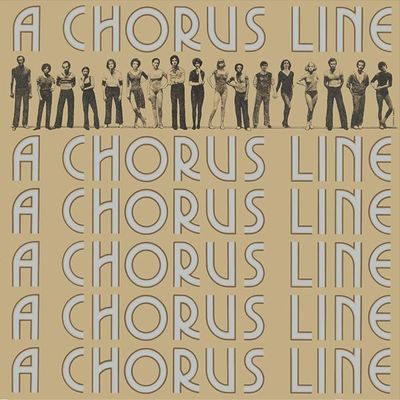
[0:05] Jay Binder: Casting director Jay Binder found his first big Broadway break with Jerome Robbins Broadway. So is it any wonder that he's consistently worked on most of the dance-heavy musicals of the last 20 years? But in addition to casting revivals of A Chorus Line and 42nd Street and working with Twyla Tharp on Moving Out, Binder also assembled some remarkable casts in dramas, including two leads whom Edward Albee praised as the finest George and Martha since the original production of Who's Afraid of Virginia Woolf.
[0:35] Mark Peikert: I'm your host, Mark Peikert, and you're listening to Jay Binder, A Life in Casting, The Broadway Years. Well, Jay, what I find really remarkable about your career is you have these two long-running partnerships. You have Neil Simon, and at the same time, you have City Centers Encores. And as if that were not enough, you also cast some of the most memorable musicals of the last, honestly, of the last 30 years.
[1:54] Jay Binder: So she spent a year doing that. Thank God, because that would have been a Herculean task of which she did. And then the project was gigantic. I mean, it encompassed so many shows, and I felt very badly that Jerry realized that Shirley perhaps could not complete it. And I felt terrible because she was an idol. But Manny called and said, "Go down to Jerry Robbins' house or go up on 81st and meet Jerry Robbins." The thing that got me the job again was a knowledge of musical theater and a complete knowledge of his major work. And that was a show that a lot of people got Tony nominations on, and a lot of people who became big, big names in the theater. Jason Alexander won a Tony, Faith Prince was there, Debbie Shapiro, or Debbie Gravit, or Debbie Shapiro, or whatever her billing was at the time. And Scott Wise also won the Tony.
[3:05] Mark Peikert: Yes. How were you able to assemble this wonderful cast?
[3:11] Jay Binder: The casting process was fascinating. The principals and the dancers. As far as the principals were concerned, those that happened very quickly, other than what was called the setter, which was the narrator. But what was fascinating was that each person that came in had seven or sometimes up to nine songs. I mean, I remember Terry Klausner auditioning with about eight or nine songs that from the show or that he was thinking of using, and everyone had to come in with a prepared performance. So what we did was each person that came in for a principal role worked with Cynthia, who is the goddess of all, and Scott Frankel, who of course became a very famous composer, and Scott was Paul Gemignani's assistant. So the three of us would actually completely coach each person before they came in so they could give a complete continuous performance and were off book and were completely prepared.
[4:35] Jay Binder: And so really, over one day, believe it or not, other than Jason, Debbie came in and was fantastic. Does she have a head voice? And Gemignani said, "Yes." And so those two roles were cast very easily. What was very difficult was casting Jason's role. And we saw endless amounts of people. Both Jason and Nathan Lane were on the road in two companies of Broadway Bound. And I couldn't get them in because I knew that one of the two would get the part because they had to play Tevye in Fiddler, Harrison Foy in High Button Shoes. They had to play Suitless in Forum. We were going for a month or two, and Jerry was getting very frustrated, and I knew that I was very close to being fired.
[5:50] Jay Binder: On an afternoon at 890 on the fourth floor, there was an office with a tiny little window in it. And when Jason came in, it was in the late afternoon, and there were windows throughout the entire wall, and Jerry sat opposite the windows all by himself because all of us were in that little office shaking with the bar cloud, peering out of the window. And Jason stood there, and Frankel started playing the theme from Fiddler on the Roof, and Jason said, "A fiddler on the roof sounds crazy, no?" And as if by magic the sun was setting, and a beam of light backlit Jason, and Jerry smiled, and we knew that that was our setter. Jason wrote all the narration. That's all his writing. You know, he and Jerry talked, and Jerry wanted to make sure that the numbers were set up, number one, but number two, he was very aware that it had to be a celebration of the shows, not him, even though it was called Jerome Robbins Broadway.
[7:03] Jay Binder: They had to be a celebration of the shows. And the other person that was incredibly helpful was Grover Dale, who was the co-director, and Grover was wonderful. And Cynthia, as I said, was invaluable. Jerry Mitchell, who was also one of Jerry's assistants, was invaluable, one of his first important jobs, as was Scott Frankel and Paul Gemignani. I mean, it was a complete collaboration. And Jerry, you know, who had a reputation of being, you know, temperamental and difficult, and that was very true. But the great thing about Jerry Robbins was he had the greatest sense of humor, which you can see from the work. And if you could make Jerry laugh, it diffused his tension and his anger. And so that was a way in which you could get things on an even keel.
[8:28] Jay Binder: The audition process for the dancers was endless. They had at least six different combinations to learn. And in those days, he would split it up with his assistant Neil Keller, who also was invaluable. And so we would do in the morning, we would do West Side. And in the afternoon, you know, we would do King and I. Or we would do High Button Shoes on one day. And this is again, computers were just beginning, the spreadsheets were like gigantic, but there was no email. And so I would get a phone call again from Neil going, "Oh, Jerry's changed his mind. He wants the King and I people in the morning, not the afternoon, and the West Side people reverse." And we're talking about at least 30 to 35 to 40 people.
And so again, Jack Bowden and I were on the phone making those phone calls, but we were so lucky. I mean, you know, Bobby LaFosse was obviously a part of the project from the beginning. Charlotte was going to be a part. It was just a question of deciding what roles Charlotte would play.
[9:47] Jay Binder: In many ways, Jerome Robbins Broadway was kind of the last gasp of a certain way of approaching musical theater, because there are very few shows I can think of now other than Encores that have separate dancing choruses and singing ensembles and then the leads. So did doing Jerome Robbins Broadway and dipping your toe into that old school musical theater style, did that set you up for success working on musicals later? Because what could be harder than casting with Jerome Robbins?
[10:19] Jay Binder: Well, the thing about it is I gained such knowledge, all of us that did Jerome Robbins Broadway came away learning more about the musical theater. We learned about focus, we learned about, you know, what is the center of each role. We learned about acting, we learned about detail. And Jerry was the only choreographer that can actually translate silent film into reality. When you look at the Max Sennett Bathing Beauty Ballet, when you look at the Charleston number, I mean, they're silent films, is what they really are. And they are absolutely genuinely hilarious. What he created was the kind of choreography that you will never ever see again on a Broadway stage by even the most brilliant choreographer. I mean, the person that comes the closest for me in that style is Christopher Wheeldon because they come from the same background. I mean, Jerry had the discipline of being a major ballet choreographer as well as a choreographer of Broadway shows.
[11:40] Mark Peikert: Well, I wanted to ask also, because this is such a dance-heavy show, what was it like working going from Jerome Robbins Broadway to working on Moving Out with Twyla Tharp?
[11:50] Jay Binder: Well, that was very different. I mean, you know, and Jerry loved Twyla, and don't forget Jerry was a great supporter of Twyla. Twyla, I must say, asked for the impossible, the kind of dancing that was truly you held your life in your hands. And it was built around John Celia, you know, who was part of her company, and we had tried various versions of the show in workshop to sort of evolve what kind of show it was going to be. And, you know, we had Elizabeth Parkinson, we had Keith Roberts, who was amazing, we had Scott Wise, you know, who eventually then married Elizabeth. We had an incredible company, but it was also a company that were not kids, they were in their 30s because it was a story about Vietnam.
Um, and it was a story that spread a lot of ages leading to Vietnam. And so it couldn't be dancers in their early 20s. So they had you had to build Olympic stamina, and the young man, and I did not cast him, who I had to find the understudy, who did the Billy Joel vocals was just amazing because you thought you were hearing Billy Joel, you know, and you know, and but what was so interesting is that we went out of town and the story was disconnected, and the audience couldn't relate to the story, and the only person I think that Twyla really, really genuinely listened to again, was Manny Eisenberg. And Manny Eisenberg talked to Twyla and made her and coaxed her, and she agreed to redo the opening.
And so once the new opening went in in Boston, then the show began to make sense, but we kept losing dancers, and also again, just like Jerry, it was cast like a ballet company. We had, you know, three people per part, especially in Moving Out, because one dancer could not physically do eight a week, and then when we went to do the tour, Twyla was not stupid. You know, we knew that unless we went with younger dancers for the tour that we would never make it, and so that in the tour that we did have dancers in their 20s. But I must say to Twyla's credit, at the end of every single session, she said thank you to me. You know, I really became very enamored with doing dance musicals. And when I was in college, you know, I had a notion that I had wanted to be and should have been a dancer, and so I became a dance minor. So, you know, I had a knowledge of what technique was, and so I just gravitated so strongly to choreographers.
[15:29] Jay Binder: Well, while we're talking about dance musicals and you were drawn to dance, you ultimately did cast to the pinnacle of the dance musical with the Chorus Line revival. Right, which was the most fun and the most collaborative of all the shows. I mean the thing that was amazing was John Brelio, Bob Avian, Bayork, we all were equal, each one of us was equal. And there were no there was no ego at all. And what was difficult was being taped and being live for 90% of the audition process. Because they were filming the everybody every little step documentary, right? Right. And but you know, we got used to that, but I must say when Jason Tam walked in from an open call and did Paul's speech, all of us were devastated, and the tears, every single one of us were completely dissolved.
Um it was one of the great moments, you know, I'll never forget it. And it always got better and better and better. I must say that one of the things that was so important to me was that whoever played Cassie had to have earned the right on Broadway to really play that part. And there were three girls, and I must say that I fought very hard for Charlotte, who earned it and deserved it and was remarkable. I think that we were blessed with Michael Baress. You know, Michael and Charlotte and I go way, way back. And Michael was an anchor. And the audition process for that was again fascinating because what we did when we got to final callbacks was for Bob. And Michael Gorman was the dance captain, and Michael and Bayork could teach a stick to dance.
I mean that, but Michael had the patience of Job, but he played Bobby at one point in New York and on the tour. And so what we did again was each person came in individually. We worked through the monologue, we continued to fill them with background. We worked on their song so that they could come in for Bob and give a full performance.
[18:42] Jay Binder: And the other story about Chorus Line that I found fascinating and I learned a great deal and was very difficult for me. Tony Yazbeck was the best in Chorus Line ever. We were casting a Chorus Line, and then we were casting Gypsy, and he wanted to play Tulsa very badly, and he had three months to go on his Chorus Line contract. And to be perfectly honest with you, Tony, God love him, and this is why he's Tony Yazbeck. Tony crashed that audition for Gypsy. He came to me and he said, you know, this is too important. He had done, he had been a kid in Tyne Daly's revival. So this meant the world to him. And I said, okay, because I was very, very concerned about he had three months left to go on his contract. And so it was really so difficult. But God, I'm so glad that he did because there may have been wonderful Tulsas in many, many companies, but there was never a Tulsa like Tony.
[20:07] Jay Binder: Well, yes, I let's talk about now that we've brought up Tony Yazbeck, let's talk about casting first the City Centers Encores. What was that series called?
[20:15] Laura Benanti: Summer Stars.
[20:17] Jay Binder: Yeah, Summer Stars. I mean, Patty Gypsy with Patti LuPone. How do you cast a Gypsy around Patti LuPone? Well, you know, I was very lucky in that Jack Viertel, who is one of my loyal, loyal supporters and friends, wanted me to cast Gypsy, and so he sent me down again to meet Arthur Laurents. And because Arthur was very loyal and had had a casting director who was a colleague, cast most all the revival, in fact, all the revivals of Gypsy, you know, after Lansbury. And so I came down there and I thought the first thing he's gonna want to talk about is who's gonna play Louise. He had no interest in exploring Louises at that point. What he turned to me and he said, I showed him a list of about 10 actors for the role of Herbie, and he said, if you had your choice to cast Herbie, who would you cast?
And I pointed to Boyd Gaines. Uh-huh. And he said, Why did you point to Boyd? I said, Because strangely enough, Herbie is a distant cousin to Willy Loman. He is a weak, failed man. And Arthur felt very comfortable with me. Laura Benanti was always in my mind. Her audition for Louise was astonishing. And while auditioning in costume is not always a good idea, we had to give, and I thought it was very theatrical for Arthur, and he would be excited by it, so that each girl rigged something that easily and quickly a skirt could come off, and you know, a gown could slip down. And but Laura didn't even need to get that far. She sat down and she sang "Little Lamb," and Arthur set it up for her, and she walked away with that part. She didn't even finish the song.
[23:00] Jay Binder: All right. And joining us is a very special guest that Jay and I have been talking about quite a bit. Uh Laura Benanti.
[23:06] Laura Benanti: Hi.
[23:10] Laura Benanti: Hi. So I have a question for you.
[23:12] Jay Binder: Mm-hmm.
[23:13] Laura Benanti: What is your first memory of auditioning for Jay Binder?
[23:19] Laura Benanti: I remember that I could very much feel that he was rooting for me.
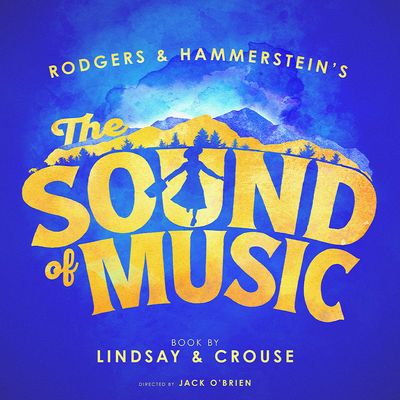
[23:28] Laura Benanti: Um I was, you know, 17 years old. I had just turned 17 years old. And I was auditioning for The Sound of Music to play Liesel. And my first audition was actually for an associate. And she called Jay after my audition and said, "You, I think you should see her." And then this is just my memory of it. I was a 17-year-old kid, so I um but I remember um Jay like came very close to me after I sang and and he was like extremely complimentary. Um and then told me he was he told me then that he was gonna bring me back in to audition again, but not for Liesel, because I seemed more mature than 16 going on 17, which is totally true. I've always been like a 45-year-old gay man in a little girl's body. Um but uh it's really true.
But um, and then, you know, after that, not only did I have the audition for The Sound of Music, of which I think there were 14 in total. Um, and it wasn't until the final um like callback that Jay said, "You're gonna read for the understudy for Maria." And I remember looking at him and thinking like, well, he's lost it. He's lost his mind. Um and I was like, I don't think I can do it. And he was like, "You can do it." And I did, and then he called me that night at home and told me that I got the part. And then from really that m, you know, from my first audition on, championed me in such a humongous way through he hired me for the Hunchback of Notre Dame workshop with James Lapine, and then sort of talked me through it as I was h I was so insecure.
I was 17 and I was so scared and I didn't think James liked me, which he didn't. And you know, and I and I sort of didn't know how to act, and he just like really held my hand through it. He was hard on me when he needed to be, but always I always knew he loved me. You know, some people um give you criticism and it's it's meant to wound you. He was always giving me, he was always helping me. And I knew that he loved me. And then he directed me in a in a show, I think it was called City of Dreams.
[26:08] Jay Binder: Yeah.
[26:08] Laura Benanti: Oh, you remember? Wow.
[26:10] Jay Binder: Of course, of course I do.
[26:12] Laura Benanti: Of course I remember that. Um, and then and then in Time and Again, you put me into Time and Again. You he put me in the Jay put me into so many workshops and readings to make sure that um I would be seen by everyone in our industry. I'll never forget this actually. I can't remember what the audition was for, but I was I was doing I think I was doing The Sound of Music. I was still the understudy, and he brought me into audition for something that I can't remember what it was, and I had put my hair back. My hair at the time was like very long and curly, and I put it back, and my audition didn't go very well, and I could feel that Jay could feel it, and that he was like still rooting for me and worried for me.
And then he was like, "Can you take your hair down?" And I said, sure. But I had like a hundred bobby pins in my hair. So it was like 25 minutes after my horrible audition of me just like slowly taking my hair down. And finally the director was like, "Okay, yeah, I think that's okay, thank you." And I left. I remember what I remember. What was it?
[27:24] Jay Binder: It was Music Man.
[27:26] Laura Benanti: Music Man. Yes.
[27:28] Jay Binder: Yeah.
[27:28] Laura Benanti: And I remember what you wore. You wore this gorgeous, it was long. You wore this gorgeous white dress, and it was a long dress. And uh, you know, with your hair up, you looked, you know, incredibly mature. Um you know, but the thing, everything I cannot believe that you have such an ex the exact memory. The one thing to add, Laura had just finished uh starring in the Mawa High School production of Hello Dolly.
[28:02] Laura Benanti: Kinalon, yes, Kinalon High School.
[28:04] Jay Binder: Exactly. Right, right.
[28:05] Laura Benanti: Yeah.
[28:06] Jay Binder: And uh I've always said Mawa because it sounds funnier. Uh and and so during the subsequent auditions for The Sound of Music, uh, which was, you know, an endless process. I turned to Susan Shulman, who was the director, and uh the part had already been cast, and we were looking, you know, she said, you know, now we need to begin to look for an understudy. And I said very casually, because I didn't want to push it. Um, I said, you know, why don't you uh have Laura read for it? And uh the rest f you know, is history and the f the greatest outcome of The Sound of Music was that when Rebecca left, there was no doubt in anyone's mind. It was not even discussed, it was a fait accompli amongst all the producers and the director that Laura would instantly take over.
[29:15] Mark Peikert: Laura, what does it do for a career when you have a casting director so firmly in your corner from the very beginning?
[29:22] Laura Benanti: I would not have the career that I have today were it not for Jay Binder. 100%. It's the truth. I thank God for you every single day and for what you did for me. It's true. You know, to have someone with the status of Jay as a 17-year-old kid to give you the stamp of approval is life changing. It was it changed my life forever.
[29:50] Jay Binder: Well, falling in love, you know, um falling in love for me is easy when you see someone whose talent also matches their personality as a human being. And that's what makes, I think part of part of the reasons why someone becomes successful is because the audience can feel the warmth, and you never ever hide your humanity and your love and your incredible sense of humor. Uh, I mean, one of the things, one of the most uh frightening experiences, at least for me, and I know for Laura, was years later when we were doing Gypsy, and Gypsy uh was scared the daylights out of me. Working with Arthur uh was a very frightening but very profitable experience because Arthur trusted me, and as Laura can tell you and will tell you, once you have Arthur's trust and once you give him your trust, he's incredibly easy to work with.
[31:12] Mark Peikert: Laura, Jay was talking about, he hasn't spoken much about specific auditions, but your audition for Gypsy was one that he specifically brought up. So I'm curious, was it as memorable for you as it was for him?
[31:26] Laura Benanti: Yeah. Well, first of all, I I know that Jay fought for me to get in there. I know that Arthur didn't even want to see me. He thought I was too old, and he heard and he'd heard bad things about me. Um, so I know that Jay had to sort of stake his reputation. Um, and I love Jay, you know, beyond him being my mentor, he is like a father figure to me. So I it was double pressure where I was like, I cannot put if I'm bad, it reflects poorly on Jay, who I know was like, "I stake my life on this. This like, trust me." And I could feel Arthur's um disdain for me when I walked in. He did not want me to be there. And you know, I did Little Lamb first, and he was like, "Fine." And then I did the transition into Gypsy Rose Lee, and I went up.
I was nervous and I forgot what I was saying. And then he and then, and then he at that point he sort of softened, and he was like, "I don't worry about this part for you," like the this part of the role meaning, like the the gypsy part. And he was like, "Do it again, do Little Lamb again, and don't worry about being young." He was like, "This is the this just think this is the hardest worst day you've ever had." And I was like, "Yes, I can understand what that feels like."
[33:02] Jay Binder: This feels like.
[33:03] Laura Benanti: Um, and he was like, "And you don't even know how old you are, and no one loves you." And I looked at Jay and he just sort of looked at me in my eyes, and he I could feel him pouring his love into me. And it made me cry. And I started again, and as I was leaving the room, I could hear Arthur saying, "See, when she does it like that, she's brilliant." And then the door shut, and I thought, well, who knows.
[33:37] Jay Binder: And the second time you did Little Lamb and you broke down into tears, you never Arthur didn't make you finish the song. Because you know, that moment wherever you know those tears came from, and they came from a lot of places, obviously, but it proved to him that you were the person, and in his book on directing, of which he, you know, most of it's about Gypsy. I mean, he states, you know, that you were, and you were the very best Louise and Gypsy to ever play the role. What it took to create the end of that play, when you leave Rose, still knowing that even though she's admitted it as much as she can, that she's never gonna change. And when Arthur and you created the exit with you laughing, I don't think there are very few actresses in the world, Laura, that could have pulled that moment off.
And uh Marty Papadinas uh also, you know, it was a great surprise when you turned and the dress was backless, you know, which which certainly just also visually proved, you know, that your strength, you know, that Louise, you know, was going to go on uh with her mother, without her mother, and so that was one of the great moments of acting uh I've ever seen on the stage.
[35:11] Laura Benanti: Thank you. You know, that was really that felt like a comeback to me because you know, I came in and thanks to Jay, I had Sound of Music, and I know that you recommended me for Into the Woods, because you and Jim are close. I know that. Um, you know, and then I broke my neck in Into the Woods, and that was such a fraught thing. And it wasn't until I came back in Gypsy that I felt like myself again. I felt like the same brave girl I was when I was 17. But at that point I was 28, you know. Um so and at that point, I wasn't on the top of people's list to see for things. So the fact that Jay brought me in for Gypsy was a again a huge change for my life. It brought me like back into a world that I felt admonished from.
And then what happened was as soon and we were just going to City Center for three weeks, and um what happened was is that of course Laura was offered the role, and then a pilot cropped up. Arthur said to me, you know, I don't feel and he said it jokingly, lovingly, not caustically. Uh he said, I don't feel sorry for Laura as much as I feel sorry for you, Jay, uh, because you have to replace Laura Benanti. And it was, you know, this nightmare. But you know, I don't know, I forgot who the producers of the pilot were, but fortunately they loved the theater. Greg Berlanti. Right, right. They loved the theater and they made it work and they moved the dates of the pilot. No, you know what they did is they let me out of my contract.
Wow. I had shot a pilot and then it got picked up to go to theory. So that was the issue called Eli Stone. And I went to Greg and I said, You're gonna think I'm crazy for you know, choosing theater money over TV money, but I have to do this part. And he sort of looked at me and he said, What part is it? And I said, Gypsy. And he said, Oh, you do. Thank God, because you know, having worked at Warner Brothers, you know, uh in Lorimar for, you know, six years, you know, uh television producers, you know, um are what they are and they're damn good at what they do, but they're very few that really understand the theater. I mean, you know, they would always appreciate it. Right. They would always say to me, don't they have uh study under meaning under studying you know, you can't make that stuff up, you know.
Right. And then to just see your growth. Listen, you know, uh all during those years, you know, when you broke your neck, which is probably one of the scariest things, you know, that could happen to anyone. Uh I kept saying, excuse me. She's broken her neck. Yeah. Don't you understand? You know, and uh, because never in your life would you uh not miss a performance. I mean, you know, they'd have to wheel you in, you know, before you would miss a performance, you know, and that dedication uh is born in you, and all this, all this is part of you, and all this are part of the elements that have created the actress that you are, because you know uh the very highs and the very lows and the art of survival. And I cannot tell you how much I love you and I thank you for giving me everything. And thank you for joining us today, Laura.
[39:39] Laura Benanti: Oh my gosh, of course, Jay. I genuinely hope that you can hear how grateful I am to you for my life. I really am I really mean it for the opportunities you gave me, for the love that you have always poured into me, for how you championed me when I was top dog and when I was underdog. You know, like your love has always been unconditional. And you're right, I will be there for you forever. And just remember, keep your hair down.
[40:19] Jay Binder: Well, it's interesting. You were saying that Arthur Laurents directed Gypsy like a play, because we've talked a lot about musicals and we've talked a lot about comedies, but you also directed uh some fairly heavy duty dramas on Broadway. And I'm thinking specifically of the Who's Afraid of Virginia Woolf revival and Journey's End.
[40:41] Jay Binder: Well, Journey's End uh was the most fun I've ever had um casting a play. Journey's End and just to just to be clear, Journey's End, the play about soldiers in World War One, right, which had been uh a gigantic hit for David Grindley, the director in the West End, and completely unknown in America, and Hugh Dancy and Stark Sands and Boyd Gaines and Jefferson Mays and the entire company uh were a family. They went out and I joined them every single night. Uh we went out drinking uh in an Irish bar. Casting it was a joy. I had seen uh Hugh Dancy in a film, uh, and said, you know, we'd been through endless amounts of people, you know, getting their interest, and because they didn't really know what the play was, uh I couldn't get them interested.
We offered it to Hugh Dancy. Uh I had seen Stark Sands uh in a war movie and remembered Stark. Stark came in and auditioned and auditioned twice uh and got it. And then David Grindley did not know Boyd. Uh, and he didn't know Jefferson, and they had reached a certain prominence by 2007, and Boyd came in and auditioned, and Jefferson came in and auditioned, and we completed the cast. And I think that the revival of Who's Afraid of Virginia Woolf was a perfect production in a very different way, because those Nick and Honey uh were not names of the time, but they sure are now.
[42:28] Jay Binder: Yeah, I mean, you know, what was interesting is we did several readings uh with various combinations of stars. Uh we didn't actually audition. I was a big big fan of Kathleen Turner's and a big fan of Bill's. And so we did a reading at Anthony Page's apartment in New York with Bill and Kathleen and David. After the first act, Edward pulled me out of the apartment. We went down in the elevator, and he turned to me and he said, This is it. This is as good as the original production. But as if a very serious World War I drama that originally starred Lawrence Olivier, uh and a sparkling revival of Who's Afraid of Virginia Woolf that completely revamped Kathleen Turner's entire career and really revealed her as a formidable stage actor. And you know, solidified Bill Irwin as a genuine dramatic actor. I think for a lot of people that's the definitive revival. As for a lot of people, the revival of Iceman Cometh that you worked on is the definitive production of that play.
[43:47] Jay Binder: Well, you know, to make, you know, again, casting that with Howard Davies, who was truly a great director. I mean, Kevin had done it at the Old Vic. They had done it together. And we had Michael Emerson at the beginning of his career, Paul Giamatti, Robert Sean Leonard. We did not audition. Uh Howard trusted us. He had done uh Long Day's Journey again with Kevin and Manny producer. So we offered Robert Sean Leonard, but you know, my the most difficult role to cast, believe it or not, was the Italian bartender, and I had seen Tony Danza uh replace Reef in the Bridge at the Roundabout. And I said, Tony Danza can act, you know, uh this. And he was, you know, wonderful. And also two English actors, Jimmy Hazeldine, who is now not with us, and Tim Pickett Smith came over from London, and I will never forget them, and I will never forget Jimmy Hazeldine.
He was one of the great, great actors. And uh again, Howard Davies, I just want to say was the smartest person that ever auditioned actors. He genuinely uh audition is usually a noun. You come in, you read, you know, you don't often get adjustments, and then you leave. Uh some directors do give adjustments, but Howard gave each person, they sat down at a table because he said, Jay, I know you're bringing me people that can walk and talk at the same time. They came in, they chatted, they read one scene, he gave notes, uh they read the scene again, and then if he was interested, they read the second scene. Howard taught me a tremendous amount. He was a great, great director and a great friend.
[45:45] Jay Binder: When you can be creative, and when you have uh a director and a producer that supports you and a writer, if it's a new play or a play where the writer is mercifully still with us, that's the great joy of casting, and that's been the great joy of an honor of working on all these incredible Broadway plays and musicals. This is Jay Binder of Life in Casting, a podcast from RWS Entertainment Group and Binder Casting, in association with the Broadway Podcast Network, starring Jay Binder, hosted by Mark Peikert, produced and directed by Mark Brandon and Kyle Coker, with executive producer Ryan Stanna, consulting producers Joe Christopher and Abby Buell, artwork by Justin Swiggs Robertson, marketing concept by Kevin Lau, marketing content by Amy Cannon, edited by Derek Gunther. And a special thanks to guest star Laura Benanti.
© Broadway Podcast Network, All Rights Reserved