

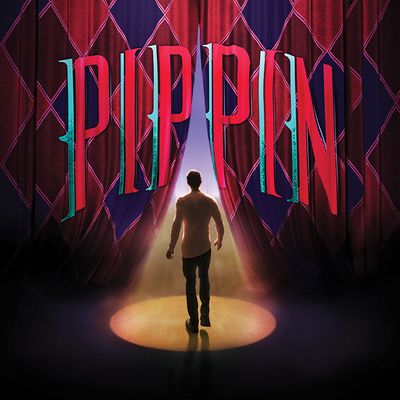
Strike up the band and pull back the curtain on Stephen Schwartz’s odyssey musical - ‘Pippin'. This musical gained legendary status when it was revived recently but we go right back to the start to look at its complex origins with a burgeoning Stephen Schwartz and a high-flying Bob Fosse... Read More
From the show: Jim and Tomic's Musical Theatre Happy Hour
Featured Shows

About
Strike up the band and pull back the curtain on Stephen Schwartz’s odyssey musical - ‘Pippin'. This musical gained legendary status when it was revived recently but we go right back to the start to look at its complex origins with a burgeoning Stephen Schwartz and a high-flying Bob Fosse. We also dissect the various endings that have existed throughout the years and come up with a few of our own, go over some of the incredible handling of its themes and we tell a few home truths…
Pippin (New Broadway Cast Recording)
SHOW NOTES
I still think ‘come and waste an hour or two…zoobilee zoo’ is one of the funniest things I’ve ever said. But hey, enjoy Ben Vereen as a snow leopard mayor.
And he’s still got it! But to be fair this was filmed in 2002. But I have no doubts that 20 years later he can still move just as well…
Wanna get liminal? Check out Bo Burnam’s incredible new Netflix special, ‘Inside.’
There’s so much great Andrea Martin content out there but here’s some of the zaniest.
Remember you can come chat to us about the episode on Twitter and Instagram @jimandtomic! Or if you wanna pop OFF then jump into our email inbox at jimandtomic@gmail.com! Or come join us on the discord!
A Semi-Autobiographical Quiz Question
Our next show, autobiographical in nature, was written by the author whilst they were recovering from the events contained within the show. What show?
Transcript
This transcript was automatically generated and might contain errors.
[0:00] Jimmy: Hey everybody! Welcome to the show. Before we begin, we're talking about Pippin. There's some discussion in the show about suicidal ideation and death and, you know, some kind of depression-tinged subjects, so wanted to give you a heads-up before we get into it. But now, let's get into it. Play that show! Did I show you my Pride beer? This would have been a better last call moment, but... Happy Pride! Happy Pride! Rainbow Lightning! Rainbow Lightning! And what does that taste like? Homosexuality. Delish.
[0:37] Tommy: Welcome to Jim and Tomic's Musical Theatre Happy Hour! I'm Tommy.
[0:42] Jimmy: And I'm Jimmy, and this is... This one's so stupid. And this is the only musical theatre podcast with lighting rigs... And scratchings slash reins from pigs. Another interesting American British thing. Pork scratchings, pork reins. And it's a bar snack. They both sound gross.
[1:01] Tommy: Oh, they're absolutely...
[1:04] Jimmy: They are delicious. They sound gross. Yeah, salty things. But, okay, I was gonna say, answer in the comments, this isn't a YouTube video. But is it a snack? Is it a bar snack? Obviously it's a snack. Is it a bar snack? Are pork reins a bar snack?
[1:23] Tommy: Say the sentence, otherwise the show won't start.
[1:28] Jimmy: Oh, yeah, okay. Here we take apart your favorite shows, muddle them together with a shot of buffoonery, and pour you a refreshing glass of musical theatre conversation. Tommy, what are you drinking today?
[1:39] Tommy: I panicked halfway through because I forgot I was gonna have to think of something.
[1:42] Jimmy: So I gave you some time.
[1:43] Tommy: Yeah. I gave you some time. Uh, uh, don't they... Uh, hot, hot wine and bread.
[1:55] Jimmy: Ah! That, do you know what? Really well done.
[1:58] Tommy: Solid work.
[2:01] Jimmy: I, thank you. I was, my, the, the, like, peep-boop-peep-boop-peep-boop in my brain was happening really quickly. That was really impressive. Excellent work. Why?
[2:05] Tommy: Well- Sounds great, first of all.
[2:08] Jimmy: I could tell you why, but I think, um, uh, Bradley Gadley and Bradley Glen- oh! Oh! I could tell you why, but I think Bradley Gladley on Twitter would know better that this-
[2:20] Tommy: I think he would.
[2:22] Jimmy: Episode- He's here tonight! No, he's not. He would love that.
[2:25] Tommy: Oh, he's just burst through my, no, um, we're doing Pippin.
[2:43] Jimmy: Doodly-doo, journey, journey to a spot, exciting, mystic and exotic, journey through our anecdotic review. We've got magic to do just for you. We've got lyrical plays to play. We've got hearts to perform, hearts to warm, kings and queens to take my storm as we go along our way. So, thank you to, uh, uh, Bradley, this one's for you.
[3:25] Tommy: Um, yeah, exactly. No, I mean, the, the reason that is a thing is because I don't, like, more so than any other listener, have we had someone who's been so angry at the fact that we don't do the show that we want them to do.
[3:39] Jimmy: And rightfully so, Tommy, rightfully so.
[3:41] Tommy: Absolutely. Uh, Pippin! When did you, when was the first time you listened to Pippin?
[3:46] Jimmy: The first time I listened to Pippin was when I saw Fosse, the dance show-
[3:53] Tommy: Oh, fascinating. Okay.
[3:54] Jimmy: The one tournament for best musical, TBD, to be discussed in an episode when we discussed it. That's what that meant. Um, but yeah, and so they do, um, a couple of numbers, Pippin and that. And I was like, the main one was, um, Glory and then the Manson Trio. And I was like, that's interesting. I like this. What's this from? It is from Pippin.
[4:19] Tommy: Is that uni for you? Like, how old are you?
[4:22] Jimmy: That is second year of uni. So yeah, like 20 something.
[4:28] Tommy: You?
[4:29] Jimmy: Uh, eighth grade, something like that.
[4:32] Tommy: Wow.
[4:32] Jimmy: And I, I think honestly, too young. I love it.
[4:37] Tommy: Fair.
[4:37] Jimmy: Um, and like, it is one of, one of many that like, you hit play on the 1970s cast recording and then put me in another room and like, I will, I can then leave that room when the cast recording's done, having said all the words just to myself. Like, I know this, that, that album by heart, like early library rental. Um, but then it's been interesting to kind of grow with it and grow up with it. Um, and then the revival come out and, you know, it was just a fun little show in my brain when I heard it the first time and it's changed a lot now I view it since then.
[5:11] Tommy: Yes, in a good way.
[5:13] Jimmy: Well, hey, for the people, the people out there who've never heard of Pippin, um, Pippin is a musical with music and lyrics by Mr. Stephen Schwartz, you all know and love, um, and a book by Roger Herson.
[5:22] Tommy: Yep. It premiered.
[5:24] Jimmy: Kind of maybe a little bit by somebody else.
[5:27] Tommy: A little bit. Not really. Uh, it originally premiered on Broadway in 1972. It had a revival in 2013, which is probably what you've heard of out there in listening land. And then, uh, the country Jimmy has written in our show notes, the controversial filmed production of 1981.
[5:44] Tommy: I like to sex up a little bit, you know what I mean? You know what I mean? But it is controversial indeed. And we'll talk about that when we talk about it. Um, and it did, it did pretty well. I haven't written this time, so I'm going to do this off the top of my head, but it did pretty well. Both times at the Tony's, Ben Vereen won best actor. That's the main one. I know. Um, um, uh, Patina Miller then also won, uh, for the leading player.
[6:08] Jimmy: Yep. Best director, Bob Fosse won for best director.
[6:11] Tommy: Yeah. It's a good, it's a good trivia piece. Um, uh, Vereen and Miller won Tony awards for the same role, one as leading actor and one as leading actress, which, you know, gender is a construct and probably we should get rid of that anyway, but sure thing when it comes up in bar trivia, now, you know, that's a good one. Yeah. I like that. Um, yeah, I will actually say it was Ben Vereen that got me into this because I loved Ben Vereen. Um, which I think the first thing I saw him in was all that jazz probably. Um, and that led me to Fosse the show and he's in that and he does glory, but obviously many, many, many years later, still just as good, my friend. Um, and yeah, I'm trying to remember the first, I believe the first time I saw Bob Fosse was in Ben Vereen. I'm sorry. Let me go take it again. Yeah. I believe the first time I saw Ben Vereen was in the television show Zoobilee Zoo.
[7:07] Tommy: Oh my God. Zoobilee Zoo. Journey.
[7:24] Jimmy: Right? Do you know Zoobilee Zoo? I have no idea what you're talking about, but I really want to see it. It was on the Disney channel when I was a child. It is terrifying looking by today's standard. Um, it's a children's show. They all are vaguely, uh, some of them are animals, but some of them are other things. Um, yeah, Ben Vereen played the mayor. He was a snow leopard, but like picture snow, snow leopard, if there was an Andrew Lloyd Webber musical called Snow Leopard in the style of cats. Um, okay. Also he's human in it. Kinda. He's got like a, it's live action. Um, that's what I mean. He isn't, it's not animated.
[8:04] Tommy: Okay. Okay. Um, gosh, I don't know if I want to see that.
[8:09] Jimmy: Well, put it in your brain and put it in the show notes. Yeah. Um, no, my, uh, Twitter bio for a long period of time before it is the very well known. Well, I don't have to but well I do, but what am I even talking about? Anyway, it was, um, when I grew up, I want to be Ben Vereen.
[8:28] Tommy: Oh, how sweet. It's quite a good Twitter bio, right?
[8:33] Jimmy: Yeah. It was my, well, my everything bio. I was hoping it was going to be Ben Vereen that's long. Must be a clicker on the end of a switch, of course. Yes, yes, yes, yes, yes. Stunning.
[8:44] Tommy: Anyway, Pippin. Um, Pippin. Um, well, let's talk about Pippin.
[8:52] Jimmy: Yeah. You want to tell, I've not done that yet. You want to tell people like, what's the show about?
[8:56] Tommy: Oh yeah, that's what we do. And you know what? Isn't that crazy? We've done a hundred and three episodes and I still need the word summary to be written to know that we have to talk about the show. That's ridiculous. Anyway. Okay. Oh, you need to feel that. I'm sorry. Um, Pippin, the show, we'll be here for 30 minutes if it was, if you were trying to shoot me. So yeah. Pippin, the show stages itself in a kind of meta theatrical way. You are first introduced to a group of players. They're called in the show led by the leading player. Um, they're performers and actors who are here to put on a show for you. That's the first number magic to do. Um, in the original production, they were vaguely theatrical.
Um, in the revival, they're absolutely circus performers. Um, and we'll talk about the differences between the two, but they're here to put a show on for you. And the show is Pippin, His Lifes and Times. Um, Pippin is the forgotten son of Charlemagne the Great, um, who is a historic figure spelled different, but, um, you don't need to know any of the history to understand the show. It's, you know, uh, a nothing story. Well, not a nothing story. It is a story of, uh, uh, medieval times conquering, um, but mostly centers around Pippin's desire to find his place in life, to find his corner of the sky. And all throughout the show, you are, um, the leading player who's kind of semi-narrating this thing to you.
Guarantees you that there is going to be a climax unlike anything you've ever seen before at the end of the show. Pippin makes his way through life. He, under his father, Charlemagne, tries out being a warrior. Doesn't go well for him. Um, at the advice of his grandmother, tries to have a lot of sex. He grows tired of that. Um, eventually, uh, meets a woman named Catherine, um, who he maybe falls in love with. Um, and the entire time, the, you also get bits and pieces of, like, what is supposed to be the backstage, uh, discussions that this leading player sets out. We learn that this is this actor's first night playing Pippin, quote-unquote. Um, we learn that Catherine, um, is perhaps aging out of her role.
And then, as the show starts to shift a little bit, um, we finally, well, I guess we reach the climax where Pippin is supposed to kill himself by suicide. Um, nothing on this earth can be as glorious or fulfill Pippin's purpose as much, and so he must kill himself. Um, and going against script, spoiler alert, he decides not to, um, in a huge twist. And this is, as the show is staged, not the story that the leading player has set up. This is not what they've rehearsed. Um, and so, you know, the, the moral is, like, Pippin kind of, Pippin compromises. Pippin settles for mediocrity as opposed to, um, killing himself by suicide. Then there's kind of a Sophie's Choice that each production has to make about which of the endings to choose, which we've got a whole section on later.
Um, but the, the, the longstanding metaphor is that these players are perhaps the voices in your head that are driving you to, you know, find your greatness. And really the answer is the greatness might have been in you all along. Pippin decides to basically move in with Catherine and her son Theo. Um, and that, and then, and then the bows happen.
[12:18] Tommy: So you're just a master. Honestly, I just sat there in awe. I was like, he's not even reading this a f***ing script. He just pulled that out of his brain. It's so impressive.
[12:28] Jimmy: You know, and, and I mean this in all honesty, it is a skill I have developed through, uh, faking my way through many theatre history courses. Like in, and I, and I don't know if this is good advice for, uh, theatrical academics out there, but like when, when your aging theatre professor assigns you to read a different play every day and they're all really boring and probably not all that important, you can get away with kind of skimming through it and finding a synopsis online. If you start developing the skill to like deconstruct the story and it, it kind of back forms that skill in your head to be like, all right, how do I summarize this story without reading the whole thing? I'm sure it comes from a neuroatypicality that I don't, that I have that, you know, doesn't, doesn't quite let me read a whole play all the way through and I need to start with a synopsis. Um, but as I think that's where that skill comes from.
[13:18] Tommy: Well, I think my neuroatypicality is the thing that makes me go off on 30 challenges before I even got to the first number. So yes, it's good that you feel these. Um, it's beautiful.
[13:29] Jimmy: A star-crossed pair.
[13:31] Tommy: Yeah, exactly. I think that is a perfect time to talk about the origin story.
[13:52] Jimi: I would have done like a harp glissando, like... I don't know what dun-dun-dun was... I quite liked it. So we're not going to probably sit on this one too long because it's just some fun facts.
[14:32] Tommy: Sure.
[14:40] Jimi: But it's important, I think it's important to know the context of this to understand why there's lots to discuss with Pippin. And like, discuss outwith the content of the show itself, is what I mean.
[14:53] Tommy: Yes, it is a very... The show as it exists now is very well informed once you know how it came to be.
[15:04] Jimi: Like you can deconstruct this thing once you kind of learn how it was written.
[15:09] Tommy: Yeah, exactly. Because the Pippin that we just described, I say we, that Tommy just beautifully described, is very, very different to the way it originally existed.
[15:22] Jimi: So Stephen Schwartz had the idea whilst he was at Carnegie Mellon. And he started writing it before Godspell even existed. But never got it optioned anywhere and couldn't find an agent to pick up. But it was kind of on the back of Godspell that it was then like, okay, well, I have also this thing and let's perform that. But it used to be called Pippin Pippin.
[15:48] Tommy: Which is very confusing when you're reading academic articles about this thing.
[15:53] Jimi: Right. And also just very confusing, like why?
[15:56] Tommy: Yeah.
[15:57] Jimi: Anyway, it was called Pippin Pippin. And I think he worked... I don't actually know when Hurston came in on board.
[16:08] Tommy: It was early 70s, if my memory recalls.
[16:12] Jimi: So Schwartz had worked with one of his friends at Carnegie Mellon, Ron Strauss, to write this version, Pippin Pippin, based on the historical figure Pippin, Hunchback's Son of Charlemagne. And so the story goes, Schwartz received a letter in the mail that was like, I'm a producer and I want to produce something for you off the back of Godspell. And asked Ron, hey, you want to throw a Pippin Pippin? And Ron was dubious at the veracity of this letter. I was like, nah, Steve, I don't want to be a part of that. And Steven was like, that's fine. Is it cool if we take the basic concept and nothing more and I write something new? And Ron was like, have at it. And turns out the producer was less than authentic in their representations of their ability to mount a Broadway show. But Schwartz had started to write this show, and this is then the inception of the show that we now know as Pippin.
[17:15] Tommy: Yes.
[17:16] Jimi: And there's quite an interesting moment that you had with Hal Prince, which I think is a very Hal Prince moment, which I love. So basically, they auditioned the show for Hal Prince, who wasn't keen on taking it further. But he very kindly gave some suggestions and he said that originally the show ended where it ends at Act One, basically, that we know now. And he said, actually, what you should then do is the sort of into the woods treatment and look at what happened next. And so he took that idea and it became this kind of Ulysses style, you know, Odyssey journey of this boy. And it turns out later that actually Hal Prince just gives that same advice to everyone that he sees. But hey, they did it and it worked, which I love.
But then obviously they needed to try and find a director and they did the rounds of all the big 70s directors. They got Michael Bennett, Joseph Hardy, nobody wants to do it. But very weirdly, he just finished the cabaret film. Mr. Bob Fosse was keen and he wants to choreograph and direct it and also grow it basically into something, you know, I don't know, more, more, basically, because I think it's important to know. So this time, you know, Bob Fosse was really in the depths of his career. And Stephen Schwartz was at the very beginning of his, he was like 24, I think, when he had these meetings.
[19:15] Tommy: Yeah.
[19:16] Jimi: And I think that that's quite crucial. Schwartz talks a lot about that Pippin, like this is kind of autobiographical, as autobiographical as, you know, a story about Charlemagne's son can be, but that, right, Schwartz chronicles his journey as a young man through Pippin and like knowing that you can see it. I do, from the bits and pieces you can pick up, it does seem very much that when Fosse signed, that the metatheatrical story seems to start to enter the narrative when Fosse signs on as a director. That the show before that was kind of a medieval, is that Charlemagne? Like courtly graces.
[20:03] Tommy: Like yeah, like royal intrigue, you know, Pippin can be king, but, you know, his brother's gonna kill him, stepbrother.
[20:10] Jimi: Very Blondel.
[20:11] Tommy: Right.
[20:12] Jimi: Very Blondel. Just saying.
[20:14] Tommy: Yes.
[20:15] Jimi: As you say about most things.
[20:16] Tommy: Is that the advice? That's your Hal Prince's advice?
[20:18] Jimi: Absolutely. That's my Hal Prince's advice. Be more Blondel.
[20:21] Tommy: But it does, it does seem both the darker edge to the thing, and the, you know, the leading player, the addition of this whole metatheatricality to it, is a, in collaboration sometimes, a Fosse addition.
[20:36] Jimi: Yeah. So the show itself originally got produced and performed in Washington, did an out-of-town there. And it was really, really successful. Proper raves. And then obviously they headed to Broadway. And at that point, Bob Fosse decided to change the ending. And make it more cynical.
[21:12] Tommy: Sure.
[21:13] Jimi: Um, so I think before we go too deep, let's talk about the ending in full. I wish you could have seen him, friends. Jimmy was trying so hard not to say hop on my Segway.
[21:30] Tommy: The word Segway was flashing in my head with red alarm letters and I was like...
[21:38] Jimi: Hop on, let's go. Yeah, I mean, I think this is the first time we've probably taken a whole segment to talk about the ending of a show. And it is, it is fascinating, because I can't think of another show, there are shows like Into the Woods, which have optional songs. You know, there are junior rewritten versions of shows, there are school versions of shows. You can also find historical versions of shows. You can find, and not that we should be performing any of them, but the various rewrites of Like Anything Goes, right? And you can license those individually and pick, kind of pick your poison with different shows. Pippin is the only show where you can choose which ending you want.
[22:57] Tommy: And in the licensed version, you can choose one of two endings.
[23:05] Jimi: So, to jump on that instantly, that has only happened relatively recently.
[23:13] Tommy: Sure.
[23:14] Jimi: I mean, so I think...
[23:15] Tommy: Only with the revival, I believe.
[23:16] Jimi: In the noughties.
[23:17] Tommy: Aha.
[23:19] Jimi: So, it never says where, and I find this interesting, and I think there has to be a reason why. I found it. Okay, so...
[23:27] Tommy: If my memory serves me, according to this book, The Musical Theater of Stephen Schwartz, From Godspell to Wicked and Beyond, in the nineties, there was a, it calls it a London Fringe production of Pippin, I don't know what that means, at the Bridewell Theater. And the director of this show, Mitch Sebastian, had asked for an affordance in doing the show. British child labor laws would have required three different actors to play Theo over the course of their run, right? And so he asked permission to change Theo into a teenager, so that they could just hire one teenager. So the story goes, this led to the possibility for this development of the revised ending, the Theo ending. Schwartz saw the production, loved it, and now calls this the correct ending. And then this is the ending, the first time then on Broadway in the 2013, no, yeah, 2013 revival. And now, both endings, the Theo ending and the original ending, are offered in the licensed materials.
[24:42] Tommy: Yep.
[24:43] Jimi: And I just, I find that so interesting, because anytime he talks about it, he talks about it very openly, about how, I saw this show, and it changed my mind about everything, blah blah blah. But he never credits it.
[24:56] Tommy: Yeah.
[24:57] Jimi: And I find that really, and I wonder if there is something, you know, I mean, there's some kind of licensing.
[25:01] Tommy: Well, and even, and like, this book is kind of an amalgamation of different sources too, so it's hard to kind of track this all down. Like I wonder how much the director did actually ask permission, like maybe they asked permission to make Theo a teenager, but not to change the ending. Like this could be mired in potential legal problems anyway.
[25:19] Jimi: Yeah.
[25:20] Tommy: So.
[25:21] Jimi: But yeah, I just, I find that really interesting. So that's some good hot tea, piping hot tea. When I will say, personally, because like, I watched the 1970, the 1981 controversial film production.
[25:30] Tommy: Very controversial, yes.
[25:31] Jimi: Before the revival came out.
[25:34] Tommy: Yes.
[25:35] Jimi: And at the time, as a, you know, neophyte musical theatre analysis, thought the ending was stupid. Like liked the gist of the ending. I like the idea. I guess we should describe them, right? We haven't done that yet.
[25:51] Tommy: Yeah, exactly.
[25:54] Jimi: As written, and as I alluded to in the synopsis, the leading player, after Pippin decides to not kill himself, is like, fine. Is this what you want? A boring life? Take away all the costumes. You know, yells at the conductor to stop playing. Everyone leave. Take away the sets. Is this what you want? A boring life? Fine. Pippin, Christine, and Theo are left alone on stage without microphones, costumes, lights, quote-unquote, an orchestra. And Pippin's line, well, there's two bits. Catherine? Christine? Catherine. Catherine. Catherine. Wow. Catherine. I didn't correct you before because you were on the floor. And I was like, that's fine. It doesn't matter. Catherine asks, you know, how do you feel?
And he says, trapped, but happy, which then Fosse argued later should be revised to just trapped, which very much alludes to their different visions of the show. And then Pippin has some line along the lines of like, well, that's one way to end a musical comedy. And blackout. Right? And then that's the show. And then thereabouts. The revised show tracks with that mostly the same. The trapped but happy line, I believe, is still there. That's one way to end a musical comedy isn't there.
[27:11] Tommy: I actually don't think trapped but happy is in it.
[27:13] Jimi: Is it gone? Okay. I think he just sings. The big thing is Pippin and Catherine, yes, I'm now nervous every time, leave the stage with Theo, but Theo kind of trails behind. And in the revival, at least, starts to take a look at some of the circus accoutrements that are left around the stage, starts, you know, playing with the stuff. And like, dead silence, a beautiful musical theater silent moment. And then very slowly, you see...
[27:45] Jimi: Original Trapped but Happy. So I think it came out of John Rubenstein. I think Fosse wanted it to just be trapped. They added in the but happy, and everyone was pretty happy with that as a nice positive ending. And that was the ending in Washington that got all of the great reaction. Because I think the original, like when they tried it out, it came off as a laugh line. But then when they added in but happy, it became an ending. It softens it a bit in a way that lets you accept trapped.
[28:40] Tommy: Exactly. So yeah, then obviously when it moved to Broadway, Fosse was adamant, in the way that only Fosse can be, that but happy gets taken out. And everyone was against it, but he was the director. So what he said goes. And it didn't do well.
[28:56] Jimi: Well, it's obviously the show did very well, but it was a very different reaction. Yeah. But the kind of meta of that goes is that Fosse was actually being smarter about it than what people realized. Because at that time, obviously, we're looking, you know, in the background is Vietnam. And the rise of depression in New York was going up and it was being reported about, you know, I mean, talking about mental health in the 70s is a new thing. And Fosse kind of caught wind of this, apparently. And so therefore made this more cynical ending because it actually rang more true to the lives of the people watching it.
[29:37] Tommy: That's what, it's one of those things. That's what the story goes. That's an interpretation. You'll never know why, because on the other side of it, it's a very Fosse thing to do to just be like, here's a cynical, depressing ending because the man himself was also probably extremely depressed. So it's tricky to know what is the truth. And as in all of these things, right, I think we take for granted how much of the creation of shows nowadays is documented. Like, yeah, this survives in, you know, oral history on top of oral history that so-and-so told such-and-such and different interpretations, like who the hell knows? But it is interesting because we know something happened because there are choices for the ending.
[30:21] Jimi: So yeah. How do I feel about them? Was your question. I don't, actually, do you know what? I don't know. I don't know. What do you think? You go first. You go first.
[30:32] Tommy: Are you about to say you don't know?
[30:33] Jimi: No. And I think this is my hot take. I don't think I like either of them.
[30:40] Tommy: Okay. Interesting. I wasn't expecting that.
[30:42] Jimi: Yeah. This show is difficult to end.
[30:48] Tommy: Yes.
[30:49] Jimi: No doubt. Right?
[30:50] Tommy: And any show that's about the mind and existentialism is difficult, impossible to end because it doesn't end. On top of it, and from an even simpler angle, right, from a musical theater structure, you are being promised and promised and promised this huge, you know, climactic moment at the end of the show. And the whole point is that it doesn't happen. The whole point is that we bail on it. Right? So the ending will be, by definition, to serve the story, less exciting than the thing that was happening right before it. That's a really difficult writer's trap to figure your way out of. To still give a, and like, I'd say this in a loaded way, a satisfying ending, a satisfying closure, and not like, leaving the audience unsatisfied is the point.
Right? But, you know, I do think the second ending serves the point of the show better. Because there, I think the leading player has some line along, like, more explicitly says, we are the voices that are inside everyone's mind. Maybe someday we'll find you or something like that. And like, that's non-existent in the first ending. Right? They don't put that, so there are three layers to this story and there's secretly only two, or there are two layers of the story, but there's secretly a third.
[33:06] Tommy: What were you gonna say? I think it is in the original.
[33:08] Jimi: Is it in the original? I couldn't find it. When they face the front. I couldn't find a libretto. The OG libretto. I know, well, it doesn't exist. But no, it's because it's in the 81, which makes me think. Okay. Fascinating. But even still, I don't think that takes away from I think it's, it does still, you know, head in that direction. And I think, and like, because the new ending, I've thought through, and I don't think this is the right ending either, but like, okay, the, the truest ending to the show, and I don't think it works in contemporary American theatrical convention, but the truest ending to the show would be the leading player being like, fine, you don't want this, you don't want that.
We'll take it all away and say, like, you know, point at the conductor, like, stop playing and point at the orchestra and be like, leave, get out of here. And like, you know, tell everyone else, come on, we're leaving and like, walk out through the audience. And the three of them are on stage and either they say something or they don't, they kind of shrug and then they leave. And then the show ends.
[34:47] Tommy: Yeah. And there's no curtain call and there's no, right, like full stop. And like, certainly you are going to leave a confused audience at the end of this show, right? Because there is no button, but if we're sticking true to like the conventions that are built into the show, that would be the way to end it. Now, some of the practicalities of mounting a theatrical performance, especially in like a, a more public facing place like Broadway, right? You need to tell people to leave so that the ushers aren't stuck there for an indeterminate amount of time every night, right? Like there's practical concerns that come along with that ending, but I would love to see like a fringe level show or something that, that follows through with that sort of ending. Cause I think it would be cool. And I think would serve its point really well.
[35:10] Jimi: I'm fully with you. And that was my exact same thoughts that I had. Like when I magically go over to New York and saw the Broadway revival, um, it was great. It was a wonderful trip. I thought it was so silly that they did a curtain call. It made no sense. It completely detracts from the actual ending, but of course you absolutely need it. You cannot do a Broadway show without it.
[35:44] Tommy: Do you know what? It's hard to do any show without a curtain call. We did a production. I can't remember if we talked about this in the episode. Um, we did a production of the Therpney Opera and, uh, for the first two nights we, our director didn't want us to bow and just stand there and then leave. Um, and, uh, it was, it went down like a lead balloon. Like the audience did not like it. Um, cause they were clapping cause it was the end as you do, but we weren't bowing. We just left and it felt rude as heck.
[36:19] Jimi: Yeah. And, and I think that's the problem with the new ending is because everything right before the curtain call is so ambiguous and limbo-y. It makes the curtain call the button and that feels slimy in a way that I don't like.
[36:38] Tommy: Yeah. It just, it, it, it just, it doesn't make sense. And I think actually your curtain call can be a part of your narrative. And I think smart directors do that. You know what I mean? And, um, it not to the case of like, you know, your, your villains come out and it's like a panto and they boo everyone. Um, but it can still feel a part of the world of the show, whether you have music at the end or not, or whether, you know, there's always little choices that you can make.
[37:09] Jimi: Yeah. Your show continues even after the people leave the theater. But the end, yeah. But the ending of Pippin is da da da da da da da. I mean, there's like, let's all jump in. It's like, and it's not, it, it, it really detracts, I think, from...
[37:20] Tommy: Can I pose two potential solutions that I would want to workshop, but I've thought about these, that I think strike a different balance. Run with a everyone leaves and we're done thing, but give, give the leading player a little more, um, uh, uh, prescriptive monologue to the audience in the same way that like during, um, no time at all. Right. There's all sorts of stuff. And there's like the choruses are everyone's, the verses are mine. Right. Like there are times where we like talk and give instructions to the audience. Yeah. Give the leading player a, like, that's it. We're done. We are all going to leave the stage and the house lights are going to turn on. And all of you out there, I need you to know at that moment, the show is over and you need to leave. Right. Like have them say that. I don't know how that would land. Right.
[38:17] Jimi: Do you know what? It wouldn't work. Yeah. And here's why, because you need to see Pippin's reaction to the leading player leaving and stopping everything. Then you keep Pippin and the other two just on stage. But if you tell everyone to leave. Yeah. Then that's a bit. Right. Then it's. Then that's. Then it strikes as rude. It strikes as like.
[38:41] Tommy: Yeah. Cause then you're like leaving, but looking over your shoulder to see what Pippin's up to. So I think you do need that moment of them being by themselves alone. Um, which would then kind of be like, well, they should probably say something. Right. Because it's the end. And then suddenly you're there again. Um, I, do you know what? I think my gut is leaning more to the OG. Yeah. I it's like, I love, I love the revival ending and I really do think it's smart and it makes perfect sense. It fits into the narrative perfectly well for the most part. Um, because also there's questions that I've got later about Pippin, the person and, um, um, but it, it, like it, it, it does really work and it's very theatrical and it fits with that Julie Tamor production because it's extremely theatrical. Um, Julie Tamor. No, Julie Tamor. Who do I mean? I don't mean Julie Tamor. I mean the other one. And, um, so it has all that theatricality. It fits in. Um, I've told that's what you thought.
[40:50] Jimi: Okay. The original and the original, but yeah, but the original, I just, I like the bleakness. Yeah. I like, I like I'm with, I mean, you know, my thoughts about fossil, you know, like I, I'm, I sit on the Fosse bus. Um, and I like that it's unlike anything else that exists. Um, and yeah, it would feel so shit leaving that theater, but that's okay. Why not? Can I pose you my second solution? Absolutely. I think this is a little venue specific and I don't, and I don't know. Yeah. Um, and I don't know if it could work on Broadway, but I think it might start with the same base. Everyone leave. And like very specific instructions, the lights are going to turn on and they're going to stay on stage, you know, figure out what you need to say and they're not going to do anything.
And you need to leave and like put, you know, have your ushers all set up. Like once the leading players leave, like, come on, let's go and like get everyone out of the theater and outside the theater. I don't know where across the street on the marquee or whatever. The entire cast in the orchestra is singing. What is the ending number? The bows number is doing bows on the sidewalk across the street so that you've left the theater. You, the audience still gets this button, this closing, they get to celebrate the performers who are in it, but we've left the metaphorical palace in which the story was told and conclude the whole thing once the audience is outside with.
[41:38] Jimi: Pippin, Catherine, and Theo coming out, also out from the other direction and bowing.
[41:42] Tommy: Right. Yeah, yeah, yeah.
[41:44] Jimi: And then they go back in the theatre and everyone goes home.
[41:47] Tommy: Right, okay. Yeah, I see what your solution is.
[41:49] Jimi: Or something like that, you know?
[41:51] Tommy: Yeah.
[41:52] Jimi: And I think it suits this show well to, like, make an environmental production in a place where you weren't expecting an environmental production.
[42:00] Tommy: Yes, uh-huh. Yeah, I would completely, because I think that's the thing, is the house is a part of the story.
[42:05] Jimi: Right, and so once you leave the house, then we're more okay.
[42:09] Tommy: And you've still had that brief moment of, like, oh shit, is this thing over?
[42:13] Jimi: Oh my god.
[42:13] Tommy: Yeah, are we actually leaving?
[42:15] Jimi: And you have that moment.
[42:15] Tommy: Yeah, yeah, yeah.
[42:16] Jimi: And then you still get that catharsis and conclusion at the end, very clearly establishing, like, okay, now they're actors.
[42:23] Tommy: Now they're not dead, right? Or whatever.
[42:25] Jimi: Yeah.
[42:25] Tommy: Like, but...
[42:27] Jimi: I mean, I think it's Crazy Cats, Tommy.
[42:29] Tommy: Yeah.
[42:30] Jimi: I think that's a Crazy Cats idea, but hey, why not?
[42:34] Tommy: I don't know if it'd work on 42nd Street.
[42:36] Jimi: I really don't think it would work at all.
[42:39] Tommy: But, you know, I mean, let's be mavericks.
[42:43] Jimi: It's 2021.
[42:45] Tommy: But yeah, I don't know. I think, like, I really, I do like, I like the bleakness.
[42:54] Jimi: Yeah.
[42:54] Tommy: Like, because I remember the first time after I saw Fosse and I read through what Pippin was about and, you know, hearing, like, and they take down the set, they bring up the house lights, the orchestra stops. I was like, that's incredible. I was like, that is genius. I love that.
[43:15] Jimi: And the, I think within, I was like, it is, it is bleak. And it's, it's that kind of hyper theatricality. I really like, I'm just like, oh, yeah, that's smart.
[43:30] Tommy: Like, and it affects your, you know, and that's, I think, what do you want to affect your audience? Because I think with the Diane Paulus production, you, you still leave happy.
[43:42] Jimi: Yeah.
[43:43] Tommy: Yeah.
[43:43] Jimi: And that's, you know, I mean, you don't leave chilled.
[43:45] Tommy: Right.
[43:46] Jimi: And I think if, again, if they did it with, Rivers belong where they can ramble, eagles belong where they can fly.
[43:54] Tommy: And they pick them up and it's the ending.
[43:58] Jimi: And then there's no curtain call. That is chilling.
[44:01] Tommy: Yeah.
[44:02] Jimi: Yeah.
[44:03] Tommy: That's really, really chilling.
[44:07] Jimi: I wonder if there are.
[44:09] Tommy: So is the issue actually just with the curtain call? Like, are there union rules or something?
[44:13] Jimi: I wouldn't be surprised if that's actually a thing.
[44:15] Tommy: Like, there must be.
[44:17] Jimi: Well, it is the convention.
[44:19] Tommy: It's the convention of theatre.
[44:21] Jimi: Thank your audience for staying and watching and the audience.
[44:23] Tommy: Thank you back.
[44:24] Jimi: And you say, you're welcome.
[44:25] Tommy: Yeah.
[44:26] Jimi: By giving them a nice bow.
[44:28] Tommy: And like, maybe.
[44:29] Jimi: So it is rude.
[44:30] Tommy: Not it's rude not to do it, but maybe you still. Cause like the audience just needs a we're done button.
[44:35] Jimi: And like with either one, you could also accomplish a like, you know, the house lights are down and like, this is a thing that bothers the lighting designer and me, but you can see in every production, they're like, take away all the lights. And then a very specific set of lights that are supposed to be the no set of lights, lights come on to look like the lights that might be, but whatever. I get it.
[44:55] Tommy: But you sit right here, but you sit in that and then they leave stage. And then on a zero count, the house lights turn on. And then like, cause they just need a button to tell them to leave.
[45:08] Jimi: Yeah.
[45:09] Tommy: But here, okay. Here's something. What about as they leave? Like the players, they bow. And Pippin, Catherine and Theo can maybe like awkwardly bow.
[45:26] Jimi: Yeah.
[45:27] Tommy: Once everyone's gone and everything's done. What if you have them like bow without music?
[45:31] Jimi: Like.
[45:31] Tommy: Yeah, exactly.
[45:32] Jimi: Yeah.
[45:32] Tommy: I absolutely bow without music. Leading players like, come on, come on, we gotta get the curtain call down. Get out of here. Go, go, go.
[45:38] Jimi: Yeah, whatever. Because then, then you have to ask yourself, what am I applauding?
[45:42] Tommy: That's true.
[45:43] Jimi: And that's very Imelda Staunton and Gypsy, right?
[45:47] Tommy: Like.
[45:48] Jimi: Yeah, boy.
[45:49] Tommy: Yeah, it is.
[45:51] Jimi: It's great.
[45:51] Tommy: Yeah.
[45:52] Jimi: I still, it'd be, it would have to be so prescriptive for an audience to get it. You'd like, you'd have to manage audience behavior.
[45:58] Tommy: So you would need to, you would need a plant, but you would need a plant applause.
[46:02] Jimi: A hundred percent for that because they wouldn't realize that that was the end of the show. Necessarily.
[46:06] Tommy: Um, I, I like that.
[46:09] Jimi: Yeah.
[46:09] Tommy: I'll try that.
[46:10] Jimi: Yeah, I'll give that a go. Let you know how it goes.
[46:12] Tommy: Um, yeah, because that, that way you're not being rude. They're still saying thank you so much.
[46:18] Jimi: Sure.
[46:18] Tommy: Because for them, it is the end of the show.
[46:21] Jimi: Right.
[46:22] Tommy: Yeah.
[46:25] Jimi: Maybe. I also, I wondered if maybe you do.
[46:30] Tommy: I love that we're just going to continue to workshop. Like I love this stuff, right? Like I would sit in the theater.
[46:37] Jimi: What I love about it is that all of these, all of these are ideas.
[46:39] Tommy: Right.
[46:40] Jimi: All of these are ideas that, that will work. And that is because it's a very good ending.
[46:44] Tommy: Right.
[46:45] Jimi: Like if you, the other, the other thought I had, move the curtain call to before things go wrong. Like get, get Pippin up on the high wire or whatever. He's going to jump into the bucket of fire. Have a like an end now. Wait, hold on before, because this will be the last thing you see in the show. The very last thing you see in the show. So we got to get our bows out of the way. Here we go. Come on. You know, still imagine like, and now he jumps and then I'm not a river or a giant bird. And then have everyone leave. Does that do it?
[47:14] Tommy: I don't know. It's such a weird, because the show plays on and subverts theatrical expectations.
[47:23] Jimi: Exactly.
[47:24] Tommy: It seems like a crime to the show to be beholden to theatrical expectations at the end.
[47:29] Jimi: Yeah.
[47:30] Tommy: It sucks for sure.
[47:31] Jimi: But that's such a, it's such a paradox.
[47:34] Tommy: Absolutely.
[47:35] Jimi: So yeah, I'd love to know a bit more. I think that said that like the, the fringes where to, to play about with this and it's a great friend show because it is playing a box.
[47:44] Tommy: Do it. I mean, man, pull it, pull it, pull a mystery of Edwin Drood and call it Pippin. Choose your own ending. And just at intermission, give out pamphlets with like checkboxes that say the Theo ending, the happy ending, or like, which is very vague description. Just one, two, three, four.
[48:02] Jimi: Yeah.
[48:02] Tommy: And just see what, see what people choose. And then at the end, ask them if they liked the ending. Like that would be a fun AB testing.
[48:10] Jimi: Absolutely.
[48:12] Tommy: Yeah, I like that.
[48:15] Jimi: Licensors.
[48:16] Tommy: I know MTI is going to be up your butt soon enough.
[48:19] Jimi: Yeah.
[48:21] Tommy: But yeah, I think all of this to say, and you know, the fact that you, we have spent God knows how long just talking about the ending to this show is testament to the fact that is a very good.
[48:29] Jimi: It is a good ending.
[48:31] Tommy: And, and I do think that, and like I said earlier, I don't like either.
[48:37] Jimi: And like with more reflection, right? Like that's, that's the point. I do like them, right? Like, because I, they're, I don't need to like them.
[48:49] Tommy: That doesn't.
[48:49] Jimi: Right. Exactly. Exactly.
[48:51] Tommy: Okay. I'm glad that made sense.
[48:52] Jimi: Neither is satisfying.
[48:53] Tommy: Right.
[48:53] Jimi: They're meant to be unsatisfying.
[48:55] Tommy: The point is that they're unsatisfying.
[48:57] Jimi: I just wonder if there's a way to make it unsatisfying while also conclusive, you know?
[49:04] Tommy: Probably not because, because we're talking about the mind and that doesn't have an end point.
[49:10] Jimi: Right. Well, speaking of, you want to go talk about the brain?
[49:14] Tommy: I set that up for you.
[49:16] Jimi: I, uh, and I spike and, uh, I don't know.
[49:21] Tommy: Oh, sports, volleyball, quick run.
[49:23] Jimi: I think volleyball, badminton, do they do the same thing?
[49:28] Tommy: We're the, my summer theater is doing high school musical junior right now. It is always very fun.
[49:32] Jimi: It is always very funny to watch a bunch of theater kids sportsing on stage.
[49:38] Tommy: I love basketball.
[49:41] Jimi: Have you seen that?
[49:41] Tommy: No.
[49:43] Jimi: That's the bad lip reading of high school musical.
[49:46] Tommy: Oh my God.
[49:46] Jimi: Have you not seen that?
[49:47] Tommy: No, I love bad lip reading.
[49:49] Jimi: I gotta watch that right after this.
[49:50] Tommy: It's like 30 minutes long.
[49:52] Jimi: Okay.
[49:52] Tommy: Well, I can't watch it right now then.
[49:54] Jimi: No, uh, it's really good. It's the, um, get your head in the game is the best, the best.
[50:00] Tommy: All right.
[50:01] Jimi: I don't know.
[50:01] Tommy: So good.
[50:01] Jimi: I'm the prince of morning.
[50:25] Tommy: Morning glow is here.
[50:32] Jimi: Oh,
[50:53] Tommy: the ending is a lovely culmination of all of the incredible, interesting, complex themes that are discussed in this show.
[51:03] Jimi: Yes.
[51:03] Tommy: That was a good introduction. Great job.
[51:05] Jimi: Well done. Feel free to continue.
[51:08] Tommy: I mean, this show sets itself up to be just a performance about Pippin, but then becomes this meta discussion of the voices inside your head.
[51:17] Jimi: And like, even that metaphor, I think puts it too specifically, but it's very much, but it's hard to talk around these things without giving them language.
[51:24] Tommy: So, you know, we can run with that.
[51:25] Jimi: Exactly.
[51:27] Tommy: It is interesting because again, Stephen Schwartz himself has contradicted himself many times when he talks about what the themes of this show are, because sometimes he's like, it is just about, um, Pippin and, you know, it's just, there's no allegory. There's no, you know, the leading player is the leading player.
[51:44] Jimi: And he's trying to lead him down his path.
[51:47] Tommy: Whatever, Steve.
[51:50] Jimi: Um, right. And then he's also, you know, three paragraphs later saying like, it's not really the, um, subconscious. It's more, it's not really the ego. It's more of the subconscious.
[52:03] Tommy: And it's like, well, I thought you just said they were real, but hey.
[52:07] Jimi: There is historical context for this, because as we've discussed, as much as like the leading player is Fosse's baby and Pippin is Stephen's baby, um, there was a, uh, and I couldn't find too many details on it. They were, uh, contemporaneously to the original production or near enough, they tried to mount an Australian production that Fosse was not going to be involved with.
[52:25] Tommy: Um, and at least as far as the description I read goes, Pippin's role in the show got much bigger and the leading player's role in the show got much smaller.
[52:38] Jimi: I don't know what that means in context. He says it fits the script that you can get currently.
[52:44] Tommy: Interesting.
[52:46] Jimi: So like, who knows what that looks like?
[52:48] Tommy: Uh, right. And there isn't a vast amount of change, so I don't know what.
[52:53] Jimi: Now I'm just going to jump on this point quite quickly. One of Stephen Schwartz's biggest issues were that, um, with Fosse, sorry, his biggest issue with Fosse was that he felt that he was making the show more about the leading player than he was about Pippin.
[53:10] Tommy: Um, and so when Fosse was no longer involved in the production, he was able to then do it as the author of the show.
[53:17] Jimi: Um, but what's really interesting, and Stephen Schwartz has actually said this himself, um, is that as, as time has gone on, he wrote this when he was 24, um, and younger, um, as time has gone on and he's understood his own show more, he now sees what Fosse did to it.
[53:39] Tommy: Um, and I wonder actually, if there was like a, like a, a middle stage of the licensable script, because the kind of pre-Theo script, um, and I wonder if in that it was more Pippin centric and then he's actually reverted back to the original as he's gone on as like, actually, do you know what?
[54:04] Jimi: That makes sense.
[54:04] Tommy: It is a good question. I do wonder, so Schwartz would have been 24. Fosse would have been in his 40s.
[54:14] Jimi: So Fosse would have been 45. And I do, and like, I hate this justification. I hate that we live in a world where good art must come out of conflict.
[54:25] Tommy: Like also sometimes good art can happen when everyone gets along.
[54:27] Jimi: Um, right. Uh, uh, disclaimer aside, perhaps as you know, you mentioned this at the very beginning, the vast age difference, not vast, but the age difference between Stephen Schwartz and Bob Fosse and their different life experiences up to that point created a very fascinating tension that is now kind of, you know, uh, imbued into the story that is Pippin and that informs this brain stuff in a way that neither would have done without the other.
[54:59] Tommy: Yeah, I think that is completely the case. And I think that's what's so beautiful about this show is this show is so much the product of its creators.
[55:07] Jimi: Yeah.
[55:08] Tommy: Um, and like it is in the veins of this thing because the leading player is Bob Fosse.
[55:14] Jimi: Right.
[55:14] Tommy: You know what I mean?
[55:15] Jimi: Like the leading player is Bob Fosse.
[55:17] Tommy: And, and Stephen Schwartz has said Pippin is Stephen Schwartz.
[55:20] Jimi: Exactly.
[55:30] Jimi: But it is, so how do you feel about this? Taken as the metaphor that it is intended to be, this is a story of a kid, right? You know, an adolescent who wants to achieve greatness and can't find it in anything and so then kills himself, but then doesn't.
[55:52] Tommy: Yes.
[55:55] Jimi: I mean, you know how I'm always looking out for these things. I find, and part of it is we talked about this on last call, but I've watched Bo Burnham's Inside this past week. I've been doing a lot of Pippin study, you know.
[56:07] Tommy: Yeah, you're getting introspective. I'm spending a lot of time inside my brain these days.
[56:11] Jimi: Yeah, I think a lot of us have. I say with no support.
[56:17] Tommy: But I'm always extra-sensitive to the introspective morals that art puts out there for people, right? Like Pippin is the style of show that needs the suicide hotline number in the program.
[56:36] Jimi: Absolutely, 100%.
[56:38] Tommy: Yeah, you know, and like I know there's discourse about trigger warnings and whether or not to put them at the top of your thing, but I, you know, I find this show, 32-year-old me finds this show much more difficult to listen to and watch than 14-year-old me did.
[56:59] Jimi: Yeah.
[57:02] Tommy: Yeah, 'cause you get it.
[57:05] Jimi: Yeah, you've grown up and you understand, but I think that's both of it. It's not just that I get it, but it's also that I'm sad that I get it.
[57:13] Tommy: Yeah, okay, right. Like it's the two things. 14-year-old me loved what a great time Pippin was having at the orgy and thought what a funny ending this show has.
[57:27] Jimi: Uh-huh.
[57:27] Tommy: And 32-year-old me is like, oh man, yeah, I guess the solution is to compromise, right? And to find the joy in that. And like there is joy and pleasure and bliss in that, like, you know, I have, I don't want to diminish that.
[57:42] Jimi: But it is, you know, I find it as a very challenging allegory for growing up.
[57:51] Tommy: Yeah, and it's hitting me at a time in my life where that is challenging.
[57:56] Jimi: It is, it's very challenging, but it's also completely not patronizing and extremely realistic.
[58:03] Tommy: Yes, absolutely. And I guess there is solace in the fact that, because I find this all the time. I got the, you have since deleted your TikTok since we talked about you briefly being on TikTok.
[58:15] Jimi: Yeah, yeah, I’d sit and mindlessly scroll all the time and my algorithm has figured me out more than I have.
[58:21] Tommy: Oh, and I know this because I got a TikTok too. The underscoring was the SNL closing music and it was a guy walking out in his bedroom waving to an imaginary audience and the caption said, "Me anytime one of my friends says something silly and I follow it up with the statement, that was my nickname in high school," which is a trope-ish joke I make to my friends on a weekly basis. I was like, oh god, damn.
[58:49] Jimi: But there is some like kind of perverted solace in the fact of learning that like your experiences are not unique to you. Like your individual weirdness is beautiful and not individual. And in that same way, Pippin provides some comfort there, right? That like other people are like you in this way.
[59:16] Tommy: Absolutely. So let's look at it this way, right? Because, so yes, you know the idea was written by Schwartz, but what Pippin exists as this journey towards emulation was crafted by Bob Fosse.
[59:28] Jimi: And Bob Fosse, everyone who knew him will tell you was obsessed with death.
[59:39] Tommy: Yeah, I saw that. Has a term, and it found the tops. It's thanatopsis, is the Greek god Thanatos, who is the god of death, ergo tops, this is ergo Thanos from the Avengers.
[59:59] Jimi: Sure, I'm sure that's why. That makes sense.
[1:00:02] Tommy: Absolutely. And so thanatopsis is basically just being obsessed with your dying. It's not just being obsessed with death, it's being obsessed with your death. And you know, Fosse would always say that I'm never gonna make it past 60. 60 was his end point. It was a very arbitrary number, didn't mean anything. There was no like divine prophecy, but it was just like I'm not gonna do it because he didn't want to.
[1:00:40] Jimi: And you can just see all of that questioning and pain and struggle stuffed in there into this story.
[1:00:49] Tommy: Yeah, because really what the leading player and the players are, are that monkey mind, that, you know, excitable part of your brain that gets excited by the things that it shouldn't get excited by. And it's telling you to do more and more and more. And here's a man who is an alcoholic, a sex addict, substance abuser, you know, and he has all of these voices telling him keep going and going and going. And if you've seen All That Jazz, his film, you know that tells you more than anything because it is semi-autobiographical, that film is autobiographical as anything, right? And you see it there, his own journey to self-destruction.
[1:01:38] Jimi: Yeah, he brings it on himself.
[1:01:44] Tommy: And I think it's interesting that, you know, Pippin was created 15 years before he died because he wasn't there yet, but then he made All That Jazz and he was there. He was so ready and that was the thing that he was wanting to make his entire life. And I think Pippin is a really key step, sure, on that journey.
[1:02:06] Jimi: And what we've got out of that, of his kind of, you know, blood bleeding onto the page, it's a really incredible piece of art.
[1:02:16] Tommy: Yeah, and I think that's what Schwartz sees.
[1:02:22] Jimi: No, yeah, sure. I think absolutely, you know, I think we're saying Bob Fosse died of a heart attack.
[1:02:29] Tommy: Mm-hmm.
[1:02:34] Jimi: I also, I do wonder, this is a thought I know, but right, so that, yeah, he didn't commit suicide, but he brought on his heart attack, right? You know, I mean, like he knew what he was, he knew what he was doing was going to kill him.
[1:02:43] Tommy: Sure, yes.
[1:02:45] Jimi: And I wonder, this is a thought that has been bopping around my head in less formed statements, and maybe now it's the time to try and put him into sentences. There is this, I don't want to call it a myth because it rings true, but there is this idea in art creation that art is birthed from trauma. And I think, yeah, and I think that's cart before the horse because people who have experienced trauma, certainly with exceptions, but don't do so so then they can make art, right? It's the other way around. The art is an attempt at some kind of catharsis to cope with their trauma.
[1:03:31] Tommy: And so, and we've kind of bundled that all up into one thought that, yeah, you know, the kind of tortured artist trope. I have a lot of thoughts around this because I wonder, one, if it ever has actually helped someone. Like I know there's plenty of art therapy that happens and that happens in, you know, controlled environments and environments where you're thinking about it. I, you know, would love to see an example of where like a piece of intentional art therapy has then gone on to become a Broadway musical, right? Yeah, or commercially successful.
[1:04:08] Jimi: I also think I would love to cultivate a world where we bust that myth or create a world where that's no longer true, where you can write troubled characters without feeling troubled yourself or present challenging ideas without having to go through your own personal torment.
[1:04:28] Tommy: Yeah, and I don't, but like to, you know, I don't know how to insert slate into sloppy. Like I don't know how to get there from here, I guess. I mean, maybe this is the moment is to like encourage people like sure, write what you know, but maybe feel okay writing not what you know with, you know, care and research and reasoning, right? But to know that everyone need not be a tortured artist to be an artist. Like that's a, I think a tradition worth disproving.
[1:04:56] Jimi: But I don't know how because there's a lot of systematic suffering and stuff and if it has the chance of being cathartic, you know, write your truth. But I guess it's more of like a wish for society and humanity that we find a place where you can write sad stuff without being sad yourself.
[1:05:19] Tommy: Yeah.
[1:05:21] Jimi: Yeah, there's, I think there's a lot to unpack from that.
[1:05:24] Tommy: I think that those who fit into that tortured artist bubble, there's also an element of they love it, sure.
[1:05:39] Jimi: I.
[1:05:42] Tommy: Because that's when they're productive, right? And that's when this shit is good, right? Because they're wallowing, yeah. And so it wouldn't make sense for them to make something that helped them, right?
[1:05:55] Jimi: Well, and because it takes them out. And that's the thing is I wonder if that's a vicious cycle, right? Like, yeah, could you get fully right? Could you be creative without the whatever destructive choices you're making towards yourself? And like I say this fully acknowledging that plenty of us, myself included, often live in this bubble, right?
[1:06:14] Tommy: Yeah.
[1:06:15] Jimi: But I wish there was, you know, I don't know what that advice young me would have needed to try it the other way once or find the ways to systemically create art as opposed to, yeah, you know, feeling really sad about something and then expressing that. I mean, that's like, it's still taught in all the time. It's, I mean, it's, you know, it's one of those really into your past.
[1:06:38] Tommy: Yeah, I'm your trauma.
[1:06:43] Jimi: Thank you. No, it's one of those really shitty acting methods, right? It's right up there with, right up there with the method in like, yeah, shitty and unfounded and we should stop fucking teaching it.
[1:06:55] Tommy: You know.
[1:06:57] Jimi: Non-controlled environment. And the thing is as well is we all know for a fact that there are theater practitioners out there who use it as a means of emotional, right?
[1:07:11] Tommy: Not, what's the word? Emotional manipulation.
[1:07:13] Jimi: Sure, yeah, you know, I mean, it's for them. It's a way of controlling people because they're just like, look at the power that I mean, you know, that's deep.
[1:07:20] Tommy: I mean, maybe this is my moment of agency, right? Like, and I think of the like college professor pipeline, the Juilliard pipeline, like all this stuff, right?
[1:07:28] Jimi: Yeah.
[1:07:33] Tommy: And I know because I live in this sector that contemporary high school seniors are challenging the expectations of colleges they're going to, and I think it's amazing and please stop.
[1:07:39] Jimi: Yeah.
[1:07:43] Tommy: And this is the time to break that cycle because your acting professors will have learned with this method and use this method and it's destructive and they don't know what the other method is because this is what we've been doing for the past 50 years. And so now it's time to invent the anti-method. The like when I am on stage, I am acting and I am an entirely different existence than the real me. The real me finds joy in things and is happy and doesn't need to experience metaphors that relate to the things on stage in order to perform them well. And I'm certain there are performers and actors who exist in that space, but it's not advertised as widely in the academic circles as like a way to, you know, reach your innermost acting truth.
[1:08:31] Jimi: Yeah.
[1:08:32] Tommy: So this is a thought that's just popped into my head and I may actually cut it out in the end, but what do you think of this idea, right? So everyone under the age of 30 is a creator now.
[1:08:45] Jimi: Yes, absolutely.
[1:08:52] Tommy: Because everyone's creating content and we've just talked about the fact that the best content comes from trauma.
[1:08:56] Jimi: Mm-hmm.
[1:08:56] Tommy: And the best content comes from the dark places, right? So what you then have is a generation of people delving into the dark places in order to create because that's what's needed of them. Okay. Is that an explanation for the pandemic of...
[1:09:22] Jimi: Depression. Oh, 100%. Oh, yeah. Yeah. Yeah. No, I could have yes. Yes. Yes. Yes. Yes. Yes. I
[1:09:27] Tommy: Right. I want to rewind a second because I do think and if you keep this in I think this is helpful. I think we know that you agreed with it. I'm probably gonna keep it. Yeah, it's not a stupid thought. I I think I want to rewind to a point you made and argue with it. I think we fetishize content that comes from sorrow and most and a lot of content is like that. But like scroll through your Instagram people don't post Instagram photos about sad things often.
[1:09:55] Jimi: Right, right.
[1:09:55] Tommy: Like here's me doing this fun thing also content right to the other extreme in the other direction and yes, and I don't know like I'm armchair psychoanalyzing here but like we are conditioned to see other people's Instagram posts as fake now because how could they possibly be that happy?
[1:10:12] Jimi: Exactly. Nobody's ever that happy make sure you'd never buy into that.
[1:10:19] Tommy: Yeah, but to your second point and like not a theory Children's Hospital, Colorado this year has declared I think it's I forget the exact phrasing but it's something like children's mental health as a public health crisis which then puts it in line with Kovid right like we have to allocate special resources to do this thing and certainly it's at the forefront of everyone's mind now because kids have been stuck at home all year and have missed the normal socialization and other things like this but probably is the sort of thing that we should have been looking at 50 years ago.
[1:10:53] Jimi: But I have no doubt and maybe we've talked about this before. I don't remember what it was on or off pod. But that like and you know, it's always depressing to think about the future but depending upon how the future goes I think in 50 years we will look back on social media the way nowadays us looks back on cigarettes.
[1:11:17] Tommy: Cigarettes, yeah, we have talked this like the absolutely has like the constant ability to create content desire to create content commodification of content and then I think you're right the fact that it is tied to sometimes looking into these sad or dark places absolutely has you know changed the brain chemistry of adolescence in a way that creates more of these mental health problems, I do think there are what's what's the word when you try to do a controlled experiment but a different variable comes in that confuses the results?
[1:11:58] Jimi: Yeah, there's a word there's a word for that.
[1:12:01] Tommy: Mmm, whatever that is.
[1:12:07] Jimi: Wait, keep this keep this point in mind because this is a segue but keep it keep going. I think there are confounding variables in this because we're also learning more about the brain every day and so we have a greater understanding of our brain chemistry how these things work, which lead us to and this is the wrong verbiage, but quote-unquote discover quote-unquote new neuro atypicalities or newly diagnosed neuro atypicalities that have existed for a very long time but because they were atypical we just assumed they were bad or wrong or a problem as opposed to just a way your brain might develop that we should create some accommodations for right.
[1:12:59] Tommy: What what's my segue? Oh, so speaking of confounding very I feel like I don't want to just leave because that is you know it's a really it is an important point I think you know we could talk about this for a whole other podcast and I think we know it's a bad thing but that I don't know that just kind of pops into my head that I had never really made that link before that content creators are artists and artists struggle.
[1:13:30] Jimi: I mean and suddenly we have a generation of artists in in in so few words one you should watch Bo Burnham's inside.
[1:13:33] Tommy: Right. Okay, but also and honestly it is a and I hope you will keep this in it is a struggle. I'm having with my existence on this podcast with my existence in the musical theater world these days because we're a part of that content cycle, right and and I we're putting shit and I don't even just mean like with our existence of this podcast but all of musical theater is the same kind of content and it has been commodified so much and does in some ways right like every other day I have a hot angry take about some shitty thing that some Broadway production is doing right now, right?
[1:14:12] Jimi: Yeah, I know that's not doing good things for my mental states to even hold space for that in my brain, but that's the whole industry right now.
[1:14:20] Tommy: And you know in in the great reckoning we have had over this past year and a half it's like the veil has been removed to every single instance of these things. I went on this road trip to Oregon and one of the things I like to do in the car is like oh we're in a tiny town. I want to know more about this tiny town. Oh, we're passing this Outlook point. Oh, we were driving through the Columbia River Gorge and there are a bunch of dams in it. It's like, huh? I want to learn more about this dam every single dam that has been built in the Columbia River Gorge has done some stupid racist shit to American Indians and was specifically put there to like drown this fishing hole or wash away this civilization and like and I know this comes from my sheltered previous existence as a privileged white man every single thing has a tinge of problematization to it is rooted in racism or homophobia or sexism or something and like I don't it doesn't feel like I'm rooting around for it anymore.
[1:15:39] Jimi: It feels like it's always just right there and it's just there and it makes it like maybe I'm just describing my latent depression but it just makes it hard to enjoy anything anymore because you know there's gonna be a problem with it, you know, I would really like some unproblematic content that still is interesting for once.
[1:15:48] Tommy: Absolutely.
[1:15:49] Jimi: Yeah. Anyway, thanks everyone for listening to my therapy session. Send me your bill. No, I think
[1:15:56] Tommy: No, listen, what is that? What is this? That's totally fair. No. Yes that we are doing this for us.
[1:16:03] Jimi: I know I've been sat where you're sir.
[1:16:09] Tommy: You know, I've been we've both been there. I mean where you're you know, I mean, yeah.
[1:16:16] Jimi: I think we we don't we don't talk about it on pod that much cuz like I also don't want to pass on my job.
[1:16:20] Tommy: Yeah, but all that to say it becomes increasingly harder to listen to Pippin the older I get.
[1:16:30] Jimi: Yes, very much. So.
[1:16:32] Tommy: But speaking of flawless it was just the perfect segue. Let's talk about Catherine.
[1:16:48] Jimi: Taken by themselves.
[1:16:53] Tommy: Together.
[1:17:02] Jimi: Ah.
[1:17:27] Tommy: Right.
[1:17:29] Jimi: So this Bader Meinhof, yes, you're familiar. Uh, I'll hear it six more times now that I've heard it this time. Is that better my offers?
[1:17:38] Tommy: Yes, yes, yes, yes, yes, um yeah, so like Bader Meinhof and I can't remember the coincidence basically.
[1:17:46] Jimi: Loki is on right now.
[1:17:50] Tommy: Okay, right. I've only watched the first episode. So it's no spoilers. This is all in first episode. Um, Loki is all about Loki taking the Tesseract and skipping through time and getting arrested because he did that and that wasn't what he was supposed to do and he is therefore what's called a variant. He is someone who's jumped in and has gone off script.
[1:18:24] Jimi: See where I'm going with this?
[1:18:30] Tommy: No value.
[1:18:31] Jimi: Oh, okay. I got it. Right and I'm like, oh hang on this is a really common sure.
[1:18:44] Tommy: Yeah, right this idea of like something someone coming in and changing the course of what is supposed to happen.
[1:18:50] Jimi: Yeah, I'm an initial that is Catherine.
[1:18:59] Tommy: Yeah, to me Catherine is the most important character this whole piece.
[1:19:00] Jimi: Absolutely.
[1:19:01] Tommy: And it's so do you agree with that?
[1:19:07] Jimi: Absolutely 100% great.
[1:19:09] Tommy: Okay, great.
[1:19:10] Jimi: Now here comes the beef.
[1:19:14] Tommy: Mm-hmm.
[1:19:18] Jimi: So compared to the original presentation of Catherine compared to the contemporary now I'm just talking Broadway here. Obviously, there's a million amateur shows in between where they'll have done whatever.
[1:19:29] Tommy: And it is ambiguous and in the script as well but the way that Bob Fosse presented Catherine I think don't hit the nail bang smack on the head because that song um ordinary woman every day.
[1:19:48] Jimi: That one yeah kind of I think it's cocaine anyway, um it's just it's you know, it could be from a 54 below cabaret number talking about like, you know, it's the random black girls singing the song. It's that kind of yeah I am a nice woman.
[1:20:06] Tommy: Yeah, right, um and what Bob Fosse did in the original production was lean into that by being like she's so sweet. She's nice and it is the most saccharine stupid thing and he takes all of the seriousness out of that and is showing you like this is pastiche.
[1:20:27] Jimi: What I felt they didn't do it in the Diane Paulus production was any of that suddenly Rachel B. Jones is just kind of singing about being an ordinary woman and there's no I just didn't think there was any nuance to that. Her character is kind of that she's a little clumsy or forgetful Dixie. You're a heady, you know.
[1:20:48] Tommy: I mean and it's interesting because I think what they had in the original was this kind of divisive women with power.
[1:20:55] Jimi: Mm-hmm.
[1:20:56] Tommy: That's kind of been taken away and even to the extent with the new ending.
[1:21:07] Jimi: Yeah, the power is kind of given to feel.
[1:21:12] Tommy: Yeah, I know I agree. I think in the revival it doesn't make sense that Pippin leaves in the in the story proper, right?
[1:21:16] Jimi: Like it doesn't make sense that Pippin said no to this relationship other than him just being kind of a precocious shit.
[1:21:24] Tommy: Right, right whereas like in the Fosse production because her character as written is this, you know, like sweet and low-sweet character that is grading and only warms up in the quote-unquote out of character moments exactly makes sense for story Pippin as opposed to actor Pippin to want to leave that place.
[1:21:52] Jimi: Yeah, he feels suffocated by that it's oppressive the love right and the niceness is impressive but it's still it's still another set right by the leading player in order to get when it's gone for now.
[1:22:03] Tommy: I mean because that's that's the hard part of that whole story beat, right? The whole Catherine Theo story beat is right. It has to be endearing enough for Pippin to want to come back to it but it can't be so appealing that Pippin decides right then that it's for him.
[1:22:20] Jimi: That I'm done and what it we're happy what is frustrating and tough about the story is there isn't a really good like turning point moment.
[1:22:26] Tommy: I know there's I wish I wish I wish there was a thing I wish there was a cuz like I've had this right where you know, you're in a relationship with someone you love and adore and then there's and then there's that day where?
[1:22:42] Jimi: Yeah thing went wrong and you get angry at each other right and like this doesn't really have that.
[1:22:49] Tommy: I wish it did.
[1:22:51] Jimi: It doesn't like to write to me. I think what it needed was maybe like a proposal.
[1:22:58] Tommy: Mmm, you know, I mean, I understand that it wouldn't really make sense for her to know but I kind of get that but maybe like like because then he's running away from commitment, which is really what a story should be.
[1:23:09] Jimi: Yeah, that's what that bit is. That's that's you know, that is what this.
[1:23:12] Tommy: Yeah. Yeah. Yeah section.
[1:23:14] Jimi: Oh, that would be a
[1:23:15] Tommy: It might just be a bit too prescribed, it might just be too obvious, but that to me is an exciting incident that gets Pippin going again, you know, because that's the kind of thing that makes even the most in-love person want to run away.
[1:23:31] Jimi: Yeah, I don't know why I went and watched it, but I just think it's such a really interesting character and I think she's extremely important to the story. But what I'm kind of concerned about is that because everyone's focus is on the contemporary productions, they'll forget actually this is a really good way of doing it. This is a really important, significant character who has a lot of power. The point you raise accentuates one of the story problems with this show and there's no way to fix this story problem because it's the whole conceit. But everyone else in this show is a player, is a performer. Pippin is Pippin.
[1:24:32] Tommy: And they still say sometimes it's his first time playing the role, but until the very end, Pippin sticks to the script. And throughout the whole thing, the story is happening to Pippin, and even at the end, when he makes the decision not to jump, we're watching Pippin. We're watching this conflated, hybrid amalgamation of this singular person, whereas everyone else has a duality, or somewhere on that spectrum. Pippin's on one side, the leading player is entirely on the other. The leading player almost never plays a character, is almost always a narrator. And Catherine bridges that gap, and it's hard to do that because we've already set up the rules the other way.
[1:25:30] Jimi: Yeah, I think this is a big kind of question, I meant to talk about this in the last section, this is a big kind of question that I have, is like, why Pippin? Yeah, I mean it's the whole why today, why this, yeah. Yes, and I know you can never ask that question, you're not allowed to. But if it is Pippin, because it's in Pippin's mind, I kind of get that. But then who's Catherine? Well, and maybe... What's the change, like, because you can't run on a script if there's that ending, right, that always happens.
[1:26:02] Tommy: Let me pitch you this, the players are here, they're here to share this spectacular story with you, right? And we've already talked at length about the ending. What, is there a way that here's, you know, here's option four on the Choose Your Own Adventure, Pippin. Exactly. For the players to pull at the end, that was our plan all along, Card, to pull a, the show's been the show, right? Which it really has been, right? Like, that is actually the meta-narrative of the actual show, right?
[1:26:38] Jimi: Right, yeah, yeah, yeah. And so, do you put that in the story? Do you put, do you bring that on stage somehow? Be like, yes, you know, we meant to do that, and we're telling you we must do that, because did you agree with Pippin at any point during this, right? Or like, whatever, however that serves itself narratively. And like, how does that change the story?
[1:27:02] Tommy: Mm-hmm. Just a fleeting thought I had.
[1:27:08] Jimi: Yeah. While we're on the topic of individual characters, can I talk about Bertha for a second?
[1:27:15] Tommy: Please do. So the first Bertha was Irene Ryan. Outside of this show, are you aware of Irene Ryan?
[1:27:22] Jimi: I think so, but I don't know why. You know that way?
[1:27:26] Tommy: Yes. Famously, Irene Ryan was Granny on the Beverly Hillbillies. Um, which is a-
[1:27:29] Jimi: Is that why it's Granny in the song?
[1:27:34] Tommy: She, that, that's why they cast her, and they were gonna cut that word out of it when she got cast and decided to keep it in. Yes, absolutely.
[1:27:41] Jimi: Okay, okay, okay. Um, not famously, the collegiate theatrical awards, at least in Illinois where I went to college, were called the Irene Ryans, which is fascinating. The apocryphal, untrue story is that Irene Ryan, one night, at Pippin, finished singing, uh, Just No Time At All, a song about, seize the day while you can, I believe if I refuse to go old I can stay young till I die, walked off stage and had a heart attack, and died. Um, yes. That is not explicitly true, but it's pretty close.
[1:28:16] Tommy: Yeah. Um, she had a stroke while in this role, and then passed away a couple days later, or a couple weeks later. Um.
[1:28:23] Jimi: Yeah, and I think, it seems like Doctor said that it was because she's from LA, and she couldn't really handle the cold of New York.
[1:28:35] Tommy: Fascinating. And that, you know, made a toll on her body that added this extra stress that, you know, obviously, as well as performing eight times a week, um, also did. So, yeah.
[1:28:46] Jimi: I think, like, Bertha is a show-stopping role, and, and if you have intent on seeing, on traveling back in time, online, in a Slime tutorial, and watching the revival, and haven't yet, you should skip this next segment, just, um, because I want to talk about Andrea Martin.
[1:29:05] Tommy: In the revival, very circus theme, Andrea Martin, like many, you know, well-known actors do, walks out and immediately gets thunderous applause from the audience.
[1:29:15] Jimi: Yeah. But it all has this circus theme, and I was watching, uh, this with my boyfriend, um, and the whole shtick is, like, she's in this old dress that then she rips off for this fabulous circus outfit, and then sits on a trapeze with a very muscular man, and they fly up in the air, and he's got, like, his arm around her.
[1:29:31] Tommy: And my boyfriend said, oh, do you think he's there to make sure she doesn't fall? And I said, oh, I'm positive. Absolutely. He is there to hold her, because this is gonna look really impressive, her just sitting on this trapeze, but really, he's doing all the work of holding her.
[1:29:48] Jimi: And mere seconds later, she does some of the most terrifyingly fantastic trapeze poses, like dangling from her arms, and her feet, and her hips, upside down, while still singing. Like, this number is built to be a showstopper, and I have never seen a showstopper like that.
[1:30:14] Tommy: Yeah. It is brilliant. It is so good. It was so impressive.
[1:30:21] Jimi: I think that's it, because, like, the whole thing about that number is, like, well, what can we make the old lady do?
[1:30:24] Tommy: Right.
[1:30:27] Jimi: Right?
[1:30:28] Tommy: And I don't think in anyone's conceivable dreams they ever thought, let's put her on a trapeze.
[1:30:33] Jimi: And, and, and they do such a good job of, like, setting you up, like, and she knows, right? She walks down, she's a little slow, and, like, the funny thing is she's, like, bouncing on the ball, and you're like, oh, the shtick's gonna be that it's a sing-along, and I'll walk around stage a little bit. Oh, what's happening now? Like.
[1:30:49] Tommy: Yeah.
[1:30:50] Jimi: Yeah. It's really, it's really.
[1:30:52] Tommy: They got me.
[1:30:52] Jimi: I mean, I dream, I dream of Martin, it's just.
[1:30:54] Tommy: Oh, fantastic. Have you watched Difficult? Have you watched Difficult People?
[1:31:00] Jimi: No, I've not.
[1:31:00] Tommy: You would like Difficult People?
[1:31:02] Jimi: I've watched everything of hers to do with musical theatre.
[1:31:04] Tommy: You would, she's, uh, I think she's Billy Eichner's mom in Difficult People, or the other one?
[1:31:09] Jimi: Oh, okay, that's a fun pair, that's a manic pairing.
[1:31:13] Tommy: I think that's it, unless she's someone's mom. Um, it's been a minute, but you would, you would like it. It's got, like, I don't think a lot of people would like this show.
[1:31:24] Jimi: Right, okay, oh god.
[1:31:26] Tommy: And it's got Lin-Manuel Miranda's in it briefly, as a cameo, as himself.
[1:31:29] Jimi: There's a bunch of, yeah, it's.
[1:31:31] Tommy: Well, they're really good pals.
[1:31:32] Jimi: Really?
[1:31:33] Tommy: Yeah, they're really, really good pals. Um, yeah.
[1:31:37] Jimi: Anyway.
[1:31:38] Tommy: She's also very good pals with Seth Rudetsky.
[1:31:40] Jimi: That's a really good Obsessed, actually. I'll probably link that.
[1:31:42] Tommy: Yeah, I believe that.
[1:31:43] Jimi: It's also a really good side-by-side. She's, she's making a dating profile for herself.
[1:31:49] Tommy: It's great.
[1:31:49] Jimi: Oh, that's fantastic.
[1:31:50] Tommy: Funny. Some women.
[1:31:52] Jimi: Um, anyway, those were the, the actor-y things I wanted to talk about, which is rare.
[1:31:56] Tommy: I usually don't want to, so.
[1:31:58] Jimi: I know, you never talk about it. That's great to me.
[1:32:00] Tommy: I've been, I've been sitting with Pippin for a while.
[1:32:04] Jimi: That's true. Sitting with Pippin.
[1:32:06] Tommy: That's my spinoff podcast. It's a children's show. Sitting with Pippin.
[1:32:09] Jimi: I like the idea.
[1:32:11] Tommy: I've got to be where my spirit can run free. Gotta find my corner of the sky.
[1:32:37] Jimi: So,
[1:33:02] Tommy: Jimmy, that was Pippin.
[1:33:04] Jimi: It was, and something else as well.
[1:33:06] Tommy: We, uh, uh, there, I should write a book of lines that only Tommy finds funny, or that Tommy finds too funny.
[1:33:13] Jimi: Yeah, that's at least a list to write.
[1:33:17] Tommy: The one in this show that gets me every time is when, uh, Charlemagne undies.
[1:33:24] Jimi: Like, Pippin pulls the knife out of his back.
[1:33:28] Tommy: The first production I saw of this, side note, um, Charlemagne died in the middle of the stage at the end of Act One. The curtain dropped.
[1:33:34] Jimi: And then, I haven't seen it staged like this ever again.
[1:33:37] Tommy: Um, although maybe they did do it in the original.
[1:33:40] Jimi: But the curtain came back up and Charlemagne was still just dead in the middle of the stage.
[1:33:45] Tommy: And that whole first bit where, like, the peasants are like, I need money for this. I need money for that. They're, like, stepping over his dead body. He's just right there.
[1:33:53] Jimi: Yeah, yeah, yeah.
[1:33:53] Tommy: So, it drives me, I think it's hilarious.
[1:33:56] Jimi: My favorite line. Pippin pulls the knife out.
[1:33:59] Tommy: Charlemagne gets back up and Pippin's like, Sorry, father!
[1:34:03] Jimi: And Charlemagne goes, That's alright, Pippin. Don't let it happen again.
[1:34:07] Tommy: It's so, ah, no one else finds this shit funny. I'm the only one.
[1:34:14] Jimi: Yeah, it's funny. That's a funny line.
[1:34:16] Tommy: It's so funny!
[1:34:18] Jimi: It's a funny line.
[1:34:20] Tommy: Brilliant.
[1:34:20] Jimi: Is there anyone else that has funny lines?
[1:34:22] Tommy: Our next show.
[1:34:25] Jimi: Does it?
[1:34:25] Tommy: Do you want to, there's some comedy embedded within it.
[1:34:31] Jimi: As any musical comedy would have.
[1:34:36] Tommy: It could be anything.
[1:34:37] Jimi: But let me give you a clue to gauge you towards what it could be.
[1:34:40] Tommy: I'm excited.
[1:34:42] Jimi: Our next show, Tommy, autobiographical in nature, was written by the author whilst they were recovering from the events contained within the show.
[1:34:49] Tommy: What show?
[1:34:55] Jimi: Hamilton.
[1:34:56] Tommy: If you want to get, unpack that one for a second.
[1:34:59] Jimi: If you want to get in touch with us, our show Twitter and Instagram is at Jim and Tomic, or you can drop us an email on our website, jimandtomic.com.
[1:35:07] Tommy: Yes, indeed-o.
[1:35:08] Jimi: And over there, you will find lots of exciting things, including our Patreon.
[1:35:11] Tommy: We also have merch available.
[1:35:13] Jimi: And also, you can hop on the Discord train and join all of the fun chats that we have there.
[1:35:19] Tommy: I've been popping off at the moment, talking about all about the In the Heights movie, and also just talking about all of the episodes that we have done.
[1:35:30] Jimi: We would love to see you there.
[1:35:32] Tommy: There will be a link in,
[1:35:34] Jimi: I was gonna say, in the description box below.
[1:35:36] Tommy: I'm still not on YouTube, don't I?
[1:35:37] Jimi: I really think I'm on YouTube this time.
[1:35:40] Tommy: There will be a link in the show notes.
[1:35:43] Jimi: Invites do run out very quickly, but don't worry, we will always provide you with one.
[1:35:49] Tommy: And if you do head over to the website and check out our Patreon, you can watch our last call, our video podcast.
[1:35:56] Jimi: It's all different material.
[1:35:57] Tommy: It's what we talk about before we record the show.
[1:36:00] Jimi: And you'll get to see-
[1:36:01] Tommy: Give me a bit of anything.
[1:36:02] Jimi: You get to see Jimmy's mustache.
[1:36:05] Tommy: Oh, don't get excited.
[1:36:10] Jimi: But hey, to be honest, it would just really, really help us out if you could tell your friends all about the show.
[1:36:13] Tommy: Word of mouth is how we get out there, see?
[1:36:21] Jimi: It is.
[1:36:21] Tommy: It's how we do it.
[1:36:22] Jimi: But for now, hey Jimmy, cheers.
[1:36:26] Tommy: Cheers!
[1:36:42] Jimi: Boop boop!
[1:36:43] Tommy: Have I done that before?
[1:36:44] Jimi: I always feel like I need to do that.
[1:36:45] Tommy: Yeah, we did boop boop.
[1:36:46] Jimi: That was the last call thing.
[1:36:47] Tommy: Boop boop!
[1:36:49] Jimi: Um...
[1:36:49] Tommy: Do do do do do.
[1:36:51] Jimi: Oh, stop.
[1:36:51] Tommy: Oh, don't stop recording.
[1:36:52] Jimi: I had a thought earlier that we should do a quick trigger warnings.
[1:36:57] Tommy: Do you think-
[1:36:57] Jimi: There's a lot of-
[1:36:58] Tommy: Yeah, we do.
[1:36:59] Jimi: We do kind of go into it, don't we?
[1:37:00] Tommy: I can do it.
[1:37:01] Jimi: I could just do it right now and jump in if you want or not.
[1:37:03] Tommy: Yeah, you're very good at it, so I'll just drop it.
© Broadway Podcast Network, All Rights Reserved