

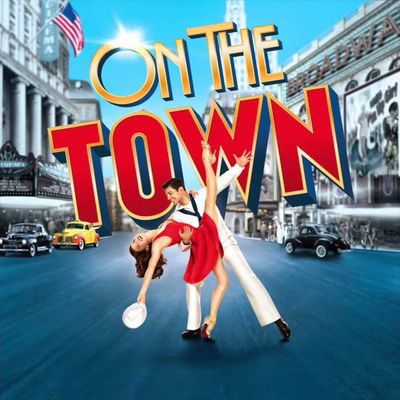
The Bronx is up, the Battery's down, and Jimi and Tommy are right here delving into the Americana classic of a musical On the Town. Lenoard Bernstein (or is it Bernstein), Betty Comden (the bombshell that she is) and Adolph Green (he’s there too) have devised a wonderful, timeless(?) classic in this show which might, indeed, be the FIRST true musical comedy!.. Read More
From the show: Jim and Tomic's Musical Theatre Happy Hour
Guests


Featured Shows
About
The Bronx is up, the Battery's down, and Jimi and Tommy are right here delving into the Americana classic of a musical On the Town. Lenoard Bernstein (or is it Bernstein), Betty Comden (the bombshell that she is) and Adolph Green (he’s there too) have devised a wonderful, timeless(?) classic in this show which might, indeed, be the FIRST true musical comedy!
SHOW NOTES
It’s like she’s in the room with us! Enjoy the incomparable Christine Pedi…or, perhaps, the real Liza Minnelli answering “Vogue’s” 73 questions.
Tommy’s never seen it, have you? Enjoy The Simpsons musical Springfield Springfield.
Come along with Jay Armstrong Johnson as he takes us on a tour of the newly re-renovated Lyric Theatre for the 2014 production. Did he mention the pit? It’s for the big orchestra. It’s really big. And they have it. In this show. And they really want you to know about it.
The Boettcher Concert Hall (home of the Colorado Symphony) is truly a magnificent space. Next time you’re in Denver, see if you can grab some tickets!
Or if you end up in Glasgow instead, come and enjoy one of Acquire’s musical theatre sing-throughs! Maybe you’ll spy a familiar (single!) podcaster in the company…
We owe a good chunk of research for this episode to Dr. Katherine Baber and her article "Manhattan Women": Jazz, Blues, and Gender in On the Town and Wonderful Town. If you’re doing work in this area, this is a publication worth a read.
And then here’s something for our boys on the front lines! Chattanooga CHOO CHOO!
Or maybe this is why you’re in the show notes: enjoy a baby-faced Lea DeLaria and an even babier-faced Jessee Tyler Ferguson on the Rosie O’Donnell show.
Can’t get enough of Lea DeLaria? Here she is at the Newport Jazz Festival with a swingin’ take on The Ballad of Sweeney Todd.
And, if you want to join Tommy on his whirlwind cab tour of places-that-don’t-exist-anymore in NYC, here’s our itinerary. Buckle up!
Transcript
This transcript was automatically generated and might contain errors.
[0:00] Jimi: And then you're, like, cut stuff and then, like, the conga stuff.
[0:05] Tommy: Could that go in Bernstein chat? Sure, yeah. I also, like, we could talk about the ballet in there too.
[0:11] Jimi: Yeah. Yeah, that's, like, the kind of content chat, isn't it?
[0:18] Tommy: Yeah, I think that's a good segue, like, from synopsis to Bernstein to sweet Americana. I'm gonna try real hard, Bernstein. Is it Bernstein? Oh, f**k, now I don't know.
[0:30] Jimi: Bernstein. I bet you were gonna get two different ones.
[0:36] Tommy: Leonard Bernstein. Bernstein, so says Lauren Bacall.
[0:45] Jimi: Okay, I would trust her.
[0:48] Tommy: I was, like, scrolling through it. It's a Kennedy Center's honors. And it just cut to Bernstein, and I was like, well, all right, we'll take it. Thank you.
[1:01] Jimi: Welcome to Jim and Tomic's Musical Theatre Happy Hour. I'm Jimi.
[1:08] Tommy: And I'm Tommy. And this is the only musical theatre podcast with rum shacks.
[1:12] Jimi: And comebacks. Here we take apart your, I see your eyes, your favorite shows, muddle them together with a shot of buffoonery and pour you a refreshing glass of musical theatre conversation.
[1:25] Tommy: Tommy, what are you drinking today? We do this as a schtick every time. And, like, it still takes me by surprise. Like, we'll do all this. We've been sitting here for, like, 15 minutes already, prepping for this episode. And I've put no thought into—
[1:42] Jimi: It's been two and a half years, and yet you still haven't thought of a drink related to On the Town. What year is it? No, I'm obviously drinking some complimentary champagne for Miss Turnstiles. Very great work.
[1:55] Tommy: Thank you. Thank you. Real good work. Do I say one? I can't remember.
[2:02] Jimi: I don't remember either.
[2:06] Tommy: I don't think I do. No, I think I think then usually you say, why is that? And then I'll read the quiz question. We have a quiz question from just last month.
[2:14] Jimi: Yeah, just last, yeah, last month. Sorry, guys. There's a little bit of a delay. A couple of weeks. It was widely rumored that lanky dancer Frank Sinatra padded his hindquarters with handkerchiefs to fill out his uniform whilst filming this movie. What show are we talking about, Jimi?
[2:31] Tommy: We are talking about On the Town.
[3:02] Jimi: I love lanky dancer. Lanky dancer is funny.
[3:23] Tommy: I just picture him as Lanky Kong from Donkey Kong 64. But the other two are just sailors. It's not like three Donkey Kongs. It's Gene Kelly, the other guy whose name I never remember, and Lanky Kong.
[3:38] Jimi: Frank Sinatra.
[3:40] Tommy: No, no, Frank Sinatra is Lanky Kong in the movie. Oh, sorry. Keep up with the fiction.
[3:46] Jimi: I've got it. I've got it. Nobody knows the other guy's name. I don't think they knew.
[3:51] Tommy: No, he just wandered on the set one day.
[3:54] Jimi: Bless him. Oh, I was gonna write a note in the thing, just saying the words, Ann Miller, just so I could say, Ann Miller. Did you get that?
[4:04] Tommy: That's What's-Her-Face, who does Fosse dancing.
[4:09] Jimi: Christine Pedi.
[4:10] Tommy: Yeah.
[4:11] Jimi: Ann Miller. It's in her Liza Minnelli video.
[4:14] Tommy: That's what it is.
[4:17] Jimi: Ann Miller.
[4:18] Tommy: Well done. I felt like Liza was in the room with me.
[4:22] Jimi: Thank you. It's specifically Christine Pedi doing Liza.
[4:27] Tommy: That's not actually Liza Minnelli in those skits.
[4:30] Jimi: No, it's not. I know. I know. I was broken hearted, too.
[4:34] Tommy: What are we talking about? On the Town.
[4:37] Jimi: Yes, we're talking about On the Town. So listen, that is a musical by—
[4:43] Tommy: We are rusty.
[4:45] Jimi: We are, with book and lyrics by Betty Comden and Adolph Green.
[4:50] Tommy: Do I get to say shout out to Comden and Green?
[4:52] Jimi: A risk was taken with On the Town, and look what happened. Betty and Adolph burst onto the scene.
[5:00] Tommy: Shout out to Comden and Green.
[5:03] Jimi: Have we done a Comden and Green?
[5:05] Tommy: I don't know that we have.
[5:07] Jimi: I don't know that we have either, which is like, weird.
[5:11] Tommy: Yeah, they're so— we'll get into it. All right, take a shot.
[5:16] Jimi: We're back.
[5:17] Tommy: Music by Leonard Bernstein premiered on Broadway in December 1944, revived in 71, 98 and 2014.
[5:27] Jimi: Yes, and there was a huge movie, Landmark, in 1949, which included new songs by Roger Edens and lacked a substantial number of songs by Leonard Bernstein.
[5:43] Tommy: Yes, it did.
[5:44] Jimi: Yes, it did.
[5:45] Tommy: Apparently, they're too busy. Too busy.
[5:48] Jimi: Too busy with what?
[5:49] Tommy: No, as in the music was too busy. It's too much—
[5:51] Jimi: Oh, yeah.
[5:52] Tommy: Well, the film audiences will get it.
[5:54] Jimi: No.
[5:56] Tommy: How things have changed. Like, honestly, actually, what a flip, right? If you look at kind of where the discourse is between how— not, I think, what actual movies and actual musicals are like today, but what people think they are. Musicals are like, oh, yes, it's easy and fluffy, and movies are like, Oppenheimer's three hours long.
[6:14] Jimi: Exactly. Hans Zimmer.
[6:16] Tommy: Hans Zimmer!
[6:20] Jimi: Anyway, can you tell us what On the Town is all about, Tommy?
[6:26] Tommy: God, I gotta do it? Okay.
[6:27] Jimi: Yeah.
[6:28] Tommy: No, I think we established that you only do them because I can't, because we'd be here for 40 hours.
[6:34] Jimi: Um, On the Town, my theater history professors would be proud, strictly adheres to Aristotelian unities in that it does only take place over 24 hours. The Greeks would be so proud, thank you.
[6:50] Tommy: Three sailors are on shore leave just for one day. We follow their many escapades. They're looking for sights, lights, and nights in New York City, trying to find something fun to do, or, pardon the expression, someone fun to do.
[7:08] Jimi: Someone's been DMing for a long time, by the way. That was incredible.
[7:14] Tommy: This man paints a bloody picture. That's sensational. They should hire you to write the blurb for On the Town.
[7:23] Jimi: Uh, so we follow these Navy sailors, Gaby, Chip, and Ozzy, as they search for women and sights in New York City and get up to some crazy hijinks along the way.
[7:34] Tommy: Hijinks. Um, yeah, there's chases, there's museums.
[7:38] Jimi: There's like 16 chases. I was reading, this is my life, I was reading through the score, and every other song, all the incidental music, at least in what seems to be the, like, concert score, it's just labeled chase music, and another chase music, and here, and we're chasing again.
[7:56] Tommy: Yeah.
[7:57] Jimi: It's wild.
[7:59] Tommy: Yeah, it is mad. But hey, I'm sure we're gonna get into that. Drink again. That was creepy.
[8:07] ♪ Musical number: "Gaby's Coming" ♪
[8:41] Tommy: Shall we dive in?
[8:42] Jimi: Let's shall. You know, what we do, and I forgot that we normally do this, what's your, what's your experience with On the Town? Like, when did you encounter this?
[8:51] Tommy: I saw my friend's recorded Amdram production in, I would say, like, 2014.
[8:59] Jimi: Okay.
[9:00] Tommy: And I enjoyed it.
[9:02] Jimi: Yeah.
[9:03] Tommy: That was my first experience, and I have continued to enjoy it since. What's yours?
[9:11] Jimi: I think, I'm trying to remember, the revival was in 2014?
[9:17] Tommy: Yeah.
[9:18] Jimi: I think that was before I was doing Tony Award sum-ups?
[9:24] Tommy: No, you've definitely, I think you definitely did On the Town in one of them.
[9:27] Jimi: Have I talked about this one?
[9:28] Tommy: That's sad that I know that. I'm sorry.
[9:31] Jimi: No, that's fine. When my whole life is online these days, it's hard to remember.
[9:36] Tommy: No, maybe I'm getting confused with American in Paris, because they're the same.
[9:39] Jimi: Oh, because they are the same. It might be that, and I might be doing the same thing.
[9:42] Tommy: My brain train was, I, like, have missed this one. My deepest association with On the Town has been in preparing for this episode.
[9:51] Jimi: Oh, cool. Interesting.
[9:53] Tommy: I had seen clips of the movie on my grandma's That's Entertainment VHSs, which were like MGM compilations and stuff. And, you know, everyone knows New York, New York.
[10:07] Jimi: Yeah, exactly. Everyone's seen the Simpsons episode, Springfield, Springfield.
[10:11] Tommy: Well, not me.
[10:13] Jimi: Yes, you must have.
[10:14] Tommy: No, I'm not a Simpsons guy.
[10:17] Jimi: Wait, do we always reference the Simpsons?
[10:19] Tommy: I know.
[10:19] Jimi: Or is it just me that references them?
[10:20] Tommy: It's just you that references the Simpsons.
[10:22] Jimi: Sorry, thanks. We're warming back up, you know, we're getting used to the tropes.
[10:27] Tommy: Oh, that's interesting. Oh, wow. Yeah, they do a parody.
[10:30] Jimi: Okay.
[10:30] Tommy: There's a show note. Yeah, that's interesting. So it's not like a big am-dram, like, college, high school shenanigans.
[10:39] Jimi: No, and I'm fascinated because I have gotten this sense only, like, I don't have any hard research to back this up, but this is one of those, like, Americana as exoticism kind of pieces that becomes popular in non-stateside stuff.
[10:59] Tommy: Interesting, yeah.
[11:00] Jimi: Because it's, you know, I say that it's been revived four times, three times, four times.
[11:08] Tommy: But still, like, I don't, it's not a kind of show that hits high schools and colleges very often, at least not in my experience.
[11:15] Jimi: Because, like, you would think it's a goldmine because you've got three leading females, three leading males, fun supporting characters, good songs, recognizable. Like, there's lots in there that's appealing.
[11:24] Tommy: It's pretty high school appropriate for as raunchy as it is, like, it's, you know, in that kind of grease kind of way, it's easy enough to balderize.
[11:35] Jimi: Don't need a crazy set. That's interesting.
[11:38] Tommy: You do want a big orchestra, and that's tough.
[11:41] Jimi: But then how many high schools are doing West Side Story?
[11:44] Tommy: That's fair. Yeah, no, good point.
[11:46] Jimi: Interesting.
[11:48] Tommy: Yeah.
[11:48] Jimi: Our first interesting point of the day, ladies and gentlemen.
[11:53] Tommy: I won't keep doing that, that's not fun.
[11:55] Jimi: But we're not going to become one of those podcasts.
[11:58] Tommy: Boing!
[11:59] Jimi: Unless you want us to, in which case, you know.
[12:01] Tommy: No one, no one wants that.
[12:03] Jimi: No, no.
[12:03] Tommy: I would need to set it up every time.
[12:05] Jimi: I can't be bothered with that.
[12:07] Tommy: That'd be too, too.
[12:09] Jimi: Jimmy has a soundboard.
[12:10] Tommy: I don't think we said it out loud.
[12:11] Jimi: Yeah, exactly. I've got a soundboard now, guys.
[12:13] Tommy: Wow.
[12:14] Jimi: Oh, yeah.
[12:16] Tommy: Okay, that's, that's a really, that is interesting. Because I just figured you would be an expert on this, because it's, you know, it's on a dime.
[12:24] Jimi: Yeah, no, no. Like, I'm watching me forget all their names. I was able to get it right the first time.
[12:30] Tommy: Yeah, how did you do that? How did you do that in terms of an introduction?
[12:34] Jimi: And yet, my brain works in mysterious ways.
[12:39] Tommy: I was about to do it again. I'm not going to.
[12:43] Jimi: Anyway.
[12:43] Tommy: Quick, run away from your soundboard.
[12:45] Jimi: Hop on my soundboard. Let's talk about Leonard Bernstein.
[12:47] Tommy: Whee!
[12:56] ♪ Musical number: "Miss Turnstiles for June" ♪
[13:41] Jimi: Okay, we're going to say Steen.
[13:46] Tommy: We're going to say Stein.
[13:49] Jimi: We don't know what we're saying.
[13:50] Tommy: Sorry, and we looked it up beforehand. I found a clip of Lauren Bacall saying Leonard Bernstein, and I think that's it.
[13:57] Jimi: Lauren Bacall says Stein, so we're saying Stein.
[13:59] Tommy: Yes, and I don't know if I've ever said this publicly. I said it apparently wrong in one video a million years ago, and now I get nervous about it every time.
[14:11] Jimi: What, did you get, like, kicked back because of it?
[14:13] Tommy: Well, I got a YouTube comment, which, you know, is soul-destroying.
[14:19] Jimi: Yeah, it is.
[14:20] Tommy: It was literally, like, it's actually Bernstein.
[14:22] Jimi: Yeah, it was phrased in that font.
[14:28] Tommy: Wow, well, you know, people have lots of time on their hands.
[14:32] Jimi: Yes, so we've not done a lot of Bernstein. In fact, we kind of, we were thinking the last time we did a Bernstein, we also took quite a large hiatus.
[14:42] Tommy: Yes, we did.
[14:44] Jimi: So, but I think that might have been due to the pandemic, which I feel like we can't be held accountable.
[14:49] Tommy: Who didn't take a hiatus then?
[14:50] Jimi: Yeah, I mean, do you think of...
[14:56] Jimi: As primarily a musical theater composer?
[15:03] Tommy: Yes. But just because the majority of things I know of his are his musicals. But I appreciate that he has so much more to him that I am quite ignorant of. And I have not yet seen Maestro.
[15:18] Jimi: Sure. I haven't seen it either. Yeah, I'm curious, just because, like, he sits in this place in my brain, at least. Nowadays, we'll get like maybe Sondheim in concert, like an orchestra company doing the pieces of or here is a concert production of, you know, Into the Woods or something to name something right, like beyond Kennedy Center and on course and stuff, but like more regional stuff. Whereas like Bernstein, you'll see all the time, right? People will do On the Town. People will do Candide. People will do all of the music of West Side Story, which doesn't happen with other composers in that way.
[16:10] Tommy: Not really, no. I mean, I think as well, like the audiences that are attracted to that, maybe West Side Story is a little bit of an exception there. But I feel like, and I think we talked about this in when we did Candide, but like it's attracting a much, it's a very different quintile, maybe not to like a contemporary Broadway audience or probably a similar echelon. But it feels like it's more of the classical side into him compared to the musical theatre set. And I think a lot of them appreciate the music of it as opposed to the musical comedy, right? He is a proper composer when viewed through that lens. Whereas like I don't buy and like I'll hop on this boat too. But I don't know how much I view Andrew Lloyd Webber, let's say, as like a composer.
[17:02] Jimi: Right. He's a musical theatre author, which is exactly somehow. And I think it's tricky because this and this is always something I still always find hard wrapping my head around is like the composer of a musical, right, obviously doesn't do the orchestrations of a musical. Right. Not necessarily.
[17:23] Tommy: But a lot of most of them don't. Most of them don't. You know, some of them are literally sitting at a piano and then they give that away. Some of them like Jason Robert Brown gets very involved in his orchestrations, you know, like for things like Parade and stuff. He was all over that. I don't know enough to know actually what his involvement is. I'm pretty sure he like if not, I don't know if he has an orchestrator. Right. Like I think that's his whole shtick.
[17:51] Jimi: Yeah, I mean, like he is one of those we know he could do it. You know, he's a symphonic composer, so he can write for symphonies. I just wonder if there's a if it's one of those like production kind of things where it's like actually behind the scenes and either, you know, in your contract or in the contract of this, like whatever unit, yeah, there's a thing of like, no, you need to work with an orchestrator, you need to have a music supervisor or something like that. I don't really know.
[18:23] Tommy: Yeah, because that's the question. Nobody's talking about this to sidebar briefly. But this is a bug has been a bugbear of mine forever and is like a core to our industry. Both theater movies do this too, right? You'll see, you know, a score composed by Hans Zimmer. Right. And like Hans Zimmer had a lot of the ideas in that score and is kind of the score director, if you will.
[18:55] Jimi: The rubber stamp. Yes.
[18:56] Tommy: But there are always, especially nowadays, a team of folks working behind the scenes. It happens with lighting designing on Broadway and elsewhere, too. And that bugs me deeply as a core lighting designer. Be like, you know, Ken Billington designed the lights for this show and like, well, it's Ken Billington and his shop. Right. And his everyone else that works with him. And, you know, I wish. Well, I was about to say, I wish we had moved beyond that. The flip side, right, is is writing and design by committee. And that's tough, too.
[19:34] Jimi: Well, exactly. Yeah. You know, the list of, right, they're in the playbill. That's probably going to be the thing, isn't it? And I don't know. I always find it. I find it really interesting because, you know, if I was an orchestrator, would I be pissed off? Like if I was Jonathan Tunick and I'm like, I know that I've made so many of these musicals, right, absolutely iconic, right. And like when people are like studying them, right. Studying my work. Right. Well, and doesn't sometimes several times, like in almost all of his Tony exceptions, thanks to Nick. Right. And a couple of times it's like we need a Tony for orchestrations. This is bullshit.
[20:11] Jimi: There is. It's just I mean, it's baffling because the work and it is artistry. It's not it's not even like paid by numbers. I'm ticking and ticking boxes here. Artistry and creativity is immersed in this. It's half the show. I mean, to bring it back to On the Town. I had this thought while I was watching it. I in my time working in high school theater, I encounter a lot of directors where especially in high school, especially with academic orchestras, you cut underscoring left and right because it's too much to do. It's just it's too much to learn. But like I always bemoan and I'm sad about those moments because like it is the underscoring that makes the show sometimes.
[21:03] Tommy: Exactly.
[21:04] Jimi: And yeah, there's some beautiful and like themes, motifs, that's where they all exist, right? I mean, and like half of On the Town is just underscored. Right. It's got how to do is and ballet in it. Right. Like imagine. And we're going to do this. But without the music. Yeah, I just I don't it's baffling. It's baffling why they just they're not as core of a part. And I appreciate, you know, it's. Well, I assume it's because it's not it's tied to the production, it's not tied to the score. I suppose it is because then, yeah, licensable score.
[21:38] Tommy: Yeah.
[21:39] Jimi: Tommy, I don't get it.
[21:41] Tommy: I don't get it either. Anyway, pretty sure old Lenny wrote his all his own music, so to speak.
[21:46] Jimi: Yes, exactly. Or at least certainly for this one.
[21:49] Tommy: Yeah. Which does I mean, there's a lot of discussion about how he is. And you hear it, too, right? He's blending these kind of like, I don't know, call it classical music. I think that's an oversimplification. But like what we would call the standard orchestral language of the day.
[22:11] Jimi: Symphonic.
[22:12] Tommy: Yeah. Yeah. But then, like, you get a jazz motif in there, right? You get an upright bass. You get what we now know is a musical theater sound. We're in the 40s now. This is all brand new. Everyone's kind of figuring it out anyway.
[22:25] Jimi: 100 percent. It's cool. It's so it is so cool. And I think the way it kind of just it feels like it properly like swings from genre to genre, like it doesn't kind of allow you the space to, like, get comfortable, like, and this time we're in a swing number now, right? This one's a jazz piece.
[22:46] Tommy: Yeah. It's just like halfway through a song. He'll like dunk and then you're in this next one.
[22:51] Jimi: Yeah. It's fantastic because it is it's that's I mean, I think we're going to speak a bit about like New York a little bit, but that's how he is evoking that city. That city that is this melting pot of people and melting pot of music and genre.
[23:07] Tommy: Yeah.
[23:08] Jimi: You look one direction, you see that you look over there, you see something completely different. And I think that's, yeah, really prevalent in that score.
[23:17] Tommy: Absolutely. Well, and it is interesting that he right. We're in the period of the great legitimisation of musical theatre, we're just a couple of years off on Oklahoma. Right. We're with the integrated score and book and all that. And the fact that he's coming in here and throwing in what is pop music, like popular music of the time, when they're, you know, we're still at the time when every show needs to have a dream ballet to prove that it's a real piece of art.
[23:45] Jimi: Exactly, exactly.
[23:48] Tommy: Yeah, I find it so interesting because like a lot of the stuff you read about this, there's loads of discussion of like Wagner. I'm like, ah, that wasn't that long ago in this world. I mean, like that's so weird to wrap my head around, because to me that is like, oh, that's the origin, like that's the beginning.
[24:03] Jimi: Yeah.
[24:06] Tommy: And actually that's how close we are here. But yeah, I mean, like if you if you think of a number like I Can Cook To, right, that is just you can imagine Ella Fitzgerald presents I Can Cook To, you know, like that wouldn't be weird at all. It's just straight up. And yes, it is still musical theatre, still a character song. And actually, if that was in written for a show today, you wouldn't be like, wow, that's my field. You'd be like, oh, yeah, great. Stick it in all the audition books.
[24:37] Jimi: It is the things that probably date this show today. I guess this make now I'm going to say this out loud and it sounds stupid out loud, but like the things that make this show seem old now made it seem contemporary then. And the things that were weird then are like seem pretty normal now.
[24:55] Tommy: Completely normal.
[24:57] Jimi: Which like speaks to how, you know, this is this in many ways was the model.
[25:07] Tommy: Oh, I can cook to a top of the rest. My seafood's the best in the town. Yes, I can cook to. My fish can't be beat. My sugar's the sweetest around. I'm a man's ideal of a perfect meal right down to the demitasse. I'm a pot of joy for a hungry boy, baby. I'm cooking with gas. Oh, I'm a gumdrop, a sweet lollipop, a brook trout right out of the brook. And what more, baby, I can cook.
[25:40] Jimi: Even in the midst of researching this, I hadn't I still place Oklahoma in my head before it.
[25:46] Tommy: Yeah, I mean, yeah.
[25:47] Jimi: And it's it's absolutely like this is this was doing everything. And I think because we've done Oklahoma, haven't we?
[25:54] Tommy: Sure we have.
[25:56] Jimi: If we have, I think we have. No, we have. We definitely have. And I think in that we talk about like this, the beginning, nothing before that. And here's On the Town very comfortably. Yes. Like, yes, there's lots in it that is much more on your operatic side. You know, there is ballets upon ballets. And, you know, we're we're living in is it guess I'm Kunstwerk. Is that what that one is?
[26:19] Tommy: I don't know the word you just said.
[26:23] Jimi: Guess it's I think that's the Wagner one. Anyway, correct me. And we're living very much in that world of like everything together. This is spectacle and this is theatre. But the narrative, the storytelling. He's there, and I think it's so interesting because like because they I don't know whether it's because they were such good friends or there's just lots because they were so kind of iconic. There's lots being written about them. But they they talk so much about how music and character is integral to each other. And like there's kind of no point in writing a song for a piece like this if it's not supporting the character.
[27:10] Tommy: Yeah. And that in many ways is like a radical thought.
[27:15] Jimi: Yeah. You know, I mean, we, you know, extolling the virtues of Bernstein here and it we shouldn't miss out on mentioning Condon and Green exactly revolutionize the media like in a thousand ways. They're also and I forget this every time they're in the damn thing. It's like it. What a what a wild ride to. Did you know they still had to audition?
[27:41] Tommy: I did not know that they had to audition.
[27:44] Jimi: Thank goodness. I mean, good.
[27:45] Tommy: Yeah. Still.
[27:47] Jimi: I love that.
[27:48] Tommy: But hilarious that they're like, you know, do you know the sites?
[27:51] Jimi: Yes. Yes.
[27:53] Tommy: Yes, I do.
[27:54] Jimi: Literally, they came from my brain.
[27:56] Tommy: I love that they like in the audition, like doing an edit of like, actually, do you know what? Actually, no, I don't like that line. We're going to do it differently. Sure. That's fine. Proceed. I thought that's so funny that they had to do that. But yeah, I think like the the the kind of three of them as a core. And it's I don't know, but I don't know whether it's just because Merrilee's happening at the moment.
[28:19] Tommy: Sure.
[28:21] Jimi: Every time I read about them, I just instantly think of the gang from Merrilee looking at Sputnik.
[28:25] Tommy: Yeah, that's them.
[28:27] Jimi: It's because it just feels like that. It feels like that's their friendship. I mean, I don't I don't know if this struck you, but like you got me the which is very how many songs since that have we gotten like friendship, friendship, a lot, a lot, a lot of ding, ding, ding, right? Have heavy wordplay in a like a bit piece about how we're good, good friends. But also, I mean, I can imagine Comden Green and Bernstein singing that after a couple of drinks at a party.
[29:00] Tommy: Right. That's the self insert.
[29:02] Jimi: One hundred percent. And also, I suppose we should also say Jerry Robbins is also in the mix. He's also he's there. He's less he's less a close friend because Comden Green and Bernstein knew each other from back when they were writing for like like they had a review show.
[29:17] Tommy: Yeah.
[29:20] Jimi: And Bernstein saw that and went to see that and then Jerry Robbins came into the fold and everything. But I think by the looks of it, they all got on really, really well.
[29:27] Tommy: Yeah. Which is I mean.
[29:30] Jimi: I don't know. It is it is interesting to go through the literature and letters that exist about a show and not find the like and here's where we had our authorial disagreement, right?
[29:43] Tommy: Yeah, yeah, yeah, yeah. Like every show has at least a little bit of that, which I think that comes with the territory.
[29:52] Jimi: But yeah, no, they seem to have got along quite well. Like, I guess they all did Wonderful Town later, but there's not like a huge corpus of Bernstein, Compton and Green.
[30:04] Tommy: Yeah, I think Bernstein did something for Peter Pan as well, so he was like about... and they were involved in the first revival. They were all there for that and like did a couple of tweaks and things. But I think, yeah, this idea, because obviously prior to On the Town, Compton and Green hadn't written a musical before. This was completely new. I mean, not a lot of people had written a musical before.
[30:31] Jimi: Right, exactly. But they hadn't written for the theatre and very much they wanted to take a chance. I think it was they wanted Arthur Lawrence and someone else to do the lyrics. And yeah, it was Bernstein himself being like, actually, I would like to use these guys. They're very, very talented. They understand satire really, really well. And they took a chance on them. So here you've got like three very young, kind of prodigious kids who are like starting out, you know?
[31:08] Tommy: Yeah. That's the other part about it that is always so hard to wrap my brain around. It's like, what? They're in their 20s, right?
[31:12] Jimi: Yeah, yeah, yeah. And I think with Bernstein, this is where you see the prodigy of this, because by this point, I think he's conducted the New York Symphony Orchestra. And yeah, exactly. And I think he's literally like 27. It's mental. And I think also Jerry Robbins was also in his 20s. This is like origins.
[31:36] Tommy: Yeah. It's so fun. It's real, real fun.
[31:39] Jimi: Yeah, it's lightning in a bottle. We're in that time that kicked off this art form.
[31:46] Tommy: Yeah, it's just cool. It's nice that this is the comeback, isn't it? We're going right back.
[31:53] Jimi: Oh, beautiful. It's like we've learned it. We didn't.
[31:56] Tommy: Unless someone's listening to this like three years from now, which people do, which is great. And I love you all. So greetings from the past. Hope our future cyber overlords are treating you well.
[32:05] Jimi: Exactly. I hope they're at least giving you like bread or something.
[32:10] Tommy: If you committed moida and got caught like a dope and had to hang until your life was done, I'd holla go no foida, voice fetch another rope. I'm hanging with him. I'll stick to your son. I'll always be beside you. I'll stick to your son. We'll go through life together. As the flypaper told a fly, I'll stick to your son.
[32:49] Jimi: I do want to just say a little thing about orchestras, though.
[32:54] Tommy: Sure.
[32:54] Jimi: Because there's going to come a time where the kids aren't going to know what that is, because there ain't going to be one in a pit. Because they're so expensive. And oh my god, that's so devastating.
[33:09] Tommy: Yeah, it's sad.
[33:11] Jimi: But that is a question, I suppose. Is that devastating or is it okay?
[33:15] Tommy: Well, the first thought that struck me, I combed through a bunch of promo footage for the 2014 revival. And half of it's about how they renovated the theater. And then half of the renovating the theater discussion is about, we had to make the pit bigger for Broadway's biggest orchestra, right? And there's a lot of now classic shows where one of their marketing materials is like, and a live, full, gigantic, 16-piece orchestra, right?
[33:47] Jimi: Yes, actually. 14 instrumentalists together, playing.
[33:52] Tommy: And I don't know. I mean, the Colorado Symphony Orchestra is a delight. I've been there a couple times now. I was there last week. They have a beautiful venue, Jimmy. It is gorgeous.
[34:08] Jimi: It is Boettcher Concert Hall. I think that's how you say it.
[34:11] Tommy: You Boettcher.
[34:13] Jimi: It's yeah, that's it. It's in the round.
[34:17] Tommy: It's the only fully in the round orchestra hall, I think, definitely in the country, if not the world. I'll put a picture in the show notes. This place is gorgeous. It also, I want to do a video about this, so I'm not going to say too much, but it has some of my favorite seats I've ever seen in the theater. It's the way to see a show.
[34:42] Jimi: Is it like one of these like proper acoustically treated ones as well?
[34:47] Tommy: It's supposed to be, you know, this beautiful, you can hear from anywhere. They have, so where we sat last time is in the upper ring. Above the catwalks, it is like maybe four stories, five stories up. There is this circle that encompasses the whole thing. One row of chairs, like movable chairs, and you're at such an angle where you have to like lean over the balcony rail to see anything. And it's built for that. It's like a padded, like chest leaning place. And let me tell you, like when they dim the lights and if you're into the music that's playing, like leaning forward like you're a kid dangling your feet over the catwalks, zooming your eyeballs in to watch a show is like a magical experience.
[35:35] Jimi: That's really cool. But like it's, the Colorado Symphony is struggling right now. I think a lot of symphonies across the country are struggling. No one wants to see in-person stuff and certainly no one wants to see the symphony, right?
[35:48] Tommy: Exactly.
[35:49] Jimi: Just music? What am I to do with that?
[35:52] Tommy: Right, exactly. And like, I don't know, does, like we, I will not argue, we are at a point where I think, except maybe to the most highly trained ear, you could do a fully synthesized orchestra and a properly microphoned full orchestra in a theatrical setting where you can't see them. And it would be really, really tough to tell the difference.
[36:17] Jimi: I fully agree. I absolutely do. I mean, you hear it in cast recordings, you know, so many of them are not going to be having a full blown orchestra. They're just going to work with some really good samples. And the technology is incredible. It just is. And, you know, shan for players, but it's, there is, we have to kind of face a reality here in that, you know, Broadway now is a money making machine and that is what it is only ever going to be. And they don't make money, you know, that's not helping anyone, you're losing seats. And it's not, you know, the cost of a very talented, you know, appropriate Broadway musician versus an 80% simulcra, like, yeah, that's a no brainer.
[37:11] Tommy: But like, I guess the question, I wonder what your thoughts are. If you go to see a show on Broadway, right, and they have a fly system that is completely manual, and there's a real guy back there and he's pulling on the rope and that's what's flying the drops in and out, right? Versus, no, we've replaced him with a computer and a motor. You don't care.
[37:33] Jimi: No, and you're probably like, thank God there's a motor because that's just going to fall and kill someone. Yeah, I mean, like that would be the fear.
[37:40] Tommy: That would be the fear.
[37:41] Jimi: Like, it's more accurate, it's more reproducible. And I would also argue that there is a performance in a fly person's job, right? How quickly you pull a rope, how quickly it comes in and out, there's a lot of nuance there.
[37:58] Tommy: Absolutely.
[38:00] Jimi: You know, is it the same with a violinist?
[38:03] Tommy: Yeah, I know.
[38:04] Jimi: It's a big one.
[38:07] Tommy: That's why I wasn't so dismissive of the argument, because I think there'll be plenty of people who'd be like, not fussed, you know what I mean?
[38:16] Jimi: Who won't know that.
[38:17] Tommy: I'm sure a lot of people go to musicals and think when they hear the band that that is at least 40 people, because that's what it looked like, do you know what I mean?
[38:27] Jimi: And they just think, oh yeah, they'll be in another room or they'll be under the stage, can't see them.
[38:30] Tommy: You might be able to see the conductor and you don't realize there's a line of eight players in front of him and that's it.
[38:34] Jimi: Right, and two of them have keyboards and one of them has a drum pad.
[38:37] Tommy: Three of them are keyboards, one of them's controlling the lights. Like, it's, you know, it's...
[38:41] Jimi: Exactly. I mean, this is why, you know, I'm sure we've mentioned it, but why so many shows are pit on stage these days, right? Because you want to show it off and if you're going to hire people, you might as well get your money's worth and prove that they exist.
[38:55] Tommy: Yeah, yep, yep, yep. It's mad.
[38:57] Jimi: It's absolutely mad.
[38:58] Tommy: But I don't know, I was going to say maybe we'll see a resurgence.
[39:04] Jimi: I don't think we will.
[39:05] Tommy: But we absolutely won't.
[39:06] Jimi: But I like to be optimistic, so maybe we'll see a resurgence.
[39:09] Tommy: There you go.
[39:10] Jimi: I like that.
[39:10] Tommy: That's nice.
[39:11] Jimi: One thing, I'm going to give my choir a shout out.
[39:14] Tommy: Well, we're no longer just a choir.
[39:16] Jimi: Are you talking about Acquired Glasgow?
[39:18] Tommy: Acquired Glasgow, hey, hey, hey.
[39:21] Jimi: But we now have a musical theatre orchestra.
[39:26] Tommy: No shit, that's so cool.
[39:28] Jimi: We will play through the score of a musical. We have very specific deals with our licensors, so I can't actually say what the musical is, but it's good and we've done it on the podcast.
[39:41] Tommy: But you're getting 40 to 60 players in a room and the joyous thing is we get to sing along with them and that is unreal and an opportunity you don't get.
[39:53] Jimi: Yeah, I mean, that's the thing, right? Like there is, you know, the joy of making music together is a different goal than putting on a show for a paying audience.
[40:06] Tommy: Yeah, exactly.
[40:07] Jimi: Exactly, Tommy. And there's a crossover, certainly. But yeah, it's different.
[40:12] Tommy: 100 percent.
[40:13] Jimi: Yeah, no, actually, that's a really good point. They are different things.
[40:16] Tommy: So keep the dream alive in your homes, kids.
[40:19] Jimi: Kid, we'll show you a great time tonight.
[40:22] Tommy: Yes, for the next six hours.
[40:24] Jimi: This town belongs to the Navy.
[41:22] Tommy: I was speaking of that wonderful. Here's the coming to you next high on that hot radio waves of American propaganda.
[41:32] Jimi: Yes, it's America.
[41:37] Tommy: Can I tell you a real thing I said to my partner while we were watching this movie? I was trying to unpack why they made such an Americana propaganda movie like.
[41:55] Jimi: Which means why?
[41:56] Tommy: Well, not why, obviously why. But theorizing as we were watching this, like, oh, this is a fluff piece for the Navy. This is like, yeah, go America. And like I had to eat my words going back through research like it's I couldn't find anything that was like, and here's where, you know, Compton and Green and Bernstein got pulled in by McCarthy. And so they needed to make a piece to prove that they were right. No, they're like, yeah.
[42:27] Jimi: Yeah.
[42:27] Tommy: You know, fuck, yeah, America. Like, yeah.
[42:31] Jimi: Which I don't know why my well, I do know why I couldn't wrap my brain around that.
[42:35] Tommy: Yeah, well, I think America in the 40s, wartime America was a very different America, I think. And I think there probably was a lot more like, like, praise, you know, and I think, yeah, like that, that is it's very much its own like its brand of like vibe is like wartime 40s America. Like it is there's so much contemporary references that we have that are tied to that in terms of like aesthetic and vibe.
[43:12] Jimi: And yeah, I think they were obviously all affected by that in some ways.
[43:20] Tommy: I mean, you know, Lenny Bernstein was Jewish.
[43:23] Jimi: Yeah, I think. In fact, I think they were all Jewish.
[43:26] Tommy: I think they all were.
[43:27] Jimi: I think they all were.
[43:28] Tommy: Yeah.
[43:30] Jimi: So there you go.
[43:33] Tommy: Right. That was a huge, a huge factor for them, I think. And, you know, obviously all living in New York, which even then was still a liberal place to live. And I think there is probably an element of like, well, we kind of want to write a little bit of a love letter to New York.
[43:53] Jimi: Yeah, right.
[43:55] Tommy: But but there's it is also a reactionary piece to, you know, New York was a huge wartime port. Like, yeah, watch the musical, right? Sailors would arrive all the time. And it's a constant reminder of like sailors. But it's it is interesting for a, you know, the movie is reset after the war. I guess the musical is a little ambiguous as to like, are we fully in wartime or not?
[44:25] Jimi: I think I think it is. I think it just is.
[44:28] Tommy: It feels like that.
[44:47] Tommy: My friend's high school production of it. And that song played, I was like, what is that? I was like, that is, like, that is so stunning. And it was purely just the first thing they did there. Oh, well, I was like, that's gorgeous. I was like, that's like, powerful. It like hit me. And I've listened to lots ever since and like thought about it and contextualizing things. And yeah, I just think that song is so, it exemplifies what I imagine was the feeling at that time that everyone could relate to of, maybe, do you know what I mean? Maybe I'll see you again. And whether that is the sailor that you've just hooked up with, whether that's your husband, whether that's your son, like, your brother, like, everyone, I think, can have that, you know, I don't know, just that feeling, that thing that they can relate to of, hopefully, we'll catch up, you know, it's bittersweet.
There's kind of nothing we can do about it. But let's hold on to the time that we have. Like, that's one of those pure, like, wartime feelings that I just feel they've captured so well. Does that make sense?
[46:06] Jimi: And it is interesting. I had not considered this before you brought it up. But like, that is as close as we get to any kind of, I don't know, like, true sadness in this show. And like, for a show, at least in this context, that is about wartime, yeah, that's an awfully restrained approach. And like, but, you know, we do see this. Like, I think this is an artistic trauma reaction to, we see it in a lot of different contexts, right, about like, but let's remember, let's remember the good times about the war, you know, and like, I joke, but it's true. And I understand why it would hit you like it does, because it is so reserved. Even the song itself, right, isn't like, oh, I'll miss you, and I'll never see you. And as I ship off again later, then we may...
[47:11] Tommy: Exactly, there's nothing grand about it. It's so simple. And all and it's just that I love this one so much. So like, it's the fact that these people have known each other for 24 hours. And you know, I have a little bit of a bugbear about that in some musicals of the like, we saw each other and then we're in love for 4000 years. And it's, you know, they feel like they've known each other for 24 hours. Like, yeah, that was, that was fun, wasn't it? Yeah, well, maybe see you soon. We've all had that moment. And I just think it's in that purely simplistic way. There's no melodrama. It's not. What's that train one with the handkerchief? What's that brief encounter? It's not brief encounter, right?
Which is the same thing. It is. It is just a brief encounter. Yeah. You know, and I just think it is. And even just in terms of the melody and the structure of it, like, it does swell, but it swells of the heart. And then it goes, ah, and then, oh, well, I'm gonna go back down again. And so that's a new month. There's no, there isn't a bum bum, right? Not that at all. That isn't what it's about. Yeah.
[48:22] Jimi: Because no, you can't, you can't guarantee that. You can't guarantee the bumper, because all you've got is maybe. Yeah. You know, so much.
[48:32] Tommy: I did not know, one, I did not know your love for this song.
[48:36] Jimi: Exactly. Not many do.
[48:42] Tommy: Man, I hope the cold open was about you being single, because.
[48:45] Jimi: I know. This is, this is your, this is your time.
[49:18] ♪ Musical number: "Some Other Time" ♪
[50:11] Tommy: And where, where it comes in the structure as well, like, there's a world where that could be the finale. And I think had this show been written maybe nowadays, or the 70s, you know, when we, when we take some more risks and we're happy to leave people upset or a little bit sad at the end, it could have been. Yeah. You know, but it's nice. I like, I like the finale. Yeah. That is in the show anyway. Yeah. And I love the like, well, I just topped off the bus again, ending of like, we're back. The circle begins anew. Yeah. That's, that's fun, you know, and again, it's realistic. It makes sense. Yeah, I just, I'm into it. I'm into it.
[50:56] Jimi: It is. It is interesting. Like I, as you said, a more contemporary musical might leave off on the sad note. But my first reaction was like, I don't think a lot of them do. Like, let's, let's take a very contemporary show, Hadestown, which from the very beginning, they say to you, this show's gonna have a sad ending. Yeah. And like, that's the whole point of the show. He's gonna turn around and she's gonna disappear and you're gonna be surprised by it anyway. Yeah. But, but if you actually break apart the actual show, as it happens, he turns around, she disappears, the lady in the back row gasps. It's beautiful. Yeah. And then we still spend like 10 more minutes being like, we told you it was gonna be like this.
And we said, well, you're getting happy, aren't you? Right? Oh, yeah. It's like, I was gonna be listen, guess what? Isn't it beautiful all along? It's beautiful, guys. Let's drink. And like, in on the town, it's like, well, some other time, we might meet some other time. How sad it is. Wait a minute. Oh, it's happy again. Exactly. And then we're gonna see you off. But like, it's still some other time. Right? So like, that's true, actually. That's true. We don't really do that. No, but what I was thinking, I was like, right, when, what are the ones that I'm thinking of? And the ones I'm thinking of are like Sweeney Todd, Pippin, right? Merrily, in a way, is disgusting, because like, right. It's heartbreaking.
[52:29] Tommy: Where, yeah, it's this, but when were they all written? Yeah. The 70s. So I think that's what they needed. If this was written in the 70s. Interestingly, if this was written when it was first revived, yeah, and had that change, maybe that would have been a different story, right?
[52:47] Jimi: It's a good question. I mean, it does it my mind is reeling like we, you know, just spent five hours talking about how this was the prototype for American musical theatre. And that there is kind of this pattern of like, it's a sad ending, but we're gonna make it appetizing with an upbeat bows, right? Like, yeah, yeah, yeah. It's just a very, I don't know, it's a pattern I hadn't considered before. Absolutely. Because it's the musical comedy. Right. You know, whatever that means, like, do you think I put this in this section? Is this the first musical comedy? I mean, I bet we've already said that about something else, but probably, but maybe I mean, like, I don't think Oklahoma is a musical comedy. I think it's a musical. It's an operetta, right?
[53:42] Tommy: Yeah. No, it's well, right. Where's where is your anything goes in this fair Cole Porter's sitting in this, you know?
[53:52] Jimi: Yeah. But like, anything goes, you know, if we're if we're drawing the kind of like mishmashed Venn diagram timeline of this, anything goes, feels prototyped from vaudeville, right? Yeah, it's like, we got a bunch of sketches, we got a bunch of numbers, we're going to throw together the musical, but it doesn't it's nothing. It's a they don't need to be together. We're on a boat. That should be actually the name of anything goes. We're all on the boat, dot, dot, dot.
[54:20] Tommy: Right. And like, Oklahoma has its roots in opera, more so, right? It's opera borrowing from vaudeville, but not birthed from it.
[54:32] Jimi: Certainly not a musical comedy.
[54:34] Tommy: No. Oh, right. An opera at comparison, for sure.
[54:39] Jimi: Yeah. But like, sketch writers to write sketches for this show, based on a ballet. Like, I think it's the first musical comedy.
[54:52] Tommy: I just find it interesting, though, because, like, I mean, we, you know, we nerd out and we read a lot of academic texts about musical theatre. This never gets mentioned. It never gets mentioned.
[55:04] Jimi: Yeah. And I think it is a, you know, musicals will always be the genre that are apologizing for themselves. And I think you see it a lot in academic discourse. You see it in the genre itself, right? The dream ballet joke is a dead horse at this point.
[55:18] Tommy: Yeah, true.
[55:19] Jimi: But like, it is, I don't know, there is a reticence of embracing that art form, right? Which I guess it would be, my brain's like trying to draw a contemporary comparison. And I imagine that's like saying, like, well, let's look at how important the Saturday Night Live sketches were from 1981, right? Like, that sounds ridiculous. So like, there is an essence of that baked into it as well, right? It's a musical comedy. It's fluffy. But like, they took it seriously. And I don't know, I always find that so heartening.
[55:59] Tommy: Yeah, very much so. I like, I don't know, I like that we're talking, we don't have a place in this, but I do like that we're talking about it because it's, yeah, if everyone, everyone always says, it's Oklahoma, it's showboat. And, you know, this was very much here and it's still doing lots of wonderful, wonderful things that are our genre defining. And maybe actually it took the genre a little while to catch up with quite a lot of things these guys were doing, you know? Absolutely. Because, so I think it's really important to kind of talk about here. If we're talking about this show as a reflection of America, the America that they create in this show is a really beautiful place because everyone's there, you know what I mean?
And it's fine that they are. Literally, no one was doing that at that point. So this was so bold. You wouldn't know it, you know, looking at some of this stuff today, like, especially if you watch the movie and you hear us say, like, yeah, look at this very progressive, non-racist thing. You'd be like, wait a minute! Yeah, exactly. Look at the 2014 revival. Right? But for its time, you know, like in the 40s, they had an integrated cast.
[57:23] Jimi: Even just as we've talked about before, right? And this is going to sound very La La Land, and I know that, right? But Bernstein is using a bunch of jazz motifs and swing and, like, music of black folk in a popular medium and blending it together unapologetically in what is, quote unquote, and I know this is so problematic, but like an elevated, higher form of art. Absolutely. It's a big deal. It's a big deal for its time and is easy to overlook through today's lens. Massively. And I think, yeah, we haven't really said what would be basically they had, like, a mixed race cast. Yeah. Like there were, like, black male sailors dancing in the chorus with white female sailors. Yeah. Very happily in the curtain call. Everyone was all together. The lead to play Ivy is Japanese American. And yeah, the first conductor of this, Everett Lee, was the first black conductor of any musical.
[58:37] Tommy: Like, these are like landmark things. And I think I want to just double check this, but I think even at the time, the Navy itself was still segregated. Really? I'm pretty sure. Let me just double check. Yeah. I mean, up until 1942, at least, there is still a bunch of pressure about even enlisting black folk in the Navy. Oh, my gosh. March 1944, the first group of African-Americans commissioned as officers. Like, so to have. Yeah. Well, that's just it's like, this isn't it's not like hot take. It's right. No, this is just this is the story. Thank you. Let's proceed. Yeah. Come on. That's incredible. And I love what I love as well is that it was and Lenny, Betty and Adolph who were like championing that. And that was a big part. Like it was Bernstein who was he was fully championing Everett Lee to be the conductor. He'd seen him conduct. And so.
[59:44] Tommy: I can't remember. That's awful. He'd seen Conduct and was like, I want him. In the meantime, Oscar Hammerstein was like, he ain't conducting my show because it won't sell when it goes on tour in the South. You know what I mean? That was a big consideration for Bernstein. So come on now, that's just great. Big steps. And our requisite asterisk, we're two white guys talking about this, and this is white saviorism through a contemporary lens. And it doesn't mean we shouldn't acknowledge these successes for what they were at the time.
[1:00:17] Matthew Feeney: Exactly. Because until we were researching the show, I had no idea that this show was doing that. And I would never have thought that, honestly. Again, you look at the film, you look at the revival, the most recent revival, you think, oh yeah, that makes sense. It's a big white show. Because it's Americana, you feel like that's what it's probably going to be, you know? And then, ta-da, it's not. So, listen, hats off to them.
[1:00:47] Paul: Well, they're taking some steps.
[1:00:50] Matthew Feeney: They are. Well done, guys. They'll be listening.
[1:00:56] Paul: We love Jeff and Tomek's musical theatre.
[1:00:58] Matthew Feeney: Are any of them alive?
[1:01:00] Paul: No. No. No. But interestingly, the Everett Lee, the conductor, I think only died a couple of years ago.
[1:01:08] Paul: No way.
[1:01:09] Matthew Feeney: Yeah. 105, he lived to.
[1:01:11] Paul: Holy cow.
[1:01:12] Matthew Feeney: Yeah. He moved to, I think he moved to Sweden. I think that was the, or Switzerland, one of them. I think that was the ticket.
[1:01:19] Paul: That's the dream. That sounds awesome.
[1:01:20] Matthew Feeney: Outside air, you know?
[1:01:21] Paul: Yeah.
[1:01:22] Matthew Feeney: So yeah, good on him. Big fan. Big, big fan.
[1:01:27] Paul: Well, no, I got this. Speaking of clean, fresh, outside air, do you want to talk about New York?
[1:01:36] Matthew Feeney: The city of clean, fresh, outside air, 100%.
[1:02:32] Paul: Okay, listen, Tommy, there's no lies that I love New York.
[1:02:43] Matthew Feeney: Yeah. What's your favorite? Will you list off the many sites you want to see in New York in song?
[1:02:50] Paul: Only if you're driving the cab.
[1:02:53] Matthew Feeney: Well, I don't have a lot of proof on this. The only photos I could find of the cab that are contemporary with the original production are from, if I can find the link again, I'll put it in the show notes. They're a newsreel, like a send this to the boys overseas newsreel footage of Come Up to My Place. And then, bizarrely, Chattanooga Choo Choo.
[1:03:26] Paul: Pardon me, boys. Yes, watch in.
[1:03:31] Matthew Feeney: And it's a delightful, whoever's playing, I feel bad that I can't remember her name right now, but the cab driver.
[1:03:37] Paul: Eh, not Bryn Hilde, Hilde.
[1:03:41] Matthew Feeney: Hilde, whoever's playing her is like, we just wanted to show you a number from the show. And then they do the taxi cab number. And then she's like, well, that was fun, wasn't it? This next part isn't in the real show. This one's just for you, boys. And then there's like, four other girls that walk up and they're like, Hi, I'm Sally. And then they sing Chattanooga Choo Choo.
[1:04:04] Paul: I mean, fantastic. Excellent. Yeah, well, it's really interesting. They're kind of like going off topic already. But apparently Betty Comden, obviously she was in it, got so many fan letters, because obviously the musical was used quite heavily in the war effort as a big motivator. And I think she went and did some touring, not like a full USO tour, but I think she did a few appearances. And people were like, you are a bombshell. You are like this, like these songs are absolutely incredible. And then when they found out that she wrote it, they were like, oh, you're perfect. And it's like, it's so interesting that, like, you know, Betty Comden, the sex symbol, but also Betty Comden really appreciated for her art.
[1:05:04] Paul: Right, like, her.
[1:05:07] Paul: That's it for a while, at least. You know, I'm sure, God, I say that. Do you ever say something and you're like, oh, no, I'm forgetting someone?
[1:05:16] Paul: But, no, I don't think so.
[1:05:20] Paul: Yeah.
[1:05:21] Paul: I don't think, like, who?
[1:05:22] Paul: Hold on, hold on.
[1:05:29] Paul: I'm holding.
[1:05:29] Paul: I'm just looking up when Mary Rogers was.
[1:05:31] Paul: Oh, yeah, Mary Rogers was born in 1931. Okay.
[1:05:37] Paul: Please, Mary Rogers looked up to Betty Comden.
[1:05:41] Paul: Absolutely. What was that? Oh, you want to know my point? The cab was really big in the film they sent to the army. And it's gotten smaller in recent revivals. That was it. It's so small.
[1:05:54] Paul: For her art, yeah. I mean, there's a lot of, you know, right, Betty Comden, the female figure in musical theatre authorship for decades.
[1:05:55] Paul: It's well, because they're trying to, okay, there is, I was gonna put this somewhere else, but I need to let you know. It must be the, God, the 98 revival.
[1:06:08] Paul: I know what you're about to say.
[1:06:10] Matthew Feeney: There is an amazing clip of the Rosie O'Donnell show, featuring a 23-year-old Jesse Tyler Ferguson and Lea DeLaria. Is that how you say her last name?
[1:06:23] Paul: I think so.
[1:06:24] Matthew Feeney: Who you may know from Orange is the New Black.
[1:06:28] Paul: I had no idea she was a singer. I went down a whole YouTube rabbit hole that would be a double sidebar for this conversation.
[1:06:37] Matthew Feeney: Right. I think I did know that she sang. I feel like she might sing in Orange is the New Black.
[1:06:44] Paul: Maybe.
[1:06:45] Paul: I feel like there was a moment. But yeah, I hadn't seen this until this.
[1:06:50] Paul: Yes.
[1:06:51] Paul: Oh my goodness.
[1:06:52] Paul: It's well, one, she's a delight. Two, on the topic of the cab getting closer, right? They're trying to play up like he's uncomfortable that he's so close to her. Um, but like, she's a big old lesbian. He's a flaming homosexual. There is a little bit. And like, you know, I can't tell. It's 90. It's the 90s, right? Are they playing this for the that joke then? Were they playing it for the that joke in the 40s?
[1:07:22] Paul: Well, I know that's the thing is like, of all the characters, like, Chip is the most queer coded, right? It does make sense. Although, but well, Hilda is at least bisexual. Do you know what I mean? Like, at least.
[1:07:34] Paul: I mean, they do in the movie, right? You know, Oh my God, it's a lady driving a cab, right? That's part of the-
[1:07:41] Paul: Yeah, exactly. Exactly. So yeah, it's just so funny, though, to see like little Twinkie.
[1:07:47] Paul: Oh my God.
[1:07:48] Paul: Just Taylor Ferguson. It's cute. They're a match made in heaven.
[1:07:52] Paul: It's really a delight. Rosie, it's so funny. I don't know if you watched the full clip. Because Rosie is then like, they finished the number and she walked, they do I can cook too. And she walks out and she's like, Oh my God, it was great. And she's like, Jesse, you're young, right? 23? Cool. All right, Leah, let's talk about it. Like, Jesse just kind of has to stand there awkwardly and smile as the two lesbians talk it out.
[1:08:20] Paul: It's so good.
[1:08:21] Paul: It's a delight.
[1:08:22] Paul: He must have, that must have been so early in his career.
[1:08:25] Paul: Oh, yeah.
[1:08:26] Paul: Ninety eight. What the hell?
[1:08:27] Paul: Yeah, 23. I bet his Broadway debut debut.
[1:08:31] Paul: It must have been Shirley, which is just lovely. But what I will actually say, to Lea DeLaria's credit, she sounds like Ella Fitzgerald.
[1:08:42] Paul: Oh, she's I fell down this whole rabbit hole. We'll put it in the notes too. It is a and I tweeted about it at like 1am last week. So no one saw it. But she performs at some jazz festival somewhere and does a cool jazz rendition of attend the tale of Sweeney Todd.
[1:09:05] Paul: Stop that.
[1:09:06] Paul: It is a delight. And the tale of Sweeney Todd. It's beautiful. And like she's.
[1:09:13] Paul: So we've got that. We've got disco Sweeney Todd. What's next?
[1:09:16] Paul: What's next?
[1:09:17] Paul: I should say this. I should say this on the podcast because every like, month or so I get a share request for disco Sweeney Todd the video that's like sitting in our show notes somewhere. It must have been on that episode. Share request, because it's a Google Drive file. Because it wasn't on YouTube, because it got like copyright struck on YouTube. And the file has also gotten taken down from Google Drive for the same reason. But I can't like unown the file. So forever, if you find this, I don't have the video anymore.
[1:09:52] Paul: Find it yourselves.
[1:09:54] Paul: Well, New York, it's a beautiful town.
[1:09:58] Paul: I will say on the topic of clean air, which is how we got here. In the movie, all of the establishing shots from the dock from like, you know, they're getting on the boat, they're getting off the boat, and they pan up to this beautiful New York skyline, but it's not beautiful because in the foreground are like three smokestacks.
[1:10:21] Paul: Yeah, it's just like vomiting smog into the city.
[1:10:25] Paul: Exactly. And this was like, this was, you know, this was the days of like, we know what New York's like. Yeah, we're just gonna we're gonna write that like, and that New York was dirty. Like that was dirty New York days. Which I love. I mean, it's a lot of fun.
[1:10:40] Paul: It's I here's, here's where I can put it in. I made a map of the not just the cab drive, but also all the other places mentioned. And I will say, you know, this hopefully comes as no surprise. What an accurate, detailed depiction of places in New York. Like all the places they mentioned that are closed, and places that replace them, and what would have been in a guidebook for the time and like, you know, to me, right? I don't know. I know what the Woolworth building is, because I live in this space. But like, I don't know if anyone coming to like the, you know, your your high school trip drags you to the 2014 revival. And they're talking about going to Lindy's, right? I don't know. You don't know what that means.
[1:11:32] Paul: You don't know. You don't care. Yeah. But like, as I was building this map, I'd be like, where was Lindy's? And what was Lindy's, right? And find out like, oh, yeah, it closed then. And there was a diner and it had there's one there was one. It's one of the diners they mentioned that had two locations. I don't know which one they were talking about. If only they were alive. It doesn't matter. But like, what an accurate depiction of New York. And while that it's still like, I don't know, when I visit New York, it still feels like yeah. And what club do you want to go to next at midnight at 1am at 2am and end up, you know, 5am at the Coney Island of whatever the Coney Island is of your world.
[1:12:16] Paul: Exactly. Just make sure you go to Lindy's. No, it's good. Tommy will be doing guided on the town tours. Yeah, starting I think next month. Is that right?
[1:12:27] Matthew Feeney: And first, you have to come up to my place, I guess. And I'm gonna cook for you with a bunch of metaphors.
[1:12:35] Paul: Well, listen, full service package there. That's good.
[1:12:39] Matthew Feeney: Gross. No promises.
[1:12:44] Paul: But it's a great tour. I really recommend it.
[1:12:56] Matthew Feeney: Oh, I wanted to see the hippodrome. Well, give me a chance kid. I haven't got 5000 seats, but the one I got's a honey. Come up to my place.
[1:13:29] Matthew Feeney: Yeah, I think the kind of New York backdrop is really interesting. And I wanted to talk a little bit about the revivals, because they've never really landed. I think 2014 was open for a year, which, you know, by nowadays standards, it's not bad. And critically, it did pretty well. But audiences weren't really hugely buying it. The 98 one was a bit of a damp squib, and the 70s one didn't really do well at all. So I think that's quite interesting, because, you know, whenever kind of West Side Story comes to town, there's no question. It's just great, you know?
[1:14:13] Paul: Well, the Ivo van Hove one might beg to differ.
[1:14:19] Matthew Feeney: Yes, okay. Although to be fair, I think I would have loved it.
[1:14:22] Paul: We don't know. I fell down a rabbit hole. There's a great boot of Isaac Cole Powell doing Maria. I think that's the reason why I would have loved it.
[1:14:31] Matthew Feeney: I know. He's fun to look at.
[1:14:32] Paul: He's beautiful.
[1:14:40] Jimi: It's an interesting choice. Good subtitle, anything he works on.
[1:14:43] Tommy: Exactly, exactly. But I just feel like it's, yeah, it'd be really hard to do like a NAFF West Side Story. I just don't know how that would work. Because it's so elevated, right? And so much of it is from the music.
[1:14:59] Jimi: And I feel like with On the Town, the scores are similar in scale, like they feel like they're very different, obviously, but they feel similar in scale and they feel like they would have the same kind of power to just like, oh, yeah, well, it's On the Town, so you're gonna go, you're gonna have a great time.
[1:15:14] Tommy: So I was thinking a lot about the 70s and why that didn't work. And I was thinking about like the time period. And obviously, in the original production, we were in the midst of World War Two. In the 70s production, we were in the midst of the Vietnam War, right?
[1:15:36] Jimi: And at that time in World War Two, you know, we were only six months away, five months away from the war ending, you know, on an upswing, very much so. And there was a lot of hope. And there was a lot of like, there was a lot of spirit attached to it. That didn't happen with Vietnam. That didn't exist, you know.
[1:15:58] Tommy: And I think a musical about wartime spirit, do you know what I mean? Even one as like as human as this, because I think wartime spirit is there, because they are sailors, and they're on shore leave. But the book kind of stops there. You know, I mean, they don't talk about their experiences. There's none of that.
[1:16:16] Jimi: I wonder if this is why my, you know, lower brain, upon watching the movie was like, well, this must be a like, veiled apology during McCarthyism. They can't possibly be right, because I live in this space. And I'm just kind of programmed to be like, no one could possibly be so unabashedly pro-America. That just seems ridiculous.
[1:16:41] Tommy: Yeah, right. Yeah, yeah, yeah, exactly. Yeah, exactly. So I don't know, I just, I feel like that might have been one of the big contributing factors. And then it kind of got me thinking about like, well, I think one of the reasons why it was so successful originally, was because it fully just captured the spirit of the time. And I wonder then just about revivals in general. And actually, is that a big challenge that producers and creatives are thinking about? Is like, how do we like, capture the spirit? Or how do we completely change the spirit to focus somewhere else, in order to try and make it feel like relevant, to make it feel contemporary, when it was contemporary and loved in its original form?
[1:17:28] Jimi: Yeah, absolutely. I mean, like, I don't, maybe because I live, I have lived in show selection for a while now, right? You work in a high school and you choose a new show every year. And so you're always asking the question, right? Like, why? Why now? Why this? And usually it's because you have 16 girls and two guys.
[1:17:48] Tommy: Why now? Why this sperm?
[1:17:50] Jimi: Sorry, I had to. Yep, keep going.
[1:17:53] Tommy: But like, we, you know, we did Fiddler on the Roof last year. And like, okay, yeah, this is a show about refugees. This is a show about, you know, religious persecution and a bunch of contemporary issues, right?
[1:18:07] Jimi: Absolutely.
[1:18:09] Tommy: It is definitely harder. I would find it a tough time to say why now On the Town. I'd find it tough this year. I'd find it tough 10 years ago. I'd find it tough 20 years ago. Like, I don't know. I don't, I can't think of a time in, since World War Two and just post.
[1:18:31] Jimi: Right.
[1:18:32] Tommy: When we can unabashedly be like, America.
[1:18:35] Jimi: Yeah. And because, but I think that's the thing is it's, it's not because the people saying America are, are, are very different from Comden Green and Bernstein.
[1:18:45] Tommy: I think that's the crucial point here is that it isn't that. I think there's almost a place for if it was that, which is weird.
[1:18:53] Jimi: Which is weird. Yeah.
[1:18:54] Tommy: Right. But because it's like, um, you want it to be, it's almost like I can see people going like, well, I want this to be more like, yeah, Captain America. Do you know what I mean? Like, I want it to be that, that wartime rather than like, why, like, why is it focused on women? You know, why, why, why am I caring about them so much? Why are the men bipartisan? They're the soldiers, you know?
[1:19:18] Jimi: I think this is a double edged sword, but it's not, it's so focused, not just on women, but like the active pursuit of women, right? Which like, is, you know, the progressive ideals of yesteryear are now the disgusting gross ideals of today.
[1:19:36] Tommy: But like is framed in a, I don't know, progressive way for the time, I say tentatively. But it's hard to modernize that. And it's so, it's so baked into it, right? Yeah.
[1:19:54] Jimi: Like, I think, speaking to the New York stuff, it is, you know, it's so written into the lyrics of things, like some of some of the things they talk about, like, here's the closed thing. And here's the thing that's opened now. And some of those things aren't even open anymore.
[1:20:10] Tommy: And so you've got a double layer of archaicness built into it. You can't, you can't write that out. You can't, you know, how do you adapt this for a 2024 audience? I don't know.
[1:20:23] Jimi: No, exactly. It doesn't make sense. So then, yeah, it just, it does just hint to that vibe of like, is it just for the enjoyment? Is it just for like the nostalgia factor? And then it's like, well, we're just theater setting that because it's, you're not, it's not the same. It's different. It's not nostalgia. You have to do it differently. And I find that interesting.
[1:20:46] Tommy: Do you think we'll see a revival of On the Town ever again on Broadway?
[1:20:51] Jimi: Um, yeah, I don't know. Like, maybe. But I think, you know, what the hell would Ivan van Hoven's On the Town look like? Do you know what I mean? Like, I feel like that's all you can do now. In the same way that if West Side Story came back, obviously not that long after the Spanish production, the Spanish language one, like, unless they were doing that again, and then somehow elevating it more, it maybe would have been a bit of a damp squib.
[1:21:20] Tommy: But I think because it was like, well, no, I'm just going to completely tear up the rulebook here. We're just going to go for this.
[1:21:25] Jimi: And it is interesting. I think this is the place to mention this, but it's a thought I've had. Like, it is interesting that we had the COVID postponed slash cancelled van Hoven West Side Story alongside the Spielberg movie revival, which was gorgeous, and I loved. And like, you see, almost in what you're saying, the kind of divergence of the two art forms. Like, the movie itself is a nostalgia piece for the first movie.
[1:21:51] Tommy: Yes.
[1:21:52] Jimi: Like, very clearly. Down to the fact that they're, you know, they're bringing back the old crew, right?
[1:21:57] Tommy: Exactly.
[1:21:58] Jimi: Whereas, like, because it can sit in that movie space where, like, the old West Side Story movie can also sit as a nostalgia piece because it is locked in time.
[1:22:07] Tommy: Yeah.
[1:22:08] Jimi: Whereas reviving something, you don't have that luxury.
[1:22:13] Tommy: No, you just don't. You just don't. It's so just because it's theatre. So that's what you're being critiqued on, you know? It's really challenging because, and I think isn't it interesting, we're kind of seeing, like, look at the Oklahoma revival. I'm trying to think of others. There's there's one that was in my head just there.
[1:22:33] Jimi: Nope.
[1:22:36] Tommy: But look at the Oklahoma revival, right? Where, you know, again, here's a classic seminal piece of musical theatre work and we're going to tear up the rulebook again. We're just going to do it differently. Is that the trend? Is that the thing that people are now going to really be thinking about when it comes to revivals? No, it's not because of Sweeney Todd. I've just thought of that.
[1:22:58] Jimi: It is wild. It is wild that the new Sweeney Todd is, you know, it just asks the question, like, what if we did Sweeney Todd for the first time this year? Right. And I would say it's even, from what I've seen, less innovative than the original.
[1:23:13] Tommy: Yeah, sure. Like, yeah. In terms of the technologies available to you at the time. Yeah.
[1:23:19] Jimi: Right. Like the original is doing all this Brechtian shit, like they're, you know, it's very presentational and alienating and like that's baked into the show. So obviously it's going to happen in the revival, but they're not doing some of the same kind of like, and the whole chorus is here telling you this story and aren't you scared of everyone on stage?
[1:23:36] Tommy: Right.
[1:23:37] Jimi: And also they cast Aaron Tveit in it, like his face was pale and his eye was odd. I don't think so, girlfriend.
[1:23:42] Tommy: I know.
[1:23:46] Jimi: There's a lot more to unpack, but.
[1:23:48] Tommy: So there you go. There's no answer, there's no question, we don't know the answers and there's no rhyme nor reason.
[1:23:57] Jimi: I'm really excited to go see a fully stripped down Broadway theatre where you can see straight into the wings and there's a big video screen on the back wall. And God, who's going to play Gaby?
[1:24:13] Tommy: At this rate, probably, it probably will be Josh Groban.
[1:24:17] Jimi: It probably will be Josh Groban, but he takes his shirt off and starts dancing ballet and his face is behind him.
[1:24:23] Tommy: No, but maybe that's how they do it, is they really just lean into the sex. Do you know what I mean?
[1:24:29] Jimi: Yeah, maybe.
[1:24:30] Tommy: Because there is a world where this is a very sexy piece.
[1:24:34] Jimi: It is so wild for how, in the text, the sex is overt, but in the characters and who they are, it's like a bedtime fairytale story of sex.
[1:24:46] Tommy: Exactly.
[1:24:47] Jimi: Come up to my place.
[1:24:48] Tommy: Yeah, I can cook, I, you know.
[1:24:51] Jimi: Right, which is dripping in metaphor and innuendo.
[1:25:02] Tommy: Like, imagine setting, this is, I've just thought of this, imagine setting some other time, instead of being on a train, set it during morning sex.
[1:25:12] Jimi: That's a wild choice.
[1:25:15] Tommy: That's hot.
[1:25:16] Jimi: Yeah, that's what they do.
[1:25:18] Tommy: Right? But, you know, is that, is that alright?
[1:25:23] Jimi: I mean, I think it's, I think if, here's, if, if, like, if you took that idea.
[1:25:29] Tommy: And ran with it today.
[1:25:31] Jimi: I think then the question we'd be talking about on this podcast is like, do we really need to be glorifying this heteronormative pursuit of women?
[1:25:40] Tommy: Right?
[1:25:41] Jimi: Like, I think then if you really lean into that.
[1:25:45] Tommy: Hi, Tommy.
[1:25:46] Jimi: Tommy, talk about segway.
[1:25:49] Tommy: I'm so proud of you.
[1:25:50] Jimi: Let's talk about women.
[1:25:53] Tommy: Oh, Jimmy, I thought you'd never ask.
[1:25:58] Jimi: You mean, sometimes you blow your top like me?
[1:26:17] Tommy: I do.
[1:26:25] Jimi: I try harder to stay controlled, but I get carried away.
[1:26:32] Tommy: Try to act aloof and hard, but I get carried away.
[1:26:38] Jimi: Carried away.
[1:26:39] Tommy: Carried away.
[1:26:41] Jimi: Carried away.
[1:26:42] Tommy: You get carried, just carried away.
[1:26:46] Jimi: I've had this sidebar thought. It's 2024. Do we need to replace the segway with one of those hoverboards?
[1:27:19] Tommy: Do you have those single wheel monocycle things that people zoom around on?
[1:27:24] Jimi: I mean, I've seen them.
[1:27:25] Tommy: Do we have them in the Western world?
[1:27:27] Jimi: I thought that was sort of Far East.
[1:27:30] Tommy: I see them on the street in Denver all the time.
[1:27:33] Jimi: Really?
[1:27:34] Tommy: We don't have them here.
[1:27:35] Jimi: They might have them in London.
[1:27:36] Tommy: London's different.
[1:27:37] Jimi: And there's two different kinds. There's the one that's like the wheel goes between your legs and you're facing forward.
[1:27:44] Tommy: And then there's one that's like a skateboard, but it's got a wheel in the middle of it.
[1:27:48] Jimi: Oh, no, I've not seen that.
[1:27:50] Tommy: No, we're leaning into the e-scooter.
[1:27:55] Jimi: Oh, we got those too.
[1:27:56] Tommy: All over the place.
[1:27:57] Jimi: They're big in London and you can hire them like that. Kind of like they're on the street and you're popping about.
[1:28:03] Tommy: The little monocycle thing might be a thing.
[1:28:08] Jimi: I don't know.
[1:28:09] Tommy: Not in Scotland.
[1:28:10] Jimi: All right.
[1:28:11] Tommy: You've got too many hills.
[1:28:13] Jimi: That's my assumption.
[1:28:14] Tommy: Too many hills.
[1:28:15] Jimi: We need a Segway.
[1:28:16] Tommy: Segway can do hills.
[1:28:21] Jimi: This is me avoiding talking about girls.
[1:28:24] Tommy: Exactly.
[1:28:25] Jimi: Let's talk about Segways instead.
[1:28:28] Tommy: We've touched upon it a couple of times, right? The show sits from a contemporary view, an interesting intersection between progressive for its time in female representation.
[1:28:44] Jimi: But if this came out today, we would call it grossly problematic.
[1:28:49] Tommy: So this is the thing.
[1:28:51] Jimi: Would we?
[1:28:52] Tommy: It's a good question.
[1:28:58] Jimi: And I like how you receded into like, and I'm doing a video essay on it.
[1:29:03] Tommy: But would we?
[1:29:04] Jimi: Right.
[1:29:05] Tommy: And now let's find out.
[1:29:06] Jimi: Zoom in on a cassette and go click play.
[1:29:08] Tommy: And then a theme song.
[1:29:09] Jimi: No, then I swing into my chair like, but first I just need to speak to you about Surfshark.
[1:29:14] Tommy: You know what I mean?
[1:29:15] Jimi: Right, exactly.
[1:29:17] Tommy: Anyway.
[1:29:18] Jimi: A fair question.
[1:29:20] Tommy: When we were watching it, my partner said, I mean, he was taken for a wild ride on how women were presented in this show.
[1:29:29] Jimi: Watching the film.
[1:29:31] Tommy: In the film.
[1:29:32] Jimi: I'm curious how much it would come.
[1:29:35] Jimi: Seeing a stage production. I'm curious how much would come across, at least the film, is very much like the whole thing rides on, I guess I didn't mention this in the synopsis, we're keeping up the illusion that Miss Turnstiles is an important thing and not just a silly little award that doesn't mean anything, right? Gaby is under the impression that this is a huge deal. And throughout the show, specifically, all the girls are like, yeah, yeah, yeah, no, no, no, here, we got you, we got you, we'll keep up this charade, which is a very cool, progressive, girl power-y kind of thing. It feels, I think, and it's interesting because I've not watched the film all the way through, so we're coming at it from very different angles here, right?
[1:30:26] Tommy: Totally.
[1:30:27] Jimi: But I think that's important because there will be a lot of people who've only seen the film, there will be a lot of people who've only seen the show, right? And I think, for me, it just, there's a lot of equality going on. That is what it kind of feels like, right?
[1:30:42] Tommy: Yeah, yeah, sure.
[1:30:43] Jimi: And particularly with someone like Hilde, right? She is literally in the driving seat when it comes to her relationship with Chip, right? And it doesn't feel like, um, it doesn't feel like, I can't remember the name of the character, the one from Brigadoon?
[1:31:06] Tommy: Oh, whoa.
[1:31:08] Jimi: I know, I know. It doesn't, it doesn't really matter. Awful written character. And the one of, like, the wild woman of the, the one who's, you know, shagging all the boys, and all that, right? It's not that. It doesn't have that. She is very much like, take it or leave it. And, you know, I know why you're here. I know what I want. Come up to my place. Like, and that, I think's cool. Like, I really like the kind of, like, there is a lot of agency there.
[1:31:40] Tommy: And I mean, like, you know, hold it up next to female representation in Oklahoma, right? Come on.
[1:31:46] Jimi: A year prior, both of these shows when they come out, right, are contemporaneous, or they're meant to be set now, at least is the assumption I get. And you have wildly different representation of women.
[1:32:02] Tommy: Yeah.
[1:32:03] Jimi: Like a homesteading kind of homemaker versus, I drive a cab now.
[1:32:08] Tommy: Yes. And so, and this is a big thing. And this is talked to quite a lot, like, kind of the academic discourse. But obviously, Hilde is fully based on, was it Ruth Rivington or something? Ruth the Riveter?
[1:32:22] Tommy: Oh, you're so Scottish. Rosie the Riveter.
[1:32:24] Jimi: Rosie the Riveter. Yeah.
[1:32:26] Tommy: That one.
[1:32:27] Jimi: Yeah, well done. Jimmy's posing, for those of you listening.
[1:32:29] Tommy: I'm posing. Yeah. And I look just like her.
[1:32:34] Jimi: So, Ruth Rivington is what I say.
[1:32:39] Tommy: Ruth Rivington is good. That's fun. That's evocative.
[1:32:44] Jimi: That's going in a D&D campaign at some point.
[1:32:46] Tommy: Yes, do that. And she can be a bit like that. Barbarian.
[1:32:50] Jimi: Carlack is Ruth Rivington. Anyway, it doesn't matter. We're way off. Anyway, that is the basis of that role. She was designed on the stage to look like her. Like, this is all the thing. And it's to kind of discuss that contemporaneous thing of, well, while all the men are away, the women are going to be the backbone of the nation now, because someone needs to run the country. I mean, not run the country, we wish. Someone needs to do all the work in the country.
[1:33:21] Tommy: Well, yeah, totally. And I mean, we're in, like, first wave feminism still just a bit. We don't hit second wave until, like, the 60s. So it is still just like, the gals can do it too, you know? And this show is very fully, the gals can do it too. They have ownership over their own life. They have ownership over their bedrooms, the men they bring into their life or don't.
[1:33:48] Jimi: And I think it's interesting because I think there's definitely, like, there's a reading you could do of I Can Cook Too, because she's basically been like, I can cook, I can run a house. You know, she's like, I can do all of these, like, 1950s house wave things. But really, all she is saying is, I'm great in bed. Like, that is at its heart. And I think it's fun that it's dressed up as, I am a homemaker, and I am wonderful. And actually, at its heart, what she's saying is, I'm all right. So, like, I just think that I love that. That's subversive to me.
[1:34:25] Tommy: Yeah. And, like, I mean, as presented in the show, it's a comedy song. It's not presented as terribly subversive. And I'm struggling to come up with a different example. Like, there are plenty of numbers and shows of like, hey, I'm great in bed, right? But they're presented as more subversive. They're presented as, you know, making you feel a little uncomfortable, perhaps. I Can Cook Too is not a song that is meant to make you uncomfortable, right?
[1:35:01] Jimi: No, that's the one you're singing on your way out. I think as well, because she's not a seductress, do you know what I mean? It's not like, she's not like Maria Reynolds from Hamilton. Like, it's not that character who's kind of coming in and being like, I'm going to ruin your life with sex. It's not that. It's like, let's have some fun. Yeah, cool. I think that's great. Because, and again, you know, to kind of go back to the chat about Some Other Time, like, that's all it ever is. It's just like, let's have some fun. It's just so nice and easy and simple.
[1:35:41] Tommy: Yeah. It is really funny to me that there is an interesting intersection between, like, there is this illusion of American puritanical values, which would never ever talk about sex hookup culture, one night stands, right? That is against the rules. We don't even mention it, right? This show very much does. It's almost the full conceit of the show. And on the other hand, it now has this striking, like, Americana! Do you know Uncle Sam, right? Do it for the boys in blue kind of feeling that is, I don't know. It's interesting that those are both together.
[1:36:34] Jimi: Yeah. Yeah, it is tricky, isn't it? Because it's like, what is the main aim?
[1:36:42] Tommy: Yeah. The main aim, and this is the delight of it, right? I remember one of the good pieces of advice I got in theater college was, like, the borders of authorial intent, right? Oh, Tom's sailor hat and the glass menagerie is a circle, and it points to the circular nature of life and death. Like, no, it doesn't, right? And any discussion, like, what we have, we'll border on these sort of things, right? They just want to tell a story. They're just reacting to the stuff in front of them, right?
[1:37:23] Jimi: Right, absolutely.
[1:37:24] Tommy: They couldn't possibly know what a podcast is, much less that we'd be doing one about that.
[1:37:28] Jimi: Right, exactly.
[1:37:29] Tommy: So, at a certain point, it becomes a fool's errand to discuss this stuff. And yet, it is interesting to see a both-and situation of these things showing up at once. Like, where American patriotism is embodied in horny sailors from the 40s!
[1:37:48] Jimi: Right, and that, like, isn't that the kind of thing that people are gonna relate to?
[1:37:53] Tommy: Yeah.
[1:37:53] Jimi: Like, that is the stuff, like, that your average Joe, who's going to see a musical, would be like, oh yeah, I've acted with that. Rather than, like, I'm standing for my country, I am Captain America. Do you know what I mean?
[1:38:04] Tommy: Like, it does to the film they sent off to war, right? And then the four girls are like, we got these girls for you to look at too, right? Can you imagine if, in the year of Our Lord 2024, they were like, and here's the video we're sending to the men overseas, right? And they're like, hello, I'm a sexy lady, right? It'd be wild!
[1:38:32] Jimi: It's mad. But that was a part of it. Look at the feedback that Petty Comden got, you know, like, you are a sex symbol. Well done for writing this show too. You know what I mean? Like, it's lovely, but yeah, it is of its time, isn't it? I don't know, maybe it's not. Maybe I am being quite, like, narrow-minded about it, and actually it could be better. I think what I can't do is I can't remove it from the fact that it's the 1940s, you know?
[1:38:58] Tommy: Yeah, I mean, I combed through a fair number of reviews from the time and didn't come across anything that was like, oh, the sex was too much, or it was too raunchy. And like, you know, reviews of the time wouldn't not say that. Like, I've seen plenty of things from the time where I'm like, oh, this was too bawdy. This was, you know, too risque. So interesting. Like, did they sneak one under the radar in the time? Or did they just have an audience that was like, yeah, you know, get it, girl.
[1:39:34] Tommy: Love it. Yeah, exactly. Who knows? Who knows?
[1:40:02] Jimi: And I think one of the issues is when the 50s and 60s hit with McCarthyism and things like that, suddenly it was like, oh, no, agency. No, no, no, you can't have that.
[1:40:26] Tommy: Right, right.
[1:40:26] Jimi: Give us that back. How dare you? Like, we see, you know, this is a thing, having been wading through a lot of academic articles recently, too, right? It has a quieting effect on the commentary of the era that makes some of, like, this is why we have these questions, right? Not only are, like, we're curious about what it was like at the time, it was also against the rules to have discourse talking about these things. And so there's, like, this gap in sex discourse sometimes in, like, the 50s and 60s.
[1:41:03] Tommy: Totally, totally. And you kind of forget, so you're resetting then. And then that's when the 70s got very weird. And then it was also a bit like, oh, well, that's like, oh, that's too out there, you know?
[1:41:14] Jimi: Right.
[1:41:14] Tommy: And it's like, well, actually, no, it's just kind of like, it's natural. But it feels really weird because it's been so bad. Like, yeah, I don't know. There's a conversation piece, there's a thesis to be had there. But all of this to say, on the town is really, it's doing some stuff.
[1:41:31] Jimi: It's really doing some stuff. It is for being the first piece of musical comedy. I mean, maybe that's it, too. Maybe that's why I'm having that reaction as well. Like, it is not just fluff. It is also saying something, whether on purpose or accidentally. Which, like, I don't feel like Oklahoma is. I'm sure we had plenty to say about it. But like, no, yeah, like, it will have things to say, but they were not, they're not the same things. Like, I think Oklahoma is speaking about the Oklahoma America, and on the town is speaking about New York, America, and they're very different places, you know? It just, one thing popped into my head there as well about, like, in terms of a comparable show, Guys and Dolls, right?
[1:42:19] Tommy: Oh, sure.
[1:42:20] Jimi: Only like, what, 20 years after, maybe? Not even a bit less?
[1:42:24] Tommy: Yeah, not even, I think.
[1:42:26] Jimi: And I remember when we were talking about Guys and Dolls, we were like, I mean, like, it's kind of okay with women. Like, Adelaide has some agency.
[1:42:36] Tommy: Yeah.
[1:42:36] Jimi: And actually, compare it to this.
[1:42:39] Tommy: No, wildly different. And, like, we're at 1950, so we're talking not very much later, but definitely the landscape of America has changed wildly.
[1:42:48] Jimi: Yeah, exactly. And, you know, Guys and Dolls won the Pulitzer.
[1:42:52] Tommy: Yeah, god.
[1:42:54] Jimi: So, yeah, I don't know. It's just, my hat, again, my hat goes off. I'm wearing two hats, so I can do that. I knew I'd be taking it off twice.
[1:43:02] Tommy: Are they over your headphones or under your headphones?
[1:43:04] Jimi: Over.
[1:43:04] Tommy: Because if you take it off, it's okay.
[1:43:06] Jimi: Yeah, yeah, yeah. No, I made sure. I thought I had told my first time. 105 episodes in, he's a professional podcaster now.
[1:43:12] Tommy: Yeah, yeah, yeah, yeah, yeah. 105. You'd think we'd have done more in, like, eight years.
[1:43:19] Jimi: Can I tell you, I was waiting with bated breath the entire time I was watching the movie and never got a, ugh, New Jersey joke in this whole musical about New York.
[1:43:35] Tommy: That's so true. Well, maybe times were different then.
[1:43:38] Jimi: I like to New Jersey.
[1:43:40] Tommy: It's worth.
[1:43:40] Jimi: Do we hate New Jersey? I don't know. I don't understand.
[1:43:44] Tommy: Every musical has a, like, ugh, but at least it isn't New Jersey.
[1:43:49] Jimi: Okay, yeah, Hoboken, yes.
[1:43:52] Tommy: Right, yeah. Like, Kimberly Akimbo is set in New Jersey because it's ridiculous.
[1:43:57] Jimi: Okay.
[1:43:58] Tommy: It's supposed to, right.
[1:44:00] Jimi: That's a video idea for you. When did that, the history of New Jersey?
[1:44:04] Tommy: Oh, God, but then I have to do about a history of New Jersey.
[1:44:08] Jimi: No, but in musical theatre context, don't worry.
[1:44:10] Tommy: Okay, thank goodness.
[1:44:11] Jimi: Yeah, and then you should make it chronological and then create, like, a headcanon where, you know, Hamilton was, like, the first.
[1:44:18] Tommy: Right.
[1:44:18] Jimi: You know, and then.
[1:44:20] Tommy: The first to make, because they do make a New Jersey joke.
[1:44:22] Jimi: They do, everything is legal in New Jersey.
[1:44:24] Tommy: That's what it is, yeah.
[1:44:27] Jimi: So, yeah, that's it.
[1:44:29] Tommy: All right.
[1:44:29] Jimi: That's a fun video. I think that's good.
[1:44:32] Tommy: You heard it here first, folks. When the video finally goes up, you can add that comment. Jimmy, I love them. I love them all dearly. These youngins, the new self-proclaimed musical theatre influencers on the internet. I have to whisper about it so they don't hear me. I don't think they listen to podcasts, and we don't make academic history. I don't think so. I love them dearly, and sometimes I'll say something and I will get called out in internet discourse, and they'll be like, who is this guy? And I'll be like, I'm the grandfather of musical theatre, don't you know? And they specifically use your thumbnail from your Sondheim videos, where it's like you with grey hair.
[1:44:55] Jimi: Yes, where I look like I'm 150 years old.
[1:44:56] Tommy: Yeah. Wait, what are they saying to you? Do you want me to?
[1:45:00] Jimi: No, no, they're usually right.
[1:45:01] Tommy: What is it? Is it like hot takes or is it errors?
[1:45:05] Jimi: It's just, I mean, I don't know if this will make it in, but I'll be vulnerable for a second.
[1:45:09] Tommy: That's cute. I'll flag it just in case.
[1:45:12] Jimi: There is a new, to toot our own horn, I think we do a very good job of trying to be conscientious of learning, of like keeping up with, I don't know, what modern discourse will call like sensitivity readings, and like, you know, being hip with a lot of that stuff. And I don't think I'm wrong in that. I think, you know, you strive to do that, I strive to do that. And we get a lot of compliments about that. And it is always a journey. It is always, you know, a progression, right? We've fucked it up before, we will fuck it up again.
[1:45:44] Tommy: And there is a kind of like walking on eggshells, online existence right now, which on the one hand, I think is good, right? We have embodied this before it was cool. And I'm glad that other people are like, yes, we should be conscientious about our language, we should, you know, be thoughtful about how we're phrasing things about what art we're bringing into the world. But it does create a hypervigilance about that, that often can have a quieting effect, a chilling effect, where like people are afraid to say the wrong thing.
[1:46:16] Jimi: Okay. And therefore don't say anything at all?
[1:46:18] Tommy: Exactly. Yes. And when you've been publicly shamed on the internet, like I get it, right? When someone dogpiles on you about something you didn't know. Of course, that's gonna shut you right up. You know, we've lived in comment sections before, it sucks. But like, you know, it's remembering there's a human on the other side. And, you know, contemporary Broadway discoursers are growing up in contemporary Broadway. And contemporary Broadway is in a real weird place right now.
[1:46:46] Jimi: Where like the art is secondary or tertiary, almost in general. Even for people who are trying to champion it and bring it to the front. They're still having conversations about pay, and billing, and unionization, right? And so, you know, we've talked about this several times, like the industry getting in the way of the art. And like, I think we've talked about it in a fearful presence. And like, you know, I think it has often come up and like, we feel it coming. I think in our brief hiatus, it is fully here.
[1:47:20] Tommy: And it has boiled all the way up and down through, you know, from the people who run the newsprint papers to the people who tweet. And it's tough living in that world. And like, full disclosure, we're part of that world, right?
[1:47:31] Jimi: Absolutely.
[1:47:32] Tommy: You know, our bosses never make it this far in the episode, but we're part of the Broadway marketing machine sometimes. And like, there's a whole discussion about disclosures about that thing. And like, thoughts I've had about going back in time and like, what would I have done different knowing what I know now? Anyway.
[1:47:53] Jimi: Yeah, I share that. I can definitely share that. I mean, you are in a different sphere. I exist here. And that's very much it. And yeah, it's scary. You wouldn't, you know, when back in my burgeoning YouTube days, if your videos are still there, guys, please subscribe.
[1:48:12] Tommy: Please don't.
[1:48:13] Jimi: And like, I wouldn't attempt. Never. You wouldn't catch me. You know, there's just no way I'm not cut out for it.
[1:48:20] Tommy: Yeah, it's tough. I think it is interesting. I think Broadway marketing, New York theatre marketing had kind of pioneered the shadow product placement. Or like, you know, the interview that's really an ad for your show, right? You know, talk about Rosie O'Donnell, mentioned earlier, right? We're performing on a show because it's an ad for the show. And starts from the most earnest of foundings, right? Rosie was like, I like this. I want more of this. I have a platform now. I'd like to platform this.
[1:49:00] Jimi: But now we have promotional TikTok accounts for every play that shows up, right? And like, we were part of the backstage Broadway.com generation.
[1:49:09] Tommy: Well, that's it, isn't it? I mean, like, junkets now, we all know who they are. There was a period of time when that was disguised, you know? And just because the amount of content houses there are now, it's impossible to do that. So you just accept it.
[1:49:28] Jimi: Like, when did we jump the shark from, like, legitimate backstage diary to this is just a marketing piece for the show?
[1:49:34] Tommy: Yeah, maybe it was always a marketing piece for the show when I was just young and naive.
[1:49:39] Jimi: Yeah, maybe. Maybe, yeah, maybe. But let's keep our rose-tinted glasses on because it's nicer.
[1:49:46] Tommy: Yeah, absolutely. And I get in trouble when I say that too loudly, so.
[1:49:50] Jimi: I know, I know. I mean, like, again, tooting our own horn, let's do it. You know, we're active. We've been working solidly. You're right.
[1:50:00] Tommy: We deserve to do it.
[1:50:01] Jimi: But no, I do think it's one of the things that I enjoy about doing this podcast is that we don't, apart from obviously the work that we did with Great Comet, we don't really get into the whole, um, okay, yeah, we'll, we'll do your thing. Um, yeah. Oh, this show's so good. Do you know what I mean?
[1:50:21] Tommy: Um, and I genuinely adore Great Comet. It's, it is one of my all-time favorite musicals and that everything we said about that was sincere.
[1:50:28] Jimi: Um, and I don't think either of us probably would ever get to a stage where like, I feel comfortable talking this show up, even though I think it's hugely problematic or something like that. I can't see us ever getting there.
[1:50:39] Tommy: That would be very tough to do.
[1:50:41] Jimi: Right. I don't think we'd be any good at it.
[1:50:43] Tommy: No, not at all. Not at all.
[1:50:45] Jimi: Um, and I would feel sick and I would stop doing this, you know, that's the thing. I would, I would stop doing it.
[1:50:52] Tommy: Um, yeah. And I don't want to, because it's been two and a half years.
[1:50:56] Jimi: New York, New York. The lights are out. Hey, it's six o'clock. Come on, fellas. Let's get back to the ship.
[1:52:23] Tommy: Chip.
[1:52:53] Jimi: New York, New York, New York, New York, it's a hell of a town.
[1:53:12] Tommy: We've got one day here and not another minute to see the famous sights.
[1:53:17] Jimi: We'll find the romance and danger waiting in it beneath the Broadway lights, but we have hair on our chest, so we'll be like the rest of the night, side lights nice.
[1:53:28] Tommy: New York, New York, a hell of a town.
[1:53:29] Jimi: All of this to say, women are great.
[1:53:30] Tommy: Hey, Jimmy, it's been a delight from one gay man to another, spending this time together talking about women.
[1:53:36] Jimi: Hopefully people have learned something about women now.
[1:53:40] Tommy: Oh God, I see like the BuzzFeed article that's like, two podcasters flop on their first time back getting publicly ridiculed, like, you know, TikTokers with our faces in the background like, look at these guys, who do they think they are?
[1:54:00] Jimi: I know.
[1:54:01] Tommy: But isn't it funny though, that flop has become a thing in the two and a half years.
[1:54:05] Jimi: What do you mean?
[1:54:06] Tommy: As in like flop, as in like, is that not like a word?
[1:54:09] Jimi: It is a word, but I've always used like a big Broadway flop.
[1:54:12] Tommy: No, but like, no, it's like a thing though.
[1:54:14] Jimi: It's like a, it's like a, one of the kid words.
[1:54:16] Tommy: Oh no, I don't.
[1:54:17] Jimi: Oh no, I'm old now.
[1:54:18] Tommy: What does it mean?
[1:54:19] Jimi: Like, to do badly?
[1:54:20] Tommy: To flop?
[1:54:21] Jimi: I don't know.
[1:54:22] Tommy: Let's just say, flop.
[1:54:23] Jimi: This is awful.
[1:54:24] Tommy: I know, we're going to find out it's like, deeply problematic and racist.
[1:54:28] Jimi: No, no, it's a thing, maybe it's not a thing.
[1:54:34] Tommy: Stop trying to make flop a thing.
[1:54:35] Jimi: She is a flop.
[1:54:36] Tommy: I can't believe she flopped on me.
[1:54:38] Jimi: No, that's not it.
[1:54:39] Tommy: Okay.
[1:54:40] Jimi: No, listen.
[1:54:41] Tommy: I don't know what I'm talking about.
[1:54:43] Jimi: Shut up.
[1:54:44] Tommy: Hey, it'll be a thing with the kids now.
[1:54:46] Jimi: You know how our demographic is.
[1:54:48] Tommy: It is a thing, isn't it?
[1:54:49] Jimi: I don't know.
[1:54:50] Tommy: I hate it.
[1:54:51] Jimi: If you're, if you're a hip teenager who uses hip teenage slang, go use some hip teenage slang in a review for a Jim and Tomic's Musical Theatre Happy Hour.
[1:55:02] Tommy: But don't call us flops.
[1:55:04] Jimi: Don't call it, say farthest from flops.
[1:55:06] Tommy: Farthest from flops, five stars.
[1:55:08] Jimi: They'll get Chat GPT to write it. It's fine.
[1:55:10] Tommy: Yeah, that's true.
[1:55:11] Jimi: That's true.
[1:55:12] Tommy: Listen, I love Chat GPT. That's another story.
[1:55:15] Jimi: I don't know. As you say, what musical would we talk about Chat GPT in?
[1:55:19] Tommy: Be More Chill.
[1:55:20] Jimi: We've done it.
[1:55:21] Tommy: Fuck.
[1:55:22] Jimi: The Theory of Everything?
[1:55:23] Tommy: I don't know that one.
[1:55:24] Jimi: We'll never get there.
[1:55:25] Tommy: We'll never do it.
[1:55:26] Jimi: So yeah.
[1:55:28] Tommy: Quick, Jimmy.
[1:55:29] Jimi: How about my segue?
[1:55:30] Tommy: Vroom.
[1:55:31] Jimi: Wait, are we not finished?
[1:55:32] Tommy: I know, but to the ending bit.
[1:55:34] Jimi: Oh, right.
[1:55:35] Tommy: Okay.
[1:55:36] Jimi: Vroom.
[1:55:37] Tommy: I didn't know we went the segue there.
[1:55:39] Jimi: That's funny.
[1:55:40] Tommy: Jimmy, that was on the town.
[1:55:41] Jimi: You're damn right it was.
[1:55:42] Tommy: Wow.
[1:55:43] Jimi: Took you long enough.
[1:55:46] Tommy: Hey, y'all.
[1:55:48] Jimi: It's great to be back.
[1:55:51] Tommy: It's really bloody lovely.
[1:55:54] Jimi: And listen, Tommy, you won't do this.
[1:55:57] Tommy: Everyone, go and make sure you're following Tommy and all of his things.
[1:55:59] Jimi: Aw, thanks.
[1:56:00] Tommy: That's very important. He needs it.
[1:56:01] Jimi: Thanks.
[1:56:02] Tommy: Can I tell you, every time I post a video, I lose like seven subscribers, which is fine. It's just how YouTube is today.
[1:56:09] Jimi: The YouTube app features your subscriber count very prominently with a very scary line chart.
[1:56:15] Tommy: Does it?
[1:56:16] Jimi: It just keeps going down.
[1:56:18] Tommy: I'm never going to crack that 50,000.
[1:56:20] Jimi: For goodness sake.
[1:56:21] Tommy: Well, come on.
[1:56:22] Jimi: I feel like everyone here must still be subscribed.
[1:56:24] Tommy: Really?
[1:56:25] Jimi: They have to be.
[1:56:26] Tommy: Probably.
[1:56:27] Jimi: Probably.
[1:56:28] Tommy: Well, stay subscribed.
[1:56:29] Jimi: YouTube.com slash at musical mash.
[1:56:31] Tommy: They've changed it all.
[1:56:32] Jimi: Everything's changing.
[1:56:33] Tommy: It's wild getting back in.
[1:56:34] Jimi: Man, when we upload this thing, I'm going to have to figure out how to do that all again.
[1:56:38] Tommy: I can't help.
[1:56:42] Jimi: Anyway, that was on the time.
[1:56:46] Tommy: Guess what we're doing in two and a half years time?
[1:56:50] Jimi: I'd love to guess.
[1:56:51] Tommy: Do you have a quiz question that will help me on my way towards guessing?
[1:56:54] Jimi: Hopefully.
[1:56:55] Tommy: Okay.
[1:56:56] Jimi: So, to our knowledge, this is the first movie musical to feature the dreaded vertical video aspect ratio.
[1:57:03] Tommy: Dun, dun, dun.
[1:57:06] Jimi: Dun, dun, dun.
[1:57:08] Tommy: Is the show.
[1:57:10] Jimi: Who knows?
[1:57:11] Tommy: Who knows?
[1:57:12] Jimi: If you want to get in touch, the best way to do that is to email us these days.
[1:57:16] Tommy: Jimandtomicatgmail.com.
[1:57:17] Jimi: We'll keep posting on Twitter and Instagram when shows go up, but social media is kind of a dumpster fire these days.
[1:57:23] Tommy: So if you're looking for us, the best way to get in touch is via email.
[1:57:27] Jimi: Jimandtomicatgmail.com.
[1:57:28] Tommy: Let's face it, we've always been awful at it.
[1:57:32] Jimi: That's true.
[1:57:33] Tommy: We have.
[1:57:34] Jimi: Always.
[1:57:35] Tommy: You can also check out our Patreon if you would like to financially support the show.
[1:57:41] Jimi: Thank you to any of our current patrons who have stuck around patiently waiting.
[1:57:46] Tommy: That is really, really lovely.
[1:57:49] Jimi: We love you dearly.
[1:57:50] Tommy: I guess we should say, Jimmy and I have not talked about this, so here, business discussion on the podcast.
[1:57:55] Jimi: Admin.
[1:57:56] Tommy: We're getting our sea legs back, aiming for monthly releases.
[1:57:59] Jimi: We'll keep you updated as we go through.
[1:58:01] Tommy: Exactly.
[1:58:02] Jimi: Give us a minute.
[1:58:03] Tommy: Come on, guys.
[1:58:05] Jimi: I don't know.
[1:58:06] Tommy: We're decrepit.
[1:58:07] Jimi: But hey, if you're delighted to hear us back in your podcatcher, and you want to celebrate and let other people know that we're back, or that there's 100 plus old episodes for folks who haven't listened before that they want to go back into our back catalog, please tell other people about our show.
[1:58:22] Tommy: It is the most helpful thing you can do for us.
[1:58:26] Jimi: Yeah, it really is.
[1:58:27] Tommy: And let everyone know we're back.
[1:58:29] Jimi: Signed off.
[1:58:30] Tommy: Put things on Instagram.
[1:58:31] Jimi: We'll like them, definitely.
[1:58:32] Tommy: Yeah, it's easy.
[1:58:33] Jimi: That's a button.
[1:58:34] Tommy: Yeah, exactly.
[1:58:35] Jimi: I can do that one.
[1:58:36] Tommy: Yes.
[1:58:37] Jimi: Thank you all so much for listening.
[1:58:38] Tommy: We are extremely happy to be back.
[1:58:42] Jimi: Cheers, Jamie.
[1:58:44] Tommy: Cheers, Tommy.
[1:58:46] Jimi: He almost forgot.
[1:58:47] Tommy: I forgot.
[1:58:48] Jimi: He almost forgot.
[1:58:49] Tommy: I know.
[1:58:50] Jimi: Clink.
[1:58:51] Tommy: You had a whole Newsies podcast where you spent half of it thirsting over it, which is fine.
[1:59:11] Jimi: No judgment.
[1:59:12] Tommy: Like, it's...
[1:59:14] Jimi: Thank you.
[1:59:15] Tommy: And then, and then we met him.
[1:59:17] Jimi: And then, yeah.
[1:59:18] Tommy: You met him, I didn't.
[1:59:19] Jimi: I met him.
[1:59:21] Tommy: I know.
[1:59:22] Jimi: But I did meet Tommy Brackle, which was more important.
[1:59:24] Tommy: Good for you.
[1:59:25] Jimi: Thank you.
© Broadway Podcast Network, All Rights Reserved