

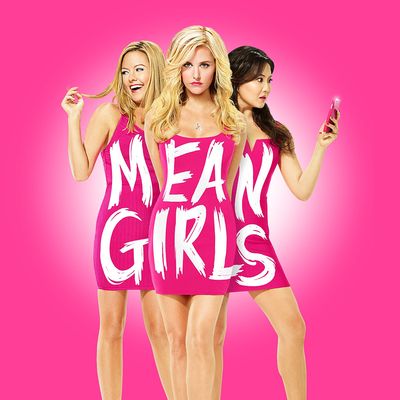
Get in, losers. We’re talking about Mean Girls. From it’s earliest self-help origins all the way through to todays “the-trailer-didn’t-say-it-was-a-musical” movie, Jimi and Tommy contemplate the traps of adaptations, memes from old movies, the Jimmy (and Jimi) awards, and Tina Fey’s (literall) love letter to high school theatre... Read More
From the show: Jim and Tomic's Musical Theatre Happy Hour
Featured Shows
About
Get in, losers. We’re talking about Mean Girls. From it’s earliest self-help origins all the way through to todays “the-trailer-didn’t-say-it-was-a-musical” movie, Jimi and Tommy contemplate the traps of adaptations, memes from old movies, the Jimmy (and Jimi) awards, and Tina Fey’s (literall) love letter to high school theatre. It is, most definitely, fetch.
Mean Girls (Music from the Motion Picture)
SHOW NOTES
Check it out for yourself – the book that started it all: Queen Bees & Wannabes (now in it’s 3rd edition) by Rosalind Wiseman.
It’s the best love letter Tommy’s ever recieved – here is Tina Fey’s forward from the high school version of the script.
It’s not our fault we’re, like, in love with her or something. Here’s the incomprable Reneé Rapp stealing the show at the 2018 Jimmy Awards.
A Digestable Quiz Question
One of the creators of this show struck inspirational gold when they read the words “Deathwatch Carnival” in a Reader’s Digest compilation.
Transcript
This transcript was automatically generated and might contain errors.
[0:53] Tomic: Welcome to Jim and Tomic's Musical Theatre Happy Hour. I am Tomic.
[0:57] Jimmy: And I am Jimmy, and this is the only musical theatre podcast with expressed aromatics.
[1:04] Tomic: And cult classics. Here we take apart your favourite shows, muddle them together with a shot of buffoonery, and pour you a refreshing glass of musical theatre conversation.
[1:14] Jimmy: Tomic, what are you drinking?
[1:16] Tomic: I am drinking a blended up protein bar.
[1:21] Jimmy: To the gains.
[1:27] Tomic: This is now a fitness podcast.
[1:29] Jimmy: Yeah.
[1:30] Tomic: So what you want to do is...
[1:35] Jimmy: That was convincing.
[1:36] Tomic: Thank you. Name three more exercises.
[1:43] Jimmy: I'm trying to think of something really impressive. Like overhead press, is that something?
[1:48] Tomic: Bent over row, that's what I was thinking about.
[1:51] Jimmy: And squats.
[1:52] Tomic: Bent over row?
[1:53] Jimmy: Bent over row.
[1:54] Tomic: That's the one...
[1:56] Jimmy: That's the one where it's like...
[1:59] Tomic: I'll describe for our audio listeners. Jimmy has stood up. He's now showing his butt. And he's doing...
[2:06] Jimmy: It has become a fitness podcast.
[2:08] Tomic: I joked, but we're here now. I don't know if any of this is going to make the cut.
[2:12] Jimmy: Why are you drinking a protein bar?
[2:15] Tomic: Because, Jimmy, I am desperate to talk about...
[2:20] Jimmy: Oh wait, what's the format?
[2:22] Tomic: We did that the other way last time.
[2:25] Jimmy: Oh, do I?
[2:26] Tomic: Okay. Here's the quiz question. To our knowledge, this is the first movie musical...
[2:30] Jimmy: Oh man, off the rails already.
[2:33] Tomic: To our knowledge, this is the first movie musical to feature the dreaded vertical video aspect ratio.
[2:40] Jimmy: No!
[2:41] Tomic: What show, Jimmy?
[2:42] Jimmy: It's Mean Girls.
[2:47] Tomic: That's my bet. What music we'll start with.
[2:50] Jimmy: Yeah.
[2:54] ♪ Musical number: "Cautionary Tale" — performed by the cast of Mean Girls ♪
[3:17] Tomic: It's a cautionary tale of fear and lust and pride, based on actual events where people died.
[3:25] Jimmy: No one died.
[3:26] Tomic: But how far would you go to be popular and hot? Would you resist temptation? No, you would not. Just admit it sometimes, mean is what you are. Mean is easier than nice. And though mean can take you far, maybe this will make you think twice.
[3:48] Jimmy: Kick, lay, or pussy. This is a cautionary tale about corruption and betrayal and getting hit by a bus.
[3:59] Tomic: You can't buy intent.
[4:01] Jimmy: Listen, topical.
[4:03] Tomic: Yeah, the movie just came out.
[4:05] Jimmy: It just came out.
[4:07] Tomic: But before that, it was a different movie. It all started with a movie. Another movie. And before that it all...
[4:12] Jimmy: Did you know...
[4:15] Tomic: I didn't know this until I was doing research. Did you know it's based on a book or inspired by a book, I think is a better way to phrase it?
[4:19] Jimmy: Right, okay. What was the book?
[4:21] Tomic: Mean Girls the movie came out in 2004. It's inspired by Rosalind Wiseman's book. It's a self-help book, Queen Bees and Wannabes. I had read the first couple pages. It's like, so you've got a teenager, good luck. It is like very much, here's how to help your kid survive high school. And Tina Fey was like, you know that deserves to be a movie.
[4:40] Jimmy: Interesting.
[4:42] Tomic: Yeah, I had no clue.
[4:44] Jimmy: Interesting. Is it written from the perspective of act cool mom? Is it that level of your kids are great, you should be... you know what I mean? Or is it like your kids are going to get beaten up a lot?
[5:00] Tomic: It seems very down to earth. It seems also, you know, semi-clinical, but in a pop science kind of way. Not to diminish it, I think it is, you know, a powerful and important piece of literature. But it is like, you know, more along the lines of what to expect when you're expecting and not like a narrative story about these girls.
[5:24] Jimmy: Yeah, yeah, yeah. Fair.
[5:25] Tomic: Well, I'd also imagine wildly out of date there.
[5:28] Jimmy: She's updated it three times. One of the things I read was the introduction was like, well, I guess I have to update this book again. Things keep changing.
[5:36] Tomic: Okay, I love that.
[5:37] Jimmy: Good order.
[5:39] Tomic: Yeah, yeah. It seems cool. Wiseman's book, you know, at least inspiring enough. It is interesting, and I say this from an uninformed perspective, but the movie seems different enough that they wouldn't have to call out that it is an adaptation.
[6:00] Jimmy: Okay.
[6:01] Tomic: And so it is interesting to me that the adaptation credit persists. It seems intentional and specific with a, I think it's a little bit of like, hey, this is grounded in literature. It's not fluff, like that kind of thing. I wonder if it's that. I wonder if it is like, you know, you like the movie, read the book. Like, here's an actual resource, and we want this thing to stick attached to this movie for as long as possible.
[6:33] Jimmy: I don't know. I couldn't... I did a little bit of a search, and I couldn't find... Tina Fey's been on a ton of junkets about the movie, then the musical, then the movie musical again. And what I found, she doesn't mention the book.
[6:47] Tomic: So it is interesting. It's fascinating. I don't know. You know, we can only... I can only speculate. Hey Tina, reach out. You know, can you imagine? First guest on the podcast, Tina Fey.
[7:02] Jimmy: God, what a gift.
[7:05] Tomic: Anyway, so after the book, we had the film. The original film, which to me feels like was released five years ago. Like, it's not... in my head, it is not old. I realised I watched it in high school, but it just feels... it feels like... I think in a way, right? And this will probably come up a lot. I think in a way, because Heather's is older, Mean Girls feels brand new. Does that make sense?
[7:35] Jimmy: Interesting.
[7:38] Tomic: Yes, kind of. I'm excited to unpack that. But first we have to talk about how the show opened on Broadway in 2018. It had an out-of-town tryout in Washington D.C. I don't know if you can call Washington D.C. an out-of-town tryout anymore. It just seems like...
[7:51] Jimmy: Before you go to New York.
[7:54] Tomic: The pre-Broadway.
[7:55] Jimmy: Yeah, exactly.
[7:56] Tomic: Yeah, exactly. This is one of the few ones. I think this is the first... it has to be the first musical we're covering that COVID closed.
[8:03] Jimmy: Yeah.
[8:04] Tomic: Definitely. Like it temporarily paused in, I don't know, March 2020 and then was one of the ones that closed without a closing performance.
[8:12] Jimmy: Yeah.
[8:13] Tomic: But thankfully it had a decent run, I think.
[8:16] Jimmy: Yeah, I think they recouped.
[8:19] Tomic: Bravo.
[8:20] Jimmy: Yeah, I think they did too. But then it's kind of had a very strong life outside on TikTok, on social media. It had quite a successful tour.
[8:31] Tomic: And the show itself is slated to open over here.
[8:36] Jimmy: Yeah.
[8:37] Tomic: Very soon. People seem very excited about it.
[8:39] Jimmy: Yeah.
[8:40] Tomic: I'm very curious how it'll do. And then the movie, as we mentioned, came out this year. All of the above. The show has book by Tina Fey, lyrics by Nell Benjamin of Legally Blonde fame, and music by Jeff Richman, Tina Fey's husband.
[8:57] Jimmy: Did you know that?
[8:58] Tomic: I didn't know that.
[9:00] Jimmy: I think I did know. I think that was in a... back when it was like released, I was like...
[9:04] Tomic: Yeah.
[9:05] Jimmy: Interesting, right?
[9:09] Tomic: But then after I listened to it, I was like, yeah, fine, whatever, that's cool.
[9:14] Jimmy: Yeah, exactly. But yes, I think... well, no, we're not analyzing it. What's that about, Tommy?
[9:23] Tomic: Mean Girls is the story of high school girls. We follow our protagonist, Caddy, mostly called Katie throughout the show, much to her chagrin. She has been homeschooled, or I guess schooled, as her parents do research in Africa, but recently has returned to the states and is entering high school life. And it is an analysis of how does... Tina Fey uses a great word, a great set of words in the opening letter to the MTI book, which I'll post in the show notes because it's excellent. But it is a show about relational aggression among girls. Katie Caddy gets taken in by both Damien and Janice, some of the more outcast high school personas, but then is a sleeper cell with the Plastics, the three popular girls, and drama and hilarity ensues.
[10:21] Jimmy: Indeed.
[10:22] Tomic: Indeed it does. So you said this show seems timeless to you. Can I tell you one of my biggest shames in life?
[10:28] Jimmy: Not the show?
[10:30] Tomic: Not the show. I'm sorry. Can I tell you one of my biggest shames? So I had not... I had missed Mean Girls in high school. My first time seeing Mean Girls and then several times over was in college, right? And so I was in college, you know, in the twenty tens, a good decade after the show came out, or the movie came out. And watching the movie, I had this thought several times. I was like, wow, it is really fascinating that they've made a contemporary movie and it's a period piece, but it's a period piece about a recent history because they don't do that with movies, right? You're not going to make a movie that's set four years ago, right? And I was so impressed that the production design and all the technology was hyper accurate to just like six years ago, and they put all this effort into that. Like why bother? Just set it now all the time. Not realizing that it was just a ten-year-old movie.
[11:26] Jimmy: Yeah.
[11:27] Tomic: And it was not a period piece. It was just set in 2004, and that I was an idiot. So that's...
[11:31] Jimmy: How did you miss it?
[11:32] Tomic: I don't know. I don't know. It never crossed my radar. I was, I don't know, too busy watching Queer as Folk in high school.
[11:39] Jimmy: Weren't we all?
[11:41] Tomic: I think. No, but I think it is interesting, particularly with Mean Girls. It just seems to keep going, haha, just like popping up again in various different forms.
[11:51] Jimmy: Yeah, because I mean, like we watched it, like I think I was even saw it in the cinema actually. I mean, it wasn't like popular. It wasn't like, oh that film that everyone quotes until probably about ten years later.
[12:05] Tomic: Right.
[12:07] Jimmy: Yeah, I think that's fair. I feel like the gays adopted it and it suddenly became like that kind of film.
[12:11] Tomic: Uh huh.
[12:14] Jimmy: And then obviously the musical happens, so we're getting a whole new younger generation enjoying it. I don't know who's enjoying it now with the film, but I suppose we'll discuss that.
[12:25] Tomic: Does it, in rewatching it all, does it strike you as American or universal?
[12:31] Jimmy: American.
[12:32] Tomic: Does it?
[12:33] Jimmy: Okay.
[12:35] Tomic: Yeah, this is not the...
[12:40] Jimmy: Well, it's been a while since I've been to high school.
[12:42] Tomic: Um, sure.
[12:43] Jimmy: But there's like...
[12:46] Tomic: No, it's tough actually because I think I would have said it's certainly not representative of my high school experience, right? Because there's lots of, um, yeah, just lots of American things. Your big canteen, for example, your like school events, your big flat parties.
[13:10] Jimmy: We gotta stop. The fact that you use the word canteen is already wild.
[13:14] Tomic: Do you not say...
[13:16] Jimmy: Oh, what did you say?
[13:19] Tomic: Cafeteria.
[13:20] Jimmy: I would say lunchroom.
[13:21] Tomic: Cafeteria.
[13:23] Jimmy: Canteen? Do you not have that word for lunch?
[13:26] Tomic: So, I don't think anyone like taught English in America would use that word.
[13:30] Jimmy: No.
[13:32] Tommy: There you go, different worlds already.
[13:34] Jimi: It's fascinating.
[13:35] Tommy: But yeah...
[13:36] Jimi: Well see, here's the thing. It's a theory I've been throwing around for a while. I grew up in the north suburbs of Chicago, and all of the John Hughes movies are filmed and set in the north suburbs of Chicago. And they also were movies that my parents loved, movies that I love. And everything from Home Alone to Ferris Bueller, I guess Home Alone's Chris Columbus, but still. There are these historical movies from the 80s and 90s that are set in what feels like my hometown. And so I have grown up with this thought of like, oh yeah, this is just what the world is like. Because I see it on the screen. Mean Girls also is very, very much that. The fake name of the high school is North Shore High. I've lived in the north shore of Chicago.
That was the regional name. This could be my high school. Some of the scenes in the original movie were filmed in a mall, like miles away from where I grew up. When I saw it, it still reinforced that self-stereotype, I guess, about like, this is what the world must be like. This is everyone's common experience, is Mean Girls. And so I re-watched the movie with some friends who grew up in Oklahoma, and we got on to talking. It was like, yeah, this is exactly what my high school looked like. And they're like, oh no, that's not what our high school looks like at all.
[15:15] Tommy: Oh, interesting.
[15:17] Jimi: In my head, I'm like, oh yeah, that's America. Because it's the same, even with Glee, they're the same school. That's the same school. Everything's the same. But I mean, I would say the interesting thing from a transatlantic perspective, because obviously that's all we can speak to if you live elsewhere, maybe it's completely different, but certainly from the UK. So for example, all of the girls' hockey team, as a friendship group, began calling themselves the Plastics. So much so that they got hoodies saying as much. You know what I mean? So whilst at the time it wasn't, I think sure as hell it's reframed a lot of our high school experience because you're more aware of cliques, cliques, having names, right?
And being like, oh, that's the X, that's the Y, do you know what I mean? Because in that kind of classic thing, when you're at high school and you're reaching and searching for an identity, Mean Girls, the film, did that so well, because it was just really good at kind of just pigeonholing all of these different groups to whatever. But when you find that group that you're in, suddenly you just embrace that because you're like, well, yeah, that's us, do you know what I mean? And I think that has now just kind of become commonplace. I don't know. Like I say, it's been a while since I was at high school, so maybe not, but certainly at the time.
[16:57] Tommy: Yeah, I mean, it is, you know, I only recently have left high school land, but like, you know, stuff has changed and stuff hasn't changed. I always have found it fascinating and I'll reserve some commentary, but one of our lead school counselors' favorite film, to the point of him wearing pink every Wednesday, is Mean Girls. And it's one of those where I'm like, hmm, that gives me a little pause. Part of me gets it like, yeah, it's an interesting sociological unpacking of teenage girls. And part of me is like, I don't know if that's how you should frame how you view high schoolers. Maybe. I do think it is. You know, I comment a lot on what feels like accurate teenage portrayal in films. I think Tina Fey writes a good teenager. All three of these adaptations feel like real adolescent humans. They don't suffer the glee effect of feeling like that's not that's not a thing a 16 year old would say.
[18:06] Jimi: Interesting. OK. But at the same time, right, it's not, you know, Mean Girls in a lot of ways is not a happy story.
[18:12] Tommy: No, not at all.
[18:15] Jimi: And I think, yeah, when we get into the nitty gritty of it, I kind of want to come back to that point, though, about the kind of characters, because I would say I agree with you for the most part.
[18:24] Tommy: OK. Interesting. We'll come back to that. Don't you worry, T. OK. But yeah, I feel like, listen, we've been gambering on about it. We haven't even properly started yet.
[18:35] Jimi: I know. Hold on. Play the music.
[18:38] Tommy: Wa-ching!
[18:39] Jimi: Was that like the nickel in the jukebox or something?
[18:45] Tommy: Yeah. We'll go with that. Man, where do you think there are any real jukeboxes in the world where you could put a coin in and have a song from Mean Girls the musical play?
[18:55] Jimi: Oh. Um. Heaven.
[18:58] Tommy: OK. Heaven. It's there for you. It's just waiting.
[19:02] ♪ Musical number ♪
[20:29] Jimi: Okay, I mean, it makes sense. Start at the very beginning.
[20:33] Tommy: Yeah.
[20:34] Jimi: Right?
[20:35] Tommy: Don't finish that line.
[20:36] Jimi: We are above that.
[20:37] Tommy: That was very close.
[20:39] Jimi: I mean, we've kind of already started touching on this anyway, but yeah, I think the original film, it kind of can't be denied, like that is a proper classic piece of cinema now.
[20:54] Tommy: Yes.
[20:55] Jimi: Yes. And I think in terms of this, because when it was first announced that it was going to be made into a musical, I was initially just like, oh my God, you know, why? That makes no sense. You know, why do we need that?
[21:15] Tommy: Right.
[21:16] Jimi: But as time has gone on and we've had many, many more adaptations of things. And, you know, I think, because again, in my head, this is a new movie. I know it's not a new movie, but it still feels new.
[21:33] Tommy: It feels new.
[21:34] Jimi: Right. Yeah. So I was like, oh my God, like it's been out for five minutes and now you're making it.
[21:39] Tommy: Yeah.
[21:46] Jimi: But over time, I've definitely come around to thinking, actually, it does make a lot more sense to adapt it.
[21:52] Tommy: Yeah.
[21:53] Jimi: Like it does. I rewatched the movie, the original movie this week, and it still holds up. It is interesting seeing what feels like a very rapid adaptation cycle, which I guess we don't see as much from movie to musical to movie. I think we'll see musical to movie much faster. Like we saw that with Dear Evan Hansen. We saw that with The Prom. We see that with a lot of things now.
[22:19] Tommy: Yeah.
[22:20] Jimi: But this kind of trifecta, right, like what's the gap between OG Hairspray and Hairspray The Musical feels much wider, at least. This is where I'm sure I'll get corrected in the discord. But I agree with you that Mean Girls is new, and for it to have such a—do you think it is the story of Mean Girls that has propelled it to several levels of adaptation, or do you think it is the Broadway SNL machine Lorne Michaels producing that has been like, we need to capitalize on this and we need to strike while the iron is hot?
[23:03] Tommy: I sadly think it's the latter. Because the story isn't anything special.
[23:12] Jimi: You really think so?
[23:14] Tommy: Yeah. Like in terms of being like, you have a hot take on something here, and I want to pull this apart, right? Or like, what you're discussing is so relevant and has never been discussed before, here's my hot new take on it, so I'm going to adapt it, right?
[23:30] Jimi: Fair.
[23:31] Tommy: What we have had is the same thing three times, which means there's no real…now, you can dive deeper, sure, but it's not like…I'm trying to think of a good example of one that's gone like, sure, but, in the world of movie adaptations, that's quite tricky. But even, I guess, even with Hairspray, right? If we look at Hairspray, the two of them are completely different beings.
[23:56] Jimi: Oh yeah, the original movie and the stage musical, say.
[24:05] Tommy: Exactly. They exist in the same world, they've got the same kind of irreverence, but in terms of how they tell the story, it's completely different. I don't necessarily know that that's the case.
[24:20] Jimi: Do you mean to say, though, that original Mean Girls movie isn't doing much new?
[24:28] Tommy: No.
[24:29] Jimi: Okay.
[24:30] Tommy: I don't mean that. I think it was created, and it was like, this is cool, this is a cool…even at that time, I think we'd had Legally Blonde already, but in terms of putting women at the front of the story, and kind of controlling the narrative from a teenage popularist, where they're strong characters and it's kind of just all about them. Again, as soon as we paint with big, broad strokes, 12 million people come back as… But, you know, I mean, still, that's what it felt like when you were in the cinema, and you were like, oh, I've not seen this before.
[25:07] Jimi: It's like an honest portrayal of high school girls.
[25:10] Tommy: Right. And, you know, compared to…because, again, I loved Heathers when I was younger, and I think it's just so different from that. It's not…
[25:25] Jimi: Yeah.
[25:26] Tommy: Heathers is satire.
[25:27] Jimi: Yeah, it's fantasy.
[25:28] Tommy: Right. It is elevated to a point, and there are pangs of reality in it, and unfortunately, lots of pangs of reality in it.
[25:34] Jimi: Absolutely.
[25:35] Tommy: But Mean Girls is much more realistic, you know?
[25:39] Jimi: Yeah, yeah.
[25:40] Tommy: So, no, I think the original film ticked all the boxes, and I think it was so good, and it just so happened to have all these funny, quotable lines.
[25:48] Jimi: Right.
[25:49] Tommy: But even at the time, it didn't feel like that's what it was.
[25:52] Jimi: Yeah.
[25:53] Tommy: Do you know what I mean? It still felt like, no, this is just a great film.
[25:56] Jimi: Yeah.
[25:57] Tommy: Can I tell you, and, you know, we're gonna, I think, crossfade into the stage show at some point anyway, but re-watching it. So, my order was, I've never seen the show on stage legitimately, but have read the script, listened to the album, saw the movie musical, and then went back and watched the original movie recently. And a thing that was very fascinating to me, like, when you take that kind of cycle, right, you're kind of reverse song spotting throughout the whole thing. You're spending, like, okay, I know this is a song in the adaptation. What was in the movie here that turned this into a musical?
[26:38] Jimi: Yeah.
[26:39] Tommy: Almost beat for beat. Every song, like, the movie itself is, has a lot of music in it. There's a lot of diegetic music. There's a lot of music at the party. There's a lot of, like, semi-diegetic music, right, where we're doing kind of a needle drop thing and we're playing a pop song to, you know, make a point. Almost every song in the musical.
[27:03] Jimi: A moment of legitimate cinematic underscoring in the movie. Almost every time we dive into a song in the musical, in the movie, if you listen to it, the soundtrack comes in. And not the pop song that they're playing in the background, but the violins and the, you know, not John Williams, but whoever wrote the soundtrack.
[27:26] Tommy: Yeah, it was John Williams who did the score for Mean Girls the musical. But like, there were a surprising number of things re-watching the movie, like between that, between some of the like, the imagined cutaways to the, like, all these teenagers are animals, to even some of the, like, third-person narration that Caddy does that then they give to the duo in the stage musical. Like, there are a surprising number of, like, mode-switching pangs in the original movie that are bread and butter of musical theatre.
[28:14] Jimi: Um, more so than I would say in some other movie adaptations that have become musicals. Like, do you know what doesn't have second-person narration throughout the whole thing? Back to the Future, right? Do you know what doesn't have, like, completely fake imaginary cutaways to, you know, what seem to be realistic things on stage? Hairspray. Like, there are a bunch of, I don't know, narrative devices that just exist in Mean Girls that I think are some things that made the movie really good and interesting. And like, they feel so effortless that I think, like, I didn't remember them. I remembered that these moments happened, but they didn't stick out to me as like, oh, we're using a narrative device here, right?
It just flowed so effortlessly that I think speaks to Tina Fey's talent and speaks to, you know, I think there was, I would argue that there was a little bit of magnetism towards adapting this thing in a musical, which is an opinion I have changed. We can go back in time and watch my, uh, when I talked about this before the Tonys and I think I was on my, ah, fuck adaptations. Yeah, of course. High horse. And I think I've come around to this one.
[29:33] Tommy: Yeah, I think I probably have too. I still don't think, it still doesn't, I'm not like, ah, excellent for the ages because again, it's, it is, it is really good, but it doesn't, I don't know, it doesn't like, go pow. I don't know. It's really tricky. And again, I think a lot of it is my own mental block that I've put in place for myself because I'm like resistant to stuff like this, right?
[30:07] Jimi: No, totally. Do you, do you think, can I pose to you? Cause this is a thought I've had as well. The original, the Broadway production was directed by Casey Nicholaw, um, Book of Mormon, Aladdin, Something Rotten, Drowsy Chaperone things. I like things. I don't like things. I think that are overhyped. Um, but certainly a directing style that is like Broadway and like contemporary Broadway in the broadest of sense, kick lines and jazz hands and like, um, and I think sometimes rings as a little vapid sometimes rings as a little surface level. Um, and is, you know, that's why it worked for, um, Drowsy Chaperone. I think that's why it works for Book of Mormon. I think that's why it didn't work for Aladdin. Um, and I think it is an interesting choice for Mean Girls, a show that I don't think wants some of those bigger, broader moments. Um, and makes a show that seems a little forced sometimes in its, in its totality.
[31:15] Tommy: Yeah. I, well, it's interesting because the bigger, broader moments are kind of the stuff that I like. I don't like them because they're, they're fresh takes. I think that's it. So it kind of goes back to what I was saying before about, uh, yeah. Like, why, why are you adapting this? Okay. You have a piece of, you know, fiction. What's making you go, okay, I'm going to take this and run with it without just going like for like, and I think some of the things that they've done pretty well, um, in that one of my, well, one of my favorite things is, um, Janice's friend, Damien. Um, and I like the way that they've transformed that character and being like, well, he's actually obsessed with musicals and, uh, you know, that fits perfectly well.
And you know, the movie character probably could have been, he was too gay to function as we all know. Um, and, uh, it's a really nice, smooth transition, but it then allows you as a song spotter to be like, okay, well, great. We're just going to turn the whole lunchroom scene into a big old like Broadway face, you know, and it's really good and it's done really, really well.
[32:31] Jimi: Um, and I like, yeah, like, I think that rings well, I agree. Well, I was going to say it like then on the kind of flip side, there's stuff that's just like this. Yeah. Um, yeah. Uh, Karen. Yeah. You know, they do really good stuff. Again. It's like there's so many, like, there's some really good stuff. Cause I love what they've done with Gretchen and I really, really like that. They've kind of delved into that. And I actually think some of Gretchen's solo, what's wrong with me? I can't remember. Oh, the music box one. Oh, wait till I tell you about the movie. Oh, great. Um, well, um, the what's wrong with me song, um, I think is, is actually beautiful. And I think it's a really, really nice, um, honest.
Yeah. Number. Um, and then Karen has sexy, which is, it's fun. It's so funny, but I think it's so funny. I know, but I'm also like, if you're going to go for it, let's flesh out these characters. Do you know what I mean? It's just, and maybe I'm being nitpicky. I think I'm probably sure you can't do that with everyone, I guess. But yeah. Um, I don't know. I, I find that really interesting because I do think Karen and Gretchen in all three, to be honest, um, for like, I think this is the success of the OG movie and rings true through the other adaptations is it is a wonderful balance of a not quite surface level character. Um, like, I think you take, uh, uh, Karen, um, and follow her all the way through and like, she's dumb and she admits it, but she's also complex. Um, like she, she has, I, we were watching it last night and I, I used the word complex dumbness. Um, right. Yeah. No, completely.
[34:28] Jimi: Is, is more than just a stereotypical wrong vapid girl. Yeah. She, and like, I think sexy sits as a number that like underscores all of that. It is, she, it has this, you know, I cured sex cancer joke, which is this hilarious vapid dumb thing, but she also knows a little bit. And then the rest of the song is like, when you are the hot one, it's a full-time thing. I know I'm sexy and I'm going to use it. I give you sexy corn. And like, part of that is really empowering. And part of that is also drawing the like, yeah, I don't know. It might be raining right now. Um, and like, because it teeters, right. For me, it teeters right on that tight rope of it. It, it adds a really interesting flavor and complexity to it.
Um, that I don't know that I don't, that I don't see in other, you know, similarly written vapid female characters. Yeah. Like I think, I think that is its power is it's not fully being like she doesn't, you know, this would, would not make sense in the plot structure of the show, but Karen doesn't have a moment where she's like, wait, suddenly I can solve all the math problems. Right. No, I know. Yeah. Come out to become this really smart person, but she does have this, you know, she still reads as a real person. Um, like maybe that's it. Maybe that's the power. Yeah. I can, I can concede to that. I think because yeah, you're right. If you did it, there's nowhere else you could take it.
[36:16] Tommy: Um, and there's no need to have a second Gretchen. Yeah. So having her kind of be exactly who she is. Sure. Yeah. Why not? Yeah. Fair. Um, yeah. Well done, Karen.
[36:33] Jimi: Right. I, I don't, I, I think, I think it's still, yeah, there's just, there's just something that's stopping me from being like, yeah, this is cool. You know what I mean? I don't know what it is. I will say like rolling through the show, there's like, cut the song, stop. Um, cut, you know, there's a, if we, if we take the show as a totality, there are a lot of, I think even, and it bothers me, but the finale, I see stars.
[37:10] Tommy: Oh, awful. It sucks. It sucks so hard. It makes me mad.
[37:18] Jimi: Yeah. The risk of this podcast episode just flying off in lots of different directions. Um, I think it's really, I think the structure of the musical isn't good.
[37:24] Tommy: Yeah. Can you give me that? Because the finale is, I'd rather be me.
[37:33] Jimi: Yeah. That's the finale song. That's it. That's the, you know, you've had your, I want song. Yeah. That is the answer to your, I want song. Ensure I have an epilogue and then be done with it. Right. But after I'd rather be me, there's still a good, there's almost like an act, do you know what I mean? In terms of a beat. Right. Right. And that you've had, you've had the payoff. This is, this is what has happened, right? We have the, the mean girls movie, like a lot of American cinema exists in three acts. Right. And the third act of the movie is, is probably some, we probably hit that transition around the gym scene into the bus, into the prom and the math leads and all that stuff. Right.
[38:01] Tommy: Yeah. Most movie to musical adaptations will squish the movie act one and act two into the musical act one. And then they'll have to extend act three to be all of act two in the stage musical.
[38:29] Jimi: Yeah. Mean Girls has, has done the opposite. Act one of the movie is act one of the musical and act two and act three of the movie live in act two of the musical.
[38:40] Tommy: Yeah. And so you got this weird little tag on the end after the movie act two finale.
[38:46] Jimi: I think, yeah. And I think it's in the film, it's fine because the film's shorter. Yeah. So you're not having to wait as long for the ending. Like you are just kind of rolling down the hill towards the end after, um, Katie has a realization of, oh wait, I I'm the monster. Do you know what I mean? And then cool. We roll with that. But in the musical, it just takes so long to get there. And I think, I dunno, maybe that isn't one of the things that spoils it for me because I don't watch the musical all the time, but I think when I did, that was one of the things that was glaringly obvious to me. And, um, even just the same with like end of act one, start of act two, like to me, it would make sense for end of act one to see Katie at the height of her meanness and have the kind of conflict with Janice there.
[39:43] Tommy: But then obviously you've got this huge gap to fill, um, that could only really be a house party.
[39:50] Jimi: Right, right. But that's just too much. So in that respect, right, if I was adapting it, I would look at that and go, okay, well, how do I then do this?
[40:05] Tommy: How do we fix that?
[40:07] Jimi: They haven't done that. They've been like, this needs to be the film.
[40:11] Tommy: Yeah. This is, this is what I, I had this thought last night. Katie has her whole like break up the crown and throw it away at, you know, spring fling.
[40:21] Jimi: Yeah.
[40:21] Tommy: And in that moment, everyone forgives her.
[40:25] Jimi: Yeah.
[40:25] Tommy: Everyone's like, yeah, you sucked, but we get it now.
[40:34] Jimi: Convincing powerful enough. I don't know. I don't know what would be, yeah. Hey, remember how I was a complete and total asshole?
[40:41] Tommy: Yeah, I'm sorry.
[40:43] Jimi: Right, like you look really pretty. Yeah, like it is much more. You know she has a much more, I don't know, very tossed truthfulness like when she apologizes to Miss Norbury in the math classroom.
[41:01] Tommy: Right, and like I think it would have been an interesting turn in one or both of the adaptations if either Janice or Regina like didn't forgive her right away in the prom, and then there was one more beat afterwards where she has to, you know, do something. You know, do you really, really mean it to actually earn the forgiveness? And they don't, and that's fine. It's a musical. Yeah, we got to get it done like it's already two and a half hours long, I know.
[41:36] Jimi: It's kind of like him. Uh-huh. It's kind of like Dear Evan Hansen. Yeah, you want that scene in the orchards between Miss Norbury and Cady, that that's the kind of like, you know, I messed up, and then she can respond however she needs to respond, but yeah, you're right. I think that would be a much more poignant ending and a much more like kind of grown-up ending, but obviously it's a big old Broadway hit, so therefore, let's have a big old song about inspiration.
[42:09] Tommy: Well, okay, can we—will you hop on my Segway and can I tell you about the new movie? That's right. So your best friend screwed you over, acted nice when she's not nice. Well, I have some advice because it's happened to me twice. Here's my secret strategy. It always works because the world doesn't end; it just feels like it does. So raise your right finger, swear whatever they say about me, don't care. I won't twist it not to join your game. I will say you make me mad, and if you treat me bad, I'll say you're bad. And if I eat alone from this moment on, that's just what I'll do. I'd rather be me.
[43:04] Jimi: So I assume that it hasn't made it to Scotland?
[43:12] Tommy: So it has; I've just not seen it. Listen, one of the reasons why—and I appreciate, listen, we're podcasters. I should have seen it. Whatever, I'll go throw my hands up and say I'm an appalling researcher. But at the same time, enough of my friends have seen it and they've been like, "Hey, it's trash," that I'm like, I'm not gonna waste my money.
[43:32] Jimi: Okay, I don't need to drop this on you. You loved it.
[43:40] Tommy: I loved it. Wow, unabashedly, I had an amazing time. I thought it was fantastic. I thought it was one of the best movie musical adaptations I have seen in recent years.
[43:55] Jimi: Fascinating to sit back and let you monologue at me because I can't come from any perspective here because I haven't seen it, so I'm not gonna say, "Yeah, but..." and there's no point in saying like, "Well, my friend said this." Sure, the only thing I will hit in straight off the bat—and I have heard this from the recording—yeah, and your gal who plays Cady is not good.
[44:24] Tommy: I would—one of the things I took while I was seeing it in theaters, and I think this is a—did you bring a notebook into the cinema?
[44:28] Jimi: Yeah, I'm that kind of guy.
[44:36] Tommy: You're so gay. Also, I saw it with my boyfriend and one of our friends, and then there were two other people in the theater, and that was it. And like we didn't go at like noon on a Wednesday, you know? We went at like proper movie-going time, and no one was seeing this movie.
[44:55] Jimi: Yeah, so much so—full sidebar—there are two movies coming out soon that are both about imaginary friends. I'm not gonna remember their names, and I don't care enough to look them up. One of them has Ryan Reynolds in it, and Steve Carell voices an imaginary friend, and it's like, it feels like Mr. McGorriam's Wonder Emporium. It's like happy and, you know, all the secret life of imaginary friends. Uh-huh, and then another one is like a Blumhouse horror movie about like an imaginary teddy-bear friend that seems to go on a murderous rampage.
[45:30] Tommy: Oh, yeah, yeah, yeah.
[45:31] Jimi: They both, I bet on paper, have very similar synopses and seem to be coming around about around the same time, and I'm very excited for people to get the movies confused and go to the wrong one. But we sat down in the theater, and then the two girls who were also watching it with us came in a little later and sat down behind us just in time to see the horror imaginary friend trailer happen, and it played, and then they like kind of giggled to themselves and then leaned forward like, "Hi, sorry. Are you guys here to see Mean Girls?"
[46:03] Tommy: And you turned with your notebook going, "Yes."
[46:08] Jimi: I had full 180 like horror turned around like, "Mean Girls has been dead for 15 years."
[46:17] Tommy: Exactly. But so the five of us went on this wild ride together. What was my main point? I think a lot of contemporary movie musicals are doing this. They're stuck in a world where they're trying to adapt stage music to the screen, and it is informed by a lot of the ways that people do music videos these days.
[46:29] Jimi: And I think the—and like I don't mean from a production visual aspect, but I mean from a sound production aspect, yes, and a lot of the sound just sounds close and NPR, and but the music is, you know, built to be Ethel Merman from a stage, right? And that is really incompatible. Like the clips I've seen of the Shalom a Wonka do that, like he's got this mousy little voice, and like I don't think he's gonna be a great singer anyway, but they've also not recorded him doing this like big belty, you know, far away microphone sort of stuff.
[47:13] Tommy: Yeah, um, and I think it comes across as a bad performance. Like I think that is what's caught—I noticed that a lot with a lot of Cady songs with a couple of the other songs that like the production isn't what I want for something that was a stage musical.
[47:34] Jimi: No, which is unfortunate.
[47:34] Tommy: Yeah, no, not at all. I just think, um, I completely agree with you. This does seem to be a trend that I really—I'm really not liking because, yeah, you know, if you think about it, The Producers, Hairspray, yeah, right? Yeah, I listen to the LTV recording more than I've ever listened to the Broadway recording, even though the Broadway recording has "Big Dollhouse." Listen, I don't care. I just prefer George Walter.
[48:04] Jimi: But it's—
[48:08] Tommy: That's a wild hot take, but right, need to explore it.
[48:18] Jimi: Yeah, exactly. Oh, we've done here spring. I think we have—no one knows.
[48:25] Jimi: The production on this stinks.
[48:31] Tommy: No, but I think because the production on it is exemplary, right?
[48:31] Tommy: Yes, yeah, the sound production sucks. It's now—here is this is why you need to see this movie. This movie has some of the best filmed musical numbers I have seen in recent years.
[48:46] Jimi: Okay.
[48:49] Tommy: They—so some things you should know, and spoilers for you, sorry, but you'll—you’re gonna have to deal. I know the story. Spoilers for anyone listening. Things they've done that are masterful turns to keep the narrative structure of the musical and to readapt a lot of things that exist both in the original movie and in the stage musical. There is an entire filming yourself on a cell phone, I don't know, theme to this whole thing, right? Whenever someone is direct addressing, it's to a TikTok. Whenever it's a narrative beat that's like, here's a cautionary tale, it is Janice and Damien setting up their phone to film a piece, which is a masterful way to instantly like take all those beats and just immediately reuse them because—and it has a wonderful double-edged sword, right?
Because it is not double-edged sword to barrel shotgun, let's call it one-two punch of you get to reuse all the like stage address that happens on the stage play. Mm-hmm, and you get this added commentary of teenagers feel this pressure to always have to perform because you could always be making a TikTok right now. You could always be putting yourself on the internet right now. That it also contemporarizes it in a wonderfully effortless way.
[50:22] Jimi: And it comes back, right? Like instead of photocopying the burn book and tossing the pages everywhere, you get a hyper-speed montage of social media TikToks of like, "Did you hear that? This is happening? Oh my god," and it is, at least to my nose, on-point for like contemporary social media use. It's exactly the sort of thing a teenage girl who is attempting to do this sort of thing would do, right? Just go viral on social media and take down one of their friends, and like these beats happen over and over again. The presence of phones, the presence of filming. So like that's a whole thing that's happening through the movie. But then you get some like wonderful—the whole Regina's song in the party, "Someone Gets Hurt," is stunning. They take the whole Halloween party and like, you know, Regina snaps her fingers and everyone freezes, and what's-his-face is across the room watching this.
[51:35] Tommy: Why can't I remember his name?
[51:40] Jimi: Aaron Samuels.
[51:42] Tommy: Thank you. Aaron Samuels, thank you. And she has this whole music video sexy dance, but then all the other Halloween party-goers fall into this like hip-hop crunk background jerky music video dance that she like weaves in and out of effortlessly all while singing "Someone Gets Hurt." It's beautiful. It's stunning. It is the perfect—it is what a contemporary movie musical adaptation should be doing, right? It is taking some beats from the like the land of music video, but it is theatricalizing them. It is elevated enough to pull you out of the kind of verisimilitude of the story, but not so much that you're like, "Why are we just singing right now?" Like it feels—it still feels real. It still feels impactful.
But then you also get, "I'd Rather Be Me" is almost a one-er. Janice like leaves the gym and the camera follows her, and then she's got this beautiful—I don't know if it's really one shot, but it feels like it—that follows her through the weight room and through music class, and she's just walking through the high school singing about how she'd rather be me. It feels like a finale more than "Stars" does, right? And like they should have moved it around anyway, but like some of the cinematography in this thing, some of the staging of it is wonderful. And then they add in a couple extra beats that like tickled my adaptation musical theater brain during the apology section in the gym, that like trust fall section.
So throughout the whole movie, there's been a lot of the music is pitched as diegetic. The band kids are always following the singers around just playing whatever the music is. There's one point where I forget what song it is, but the trio Damian, Janice, and Cady are like sitting under a tree, and like sappy music is playing, and I think Janice looks up and she's like, "Can you stop?" and the band kids are up in the tree with their guitar and instruments playing the music. They're like, "Sorry."
[54:05] Tommy: Which is funny to me to begin with, but then during the apology scene, one of the kids stands on stage and it's like, "Hi, I just want to apologize to everyone that I was dragging a little bit during Revenge Party, and I felt like, you know, I know."
[54:05] Jimi: On Wednesdays we Podcast Pink – ‘Mean Girls’.
[54:35] Tommy: On Wednesdays we Podcast Pink – ‘Mean Girls’.
[55:03] Jimi: On Wednesdays we Podcast Pink – ‘Mean Girls’.
[55:31] Tommy: On Wednesdays we Podcast Pink – ‘Mean Girls’.
[55:51] Jimi: On Wednesdays we Podcast Pink – ‘Mean Girls’.
[56:21] Tommy: On Wednesdays we Podcast Pink – ‘Mean Girls’.
[56:41] Jimi: On Wednesdays we Podcast Pink – ‘Mean Girls’.
[56:59] Tommy: On Wednesdays we Podcast Pink – ‘Mean Girls’.
[57:19] Jimi: On Wednesdays we Podcast Pink – ‘Mean Girls’.
[57:39] Tommy: On Wednesdays we Podcast Pink – ‘Mean Girls’.
[57:59] Jimi: On Wednesdays we Podcast Pink – ‘Mean Girls’.
[58:19] Tommy: On Wednesdays we Podcast Pink – ‘Mean Girls’.
[58:39] Jimi: On Wednesdays we Podcast Pink – ‘Mean Girls’.
[58:59] Tommy: On Wednesdays we Podcast Pink – ‘Mean Girls’.
[59:19] Jimi: On Wednesdays we Podcast Pink – ‘Mean Girls’.
[59:39] Tommy: On Wednesdays we Podcast Pink – ‘Mean Girls’.
[59:59] Jimi: On Wednesdays we Podcast Pink – ‘Mean Girls’.
[1:00:19] Tommy: On Wednesdays we Podcast Pink – ‘Mean Girls’.
[1:00:39] Jimi: On Wednesdays we Podcast Pink – ‘Mean Girls’.
[1:00:59] Tommy: On Wednesdays we Podcast Pink – ‘Mean Girls’.
[1:01:19] Jimi: On Wednesdays we Podcast Pink – ‘Mean Girls’.
[1:01:39] Tommy: On Wednesdays we Podcast Pink – ‘Mean Girls’.
[1:01:59] Jimi: On Wednesdays we Podcast Pink – ‘Mean Girls’.
[1:02:19] Tommy: On Wednesdays we Podcast Pink – ‘Mean Girls’.
[1:02:39] Jimi: On Wednesdays we Podcast Pink – ‘Mean Girls’.
[1:02:59] Tommy: On Wednesdays we Podcast Pink – ‘Mean Girls’.
[1:03:19] Jimi: On Wednesdays we Podcast Pink – ‘Mean Girls’.
[1:03:39] Tommy: On Wednesdays we Podcast Pink – ‘Mean Girls’.
[1:03:59] Jimi: On Wednesdays we Podcast Pink – ‘Mean Girls’.
[1:04:19] Tommy: On Wednesdays we Podcast Pink – ‘Mean Girls’.
[1:04:39] Jimi: On Wednesdays we Podcast Pink – ‘Mean Girls’.
[1:04:59] Tommy: On Wednesdays we Podcast Pink – ‘Mean Girls’.
[1:05:19] Jimi: On Wednesdays we Podcast Pink – ‘Mean Girls’.
[1:05:39] Tommy: On Wednesdays we Podcast Pink – ‘Mean Girls’.
[1:05:59] Jimi: On Wednesdays we Podcast Pink – ‘Mean Girls’.
[1:06:19] Tommy: On Wednesdays we Podcast Pink – ‘Mean Girls’.
[1:06:39] Jimi: On Wednesdays we Podcast Pink – ‘Mean Girls’.
[1:06:59] Tommy: On Wednesdays we Podcast Pink – ‘Mean Girls’.
[1:07:19] Jimi: On Wednesdays we Podcast Pink – ‘Mean Girls’.
[1:07:37] Jimi: And I think it's an inevitability. And I think it's gone beyond theatre. Every musical artist now is writing something for TikTok. And I'm kind of trying to sit in that mode of like, okay, it's happening. How can we make the most of it? Do you know what I mean?
[1:08:01] Tommy: Yeah, fair.
[1:08:02] Jimi: And trying to trust creatives enough that within the confines of the media game, they'll be like, yes, I do need to write the popular TikTok song, but I'm going to do it this way. And actually, to bring it all the way back to Mean Girls, everything that you've just described to me about the film, if you had told me that in the context of the joy that you have for it, I think I would have been instantly repelled. Because I'm not a TikTok person, you know what I mean? And so I'm like, why am I being forced to see this again? But that's the point. That's what's happening right now, okay? And listen, I've reached that stage in my life where I'm like, hey, not for me. That's fine. You know what I mean? It's for somebody else who deeply appreciates it and understands it. So I'm trying to sit in that a bit more. So with the Jimmy Awards, and you know, if high schools are like, we're going to do Frozen again, because we know—
[1:09:07] Tommy: Because we have an Elsa.
[1:09:08] Jimi: Yeah, exactly. And she's going to go far. Right? Because listen, if she is that talented, fly away, Elsa. Why not? Because it's done. It's not like the high school gets a huge amount of notoriety. It's much, mostly, I mean, couldn't tell you where Andrew Barthelme went, couldn't tell you where Renee Rapp went. Couldn't even tell you what city they're from, you know? Like, it's still so much focused on the person that I think, as an educator, and I'd be interested to hear your take on this one. Like, I think I would just be so excited from a kind of selfless, I mean, it's probably not selfless. I've just finished watching The Curse. Have you ever seen The Curse?
[1:09:56] Tommy: I have not seen The Curse.
[1:09:57] Jimi: Okay. Okay. Well, we won't go into that then, but it's kind of about that. So yeah, it's not selfless because I'm getting something from that. But it comes from a perspective of like, I'm championing you. Like, it's all about you.
[1:10:13] Tommy: Yeah. I mean, I think my mind races with a lot of points that you bring up, and I think we are both living in this kind of, I don't know, new 2024 takes on ourselves. We often, I think once an episode, bemoan kind of our desire for conscientious art making, which I think in the past, and will continue to, comes across as gatekeeping. And not just for us. I think our industry still is wrestling with this. Like, I don't want to get into how everyone is reacting to the Heartstopper Kid in Sweeney Todd online right now. And not just like, okay, I'm going to get into it. Not just reacting to him, but reacting to fans of Joe Locke who are going to see Sweeney Todd for him. And then also being like, but they don't know how to go see a show. And I'm like, fuck you! Like, they're going to see a show! Shut up!
[1:11:15] Jimi: It's the blandest revival ever of Sweeney Todd. Who's offended?
[1:11:19] Tommy: And he's doing a fantastic job. You're just searching for a reason to be outraged. And it's the same people who are leaving comments on the, you know, Jimmy Awards things. And it's the same mean girls who this musical is about. But like, I think we're, we are in a cultural conversation, or maybe it's just on my mind, about career and hobby and job. And, you know, what you do with your life. And, you know, we are entering at least a new cultural conversation about like, your job isn't your life, your profession isn't your existence. But it can be. And, you know, you can live kind of on a spectrum of those things. And so then it comes back to right, like, I think kind of, at least the American educational system kind of sucks in a, we're setting you up to live in a cubicle and work your job and do these things.
And it's just true. And that's just a part of it. And like, that's, you know, it is it is terrible and terrifying that that that we have resigned ourselves to that existence. And in the same way that there's this Broadway industrial pipeline of creating professional actors, who are 14, who are 15, right? Like, you're still in that place where you should have all the joy of figuring out what you want to do. And also, you're right, being able to hold, but if this is what you want to do, like, go for it, run for it, how exciting, how fantastic, you know, I have no doubt that Renee Rapp's drama teachers are like, fuck, yeah, you know, just so happy and so excited for this young person that they've worked with to be seeing such great success.
You know, and I do think it is a tough thing to hold both those things, but a valiant goal as well. Like, you know, you phrased it better than me. It does strike my brain, like making TikToks, making content is a whole through line through this new movie musical adaptation, you know, talk about, like, it is interesting. Mean Girls OG 2003, 2004 came out just before Facebook, you know, but also strikes a bunch of beats of this. Like, no doubt that gossip and passing notes and kind of social status has been an always excellent thing among adolescents.
[1:13:45] Jimi: Yeah. Only magnified by our hyperspace, you know, instant gratification ability to talk to each other. Yeah. And then to now come back around, like the commodification of instant entertainment that can come from anywhere by recording a TikTok now still present in the same piece of media. I don't know. All of it at once is very interesting to me. It makes me happy that the movie can reach a generation, a new generation. I'm curious. I haven't, you know, I don't talk to zoomers anymore, but like how teens see this, you know, like how many times they're like, yeah, it's based on this old movie.
[1:14:36] Tommy: Yeah. No, but I am completely agree with you because I don't know. I don't know any young person that's seen it. And I want to know.
[1:14:42] Jimi: Yeah. Because even just in the sense of like when the musical came out, some of my younger friends adored it. And again, I had that classic like old man barrier.
[1:14:57] Tommy: Yeah. Where I was like, it's just the same. It's all the same. Dear Evan Hansen. There's nothing like Evan Hansen.
[1:15:02] Jimi: No, I would. Yeah. And I think that I could only see it through that lens. And I'm a bit annoyed at myself, actually, because that's not fair.
[1:15:10] Tommy: Yeah. But thankfully, nobody cared to like it.
[1:15:17] Jimi: But I think it's interesting, though, some of those people who love the musical did not like the film, but they are now a little bit older. Right. And I'm curious, the critiques I've seen are around a lot of the like, well, they changed this, which I will never give any water to. Right. At this point in my critical life, like, yeah, of course they did. And like a lot of the things, a lot of the like, I think I'm curious if they were changed by committee or, you know, where they came from. Like they removed there is little to no slut shaming in the movie, which is interesting. They made a really conscientious choice to like, I don't think they say the word skank at all. They rarely use the word slut even like which the original movie and then the musical is already like we're seeing that the social conscious follow it as well.
[1:16:09] Tommy: Absolutely. It followed the social conscious and even more. They've done that, you know, just to jump in on that note. I think they could have written something better. The fugly cow, though.
[1:16:18] Jimi: Yeah, I feel like nobody's saying cow.
[1:16:24] Tommy: No. And I think like I my my friends who were not aware of or who hadn't listened to the stage music. Yeah, I saw the movie. We're really upset that scanty sluts was lost. Like I think skank, bitch, fugly slut. You know, this this is the tough part, right? The the the girls in the show are being mean to each other. Yeah. And so they should say mean things to each other. Yeah. And also we're creating this media piece in this media landscape where we know a bunch of people are going to see it. And because the writers value the morals of the show, they don't want to introduce new vocabulary or new concepts or, you know, you said cliques are naming themselves in a mean girls fashion.
[1:17:17] Jimi: Absolutely. And it would be so antithetical for the mean girls movie to teach a whole new generation of mean girls some fun new insults. Right. Yeah. And so you end up with this really weird balance of like that. I think the first movie wouldn't have had because it wasn't based on anything and probably weren't conscious of it. And yeah, it wasn't written during a time of that kind of, I don't know, contemporary like we didn't we view media different now than we did 20 years ago in that way. But you can also see it. I think that's one of my bigger critiques of the thing is I think it could be a little meaner and then find a way to wrap that all up at the end.
[1:17:57] Tommy: Yeah, that's a good point. Actually, I think that the we're all stars where it was called we're all stars. The that ending suits that show because it's diet. I mean, it's very cool. And I think there could have been something more. They could have gone harder. I don't know what it is, but the thing they could have done to fix it. So in in the movie musical, there is a scene that's new at the Spring Fling. Caddy goes to the bathroom and Regina is there and she's in a much, a much she's in a sea collar. She's in a much better place than in the movie, which is hilarious. They've also made a couple jokes that she's on a lot of painkillers. And so she's kind of spacey.
[1:18:41] Jimi: And they have it was the funniest line in the whole movie, Jimmy.
[1:18:53] Tommy: It's their apology moment. Yeah.
[1:18:55] Jimi: Caddy and Regina are talking and Regina apologizes or says something along the lines of like, I know I can be a lot. I know I can be pushy. I know I can be a bitch sometimes. And then she says the line is, but you know what? They would call me if I were a man. And Caddy goes, probably strong. And Regina goes, Reginald, that's what my mom said they were going to name me if I was a boy. And I was rolling in the aisles laughing like so good, so funny. And like the thing to do is take that whole beat, take that whole scene, put it after stars. Yeah.
[1:19:36] Tommy: Have a moment where Caddy goes to make up with Regina, tries to give her a piece of the crown and she's like, fuck you. I know.
[1:19:43] Jimi: Runs away, goes to the bathroom or whatever. And then Caddy follows her and then they have their mea culpa and then we resolve it. And it's, they have a one-on-one.
[1:20:20] Tommy: I think, yeah, I think that's what I want for it. I do. I want it to have a smaller ending.
[1:20:34] Jimi: I think that's it. I just think that the finale is so insincere and I know that it's a musical. It's 2024, we can be, we can do that.
[1:20:43] Tommy: Well, it's not that, they were doing it in the 70s. I just got cast in Pippin. You can't, we've obviously talked about Pippin a lot. Thank you. But that ending is great because it's this size. Do you know what I mean? You don't, like, trust your audiences. Again, it goes back to the thing, trust your audiences. Are you so worried about the content of your piece that you need?
[1:21:08] Jimi: Have a finale that makes them forget everything that just came before. So they're like, oh, that was lovely. Oh, I'm all like, oh, yeah, all they're thinking about is the cheesy finale number that doesn't have any substance. Do you think it's the like, we're gonna keep coming back on this point. Do you think it's the business? Do you think it is? You know, if you we want, we want people to be happy about our show, you know, I did the Iceman Cometh and nobody cameth. And so you must.
[1:21:41] Tommy: Yeah, I think so. I think like, and again, we weirdly talked about this in the Pippin episode, right? Where when we talked about the two different endings, so before the Theo ending, you had the very bleak traps. But hey, that's what you get for a musical comedy, right? Ta-da! Ending, right? Which is so weird, but cool, right? And then you had the Theo ending, which is like an improvement, right? But it's still a bit, it's a little bit more musical, right? Right. But it's not a big showy, the prom-esque finale number, right? Yeah. And then you've got this. And I just think, I think Mean Girls as like text. Yeah. Has that ability within it to like, you know, it's talking about important things, right?
Absolutely. And again, it's just like, honour, honour the stuff that you've discussed. Like you have some really strong, again, like I always go back to what's wrong with me. I think it just took, the first time, the reason I go back to it is the first time I listened to it, it took me a lot by surprise. Because I think it's like the first moment in the musical, it's like, we are now zooming in on these characters that you've known for all these years. And you're like, oh, oh, Drew Gretchen. I have bad news. It does not sell well in the movie musical.
[1:23:01] Jimi: Oh, yeah, we're going to talk about it. So why? What's the issue? She finds the music box in Regina's closet and just sings about it. It kind of comes out of nowhere. It's one of the first. At that point, most of the other songs seem so wildly non-diegetic that there's so much of a mode switch that you get them. But that moment, it's the first time she like opens the music box and just kind of has this like, feels very bizarre, out of body, what's wrong with me, and reflects on herself. And in the broader picture, they cut a lot of songs, including Where Do You Belong, which is a damn shame. Biggest loss of the thing. And it's a movie. I'm not going to sit here and be like, it's different, right? You got to cut stuff for time. But keep Where Do You Belong, cut What's Wrong With Me. Where Do You Belong, big production number, very funny.
[1:24:02] Tommy: No, and it's just kind of iconic in a way, right?
[1:24:05] Jimi: Yeah, yeah. Damien doesn't have any solo songs. Well, he does. He has...
[1:24:13] Tommy: At the Wintertale show, he sings the lyrics to the iCarly theme song in French, a la Edith Piaf.
[1:24:28] Jimi: Does that mean anything to you? Is that a reference to something?
[1:24:33] Tommy: Edith Piaf is like, uh...
[1:24:35] Jimi: I know who Edith Piaf is, and I know the iCarly theme. I don't know why we're singing them together.
[1:24:42] Tommy: Because, because he's...
[1:24:43] Jimi: Because gay.
[1:24:45] Tommy: Because he's, right, because that's what Azuma would do.
[1:24:48] Jimi: No, listen, no, I don't get it.
[1:24:49] Tommy: It's wonderful. It's excellent. It's so good. And then they're like, yes, and for extra credit, in French class, now singing the iCarly theme song, so funny. But that's the only solo he gets. There's a really good...
[1:25:03] Jimi: Oh, no, it's Kim Possible. Move on.
[1:25:06] Tommy: I guess there's a really good cupcake remix of the Kim Possible theme tune. Just sing it for the show notes, why not?
[1:25:13] Jimi: Excellent. We'll put it there. Yeah. Yeah, that is a shame, actually. That's a big shame that he's like that. Because again, like I said earlier, that's one of my favorite things about the adaptation, but then I guess it doesn't fit your medium. It fits a stage, but it doesn't necessarily...
[1:25:30] Tommy: Yeah, it might have felt a little too big in body, yeah, for kind of the tone they were taking. So I get it.
[1:25:35] Jimi: Okay. I do think the thing they could have done, and this is a very movie adaptation thing, and the only reason to do it is because it's an adaptation, but don't have Cady win Prom Queen. Have Regina win. Have Janice win. You know, do like Janice storms out of Trustfall land, sings I'd Rather Be Me, and we get a little bit more like, hey, look at this Janice kid. She's cool. And then she, I don't know, needs some fleshing out. But like, take another twist, right? If you know people are going to be upset that things are different, make it more different.
[1:26:14] Tommy: Make it more different. Yes, exactly. Exactly. Because that's the thing is, if it just feels different, guess what? You're going to accept it a lot more than if you are trying to be so strict to the beat, that you then, you can't veer off the rails in any way.
[1:26:31] Jimi: It's interesting because I remember, I can't remember, there was a review of Broadway that I read, and they were talking about the classic thing of like, anytime anyone quotes something, the show stops for five minutes while everyone laughs and whoops and cheers, and then they proceed. But then they were talking about like, when stuff like that didn't then land, it was also like, even worse in a way. And I think that that is probably where I have most of my issue with the show.
[1:27:06] Tommy: Yeah, I would agree. Because they felt the need that they have to do that.
[1:27:11] Jimi: Yeah. And I think that's a shame. And I think it's such a trap. I don't know. And it's still, I hate it.
[1:27:17] Tommy: Glen Coco, Glen Coco, Glen Coco!
[1:27:19] Jimi: It's pointless. Take the context of the original film.
[1:27:23] Tommy: Yeah.
[1:27:23] Jimi: Right? No, not even that. Take it out of the context of the viral, well quoted piece of information, right?
[1:27:31] Tommy: Right.
[1:27:32] Jimi: That is in the meta-narrative of the film. It's not like, in the film, he says, for you, Google Glen Coco, and then leaves. It's a throwaway line.
[1:27:38] Tommy: In many ways, it's a completely forgettable moment.
[1:27:41] Jimi: Right. But this is the problem with the, like, I think it's the trap of the adaptation. All of the mimetic lines of the original movie, like, get in loser, we're going shopping, is on screen for half a second, right?
[1:27:55] Tommy: Yeah.
[1:27:55] Jimi: You know, on Wednesdays, we wear pink is a throwaway. All of these lines are very funny because we don't sit with them. But then they became funny. And then this is the trap of adaptation, right? If you don't put it in, you're not taking the parts of the original thing that were good, that were funny and fun. But if you do put it in, you're dragging along with it all of the exterior baggage that lives outside of the original piece of media.
[1:28:24] Tommy: Yeah.
[1:28:25] Jimi: And so what do you do but include it?
[1:28:28] Tommy: I suppose.
[1:28:32] Jimi: But yeah, I mean, I get exactly what everyone have kicked up on us. But then I just feel like it gets in the way of them writing something like special.
[1:28:42] Tommy: Yeah, I will say the movie musical and maybe this is the solution they do. So Tina Fey and Tim Meadows are back, which is hilarious. And they do. I think they do a really good job of bringing them back into it again. And like, you can tell they're doing things where it's like, hey, get it, get it. Remember when we were in the first one? And there is a really fun moment when Tina Fey is like, Tim Meadows has just handed off like, I don't know, it's after I have a heavy flow line. And he's like, I can't handle this. You got to do this. And she steps up and she's like, the music swells. And she's like, and here. No. And doesn't sing. And very funny. Very good. Like, that's that's the thing to do is very thorough.
Yes. Like, reverse that expectation. You know, this is this is what you'd expect. This is the meme, you know. But I think then you do that too much. You're going to derail the thing. Like, if we do a whole bit about Glen Coco now, then it's thrown off the narrative point.
[1:29:51] Jimi: Yeah. Listen, thank God it wasn't a number, but it was enough that it was like, okay, I mean, yeah, it's it's what it is. And we're going to sit in the reality that this is just the way of things now. But. I don't know, I just think. Yeah, it's interesting, actually, I remember I went and started to write the book of a musical adaptation for To Wong Foo.
[1:30:18] Tommy: Okay. Yeah. No, we've talked about this one of these days. I will probably.
[1:30:24] Jimi: Yeah. Oh, damn right. We start a movie podcast.
[1:30:28] Tommy: Yeah. Yeah. Yeah. After that, we got a video after the game.
[1:30:34] Jimi: Yeah. Yeah. That's right. But I starting that and. I went in with the aim of. I'm not going to fanservice this, you know, I mean, I'm not going to take all the beats, but the second you start, it's so hard, it's so difficult not to because you're like, they're the best bits.
[1:30:50] Tommy: Yeah. When I I guess that's the question, right? Can Mean Girls, the musical, if Mean Girls, the musical premiered on Broadway and the movie had never existed and give it lots of leeway, adapt it differently. Would it find success? Is there a nugget of this story that is worthwhile beyond the cult classic success of the original movie? And then, you know, extend that again, right, to the new movie musical. If this came out, you know, and I think you can give your again, give yourself a lot of leeway about like they advertised it poorly, they didn't sell that it was a musical and that.
[1:31:32] Jimi: Right. The sucky thing they do all the time now. Should we talk about that?
[1:31:36] Tommy: Sure. It pisses me off. I mean, it's not it's not a hot take. It's just annoying.
[1:31:41] Jimi: Yeah, but it's it's bloody annoying and it's ruining things. So, yeah, please stop. Like, it's not the musical is a new concept and we appreciate that. It's very fun to hate our favorite art form. Right. But there's enough people. I mean, enough people went to see Cats.
[1:31:59] Tommy: Yeah. Yeah. And I mean, it starts to eat, eat, eat, eat, right? Like, everyone knew that that was going into it. It's the same with Willy Wonka as well.
[1:32:08] Jimi: Yes. Oh, my God. Did you know it was a musical? I'm like, yeah. Yeah. Guess what? I do. Like, and I don't know. You know, I think the tough part is we have hit the heat death of late stage capitalism. But like it is because all of these media companies live in focus group testing and, you know, AB poster testing and stuff. Right. And like, yeah, I bet if you show a trailer that has singing in it and show a trailer that doesn't have singing in it to a random group of 15 people, they're going to vote for the one that doesn't have singing in it. But it doesn't mean that's how you should advertise your show.
[1:32:51] Tommy: No, exactly. Exactly. It's because otherwise you're kind of lying.
[1:32:55] Jimi: Yeah, you just are. And false advertising. And you're going to have people who show up expecting one thing and get a different thing. Right. And not in a fun Deadpool way. Right. Yes. Like not in a reversal of expectations. And I think I saw this take somewhere. Maybe it was on Twitter. I'll try real hard to find to source this and show notes. Sorry if I can't. But it was someone who had a really evocative and interesting take. Like, I think with advertising a show with a trailer, with like, you know, going into a movie, there's a real tough middle ground to hit where you have to give the audience almost all of what they expected, but almost all what they have expected. You have to fulfill their expectations, but not so much that there's nothing new, but not so little that they feel lied to.
[1:33:45] Tommy: Yeah.
[1:33:45] Jimi: But it feels like an easy stepping stone on that is to put some songs in your musical. Like show, man, if they if they did a little clip of someone gets hurt from the Mean Girls movie in that trailer. Yeah. Gangbusters. Like, it's awesome.
[1:34:03] Tommy: Exactly. And also I feel like I mean, again, I don't know. I'm not young and I don't I'm not speaking to them, but I think young people have a much higher tolerance for this kind of thing.
[1:34:11] Jimi: Absolutely. Our TikTok generation. I mean.
[1:34:14] Tommy: Exactly. Yeah. You sing. And it could be like, that's a great song. I want to TikTok that.
[1:34:21] Jimi: Absolutely. Like I will. You can see in this movie and I think you see this in a lot of pieces of media now, like when, you know, when the middle of the Troye Sivan music video where you're like, ah, this is the TikTok dance. Right. We put this in here so that people will do it on TikTok.
[1:35:40] Jimi: There was quite a lot of it because they came out right at the same time and had the exact same impact. There was then a lot of actual press conversation about that. I'm now kind of hoping that then they'll be like okay oops right... Ah, cut. I'll... I'll... we got to circle back and who knows what it'll be but whenever we get the... and I don't mean in content and style but at least in form the next like Across the Universe, the next like original movie musical. Yeah, um, and it's been a minute. I don't know what about Schmigadoon?
[1:36:16] Tommy: Oh, poor one out. Um, I know, don't I know, so sad. Um, can we do a podcast on Schmigadoon? Is that within... are we allowed?
[1:36:30] Jimi: Sure, we can. Hey, Tommy, it's our podcast, we can do whatever we want.
[1:36:34] Tommy: That's nice. We should do that at some point. Um, but yeah, like I think Schmigadoon, uh, capitalize it like Schmigadoon is a parody of popular musical theater. I don't think Schmigadoon is interesting to people who don't have a smattering of knowledge of musical theater, which is probably why it got canceled.
[1:36:51] Jimi: Um, no, I think you're right. That was a bad example. Um, yeah, what is it? There has to be something...
[1:36:58] Tommy: Well, yeah, it's really Willy Wonka. It's probably Willy Wonka. Yeah, which is still like it's... it's new and old. Um, it's not Across the Universe. They're quite different.
[1:37:03] Jimi: It's not Across the Universe, that's fair. Is it? You know, I mean, La La Land was 2017.
[1:37:15] Tommy: Yeah, La La Land is a good... yeah. Um, which has plenty of its own, uh, right, right, right, exactly. Yeah, but you knew that was a musical.
[1:37:21] Jimi: Yeah. Oh, you know, I guess we've got Greatest Showman. I have a blind spot for Peskin and all that stuff, which, yeah, that's true, a whole nother, um, uh, barrel of fish. Um, we'll get there. We'll get there.
[1:37:36] Tommy: I hope so. Anyway, I, uh, go see... go see the movie when it or watch it when it comes out on streaming. I think you'll like it. I think you will like parts of this movie.
[1:37:47] Jimi: I am not... I think you will like parts of this.
[1:37:54] Tommy: No, I'm probably inclined to agree with you and I obviously I would see it. It's a musical. Yeah. Um, I just think, yeah, I do... you know, one of the things as well and again I don't know, do you think it's... do you think it's too soon for this adaptation? Again, this isn't a hot take.
[1:38:08] Jimi: Yeah, maybe. I don't know. I think we live in a different... I don't like... I think our adaptive cycles are... we're in a new phase of media creation right now. I think the rules of adaptation that we previously have stuck to or have used are different now. I think if they didn't do... like there's a lot of stuff about this. This movie had a small budget and you can tell. Um, like they, you know, if they weren't gonna do it now it probably wouldn't have happened. Um, like I bet it's not the sort of thing that would have been able to come back later. Um, you know, and I think I'm... I'm gonna correct myself even right because I know, um, even I've still not seen it from what you have described it sounds like it's a better adaptation than this stage adaptation.
[1:39:06] Tommy: I think it is. And I don't think... and like because of the way the media landscape is I don't think we would ever end up with like Mean Girls the movie has now been adapted into Mean Girls the movie musical, right? Yeah, they do it on stage first. Um, but it... I also do think there is a core, um, and I mentioned it at the top and I will put it in the show notes, the MTI script which is freely available online you can read it right now, um, has a beautiful letter from Tina Fey, "Dear theater teachers and students," um, about how she's really excited for this to be a high school musical, right? Okay, and I think that's really cool. Um, and like I think that part of it is important and the movie musical might be a more, um, evocative, interesting, cool adaptation and I think it is also possible to hold that the stage existence is wonderful.
[1:40:11] Jimi: She says, uh, I've been looking forward to high school productions of Mean Girls from the day we opened on Broadway. As a former drama club member, I knew that a show with five female leads underlined would be great news for most schools. As a former youth theater director, I hoped that letting students play characters their own age with a story that they can relate to would be fun and lead to some great conversations. And that is 100% true. Like as a high school theater maker, yes, like with my full chest, 100% Mean Girls is an excellent piece of theater to exist in the high school musical theater canon.
[1:40:49] Tommy: Um, this is a good place to mention it. I'll go on here because I love it. Um, creating the high school version of the show we felt it was important to help you perform the version of Mean Girls that best suits your community. So instead of a pre-edited script as with a school edition, you will receive an unedited Broadway version accompanied by these approved changes, about three pages of them. She doesn't say that, I said that, um, which address moments in the original show that teachers have identified as potentially challenging for some schools. This way you can pick and choose what works and what does not work for your school community. Beautiful. Should be the gold standard for how school adaptations happen and they're well thought out.
They're, you know, um, uh, as like you can see what they're going for, you can see why the change was made. Um, and it is one of those things like I put in the show notes, uh, uh, you asked Hamilton, megachurch high schools changed scripts all the time, all the time theaters do it across the world. Um, and like if when that terrible megachurch did that shitty adaptation of Hamilton and live streamed it and MTI still didn't fully shut them down, no one actually has to worry about adapting scripts. Like I get it, we should stick to the art and I don't think it's a bad idea and no one's going to come sue you. So to go through the effort of putting all these things in is less of a like legally we have to, legally we have to do this and is more of an artistic like, hey, we really want you to do this show, yeah? And here are some creative ideas so you can feel comfortable doing it. And like I love that so deeply and truly.
[1:42:34] Jimi: Um, yeah, it's catering to your medium there. Do you know what I mean? You know that it is a different thing to a fully produced house musical. Do you know what I mean? It is a high school musical, which is... it is a different beast entirely.
[1:42:46] Tommy: Yeah, it's an amateur production and they should be given different... yep licenses, not in this, but not in the actual like legal term, but license like permission.
[1:42:58] Jimi: Yeah, exactly. Um, to adjust and adapt for their style. It just makes perfect... it makes perfect sense. I love that. Well done, Tina Fey. It's beautiful.
[1:43:09] Tommy: I like that's beautiful. I... you can... I get the sense she really cares about this and it's not... it's not a money grab.
[1:43:16] Jimi: Yeah, having done this three times and none of... the thing is is that none of them are awful.
[1:43:21] Tommy: Yeah, I'm still not seeing the film, but from what you said it doesn't sound like it's awful, right?
[1:43:25] Jimi: So, um, yeah, none of them are... none of them are awful. None of them are phoned in. There is still a lot of amazing stuff there. Sure, it's not perfect, but you know, that's what is... who cares? Um, yeah, I think that's great and I think actually kind of that is like the key thing because really when it comes to musicals it's the amateur production at the end of the day that is what we care about. You know, really like it's how is this going to live on in spite of itself whether it's its cast recording or whether it is the hundreds of high schools across the world that are going to be doing this show. Um, and did you hear that I said across the world? MTI, can you start releasing things for the UK? Thank you very much.
[1:44:08] Tommy: Thank you. Yeah, sorry, I'm just going through a bit of that at the moment and it's not fun. Um, but yes, so I think that's like... that's great that that's been a priority there. Yeah, two thumbs up, Tina Fey.
[1:44:31] Jimi: You know what friends do? They got your back and they are fun to be around. When someone hurts you, then they attack and grind your foe into the ground. Imagine a party with dresses and cake and singing and dancing and cake and there's a magic act that saws Regina in half and this time it'll take. Now that's a party! It's a revenge party! A party that ends with somebody's head on a spike! Whoa, whoa! It's a revenge party with your two best friends. It's like a party with revenge is what it's like.
[1:45:15] Tommy: Let me... that was being girls, Jimi.
[1:45:21] Jimi: Grr, you see me being mean!
[1:45:21] Tommy: That was great. You know what? We didn't talk about how much I love Revenge Party but can't do the key change or how, uh, COVID saved us from Cameron Dallas continuing to be in this on Broadway. Probably the only good thing that came out of COVID.
[1:45:35] Jimi: Poor Cameron Dallas.
[1:45:40] Tommy: No, very rich Cameron Dallas. He's fine. He didn't need to be on Broadway. Listen, yeah, if we can't open, we can't open.
[1:45:49] Jimi: That I know. We... not in the outro. Can you imagine the litany of TikTok stars we would have had in this show had there not been a global pandemic? Um, it's... oh no, it would have been that guy. Remember that guy from the Beetle? Just... just have to piss me off so much. Oh, he's chewing gum whilst doing his lip sync. It would have been him. Where is he now?
[1:46:13] Tommy: Okay, we can't... hit me with a quiz question.
[1:46:20] Jimi: Okay, um, hey Tommy, one of the creators of this show that we're going to be talking about struck inspirational gold when they read the words "Deathwatch Carnival" in a Reader's Digest compilation. What show? What show?
[1:46:28] Tommy: How evocative. Very evocative. Deathwatch Carnival. That's a band name!
[1:46:35] Jimi: That is a band name! If you have ideas for other band names, you can email them to us at jimandtomic@gmail.com. That's the best way to get in touch with us or check out our Patreon if you want to financially support the show. We appreciate and love and adore dearly all of our patrons. Thank you for your continued unending delightful love, joy, and support.
[1:46:53] Tommy: Yeah, it's really sweet and lovely and we love you very much. But, um, yes, the best thing you can do... and you've done it a lot since we released our last episode, so listen, thank you so much for having... giving us such a lovely warm welcome.
[1:47:08] Jimi: Yes, um, it made us feel very nice. Uh, but please yet continue to tell your pals about our show because listen, we have a great time.
[1:47:15] Tommy: Yeah, this is great. I mean, screw the media landscape out there. This is just Jimi and I's, uh, you know, weekly call about musical theater.
[1:47:28] Jimi: Exactly, exactly. Uh, but yes, uh, I think that's everything. Tea? Cheers! I remembered this time.
[1:47:36] Tommy: You did it! Cheers, Jimi.
[1:47:51] Jimi: There, uh, uh, I very much picked... there's a TikTok scheduled. Uh, we're on video. You not knowing do this and you look great. Uh, and I made it a TikTok for that reason. Thank you.
[1:48:07] Tommy: Listen, by the end of this year, this podcast will in fact be loved.
© Broadway Podcast Network, All Rights Reserved