

Discuss on Reddit ➤ Support the Show ➤ Come and meet those dancing feet, we’re taking you to everyone’s favourite ‘avenue’: 42nd Street! Don your tap shoes and triple-time step your way into the Great Depression as Jimi and tommy (feat... Read More
From the show: Jim and Tomic's Musical Theatre Happy Hour
Featured Shows
About
Come and meet those dancing feet, we’re taking you to everyone’s favourite ‘avenue’: 42nd Street! Don your tap shoes and triple-time step your way into the Great Depression as Jimi and tommy (feat. a noisy cricket) discuss the tragic nature of the show’s opening night, debate the nature of dance breaks and the success of contemporary awakenings of classic musical comedies.
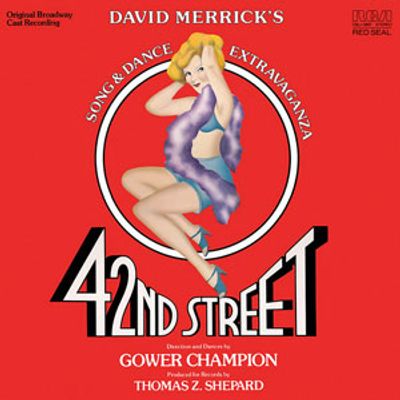
42nd Street (Original Broadway Cast Recording)
SHOW NOTES
Turns out Pinky and Perky are British! For all you non-Brits out there here’s a taste of the singer-songwriter pigs’ TV show.
If that sold you, you can get the VHS of the Chattanooga Choo Choo number here!
If you fancy yourself some black and white realness, check out the Hollywood classic 42nd Street movie!
Old Hollywood trailers are a beautiful thing, check out the (massively misogynistic) 42nd Street trailer from 1933.
Did you know classic Hollywood actors made mistakes too? Just look and see! God damn!
If you haven’t got one of the greatest musical theatre resources ever (Broadway: The American Musical by the way) then fix that right now!
What do you think about the nature of dance breaks? Come tell us on Reddit!
One of Jimi’s favourite Tony openings ever is 2001, with this fantastic turn from 42nd Street!
If you want some more Tony opening fun have a look at the train wreck of 2009…
Have a look at this xkcd comic as we tease apart the nature of reviving classic musicals.
A CONFRONTATIONAL QUIZ QUESTION
There are three musicals (that we know of) with songs in them titled “The Confrontation.” One of them is our musical next week.Which one?
Transcript
This transcript was automatically generated and might contain errors.
[0:00] Jimi: I do always find the Google Hangouts, you've got a like phone call sound much, much more relaxing than the Skype one.
[0:09] Tommy: Well the boo beep.
[0:10] Jimi: Yeah, that one like induces stress.
[0:13] Tommy: It's like pick up the phone, pick up the phone.
[0:16] Jimi: Whereas like Google Hangouts is like, hey, someone, hey.
[0:19] Tommy: Hey.
[0:21] Jimi: It's like very gentle.
[0:24] Tommy: It's very gentle.
[0:25] Jimi: I'm sure it's very Google.
[0:26] Tommy: It is very Google.
[0:27] Jimi: Yeah, it is.
[0:28] Tommy: There's something secretly insidious about it.
[0:31] Jimi: Somebody get us another drink.
[0:33] Tommy: Welcome to Jim and Tomic's Musical Theatre Happy Hour, your weekly podcast with sheet music and shot glasses.
[0:40] Jimi: I like that.
[0:41] Tommy: I like that it's like two words both times.
[0:43] Jimi: We're getting into the we've done all the one words.
[0:46] Tommy: I was thinking about this after A Little Night Music too, like in the same way that we're gonna run out of Sondheim shows eventually.
[0:46] Jimi: We're gonna run out of different ways to say alcohol.
[0:57] Tommy: Yeah, we're just gonna have to do starting brands, you know.
[1:00] Jimi: Ooh, what if we start, man, if you're an alcohol brand out there that wants to advertise on our show and send us free samples.
[1:07] Tommy: I mean that would be great, but is that legal?
[1:12] Jimi: com. Subject line free booze.
[1:16] Tommy: Yes, please. That's your reference.
[1:19] Jimi: Um speaking of what's on the menu today.
[1:22] Tommy: Oh, I got a little glass of dime vodka, because it's the Great Depression.
[1:29] Jimi: That's all you keep stealing my ideas.
[1:34] Tommy: Mine was just gonna be water from a puddle because it's the Great Depression.
[1:41] Jimi: That's all they drank.
[1:43] Tommy: Oh man.
[1:43] Jimi: Um why?
[1:45] Tommy: But why?
[1:46] Jimi: I'll tell you why.
[1:47] Tommy: It's related to our quiz question, isn't it?
[1:49] Jimi: Aha. That's new.
[1:50] Tommy: Um you probably remember this, Jimmy.
[1:54] Jimi: I've got vague recollection.
[1:55] Tommy: Our quiz question from last week.
[1:57] Jimi: Mm-hmm.
[1:57] Tommy: Catherine Zeta-Jones marked her Broadway debut in the 2009 revival of A Little Night Music, which we covered last time. But this was far from her theatrical stage debut. In fact, she got her big break in a West End production of this musical.
[2:12] Jimi: What show?
[2:14] Tommy: 42nd Street.
[2:16] Jimi: Come and meet those dancing feet.
[2:22] Tommy: On the Avenue, I'm taking you to 42nd Street.
[2:29] Jimi: Hear the beat of dancing feet.
[2:35] Tommy: It's the song I love the melody of 42nd Street.
[2:41] Jimi: Let on lifties from the 50s.
[2:45] Tommy: Innocent and sweet.
[2:47] Jimi: Sexy ladies from the 80s who are in disrepute.
[2:53] Tommy: They're side by side.
[2:55] Jimi: They're glorified.
[2:59] Tommy: Where the underworld can meet the elite.
[3:06] Jimi: Where the underworld can meet the elite.
[3:10] Tommy: 42nd Street.
[3:20] Jimi: Can I tell you how difficult it is to find YouTube videos about 42nd Street and like the Tony Award performance of things?
[3:29] Tommy: I mean, it's not that hard. Google's great, but they're always interspersed with like here's a tour of the 42nd Street subway tunnel.
[3:37] Jimi: And I'm like, that's not what I'm looking for.
[3:39] Tommy: Not really what I was wanting.
[3:40] Jimi: Why type 10?
[3:41] Tommy: Um because I was trying to find stuff about Girl Champion, and I typed in 42nd Street death announcement.
[3:50] Jimi: Uh-huh.
[3:50] Tommy: And then quickly realized it's not gonna do much.
[3:53] Jimi: Just lots of very depressing.
[3:54] Tommy: Lots of people have died on 42nd Street.
[3:57] Jimi: Yes.
[3:58] Tommy: Um 42nd Street.
[4:00] Jimi: Yeah, it's a musical.
[4:02] Tommy: It is.
[4:02] Jimi: Um it's a musical about Broadway.
[4:05] Tommy: It is like probably.
[4:07] Jimi: Yeah, and so it's like a backstage musical.
[4:10] Tommy: Um, and any sort of trope that you've seen of a backstage show has probably been pinched from this.
[4:18] Jimi: Seems very likely.
[4:19] Tommy: Um based on a Warner Brothers movie from 1933.
[4:24] Jimi: Um, the actual Broadway production came out in 1980.
[4:27] Tommy: It did.
[4:28] Jimi: That's a lot of people.
[4:28] Tommy: At the Winter Garden Theater, won Best Musical, Best Choreography.
[4:32] Jimi: Um, and it's got, do you know Harry Warren and Al Dubin?
[4:36] Tommy: I had, I never knew their names until we started looking them up, but they've written everything.
[4:41] Jimi: Well, not everything, but a lot of things, a lot of good stuff.
[4:44] Tommy: Yeah.
[4:45] Jimi: Um all of the ones that I've got listed here, Jeepers Creepers.
[4:48] Tommy: Jeepers Creepers has been a favorite of mine for years, Thomas.
[4:51] Jimi: Really?
[4:51] Tommy: Uh I sang Chattanooga Choo Choo in Show Choir.
[4:54] Jimi: Amazing.
[4:55] Tommy: Pardon my boys.
[4:58] Jimi: Um, the first time I saw Chattanooga Choo Choo, uh-huh, it was a cow singing it to Pinky and Perky, where they were tied to the railroad tracks.
[5:09] Tommy: Um in a Pinky and Perky sketch.
[5:13] Jimi: You've said these words like I'm supposed to understand what they mean, so I'm not sure if it's just not.
[5:17] Tommy: I will now take questions.
[5:19] Jimi: Yes, you sir, in the glasses.
[5:21] Tommy: What is Pinky and Perky?
[5:23] Jimi: So I think they're American, are they not?
[5:25] Tommy: Pinky and Perky, the little pigs?
[5:27] Jimi: Two little pigs.
[5:28] Tommy: No.
[5:29] Jimi: First show note of the day.
[5:31] Tommy: Um Pinky and Perky.
[5:34] Jimi: Oh, Chattanooga Choo Choo.
[5:37] Tommy: Yeah.
[5:37] Jimi: Well, the cow, remember the cow.
[5:41] Tommy: Pardon me, boys.
[5:41] Jimi: Yeah.
[5:42] Tommy: So they were doing, it was like a sort of, I guess like parody of like silent films, so they were like tied to the tracks.
[5:50] Jimi: Oh, okay.
[5:50] Tommy: And then the cow, I think, I think the cow had done it. I mean, I was really young, so plot lines were vague, but I think the cow had done it, and I was kind of like mocking them, being like, Pardon me, boys.
[6:02] Jimi: Is that the Chattanooga Choo Choo?
[6:05] Tommy: Oh god, yeah, yeah.
[6:07] Jimi: They've written everything.
[6:09] Tommy: Including a bunch of hit songs from, um, or that ended up in the 42nd Street, like Lullaby of Broadway, um, We're in the Money, um, and then uh what else?
[6:23] Jimi: On the Achisin Topika and the Santa Fe, which is a song I learned in my childhood.
[6:28] Tommy: I don't know why.
[6:29] Jimi: Um 42nd Street.
[6:31] Tommy: Uh yeah, yeah, yeah, yeah.
[6:32] Jimi: I like you very much.
[6:33] Tommy: Yes, made famous by Carmen Miranda, the lady in the Tutti Frutti hat.
[6:38] Jimi: Um, but yeah, and then I don't know these two book writers.
[6:42] Tommy: Um, so well they did Barnum.
[6:45] Jimi: Okay, the button that's their biggest Michael Stewart and Mark Bramble.
[6:50] Tommy: They did both, that makes sense.
[6:52] Jimi: Yeah.
[6:52] Tommy: Uh and Michael Stewart, I think, has done more than Mark Bramble, but together they did Barnum.
[7:01] Jimi: He's okay.
[7:02] Tommy: Michael Stewart is Bye Bye Birdie, Hello Dolly.
[7:05] Jimi: Okay.
[7:06] Tommy: That makes some sense.
[7:07] Jimi: Yeah.
[7:08] Tommy: Um Mark Bramble since though has gone on to direct like pretty much any of the productions.
[7:15] Jimi: Really?
[7:16] Tommy: Since.
[7:16] Jimi: Yeah, and sort of a, um, what do you call him?
[7:20] Tommy: Arthur Lawrence style.
[7:22] Jimi: Oh okay.
[7:22] Tommy: Book writer director.
[7:24] Jimi: Yeah.
[7:25] Tommy: That makes sense.
[7:25] Jimi: So that's good.
[7:26] Tommy: Um it came over to the West End in 1984.
[7:29] Jimi: It was big in the West End, was it not?
[7:31] Tommy: It was really big, yeah.
[7:32] Jimi: I mean it was big on Broadway.
[7:34] Tommy: Many people, no, and I don't know where this statistic or saying comes from, but people say it's the biggest Broadway musical ever.
[7:40] Jimi: But I mean that, that no, I wonder where that comes from.
[7:43] Tommy: That reads to me as like top of poster.
[7:45] Jimi: Um yeah, no, completely.
[7:47] Tommy: And you see it a lot, and um they're using it, so it's um being revived on the West End um very soon, like next week.
[7:54] Jimi: Yeah, I saw a trade previews begin.
[7:56] Tommy: Yeah.
[7:56] Jimi: And they're kind of using it as their publicity, like Broadway's biggest show and things like that.
[8:01] Tommy: I'm like, but that's not.
[8:04] Jimi: Yeah, no, that's just strange.
[8:05] Tommy: I wonder, I mean, that I could see a marketing agency in the 1980s being like, well, our stage is, you know, six inches bigger than the biggest stage on Broadway.
[8:15] Jimi: And that makes the biggest Broadway.
[8:18] Tommy: Our cast has an average height of one inch in, you know, whatever.
[8:22] Jimi: Exactly.
[8:22] Tommy: I mean, there is a large cast, and I don't know whether it comes from that, but I'm thinking like, you know, Chorus Line had a big cast.
[8:29] Jimi: Yeah.
[8:30] Tommy: Um lots of shows have big.
[8:31] Jimi: So I don't know.
[8:32] Tommy: Yeah, I wonder, show your sources, cite your sources.
[8:36] Jimi: Exactly.
[8:37] Tommy: Citation needed.
[8:38] Jimi: Um we have that, the company that I worked for in Edinburgh, um, we had that.
[8:43] Tommy: We have a quote, a pool quote called, um, that we are the best amateur theatre group in Britain.
[8:50] Jimi: Ooh.
[8:50] Tommy: Fantastic quote.
[8:52] Jimi: That's a great quote.
[8:53] Tommy: Um, but it's going to become the stuff of legend because we can no longer find the source.
[9:01] Jimi: It's probably at the end of the sentence saying some might call them the best amateur theater group in Britain.
[9:07] Tommy: However, others wouldn't.
[9:09] Jimi: No, we know where it's from.
[9:11] Tommy: And we've asked, we've asked for it, but we've never heard a reply.
[9:13] Jimi: So it's not our fault.
[9:15] Tommy: We've tried.
[9:16] Jimi: Anyway.
[9:18] Tommy: So 42nd Street.
[9:19] Jimi: What's it about?
[9:20] Tommy: I mean, let's rattle through the plot, please.
[9:22] Jimi: It is 42nd Street is based on the Warner Brothers movie of the same name, which is based on a novel that I've never actually heard much of.
[9:30] Tommy: 42nd Street is the backstage musical.
[9:33] Jimi: It's the backstage musical.
[9:36] Tommy: We're putting on a show.
[9:39] Jimi: Famed director Julian Marsh is doing a show.
[9:42] Tommy: Famed director Julian Marsh is putting on a show in the height of the Great Depression.
[9:47] Jimi: He lost a bunch of money because it's the Great Depression.
[9:50] Tommy: So this one has to go well.
[9:53] Jimi: We watch the casting of all the chorus girls and all their legs, which is a weird antiquated thing.
[9:59] Tommy: You know, legs.
[10:12] Jimi: She's the one that's supplying the money.
[10:14] Tommy: Exactly.
[10:15] Jimi: But she's also got a vaudeville man on the side.
[10:18] Tommy: Which, you know, is cause for some trepidation among those in the know.
[10:22] Jimi: Um and then Horror of Horrors, Jimmy, on the day before opening night, out of town opening tryouts.
[10:30] Tommy: Well, the leading lady, does she break her ankle?
[10:33] Jimi: She'd sprain her ankle.
[10:34] Tommy: She hurts herself.
[10:35] Jimi: She breaks her ankle.
[10:37] Tommy: She breaks her.
[10:38] Jimi: She can't go on.
[10:39] Tommy: What are we gonna do?
[10:42] Jimi: Well, let's take this young ingenue and persuade her that's a good thing.
[10:46] Tommy: And you can do it, honey.
[10:48] Jimi: Yeah, what's the line? You're gonna go out there.
[10:50] Tommy: You're gonna go out there a little girl, and you're gonna come out a star or something like that.
[10:50] Jimi: You're gonna come out a star.
[10:56] Tommy: And it sounds, the way we describe it and the way we're talking about it, this sounds tropeish and like it's been done a million times before.
[11:03] Jimi: But the only reason it's been done a million times is because the movie 42nd Street did it first.
[11:08] Tommy: This is the first time this kind of trope of a backstage musical happened.
[11:13] Jimi: And this kind of thing.
[11:16] Tommy: Yeah, well, the film was made in a time when musicals were becoming musicals.
[11:21] Jimi: Um it's, yeah, it's the first time that we get to really see how the sausage is made to pull a reference.
[11:29] Tommy: Um yeah, it's, but I mean the plot is exactly what it is.
[11:33] Jimi: Is it, it um it harks back to all of these kind of really early days, you know, it's your anime goes, it's your top hats.
[11:43] Tommy: Um, it's, it's though like very fun, lively plot.
[11:49] Jimi: Nothing too.
[11:50] Tommy: It does, it does make it really interesting from a musical theater perspective.
[11:54] Jimi: Um, this is definitely present in the movie and maybe halfway present when you hit the stage show.
[11:59] Tommy: Um because it is a show about putting on a show, the vast majority of the songs are diegetic.
[12:07] Jimi: They're us, but they're diegetic in the context of the musical they're doing, which is called Girls, Girls, Girls.
[12:16] Tommy: Pretty lady or something.
[12:18] Jimi: Pretty lady.
[12:18] Tommy: It doesn't matter what it's called.
[12:21] Jimi: Um, like it is such, no one cares about the plot of the actual show they're doing.
[12:25] Tommy: It's just, I very much doubt there is one.
[12:27] Jimi: If it's called Pretty Lady.
[12:29] Tommy: Basically, and it's just a bunch of women in it, and then there's a train.
[12:33] Jimi: But so most of the songs in the show, save maybe one or two, don't actually progress or even have anything to do with the like bread and butter book of the show of like what's actually going on.
[12:49] Tommy: Almost all of them are rehearsal or performance numbers from the show that they're doing.
[12:54] Jimi: And I would wager to say this is one of the, the 1933 movie is one of the first times this kind of cheat, this trope has existed, and it's become a little more prevalent in musical theater since then.
[13:05] Tommy: I mean, a lot of the songs aren't in the movie.
[13:08] Jimi: It's only got like our little handful, doesn't it?
[13:10] Tommy: It's got maybe five or six of them, and then they pulled more from like they pulled some from the Gold Diggers of 1933, which was the spiritual successor to this movie.
[13:19] Jimi: Um, wherein the money was from that. Um, and a couple other Tin Pan Alley style songs were pulled here and there to flesh out the actual musical.
[13:28] Tommy: Yep.
[13:29] Jimi: Um, but from the actual, yeah, from the actual film. But I think, yeah, I mean, I don't know enough about films of that era to remark on that one. But I mean, the film itself, the film itself was very revolutionary. You know, I'll tell you all about it later. Um, it was very revolutionary and wildly popular.
[13:49] Tommy: Oh, I can't break away. I must have you every day, as regularly as coffee or tea. You've got me in your clutches, and I can't get free. You're getting to be a habit with me.
[14:04] Jimi: Can't break it. You're getting to be a habit with me.
[14:09] Tommy: Well, let's should we talk about the movie?
[14:11] Jimi: Sure, let's talk about the movie.
[14:13] Tommy: Right. 1932, 1933. It actually, uh, the copyright at the beginning of the m I think the beginning of the movie, the copyright says 1932, and at the end of the movie it says 1933.
[14:26] Jimi: Wow, that's a long film.
[14:27] Tommy: I think it's just a mistake. But no, this is so I was doing research about the production of the film. They filmed the whole thing in a month.
[14:33] Jimi: That's impressive.
[14:34] Tommy: That's crazy. Um, is that budgetary?
[14:38] Jimi: I think it's just that's just the way the studio culture was at the time. You churn out these movies like nobody's business. This was an early, um, Bub I always say his name wrong, Bubby Berkeley.
[14:48] Tommy: Busby Berkeley, um, movie who did most of the all of the choreography. Um, if you've ever seen a shot of dancers from above in a circle, that's a Busby Berkeley thing. He invented that.
[15:00] Jimi: Uh, it was in like, I mean, he really was the best of his time.
[15:06] Tommy: Yes. Absolutely. Um, he creates or has created that image in your mind of, you know, what, 1930s, um, kind of folly style dancing.
[15:19] Jimi: Yeah, I mean, he really invented that. Like there are, if you watch this movie, there are some iconic shots in here. Like there's a really iconic shot through, um, all the legs of the chorus girls.
[15:30] Tommy: That is such a great shot.
[15:31] Jimi: It's a one-regardless of anything, yeah. It's really impressive. It's very clever and interesting, and you know, uh, all the awful things it says about women aside is very evocative and, you know, uh, sexy and salacious and visually interesting and almost hypnotizing in a way.
[15:55] Tommy: Um, it's very he with this core with this kind of film choreography, did a bunch of reinventing. And so this is early on in his career, and actually at the time this movie came out, um, the concept I think this is fascinating.
[16:14] Jimi: The concept of movie musicals was dying in the 1930s.
[16:19] Tommy: Um, people were losing interest in movie musicals in the 1930s, um, and this musical, 42nd Street, is kind of earmarked as getting people excited about movie musicals again, um, which I think is really interesting when compounded with a lot of the things 42nd Street has done later in its life.
[16:41] Jimi: Um, the movie holds pretty closely to the plot of the musical.
[16:47] Tommy: I guess it's the other way around, the musical follows. The musical does a good job with the plot of the movie, where the movie just kind of does it in an okay way because it's just a serial musical film.
[16:57] Jimi: Um, but the choreography is wonderfully interesting, and the plot is at least not uninteresting.
[17:09] Tommy: Definitely, definitely, and I think they do that by kind of keeping it simple.
[17:13] Jimi: Yeah. Do you know? I mean, there's not too many characters flying about the place. Everyone you get and you understand. There's not too many twists and turns and relationships flying out everywhere. It's pretty straightforward.
[17:25] Tommy: Yeah.
[17:26] Jimi: And I think one of the crazy things about the whole longevity of this musical, again, we talked about some of this with like Guys and Dolls. The movie came out contemporaneously. It is set in the Great Depression and came out in the Great Depression and was about life then.
[17:41] Tommy: But then the musical itself, the Broadway existence of it, is a period piece because it's about the movie, about the time.
[17:52] Jimi: Yeah.
[17:52] Tommy: And that does interesting things to all sorts of stuff.
[17:56] Jimi: Yeah. Well, like I can see one of the reasons it being wildly successful is because it's a very hopeful film.
[18:02] Tommy: Yeah. Do you know? I mean, this idea of, you know, you can be anyone you want to be, um, follow your dreams, etc.
[18:14] Jimi: Yeah. Um, and so I can totally see everyone at that time, you know that we've talked about this before, but like needing something like that.
[18:21] Tommy: Yeah, absolutely. Um, and that it's almost the crux of the whole thing. The movie ends like a lot of movie musicals of the time do, with a big production number, uh, really a Gene Kelly style, you know, we're gonna end it with a big dream sequence in modern day New York.
[18:35] Jimi: It's huge.
[18:36] Tommy: That last, yeah, huge. Um, and it's about 42nd Street.
[18:40] Jimi: Um, and it kind of encapsulates that kind of hopefulness through the Great Depression, you know, and it's the lyrics alone, the 42nd Street where the underworld can meet the elite down on 42nd Street, um, and the idea that we're bringing all of these, you know, chorus girls actor types who are considered to be the CD, impoverished, you know, like not do nothing, you know, victims of the Great Depression are performing for the, you know, top hat and white tie elite in the audience and also sleeping with them on the side.
[19:14] Tommy: Um, and it is this kind of melding of the haves and the have nots, and like there's a lot for a very fluffy show tune style music, there's a real undercurrent of some commentary going on here, I think.
[19:27] Jimi: Yeah, definitely, definitely.
[19:28] Tommy: But it's that thing. I feel like at the time, it probably wouldn't even feel like commentary because it's just kind of real.
[19:35] Jimi: Do you know what I mean?
[19:36] Tommy: Yeah.
[19:37] Jimi: Um, and from the trailer, interestingly enough, I love old-fashioned movie trailers. I think they're the best thing in the world.
[19:43] Tommy: Um, but from the trailer, they're saying apparently like two thousand girls came to audition for the show, and only five hundred were picked.
[19:52] Jimi: Um, all of these beautiful women ready to dance for you this evening, that kind of thing.
[19:56] Tommy: Um, but I think that's, you know, if you think about that, like, you know, 2,000 people, that's a lot of people who were probably extremely poor.
[20:05] Jimi: Yep.
[20:05] Tommy: Um, you know, and then it's, I found it really interesting that in the musical that they've thrown in "We're in the Money."
[20:13] Jimi: Yeah.
[20:14] Tommy: Um, from Gold for that exact reason.
[20:16] Jimi: Do you know what I mean?
[20:17] Tommy: Yeah. Um, which I think is, I don't know, I find that a very good call.
[20:23] Jimi: Um, because it is all about these chorus girls who are fighting.
[20:26] Tommy: Yeah.
[20:27] Jimi: Um, and it becomes, I mean, this in the same way.
[20:30] Tommy: Oh, I hate to draw this comparison.
[20:32] Jimi: Um, I think one of the reasons 42nd Street, especially on Broadway, is so popular because it gives that kind of backstage insight, and make you know, it is easy for the people who would be auditioning for it to like have a handle on their characters because it's them.
[20:48] Tommy: Um, the reason 42nd Street is successful, I think, is the same reason La La Land is successful, because it has that kind of inside baseball talk, and I feel like pieces of art that are about the art making in the world they exist in often find increased critical success among, uh, among the knowers, among the people who live in those worlds because they feel an attachment to the content, um, you know, books about writing, books, movies about making movies, shows about putting on shows.
[20:48] Jimi: Yeah, well, I mean, if you look at something like A Chorus Line, it is, you know, one of the most successful films of all time and it's, you can't get real exactly.
[20:48] Tommy: I mean, I feel like A Chorus Line is like 42nd Street dark, right?
[20:48] Jimi: Um, yeah, it a co, A Chorus Line is what would happen if you tried if you started with the same germ of an idea for 42nd Street in the 70s.
[21:45] Tommy: Yeah, exactly.
[21:45] Jimi: Yeah, um, so yeah, it's a good little film.
[21:53] Jimi: It is, even for just the numbers alone.
[21:55] Tommy: Yeah.
[21:56] Tommy: It's, and to be honest, it's worth a watch.
[21:56] Jimi: Um, because it's proper, proper, uh, old Hollywood. Yes, it's fabulous. I also saw, just bring it up so I can pin it in the show notes, um, it's an amazing, amazing video, um, of old Hollywood bloopers, right? Which you would never think about.
[21:56] Tommy: Yeah, it's just all of these people just being like, oh god damn, oh god damn.
[21:56] Jimi: Everyone said that is like the curse word of the time.
[21:56] Tommy: Should have far a move on.
[21:56] Jimi: Oh, that's so funny just seeing like literally like Humphrey Bogart being like, ah god, yeah, you know, I mean, it's so great. It's really great so it's in the show. It's really good. It's a good movie in general to watch too and, uh, an early appearance of Ginger Rogers.
[22:39] Tommy: Big change.
[22:39] Jimi: I know, yeah, I know not taking the leading lady spot yet long, I think quite a quite some time before that.
[22:48] Tommy: Yeah, she looks great though.
[22:50] Jimi: Yeah, they all look good. Another beautiful girl for you to do marvelette.
[22:54] Tommy: Yeah.
[22:54] Jimi: And of course, complete with the caveat that like any movie from the 1930s, it's filled with rampant sexism and racism.
[23:03] Tommy: Um, you know, different time.
[23:06] Jimi: Wasn't good then, not good now, but still exists.
[23:10] Tommy: Exactly.
[23:10] Jimi: I mean, it's one of those. I feel like we've kind of talked about that in musical theater.
[23:15] Tommy: Probably enough.
[23:17] Jimi: Yes.
[23:17] Tommy: Well, we know it's bad enough.
[23:20] Jimi: Yeah.
[23:20] Tommy: Yeah, exactly.
[23:21] Jimi: But, um, also I don't think 42nd Street, even the stage musical, like at the stage musical does change some of the, um, in the movie, they're casting the girls because they're women.
[23:35] Tommy: They cast them and they're like, pull up your skirt, let me see your leg.
[23:39] Jimi: Like they are objectified as, you know, bodies.
[23:43] Tommy: By the time it makes it to the stage musical in 1980s, that's toned down a little bit.
[23:49] Jimi: And I do think it's a little bit more about, you know, your talent and your dancing.
[23:55] Tommy: But then there is the song like, you know, dames are temporary flames, you don't remember their names.
[24:00] Jimi: Like we're still not doing great things for, um, feminism.
[24:07] Tommy: No, it's not, it's not, it's not gonna be the banner for the feminist movement.
[24:12] Jimi: No, I mean like the poster is a scantily clad woman with a boa, like exactly, exactly.
[24:18] Tommy: It's interesting, like if you if you watch something like, um, probably American musical, um, in the the early days, they obvio they interviewed quite a lot of like Follies girls and things like that.
[24:28] Jimi: It's interesting because at the time it was the ultimate job because it was like if you were a Follies girl, you're the most beautiful person out there, and you could use that, yeah, as a status symbol.
[24:37] Tommy: Yeah.
[24:37] Jimi: Do you know what I mean?
[24:39] Tommy: Um, which in, you know, it is, is, it's different times.
[24:42] Jimi: It is different times.
[24:43] Tommy: It's, but it's interesting.
[24:44] Jimi: It's fascinating that those girls were the elite in many ways.
[24:48] Tommy: Well, and because, you know, you're getting employment, you're working on your own.
[24:53] Jimi: You're, you know, making your own way in the world.
[24:57] Tommy: Absolutely.
[24:57] Jimi: In, you know, a very, it's a definitely a mixed bag there.
[25:00] Tommy: Um, but you're, you're not, yeah.
[25:05] Jimi: Yeah.
[25:05] Tommy: Times have changed.
[25:08] Jimi: Not fast enough.
[25:12] Tommy: Bouquets that grow for all those cute and cunning, young and beautiful days.
[25:20] Jimi: Things a temporary place to you.
[25:27] Tommy: You don't recall their names to you, but their caresses and home addresses linger in your memory of those beautiful.
[25:40] Jimi: In your memory, see those beautiful, in your memory, all those beautiful days.
[25:50] Tommy: Let's talk sad things.
[25:52] Jimi: Let's talk sad things out of the way.
[25:54] Tommy: Yep.
[25:54] Jimi: So this is one of a few musicals now, or just a few shows and things, um, which had their opening night tainted by a very sad thing.
[26:04] Tommy: So, um, Gower Champion, who is the director choreographer, um, that you'll probably definitely know from Hello Dolly, um, but need to know for 42nd Street.
[26:17] Jimi: So this was his last thing.
[26:19] Tommy: I, yeah, are you getting feedback? Uh, it's there is a cricket that...
[26:21] Jimi: Oh, it's a cricket?
[26:24] Tommy: There's a cricket that Linus hasn't eaten, and I'm trying to like move the microphone, so it doesn't matter.
[26:28] Jimi: Sorry, you just said there's a cricket that Linus hasn't eaten.
[26:31] Tommy: Uh yeah, Linus is the lizard.
[26:35] Jimi: What?
[26:36] Tommy: Is he named after Linus Van Pelt?
[26:38] Jimi: Yeah, it used to be Linus and Lucy.
[26:39] Tommy: Lucy didn't make it.
[26:40] Jimi: Um, I'm sorry, Lucy.
[26:42] Tommy: I mean, it was like seven years ago. Um Linus is a grumpy old curmudgeon and got fresh crickets today, and one of them is being noisier than the rest.
[26:49] Jimi: Yeah, well, if you can hear something in the background, it's not feedback, it's just a cricket.
[26:49] Tommy: It's just a cricket.
[26:55] Jimi: Uh I forgot you lived in a desert.
[26:58] Tommy: I do. I just I had to kick a gila monster out of my bed the other day.
[27:02] Jimi: I know.
[27:02] Tommy: That's tough.
[27:03] Jimi: But that's a whole nother story.
[27:05] Tommy: Exactly. That's a separate podcast.
[27:08] Jimi: Um, so anyway, death. Um, so uh yeah, basically, um 42nd Street opened in 1980. Um this was gonna be a really important show for Gower Champion because um kind of since I do I do, which came just after Hello, Dolly!, yeah, nothing else landed, even though Mack and Mabel is great and it didn't do well for some weird reason.
[27:31] Tommy: It was not a functional success.
[27:32] Jimi: Yeah, it just didn't work. So he was really needing something big.
[27:37] Tommy: How life imitates art.
[27:39] Jimi: Right? It's so weird, like it's so strange. Yeah because I feel I I mean I I've talked to you about this before many, many times, but I'm a big believer in fate and the world um meaning something a bit more than what it does. Uh-huh. Um, and I find it really fascinating. Um that this I we always haven't said it, but basically he died on opening night.
[28:01] Tommy: Yeah.
[28:02] Jimi: Um and uh that this, you look at Rent as well with Jonathan Larson. Um, you know, this beautiful show that talks a lot about death and the nature of dying.
[28:14] Tommy: Yeah.
[28:14] Jimi: Um and he wrote this show for his friends and things like that. Like um, I don't know, I find it really weird.
[28:22] Tommy: Yeah.
[28:23] Jimi: I find it weird.
[28:24] Tommy: Yeah.
[28:24] Jimi: Uh and it is it is a piece of stage lore.
[28:28] Tommy: So um the oh who kept it. Um David Merrick.
[28:35] Jimi: Yeah.
[28:35] Tommy: Yeah. David Merrick, the producer. David Merrick, the producer had been aware of Champion's passing. Uh he died a couple hours before curtain time, um, but had kept the entire affair a secret from cast and company and crew and just about everyone else until after the performance and at a closing curtain speech announced it to, you know, the tragedy of all.
[29:01] Jimi: And didn't even announce it in a very good way.
[29:04] Tommy: It was very much like, but this is a tragic event. Um, you know, David Um, you know, Gower Champion has died, and it was very yeah, it was a bit improper, I would say to be honest.
[29:17] Jimi: Um and it, you know, even just like things like um Gower Champion, I think had been dating um the girl who was playing Peggy, um, and you know, for him to kind of come out and announce it like that, probably definitely knowing the fact that Gower Champion was dating her, yeah, you know, she collapses into this like horrible, yeah, sad fit of tears.
[29:40] Tommy: Um I can't remember, is it on Broadway: The American Musical?
[29:43] Jimi: I think it is. I think the clip of the announcement is there.
[29:46] Tommy: So if if you've got it, um watch that.
[29:49] Jimi: If not, it'll be in the show notes. You can get it because it's the Bible.
[29:53] Tommy: Um but is it just like it's tragic in a very particular show business kind of way.
[30:03] Jimi: Um I struggle with this. You know, this is this is at our core. People talk about these sorts of things all the time. It's in there's no business like show business. Like, what is it? Um you you before the show is started, you learn that your favorite uncle died at dawn, your ma and pa have parted, but still the show goes on.
[30:25] Tommy: Um, and there is this underpinning uh there's this underpinning underpinned ideal in our art that like tragedy happens and it makes our art.
[30:37] Jimi: And tragedy happens and it supports our art, and life is difficult and we, you know, struggle through with the art.
[30:44] Tommy: And it has become such a core of what we do, and I think it's it feels destructive and improper.
[30:52] Jimi: It feels like something I wish didn't happen as much.
[30:56] Tommy: Yeah, I mean, I think this was totally him thinking like a producer and not thinking like a friend.
[31:01] Jimi: Right.
[31:01] Tommy: Um, because you know, he announced it, this was it was press night, everyone was there, the world's press was there.
[31:08] Jimi: Um at the end of this beautiful uplifting show that he comes out and makes this speech in a very less than decorous manner.
[31:16] Tommy: Right.
[31:16] Jimi: Um you know, it's i he's doing it for the headlines. I'm sorry, but like and I understand he's desperate and I understand he needs a good break, but I feel there's much better ways of doing it and much more decent ways of doing it than trying to grab some headlines and going for that, you know, it's like clickbait of the 80s.
[31:35] Tommy: Um but even like it's not in the more contemporary sense with like um Jonathan Larson and Rent, um, which certainly was handled with much more tact and understanding.
[31:47] Jimi: Um Larson, yeah, exactly.
[31:49] Tommy: Exactly. I'm going off memory here, but I believe Larson passed the day of opening or the day of last preview.
[31:55] Jimi: Um, opening, yeah, I think.
[31:59] Tommy: And they in his honour were going to just do the show like like a stage reading, like seated at microphones in a more they said they said before the show, like it wasn't uh oh, but the way I know you've just had an amazing time watching that, but guess what?
[32:14] Jimi: Um it was very much like we're doing this for Jonathan, right? You know what I mean?
[32:19] Tommy: Which seems like a much more proper way to do it.
[32:21] Jimi: And it still to me feels in that kind of we are capitalizing on our tragedy to make our art.
[32:30] Tommy: Um well, no, see, I don't think that with Rent.
[32:30] Jimi: I don't think that because with Rent Um Death is very much a part of the show.
[32:40] Tommy: That's true.
[32:40] Jimi: Um, and because it's it's you know, semi-autobiographical from Jonathan's perspective of his friends, yeah, um, and growing up in East Village, I think it's it's more just becomes a tribute to him.
[32:54] Tommy: I guess that's true, as opposed to uh you know, or we're doing some headline grabbing because you know the the guy's diagnosis will be some great publicity.
[33:03] Jimi: Um I don't doubt that that is a secondhand um like symptom of it, yeah.
[33:10] Tommy: Um but that's just a natural thing, whether they released it to the press as a press release or whether they did it on stage.
[33:16] Jimi: Dramatic announcement on stage.
[33:17] Tommy: Yeah, that's a definite thing.
[33:18] Jimi: Exactly.
[33:19] Tommy: Yeah. Exactly.
[33:20] Jimi: Um I think it w you know it would have happened either way, the show still would have been and got some success from that.
[33:26] Tommy: Yeah.
[33:27] Jimi: Um and notoriety, I guess. But the th one of the things is what I think with David Merrick is quite stinky.
[33:32] Tommy: Um is he since after after um Gower Champion died, uh he calls it now David Merrick's 42nd Street.
[33:41] Jimi: Um which is dark.
[33:43] Tommy: I think that's dark.
[33:45] Jimi: Uh because, you know, obviously Gower Champion wasn't around to fight for his estate and his name in it.
[33:50] Tommy: Right.
[33:50] Jimi: But it's very much Gower Champion's show. It's you know, yes, David Merrick grew the money, but it's David Merrick uh presents Gower Champion's 42nd Street.
[33:59] Tommy: That's what you're doing.
[34:00] Jimi: Yeah. Um that's kind of it's stinky, it's really, really stinky.
[34:04] Tommy: Um and obviously he had a lovely long life and I think passed away in 2000 or something.
[34:09] Jimi: Yeah, although the the this was his pretty much his last big success, 42nd Street.
[34:13] Tommy: It didn't, yeah, yeah.
[34:14] Jimi: This was his uh yeah, it's one song.
[34:18] Tommy: But it's it's it is just really really tragic.
[34:20] Jimi: Yeah.
[34:21] Tommy: Um and it's it's it's just a weird thing. People dying on opening night.
[34:26] Jimi: Like we we talked about this briefly um the off microphone, but it is uh I do to me it makes some sense.
[34:34] Tommy: Um because even you hear the perhaps apocryphal story about Irene Ryan walking off stage from Pippin singing, oh you gotta oh it's time to start living, and then like falling down dead of a heart attack.
[34:45] Jimi: Um like these stories, one, I think we build them up because of this underpinning of our life is a support system for our art and not the other way around.
[34:57] Tommy: Um and so, you know, we we hear about them. Also, that I think there's some confirmation bias going on here.
[35:04] Jimi: Like, yeah, we don't talk about all the other artists who didn't die on opening night because there's nothing coincidental there.
[35:11] Tommy: Um, but I also think, you know, putting on a show takes a lot of energy, causes a lot of stress.
[35:19] Jimi: I mean, it almost goes back to the plot of 42nd Street.
[35:22] Tommy: But yeah, the doctors tell the director at the beginning, like, you can't, you're gonna have one more nervous breakdown, and that'll be the end of it.
[35:27] Jimi: Yeah, I mean, old Gower Champion was very much on his last legs, like he was he was really ill.
[35:31] Tommy: Yeah.
[35:31] Jimi: Um and so, like, the stress of putting on a show, of course, that's gonna have physiological toll on your well-being.
[35:38] Tommy: And then on opening night, you have all this stress buildup or all this stress release, or all of it all together, combined with staying up late, combined with partying, combined with whatever drinking you're doing.
[35:50] Jimi: Like, it is a little unsurprising to me that these things happen from time to time.
[35:57] Tommy: Yeah, totally, totally, but still very sad.
[36:03] Jimi: Some rhythms abound in your shoes, then I'll change your point.
[36:11] Tommy: Have you been singing a sad and blue song?
[36:18] Jimi: Go into your dance.
[36:22] Tommy: Until you learn how to sing a new song.
[36:26] Jimi: Go into your dance.
[36:29] Tommy: Don't be complaining.
[36:32] Jimi: Learn how to smile.
[36:38] Tommy: Put off your thumb until tomorrow.
[36:42] Jimi: Go into your dance.
[36:45] Tommy: Okay, let's move on from the sadness.
[36:47] Jimi: Mm-hmm.
[36:48] Tommy: Um, oh, do you know what? Even just saying it, you know the movie Inside Out?
[36:52] Jimi: Yeah.
[36:53] Tommy: Sadness is one of my favorite characters.
[36:55] Jimi: She's fabulous.
[36:57] Tommy: She's up there now with Wally and Woody, and I'm ready to get a plushy.
[37:00] Jimi: Get a little plushy, get a little sadness plushy.
[37:03] Tommy: Exactly. What's her face from The Office?
[37:06] Jimi: What?
[37:07] Tommy: Have you watched The American?
[37:08] Jimi: Oh, was that the actress?
[37:10] Tommy: Yes.
[37:10] Jimi: Aha.
[37:11] Tommy: Okay. She's great.
[37:12] Jimi: Her voice is perfect.
[37:13] Tommy: She's also in the OA.
[37:14] Jimi: Have you seen the OA?
[37:15] Tommy: The OA?
[37:15] Jimi: No, what's that about?
[37:16] Tommy: It's on Netflix. It's amazing.
[37:18] Jimi: Uh-huh.
[37:19] Tommy: Alright.
[37:20] Jimi: We'll see.
[37:20] Tommy: It's a Netflix original.
[37:21] Jimi: I will look it up.
[37:23] Tommy: Netflix knocking it out the park.
[37:25] Jimi: Um anyway, 42nd Street.
[37:27] Tommy: So um I think this is probably some of the best choreography that's ever existed on Broadway Discussed.
[37:35] Jimi: That is a bold statement. Tell me why.
[37:38] Tommy: I know. I didn't say it's the best, but I said it's among the up there with the greats.
[37:42] Jimi: Yeah.
[37:43] Tommy: Um, and that's because in many ways Gower Champion was up there with the greats.
[37:47] Jimi: Yeah.
[37:49] Tommy: Right?
[37:52] Jimi: Uh yeah. I can't tell if you're being silent or if you've connected with you.
[37:58] Tommy: It's I still I still the two you've listed there, Fosse and Jerry Robbins, I like their stuff better than his.
[38:07] Jimi: Oh, yeah, no complaints. Like, you know, my favorite stuff art comes from them.
[38:11] Tommy: But I mean, the the the dancing in this show and the things that they did, um in terms of a tap musical.
[38:11] Jimi: That's true.
[38:11] Tommy: In terms of a tap musical, um, I think it's I think it's some of the greatest.
[38:25] Jimi: Um, until then, obviously we'd had Anything Goes way back in the day, and re you know, revivals and things pop out.
[38:33] Tommy: Um, it has some great tap moments.
[38:36] Jimi: Um, but I think the opening to 42nd Street is up there with the opening to A Chorus Line.
[38:42] Tommy: Yeah.
[38:43] Jimi: It's up there with the opening of West Side Story.
[38:46] Tommy: Yeah.
[38:46] Jimi: Like it's just sensational.
[38:48] Tommy: Yeah.
[38:49] Jimi: It is that like half-like like, you know, half-legged shown just at the knees, just all of these feet tap dancing.
[38:55] Tommy: Yeah.
[38:55] Jimi: Is really alluring and it's really exciting.
[38:58] Tommy: Yeah.
[38:58] Jimi: Um, and all you can hear is just this great tap, and it kind of sets you up.
[39:04] Tommy: It shows you, look, this show, you're just gonna like the dancing, all right?
[39:08] Jimi: Yeah, it's that don't focus on anything else. Pay no attention to that man behind the curtain.
[39:13] Tommy: Yeah.
[39:14] Jimi: Um watch us tap dance because we're gonna do it really well.
[39:17] Tommy: Yeah.
[39:17] Tommy: Um, that both me.
[39:20] Jimi: Why?
[39:20] Tommy: Why bye?
[39:22] Jimi: Because we do musical theatre for the story.
[39:24] Tommy: I do musical theatre for the story.
[39:26] Jimi: Um, yeah.
[39:27] Tommy: I don't know, I do musical theatre for many things.
[39:29] Jimi: Yeah, I do music because yeah, I love the musical Fosse.
[39:33] Tommy: You know what I mean?
[39:34] Jimi: And that is about the dancing, it's a celebration of what Bob Fosse can do.
[39:38] Tommy: Um, and to me, it's still very much a musical.
[39:42] Jimi: Yeah. Uh, and it's great in terms of its choreography. I don't think there's anything wrong with that. Yeah. Um, because in the but I I just feel like in the same way with um dancing, singing, acting, your three disciplines that pop into musical theatre. Some shows focus on one more than the other. Yeah. Um, and I would say this one focuses a heck of a lot more on the dancing. Yeah. I feel I think my my my groans about it go a little deeper, and it has to do with this being a musical about putting on musicals. Um, all the way back from its 1930s and uh roots to um champions uh choreography on Broadway. Um the the conceit is that most of this choreography is based around the show they're putting on, and so is stylistically appropriate to the show they're putting on.
Um the same way with the movie, and so the show they're putting on is supposed to mirror Broadway shows of the time, but it feels like we're making a meta commentary on something that doesn't actually exist. Like it is it is hard for me to point to the musical on Broadway in the 1930s that is just a hoofer, that is just a bunch of tap dancing with like Bubkiss zero plot. Um that feels like an earlier era thing, something that we're past, which is why we're wrapping it in this meta story of putting on the show. But I feel like we missed a step there, all towards creating what is certainly become the stereotype icon of what quote unquote Broadway choreography looks like. But to me, Broadway choreography looks like um movie cinematography.
Like choreography exists on Broadway in a million different ways, and so there isn't like a Broadway look, there's just whatever is appropriate for that particular thing. Just as there's not like one genre of filming a movie that exists, there's like a million different kinds, but then somehow this plotless choreography has bubbled to the top as the icon. It is certainly in like um athletically impressive, but it's not in support of anything.
[42:14] Tommy: That's interesting. This has been something really, really interesting point. It's something I've struggled with for a long time, and that I still don't know if I'm putting it in the right words. The moment I feel it most is that it's a moment that baffles me. Um and that I've been trying to write a video around for literally two years now, and I can never figure quite out. Um it's the concept of the down tempo showstopper. This happens in all sorts of musicals. Well, well, hello kick, kick dolly, and we're dancing kick. And the whole audience stands up and claps. It happens in 42nd Street, too. Like lullaby boatway. Exactly. Come on along and listen to, right? And we hit that down tempo showstopper, and usually it's a kick line, but it can be just about anything.
But something about that setup of like the song builds builds builds and the tempo and the the dynamics build build build-build build, and then we stop, and there's like two or three formatted notes. It's like da boom, step, kick, step, every single time, and the audience roars without fail. You know, we use it in it's it's parodied in um in Be Our Guest, in uh Beauty and the Beast. Like near the very end, there's that moment. Ever it is like a musical theater trope that is like stops the show in a really good way. But why? It's just impressive. It's just physically impressive. It just stirs something in you that feels like, oh, now we clap now. In the same way that like a blackout and a really good button tells you to clap now.
But it's not in support of it's like this weird social agreement we've all come to that we're here to praise, you know, and of course we're here to praise the athleticism. Like I don't want to downplay that. It's physically impressive that these things are happening, but in so many of more contemporary musicals, we are here to be taken away, are here to like assume that these are real characters on stage doing this thing, and like we have some suspension of disbelief with the singing, but that's still that still fits to me. Like some of the other suspension of disbelief in the world happens, but this kick line always happens at the moment in the choreography, or I'm like, why are we still dancing? What happened to the plot? Um all of this wrapped up in it seems very founded in the tropes that 42nd Street the movie creates and fosters. And it's why I struggle with it.
[44:51] Jimi: Okay. I don't I can't see why it's a bad thing. I'm not, I'm yet to be able to come onto your side of why it's a bad thing. Because first I would say it only really I mean it really only happens in the lullaby of Broadway, yeah, which is the kind of 11 o'clock number. Yeah. You know, I mean it's the big turn. Yeah. Um, and it's just a big ensemble moment. Right. Um, but to me, like Lullaby of Broadway is the catchiest tune. Yes. But it's not the biggest number. No. Do you know what I mean? But like, even, you know, we're we're in the money, which is a sh is in in the show, in the show within the show, ladies, ladies, ladies, or whatever the heck it's called. Um never get it right. Um, is the you know, starts with but it's as much as you as much as you get from the show within the show.
I found some money! What is it? Oh my god, we're so rich. We're in the money, we're in the money. We got a little bit of what it takes to get along, and that's it. That's the plot. Then we just repeat that a million times, and then we stop repeating that, and then we tap dance. Why? Why do we tap dance? Because it's impressive, because we're so excited that we got this money that we can't help but dancing. Um so wait, pause, pause, pause. Are you saying that dance breaks are a bad thing? I'm saying that I find there are more motivated dance breaks in other musicals. I find that 42nd Street is the worst offender of dance breaks. Because it's no, I'm I'm struggling with this because you know, because of what it is, because it's an adaptation of a 1933 Busby Berkeley movie.
No, yes, that's why it's got a dance break in it. Do you know what I mean? So they're not gonna give it. It's the same way that you know, Crazy for You being an adaptation of the Garchomp, it's American Paris, which was just on an adaptation of the Gershwins. Um it's got the exact same thing. Yeah. You know, of Rogers and Hammerstein filled with dance breaks, like but I think they're different. I'm still piecing together why for sure. The dance break in Farmer and the Cowman different from the dance break and we're in the money. Because Farmer and the Cowman is still about Farmer and the Cowman in is comes from a place related to the specific plot of the story, right? Um We're in the Money is a stick with me on this, is a parody of something like Farmer and the Cowman from an angle that I don't appreciate.
This is where we're in like the meta world based on something that's not real. Farmer and the Cowman comes from we're having this social. We're getting together and we're gonna dance because that's what we've been told to do. And so you can still continue the plot like that. We're in the money, at least as far as the 1980s version is compared. I think pulling things from the 1933 movie is one thing, but I I think there's something else going on here too. Because they also decided to incorporate We're in the Money. It wasn't in the particular movie. But because it's a hit. Right. Because it's a hit. Right. In the same way Crazy for You incorporated a lot of Gershwin songs that weren't in to create, oh, here's the hits so that you know them.
Right, but at least Crazy for You endeavors to incorporate them into the plot. We're in the money. Slap that base, slap that base is in no way plot related. Yes, but it's still about a upright base that a character in the show pulls on stage. I do think Crazy for You is the good challenge for this sort of thing, is what I'm still working it through in my mind. We're in the money exists as a big production number because quote unquote big production numbers exist. Yeah, I'm not I don't think I'm gonna be able to agree with you on this one because I just feel like this is a core part of music theater. I understand that you know, there's in a bit in the same way that there's genres of music, there's genres of musical, um, and I feel like this is a very legitimate genre of musical because it's existed all the way through the whole genre, you know, I mean the whole um genre.
Yeah, A's music theater. Um, and it will continue to exist. Uh huh. Um so I think to write it off as nonsense is unfair and unfair because it is the basis of the things that have come today that are much more arty and much more kind of interesting in terms of storytelling.
[49:27] Tommy: Yeah. Yeah, I agree. I still don't know why it bothers me then. Mm-hmm. It feels like it feels like there's more room for art to be it feels lazy, and I don't know why. A dance break feels lazy. An un a dance break for the sake of dance break feels lazy. I because there are better weapons. I mean, I get I get what you mean. I know that like, you know, a dance break which you know narrates a story is fantastic. Yeah. But you know, even like let's let's take our let's take our home favorite, something like Great Comet. Yeah. Balaga, you're not advancing the story. No, but it's still as as several members of the productions uh quicked back at me. They were like, no, no, there's no justification for a 15 minute dance.
Yeah, exactly. But so then are you like, well, then that's nonsense, take it out. I'm like at least there's justification for a seven minute dance break there. Right. Well, where in the money's one is shorter. Yeah, but where in the money is like uh because it I think I'm tied up in the fact that it is part of the musical in the musical. And like seems to exist. I don't actually know, I don't think we're in the money is. I think we're in the money is them just finding money. But then thinking about it together, and then it turns into this big dream fest of wouldn't it be great to have money? Um maybe I'm off based on this one. I don't know. Then I guess I don't know what bothers me about it.
Mm-hmm. But I certainly enjoy it. Don't get me wrong. I'm right there with everyone uh standing and clapping when you know Dolly starts kicking with all those waiters. Like, or you know, Mame walks down the stairs again. Like, that's absolutely something that gets me going. I just can't with everything else in musical theater, I can place why I like it. What got me to the point of enjoying that? When they go, well, well, hello dolly and start high kicking, I don't know why I like it. Maybe. Maybe that's working with. Because it's ca because it's camp, and I think that's fine. Yeah, but I don't know if you're not sure. I mean, because it's fabulous and and fun. Yeah, but I don't I I run a musical theater channel and I don't like camp.
That's a lie. You've never said a bigger lie in your life. It's the biggest lie you've ever told. Um like, do you know I mean it's it's um it's it's just fun, and I think that's you know, it's I'm gonna sound very man-in-cheer here. But that's what musicals uh the the vein running through that meaty vein in your wago beef steak, yeah um is this kind of fun, lively musical, and that will be the thing that keeps musical theatre burning. Yeah I'm sure on the top in this lovely marinated upper crust of our wago beef steak. Uh-huh. Um, you've got some fabulous pieces of art. Yeah. Um, but at the core, the taste and the meat and the juice of it, it's always gonna come from this.
[52:26] Jimi: I wonder, I think this might be our fundamental disagreement, which is why we run a podcast so well. Um I would I'd turn your soup upside down.
[52:36] Tommy: Um You'd turn my steak inside out, would you?
[52:39] Jimi: Basically. Um like the to maybe to bring it back onto some of the topics we actually wanted to talk about. But so the 2001 Tony's award intro for 42nd Street is fabulous. Um not one of the many reasons, uh, because on um whatever compilation play build compilation it is, it's introduced by Robert Goulet looking like he hates life.
[53:06] Jimi: Um, which will go in the show notes.
[53:08] Tommy: Have you seen this? It's gonna go in the show.
[53:09] Jimi: Yeah, I've got I've got I've got the fill version for the show. So don't worry.
[53:12] Tommy: Hello, great.
[53:14] Jimi: I'm Robert Goulet.
[53:16] Tommy: 42nd Street is a music.
[53:18] Jimi: He's like so angry at life.
[53:19] Tommy: I know. Um, but they start like a lot of Tony intros, they start in their theater and make it to Radio City while tap dancing.
[53:29] Jimi: And the joke of it all is they tap dance out of the theater, arms in the air, tap dance down the sidewalk, arms in the air, tap dance down onto the subway platform, like looking left, looking right, through the turnstiles, and then sit down on the subway and start kicklining, and then some poor planted chorus girl in her contemporary outfits, like, what's this?
[53:48] Tommy: Oh, I can join in with the choreography.
[53:51] Jimi: And yes, that's funny, and that's camp and that gives it a purpose more so like that sort of self-commentary isn't in 42nd Street the musical proper.
[54:04] Tommy: I don't look at that as self-commentary at all.
[54:07] Jimi: I just look at it as fun. I think it's a great fun way to start the show.
[54:10] Tommy: And it shows off 42nd Street. It shows off the here's a bunch of athletes doing some sensational choreography, um, with the backing of some great tones.
[54:22] Jimi: Yeah. But then again, like I do, I dance to me is a huge part of musical theatre.
[54:30] Tommy: I love the evolution of dance throughout musical theatre. Do you know what I mean?
[54:34] Jimi: And I feel like in terms of tap, to put to bring it right back onto the point of the start, but in terms of tap, I feel like this is some of the best that exists out there.
[54:43] Tommy: Absolutely. I think that I think my struggle is what I love about musical theatre is the gestalt of it all.
[54:48] Jimi: Is that it's net it's all it's the sum of its parts.
[54:51] Tommy: It is the acting and dance and singing.
[54:54] Jimi: And you can't No, that's and that is the cream.
[54:56] Tommy: That's the cream of the crop.
[54:57] Jimi: But obviously, within that, you need to be able to look and appreciate all of the other gems that are there.
[55:03] Tommy: I feel you need to, I don't I don't feel you can ever, you know.
[55:06] Jimi: I mean, if you love something so much, you need to take it for the sum of its parts.
[55:10] Tommy: Yeah. Um, you can't hide and demerit the um the stuff that you might not appreciate as much.
[55:17] Jimi: I feel like you still need to to find the goodness in that.
[55:21] Tommy: I guess it's true.
[55:23] Jimi: Yeah.
[55:24] Tommy: Yeah.
[55:24] Jimi: You've convinced me.
[55:26] Tommy: A little.
[55:27] Jimi: Have I?
[55:27] Tommy: Have a little.
[55:28] Jimi: Okay, I'll take that.
[55:29] Tommy: I'll take that. Thanks.
[55:31] Jimi: Um, but just go and look at everyone else. Go and look at the 2001 Tony Awards intro, because I think, you know, until we got Neil Patrick Harris on the stage, nothing is better.
[55:41] Tommy: It's it's really, really good.
[55:42] Jimi: But I did rewatch 2009, and my god, is it bad?
[55:47] Tommy: Oh god.
[55:48] Jimi: Joe's thousand 2009 was my first Tony Awards.
[55:51] Tommy: Really?
[55:52] Jimi: That I won't be. I was surprised you didn't live all the way through.
[55:55] Tommy: Um, and that was the one with um Rock of Ages bopped on the head, Pal Joey Shrek.
[56:01] Jimi: Oh, okay.
[56:02] Tommy: Um everyone dancing to Hair at the end, Delton John and Liza Minnelli, like hand in hand after like it was a f car crash.
[56:09] Jimi: Yeah.
[56:09] Tommy: Um, and that was my first. I'm surprised I like wasn't put off musical theatre for good.
[56:14] Jimi: Do you know my my favorite Tony Ward's intro to Love to Hate?
[56:18] Tommy: Um, it's Rosie O'Donnell.
[56:21] Jimi: It's the year um they revived last time they revived how to succeed with Matthew Broderick and Megan Malale.
[56:28] Tommy: Um and Rosie O'Donnell is backed by like a gospel choir, and it's like it's Rosie O'Donnell's singing in air quotes, which is more like Rosie O'Donnell rapping, um and like step tapping.
[56:41] Jimi: And the whole point of the whole song is like, I bet you didn't know that these TV stars were once on Broadway.
[56:47] Tommy: And like, God, how much more can you reach?
[56:50] Jimi: It's like, I apologize that Broadway is an art form that exists.
[56:54] Tommy: Here's a better art form that we have people from.
[56:57] Jimi: Exactly. You'll know these people.
[56:59] Tommy: And I think the chorus the course is like, Bet you didn't know.
[57:02] Jimi: They did a Broadway show.
[57:04] Tommy: It's like, God, why?
[57:05] Jimi: I know.
[57:07] Tommy: Ah, Tony Openers.
[57:09] Jimi: They seem to be doing all right.
[57:10] Tommy: We'll just ignore Hugh Jackman.
[57:11] Jimi: We'll ignore Hugh Jackman.
[57:12] Tommy: But James Corden was great, was really moving.
[57:14] Jimi: Um, that was beautiful.
[57:16] Tommy: I think that's what they know.
[57:17] Jimi: They know that that works now.
[57:18] Tommy: They know that moving.
[57:20] Jimi: Moving and like sentimental, and like the the underlying theme of the whole thing, which I know we both appreciate, is like there are kids at home watching this right now who will end up on Broadway in a couple years.
[57:30] Tommy: Yeah, exactly.
[57:31] Jimi: Exactly.
[57:33] Tommy: Yeah.
[57:33] Jimi: Um, so yeah.
[57:35] Tommy: We'll see what they do this year.
[57:38] Jimi: I know.
[57:39] Tommy: I uh this is it's such a great season.
[57:42] Jimi: Yeah, we can't we'll uh we're I'm sure we'll do an episode when things get closer.
[57:46] Tommy: It's gonna be it's gonna be a rough one.
[57:48] Jimi: It's gonna be real, it's gonna be a knockdown drag out.
[57:51] Tommy: I was writing up a get my friend's going to New York, and I was writing up a guide for him.
[57:54] Jimi: Uh-huh.
[57:55] Tommy: Um, and just I basically I was like, okay, I'll write like some of the best shows, the top ones that you should see.
[58:00] Jimi: And I ended up writing out them all.
[58:01] Tommy: I was like, oh my god, it's so exciting.
[58:05] Jimi: Yeah, it's so exciting.
[58:06] Tommy: Um at least note come from a ways on Spotify, yeah, get it listened.
[58:11] Jimi: Have you listened to it yet?
[58:11] Tommy: I've listened to it.
[58:12] Jimi: Um started.
[58:14] Tommy: Um so far so good, by the way.
[58:15] Jimi: Yeah.
[58:16] Tommy: The the parts I the previews I saw at BroadwayCon were really fun.
[58:19] Jimi: Really fun and interesting.
[58:20] Tommy: So far so good.
[58:21] Jimi: Better exceeding my expectations.
[58:23] Tommy: Yeah.
[58:25] Jimi: A nickel.
[58:27] Tommy: Hold your horses and let me get the dirt off.
[58:30] Jimi: A dime.
[58:32] Tommy: We're in the money.
[58:34] Jimi: We're in the money.
[58:37] Tommy: We got a lot of what it takes to get along.
[58:42] Jimi: We're in the money.
[58:45] Tommy: The skies are sunny.
[58:47] Jimi: Oh man rushing you are through, you've done us wrong.
[58:52] Tommy: We never see a headline, not a redline today.
[58:57] Jimi: And when we see the landlord, we can look that guy right in the eye.
[59:02] Tommy: We're in the money.
[59:05] Jimi: Come on, my honey.
[59:07] Tommy: Let's spend it, Legend, send it wrong.
[59:12] Jimi: I'm really loving my titles.
[59:13] Tommy: I really temporarily.
[59:16] Jimi: Contemporary awakenings of classic musicals.
[59:19] Tommy: That could be awesome.
[59:20] Jimi: I feel like this actually weirdly stems on from what we're just talking about.
[59:22] Tommy: Yeah.
[59:23] Jimi: Um, but it seems like with the recent success of American in Paris, um, it seems like if you want to do pretty well with a musical, uh huh.
[59:36] Tommy: Adapt uh 1930s film.
[59:39] Jimi: Yeah.
[59:39] Tommy: Well, this I mean, this goes back to the thing I was saying earlier about this being contemporaneous when it was first written, but now wanting to do it again says a lot, like we're drawing an intrinsic connection between the time when you revive the show and the time when it's set.
[59:56] Jimi: Um and it actually simplifies things.
[59:57] Tommy: There's a great XKCD comic um that's a bunch of timelines.
[1:00:01] Jimi: I think it's books about um like the the moving timeline of where books pass when they're closer to the time they were written about than they are to now.
[1:00:13] Tommy: So like if you write a book in the 1800s about the 1600s, at what point is it a closer representation of the 1600s than closer to where we live right now?
[1:00:24] Jimi: I fully understand.
[1:00:25] Tommy: Yeah.
[1:00:25] Jimi: Um and so this is it's wonderfully interesting when you revive, especially a musical like this about the Great Depression in, say, the 1980s.
[1:00:36] Tommy: Yeah, exactly.
[1:00:37] Jimi: Exactly.
[1:00:38] Tommy: Um and you do wonder, like, why did they choose 42nd Street?
[1:00:42] Jimi: Was it just because it was the one of the bigger, you know, old Hollywood films?
[1:00:46] Tommy: Yeah.
[1:00:47] Jimi: Um, but you know, why didn't they go for singing in the rain?
[1:00:51] Tommy: Like singing in the rain is the biggest.
[1:00:52] Jimi: Right.
[1:00:53] Tommy: Well, and even so.
[1:00:54] Jimi: So why didn't they then want to do that?
[1:00:55] Tommy: Exactly.
[1:00:56] Jimi: And like it's not like the current trend of reviving children's show from children's shows from the nineties into millennial themed movies.
[1:01:04] Tommy: Like they're doing new Power Rangers because we all grew up with the Power Rangers.
[1:01:08] Jimi: Um they didn't revive 42nd Street because the young people who are watching 42nd Street in the Great Depression are now the musical theater going audience.
[1:01:17] Tommy: Like that's not uh that doesn't exist.
[1:01:19] Jimi: They're old or dead.
[1:01:21] Tommy: Um But then interest I do find that interesting though with American in Paris, and I was I was really grateful actually when you did it uh huh because it's my thing, because I love those those musicals.
[1:01:33] Jimi: Right.
[1:01:33] Tommy: Um but I was like, I feel like it's a genre that's starting to be forgotten about.
[1:01:38] Jimi: Yeah.
[1:01:39] Tommy: Do you know what I mean?
[1:01:39] Jimi: And I know obviously they did like a Wonderful Town Revival, on the Town Revival, like they're they're they're not forgetting about it completely.
[1:01:47] Tommy: Right.
[1:01:47] Jimi: Um, but in terms of bringing in a new audience to that kind of thing.
[1:01:52] Tommy: Yeah.
[1:01:53] Jimi: Um I was pleased that American Empires did well because I was worried that if it if it kind of fell flat on its face, yeah, um, you know, we'd forget all about old Hollywood.
[1:02:02] Tommy: Well, I do I would do wonder, as you said, tying into what we talked about, if it is there is something intrinsic in the human nature about loving these kinds of things and like having to stand up and clap after the down tempo show to stopper for no particul for not and not knowing quite why.
[1:02:20] Jimi: Um you know, seeing out seeing the raquettes kick in the air and being like, that's damn impressive.
[1:02:26] Tommy: And just being moved by that instead of being moved by, you know, Natasha crying in the middle of act two.
[1:02:33] Jimi: Um yeah, exactly, exactly.
[1:02:36] Tommy: Yeah, it's a different is a completely different thing.
[1:02:38] Jimi: Yeah.
[1:02:39] Tommy: Um, but then you know, it's it's that it's that idea of like you look back to the Follies era and you're like, why was that so success?
[1:02:47] Jimi: You know, I mean, why was it so successful then?
[1:02:49] Tommy: Right.
[1:02:50] Jimi: Because it wasn't they weren't doing anything special.
[1:02:53] Tommy: I mean, a lot of the vaudeville acts obviously were because they were, you know, singing opera whilst riding a unicycle on the back of a monkey kind of thing.
[1:03:01] Jimi: Um but when it came to the Ziggfield Follies, yeah, it was just a bunch of pretty women wearing, you know, beautiful feathered gowns and hats.
[1:03:11] Tommy: Yeah.
[1:03:11] Jimi: Um it's not impressive like, say, the circus is, where it's death-defying feats, where it's like really set up as like here is explicitly why it is impressive that this man releases this bar hanging through the air and flips around three times and grabs another one.
[1:03:30] Tommy: Like, of course that's physically impressive.
[1:03:32] Jimi: But like everyone walking out on stage at the same time, putting their right foot first and their left foot second, like I know that absolutely underplays what choreography is, but i we're not, you know, we're not doing like choreography, although it has molded and moved throughout the ages, hasn't changed all that much in the last century.
[1:03:53] Tommy: Like there's almost so many things you can do with your legs.
[1:03:55] Jimi: Exactly.
[1:03:56] Tommy: Um and so it we keep coming back to it.
[1:04:00] Jimi: Whereas like we keep breaking records in sports.
[1:04:02] Tommy: Whereas, you know, w uh I do think things like Trapeze Acts, things like Sarcus Acts have gotten more intense and complex over the years.
[1:04:10] Jimi: Uh a kick line today might just be a little more synchronized than a kickline a hundred years ago, and that's probably just because we've started training kids earlier.
[1:04:20] Tommy: Yeah, and it is, I guess it comes from that kind of perfected eye, because obviously when you're doing it then for the first time, you've got nothing to look back on and nothing to compare it to, nothing to say, hey, we can be better than that.
[1:04:31] Jimi: You know what I mean?
[1:04:32] Tommy: Whereas obviously through the ages you can be like, well, that's sure that's how they did it, but look how we can do it.
[1:04:37] Jimi: Right, exactly.
[1:04:38] Tommy: And I also think it's the difference between a hundred people auditioning for the rockets and a million people auditioning for the rockets.
[1:04:45] Jimi: Like you just have a bigger one.
[1:04:47] Tommy: How did your audition for the rockets go?
[1:04:48] Jimi: Uh I forgot to shave my left leg and it knocked me down.
[1:04:52] Tommy: Like 15 points for that.
[1:04:53] Jimi: I know, I know, I know.
[1:04:54] Tommy: It was amateur mistake.
[1:04:57] Jimi: Well, for dance, I got 10.
[1:04:59] Tommy: Yeah.
[1:04:59] Jimi: For looks, I got 11.
[1:05:01] Tommy: I'm excited to see your booth.
[1:05:03] Jimi: Dance 10 looks 11.
[1:05:05] Tommy: Uh no, I'm off it.
[1:05:07] Jimi: It doesn't scan very well.
[1:05:08] Tommy: Um, I do, but uh just as a little sidebar on that topic, in the movie, I enjoy how they portray how auditions take place.
[1:05:18] Jimi: Um like I I wonder how accurate this was two auditions in the 1930s, or if it's exaggerated for the screen.
[1:05:27] Tommy: I certainly think the way a director interacts with people is exaggerated for the screen.
[1:05:30] Jimi: I can't imagine walking up to an actress in the middle of the show and being like, You've got it! You're doing great! Go back out there and do it even more. You're gonna be amazing.
[1:05:39] Tommy: Like I know, I know go do the show.
[1:05:41] Jimi: Um I feel like I feel like of all of the the shows, and obviously we say that this is kind of the start.
[1:05:48] Tommy: Uh-huh.
[1:05:48] Jimi: Um, the movie sorry was kind of the first look into the backstage.
[1:05:52] Tommy: Yeah.
[1:05:53] Jimi: Um But I feel like a chorus lane is the only one that's real.
[1:05:55] Tommy: That's pretty accurate, exactly.
[1:05:57] Jimi: Um, like this this audition line is like, alright, next eight, next eight girls, line up.
[1:06:02] Tommy: All right, pull up your skirts, pull up your skirts, looks good.
[1:06:04] Jimi: Looks good, not you, looks good.
[1:06:05] Tommy: All right, next date, here we go.
[1:06:07] Jimi: Like, that's ridiculous. And that's what it was, though. Like, that's yeah. I can't imagine. I just can't imagine that. Man, it was a different time. Imagine being told no. Like, you're like, what the more can I do? It's a leg. It's a leg. Yeah, this is why, and I'm glad there's at least I'm I see it a lot, at least in the Chicago theater scene. Um, but I think it's definitely going. There does seem to be a change in um a paradigm shift going on in the professional theater world that I think is right and appropriate. Um we are where we are recognizing much more so that like we are human beings who use our human being existence to do our art and that there's a special care that needs to come with that.
Um the and like you know, part part of it is the old standing sexist and awful attitudes in the world, and like you know, auditioning people based on their body and based on looks, and like we exist with you know bodies as our tools as actors and things, and there will always be a little bit of that because that's the business, because that's yeah, we're about casting pretty people, but there is some acknowledgement that like pretty people come in all different shapes and sizes, and there are people, you know, we are all pretty on the inside, and because we're talking about what we look like on the outside, we must do it with care and intent.
[1:07:35] Tommy: Yeah, definitely. And I feel really in recent years, yeah. If you look at Broadway Ensembles, yeah, that's happening a lot more.
[1:07:43] Jimi: Yeah, exactly. Like, if you think of something like the Come From Away ensemble as well.
[1:07:47] Tommy: Yep.
[1:07:48] Jimi: Um ages, yeah. Um shapes, sizes, everything.
[1:07:53] Tommy: Yep.
[1:07:54] Jimi: Such a scale.
[1:07:55] Tommy: Yep.
[1:07:55] Jimi: Um, which is great. Yeah, and like it's it's a rough journey. You know, we've done a lot of things like since at least 1930, if not before, we've been like having girls line up and pull their skirts up, and there's a lot to undo there. Um, but it doesn't mean we shouldn't be trying at every single step.
[1:08:14] Tommy: Absolutely.
[1:08:16] Jimi: Put my foot down. Tell me said it, guys, okay. No more licking up girls' skirts. This this gay cis white man has said, so now it's God. It's cool. We're LGBTQA plus. So.
[1:08:34] Tommy: Hooray. I do want to hit this last bullet point because I think this is fascinating. Um the Sorry, I thought you'd hit it. The so 1933 um 42nd Street movie comes out during the death of musical theater on the screen.
[1:08:49] Jimi: Yep.
[1:08:50] Tommy: As we've said, um, and revives it.
[1:08:52] Jimi: Yep.
[1:08:53] Tommy: Then the revival in 1980, which played forever and ever and ever, um changed theaters. It moved between, I think, three different theaters on Broadway. Do you know what kicked it out?
[1:09:10] Jimi: First it was kicked out by Cats, and then it was kicked out by The Phantom of the Opera. And I do think this points to at least in the 80s-90s, a changing trend, a changing micro trend in musical theater that we're kicking out 42nd Street for Cats.
[1:09:31] Tommy: Yeah, exactly. And it but I think because again, we talked about when we did Cats, obviously, we talked about this a lot and as to why the ELW machine worked. Yeah. Um, and obviously, like a lot of new musicals aren't being created. But I think 42nd Street is such an interesting exception. Like, obviously, it won the Tony Award for Best Musical.
[1:09:50] Jimi: Yeah.
[1:09:50] Tommy: Um I think and the revival. Something's going on.
[1:09:54] Jimi: Yeah.
[1:09:55] Tommy: Um, but I think it's really interesting that um it comes when it comes at the end of the 70s.
[1:10:03] Jimi: Yeah.
[1:10:04] Tommy: We've had a lot of these very new ideas brought into musical theater and lots of things were being challenged on all fronts. Here we have this really, like we said, traditional old Hollywood style.
[1:10:20] Jimi: About as traditional as you can get, I would say.
[1:10:22] Tommy: Exactly. Um and it won Best Musical. I still find that really fascinating. And I do, I will, I do think some of that is attributable to the La La Land effect, to the fact that the people who are voting are the people who like the drama of a backstage musical. But only some of it.
[1:10:40] Jimi: Yeah, definitely. But then obviously, you know, we got something new again.
[1:10:45] Tommy: Yeah.
[1:10:45] Jimi: In the shape of Alwa.
[1:10:48] Tommy: Yeah. I wonder, do you think I don't think I think we're past this. At least now in our microcosm of a world. I don't think about Andrew Lloyd Webber.
[1:10:57] Jimi: Well, I hope we're past clearly we're not past that. He's got to be a good one. This is the era. God, why? Um, no, like the the hoof and tap dancing, although I guess they are reviving Crazy for You. So maybe I'm wrong. Um but I wonder how it'll do. And we're getting a revival over here for 42nd Street.
[1:11:17] Tommy: I know, but that's the thing, is like I don't know. I I can see this going forever and ever because at the end of the day, it's just fun to do.
[1:11:34] Jimi: Yeah. I mean to do. Maybe maybe that's maybe I'm stuck in the trap of time immemorial that like, because clearly it was happening in the 1930s, like, oh, this this kind of fluffy stuff is never gonna succeed. People don't like it, it. It's gonna go, and like then it came right back again. And it feels like every ten years, every twenty years be like, people and it's the last kind it's the last good solid book musical of its era, and then another one comes out in two years. And yeah, we're like, oh, and it's the last one of it, and then it just keeps happening.
[1:12:03] Tommy: Yeah. Yeah, that that's it, is it'll keep on happening. Now the question is, will we ever get another new 42nd Street? Will we ever see uh, you know, here I am turning this easy story into a visual spectacle.
[1:12:18] Jimi: Yeah.
[1:12:18] Tommy: Um you know, that's folks like I said, kind of focusing on the dance. Will we ever see that? I don't know.
[1:12:25] Jimi: That's a good question. I wonder if that's gonna more spin off into its own kind of art forms. Like that's where, you know, maybe we will see the revival of more ballet or dance focused places or more like oddball things like Cirque hitting Broadway. Um, like I I wonder if they fill that kind of niche in the world.
[1:12:46] Tommy: But then again, they seem kind of too arty. They, you know, I could not- I don't know, yeah. But like for circ I mean, for something like Cirque du Soleil, I wouldn't go see it because it's not a musical.
[1:12:57] Jimi: Right. Yeah.
[1:12:57] Tommy: Do you know what I mean?
[1:12:58] Jimi: Yeah.
[1:12:59] Tommy: But if for example, uh uh, for example, Randy Skinner, um, who choreographed the revival of 42nd Street and the etc. Um, if he brought out a new dance musical and it was quite like really exciting and revolutionary, I'd want to go see that.
[1:13:16] Jimi: Yeah. Um Do you know what I mean? And like I was I wish I got to see American in Paris, so I'm really well, when it opens in London, I'll definitely go see it there.
[1:13:23] Tommy: Right.
[1:13:24] Jimi: Um, because I'm like, oh, I want to see how they're pushing dance.
[1:13:27] Tommy: Yeah. And I think that's the thing, it does kind of harks back to what we're talking about a wee bit earlier, but you know, it's now that people are reflecting on what's come before. For example, when Randy Skinner choreographed the 2001, he took the magic that Gower Champion created and just tightened it up.
[1:13:43] Jimi: Yeah.
[1:13:44] Tommy: Um, because he was there in the he was there in the original production, yeah.
[1:13:47] Jimi: Um, and was able to make it grow.
[1:13:50] Tommy: Right. Um, and I think it's that kind of thing. It's like, well, what are you know it's people keep looking back on things?
[1:13:56] Jimi: Right.
[1:13:57] Tommy: I wonder where were they gonna keep or if we're gonna have anything new. I mean, I doubt we'll any have anything brand brand new because they're as as awful as it is, some of the magic of 42nd Street is based in that initial impulse of the 1930s of lining 50 girls up in a row and looking at their legs. Um like there's wonderful things that like impressive acrobatics and dance things that happen there that are absolutely not related to anything super sexist, but it comes from a very sexist place.
[1:14:30] Jimi: And we do feel at least an obligation to try and be past that in our artistic worlds. Um so you know, that that's we'll will will we find something else like that that doesn't feel sexist but still puts us in a place where we see this kind of show. I don't know.
[1:14:49] Tommy: Yeah, I guess that's it. Is it we need to find we need to find a time that had that magic that had that um hope because that's obviously what this you know it was in the Great Depression they were wanting this hope. We need to be able to find something like that and harness that yeah and use that to project all this tap dancing joy.
[1:15:06] Jimi: Yeah, who knows? So maybe someone out there right now is gonna write that musical.
[1:15:13] Tommy: It's me.
[1:15:15] Jimi: It's me.
[1:15:17] Tommy: So I listen to my team. And see what the Mullah of the Bible is.
[1:16:18] Jimi: That was 42nd Street. Ta-da.
[1:16:21] Tommy: Did you meet those dancing feet on the Avenue I'm taking you to? That that lyric.
[1:16:25] Jimi: Which one?
[1:16:27] Tommy: That lyric is kind of the come and meet. I mean, they're doing it because they want to do the internal rhyme of Avenue and I'm taking you to, but it's not an avenue. It's 42nd Street.
[1:16:37] Jimi: Street.
[1:16:37] Tommy: It's very confusing.
[1:16:38] Jimi: Yeah. Do you know what else is really confusing about those that song that I only figured out on this last listen through? It's like like dainty maidies from the 80s, m little nifties from the 50s.
[1:16:48] Tommy: They're not talking about decades.
[1:16:50] Jimi: They're talking about street numbers.
[1:16:53] Tommy: Took the I know, which is kill, isn't it?
[1:16:55] Jimi: It is cool. Once you figure it out, you're like, oh, oh, you're talking about like different neighborhood people, and then uh 42nd Street is where we are, and it but it's it's neat. I didn't get there. And then I did. The end.
[1:17:06] Tommy: Wouldn't it be funny if they were talking about it from the 1880s?
[1:17:09] Jimi: Well, that's where I got there because for me, 42nd Street exists as something from the 1980s, so of course you can talk about something from the 1950s, but why on earth in 1933 would you talk about like little nifties from the 1850s?
[1:17:23] Tommy: Exactly. Like, oh, these salacious women from the mid-1800s.
[1:17:28] Jimi: Absolutely.
[1:17:31] Tommy: Um ready for this one?
[1:17:37] Jimi: Yeah.
[1:17:38] Tommy: Great. There are three musicals that we know of with songs in them titled quote The Confrontation, end quote. One of them is the musical we're talking about next week.
[1:17:52] Jimi: Whoa, that's tricky that question, because you're never gonna know the answer. You got a one and got a one and three chance. A one and three chance of winning. Um, all those grand prizes. If you want to get in touch with us, you can. Um, come find me over on Twitter at Asin Hendrix and YouTube at As and Hendrix as well. And uh Musical Mash on Twitter and Musical Theatre Mash on YouTube, or there's our show Twitter at Jim and Tomic. Also on Facebook, search Jim and Tomic Musical Theatres Happy Hour. We're there, or you can pop over to our website Jimandomic.com, which has a link to our Reddit discussion where we will be chatting up a storm. The discussions have been flying, Thomas.
[1:18:26] Tommy: That's good we've been doing so well recently. We're getting over 10 every week.
[1:18:33] Jimi: Oh, we're keeping up, guys. I'm happy. I'm happy people are there. That's wonderful.
[1:18:37] Tommy: I know. Please leave us a review wherever you get your podcasts. It really really helps us out. And we shall see you next week.
[1:18:45] Jimi: To loo.
[1:18:56] Tommy: My chair's falling up. He's down, ladies and gentlemen. He's down.
[1:19:00] Jimi: I just wanted to. How many have you had? Are you still drunk from your birthday?
[1:19:04] Tommy: Uh I just had a uh Moscow mule this morning. No, I haven't been able to drink because I've been watching high schoolers perform A Midsummer Night's Dream. It's a creepy, creepy thing if you didn't know you were a teacher.
© Broadway Podcast Network, All Rights Reserved