

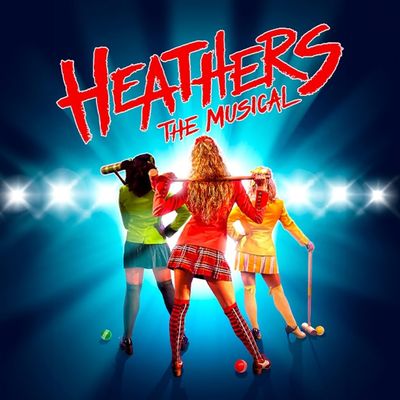
Discuss on Reddit ➤ Support the Show ➤ Well f*** them gently with a chainsaw, Jimi and Tommy are talking the cult classic ‘Heathers the Musical’ this week! The guys go in on the importance of honest high school musical theatre, the incredible ways this show is surviving beyond Off-Broadway and have a lovefest about fandoms... Read More
From the show: Jim and Tomic's Musical Theatre Happy Hour
Featured Shows
About
Well f*** them gently with a chainsaw, Jimi and Tommy are talking the cult classic ‘Heathers the Musical’ this week! The guys go in on the importance of honest high school musical theatre, the incredible ways this show is surviving beyond Off-Broadway and have a lovefest about fandoms. How very.
Heathers: The Musical (World Premiere Cast Recording)
SHOW NOTES
Hey, we want you to feel okay! If it ever gets rough call The Lifeline on 800-273-TALK or if in the UK The Samaratins on 116 123.
Did you know the full version of Heathers is currently available for licensing in the US? Let this musical live on and get your local theatre group to do it today!
There’s no official recording of the Heathers 101: School Edition track ‘You’re Welcome’ yet but I’m sure a quick Google will sort you out. What do you think of it compared to ‘Blue?’
For some sweet Heathers fandom love, go check out some of these insane animatics over on YouTube - there’s a LOT!
Come and chat to us on Reddit! It’s a great place for us to extend the conversation from the podcast - there’s only so much we can talk about! So many of you wanted us to chat ‘Heathers’ so I’m sure you’ll have plenty to say!
A CONTEXTUAL QUIZ QUESTION
One of the most popular songs from this ‘musical’ has been parodied in every context. It will help you learn about the chemical elements, nations of the world and even college majors. What is the ‘musical?’
Transcript
This transcript was automatically generated and might contain errors.
[0:00] Tommy: Hi, everyone. Tommy here. The musical we're talking about today deals with some heavy topics. It's talking a lot about, among other things, suicide. And this can be... If you're in the kind of position where this can affect you, you might know about it. And so, you know, think about it before you listen to the show. This kind of stuff can be triggering, of course. You know, Jimi and I both want you to know that it's okay to not be okay. And please, do not hesitate to call. There's a wonderful service. There's a suicide hotline in America. It's 800-273-TALK. That's 800-273-8255. Give them a call. Or if you're in the UK, 116-123-JIMMY-TELLS-ME, you can talk with the Samaritans. Or wherever your nationality is, you know, give it a quick Google. It'll pop right up with something that can help you with someone who can talk to you and, you know, make sure that tomorrow is a good day, too. Just wanted to drop this in here to make sure you're okay. All right, on with the podcast.
[0:54] Tommy: Well, somebody get us another drink! Welcome to Jim and Tomic's Musical Theatre Happy Hour, your weekly podcast with Bloody Marys and Bloodpacks. Right? I mean, that's—
[1:05] Jimi: It's true! It's a little dark, but it's true! Yeah, well, they're slowly becoming show-appropriate.
[1:10] Tommy: Bloodpacks?
[1:11] Jimi: As well. No, they're your weeklies.
[1:14] Tommy: Oh, I understand. Yes.
[1:15] Jimi: You know what I mean?
[1:16] Tommy: Yeah.
[1:17] Jimi: Which is, we're just going to be one big, I don't know, booze fest.
[1:21] Tommy: We already are one big booze fest.
[1:24] Jimi: Damn right. Speaking of, what's on your lips?
[1:28] Tommy: I've got a corn nut cocktail.
[1:32] Jimi: Interesting.
[1:33] Tommy: Yeah.
[1:34] Jimi: Yeah. Well, I got a Slurpee.
[1:37] Tommy: I thought it was obvious.
[1:38] Jimi: You know, there's actually, the gay bar in Chicago, their hallmark is alcoholic Slurpees.
[1:46] Tommy: Excellent. I thought you were going to say they're called Slurpee.
[1:49] Jimi: No, but that would be a great gay bar name.
[1:52] Tommy: Shotgun.
[1:52] Jimi: Yes.
[1:55] Tommy: Why? Why are we drinking these things today, Jimi?
[1:58] Jimi: What a fabulous, what a fabulous question, Tommy. Let me answer it with another. With a statement at the start. So the show that we're going to be talking about today, Thomas, has had substantial rewrites for its licensable school version, including the entire rewriting of one of its songs.
[2:23] Jimi: The creators have said that they actually like this new song better than the original and are considering including it in all future versions. What a show.
[2:34] Tommy: What a show. A lot of people got this one.
[2:36] Jimi: A lot of people got this one.
[2:38] Tommy: Would you call this our most highly anticipated podcast?
[2:42] Jimi: I think it could be.
[2:43] Tommy: I think it is too.
[2:44] Jimi: That scares me.
[2:45] Tommy: Hopefully we'll do it right. We're talking about Heathers today.
[2:48] Jimi: Heathers the musical.
[3:12] Tommy: You can go play dolls. Let your mommy fix you a snack. Or you could come smoke. Pound some rum and coke. In my Porsche with the quarterback. Honey, what you waiting for? Welcome to my candy store. Time for you to prove you're not a loser anymore. You can step into my candy store.
[3:43] Jimi: Yeah, I'm not gonna lie, I'm scared.
[3:46] Tommy: Yeah.
[3:46] Jimi: I mean, people love this show. I think people, at least contemporarily, the people in our world, our Broadway.com generation, I think adore Heathers in a way that feels different than some other shows.
[3:59] Tommy: Yeah, definitely.
[4:00] Jimi: And we're definitely going to tease out why that might be the case.
[4:04] Tommy: Because that is definitely the case.
[4:06] Jimi: That is a conjecture moment.
[4:07] Tommy: That is cold hard facts.
[4:09] Jimi: We've got some stats for you guys.
[4:11] Tommy: Yeah.
[4:13] Jimi: So what is it? So Heathers has book, music, and lyrics by Lawrence O'Keefe, who did Legally Blonde and Bat Boy, and Kevin Murphy, who worked on Reefer Madness. And is, of course, based on the 1988 cult classic film by the same name.
[4:30] Tommy: Yep.
[4:32] Jimi: They were brought together, Lawrence O'Keefe, Kevin Murphy, they were brought together on this project. I think it's the first time that they'd worked together. And after writing it, they had a stage reading back in 2010 in New York City with Annaleigh Ashford, Jeremy Jordan, which is fabulous.
[4:52] Tommy: Then they went over to LA and had a really successful sellout tryout there. And then they hopped over to the East Coast and opened off Broadway in 2014.
[5:05] Jimi: And that's where the story ends, too.
[5:08] Tommy: Yeah, basically, they had no Broadway journey.
[5:12] Jimi: Which is, I mean, we will absolutely hashtag subtitle of our podcast. We'll talk about this in a bit. But it is, for as successful as a musical it's been, it's very strange that it never had a Broadway run.
[5:26] Tommy: Yeah, but there's lots of things surrounding that. And there may be plans. There may be... Who knows? There's also lots of things going on. There's talk of a television series.
[5:36] Jimi: Yeah, which is... Right? Weird. Who knows?
[5:39] Tommy: Exactly. So Heathers, if you don't know, basically... Well, Heathers the musical. We're going to be concentrating on that, obviously. Basically sees a teenage girl called Veronica Sawyer. And she is, well, was a geek and gets transformed by kind of working her way into the popular clique.
[6:09] Jimi: Or clique, if you are in the States.
[6:11] Tommy: If you're American. Called The Heathers, which is populated by Heather Chandler, Heather Duke, and Heather McNamara. Heather Chandler is the leader of them all.
[6:24] Jimi: She's a mythic bitch.
[6:25] Tommy: Yes, exactly. This movie at least existed as kind of a prototype for that kind of mean girl style movie. At least in the first half.
[6:38] Jimi: Yes.
[6:38] Tommy: It's about the perils of high school life and trying to fit in and things like that. But then Veronica meets the new kid at school, JD.
[6:48] Jimi: JD is part of a kind of a drifter family and ends up at this high school. And some pretty serious chaos ensues.
[6:57] Tommy: Yeah, it kind of gets flipped on its head.
[7:00] Jimi: Yeah.
[7:00] Tommy: And murders are afoot.
[7:04] Jimi: Yeah, it's really, this turns into a dark comedy very quickly.
[7:09] Tommy: And I think one of the darkest of dark comedies.
[7:13] Jimi: Yeah, certainly on a musical theatre stage. You know, where someone like Sweeney Todd, who, you know, has his fair share of murder, is a slightly dark comedy. It airs more in the dark side.
[7:26] Tommy: Yeah.
[7:26] Jimi: This kind of treads the tightrope.
[7:29] Tommy: Yeah. Well, it was where, like, I don't know about you, Jimi, but I'm not particularly worried about barbers slitting people's throats and getting away with it and then, like, you know, their patrons being baked into meat pies.
[7:41] Jimi: You've not visited London, is all I'm saying.
[7:44] Tommy: Slashing left and right.
[7:46] Jimi: Right. Whereas, like, some of the topics of Heathers, you know, teen suicide, school bombings, the whole, you know, school shootings. Like, these are very real, dark kind of things that, like, the 1988 movie was certainly progressive in addressing them in such a flippant way. And then the musical, too, I would say.
[8:07] Tommy: Exactly. And I think because it's so out there and because it's very, um, quite garish in the way it deals with these things, it kind of creates this weird heightened sense of reality.
[8:20] Jimi: Yeah, absolutely. And particularly in the movie, from the outset, you get that as you get this weird, like, sequence where basically they're playing croquet and they're using Veronica's head as the end post.
[8:35] Tommy: Yeah.
[8:35] Jimi: You know, and that's the opening of the film. And you kind of get straight away, OK, cool, we're not in serious land here.
[8:40] Tommy: Right.
[8:42] Jimi: And the musical has a similar.
[8:44] Tommy: Yeah, it sets you up to, like, there when the Heathers enter this, the opening number in this musical is a wonderful epitome of how to do an exposition shot, an exposition song in musical theatre.
[8:55] Jimi: Yeah.
[8:56] Tommy: But, like, at the Heathers entrance, which is, of course, exactly as ethereal as it needs to be, and all the other characters are talking about, like, their opinions of the Heathers and, like, I wish I could be in love with the Heathers or I want, you know, I want to be like them. And then the one character is like, I wish I could tie a Heather up in a warehouse and take pictures of her and leave her to be eaten by the rats.
[9:18] Jimi: And, like, it's just in the middle of nowhere. And it just it's just this little hint that, like, this is going to be maybe a little more ridiculous than you think, but maybe not. And, like, there's a darker edge to this that we won't get at until maybe halfway through Act One.
[9:33] Tommy: Yep.
[9:34] Jimi: Yep.
[9:34] Tommy: That kind of comes out of nowhere. Um, so let's get, get, get, get into it and talk a little bit more about The Darkness.
[10:07] Jimi: So, Heathers, I mean, this is a dark comedy for sure. It's, you know, the, I think we could, we tread around the idea of bootlegs in most things, but the bootleg is a big part of the existence of this. And you, you watch bits and pieces of that. And it is, you know, if you just had the audience reaction to it, you'd be like, what, what a fantastical farce I'm watching right now, you know, like, how hilarious is this? But like, people, people get hurt in this show in really serious and real ways.
[10:45] Tommy: And maybe the only separation you have is that every once in a while we burst out in the song. But this is, you know, I think this one very much leans on both the dark and the comedy halves of dark comedy.
[10:58] Jimi: Exactly. Because the comedy, I mean, the comedy is laced all the way through, even in some of the saddest songs, they'll still have that line that is that kind of like, ha ha ha. Like, should I be laughing?
[11:09] Tommy: Yeah, exactly.
[11:12] Jimi: So you never really get away from one or the other, because even, you know, if you're not out and out murdering someone, the kind of bullying element and the manipulation element is always there somewhere.
[11:25] Tommy: You just stop right at the bullying element.
[11:27] Jimi: I've been in high school forever now in my life, whether I was in it as a human being or like a teacher. Trying really, really hard at your SATs, just not getting it. Going on year 15, one of these days I'll graduate.
[11:40] Tommy: But the bullying portrayed—
[11:42] Jimi: Steeple, sorry.
[11:45] Tommy: The bullying portrayed in this musical is very real. I would say it's one of the most realistic, it's maybe the second most realistic bullying I've seen in a musical. The first is in Is There Life After High School, which gets really deep and dark.
[12:00] Jimi: Right.
[12:00] Tommy: And I think that's a really important thing to know, is a lot of these high school musicals, and we can include the high school musical—
[12:09] Jimi: The titular, yeah.
[12:10] Tommy: Yeah, that was the word I was looking for. In that, they sugarcoat this bullying and they make it like cutesy and light. And they never really get into the meat of it and understand that kids are like the cruelest people ever and have that potential to just go right into the teeth of it and the meat of it. And Heathers very much does that, you know what I mean? From like the third word, you've got like homo, freak, slut, short bus, burnout.
[12:46] Jimi: Yeah.
[12:47] Tommy: Lardass.
[12:48] Jimi: Lardass.
[12:49] Tommy: Like these are hard, hurtful words. And I mean, language changes very quickly at the high school level, but even on the best of days, I hear this sort of stuff in the hallways at every school I've ever been a part of. And that kind of portrayal and that kind of setup, it's definitely coated in this... It's not sugarcoated, it's like satire coated. Like you feel like from the outside, oh, this is so elevated and so ridiculous that it can't possibly be real. And so then the moments where you relate to it, the moment you see it as being very real are, you know, they're gobsmacking, they're stunning. Like they stop, they, you know, grind you to a halt in your tracks because of how very, very real some of the awful parts of high school life that are in this.
[13:42] Jimi: How very.
[13:43] Tommy: Um, yeah, it's, it's, it's really, I just think it's, I think it's a good thing. Do you know what I mean? Because it's that kind of thing. It's like, and you get that a lot in teaching where you worry about, you know, you worry about exposing children to things and you worry about, um, oh, they shouldn't, you know, they shouldn't be thinking about this. They shouldn't be knowing about this, blah, blah, blah. But at the end of the day, all kids want to do is hear the things that they're hearing. Do you know what I mean? They're experiencing it. So why not teach them about what they're experiencing? Like it's a part of their life and figuring, you know, trying to give them the tools to deal with this.
[14:19] Jimi: I mean, it's an interesting, I think I, especially from an educational standpoint, it's an interesting balance to tread. So like this, you know, this musical is very much based on a 1988 movie, so this is nothing new. Um, but you look at the contemporary trend of something like Dear Evan Hansen, um, or even what is that awful series? Thirteen Ways.
[14:39] Tommy: They're per, Thirteen Reasons Why. That's what it's called.
[14:46] Tommy: They're perennial topics, they're evergreen topics, but it's definitely something that seems to be coming to a head in contemporary society. I don't know how much you see this, Jimmy, but it is all over the rhetoric in the American education land. Like, teen depression and teen suicide is skyrocketing right now in a terrifying and awful way. And of course, like all of these hyper-contemporary trends, no one knows quite why, but all the reasons are circling around. Like, our socio-political sphere is not so great right now. Our economic sphere is unpromising. Unemployment is giving all sorts of kids trepidations and everything from college debt. And these kids are being raised in a place where very explicitly their future is very uncertain.
And then combine that with the teenage brain's inability to have a full idea of what's going on, and of course these things go up, and of course these things happen. And I do think, you know, it feels really dirty, but I think that's one of the reasons why these sorts of shows like Dear Evan Hansen, Heathers, and 13 Reasons are seeing kind of a renaissance right now, is because kids relate to them on a very visceral level. Well, I think it goes all the way back to Spring Awakening. Do you know what I mean? We've talked about this before, we've tried to work out what happened, how what we call the Broadway.com generation exploded, and we kind of pin it down to around the Spring Awakening time.
And I was thinking about it, and one of the main things that all of these shows that we've just listed, all of these shows that, you know, the kids and the teens are really obsessing over, and not necessarily in a like, faddy way, in a, this pours into their heart way. And it's because they deal with these extremely real teenage issues in an extremely real and frank way. You know, there's no pussyfooting around it, you know, something like Spring, where you've got the suicide of Moritz, the confu-, this kind of sexual confusion that lies there between, you know, Vendel and Melki, and then here in Heathers, we have like, really similar themes.
[17:25] Jimi: Yeah, and like, how interesting to see, and like, I, you know, I can't pull the date of Spring Awakening off my mind, but at least a couple centuries ago, to now, 2014, 2017, it's like, we're seeing the same issues rear their ugly head. But it feels more extreme nowadays.
[17:46] Tommy: Oh, definitely. Of course it does. And one of the main reasons why is because kids, I don't want to, I don't want to sound like one of these crappy adults, who are like, kids today, but in the sense that kids today are extremely smart, and they're much smarter than we ever were. I mean, it goes to the technological revolution. Like, in the 40s, 50s, 60s, 70s, 80s, if you wanted to paint that sugar-coated world for a kid, you absolutely could. Yeah. Like, if you were a teacher, and you were like, it's going to be all right, it's going to be fine, even if that's not entirely true in the back of your mind, they can't go home and type into Google, is it actually going to be fine?
[18:29] Jimi: Right, exactly. Whereas, like, nowadays, you know, I, it breaks my heart, but I had a kid the other day, who was like, he walked into class, and he was like, mister, have you seen this? And he held up his phone, and it was one of those awful Facebook live videos of some guy in the street shooting someone else.
[18:50] Tommy: Right, exactly. And like, that was the thing, he was just casually watching during the passing period between classes.
[18:56] Jimi: Yeah. It's terrifying to me.
[18:58] Tommy: It is. And, you know, we can't, and not that we, we feel a duty to, like, protect these kids from these sorts of things, but they are very real things in our world.
[19:08] Jimi: Yeah. And, you know, it's an awful balance to try and have to strike. I know, but I think it's not even just a case of, oh, let's hide them away from it. It's, it's let's educate them about it and let them understand what's going on. Because I think that's it, is nobody then wants to address these things.
[19:22] Tommy: Right. You know, for, like, to take the example of teen suicide, particularly in our community, in our LGBT community. I mean, it's an issue wherever we go, but it's a serious issue.
[19:36] Jimi: Yeah. For us. And it's, you know, like, there are organizations and you have things like the It Gets Better project and the Trevor project out there to really support these teens, but it's not happening in the classroom.
[19:51] Tommy: Right. These, these teens are having to go out and try and find this. And a lot of the time it won't be accessible to them. And to be honest, you know, teens who are now maybe like 14, 15, might not even know what the It Gets Better project was, because it's kind of fizzled out. Because in some ways, what we fixed the problem, absolutely not. We absolutely didn't. It's a, we need that constant reminder there.
[20:24] Jimi: Yeah. And I mean, all this to say, and to bringing it back to Heather's, I think this is the struggle with this kind of show. The, you know, all of the medical associations in America, at least, say that there are very serious repercussions to showing maybe suicidal teens portrayal of teen suicide.
[20:46] Tommy: Yeah, that can have a huge domino effect. And that's why you'll see suicide outbreaks and suicide epidemics in particular communities, because these things have a huge knock on effect. But Heather's, this, this story, this show seems to have a very honest, yet still hopeful, kind of retelling of this moral. You know, Veronica survives. Veronica makes it out the other end. And that's, you know, hashtag that's good. Like, it's like, it's worth it to continue on. And certainly, you know, most of the suicides in the show aren't actually suicides, they're murders, which complicates things doubly. And I think it is important to know in this show, no one actually successfully commits suicide.
[21:38] Jimi: Right. Yeah, that is, that is important to know. Because if they did, they couldn't, the show just couldn't go on.
[21:44] Tommy: Yeah, because it would need to be about that. And you would need to address that. Whereas what it's about is this, is getting to that stage, that really extreme stage.
[21:55] Jimi: Yeah. And that, that seems to be some of the problem. I haven't watched 13 Reasons Why, but that seems to be, at least in the faculty meetings we have about it, some of the things that come out with it about, like, that make it more problematic, is that it glorifies these suicides, maybe a little bit. But in something like Heather's, it's not about, you know, suicide's not the answer. Because of course, because of course, you have more life to live. And like, yeah, you know, exactly. It's even in this kind of dark world, it does have that, it gets better message.
[22:29] Tommy: Yeah. And Veronica is there for everyone. Do you know what I mean? In the end. So, yeah, I guess, although I was thinking, I was saying nobody commits suicide, I guess, minor spoiler but listen to the show. I guess J.D. does in many ways. I guess J.D. does. And it's, it's interesting, like, this is one of the fascinating things to me. You know, I live my whole life in studying the structure of musical theatre. And like, what is, the question with any story you tell is like, why today? Why are, why are these, why is this the moment in this fictional world you've created, that is the story you need to tell? You know, because for Veronica has existed forever, and J.D. has existed forever. And like, why is this, why are these the days you're going to put on stage of their life?
And J.D., you know, this is, it's the archetypal stranger comes to town kind of story. This story has more in common with a story like The Music Man than you'd ever think. Because it, you know, so someone shows up and causes the change in the town and everything dominoes from there. But J.D., despite being the villain, as explicitly as you can get, you know, he's messed up for his own external reasons. And like, the way the show portrays that, that's important too, especially with him being the one successfully removing himself from the world and deciding that, like, the world does not need me anymore. Because he, you know, he kind of reaches that conclusion that he's the broken part of the world.
[24:09] Jimi: Yep. Which, you know, that's sad too, because no one is the broken part of the world. Like, there's always, you know, Veronica says it at the beginning of Act Two, the reprise of They Were Just Seventeen. Like, when the football players are shot, like, everyone, you know, high school is the beginning of your life. Everyone has a future, everyone changes, everyone gets better. And to like, for those struggles to be so insurmountable that the only solution you have is to remove yourself from this world. Like, every time I go through it, it legitimately makes me deeply, deeply sad and distraught. I remember the first time I saw the film, um, and I'm a huge fan. I am one of the, the Heathers cult people. Um, and, uh, it really, it really shook me. It really shook me because it was so frank and it was so shocking. And I think having seen Mean Girls first, because you can't, you can't escape the similarities between the two.
[25:18] Tommy: Right. Yeah. This is, this is definitely a trope.
[25:21] Jimi: Yeah, exactly. It's Diet Heathers. Um, and, uh, like, I think I was expecting a Mean Girls. I was expecting, you know, just 80s Mean Girls, something more like Clueless.
[25:36] Tommy: Right. Exactly. Um, and then what I got was completely different and it really, it really shook me up.
[25:43] Jimi: Um, and because it's interesting because with the character of JD, it's a really, it's a really tough one because you shouldn't ever laud what he does. You shouldn't ever be like, it's okay what he did, the committing murder thing. It's just because, you know, he's troubled, like murder is very bad. And, um, you know, the kind of journey that Veronica goes on where she allows that to happen, um, is a flawed thing, is majorly flawed. What's her, what's her very hilarious line that's like, my, my teenage bullshit has a body count or something like that.
[26:17] Tommy: Exactly, exactly. Um, and it's, it's, it's strange, I think, though, with characters like that, because when I was younger and a bit more dark sided and, you know, I, I would have been the, like, Jack Kerouac beat generation if I was there, that kind of thing. And if I didn't have kind of musical theater to keep me happy, um, but you, you kind of get attracted to these characters. And I always, I always kind of think about, um, do you watch American Horror Story?
[26:52] Jimi: I've seen bits and pieces.
[26:54] Tommy: Yeah. So there's a character in that, um, in the first season, um, called Tate Langdon, um, and he, uh, is extremely troubled. Um, you know, he goes into school with a gun, uh, like there's lots of, you know, really, really dark things. Um, but one of the things that I don't know if this troubles me or I'm just a bit like, okay, I kind of get it. I don't know where I am yet on it, um, is looking at kids reactions to these characters.
[27:27] Jimi: Yeah. You know what I mean? These dark warning characters, they're moralistic warning characters.
[27:34] Tommy: And yet they're like falling in love with them.
[27:36] Jimi: Right. And it's that, you know, it's the, um, they get the Edward Cullen treatment.
[27:40] Tommy: Yeah. Yeah. No, it's, it's really, I, I really struggle with this kind of show. And we might talk about it in a second with the idea of Heather's 101, um, and the, the school adaptation. But so this movie came out in 1988. Um, you know, 1988 before high schools in America had lockdown drills, you know, um, Columbine was in 1999.
[28:08] Jimi: Yeah. Virginia tech was in 2007.
[28:10] Tommy: Um, like, and certainly this movie latched onto something that was very real and very much in the zeitgeist of like American teen life. And, you know, there are a million other examples too, which is the saddest thing in the world.
[28:26] Jimi: Um, but to see it in this kind of, you know, not, not, not quite glorified, but you in the same Sweeney Todd is an apt comparison because at the end of act one in Sweeney Todd, you're like, okay, I understand you, your life has been awful. And I appreciate where you're coming from.
[28:40] Tommy: And in the same way with Heather's at the end of act one during our love is God, maybe not as explicitly, but you're like, Oh, huh. Yeah. They, they've been fucked over like, man, life for a high schooler is tough, but that does, you can't blow up a gym because of it.
[29:02] Jimi: You know, exactly. Exactly. Like you go on that same kind of mental journey that Veronica goes on.
[29:08] Tommy: Yeah. Yeah. And I think that's, you know, that's why it's so successful. That's why it's so popular is because it really challenges your conceptions with this. Um, and like hides it under the laughter of fart jokes and sex jokes.
[29:18] Jimi: Um, no fart jokes. There were no fart jokes.
[29:24] Tommy: There are no fart jokes. There are vomit jokes. I'm okay with vomit. Well, not in here. This is so explicit, but it happens.
[29:31] Jimi: And that's fine. It's part of the story. It happens all the way. She dies and she's, like, vomiting up corn nuts for the rest of the show.
[29:40] Tommy: It's drain cleaner, but...
[29:43] Jimi: It's fine. By the way, sorry, just to get this clear, what are corn nuts?
[29:47] Tommy: Oh god, I don't know. I think it's...
[29:53] Jimi: I would not know where to find corn nuts at a local 7-Eleven.
[29:57] Tommy: Because I know how much you guys love corn.
[30:00] Jimi: We just have a lot of corn. I don't particularly love corn. It sounds like a snack food. I'm sure they chose it because corn nuts is funny to say in the same way that pickle is funny to say.
[30:11] Tommy: I love pickles. Oh my goodness. Okay, well, we were almost at a segue and then I ruined it, but let's have a little chat about why this show is so successful.
[30:47] Jimi: So, I mean, there's no getting away from it. This show is huge.
[31:07] Tommy: Yeah, and I think for as much as we talk about, you know, our patented copyright gematomic heavy topics, this show is well constructed. It is good. If you look at it from an analytical musical theatre standpoint, it is a rock solid show.
[31:28] Jimi: Yeah, completely. It does everything it needs to do really, really well, and has a really exciting score to go along with it. Can I even talk about the musical theatre structure of the reprise? Like, you're going to bring back a song again so that the audience remembers it, and this show does it very overtly with the song Dead Girl Walking, which we see in the first act, the concept is dead girl walking almost as a metaphor. Like, Veronica is going to go back to school the next day and her life is going to be ruined by the Heathers because, you know, she's fallen out of that social critique. But then, act two, she fake commits suicide and then goes back to the school to, like, save it from everything, a school which assumes she's dead, and so she becomes the dead girl walking. Like, to repurpose a song in your reprise to give it a new meaning, that's perfect, and it's so multi-leveled. Like, that's how you use a reprise.
[32:32] Tommy: That's gypsy quality. Let me entertain you. That is some masterful, smart stuff that Laurence O'Keefe is extremely good at. Briefly, let's chat about Laurence O'Keefe.
[32:48] Jimi: Well, no, we can just say he's great. He's great. I mean, I would say Legally Blonde has certainly seen maybe a larger life than Heathers, but I think Heathers is the best.
[32:59] Tommy: Heathers will be his thing that, you know, I think everyone will remember him for. It's the most artful thing. It feels like the most artistic thing in its execution. You know, Legally Blonde is a good direct adaptation of a movie. Batboy is bizarre, but well done. But Heathers takes the source material, turns it into something that is both very directly honoring the original source material, while also bringing a whole new layer of nuance and intricacy to it.
[33:40] Jimi: Yep. For sure. And I think he did that with Legally Blonde as well. He's just good at adapting movies. You know, I mean, that is a gift that he has. And along may it continue. Gosh, if I was adapting a movie, I would hand it to him. I would just be like, do it for me, please. Do it really well.
[34:06] Tommy: So, right. I think the main thing we talked about in our quiz question, one of the things that we really need to honor O'Keefe and Murphy for here is how they honor schools.
[34:22] Jimi: Yeah. They get this. And this is one thing that I really think is fabulous. You know, a lot of your writers that are writing for Broadway slap so many restrictions and make you have to jump through all of these hoops to perform their shows.
[34:36] Tommy: You just look at Les Mis school edition, which like Les Mis school edition. I don't know if you know this, Jimmy, doesn't have the confrontation in it. I've been in Les Mis school edition.
[34:45] Jimi: So, yeah, like there's so much missing. There's like parts of the plot missing.
[34:53] Tommy: Well, you know, something like Into the Woods school edition. Well, so I don't know if this is the same way in the UK, but there are two distinct separations I see in America. There are school editions and junior versions, and they're marketed towards different age demographics. School editions are generally high school marketed. Right. And you find them from all sorts of different licensing companies. So they might take out some vulgarity. They might rewrite some songs. They might like change the keys for a couple of things. And then there are junior editions, which are more marketed towards the elementary middle school market.
[35:38] Jimi: OK. And so those are dumbed down in a very different way.
[35:47] Tommy: OK. They're like that. They're they're created in such a way so that you can take the title of a recognizable thing and perform it with middle schoolers in a believable way. And so that is something like Into the Woods Junior or the barbaric Madagascar Junior.
[36:06] Jimi: Uh-huh. Don't get me started. Most things have a junior now, like Lion King. Lion King, Aladdin Junior. But so this is the thing. Lion King has a junior edition, but not a school edition because Disney does not want high schoolers trying to replicate the Broadway production. They're like trying to drive a wall between those two things.
[36:30] Tommy: And so this is to say, Heathers has a school edition, but not a junior edition. And like, school editions feel like they're like, what is the bare minimum number of changes we can do to make this appropriate for high schoolers? Where junior editions are like, what are the couple things we need to include to make this still seem like the original musical when middle schoolers perform it?
[36:55] Jimi: Right. OK. And so it's a different ideology, I feel.
[36:59] Tommy: Yeah. Well, I mean, it's I think what these guys are doing is kind of what no one has really done for a school edition so far.
[37:11] Jimi: Yeah. Certainly, I mean, obviously, you know, I can only talk about school editions that I've done and the experiences that I've had from there. But what O'Keeffe and Murphy have done is they've really sat down and thought about how can we make a really important and valid show? They're not thinking, oh, we have to do this so we can make a bit more money. Let's cut that one here. It's where they're even...
[37:35] Tommy: I would put them higher on the ladder there than even like Steve Sondheim himself.
[37:40] Jimi: Yeah, I would too. No, completely. And we talked about this before in Sweeney, I don't think Steve Sondheim really cares that much about high schoolers doing his shows.
[37:50] Tommy: No, like in some extents he does. But like in the rewrites, it's like, fine, if you're really offended by this, let me write something that's, you know, so rubber baby buggy bumpers that like no one will ever be offended by it.
[38:03] Jimi: Exactly. Exactly. Fame, you know, can't keep it cool. Avenue Q.
[38:11] Tommy: Yeah. My social life is online. In fact, I think Avenue Q is a really important one to talk about here because Avenue Q in their school edition, I mean, first of all, should there be an Avenue Q school edition?
[38:26] Jimi: But this is, I think, the discussion to have because Avenue Q is a show where it's schtick is vulgarity, like explicitly show, explicitly so. Kate Monster drops the F-bomb in the first song so that, you know, this is this ain't your old Sesame Street. Like the puppets swear in the show and they have sex and they have boobs and they have problems.
[38:52] Tommy: Whereas Avenue Q isn't Avenue Q without that.
[38:55] Jimi: Right. Exactly. It's not. It's just Sesame Street.
[38:58] Tommy: Exactly. Whereas like Heather's is an honest discussion of high school life. And so finding the adaptation where you can do 80 percent of it and then like the 20 percent is to appease the church lady moms who can't get by some of the other stuff. Yeah, that becomes important. Whereas like, you know, I don't think Avenue Q, the school edition, spurs the same kind of social discussion that Heather's 101 does when performed by a high school group. Avenue Q school edition is there so that high schools can do it and Avenue Q's producers can make a bit more money.
[39:39] Jimi: Yeah, exactly. Because they want to do it because they think, oh, it's Avenue Q, they get it. And they're like, this isn't Avenue Q.
[39:45] Tommy: Right. It's a different show.
[39:49] Jimi: Yeah, exactly. And, you know, O'Keefe and Murphy, they've talked a lot about this, which I think is really good, actually. And it might just be policy. I don't really mind because I really agree with what they're doing. But so with Heather's 101, which is what they're calling their school edition, they are, they're really, I mean, they've said a lot that this show almost should be performed by high schoolers.
[40:15] Tommy: Yeah.
[40:15] Jimi: Because when they've seen it performed by high schools, when they've been workshopping some of the new content, they said it's more moving. It's more real. It's more scary.
[40:27] Tommy: Yeah. Because instead of, you know, a 20 something year old who's young and believable in the role, you know, talking about suicide and their pains and things like that. It's not real because they've kind of moved on from those pains and they understand that that's in the past. It's a reflection. Whereas when a high schooler whose, you know, peers are having these exact same feelings are talking about these things, that is really chilling. And that is really important.
[41:01] Jimi: Yeah. And these guys totally get it. They're not coming in to like, oh, we'll just cut that. We'll rinse that out. They are honoring, you know, and I think again, so this is a really good point to make. And you said earlier is to appease the nuns and to appease the, you know, snooty mothers. It's not to appease the teenagers. They know all this shit. They know all this stuff.
[41:22] Tommy: Exactly. I mean, the reason they love Heathers is because they've listened to the original God of Gorning by Heathers.
[41:28] Jimi: Yeah, exactly. Like they don't, we're not pretending that they haven't heard the other, the swear words they're supposed to be singing. It's really, it's like we talked about, it's the Merrily We Roll Along conundrum. Like teenagers don't have access to that life experience for a lot of the shows we put them in, about 20 somethings, 30 somethings, 40 somethings later in their life.
[42:00] Tommy: And it's still fine. Like that's the joy of being a high school performer is you get to pretend what it's like to be an adult. When you do, you can't take it with you or our town or, you know, all these sorts of things. But then to have teenagers playing teenagers on stage, there is something like, it's real. It's just real because they know it.
[42:12] Jimi: And I just think it must be very almost therapeutic, I can imagine, because you get to work through all these thoughts. I mean, theatre is therapy. Any adult roles I've played or even directed, you get to go through it and you get to kind of work through these emotions in a safe space. Do you know what I mean? And come at the other side and reflect on it. It's not directly happened to you, but you've been able to work through it. To have those opportunities as a teenager, to be able to have those discussions in a frank manner, it's fantastic. It's really fantastic.
[42:49] Tommy: Well, and then you're, you know, as with any theatre piece, you're bringing it to a community. Like it doesn't exist just in the rehearsal hall. You then show it to everyone.
[42:58] Jimi: Totally. Which is why, you know, every time a North Shore, Illinois school performs The Music Man about feeling weird about an outsider coming into town, I always think like, have you really thought this through? Do you really, like, you know, not that I'm asking you to be really, really intense about thinking about the inner machinations of The Music Man, but like, your community is pretty closed off. Do you realize that like you are Iowa stubborn?
[43:26] Tommy: And so then to see that sort of thing in Heather's, where like, we're not pretending, this is not a metaphor. They're in a high school. Like this is one to one realness. That's powerful. That's important.
[43:37] Jimi: Totally. Totally. I want to talk just a little bit about what we, again, what we talked about in the quiz question. So obviously you're saying that they've rewritten one of their songs and they actually like this new song a lot better. So the song, yeah, the song they've rewritten is Blue. And we'll talk about what that's about in a second. And they've replaced it with a song called You're Welcome. So this happens in the show, a point where Heather's been brought out by, not Heather, sorry, Veronica has been brought out by Heather Duke or.
[44:18] Jimi: Who knows? Red and Yellow, no, no, Green and Yellow Heather.
[44:23] Tommy: Yes, exactly. Red Heather's dead now. And the two Jock characters, Curtin and Ram, are there, and they've been fooling around. In the film, they're tipping cows.
[44:32] Jimi: I was sad they didn't bring the cow tipping into it.
[44:39] Tommy: Yeah, it's kind of sad. It's a very Midwest thing.
[44:42] Jimi: But they're drunk, they're horny, and doesn't Veronica have a line where it's like, wait, you were about to be date-raped, and so the way you were going to get out of the date-rape was by calling me to be a stand-in for your date-rape?
[45:02] Tommy: Exactly. That is exactly how it happens. And, you know, the guys are like, hey, it's fine. It's this classic conversation that we all know and love, that, you know, this is a real, real thing.
[45:21] Jimi: It's a very high school thing. This is happening 24-7. It's constant. Consent and all of that. Anyway, Blue is about blue balls.
[45:35] Tommy: Yep. They subscribe to the Dance 10 Looks 3 school of titling your song.
[45:42] Jimi: Absolutely. You don't give away your punchline in your title.
[45:46] Tommy: Yes. And the blue balls is symptomatic of, let me get this right, hang on, epididymal hypertension.
[46:00] Jimi: Thank you for your clinical accuracy.
[46:06] Tommy: Thank you. Science degree, right? That's all I talked about. And so they've replaced it with a song called You're Welcome, which is basically where the guys are coming at Veronica being like, hey, you should feel really grateful for the fact that we are coming on to you because that means you're hot. And how many times have we heard that same story?
[46:33] Jimi: So I will say I've listened to You're Welcome. I do think, technically, from a musical theatre analytical standpoint, I do enjoy Blue more. I think it has better wordplay. I enjoy some of the rhymes more. But that is secondary because a song where the chorus is you make my balls so blue is not a song that you can ask teenagers to perform for their parents. Like you just can't. No one will feel comfortable during this in a heightened way.
[47:11] Tommy: Like this song creates an uncomfortableness from any audience performer standpoint. But the thing O'Keefe and Murphy understand is like in a high school context, there's an elevated layer there is your audience knows the actors. And so there's a little more tact and separation and understanding needed there. Not to mention we're putting like we're looking at date rape with some pretty rosy, ha-ha comical glasses in this kind of song. Like in a way that makes it very real through the satire. But like, oh, man, yep, we're going to have sex with you and you're going to like it. Like, no, not OK. But it's a great replacement. I love it.
[48:02] Jimi: It really is. The thing is, what I like about it is they've not just said, OK, we'll do it like you make my heart so blue every time you leave me. It's not like that.
[48:14] Tommy: It's not Grease School Edition where, what is it? Sandra Dee, which is a song about some really deep, like maybe getting accidentally pregnant and like not fitting in in high school. But there's a school edition where that subplot is totally wiped from the book. And so Rizzo just sings this song out of nowhere.
[48:40] Jimi: And fame, you know, can't keep it down about unwanted erections. It's turned into can't keep it cool about getting annoyed and flustered. As we mentioned, the Internet is for porn turning into my social life is online. Like it loses the grit without that underlying.
[49:03] Tommy: Absolutely. So what these guys have done is what every single writer should do is wanting to do a school edition. They've written a new song that has just as much importance that you could just literally supplant into the production and it would still work. And, you know, like you said, they're considering doing it. So maybe that'll even happen. Who knows?
[49:22] Jimi: I've been perusing just some of the other changes through Heather's 101 and they really seem to have done it with care. You know, it's always like your first pass is how many swear words can we cut? How many drug references can we cut? This is some of the same like the difference between Rent and Rent School Edition. I love in what is the 7-Eleven song?
[49:47] Tommy: Freeze Your Brain.
[49:51] Jimi: There's one reference where JD talks about the slushies being his cocaine. And in the school edition, they changed that rhyme to it being his Novocaine.
[50:05] Tommy: Hey.
[50:10] Jimi: Which is what an elegant particular solution. You've even kept the rhyme with Freeze Your Brain, Novocaine or cocaine.
[50:15] Tommy: Exactly. And like then you've been able to remove a drug reference.
[50:19] Jimi: Before we had Novocaine, we used cocaine.
[50:22] Tommy: Yeah, exactly. So it's just science. It's great. I think there's a school edition of Title of Show that comes really close to being as delicately structured and like very intentionally structured. But every school edition should be like this. In a perfect world, we don't need school editions. In our semi-unperfect world, we need 101 editions like Heather's.
[50:48] Jimi: Yeah, exactly. And all of this to say, O'Keefe and Murphy have realized that this is where this show is going to get its salt. It never made it to Broadway, but that's really okay because it is loved by so many. And so many of these teens are wanting to do this show in their high school. And they've been so savvy to be like, okay, if this is how we're going to do it, we're going to do it right.
[51:22] Tommy: Yeah. And because they've treated it well, because they've created a high-quality edition, it means that it will do extremely well. So mad props, mad props to them.
[51:35] Jimi: No, it's really inspiring, honestly.
[51:39] Tommy: Yeah.
[51:41] Jimi: Yeah, it is, it is. I hope other writers consider how important it is.
[51:47] Tommy: Yeah, because it's certainly, even from an academic perspective, just an interesting challenge to have to write a musical that would be appropriate for high school. And you're dealing with so many variables. We got in trouble in high school for doing The Pajama Game because it has some discussions of going to a bar and being drunk.
[52:11] Jimi: Are you serious?
[52:13] Tommy: Yep. And they're the most naff, unimportant, ridiculous portrayals of drunkenness ever. And we still got in trouble for it. So you never know. But then you have something like Spelling Bee where the school replacement is, instead of My Unfortunate Erection, My Unfortunate Distraction, where there's no one in the audience who's not supplanting Erection for Distraction every time it's sung. And so where do you strike your balance? Where do you find your place where you think you're going to be financially viable, still have schools that perform this, and meet that conservative Christian majority? It's the same thing we talked about in Hello, Dolly! where you put a black cast in front of a white audience. You're tricking these audiences into seeing something they might not have seen otherwise by crafting it in a really particular way.
[53:15] Jimi: Exactly. Exactly. So well done, man. Good for you. Well done.
[53:21] Tommy: Hugging my knees and the captain is pointing.
[53:25] Jimi: Well who made her captain?
[53:27] Tommy: Still the weakest must go.
[53:32] Jimi: The tiniest lifeboat.
[53:36] Tommy: Full of people I know.
[53:41] Jimi: The tiniest lifeboat.
[53:45] Tommy: Full of people I know.
[53:54] Jimi: Now, as well as having a great life in high school, the reason it has a great life in high school is because of its huge.
[54:07] Tommy: I hope that was big enough.
[54:09] Jimi: Huge.
[54:12] Tommy: Life.
[54:13] Jimi: On the internet.
[54:14] Tommy: Oh yes. I mean, I'm typing Heather's musical into YouTube right now and maybe beyond the playlist and the ads they show me for the movie. The first thing, you know, we tread lightly around the concept of bootlegs during this podcast, but we're going to go full in right now. Number three result, Heather's the musical full show 2017 full on bootleg, almost a million views posted two months ago.
[54:41] Jimi: And this has happened for a while now.
[54:47] Tommy: Yeah, this is like since it was off Broadway it has been happening and I kind of straight off the bat I really, I am interested to know what Keith and Murphy think about this. Do you know what I mean?
[55:03] Jimi: Because we have talked about bootlegs before so we won't open up that can of worms again but one of the things that we talked about was okay, if a show is closed and this was a lot of people's opinion as well when we had the discussion was okay, if a show is closed you're never going to see that again. Do you know what I mean? It's finished. So is it okay then to watch the bootleg? And there's reasons for both sides.
[55:30] Tommy: I feel for something like Heather's no one on that staff would be like no, we want rid of this bootleg. Do you know what I mean?
[55:41] Jimi: Exactly. They're not sitting on an alternative that's later going to make them any kind of financial profit which would be, I think, the one appropriate consideration to have.
[55:52] Tommy: Yeah. You know, we talk about these sort of like copyright and intellectual property is always a tricky subject and like, you know, can someone experience the thing you've created outside of the context through which you want it to be experienced? You know, default answer is no but there's, I don't know a better experience interested parties would have other than a bootleg on YouTube nowadays. You know what I mean?
[56:23] Jimi: Right.
[56:25] Tommy: These are people who would gladly go buy a ticket to go see it somewhere if they could and they can't and so, you know, might as well experience the art and the content and the idea and the moral somehow.
[56:39] Jimi: Yeah, exactly. And it's interesting because when we talked about it with Hamilton I was like, there's no way that people would watch the bootleg and then fork out all of this money to go for a ticket.
[56:54] Tommy: Right.
[56:55] Jimi: I think because these kids and not even just kids, like everyone who watches it loves it love this show so much that they probably would move hell or high water to see it in person and again and again and again see it. Another stat to throw out there so the cast recording and I'm not even sure if this is official or not I think it might be partially official because it's been there for a long time the whole thing is on YouTube the whole cast recording is on YouTube with all the lyrics and they're currently approaching 20 million views across the whole thing.
[57:30] Tommy: That's crazy huge.
[57:34] Jimi: This is a musical theatre show that was off Broadway.
[57:38] Tommy: Yeah, I mean that's close to some pop song YouTube videos.
[57:43] Jimi: Exactly. Yeah, this isn't Heather's musical vehicle. That's a huge number.
[57:48] Tommy: Yeah, exactly. It's just fascinating, I think.
[57:53] Jimi: So you have to wonder what is it about it? Do you know what I mean? Why Heather's? I think part of it is and who knows why, what's the cause of this but it has struck that Goldilocks zone of popularity. It hasn't gone past it in a Hamilton or Cats or Phantom kind of way or Wicked or whatever where it becomes so popular that it's uncool to like it. There are people I know who would never listen to musical theatre in their life who know what Wicked and Hamilton are about. Maybe have heard a couple songs because it's entered that pop culture. Whereas you have to search for Heather's. You have to go out and listen to Heather's. Heather's isn't going to encounter you on the radio.
[58:40] Tommy: That makes it feel more legitimate somehow.
[58:52] Jimi: It's more your thing. Do you know what I mean? It could be your thing. Do you know what I mean?
[58:56] Tommy: Yeah, you'd be like, look at this cool musical that I love, Heather's. Not a lot of people have heard about it.
[59:01] Jimi: Spoiler alert, a lot of people have heard about it.
[59:03] Jimi Hendrix: Heather, you and I both know this, but we've never heard about it. But you still get to feel that way in an honest, legitimate fashion.
[59:10] Tommy: Whereas, like, you know, the video I posted a couple of weeks ago, where it was like, 10 songs from musicals you've never heard of, and I get comments that are like, "Have you heard about the musical, You're in Town? Not many people have heard about it."
[59:22] Jimi Hendrix: And like, yeah, plenty of people have heard about You're in Town, it's one of the best musicals, like, calm down a little bit. But like, Heathers, not many people have heard about it. Even though a bunch of people have heard about it.
[59:30] Tommy: Yeah, but so the thing is, is like, those people are online. Do you know what I mean? It's this internet community that has heard about it and loves it. And this is what I find fascinating. So I had a fun little adventure, delving into their community and seeing.
[59:48] Jimi Hendrix: Do they have a do they have a demonym? Do they have a name for all of themselves? By the way, I've yet to find one. I can only assume they just call themselves the Heathers.
[59:58] Tommy: That's a good name. That's better than like, you know, Newsy's Trash, the Heatherettes.
[1:00:04] Jimi Hendrix: There's nothing wrong with being Newsy's Trash, Thomas. I mean, I don't want-
[1:00:07] Tommy: And anyway, we call ourselves Fanzies.
[1:00:10] Jimi Hendrix: My apologies for getting the names wrong.
[1:00:13] Tommy: Thank you. But right, so I had a great, great time. So I kind of scoured a couple places. It has a huge, huge existence on YouTube. It seems like YouTube is probably its biggest social media land.
[1:00:27] Jimi Hendrix: More so than Tumblr. Normally Tumblr is where the fandom lives.
[1:00:31] Tommy: Yeah, absolutely. But it seems like YouTube seems a ways. And that kind of makes sense because it's the origin. The bootleg was on YouTube and that's where everyone has their first experience with Heathers.
[1:00:43] Jimi Hendrix: And one of the things that have come out from it are these things called animatics.
[1:00:51] Tommy: What a weird—As someone who makes musical theater YouTube videos, I find this so strange.
[1:00:57] Jimi Hendrix: Yeah, but then I guess it's like, you know, when we were teens, it was just, I guess, like slash fiction.
[1:01:04] Tommy: Yeah, I bring slash up because we're gay men and, you know, hey, I dabbled, I dabbled.
[1:01:10] Jimi Hendrix: Fuck a lie. You know, there's a whole bunch of people now who have like, made it their mission to find your slash fiction still existing on your Zanga somewhere.
[1:01:20] Tommy: Good luck. I'm saying nothing. I had different standards back then, guys.
[1:01:24] Jimi Hendrix: As in Hendrix.livejournal.com or whatever.
[1:01:30] Tommy: Doesn't exist, doesn't exist. There is a live journal, though. Good luck and Godspeed. But yeah, so these animatics are fantastic. I had no idea these were a thing until I found them in Heathers.
[1:01:43] Jimi Hendrix: So what they are, for people who don't know, is basically fantastic artists basically draw the songs. Is that a way of describing it?
[1:01:56] Tommy: I mean, for me, what it really feels like is a stand-in for a music video. It's like if this, you know, and we see this for the popular Broadway shows, at least now. I feel like especially in 2017, really specifically in 2017, the Broadway spread has finally gotten savvy about internet video, and especially internet music video.
[1:02:22] Jimi Hendrix: Like, there was just a teaser, quote-unquote, music video of a Patti LuPone song from Warpaint. And it's just her in the studio, and it's not even the whole song. But they've finally figured out that this is a place people will go to look for these things, and relive it in this new, slightly different context as a way of reliving the whole experience outside the musical.
[1:02:46] Tommy: Absolutely. And that's what these animatic things are. They're like a Band-Aid solution to that.
[1:02:54] Jimi Hendrix: It is. It's fan fiction. It's just an extension of fan fiction. You're creating your own fiction from this thing that's real, and I love it. And so, extended reading as well, a lot of the times, Heathers is one of the shows that people will say, "Hey, I'm just getting into musical theatre. I've listened to Book of Mormon, Les Mis, Phantom, Heathers, Rent."
[1:03:21] Tommy: Actually, not even Rent. I'm going to take Rent back. We'll just take those four. And Heathers is there, and I'm like, this is so interesting!
[1:03:29] Jimi Hendrix: Yeah.
[1:03:30] Tommy: This is something that you've been able to find, and it's never even, you know what I mean? It's been in these small theatres in New York, and it's not existed out there. And a lot of the things you talk about, like, oh yeah, I love it, I found this great animatic of it, and it just made me fall in love with it. And I'm like, this is so interesting!
[1:03:48] Jimi Hendrix: Because, I mean, I think Hamilton definitely had a huge explosion, but I think Hamilton also kind of came from a very intellectual perspective. Like, people were very academic about Hamilton.
[1:04:04] Tommy: Yeah.
[1:04:05] Jimi Hendrix: Do you know what I mean?
[1:04:09] Tommy: Yeah, yeah, yeah.
[1:04:10] Jimi Hendrix: And obviously, you know, there are Hamiltrash out there who will meme the heck out of that show, and good on you. And they're like, there are six syllables in this line, and 14 syllables in that line, and that makes a prime number, and boom, my brain explodes!
[1:04:24] Tommy: Exactly. We'll all remember your reactionary Tumblr post, Tommy, that still is out there.
[1:04:29] Jimi Hendrix: But, basically with Heathers, it seems like it's kind of exclusively this, you know, Heathers trash.
[1:04:41] Tommy: And it sounds like I'm trashing them.
[1:04:43] Jimi Hendrix: Well, that's just what we call fandoms. Like, this fandom is very passionate, and very distorted, and exists completely online.
[1:04:52] Tommy: Yeah.
[1:04:53] Jimi Hendrix: And, you know, I would say of the, like, we talk fandoms a lot, because we live in this fandom world. Of the fandoms that I see, I think Heathers feels like the most appropriately passionate.
[1:05:10] Tommy: Yeah, I get that.
[1:05:12] Jimi Hendrix: Which might be fighting words, but, like, it's weird to me how many people know the different names of all the cats in Cats. Or, like, you know, they talk about what, like, Carrot, the guy who carries the carrots around in one scene in the movie version of Les Mis. And it's like, there's memes about Carrot Man out there. Like, that's ridiculous.
[1:05:31] Tommy: We've gone too far.
[1:05:32] Jimi Hendrix: Like, no one ever thought that hard about... Like, going in with the fine tooth comb to be like, who's not talked about this piece of gravel? Ah, I'll do it. The gravel.
[1:05:41] Tommy: Exactly.
[1:05:42] Jimi Hendrix: Yeah, exactly. But Heathers feels like this analysis is appropriate, and this joy and passion and, you know, like, appreciation of it is equal to the work that went into it, I guess.
[1:05:56] Tommy: Exactly.
[1:05:57] Jimi Hendrix: Exactly.
[1:05:58] Tommy: Yeah, that's it.
[1:05:59] Jimi Hendrix: I just feel it's like, it's just a complete passion project.
[1:06:02] Tommy: Yeah.
[1:06:03] Jimi Hendrix: Across the board. Do you know what I mean? Because, actually, do you know what? The first time I listened to it, the first time I watched it...
[1:06:09] Tommy: Yes, I like the bootleg. Sue me. Don't sue me.
[1:06:13] Jimi Hendrix: I mean, so have a million other people.
[1:06:16] Tommy: Right, exactly. It feels...
[1:06:18] Jimi Hendrix: At this point...
[1:06:19] Tommy: I mean, maybe this is a sidetrack, and I'll let you get to your point in a second. But it feels like, with bootlegs, you know, the producing teams, author teams are always doing that balance of advertising versus lost revenue.
[1:06:30] Jimi Hendrix: Yeah.
[1:06:31] Tommy: And it feels like the Heather's team have very squarely decided that these bootlegs of their production work towards their favor.
[1:06:39] Jimi Hendrix: Yeah, 100%.
[1:06:41] Tommy: So, yeah, so when I watched it, I was a little bit angry because of how different it was from the film. Because I've already said that, like, I'm, you know, Heather's film trash. I don't know what we call ourselves. But, like, you know, I'm one of these people that will throw out all the quotes all the time. And, you know, to me, it's so quick and amazing. And, you know, like Clueless as well, it's just one of these films that I go to, and I'm always in love with it.
[1:07:09] Jimi Hendrix: And so the musical is very different in many ways, and particularly if you look at Veronica. So, for example, Veronica in the film is a Heather to start with.
[1:07:22] Tommy: Yeah.
[1:07:23] Jimi Hendrix: She's right in that clique already. She has a little bit more, you know, the tension is still there that gets developed in the musical, and she still hates them. And it's that line where she's like, it's more like the Heathers are people I work with, and our job is being popular and shit. That feeling is still there.
[1:07:42] Tommy: It's a direct quote from the film.
[1:07:46] Jimi Hendrix: But she never had this, like, geeky moment to start with. And Martha Dumptruck is not her best friend in the film. She has a different best friend. She doesn't feature in the musical at all. And I get that. That's dramaturgy stuff, and that's OK.
[1:08:05] Tommy: Right.
[1:08:06] Jimi Hendrix: But it was just all these little things. JD, very, very different.
[1:08:10] Tommy: Yeah.
[1:08:11] Jimi Hendrix: You know, a bit more sympathetic in the musical. And I was a bit like, I don't know how I feel about this.
[1:08:19] Tommy: And so I was just a bit like, this is different. This is new. And, you know.
[1:08:24] Jimi Hendrix: You're not sure if you're OK with it.
[1:08:26] Tommy: And I wasn't sure. But then what I realized, and it was the same kind of journey I went on with Legally Blonde, weirdly, with O'Keeffe. I was like, it's its own thing. Do you know what I mean?
[1:08:36] Jimi Hendrix: It is.
[1:08:37] Tommy: It's completely its own thing. And that's just fantastic. Like, it's really good. And once you kind of accept that, you can completely love it.
[1:08:47] Jimi Hendrix: Yeah.
[1:08:48] Tommy: It makes me wish there was—we were more OK with calling things inspired by as opposed to based on.
[1:08:54] Jimi Hendrix: Yeah.
[1:08:55] Tommy: It really—I do—I mean, maybe this is a bit of a tangent or fodder for another podcast. But I think it has to do with America's obsession with intellectual property and, you know, original storytelling and things like that. And we're really possessive of the things we wrote and making sure that, like, they're accurately represented elsewhere.
[1:09:10] Jimi Hendrix: Or if they're not accurately represented, that, like, we very specifically described how the inaccuracies exist.
[1:09:17] Tommy: Yeah.
[1:09:24] Jimi Hendrix: And, like, if we were more fluid with, like, yeah, you know, this is kind of based on this. This is mostly inspired by that. It's the same way with Passion last week. Like, we're taking a lot of the story and the feeling and the sorts of things that we liked from the movie and we're turning into a musical. But it's a musical. It's totally different. People didn't sing in the movie. And so, of course, things are different.
[1:09:45] Tommy: And so, you know, we don't feel possessive about that.
[1:09:48] Jimi Hendrix: Exactly. And I think, like, well—because I now kind of watch them for different things. Like, I would now watch the film for the lines and for the script because the script is one of my favorite scripts of any films ever.
[1:10:02] Tommy: The thing is, as well, if you haven't watched the film and you're a really big fan of the musical, please do watch it. I find, again, in my internet journey, a lot of people were like, there's a movie?
[1:10:15] Jimi Hendrix: Yeah.
[1:10:16] Tommy: And I was a bit like, what?
[1:10:17] Jimi Hendrix: Yeah.
[1:10:18] Tommy: It's interesting. I mean, I experienced it in the other direction. I was musical first, then movie.
[1:10:24] Jimi Hendrix: Right.
[1:10:25] Tommy: Okay. You can tell, if you know to look for these things, the part from the musical that are the parts from the movie that people love. Like, you know, lick it up or so fuck me gently with a chainsaw. Like, these are the quotes. These are, you know, we're going to need a bigger boat. Or, you know, Luke, I am your father. Like, these are the quotes that go on the poster.
[1:10:49] Jimi Hendrix: And so it's great that they're included in the musical. But then so interesting to see the things that are different and, like, how you get that different feeling. And even just how a movie that was maybe, you know, a contemporaneous movie, a movie about the 80s set in 1988 and written in 1988 and produced in 1988, is different from the musical adaptation in the 2010s.
[1:11:14] Tommy: But still very squarely set in the 80s.
[1:11:16] Jimi Hendrix: And how, you know, two decades of change have affected what follows through and what is exaggerated and what is a stereotype and, like, what has changed.
[1:11:27] Tommy: Totally.
[1:11:28] Jimi Hendrix: It's cool. Like, these are, you know, these are the details we love. These are the things we love talking about.
[1:11:32] Tommy: Absolutely.
[1:11:34] Jimi Hendrix: I think one of the things that maybe I dislike, just to throw out a dislike into there, is the Heathers themselves. They're a lot more evil in the musical than they are in the film.
[1:11:43] Tommy: In the film, they're very...
[1:11:51] Jimi Hendrix: I guess that's actually a big part of the film, is that JD's murder bent is really unfounded.
[1:12:00] Tommy: Yeah.
[1:12:01] Jimi Hendrix: It's really unfounded because, yes, the Heathers are bullies. We all know that. We're all very aware. And they're, you know, nasty people in that respect. But in the musical, you know, like the bit, for example, with Veronica's parents in the liverwurst and Heather Chandler just drops the croquet ball into the pâté.
[1:12:20] Tommy: Like, in the movie, they're really nice to her parents. And they're, you know, they treat them, you know, again, it reminds me of Clueless, like the way that they treat adults. Like, oh, we understand you've got lots of money, so it's fine. We're really nice to you. And they're respectful. Because at the end of the day, the Heathers are intelligent people. I mean, they're not dumb blondes.
[1:12:42] Jimi Hendrix: Yeah, they know what they're doing.
[1:12:43] Tommy: Yeah, it's not mean girls. It's a big, big point. And I like that. But the dropping of the croquet ball, I was like, that's not right. And I wonder if they're doing it because they want you to maybe not hate JD really, really quickly.
[1:13:01] Jimi Hendrix: Do you know what I mean?
[1:13:02] Tommy: Well, it's, it feels like, okay, to draw a sideways comparison. This, I think, is the interesting challenge of a movie to stage adaptation that we see with Charlie and the Chocolate Factory on Broadway now. In the, so let's talk Gene Wilder, Charlie and the Chocolate Factory. Because I think that's the one people know, which is actually Willy Wonka, not Charlie and the Chocolate Factory. The moment you see Gene Wilder and he does that somersault is halfway through the movie. You have watched half of the movie by that time.
[1:14:19] Jimi: I hate the U.S.
[1:14:23] Tommy: Not in ours.
[1:14:48] Jimi: ‘Heathers the Musical.’
[1:15:18] Tommy: ‘Heathers the Musical.’
[1:15:48] Jimi: ‘Heathers the Musical.’
[1:16:18] Tommy: ‘Heathers the Musical.’
[1:16:19] Jimi: ‘Heathers the Musical.’
[1:17:19] Tommy: ‘Heathers the Musical.’
[1:17:45] Jimi: The direction in general, start to finish. We can chat.
[1:17:49] Tommy: Yeah, I agree.
[1:17:50] Jimi: But that's fine, that's not the musical. That isn't the musical.
[1:17:55] Tommy: So yeah, completely. But no, so if y'all don't make your Reddit accounts and come on over and chat to us about this, I'll be really disappointed. I've been on a comment replying kick.
[1:18:06] Jimi: We're doing this for you. Tommy's back, everyone.
[1:18:09] Tommy: I'm back! I never left, but I'm back.
[1:18:12] Jimi: Yeah, I know. So you don't all have to put up with just me replying. But no, honestly, I do want to just talk about Reddit, because it's getting really good. It's getting really nice out there. And we've been getting some lovely comments, some lovely feedback, and just interesting discussions. I mean, I've been thinking about this maybe more explicitly this week too, because my YouTube channel has seen a weird explosion in growth, and I'm struggling with that. But I feel like there's this undercurrent of musical theater commentary that's not happening in the way it should. And that's why we do this podcast, that's why we have our YouTube channels, that's why we like doing the things we do. But it's not just us. We wouldn't have people watching and enjoying and listening to these things if there weren't other people who liked talking about these things.
[1:19:07] Tommy: Exactly, exactly.
[1:19:08] Jimi: And there is an arts commentary that doesn't seem to have existed in the musical theater world, and it should. It absolutely should, in a populist, internet-y kind of way that it does about movies and TV shows and books and audio dramas and radio shows. We are a bootstrapping, fledgling community. But it's happening, it's starting, it feels like a thing. You know, you get people who analyze plays, and you get people who analyze scores, what we're doing is we're analyzing them both together. And that's fascinating, that's important, and we're legit people.
[1:19:46] Tommy: Yeah, and we're doing it—
[1:19:49] Jimi: We're preaching to the choir.
[1:19:53] Tommy: Right, exactly. But to do it outside of the context of either creating the art, being someone who's making a musical, or explicitly critiquing particular performances, like someone who's writing a newspaper review, but to be the intellectual counterpart to the fancy trash. And not that there's anything wrong with just loving these things, but then to be able to talk and analyze and discuss and improve, it feels like it furthers the art form. It feels like it's fodder for the next things to happen.
[1:20:24] Jimi: Exactly. What makes these things successful? They can't just exist accidentally.
[1:20:30] Tommy: Well, that's it. The more you delve into something, the more you work out why this is legitimate and why this is art, then you can emulate that in your own voice.
[1:20:39] Jimi: Yeah.
[1:20:42] Tommy: And we are starting to see that. It's creeping out.
[1:20:47] Jimi: It's really nice. And to just see the people, you know, we know who you are, we talk about you behind your backs, but in nice ways.
[1:20:49] Tommy: We do, yeah, we do. A lot of the time.
[1:20:53] Jimi: The people who comment every week, the people who we see doing this stuff on Reddit and starting their own YouTube channels, or their own commentary blogs, or whatever, go do it.
[1:21:01] Tommy: Totally.
[1:21:03] Jimi: Yeah.
[1:21:06] Tommy: We literally stalk and read it all.
[1:21:10] Jimi: Everything.
[1:21:12] Tommy: We just want to have the conversation. We ain't the be-all and end-all, and I would hate that.
[1:21:12] Tommy: Do you know what I mean? I would hate that. So come and chat to us. Let's all have a big lovin'.
[1:21:17] Jimi: Yeah.
[1:21:17] Jimi: About Heathers.
[1:21:23] Tommy: About Heathers. How exciting.
[1:21:28] Jimi: I'm interested to know the things and the structure of the musical that people have problems with. If they exist.
[1:21:32] Tommy: Yeah, exactly. We want to find where are the flaws. We want to go right to the negatives.
[1:21:37] Jimi: I feel like they always exist, and you can always point them out, but I really struggle finding them in Heathers. And like, I can talk for 15 minutes about crappy rhymes in City of Angels, so if I can't find them in Heathers, it's interesting to me.
[1:21:50] Tommy: Exactly. May there be rose-tinted glasses?
[1:21:56] Jimi: Perhaps. Perhaps. Who knows?
[1:21:59] Tommy: Exactly. Because I think one of the things that we're going to start doing, and we've had a chat about this.
[1:22:04] Jimi: As if we're completely separate entities that never interact. I know, it's weird.
[1:22:10] Tommy: Right, exactly. So we've had a chat about it, and one of the things that we would love to do is, for people who might not have read it and aren't being able to participate in the discussion, is kind of bring that discussion that we're having into the podcast. Because there's really, really interesting stuff. Like, I'm finding out loads. People's experiences, people's thoughts, opinions, facts. We love it. Absolutely love it all. So yeah, maybe at the start of some podcasts, if we've had some particularly great discussion on a previous episode, we might start doing that.
[1:22:40] Jimi: Yeah. Who knows? No promises. Y'all know how we are at follow-up.
[1:22:49] Tommy: Yeah, exactly. Please. Maybe we'll start a couple episodes with some Reddit comments or follow-up things that we didn't know about.
[1:22:55] Jimi: Yeah. If they're high-quality. So come and make some high-quality stuff.
[1:22:58] Tommy: Seems like a dare, Jimmy.
[1:23:00] Jimi: But you can also post nonsense as well.
[1:23:00] Tommy: I know. Post some nonsense as well. But yeah, just come and join us. Because this is really the best way for us to chat. Like, Twitter's all well and good, but 140 characters for this Waffler? Please.
[1:23:12] Jimi: No good. Yeah, no. Reddit, let's just keep it organized.
[1:23:15] Tommy: But if you look at my Thropy Opera breakdown, it's like 5,000 words or something. It's ridiculous.
[1:23:21] Jimi: Yeah. So come chat.
[1:23:22] Tommy: Come chat. We'll see you there.
[1:23:42] ♪ Musical number: "Seventeen" — performed by the cast of Heathers: The Musical ♪
[1:25:15] Jimi: That was Heathers: The Musical!
[1:25:22] Tommy: Yay! I'm so excited to edit this because I get to, like, listen to it all. But it's a no, because I think we've only got like three or four song breaks.
[1:25:26] Jimi: Yeah.
[1:25:29] Tommy: So I might just put...
[1:25:35] Jimi: The whole album at the end. Why not?
[1:25:40] Tommy: Yeah, exactly. Exactly. Just every other word.
[1:25:45] Jimi: That'd be funny. Not tedious at all. But anyway, enough about Heathers. That's nonsense. I've got a quiz question for you, Jimmy. You ready?
[1:25:47] Tommy: Mm-hmm.
[1:25:51] Jimi: One of the most popular songs from this musical has been parodied in pretty much every context. It will help you learn about the chemical elements or nations of the world or even what college majors exist. What musical could that possibly be?
[1:26:08] Tommy: I also noticed you said musical very pointedly.
[1:26:13] Jimi: It was almost as if it had inverted commas around it.
[1:26:16] Tommy: Maybe that's a clue.
[1:26:19] Jimi: If you'd like to get in touch with us, you can. We've already talked about it, but we're still going to tell you how.
[1:26:21] Tommy: Here we go.
[1:26:27] Jimi: Come and find me over on Twitter, at Azenhendrix, or YouTube, same name.
[1:26:31] Tommy: And I'm Musical Mash on Twitter or Musical Theatre Mash on YouTube. Or you can check out our show Twitter, Jim and Tomek, or our website, jimandtomek.com, which has a link to the Reddit discussion where I know you all already are just commenting away.
[1:26:40] Jimi: Exactly. And if you don't even want to go, we never say this, if you don't want to go to the website, that's okay. Just jump straight over to r slash Musical Mash.
[1:26:49] Tommy: You'll see it.
[1:26:51] Jimi: That rhymed.
[1:26:51] Tommy: R slash Musical Mash.
[1:26:56] Jimi: It's basically, percentage wise.
[1:26:58] Tommy: R slash Musical Mash. R slash Musical Mash.
[1:27:02] Jimi: Sorry, I was hoping you would just keep going.
[1:27:06] Tommy: That was beautiful. That was stunning. It might as well be r slash Jim and Tomek at this point, sometimes.
[1:27:10] Jimi: Yeah, but that's okay. You still get comments in your videos.
[1:27:13] Tommy: I do, I do. I appreciate every single one of them.
[1:27:18] Jimi: Yep. And we would very much love it if you enjoy this podcast, if you would let your friends know all about it, and they can join in the chat too. Let's create the conversation. Let's start a revolution.
[1:27:27] Tommy: Let's be the conversation. We are the conversation, Jimmy.
[1:27:30] Jimi: Yes, I love it. You, dear listener, are also the conversation.
[1:27:33] Tommy: You are, and you're the best bit about it.
[1:27:38] Jimi: Yeah.
[1:27:41] Tommy: Ah, goodness. And we will see you next week, you lovely people.
[1:27:44] Jimi: Adiós.
[1:27:57] Tommy: What are you eating?
[1:27:59] Jimi: Cheese.
[1:28:01] Tommy: Well, just pure cheese.
[1:28:06] Jimi: Pure cheese.
[1:28:10] Tommy: Pure cheese, man.
[1:28:15] Jimi: What? Sorry?
[1:28:20] Tommy: I was just going to do my Glaswegian accent again.
[1:28:23] Jimi: Do you have good cheese in Scotland?
[1:28:23] Tommy: So like Wensleydale, I don't know if you get that.
[1:28:26] Tommy: Not Scotland. I don't think there's any Scottish cheese. Quite a lot of our good cheese gets made in Yorkshire, in the Dales.
[1:28:26] Jimi: Wensleydale! Isn't that what the moon is made out of?
[1:28:30] Jimi: Okay.
[1:28:30] Tommy: Yeah, it's made out of Wensleydale. Cracking cheese, grommet.
© Broadway Podcast Network, All Rights Reserved