

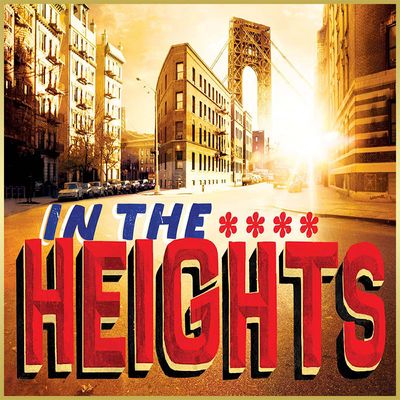
Discuss on Reddit ➤ Support the Show ➤ No pares, sigue sigue and take a train to the top of the world to join the wonderful residents of Washington Heights in Lin-Manuel Miranda’s first Broadway venture, ‘In the Heights.’ As a nice break from the heat outside, join the boys as they chat up a storm about some of the difficulties of directing this show, how important ‘Heights’ is in the canon of American musical theatre and explore the true meaning of the word superfluity... Read More
From the show: Jim and Tomic's Musical Theatre Happy Hour
Featured Shows
About
No pares, sigue sigue and take a train to the top of the world to join the wonderful residents of Washington Heights in Lin-Manuel Miranda’s first Broadway venture, ‘In the Heights.’ As a nice break from the heat outside, join the boys as they chat up a storm about some of the difficulties of directing this show, how important ‘Heights’ is in the canon of American musical theatre and explore the true meaning of the word superfluity. Wepa!
In the Heights (Original Broadway Cast)
SPONSOR
This week’s episode is sponsored by Goldstar – the online ticket vendor that has a great selection of affordable tickets to all sorts of live events. Our first 200 listeners who head to goldstar.com/happyhour or use the promo code HAPPYHOUR at purchase will get $10 off their order.Let us know what tickets you get with the offer code for a shout-out on the next podcast!
SHOW NOTES
Jimi apologises for talking about his production of ‘In the Heights’ so much but hey, if you’re interested, check out the trailer for it!
Lin-Manuel has done his usual malarkey and uploaded some of his tracks from the cutting room floor onto his Soundcloud including a cut song for Camila!
There is a fantastic documentary from PBS Great Performancesabout ‘In the Heights’ that you really need to check out and has supplied Jimi with one of his favourite quotes - ‘Dreams come true, bitches!’
Is this video a glimpse into the future once the amateur rights for ‘Hamilton’ drop? Probably. As sad as that is…
Get on over to Reddit and tell us what you think about the whole race conflama, cause we certainly don’t have an answer! Is as diverse as possible okay for a show like Heights? Or is it just the exact same as casting a show like 'Scottsboro Boys?' Let us know!
Are you following us on Twitter yet? If not, get with the programme! Come and tweet us your experiences with ‘Heights.’
Also this is one of Jimi’s first exposures to ‘In the Heights.’ It explains a lot.
A WET QUIZ STATEMENT
To our knowledge this show is one of the only broadway musicals to include a full-stage splash guard for audience protection.
Transcript
This transcript was automatically generated and might contain errors.
[0:00] Jimi: This episode of Happy Hour is sponsored by Gold Star.
[0:02] Tommy: Gold Star has a great selection of affordable tickets to all sorts of live events, including theater, with Broadway and Broadway national tours, concerts, comedy, dance, and more.
[0:11] Jimi: The first 200 listeners who use the promo code Happy Hour, one word all caps, will get ten dollars off their purchase at goldstar.com/happyhour or using the Gold Star app.
[0:23] Tommy: Well, I don't know what's gonna be worse, because I just got crickets for the leopard gecko, and you have hay fever.
[0:29] Jimi: Um, I know.
[0:31] Tommy: Oh, here's a question. Do you guys call it hay fever, or do you just call it allergies?
[0:35] Jimi: We'll call it both.
[0:36] Tommy: Um, okay.
[0:38] Jimi: I think hay fever, I will notice an older gen like my parents' generation calling it hay fever because or also I think maybe I noticed them calling it allergies more too, because nowadays allergies can mean a whole slew of things.
[0:53] Tommy: But uh exactly.
[0:54] Jimi: But like my father has hay fever in uh in comes from a world when like people weren't allergic to peanuts, you know.
[1:02] Tommy: Right, okay.
[1:03] Jimi: Yeah, 'cause I feel like that's I've heard people say, oh, it's just my allergies.
[1:08] Tommy: Right.
[1:08] Jimi: And they mean I can't breathe because there's grass.
[1:12] Tommy: Right.
[1:12] Jimi: Yeah.
[1:12] Tommy: You know hay fever.
[1:13] Jimi: Yeah.
[1:14] Tommy: Exactly.
[1:15] Jimi: Do you have hay in Scotland? I assume you have an abundance of it.
[1:18] Tommy: We eat it.
[1:19] Jimi: That's what I had for dinner. A lovely bale of hay.
[1:21] Tommy: Delicious.
[1:22] Jimi: Did you just like keep it?
[1:23] Tommy: Whiskey.
[1:27] Jimi: A whiskey sauce.
[1:28] Tommy: That blindsided me.
[1:30] Jimi: That was fun.
[1:32] Tommy: Somebody get us another drink.
[1:34] Jimi: Welcome to Jim and Tomic's Musical Theatre Happy Hour, your weekly podcast with driplets and tequila.
[1:39] Tommy: Do you have that song "Tequila"?
[1:41] Jimi: Da-da-da-da-da-da-da-da.
[1:42] Tommy: Yes, it was one of the best high school talent shows I've ever seen, where it was that yes, the jazz band came out, like the jazz band showed up, no one knew what song they were gonna play, and then one of the shyest kids I've ever known, not a singer, not a performer like a tech geek kid stands in front of the microphone and everyone's like what the heck are they gonna sing like what the heck is and then the band goes into "Tequila" and the kid stands there the whole time until he gets to "Tequila" and it brought the house down it was so funny and it made all the adults overlook the alcohol connotation.
[2:18] Jimi: Because like let's be honest compared to some of the songs listened today kids listen to today the song "Tequila" pretty tame yeah catchy lyrics catchy lyrics easy to memorize absolutely a world famous performer I'd like that idea you should find out please we'll follow that up later guys don't worry um so hey what are you drinking today you're drinking tequila uh today I am drinking a spiked cafe con leche a spiked cafe con leche is that because you're an alcoholic it's because I'm an alcoholic the amount that we drink I mean every time we podcast absolutely it's dangerous um well I'm just having would you count this would you count uh uh like strawberry piragua sure not maybe as alcoholic but you know I'm proud of that does it need to be alcohol they don't need to be alcoholic do they is that a rule that we've have we ever had that rule oh I've had that rule have you not well maybe that's why I laugh so much during the podcast I've had like water from the sea etc.
[3:26] Tommy: I just know anyway, to make sure it's a drink.
[3:32] Jimi: It's been out for like an hour, so it's just liquid size.
[3:36] Tommy: Sticky, it's probably really gross.
[3:37] Jimi: It's probably like pure sugar water.
[3:40] Tommy: Lukewarm pink sugar water.
[3:43] Jimi: Oh yeah.
[3:45] Tommy: Don't know why I'm drinking it.
[3:46] Jimi: How idiotic.
[3:47] Tommy: I know.
[3:47] Jimi: What a silly thing.
[3:48] Tommy: Well, perhaps to explain, you have a quiz statement for us.
[3:52] Jimi: I'm just gonna start calling them that.
[3:54] Tommy: The new quitman.
[3:55] Jimi: Yep.
[3:56] Tommy: Um, well, this musical, Thomas, uh was partially inspired by a New York Pilates studio on a hundred and eighty I can't even speak this hay fever on a hundred and eighty-first street.
[4:11] Jimi: What show could that be?
[4:12] Tommy: It's Pilates the musical.
[4:16] Jimi: Stretch.
[4:17] Tommy: And stretch.
[4:18] Jimi: I don't know.
[4:19] Tommy: Um it's "In the Heights."
[4:21] Jimi: Lights up on Washington Heights up at the break of day, a wake up, and I got this little punk I gotta chase away.
[4:28] Tommy: Pop the grape at the crack of dawn, sing while I wipe down the awning.
[4:32] Jimi: Hey y'all, good morning. I scope in aqua, paru chacina cherry, strawberry, and just for today, I got my boy Piraguero come that's your I am snotty, and you probably never heard my name.
[4:48] Tommy: Reports of my fame are greatly exaggerated, exacerbated by the fact that my syntax is highly complicated.
[4:54] Jimi: Cause I immigrated from the single greatest little place in the Caribbean Dominican Republic.
[5:00] Tommy: I love it.
[5:00] Jimi: Jesus and jealous of it and beyond that.
[5:03] Tommy: Ever since my folks passed on, I haven't gone back.
[5:06] Jimi: God damn, I gotta get on there.
[5:09] Tommy: Oh the milk is gone, Dad.
[5:11] Jimi: Hold it just a second.
[5:12] Tommy: Why's everything in this fridge warm and tepid?
[5:15] Jimi: I'm better to step it up and fight the heat.
[5:17] Tommy: Cause I'm not making any profit if the coffee isn't light and sweet.
[5:25] Jimi: Try my mother's own recipe.
[5:26] Tommy: One can of condensed milk.
[5:28] Jimi: Nice.
[5:29] Tommy: Hi, Baskay Faye.
[5:32] Jimi: That was abuela.
[5:34] Tommy: She's not really my abuela, but she practically raised me.
[5:36] Jimi: This corner was her esquella now.
[5:38] Tommy: You probably thinking I'm up shit's creek.
[5:41] Jimi: I never been north of 96th Street.
[5:44] Tommy: Well, you must take the entry.
[5:47] Jimi: Even follow them to Northern Manhattan and maintain.
[5:50] Tommy: Get off at 180 first and take the escalator.
[5:53] Jimi: I hope you're right in this down.
[5:54] Tommy: I'm gonna test your lesson.
[5:55] Jimi: And you know what? It's specifically appropriate.
[5:58] Tommy: We're going for a heat wave over here at the moment.
[6:00] Jimi: We're going through a heat wave here.
[6:01] Tommy: It is a hundred and one degrees in Denver today.
[6:04] Jimi: Hold on, I'll convert that for you.
[6:05] Tommy: Thank you.
[6:06] Jimi: Don't have a clue.
[6:07] Tommy: That's something like 32.
[6:09] Jimi: Uh, that's 38.
[6:11] Tommy: Oh!
[6:11] Jimi: That's really hot.
[6:12] Tommy: It's really hot.
[6:14] Jimi: It's really got the AC on.
[6:16] Tommy: Oh, I do.
[6:17] Jimi: Central air.
[6:18] Tommy: It's beautiful.
[6:19] Jimi: Thank goodness.
[6:20] Tommy: Hopefully we don't have a power outage.
[6:21] Jimi: Oh, I don't have to hint at it anymore.
[6:23] Tommy: We already said it was a nice one.
[6:24] Jimi: Yep, exactly.
[6:26] Tommy: Are your fingernails slipping off in the heat?
[6:29] Jimi: Ew.
[6:30] Tommy: That's a lane.
[6:31] Jimi: That's a lane.
[6:32] Tommy: Is that all every time I listen to the show I hear something new, and I was trying to write them down, and I didn't write any of them down.
[6:37] Jimi: That's not a lyric, it's uh it's a one of the wonderful scriptures.
[6:40] Tommy: From the book.
[6:43] Jimi: Um yes.
[6:44] Tommy: So in the heights, here we are.
[6:46] Jimi: Um, well, music and lyrics by, of course, our Lord and Savior.
[6:50] Tommy: Mr. Lin-Manuel Miranda.
[6:53] Jimi: Uh, book by Oh, you should say this one, I'll say it wrong.
[6:57] Tommy: I was just waiting to see if we tried.
[6:59] Jimi: No.
[6:59] Tommy: Uh and the book by Chiara Alegria Hudes.
[7:03] Jimi: Yes, it opened up Broadway in two thousand and eight and then moved into the West End in twenty fifteen.
[7:08] Tommy: Yes, indeed it did.
[7:09] Jimi: It was on Broadway for quite a while as well, we should say.
[7:12] Tommy: It was it was the you know played for several years, yeah.
[7:14] Jimi: Super popular.
[7:15] Tommy: Yeah.
[7:16] Jimi: Um and then of course the defining moment in the heights history.
[7:22] Tommy: It's number number one, like forget Broadway, forget West End.
[7:26] Jimi: Absolutely.
[7:27] Tommy: We gotta talk about the Scottish amateur premiere production.
[7:31] Jimi: Exactly.
[7:32] Tommy: Lin-Manuel himself said our video was great.
[7:36] Jimi: So really witness.
[7:41] Tommy: I did.
[7:41] Jimi: I've said this about five million times, I think, on the podcast.
[7:44] Tommy: But yes, I directed the Scottish amateur premiere.
[7:48] Jimi: Woo!
[7:48] Tommy: That means nothing.
[7:52] Jimi: It won four Tony Awards, including Best Musical, not Jimmy's production, the original Broadway production.
[7:59] Tommy: I'm sure Jimmy's show was great.
[8:01] Jimi: Um and hugely popular.
[8:03] Tommy: Maybe not Lin-Manuel Miranda's most popular musical.
[8:07] Jimi: Yeah, I know.
[8:08] Tommy: He pipped himself.
[8:10] Jimi: But certainly, certainly super, you know, paved the way for Hamilton.
[8:14] Tommy: Absolutely.
[8:15] Jimi: And it and in many ways I would say it's an unforgettable show.
[8:18] Tommy: Absolutely.
[8:21] Jimi: Um anyway, so what what what on earth is it?
[8:25] Tommy: In the Heights Drop me to field this one, or do you want to
[8:25] Jimi: Oh, I got this.
[8:28] Tommy: In the Heights takes place in Washington Heights in New York City around 181st Street.
[8:33] Jimi: Uh across three days, July 3rd through July 5th.
[8:37] Tommy: Um, uh around and about these three bodegas.
[8:41] Jimi: Um basically.
[8:46] Tommy: Uh we follow Usnavi, our uh narrator character who runs a corner shop on this corner, and he introduces us to the various characters around Washington Heights, um, and we learned about we learned about their struggles with you know their own Latino heritage and the gentrification of the neighborhood, and you know, um, I think being a you know uh a struggling financial community in New York, and all the things that come with that.
[9:16] Jimi: There's love and romance and education problems and uh a power outage, and uh I think one of the saddest deaths in all of musical theater.
[9:27] Tommy: Oh and uh, you know, three days later the musical's done.
[9:31] Jimi: It's a big, massive multiplayer, it's uh it is a true piece of musical theater.
[9:37] Tommy: I think this is structure-wise, one of the more perfect pieces of musical theater.
[9:44] Jimi: Absolutely, and completely original.
[9:47] Tommy: Yeah, 100%.
[9:48] Jimi: You don't very often.
[9:51] Tommy: Yeah, absolutely don't, especially not one that has a story.
[9:55] Jimi: Yeah.
[9:56] Tommy: Like this.
[9:57] Jimi: Yeah, like a fully fledged detailed story with you know multifaceted characters whose stories intertwine.
[10:06] Tommy: It's also not just like a bunch of separate stories, like an A plot B plot separate, like it's a true integrated plot musical.
[10:13] Jimi: Um beautiful, beautifully stunning show.
[10:17] Tommy: Yeah, and backed obviously by an incredible score.
[10:21] Jimi: Obviously, this was one of the first times on Broadway that we really got to see hip hop coming in.
[10:25] Tommy: Obviously, we're rolled hats now with hip hop.
[10:28] Jimi: Yes.
[10:28] Tommy: Aren't we?
[10:29] Jimi: Um I know, I think this was really absolutely this is really one of the first times that it was certainly popularized on a Broadway stage.
[10:37] Tommy: So yeah.
[10:38] Jimi: And of course, it was very very much owed to Lin-Manuel Miranda's uh genius and taste and intelligence.
[10:45] Tommy: Um you know blending of it is while it is certainly hip hop infused, it is also very purely a piece of musical theatre.
[10:53] Jimi: Um it it flips back and forth between styles and genres.
[10:58] Tommy: Absolutely every other word.
[11:00] Jimi: It's crazy sauce.
[11:01] Tommy: It's a proper it's a melting pot, just as Washington Heights itself is.
[11:06] Jimi: It is in fact itself a melting pot.
[11:09] Tommy: I've got all these quotes up my sleeve from a few years ago, don't you worry?
[11:14] Jimi: It's like you've uh you've studied this show intensely or something.
[11:18] Tommy: It's almost like one, two or three.
[11:21] Jimi: What would you do with 960?
[11:23] Tommy: Oh mate I mean if it's just between you and me.
[11:29] Jimi: I know 96.
[11:32] Tommy: I took my life in a brand new race.
[11:38] Jimi: And a brand new wave.
[11:40] Tommy: Or maybe just bleach yellow freaks.
[11:42] Jimi: Yo, I'll just say.
[11:55] Tommy: That's as far as we made.
[11:57] Jimi: I can't remember the word for enough.
[12:00] Tommy: What is the word for enough?
[12:02] Jimi: Doesn't matter.
[12:03] Tommy: Um yeah, uh a bit.
[12:06] Jimi: Um in particular uh Latin American because of my love for Shakira.
[12:16] Tommy: Ah that isn't that isn't even a joke.
[12:21] Jimi: Oh, you said it was such a straight face.
[12:23] Tommy: I know it's not a joke, and it's fantastic.
[12:25] Jimi: Exactly.
[12:26] Tommy: It's a I'm deadly shit.
[12:27] Jimi: Like, and it's quite funny because I kept getting when I s because I studied it in school for four years.
[12:31] Tommy: Okay.
[12:32] Jimi: Um, and that uh wait, hold on.
[12:35] Tommy: I find that surprising.
[12:37] Jimi: I don't know why I find that surprising.
[12:39] Tommy: These are these weird minor cultural differences that I never would have thought that.
[12:44] Jimi: Well, that we cut that we stu I study Spanish.
[12:45] Tommy: That you study Spanish in school, that they teach Spanish in school in Scotland.
[12:49] Jimi: Um so um do you what modern languages did you do?
[12:55] Tommy: They I look took Spanish for three years, but but also like half of the population in the United States speaks Spanish.
[13:02] Jimi: Speak Spanish, yeah.
[13:03] Tommy: I mean, I guess um it's in Europe.
[13:07] Jimi: I guess that makes sense.
[13:07] Tommy: I forget you all are much closer to each other.
[13:10] Jimi: Yeah, exactly.
[13:11] Tommy: So um normally the choices we get are uh Spanish, French, and German.
[13:15] Jimi: Yeah, that's pretty close.
[13:16] Tommy: We'll do uh there's a lot of like Spanish French and Mandarin.
[13:20] Jimi: Um yeah, we're not quite there yet.
[13:22] Tommy: Yeah, but soon I imagine festival.
[13:25] Jimi: Anyway, um so yeah, but I used to get in trouble all the time uh in class because my pronunciations were Latin American as opposed to Spanish and they're completely different.
[13:36] Tommy: Shakira's pronunciations, exactly, exactly.
[13:39] Jimi: And I was like, but it's correct.
[13:41] Tommy: We had a big old fight, as I did many times because I was an awful child.
[13:46] Jimi: Um but yes, a little bit, and I think that's quite important.
[13:49] Tommy: Yeah.
[13:50] Jimi: Um because I think right off the bat, I'm gonna try I won't try and talk about me directing it the whole time because that would get boring and it's not what it's about.
[13:59] Tommy: But excuse me.
[14:01] Jimi: Um I think it's really really important that if you want to undertake this show that you really need to do your homework.
[14:09] Tommy: Oh yes, absolutely.
[14:10] Jimi: Like, and I think if I hadn't done any Spanish whatsoever, I think first of all, I don't think I would have engaged with the musical as much.
[14:17] Jimi: Right. Initially. Yeah. Um, but also it would just be too much of a step, like a culture step because it's integral to the show. I mean, if you if you're if you're still out there and you haven't listened to the show yet or a clip hasn't come up in the podcast yet, about I I would say what, maybe fifteen percent of this show is in Spanish.
[14:41] Tommy: Yeah, I would go more, I would 100% go more, and because there's you know, some characters who for example with the Piragua guy, um he most of his lines include some sort of Spanish in them. In Carnival, he speaks solely and sings solely in Spanish, and unabashedly so. Um and there'll just be those like odd lines just thrown in that are just completely in Spanish, and it's not they don't you know, at no point does Kiara ever sort of stop and say, This is what it means.
[15:12] Jimi: Right. Yeah. Do you know what I mean? I think that is one of the fantastic things about it. Like, um, you know, this is abuela, she's not really my abuela, and they call her abuela the whole dang time.
[15:21] Tommy: Yeah. And you're you know, you're gonna figure out that it means grandma, but we don't like, you know, Dora the Explorer doesn't come out and isn't like, do you know what Abuela means?
[15:32] Jimi: Yeah, exactly. Exactly. Which I you know, it just feels so intelligent off the back. It it is unapologetic for how like it you gotta keep up with this show.
[15:44] Tommy: For sure. Um and I think it's one of those things, you know, again, said it before, we'll say it again. I'm a little white boy.
[15:52] Jimi: Yeah, me too. And uh this isn't in my heritage at all. So in order for me to actually go about directing something like this with authenticity, uh any shred of that, um, you really need to do your homework. You don't want to go into this and talk from a you know, you don't want to guess work your way through In the Heights.
[16:13] Tommy: Yeah. It's too the the cultural aspect of it is too important.
[16:17] Jimi: Yeah, absolutely. Yeah, you know, um more important than maybe the cultural aspect and some other shows. I've I'm thinking in my mind Brigadoon, but I don't want to say anything insulting.
[16:29] Tommy: But yeah, no, exactly. That do you know I mean like um yeah, definitely. It's just this is this is this that is almost the story that it wants to tell, is the story of this community of people.
[16:40] Jimi: Right. Um Brigadoon, I don't think wanted to tell that story, but it it did in a way. Accidentally um but no, so it's interesting um that we sort of said that it as a as a musical it's is so complete and and very strong as a story because honestly, um I don't think I've read a script as difficult to work with as In the Heights.
[17:07] Tommy: I really, really don't and not in a like Waiting for Godot way. Do you know what I mean?
[17:12] Jimi: Yes, yes. That's not a Sarah Kane play. It is uh it's it's pretty straightforward in its content. There's not a V V high school and I feel so bad saying this. I really do, I really feel bad because obviously who am I to say this, but um it doesn't help a director when you know timelines are ignored.
[17:36] Tommy: Okay. For example.
[17:37] Jimi: I just find this ca I've worked on the show twice at two different schools now. Um and I've never thought much about the book, so this is a new thought to me. What like what what do you struggle with about the book?
[17:51] Tommy: So mostly, I mean, as a director, I like to I'm a big character focused son of a gun. Um and so I timeline all my characters uh and then work with the actors accordingly. But for someone like Sonny, who the hell is he?
[18:07] Jimi: Yeah, I mean, and actually, like you don't quite know his relation to anyone.
[18:15] Tommy: To anyone, Usnavi, Abuela.
[18:17] Jimi: Yeah. Um he's just kind of there.
[18:20] Tommy: I guess that's true. Have an age.
[18:23] Jimi: Right. So you don't know where he's come from.
[18:26] Tommy: Right. And you kinda know he's a millennial, but that's about it.
[18:33] Jimi: And like, you know, as if you're developing a character and you can't say I was born ex. I mean they're difficult. They call him his Usnavi's cousin, which might be about all we get. Uh that's it, and you never, you know, it doesn't talk about oh my uncle as an Usnavi's father.
[18:52] Tommy: Right. You know, his parents are very important to him.
[18:55] Jimi: Yeah. You don't know, does that mean that he's from the Dominican Republic as well?
[19:00] Tommy: Right. D did Usnavi's parents and uh his, you know, either like whether it's his father's brother or whatever, also come over at the same time.
[19:01] Jimi: Exactly. Exactly. Or was Sonny kind of sent over later and like go find your cousin Usnavi.
[19:19] Tommy: Yeah, I guess that's it. This is it. We don't know, we absolutely don't know. And it's it's one of those things. I think for a show that is about where you come from, you should really have where each of your characters come from.
[19:31] Jimi: Yeah kind of labelled.
[19:33] Tommy: Yeah, I mean I think this is more of a show about your found and chosen family than that. It's certainly based on where you come from, but that's the thing is you need to know what you're ignoring before you work out what you're accepting.
[19:45] Jimi: Yeah, from I I see from a director standpoint the frustration. It was so yeah, I think that's it. That's what I'm coming at. Is as as an audience member, you don't you don't really care. You don't need to know anything about Sonny for him to be a special character.
[19:57] Tommy: Yeah, I think it's a shame because I think there are a lot of characters in this show, they're extremely well written, yeah, that have their whole kind of path paved out for them.
[20:06] Jimi: Yeah. Um it's a shame to just let some characters fall by the wayside. I never I don't like waste. You know, that's true. And I feel like those characters then just become foils, they just become waste.
[20:20] Tommy: Right. Which is a shame.
[20:21] Jimi: Yeah, and it's easier for them to fall into a stereotype or you know, kind of one dimensionality.
[20:27] Tommy: Yeah. And 'cause actually if if you look at someone like um Carla, who is very one-dimensional, yeah, and who is very stereotypical, um, and you don't really at no point want to think, oh well, where was Carla from?
[20:41] Jimi: Right. You know?
[20:42] Tommy: Yeah.
[20:42] Jimi: But even then she gives you a full history of her, you know, my mum was Dominica Cuban, my you know.
[20:47] Tommy: Right, exactly. You get all that, yeah.
[20:49] Jimi: Yeah, so even with her you still get it. Sunny underdeveloped the jury's out.
[20:54] Tommy: The jury's out on that one.
[20:56] Jimi: It wouldn't take much, that's the thing. There's so many opportunities.
[20:59] Tommy: Yeah, that's yeah, and it is such a lean and mean musical, like d you can drop a line here or there, and it's fine. Because there are so many people, it does fall into the like, you know, what we learn like, don't we mention Abuela not taking her medicine once and then like uh oh, you know.
[21:17] Jimi: Yeah, exactly. It's right. It's one of those like the moment the character shows up and starts coughing, you're like, ah, you're gonna die. Um and so it wouldn't take much in how lean some of the other exposition is in this musical to just give Sonny a little more background.
[21:34] Tommy: Exactly. Exactly. Um the other one as well I want to talk about is the Rosarios.
[21:40] Jimi: Okay.
[21:41] Tommy: Because I think they're severely underwritten.
[21:43] Jimi: Okay.
[21:45] Tommy: Um particular in fact, particularly with Camilla, um so when I approach them as a family, yeah, uh obviously you understand that to um Camilla and uh to Kevin Kevin, um their heritage and their culture is extremely important.
[22:15] Jimi: Yeah.
[22:16] Tommy: Um and they've raised Nina uh accordingly.
[22:20] Jimi: Yeah.
[22:21] Tommy: Um and then obviously that's what Nina eventually struggles with is kind of going out into the big world world and realizing, well, how do I keep this? How do I you know stay true to this, and they just want what's best for me, but how do I build this and blah blah blah.
[22:33] Jimi: Right.
[22:33] Tommy: Um but it's sort of their relationship, um and yeah, like particularly with Camilla's character, uh I think she's immensely underwritten.
[22:48] Jimi: Yeah.
[22:49] Tommy: Um because enough kind of is is there, the song Enough is there. Um obviously, as let's give Camilla a moment.
[22:59] Jimi: Yeah.
[23:00] Tommy: I always want more from Enough. Yeah. You know it's it's a shame that that's all she has.
[23:08] Jimi: Yeah.
[23:08] Tommy: She has to do so much in that moment. And like so kind of Camilla's Camilla's kind of beats. Um at the start you find out that uh she kind of runs a lot of the reins at the uh the taxi company.
[23:26] Jimi: Yep.
[23:27] Tommy: Uh and then when we find out that the money's kind of gone at the dinner party scene and she she you know storms off uh and then comes back and is the kind of you know proper like mother figure to um Nina and kind of puts Kevin down um she kinda it's I don't know I I just feel like the song itself and I've seen it played this how they played it in London um it's just kind of played a bit ridiculously like oh it's her like fear song do you know what I mean as opposed to the fact that it's a mother yeah uh and a wife yeah kind of keeping control of her family when that might not necessarily be the thing she wants to do right and and maybe not the most you know if we're talking about how ingrained their culture is like we're we're breaking out of that culture bubble in that moment too absolutely absolutely because I don't think there I don't think there is any moment when you think ah Nina's gonna divorce K uh sorry um Camilla's gonna divorce Kevin.
[24:34] Jimi: There isn't that moment, and I think there's a lot tied into why that wouldn't ever come into play.
[24:40] Tommy: Right.
[24:41] Jimi: Um but it's not it's not really there in the text.
[24:45] Tommy: Yeah.
[24:46] Jimi: You really need to dig and you really need to, as a director, tell that story. Find the ways to big her up that way.
[24:54] Tommy: Totally.
[24:54] Jimi: It's it's just not it's not really there. And I think again, that's a a shame.
[24:59] Tommy: Yeah, for sure.
[25:00] Jimi: Because t honestly, for me, I go to Watch In the Heights to see the Rosario story. I think it's a beautiful story in our beautiful family.
[25:08] Tommy: Yeah, no, absolutely. I mean, I think it's a it's I would I don't know if we're not in A-plot B plot land, but it's almost I would call their story almost more more primary than some of Usnavi's difficulties.
[25:23] Jimi: Usnavi is is the is the narrator in Into the Woods.
[25:27] Tommy: Yeah, it's it their story has the the biggest ups and downs and the biggest change happening.
[25:34] Jimi: Yeah, you know?
[25:35] Tommy: Yeah.
[25:36] Jimi: Um because the all three of them change each other.
[25:38] Tommy: Yeah, well the most the most choices uh the the story happens to just about everyone else for the most part. Usnavi makes some choices at the end, maybe.
[25:47] Jimi: Um but like you know, Abuela wins a lotto accidentally, like the rest of that is y from the outside. But definitely the Rosarios are making decisions about their life and their future, and you know, it and it's like, do we sell or do we not sell? Do we go back to college? Do we not go back to college? Do we date Benny or not date Benny? Like they are some pretty hefty personal decisions that aren't like you know, are tough, aren't like, well, clearly you have to choose this one.
[26:17] Tommy: Like you could pause the musical at any time and convince me that e any of those decisions would go either way. You know what I mean?
[26:25] Jimi: Yeah, yeah, absolutely.
[26:27] Tommy: And yeah, you can't call it, you don't know at the end whether they are gonna be together.
[26:31] Jimi: Yeah.
[26:32] Tommy: Or whether Nina is gonna stay or go.
[26:34] Jimi: Right.
[26:35] Tommy: Um, all of these decisions are made. And I think to be honest, I think all the right decisions are made by the end. I think it's it's good that she goes.
[26:42] Jimi: Yeah, because you get that light and shade when you compare her with the Snavi.
[26:48] Tommy: Um but I would just want to see, I don't know, I just want to see more depth there.
[26:51] Jimi: Yeah.
[26:52] Tommy: But then I guess it's like you've only got two hours.
[26:52] Jimi: You've only got two hours, and there's a lot of characters.
[26:57] Tommy: And I mean, Jimmy, let's be honest. We gotta know all about the Piragua guy.
[27:03] Jimi: Like, he has all that exposition about his personal backstory that exactly, you know, it's really important, right?
[27:10] Tommy: Like learning his name. Um Yeah, Piragua guy. He was born Piragua Esteves guy.
[27:20] Jimi: I love I love Piragua guy, and then graffiti Pete.
[27:24] Tommy: You know, that's his name.
[27:27] Jimi: It's like the it's the wrong comparison. Graffiti Sullivan Pete. It's like a character straight out of West Side Story.
[27:34] Tommy: Like, yeah, you know, why do they call you Smidge?
[27:37] Jimi: No one knows. Is that a character in West Side Story? Probably not, but I convinced you that it was for a second.
[27:43] Tommy: No, you didn't, but yeah, it's smidge, my favorite.
[27:47] Jimi: Um, yeah, exactly. That's things. So there's there's a lot of superfluity, yeah, superfluity, yeah.
[27:54] Tommy: I don't know how you pronounce that one probably.
[27:55] Jimi: Uh uh that's actually the um plural word for a group of nuns. This is not a joke, it's a yeah, a superfluity of nuns.
[28:03] Tommy: Yeah, it's that's a collective noun for nuns. It was in a Sister Act video we looked it up.
[28:08] Jimi: Stunning.
[28:09] Tommy: I know, fascinating, right? These are facts, everyone. This is what you came here for.
[28:14] Jimi: I love that. But yes, brilliant. There is not an abundance of nuns, but certainly a superfluity.
[28:18] Tommy: A superfluity?
[28:24] Jimi: Yeah, hard.
[28:26] Tommy: It is hard.
[28:26] Jimi: Yeah. Lots of superfluousness in the
[28:27] Tommy: Exactly. In that moment we lost all of our integrity.
[28:34] Tommy: But yeah, and so it's but it all just kind of works. It creates the celebratory vibe. And well, and you can s I mean I f I don't remember where I read this, but it was Lynn Manuel Miranda wrote something like 50 or 100 songs for this show.
[28:51] Jimi: Yeah.
[28:51] Tommy: Like the writing process for this show was extensive and multifaceted, and you can tell that like there were different endings and different outcomes and different, you know, relationships. I mean, we haven't even gotten to Sonny and Graffiti Pete here yet.
[29:06] Jimi: Um just do wait.
[29:08] Tommy: But you know, and it it shows the intricacy and like what stayed and what didn't stay. And so I wonder, like, somewhere on the cutting room floor, is there more about Sonny's background? Is you know, there more Rosario depth? Um like that sort of thing.
[29:26] Jimi: And I would hope so, because the thing is, is like so when I was directing it, that was the story that I chose to pull out. And you can't you can't just create that from nowhere.
[29:35] Tommy: Right.
[29:35] Jimi: The seeds have to be there. So hopefully uh in the in the heights extended edition that we get when they make the movie.
[29:43] Tommy: I don't know.
[29:46] Jimi: Yeah, exactly. A story for everyone.
[29:49] Tommy: Yeah, so mentioning Sonny and Graffiti Pete. We learned this while we were trying to find a quiz question for this episode.
[29:57] Jimi: Exactly.
[29:59] Tommy: So Sonny is Navi's cousin, Graffiti Pete, local graffiti artist.
[30:06] Jimi: Um Buds throughout the show.
[30:09] Tommy: And in a previous draft, more than buds.
[30:13] Jimi: Exactly.
[30:16] Tommy: So apparently, when uh Sunny comes up with a plan to paint the grating in order to keep his Snavi here, uh they they shared a little schneck.
[30:29] Jimi: Yeah.
[30:29] Tommy: And like confirmed by Lim Manuel Miranda himself. Like this is not some kind of I mean it started as some fan fiction, but then Lynn jumped in and said, no no, that's real.
[30:40] Jimi: Um yeah, canonized it.
[30:42] Tommy: And like um isn't in the script anymore. Sonny is decidedly straight in the show.
[30:47] Jimi: She was my babysitter first.
[30:49] Tommy: At least at least bye.
[30:51] Jimi: He he talks about women at some point, I say, now feeling a little unsure about this.
[30:57] Tommy: No, he does say he does say she was my babysitter first.
[31:01] Jimi: Um the girl that I'm in love with, like yeah, but so well maybe maybe bye.
[31:01] Tommy: Maybe bye.
[31:11] Jimi: But so here maybe this is struggling right somewhere in the side.
[31:15] Tommy: No, but honestly, yeah, so right.
[31:16] Jimi: So this is this is how I took it.
[31:18] Tommy: Yeah.
[31:19] Jimi: Um I played Sonny gay, not me personally, but that was the story that we chose to tell.
[31:27] Tommy: Yeah.
[31:28] Jimi: That Sunny ultimately was gay.
[31:31] Tommy: Do you feel you feel vindicated by this newfound knowledge?
[31:34] Jimi: I I truly do. I truly, truly do.
[31:37] Tommy: Because it it really does make sense.
[31:38] Jimi: It doesn't seem out of place.
[31:39] Tommy: Yeah.
[31:40] Jimi: His lines are sassy as fake.
[31:42] Tommy: Yeah.
[31:43] Jimi: Um I tell me all of the street men that pull out a Cheetah Rivera reference. Tell me them.
[31:48] Tommy: Do you know what I mean?
[31:51] Jimi: Exactly.
[31:53] Tommy: But so this is a question I always have whenever like a cut song from a show comes up, or like there are revelations about a previous draft.
[32:01] Jimi: Why at some point the artistic team made the decision that this was the wrong story choice.
[32:12] Tommy: Like that like we need we can't have this Sunny Graffiti Pete macinate moment.
[32:18] Jimi: And I wonder, you know, why?
[32:22] Tommy: Like what made them pull that?
[32:23] Jimi: Like I can justify things in my mind, and I'm sure they're similar. Like there's a whole bunch of stuff going on, we're dealing with a whole bunch of issues, and like adding one more, like it would seem kind of a throwaway gay issue at that moment, which isn't quite associated with the core story that they're trying to tell.
[32:41] Tommy: Um so here's the thing.
[32:44] Jimi: Yeah.
[32:45] Tommy: Why does it need to be an issue?
[32:47] Jimi: Right.
[32:47] Tommy: Do you know what I mean?
[32:48] Jimi: Yeah.
[32:48] Tommy: Like, why can't they just share this relationship that you don't get to see the whole of?
[32:52] Jimi: Right.
[32:53] Tommy: And I guess like the because because it's gay, people would be like, uh I need to know more.
[33:00] Jimi: You didn't tell me they were gay.
[33:01] Tommy: Right.
[33:01] Jimi: They can't be gay.
[33:02] Tommy: I do going on there.
[33:03] Jimi: I do think like we forget how quickly the times have changed. This is 2008.
[33:08] Tommy: I think this is a different kind of gay time than in 2018.
[33:13] Jimi: I bet you if this premiered in 2018, it'd be like, yeah, they're gay, whatever.
[33:17] Tommy: Yeah, why not?
[33:18] Jimi: And it could be a tiny little, you know, thing that is like mildly funny without being offensive or seeming thrown in.
[33:26] Tommy: Where I think in 2008 it would seem offensive on both sides.
[33:31] Jimi: Um, what gay people in my musical, like, let me tell you something, honey.
[33:37] Tommy: Um, but also offensive to the gay community in a way that's like, what you wrote this gay character, but they don't get songs or like lots of things.
[33:46] Jimi: Yeah, exactly.
[33:47] Tommy: They're not you know dialogue about their relationship.
[33:52] Jimi: All they get is one cheater Rivera reference and then they're gone.
[33:55] Tommy: Yeah.
[33:56] Jimi: Um that's the thing though, I think for someone like Sunny and Graffiti Pete, they'd be great gay characters because they're completely non-stereotypical.
[34:03] Tommy: Yeah.
[34:04] Jimi: Um, you know, Sunny talks about wanting to change his town and uh kind of ride the gentrification wave, yeah.
[34:11] Tommy: Um, and kind of fight for the kids as this little revolutionary guy, and graffiti Pete is a bit of a thug.
[34:17] Jimi: Like, we don't we don't get gay characters like that.
[34:20] Tommy: I mean, with a name like Graffiti Pete, I think you're more than a bit of a thug.
[34:24] Jimi: Absolutely.
[34:25] Tommy: Um, and here's something that pissed me off, right? I'm calling out uh this is just me inventing all of my grief that I had for another.
[34:33] Jimi: Jimmy the Ranter.
[34:34] Tommy: I know. I'm calling out some reviewers of ours.
[34:38] Jimi: Uh-huh.
[34:40] Tommy: Because I think in like three reviews, maybe two, two or three reviews, anyway.
[34:45] Jimi: Um, they were like, the Graffiti Pete and the Sunny weren't really believable as street gangsters, but you know, they were fine.
[34:53] Tommy: And I was like, I'm sorry.
[34:57] Jimi: At what point did I ever say like, ah, these guys, these are the the G, you know, like what?
[35:06] Tommy: At no point.
[35:07] Jimi: Like, he's sassy and dances, and then Graffiti Pete is an artist.
[35:13] Tommy: Like, at what point do these guys need to be like of the street, so super street wise?
[35:20] Jimi: And it just really annoyed me because it was like that at no point did I ever try.
[35:26] Tommy: You're looking at me funny, and I don't know.
[35:29] Jimi: Listeners, you can't see this at home, but Jimmy is now standing on his desk.
[35:32] Tommy: He has thrown his headphones off, he's banging his fists.
[35:37] Jimi: Yep.
[35:38] Tommy: But it just annoyed.
[35:40] Jimi: Yeah, just like why why do they have to be?
[35:43] Tommy: Well, I mean, it is a shame because this is a show about busting stereotypes.
[35:48] Jimi: Um and you know, if we could write responses to critics, that would be my opening line to them.
[35:58] Tommy: Oh just so frustrated because and not like the thing is is it took it totally as a with a pinch of salt, as you can tell.
[36:05] Jimi: Um but just because it's like uh you're just we've already talked about critics being part of the problem.
[36:12] Tommy: But this is this is why, you know, I mean, you haven't paid attention.
[36:17] Jimi: Yeah, yeah, you haven't paid attention.
[36:19] Tommy: You've just been like, he is doing graffiti, therefore he must be in a gang.
[36:24] Jimi: Right.
[36:25] Tommy: And you know, eligible for knife crying.
[36:27] Jimi: Right.
[36:28] Tommy: Like, oh actually, no, some people who do graffiti, just artists.
[36:31] Jimi: Yeah, just artists.
[36:32] Tommy: That's the thing that happens.
[36:34] Jimi: And like, you know, then there's all these it means they're these are these critics walking into these musicals, expecting one-dimensionality and simple characters, which is a shame for the art form.
[36:48] Tommy: Absolutely.
[36:49] Jimi: Anyway, I'm off my soapbox now.
[36:52] Tommy: He sat down, he's put his headphones back on.
[36:55] Jimi: Yes, don't worry, I'm my shirt is back on.
[36:57] Tommy: I'm sure I'm sure you'll get angry in a second, because I want to tell you about the times I've worked on this show in high schools.
[37:04] Jimi: Great.
[37:08] Tommy: They're not worried about me.
[37:15] Jimi: They are all counting on me to succeed.
[37:22] Tommy: I am the one who made it out.
[37:26] Jimi: The one who always made the grade.
[37:30] Tommy: But maybe I should have to stay at home.
[37:35] Jimi: When I was a child, I stayed wide awake.
[37:38] Tommy: Climbed to the highest place on everything escaped breastless decline.
[37:46] Jimi: Saved every dollar.
[37:47] Tommy: The first to go to college.
[37:49] Jimi: How do I tell them why?
[37:51] Tommy: I'm coming back home with my eyes on the whole guy's song.
[38:03] Jimi: Asking G Nina.
[38:06] Tommy: What'll you be?
[38:15] Jimi: Good.
[38:16] Tommy: I try not to talk too specifically about some of my personal life work.
[38:20] Jimi: Um, but I'm far enough away from these schools that I think I can talk about it with a little anonymity.
[38:25] Tommy: Um In the Heights, the Rights came out.
[38:28] Jimi: Um, Roger and Hammerstein, um, when I was early in my education career in a bunch of high schools picked it up right away because it's a huge show with a bunch of female roles.
[38:38] Tommy: Of course, high schools are gonna do it.
[38:41] Jimi: Um and I uh helped with tech for two very different high school communities who did this show.
[38:51] Tommy: Um one community, one high school community uh was a very, very diverse high school community.
[38:59] Jimi: Um the the kids at that school collectively spoke something like 52 different languages, um like diverse in every way.
[39:10] Tommy: Um and the uh drama director there I know had sometimed like it was an interesting struggle and challenge to kind of bring musical theater to these kids.
[39:22] Jimi: There is it's something I've wanted to s like tease out the intricacies for a long time.
[39:28] Tommy: Um but up until very recently, musical theater in high school is a suburban white kid thing.
[39:34] Jimi: Um whether it's culturally or funding or probably some combination of both.
[39:40] Tommy: Um but so to have this really diverse school um doing musical theater was just an interesting thing to watch.
[39:48] Jimi: The year before they did thoroughly modern Millie.
[39:50] Tommy: Um and yeah, right.
[39:53] Jimi: Um, you know, yes, on so many different levels, and kind of spurred some fantastic conversations.
[40:00] Tommy: Um they had you know, authentic, I don't know what kind of Asian people they were, but authentic Asian kids playing the very racist Asian characters, um and a very white girl playing Mrs. Mears, like going full into the super racist um connotation that it has, and it really spurred some conversation about like the past of these things and like, but also had um, is it Jimmy?
[40:27] Jimi: Yeah, uh yeah.
[40:28] Tommy: Okay cool, you know, like all across the board.
[40:34] Jimi: Um you know, like I forget the um there's like a oh they're my kids um mix up at the end of Millie, right?
[40:43] Tommy: Like um What with M Bunfu and No Because it's who's the Is it Dorothy?
[40:51] Jimi: Is it Dor Dorothy and Jimmy are the kids of like what's her face?
[40:55] Tommy: Whatever it is.
[40:55] Jimi: Um, but like they were all of you know different backgrounds and different races, and like they just went fully into that, like whatever.
[41:05] Tommy: It's high school theater, like and you know, how theater should be, like, probably the truest purest version of colorblind casting that I've ever seen.
[41:14] Jimi: Yeah.
[41:15] Tommy: In comes in the heights.
[41:17] Jimi: Um certainly the school has a uh big Latino population, um, but also has kids all over the place.
[41:24] Tommy: Um so very well cast, but then um uh Kevin Rosario was like the whitest blondest boy you've ever seen.
[41:37] Jimi: Um because he was the kid who was right for the part.
[41:40] Tommy: Yeah and the director wrote a beautiful note in the program about like this is a show about acceptance and a show about you know embracing our differences, and you know, in high school, this is the last chance you have to play things that are different than you, um, and you know, thank you for coming to see the show.
[41:59] Jimi: It was like a great way to say, like, hey, we know, we know this isn't how it's supposed to be.
[42:05] Tommy: Um, and it was one of the most beautiful high school experience shows I've ever seen.
[42:10] Jimi: Great.
[42:11] Tommy: Flash two, um a much different school, uh, very predominantly white, more traditionally what you'd expect a kind of musical theater going crowd musical theater high school program to be for whatever reason, um, did in the heights maybe two years later.
[42:31] Jimi: Um, and one just kind of took no attention to any of the cultural differences in it, like didn't even spend time to work on the Spanish.
[42:43] Tommy: Um, it was all like awful American accents, um, which was super depressing.
[42:50] Jimi: You know, and I worked tech on it, and I was lower on the ladder too, so uh not in a place where I could say a lot of things about it.
[42:56] Tommy: Yeah, um, and it's like both sides of like being super elated about this show and super depressed about this show, um, because there's a wrong way to do it, and also hilariously, the kid, the white ginger kid who played Benny, um, which adds all sorts of confusion to the mix, would also comically go on to play Benny from Rent the next year, which really, you know, just adds all sorts of insult to injury.
[43:27] Jimi: Um but so I don't I don't know. I have many mixed feelings about this sort of thing being performed in high school. Um for sure.
[43:36] Tommy: Um, Miranda himself has talked a lot about it, especially when people ask him about like what's gonna happen when Hamilton becomes available, which like hint hint nudge and nudge, Hamilton's not gonna be available for a long time.
[43:48] Jimi: No, but it does beg the question. Can all of these white suburban schools that want to do this show do this show?
[44:00] Tommy: Yep. It's really true. I mean, it just it gets back to the same conversation we're gonna have every other podcast, you know.
[44:07] Jimi: Um there'll be some people say yes, there'll be some people say no. Um I know we've got a fair few Latin American listeners who um do feel very passionate about this, and I'm very excited to hear what they have to say.
[44:21] Tommy: Um but I think I don't know, I just feel it's it's it's just the same. It's just the same as any other as any other show that involves race.
[44:33] Jimi: Yeah. Uh and it's just that thing of like yup, it's a shame that you can't do it, but just pick your pick your battles. Like the like you say, the first school, making it as diverse as possible. That's in my opinion, the best way to go about it.
[44:50] Tommy: That's what we did.
[44:51] Jimi: Yeah. Um, because obviously in Scotland, right, you know, we have a very, very small Latin American community, even at a university that is quite multicultural.
[45:03] Tommy: Um, but we just try to expand it as much as possible and show the kind of melting pot that is New York.
[45:14] Jimi: Yeah. Yeah. You know.
[45:15] Tommy: Um, but in hindsight, yeah, would I do it again? Absolutely not.
[45:22] Jimi: Interesting. And I do Because I just feel it's I would say it wasn't it wasn't as authentic as it should have been.
[45:30] Tommy: Yeah.
[45:31] Jimi: And it could never be right as authentic.
[45:33] Tommy: Yeah. I think it is interesting. I think the the like the teeter-totter of it all, the balance, is like on one side you have authentically portraying these characters as written, right?
[45:48] Jimi: Yeah.
[45:48] Tommy: On the other side, you have bringing this story and in many ways this culture to a community that otherwise might not experience it.
[45:59] Jimi: Absolutely. Um it's a hard balance to find.
[46:04] Tommy: Exactly. Well, that's that's exactly one of the reasons why I wanted to do it. Um was because uh, you know, and this again it sounds so trivial, but like growing up loving Shakira, like I was obsessed, like I was obsessed with Shakira, and it opened up the world of Latin American culture to me.
[46:21] Jimi: Yeah.
[46:21] Tommy: Um and I got really into Latin dance.
[46:24] Jimi: Yeah.
[46:25] Tommy: Um, and understanding that side of things, that's the reason why I study Spanish at school.
[46:30] Jimi: Right.
[46:30] Tommy: Um was just to kind of get on board more with that.
[46:32] Jimi: Yeah.
[46:33] Tommy: Uh so you know, I'm I'm by no means an expert, but it was something that I feel and again, it's weird weird that I've had the Brigadier conversation now, because obviously it's it's Scottish people were very proud of our heritage, and the Latin American community is also extremely proud of their heritage, and their heritage is just as rich and just as diverse, um much more so diverse.
[47:00] Jimi: Um that was kind of something that I wanted to bring to an Edinburgh audience that will probably never have heard of in the heights before.
[47:10] Tommy: Yeah, let alone understanding really anything about the Latin American community and the gentrification of upstate New York.
[47:19] Jimi: Like it's uh uptown New York, sorry.
[47:23] Tommy: Um it's yeah, I just think it's an interesting story that should be told.
[47:27] Jimi: Yeah, and so then I mean I do think you you hit right on it. Like wherever you at, wherever you're at, you use whatever resources you have to reach out to the people who should be in your show.
[47:40] Tommy: Because that's that's a part of it too. Like one of the big points of in the heights is you know there aren't Latin American characters in musical theater, not authentic ones.
[47:52] Jimi: Um, you know, like if you say West Side's story is I'll punch ya.
[47:56] Tommy: Um like and part of it is creating these roles for people interested in them.
[48:03] Jimi: Totally.
[48:04] Tommy: Like that 100% in the heights was the first time there was Latin American representation on the Broadway stage.
[48:10] Jimi: A hundred percent.
[48:11] Tommy: Oh, yeah, absolutely.
[48:12] Jimi: Um to segue a bit, I want to talk about professional theater casting.
[48:20] Tommy: Yes.
[48:23] Jimi: Hey!
[48:25] Tommy: What's this thumb daddy that I'm seeing on the street?
[48:39] Jimi: When I was a little girl growing up in the hills of the Galva, my favorite time of year was Christmas time.
[48:48] Tommy: Ask me why.
[48:49] Jimi: Why?
[48:51] Tommy: There wasn't an ounce of snow, but all the gold needle would throw.
[48:58] Jimi: As we say the Agina Lova Gardenal would begin to parole.
[49:04] Tommy: Business is closed, and we're about to go The Barrio.
[49:18] Jimi: Okay, so this episode is of course sponsored by Gold Star.
[49:21] Tommy: Well, so I'm looking up right here. Um, as you know, Gold Star has a bunch of tickets to live events, affordable tickets.
[49:28] Jimi: Um, most of their tickets are uh marked down from the original ones, and they have a bunch of regional tickets right here in Denver.
[49:33] Tommy: Jimi, I could go see Crybaby the Musical. Did you know that was a thing?
[49:38] Jimi: Absolutely.
[49:39] Tommy: You're talking to a big John Waters fan right here.
[49:42] Jimi: Or if I wanted to put my sports hat on, they've got some Rockies tickets too, and I could go to a baseball game.
[49:50] Tommy: That I could tell you nothing about yeah, if you uh go over and check out Goldstar.com um or check out the absolutely free Gold Star app.
[50:01] Jimi: Um and if you are one of our first 200 listeners who use our our promo code Happy Hour, uh then you'll get ten dollars off your purchase.
[50:10] Tommy: And that's on the already marked down tickets.
[50:13] Jimi: Yeah, absolutely.
[50:13] Tommy: Uh a lot of tickets on Goldstar about 50% off, and I see that here, and it just looks great.
[50:17] Jimi: Look at this.
[50:18] Tommy: I could go see Annie.
[50:20] Jimi: I would go see Annie.
[50:22] Tommy: Yeah, would you?
[50:23] Jimi: We'd like to thank you, bigger hoover.
[50:26] Tommy: So great.
[50:27] Jimi: Yep, so if you use the promo code Happy Hour, that's happy hour all caps one word at goldstar.com backslash happy hour.
[50:34] Tommy: You can get ten dollars off your first order.
[50:37] Jimi: That only goes out to our first two hundred listeners, so use it quick.
[50:41] Tommy: Use it now.
[50:42] Jimi: Run!
[50:42] Tommy: Use it now.
[50:43] Jimi: Run to your computer.
[50:45] Tommy: Hey, I'll sala on the kid up.
[50:48] Jimi: Can we raise our voice tonight?
[50:50] Tommy: Can we make a little voice tonight?
[50:57] Jimi: In fact, can we sing so loud and roll?
[50:59] Tommy: Cause they can hear us across the bridge in Easter Club.
[51:07] Jimi: We're ready for we go we repped for the Vita!
[51:10] Tommy: Sabonita Mandela!
[51:14] Jimi: So forget about what could have been with me one last night in the hood again.
[51:19] Tommy: Where am I?
[51:58] Jimi: Hey!
[52:01] Tommy: But yeah.
[52:02] Jimi: Yes.
[52:03] Tommy: Um this I think this story crossed both our radars.
[52:09] Jimi: Um two years ago now, 2016, July.
[52:13] Tommy: Um Porch Light Theater in Chicago.
[52:17] Jimi: And this pains me a little bit, because I have some friends who have worked with Porch Light.
[52:20] Tommy: Yeah.
[52:20] Jimi: Um and they do great shows, and I've seen their shows.
[52:23] Tommy: Um They did a production of In the Heights with a non-Latino Usnavi.
[52:29] Jimi: Um it came off of a string of a couple Chicago miscastings.
[52:34] Tommy: Um, the Marriott, the In the Round Place where I saw Brigadoon first, did a production of Evita um with uh very few Latin actors.
[52:44] Jimi: Um Porchlight got slammed on the internet for their casting.
[52:53] Tommy: Um and so I do want to take a step back from this from a sec for a second, because I think this is an interesting discussion to have before making some of the assumptions that we normally do in these discussions, right?
[53:07] Jimi: Yeah.
[53:07] Tommy: You know, because clearly we've had plenty of discussions where anti-whitewashing, anti-brown face, anti-yellow face, all these things, right?
[53:16] Jimi: Yep.
[53:16] Tommy: Um Porchlight issued several extensive statements um about their casting process.
[53:24] Jimi: Um and two of the things they said that I found interesting, and you know, grain of salt, you never know how true this is, because they issued these things after the controversy, so this could very well be damage control.
[53:34] Tommy: Um but in their casting postings, they did use language saying things like they're um they're specifically looking for and encouraging people who self-identify as Latinx to audition for In the Heights.
[53:48] Jimi: Yeah.
[53:48] Tommy: Um like they, you know, are looking for that.
[53:50] Jimi: They don't talk about specifically reaching out.
[53:54] Tommy: But the other thing they mention, and this I find perhaps more fascinating, um, in I assume this is true elsewhere, but I know it is true in America.
[54:06] Jimi: In America, if you are employing someone, if you are interviewing them for employment, there's like a litany of questions you're not allowed to ask.
[54:15] Tommy: Um, some things like, are you pregnant?
[54:18] Jimi: Um, you know, two l they're like preventing discrimination from beforehand, right?
[54:23] Tommy: Um, if you can never ask the question, then you can't discriminate based on what the answer is.
[54:27] Jimi: One of the questions or the series of questions you can't ask is what race your potential employee identifies as?
[54:35] Tommy: Yeah.
[54:36] Jimi: You cannot ask that.
[54:38] Tommy: And the statements from Porchlight kind of dance around that, but they seem to imply that we couldn't ask, we didn't know until after we cast.
[54:55] Jimi: Yeah.
[54:56] Tommy: I don't know if it's justified, but my greater question is then what's the solution, right?
[55:02] Jimi: Yeah.
[55:03] Tommy: Um, because casting actors is, you know, I think one of the few places where you're still being employed on your looks very squarely.
[55:12] Jimi: Um part of that includes you know, this is awful, but what race you look like, which is different sometimes from what race you are.
[55:24] Tommy: Um, you know, but you can't suddenly make it okay to start asking everyone at their audition, like, well, what race are you?
[55:33] Jimi: Because, you know, I hope I don't need to explain much further how that's gonna backfire in a hot second.
[55:38] Tommy: Uh but it is an interesting angle through which to view this.
[55:43] Jimi: Like I think Porch Light, you know, the the Chicago community has uh the Chicago theater community has certainly swung pretty far towards like we gotta do this right.
[55:53] Tommy: Um, and I'm you know, I don't have specific examples, but I would assume Porch Light is on that boat now.
[55:59] Jimi: Um but like specifically, what do you do?
[56:05] Tommy: How do you how do you square that circle?
[56:08] Jimi: Yeah.
[56:11] Tommy: You don't have an answer.
[56:13] Jimi: You don't have a solution for magic.
[56:14] Tommy: Imagine if I just came out with the like ultimate a statement to all theaters across the world.
[56:20] Jimi: Right.
[56:21] Tommy: Um, I have no answer.
[56:22] Jimi: And one of the reasons I don't have an answer is because uh the West End production encountered exact same issues.
[56:30] Tommy: Yeah.
[56:31] Jimi: Um but v virtually nothing was made of it.
[56:36] Tommy: Yeah.
[56:37] Jimi: Interesting.
[56:38] Tommy: Exactly.
[56:39] Jimi: So uh I mean the the main one, uh Usnavi isn't Latin American.
[56:48] Tommy: I'm pretty sure he's I'm pretty sure he's w again, you know where has he ever said hello, this is the this is my race.
[56:55] Jimi: Right, it's hard to say.
[56:55] Tommy: And it's hard you feel weird assuming too, right?
[56:58] Jimi: Yeah, because it feels like he's he's definitely not he said that he isn't Latin American.
[57:01] Tommy: Yeah.
[57:09] Jimi: Um let me just get the right quote so I don't bastardize it. Uh he was saying hip hop for me transcends so many ethnicities now. It's a worldwide phenomena that isn't just for black New Yorkers and it's like Yes, but you sound like a white guy.
[57:26] Tommy: Right, yeah, like you know, even someone like Eminem, yeah, who is one of the biggest white hip hop artists would never deny the fact that it came from and is shaped by you know, African American.
[57:43] Jimi: I mean, it's the reason I hate La La Land. It's like the music white savior story that happens time and time again, whether it's hip hop or jazz.
[57:55] Tommy: Right.
[57:56] Jimi: Like it's such a such a pain. Um exactly. Like, so that's pure appropriation. And then obviously when Hamilton was announced and In the Heights was still running, and everyone was like, oh well, that's it. You're gonna be playing Hamilton.
[58:10] Tommy: Um and he uh yeah, he would uh kind of have to dance around the role uh but never made a statement of being like no, it's not my role, I'm white.
[58:27] Jimi: Yeah, well, and why would you say no to playing Hamilton, right?
[58:30] Tommy: Like well, exactly, yeah.
[58:32] Jimi: Um but then the thing is so Hamilton is Latin American because of the show, right? And this the story it's trying to tell. Why aren't the same rules applying for Usnavi, who actually is Latin American, right?
[58:49] Tommy: Exactly.
[58:49] Jimi: Where is Hamilton's a pasty white guy in real life, yeah.
[58:52] Tommy: Right?
[58:53] Jimi: Yeah. And so I mean, obviously it's tri I mean it's it's not like they don't have the cast, they've cast Hamilton, right? Um it's like what what happened there that allowed it to be okay?
[59:09] Tommy: What were the conversations that were had?
[59:11] Jimi: Because Lin-Manuel was very involved, yeah.
[59:14] Tommy: He was very, very involved.
[59:16] Jimi: Um what were the conversations that were had that like you know, just made this fine for the West End?
[59:26] Tommy: Like it's it's really odd, it's really odd, and again, you know, not nearly as much of an outcry as we made about it.
[59:35] Jimi: Right.
[59:36] Tommy: Uh compared to the Chicago production.
[59:39] Jimi: Yeah, um, and I think it is just in a sense of we don't, you know, Latin American by definition is an American race.
[59:48] Tommy: Right.
[59:49] Jimi: Um, we don't, you know.
[59:51] Tommy: Right.
[59:51] Jimi: So of course we don't have any representation. You can't cast any need to represent at all.
[59:55] Tommy: Yeah.
[59:56] Jimi: Uh but then Yeah, I don't know.
[1:00:00] Tommy: Yeah.
[1:00:01] Jimi: So so do you do it?
[1:00:02] Tommy: Right.
[1:00:02] Jimi: Do you do then like then it becomes a shame like, well, then we can't share this story with thousands of people.
[1:00:08] Tommy: Exactly.
[1:00:09] Jimi: If we just say no to it.
[1:00:10] Tommy: Yeah.
[1:00:11] Jimi: It's it's tricky.
[1:00:12] Tommy: It's tricky with this one.
[1:00:14] Jimi: It's tricky with this one because it is such a good story.
[1:00:17] Tommy: And like it's a worthwhile story and it's a story about a culture.
[1:00:20] Jimi: Like it would be the I'm I'm the I'm leading into something that is still I still get my panties in a bunch over it.
[1:00:28] Tommy: Um, but because this story's worthwhile.
[1:00:31] Jimi: Do you know what story's not worthwhile? Jerome Robbins' Broadway.
[1:00:35] Tommy: Yeah.
[1:00:36] Jimi: Uh have you have you been following this?
[1:00:40] Tommy: You don't need to tell me twice, but I know it's your favorite topic of conversation at the moment.
[1:00:46] Jimi: It makes me so angry. The Muni is a hundred year old theater in St. Louis. It's the municipal theater. It is one of the largest outdoor theaters in the world.
[1:00:58] Tommy: Um and certainly the largest outdoor theater to perform musical theater on a consistent basis.
[1:01:04] Jimi: Um famous regional theater. I think has won a Tony, like one of the regional theater Tonies, um, hugely popular. Performed Jerome Robbins' Broadway recently, a couple weeks ago.
[1:01:16] Tommy: Um, it's a hard show to get rights to, um, because it's really the rights to like 14 different shows, yeah, all owned, and so it hasn't been performed a lot.
[1:01:47] Jimi: Um and the Muni. I don't think it's been performed since its premiere.
[1:01:47] Tommy: That sounds right.
[1:01:47] Jimi: Um it includes, you know, your favorite numbers from your favorite musicals that Jerome Robbins has choreographed, including On the Town and West Side Story and The King and I.
[1:02:52] Tommy: Um, and the Muni did some like really super racist caricatures of some characters in these shows.
[1:02:52] Jimi: Not that The King and I or West Side Story are the best representations of Asian culture or Latin culture to begin with, but then to have like Whitey McWhiteface, the actor put on a you know, racist, broken Asian dialect or a poor, exaggerated Latin dialect.
[1:02:52] Tommy: Yeah, like it is motherfucking 2018.
[1:02:52] Jimi: Like, if you are an artistic director of a theater this large and this prestigious, you should know better.
[1:02:52] Tommy: You should know better.
[1:02:52] Jimi: And it's not like like one, you should have cast appropriately, but even if you haven't cast appropriately, you can at least not put on the racist accent.
[1:02:52] Tommy: That's a change you can like raise your hand and make on the last dress rehearsal.
[1:02:52] Jimi: Um and the Muni backpedaled with the worst worst backpedaling letter I've ever seen. Their main excuse was, well, our next production is The Wiz, so we couldn't possibly be racist.
[1:03:05] Tommy: Which is literally like word for word, the I have a black friend excuse.
[1:03:12] Jimi: Yeah, exactly.
[1:03:13] Tommy: I can't be racist, I have a black friend.
[1:03:15] Jimi: We can't be racist, we're doing The Wiz.
[1:03:16] Tommy: We're doing The Wiz.
[1:03:17] Jimi: Like, screw you, the Muni.
[1:03:20] Tommy: And they it's kind of died down because their shows don't last very long.
[1:03:24] Jimi: Um people in St. Louis don't care.
[1:03:25] Tommy: Um, but it it peeved me some huge, Jimmy.
[1:03:31] Jimi: It really really did.
[1:03:33] Tommy: Um do you know one of the things this uh people were blow the rise when they hear this, but one of the things that pissed me off about it, yeah, it was more of the fact that it wasn't as big an outcry.
[1:03:44] Jimi: I guess it's not as big a platform, but basically.
[1:03:50] Tommy: Yeah.
[1:03:51] Jimi: Yes.
[1:03:52] Tommy: Comet got shut down because they said it was racist.
[1:03:55] Jimi: Yeah.
[1:03:57] Tommy: When Comet was actually because it because it smelled like it might be racist, right?
[1:04:02] Jimi: Exactly.
[1:04:02] Tommy: Yeah.
[1:04:03] Jimi: Like people lost their jobs because it was racist.
[1:04:07] Tommy: This thing is actually racist.
[1:04:09] Jimi: They played there was like a protest at the show.
[1:04:15] Tommy: People yelled and walked out, and then they played two more performances.
[1:04:20] Jimi: Yeah.
[1:04:20] Tommy: And as far as I know, they played them unchanged.
[1:04:23] Jimi: Exactly, that's it.
[1:04:24] Tommy: Do you know what I mean?
[1:04:24] Jimi: It takes one casting choice.
[1:04:26] Tommy: And like that happened in uh it it just kind of baffles me.
[1:04:31] Jimi: And like you say, it's it is 2018 now.
[1:04:34] Tommy: Yeah.
[1:04:34] Jimi: We don't really make these mistakes anymore.
[1:04:36] Tommy: Like I mean the conversations have already been had.
[1:04:38] Jimi: Well, we sh I would say we shouldn't make these mistakes anymore.
[1:04:42] Tommy: I'm learning I'm learning more and more that my ideal of uh a non racist America is just patently untrue.
[1:04:49] Jimi: Um, there was a recent there was a recent West Side Story concert that was gonna happen starring Sierra Bloody Boggess.
[1:04:55] Tommy: Oh, yeah.
[1:04:56] Jimi: Do you know what I mean?
[1:04:57] Tommy: Like, it's uh stop.
[1:04:59] Jimi: Yeah.
[1:05:00] Tommy: Like But that didn't go ahead because there was an outcry.
[1:05:04] Jimi: Um racist.
[1:05:05] Tommy: Like and it does I do I do see it begging the question like can we ever perform the I I wonder if I've talked about this.
[1:05:15] Jimi: Um they uh released all of the Looney Tunes on a DVD set as like a collector's item.
[1:05:24] Tommy: Like, watch all the Looney Tunes.
[1:05:27] Jimi: Um it starts uh with a speech by Whoopi Goldberg.
[1:05:34] Tommy: Um because what Looney Tunes cartoon shouldn't start with a speech by Whoopi Goldberg.
[1:05:38] Jimi: Right where she says basically, and you should wait we'll we'll find it and put it in the show notes.
[1:05:43] Tommy: Yeah, for sure.
[1:05:44] Jimi: But she says basically, like, hey, these cartoons you're about to see are from a different era.
[1:05:50] Tommy: There are some things in there that are not okay.
[1:05:53] Jimi: There are some racist things, there are some offensive things, and you know, there are things that wouldn't exist if we made these cartoons today.
[1:06:01] Tommy: But it also feels like it would do a disservice to censor those things or cut those things out.
[1:06:08] Jimi: Yep.
[1:06:09] Tommy: And so we present them as is.
[1:06:11] Jimi: Um and like it does beg the question, can can we do West Side Story ever again?
[1:06:17] Tommy: You know, can we do The King and I?
[1:06:19] Jimi: I don't think we need to do The King and I.
[1:06:20] Tommy: Um, but like there are some really nice pieces of musical theater that have some really racist offensive moments.
[1:06:27] Jimi: Um and like it is interesting to see the theatre community grapple with how do we do that.
[1:06:35] Tommy: Especially because the theatre community exists in this weird, bizarre art recreation form.
[1:06:41] Jimi: Like we take old works and make them new again in a way that like movies don't.
[1:06:46] Tommy: Well not as much until recently.
[1:06:48] Jimi: Um but like or that books don't.
[1:06:51] Tommy: You know, you're not gonna be like the new rewritten version of whatever.
[1:06:55] Jimi: Um it's it is really fascinating to watch the theatre when they grapple with it and get it wrong a lot.
[1:07:04] Tommy: Yeah.
[1:07:05] Jimi: I think I think the tricky thing is there, comparing it to uh to other things is with a book it's a hard thing.
[1:07:10] Tommy: Right.
[1:07:10] Jimi: Um it's done.
[1:07:12] Tommy: It exists, yeah, exactly.
[1:07:13] Jimi: It existed in its time.
[1:07:15] Tommy: Whereas a theatre, you when you're putting on a revival of a show, you're recreating it.
[1:07:19] Jimi: Yeah, and you are telling a new story, but there's only so much you can do.
[1:07:23] Tommy: Um so I think it's uh it's quite important to think about people.
[1:07:26] Jimi: So obviously, um we're just getting in fact I think it's opening next week.
[1:07:30] Tommy: Uh The King and I, Broadway King and I is just opening on the West End.
[1:07:36] Jimi: Uh with Kelly O'Hara Um and Ken Watanabe.
[1:07:41] Tommy: Um the Bartlett Sher production.
[1:07:45] Jimi: Yeah.
[1:07:45] Tommy: And so for someone like Bartlett Sher, yeah, who it seems to be the only person at the moment kind of taking these shows and being like, let's give it a go.
[1:07:57] Jimi: Yeah.
[1:07:58] Tommy: Um and a lot of the time gets it right.
[1:08:02] Jimi: Yeah.
[1:08:02] Tommy: Um, I don't know much about his King and I production, but certainly for something like Fiddler, which is very broad in terms of its you know, portrayal.
[1:08:13] Jimi: Yeah.
[1:08:14] Tommy: Um, but what he did with his production was kind of inject the authenticity back into it.
[1:08:20] Jimi: He scrapped a Jerome Robbins' choreography, he got Hofesh Shechter in, yeah, and it suddenly became a much more authentic, a much yeah uh a much realer show.
[1:08:30] Tommy: Um and I think that's the kind of thing that allows you to do these shows and allows you to keep it it just takes a lot of work, yeah.
[1:08:39] Jimi: Exactly.
[1:08:39] Tommy: Or like the time uh when whichever revival of West Side Story where Lin-Manuel Miranda himself wrote exactly new Spanish lyrics off of um Sondheim's originals.
[1:08:49] Jimi: Um that is the attention and care it takes, and it doesn't like it doesn't seem like any more attention and care is necessary than the normal amount you'd give any show, right?
[1:09:05] Tommy: Yeah, you have to find a choreographer, find the right one, you know?
[1:09:11] Jimi: Like it this stuff isn't hard.
[1:09:14] Tommy: Um, and like the the racist option isn't easier either, I don't think I would say well, I mean, on other than the fact that you just kind of do it, right?
[1:09:25] Jimi: But I don't know any director worth of salt who just kind of does it.
[1:09:28] Tommy: Right, like what why are you in this anyway?
[1:09:31] Jimi: Yeah at that point.
[1:09:32] Tommy: Because I think I mean I think for Jerome Robbins Broadway, I'm not defending them, but I think what they've they really talk about in their apology is that this is a dance show, right?
[1:09:42] Jimi: Ignore all of the content, yeah, just look at the footwork, right?
[1:09:45] Tommy: You know, I mean, like that's almost what they were saying, yeah.
[1:09:48] Jimi: Um, because they were saying, Oh, we couldn't find people of that race to do this choreography.
[1:09:52] Tommy: I'm like, first of all, it's the fan dance, so it's really not that hard.
[1:09:56] Jimi: You can manage, yeah.
[1:09:57] Tommy: Um, but like that was the kind of excuse, and but that doesn't it doesn't fly, you're still telling a story.
[1:10:04] Jimi: Well, and they cast in the cast in St. Louis in New York.
[1:10:06] Tommy: Like what do you mean you can't find the people?
[1:10:12] Jimi: Try harder, exactly.
[1:10:14] Tommy: I'm sure all of the actors out there who are completely eligible and suitable local sort of be like, huh?
[1:10:20] Jimi: Yeah, be like I auditioned.
[1:10:22] Tommy: Right?
[1:10:22] Jimi: Like totally.
[1:10:24] Tommy: Yeah.
[1:10:25] Jimi: It's it's so tricky.
[1:10:28] Tommy: And I think actually Heights is is one that is very is it's very interesting.
[1:10:34] Jimi: Yeah.
[1:10:34] Tommy: Because actually Heights in its own uh show, the content of its show, um almost all of its leads are Latin American, apart from Benny.
[1:10:44] Jimi: Yeah.
[1:10:45] Tommy: Uh but then you've got a huge chorus.
[1:10:48] Jimi: Yeah.
[1:10:49] Tommy: And at the end of the day, you know, if you are a school or an amateur company putting it on just try and you know, f at least fill the leads.
[1:11:02] Jimi: Right.
[1:11:02] Tommy: Yeah.
[1:11:03] Jimi: Do you do your best?
[1:11:04] Tommy: You do your best with what you have.
[1:11:06] Jimi: And like totally, but then is it's still New York.
[1:11:09] Tommy: Right.
[1:11:10] Jimi: So the chorus can be whatever you want.
[1:11:12] Tommy: Whatever you want.
[1:11:12] Jimi: Yeah.
[1:11:12] Tommy: And it's the difference between like I think that is one of the the things that draws a line in my mind.
[1:11:17] Jimi: Casting in a high school, you have a limited pool of kids.
[1:11:21] Jimi: Yeah.
[1:11:22] Tommy: Casting a professional production, you have every professional actor.
[1:11:27] Jimi: Exactly.
[1:11:28] Tommy: Literally all of them.
[1:11:30] Jimi: There's a couple.
[1:11:31] Tommy: Right.
[1:11:31] Jimi: They're out there.
[1:11:32] Tommy: Try harder.
[1:11:33] Jimi: It's funny because you never hear about out-of-work actors.
[1:11:36] Tommy: Right.
[1:11:37] Jimi: Never.
[1:11:37] Tommy: They're all so busy.
[1:11:38] Jimi: So busy.
[1:11:39] Tommy: It's hard to find, you know.
[1:11:40] Jimi: It's hard to find the scheduling.
[1:11:42] Tommy: Right.
[1:11:43] Jimi: Oi.
[1:11:44] Tommy: I know.
[1:11:45] Jimi: Frustrates me.
[1:11:47] Tommy: Yes, indeed.
[1:11:48] Jimi: It will frustrate me forever, I think.
[1:11:51] Tommy: I think it will.
[1:11:54] Jimi: Yeah, because it didn't end well.
[1:11:56] Tommy: No.
[1:11:56] Jimi: It didn't end well.
[1:11:57] Tommy: It won't end well.
[1:11:59] Jimi: America's going to shit.
[1:12:00] Tommy: Yeah, no.
[1:12:00] Jimi: We're it's it's gonna be awful.
[1:12:02] Tommy: Yeah.
[1:12:03] Jimi: Happy podcast, everyone.
[1:12:05] Tommy: Hey.
[1:12:07] Jimi: But no, we do want to end on a positive note.
[1:12:11] Tommy: Don't we?
[1:12:12] Jimi: Yes, we do, Jimmy.
[1:12:14] Tommy: Yes, we do.
[1:12:46] Jimi: Alabansa dunya claudia senior I love I love I love and sadunya claudia claudia send your side.
[1:14:03] Tommy: Do you know this is one of two musicals I know that takes place on July 4th?
[1:14:08] Jimi: Just I'm just gonna leave it.
[1:14:10] Tommy: Do you know this is one of two musicals I know?
[1:14:13] Jimi: Yep.
[1:14:14] Tommy: I've been faking the rest.
[1:14:15] Jimi: Yep.
[1:14:16] Tommy: For years.
[1:14:17] Jimi: Uh okay, wait.
[1:14:19] Tommy: I bet you you can get there.
[1:14:30] Jimi: It's give me a clue.
[1:14:32] Tommy: Uh it's set around the turn of the last century.
[1:14:37] Jimi: It's a it's a triple.
[1:14:40] Tommy: One person wrote music book and lyrics.
[1:14:45] Jimi: Oh.
[1:14:47] Tommy: The music man is set squarely around July 4th.
[1:14:49] Jimi: And flag day.
[1:14:51] Tommy: Yeah.
[1:14:51] Jimi: We probably talked.
[1:14:52] Tommy: Oh, we had we talked about flag day because we didn't know what it was.
[1:14:55] Jimi: Yeah, it's great.
[1:14:56] Tommy: I forget w I maybe it's Shipuopi night, I don't remember, but one of one of the like celebration nights is July 4th.
[1:15:04] Jimi: Um which makes it a summer musical.
[1:15:06] Tommy: Um and I find it I find it interesting that musicals are set around July 4th.
[1:15:13] Jimi: Um because it's like I don't know.
[1:15:18] Tommy: July 4th is a weird holiday for me.
[1:15:23] Jimi: Being an American.
[1:15:24] Tommy: It's not a holiday for you, I imagine.
[1:15:27] Jimi: Not really.
[1:15:28] Tommy: Yeah.
[1:15:28] Jimi: But like what, you know, do you have a do you have a Scotland Day?
[1:15:35] Tommy: Absolutely not.
[1:15:35] Jimi: We've got St. Andrews Day.
[1:15:37] Tommy: Okay.
[1:15:37] Jimi: What do you do on St. Andrew's Day?
[1:15:39] Tommy: Uh we sometimes eat haggis.
[1:15:43] Jimi: You go to work and it's a normal day.
[1:15:44] Tommy: Yeah.
[1:15:44] Jimi: We've got like yeah, we've got like Burns Night as well.
[1:15:47] Tommy: Yeah.
[1:15:48] Jimi: But that, you know, I think the closest we could possibly say would be Hogman A.
[1:15:52] Tommy: Okay.
[1:15:53] Jimi: Or New Year's celebration.
[1:15:54] Tommy: Yeah.
[1:15:55] Jimi: But that's That's a test.
[1:15:56] Tommy: We all have a new year.
[1:15:57] Jimi: Right.
[1:15:58] Tommy: Well, every other like if we're talking uh the United States has what are called federal holidays.
[1:16:04] Jimi: There's like twelve of them, and they're days you get off, basically.
[1:16:06] Tommy: July fourth is one of them.
[1:16:07] Jimi: Um but the rest of it.
[1:16:09] Tommy: Memorial Day, that's more of a day.
[1:16:10] Jimi: I guess that's another one too.
[1:16:12] Tommy: Um Memorial Day we don't really celebrate, we just kinda get off.
[1:16:16] Jimi: I mean, because it's it's not really a celebration.
[1:16:20] Tommy: It's like Yeah, that's very true.
[1:16:21] Jimi: You know, in memorial of our departed soldiers.
[1:16:25] Tommy: Um but you know, July 4th, certainly American eagle screech sound effects, you know, red, white, and blue and fireworks.
[1:16:35] Jimi: Um but it is I think it's one of the most beautiful things that that date, that that celebration is co-opted by this musical.
[1:16:44] Tommy: Um I like it because it pisses conservatives off.
[1:16:47] Jimi: Um because July 4th is, you know, a celebration of our country, as stupid and awful as it is at some times and like um, you know, the independence we have and how that we are quote unquote unique in our diversity.
[1:17:03] Tommy: Um but that at least the concept and the founding of America is that anyone's welcome, anyone can come in.
[1:17:10] Jimi: Um, you know, we're making a new country based on people who can enter.
[1:17:15] Tommy: And like two, I guess contemporary problems aside.
[1:17:20] Jimi: Oh my goodness.
[1:17:21] Tommy: It's an awful you're not saying any lies.
[1:17:24] Jimi: It's an awful day in America, friends.
[1:17:27] Tommy: But to put that like, it's July 4th, and look at all of these Latinos celebrating their heritage here in America.
[1:17:38] Jimi: Um combine that with basically the overarching moral of the story that Usnavi has found his home here on 181st Street, not back in Puerto Rico.
[1:17:50] Tommy: Um is truly American and not this kind of like patriotic fake bullshit that sometimes we tout on Fourth of July at our barbecues with our beers.
[1:18:05] Jimi: Um and like I think that is one of the things that makes this a beautiful musical, and we've talked before about how like musical theater is kind of a very American art form.
[1:18:16] Tommy: Um has its founding here, and it is like a you you see these stories through a lot of musical theater, you know, even things like West Side Story, even things like the music man.
[1:18:29] Jimi: Um there are there is this sense of like the the American can doism, the you know, melting pot of who we all are, that like you can succeed whether, you know, your daddy warbucks or the huckster Harold Hill or Usnavi, the you know, yeah, businessman who runs his bodega, you can still have a song and a dance and a happy ending at the end of your show.
[1:18:54] Tommy: Um and it it's it's really American and it's very Fourth of July too, I think.
[1:19:02] Jimi: Absolutely.
[1:19:03] Tommy: It's a pure celebration.
[1:19:04] Jimi: Yeah.
[1:19:05] Tommy: You know, there's so much festivity in that show.
[1:19:08] Jimi: That's one that's one of the the things again that that really drew me to it is because it basically just because of all the dance that like there's so many party numbers, yeah, so many big dance celebration numbers.
[1:19:19] Tommy: It's so much fun.
[1:19:20] Jimi: Yeah.
[1:19:20] Tommy: Well, and and I think there I forget if it was on Reddit or Twitter or someone called me out on this on Brigadoon when I said I'm from Ireland, right?
[1:19:30] Jimi: Yes.
[1:19:31] Tommy: Um, like clearly I'm not from Ireland.
[1:19:35] Jimi: But you're not?
[1:19:36] Tommy: I know.
[1:19:37] Jimi: Can you tell by the fact that I'm not constantly shoveling lucky charms into my face?
[1:19:41] Tommy: Um exactly, it's all they do.
[1:19:43] Jimi: But I do I I there is this American trait that I think is difficult to explain, that I think is very core to being American, is that we are all people of two heritages.
[1:19:56] Tommy: That we are from where we're from, quote unquote, in that Ireland kind of way, but also we live here now, in this place that a bunch of other people live, you know.
[1:20:06] Jimi: And of course, centuries of atrocities against Native Americans aside, and contemporary racist difficulties that our current administration seems to have with anyone who's not totally pale coming into this country.
[1:20:20] Tommy: But the core and the foundation and the soul of it is there.
[1:20:25] Jimi: And to like to see it come out in art, to see it live on in these coded metaphorical fun night at the theater kind of ways.
[1:20:34] Tommy: Like it it really does give me goof goosebumps and give me chills, and like m makes me excited for you know, this damned experiment of a country we're trying to figure out.
[1:20:47] Tommy: Yeah, for sure.
[1:20:48] Jimi: It's true.
[1:20:49] Tommy: It's like I think it uh when I think about American musicals and I think about shows that show national pride, I always think about in the heights.
[1:20:58] Jimi: Um because it it not only it that's the thing is it shows you the look back, yeah, and it shows you the look now.
[1:21:07] Tommy: Yeah.
[1:21:08] Jimi: And it's it's just very exciting in that way.
[1:21:11] Tommy: There's not really a again, there's not really anything like it.
[1:21:14] Jimi: It's a wonderful it's a it's a line that or it's a stage direction that only exists in the script, and if you haven't seen the show, you'd never know it happened.
[1:21:25] Tommy: Which one?
[1:21:25] Jimi: Let me see if I can find it.
[1:21:26] Tommy: Um it's near the end.
[1:21:28] Jimi: Yeah, here it is.
[1:21:30] Tommy: Um The Power is still out.
[1:21:32] Jimi: This is at the very end.
[1:21:33] Tommy: This is right before the finale.
[1:21:35] Jimi: The power is still out.
[1:21:37] Tommy: Kevin is up on a ladder taking down the Rosario car service sign.
[1:21:40] Jimi: Camilla is beside him.
[1:21:41] Tommy: He hands the sign down to Camilla.
[1:21:43] Jimi: Underneath is the glimmer of an older sign.
[1:21:46] Tommy: Oh, Hanrahan Car Service.
[1:21:49] Jimi: Um, and it's the most uh such a beautiful moment because it is this glimmer of like a different culture used to live here, and we're moving out and a new culture's gonna move in, and it's bittersweet all around, but that is part of the American story.
[1:22:06] Tommy: Is this struggle, is this, you know, constant movement and like melting pot of cultures.
[1:22:14] Jimi: Exactly.
[1:22:15] Tommy: And it's just it's just the tiniest little cleverest of moments that like you could go through you could see the show seven times and never notice.
[1:22:23] Jimi: Yeah.
[1:22:25] Tommy: And I think that's it's it's kind of a bittersweet thing with with them because obviously they they end up having to sell their business.
[1:22:32] Jimi: Yeah.
[1:22:32] Tommy: Uh in order to provide for Nina, but in order just to kind of make way.
[1:22:37] Jimi: But the nice the nice parts are is that um we have this abuela painting on the grating.
[1:22:43] Tommy: Right.
[1:22:43] Jimi: Um And just navy is staying.
[1:22:46] Tommy: Yeah.
[1:22:46] Jimi: You know, I mean everything the hairdressers is shut, the taxi camp company is shut, yeah.
[1:22:51] Tommy: But isn'tavi still there, and I think that's the thing is it's that like um we shall overcome, we will endure.
[1:22:58] Jimi: And it it's still be because it's art, because it's a story, like it it you know, the fact that it is a bittersweet ending is like i it doesn't have to be fully happy.
[1:23:10] Tommy: It doesn't ha you know, like w the what am I trying to say.
[1:23:16] Jimi: A lot of musicals try to be cautionary tales, a lot of musicals try to be like, oh, and then everyone lived happily ever after, and you can feel this you can leave feeling great about this show.
[1:23:26] Tommy: Yeah and like In the Heights doesn't try to do that.
[1:23:28] Jimi: In the Heights is like, hey, you know, shit's real, yo.
[1:23:31] Tommy: Um and sometimes it's good and sometimes it's bad.
[1:23:35] Jimi: That's it.
[1:23:36] Tommy: There's no there doesn't have to be a but we move on sometimes.
[1:23:41] Jimi: You know, there there is glimmers of hope, certainly, but it's not that's not a necessary part of the story.
[1:23:48] Tommy: The story is like a a a real story of you know, struggle and attempts at overcoming and how that adds out.
[1:23:56] Jimi: And it's got a very nice kind of to be continued vibe.
[1:24:00] Tommy: Yeah.
[1:24:00] Jimi: You know?
[1:24:01] Tommy: Yeah.
[1:24:01] Jimi: Um because not everything is tied up in a nice neat little boat.
[1:24:04] Tommy: It's very like it's just beginning.
[1:24:06] Jimi: Yeah.
[1:24:07] Tommy: Um and that's exciting.
[1:24:08] Jimi: So I always find it really fun to leave the theatre feeling like that.
[1:24:11] Tommy: Like, oh yeah.
[1:24:12] Jimi: Oh, and you get thinking.
[1:24:14] Tommy: Uh I love that.
[1:24:14] Jimi: And that's something I really, really love about I do think heights more than a lot of shows true.
[1:24:19] Tommy: I th is it I think it's a Brechtdian ideal, but like you zoom into the city and then you zoom in through the window and you see the man in his living room going about his daily life, and then at the end of the show you zoom out of the window and you zoom up to the city, and you still have this thought that like you just witnessed a moment in all these people's lives, not their full stories.
[1:24:40] Jimi: It's definitely not Brechtdian.
[1:24:41] Tommy: I think it might be Stan.
[1:24:42] Jimi: Maybe that's Stan.
[1:24:43] Tommy: Or maybe Chekhov.
[1:24:44] Jimi: I did 'cause it's natural.
[1:24:46] Tommy: But yeah.
[1:24:46] Jimi: I did get a D in theater history, so you know.
[1:24:49] Tommy: That's fair.
[1:24:50] Jimi: But yeah, it's it's Oh, sorry, I'm too Um It's a little slice of life.
[1:24:58] Tommy: Exactly.
[1:24:59] Jimi: Yeah.
[1:24:59] Tommy: And it's like Abs and that is yeah, it's just real people that thing is as well.
[1:25:03] Jimi: It's like there's no superheroes.
[1:25:05] Tommy: There's no you know, anyone the the biggest thing that happens is someone wins ninety-six thousand dollars.
[1:25:10] Jimi: Right.
[1:25:10] Tommy: Um they split it three ways anyway.
[1:25:16] Jimi: I guess two by the end of the show.
[1:25:17] Tommy: Um but like it's there's like a threshold that a story needs to achieve that's like why tell this story?
[1:25:24] Jimi: Why is this moment on this day more important than all the other moments on all the other days in the characters' lives?
[1:25:30] Tommy: And I think in the heights, like just barely gets over that hurdle.
[1:25:37] Jimi: And it's one of the most beautiful things about it. It's not, you know, the day Harold Hill came to town and like swindled everyone. Or like, you know, the day Max B. Alistock finally had a flop that turned into a hit. Like this is just, you know, they go dancing. They have dinner. They're at the salon. Nina comes back from college. Like, they're just these tiny little everyday things that makes this a slightly more important set of three days than July 1st or July 6th around that.
[1:26:13] Tommy: Totally.
[1:26:14] Jimi: Um so I'm excited for the movie. Now that they got it out of um also the clutches of the Weinstein Death Grip.
[1:26:27] Tommy: I'm excited for the movie too.
[1:26:29] Jimi: Yeah, I think it's gonna be great.
[1:26:30] Tommy: Yeah.
[1:26:31] Jimi: Um I think it's gonna do a lot of the right a lot of the wrongs that West Side Story movie has created.
[1:26:40] Tommy: Yes.
[1:26:41] Jimi: Yes. And it's gonna be yeah, it's gonna be really good.
[1:26:46] Tommy: I'm surprised.
[1:26:49] Jimi: It's taking so long?
[1:26:50] Tommy: Yeah, we haven't heard more of it.
[1:26:52] Jimi: I know. I don't know why it's taken so long. Because it's literally been being talked about since and I don't know if you've noticed, but Lin-Manuel Miranda is so hot right now. Um just decided to ride the Hamilton wave.
[1:27:07] Tommy: Yeah.
[1:27:08] Jimi: And as that subsides. It's not like he's not Moana, he's in the new Mary Poppins movies. Like it's not like he's not working on stuff.
[1:27:17] Tommy: Uh by the way, this one I'm not happy about.
[1:27:19] Jimi: Mary Poppins?
[1:27:20] Tommy: I don't know how true it is.
[1:27:22] Jimi: I'm pretty sure it's been confirmed.
[1:27:23] Tommy: No.
[1:27:24] Jimi: Oh Lin-Manuel is playing Lee Scoresby in his Dark Materials trilogy BBC adaptation.
[1:27:34] Tommy: Interesting.
[1:27:35] Jimi: I don't know. Have you read those books?
[1:27:37] Tommy: No, I don't know enough to be a good one.
[1:27:38] Jimi: Please Scoresby angry with him about this.
[1:27:42] Tommy: I don't see it makes about as much sense as them playing Bert.
[1:27:48] Jimi: I just hope he puts on a fake cockney accent in both.
[1:27:51] Tommy: He does.
[1:27:54] Jimi: It's really, you know, it's upsetting, but hey oh. I just because also I'm not as big as a fan. I don't want to end this in a negative note. But I want to say this.
[1:28:04] Tommy: We'll find something happy to say afterwards.
[1:28:06] Jimi: I'll squeeze this, I'll squeeze the movie conversation right to the end, uh to the beginning of this bit. Um because I'm not as big, I'm not as big as a fan.
[1:28:13] Tommy: Yeah, okay.
[1:28:13] Jimi: I don't think he's the best actor. Um I think he's an incredible writer. I think that is where his gift and he is gifted.
[1:28:20] Tommy: Yeah.
[1:28:21] Jimi: I mean he is prodigious.
[1:28:22] Tommy: Yes.
[1:28:22] Jimi: Um but I don't think his acting is singing as much after scratching on these roles. I mean, watch the his I mean the 2008 or 2009 Tony's when they do In the Heights. Not that uh sound problems are terribly uncommon in these things, but they do they perform 96,000, and at the ending like multi-chorus bit, they leave Lynn's mic on a little too hot, and Lynn's a little very off key.
[1:28:51] Tommy: Um it's sad.
[1:28:54] Jimi: Yeah. I mean, it's just like because I've seen Heights now, and I've seen it with an incredible actor playing Hamilton. You know what I mean?
[1:29:01] Tommy: You want to try that one again?
[1:29:03] Jimi: You've seen Oh, Dessay I've seen Heights.
[1:29:05] Tommy: You've seen Heights and I've seen Hamilton now.
[1:29:09] Jimi: Uh, and of course it was an incredible actor playing Alexander Hamilton, and I was like, ah, yes.
[1:29:15] Tommy: Yeah.
[1:29:15] Jimi: I guess at night. You know what I mean.
[1:29:17] Tommy: Yeah.
[1:29:17] Jimi: And so he keeps casting himself, and I'm like, stop it. I think we did we talk about this when we talked about Hamilton.
[1:29:25] Tommy: I rarely have memories that go back more than like two podcasts, but I seem to remember us having a discussion about um like is he writing the part for himself and is that part of the game?
[1:29:41] Jimi: Yep. And so the thing is, right? What I would a hundred percent see isn't Avi, you take it man. Yeah. You go for it. Because he you know I mean that is he's writing literally what he knows. It's his block, it's his world.
[1:29:53] Tommy: Yeah.
[1:29:54] Jimi: A hundred percent. Um obviously with Hamilton, he isn't Alexander. And he you know, he's made a lot of comparisons with himself and Alexander Hamilton and and all that, and I'm like, absolutely, but I don't know what I find it tricky.
[1:30:09] Tommy: Yeah, but then you know, we uh I know when we had the chat, we were chatting Dave Malloy.
[1:30:13] Jimi: Oh yes, that is when we talked about it.
[1:30:15] Tommy: That makes more sense.
[1:30:16] Jimi: Yeah, yep. So I don't know.
[1:30:19] Tommy: Yeah, hardly.
[1:30:19] Jimi: But I don't want to say too much because there'll be uh dartboards on my head.
[1:30:25] Tommy: You'll be shot out of the sky.
[1:30:27] Jimi: I think that's the rule.
[1:30:29] Tommy: Basically, yeah, don't but no, I'm not saying he's not talented, the the man is a genius. Obviously a genius.
[1:30:33] Jimi: Unquestionably exactly.
[1:30:37] Tommy: He is a defined genius.
[1:30:39] Jimi: Yes.
[1:30:39] Tommy: Um and a decent actor.
[1:30:44] Jimi: Decent enough. I actually one of my favorite moments was him in Modern Family.
[1:30:48] Tommy: That was great.
[1:30:50] Jimi: What did you know what I liked him in? Um he was uh their clips of the I think it's an Encores when they did Merrily We Roll Along.
[1:30:58] Tommy: Oh, Merrily, yes, he was a really good Charlie. Uh his um uh my favorite Charlie song, um Franklin Shepherd Inc. is my favorite.
[1:31:07] Tommy: It's to die for. Because he's got that pattern down because he's been rapping his whole life.
[1:31:13] Jimi: Um then he tries to sing the other songs and he can. This is fine.
[1:31:21] Tommy: Oh man.
[1:31:23] Jimi: And and Jimmy has taken his headphones off again, and he's up on his desk again.
[1:31:28] Tommy: I'm not shitting this thing. I'm not shading this thing. I don't know.
[1:31:31] Jimi: I just feel but then you know, so many times that happens, it doesn't go to the best. He's not it's not like he's got like an Elaine Stritch vibe where it's like you've got this powerhouse behind you.
[1:31:42] Tommy: Right.
[1:31:42] Jimi: But then I guess when it comes to the rapping, I think he kills the rapping. I think like I have listened to recordings. I'm sitting back a little bit there. I have listened to recordings of other people doing Heights and doing Hamilton, and I think he gets it because he wrote it. I mean, obviously he's got quite quite the leg up there. But there is, you know, it's the problem we're gonna have when all of these white suburban schools start doing Hamilton.
[1:32:07] Tommy: Yeah.
[1:32:07] Jimi: Um or the problem, they're like this weird uncanny valley that I felt when I watched the West End performance of Hamilton on the Olivier's uh where like they're just they're just finishing their words a little too much and like just putting too many consonants on things here and there, um, and they miss the cadence and they miss the the rhythm. And it's it's not a thing, like I can't demonstrate it. It's it is like a talent.
[1:32:33] Tommy: Um not a lot.
[1:32:36] Jimi: Yeah, like the the little inconsistencies there.
[1:32:39] Tommy: Yeah.
[1:32:40] Jimi: Yeah. Um total okay, I retract that. He's an extreme that no one can rival him on the rap. Just don't write yourself singing bits that there. There you go.
[1:32:48] Tommy: Yeah.
[1:32:49] Jimi: I want to hear him do the witches' rap.
[1:32:53] Tommy: He will a hundred percent that that will exist.
[1:32:56] Jimi: I wanna I want to hear him do the witches rap, and I wanna hear him do You Got Trouble. I've seen Patti LuPone do them. I now want to see Lin-Manuel Miranda do them.
[1:33:03] Tommy: He won't be able to do that.
[1:33:05] Jimi: I wanna see Patti LuPone and Lin-Manuel Miranda switch spots in their iconic roles.
[1:33:14] Tommy: What?
[1:33:15] Jimi: I just want that in my life.
[1:33:16] Tommy: You want Lin-Manuel Miranda to do Rose's turn.
[1:33:19] Jimi: Yes, and I want Patti LuPone to write half of Bring It On.
[1:33:30] Tommy: That was funny, that was good.
[1:33:32] Jimi: That was a good joke.
[1:33:34] Tommy: Thank you.
[1:33:34] Jimi: I try, I strive for humor.
[1:33:36] Tommy: They don't happen all the time.
[1:33:37] Jimi: No, very rarely, in fact.
[1:33:40] Tommy: Yeah, I'm a street light, chilling in the heat. I illuminate the stories of the people in the street. Some have happy endings, some a bit of sweet, but I'm of them all, and that's what makes my life complete.
[1:33:51] Jimi: And it's not me who keeps our legacies. Who's gonna keep the coffees with the secret recipes? Abuela, rest in peace. You live in my memory for something's gotta eat. This corner is my destiny. These are the best to me. We pass a test and we keep impressing a yes indeed. No, I'm never leave. If you roll your eyes, gotta hide him. There's a beat. The siren is a breeze, the fibers take a leap on a wall tree. Abuela, I'm sorry, but I ain't going back but still telling your story. And Matt I'll say goodbye to you smiling. I've now on my island. I've been pulling this whole time. I'm home.
[1:34:27] Tommy: It's a wonderful life that I've known.
[1:34:37] Jimi: I'll play all that in the street, that's your throne.
[1:34:40] Tommy: No nothing to all thrown up with the coffee dust.
[1:35:04] Jimi: You hear that music in the air? Take the train to the top of the wall and out there.
[1:35:09] Tommy: I'm home.
[1:35:18] Jimi: That, Jimmy, was In the Heights.
[1:35:22] Tommy: It was.
[1:35:23] Jimi: Yay. We did it. I'll never mention my directing of it again.
[1:35:27] Tommy: That's not true at all.
[1:35:28] Jimi: You're such a liar.
[1:35:29] Tommy: I know.
[1:35:31] Jimi: Hooray. It is one of the only shows I've read that has light cues indicated by in lines spoken by characters. Did you notice that it starts and ends with light cues?
[1:35:43] Tommy: Yeah.
[1:35:47] Jimi: Lights up on Washington Heights. And then Act One ends with blackout. And then the finale begins with lights out on Washington Heights.
[1:35:55] Tommy: Yeah.
[1:35:56] Jimi: Isn't that crazy? And it adds to. And then sunrise is the opening of Act One.
[1:36:02] Tommy: Yep.
[1:36:02] Jimi: It adds to the kind of like theatricality, you know, uh, and having a narrator does that. But like we're telling you the story, and it's on stage, and we're acknowledging that. Blackout, black out.
[1:36:13] Tommy: It's very Lin-Manuel Miranda.
[1:36:14] Jimi: I have to give massive shout out to my lighting designer by the way. We did an incredible job.
[1:36:19] Tommy: It was stunning.
[1:36:20] Jimi: Yeah, because all the cues are written in the script. It's artistry, actually, Tommy.
[1:36:25] Tommy: It's more than just cues.
[1:36:27] Jimi: I don't know if you know this about light.
[1:36:29] Tommy: No, I don't know anything about lighting design.
[1:36:31] Jimi: Absolutely nothing at all. Uh so that was it in the heights. What are we doing?
[1:36:37] Tommy: Next time, Tommy, give me an equipment.
[1:36:39] Jimi: I got equipment for you.
[1:36:41] Tommy: To our knowledge, this show, the one we're talking about next week, is one of the only Broadway musicals to include a full stage splash guard for audience protection.
[1:36:52] Jimi: Did you like that? I used my infomercial voice. Full stage splash guard.
[1:36:56] Tommy: Do you have infomercials?
[1:36:57] Jimi: I want one in Sky Do we have commercials?
[1:37:01] Tommy: Infomercials.
[1:37:02] Jimi: Infomercials. Or like someone is bumbling in black and white with like a a pot that can't be a big thing. Like the corn baller or something.
[1:37:08] Tommy: Like the corn baller, but real.
[1:37:11] Jimi: Yes.
[1:37:12] Tommy: Yeah. Um. Well. So there. You're lucky.
[1:37:16] Jimi: Yep. And do you know this is I bet you this will baffle you.
[1:37:22] Tommy: Huh.
[1:37:23] Jimi: On BBC.
[1:37:24] Tommy: Yeah.
[1:37:24] Jimi: There are no commercials.
[1:37:25] Tommy: There are no commercials.
[1:37:26] Jimi: Yeah, because you guys pay a television tax.
[1:37:29] Tommy: Exactly. This is a thing about British culture I do know.
[1:37:32] Jimi: Oh, okay. We're getting close to paying a television tax with the way Netflix is going. It's just, you know, our free market world.
[1:37:42] Tommy: Um, although Hulu's messing that up, because you can pay to still have commercials.
[1:37:46] Jimi: Um anyway. Yay.
[1:37:48] Tommy: Anyway, you're a weird rat. Um if you'd like to get in touch with us and talk about television, you can. Um come find me over on Twitter at as in Hendrix.
[1:37:59] Tommy: And I'm musical mash on Twitter and musical theatre Mash on YouTube, or you can check out our show Twitter at Jim and Tomic. Or you can go to our website, Jim and Tommy.com, which has a link to our Reddit discussion. We can chat up a storm.
[1:38:11] Jimi: I've got some things to say about heights.
[1:38:13] Tommy: What?
[1:38:13] Jimi: No way.
[1:38:14] Tommy: I know.
[1:38:14] Jimi: You would never have guessed.
[1:38:15] Tommy: Never.
[1:38:16] Jimi: Still so much more to be said.
[1:38:18] Tommy: Never ever had guessed.
[1:38:20] Jimi: Hey, if you like this show, will you go leave us a review on iTunes? It really helps us out.
[1:38:24] Tommy: Oh, sorry, it's called Apple Podcasts now.
[1:38:26] Jimi: Wherever it is, just you know, whatever. It really helps other people find the show and does a lot of good things for the algorithm.
[1:38:33] Tommy: It's all about the algorithm nowadays, Jimmy.
[1:38:35] Jimi: It's all about the algorithm. We gotta know all about that.
[1:38:38] Tommy: Um yes. So that'd be lovely, and we shall see you next week.
[1:38:44] Jimi: Bye.
[1:38:45] Tommy: I panicked. I didn't know what to say.
[1:38:46] Jimi: I panicked, so I just said bye.
[1:38:49] Tommy: I felt like I needed to think of something creative, but then I just said bye, Jimmy.
[1:38:53] Jimi: Like Tuddily Gosh, dodo.
[1:38:59] Tommy: I think what we'll do at one point is make a compilation video.
[1:39:03] Jimi: Well, not video thing.
[1:39:05] Tommy: Uh huh.
[1:39:06] Jimi: Of all of your goodbyes.
[1:39:07] Tommy: Just my stupid goodbyes.
[1:39:09] Jimi: And then we'll find out it's actually if you play it backwards.
[1:39:11] Tommy: Right, it's a recipe for cake.
[1:39:14] Jimi: That would be so fun.
[1:39:16] Tommy: Um, yes. Anyway, bye.
[1:39:18] Jimi: Bye.
[1:39:30] Tommy: But yeah. I did get a D in theater history, so you know.
[1:39:34] Jimi: That's fair.
[1:39:35] Tommy: I got a D in theatre history.
[1:39:39] Jimi: You know what I'll say. We are in the guest of integrity. I'm not gonna fit that in, because we're in the moment, but I might just fit it at the end.
[1:39:50] Tommy: Perfect.
© Broadway Podcast Network, All Rights Reserved