

Finding the direction. Tony Award-winning director Kenny Leon speaks with & Juliet director Luke Sheppard about how they get their stories on stage... Read More
From the show: & Juliet: The Podcast
Guests

Featured Shows

About
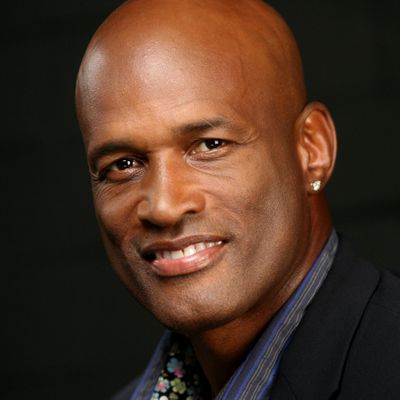
Finding the direction. Tony Award-winning director Kenny Leon speaks with & Juliet director Luke Sheppard about how they get their stories on stage.
Transcript
This transcript was automatically generated and might contain errors.
[0:00] Kenny Leon: Welcome to the & Juliet Podcast. Today, I speak with & Juliet director, Luke Sheppard, about how they get their stories on stage.
[0:11] Kenny Leon: So yeah, Luke, congratulations on the play. You know, I have to admit, I was one of those people like, okay, all right, Romeo and Juliet again. I don't know. I sat there for like three minutes and I was like, oh, yeah, right. And four minutes in, next thing I know, oh, I like what she's saying. Oh, they're pulling me in. And before intermission, I'm like, I'm hooked because it was, I felt it was fresh. With this musical, it's like it wins you over because you accomplish what you set out to do, you know, and you care about the people and you feel for the people. And it was fresh for me. So I guess my question to you is like, how did the original source material play into what you did with that show?
[1:04] Luke Sheppard: Well, first of all, Kenny, thank you so much. First of all, for taking the time today. I know you're in rehearsals for a play that you're directing yourself. And also, thank you for being so honest about your experience of the show and for your kind words. And I know people like you. I stand at the back of the auditorium and I watch those people who come in and they've got their kind of, you know, they might have their arms crossed and they're like, thanks for bringing me along, but I'm not sure it's going to be my sort of thing. And my favorite thing is to watch those shoulders drop and those arms uncross. And I like watching the little moments in the show that win different people over. So, yeah, I wish I'd been there the night you were watching it, so I could have spotted the exact moment that we won over your heart. But I really appreciate that.
[1:47] Kenny Leon: I wasn't that bad, though. I wasn't hating on it. I was just like, no, no, no. But I love one of my favorite things to do when I'm in rehearsal is to see someone else's work. And that's beautiful because you don't have any pressure. You know, it's not about me. I can look at your lighting design. I can look at the way you move the turntable. I can look at the costumes, you know. You know, it was just I love the diversity in the story as well.
[2:22] Luke Sheppard: Thank you. And I think that's I share that when we were making the show here. This is the first time I've ever directed a show in New York, let alone on Broadway.
[2:34] Kenny Leon: Really?
[2:34] Luke Sheppard: Yeah, this is my Broadway debut, but also my congratulations. It's been an amazing journey. It's fascinating watching the trajectory and the journey that this show has taken, because we all came to this because we were excited to tell this story and to celebrate this music. But more than that, we were really passionate about making it for audiences. And I think that's been our sort of driving force behind every decision we've ever made is how can this connect to the people who are coming? And I always think about when I make a piece of theatre, the people in my life. So I think about my grandmother, my mother, my sister, and now my niece. And I think about that kind of cross-generational influence and always want to make sure that the piece is reaching out to them.
And I think, you know, Shakespeare can be a big, scary concept to people. A lot of people feel like, well, hey, you know, that's a really kind of that's very highbrow culture. I never studied Shakespeare. I'm not sure it's my sort of thing. But because it's juxtaposed with pop music, which is something that's so accessible for the world, hopefully, that's kind of the secret ingredient that blend between the two forms. That means that it does reach out to those different audiences.
[3:50] Kenny Leon: I just think that people get Shakespeare wrong. I think in my mind, Shakespeare is a regular guy. He likes, I thought he always connected to the common folk. So when I see your musical, 10 minutes in, you see how it's connecting to today's people, the issues of gender identification, racial identity, racial empowerment. You know, that musical does all of that. And it does it in a fun way. So it's not like you're, you know, you're taking bad medicine. It's like, oh, it's fun. And I'm learning about my responsibility as a human being on the planet. I need to respect every difference, every racial difference, every gender difference, every, there's every difference. And I thought that you really accomplished that in a beautiful, beautiful way. And at least it worked that way for me. You know what I mean? I was like, wow, this is great.
[4:55] Luke Sheppard: I think you absolutely hit the nail on the head. Shakespeare is this kind of revered literary figure in this day and age. But actually, he was making popular work at the time. He was making these plays that were for the people that were looking at the world around him, and being brave and being playful. And so yeah, I think what we are doing, hopefully, is being in conversation with what Shakespeare would have wanted. He would absolutely be having a great time. And thank you for picking up on the inclusion of the piece. I think that's always been something that's so kind of integral to the heart of it. And that comes from the artists that we've been working with. And I'm so grateful to them.
We had an incredible company in the UK. But coming here to New York, we wanted to work with the talent here to take something we'd made, but also allow it to kind of live and breathe to be something that's very much of its own moments with its own people in this city. And working with the company has just been extraordinary in that, celebrating who they are, what they bring into the room, and the stories that they want to tell within the landscape that the show has given them.
[6:00] Kenny Leon: Yeah, that's great. I think we in the industry, we still have a long way to go still. But I think we're taking steps forward. So I like the variety of shows happening. I like the young people in the theatre, coming to see theatre, coming to listen to this wonderful music and share these great stories. And that's it, because if we don't have young audiences, then there is no future of theatre. And I think that's something that David West Read, the playwright who has written & Juliet, just does so fantastically, is it does work across generations. You have Juliet, who is young and entering into the world and discovering who she is and looking for love. But then you also have an older generation of characters in The Nurse, who is borrowed from the original Romeo and Juliet play, and her new love interest, who is looking for a second chance at love.
And it really does tell different stories across those generations, all with the same aspiration, which is about having that second chance at finding love in life and celebrating all the joy that comes with that.
[7:13] Luke Sheppard: Don't we just have the best jobs in the world? Don't you have the best job in the world?
[7:19] Kenny Leon: I do. It's also very hard sometimes, but I love it. I love it for that. And it's sitting there kind of watching the show last night. And this has been a part of my life now for sort of six years or something. And I watch it, and I'm like, gosh, all the hundreds of thousands of little decisions that have gone into this moment, you know, from choosing the words, to choosing the lights, to choosing the speakers with the team around me, and then everything that comes to kind of pull all of that together. It's yeah, it's amazing to now sit at the other end of the process, because last time I was here was for the opening night, which was a whole whirlwind in its own way, because you folks really do. You really do opening nights here.
[8:40] Luke Sheppard: That's actually my least favorite time. I never talk about this, but this is my least favorite performance is opening night. I like the weekend before opening when people have gotten on planes and buses and cars and put a pretty penny to see this show, to get a hotel room, to, you know, to be in the city. And I love watching it. I love watching the show through previews. I love sitting in the back and looking at the audience and how they lean into the show or not. I think it's also the responsibility of that as well. You know, because suddenly after that, everyone's going to come and tell you what they think of the show, the things they love about it, the things they're like, hey, just one thing.
Did you ever think about doing it this way instead? And I can take that. I can take that. It's that moment where you've promised all these people, you've said to a cast, you've said to designers, choreographers, hey, come with me. We're going to make this thing and it's going to be brilliant. And then on that night, everything kind of comes together, hopefully.
[9:02] Kenny Leon: I worked with the great August Wilson, and I remember when people would come up and say, well, you know, you know, what about this scene? And I don't know about that character. You didn't do this. You didn't do that.
[9:13] Kenny Leon: And he would turn to me and say, where were they when the page was blank? And I always think about that. It's like people always have, they give us notes, no matter who they are. You know, it's like going to a dentist and everybody in the dentist's office having notes for the dentist. You know what I mean? It's like, it doesn't happen. But in our business, everybody has an opinion, which is when I'm working during previews, I always tell my actors, do not take one note from your sister, your brother, your husband, your wife, because if everybody took one note, then it would derail the vision that Luke has laid out. Has it been hard to maintain your vision over all this time? It's that balance, isn't it?
It's about having that commitment to what you originally see in your head, but also having the space to shape it by listening to what you witness around you. And so, yeah, I think it's this show, to be honest, it's everything I imagined and so much more. A friend of mine once said, well, look, as a director, if you get kind of 80% of what's in your head on the stage, then you've done great. I think the percentage of this is maybe a little higher than that. I remember saying one day, and then Romeo is going to come in through the ceiling. And I'm pretty sure I made it as a joke. But yeah, night after night, Romeo does descend from the ceiling in a kind of flurry of pyrotechnics. And I adore it for that.
But yeah, I think what's also fascinating is revisiting a show. So we did open it in London, and then we went to Toronto, and we went to New York after that. And we could have all just said, well, look, it was great in London, let's do it again. But every night, I'd sit with our team and we'd listen and we'd go, that joke plays differently here. Or you know what, that piece of costume, there's one extra detail that we can put on it. And the show in New York actually has some sort of quite small but significant alterations to it that came from that listening process, listening to an audience. And I guess listening to the notes, whether they were asked for or not, and just going, okay, making a little bit of brain space, a little bit of headspace to go, I've got a lot to think about tomorrow.
But you know what, that little thing that you said might have a glimmer of truth in it and going and revisiting that as well. And I think that's why I adore previews. And it's really nice to hear you say that you like them too.
[12:00] Luke Sheppard: I always tell producers, I said, they said, when do you want the producer notes? I said, well, can one person represent the producer notes? And I would like my notes the morning after the third preview. It's not that I'm closed or you're closed to other opinions or other ideas. It's just that it's so much in your own head that you have to get out. So I always say, let me get out everything that's in my head. Let me give it time to work or not work. And then I'm open. How do you do that? How do you deal with the process as it comes closer and closer to opening night?
[12:20] Kenny Leon: Do you know what? I think it's that third preview thing is exactly the same for me, because you do your first preview and the last thing you can, well, the last thing you should do is sort of panic after that and go, well, that joke didn't work. Let's cut it for the second preview, because it might have just been, you know, the air conditioning turned on at that moment. And so a word was missed or, you know, there was a split focus. So I always let those first two shows just happen and then take a reading of both of them. You know, if something didn't work in both of them, we'll change it for the next day. And it's that day three where I really feel like you can get in there and start doing the work.
I try and put, you know, a proper day in the schedule where there's no show, if at all possible, because if you want to make any meaningful changes, it's so hard to do that if you know that you've got to pack all the tech desks away and you've got audiences coming in in a minute. There's something about the breadth of having a clear day where you can really move something around, change something, have the headspace to communicate that.
[13:28] Luke Sheppard: I have a question. I did a show earlier in the season. I directed a show called Top Dog, Underdog for Broadway. And it was a great experience for me because of the two actors involved. And what we did is we gave each other permission to never stop working on the play. So, for instance, even after we opened, they had permission to call me and say, hey, I'm still working through this here. What do you think? Or I could come by two weeks after the show opened and then, you know, have an opinion. Do you have that kind of relationship with some artists?
[14:01] Kenny Leon: Yeah, absolutely. And it's a big part of why I'm here at the moment. The way I think about it is never letting the ink totally dry, that there's always a little bit of room to just adjust it and to let it live and let it breathe. And when I work with actors, I talk a lot about parameters. So we're never saying it has to be absolutely the same every night, because that's not the craft. And when I meet actors and auditions, etc., you want to go on a journey with them because of what they bring into the room and their creativity and their artistry. The last thing you want to do is take all of that away by having the same show every night. What happens when the show grows in a different way? What if you had two weeks of previews? Did you ever step away and then come back and it's growing in the wrong way or someone is going the wrong way? Then, you know, is there something you can share about an experience like that?
[15:00] Luke Sheppard: Well, the actors won't mind me saying this. We, just like you did when you came into the show and you were like, OK, I want this to be great, but it is about Romeo and Juliet and it has got pop music in it. Like, is this is this going to work? Our actors all came on board hoping desperately that it would and believing that it would. And no matter how much I would tell them that I think it was going to be great, there was always that little bit of them that wouldn't know until they had an audience. And I watched them go out in front of that audience and the actors discovered it at the same time as the audience did. So when a song would start that spoke to a moment in a way that was really surprising, the audience would have this reaction and therefore the actors on stage would have that same reaction because in that moment it would suddenly all make sense.
And what that does is it creates a performance from the actors that has a certain scale to it, shall we say. And there were times during previews where the wildness of the show could overtake it. And so a lot of our work in previews was saying, hey, it has grown and it has shifted to something that's on the cusp of being out of our control and out of our parameters. So let's work together to ground this and to trust it, actually. And I think that is the secret weapon of the show, is that, yes, it's fun. Yes, it has confetti. Yes, it has pyrotechnics. But above and beyond anything else, it has to move you and it has to make you feel something.
[16:30] Kenny Leon: And my favourite moment in the show is towards the very end when William Shakespeare and his wife Anne stand on that stage and it's totally empty and there's like confetti that's fallen to the ground. But all of the sound has stopped. All of the lights have stopped moving and it's still. And the two of them talk to each other like grownups who have had their hearts broken and they have to trust the fact that it's OK to not make a joke and it's OK to not be playing to the audience, but just to be artists and actors in that moment. And I think that that came about from watching the show grow in this way that could have got out of control, but having to work really hard in previews to say, let's trust the work, let's trust each other and let's trust our audience to go there with us as well.
[17:20] Luke Sheppard: But I think that's great that you said that, because that was probably my favourite moment as well. And I think when I go into theatre, what you're looking for is an element of surprise. I'm not a big fan of, you know, this moment is going to happen and the next moment it's going to happen and I see it coming and then it comes and then it's over and then the audience gives a fake laugh or a fake applause. But with this production, that moment you're talking about, that moment, you earn that moment. You earn that moment to be quiet. You earn that moment of surprise. And that moment of surprise, I think, was a gift to a sophisticated audience. That's great. Thank you.
[18:08] Kenny Leon: Thank you to all the artists who have been part of these conversations. And thank you for listening to the & Juliet Podcast.
© Broadway Podcast Network, All Rights Reserved