

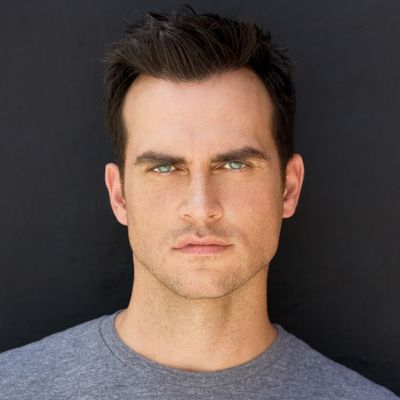
Cheyenne Jackson (American Horror Story, All Shook Up) talks about his career path from rural Washington state to Broadway and then Hollywood. Cheyenne gives his takes on how to deal with rejection, body image issues and what its like to be a leading man gay actor... Read More
From the show: Living the Dream with Rory O'Malley
Guests
Featured Shows
About
Cheyenne Jackson (American Horror Story, All Shook Up) talks about his career path from rural Washington state to Broadway and then Hollywood. Cheyenne gives his takes on how to deal with rejection, body image issues and what its like to be a leading man gay actor.
Transcript
This transcript was automatically generated and might contain errors.
[0:00] Rory O'Malley: You're listening to episode number 53 of Living the Dream with Rory O'Malley.
[0:08] Rory O'Malley: Audition, side job, swimming upstream. Believe it or not, you're living the dream.
[0:14] Rory O'Malley: Hey dreamers, Rory O'Malley here, your host. Welcome to Living the Dream. Thank you for listening. Thank you for downloading. If you like what we're doing here at Living the Dream, please subscribe, rate, and review the podcast. It just helps get the word out. We'll get more people listening. I'll get to do it more. I'd so appreciate it. And then we can talk to more guests like today's amazing guest, Cheyenne Jackson, Broadway star, TV star. He's really done it all. He is an amazing guy. I've known him for years. He's currently on American Horror Story. And I don't know, I feel like he's always doing so many things. Like he pops up on TV quite a bit. He does a ton of live performances all over the country.
He's an amazing performer. And I actually started to get to know him when he would come out for events for marriage equality in New York City. When I was working with Gavin Creel and Jenny Canellos, my buddies, and we were doing Broadway Impact, a movement to get the Broadway community involved with the fight for marriage equality for gay folks. And Cheyenne was always the first person who would show up for every event or anything that we needed. And I think that's also why I'm so glad to get to talk with him. Not just because he's had such a successful career, but he's also an out, proud, gay, married dad. He's kind of all the things that I am and that I aspire to be. And I think that that's what this podcast is about.
It's not just about having success in the business, it's about having success in life. And I think that Cheyenne has had so much success in the business, and he's really open about how he stays grounded and happy in life. And he certainly is now with his kids. If you follow him on Instagram, you know he's very, very happy with his kids. He's a great dad. I learned a lot by talking to him. And I'm really excited to get to share this conversation with you. Here is Cheyenne Jackson.
[2:30] Cheyenne Jackson: Hi.
[2:30] Rory O'Malley: Hi. Thank you so much for being on Living the Dream, Cheyenne.
[2:34] Cheyenne Jackson: I am living the dream.
[2:35] Rory O'Malley: I know you are. I can tell. It's oozing from your pores that you're constantly living the dream.
[2:41] Cheyenne Jackson: I have been such a fan of yours, and I've gotten the opportunity to work with you and do events with you and marriage equality stuff back in the day.
[2:51] Rory O'Malley: Yeah.
[2:52] Cheyenne Jackson: So it's like a long time ago now.
[2:53] Rory O'Malley: It was a long time ago.
[2:54] Cheyenne Jackson: Yeah, that's right. You were always there for us, Broadway Impact, when we were putting on events. You were like the first to always show up and always.
[3:02] Cheyenne Jackson: I've always listened. Sometimes you don't think you can do much, but if you can just like get your ass out of the door on your day off if you're in a Broadway show and you can get your get out the door and do something on a Monday night, I always would try and marriage equality. I mean, growing up where I grew up, there was a time when I thought, oh, I'll never be able to get married. So once it started to become a reality for us, it was very important. So yeah, and when we realized, oh, we have a place here to make it happen, like we have a responsibility.
[3:30] Rory O'Malley: Yeah.
[3:34] Rory O'Malley: So I'm gonna go through some of these to get us warmed up. Some of these different themes that come up a lot on Living the Dream.
[3:40] Cheyenne Jackson: Yeah.
[3:41] Rory O'Malley: How do you deal with rejection in the past, currently in this business?
[3:46] Cheyenne Jackson: Rejection is such a profound drudging day-to-day thing that you deal with. And it goes in cycles. Like sometimes I'm really good. Sometimes I'm like Jink Monsoon, just water off a duck's back, water off a duck's back. Probably the first person to ever quote Jink Monsoon on Drag Race on the podcast. But yeah, yeah. But sometimes I really surprise myself, and then I just like let it go, let it go. But sometimes there are those things that you want so bad, and you think there's no one that can do this better than me. And it's not an egocentric place of being, but truly you know, like, oh, this is my part, and you've done the work and you've prepped and you're ready and you're open to whatever may come that day, and you go in and you nail it, and everyone's clapping, and like the producers are nodding and smiling, and you're like, oh, this is totally mine, and then you find out for whatever reason, you're not the guy.
Those are the hard times, and it never, for the most part, those really, really hard ones, it never gets easier. You just have to. What has changed with me is the recovery time is easier. I can bounce back quicker. I used to, back in the day, I mean, I got started in acting pretty late. I mean, generally speaking, I was 27 when I moved to New York. But those first few big TV things that I thought, oh, this is gonna be my thing, really devastated me. And I would be in bed for a couple of days, like big screen tests where I was like, oh my god, this is my thing, and then it didn't happen. Now, it just sucks for an hour or so, and then you just kind of get over it. Once you can really realize and believe that it's nothing personal, right?
Sometimes you are the best for the part, but just somebody else has a different energy, or someone else knows someone, or Justin Timberlake decides he wants to do something. That's what happened with one of my first big actually heartbreaks. It was that movie Bad Teacher.
[6:10] Cheyenne Jackson: Oh, yeah.
[6:11] Cheyenne Jackson: And with, what's her name?
[6:13] Rory O'Malley: Cameron Diaz.
[6:14] Cheyenne Jackson: Cameron Diaz. And I was flown to LA and I had this amazing tape, and everyone was super high on me. And then they wanted to have a chemistry read with Cameron Diaz. Never told the story, so this little skip. And this was, I don't know, maybe whenever that was, eight years ago, nine years ago. I had a chemistry read with her, and I was cracking her up. And she loved that I was taller than her, and she loved that I was unknown, and she loved so much, and everybody was like, oh my god, you're the guy. And I was thinking, she left, and I was looking at myself in the mirror, going, like, is this it? Is this my thing? Oh my god. And it was so exciting, I couldn't even believe it. My manager was like, you did it, you nailed it.
You know, we're just waiting to like dot all the I's and cross the T's. And then we were supposed to hear in like an hour, and then two hours went by, and then three hours went by. I was like, what's happening? And then apparently, yeah, Justin Timberlake swooped in. Yes, and they had dated in the past or whatever. But that was a perfect example of it, didn't have anything to do with me. Like I was the best part, the guy for the part in my mind, in a lot of people's minds, but at the end of the day, he was Justin Timberlake, and who the fuck was I? So a lot of times it's like you're kind of the person who's waiting in the wings who has the job if this person who is the box office draw, quote unquote, isn't going to take it. So you kind of like did get the part and they're just waiting to see if he was gonna agree to do it or not.
[7:40] Rory O'Malley: Right, right.
[7:40] Cheyenne Jackson: And I've had a bunch of those. It all continues to happen. I had a really close call with Gaston in Beauty and the Beast.
[7:47] Rory O'Malley: Right.
[7:47] Cheyenne Jackson: Oh my god, he would have killed it.
[7:49] Rory O'Malley: I thought so.
[7:50] Cheyenne Jackson: Of course. I mean, but there are so many times where that happens where it's just, you know, into the woods. You know, big things where your family and everybody around you is like, oh, this is a no brainer, and you go in and you kill it. It just, it just.
[8:04] Rory O'Malley: That's tough with the family, isn't it?
[8:07] Cheyenne Jackson: I always think the rejection is one thing for you, but when you have to bring your family along with you, you have to take care of them, yeah, because then your mom's like, I just don't get it, you're the best one.
[8:16] Rory O'Malley: Yeah, like I know, mom, but you know, that's, yeah, tell that to.
[8:20] Cheyenne Jackson: I mean, the thing that I tell people, you know, when they're first in the business is like, don't tell your mom about every audition.
[8:26] Rory O'Malley: Oh god, talk about it.
[8:28] Cheyenne Jackson: That is true, even to this day until it is done. Yes, I don't even say like I'm up for something, or like I'm on the short list, or it's down to me and one other guy because they remember and then they bring it up and you're like, oh for months, yeah. And you know, it's not like you get a hard no sometimes. So you know, you're like, I haven't heard back. Well, maybe I just, it comes out next year. Have they seen your YouTubes?
[8:52] Rory O'Malley: Yeah, because yeah.
[8:53] Cheyenne Jackson: Because if they just saw that one where you're singing this. Have they seen you on the Tonys? You're so good on the Tonys.
[8:59] Rory O'Malley: Yeah, no, um.
[8:59] Cheyenne Jackson: So what about jealousy?
[9:02] Rory O'Malley: Yeah, it's something that you really don't talk about, but it's along the lines of rejection, yeah.
[9:08] Cheyenne Jackson: But comparing yourself to other people, let's get real about jealousy, okay. Everybody compares themselves to everybody else, and it's just a matter of how much you're gonna let that affect your day, how much time you spend on it. It's inevitable in this business to you, we all have like our five people that we're always kind of in the same group with. I can't tell you how many times I've tested for something, and I open the door and there's like the same three guys, and we're like, hi. Also friends that you've worked with, you watch them rise to heights, or you watch them get something. It hurts. You can't help but it's so natural to compare yourself to people. But again, and this is what I tell people, tell young people when they ask me, once you can get out of your head, once you can realize that your job is not to, the only job you have when you walk into the audition room is to be the best version of you.
Do not try to be what you think you think they want you to be, right? I made the mistake so many years of going in and being like, I'm not just whatever, this a lawyer or this cop or whatever, trying to cram into, you know, the peg. What's the square hole peg? Yeah, yeah, whatever. Just Sarah Jessica Parker, yeah. Square pegs. When it wasn't the right fit, but I knew that, but instead of bringing my own unique self, I tried to be like the guys I've seen on TV or use a different voice, or just something other than myself, and it's so inauthentic and it's not what they want because then it's awkward on every level.
[10:50] Rory O'Malley: Right.
[10:51] Cheyenne Jackson: But do I still get jealous? Of course. I'm a human being. Do I see my friends in something that I that I wanted or that I think, oh god, I would love the chance to do that? Absolutely. But I also, you also have to be grateful for what you have, and what I do have is I've been working nonstop since I started this business. I mean, I started acting professionally at 27, and that's all I want to do. I just want to keep working, right? Provide for my family, express myself artistically, you know. I also think it's important to know who you are and to know who you're not, if that makes sense.
[11:33] Rory O'Malley: Sure.
[11:33] Cheyenne Jackson: I think a lot of people have a different idea of who they are in the room and who they are. I know what list I'm on and I know what lists I'm not on.
[11:42] Rory O'Malley: Right.
[11:43] Cheyenne Jackson: And that's totally fine with me. I know that I get things that, you know, Neil Patrick Harris turns down or whatever in a given circumstance. So I think to be self-aware is gonna really help you.
[11:56] Rory O'Malley: What about relationships, maintaining relationships within the industry?
[12:01] Cheyenne Jackson: Well, no, in your family life.
[12:03] Rory O'Malley: Oh and how well I, the reason I bring it up is because for like Gerald and I being away for almost two years of doing Hamilton and being a part, like how the business kind of especially now is it as a dad, how do you maintain your relationships with your family and stuff?
[12:20] Cheyenne Jackson: Um, well, I mean, I didn't have kids until I was 40. Um, so and gay guys can't just accidentally get pregnant.
[12:31] Rory O'Malley: No, it takes a lot of work.
[12:34] Cheyenne Jackson: It takes a lot of money. You know I tried.
[12:34] Rory O'Malley: Okay.
[12:35] Cheyenne Jackson: Um, so I have given up and sacrificed and prioritized my family. And what that means is like on a practical level is I won't do a series that doesn't shoot here. I mean, that is my goal. If it's an amazing thing that's gonna take me away for a little bit, I'll be open to it. Right now I'm shooting a movie in Vancouver for the next two months. I'm going back and forth, but I can come back and forth, and I can bring the kids up there, and it's a finite amount of time. If I got a series that shot in Atlanta or something, I'm not even that interested because right now my kids are only gonna be this little one time.
[13:22] Cheyenne Jackson: Yeah, Jason and I are so connected and we work really hard at staying super connected. And you know, we this fall we'll been married four years, and we've only spent, I think the most is uh five days apart. Cause we try. It is so important to me to maintain all of these important relationships. My husband, my kids, my brother and sisters. So I think so many times we can get wrapped up in the next thing, and especially for younger actors. I know they can, you know, they're like, oh, worry about relationships later. Right now, for me, my family's my priority. And then I've just been lucky enough to be on stuff that shoots here.
[14:10] Rory O'Malley: What about um making your own shit, creating your own stuff?
[14:14] Cheyenne Jackson: Yeah, that's something that we all have to, we don't have to, but inevitably it's looking more likely where you really have to think of that as an option because first of all, there are so many more opportunities. There's what 500 different channels, but there's so much material out there. And there are people that will, if you have a great idea, if you have something. Well, there's just such a need for content, and it's the Yeah. Oh, what I would say is, and I'm just starting to create my own stuff. Um, and that is only you know what you do best, and only you know what you really truly want to do. I mean, there are dreams of would I love to be on VEP? Of course. Would I love to be on 30 Rock Forever?
Of course. But you know, that's not happening right now. So I want to create something that has a sensibility that I like. Um, that I've never quite, if you have a color or a side of yourself that you've never been able to show, I think the best thing to do is to explore it and and write it, or at least write a treatment write with somebody, see what there is, because you'd be surprised. I was talking to a friend the other day who she is the third thing she's pitched, and she sold something, and I had I was like, You really? No offense, but I didn't even know that you were. Yeah, and that's it's it's as simple as that. It's having an idea, believing in yourself, and what's the worst they can say? No. Right. So what?
[15:52] Cheyenne Jackson: Yeah. Uh, what about um body image? So much so many times so many times people think this is about a woman's question, you know. But I I mean, for me, I I've had so many issues with it in the past, and I think uh it's something that men need to talk about a lot more in our industry. Listen, however, you want to talk about it. I could feel I could feel I could fill an hour with this subject, but I will say I do think it is really, really important for men to talk about this. And gay men in particular, it it's the same, it's a it's it's an epidemic in the acting industry anyway. This the body obsession, the constantly comparing yourself to other people. I think Instagram, I think that is the worst Instagram instigator of it because you're looking at these perfect oftentimes, you know, photo-tuned or what it face-tuned pictures, images of guys like on the beach in Capri, like really loving my my flat tummy tee and working on my audition.
It's like really it's so damaging. We all sometimes I totally fall into an Instagram hole where I'm just like you're just looking at these people and you're comparing themselves constantly, and I'm not and I'm not so naive as to think that some people don't look at mine and and think the same kind of thing. When it comes to body though, I mean, I've had such body issues my whole life. I very, very dysmorphic. I always think I'm bigger and heavier than I than I am. Um I've constantly it's a constant struggle. I I eat when I'm stressed, I eat when I'm happy. And it's it's it's a it's a constant thing. I mean, unfortunately, being an actor, you have to really kind of keep your weight in a reasonable area.
And you know, for better or for worse, the parts that I get usually ask me to take my shirt off, especially in the last few years. And that is really hard. It's not something I've had. No, it's really hard. And like, yeah, you know, it's not like boo-hoo, but it, you know, I'm a I'm a new dad, and I already have these body issues where I I, you know, compare myself and I'm I look, I what I see is not really what is in the mirror, and I know that to be true. And that's something that I worked on for a long time with my therapist and and you know, in my personal life, but um it's a it's a whole thing, especially being a dad now. Like you're I'm feeding my kids, and there's this dil, you know, I've already had my meal, I'm like done eating for the night, I have a thing the next day or something, and like, you know, my kids are eating macaroni and it's there, and it's so hard, but it it's just the way it's the way it is.
[19:00] Rory O'Malley: Well, I think that it, you know, it's helpful for me to hear you say that. I think that it will be very helpful to a lot of other people. Um because i i look at you, I think that you I've never would have dreamed that you would have had any body issues. But I think that what you're saying is that you have a lot more pressure because no one's ever asked me to take my shirt off. I mean, the sunglasses alone, they need to from the blinding whiteness. But but um I think there is a you were talking about lists of what you know what list you're on. Yeah, I know I'm not on that list. I know I'm not on the take your shirt off list, and that's that's really kind of makes it easier for me. Yeah, I don't I know how much I know how much pressure I put on myself about my body, which is you know, it's not even that that much, but it's enough to take up too much of my brain space.
That is really what it's about. It's about I feel like when it is taking up your brain space, when your precious time during the day is is focused on food. When's my next meal? Uh how many calories are in that, uh, how much how many how many how much exercise do I have to do at the gym to counteract the thing I had there? You know, it's a whole thing. And it's listen, my weight has fluctuated over the years a good 25 pounds up and down all the time, all the time. The last four or five years, it's really evened out because you know, I got sober, I'm definitely more steady, I'm better to myself, I treat myself better. Um, I don't put myself through such extremes. But yeah, I mean, my after my first breakup, my first really hard breakup, my first boyfriend James, I got to like 250, 260, maybe for about three or four months. I wouldn't let any photos be taken. I have a couple of fat photos on my phone that I use just for like, okay, keep it together, Shane.
[20:52] Cheyenne Jackson: Well, I mean, you were you're very tall, you're a big guy, so like having any kind of mass on you is pretty easy. I could hide it pretty easy. That's like that's like me, you know. Like I know I can I can put on a lot of weight in like an instant, you know. You know, I always would get so mad when people like, oh, I had to gain weight for this part of the I know, I know I can do it by tomorrow afternoon. Oh my god, I know, I know. No, but but also people that are very, very thin and have trouble, but it it's the same kind of thing though. It it is, you know, they definitely people that are anorexic or bulimic or have you know uh they have the exact same struggles, it's just on the opposite end of the spectrum, you know. It's the constant body obsession, food obsession. And uh clearly this is something that you know I'm working on.
[21:34] Rory O'Malley: Yeah, yeah, me too. And I appreciate your. I wish more people would talk about it because it's listen, we all eat and and uh actors especially. I mean, we're all so vain. We it it's just the nature of this industry, and well, it's the more honest people get, the less pain we'll all have.
[21:53] Cheyenne Jackson: I agree. And I think that in an industry where you have so little control, the food thing is really about control. For sure. And it's the one thing that you know, and when I think I didn't get a job, I don't usually go to, oh, I wasn't talented enough. I think they wanted some guy with abs. You know, they wanted some, you know, I think, oh, I probably shouldn't have, you know, eaten that much food this month or something because it's the one thing that I know I have control over. And so it that's where it's my fault. I get it. You know, everything else you feel it's out of your hands so it's totally get it. It's a lot about control. Uh we touched a little bit about this uh when you're talking about Instagram, but social media in terms of now that it's such an important or not, if you maybe you don't think that it is, but it's a part of the business that we didn't grow up with.
[22:42] Rory O'Malley: Right. What do you think the benefits of it are? Do you think it's the devil? What are your thoughts on it?
[22:47] Cheyenne Jackson: I have a love-hate relationship with Instagram. I mostly love it because I think you can you can use it to your advantage. And also you can I find it a a really nice way to connect with people. Yeah. Even if it's only on my end, I still I you know, people that I haven't seen in years, I feel like I know what's going on in their lives because I saw pictures of their daughter's nine nine-year-old birthday. I I was I felt like I was at her opening night in New York. So, in that respect, I think it's brilliant. I love sharing my life with people. Um, I have a I we really gone around and around like how much of our kids and our life we're gonna continue to show. But really, we Jason and I are so there's so much love coming from these two little kids in our house that it's almost too much.
And I know this sounds like silly or trite or whatever, but fuck it. It's actually true. We sit there and we're like, it's almost too much for us to take. And you we have to like like a piece of tupper, like a tupperware, we gotta like burp it and let some of that out. And what that means is sharing like a funny thing or a funny, like I did an Instagram filter picture of my daughter last night, and she looks like a you know a 50-year-old French singer. I can't even deal with how funny and cute it is. So how am I I have to share that shit?
[24:07] Rory O'Malley: Yeah.
[24:08] Cheyenne Jackson: Um, with in terms of the industry, I mean, listen, I you would be naive to say that two equally talented actors who both came up through great acting schools, one of them is on social media and one of and has three million followers and one of them isn't. The one that has the followers is probably gonna get the part because that's part of the deal. Future employers it make no bones about that. They want people to help sell their movie. Yeah, and this new project I'm working on, I they're gonna announce it soon. Um I can't see what it is yet, but it has really big young stars in it, and they have you know millions and millions of followers, and there is a whole it's a whole machine, and they are um expected to do their part in promotion, and it's just all part of the deal.
So love it or hate it, it's just it is what it is. It's a part of what we do now. And you have the choice to you know be a twit and just post constant no judgments, but kinda like stupid pictures of yourself, like you know, fake reading or you know, abs or whatever. Yeah, it's like completely curated. But you know, I have we all have the accounts that we that we like hate watch. Yes, it's like yes, you gotta see what so and so is doing today, yeah. Like, you know, let's be real. Yeah, I I end up being uh, you know, trying to be as as silly about it and you know, as I can be, but you know, at the end of the day, you are like I don't do it for my my uh you know close family. I know I'm putting it out there for everyone to see, so you do put a lot of thought into what you're doing.
So you can't, you know. I'm not doing a photo shoot to do it. I've also seen people use it really savvy. Is that a word savvy? Uh-huh. Um, and that is uh if they want to be seen in a more comedic light, or they want to show people that they have this other side, whatever that may be, uh, really foster that side and then have things come from that. Oh, I didn't know you were funny, or I didn't know you could sing, or I didn't know whatever.
[26:17] Rory O'Malley: Right.
[26:18] Cheyenne Jackson: So, you know, it's it's definitely a venue to showcase yourself in exactly the way you want to. But just be cool. Don't be all cool.
[26:44] Cheyenne Jackson: Uh, I've had really great management and agents over the years. I've bounced around a little bit. You it it is kind of like a blind date, uh, sometimes a seven or eight-year blind date to where you you're figuring out this is gonna be a long-term thing. Um, sometimes somebody can, you know, shit goes down and and people don't tell the truth and you get hurt feelings or whatever, you know, relationships come to an end. So you you know, it you'd be hard-pressed to find anybody who's still with their original people. I think the most important thing when you're looking for an agent or a manager is to find somebody that is truly a fan of yours. Like they gotta know what you do, yeah. Not just like look at your IMDB and think like, oh, you've done this and this, or it they need to have seen you in something, they need to get it, and they need to go to bat for you because this town is full of talented, amazing people, hundreds and thousands of them.
Yeah, what is gonna set you apart? We all all of our agents have access to the same material. You need somebody who is gonna be totally a bulldog, but also gracious and kind and savvy, and people want to take their call, but also somebody who is tenacious and relentless and is a cool person. Yeah, you know, I have a great manager right now. Uh, we've been together about a year and a half, um, and it's it's awesome. He really truly gets what I do. And uh yeah, I think that's the most important thing. They need to be like a super fan of yours. When you find it, you know it because you kind of go through. I mean, at least I did, you know, I feel really great now, but you've definitely go through years where you're like, this person just was seeing if I would like stick to the throwing something and see if it would stick.
[28:38] Rory O'Malley: Exactly.
[28:39] Cheyenne Jackson: And not really caring how to develop me or help me get to this next place. Um, what about education? You said you started as as an actor at 27.
[28:46] Rory O'Malley: Yeah.
[28:48] Cheyenne Jackson: What was your I mean, we're gonna go into your full story in a second, but we're did you go to school for acting or no?
[28:56] Cheyenne Jackson: I didn't go to school for acting. I mean, I worked in theater off and on, like community theater all through, you know, from 19 until 27. I got my equity card in Seattle and I did some shows of Civic Light Opera. Um, I I grew up where I grew up outside of Spokane, Washington.
[29:13] Rory O'Malley: Oh, okay.
[29:13] Cheyenne Jackson: Yeah, I thought maybe you were a Southern guy actually.
[29:15] Rory O'Malley: Oh, yeah, no.
[29:16] Cheyenne Jackson: Um but I did, you know, I did lots of shows at this as uh Civic Light Opera and the Village Theater, but that was just for fun. That wasn't like my job. You could never live off that.
[29:28] Rory O'Malley: Right.
[29:29] Cheyenne Jackson: So you weren't you were your education was in those theaters.
[29:32] Rory O'Malley: Yes.
[29:33] Cheyenne Jackson: I didn't go to school, but I have always been a student. I love to learn, I love to watch, I love to absorb, I love to mimic. I love to take something that that oh that I think that might work for me.
[29:49] Rory O'Malley: Right.
[29:49] Cheyenne Jackson: Um, I remember my first few per my first few shows when I just had like a teeny little part. I would everybody else would be downstairs like playing spin the bottle and doing crazy shit, and I would be sitting in the wings and watching, watching the leads, watching them do their work, and it was amazing to me that that they could just command such performances. They they would it was astonishing. And that was so that was yeah, definitely that's where I got my first bit of education until I moved to New York, and then I you know, yeah, did it right.
[30:22] Rory O'Malley: And then you just worked nonstop.
[30:24] Cheyenne Jackson: But I think that a lot of people who don't come from those, you know, pre-packaged uh you know acting schools like I went to have such a continue to learn in a way that we don't. I think that because when when you get out of a four-year program, all you want to do is tell everyone to fuck off and leave you alone.
[30:48] Rory O'Malley: Oh, really?
[30:49] Cheyenne Jackson: You're like you've been told what you're doing wrong for four years. Wow, you've been told like what you can and can't do, and you know, it's I remember thinking I'm not going to another acting class as long as I live. I'm not gonna have anyone tell me what I can and can't do, and kind of you know, with a chip on my shoulder, I I really enjoyed my four years, but it wasn't like get me back into a classroom. And I think that there are people who didn't go to those, you know, highly concentrated four year programs who are just like always like you, always are looking for new ways to learn, new people to f to to have mentor them, or you know, I I think that um it can also be like a different four year program that isn't a conservatory. I've met a lot of people who've done those who it's it's really great, it really works better for them.
[31:39] Rory O'Malley: Yeah, but I think you're right.
[31:41] Cheyenne Jackson: I've I've also met a lot of people who definitely feel whether it's coming out of Juilliard or you know, Michigan or whatever, um, they definitely there is a a vibe, yeah, and you can feel like the tension and um yeah, I the I think the most important thing if you've not been educated, and this was a big speaking of chips on your shoulder, this was one on my shoulder. I thought this is one of the reasons I didn't move to New York right away because I thought, how am I gonna be able to compete with everyone who went to Juilliard and I went to nowhere? Yeah, and um that is I I the most important thing is to be coachable, and one you know one thing you can say about me is that I'm very coachable. I I will take what you give me and try to learn from it. And so um, whether it's I mean, I I I think it's really important to be able to know how you are viewed and how you're doing.
[32:38] Rory O'Malley: Right.
[32:38] Cheyenne Jackson: And so when I first started in in in New York and I first started in shows, I really kind of wanted to get some feedback, whether it be from my agents, from like I used to like obsessively look at, you know, remember Broadway World message boards and things, horrible ended up being like very, very, okay, yeah. But you know what I mean? Like, I think it's important to to uh take the temperature and fee and see like kind of how you're doing, how else will you know otherwise?
[33:07] Rory O'Malley: Of course, you know, so and then when I got into uh doing television and stuff, I just my very first TV was on 30 Rock, and so I'm learning from Alec Baldwin. And if he's gonna give me a note, I'm gonna fucking take it.
[33:19] Rory O'Malley: Right.
[33:20] Cheyenne Jackson: If he's gonna say, You're in my light, move to the left, yeah, I'm gonna move to the left. Yeah, and if Tina Faye says, say that faster, and and take all the sing song out of your voice and say it flatter. It's gonna be funnier. I'm not gonna say, but why? I'm gonna be like, okay, Tina Faye, you know what you're doing. That is how I think what you what a lot of people they come to projects with a sense of entitlement or uh ego. You let that go and just be and have fun and be and learn that is is what I try to take into every new job because otherwise, I don't know. I had somebody I worked with once that said it's called a play, it's not called a work.
[33:59] Rory O'Malley: Right.
[33:59] Cheyenne Jackson: So well, I mean that's that's what I mean. I think that that is something that is probably easier for you to do because you didn't come out of this maybe standard four-year education. I think a lot, I mean, I think I do that, but I think it it's it is an ego thing where you're like, but I was taught how to do this. I should know. And it's all it's also like you feel if somebody gives you a note who's good that you're thinking, oh, are they telling me I'm bad? Right. No, they're telling you how to be a part of this thing that you're in that moment. How would you know you just got there? Yeah. So like just do it. Be open, be coachable. You're gonna be so much happier.
[34:37] Rory O'Malley: Yes.
[34:37] Cheyenne Jackson: Um, okay, we've got two more subjects, then we're gonna move on to your story. Um, side jobs. So when you're doing all those jobs in Seattle, those theater jobs, yeah, um, how did you make ends meet?
[34:49] Cheyenne Jackson: Um, so many different things. And Spokane, when I first started doing theater, I worked at a health club for three years called Stay Fit with No Why. Oh. I hate when things are misspelled, like car wash with a K.
[35:03] Rory O'Malley: Right.
[35:04] Cheyenne Jackson: Um, and I worked in the child care, actually. I ran the child care department. And they often people would think they'd show up and they'd think I was a trainer, and I was like, nope. Uh give me your baby, please. Um, so I did that, and then I worked, oh god, it's all kind of I was a waiter, of course, uh, bus boy, I worked at restaurants, I worked at a bingo hall once uh in Seattle. I worked um at a bank. I worked at banks a lot. I don't know why. It was just easy. I can count really fast and I was chatty and it was just seemed to be easy. And then uh my last job job was at a place called For Rent Magazine. It's like one of those free periodicals that you see the front of grocery stores when you're looking for an apartment.
Yeah. So I sold ads to those, and it was really lucrative and really easy. Uh all I had to do was just show up to the properties and you know, be nice, and they would just continue to buy the ads every month, and I could be free to fuck around. I ended up getting fired though, because I fucked around too much back in the day. But um, yeah, I just not a good side job if you don't get fired.
[36:11] Rory O'Malley: No, true.
[36:12] Cheyenne Jackson: True. You gotta go out and apply that was rough. Um, this one's specific to performing on Broadway.
[36:18] Rory O'Malley: Yeah.
[36:18] Cheyenne Jackson: How do you deal with the repetition? I think that uh you know that's the one thing you can't learn before you're in a Broadway show, is doing the same thing hundreds of times.
[36:26] Rory O'Malley: Oh my god.
[36:28] Cheyenne Jackson: It's hard. I get so sick of doing the same show. And I could not be like that dude that's been in Phantom of the Opera for 30 years.
[36:38] Rory O'Malley: Yeah.
[36:38] Cheyenne Jackson: Um, you know, there's tricks that we all do, you know. Just remember, think of it's it's that little girl's first Brady show she's ever seen. And if that only gets you through, like uh okay, I can do that for a couple more dozen. Yeah. Um, really, it is a practice, and you have to give yourself over to the experience and truly be grateful that you have this job, be grateful that there are tons of people in the theater, and shut up and do it. You're never gonna always be happy. It isn't always gonna be amazing and joyous. I mean, unless you're in Hello Dolly right now. But apart from like a few shows, it's a grind. Yeah, people may not want to hear that, but it is true. Even even the biggest hits, it's still like, oh my god, I gotta do this again tonight, and seven more times this week.
Yeah, people don't realize the energy that it takes. You are absolutely fried at the end. So I mean, from just trying to be super professional, take care of your voice, take care of your body, all the way to the unprofessional, which is like playing games on stage to keep yourself happy and like you know, passing notes and like pinching each other, whatever. You just do what you gotta do.
[37:50] Rory O'Malley: You do what you gotta do.
[37:52] Cheyenne Jackson: You grew up in Spokane.
[37:53] Rory O'Malley: I grew up how far is that from I grew up outside, I was born in Spokane, but I grew up in Newport, Washington, slash Old Town, Idaho. Literally, uh the rip the Ponderay River ran through these two little towns.
[38:06] Cheyenne Jackson: That makes so much sense to me.
[38:09] Rory O'Malley: 1200 people in both of the towns combined, one little blinking red light. I mean, it was just there's nothing there. It's absolutely beautiful, God's country, as they say. Um, but it was you know, there was nothing around. Nothing around it, Spokane was an hour away, Cordelaine was 45 minutes away, and those are the two biggest towns around. Seattle was a good five and a half, six hours away. And you know, it was very, very conservative. There was the Aryan Nation compound, not too far away.
[38:43] Cheyenne Jackson: Okay.
[38:44] Rory O'Malley: Um, all white. We had one black family in our town. And it was just very uh, you know, my parents, we lived out in the woods. Uh, we lived on 40 acres. Um, and we for a big period of my childhood, we didn't have running water or and we used an outhouse. And you know, we had goats. We had two goats named Harmony and Melody. Wow. And it was just, you know, as a kid, even though we were so poor, um, my parents did such a great job of never I never wanted for anything. I had a beautiful, amazing childhood, all happy memories, running around singing, playing, using my imagination. It was great. Um, it wasn't until I got a little older and I saw other kids that, oh, wait, they have more, and you know, and then I started to feel, but I really give credit to my parents for like not, you know, we never felt I never felt like I was missing anything.
Um, what I did miss out on though was a lot of pop culture, just because not only did we not have a TV for a bit, but also um we were my parents are very Christian, and so I wasn't allowed to listen to a lot of secular music, is what the church called it. Yeah, like anything that's not like Amy Grant and Michael Debbie Smith and yeah, Petra DeGarmonke.
[40:06] Cheyenne Jackson: Um so that's how I grew up. I grew up uh, you know, I would go to yard sales and buy albums of Billy Holiday and Lena Horn and Sarah Vaughn and Ella Fitzgerald, and I knew what jazz music was, and my mom always had music playing in the house. So music was the thing that kind of was my thing. I always sang at an early age. That was the thing that people always really uh marveled about when it came to me. So I thought I think that's gonna be my thing. And then in eighth grade, um, our French teacher, Mrs. Henry, she was known as the culture lady because she'd been to Seattle. She said, You guys, there's this show, and it's coming to Spokane, Washington, and it's called Les Miserabolis, and you're all going.
And we were so excited because we had to sign parent-teacher consent forms because there were prostitutes in it because we felt so bad. So here I go and I'm sitting in the audience at the Spokane Opera House watching Les Miz. And I just my mind was blown that that that was their job that people got to do this show and travel around, and that was the first seed that I thought, okay, that I don't know how I'll do it, but that's how I want where I want to end up. Um, and then you know, most people in our little town ended up just staying there or you know, working at the mill or getting married and having lots and lots of kids, and I just wanted to get as far away from that town as possible, if I'm being frank.
You know, it was hard being gay, it was hard, and you know, the church really kind of rejected me for a while because of being gay, yeah. And when did you come out like 19. Wow, yeah. And for back in the day, you know, I'm 42. Back in the day, 19 was still pretty young. It wasn't like you know, nowadays when there's like 12 and 13 year olds in school or 10-year-olds, you know. It's uh thankfully things have changed, but uh it was still pretty shocking, and it was tough for my family at first, but then they fully came around. It just uh took us all a while to take a little sabbatical. And then um I moved to Seattle, I met a boy and uh moved to end up moving to Seattle. Started doing theater, community theater, and then um up until I was 23, 24, still just working, still doing theater, honing my craft, unbeknownst to me.
I didn't really know that I was like building this resume, building this confidence that would end up taking me to New York, but it was just it was my way of surviving. It was also my way of expressing myself. I could I was I always had been able to sing very low and sing very high, so I could play like low baritone roles, and I could also sing, you know, hair, you know, high, high tenor stuff. So I got to do all kinds of great stuff in Seattle and really, you know, experiment. And then I did a production of Prince and the Pauper. It was this, it was this like original show that came to Seattle and also did a little stint at the Ordway in um Minnesota. I think it was Minnesota, it must be. And Mark Kutish was the lead, and they cast the locals as understudies.
Right. And he I remember in the first rehearsal, um, he looked across from me and he was like, dude, you're my understudy, right? I mean, obviously. It's a good market. Yeah, I am. Um, we became friends. I just a lot of people thought him very bombastic and crazy. I totally just loved him. I thought he was had a heart of gold. He's a huge character and like Broadway legend, he's done a ton. He multiple Tony Award nominee, amazing, wonderful comedic actor. Yeah, I would say a comedic genius. He can wring laughs out of shit. Anyway, um, he said, you know, you really have something. And, you know, I've lived and worked in New York for years. And if you ever come to New York, I'll hook you up with my agents.
And there was something about him that I knew he didn't want anything from me. Right. I knew that there was no kind of weird angle. And I just bought it. I just bought it. And I thought, great, okay, if that ever happens. And then a couple years passed, I was still, I was like 26 and then 27. Um, two things happened in my life that just I knew it was time. Um, my brother's little girl was three, and she died. And um 9-11, right, which changed everybody's lives, you know, as we know it. And TikTok. I just felt I felt like it was time. I felt like it's now or never. I'm not getting any younger. Already I'm gonna be competing with 19-year-olds. Um, but I just it was the bravest thing I've ever done.
I moved to New York. Um, I was in a relationship at the time. Uh now my ex-husband, we were together for 13 years. We met in Seattle, and he was wonderful and and uh supportive. And he's like, go to New York, you know, figure it out, and then I'll I'll follow you later. And I did. I moved to New York and I called Mark Kudish up and said, I'm here. And he said, Well, don't retire. And he gave me his, he gave me his agent's number, and uh it was for uh Mark Redante. Oh yeah at Bauman Redante and Shaw. Yes. And I went in and I sang and I read some scenes, and they were like, You're hired. Oh my god. So they signed me. I love this story, and I hate it too. We have to remember, I grew up with no running water.
So I paid my dues. I paid my dues in another video. I love it. I love it. Um so that I thought, oh, that's how it works. You just go, and at that, I hadn't even I didn't even have pictures yet. So I went out and got pictures taken that day as well. Wow. Um then my first audition that they sent me out on was for Thoroughly Modern Millie, and they were looking for somebody who could cover Mark Kutish and Gavin Creel. You needed to be able to sing low, and you needed to be able to sing high, and you need to kind of look old and kind of look young. Yeah, and that's always where I've lived. Yeah. Um, and there was a Patter song, and I've always been able to like gesticulate really quickly. It's just the weird thing I can do.
It was a perfect storm of timing. I came in, guns ablazin. I've probably never had an audition that good since, only because I just I had so much confidence. Yeah, I just thought I'm here, and you're hiring me. And that's I think that is half the battle. You believing that it's gonna happen. Yeah, I just was manifesting my ass off. Yeah, I walked into the room. I remember uh Michael Mayer was like, Cheyenne Jackson, like is that your real name type of thing that was the you know, and I was like, Yeah, it's my real name. I was named after a TV show in 1960. Um, and I sang and I I could tell they were like kind of thrown off like who is this person? Yeah, um, but I nailed it, I absolutely nailed it.
And I had listened to the cast recording. They had just won the Tony, right? And it was the hottest show, and I was gonna be the first replacement, so it was like a hotly little contested part. And uh they had me sing Gavin's song, and then we had me sing Mark's Patterson song, and then it came time to the dancing. So I'm not a dancer. Same. But I always get you. I've been in a lot of shows in Seattle where I could fake it. I just look at my upper half of my body, just don't look at my feet. I can sell the shit out of it. But this was tap and I didn't know how to tap. But I knew that this part was mine. So Michael, what was his name? Oh my god, I can't believe I can't remember the choreographer now.
He's a huge guy. It wasn't it wasn't Casey, was Casey Nicolai. Casey was in it. Casey was the dance guy. Who's the fucking choreographer? He's a huge director now. Anyway, it'll come to me. Um they broke us, it was down to me and two other guys, and uh they said he did a simple time step. And I when it came to me, I just said, I just threw up my arms. I'm like, listen, I don't tap, but if you hire me, I will learn. I promise. And it came right into my ear and he said, You better. And they hired me. Wow. And I uh I had one final audition where I had to go to the theater that night where they were, they had it was a Tuesday night and they had a show, and Gavin tells me this story later. He said, I'm Gavin says, I show up to the theater and I'm I'm warming up in my dressing room, and then I hear through the wall somebody else singing my song.
Like a little louder than I sing. Yeah, yeah. And um, it was just funny because yeah, I uh and then Mark Kutish comes barreling down the, he's like, What are you doing here? I'm like, I I'm I'm gonna be your understudy, and he had no idea. He didn't set anything up, it was just happened to be one of those things, and it was the most beautiful time to be working in New York. I was taking dance classes at Broadway Dance Center with like five-year old girls. I totally did the same thing for Mormon. When they were like, Oh, it's a tap number, I was like, Oh, great! Yes. Bloody feet. I mean, it was, I was, it was no flexibility in my ankles. I couldn't make the sounds, but I was enough to where they could put me in the back and I didn't embarrass myself.
Yeah. I let Noah Racy and Casey do all the stuff. Yeah, yeah. Um, and it was amazing. And Gavin immediately got Eloise at the plaza. This like did this TV movie. Yeah. And I was on for him for two and a half weeks. Wow. Opposite Sutton Foster right away. Oh my God. Off opposite her, who just won the Tony. And then Gat, and then Mark got a gig at the opera. And then I was on for him. I mean, it was talk about an education, you know, of not having a formal education and then getting to learn from all these people in their prime in that moment, you know, which you were old enough to understand where you were. Right. Because you weren't 22. Right. You had already experienced life. Right. So you got it.
You were like, this is not normal. Right. Which I think is very a difficult thing for people who are 22 and get their big break. Right. It's hard to know that this is not normal. I had perspective, and I also knew that I had to fake it until I made it. And I thought, as my as my opening night when I was going on for Mark, and he had this big the turntable turns around and he's sitting behind a desk with his feet up on the desk. I had this out-of-body experience. My nobody was even in New York for my Robert Debbie. I was here. I was by myself. Oh my god. Nobody was there yet. Yeah. Um, it just that I like kind of rose out from of over my body, and I the thing was turning, and I was like, I am on Broadway.
I'm about to like say John or whatever the opening line was. And it was magic. And then I thought, okay, this is what I want to do forever. And I did. Not forever, but about 13 years. Yeah. Until it the HOE grind. Yeah. I mean, from that point on, you went into all shook up after that, or no? I did. So I was gonna actually continue with I wanted to be ther do Thoroughly Modern Really until it closed, but um, they had out they had said I was gonna play uh replace Gavin. Um, some insider scoop, but it's been enough years, I can say it. Yeah, yeah, yeah. Um, they said I was gonna replace Gavin, and that's what I was told. And then um I heard through the grapevine that Christian Borrell was coming in.
Uh and um it was just too hard for me to be to be frank. I was it my heart was broken, and I was like, they told me I was gonna be ha have it. And I love Christian, he's so talented and amazing, but it was my time, and everyone's like, you're nuts, you don't leave a hit, right? But in my heart, I just knew that I wouldn't be able to have the attitude I had before if my heart was broken, and also I just it just felt like it was time to move on. So I left, and then I got into Aida right after that. Oh, under studying um Will Chase and then or standing by for Will Chase and then standing by for Adam Pascal. Ah, so another you know huge show and learning from yeah, totally a totally different thing, uh like a rock show, yeah, different skill set and a whole different vocally.
Your career has been so different from like all that to like Finnyan's Rainbow. I mean, how different can that be from all of your other stuff? Is it is that because you do you think from your upbringing and like all the music that you came to without question, yeah, without question because I didn't have voice lessons, I just learned to mimic people, yeah, whether it be John Wright or Freddie Mercury, right? I just wanted to have flexibility, and I wanted to be able to. I was doing a production of children of Eden in Seattle, and I was playing Kane, and I had that super high, you know, Lost in the Wilderness song. And somebody told me, the music director said, Um, you have a really great mix.
If you can really hone in on that mix and make it feel like a belt, that maybe that it's gonna really help you. And I took that to heart and I practiced, and I would warm up all the way, you know, head voice, and then take it as low as I could to where you're still in head voice and strengthen that so it wasn't like you know, you have you heard guys that don't have that area, and it's kind of you know, weak, and I wanted that to be like the chewy, strident part of my voice, and that has ended up being, you know, arguably, you know, Xanadu and all shook up.
[53:30] Cheyenne Jackson: It just lived up there, yeah. So, and that wasn't a belt, but that was kind of that's I think another thing is being coachable. Somebody told me one thing, and I thought, Oh, I'll do that because you seem like you know what you're talking about, right? And then and you have the ability to trust them and not have that ego. I think that's I think it's really key. I mean, listen, don't get me wrong. No, I have a huge ego, and I'm just but but it's but it's just because you showed up to New York like a sponge, where some of us had already been soaking in water, you know? Like we were just like, uh, you know, like I just let me work now. I've had enough of this learning bullshit, and that's not how you should be working.
You need to constantly be soaking in everything because everything is a new experience. Yes, I was doing Damn Yankees in New York with Sean Hayes and Jane Krakowski. Tina Fey came and saw me, uh, them in the play. Right. Asked to meet me afterwards, and I was just blown away. And she said, Um, I really like your big Midwestern face and and your timing. It's very specific and very Tina. And she said, I have this part on 30 Rock. I'd want to gauge your interest. Gauge your interest. Gauge my interest. Um yeah, so that's how 30 Rock started and television started. And then I fell in love with that. But also I realized that making the transition from stay from stage to film is not easy. Yeah. And I took some classes.
I took Bob Krakauer's on-camera class and I watched my first couple tapes and I looked like a crazy man. Really? I have very a very uh animated face. My eyebrows go crazy when I talk. And I here I thought I was doing this great dramatic scene with this girl, and I looked like I was on crack. Really? I was just so big, so all over the place, not connected, not thinking about anything, and I had to learn how to calibrate. It's a it's a specific skill that people act like you're just supposed to know going from stage to camera, what it is, but it's it's it's a different medium. It's a different art. It absolutely is. So you have to kind of respect it in that way.
[55:38] Rory O'Malley: Yes. But y what I the first thing I saw you do, I don't think if it was 30 Rock was um United 93.
[55:44] Cheyenne Jackson: Oh yeah. Which you were I mean, talk about it like that was a beautiful performance. You were in in a very ensemble movie, you were carrying so much of that. I mean, it was a an amazing part. Thank you. And you were fantastic in it. What did that feel like making that? Especially since you said 9-11 was something that kind of motivated you to finally move to New York.
[56:06] Cheyenne Jackson: Well, it was definitely one of those things I thought, oh, this is a sign. I mean, it it was such a a pivotal moment in my own life. And I so many people moved out of New York after it happened. I moved to New York. Right. And then I had my very first film was this feature with Paul Greengrass in this big like Oscar caliber type movie. To not just learn everything I could about him and talk to the family and do all the stuff that actors do, but just allow myself to go there and to feel those feelings and be free. And you know, it's a harrowing, unreal, unimaginable nightmare that those people lived through. But um it was a it was an amazing experience to make that. And I did learn uh a lot of amazing actors in that film.
I learned how to um really let myself go there, let myself go to places that I didn't think I would be able to, especially on camera, especially if somebody, you know, with the camera right in your face. And I've tried to carry that into everything I'm doing if it's um if it's something that's really uncomfortable for me. When I joined American Horror Story four years ago, I'm just getting ready to do my fourth season. I can't believe that. Wow. I know. Um, I thought, no way. Yeah, you know, I'd worked with Ryan on Glee. He had hired me for this pilot on HBO that didn't work out. I just thought, really? Me on a horror story? I mean, it I just I'd come from so much comedy, and and I just thought, how am I gonna be able to sit across from Sarah Paulson or Kathy Bates and not feel like I'm in a sketch?
You know, yeah, but fortunately they are all such craftsmen, and I hate when people talk about acting very like actor studio-y, but it really is. They are they respect it so much. And Kathy Bates, I mean, honestly, her monologue in Primary Colors about reflected light of the moon. Yes. I mean, I cry thinking about it. It's one of those one of the things that made me want to be an actor. I thought the power of those words combined with the power, the humanity that she's bringing in this moment is having this effect on me through the TV. It's an amazing thing. That and Fried Green Tomatoes, I mean, come on. Oh my god. Kathy's actually. I just watched that the whole thing the other day. That's one of those movies. Anytime it's on, no matter where it is, stop it. What you're doing. Turn your phone off and hunker down. Okay, respect.
[58:50] Cheyenne Jackson: Oh my god. I can I can imagine that like being across from Kathy Bates, one of the greatest actresses of all time, it's gotta be scary. But it's also like you are you are an experienced actor, you've been through all that. I'm sure like you bring a lot to them, especially being a Broadway person. I think that people on set have some respect for Broadway. It's taken me a while to get to the point where I own it and also um definitely um acknowledge that there is um not just an honor, but there is a respect that comes with being on Broadway. And it it it is it's it's uh it's like a fraternity that you'll always be a part of. And when people find out that you've done Broadway many shows and it was a huge part of your life, there is definitely something that uh you're kind of you automatically get you automatically get uh I don't know, what's the word?
Some credit. Yeah, it's just it's just wow, yeah. You what walking in the door already, you you you can get out of your way a little bit more. And yeah, in the second season of Horror Story, I had this uh I played this crazy uh reality show producer who would stop at nothing for the for the story, and it was really fun. And I had to, I had a three-page scene with Kathy Bates where I had to make her break down, like just hammer at her. And she, I was so nervous for this, but I was so prepared for anything that would happen. I also am really big on preparation, and that's one of the things I learned from Sarah Paulson, who is so prepared. She has binders, she has notes, she knows exactly where her character is emotionally in every second, and then she's so prepared, then when it comes in the moment, she can free herself up from all that head stuff and just let herself live within the confines of that scene.
And it's amazing to witness. And Kathy's the same way. And I knew going into this that I had to do the same thing, and I've I love to be prepared. I love to not have to ever ask for line and just be in it. So you don't have to think about your words. Yeah, Kathy, every single, and also Angela Bassett was directing the episode. It was pretty amazing. Wow. Um, Kathy, every single take was so alive, yeah, so different. It was like she was thinking of the words for the first time. And I know that sounds stupid and obvious because that's what the acting is supposed to be, but it ain't always like that. Oftentimes you're just you you hear the words, you know, you've done the scene 20 times, but every time she would come with a different color and a different intent, and that forces you, if you're listening, to bring something else, and it was so thrilling.
And afterwards, I hugged her, and I said, You don't know what this made to be. She was so sweet. I mean, I can't even imagine when you when you watch an actress like that or an actor, like you know, you just get to see the one the best take. But to be filming with them and to see all the takes and the the journey of because that's really the actors' art part the responsibility of the medium, it's coming up with all the different ways the line can be said, or the way that the story can be told watching Sarah, yeah.
[1:02:07] Cheyenne Jackson: Like she finds Sarah becoming a movie star. I feel like it's happening to me. Yeah, and what I mean by that is it's like for the first time, I ain't jealous. Like if there's anybody in the world that should be a movie star, yeah, it's Sarah Paulson. Sure, like watching her last year during during Cult, all my shit was with her. I was her therapist. So watching her go through these this range of emotion, these this absolute depths of her guts. If it if it ain't real, she's stopping it right there. She's like, That sucked. She just like is she's has such control of her instrument. I hate saying that, but that is what it is. Yeah, she has such control of that. She's so facile that it's so thrilling, and not just to me, and all the cameramen, everybody is just like watching it happen, right? So cool, yeah. And you know when you can impress cameramen or make them laugh, or like you're like, Oh, this must be working out. It's so because they've seen it all, yeah, you know, it's so good.
[1:03:09] Rory O'Malley: Um, so a lot of your story involves two, well, three cities, but New York and Los Angeles. And a lot of a lot of what we do makes us decide on those two cities a lot, you know. And obviously for us, it's like stage and TV and film. But what about the cities themselves? Um, New York was uh some uh a city that you moved to and you when you said you had to Los Angeles was a city that you moved to maybe because it had the kind of work that you wanted to do. But how do you how did you make that decision to kind of land here in Los Angeles?
[1:03:46] Cheyenne Jackson: It happened very naturally. I mean, I thought I would be a uh forever New York guy, right? Because it I finally, when I got here, I just thought, oh, this is this is where I belong. Yeah. The the energy, the the drive, the the bustle, uh, all of that, all of that that that drove me and fueled me for so long. I started to feel like it drained me, and I felt like it was kind of an assault every time it probably it didn't help that I lived right in Hell's Kitchen, and so as soon as you go out your door, you're just inundated with the humanity for like nine years. The Thai food mixed with the diarrhea, mixed with the dog shit, mixed with the beautiful perfume smell. Sometimes it's like enough, and that's just 44th divorce.
Um really it just was time. I was there for 13 years. Um, I I had lived my Broadway dream up to that point. There's another Broadway chapter later in my life, I don't know when. Um, but I had done nine television pilots in nine years. What? None had ever gone. It was always nine. Yeah. Wow, I didn't know that. Yeah, yeah. Yeah. And uh the the ninth one uh was this last was uh American Woman that oh that airs in like three weeks. It was the first one I did actually went. Oh, really? Yes. You keep you got, I mean, it's just that's how it goes. You just go and you go and you go. Um, but I was there, I was shooting a pilot. This is about five and a half years ago, and um it was just time. My uh my marriage was coming to an end.
I was getting sober. There were so many life changes happening in me personally, and also my mom and dad had both moved to Southern California, that's where they were from originally. Oh, and they had migrated back or emigrated back or whatever. Um my brother lives here, he lives uh about 45 miles away, and then my sister lives in Northern California. So I thought I could maybe do this. And I also met the man in my dreams. I met uh my husband Jason and about five and a half years ago, and we just I thought, okay, it's time. And I I didn't know how long it would be. I didn't know if it was forever, like the move to LA, but it just ended up working and it suits me, and I love it. I don't think I'll ever move back to New York.
Yeah. I go back enough to get my kick, and you you know, you you it is kind of it's exciting, and you land and you're like, all right, New York, here we go, here we go. But it's just, you know, I'm just about my kids and my life out here, and I can't I I wouldn't want to raise my my kids in New York. It's not for me.
[1:06:32] Rory O'Malley: Well, I mean, I always say, like, there's no question that New York City is the greatest city in the world. It doesn't mean that you have to live the greatest city in the world. Like you can still think that and not have to live in the middle of it. And you know, living in Hell's Kitchen like I did as well. You are living in the epicenter of you know, not just not just the world, but our dream.
[1:06:54] Cheyenne Jackson: You know, and it's constantly in your face. And I think that being in Los Angeles, it's harder to even see that your dream is there sometimes because you know it's so removed in a studio and it's not like there's marquees all around until you drive down Sunset and you see every single show that you're not on.
[1:07:11] Rory O'Malley: That's true.
[1:07:12] Cheyenne Jackson: Yes, yes. You know, but it definitely like New York to me, I felt like I had access to a lot of stuff. In LA, I feel like it's not in my face all the time. I'm not walking down the street like you do on 9th Avenue and have every other person who's in the business. You know, what do they call that? The equity lane.
[1:07:29] Rory O'Malley: Yes, the equity lane.
[1:07:32] Cheyenne Jackson: Where people go to their shows and everybody's like warming up and all Hell's Kitchen, the dance belt.
[1:07:38] Rory O'Malley: Oh, yes, yeah.
[1:07:39] Cheyenne Jackson: Um, I haven't heard that in a long time. I mean, it's a great place, especially in your twenties. And it taught me so much being there, but I do love being able to go back and forth.
[1:07:53] Rory O'Malley: Yeah.
[1:07:53] Cheyenne Jackson: And there's a great Broadway community out here in Los Angeles.
[1:07:56] Rory O'Malley: Yeah.
[1:07:56] Cheyenne Jackson: You know, which it's not the people who got out, but the people who at least are like trying to expand. Yes, you know, because there's a lot of people who come out here from New York and it's not for them.
[1:08:08] Rory O'Malley: Right.
[1:08:08] Cheyenne Jackson: They are like, I think you're not like this at all. And I get it.
[1:08:11] Rory O'Malley: Yep.
[1:08:12] Cheyenne Jackson: I completely get it. But I'm glad I found it, especially because I wanted to start a family.
[1:08:18] Rory O'Malley: Yeah.
[1:08:18] Cheyenne Jackson: I mean that's, you know, at the end of the day, it's like it's a family family. It's a great place for families. I mean, I love being in my car with my kids and going to the park and going to the museum or going to the beach, and it's just, that's my life right now. I wouldn't want it any other way.
[1:08:31] Rory O'Malley: Let's end on one last question that I have because you were out at 19, because you know, there really was never a moment where you were like, and now was there a moment where you were like, I'm coming out publicly.
[1:08:44] Cheyenne Jackson: There was, it was, um, if I was supposed to pinpoint, it would probably be All Shook Up. All Shook Up did, you know, when they do those like New York Times op-ed piece about you. Um, it was right before the show's opening, and it was my big break, you know. There's a billboard of my face, five stories in Times Square. So it was my moment, and I knew it, and the producers knew it, and everybody knew it, and they, you know, I was in a long-term relationship with my boyfriend at the time. So, um, I just never, there's no way. I'd seen too many of my peers be kind of halfway in the closet and have to use like non-specific pronouns and things. I just thought if I, I knew that was my break, and this is what I was talking about earlier, knowing it's important to know where you are and where you're not.
I knew I had enough, I had the wherewithal to know like, oh, this is my moment right now, so just be aware it's happening right now. You may never be in the middle of Times Square again, so enjoy it. You're on taxis, awesome, amazing. Um, but this is what goes up must come down. So enjoy it. And I also thought if I come out now, I'll never have to come out again, and it's done.
[1:10:05] Rory O'Malley: Right.
[1:10:06] Cheyenne Jackson: Also, I'm coming out in a show where I'm playing like a super masculine sexual type guy, where I feel like I kind of had it easier in terms of, I don't know. I feel like, you know, if I come out now, then they'd be like, oh, he's gay, really? Okay, great, fine, move on. And then people can focus on my work and what I can do. And I never have to have that conversation again.
[1:10:30] Rory O'Malley: Right.
[1:10:31] Cheyenne Jackson: And I never have had to.
[1:10:32] Rory O'Malley: Yeah.
[1:10:32] Cheyenne Jackson: I mean, it, you know, now that sounds like a no-brainer.
[1:10:36] Rory O'Malley: Right.
[1:10:37] Cheyenne Jackson: I know. But going back, that couldn't have been like, it's no, there were people around me that were like, I don't know. I don't think you should do that.
[1:10:44] Rory O'Malley: Yeah.
[1:10:46] Cheyenne Jackson: I remember right before I came out, I got a, uh, we got a call, uh, an interest call from The Bachelor on ABC.
[1:10:53] Rory O'Malley: That probably won't go so well.
[1:10:55] Cheyenne Jackson: Can you imagine?
[1:10:56] Rory O'Malley: Me at the Rose ceremony.
[1:10:58] Cheyenne Jackson: Oh my god. But you know what? It would have been the greatest acting role of a lifetime. Um, but you, but what I would say, you know, uh, I have a lot of respect for you for doing that. Obviously, you know, I've been out, you know, but like I think going back to talking about those lists, I'm on a different list than you're on, and I think that you as a leading man, which you are absolutely on that leading man list on Broadway, and you are, yeah, you are, yeah, and especially when you're the leading man, you're Elvis, you know, it is much more of a risk for those dudes to come out, and I think that those are the ones, you know, who it's a very different layout of the land right now, today, but that's you were paving the way for so many more people than a character actor like me coming out, and not to say that it's like, oh, you know, who cares if Rory's gay or not? But the problem is, is that are people going to hire you as a leading romantic leading man if you're gay?
[1:12:06] Cheyenne Jackson: Right.
[1:12:07] Rory O'Malley: No one's like, is that guy gonna make me laugh because he's gay, or you know, can he be the Mormon? Of course, you know, and but for you, there was a lot more on the line. And I think that you just stepping through it and being like, I'm doing it now, I'm ripping off the band-aid, and fuck anyone who thinks it's a bad idea is pretty amazing.
[1:12:29] Cheyenne Jackson: Thanks, Rory. I mean, I would be remiss if I didn't admit that over the years I wondered if, you know, that was the best decision in terms of my career, because there are a lot of, you know, in every magazine interview I've ever done, they always ask me, do you think you've lost out on parts because you're gay?
[1:12:49] Rory O'Malley: Do they?
[1:12:50] Cheyenne Jackson: Yeah, and it's on people's minds, and I don't fucking know, probably, of course I have, yeah, but you can't prove it. And if somebody's not gonna hire me because of that, then I don't want to work for you anyway, right? But I mean, yeah, there's part of you, yeah. You think back like, oh man, I wonder if I'd have gotten that had they not known that about me.
[1:13:10] Rory O'Malley: Right.
[1:13:10] Cheyenne Jackson: Um, but whatever, you know, you can't, the payoff. I think that, you know, at you get to a point where you've had enough jobs that you know no job is going to give you the kind of happiness that an open life with your family is. God, you think in the moment you think this is the thing, this is the one. And then you look back, and you, I can't even remember some of the pilots that I've done.
[1:13:30] Rory O'Malley: Yeah, even this pilot season, yeah.
[1:13:32] Cheyenne Jackson: I had a bunch of, you know, a bunch of things that were, and then you watch in the last few weeks, like this one didn't get picked up, and that didn't get picked up. I'm like, oh right, I, it's right. I tested for that. I forgot. And in the moment, you're like, oh, we put this meaning on these jobs. But you gotta remember, it's fleeting.
[1:13:47] Rory O'Malley: Yeah.
[1:13:47] Cheyenne Jackson: It goes away and then it's done, and no one ever even remembers.
[1:13:51] Rory O'Malley: Right.
[1:13:51] Cheyenne Jackson: Right. Move on. So it's not worth, you know, hiding who you are.
[1:13:56] Rory O'Malley: I totally, I think there are people who would say, you know, it is because they have different priorities. But I mean, if you're gonna have a family, if you're gonna have, you know, you like you said, the amount of work that it would take just to make sure you're saying the right pronouns and stuff.
[1:14:12] Cheyenne Jackson: I know.
[1:14:12] Rory O'Malley: I mean, we still need like a big giant A-lister, openly gay guy to, you know.
[1:14:20] Cheyenne Jackson: Well, what I would say is that we need you, Matt Bomer, all these men who are in that range to be those A-list stars. I don't need any star who's in the closet to come out and be like some A-list celebrity. I need the people who are actually out already to be made A-list celebrities.
[1:14:47] Rory O'Malley: I think someone's, someone, I'll get off the C-list as some.
[1:14:54] Cheyenne Jackson: It drives me crazy. And I've said this on this podcast before. It drives me crazy when the argument is we need to. I think everyone should be able to play any kind of role.
[1:15:04] Rory O'Malley: Right, right.
[1:15:05] Cheyenne Jackson: Okay, but it drives me crazy when straight people are given gay roles, and it's like, well, you want the movie to be made, don't you? We need this name. Okay, no one's coming to this movie because that straight actor is at the box office. All gay people are coming to this movie. I'm not gonna say what movie I'm thinking of, but you know probably what I'm thinking of. And I loved that movie, and I loved the performances, but you can't tell me that gay people can't play straight roles, but straight people can play gay roles, and it's because they're bigger stars.
[1:15:39] Rory O'Malley: Or what about the brave? Sorry to interrupt, what about the brave argument?
[1:15:42] Cheyenne Jackson: It's just so brave.
[1:15:43] Rory O'Malley: So brave of them.
[1:15:43] Cheyenne Jackson: Why is it so brave?
[1:15:45] Rory O'Malley: What is it so brave?
[1:15:46] Cheyenne Jackson: They're nominated for an Oscar. I've been making out and getting naked with women my whole career.
[1:15:50] Rory O'Malley: Yeah.
[1:15:51] Cheyenne Jackson: Am I brave? No bravery.
[1:15:52] Rory O'Malley: No bravery.
[1:15:53] Cheyenne Jackson: I mean under the cold lights. Sometimes it's brave, but no, I mean it's just the job.
[1:15:58] Rory O'Malley: Yeah, no, I guess it frustrates me because the fact that there aren't A-list celebrities who are gay is because Hollywood has decided, not audiences.
[1:16:14] Cheyenne Jackson: Yeah.
[1:16:15] Rory O'Malley: The Oscar-winning, the Oscar-nominated performance for a gay character should, that role should be going, in my opinion, to a gay actor.
[1:16:25] Cheyenne Jackson: I think that over time, a lot of gay actors aren't going to accept what we've kind of accepted. Like 10 years from now, a straight actor playing a gay role is not going to be allowed in the same way that you can't do that with races or shouldn't be doing that with.
[1:16:43] Rory O'Malley: I hear that.
[1:16:43] Cheyenne Jackson: I don't fully agree though, only because I just truly think the best person should get the part.
[1:16:51] Rory O'Malley: I agree with the best.
[1:16:53] Cheyenne Jackson: If that guy was, if who we're thinking of was the best, and I can't imagine anyone better, like truly, like then he should get it. But he shouldn't, it shouldn't be like, oh, how brave, and how, I mean it really truly should be down to who is the best for the job.
[1:17:10] Rory O'Malley: That's right, you know.
[1:17:11] Cheyenne Jackson: Well, also, like it doesn't matter who we're thinking of, because pretty much all of them, Oscar-nominated actors playing gay parts are straight guys.
[1:17:11] Rory O'Malley: True.
[1:17:11] Cheyenne Jackson: All of them, yeah.
[1:17:11] Rory O'Malley: Yeah, yeah.
[1:17:11] Cheyenne Jackson: So I'm saying, yeah, that maybe gay people should be allowed to play those roles. I get you.
[1:17:11] Rory O'Malley: Yeah, yeah.
[1:17:11] Cheyenne Jackson: I'm not even, I'm not saying, and I think that if that isn't, doesn't happen more on its own and naturally that there will be a backlash because these kids, like these young gay men and women are not gonna put up with bullshit. Things change. We've watched it change in the trans community. Like, you know, they, it just, things casting and people are very particular and they have their own stories that they want to be feel represented. I totally get it. And as things, as we progress in this industry, things are changing. You can step back and see how it is, and when you're in the thicket, it doesn't maybe feel like it, but for sure.
[1:18:09] Rory O'Malley: I mean, I want to play straight parts. I want that. But I have to be honest, like probably only 15 to 20% of the characters that I audition for don't say gay next to the description. I go in for mostly gay roles.
[1:18:24] Cheyenne Jackson: Really?
[1:18:24] Rory O'Malley: I do. And I mean like not that I'm like, I'm not that, you know, flaming or stereotypical gay. I mean, I'm a gay man. I love playing gay parts. I love it.
[1:18:24] Cheyenne Jackson: Yeah, me too. But it's, it's not the first thing I think about when I think about what I do, right? You know, yeah. So I, it's fine because I think that the what's most important is telling gay stories.
[1:18:49] Rory O'Malley: I think that's great.
[1:18:50] Cheyenne Jackson: If we can tell more gay stories and have those gay actors having more things to do, great. But like when there's the gay parts and they're not getting those, that would make them an A-list celebrity. I get it. That's what drives me busy. And I'm not, clearly I'm not talking about myself. I am talking about like leading men, gay men, should be getting better roles in Hollywood. And that's all I have to say.
[1:19:15] Rory O'Malley: I hear you, Rory. I totally understand where you're coming from, and I get it. I wanted you in that Italian villa, Cheyenne, okay?
[1:19:22] Cheyenne Jackson: Um, thank you so much for talking with.
[1:19:25] Rory O'Malley: Of course.
[1:19:25] Cheyenne Jackson: Oh my god, this was great. So I feel like it's like therapy, kind of, yeah, to like to talk about it and to, you know, sometimes you think things about the industry, but you don't really need to articulate it, except for to your own brain.
[1:19:39] Rory O'Malley: Yeah, if I can encourage anybody or somebody gets anything from me, you know, I think that's great. Be coachable.
[1:19:47] Cheyenne Jackson: That's really the thing. Be coachable.
[1:19:49] Rory O'Malley: I'm gonna be more coachable.
[1:19:51] Cheyenne Jackson: Okay.
[1:19:52] Rory O'Malley: Um, no, I really appreciate everything you had to say. You were really, really wonderful and open, and I and we all appreciate it.
[1:19:59] Cheyenne Jackson: Thanks.
[1:20:00] Rory O'Malley: Thanks.
[1:20:01] Cheyenne Jackson: Audition side job, swimming upstream. Believe it or not, you'll live in the dream.
© Broadway Podcast Network, All Rights Reserved