

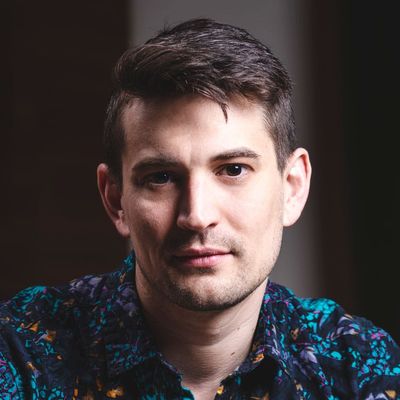
Mo Brady (The Addams Family, Smash, The Ensemblist) talks with Rory about his move from Broadway ensemble to Video and Social Media Producer for a major charity, Broadway Cares/Equity Fights Aids. Mo explains how he came to embrace a change in career and “hung up his tap shoes”... Read More
From the show: Living the Dream with Rory O'Malley
Guests
Featured Shows

About
Mo Brady (The Addams Family, Smash, The Ensemblist) talks with Rory about his move from Broadway ensemble to Video and Social Media Producer for a major charity, Broadway Cares/Equity Fights Aids. Mo explains how he came to embrace a change in career and “hung up his tap shoes”. His podcast, The Ensemblist has given him an outlet to continue in the performing world and share stories of his fellow Broadway ensemble members. The new season of The Ensemblist starts October 1st!
Transcript
This transcript was automatically generated and might contain errors.
[0:02] Rory O'Malley: You're listening to episode number 40 of Living the Dream with Rory O'Malley.
[0:07] Rory O'Malley: If you like the podcast, remember to subscribe, rate, review.
[0:11] Rory O'Malley: We've been around for a year now.
[0:13] Rory O'Malley: What are you waiting for? Audition, side job, swimming upstream.
[0:18] Rory O'Malley: Believe it or not, you'll live in the dream.
[0:22] Rory O'Malley: Hello, dreamers, Rory O'Malley here. Thank you so much for listening to Living the Dream, our 40th episode, and this week marks one year of living the dream.
[0:36] Rory O'Malley: Uh, I kind of can't believe it. I know it's just weird because I started this thinking, well, I'll see how long this goes.
[0:45] Rory O'Malley: Who knows? Maybe I'll just talk to four or five people. And here we are 40 episodes later, a year later, and it has just been one of the most enjoyable things I've ever been a part of that I've ever done.
[1:00] Rory O'Malley: And I have such a great response from you, the listeners. So thank you so much for your wonderful kind words, your support, and your enthusiasm for it because it's the only reason I'm doing it.
[1:14] Rory O'Malley: Um, I have to admit there are times when I've thought, why am I doing this? Why am I having these conversations and, you know, working so hard to find time to meet up with friends and, you know, get frustrated over the recording, the editing, the posting.
[1:33] Rory O'Malley: Uh, then I hear from you. I hear from you at the State Dorf Hamilton, I hear from you on social media, in emails.
[1:42] Rory O'Malley: I am so overwhelmed by the response that I've gotten from these conversations with other artists. And I'm gonna keep going.
[1:51] Rory O'Malley: I hope to keep expanding this to keep searching for new people to talk to, and I hope in our second year that I can have more conversations with you about what you would like out of this.
[2:04] Rory O'Malley: Um, so far I've just been doing whatever I can do on my own. But I hope to be able to expand and grow and find even more ways to connect with other artists who are living the dream.
[2:22] Rory O'Malley: Uh, so thank you again for making this such a wonderful year. My guest this week, Mo Brady, such a perfect guest for my one-year anniversary because he has a podcast called The Ensemblist.
[2:36] Rory O'Malley: And he, along with Patrick Hines of The Theatre People Podcast, and a bunch of podcasts that he has now on theater in Broadway, and also, you know, uh, Marc Maron and Chris Hardwick and so many other podcasters who are out there who have been putting out such great, great podcasts for years now.
[2:58] Rory O'Malley: They were my inspiration to start having these conversations. Um, and Mo is someone who I've known for years, and he started The Ensemblist probably a year before I did, uh, started my podcast, and I was like, wow, he’s doing such a great job, they all are over at The Ensemblist, and I was really inspired to start my own because of it, which I hope, I hope if you're considering starting a podcast that you do it because you have something to say, and there are people out there who will want to hear what you have to say.
[3:33] Rory O'Malley: Um, people want to hear what I have to say, believe me. They want to hear anybody. Um, but I really do give a lot of credit to Mo for giving me um so much support over the last year as so many other podcasters have.
[3:52] Rory O'Malley: But Mo has always been there to kind of tweet out what my episodes were and to contact me and tell me that he really enjoyed a certain episode. I really, really appreciated it because I truly look up to the wonderful work that he's done over at The Ensemblist.
[4:09] Rory O'Malley: And it's great that we talk at this time right now as well because they are starting a new season of The Ensemblist. So you should definitely subscribe to them over there.
[4:20] Rory O'Malley: I'm going to play a little intro that they gave me from The Ensemblist to promote their new season, and I couldn't be happier to put this on my podcast because we're supporting each other, and I think that's such a great thing.
[4:40] Rory O'Malley: And if you love something or if you want to talk about something, start a podcast. I really recommend it. It's a lot of work in some ways, but it's very rewarding, and it's starting conversations in my life that I've always wanted to have with other artists, and I can't wait to see where it takes me next.
[5:01] Rory O'Malley: So listen to my friends here from The Ensemblist, and then listen to my conversation with Mr. Mo Brady.
[5:08] Mo Brady: Oh, oh I oh no, I don't know if we're in the right place.
[5:11] Nico Graf Lanzaroni: Why are you on this podcast?
[5:14] Mo Brady: Why are you on this podcast?
[5:15] Nico Graf Lanzaroni: This isn't your podcast.
[5:16] Mo Brady: Oh, right. We're the hosts of The Ensemblist Podcast.
[5:19] Nico Graf Lanzaroni: Yeah, I know we're the hosts of The Ensemblist Podcast.
[5:21] Mo Brady: So why are we on this podcast?
[5:22] Nico Graf Lanzaroni: Well, we just thought that maybe some other nice friends who listen to this podcast would also want to listen to The Ensemblist Podcast.
[5:29] Mo Brady: Oh, right, because we're just starting our new season.
[5:31] Nico Graf Lanzaroni: Yeah.
[5:32] Mo Brady: Broadway at every stage.
[5:33] Nico Graf Lanzaroni: Yeah.
[5:34] Mo Brady: Right.
[5:34] Nico Graf Lanzaroni: And we're interviewing those six awesome, awesome humans.
[5:37] Mo Brady: Alma Cuervo and Anne Harada and Kevin Carolyn, Dina Alexander, John Eric Parker, and Bob Stillman.
[5:46] Nico Graf Lanzaroni: Wow, those are six amazing actors.
[5:48] Mo Brady: I know. That's why we emailed them all.
[5:51] Nico Graf Lanzaroni: Yeah, they should probably find us on Apple Podcasts or wherever they listen to podcasts.
[5:54] Mo Brady: Yeah, we're there.
[5:55] Nico Graf Lanzaroni: Yeah.
[5:55] Mo Brady: This podcast is good too, though.
[5:56] Nico Graf Lanzaroni: Yeah, no, we love this podcast.
[5:58] Mo Brady: We should listen to this podcast.
[5:59] Nico Graf Lanzaroni: Yeah, yeah, yeah. Like after you're done listening to this episode of this podcast, just like take a little thumb wander on your phone.
[6:05] Mo Brady: Yeah.
[6:09] Nico Graf Lanzaroni: How's it going?
[6:10] Mo Brady: Um, it's good.
[6:11] Nico Graf Lanzaroni: It's, where are we in your house right now?
[6:13] Mo Brady: Uh, we are in our guest room that also doubles as my desk.
[6:21] Mo Brady: Um, it's mostly a guest room because we have so many people who come stay with us.
[6:25] Nico Graf Lanzaroni: That's nice.
[6:26] Mo Brady: We've been now that we're out of Maplewood, we're like literally just like rotating people out on the weekends.
[6:32] Nico Graf Lanzaroni: Yeah, I bet.
[6:33] Mo Brady: It's been good.
[6:34] Nico Graf Lanzaroni: Good.
[6:34] Mo Brady: We're like, wait, we still have friends, right?
[6:36] Nico Graf Lanzaroni: Hey everybody.
[6:38] Mo Brady: Yes.
[6:39] Rory O'Malley: Yes, you're gonna, you're gonna, you, you have, you both. You and your husband, Justin, are you have, you're in so many different pockets of our business because you are married to Justin, who is a casting director.
[6:54] Mo Brady: Yeah.
[6:55] Rory O'Malley: And so you guys have, and you work for Broadway Cares.
[7:00] Mo Brady: Yes.
[7:01] Rory O'Malley: And among many other things that you do. But um, you guys, I feel like because of The Ensemblist and because of so many different things that you've done, you know everyone in the Broadway community.
[7:17] Mo Brady: I would love to know everyone.
[7:19] Mo Brady: Um, I think that's sort of the fun part of being part of this community is that you do get to have these long and um, passion-filled, that's not the right word, but um, artistic relationships with people over time, and it's, it's I think what I always wanted was to be part of the Broadway community, even when I was very young.
[7:46] Mo Brady: Really? Um, and that didn't necessarily mean I want to be on stage, but I would like look at the back of cast albums and think like that's, that makes sense to me. That feels like a group of people.
[7:58] Rory O'Malley: So this is you looking at cast albums growing up in Seattle?
[7:58] Mo Brady: Seattle, yeah.
[8:04] Rory O'Malley: Great. So how did you start getting into theater in Seattle?
[8:07] Mo Brady: Um, gosh, I saw my stepsister in a youth theater summer program, and uh, I think I was in second grade that year, and I saw her do Cinderella and I was like, that, whatever that is, I want to do that.
[8:22] Mo Brady: And so I did that summer theater program for I think eight years after that.
[8:26] Mo Brady: Wow. And I was that kid that like would memorize the cast list and would cry a lot at the cast party and would just like, I just loved it. I loved being part of something.
[8:36] Rory O'Malley: You would cry a lot at the cast party because it was over?
[8:38] Mo Brady: Because it was over or something happened. Sorry. That could be for two different reasons.
[8:46] Mo Brady: A lot of drama at cast parties in grade school and high school. Um, so we had, we, I just, I always wanted to be part of that group.
[8:56] Mo Brady: And so I just feel like being here in the New York theater community is just an extension of that.
[9:02] Rory O'Malley: Yeah, it does kind of just feel like that smaller community that we all came from, our little oasis wherever we grew up in, that it's just magnified.
[9:12] Mo Brady: It really doesn't feel like too different. Obviously, it's a lot more professional and a lot more, you know, ups and downs, but it's still that like community of people supporting each other, which is so great.
[9:24] Mo Brady: Yeah. And I didn't get here for a long time. I didn't move to New York until I was 29.
[9:28] Rory O'Malley: Right. So you were doing theater in Seattle at that time.
[9:32] Mo Brady: I was doing theater in Seattle. Um, Seattle's one of those wonderful communities around the country that can support a few dozen full-time actors.
[9:44] Rory O'Malley: Right.
[9:45] Mo Brady: Um, and I was lucky enough to be one of those people for, you know, five years. Um, and do shows at the Fifth Avenue Theater and Village Theater and Seattle Children's Theater, and just sort of piece it all together, uh, which I loved.
[9:58] Mo Brady: I really loved being an actor in Seattle. But part of the reason I really loved being an actor in Seattle is also because by definition, being an actor in Seattle, you also have to do other things.
[10:08] Rory O'Malley: Right.
[10:09] Mo Brady: So you also have to teach or um, direct or choreograph, or you know, you end up using sort of all those parts of your artistic being.
[10:19] Rory O'Malley: Right.
[10:19] Mo Brady: And that really felt like the right place. Uh, that really felt right to me to be able to do multiple things.
[10:28] Rory O'Malley: Right, because that's what you've continued to do. You are constantly keeping busy, as we started out saying.
[10:34] Mo Brady: Quantity over quality.
[10:35] Rory O'Malley: Right. That's, that's what I mean.
[10:39] Mo Brady: I think that might be, I don't think, I don't believe that's true. I think you have a lot of quality things that you're doing, but I know what you're saying. Like take on as much as you can and see what sticks and what kind of like becomes your path as you keep going.
[10:53] Rory O'Malley: Um, so you were in Seattle. How did you get to New York? What is that story?
[10:58] Mo Brady: It was kind of a two-prong approach. Um, one was that I ended up doing a season at the Fifth Avenue Theater that had a lot of New York connections.
[11:08] Mo Brady: And so I was really getting to know some people out here. Um, I was Chris Ashley's assistant on Memphis.
[11:15] Rory O'Malley: Really?
[11:15] Mo Brady: Seattle before it came to New York.
[11:17] Rory O'Malley: Yeah.
[11:17] Mo Brady: So I was like, I was like designing, did you see that show?
[11:21] Rory O'Malley: Yeah, yeah, a few times. I was, I loved that show, so good.
[11:25] Mo Brady: Yeah. I was designing the on-screen choreography for act two, you know, in the TV studio.
[11:33] Mo Brady: So I was like, camera one, camera two, camera three, like figuring all of that out while we were in Seattle.
[11:38] Mo Brady: Um, I was Sam Buntrock's assistant on um, Sunday in the Park with George after it was here.
[11:45] Mo Brady: The whole creative team picked up and moved it to Seattle. And so that's how I met Chris Cotelli.
[11:50] Mo Brady: Um, then I did the pre-Broadway tryout of Catch Me If You Can.
[11:54] Mo Brady: So I was in the, I was in the company, and so I got to work with Jack O'Brien and Jerry Mitchell.
[11:58] Mo Brady: Um, and it was through that process that I met my husband. I met uh, Justin.
[12:04] Mo Brady: And so we was on the casting team through Bernie Telsey for that.
[12:09] Mo Brady: He my husband's a casting director for Telsea and Company, and he's cast a lot of Broadway shows. Um and uh Catch Me If You Can is just one of them. And so we uh it was sort of like that relationship was developing long distance at the same time as I was building all of these connections and starting to feel really comfortable in Seattle. And so it just felt like it would be good to push myself professionally to take a leap. Um it felt like the right time to do that, and it also felt like the right time to invest in this romantic relationship.
[12:47] Rory O'Malley: Yeah.
[12:47] Mo Brady: Because we were long distance for a little over a year before I moved here.
[12:51] Rory O'Malley: Wow.
[12:52] Mo Brady: But that's that I mean it's a huge, it's a huge deal, especially when you're building something up in a city and you know, you kind of have to walk away from all of that foundation. That's a big move. Like uh besides the fact that you had somebody who that you cared about in a relationship that was growing, was that was it scary for you?
[13:11] Mo Brady: Like how difficult it was really scary. Um, yeah, one of the things that I I'm a planner. That's really kind of uh my safe zone. Um uh one of the things I loved about being an actor in Seattle was that you could really plan your season out because it's all really it's all nonprofit theaters. Um they announced their seasons a year in advance and they're doing auditions six months in advance. So you really know if you've got work or not, and you can sort of fill in the holes with teaching or choreographing or whatever it may be. Um my job here at Broadway Cares is very much about planning. I I take an event like um Broadway Flea Market, and I help create the social media plan for that. So I say, how do we need to get people excited and psyched about this event that we've done 30 times in the past? All right, so we'll use these social media channels and we'll use these kinds of posts. I mean, I love planning. Um, but it was a big leap to move to New York.
[14:14] Mo Brady: So I did it in a very kind of analytic way. I was like looking at parts that were in Broadway shows currently and thinking, all right, I can fit into these five shows. Let me develop my skills in these areas and make sure I'm super prepared. So when and if I get the appointment for those five things, I I'm really showing my best self.
[14:35] Rory O'Malley: Wow.
[14:36] Mo Brady: That's very strategic to like be that specific about what shows are currently there and what jobs you might potentially be called in for.
[14:44] Mo Brady: And yeah, it was it was. Um, and definitely I moved here wanting to be in a Broadway show. That was the goal when I moved here. And so I it wasn't about playing leads and things, it wasn't about finding artistic happiness. I just want I wanted to hit that benchmark.
[15:05] Rory O'Malley: Right.
[15:05] Mo Brady: And so I did it kind of in the most strategic way that I I knew how.
[15:11] Rory O'Malley: Right.
[15:11] Mo Brady: So you get out here and you how how did that plan unfold?
[15:17] Mo Brady: Um I was I was really lucky to um have representation when I moved out here.
[15:23] Rory O'Malley: Okay.
[15:24] Mo Brady: So um through Catch Me If You Can, I was able to start working with an agency here. And so right when I moved, I didn't have to deal with the first kind of like getting my feet wet thing. I was able to go out on appointments almost immediately. Be introduced to casting people and the the city by an agent, which is so so helpful.
[15:45] Rory O'Malley: Right.
[15:46] Mo Brady: And rare.
[15:47] Mo Brady: Exactly. I mean, you sort of, I mean, it seems like people who do showcases kind of get that experience. They they get shuffled into the city. And by doing, I guess eight were eight years of legwork in Seattle, I was able to also achieve that. Um and so it I I booked my Broadway debut in in seven weeks.
[16:11] Mo Brady: So it worked pretty well. Um but that's such alchemy. Like it's you don't it just happened to be um it just happened to be that the right spot opened up in the right show.
[16:23] Rory O'Malley: Right.
[16:24] Mo Brady: So I I'm you you may or may not know this, but uh I took over for Clark Johnson, who was in the original company of Book of Mormon.
[16:33] Rory O'Malley: Right.
[16:34] Mo Brady: Right. So I he was in also in the original company of Adam's Family, opened to that in April of 2010. Um, and he was the last person to be cast in the ensemble of the original company of the Book of Mormon in early 2011.
[16:49] Rory O'Malley: Yeah.
[16:49] Mo Brady: So he just happens to get that last spot, and then the right track opens weeks after I move here, and I just I had the right, I had the right luck and yeah, and got it. So it was really about being in the right place at the right time and being prepared for it.
[17:10] Rory O'Malley: Right.
[17:10] Mo Brady: Well, it it and it it always is like that's that's always the story. And you know, as Oprah says, there's no such thing as luck, it's preparation meeting opportunity.
[17:20] Rory O'Malley: And Oprah is right, she's always right, clearly.
[17:24] Mo Brady: Um, but that preparation, those eight years of of doing the work and knowing what you're gonna have to do when you got here and be ready for those specific shows, that is that is planning that I think a lot of people don't take into account.
[17:40] Mo Brady: And I I think it's mostly because when people show up to New York and they're 22 to 25, it's like, oh my God, I don't even know how to feed myself. How am I going to survive the end of the day, let alone get a job on Broadway? And learning how to do that in New York is pretty crazy.
[17:59] Mo Brady: How wonderful to have the opportunity to do that in a Seattle where there's still so many wonderful artistic opportunities for you, but you're able to kind of get your sea legs as as an artist, professional artist, a lot easier.
[18:14] Mo Brady: Oh, definitely. I definitely feel like I got a lot of on the job training. Cause I didn't I didn't go to a um I didn't go to a conservatory, I went to a liberal arts school.
[18:23] Rory O'Malley: Right.
[18:23] Mo Brady: And I really studied everything. Like I I've always kind of enjoyed being a jack of all trades in the theater. And so uh I got I certainly got to do that um at my college, but I didn't necessarily get that sort of intense BFA kind of training.
[18:41] Mo Brady: So that really happened on the job for me. And luckily I was able to work with these people like you know, Jack O'Brien and Martin Sharnan and and Jerry. Like you're I it was it was great training, but it for me it didn't happen when I was 20, it happened when I was 25.
[18:57] Rory O'Malley: Right.
[18:58] Mo Brady: Uh also I got to be sort of like a drunken mess in a completely different place, so I can like live as a proud 30-something and be like, I never stumbled down these streets at 4 a.m. Because I stumbled down other streets on the other side of the country at 4 a.m.
[19:17] Rory O'Malley: Yeah, yeah.
[19:18] Mo Brady: I know exactly what you're talking about.
[19:20] Rory O'Malley: And uh moving on.
[19:22] Mo Brady: Um I have a lot of a lot of corners in New York City. I just keep moving when I come get to them.
[19:29] Mo Brady: Um yeah, but uh it's it's I think a lot of people are nervous to do that because they think they have to get to New York City immediately, and it takes a lot to kind of make the mature decision and under you know, put yourself in a place that you know you can grow, and uh, you know, that's that's hard for people to do. People just want to get to the city and go see Broadway shows.
[19:53] Mo Brady: And I think that there's more than one way to get to Broadway and get to what we do. And I love that your story is it deals with it with a different city and that that art scene.
[20:05] Mo Brady: So you get to New York, you're on Broadway, you are living the dream.
[20:13] Rory O'Malley: Uh-huh.
[20:13] Mo Brady: It's a great name for a podcast.
[20:15] Rory O'Malley: It would be.
[20:16] Mo Brady: It would be. Somebody should look into that.
[20:18] Rory O'Malley: Um you are also in a relationship with a casting director, and I think you guys have both talked about this. Um, as an actor and a casting director having a relationship. What were some of the discussions that you had to have and like what were what were the parts of it that were difficult for you guys?
[20:36] Mo Brady: Um to be honest, a lot of it was difficult. Um I think that the great part of dating someone or being with somebody who is in the theater world is kind of twofold. One is you probably know someone who knows them and they can sort of vouch for them, like this is a good human being.
[21:00] Rory O'Malley: Right.
[21:00] Mo Brady: Um, and the other one is it's it's someone who understands why we do what we do and the specifics of it. I I've always said it's important to have your partner know what a 10 out of 12 is.
[21:12] Mo Brady: But both both logistically and emotionally.
[21:16] Mo Brady: Sure, like I it's it's very much smash. I'm in tech, but it it is you you have that like it's good to be with someone who knows what that is like.
[21:25] Rory O'Malley: Sure.
[21:26] Mo Brady: Um, which we've had. But the the challenge of it was a lot about separating the professional part of ourselves from from the personal part of ourselves.
[21:39] Mo Brady: And and honestly, a lot of that has to do with sort of the actor casting director relationship. Because just as an actor, Justin had was privy to knowledge or projects or opinions that would or you know, openings and shows, um, openings and casts that would affect me, but we would have to figure out a way to kind of not talk about it.
[22:08] Mo Brady: And that's really what we ended up doing was not talking about work um when we were together.
[22:14] Rory O'Malley: Um, but it's hard to do that.
[22:15] Mo Brady: That's that's hard.
[22:16] Rory O'Malley: Yeah, that's that's hard no matter what your profession is, especially if it's the same profession. Like not talking about work, I can't imagine you know, my husband is you know, works in a financial firm and uh we talk about work to each other all the time because we have that outlet.
[22:32] Mo Brady: I got it, I can only imagine how that would be difficult not to be able to talk to each other when you come home.
[22:40] Mo Brady: Well, what uh I what we've learned to do is we for the professional part, or at least at the time, what we learned to do was for the professional part, use other people in our worlds as the sort of professional sounding board.
[22:54] Mo Brady: Um, which I think is okay. I think in order to be a a healthy, happy human, you have to have a good community around you.
[23:02] Mo Brady: And those people in that community each kind of provide a role, as it were. And so I just sort of shifted that. I need to talk about how Sergio made me feel at the theater tonight with somebody else because Justin also has a relationship with Sergio that is different than mine.
[23:20] Rory O'Malley: Right.
[23:21] Mo Brady: Um sorry. Uh so that that was a learning curve.
[23:27] Mo Brady: Um, but it it essentially our relationship was strong enough and worth it enough to build, you know, to work through that.
[23:37] Rory O'Malley: Yeah.
[23:38] Mo Brady: And you uh when was it that you started to become involved with Broadway Cares?
[23:42] Rory O'Malley: Because I think that that's such a your involvement with them and how you started to actually work for them is such a unique thing for an actor to do because you're clearly not going into work for Broadway Cares because you had to make a conscious decision to say this is worth um my time and effort because no one's going to Broadway Cares to become uh rich and famous.
[24:04] Mo Brady: They're going because they believe in the cause, and it's so much work. I know how much everyone in that office works on every single event. It's mind-blowing and inspiring and amazing.
[24:17] Mo Brady: What was it that made you decide to take on that challenge?
[24:22] Mo Brady: Well, my relationship with Broadway Cares started when I was in The Addams Family.
[24:27] Rory O'Malley: Right.
[24:28] Mo Brady: You know, for me, and I think for a lot of people, the thing that makes being on Broadway feel different than doing a show in Seattle or Chicago or DC are the Broadway Cares events, you know, Broadway Flea Market, Gypsy of the Year, Easter Monet, Broadway Bears, these sort of like times where the community comes together. And so when I moved to when I joined The Addams Family on Broadway, I was like, I want to do all of that. Like I really like if this is my only chance to be on Broadway, I'm gonna do every single little event while I'm here because I want to have that experience. Um, and so I ended up doing a lot of the Broadway Cares events, and through that experience, I met the person who's now my boss.
Um, his name is Lane Bocamp, he's the director of communications here. Um, and so when The Addams Family closed and I was twiddling my thumbs in between jobs, I emailed him because I'd met him through Broadway Bears. I emailed him out of the blue and I said, Hey, um, we met when I was in The Addams Family. I have this marketing experience because that was part of my liberal arts degree. Um, for my first year out of college, I worked in a marketing department of a regional theater in uh Costa Mesa, California. Um, and then I was a part of the marketing for a youth theater in Seattle before I was acting full-time. So I have all this marketing experience. So I tell Lane, I've got this marketing experience, I've got some time.
Could I come volunteer for you this summer, three months from now? And he emails me back that day and says, Can you come in now? Like today. And I was like, sure, I'm unemployed. So I came in and I met with him, and we just vibed. And so um, for six weeks I would come in a few days a week and I'd write press releases and I would help out. Um, and at the very end, I started working on some video stuff. And then I went to do this regional gig of Next to Normal. And while I was gone, uh, he reached out to me and said, Hey, we've got this position opening up at Broadway Cares. I think you might be a fit. Do you want to throw your hat in the ring? Is that the metaphor? Throw your hat in the ring.
Yeah. Sure. Let's do it. So and at that time, it really that was hard for me to figure out what to do next because I really was proud of being an actor. I wanted, I was like, I can't work in an office. I'm an actor. I left, I left the office behind. But I don't have a job after this regional gig of Next to Normal. I didn't really have any reason not to do it other than my ego and what my self-identity was at that point. Right.
[27:06] Rory O'Malley: And so I ultimately decided to apply for the job. And if I got it, then I would decide what to do at that point. You know, push the decision down down the pike. We do that all the time when we're making big decisions. Um so uh ultimately they offered it to me and I decided I'm just gonna try it. You know, I can leave in three months if it's not a good fit. Um, it doesn't have to be the end of my acting career. I can certainly um not make put some sort of stake in the sand and say, from here on out, I'm never going to act ever again.
[27:47] Mo Brady: Well, and and I that's you can't say that because I I talk about performing and acting as an addiction. It's not something it's like when you say you're not, you know, drinking, you can't say like, oh, I don't have the longing for it. Uh, you are a performer and you will always be a performer. You will always find ways to perform. Um, and I think it is kind of I think people have trouble when they try to falsely tell themselves that they can just put it away on a shelf somewhere and completely change their lives. Like I think you have to acknowledge that it's always going to be a part of you.
[28:20] Rory O'Malley: It's I I would completely agree. And that's part of the reason that I started a podcast was to have a creative outlet like that.
[28:29] Mo Brady: Yeah. Um I I wanted to feel part of the Broadway community in a more um in a more concrete way in a way that wouldn't go away when my show closed.
[28:39] Rory O'Malley: Sure.
[28:40] Mo Brady: Um, and I wanted to have a little bit more creative control in that experience. And so that was a big part of why I wanted to start The Ensemblist was because I wanted to feel I I needed to still have an outlet for that creativity and for that uh performative um energy.
[29:04] Rory O'Malley: So we're gonna we're gonna get to The Ensemblist big time in a second. I want to go back to you being showing up to the Broadway Cares offices for the first day, and it's your job now. You know, you're not just helping out, you're not volunteering, you show up and it's your job. How did that first day or those first few weeks feel? Were you still kind of like obviously you love the the people and what you're doing, but you know, it's still kind of like, am I letting go of something? How did you make it through those first few months?
[29:37] Mo Brady: It was definitely a process. Um, I would say at the beginning, I emotionally dealt with it like I was playing a role. You know, it's like I'm doing the role of somebody who sits at this desk and it's not me. Um I'm I'm doing this, I'm doing this work, but it doesn't define who I am. Um and I definitely like I wasn't really making friends in the office. I wasn't building those relationships. Um I was really trying to sort of distance kind of the core of me from the job. Um and it really sort of took time and space to realize that this job that I also do now is is also a great self way to self-identify. Um but that was a process.
[30:31] Rory O'Malley: And it's that's that's so it took years.
[30:33] Mo Brady: Yeah, I'm sure. I mean, and it's still I mean, it's just like being an actor. It takes years to, you know, embrace what it feels like to identify as an actor. Um and I think that is so important what you said about taking the time to self-identify in this world and to really kind of embrace it. Because so many people who have the dream of being an actor put on blinders to anything, any other opportunity that comes into their life because they need to make room for that big acting break or that big thing that's going to happen.
[31:09] Rory O'Malley: And it's not that I feel like you shouldn't make room or be open to things happening. However, it's sad to me if you are constantly turning down wonderful opportunities that will make your life bigger just because you don't think that's what it should look like when your dream is realized.
[31:28] Mo Brady: What you should be doing.
[31:29] Rory O'Malley: Yeah. Right.
[31:30] Mo Brady: Right. I mean, if if people come to you with an opportunity, I think you it's their opportunity, right? They're they're the ones who are offering this to you. It wasn't your idea. And so you you you have the chance at that point to say, I'm interested. I don't know if it's gonna work out, but let's figure it out.
[31:53] Rory O'Malley: Right.
[31:53] Mo Brady: Um, and that's that's that's that's what I did here at Broadway Cares. I I walked into this job saying, I'm still gonna go to auditions, and if I book something, we'll have to cross that bridge when when we come to it. And and I did. I did um I did a featured role on the second season of Smash, and I did that entirely while working at Broadway Cares. So I would come in, I'd come into the Broadway Cares office at like 9 a.m., I'd do some work, and noon I'd take the seven out to Green Point, and then I'd go film until 10 p.m. And then I'd turn around and do it the next day. And I never felt bad about that because I was up front about my intentions at the beginning.
[32:36] Rory O'Malley: Right.
[32:37] Mo Brady: Yeah. No, they and then you you you can find opportunities outside of the acting world that will be respectful of your passion to perform. Like I I worked at it wasn't Broadway Cares, it was I worked at a financial firm in their human resources department for three years. And when I got my first Broadway show Spelling Bee, I would go to the financial firm in the morning, and then I would go at night to the show. And I knew, but I knew that the show was only going to I had a contract for four months and that was gonna end. And I knew how much the the day job gave me to, you know, like I was able to live in New York and feed myself and get to the next thing. And you know, three year three years there and you know, going back and forth in between shows, they were just so good to me.
So when you find that, and when you're up front, and when you can tell people like my mom who worked in the same office for 41 years, she would just die when I would tell her I was going to quit a job, you know, and that I was like at it waiting tables because I was got an acting job. So I had a I went through a temp agency and she was so happy because it was it was she was right. I hate it when you have to admit your mom's right, and she's definitely listening right now. But she would say that you know, if you can go to a temp place or somewhere and be upfront and honest with them, and you can keep going back to that place, you they might have more of an understanding than than you think. And I was able to go to the same office for three years.
And it sounds like Broadway Cares is a place where you've been able to do so many other things creatively and still show up to an office and a home base that's your job and gives you so much more flexibility.
[34:19] Mo Brady: Yes. Lately, the the flexibility has been more to do with my family and less to do with um television series. But yeah, yeah, yeah. But it's been um I I feel really blessed to be here. And in the five years that I've been on staff here, I've undergone quite a change from not wanting to self-identify as um a marketing person at a nonprofit to being very proud of the work that I do and and really wanting people to know how much I champion the theater community and and want to support them in supporting us.
[34:59] Rory O'Malley: Right, right. And so that sounds like that was a transition of of the way that you thought about it, that was hopefully and probably aided by you doing The Ensemblist and and having that creative outlet.
[35:14] Mo Brady: So let's talk about that, which I I don't know if I've told you this yet, but this week marks a year that I have been doing Living the Dream.
[35:23] Rory O'Malley: Yes.
[35:24] Mo Brady: And this is you right now. This is the 40th episode of Living the Dream.
[35:29] Rory O'Malley: And so I'm so happy that you're my guest this week because without a doubt, you doing that, and I've known I knew you, and I we've we've crossed paths many times, but I didn't know that you were gonna start a podcast, and I just started listening to it and I thought, my God, this is so great. This is exactly the kind of thing that I want to do is have conversations with people that I want to have them with, not you know, um people from the theater community, my friends, people who are artists, and you guys did it so so well, and I was so impressed.
[36:03] Mo Brady: Um so I'm just I'm just happy that you're the guest this week, you know, that and that this is working out, and that you're starting a new season starting October 1st, right?
[36:12] Mo Brady: So you're good. Look, thank you for the plug. That was so we know this is all this is all meant to be. Um, because I think that, you know, your podcast, The Ensemblists, really got the Broadway community to start thinking about having longer conversations and listening to people on podcasts in our industry and is doing it.
[36:34] Mo Brady: You guys do an impeccable job. I'm a fan, I'm a subscriber, and I really appreciate you. So, how did it come about? How did you get to the point where you wanted to start The Ensemblist?
[36:47] Mo Brady: Well, the idea came to me back when I was doing The Addams Family. I had been in the show for about six months, and you know, when you're in a show for six months and you sort of you got your understudy rehearsals and you know, there's not a lot of put-ins. Right. You sort of you get comfortable and you're like, all right, what now? Especially if you only have 10 minutes on stage. Ha ha. So, what I was really intrigued about at that point were the really talented people that I was working with around me. And you know, people like Charlie Sutton, people like Jessica Lee Patty, these incredible performers who were in the ensemble of The Addams Family, but didn't have their name above the title.
And I like never heard anything about them. And I thought that's interesting to me. These people are interesting to me because they're that's always the person that I gravitated to. I was always interested, like when I would look at those album cast album lists, I would be like, oh, Jen Cody was in this, and then Jen Cody wasn't that, you know, like I was making those connections. And so I wanted to know more about how people did that. And then at the same time, I've just always been a public radio nerd. Like I really like NPR, just like that crunchy granola Pacific Northwest part of me. So I was like, I'm just gonna challenge myself. I'm gonna challenge myself to put something out there. Because at the time there were really no theater podcasts.
There was the American Theater Wing, they do an audio recording of some of their events that's I think still exists. And Jersey Boys had a podcast, but like hadn't had a new episode in three years, kind of thing, but literally nothing else in terms of Broadway that I could find. So I was like, I'm gonna do this. I'm just gonna sit down with people and interview people in them.
[38:50] Mo Brady: So I brought some people over to my apartment. I sat down with Cameron Adams. I sat down with Ben Schrader, and I interviewed them for about 45 minutes each and I edited it down and I hated it. I thought they were really bad episodes. And I was like, Wow, I don't want to do that. So I put it on the shelf for 18 months. Yeah. And it wasn't until I was here and feeling more comfortable at Broadway Cares that I realized I wanted an entry point back into the community. Right. And so one thing I decided at that point was that I wanted to be able to interview multiple people and edit it down into one episode so we could rather than talking to Cameron Adams about her entire career. Right, let's talk to three people who have been swings on Broadway about being swings, and we'll sort of get a succinct viewpoint of what that experience is like.
And the other thing I realized at that point was that I didn't want to do it alone because it was a lot of work. So that's I knew my now collaborator, Nika Graf Lanzaroni. You're so smart. It's a lot of work, Rory. It is. And it's kind of lonely. I hear that a lot from people who do podcasts on their own, that it's lonely.
[40:05] Mo Brady: So I only knew Nika from Twitter, and so my collaborator, Nika Graf Lanzaroni. I mean, we crossed paths like you and I have crossed. Yeah, yeah, yeah. That sort of thing. And so I reached out to her through a direct message on Twitter. I was like, I've got this idea. I think it might be for you. Do you want to meet with me? And we had lunch. Um and just kind of we were just like, yeah, let's try it. So we tried it. And that's really the impetus of how it started. She was out of town doing Jungle Book, that Mary Zimmerman production Jungle Book in whatever 2013. Yeah. And so we were doing our first episodes via Skype and kind of figuring out a lot of the kinks that way. Sure. And the sound quality was awful. And we like the it wasn't it episode one did not sound like episode 100. Right. Um, but we just took the leap and said, All right, we're gonna try this. What do we have to lose? Yeah. So that was June 2013.
[41:15] Rory O'Malley: Wow. Well, I mean, it's I only am surprised that you only had a Twitter relationship before because you guys have wonderful chemistry, and I think that you really work well with each other in that medium. It's it but you guys, what you do is a lot more work than what I do, you know, like mine. Correct. I'm you are editing and making it sound. It's true. You are absolutely you're packaging your episode so well and really like curating what each one is, whereas I'm having a conversation with friends, and that's hard enough for me on my own. I'm like, if I can like set somebody down and actually find a time, that's the hardest part, without a doubt. Is it was it was like we're both busy guys, and it was like, okay, when are we gonna do this next week? And then we're like, let's do it tomorrow. Let's just do it. Get it out of the way, and then it's done. Just gotta do it. Just gotta do it.
[42:12] Mo Brady: But it's it is a lonely thing to do. But again, for me, your podcast and Patrick Hines and people who were putting out podcasts within the community. It was like, okay, this is what we all are doing now and having these conversations. And at first, when I started, I was like, well, now The Ensemblist exists. Should I not do this? But I've realized, and because you have encouraged me so much through email and calling me, tweeting. I'm really, really moved by how supportive you've been over the last year. Because I was like I it just like you said, you put those first episodes on the shelf for 18 months. I interviewed Stephanie J. Block. She was my first interview, right? A year ago. Well, that's when I put it out.
I had interviewed her in January before that. And it took me getting into Hamilton basically to have the confidence to say, like, okay, I have a little more of a platform. I taught I have this recording of speaking with Stephanie J. Block, and I was so scared to talk to her. Somebody who I could talk to for days and days without a microphone, but like having that conversation and starting it and then putting it out into the world, I remember I put it uploaded it onto the internet, and then I didn't tell anyone it was there for a week. Because I was so scared that it existed and that somebody could find it. I was like the opposite of what you're supposed to do. Like you're supposed to tell everyone. And it still has been that way. You know, like slowly getting more and more comfortable with taking ownership of the fact that I even want to do this.
[43:54] Mo Brady: Um because you're not because you're worried the quality won't be good, or because you're worried that it will define you in some way? I have no idea. It depends on the hour what my fear is of it at that moment. We got I got time. Sure, sure, we've got time. I think that like what you had said about having something that completely is your control and something that you can have ownership of, and you don't have to wait for somebody else to tell you to do it or not. That's a wonderful part of it. It's also the scariest part because nobody asked me to do this. Nobody gave me permission to put out a podcast. No one. And every time I do it, it feels like I love it and it's so much fun, but it's definitely like, why am I doing this?
You know, like it's it's it's not like somebody is there I'm so used to collaboration. You show up and a director's there and a producer and all these other people who are working. And this is like you said, it's a very lonely thing. So every time somebody comes up to me and says that they're listening to it and it means something to them, I'm like, oh, okay, great. But people are listening to it. You said you said I think a couple episodes ago that you'll have two or three people at the stage door every day talk about to talk to come up to you and talk about the box. Last night, a man who was at the stage door who's legally blind, and he told me that he listens to the podcast, and hopefully he's listening right now, and he said that he's legally blind and he's a director, and the fact that I talk about gratitude so much really means a lot to him, and he has so much gratitude for the theater community and how much it means to him.
And I was like, a puddle. I was like, can you welcome me? You know, I was like, I'm gonna as I'm editing my interview with Mary Lou Henner tonight, you know, like I'm gonna be thinking of you at two in the morning. I'm in the middle of it right now.
[45:51] Mo Brady: Oh, yeah. It's a good episode. Oh, she's fascinating. She is so interesting. And when I met her on stage like a year ago in New York, I was like, I am tagging you. I need to sit down and talk with you for a longer conversation. And she, I mean, she we could have gone on for three more episodes. Oh, you got so many times. You said something about it being a 10-part series, and I was like, I'm in. I'll listen out here. No, she's got a lot more to say. I'll definitely have to do a follow-up, especially since she like invited the whole cast over for a cast party. Anyway, um, yeah, but it's just it's not that I'm like scared to put something out, but it's just the fact that as an actor, you're so many times given the material, given the permission, and then it's up to you to show up for somebody else's thing.
And this is my thing, you know. I have I know when the sound quality is bad, which on some episodes it's not great, I'm the only one to blame. I have to figure out how to make it better the next time. And I also have to like learn to let go of that because I realized that part of the reason I had to rip the band-aid off and just put Stephanie J. Block's interview out there was because I was just letting the fear eat away at me for eight months of sharing a wonderful conversation with a great human being. But you and The Ensemblist really helped me get there without a doubt. And I hope that like my doing it has helped other people and whether it's a podcast or some other creative endeavor. The reality of it is that nobody cares about no one is listening to your podcast as well as you are.
Right. Like the things that we would say, like, oh, I wish I would have changed this or said this other thing. Nobody cares. Like people listen to podcasts as they're like driving or walking around or cleaning their house. You know, it's part of their life, which is wonderful because it allows us to really sort of feel connected to podcasters, right as listeners.
[47:57] Mo Brady: And also, and that's the other thing that I wanted to say is that one I have really actively tried to encourage other theater podcasters. Because I really think that the more of us there are, the better it is. Absolutely. And that has taken a I've had to take my ego out of it a little bit. I love that we're one of the oldest podcasts, we're certainly not the most downloaded podcast. I can you can look at iTunes rankings in arts and then performing arts, and you can see, you know, there are other podcasts that are more popular than The Ensemblist.
[48:38] Mo Brady: You can see that. I haven't really looked that I probably won't be I won't be looking at that. Oh my gosh, you could totally look at that stuff. Um, I mean, who knows what algorithm iTunes is using in order to rank these and how far they're looking back, but for you know, it's the one ranking that we have. So I look at it and the Ensemblist is not the most popular theater podcast. Um but we're also doing something super niche, and I always have to remember that I'm doing this for me. Like, this is the go I love that people listen to it. I love that I'm able to share this message of um that people that do are in Broadway ensembles are just as fully fleshed artists as the people above the title.
But really the only accountability is me. So I have to like doing it at the end of the day. Cause nobody cares, you know. Like if the episode doesn't come out every two weeks, it doesn't matter. Right. Um so we have to the more of us the merrier because we're just building up this art form of podcasting in our community. Right. And I I true, I truly believe that like even beyond our community, I think it's like having conversations and sharing a dialogue with people that needs to be done not just in the performers' world, but across every industry and and we all need to get better at having conversations. And I think listening to people have a conversation, it's helped me. You know, I listen to a lot of other podcasts where where artists and politicians and people who are in the thick of of things are explaining themselves.
And it's been very helpful for me to hear their story for an hour off the cuff and not something that's just a you know, uh, an autobiography that they've worked on for a decade. Or a very curated Instagram comment. Yes, exactly. Exactly. Well, I mean, I've said this a few times, but truly I wanted to start doing a podcast after Book of Mormon because I felt like people had the wrong idea that once you have a wonderful success in in Broadway or in anything, that you don't have to think about uh finding work, you everything's just kind of handed to you. And I wanted people to kind of have a better understanding of of where I was in my world right then. And then Hamilton happened, and then I was putting on on social media, you know, all these cool things that were happening.
And I realized so many of those people seeing that were young kids. And I thought it was irresponsible to have this curated look at my life that was just these shiny, bright, happy moments, and having a more realistic conversation over an hour with another artist that I knew we could trust each other because like you this is great, this conversation, because you know what it means to like open up and be vulnerable and say like you had to check your ego and things like that. Like it's hard for people to to do that, but you know the value of it, you know the value of like once you become vulnerable to an audience or to a person you're talking to, that you grow and that the people who are listening to it feel a little bit more a little stronger to be vulnerable in their lives as well, you know, and start having these conversations.
It's a message I think that needs to be out there over and over again because it it you you know, you can say to a 17-year-old, like, check your ego at the door, it doesn't matter, you know, just be the artist that you want to be, but they're not gonna b they're not gonna believe it until they're ready to believe it. So I think it's important to sort of just keep reminding young people that their journey is their own journey. Right. Yeah. Because it's very easy to say, oh, well, yeah, you can you can say that, Rory, because you are in the Book of Mormon and you're in Hamilton, right? Like it's very, it's easy from where we're standing to say those kinds of things. Sure. But I think we have to combat that with just repeating that message.
Yeah. I think that's what we can do from where we are. Uh so speaking of where you are, you said that now your days or your flexibility at Broadway cares is now a lot more about being with your family.
[53:11] Rory O'Malley: So you have a baby.
[53:14] Mo Brady: You have a son.
[53:15] Rory O'Malley: I do have a son.
[53:16] Mo Brady: He's 20 months old.
[53:18] Rory O'Malley: Wow.
[53:19] Mo Brady: I can't believe that, actually. Um they just keep throwing.
[53:25] Rory O'Malley: Yeah, yeah, yeah.
[53:25] Mo Brady: They never stop. Um, what has that done to your life? What has that done to your dream? What how's that changed your perspective?
[53:32] Mo Brady: Oh, I'm so tired, Rory. I'm so tired. Just tired. Uh, which is it it's not the only thing I feel. Parenting has been the most exhilarating, most exhausting experience. Right. Um, I don't want to like refer to another podcast, but do you know Alana Levine's podcast?
[53:55] Rory O'Malley: She does a podcast, little known facts, and she just had Celia Keenan Bulger on, and Celia was talking about motherhood, and she spoke so well about it.
[54:04] Mo Brady: And I have to listen to that.
[54:06] Rory O'Malley: Yeah.
[54:06] Mo Brady: And talking about first, see what you the first year was hard. Um, because you're tired and it's kind of boring to look at the same person who can't communicate with you for hour after hour. And as artists, we love to connect and we love to communicate. And at those young ages, they're just they're they're just learning how to do that right um the first year was wonderful and really taxing for me um for those reasons uh and it was nice to hear somebody else talk about that so yeah it's been in my brain um yeah now he's starting to communicate you know he's got some words in his pocket we can have a conversation that includes some words and a lot of gestures and a lot of just understanding what the other person is meaning for through inflection um and that's just so fun yeah um it's to see this little person and have this like little person in our lives I I'm I'm always tired and I'm always so grateful for him.
[55:16] Rory O'Malley: Right. I mean how have you managed to continue all the things that you've been doing while I mean like the juggling the juggling of all the stuff and obviously you're like I'm exhausted and that's just the state of mind that you're in now.
[55:33] Mo Brady: Um but how do you like are there are there things that do fall to the wayside you're like can't do this anymore. Gotta have to make some room.
[55:41] Mo Brady: Sure. The gym was the first one um yeah I used to do some freelance work that I don't do as much of anymore. The podcast has certainly kind of skimmed down. We used to do an episode every other week and we would do three guests for that episode and if now we'll we'll have an we'll have one guest and they'll talk to us for a little bit about a lot of things. So it's kind of taken the time that we need to put into the podcast. It's it's pared it down. Um honestly, it's it's really about having a great partner because Justin and I said from the get-go, I don't want to stop having this incredibly fulfilling life that we have because we have a baby.
[56:31] Mo Brady: And so we've been very conscious about um making sure that we can still take advantage of opportunities. Um, so honestly, uh during the week right now, um, we just moved out to New Jersey. So I've got two nights a week that I stay in the city late, and he's got three nights of that he can stay in the city late, and that's that's kind of it.
[56:56] Rory O'Malley: So before where I had seven nights that I could go meet a friend for coffee or go see a show or record something for the podcast, uh it's down to two.
[57:04] Mo Brady: Um so that has been a definite shift, but in it it's sort of par for the course, you know. Like I it's it's not like I want to be out every night of the week. I I want to be home with my family. Um, but during Monday through Friday, we really kind of trade off, and then on the weekends we can spend more time together. That's how we've sort of managed it.
[57:31] Mo Brady: But it keeps changing, you know, like being a parent to a six-month-old is different than being a parent to an 18-month-old. So you you just kind of ebb and flow.
[57:39] Rory O'Malley: Right. I mean, it's just it I think that, you know, I'm not a parent yet. I hope to be someday soon, but I feel like one of the best training grounds for being a parent would be to be in the arts, to be an actor, because you do have to go with the flow.
[57:44] Mo Brady: You do have to learn how to adapt to change and disappointment and excitement. And even though it's not the most stable career to like afford a child, it certainly I think gives you a lot of the tools to jump into parenthood.
[58:10] Rory O'Malley: I'm, or maybe am I just really hoping that that's true?
[58:13] Mo Brady: No, I think I think you're right. There's a lot about kind of spinning plates. I think a lot about being on stage and like hearing the crashes happen off stage and that you you keep your eye contact on your scene partner and you're like, we're gonna stay connected.
[58:31] Rory O'Malley: Yeah.
[58:31] Mo Brady: The the audience is not gonna know about this crazy thing that's happened happening 10 feet away. Um I think about that a lot as a parent because you you have to sort of let you have to stay connected to this person, even as things might be crazy around you.
[58:48] Mo Brady: Um it's just one of the few things I think is I I take for my acting career and and behooves me as a parent.
[58:58] Rory O'Malley: Well, I uh I have said many times I look up to you and Justin because of you, you guys as parents, what the way you've been able to keep going in your careers and do that so well and be parents and also uh the ensemblists, it means a lot to me.
[59:18] Mo Brady: And I'm so excited that you're coming back with another season starting October 1st. It's it's it's so well done. It's so great. And I I you know, I hope that I get to be as supportive to other people trying to podcast or communicate or have dialogue in our community in the way that you have been so supportive to me.
[59:39] Mo Brady: So I wish you all the best, and I'm so grateful to get to talk with you today on our one-year anniversary.
[59:45] Rory O'Malley: Oh my god. Congratulations to you. I mean, you're doing this thing for a year, Rory.
[59:50] Mo Brady: Nobody's made you do this thing, and you did it.
[59:53] Rory O'Malley: Yeah, even if people are like, please stop.
[59:56] Mo Brady: I'm just keep going.
[59:57] Rory O'Malley: You know what? If they if they don't want to listen, they don't have to.
[59:59] Mo Brady: That's true.
[59:57] Rory O'Malley: They don't have to have a lot of people.
[1:00:01] Mo Brady: They don't have to.
[1:00:02] Rory O'Malley: But you you're biting the bullet and you're doing it, and that takes balls.
[1:00:07] Mo Brady: So congratulations to you.
[1:00:08] Rory O'Malley: Thanks, bud.
[1:00:08] Mo Brady: Well, you you certainly played a big part in inspiring me to do it.
[1:00:12] Rory O'Malley: And so I I appreciate you.
[1:00:14] Mo Brady: And thanks for joining us.
[1:00:16] Rory O'Malley: Oh, yeah, of course.
[1:00:17] Mo Brady: I can't, I can't wait.
[1:00:18] Rory O'Malley: I'll share it with my parents.
[1:00:20] Mo Brady: Exactly.
[1:00:21] Rory O'Malley: I'll share it with my mom.
[1:00:22] Mo Brady: Yes, exactly.
[1:00:23] Rory O'Malley: Our parents are gonna love this conversation.
[1:00:27] Mo Brady: Audition, side job, swim upstream. Believe it or not, you'll live in the dream.
© Broadway Podcast Network, All Rights Reserved