

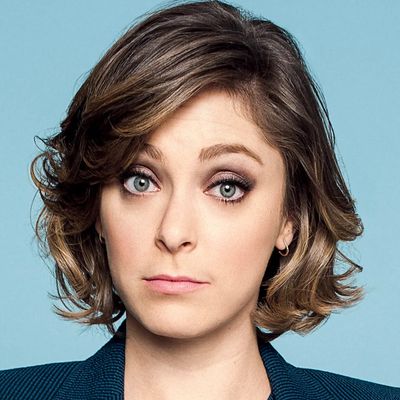
Rachel Bloom (CRAZY EX-GIRLFRIEND) is a Golden Globe Award winning actress for playing Rebecca Bunch on her hit TV show. She talks Rory through how she went from musical theatre lover to sketch comedian to creating and starring in her own musical TV comedy series which is just starting to film it’s fourth and final season... Read More
From the show: Living the Dream with Rory O'Malley
Guests
Featured Shows
About
Rachel Bloom (CRAZY EX-GIRLFRIEND) is a Golden Globe Award winning actress for playing Rebecca Bunch on her hit TV show. She talks Rory through how she went from musical theatre lover to sketch comedian to creating and starring in her own musical TV comedy series which is just starting to film it’s fourth and final season. Rachel emphasizes that the story we play in our head is what defines us so make it a positive one.
Transcript
This transcript was automatically generated and might contain errors.
[0:00] Rory O'Malley: Hey there! You're listening to episode number 61 of Living the Dream with Rory O'Malley.
[0:06] Rory O'Malley: Audition, side job, swimming upstream. Believe it or not, you're living the dream.
[0:13] Rory O'Malley: Hello, dreamers, Rory O'Malley here, your host for Living the Dream. Thank you so much for listening. You know I really appreciate it. You're the reason that I do this podcast, and I'm having so much fun with it this summer.
[0:27] Rory O'Malley: Could you do me a favor? If you're also enjoying the podcast, could you rate it, review it, and subscribe to it, and tell your friends about it? Tell everyone you know so we can continue to have these really great conversations with artists about how they live the dream.
[0:44] Rory O'Malley: My guest today is Rachel Bloom, the creator and star of CRAZY EX-GIRLFRIEND, one of my all-time favorite shows. She is such a phenomenal talent. She's so young and she's accomplished so much. She's just starting her fourth season of her hit series, CRAZY EX-GIRLFRIEND. She writes on the show, she stars on it, she writes the music with an amazing group of individuals. I'm so lucky that I got to be a part of an episode last season. I played Yarl, Yarl, a resident of the hostel in West Covina, of course. I had been such a fan of the show, but to get to see Rachel Bloom work up close and in person was so awe-inspiring.
[1:36] Rory O'Malley: And she has so many things she has to do at once. Acting in the scene, working in the writer's room, being a part of the music creation, so many aspects of it because it's all coming out of her head. She's an incredible person. I thought this conversation was very, very honest, and she was totally vulnerable and open and talked about a lot of really important stuff. So I'm really grateful that she took the time and invited me over to her lovely home to have this conversation. So here it is. My talk with Rachel Bloom.
[2:11] Rory O'Malley: Hi, Rachel.
[2:12] Rachel Bloom: Hi.
[2:13] Rory O'Malley: How are you doing?
[2:13] Rachel Bloom: I'm great.
[2:14] Rory O'Malley: Good. Welcome to Living the Dream.
[2:16] Rachel Bloom: Thank you for having me.
[2:17] Rachel Bloom: Thank you for having me at your beautiful home.
[2:19] Rachel Bloom: It's my pleasure.
[2:21] Rachel Bloom: We are sitting here in my NYU shorts, a Hey Arnold tank top, and I'm feeling real good.
[2:28] Rachel Bloom: Oh, I'm so comfy.
[2:29] Rory O'Malley: You're just making me comfy in your Hey Arnold.
[2:32] Rachel Bloom: You know, I just—are you comfy in that chair?
[2:34] Rory O'Malley: I'm super comfy. Do you want—and you don't want anything to drink?
[2:37] Rachel Bloom: No, I'm fine. I've had a lot of coffee and water today. I'm super hydrated throughout this heat wave.
[2:42] Rory O'Malley: Great. Because I'm filming in CME Valley.
[2:44] Rachel Bloom: Right.
[2:45] Rachel Bloom: And it's really hot, and I'm wearing a Shakespeare outfit.
[2:48] Rory O'Malley: And it's outside?
[2:48] Rachel Bloom: It's outside, yeah. Most of it.
[2:50] Rory O'Malley: Most of it. Has anyone fainted?
[2:52] Rachel Bloom: Um, no, they're taking really good care of us. I think that because the conditions are so extreme, they're so on it. There's just water being put in everyone's hands at all time. And you know, I'm just by the crafty truck a lot.
[3:07] Rory O'Malley: That's all.
[3:08] Rachel Bloom: Keep it cool.
[3:09] Rory O'Malley: Yeah. Keeping cool in the crafty truck. Some ice cream.
[3:12] Rachel Bloom: Oh, yeah. Something that I am not used to. We do not have any craft services on Broadway.
[3:17] Rory O'Malley: Yeah, man. I mean, I did, I did when I did Crazy Fruit at Lincoln Center.
[3:21] Rachel Bloom: Oh, yeah.
[3:22] Rory O'Malley: It was my reminder taste of the theater world. And we had to buy our own waters.
[3:28] Rachel Bloom: Yeah.
[3:28] Rory O'Malley: And I was like, oh, yeah. We can all buy our own waters, but it was shocking.
[3:34] Rachel Bloom: Yes, I know. Well, people, I've—I love talking to people on set right now about the differences between Broadway, and they're like, so how do you eat? Like, how do you eat in between shows? I go, well, I walk outside and I go into a restaurant or a deli and I get food.
[3:52] Rachel Bloom: With your money.
[3:53] Rory O'Malley: With my money. Yes. Because you are just served food the entire day.
[3:59] Rachel Bloom: Yeah. On a set.
[4:01] Rachel Bloom: Because you also have to keep 200 people doing their jobs, applying them with energy as opposed to just a cast and rehearsal.
[4:10] Rory O'Malley: Yeah. I guess. But like without a doubt, it's the number one perk that's way better than Broadway. And I'm gonna tell everyone on Broadway about it and make sure that they know we need to get craft services in New York theaters.
[4:22] Rachel Bloom: I mean, the Broadway rights in general, I have a real problem with like the minimum pay, the way that dancers are treated, and I just—SAG is from what I—I mean, you can speak to this way much better than I can, but the rights afforded by SAG are so much better than equity. I'm wondering, I'm kind of a rabble rouser. I keep encouraging people to strike. I'm like, guys, just do an equity strike. Great. If you get one big person, right, get a couple big people to strike for equity, because the rights are just like nothing, right?
[5:00] Rachel Bloom: Well, I mean, it's all perspective. And you know, like if you look at what is—what they have on the West End in their theater world, a lot of those folks have second jobs because they don't get paid enough to do eight shows a week, which is crazy.
[5:16] Rory O'Malley: Wow.
[5:16] Rachel Bloom: That being said, there's tons of ways that the union, which by the way, is us. You know, I always feel like people talk about the union like it's some company that's in charge of you know what they can and can't have.
[5:32] Rory O'Malley: Yeah.
[5:32] Rachel Bloom: When it's us. Like we have to demand what we need. And I think that I think that people in the union are so grateful just to be working that they forego a lot of their rights in some situations. And the business is really changing so much because so much money is being made. You know, it was a time when doing plays was not lucrative in the way that it was that it is today. It's a huge booming business. Broadway has never done better. That being said, you know, producers, they really call the shots of what we can and can't have.
[6:13] Rachel Bloom: I mean, just at the end of the day, it's just such a grueling schedule that you would think there's stuff provided backstage or you know, is physical therapy provided in it.
[6:26] Rory O'Malley: It is. That is something that the union actually is responsible for. There's always a physical therapist either at the theater or a place that people can go and have physical therapy.
[6:39] Rachel Bloom: So yeah, that's a major, major issue, especially with the dancers. Um, so you know, they're also like really good at like making sure that you have the right footwear, or that if the costume isn't, you know, like they—because things, you're a part of a machine, they have to make sure that you can keep it going.
[7:00] Rory O'Malley: Footwear?
[7:01] Rachel Bloom: No.
[7:01] Rachel Bloom: Okay. No, no, no. You—if for every Broadway show I've been in, you've had shoes made for you at, you know, like a different studio.
[7:09] Rory O'Malley: Okay, that's good.
[7:10] Rachel Bloom: Yeah. No, the footwear is actually a really big deal because if you don't have good shoes on when you're doing eight shows a week and you're dancing, you're screwed. It's been so amazing to me to kind of be in this TV world, which I've done a little bit in the past, but when I came back to do Hamilton in Los Angeles, I got a text from you saying, hey, would you play the—I can't remember what you said exactly, but you were like, will you do this character Jarl or a Danish guy or something?
[7:42] Rachel Bloom: Oh, I think you just were like, we're writing this character and we think you would be great in it. Would you be up for it? And I was like, yes, anything. I want to play with you guys. That would be so much fun. And it was shooting the week, I think we were opening in LA. And you guys were so accommodating to me. It's like on my day off to be able to have me come on set and do everything in one day. It was great.
[8:02] Rachel Bloom: It was easy. One setting.
[8:03] Rory O'Malley: Yeah.
[8:04] Rachel Bloom: I mean, it wasn't a crazy—it wasn't like we had you in all these different settings. We had you in this one set to the point where this character wasn't but could have been a figment of her imagination. No one else interacted with it.
[8:15] Rory O'Malley: Which is definitely a conspiracy theory that I would have if I were a fan of the show.
[8:20] Rachel Bloom: Yes.
[8:21] Rachel Bloom: No, it was amazing, and you were so, so funny. And okay, I mean, well, so what are some of the—because I'm curious, what are some of the perks? So food, free food when you're on set.
[8:30] Rory O'Malley: Right.
[8:31] Rachel Bloom: What else? Are there like—are there working hour limits when it comes to equity?
[8:35] Rory O'Malley: Yes.
[8:35] Rachel Bloom: Okay.
[8:36] Rachel Bloom: Yes. There's also things like you have to have a break every hour and 20 minutes. So there's definitely like this is—there's a difference because you're rehearsing. So there's no like rehearsal in the terms of the—in the same way that there is a rehearsal for Broadway where you're rehearsing for eight hours in a day.
[8:54] Rory O'Malley: Yeah.
[8:55] Rachel Bloom: So every hour and 20 minutes, you need to have your 10-minute break.
[8:58] Rory O'Malley: Right.
[8:59] Rachel Bloom: So there's time restraints on that. There's the 10 out of 12. So you have 12 hours where you can be teching a show during a day, but you can only be working for 10 of them. And so they definitely have restrictions, but I would say, you know, the hours are much more on a TV set.
[9:18] Rory O'Malley: Yeah.
[9:19] Rachel Bloom: You're there a lot longer. You're waiting around a lot more. Um, but I think that I—that's why I'm also just having so much more fun than I have in a real—yeah.
[9:29] Rory O'Malley: Because you're hanging out.
[9:30] Rachel Bloom: Yeah. Well, you have a camaraderie with your fellow actors when you're working on a show because you're working on something together. But when you're on a set, you have camaraderie with the crew because you're really creating it with the crew. It is something that they are as creative as you are in that moment, and I'm loving that aspect of it.
[9:54] Rory O'Malley: Yeah. Um, what are—you have such a love of theater.
[9:57] Rachel Bloom: Yeah.
[9:58] Rory O'Malley: And that you clearly—it's why you've made this show, but why did you take that love of theater and go into TV?
[10:07] Rachel Bloom: A bunch of reasons. Um, I was a musical theater major at NYU.
[10:11] Rory O'Malley: Right.
[10:13] Rachel Bloom: And the second I got there, first of all, I should have taken a gap year. I overworked myself in high school. I was the lead in all the plays, plus I was in all these AP classes, plus I was doing theater outside of school, and I just—I really should have taken a gap year. So I feel like I got to college kind of exhausted. I definitely separately had a bunch of stuff with—I mean my mental health to figure out like I—I had anxiety and depression, and I didn't know what it was. But anyway, I got into the musical theater program and I instantly felt like an outsider, partially because a lot of the kids had done Cap 21, was then the studio at NYU, it's now no longer part of NYU.
[10:51] Rachel Bloom: Right. But a lot of kids had done the summer Cap 21 program, so they already knew each other. And so I got in there and I immediately felt like I didn't belong. Now I think that was also because I was intimidated by meeting people who were just as, if not way more talented than I was. And I was the shit in my high school. I'd met other kids who were talented, but I had a very competitive streak because my talent became synonymous with my self-worth as a person because I was very unpopular as a kid, and I could tell myself, okay, well, I'm unpopular, but in the time that I could be hanging out with friends, I'm doing acting and dancing and singing classes. So, you know, jokes on them.
[11:34] Rachel Bloom: And so you begin to associate your self-worth with your ability. And so then you get to school and you suddenly see someone who's an infinitely better singer, actor, dancer, piano player than I am. Suddenly, the stories you can tell yourself about, well, maybe I'm not as good of a singer, but I'm a blah blah blah. Oh, they do that too. Ah, fuck. And so I think it was a mix of musical theater kids being a little bit annoying. The program, there were 80 kids in my freshman class, and so feeling like a number, and then also feeling threatened by my own—threatened by people who are more talented. And so that kind of combined into this thing of I started to feel more and more alienated from musical theater, and then I found the sketch comedy group, and I hadn't told myself for my whole life, oh, sketch comedy is what I want to do.
[12:20] Rachel Bloom: And so I went into it with this like low-stakes open heart. Like, I know I'm not great at sketch comedy, I'm gonna learn. And it was the first time I tried my best at something and was okay with failing. Whereas I think with musical theater, I had had this thing of I would rather maybe phone it in and not try my best because the ultimate fear would be, what if I tried my best and still failed? That's the most horrifying thought to me.
[12:47] Rory O'Malley: Right.
[12:47] Rachel Bloom: And I remember the first audition I did, it was for Into the Woods, my sophomore year, where I decided to try my best, despite the fear of failure, and I got cast in it. I didn't get the lead. There was—and I remember thinking it was this girl Sam got Cinderella, and I was up for Cinderella, and I thought, there is no way I am beating her. She is gonna get Cinderella. There is absolutely no way, but you know what? Fuck it. And that was the start of me kind of letting go of my ego with theater.
[13:17] Rory O'Malley: Yeah.
[13:17] Rachel Bloom: But I by then I was also so in love with sketch comedy, I started to care less of my identity was wrapped up in theater.
[13:26] Rory O'Malley: Right.
[13:26] Rachel Bloom: And then I—yeah. When you start to take to dilute your one thing that you do and stop being afraid of just being monogamous with that and take on other challenges, you actually are more free to pursue both.
[13:43] Rory O'Malley: Totally.
[13:44] Rachel Bloom: You're totally right. Because you're—for me, it feels like you hear about this thing of your lizard brain that if your lizard brain's turned on, you can't be creative. My lizard brain starts to shut off. So I'm not going into auditions suddenly thinking, oh, well, this is me, this is all I want to do, this is me. I'm thinking, okay, I have other stuff going on. I'm gonna give this my all, but you're—yeah, you're at ease with yourself in a way.
[14:06] Rachel Bloom: I mean, but sorry, Edward. Please.
[14:09] Rachel Bloom: Having been said, what I fell so deeply in love with sketch comedy that by the time I had lost some of my, I have to be the best talented, most talented person complexes. I then like, I couldn't bring myself to spend my time getting up at 6 a.m. to audition for a non-union children's theater musical. I would rather spend my time writing and doing stand-up. I mean, the thing that disenchanted me with musical theater and still does a little bit, and it is what it is, is the once I started to learn how to write, I looked at musical theater with a more critical lens. And a lot of the stuff that I had loved, I was like, oh, this is kind of shitty and dated. Right. But I feel like we're so hungry for good writing in musical theater.
We'll take whatever's possible. And there's such a fondness for the golden age in general. You you don't see those flaws. Right. And when you start to see the flaws, and then you spend time in school studying, forgive me, a Frank Wildhorn piece like it's Shakespeare. I I I can't, I can't. I'm sorry. I can't, I there is no way I can be happy studying Frank Wildhorn like it's Shakespeare or Mammoth, you know. I just can't. Right. No, I mean it's I I think that especially for somebody who had such a uh you were in your AP classes in high school, you you were pushing yourself to the max to go into uh an education where it's just this one small space of of learning. Yeah, that's not gonna work for for Rachel.
No, and also I will say that the CAP program at the time, especially my first two years was very it was somewhat rigid. We spent a whole year studying just Rogers and Hammerstein. Really? Yes. And so we didn't really learn Meisner. A lot of the people I talked to at Carnegie Mellon, who majored in musical theater, you guys had a little bit more of a well-rounded approach. We were very at the time, especially my sophomore year, centered on just learning RH. And it gets hard. Yeah. Yeah. I mean, I know a lot about Green Grow the Lilac. More than I. And Michener, I know a lot about that. I mean, it it is, it is one of the reasons that actually I didn't audition for any musical theater schools. I just ended up going to Carnegie Mellon as an actor and wanted to be in the musical theater program because I realized that they didn't give up any of the acting courses.
That I wasn't gonna, if I had done that, that I would have done every single same course. I would have just gotten voice lessons and dance classes. And you didn't do musical theater at Carnegie Mellon? I didn't go there for musical theater, but one of the kids in our class who lived down the hall from me in our dorm was named Josh Groben. Uh-huh. And he got a record deal with Warner Brothers, our fresh freshman year. Uh-huh. And we I was studying voice paying on on my own, not in the program. Yeah. At this with the same voice teacher. And so when he left, she was like, You should just take his spot. Oh my god. And I was like, wow, okay. And I went into musical theater at Carnegie Mellon. Because Josh left.
Because Josh left. And you, Josh Groben and Josh Gadd were all at school at the same time. And Leslie Odom. Wow. Yes, and Katie Mixon, who's on American Housewives. Oh, that's so American Housewife, yeah. I have so many. I when I didn't get into Carnegie Mellon, I was devastated. So one school I didn't get into was waitlisted. And then I paid a hundred dollars to be on a priority wait list, and I wrote a long essay. Still didn't get in. And I and I've been bitter about it for so long because I I'm sensitive and I don't like rejection. Yeah. But oh, I have so many friends now who went to Carnegie. I mean, Donald Champlin. Yeah. Were you in school with Michael McMellan? I was. He was a year above me and was my big brother.
Oh, oh my god. Yeah, no, I've known a really good friend of mine. And I I hang out with so many Carnegie people now. And yeah, they're great. Yeah, I mean, I have I I was just wanted to go to Juilliard. I didn't want to go to music. And really, it was because kind of in the way that you were saying about looking at other people and being like, well, maybe this is what I do because that person sings so well or that person does this so well. I was around in high school, so many people were better singers, better comedians. So I was like, I'm a dramatic actor. That's what I am. I should go to Juilliard and just do Shakespeare and be very that's where I fit in this puzzle on the west side of Cleveland.
Yeah. And that's gotta translate to the rest of my future. So I didn't get into Juilliard and I was so crushed, but I got into Carnegie Mellon's acting program, and I was like, this is amazing. But in my head, I thought, well, I'll take singing classes there, and then it'll just be like that's why I went to Carnegie Mellon so that I could be in there kind of in their musical theater program too. And then Josh Grovin got out. So it all works out in the audience. It's funny these stories we tell ourselves that it's to protect our own egos, but there is a kernel of truth in it, right? Like I was kind of right in that I wasn't just going to be a musical theater actor, I was gonna have the writing.
Part of that was self-preservation and self-protection, but also yeah, there's a part of that that's really true. And thank God you didn't go to Juilliard. Oh yeah, you could just be a bummer of a Shakespeare actor, you'd be depressed. Which P.S. now I'm playing Shakespeare in James Down Bushi. That's so great. So, you know, what the hell? It all worked out. That's so true. Um I love seeing everyone who who I love working with people who come from a theater of like a classical theater background because you always see um you always see those moments come out. Like when we were recording, Michael McMillan had a song last season. Yeah. And he'd been playing. I mean, basically, his character, we wrote the character for him because he auditioned for the role of Daryl and he was so young, but we loved him.
So we wrote him a character that partially is based on um a specific guy that I was on a writing staff with who's uh a very just a very emotionally blocked up kind of facad monster. And so but I we saw McMillan sing the song, and I and he did it so like just a re he treated it like a really good monologue, and I was watching him record. I was like, oh right, this guy went to Carnegie Mellon for he studied Shakespeare. This guy's legit. I love those moments when I mean in every moment on set with Donald Champlin. She when she busts out anything, oh right, she's a genius. Okay, right. Yeah, I clock that. No, no, she's amazing. You know, she came back to teach a workshop when I was at Carnegie Mellon.
No way. She was doing by Jeeves on Twitter, and she was so good to us. She was like, You are all amazing. You're all going to do fantastic. Don't give up. And I never forgot that. And then I got to work with her in a uh a concert of Pride and Prejudice, where she played Jane Austen. She was like the narrator, like telling the story. She told me about this. Oh, she was glorious in it. Yeah. I wish it was like still around because it should, it should have gone to Broadway and she should have like gotten to Tony for that. Um she's to get to have been taught by her and to see her work and and to now see her on your show. It's such a full circle thing to me. So watch somebody's journey, you know, and to be and she, yeah, she had she never wastes a single moment, not a single word.
You guys have such great chemistry together. It's kind of a love story between the two of you and and your friendship. And we're weirdly in real life, have a lot of similarities. First of all, Donalyn and I are related. We didn't her, we didn't know this when we cast her. Her husband is married to um oh god, her husband's cousin is married to my second cousin. Oh. So they spent a lot of Thanksgiving with the extended Bloom family. So I get a text, Thanksgiving 2014 saying, Hey, I think we're cousins. I'm with the Bloom right now. And Donald Lynn is the reason I got reconnected with the extended Bloom family on the East Coast. You're kidding me. So we're related by marriage. Wow. And then also she and I are both into, I mean, I was almost a Wiccan when I was in middle school.
She technically still is. She and I are both really into Disneyland and Halloween. I think I'm gonna let her decorate my house for Halloween this year. And so, well, it's funny, on a podcast where you talk about you know being grounded, I I really bonding with the cast and the writers of my show in in ways that have nothing to do with show business is really important to me. And that it makes it feel so much more special. I I feel like just being on set with with you guys for one day, that there was just such a wonderful camaraderie that that's why it's genuine when you're watching the show. It's real. You guys have a real rapport with each other. I feel like you and um Aline, who you write the show created the show with and and write it with, you listen to what the actors are giving and write for them.
Yeah. And that's why there's been so many people who've been come in, like David Hall, who's been on the podcast, by the way. Who we wrote the part for. Yeah. Yeah. Because as you know, he came in audition for Greg, and we went, and our casting director said, that guy's kind of like a white Josh. So this guy, so David Hall. That's how the audition? A thousand percent. It was because Felicia said he reminds me of a white Josh, and Aline said, if this show ever goes to series, we're writing a character called White Josh. And so we just offered him that role. So here's a guy who auditioned for a pilot, never heard back. Yeah. Cut to a year and a half later, finds out that a part's been written for him.
That's crazy. Yeah. But I feel like that's what you guys specialize in and why the show works so well. Thank you. Because you're writing for the people and the environment is just so creative and and fun. Yeah. I mean, you have to have fun with this show, and that's why people enjoy watching it, for God's sakes, and the time we live in. It's important to be able to turn on something and be able to escape into a world. So let's let's go back to something that we kind of briefly talked about, but is a huge major theme. You said that you were you have uh your resentment towards Carnegie Mellon for not getting in. And that it's that's what we talk about. No, it's it's rejection, it's rejection and how you deal with rejection, how you dealt with it when you were younger, and how you deal with it now.
I think not seeing your talent as being synonymous with who you are as a person, and also not seeing talent as this binary thing that the talented people get the parts and the untalented people don't. And I think that being behind the casting table really helped me see this for the pilot. There are so many talented people who come in. It's just, you're really just saying to yourself, do I buy this person saying these words at this time? And there are so many talented people who auditioned for Crazy X who didn't even get a callback. Because it's not about talent. Talents, I think, a real misnomer. And I think it's a a word that we use way too much because it means a lot of things. It means a natural ability, even when you're untrained, it means an instinct, it means intuition.
But what is that even mean? What is it translate into? I don't even know what the I don't even know what talent even means. It's it's it takes away the subjectivity of art that I think makes you free to do art and pursue art. And sorry, I keep burping. I'm so grounded. Um it's from the it's from my Perier. Uh but I think that, you know, as a little kid who wants to be an actor, you're not saying, I want to be an actor to explore the human condition and and and pursue the subjectivity of art. You're saying, look at me, look at me, I'm talented. So the root of it is ego. But but for me, it's definitely been marrying those two things of okay, my ego is why I love doing this, the love of attention is is why, but how do I let some of that go so as to not feel threatened by other people and be able to learn from other people?
Yeah. And it's an ongoing process. I'm still kind of learning how to marry those two because it's the I mean, this is so our show to say, but it's really what is the story you tell yourself about who you are and where you are in the world. Yeah. Because we we I think are sometimes trapped by our own narratives. Yeah. So freeing myself from that rigid narrative has been really important to me. That's I mean, and I think that's kind of the key is freeing yourself from that. Because once you can do that, you're able to do anything and not take all the weight of the result of it. Exactly. And that is uh also I I try to talk and use this word jealousy, which you've already talked about, like comparing yourself to other people, but it's the thing that nobody really talks about in our industry, especially when you're young, that there's jealousy that is so not helpful to you and doesn't mean anything, and it's hard to let that go to drop it.
How did you deal with jealousy as a kid? Well, I was mean to people, I'm sure. Especially when I was a kid. I remember I went to a week-long science camping with my elementary school, and there was a play about Amelia Earhart, and I full on a girl was cast in the part who was way more popular than I was, but like my story that I told myself was, well, theater's the thing you have. They get popularity, you get theater. And so I think I want to say I kind of intimidated her out of the part, and I just ended up playing it. And I to be fair, to be fair, I think she got cast because it maybe was pulling names out of a hat. I don't know if she auditioned, but I was legitimately better than she. This is some Rebecca Bond shit, actually.
Yeah. It's not great. It's not great. Um so there was that. Um, and then as I got older, I used other people being more talented to fuel myself into getting better. That's the story I told myself, which is kind of true. Is all right, that person's better. I need to work harder. Right. And it was a very kind of um not ruthless, because I wasn't really ruthless towards other people.
[28:18] Rachel Bloom: I really wasn't. It was just ruthless towards myself. Okay, I need to be that much better. I need to do this and I need to do that. And then now what I find with jealousy is the second you meet someone you're jealous of and you have a conversation with them, it goes away.
[28:32] Yeah.
[28:32] Rachel Bloom: You're just happy for them. Yeah, it's really just a story, once again, that you're telling in your head that's about your insecurities. And you're falling into tribalism, which is what human beings, you know, we're kind of at the mercy of our own bodies and our own evolution. We want to be tribal. We want to say, "This is my cave, you can't enter my cave."
[29:10] Yeah.
[29:10] Rachel Bloom: And you see that all around us constantly in the world. And so it's very jealousy is something very easy that we access that very easily, and it's a sign of progression, emotional progression that you don't fall into that easy trap. But I find that the second I understand someone and have a human conversation with them, I will never be able to put them into the other camp. And so I can't fully be jealous or resentful. And it also helps with the subjectivity of, "Oh, they're so talented." I've gotten to know them. Oh, their talent is so different from mine. That because that is there is a nugget of truth in sure there are gonna be people who have abilities that are technically better than you, but you are you, them, they are them. You're going to all bring something fundamentally different to the table.
[30:02] Right.
[30:03] Rachel Bloom: And even if there's another girl out there who is just like me who has done musical theater and comedy and loves Harry Potter and comes, you know, someone with the same biography that I do, we're still gonna have different ways we do the lines in an audition.
[30:23] Yeah.
[30:23] Rachel Bloom: And I think that holding on to that and maintaining the idea that your ability is not this black and white thing. And also it's not elusive. I mean, the thing that I've been working on is giving myself credit and maintaining credit with myself that if I have an off day on set or an off writing day, it's not this extreme of, "Well, guess that's it. Guess I used to be creative, guess I used to have it, and now I don't." No, it's just calm the fuck down. It comes in waves, calm down.
[30:55] That's really hard to learn.
[30:56] Rachel Bloom: Yeah, it's very hard. It's so easy to beat ourselves up after a bad day and just spiral into this is who I am now. This was the moment.
[31:04] Well, because then it's the story you tell yourself. So in my biography, or in my family talking about the life, they'll go, you know, then there was that one day where she couldn't think of the word mercy, and she was never the same after that day. No one thought of her, no one thought of her again. As that quick-witted funny guy.
[31:21] Cause you have because also that's I mean, not to blame movies and TV and plays and the media in general and storytelling in general, but that makes for good stories. A hero's downfall at a moment, but that's not really what life is.
[31:37] Right.
[31:38] Rachel Bloom: Right. Which is kind of what the episode you were in of Crazy Ex is about.
[31:41] Yeah.
[31:42] Rachel Bloom: It feels like a weird agenda I have right now, but it's true.
[31:44] No, it is true.
[31:45] Rachel Bloom: No, it's absolutely true. I think that the whole season was, you know, and we can talk about this more because I want to talk about how you got to CRAZY EX-GIRLFRIEND, which I think is such a fantastic story. But that season and dealing with mental illness, dealing with obsession, and talking about it in a way that was so accessible to people, especially accessible to young people.
[32:12] Yeah, so important.
[32:14] Rachel Bloom: So, so important. I feel like you guys almost pulled off a trick in terms of getting people to have a conversation about mental illness when it's not sexy or fun.
[32:26] Right.
[32:26] Rachel Bloom: You know?
[32:27] Right.
[32:27] Rachel Bloom: Thank you. It was so well done. And I mean, and we don't know what's gonna happen if she's gonna go to jail or what she's...
[32:30] Rachel Bloom: I'll say this on the record. She's going to jail.
[32:39] Okay.
[32:39] Rachel Bloom: She's going to jail.
[32:40] Okay.
[32:41] Rachel Bloom: Great. Wow. You heard it here.
[32:43] Um I think I already said it in something at Comic-Con, so I feel like it's not breaking news and living the dream.
[32:46] Okay, great.
[32:48] Rachel Bloom: But after Comic-Con, it's living the dream. That's where we break entertainment news.
[32:52] Exactly.
[32:53] Rachel Bloom: Better you than 99.9% of people.
[32:57] Okay, good.
[32:58] Rachel Bloom: But it's kind of a reckoning for a lot of behavior and trying to own up and understand it.
[33:05] Yeah.
[33:06] Rachel Bloom: And that's a lot when you're like pitching a show to the CW, like, "I've got a musical comedy show."
[33:13] Yeah.
[33:13] Rachel Bloom: You know? So, how did you come to the decision? Or it's really, I'm sure it was like ongoing and part of the plan. But really, it was like, it's gotta be a little scary to say, like, "Okay, here we go. We're stepping into the realm of really dealing with the fact that this is mental illness."
[33:33] Rachel Bloom: Yeah, Alina and I had talked about it, and we'd known it was we'd always known that the third season was a spiral. We'd always known that. And so it was a matter of let's diagnose her. And we at that point had known it was borderline. We came to borderline pretty organically because we had created a character based on our own experiences in a heightened way.
[33:53] Right.
[33:53] Rachel Bloom: Okay, who's a version of us that kind of would do some of the things that maybe might have crossed our minds? But she actually does them.
[34:02] Yeah.
[34:03] Rachel Bloom: And it's kind of just the yes and of... Sorry, my dog is barking.
[34:07] Oh yeah, we have dogs all the time.
[34:10] Rachel Bloom: It was kind of a matter of how do I... So we're creating this character. She's gonna do X, Y, and Z in the story. Okay, she's gonna do X, Y, and Z in the story. That means she has to be that much more really troubled.
[34:31] Right.
[34:32] Rachel Bloom: And I've been re-watching some of the first season, and she does some shit that's really... I knew it at the time was troubling, but rewatching it now, like, "Oh, this is a very unhappy person." And part of it is story that you need to have her do something. And so the stories, the stories that we're creating, we're giving them a lot of plot movement. And so, in order for her to go through some of the things, she goes through stalking Josh's girlfriend, creating a fake water case so that she'll spend time with him. It's stuff that maybe in real life has occurred to some of us.
[35:05] Oh, I could do this, I could do that, I could do that. But she actually doesn't because she's in some ways, like reenacting all of these, both all these tropes, but also putting into words and action the intense emotions that I think everyone experiences during love.
[35:26] And so the yes and to that is, okay, she has to be more and more and more out of touch with who she is. And that's the definition of borderline.
[35:35] Yeah.
[35:36] Rachel Bloom: We kind of organically came to this place of this is someone who has no emotional skin, this is someone who sees the world in black and white, who has no sense of who she is on the inside, which is why she needs to try on these external costumes in the form of these music videos. That is borderline personality disorder.
[35:52] Right.
[35:52] Rachel Bloom: And we base the character on people we had known who some of whom have borderline. So it was... It kind of organically became this borderline thing, and it just... The whole show is about deconstructing tropes. And so it felt organic to do that.
[36:07] Yeah, I mean, it's... I guess I just am so impressed that you guys didn't just go, "No, she's just kooky." You know? This is, you know, like we're never gonna actually get to this place that's explaining what's really going on.
[36:23] Yeah, no, that would never... I like the show, it was always gonna be that. The show was always going to be deconstructing stereotypes and deconstructing everything and getting to the meat and the nugget of things.
[36:34] Rachel Bloom: And I remember the first depression episode we pitched to the CW, and they were... I mean, compared to some of the other stuff we've done, it's not tame is the wrong word, but it's lighter now where she's just sad and she hallucinates Dr. Phil. And that episode, they were like, "Okay, you guys are gonna go there, and we want to help you go there."
[36:52] Rachel Bloom: And so they were supportive with that tone from the beginning. And so when we finally got to the idea that she tries to commit suicide, they already knew, "Okay, well, that's what we're doing. That's where we're going with the show."
[37:04] Right.
[37:04] Rachel Bloom: Well, it's great to be in a place that supports that.
[37:07] They're great.
[37:08] Rachel Bloom: They're awesome. I mean, they've been amazing.
[37:11] Well, let's talk about him because you're married to somebody who's in the business. And that's... That can be tricky. I'm with a civilian who's not.
[37:19] What does he do?
[37:20] Rachel Bloom: He's in an executive assistant.
[37:22] Great.
[37:23] Rachel Bloom: Yeah.
[37:23] Rachel Bloom: I don't even know what that is.
[37:25] It sounds wonderful.
[37:25] Rachel Bloom: Yes. Yeah, yeah. No, he... He's worked in fashion advertising and financial firms. But no, it's so funny because we're in our office right now, and this is kind of our joint office that we have, and there is a board, as you'll see, and it says on one side says kids, and the other side says no kids.
[37:43] That's not our lives.
[37:44] Rachel Bloom: That's a movie that he and I are trying to write called Do You Want Kids about a world in which people do and don't have kids.
[37:49] Wow.
[37:50] Rachel Bloom: But also it's literally a debate of whether or not we want kids put into the form of brainstorming a movie.
[37:59] Yeah.
[38:00] Rachel Bloom: That... Wow, so you... That's... For a married couple who doesn't have kids yet, that's gotta like really hit close to home. Like no matter what you have already decided.
[38:10] It hits very... Yes, it hits very close to home.
[38:12] Rachel Bloom: Yeah. I mean, I love having... I love being married to him because especially with the schedule that I have, sure, he understands it. He wrote on the show, he's gonna direct an episode this year. So he's... I mean, it was his idea. He was one of the first person to encourage me to write musical comedy. I mean, we've been together for over 10 years, and so he's been at this with me from the ground up. He was one of the people I looked up to in college because he's a couple years older than I am, so he was one of the founders of my college sketch group, and I got to know him because of that.
[38:44] Rachel Bloom: And so my career very much has blossomed with our marriage. It's very much not totally synonymous, but they're very complimentary.
[38:54] Yeah.
[38:54] Rachel Bloom: No, I mean it's clear that you guys have your own separate paths, but it makes so much sense that you've been able to support each other along the way because he's been such a successful writer, and you're creating your acting career and writing at the same time.
[39:08] Right.
[39:09] Rachel Bloom: Well, yeah.
[39:09] Rachel Bloom: So it's just... It's covered... This is How I Met Your Mother's script and picture of him with Neil Patrick Harris and John Lithgow.
[39:11] Well, are we gonna talk about what happened on Twitter?
[39:20] Rachel Bloom: We don't... We can literally not talk about it.
[39:20] Oh, I don't care. I know we can talk about it.
[39:21] Rachel Bloom: Because it was amazing.
[39:23] Rachel Bloom: It was so... It was amazing, and like... And like I wanted to talk to you about it on the podcast or not, but who was I talking... Yeah?
[39:32] Rachel Bloom: You do the backstage interviews at the Tony Awards.
[39:37] This is the second or third year you've talked about?
[39:37] Rachel Bloom: This is the second year that I've been kind of the backstage hype man.
[39:41] Okay, so something that happens on other award shows, it's... You're so good at it. It's gotta be really hard to do because you have such a short period of time. You have chaos backstage, and you just do a great job at it.
[39:46] Thank you.
[39:53] Rachel Bloom: Fantastic, and I love seeing you on it. Um, there was a tweet that Neil Patrick Harris put out that was like, "Who is that?" or something.
[40:02] Rachel Bloom: She sang like an... Oh my god, a lot. Anyway, and it was just an offhand thing that I wouldn't have noticed, but a bunch of people tweeted it back at me, and I had literally just seen him backstage of a Broadway show. Like, I went up to him and we talked, and so it... And then as you can see on my office wall is the episode Legend Daddy that my husband co-wrote, and it's a picture of my husband and his writing partner with Neil.
[40:30] Right.
[40:31] Rachel Bloom: Neil signed his script. So it's a very... It was just... It was hurtful to see the tweet, but... But I mean, but what spiraled next, and then he and I talked online on Twitter pri in a private DM.
[40:47] Oh, you did.
[40:47] Rachel Bloom: Yeah, we did, and now I'm the biggest fan of him. You don't have to do much to make me like be a back like on your side.
[40:56] No, but that's the thing is that it would kind of was like this... Like it... It wasn't like he was even saying... He wasn't like saying anything terrible.
[41:04] No.
[41:04] Rachel Bloom: But it wasn't like, "Great job, you're doing great," just offhand and slightly dismissive.
[41:13] Right, and he's hosted it many, many times. So he knows how difficult it is to host the Tony Awards.
[41:18] So that was basically all that it was, and I thought your response was very beautiful.
[41:24] Thank you, very level-headed, and I thought that he responded as well, kind of like, "Oh, I'm sorry, you know, I didn't realize."
[41:36] Rachel Bloom: Well, you know, it's funny because part of his original response was, "Oh, I didn't... I should have Googled you," or "I didn't know who you were," even though we'd met, but that's beside the point.
[41:45] But actually, I actually think that it's... And let's go on a global level because I don't... I don't... He got a lot of shit for it, and like let's leave that.
[41:55] But yeah, I just think that in general it's actually worse if you poke at someone who say I was a nobody, say I'd won a contest. Say I won a contest to host a Tony Awards, right?
[42:04] Right.
[42:05] Rachel Bloom: And a guy with 30 million Twitter followers punches down.
[42:10] Right.
[42:11] Rachel Bloom: So that's actually more of the... It's not as much a, "How dare you, how dare you," you know?
[42:20] And you certainly didn't respond that way.
[42:21] No, no, no.
[42:22] Rachel Bloom: I mean, now other people... Oh man.
[42:24] Rachel Bloom: Well, it also happened to fall both on the weekend of Tony Awards and Pride.
[42:28] Rachel Bloom: Oh and so a lot of gays were up in arms. Specifically gay Twitter was having a lot of fun. But that's but this is the thing is that at least in the Broadway community, like it can be an open conversation. Yeah, you know, I thought that you know, maybe it wasn't awesome that he tweeted it, but you both handled it in a conversation that I think really made everyone proud to be a part of the theater Broadway community.
[42:57] Rory O'Malley: Sure. You know, sure. So great. Now sometimes we say things that we shouldn't have said, and you guys both handled the fallout really well. And I would have handled the whole thing in a DM if he if honestly, if he'd followed me on Twitter, I would have just DM'd him.
[43:12] Rachel Bloom: Sure. Um but well it was funny because I was sitting next to Adam Sless. My date to the Tony Awards was Adam Slessinger, who's my writing partner at Crazy Ex, but also wrote um It's not just for gays anymore, which was the Tony Awards opening thing that Neil did that Adam won an Emmy for and we're at and we're at the Tony's and Adam just pulls up Neil's number. He's like, Do you want me to text him? And I don't what do you want to do? And I said, I don't and I go, how well do you know him? He goes, not really well. I mean, yeah, what do you want to do with this?
[43:43] Rory O'Malley: Yeah.
[43:44] Rachel Bloom: But it was funny. I mean, the internet's a very, I'm gonna say hot take. The internet's weird.
[43:48] Rory O'Malley: Yeah.
[43:49] Rachel Bloom: Yeah, but that's that's the thing. Is that like whether you wanted to respond to it or not, you had to, or it would just get worse. And I thought you diffused it really well.
[43:58] Rory O'Malley: Oh, thank you, and did it respectfully, and I think he did, he responded the right way too. And now I'm, I gotta say, I mean, I've always been a big fan of his, as I said.
[44:05] Rachel Bloom: Yeah.
[44:05] Rory O'Malley: I'm even more of a fan.
[44:06] Rachel Bloom: Great.
[44:07] Rory O'Malley: Huge fan of him now.
[44:09] Rachel Bloom: Yeah, yeah. I mean, he's always like I've met him like twice, and he's always been super lovely. I think he's, you know, has a great reputation. And it was just like that. One of those weird things. He's the career I want. I mean, he's yeah, he's talented. He's a he's a hilarious actor. He's into Disney. He does magic. We have a lot of overlap of interests.
[44:27] Rory O'Malley: Yeah, yeah.
[44:28] Rachel Bloom: So we're best friends now.
[44:29] Rory O'Malley: Great.
[44:30] Rachel Bloom: And fantastic. Um a lot of what we talk about here is about creating your own shit when you don't get to have opportunity. You have to do it on your own. You've really done that to the extreme.
[44:44] Rory O'Malley: Yes.
[44:45] Rachel Bloom: Um and at such a young age. Like, I'm, I just feel like what you were able to accomplish, like four seasons of a this, it's not just that it's a TV show, it's a musical comedy.
[44:59] Rory O'Malley: Look, part of that is opportunity because I had pitched two other musical TV shows that no one gave a fuck about. Aline found my music videos, CRAZY EX-GIRLFRIEND was a movie idea that she had. Aline and I are exactly 20 years apart.
[45:11] Rachel Bloom: Yeah.
[45:12] Rory O'Malley: And which is also why the central love story of the show is Paul and Rebecca.
[45:15] Rachel Bloom: Of course.
[45:15] Rory O'Malley: Of course. That makes so much sense.
[45:17] Rachel Bloom: Yes.
[45:18] Rory O'Malley: Um, and so this comes from the collaboration with her. It comes from her really supporting me. She kind of went into maternal mode almost instantly when we started doing the show. That she would, that she said, I'm gonna protect Rachel. I want to make sure that originally she was just gonna EP it and find a separate showrunner. And, and you know, uh, whoever that showrunner is, they protect Rachel, protect Rachel. And then she just ended up protecting being my partner in this and protecting me. She's so lovely and wonderful and talented.
[45:49] Rachel Bloom: So she's amazing.
[45:51] Rory O'Malley: Wrote the screenplay for Devil Wears Prada.
[45:53] Rachel Bloom: She did indeed.
[45:54] Rory O'Malley: And she's she's great. What a wonderful person to kind of show you the ropes within the context of the world that you want to create and and just respect that.
[46:05] Rachel Bloom: Yes. But you had to start on your own by creating those brilliant, brilliant videos. I mean, that really made everyone take first notice of you with Ray Bradbury.
[46:16] Rory O'Malley: Yeah, which is genius.
[46:18] Rachel Bloom: I loved the Martian Chronicle so much in school.
[46:20] Rory O'Malley: Me too, yeah.
[46:21] Rachel Bloom: So fantastic. And then you did the the I'm gonna steal your pets one.
[46:25] Rory O'Malley: Yeah.
[46:26] Rachel Bloom: Just really, really fucking funny.
[46:30] Rory O'Malley: Thank you.
[46:30] Rachel Bloom: Hilarious. How did you decide to start doing that? What was the what was it that you were like, the world needs to have these videos?
[46:41] Rachel Bloom: I was surrounded by people who were doing it. So I were I was contemporaries with um at NYU, the Derek Comedy Guys, who got big from sketches like Spelling Bee and Bro Rape, and I'd seen okay, so they made their comedy calling card, these videos. My husband, my my now husband, yeah, at the time just my friend, um he got his fur he sold his first, he got his first TV deal when he was 23 because they took a script, he and his writing partners took a script they wrote, and they filmed a five-minute sizzle reel and they sold it to NBC.
[47:18] Rory O'Malley: Wow.
[47:18] Rachel Bloom: And so I saw people around, oh, okay, they're filming, they're putting stuff on the internet. Right stuff's going viral, or if nothing else, they're just filming it and sending it to executives. And also, what a great calling card. What a great way to start establishing your brand as a comedian. And that just kind of started me from there.
[47:35] Rachel Bloom: I think it was also the right place, right time where people around me were doing it. Um when I did the Ray Bradbury video, we were still coming out of the funnier die trend of videos looking kind of grainy.
[47:47] Rory O'Malley: Yeah.
[47:47] Rachel Bloom: And a little bit homemade. Yeah. And I knew this DP, this guy Paul Rondeau in New York, who was this one-man band, this amazing cinematographer. I think I literally paid him $400.
[47:59] Rory O'Malley: Wow.
[47:59] Rachel Bloom: And he made it look amazing. And so it was just this, it just hit at the right time.
[48:05] Rory O'Malley: Yeah.
[48:05] Rachel Bloom: Well, and it was just funny. It was just it was just, it's the right um kind of like it's taking com obviously being Book of Mormon and you know, one of the most uh fun things I've ever been a part of. Taking musical comedy, which is usually Rogers and Hammerstein, which is you know, so many people see it as kind of being reverent and making it fucking funny.
[48:28] Rory O'Malley: Well, and it's so cool that we're talking because when I think about who are my musical comedy heroes, I really can count on one hand the precedent and Trey and Matt are probably number one at this point.
[48:39] Rachel Bloom: I mean, between South Park, yeah, um Team America and yeah, genius. I mean, I remember what the first reading of Book of Mormon, I brought my Team America poster because I thought, you know, if I never get to work on this again or see them again, I'll at least have them sign this because that should have won the Pulitzer Prize.
[48:58] Rory O'Malley: It was so genius.
[48:59] Rachel Bloom: I love Team America. But their their show South Park and the movies that they made, that was one of the only spaces for a long time for musical comedy.
[49:09] Rory O'Malley: Yeah.
[49:09] Rachel Bloom: So they kept it going. Because comedians aren't doing musicals. I mean, I think that that then you you go where the interest is, right? So is the the funniest people, they're gonna be writing for TV, they're gonna be writing for stand-up. The people who are doing musical theater aren't necessarily comedians, and so you have that rare combination, and I think that that's why it was so few and far between is the two didn't intersect for a long time.
[49:32] Rory O'Malley: Yeah, they did in more in the 50s, 60s, 70s where there were variety shows, but then the musical theater world really separated from the world of comedy almost completely, yeah.
[49:44] Rachel Bloom: And it's I really cling to I mean, that's why I I over and over listened to I mean Avenue Q, Book of Mormon, You're in Town when the producers came out, and I mean, those are the main four, yeah, still.
[50:00] Rory O'Malley: Yeah, it's hard.
[50:01] Rachel Bloom: It's hard because it it's I guess it is tricky of like who's going to come into the Broadway world and do the work because it just takes so much work, and that's what's so impressive about your show to me, is that you are doing at least two numbers every show, which now doing a TV show, I'm like, what if we had to do musical numbers for God's sakes?
[50:25] Rory O'Malley: How do they do it?
[50:26] Rachel Bloom: Yeah, crazy ex-girlfriend.
[50:27] Rory O'Malley: Yeah, I think it's astounding.
[50:29] Rachel Bloom: But obviously, as you said, Adam is your you write with him the I write with Adam, it's a some combination of me, Adam Schlesinger, and Jack Doljan, and sometimes it's me sending a rough demo. It's Adam writing the song, it's Adam and Jack writing the song, it's all three of us writing the song, and then Adam produces all the tracks with his producing partner Stephen Gold.
[50:47] Rory O'Malley: Okay, and so the music production's a separate thing, yeah.
[50:51] Rachel Bloom: But no, but for every meeting, there's two. For instance, we have a concept meeting for the episode, and then we'll have a dance concept meeting, which really is just the concept meeting for the musical numbers.
[51:01] Rory O'Malley: Right.
[51:01] Rachel Bloom: And we just had that yesterday, and it's a whole other you have to schedule rehearsals and you have to schedule pre-records. It's a nightmare.
[51:08] Rory O'Malley: Yeah.
[51:08] Rachel Bloom: I'm amazed that I get to do the show because it's the fact that the CW has kept it on for four years. We are a cult show. We are a very specific show. It when I take a second to pretend that I'm the person making my first music video, knowing that this is what ends up happening.
[51:26] Rory O'Malley: It's unbelievable.
[51:27] Rachel Bloom: Yeah. It's unbelievable. It's probably gonna, it's probably something you can't really think about for too long because it would be overwhelming.
[51:35] Rory O'Malley: Like maybe when this show is over, you can really take a good look at the journey of what it is, but you're in the thick of it right now.
[51:43] Rachel Bloom: Yes.
[51:43] Rory O'Malley: And it's to me on the outside, I can see the whole thing.
[51:47] Rachel Bloom: Yeah.
[51:47] Rory O'Malley: It's astounding.
[51:48] Rachel Bloom: But I think that that's I think that moments like that when you think, oh, I'm stressed about, oh, why isn't this edited? Or oh, I can't think of the song idea. And then you go, hold on a second.
[51:57] Rachel Bloom: Yeah.
[51:58] Rory O'Malley: Just like a step back for one second and notice where you are.
[52:01] Rachel Bloom: Just a second. And then even that one second helps.
[52:05] Rory O'Malley: Yeah.
[52:06] Rachel Bloom: Yeah, absolutely. I mean, I think that you all I think everyone involved has that perspective too. And that's why there's a lot of grateful, really happy people working on the show.
[52:16] Rory O'Malley: Um I want to listen to David Hull's episode.
[52:18] Rachel Bloom: Oh, yeah.
[52:19] Rory O'Malley: It's really we do a deep dive into White Josh.
[52:22] Rachel Bloom: Um, we do talk a lot about his former jobs, one of them being at um King's Island.
[52:29] Rory O'Malley: Right.
[52:29] Rachel Bloom: He I can't remember what he told said this crazy show that he had to dance and sing in. And I tried to look up footage of him doing it, but I couldn't find it. He has an interesting career.
[52:38] Rachel Bloom: He and I are also both obsessed with roller coasters.
[52:40] Rory O'Malley: Oh, really?
[52:40] Rachel Bloom: He has year long past his six flags. I was we're filming something in Valencia on Monday. I was going to stay over in Valencia on Sunday night because of my calls early, and I was gonna try to go to Six Flags. But then I thought, I have to film the next day. What if I throw out my neck on a roller coaster?
[52:54] Rory O'Malley: Right.
[52:55] Rachel Bloom: Yeah. It's been very tempting.
[52:57] Rory O'Malley: Yeah, there's there'll be more more times.
[53:00] Rachel Bloom: Times to go to Six Flags, yes.
[53:01] Rory O'Malley: David with David Hall.
[53:02] Rachel Bloom: Absolutely. He uh also is obsessed with public transportation in Los Angeles.
[53:05] Rory O'Malley: Oh, I'm aware.
[53:05] Rachel Bloom: Very strange.
[53:06] Rory O'Malley: He follows Instagram.
[53:07] Rachel Bloom: Yeah, just it's all boomerangs of the Transpo.
[53:10] Rory O'Malley: Yeah, which is very strange for somebody in Los Angeles, but he's getting the word out.
[53:14] Rachel Bloom: We have LA's. We have some quirky ass people on the show.
[53:18] Rory O'Malley: Myself being the poster child for that.
[53:21] Rachel Bloom: It's everyone is, yeah, it's so funny. They're wonderful people.
[53:26] Rory O'Malley: Uh Pete Gardner is uh who plays Daryl is is um officially uh Donalyn's son's godfather, uh he and his wife or like Donalyn's godparents, yeah.
[53:40] Rachel Bloom: I think that's okay for me to say, right? That's just a sweet fact.
[53:43] Rory O'Malley: And I mean, just today I looked at Instagram.
[53:46] Rachel Bloom: Pete and Scott play tennis constantly together.
[53:49] Rory O'Malley: They're just playing tennis in the valley together.
[53:51] Rachel Bloom: Yeah.
[53:51] Rory O'Malley: No, it's it's no, it's a it's a really close-knit family, and I think that everyone knows how special it is.
[53:57] Rachel Bloom: Yeah, and that's why everyone's enjoying it.
[53:59] Rory O'Malley: How do you though decide on the songs?
[54:02] Rachel Bloom: That's what I really like. There's a writer's room that's writing the the story, and then you have people writing the songs.
[54:10] Rory O'Malley: How do you know what the songs need to be and how they're gonna help tell the story?
[54:14] Rachel Bloom: It depends. So it depends on where we are in the season. So the the room will be working. Sometimes I'll be in the room. When I start to get into production, it's more me popping in the room to check in and then reading the scripts, reading the outlines, giving my feedback. Sometimes the room will have a song idea. Other times if I was talking about if I was mulling over the general episode idea, we will have a song idea that then they noticed to kind of put in the story that fits with what the story was going to be.
[54:47] Rachel Bloom: But actually, we wrote in a song for episode four that we were so sure was gonna be in there and now it looks like it's cut.
[54:51] Rory O'Malley: Really?
[54:52] Rachel Bloom: Um and then sometimes I'll read it all comes from stories, so I'll read the outline of the script and say, Oh, there could be a great song here. Oh, that's a funny premise for a song, this dynamic that you've established in the scene here.
[55:03] Rory O'Malley: Yeah.
[55:04] Rachel Bloom: And so it depends. We have songs get cut, and it's hard.
[55:07] Rory O'Malley: Yeah.
[55:07] Rachel Bloom: So we try not to pre-write too much. And if we do, it needs to be something very emotional and global that won't leave the episode. A song like Stupid Bitch, a song um I don't know, Stupid Bitch is a good example where no matter what happens in that episode, we know it's about an emotional spiral.
[55:27] Rory O'Malley: Right.
[55:27] Rachel Bloom: That's always gonna work.
[55:29] Rory O'Malley: Right.
[55:29] Rachel Bloom: Okay. Without love. That song where, you know, like all the things you can accomplish without love.
[55:34] Rory O'Malley: Yeah.
[55:34] Rachel Bloom: Like I feel like that could be any part of, but it was definitely story-driven and had a place.
[55:40] Rory O'Malley: But that's a big show song where if that had been cut, we could probably put it in somewhere else.
[55:46] Rachel Bloom: Right.
[55:47] Rory O'Malley: And we knew I knew we wanted to do Fit Hot Eyes of Problems too for the longest time.
[55:52] Rachel Bloom: Yeah.
[55:53] Rory O'Malley: So that story stripper number.
[55:54] Rachel Bloom: The stripper number.
[55:55] Rory O'Malley: So that story was you're welcome.
[55:58] Rachel Bloom: Um that story was always going to be around that.
[56:11] Rory O'Malley: And yeah.
[56:12] Rachel Bloom: Um, what about what you've done or what you've been very honest about you know mental mental illness and having that be such a part of it. A lot of I think that you've talked about in this past. I always bring up body image with men and women. You've been very vocal about like representing all different types of women on the show. What has the response been to that with the show?
[56:39] Rachel Bloom: And like, do you feel like a difference between when you were doing comedy or doing videos to when you're on a TV show?
[56:46] Rory O'Malley: Well, it's been wonderful because it's just portraying what's true.
[56:49] Rachel Bloom: Right. Um, I mean, the body image when we started the show, I had been very much comparing myself to girls I'd seen in auditions who were stick stick straight skinny, and so I have had the same body image of myself for four years, which is I'm curvy, I'm not in amazing shape, I could be doing better.
[57:10] Rory O'Malley: But I look at the pilot and I think you were so skinny.
[57:14] Rachel Bloom: But that isn't it funny how you look at yours, you have this image of yourself in your head, and you think like I what you just said, I could be better.
[57:24] Rory O'Malley: Yes, that is something I think all actors feel no matter where they are in their physical journey.
[57:31] Rachel Bloom: Yes, and it is uh because you're comparing yourself to other people.
[57:31] Rory O'Malley: Comparing yourself to other people.
[57:35] Rachel Bloom: Because you go to a double make gum commercial and you see that girl who looks so much better in sportswear. Now looking back, I remember specifically going to a commercial and seeing how I def was partially because of having boobs, but I definitely was the least skinny person there.
[57:51] Rory O'Malley: And I look back on how skinny I was, and I think, you fool, you're crazy.
[57:57] Rachel Bloom: Right. Cause now I'm hard on myself. But then I have to remind myself in five years I may look back on myself now and think, oh, you skinny bitch. Shut the fuck up.
[58:06] Rory O'Malley: Right, right. So there's also a lot of still built-in shame when it comes to myself.
[58:11] Rachel Bloom: Yeah. I mean, I have I absolutely have that too, and I just think women have it 10 million times more because of the comparison with each other. But I feel like the reason I always bring it up is because the more we talk about how we all feel that way, like, you know, when I've talked to models, you know, who are like, I just really don't like the way I look.
[58:34] Rory O'Malley: Jesus.
[58:35] Rachel Bloom: And I'm like, well, great, if you're feeling that way. Maybe I should just shut up about it in my head, you know?
[58:41] Rory O'Malley: Yeah.
[58:41] Rachel Bloom: It's just it's the story we tell, you know, that you said before. It's another one of those tapes that we just keep playing over and over again.
[58:50] Rory O'Malley: I feel mostly good about my body right now. The thing I don't feel great about is um I I have right now just a little too much back fat. Like I would, I would tone that down.
[58:57] Rachel Bloom: Okay. We're getting into specific areas here.
[59:00] Rory O'Malley: No, nothing general. I just need to. I mean, if I can get back to where I was when I did the pilot, I mean, that would be amazing.
[59:11] Rachel Bloom: Okay, but let's let's talk about what you are, what you've done as the pilot.
[59:16] Rory O'Malley: Not my way.
[59:21] Rachel Bloom: I uh well, what I mean is I don't think people realize how much effort it takes to do what you're doing on the show.
[59:29] Rory O'Malley: Well, certainly the television academy does that.
[59:32] Rachel Bloom: Oh, let's talk about that for a second. That video that you put out the day of the ending was hilarious.
[59:37] Rory O'Malley: Because I felt so silly. I was like, why are we getting upset? It's a stupid fucking Emmy. Who cares, but we make such a big deal about it.
[59:45] Rachel Bloom: I'm on the EP side of a show.
[59:47] Rory O'Malley: Yes.
[59:47] Rachel Bloom: We have calls and calls and calls about what's our Emmy campaign gonna be. How are we gonna spend our money? And we think about it so hard, and then we just get our fucking asses kicked by Netflix and Amazon and Hulu.
[59:58] Rory O'Malley: They have more money.
[59:59] Rachel Bloom: Right. It's not fair.
[1:00:00] Rory O'Malley: It's not a fair site.
[1:00:03] Rachel Bloom: Right. And it's stupid because it's one award show and no one else cares.
[1:00:07] Rory O'Malley: Right.
[1:00:07] Rachel Bloom: I won a golden globe. Most people think it's an Emmy. No one else cares.
[1:00:10] Rory O'Malley: Right.
[1:00:11] Rachel Bloom: People congratulate me on winning a Tony Award all the time, and I lost one to John Larriquette. So there you go.
[1:00:17] Rory O'Malley: People don't really pay attention.
[1:00:21] Rachel Bloom: It was.
[1:00:21] Rory O'Malley: Wow.
[1:00:22] Rachel Bloom: Yes. Did you know David Hole then?
[1:00:24] Rory O'Malley: Oh, yes.
[1:00:25] Rachel Bloom: Oh, yeah, absolutely. I actually met David Hole when we were working at the Good Speed Opera House on different shows. I was in Happy Days the Musical, and he was in, I believe it was High Button Shoes.
[1:00:34] Rory O'Malley: Oh yes, an oldie.
[1:00:36] Rachel Bloom: You might have done that at all. I lost to John Larriquette.
[1:00:39] Rory O'Malley: Very sorry.
[1:00:39] Rachel Bloom: Thank you very much. But people congratulate me all the time. No one remembers.
[1:00:44] Rory O'Malley: No one remembers.
[1:00:44] Rachel Bloom: Just my husband who calls me the Tony Loser. That's how I'm referred to in the home.
[1:00:46] Rory O'Malley: But that's great.
[1:00:50] Rachel Bloom: But you know, like it's it's true. It's the the thing is is that it gives shows of a free commercial in a landscape where there are just so many things to watch. It's like, watch this one. Someone is given a stamp of approval.
[1:01:06] Rory O'Malley: Which, by the way, for you to have your golden globe after a first season, it's such a huge, it's such a huge, huge deal. And I think that like that was a reason that some people might have been like, oh, okay, I'm gonna, I'm gonna tune in.
[1:01:23] Rachel Bloom: So it is good.
[1:01:24] Rory O'Malley: It is.
[1:01:25] Rachel Bloom: And I think that the Hollywood Foreign Press is very good at like giving new shows a chan a actual chance.
[1:01:33] Rory O'Malley: They are because it's a small group of people.
[1:01:35] Rachel Bloom: Yeah. And so you have more of a collective, they really are watching everything. The television academy is the people working in the business. The television academy is just it's 18,000 people.
[1:01:45] Rory O'Malley: Yeah.
[1:01:46] Rachel Bloom: So there's no such thing as a snub. It's kind of just what's broken through to the thing that people have heard about.
[1:01:54] Rory O'Malley: Right.
[1:01:54] Rachel Bloom: Places like the HFPA. Although now when it comes to smaller categories like choreography and songwriting, which it actually bummed me out way more we didn't get a song nomination.
[1:02:04] Rory O'Malley: Right.
[1:02:04] Rachel Bloom: Because that's a group of our peers who are really watching every song. So I was sad about that. Um, and also because you're talking about also the people that you see working so hard and you want, you know, to be recognized in that way.
[1:02:18] Rory O'Malley: Yeah, absolutely.
[1:02:18] Rachel Bloom: But it's a weird, I mean it's a weird the tone, yeah. The Tonies are the same type of machine where you're doing constant press and yeah.
[1:02:25] Rory O'Malley: No, it's who remembers who won the Tony.
[1:02:28] Rachel Bloom: Oh, right, Bands Visit. I I even had to search for who won the Tony this year.
[1:02:32] Rory O'Malley: Yeah.
[1:02:33] Rachel Bloom: And they won all of them.
[1:02:35] Rory O'Malley: Right.
[1:02:35] Rachel Bloom: Dear Evan Hansen won the year before. Swept before.
[1:02:38] Rory O'Malley: Yeah.
[1:02:40] Rachel Bloom: Hamilton swept the year before.
[1:02:42] Rory O'Malley: Mm-hmm.
[1:02:43] Rachel Bloom: I don't remember before that.
[1:02:44] Rory O'Malley: I don't.
[1:02:45] Rachel Bloom: I don't. I forget all the time.
[1:02:47] Rory O'Malley: Yeah.
[1:02:47] Rachel Bloom: I'm not good at keeping track of those things. I mean, it's good in the Motown won a Tony, right? Didn't Motown, what is it?
[1:02:52] Rory O'Malley: Motown who won a one the Johnny First show?
[1:02:55] Rachel Bloom: Um Memphis.
[1:02:57] Rory O'Malley: Memphis.
[1:02:58] Rachel Bloom: Yeah. So I think that, you know, they can, it's just like everything else that you can decide to make it a really toxic thing that these, you know, like it can turn very toxic for people.
[1:03:10] Rory O'Malley: I loved your video that you put out the day of the nominations where you just started having a breakdown throwing things saying, Why do we do any of this? It was a great reminder to all of us because it's it it's something that we should be laughing at.
[1:03:26] Rachel Bloom: That's why I love that my husband calls me the Tony Loser. It's great. Because it's not important. It's only important if it helps us continue to do the work, and you are in your fourth season of something that you love, and you're getting to do even more episodes this season. Like you've already had that success.
[1:03:44] Rory O'Malley: You've already had that. If if other people didn't place so much emphasis on it, I truly wouldn't care a quarter half as much, three quarters as much. But I think that the problem is it's it's everyone else, and this is a lot of things in life, obviously. Yeah, putting so much pressure and emphasis on something that you you know you don't want to be focusing on, but everyone else is.
[1:04:06] Rachel Bloom: Yeah.
[1:04:08] Rory O'Malley: Yeah, it's hard, and especially where you aren't just starring in the show. And I think that that it's hard for people watching to understand what your other roles are.
[1:04:20] Rachel Bloom: Sure.
[1:04:21] Rory O'Malley: I was so lucky to get to be on set and watch you, and in an episode that you wrote.
[1:04:26] Rachel Bloom: Yeah.
[1:04:27] Rory O'Malley: So I'm watching you answering questions about writing, needing to go to the writer's room for a moment, talking about the next episode to the choreographer. I couldn't believe it, Rachel.
[1:04:40] Rachel Bloom: Oh, yeah. I was trying to not make it like a big deal. Like, I know you're really busy.
[1:04:44] Rory O'Malley: I was also sick that day. Remember?
[1:04:47] Rachel Bloom: Oh, yeah. I was sick and I felt so bad because I felt like I was being so unfriendly, and I was like, oh no, I don't want to be mean to Rory.
[1:04:54] Rory O'Malley: You weren't mean to me anymore.
[1:04:55] Rachel Bloom: No, I know, but that's also my own people pleasey. Um I'm I have to be on for 15, 16 hours a day.
[1:05:04] Rory O'Malley: Yes.
[1:05:05] Rachel Bloom: Because also people are so receptive to if I'm feeling sick on set, I have a thousand people around me going, What do you need? What do you want? It's very, it's a lot.
[1:05:13] Rory O'Malley: Yeah, I mean, just being on a set and having to remember my lines, I'm like, boo, this is scary and hard. You have a thousand more jobs.
[1:05:22] Rachel Bloom: There's no time to be worried though. That's what's cool about it.
[1:05:25] Rory O'Malley: No, but I I was so impressed with how well you managed with all that pressure, how much fun you continued to have. And I feel like that is the reason that the show is successful. I've said it a few times now, but it all comes from the top.
[1:05:41] Rachel Bloom: It comes from you.
[1:05:42] Rory O'Malley: And the fact I always say, like, when you're working on a project, it's like when I'm scared of flying, and I always stare down the stewardess. I'm the flight attendant, I'm like, is she upset? Like I look at her, and if we're going up and down, if she's still got like a smile on her face or isn't alarmed, I feel okay.
[1:05:59] Rachel Bloom: And so when I'm in a project and I look at the director or whoever's in charge, and I see fear in their eyes, I want to get out. I want to land the plane.
[1:06:09] Rory O'Malley: It's such a good thing for me to keep in mind, actually, as a boss, like other people are looking at you because you're the stewardess on the plane.
[1:06:16] Rachel Bloom: Yeah. That's a really, really good way to for us all anyone in a position of power to see themselves. But because you can't see what's going on in the writer's room. You can't really see what's going on with the network and the cockpit. But you see this one person who's representing all the things going on in there. And if they are freaking out, or if they're nervous, we're actors, we're just like dogs. We pick up on it immediately.
[1:06:41] Rory O'Malley: So I I feel like you are such a good leader, and what an amazing thing. I I don't know where you were able to get that ability.
[1:06:54] Rachel Bloom: I see it in Josh Gadd, you know, my butt, one of my best friends. He from from the get-go, he's always had the ability to lead. To say, guys, this is the project we're doing now.
[1:07:03] Rory O'Malley: Yeah.
[1:07:03] Rachel Bloom: I'm I it's it's about confidence, but it's also just about being okay with leading the charge of this fun thing we can do.
[1:07:11] Rory O'Malley: Yeah.
[1:07:11] Rachel Bloom: And having it be about the fun. I also think it's the certainty, even if it's sometimes fake, of knowing what you want and having uh the most important thing for me is what's the point of the scene, what's the joke of the scene, what's the intention of the scene, and everything else.
[1:07:27] Rory O'Malley: Yeah, not in a crap, a cruel way, but it everything else is kind of incidental. If we're getting that, it helps to have a specific goal.
[1:07:36] Rachel Bloom: Yeah.
[1:07:38] Rory O'Malley: Um, as we wrap up here, I'm gonna ask you a question that I literally hate when people ask me this.
[1:07:43] Rachel Bloom: Great.
[1:07:44] Rory O'Malley: But I I was like, I have to ask her because I'm gonna guess how do you balance work and life?
[1:07:51] Rachel Bloom: No, no, that's what this whole thing is.
[1:07:53] Rory O'Malley: Yeah, that's very true. Very true. Very true. No, I'm gonna ask you what's next.
[1:07:59] Rachel Bloom: Like, literally, I'll be in Hamilton, and you know, uh, one of my mom's friends will come to the show and be like, Well, what are you doing next? I'm like, I'm doing it. Shut the fuck up. I'm doing Hamilton that I'm just doing this right now.
[1:08:08] Rory O'Malley: I don't have an interesting.
[1:08:09] Rachel Bloom: If you never did anything ever again, you could still be, you could still say until the day you die, I was in Hamilton, and people go, Oh, yeah, you're fine.
[1:08:18] Rory O'Malley: Yeah, I know. I don't, I but still, people, and it's not out of why are they obsessed with what's next on you?
[1:08:24] Rachel Bloom: I think I think it's because what we do is so exciting and fun, and the fact that you're in the presence of somebody doing something so exciting, it's like, give me more. What else is there?
[1:08:33] Rory O'Malley: Right.
[1:08:35] Rachel Bloom: And so I am asking you this though, because this is we know this is a a final chapter of this amazing thing you've created.
[1:08:43] Rory O'Malley: Yeah.
[1:08:43] Rachel Bloom: And so, not to say, like, what do you got cooking, but where do you go next? And what are your thoughts on that?
[1:08:49] Rachel Bloom: Doing another tour, probably with Crazy X.
[1:08:52] Rory O'Malley: Really?
[1:08:52] Rachel Bloom: Extended, yeah. Oh, good. Now that we've I mean, I mean, that's Papa, like 90%. Um, now that we've been extended episodes, we wrap February 6th. The series finale will be in April.
[1:09:04] Rory O'Malley: Another tour might be in summer.
[1:09:07] Rachel Bloom: We'll see. I have to write a book. I have a book deal that I haven't worked on, so we need to do that. I have a bunch of screenplay ideas.
[1:09:15] Rory O'Malley: Clearly over here.
[1:09:16] Rachel Bloom: A bunch of I know exactly. I have a bunch of TV ideas. It's kind of you just go where the work is. You kind of Oileen says something nice where you put it's like putting paper boats in the water. You put a boat in the water, you put a boat in the water, you're working on something, and then one thing will catch and you work on that.
[1:09:34] Rory O'Malley: I mean, this was a boat in the water that catched that caught.
[1:09:37] Rachel Bloom: That caught. It was a this was a boat in the water that caught.
[1:09:40] Rory O'Malley: I love that.
[1:09:41] Rachel Bloom: That's what the title of this episode would be.
[1:09:43] Rory O'Malley: The boat in the water.
[1:09:44] Rachel Bloom: The boat in the water that caught.
[1:09:46] Rory O'Malley: Um you could say the boat in the water that catched.
[1:09:48] Rachel Bloom: Okay, the boat in the water that catched.
[1:09:50] Rory O'Malley: Perfect.
[1:09:51] Rachel Bloom: Um, I'm just so grateful that you would take the time to speak with me. Crazy X Girlfriend is a triumph.
[1:09:57] Rory O'Malley: Oh, it's a triumph for TV, it's a triumph for Broadway fans.
[1:10:02] Rachel Bloom: Thank you. I'm so, so grateful that I got to be a part of it, and that you've brought musical comedy into homes all across the country. I know that if I was a kid in Cleveland who never got to see Broadway enough, this would be the most important show in the world to me.
[1:10:20] Rory O'Malley: Oh, that's a good idea.
[1:10:20] Rachel Bloom: So you're giving a lot to people and uh good luck. Break legs on your final season. Can't we see it?
[1:10:28] Rory O'Malley: Oh, that was so sweet.
[1:10:29] Rachel Bloom: It's true.
[1:10:30] Rory O'Malley: It's true.
[1:10:31] Rachel Bloom: Audition, side job, swimming upstream. Believe it or not, you'll live in the dream.
© Broadway Podcast Network, All Rights Reserved