

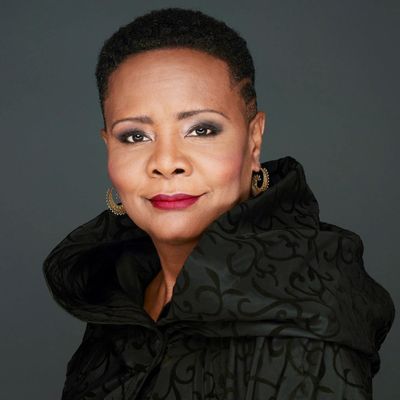
Tony Award Winner, Tonya Pinkins joins us to share her profound wisdom gleaned from being a single mother of four, a pioneer in the world of labor and delivery in New York City, and a voice for the underrepresented... Read More
From the show: Mamas Talkin' Loud
Guests
About
Tony Award Winner, Tonya Pinkins joins us to share her profound wisdom gleaned from being a single mother of four, a pioneer in the world of labor and delivery in New York City, and a voice for the underrepresented. By always making her children a priority, she has never wavered in her quest for getting what she, a mother, deserves in our industry. Join us, as we learn from the powerhouse that is Ms. Pinkins, just what it means to live in your power while pursuing your passions.
Find more info about the podcast via BroadwayPodcastNetwork.com/mamas.
Produced by Dori Berinstein and Alan Seales.
Edited by Derek Gunther.
Transcript
This transcript was automatically generated and might contain errors.
[0:49] Cara Cooper: Hi everyone, thanks so much for tuning in to this episode of Mamas Talkin' Loud.
[0:53] Jessica Rush: I'm Jessica Rush.
[0:54] Cara Cooper: And I'm Cara Cooper.
[0:56] Jessica Rush: And today we have with us the Tony Award-winning fabulous lady herself, Miss Tonya Pinkins.
[1:02] Cara Cooper: You have seen her, oh my god, daytime television for like 20 years, forever. Nine Broadway shows, including Caroline, or Change, for which she was nominated for the Tony, and the one she won for, Jelly's Last Jam, which is amazing. Um, she was FLP Body on Gotham, Martha on Fear the Walking Dead, just to name a couple of the numerous television shows you may have seen her on.
[1:24] Jessica Rush: And she's currently producing, directing, and co-writing Truth and Reconciliation, Women Working It Out in Association with the Tank and a Grant from LMCC. And she will write, produce, direct, and act in a socio-political horror film, Red Pill, not to mention her podcast here on the Broadway Podcast Network.
[1:43] Cara Cooper: You can't say that.
[1:46] Tonya Pinkins: Yes.
[1:46] Jessica Rush: You are a busy woman, Miss Pinkins.
[1:50] Tonya Pinkins: Yes, I have four adult kids.
[1:53] Cara Cooper: Oh my god. Well, that's our next question. But thanks for taking out the time to be here.
[1:58] Tonya Pinkins: Oh my gosh, thank you.
[1:59] Cara Cooper: Oh my pleasure. When I was looking up all the things you've got going for the research, I thought, oh my God, like she is so busy.
[2:00] Tonya Pinkins: Busy, busy.
[2:08] Cara Cooper: I mean, just listening to you just run down the list, my heart started fluttering like, oh my god, oh my God, she's so busy. But like you said, you have four adult children, right?
[2:20] Tonya Pinkins: So that sort of is a change. Will you tell us? We always talk, we always ask, will you tell us about your children to start?
[2:27] Tonya Pinkins: Yeah. Um, my youngest, my oldest is 32. Um, and I would say that they all four chose to shelter at home with me for the first six weeks of the lockdown. So my 32-year-old is here from California, Max. I have a 29-year-old who's a school teacher, special ed teacher here in New York City. So he's been working throughout. Um, my daughter is 23, Maya, she's about to become a contact tracer at a hospital. And then my youngest son, um Manuel, who was at NYU studying music.
[3:04] Jessica Rush: Oh wow, wow, that's amazing.
[3:06] Tonya Pinkins: It was.
[3:09] Jessica Rush: Yeah, how did that you know it was hard work because I was like cooking and cleaning all day, but I thought, like, you know, how often, other than like on a single holiday, do you get to have all of your adult kids with you?
[3:23] Tonya Pinkins: And I got them for six weeks. And so I sort of felt like, you know, if I get COVID and die, you know, what would be the last thing I would want to do would be to spend with my kids. So, you know, I felt really, really great about that.
[3:34] Cara Cooper: I think it's super interesting to point out though, you said you were still cooking and cleaning for growing children, so that never changes, huh? Is that what you're telling us?
[3:41] Tonya Pinkins: No, we all gained the COVID 19 pounds.
[3:48] Jessica Rush: Girl, I am very we're with you. Don't worry.
[3:52] Tonya Pinkins: Oh my gosh.
[3:53] Cara Cooper: But always like you would think that at some point you could say like, uh these dishes they don't do themselves of mama but also I bet there's like that I don't know at least for my mother and my mother-in-law and I think with all of us it's you still want to take care of your children, right? No matter how to take care of them.
[4:07] Tonya Pinkins: But I have a dishwasher. So if they could at least got into the dishwasher that would have been nice but now that's so awesome though.
[4:22] Jessica Rush: Sure for sure that's true. It's like I think it's something you just said about like if I were to get the virus and and pass away like what did I want my last times to be like and I that's something that you say that because just today a friend of mine posted that you know she said I'm tired of living in fear and I've been thinking and I want to start moving out into the world real responsibly but because at the end of the day if I am put on a vent and I and heaven forbid something happens to me would I would I miss the fact that my last months were spent self-isolated in my home and not living my life you know as opposed to taking the chances and taking the risks and weighing the options and I think there's something to that I hadn't to be honest I hadn't thought about that in that way.
[5:05] Tonya Pinkins: So I think there's something to that for sure.
[5:07] Cara Cooper: Um I didn't know that's so lovely that your son one of your sons is a special ed teacher.
[5:07] Tonya Pinkins: Yeah he's a special ed teacher uh in a charter school now he had been at Harvest Collegiate downtown but now he's at a school on the um I think in Spanish Harlem and they are that's where my mom is she's a my mother's a special ed teacher overall.
[5:07] Jessica Rush: Okay oh we gotta talk about and you're speaking to my soul because I have a special needs child so whenever I hear I just feel like special needs teachers are very very special people themselves so I you when you said that I child's needs are tell me their needs.
[5:07] Tonya Pinkins: Uh she's uh autism spectrum disorder um she's uh globally developmentally delayed uh you know speech issues OT PT I mean we run the gamut um but she's gonna be seven years old and we have all the services she has all the support but that's been IEP um oh yes she has a very very intricate IEP which right now I am um her IEP facilitating at home uh facilitating so that's been interesting but it's also been a wonderful lesson in getting to know her um even better than I did before and her needs and how best to you know educate her so uh in weird ways I'm grateful for the time though it has been definitely difficult uh I I have even more respect for special ed teachers than I had before and I and before I bowed down to them so they're put on even higher pedestal.
[5:07] Cara Cooper: Yeah right exactly the patience the patience. Um Tanya speaking of your children did you always want to be a mother was that something in your journey that you just felt?
[5:07] Tonya Pinkins: I did I I remember when I was very very little I told my grandma I was gonna have six kids and I did briefly have six kids when I married someone who had two kids. So I kind of always wanted to have a lot of kids. I don't know why, but I did. But I will say that when I had them all together and we're all playing board games, it really makes me happy.
[7:16] Jessica Rush: I can understand that. My husband's one of six kids, and it is a very special thing when they're all together. There's like an energy of a big family that's really wonderful, you know?
[7:25] Tonya Pinkins: Yeah.
[7:27] Cara Cooper: But so you said you always wanted to be a mother, and did you always know you wanted to be an actress? Was that something that you saw converging the two?
[7:36] Tonya Pinkins: No, I did not want to be an actress, but it sort of uh was like that came into my life. Like I started working professionally when I was still in elementary school, and I got my equity card when I was 16. I did a play at the Goodman Theater and then went to the Kennedy Center. And um, I was a person like my mother had a hard time working for a very long period of my um childhood. My mother didn't work, so I always thought of work as a very sacred thing, and you don't turn down work. And I kept getting offered all these acting jobs, and so I was like, this is what I'm supposed to do because the work is coming, and so I did it. But my priority always was having a life before having work.
[8:22] Tonya Pinkins: And so my work had to be configured around the fact that I, you know, eventually became a single mom, or even when I wasn't a single mom, if I went on the road, I had to have housing that could accommodate me and children, and I had to have schools, and I had to have uh, you know, like when I was in England, they got me a nanny as well, and got my kid into a really fancy private school there. So those were things that had to be in my contracts for working, you know.
[8:49] Jessica Rush: You know, I it wasn't my knew that you have to ask them, can you afford to do all this? If not, we can't even consider her. She's not gonna consider the job.
[8:56] Tonya Pinkins: Um, so you're speaking about all these um the extras you needed as a working mother, and I think that that's something that is becoming more a part of the conversation now. But at the time, this would have been, you know, back in what 30 years ago.
[9:13] Cara Cooper: Yeah.
[9:14] Tonya Pinkins: So it was a very different world with regard to that. Um, was there any pushback? Like, did you find were you were you was it hard for you to ask for those things? Was it, you know, how was that for you?
[9:26] Tonya Pinkins: Well, um, let's see, my youngest was born in 1987. So I remember my I did my first play, which was Just Say No with Larry Kramer and David S. Burnson was directing and Kathy Chalfond and David Margulis. And it was just a priority for me that my child had to be there. And for whatever reason, on that particular job, they said I could bring my child into the uh rehearsal room. So Julie White was also in it, and she had a young child. So we had our kids at rehearsal. But then I remember my next job um when my I had my second child in 1990 was at the Young Playwrights Festival, and they wouldn't let me bring my child into the room.
[10:10] Tonya Pinkins: And so I remember for that when I was bicycling home because I was nursing. So I would bicycle um back and forth from rehearsal. It's a festival, so there was breaks, and I would bicycle home so that I could nurse my child. But when I went on the road to do Jelly in California, I I had a n I was nursing a child and um I had a relative who who traveled with me to take care of them. So I don't I don't think it was ever hard for me because um it just was my priority.
[10:40] Cara Cooper: Right.
[10:42] Tonya Pinkins: If I wasn't if I if I had to choose between whether I was gonna work or was gonna be home, the home was was important to me, especially with my personal like the greatest love affair in the world.
[10:52] Jessica Rush: Oh yeah. Did you ever turn down work because they couldn't provide those things or wouldn't provide those things for you?
[10:59] Tonya Pinkins: Absolutely. I remember one time that actually isn't what happened, but it's what the agent did. Um, I was actually offered Ruined. And um they, you know, I I had a new agent, I'm gonna say his name, Richard Fisher at um, I think at Abrams. And um he just told me that they wouldn't give it.
[11:25] Tonya Pinkins: And um I tried to reach out to Lynn and he wouldn't give me their number, even though he told me they wanted to speak to me, Lynn and Kate, and I couldn't find anybody who knew them because I didn't know them. And um I said I can't I can't do it. They wanted me to go out of town to Chicago to do it, and they were only gonna pay for housing in either in one city, so it was like I'm gonna lose money on this job. And so I just said I can't do it. And then they came back around to me when they were coming to New York because they lost the person, but it was still going out of town, and it was now one month before they were gonna go, and it was like my kids are already set for school, I can't do it. And then when I finally did get to know Lynn, she said she was told that I wasn't available. Oh I later found out that my agent never even took them a request of what I needed was never even presented to them.
[12:16] Cara Cooper: Do you know what, Tanya? Like, I feel like that happens more than we even realize. And not just with childcare, but just in general, but particularly I think that's why we get worried and nervous, especially those of us, you know, you were like you said, you got your card at 16, you were established, you were um a principal player, you know what I mean? So then there are those of us who are maybe supporting or featured or ensemble. And it's a really hard ask. And I think that so many women um we apologize for asking or we don't even ask because of moments like that. You know what I mean? Like we don't even want to say it to our agent. And to think that that he didn't even take it to them is just mind boggling, right? It's just it's absolutely absurd. That is just crazy to me. Um and because I do find that like you said you spoke to Lynn about it later and she was like no that wasn't at all because what's the worst people say they say no.
[13:11] Tonya Pinkins: No let the creative people yeah exactly let them have the opportunity to decide because exactly and then if maybe they say no we can't do that maybe they give you something and then you say well okay I'll do this and they'll do that but it's like I shouldn't say no to myself or take on this whole burden myself. Let's see where they'll meet me and then you know we can meet halfway and figure out how to make this work.
[13:34] Cara Cooper: Exactly exactly exactly let's let's back it up you talked about the birth I'm assuming of your first child and you told us that you had the first water birth in NYC in New York City. So can you tell us I mean first of all how did that become something that you wanted to do if it was the first in New York how was that something that was on your radar what um inspired you to do that. And also, how was it?
[14:05] Tonya Pinkins: Well, I will say that um you know, I was raised Catholic, so it's like you don't date, you know, you don't live with men, you marry them. And um, I had been dating someone, and I had gotten uh, no, actually, this is we go back. I had kept getting very, very ill, and we did and I was going to emergency rooms regularly, just these pains where I couldn't walk, and it was all in that sort of, you know, our area where, you know, and finally I went to the hospital one day and they said we we are gonna run a bunch of tests, and they came back and they said, we got a we got a pregnancy test. Um, we think you're having a tubal pregnancy, and we need you to sign to do three different operations. Um, we got to go in and look around the laparoscopy, see what it is, and we will only cut you if we have to take out your tubes.
Um, so I wake up in OR and I've been cut from hip to hip. Oh my god. And for three days I lay in a hospital and nobody came to tell me what had been done to me. So at 19, I was lying in a hospital and I thought that I had had a hysterectomy. And so when someone finally came later and told me that it was just an ovarian cyst that was the size of a grapefruit that they had had to remove, I was so grateful. I didn't get mad at the hospital, but I swore I was never going to return to another hospital unless like I had a limb hanging off.
[15:29] Cara Cooper: Right. Absolutely.
[15:33] Tonya Pinkins: Yeah, I can understand why. Yeah, ovarian cyst was not in any of the possible things that could be wrong with me, but that turned out to be what was going on with me. And for three days, you know, and I was ashamed, you know, had I been pregnant and I hadn't told any family members, so I'm in this hospital by myself, no one even knows what's going on. And so I was like, never going to a hospital again. So when I finally got married and got pregnant, I started reading Michelle O'Don and just trying to learn everything there was about what natural childbirth was. And the book is not even coming to my mind because there's only one. Well, at the time I was having babies, there was only one book on natural childbirth.
And you know, I learned that Lamas doesn't have anything to do with natural childbirth at all. And so my then husband went to Madison, Wisconsin, and some friends of his gave him a cheese vat. So we had in the living room of the loft a copper cheese vat that was six feet high and six feet in diameter, and that was where we took our baths and showers.
[16:40] Cara Cooper: Wow.
[16:41] Tonya Pinkins: And so that is where my two sons were born.
[16:45] Cara Cooper: In a cheese vat.
[16:47] Tonya Pinkins: Yeah. I mean, that's amazing. I love that. I love it. I also like that there was a loft situation. I mean, I thought about that was just great.
[16:58] Cara Cooper: Wow. Was it hard to find the support for that to happen? Or did I mean you I'm assuming you had a doula, or maybe you did, maybe you were like, did not exist then.
[17:07] Tonya Pinkins: There was no such thing as doulas then that became later. My girlfriend uh had a lot of friends who were masseuses. And so my um my pain relief was massage. I had like four or five friends who were masseuses, and one of them stayed with me, and she was in the tub with me, and she was sitting behind me and my husband, and she would just press on my body um through that first labor was 26 hours and six hours of pushing. And she just massaged me for all of that.
[17:41] Cara Cooper: Oh my gosh.
[17:42] Tonya Pinkins: And we had a backup doctor. Sandy Fields is my midwife, but they've come down so hard on midwives, they've made it harder for them to practice than doctors. So Sandy isn't isn't a mid midwife anymore. But um, there was a doctor at um St. Vincent's who was the only doctor in New York City who was willing to back up midwives at that time. So he was my backup doctor, and Sandy Fields was my midwife then in 1987.
[18:10] Cara Cooper: Wow. That's incredible. That's incredible.
[18:14] Tonya Pinkins: Blows my mind and like such a trailblazer, Miss Pinkins. Just like, I'm gonna figure this out. I mean, it's true, women have been doing this for eons, right? Since the dawn of time, literally. So the amount that our body naturally knows what to do, you know, you trusted that and took control into your own hands. And I think that's really especially in a time where it wasn't experience did it for me. I mean, I think had I not had such a traumatic hospital experience, like I didn't tell you the things that happened to me before I went into surgery, which were worse.
[18:46] Cara Cooper: Oh my.
[18:46] Tonya Pinkins: So it was like the whole hospital experience was so terrible that like even to this day, I'm not dying in a hospital. It's not happening.
[18:54] Cara Cooper: I understand that.
[18:55] Tonya Pinkins: Yeah, I understand that too. A traumatic trauma can really leave a stark impression. I mean, that's to put it mildly, you know. So I I understand that, and I'm just that's amazing. I'm just a man, I because me, I'm like the rule follower. I'm like, what do I do? So, like the fact that the fact that you made your own decisions, and I'm always in awe of that. So yeah.
[19:19] Cara Cooper: It's interesting that you talk about that because I was very much the good girl, and you follow the rules, but I feel like when I became a mother, it's like I there were things I was willing to do on behalf of my child that I could not do on behalf of myself. And I remember like right after um I had my baby there he was vomiting. He was spitting up a lot. You know I'm a new mom. I don't know my baby's spitting up a lot. And so I went to a doctor and he was like you know home birth babies that are nursing and spit up a lot. There could be something wrong with the Eurogenitor canal and we need to either do a spinal tap or we need to stick something down his penis and go. And I was just like not happening. Okay. Whatever it is, that's not gonna happen because that sounds so excruciating painful you are not doing that to my child. We'll just we'll play it by ear.
[20:09] Tonya Pinkins: Yeah yeah yeah now I you what you said really struck a chord with me that the things that you would never stand up for yourself that you will stand up for your child. I have felt that so deeply since becoming a mother the things that I'm willing to fight for and and the ease with which it happens you know when you're thinking about standing up for yourself there's an intellectual thought process that goes how am I going to do this? I'm gonna take this step and this step and this step and with parenting and being a mother it's instinctual it like comes from your gut that you just know nope this is what I have to do and you don't even question it. It's it's really an incredible lesson in advocating for somebody else um and and how we can then translate that back to ourselves in a lot of ways.
[20:58] Cara Cooper: Yeah if only we could probably right it's the struggle.
[21:03] Tonya Pinkins: It is a real struggle to translate back. I know. Golly. And just, you know, just within our own selves and the the the societal constraints that have been put on us and the expectations and the limitations and um and how deep that runs, right? Like inside of ourselves.
[21:24] Cara Cooper: Yeah, I, you know, got so involved with midwifery because my last son was born in Mexico. I had I found a midwife because I was living in Mexico at the time. And so the midwife that I have there, her name is Sister Morningstar of Morningstar Community in Kaiser, Missouri. And she is a Catholic nun, and she's a hermitist nun, and she's a Catholic mystic. And the Catholic Church actually allowed her to create an order dedicated to sacred birth. So her entire um vocation as a nun is about helping women uh to birth naturally. So I've I've traveled the world with her, um working with women in Norway and Russia and India, and she has gotten to this point where literally she is now working with Western women to birth alone.
[22:16] Tonya Pinkins: Wow. I know a number of women who just birth alone in their bathroom, in their bathtub. That's the way they want to do it. A lot of the Russian women in India were saying they wanted to birth alone in the woods. So I know she had a woman in Venezuela who did that, and it's like there's something rising up in these women that I'm meeting all over the world. And one of them that birthed alone is actually a medical doctor in Missouri where it's illegal to have a midwife. So she would have either had to, by law, she couldn't have a midwife, and she is a doctor, so she did not want to go to a hospital.
[22:51] Tonya Pinkins: So she birthed the first time she did it secretly, but when she did it once, she planned the second that's the third was a third child, but she planned to do it the second time all by herself.
[23:02] Jessica Rush: I know you all look terrified.
[23:05] Cara Cooper: No, it's amazed.
[23:07] Jessica Rush: It's amazement.
[23:08] Cara Cooper: It's not terrible, it's it's not terrified, it's amazement.
[23:11] Tonya Pinkins: I just I also was taken when you said that midwives are illegal in Missouri. Like that also was like, wait, what?
[23:19] Tonya Pinkins: It's just there are four states in the US where it's illegal to practice midwifery.
[23:24] Jessica Rush: Wow.
[23:25] Tonya Pinkins: And yeah, and this is why the conversations are so important.
[23:33] Cara Cooper: Yeah, yeah.
[23:34] Jessica Rush: As awestruck as Cara and I are, when you were talking about, you know, these women who want to do it alone, what an empowering experience that must be. You know, like and as women have been doing this since the dawn of time, it's it's something you know is possible. Like it there, it's not beyond the realm of possibility. Um, clearly, I just I when you said that I'm like, oh my god, those women must feel like absolute warriors, you know. Every every woman that births a child does, but in that situation, I what what can't you do after that?
[24:11] Tonya Pinkins: Right, right. I did, I think it's disempowering the way they make us birth in hospitals laid back in the most uncomfortable position, you know. For thousands of years, men didn't even know that sperm had anything to do with babies, but once they found out they had anything to do with it, it's like, okay, now it's really about us. You weren't even necessary, it's hard sperm. We need to be looking. This is our thing in here.
[24:34] Tonya Pinkins: And we said yes. I keep going, why do we say yes?
[24:36] Cara Cooper: Yeah, exactly.
[24:36] Tonya Pinkins: Why do we say yes?
[24:43] Jessica Rush: Oh my gosh.
[24:44] Tonya Pinkins: Well, we know who the truly powerful ones are. I mean, you know.
[24:48] Tonya Pinkins: We are the ones who bleed and do not die.
[24:51] Cara Cooper: Yes, honey.
[24:52] Tonya Pinkins: Yes. Yes.
[24:56] Jessica Rush: Mark that down.
[24:57] Tonya Pinkins: I know, right? Like quote, quote, I mean the power. And I do think that now we are in a time, you know, and I I would love for you to speak as as a woman of color and as a woman who was on the forefront of some of these things and and the midwifery and what you've seen in your travels. Just um if you could speak to sort of the growth of sorts that has come. I mean, I know that in the last several years we've sort of been stripped and taken back, unfortunately. But I I don't know about you, but I feel that regardless of this administration, and regardless of what's happening um with women's rights and their uh their fight with us on that, um, I do feel that there is a passion and there is an awakening that's happening within ourselves, within women ourselves, you know, with the women's march.
I mean, I know, you know, with everything it that we are realizing um that now we have to stand up. We can't rely on others. And and what has that been like? I don't know if maybe it's been just the same, you know, but I would imagine that as someone who, you know, the 80s were a weird time, you know what I mean? And also growing up and as a woman of color, like to the journey that that that that has been.
[26:17] Tonya Pinkins: I think I I spend a lot of time thinking about when and why did women do women give up their power. Uh it's something I contemplate all the time, and I think it has a lot to do with violence. I think that male violence is what makes us have to give up our power. You know, I I'm a fanatical researcher as well, and and and I had one point had formed an organization called Operation Z for Zero Tolerance of Violence Against Women and Children. And my co-founders were the head of the public health for the Mid-Atlantic region, who went on to be an admiral in the military, and she was the assistant to the Surgeon General, and also a doctor who was on the um Walter Reed committee that was investigating violence against women in the military. And so I think violence is a big part of what makes us um sort of bow down.
[27:14] Tonya Pinkins: And I I really don't know what we can do when we're facing uh, you know, Hannah Gatsby, who I adore, I adore, I adore. She talks about the tension within men that they hate women and they love women, and so they're they're tense, they're tense, they're tense. How do we bring back this celebration of the woman, of the mother? We make the whole world work. We make the whole species work. How do we bring that back? Because when we begin to celebrate the feminine and women and mothers, rather than thinking that we gotta blame mothers for everything, I feel like the world will just be a better place when everybody can just revel in the fact that you love your mommy and you want to be with your mommy, and if you could never leave your mommy, then you could be happy. Like if that was okay for everybody to be able to feel that till the day they died, we'd we'd have a healthier planet.
[28:13] Tonya Pinkins: Like you said, this kind of embracing of the feminine in general. I feel like it's something kind of across the board. Femininity has such a negative connotation to it in a lot of ways. Um, you know, especially if it comes to a man expressing their feelings. It's considered a more feminine trait. Like, and that's considered negative in so many in so many uh people, so many people's eyes, not in my eyes. But um, you know, I think that the more we can celebrate it exactly as you said, the better off we're gonna be. But as mothers, we know that we're not we're we're fierce. We are fierce. We wouldn't feel something about our child. We are ferocious creatures, you know.
[28:58] Cara Cooper: Yep.
[28:58] Tonya Pinkins: Yeah, and it's like at what point did we decide that we wouldn't act on that or let that speak? You know what I mean? Like at what point? I was just listening to um Brene Brown and Glennon Doyle on Brene's podcast, who I just love them both. But Glenn said, like, who decided that to be a mother was to be a martyr, right? Like we we sacrifice ourselves when who we are is so fierce, like you just said. And it's like, what made us decide that that was how it was gonna be? This is what I often think, and I think it as a mother, like my daughter always says I'm much harder on her. It's because I know she's got she's stronger than her and her brothers. I have three sons, and it's like I think as women, we kind of know that they really couldn't handle it.
We can handle it. Like, no, we can handle it. But unfortunately, we have let them get away with stuff too long. Like we can handle it, and now we gotta go. You know what? We can handle it. We don't take over and sit on the throne.
[30:04] Cara Cooper: Absolutely.
[30:06] Tonya Pinkins: Absolutely. You are like playing, plain boss, but now we we can't let you play boss anymore. Too much wreckage.
[30:13] Jessica Rush: Oh my God. It's a mess.
[30:14] Tonya Pinkins: It's a disaster. I mean, I think I think there is something, you know, there was uh when uh Trump was elected and the heartbreak and the devastation and and the sadness and the anger, all the things that so many of us I think felt. Um, there was a I saw something, I read something about how the shift that was happening, whether you know, with the universe, with the moon, with Mother Earth, that there was this shift that was coming to the feminine side, just sort of as a humanity at large, that um there was a massive shift that was about to take place out of this sort of awful devastation that seems to have set us back so far. And I do think there's something to that, like not just with the awakening of within ourselves, but within society and um and all these women who are speaking their voice their truth and standing up and and those of us who are turning out and voting in our interests, you know.
[31:12] Tonya Pinkins: I do think it's fascinating to me when when we don't, when there are those who don't, and that's a whole nother conversation, but I do think there's something to sort of I mean, just like with where we are right now with this virus, Mother Earth said stop, pause, yes, exactly like the greatest feminine of all. Do you know what I mean? She said, You have to stop for a minute. You are killing me. You're killing yourselves, you gotta stop. And I just um yeah, I want us to continue to move on that. You know what I mean?
[31:45] Cara Cooper: Yeah.
[31:45] Tonya Pinkins: Well, I've never worried worried about the earth because I know Mother Earth can take care of herself. If she gets tired, she'll just kick us off. She's given us a reprieve. She's like, I'm gonna just like take a break. Uh-huh.
[31:57] Cara Cooper: Take a break, go to time out.
[31:59] Tonya Pinkins: Absolutely.
[32:00] Cara Cooper: Exactly.
[32:01] Tonya Pinkins: Exactly. Like all good mothers do.
[32:04] Cara Cooper: Exactly.
[32:06] Tonya Pinkins: Exactly. Oh my gosh. Um, I wanna. This is sort of like shifting gear, but talking about being a powerful woman and knowing your power, to be a single mother, I think takes so much power, right? And so much strength. And um, as one of our first single mothers, um, speaking, you know, uh, to that end, how how was that experience for you balancing your career with that? I can only imagine. I mean, it's hard enough with a partner and one child, let alone four, and on your own.
[32:40] Tonya Pinkins: Well, I think the the the most challenging part for me was that I'm a very strong woman. I have I have just I feel like creativity is my energy. I think that children are a form of creativity, so it's just another creative expression, and so I feel like I have so much creative energy uh flowing through me that uh very I have not ever met a man who could handle me. So I really became a single mother because my husband wanted to tear me down. It was about a way of trying to uh bring power into a relationship. Even one of my uh husbands, because I've had three or four, three, I think. One of them actually said, I I I filed for divorce papers to bring us back together. And I was like, oh no, no, no, no, no, no, no. You know, I think that it's one of these ways in which men think I can't handle her.
I'm gonna go get the judge and the lawyer and the police, and then she'll have to settle down. And when I the first time I went into court to get divorced, I was such a not formed being. My judge was Elliot Wilk, who ended up leaving my case to be the Mia Farrow Whitty Allen judge. And really fantastic. And my husband had filed all these papers, he said all these horrible things about me, and Elliot Wilk got it. And so he took us into court, he gave me everything.
[34:17] Tonya Pinkins: And he said to me, "Well, Miss Pinkins, what do you want?" And I didn't even have an answer to that question. I didn't even know what that meant. I was like, "Well, I want to be with my husband, but if he doesn't want to be with me, I don't get a choice in the matter." And so then my husband's and his lawyer, they capitalized on that, and they're like, "Oh, so you can pretend to want to be with her, and then you can get her back, and then we can set up a whole bunch of other things, and then we'll get everything taken away from her." And so that is what ended up happening. Wilk left my case, and then I got this judge who just hated powerful women, literally said to the New York Law Journal and the National Law Journal, "She is stuck with me till death do us part."
And he called me a moving target. And you know, there were like 28 talk shows that wanted me to come on to talk about this anomaly of a woman losing custody because I lost custody of my two children. Oh my god. And I did my research, it was like it wasn't an anomaly. It was this thing that nobody talked about because women get shamed. And there was this myth that women only lose custody if they're abusers or drug addicts or bad mothers. But when I sat and I did the research, what I discovered, and I think people forget about this when they think about the Me Too movement, women were men's property well into the 20th century. We were property as were children. We did not even have a right to our children.
There was the tender years doctrine that said you can keep the child till it's potty trained and can talk, but then you're done. And so no magazine or news show would, and I didn't know that I could just go on and say, "Sure, I'll talk about what you want to talk about," and say what I wanted to say, but no one was willing to do a story about the fact that this was the legacy of America of women as property without the right to vote, and that this idea that I was losing custody had been happening forever to successful working women because what men had figured out is, "Oh, she's working now. I can get them to make her pay me child support, and then I can hire a babysitter to take care of the kids. That's how I'll punish you."
[36:48] Tonya Pinkins: Yeah. Oh my god, Tanya. That was a big, big piece of it. And I sort of, any, any, any, and the way he did it was like right after I won the Tony Award, it was like a couple months later, and literally had me served at the theater, you know, as I was walking out to sign autographs. I thought I was signing autographs. Like I had no clue. Like, you know, we're living together, we're sleeping together, we're having a conversation. So you talk about someone who's like playing a power game. Right. So then I just went into like full legal mode, learning the law, going to law school, you know, battling it out. And I'm glad I learned what I learned so I can tell other people the law was not made to protect women as so many things.
I mean, nothing, very little I think is made to protect women, right? It's a struggle, a battle that continues. I mean, it's just ongoing until more women are in power, and that's what it's gonna be, you know, until they're making the decisions. Sometimes when women get in power, they think that they have to be like men to be in power. You know, it was so lovely to see that judge who handled the case with all those gymnasts, and the way she let those women speak, and the way she gave that verdict in that case, you know, she was still connected to herself as a woman and caring about these girls as if they were her children.
[38:21] Tonya Pinkins: Yes, and leading with empathy for them and being sensitive to the person and the women who were there, as opposed to ignoring that part of ourselves. I feel like we're talking to, I mean, just like a mother guru, you've been through so much, you've experienced so much from the home birthing and the water birth to traveling and supporting women through what you just described with defending yourself in court and how you help handle that. I feel like you have such wisdom to impart to our listeners. And what would be your advice to someone who is just becoming a mother? Our last guest was Patty Murin, and she is about to become pregnant or about to have a baby, she's pregnant. So, what would be your nugget of advice or wisdom that you would want to share with a woman who is about to embark on this journey of motherhood?
[39:22] Tonya Pinkins: What I would say is something my midwife Sister Morningstar said to me is that when you are birthing a child, all the power of the universe is flowing through you. And if you only have one or two children, you only have all that power flowing through you one or two times. So embrace it. Embrace it. Know that you were born to it. Know that the culture, the society, the system you are built in is designed to disempower you. Unfortunately, the way the insurance system works, it is more profitable to give a woman a C-section. So if you can have an advocate with you who is going to question every single thing the hospital wants to do, everything they say your baby's in distress because what they do is they stress moms, they put a mom in fear for her child.
But when you stress a mom, you stress the baby too. And they don't think about that. They're thinking about their schedules and who's going to pay the insurance. And so to have someone who can be that advocate for you for what you want when you are having to focus all your energy on this thing that is happening that you were born to do, and it's a mystery. Like science doesn't want to admit that this is one of the last great mysteries of the world. No one knows but the mother and the child on some unconscious level when that baby's supposed to be born. Nobody knows. They can't figure that out, they can't pinpoint any of that, and they don't want to give that up. So they wanna do all this stuff.
So if you can ground yourself in the mystery of that and know that nobody knows more than you, and have someone who is an advocate so that you can do the work that you were meant to do. That means that if someone's in the room that you don't want to be there, you're not gonna open up your body to give your baby. And if there's someone you want to be there who's not in the room, you're not gonna open up your body till that person is there. And so if they're saying it's late, trust in your own instincts that you know how and what to do this, that you and the baby know when the time is right, and not letting anybody, anybody violate that.
[41:40] Tonya Pinkins: I mean, I, I, powerful, powerful advice. And I think you just hit the nail on the head with the trust your instincts. I mean, I think that that lasts through all of motherhood. I mean, you have been doing this a lot longer than Jess and I, but that's something I certainly feel that the moments that I trust my gut are the best when I am the best mother. And the best woman and the best person is when I trust my instincts, and learning to do that is something you do need to learn to do as you become a mother.
[42:09] Tonya Pinkins: Well, we come into the world with them, and then society trains them out of us. And particularly Western society, because we're trained, we have to be verbal and we have to be in our head. And that's how men manipulate us. Because as soon as they get us in our head and explaining and talking, we're on the hook. And which fish get caught? The ones that are on the hook. If we stop answering the questions and stay out of that and stay connected to feels good, doesn't feel good. I want to, I don't want to. Makes them crazy because there's no rationale. There's no logic in that. But that's where our power is. And see, they can't fight that power because we're just like, "I don't feel good, feels bad, don't want to, do want to." Then they're enraged. But if they can get you on that logic thing, then you have no connection to your source, which is your body.
[43:05] Cara Cooper: Yep.
[43:06] Jessica Rush: Absolutely.
[43:07] Tonya Pinkins: I feel like I just went to church.
[43:09] Cara Cooper: I did too.
[43:11] Jessica Rush: I feel like I'm at like a woman's retreat, like a woman retreat.
[43:16] Cara Cooper: That's what I feel like right now. I'm like all pumped, like I'm full of adrenaline, like ready to go fight. Like I'm like, "Let's do this."
[43:23] Jessica Rush: Same. Is this what it's like to live to be you, Tanya? Like, do you always feel such power?
[43:31] Tonya Pinkins: I do. And what is hard for me is there's very few places in the world where I can express it, where it's not considered like, "Whoa, you're too angry. Oh, you're just too much, you're too intense." And it's like most of the time, I'm sitting places and like I'm just having to sit on my energy because I just have a lot of energy and I have a lot of enthusiasm. I have a lot of thoughts. And it's, and to me, I just think I am an instrument for the divine to flow through. It isn't even me. And I'm just willing to, I'm willing to be nothing so it can express in through and as me. So it's infinite. And that power just flows. And there's just very few spaces in the world where I can be that. So that is my great frustration.
That is what led me to finance, write, produce, direct, and act in a film that I also scenic design, costume design. I mean, and you know what? I was like, "Yeah, this is the level I need to work at. This is right. This is how much work I need to do to get tired at the end of the day."
[44:34] Cara Cooper: Oh my god.
[44:34] Jessica Rush: Oh my God. Well, to have some of your energy and your power. I do. I feel really inspired right now. And I just want to say thank you. Thank you. This conversation really lifted my spirits on this day. And yeah, I'm so glad you could join us.
[44:50] Tonya Pinkins: Oh, it's my pleasure. Thank you so much. And I gotta say, see my movie Red Pill.
[44:54] Jessica Rush: Red Pill.
[44:55] Tonya Pinkins: Red Pill.
[44:56] Cara Cooper: You've got out.
[44:58] Tonya Pinkins: Thank you for having me on.
[45:00] Jessica Rush: Thank you so much.
[45:02] Cara Cooper: Thanks.
[45:09] Jessica Rush: Thanks so much for listening to this episode of Mamas Talkin' Loud. Special shout-outs to Rachel Spencer Hewitt for our fabulous graphic. Kristen Anderson Lopez, Bobby Lopez, and Justin Ward Weber for our awesome theme song. Our producers Dori Berinstein, Alan Seales, and of course the Broadway Podcast Network for bringing us to you. If you like what you're hearing and you want to keep the conversation going, you can follow us on Instagram and Facebook. And of course, subscribe and review us wherever you listen to your podcast. Thanks so much for tuning in.
© Broadway Podcast Network, All Rights Reserved