

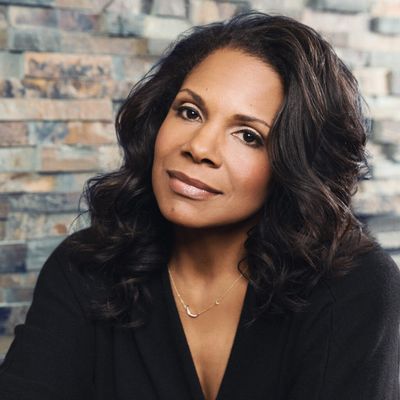
In honor of the Tony Awards this Sunday, please enjoy this encore release of our chat with nominee (for the 7th time!) Audra McDonald, currently starring as Mama Rose in GYPSY. Make sure you've listened to Part 1 and follow the Mamas on Instagram @mamastalkinloudpod for up to date info on their return... Read More
From the show: Mamas Talkin' Loud
Guests
Featured Shows
About
In honor of the Tony Awards this Sunday, please enjoy this encore release of our chat with nominee (for the 7th time!) Audra McDonald, currently starring as Mama Rose in GYPSY. Make sure you've listened to Part 1 and follow the Mamas on Instagram @mamastalkinloudpod for up to date info on their return.
2020: Kicking off season 2 of Mamas Talkin Loud we were honored to speak with 6 time Tony award winner and venerable pillar of the theater community, Audra McDonald.
TRIGGER WARNING: sensitive conversation about miscarriage
As a mother with 15 years between her girls, she has seen a shift in how our industry views parenthood, but knows there is still SO much work to be done. She shares with us the differences in parenting then and now, and how her older daughter is actually helping her be a better parent the second time around. As a founding member of Black Theatre United, she is working tirelessly to affect real change through civic engagement, all while balancing the life of a working mother artist, amidst a global pandemic.
Find more info about the podcast via BPN.fm/mamas.
Produced by Dori Berinstein and Alan Seales.
Edited by Derek Gunther.
Transcript
This transcript was automatically generated and might contain errors.
[0:00] Jessica Rush: Thanks so much for tuning in. This is part two of our conversation with Audra McDonald.
[0:30] Jessica Rush: I know so often that we are scared to ask for things. And we talked about this when Tara Rubin was on with us earlier last season. She was just saying how the more we speak up, the more it will have to change. And it will just have to become normal that there are certain things that are expected when you're a parent who's working and you're going out of town or this or that. But there was something you shared in our Facebook group a couple years ago, an experience that left us all a little stunned, which was, and you can correct me if I'm wrong, but that you were in negotiations for something and you asked for a day off or maybe two days off for Zoe's graduation, high school graduation. And it was for rehearsals, if I'm not mistaken, right?
Not even the show, not even the performance, just the rehearsal. And you asked for that time off and you were denied it. And I just remember thinking like, oh my God, if Audra McDonald can't get the day off from rehearsal for her daughter's graduation, what hope is there for the rest of her life? I mean, the page exploded. People were aghast, like could not wrap their minds around it.
[1:40] Audra McDonald: Yeah. I mean, I have to say when that went down and disclaimer, it wasn't for a Broadway show, it was for a show happening somewhere else, which I was to be the lead. And their whole argument was, oh, I mean, it's not even like they were not sympathetic, but they just were immovable. They just were like, oh, we're so sorry. It's just that it has to be this way. One of those things where they sort of, oh, I just hope, and the way that was being described to my manager, like, I just hope you understand it just kind of has to be that way. And I was, my head was on fire too. And I was just like, it's a no. You don't understand. It is so a no. There is no way on God's green earth that I am missing my child's high school graduation.
No show, no amount of money. None of that is worth it. And especially because I kept thinking, we're not dealing with performance here. We're dealing with rehearsal. I can make up that time. It's a show that I was very familiar with. I was like, this is, you should be able to make this work. And if I am not important enough to you to make it work, great. Because you know who isn't important enough to me is Zoe Madeline Donovan. And I will have to live with that for the rest of my life. And she will have to live with that for the rest of her life. That mom chose that over me. And I get, and I'm not judging, because sometimes, you know, I was able to find other ways to make up that work. So what's hard is I did have the privilege of being able to say, then just no, forget it.
And I'll find another way to make up that financial loss. But there are people who do have to make that decision sometimes. And that is heartbreaking. And that is, I think, something that, I don't know, that I think needs to be addressed within our union, especially because sometimes it is the mom that is the breadwinner. I mean, and I get it. It's not, you know, families are made up in different ways now. I mean, we have, you know, families with two moms, two dads, single parents. But parenting in general needs to be taken into consideration with a lot of what's going on with the unions. And there needs to be sensitivity. And there needs to be an understanding. And I think a lot of that has to do with we're all so oftentimes told as actors, there are 500 people behind you who want this job.
So if you can't do it, blah, blah, blah. And I think it shouldn't have to be that sort of that stark of a choice. I mean, it shouldn't be you get one or the other. You know, you should be able to have both. And there is a way to make the work not suffer. And here's the thing. We're strong. We don't, our work doesn't suffer. I'm sorry. Me, if I'm being, if I'm depriving my children of what they need, emotionally, I suffer, and then my work suffers. But if I can give them what they need in a way that doesn't make your, my quality of work suffer for you, then that's a win for everybody. And why wouldn't you want that? Why as, you know, a producer or, you know, an employer, why wouldn't you want that?
In the way that like these corporate offices, you know, will like put nurse daycares in their building. And so productivity for them goes through the roof. It's like, why can't there, you know, was there somebody who was starting like a nighttime daycare centers near the theater? Well, Vosti started probably babysitters and they were trying to do that. But the problem is the insurance. And that's a whole different conversation because they've actually approached unions to help and not gotten much support. So, you know, that's, it's an ongoing battle. And I've never understood why take away even just the parent aspects, but if someone wants to go be, you know, to their brother's wedding or something like that, there are things that there are rules in place that give the producers the power to deny us these life events, right.
And the time off. And I've never understood that. Cause I'm like, if you give just this little bit, it makes us so, it makes such a difference. Like being able to pick Elliot up from the first day of school. And you know what I mean? Like that makes such a difference and it takes nothing from them. It's like, they could have given you that day, have the ensemble work on their music. You know what I mean? Like, hello. Or do you have an understudy who needed to practice? I mean, like there's a million things.
[6:32] Audra McDonald: Of course. It's sort of like, you know, I, in the, in the end I was like, you know, maybe they just weren't that into me and that's fine too. I can't believe we're hearing Audra McDonald say maybe they weren't that into me. Fine. And I, in the end it was a production I'm glad I didn't end up doing, but the, the idea that I was ever going to make any other choice and that kept coming back and having my manager come back to go, well, she don't understand. Not a one. It's interesting because I work with, I'm doing this TV show with Christine Baranski for a few years now. And she and I both have had similar situations where she was filming when she was doing Civil, the TV show, that was filming in Los Angeles, but her, she had left her daughters with her husband in New York as, as not to uproot them.
So she was flying home every weekend and trying to be there for them. And I remember when I first got a private practice and I was going through a divorce at the time. So I, I needed to take it. I needed the money, but it was in California and I didn't want to uproot my daughter, Zoe at the time. So I left her here and I would fly back and forth on the weekends. I think I accumulated like 750,000 miles by the time it was all said and done. And Christine Baranski, I remember her saying to me once, she said, I remember getting the shooting schedule and seeing that I wasn't going to be able to fly back in time to take the girls trick-or-treating. And she said, I remember just collapsing and in tears.
And, and just saying you, at the time when Christine was telling me this, I was like, oh wow, that sounds awful. And then that kind of stuff started to come up as a possibility for me. And it was just like, you don't realize how important those moments, those life moments are and how, and, you know, we don't always remember every single day as a kid. I don't remember every single day, but I remember trick-or-treat. I remember what my Halloweens were like and my Christmases were like and all those things and just how important they were. And I remember Christine saying, do what you can to make sure you protect those days. And, and thankfully I was working for someone who had children. And so she, and she was a single mom and I was going through a divorce at the time. So she understood the necessity of trying to help me make all that work.
[9:11] Audra McDonald: Um, but the fact that you had to, you have to beg.
[9:15] Jessica Rush: Yeah. It always just baffles me too, because we're in an industry that is examining the human condition, human stories, and we need to live our life in order to tell those stories. Like there's no compassion for the life that we are trying to portray on stage. You know, it's, it's, it just doesn't compute for me. I don't, I mean, I know, I know it's the almighty dollar. I get that, but you know, at some point I hope that the integrity of the arts, you know, philosophy will reign. I do think that when there's a, I mean, moms rule the world, y'all truly like mamas make shit happen. And I think that when there are mothers in positions of power, I do think 90% of the time it is different. It is different.
And I think, you know, just for women in general, opening up that pipeline for women, for people of color, all of that, opening up that pipeline to get, you know, other experiences and other points of view in there. So that there, I mean, so again, like, you know, thank God I had someone like Shonda Rhimes running private practice. So I could say to her a couple of things, okay, you're a black woman. I can't have them like putting heat on my hair every single day. It's going to fall out. What are we, and she was able to help. And also being like, and you're a mother, I have got to get home for Halloween. How can we, you know, but if I, if that had been like one of the 95% other sort of people who normally run those situations, there wouldn't have been a conversation.
[10:55] Jessica Rush: We're going to take a really quick break right now, but don't go anywhere. We are going to be right back, continuing this amazing conversation with Audra McDonald.
[11:03] Jessica Rush: At all. And that's something, you know, we right now, not only like women's rights, but also, you know, the conversation around equity and equality and racism in our world, but also particularly in our industry has really come to the front, to the forefront, right. And has really ramped up. And, and you are a founding member of Black Theatre United, which for those who don't know, it is members of the black theater community who are standing together to fight help, to protect black people, black talent and black lives of all shapes and orientations and theater and communities across the country. Now you are a founding member. I looked at the founding members page, cause I follow y'all on Instagram.
But then today I went to the website and I looked at like the whole thing that pillars legends, the black theater experience. Do you want me to have community? It's like you and you got Felicia Rashad and you know, our former guests, Natasha Yvette Williams, but also Stokes and Norm Lewis and Lashawn. I mean, amazing Shelly Williams. I mean, just like the people that you have and the work that you guys are doing. And I'm sure a huge part of that was born out of your experience of being a woman of color, a black woman in this industry, right? Like, I mean, clearly something shifted and, and has led to this now with George Floyd and with, um, what's happening in our country. How has that been for you? Could you articulate what it has been like to feel the shift that's happening and the awakening and awareness, or I'm so interested.
[12:27] Audra McDonald: Um, yeah, it's, it's been a couple of different things because, you know, there was the George Floyd moment that I think's just sort of broke everything open. There was all these things leading up to it too, that I think that was just the straw that broke the camel's back. But obviously these are not new stories, you know, people being policed while being black in, and not just by the police, but being policed, you know, like the, the, the birder in Central Park and Aubrey being shot to death by, you know, all of it, Breonna Taylor. I mean, let's let, you know, but I think what, what happened for Black Theatre United is it was basically LaChanze and I texting each other one night and just going, what, devastated by what's happening.
We've got to be able to do something. And where is the theatre community? Why aren't they making statements? Where are they? Why are they not out there supporting us in the way that we, as black people in the community, theatre community, have always been there for like LGBTQ rights and for the immigration rights and women's rights or whatever, and, or, you know, Broadway Cares, Equity Fights AIDS, all this to play. Why is everybody silent right now? We are hurting.
[13:52] Audra McDonald: And not only that, a lot of our friends, and it's well-intended, a lot of my white friends were saying, I'm just so sorry, what book should I be reading? I'm sorry, I just didn't know, and all this stuff. And it was just getting exhausting and awful. So that, coupled with being a mother and speaking to LaChanze that night, we were just like, we gotta do something. And so we just said, let's get some of our friends together and just get on a Zoom and see what happens, just talk about this. And from that, Black Theatre United was born, basically. And one of the main things we wanted to do is, yes, there is so much systemic racism within this country and within the theatre, and we wanna be able to work on the micro, which is our community, the theatrical community, and making sure we open up the pipeline, making sure that we have Black people and BIPOC people being represented, not only on stage, but in production, and producers, and publicists, in casting, behind the scenes.
The fact that I can count on one hand, basically, the amount of Black PSMs in theatre, that sucks, that's terrible. The same thing with the unions, with the hair union, the wardrobe union, it shouldn't be like that, and it's not representative of our country as a whole. The micro is very important to us. And then the fact that we have to work on the macro. We can say, theatre's gotta change, and it does. But if we're all still getting shot in the damn street, and still being policed, and not even be able to have a lemonade stand while being Black, and all that stuff, if our house is literally burning down, it doesn't matter how well we redecorate the living room, which is the theatre community, we have to stop the house from burning down.
Which is why we've been focused on civic engagement, as much as we have, with the census, and voting rights. We're getting ready to pivot to voter suppression and all that stuff, but because the census, the deadline is coming up for that, and it's a way of suppressing and oppressing marginalized communities when they are undercounted, which is why we've been focused on it so much in our work with Fair Count and Stacey Abrams' organization. Oh my god, the webinars and the town halls? I mean, those have been incredible. Thank you for those. Yeah, and one of the reasons we wanted to do a lot of them is because we're in this moment, and I think there's all these wonderful organizations happening throughout the theatrical community with Black people, and with Broadway Advocacy Coalition, and Broadway for Racial Justice, and there's tons of organizations that are popping up, and it's wonderful, and this is just a particular moment in history.
For me, I don't want to look back on this time and say or think, I should have done more, and if there's in any way an opportunity to leave this place in better shape than when we got there, not only for my children, my grandchildren, but women, for Black people, for BIPOC people, for the whole community. I mean, like Sherilyn Ifill said in one of our town halls, brilliant Sherilyn Ifill, who's the president of the NAACP Legal Defense Fund, she said, when you lift the bottom, everybody comes up. Don't build a wall, build a bigger table. Yes, exactly. Build a bigger table, and all of us. I know it's, and I am so, definitely, I was in TINA when the shutdown happened, and that is a company, there were two white girls, me and Katie Weber.
I think probably it's like a 95% Black company. How rare is that? So rare, and there was a lot of anger. We were having Zooms just to check in with one another, but then when this happened, when the shift really happened, and this is not a moment, I really, truly believe this is a movement, and that things are being born out of it. But there was so much disappointment in the fact, like you said, that it took so long for the Broadway community to make a statement. I remember them saying to our producer on a Zoom, we are a Black show. You have all of us, and if you love us, why have you not said something sooner? And so the learning, and the listening, and the groups that have come out of that, we're doing our own work on that end, but it has been incredible to see the grassroots, from the bottom, work that's being done, and the way, because it's true.
I think we all give to BCFA all the time, and Actors Fund, and we're always there, and we need to support all. Yeah, everything. Marching for everything. Everything, everything. So we need to march, and shout, and raise our voices, and-
[19:01] Cara Cooper: Yeah, and teach our children.
[19:03] Audra McDonald: Yes. And teach our children. Girl, Elliot, girl, see, her favorite book right now is One Vote, Two Vote, I Vote, You Vote, but that's only because we've shifted. But most recently, she came out of the bedroom the other night, and she said, Mom, where's my kid's book about racism? Because I bought that one for her, along with, my husband Eric's always like, she is going to be the most woke six-year-old, because we've got the civil rights books, and we've got-
[19:33] Cara Cooper: Yeah.
[19:33] Audra McDonald: But she really, she wants to learn, and she wants to understand, and she doesn't, having these conversations with our children is so important. I mean, it's baffling to her, as a child of New York City, that this is even a conversation. And clearly, I don't give her the darkest details, but she does know that people are treated differently, and because of the color of their skin, and the change begins with us, the change begins with them. And we have to be the change we want to see in this world, to leave it for them in a better place.
[20:08] Cara Cooper: Right. Yeah. And I'm being also schooled too, by like, we beta test a lot of our stuff, like for BTU, and stuff that we're working on. I beta test it with my 19-year-old, and LaChanze has two fierce daughters.
[20:23] Audra McDonald: Oh, yes.
[20:24] Audra McDonald: My God. Oh, my gosh. Those girls are, I mean, and obviously, you know, Celia, but Ziya's just, they're both amazing. And we beta test a lot of stuff on them, and they will tell us, they're like, oh, no, no, no, no, no, no, no. You need to include the pronouns in this, you need to do this, da-da-da-da-da-da-da-da. And so, I mean, it's, so again, because they're watching us, even though they are in some ways having to lead, I want to make sure that when my, you know, my daughters turn around and look, that they see that even in my own floundering way, however I did it, yeah, mama was busy, you know, we get something done, you know.
[21:02] Audra McDonald: It's so funny, when you were talking about Elliot, I thought about Zoe, and even just how she was helping you parents, saying, don't repeat, you know, bashing yourself in front of me, because it informed how I think about myself. I have hope. I have hope that the children right now are living through this time, are seeing what's going on, you know, and obviously, we need to model it for them and bring, especially for the younger children. But there's this cultural awakening, and a lot of it has been facilitated by COVID in a strange way, because there has been a pause. There has been time. People were so busy before, they didn't, they could ignore, they could shut things. I mean, Black people have been being brutally murdered for as long as we can remember.
So, it's not a new issue. It's that people had time to digest it, or couldn't shy away from it, couldn't put their energies towards something else. And so, you know, and maybe it's naive of me to feel that way, but I do see this younger generation coming up, and you talk about your daughter and LaShonda's daughter, and I just think that they're going to be some fierce women in this world.
[22:06] Cara Cooper: Oh my God, those three, the three of them, Zoe and her girls, they are fierce ladies. I mean, they are, or they are, they, they, them.
[22:23] Audra McDonald: Yeah, actually, it's so funny, because we were like, trying to find, you know, people to design our website and all this stuff, and we're getting it done. And then one day, Zoe was like, Oh, mom, you want to see something I've been working on with my friends? And they had started like this whole website and e-zine for like, you know, like a digital magazine.
[22:34] Cara Cooper: Yeah, for like, queer, queer voices and, and, and, and women and all this stuff.
[22:43] Audra McDonald: And I was like, did you just build a website? She's like, yeah, we've been doing it the past couple.
[22:49] Cara Cooper: You're like, I've been trying to find somebody to do it.
[22:57] Audra McDonald: And she's like, you built a website? She's like, yeah, here it is. So here's our, here's our monthly, here's our, I'm like, can you, and then my stepson for my birthday, because we've been working on logos and stuff like that. He pulled, and we have been trying to like, sort of interface one of our logos with a lot of the words from our word cloud. And you know, I was trying to describe what I wanted to these people that have been helping us, they've all been wonderful, the different people that we've been working with to create all these things. And my stepson for my birthday, had, you know, this beautiful card that he sort of like graphically designed, and he had taken the BTU logo, he'd gotten like all the pictures, screen grabbed all the pictures of everybody doing the PSA, and then like, had done like the word cloud in the way that I wanted it, but didn't even, I didn't even tell him that I was like, he was like, yeah, I was like, can I? And it's nothing to them.
[23:55] Cara Cooper: Yeah, I know.
[23:57] Audra McDonald: They're like, teach me.
[24:00] Cara Cooper: Yeah. We, we used to play organ trail. So the floppy discs, you know, anyway, well, you go for it, Kara.
[24:12] Cara Cooper: Yeah, well, I feel like we're kind of leading in this direction. So we usually ask our guests an engagement question, something that we can also put to our listeners as well, on social media and whatnot. And I feel like we're gearing towards this with the election coming up. And what we're talking about, the social change that needs to happen. What is your, to coin a beloved president of ours, Barack Obama, what is your hope for the future? I mean, that was his entire campaign, right? What can we, what is your hope moving forward with this election, with the, hopefully the next administration, whatever it is, but the change that needs to happen, what is your hope?
[24:56] Audra McDonald: My hope is that we have been, because we have wallowed and suffered so much, you know, from 400 years on to now, and specifically within this administration, my hope is that we will learn from this and never will history repeat itself like it has. So my hope is that this moment that is becoming a movement is something that is not forgotten, that this window of opportunity for change stays open, and that people stay committed to really affecting real substantive change. And that we as a country, never, that we protect ourselves in a way that this never happens again, and that we truly do move forward. And so for me, it's the hope that this movement continues and becomes a groundswell and becomes, you know, a seismic shift that then changes the way this country then works and is seen and is experienced. That's a long hope, but that's where I'm at.
[26:04] Cara Cooper: I love it. Amen. Yes. I'm here for it. Audra McDonald, thank you. Thank you for being here. This is just, this was a fantastic conversation, and we appreciate you so much sharing your time and your stories.
[26:20] Audra McDonald: My pleasure. My pleasure. Thank you guys again. I mean, for Broadway Baby Mamas, what you started, I mean, being able to join that and just having it be such a resource and what I love about that group is like, even if it's just someone, every once in a while just pops on to go, oh, everybody else can just go, I feel you. I hear you. You are heard. You are sane. And if you're feeling insane, then you are insane. And it's okay. We are here for you. It's just, it's such a resource and such a place of comfort. So thank you guys.
[26:52] Cara Cooper: Of course. I'm so glad.
[26:54] Audra McDonald: Of course. Yeah.
[26:55] Audra McDonald: Be well and stay safe. Keep breathing.
[26:59] Cara Cooper: You guys too.
[27:11] Jessica Rush: Thanks so much for listening to this episode of Mamas Talking Loud. Special shout outs to Rachel Spencer Hewitt for our fabulous graphic, Kristen Anderson Lopez, Bobby Lopez, and Justin Ward Webber for our awesome theme song. Our producers, Dori Berenstein, Alan Seals, and of course, the Broadway Podcast Network for bringing us to you. If you like what you're hearing and you want to keep the conversation going, you can follow us on Instagram and Facebook. And of course, subscribe and review us wherever you listen to your podcast. Thanks so much for tuning in.
© Broadway Podcast Network, All Rights Reserved