

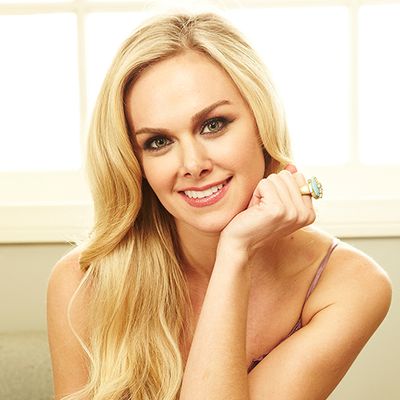
Drama Desk and Tony Nominee, most well known for bringing the iconic Elle Woods to life on Broadway in Legally Blonde the musical, Laura Bell Bundy, is an actress, singer, songwriter, director and producer who is leading the charge as a voice for women’s rights... Read More
From the show: Mamas Talkin' Loud
Guests
Featured Shows

About
Drama Desk and Tony Nominee, most well known for bringing the iconic Elle Woods to life on Broadway in Legally Blonde the musical, Laura Bell Bundy, is an actress, singer, songwriter, director and producer who is leading the charge as a voice for women’s rights. With the release of her new podcast Women of Tomorrow, based on the album of the same name, she can give you a women’s history lesson, write a song about it, & produce a concert to support the cause, all while carrying the mental load of motherhood. As the election looms large, this two part episode will have you singing your way to the polls (or while waiting on line), ready to continue the fight for women’s rights, no matter the outcome.
Find more info about the podcast via BPN.fm/mamas.
Produced by Dori Berinstein and Alan Seales.
Edited by Derek Gunther.
Transcript
This transcript was automatically generated and might contain errors.
[0:00] Cara Cooper: Hi everyone, thanks so much for tuning in to this episode of Mamas Talkin' Loud.
[0:03] Jessica Rush: I'm Jessica Rush.
[0:04] Cara Cooper: And I'm Cara Cooper.
[0:06] Jessica Rush: Today's guest is a Tony and Drama Desk nominee. She originated the roles of Tina Denmark in the cult favorite Ruthless, the Musical, and Amber Von Tussle in Hairspray. But perhaps you know her best for bringing Elle Woods to life on stage when she starred in Legally Blonde on Broadway. You may also know her from television's Anger Management or one of the over 100 TV shows she's appeared on. She is a prolific songwriter, director, producer, and recently added podcaster to her resume, launching Women of Tomorrow here on BPN, a podcast based on the album of the same name, which just released its first single, "Get it Girl, You Go." She is shouting from the rooftops about the inequalities that women still face today and what we can do to change that. I'm tired just talking about everything she does. Oh, and she's a mom, the amazing Laura Bell Bundy.
[0:55] Laura Bell Bundy: Uh uh oh, uh uh oh. Uh-oh, oh Mama's talking loud, mama's talking loud, mama's talking tough, mama's talking how being good with good enough. Mama's talking life, mama's talking proud, mama talking trash, mama's talking life.
[1:23] Cara Cooper: Welcome, Laura Bell!
[1:27] Laura Bell Bundy: LBB in the house.
[1:29] Jessica Rush: Yeah.
[1:30] Laura Bell Bundy: Yeah, LBB in her house.
[1:34] Cara Cooper: Literally.
[1:35] Laura Bell Bundy: Everybody in their house.
[1:37] Jessica Rush: Everybody in their own house.
[1:40] Cara Cooper: Oh my gosh. Well, Laura, we always start off asking everyone, you know, to tell us about their child or their children, because as we know, it's not usually a topic that we get asked a lot about. So will you tell us about your son?
[1:53] Laura Bell Bundy: Well, it's definitely a topic we want to talk about. My son's name is Huck. Huck Wayne Thomas Hankle. He was born May 20th, 2019. So he just turned 17 months.
[2:10] Jessica Rush: Oh my god, he's so tiny.
[2:12] Laura Bell Bundy: Yeah, he's a baby. But you know, he's a full-on toddler mode, you know. He started to now run because it was walking, and now he's like, he's got a little bit more oomph in that walk. And he's, you know, he's testing his boundaries and he's saying some words and they're really cute, and what he chooses to say is adorable. And he just started saying, "I love you too."
[2:45] Jessica Rush: Oh, it's the best.
[2:47] Laura Bell Bundy: But it sounds like "I love you," and he says, "Da-do-do too." I'm like, what? It's all worth it. It's all worth it, all of it.
[2:58] Jessica Rush: I know, and then you try to like hold on to the way they say things, right? When they're little, it's like Elliot can say her L. So she would, when people would ask her name, she would say, "A it, a it." And then all of a sudden one day she said "Elliot." And you're not expecting it. You think they're gonna say these things that way forever, you know, and like be so sweet. And then when they figure it out, you think, oh no, go back to the other one, just one last time.
[3:20] Laura Bell Bundy: I didn't know.
[3:21] Jessica Rush: Yeah. I had that a little bit with bedtime. Like for a while there, he just needed to be rocked to sleep and would just be all nuzzled in me. And it was like, okay, this is taking way too long to get you in the crib, and I put you in the crib and you're crying like, and the whole sleep training thing is, you know, was difficult. And finally it ended up working out. But then the second he's like independent and like, "I'm good, night night," I don't need you anymore. In fact, I want to get in the crib. Then I was like, no, wait, wait, wait. Last night was the last night I had.
[4:02] Laura Bell Bundy: Right.
[4:03] Jessica Rush: You know what I mean? Like, I wasn't ready for that. And I think also breastfeeding is a little bit like that too. When you're like, oh my God, I'm so over this, and the pumps and the cleaning and the thing and the waking up and then you're like, wait, it's over. That I was actually getting something from that connection with my son and the hormones that kind of flow and the prolactin and all this stuff, and like, oh, it's over.
[4:33] Laura Bell Bundy: I didn't know this was my last show.
[4:36] Jessica Rush: Yeah, right.
[4:39] Laura Bell Bundy: Absolutely. There's a lot kind of comes, you know, all the things you want to do on your last show, right?
[4:43] Jessica Rush: Yeah, but you don't get to do that because it's just over.
[4:47] Laura Bell Bundy: Because which is the way everybody felt when their shows closed during quarantine. But the same thing happens with motherhood. Like, I didn't know that was gonna be the last time.
[4:54] Jessica Rush: Yeah. And I hate to break it to you, Laura Bell, but there are a lot more of those coming.
[4:59] Laura Bell Bundy: Oh, I know, I'm sure there's a meme that gets going around, like you don't know the last time you're gonna carry your child. Like you know, you don't know the last time you're gonna put them down for the last time, put them down for the last time. I like I could weep just thinking about it, even though like my seven-year-old is so heavy, I'm like, I'll still pick you up.
[5:18] Jessica Rush: Exactly.
[5:19] Laura Bell Bundy: Yeah. I want to talk about a little bit, we're kind of going in that direction. You have always been someone that I've known, you just always have your hand in a million different things. Like you're so creative and your energy is so spontaneous and and let's do this and let's do that. And yes, yes, yes, yes, yes. And I wonder how becoming a mother affected that, affected your productivity, your ability to be creative and do all the things that you do. You kind of hint at it in your podcast. You talk about the mental load. But I wonder if that was a big adjustment for you, because it's something Jessica and I definitely adjusted to, or are still struggling with. But neither of us have our hand in as many things as you do. So I just wonder what that is like for you.
[6:13] Laura Bell Bundy: Well, time, right? Like your time is no longer your own. And your freedom to just spontaneously commit to something or be who you have been to other people, it changes. So I think a lot of prioritizing happened. I think some necessary prioritizing happened for me in terms of okay, which projects and commitments do I really care about enough that they're gonna take me away from my child, or they're gonna wreak havoc on my life because I can't juggle it all. What is a priority? And really asking myself what that was, who I wanted to be as an artist, what things I wanted to commit to and not commit to was something that I think needed to happen.
[7:09] Laura Bell Bundy: But even the things that I wanted to get done, even the things that I wanted to commit to were really hard to get done. And I still struggle with it right now. It's like, and I'm gonna struggle with it forever, I think, because there's going to be other new elements, like, oh, now he's going to be playing sports and I'm going to be taking him around, or he's decided he wants to have dance classes and I'm sitting in a parking lot for two and a half hours. Like, you know, there's gonna be those elements that I'm, you know, not living right now, but what you know, what are the choices that I'm making? And I definitely experienced the mental load for sure. The amount of things that I didn't realize that you're thinking about once you've had a baby. I couldn't believe how full my brain was with all the minutiae of like, you know, like and also what needs to be done before one thing, so that this horrible thing doesn't happen.
[8:15] Laura Bell Bundy: Like I mentioned on the podcast, like for me, it was always shutting the curtains before bringing the baby to nap because the dogs would bark at every Amazon delivery and everything. And if I didn't shut them, he would wake up, then he would wake up, and we would have a domino effect of a horrible day.
[8:34] Jessica Rush: Yeah.
[8:35] Laura Bell Bundy: That would lead to this other thing. Or I need to put the baby down, strap on the ergo baby. Where am I gonna put the baby down? Then put the baby back up so I can go into the bathroom and take a shit. These were all the things that need to happen before you're having a turtle head.
[8:58] Jessica Rush: Okay.
[8:59] Laura Bell Bundy: I'm like, that is a mom truth, honey.
[9:01] Jessica Rush: It's so real though.
[9:07] Laura Bell Bundy: Is like I'm sure nobody really wants to talk about that. But like, you know, all these are the things you gotta have the wipes ready before you take the diaper off.
[9:16] Jessica Rush: Yes, yes. I have a couple of them out.
[9:19] Laura Bell Bundy: And you can't always, you know, mitigate disaster. Like sometimes it just happens. I mean, I full disclosure, I vividly remember nursing my son on the toilet and having to poop. Literally. It sometimes like it's caused that like that reaction in my body. And I was like, uh uh uh so literally he's attached to me, and that is happening. Like you just sometimes you just have to go with it. But there, I had never been so happy to have an additional set of arms. Like, oh, I think like listen, if you were delivering groceries, I'd be like, come on in, can you hold the baby for a minute? No, I was just like, you know, can I just get another set of hands? Just to have it, but yes, the things on my mind were really intense.
[10:06] Laura Bell Bundy: And when you, as an actor when you're trying to memorize lines, that's really hard. Um, but I think it's even harder when you are a writer, because there has to be some blank space to allow the inspiration to come in. And as a songwriter, I really, really struggled with it. And it took me a long time to get back on the horse in terms of finishing up an album and finishing those things and having the room. So it's not just your schedule of your daily life and the room in there. It's the room in your head. And so I actually ended up, I knew maybe three, four months. When he was three, four months, I was like, something's gotta give here. Something has to give in terms of my ability to get things done in the one hour I have. I have to be really intentional.
[11:05] Laura Bell Bundy: So I started making lists. I started to do this thing called I made a year plan. What do I want to accomplish in a year? And then, okay, in that year plan, if I'm gonna hit that year goal, what am I gonna accomplish in six weeks? And if those are the six weeks, what am I gonna accomplish this week to get to that six weeks? And if I'm gonna accomplish this by the end of this week, what am I doing today? And if I'm gonna accomplish this today, at what hour today am I going to accomplish it? I had to really do some the same type of forward thinking planning that I was doing for my son. I needed to do for myself and my own productivity. And then I needed someone that to be accountable for too. So I would send this off to a friend and say, hey, this is my six-week plan. I'm gonna send you what I accomplished this week at the end of the week.
[11:55] Laura Bell Bundy: And you know what else I would do? I was like, how can I get stuff done? Well, I have a car and I live in LA, but you know what? I'm gonna take an Uber to Santa Monica today and I'm gonna get some work done in the back of the Uber.
[12:07] Jessica Rush: Yeah.
[12:08] Laura Bell Bundy: An hour and a half. I don't have a baby in my hands, and I got a computer in my lap. And that is what I did. I Ubered back and forth and I got two hours of work done. And yes, I spent 40 bucks to get there and get back, but I also took real advantage of my time and of the time that I had a nanny, because it's not just the cost of a nanny, it's getting the nanny there and to commit to the time that they're gonna be at your house, and that is a luxury. And so I also had to have something give in January after, you know, he was seven, eight months, where I was like, I don't think it's fair for my husband to go to work every day Monday through Friday, nine to five, and I'm home with the baby, and he was longer than nine to five too, because he was, you know, having to do after work dinners and drinks, things and all kinds of everything added, living the life, yeah. And granted, I'm so happy that like we could actually kind of I could be home with Huck to an extent.
[13:11] Laura Bell Bundy: But there was also this thing that was like, hey, at what point is your productivity and creativity and ability to make money more valuable than mine? And I'm while of course I'm the woman and I'm nursing, and so there's some automatic things that just come with the territory. I didn't necessarily sign up for making my productivity and creativity second. And so I just decided that I was gonna need more days of child care than the two and a half days and the nanny saying to me, um, I can't come at nine today.
[13:53] Laura Bell Bundy: I have to come at noon. Or I have to leave early because blah, blah, blah, blah, blah. And, you know, I was like, I need some consistency. I need to find someone that's consistent, and I don't need to guilt myself and make myself feel like I'm not a good mom because I'm adding an extra day or two of child care. That's a way, but I still do. There's not a moment. Let me tell you right now, there's not a moment I don't feel guilty. There is not. I'm I'm doing I'm either feeling guilty because I'm not with my kid, because I'm working, or I'm feeling guilty because um I'm not getting the work done that everybody is waiting for because I'm being a mom or and and uh partner. Um, or I'm not giving to my husband because I'm having to stay up super late at night because I'm trying to get my work done, or I'm taking money out of our mutual account to pay a babysitter so that I can have a career which is consisting of auditions I'm doing for free and virtual performances is that everybody's asking for for free.
[14:58] Jessica Rush: Yeah. Right, right. And what you didn't mention in there was time for you.
[15:03] Laura Bell Bundy: Right. Right doesn't involve the actual working. Right. So then we go, is work my time, or is work work? Like for me, I think I feel lucky enough to know that my artistic and creative endeavors are sustaining me energetically and emotionally and spiritually.
[15:21] Jessica Rush: Yeah.
[15:22] Laura Bell Bundy: Um, but sometimes they are draining, and I do need some other form of rejuvenation. Um, which often consists of hanging out with a girlfriend and drinking a glass of wine. Um I mean, it's like Glenn Doyle said in Untamed. I mean, I don't know if you've read it yet, but it's you know, she's so brilliant. But she said, Who decided that to be a mother was to be a martyr? Because we don't, that's a very real thing. We carry it, but also so much of it is built into society. Like you're talking about why is your husband's work more valuable than your work. Well, we live in a society where men's work is more valuable than women's work and they make more money. So it's already like built into the structure of what's around us.
So it's it's like a battle from the get go. It's a battle from the time you come out as a as a woman. Um, but there is this internal this guilt and innate martyrdom that you feel when you become a a mom. I and I just I don't know how to battle that on the daily.
[16:36] Jessica Rush: Right. I mean, this is it's been like this forever, right? Society puts it on us, we put it on ourselves. It's a very real thing. And I think that is why, for instance, your podcast, Lar Bell, Women of Tomorrow, which is so awesome. You're such a warrior for women's rights, for mothers, for the working artist mother. I feel like you really I don't know you like Kara knows you. You know, we haven't worked together. So like I don't know if that part of you was always there, but you seem to have this drive politically for equality. Um, and I love Women of Tomorrow. We've both listened to the first episode, y'all. It's here on the Broadway Podcast Network. So check it out. But it was born, uh, I just want to read to you.
It says, Out of the ashes of the 2016 presidential election came the most powerful women's movement since the 1970s. Women's voices raised in unity to express their fear over losing all they had fought for and their desire for equal rights. Each episode features a song that sets the stage for our topics, such as breaking the glass ceiling, doing it all, equal pay, obsession with social media, the list goes on and on and on, the mental load and what it means to be, quote, a good guy. It's it's so crazy because it was born out of the 2016 election, and here we are, right leading up to yet another election. And so much of this is still on the ballot. So much of this is still prescient, and even more so.
I mean, with the Amy Coney Barrett nomination for the Supreme Court that's happening with regard to like women's rights and Roe v. Wade and all the things. But how did this come to be? I mean, how did you, you know, birth this baby?
[18:16] Laura Bell Bundy: I just felt an inner calling. Um, and some of it was just coming from like disbelief and total shock and confusion about uh I thought I was like, have I been living under a rock up until this point where I don't see the double standard? And it just like it just totally hit me. Um it was during the 2016 election when you saw this maybe the most qualified candidate we've ever had who happened to be a woman, um, being scrutinized for um her laugh or her makeup or her smile, or she was smiling too much or not smiling enough, or what she was wearing, and this and that and the other, and not being uh, and then this person who has had no experience not being scrutinized, you know, it's it was just it it was overwhelming to me, the double standard in terms of how they were treated and what was acceptable and what's not acceptable.
And um, and here we were very hopeful that we would finally have a female president. And we realized, wow, uh got a pretty we got a pretty sexist country. It's really hard. And I know a lot of people didn't like Hillary, and some people would say, Oh, I just don't like Hillary, so I'm not voting for her. And you know, often I'm like, what don't you like? Tell me about her. Tell me what you don't like about her. And can you tell me all the things that she's done and not done? Can you do a little research about that? Figure out why you don't like her. And it's not just her cackle.
[19:38] Jessica Rush: Yeah.
[19:38] Laura Bell Bundy: Can you tell me about her policy? Yeah, tell me about her policy. Don't don't you like. Um so I so there were things like that. Like I was just like, whoa, whoa. I was just overwhelmed. And then I think everybody else was too. It wasn't just me, it was a collective. It was a collective.
[20:06] Jessica Rush: Oh, yeah. No, it was like a massive breakdown that night. And I remember saying to my husband, you don't get it. Like, I know you're one of the good dudes and you understand women and our rights and the fight that we're having, but here you have this person who has said the things he has said, who is clearly um there's the list goes on and on of all the traits about him that are awful. And he said these words, and yet people still chose him over this woman.
[20:33] Laura Bell Bundy: Yeah.
[20:34] Jessica Rush: How that feels to be a woman and see that that is happening. And that see, that's the choice that we're making.
[20:39] Laura Bell Bundy: Yeah. Um, you know, that and a number of other things, you know, you you you see all of his tweets and the way that he talks about women, and and it's it's um it's it's all objectifying. Um, and so it's uh so when you're a woman and you're thinking you're your rights are on the line because uh you're often your rights are on the line when a Republican is a president, you're you're also it's almost doubling down on a person who's literally speaking openly about the fact that he's he would grab a woman by the P Star SSY.
[21:19] Jessica Rush: Um, I gotta tell you.
[21:23] Laura Bell Bundy: So when this election happened and everybody was moving towards the women's, and I'm thinking double standards, I think, ooh, because this is the creative part of me that's like love's puns. I'm like, double standards. Two women singing a jazz standard all in the name of women's rights. We're gonna do an album. So I think I'm gonna put an album together and I posted like a fake album cover and was like, who's with me? I mean, I had like Megan Hilte and Laura Benante and uh Julianne Huff, Harvey Feierstein, Matt Morrison. They're like, I'm in. So then it turned into this concert that I did in 2017 at the town hall where Broadway stars uh and pop stars comedians, two women would come together and sing a duet on a jazz standard, and we raised money for women's rights and women's health, which at the time it was um ACLU, uh Planned Parenthood and National Breast Cancer Coalition.
And believe it or not, they're all connected because many people get their mammograms from Planned Parenthood and ACLU was protecting the rights of Planned Parenthood. So it was all connected. So anyway, so we did this event, we raised over 100,000. It sold out. And one of the things that I did during this event was um work on intros and pull bits and of information about women's history. And there were some things I was not aware of. Like it was not until 1974 that a woman could not open a credit card without the permission of her husband or father, or it wasn't until 1993 that uh rape was illegal in a marriage in all 50 states. There were things that I was like, this is real close to this time. And so I was like, if I don't know this, and I'm a fairly educated person, how many other people don't know this? And other women don't know this. And so I began to dig into our history.
[23:24] Laura Bell Bundy: And then I put together a women's history sketch comedy television show that I sold to Freeform. Yeah, and wrote a pilot about women's history. So at the same time, why I decided everybody was like, you gotta make an album about double standards. And instead of just doing originals, I'm instead of doing covers, I wanted to do originals because I'm a songwriter. And so all of it kind of happened together. And it just became my big passion. And as I got into the women's history, I became more and more and more and more passionate about our place in the world and um and actually how strong women are and how powerful women are and what we've been able to do. Um but and also I became overwhelmed with how difficult it was to find women's history.
I would go on the history channel to see if there was any documentaries about women, and you know, it's like all ancient aliens, which aren't even fucking real. And that's history, I'm like so confused. So, but the only woman that they like to talk about is Cleopatra, and they sexualize her. Of course. And you know what? Turns out she was kind of frumpy. But she had a magnetism. And um, and people were drawn to her, and she was very powerful. Um, and she owned her power. But there were so many other people besides Cleopatra. There's Theodora. Theodora, she was like, uh, she was uh she was a street performer and a hooker and an actress. And it was illegal at the time for anyone in royalty to marry an actress.
Don't tell Prince Harry. But so Theodora, he you know, she became a concubine because at the time, um, many, many women who were unmarried were concubines. But also often these concubines were allowed to be educated so that they could have conversations with men and be escorts. Um, those were heteri uh in in Greece, and they were and some were highly educated. Um anyway, so there's there's also famous heterai as well. So, but anyway, Theodora she turns out to be fairly uh educated. She has she falls in love with Justinian, um, who ends up to becoming king, and she she starts making strides for women's rights. Um, and actually for sex workers as well, uh, for female sex sex workers. And um, and at one point she even ruled while her uh husband was on the throne.
So I mean, I mean, we she was sick and she she ruled. So she um she's pretty amazing, you can do a little work, and then of course, of course, um a tell-all book was written about her, um, and what a whore she was, and like, you know, it's just everything was, you know, scandalized. And um, but you know, there's there's so much more of our women's history we don't know. And that part, and that was a part of why I have become so passionate about this. And why don't we know women's history? Because women's voices were erased. And and women, just like Hillary Clinton was, uh almost called a witch in a way, you know. Uh, the the way that that people spoke about her is the same way that women have been spoken about since the beginning of time. Oh, you speak out and you say something different, you want to make change, you must be a witch.
[27:00] Jessica Rush: Yep.
[27:01] Laura Bell Bundy: First woman who ever ran for for president, Victoria Woodhall. They called her a witch, too.
[27:15] Jessica Rush: Thank you so much for listening to our conversation with Laura Bell Bundy. This is the end of part one, but you can download part two wherever you get your podcasts.
© Broadway Podcast Network, All Rights Reserved