

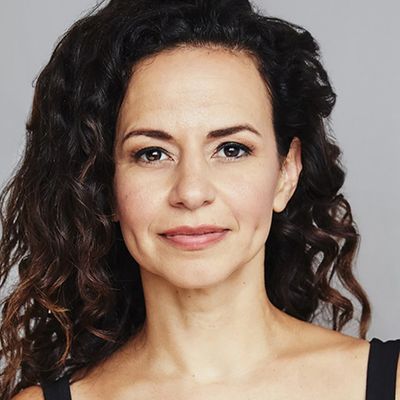
Star of Hamilton and breast cancer survivor, Mandy Gonzalez shares her journey through a diagnosis, the decision to go public with the news, and enduring chemotherapy during the height of the COVID-19 lockdown... Read More
From the show: Mamas Talkin' Loud
Guests
Featured Shows


About
Star of Hamilton and breast cancer survivor, Mandy Gonzalez shares her journey through a diagnosis, the decision to go public with the news, and enduring chemotherapy during the height of the COVID-19 lockdown. Even when faced with the most difficult situation, she never lost sight of the light, pushing through with the help of her family, her “core four”, and the passion that drives her to continue to create even when bedridden from treatment. Mandy’s first book in her YA Series, Fearless comes out in April and our conversation with her leaves no doubt that she is not only the embodiment of the word, but a beacon of positivity to which we all should aspire.
Find more info about the podcast via BPN.fm/mamas.
Produced by Dori Berinstein and Alan Seales.
Edited by Derek Gunther.
Transcript
This transcript was automatically generated and might contain errors.
[0:00] Jessica Rush: Hi everybody, thanks so much for tuning in to this episode of Mamas Talkin' Loud.
[0:04] Cara Cooper: I'm Cara Cooper.
[0:05] Jessica Rush: And I'm Jessica Rush.
[0:07] Jessica Rush: Today's guest created the role of Nina Rosario in the Tony Award-winning musical In the Heights. She has starred as Elphaba in Wicked, Amneris in Aida, and most recently as Angelica Schuyler in the smash hit Hamilton. She is the founder of the hashtag Fearless Squad, has a young adult novel coming out in April, and recently celebrated being breast cancer free after undergoing surgery, chemotherapy, and radiation, all while navigating life during the global pandemic. Here's our inspirational conversation with Mandy Gonzalez.
[0:40] ♪ Musical number: "Mama's Talkin' Loud" — performed by Mandy Gonzalez ♪
[1:08] Jessica Rush: Welcome!
[1:11] Cara Cooper: Well, I'm telling everyone where it is when it is, but it's the morning. But hello, thank you for being with us.
[1:17] Mandy Gonzalez: Thank you.
[1:18] Mandy Gonzalez: Well, this is the time I think that moms kind of have a minute to themselves, at least during the pandemic, because I mean, even before the pandemic, either you're dropping your kids off at school or your kids going for a nap, or you just kind of have like a minute to yourself. So it makes sense that this is in the morning.
[1:38] Cara Cooper: Yep, right.
[1:39] Mandy Gonzalez: Right? It's crazy. Like I remember before kids, I would never, you know, I remember when 10 a.m. rehearsals were early, and you're like, "Oh my god, totally rehearsal at 10." And now by the time you go to a rehearsal at 10, you've already been up for like four hours.
[1:52] Cara Cooper: Absolutely.
[1:52] Mandy Gonzalez: You're having your like third or fourth cup of coffee, at least, you know. That's definitely my thing. But it's so good to see you guys and listen to you guys, all that good stuff.
[2:02] Cara Cooper: So good to, yeah, we always talk about the life before a two-show day, everything that you get done before you even walk into your first show of the day before a matinee when you're a mom.
[2:13] Mandy Gonzalez: Oh, I know, I know. And it's so funny. Now I always call like the younger folk in the show, I'm always like, "The kids," you know, they're complaining because, "Oh, you had to get up at 11 and then do this." And you know, at first I'm just like, "Oh," and then I just go, "Oh, I remember, I remember that time." Sleep ins, and yeah, that's just, it stops. People tell you about it, but you don't really know until you're in it.
[2:40] Cara Cooper: Right, exactly. Well, tell us about your daughter. We always ask people because, you know, we don't always talk about our children with regard to our industry and our careers. So will you tell us about your daughter?
[2:52] Mandy Gonzalez: Sure. My daughter is the light of our lives. She is nine years old, recently just turned nine during this crazy time, and she has just been, you know, when I decided to start to try to have a child, I never imagined it would be this amazing and cool. I feel so lucky that soon after trying, she was brought into the world, and she's just been everything—my buddy, my heart, and she's so fun and she teaches me so much on a daily basis, especially during this time of the pandemic and being home all the time. You know, that's something that is very new for me because before the pandemic, I was doing eight shows a week for three years at Hamilton where I was playing Angelica Schuyler. And so I didn't have, you guys know I didn't have bedtimes.
I would see her in the mornings on two-show days, and that was my only time with her, you know, was walking her to school. So this has been really nice to have time with her and to just watch her grow on a daily basis and all of her little things that happen during school. And so I started a pod with three other families in the same grade. And, you know, it was very, I guess we had to be very strict about everything. We made not a con, a serious contract, but sort of a contract that, you know, we were the only people that you would see. And it was really great for that short time that we were able to make it happen. And then numbers started going up, and we felt that it was just safer for everybody to kind of go back to being on their own.
And so really just seeing her on her own every day, and you guys know it's incredible and it's hard, you know. She is a third grader and it's hard for me, but now this is her norm. So she's very adapted to this style of learning, and she has incredible teachers, and you know, I don't know how they do it, but I just applaud them. And she's a Girl Scout, so we do Girl Scout meetings on the weekends, and we've just been having a really great time together doing everything. And I really, you know, this was a really big year for our family, to say the least, for the world, but for our family in particular with so many different things happening. And so it was really nice to have this time to just kind of be together and check in and see how she's doing, you know, because she's a very strong kid. So she's pretty much the best.
[6:05] Cara Cooper: I love that. It's always my favorite when we ask our guests to talk about their kids because everybody just lights up when they talk about their babies.
[6:13] Mandy Gonzalez: Well, absolutely. It's just, you know, the reason you get up that extra hour so you can make the coffee, at least for me, so I can, you know, have a cup of coffee. Everything revolves around coffee, and then, you know, be ready for her. So I get my exercise in. Now that it's gotten colder, I haven't been doing as much running, but I definitely try to do like some stretching and things like that, some time for myself before it all begins.
[6:45] Cara Cooper: Yes, and then it becomes about everybody else, and that's okay. It's a simple thing. Well, you kind of touched on it a little bit talking about how this has been a really big year for your family, and if you're okay for us to just dive right into this, we actually were scheduled to record with you back in November, December of last year. And you, you know, sent a text saying, "I've got a lot going on, something, you know, dealing with something has come up and I can't." And then we realized once you announced in January your diagnosis, we realized I bet that was when that moment was because it was October, November.
[7:25] Mandy Gonzalez: Um, that's exactly when it was. Whenever something happened in the past year, if I haven't gotten back, or I feel terrible because I'm usually a person that gets back right away and all those things. I just have to be honest and say, look, I'm sorry that we haven't talked. But at this time, this was going on. And I think once I did come out with my diagnosis of stage one breast cancer in January, it made it a lot easier. First of all, it's very hard to come out and start telling people publicly when you're somebody who's in the public eye because it is something very personal. But I noticed that when I started to open up and be honest about my diagnosis, that not to be honest, because I think I've always been honest, but to just be open about it, I felt a certain kind of healing and power within my own journey.
And so I feel very comfortable talking about it now and also letting people know that this has been going on. And so last year, October 22nd, you know, I was not a big person that advocated for my own self-care. I would advocate for that for everybody except for myself. I think sometimes when you're a mom, you're last on your list, and that definitely was the case for me. And I was doing eight shows a week, and I was writing a book, and I was doing just a lot of different things that I wanted to achieve. And self-care was on the bottom of my list. And then my husband said, you know, you need to put yourself first. You need to start, you know, caring for yourself. And thank God he did, because I felt through his guilt and through my own guilt, I made my yearly appointment to go see my OB.
And she was, you know, she was wonderful because she saw me at that time. It wasn't pandemic, so she could see me pretty fast. And I went in for my regular checkup and she asked me if I wanted to get a mammogram because I was now 40 and it doesn't run in my family, so it's really my option if I want to get that or not. And I said, "Well, yeah, I want to get one." And so she set up an appointment and I went and I got a mammogram. So that happened last April. And they saw something in the mammogram that they needed me to come back. And so I went back and they said it was going to be six months later. And again, my life just got busy. I forgot about that next appointment. And all of a sudden, six months later, there was this thought in my mind like, "I think I have to go back for that six-month appointment, but maybe it wasn't a big deal, so maybe I don't have to go back."
And at that time that they told me to come back, they said it's because I had dense breasts. And so I was in a two-show day, and I called my mom and I said, "You know, they want me to come back. What does this mean? I have dense breasts." And she's like, "Oh, Mandy, I have dense breasts, like don't worry about it." And of course, that's something that's never been talked about in my family. But I said, "Well, okay." So I didn't feel too concerned. But six months had passed. I thought, "Well, maybe it wasn't a big deal, so I don't need to go back." All of a sudden, I got a letter in my mailbox that said, "It's been six months, you need to come back." So I went back in on October 22nd, and I had another mammogram on that side.
But all of a sudden, it was different. They started to come in and do more images of this on my right side. They did a 3D mammogram. And the thing that I one thing that I remember and that I hate is that the particular place that I had my mammograms, they put you in a pink robe. And so I don't know, like I was always, I always felt like pink was this empowering color, but at that time I just felt like, "What is this?"
[11:47] Mandy Gonzalez: Like scarlet letter pink, like now, what does this mean? And so I was just annoyed, like having to be in this pink robe. Anyway, I've changed my mind about pink since then. But then um they had me do an ultrasound after that. And the ultrasound technician was so friendly and so nice, and she had three kids, and we started talking, and then after she was done, you know, it just took a long time. And after she was done, she said, I don't want you to be alarmed, but they did find something and um they want to check it out. But don't be alarmed. I've been doing this a long time, I don't think it's cancer, nothing like that. So immediately I started crying. And I was completely freaked out. And then um the radiologist came in and she and everybody was like, Why are you crying?
And then I, you know, automatically I think, well, I'm an emotional person, like I'm an actor, you know. Like I start feeling all these things that insecurities that I feel. And I go, Well, you just told me like you have to do a um a test to to check out that I have a growth. And they said, You we don't think it's anything, but you need to go and get a biopsy. So I said, Okay, well, I want to get one now. Right. So I called my OB. And um, at that time I had recently gotten her Hamilton tickets. So I felt like we had a connection. And I said, Can I get in today to get my biopsy? And so I met with um, and that's one thing that I learned going through this is that there's a lot of people that become part of your team.
You know, it's not just one doctor, it's everybody has is a specialist. And so I then met with a breast surgeon at um the particular place I had this uh mammogram and biopsy, and she again said everything was gonna be fine. There was I didn't, there's no history. Um, we think it looks okay. And then as she left the room, she didn't look at me. And you know how that is when you go on an audition and you feel like everybody's looking at you, or you make connection with one person, and you're like, This I got this person, and I'm gonna get this job. And then when you leave the room, they don't look at you again, and you know you didn't get it. You know what I mean? Like it was that same feeling of they're not looking, she's not looking at me.
Something's wrong. And then we had to wait three days for the test results. And I remember going with my husband, because we live in Jersey, and it was my day off, and we went to go get something to eat, because we were like, let's just go get something to eat and we'll make a thing out of this, whatever. And I got the call, and the doctor had said, I'm sorry to say that the cells are cancerous. And my heart just dropped. Um, we were in complete shock. I don't remember a lot of that day, other than just crying, um, having to call my mom. Um, and then just the immediate thought is what am I gonna do um with my daughter? Like, how can this happen to me? Um, you know, because immediate thought is uh the worst possible thought.
You know, I'm an actor, I'm very imaginative. So my mind immediately went to the worst possible scenario. So my husband, and I'm not from a medical family. Um, so I don't know a lot, you know. All I knew was okay, this doctor's telling me this thing, and now I have to go into this meeting with her. And we went into the meeting, and this doctor told me, well, we do have some better news, uh, the fact that it's stage one and that um we caught it early. So had I not gone back within those six months, had I not gone to that first initial um OBGYN appointment. Had I not said, yes, I want a mammogram. My life, who knows where I would be right now, you know. Um, but the one thing that they did find out is that um they did this thing called an onk type test, which I didn't know about and what this test does, and why I'm a big proponent now for BCRF, uh breast cancer research foundation, they have a test now that tests the DNA of the tumor.
So to see how fast the tumor is growing. And depending on your age and the number that you get from that test, it determines whether or not you're going to need chemotherapy, uh, whether or not you're going to need radiation. Some people get diagnosed with stage one and don't need um chemotherapy because the onk type test is low. And um with my uh test, my numbers were at a place where I was going to need chemotherapy and radiation as well as um surgery. So I met with this doctor, and my husband, who is from a medical family, said, okay, we're gonna go get a second opinion. And I was like, well, why? The doctor said we're doing this. Like, I don't understand why we have to do anything else. And he's like, Well, I think we should.
And thank God he did, um, because I met my the woman who became my breast surgeon, who is Dr. Freya Schnabel at NYU Langone. And immediately when I went in, um, I just felt comfortable. I felt like she got me. She was not just because she was a big Broadway fan, but she um she was just there was just something about her, you know, it was New York. It just felt so comfortable. And um, and she said, okay, I know your day off is Monday, so I'll come in on a Sunday and do your surgery. Like she was just incredible. And uh that's really where my journey began with with that. And um the biggest part that I remember was, you know, I'm very close with my um my Broadway community. And and I was very secretive about my diagnosis because I didn't want it to define me.
I didn't want it to everybody to feel sorry for me because I'm a very um active person. And I also um I have a thing about fearlessness and wanting to, even though you feel fear, do it anyway. I just had to figure out how to get there. You know what I mean? And that started when I told my best friends who are the core four plus one, and those are my friends from In the Heights, um, Karen Olivo, Janet DeCall, Andrea Burns, and Eliseo Roman, he's our plus one. And we met at the Cafe Edison, um, because that which is no longer the cafe Edison with the um, but we met there and uh and I told them that I had breast cancer, and um, they said, okay, here we go. And they have been with me every step of the way.
I walked into surgery at NYU Langone, which I had in November, and my surgeon made sure that I had it on a certain date because in two weeks I was gonna be the vocalist for the Philly Pops. And I was like, I have to do that. I've been working so hard. You know, it's just crazy the things that go through your mind. And she was like, Don't worry, you'll be able to do it. And I did. But when I walked through those doors, you know, my friend Andrea said, look for the angels. And Janet was waiting for me, you know, with um with coffee, even though I couldn't drink it. She had her coffee. And then I walked in, and it was just like I wasn't alone. My husband was with me the whole time. But it was really nice to also have my core there. And um, and then it was like, okay, here we go. And then I started. Um, is this do you guys want to say anything? I feel like I'm a big thing.
[19:47] Jessica Rush: You're doing exactly what you're supposed to be doing.
[19:50] Mandy Gonzalez: Okay. And then um, so then I I finished my Philly pops. I got back into the show. And at the show, I had told my stage manager and my director, Tommy Cale, who was also my director of um in the Heights, who are people that feel like family. Yeah, you guys, we all have all been like there's that core group. Yeah, super tight. And so I knew that they would keep it to themselves. And also I needed that support, you know. And I needed the time off to, hey, I need surgery and I need these things. And um, they just said, okay, whatever you need. And then I started chemo um at the beginning of this year in January. And I thought, well, I'll just keep going. I'll just keep going, I'll just keep doing eight shows a week.
And I'm I'm fearless, like nothing's gonna stop me. And I started to do that, and then my body was like, no, you're human. And I was like, wait, what? I'm human? Like, what is that? And um, you know, the different everybody's body is different when it comes to chemotherapy. Um, I felt very lucky because I got to start my chemo um with my husband by my side. Uh now through the pandemic, so many people have to go alone. And I can't, it just breaks my heart. Like I can't imagine having to go through that, not having your partner there, your friend there. Um, it's a very lonely feeling. And so when that started in January, I was able to have him there. My stage manager came to one of my appointments, and then I felt like I was ready to let people know because I was gonna have to miss shows.
I couldn't do two shows in a day. My body just couldn't handle it. And so I came out and I was so nervous. I remember talking to um one of my friends in the show, Thane Jasperson, and and just saying, like crying and being like, I have this thing, and I said I was gonna do it, but now I'm afraid. And then when it was out, it was out. And I felt so much love from my community. I felt so much love from the breast cancer community, and I felt like um it was the best thing that I could have done was to come out publicly. And then I kept going for chemotherapy, and then I started to hear little rumors about um a pandemic, about coronavirus um going through chemotherapy. It's like your immune system is so compromised.
But nobody was that alarmed. Um, I was doing my chemotherapy. I went to an oncologist uh at uh MSK at Memorial Sloan Kettering. Um that was another second opinion doctor who I just also just loved, uh, Dr. Larry Norton. Um, he's been my oncologist and wonderful. And, you know, there were rumors around the hospital, but nobody was really that concerned. Everybody's like, well, we're gonna have a meeting this weekend, but you know, it's still okay for you to have people there. Within the following week. It was like you can't have guests anymore. Um, then you have to wear a mask. And it was terrifying because nobody knew what was going on, nobody knew how contagious this was. Um, the show was still happening, and I remember March 11th, um, there was an usher in a nearby theater that got it, and that was reported to the news, and all of a sudden it was like everything shut down.
Yeah, you know, and I didn't know how I was gonna get into MSK to do chemotherapy. You know, I was still in the beginning of it, and so I I couldn't stop, you know. You have a schedule when it comes to chemotherapy, and mine was every other week.
[23:34] Mandy Gonzalez: And so, you know, no longer could my child go to school. Um, no longer could we have her with her babysitter. So for that next appointment after Broadway shutdown, I had to bring her. And I had to tell the doctor, I have to bring her in the room with me because I don't have anywhere for her to go. I, you know, and I don't want them waiting in the car because there was it was just so scary, you know. So she came in and, you know, trying to protect her from what I have to go through during cancer was out the door because all of a sudden she was there and she had to see it. And I couldn't, there was nothing I could do about it. It was um, it really sucked. You know, that really sucks. Um, but she did it and she was so strong and so brave, and she reminded me of what kids think about like, oh, what's that?
And what is that? And you know, that's kind of cool. And can I go to the bathroom? Or, you know, can I see what this looks like? You know, so it made me feel like this is okay. Like she's okay. And then all of a sudden, I couldn't go into New York anymore. My doctor no longer was at the hospital because he was over 70, so doctors weren't allowed to be there over 70. So I switched my um, thank God MSK has a medical facility in New Jersey. I switched the rest of my chemo treatments to New Jersey. And um, it was so lonely, honestly, like having to walk in with a mask and a shield, everything, and then gloves, you know, you just were freaked out. And then everybody that is with you also has a mask, you can no longer um talk to your nurses.
Um, it's just very it's very isolating. But I have to say that the nurses at MSK, they know that you're scared, and I don't know like what they look like without like a mask on, but they couldn't have been more wonderful to me. And um, again, my core four was on a Zoom call with me through every um treatment that I was alone, um, wearing a mask and making me laugh and crying with me, but I made it through, and I was like, you know, uh at the end of my chemo, I was like, you know, I really wanted to be here with my husband and say, like, we made it through this part together. But I couldn't, he couldn't go. And he was waiting in the parking lot with our daughter, and um, and I remember walking out and just feeling like, okay, I guess I finished chemo.
Like this isn't what I see in the movies. Like it's usually like a celebration, you know, everything has to be like dramatic, remedy. And all of a sudden, um, the nurses came out and started to applaud um because they knew that it was my last one. And then my husband and daughter had made these signs. I put it on my Instagram that said, way to go, mom. And I just like was like, okay. And then I got in the car and my husband and I cried and we were like, we did it. Like honestly, um being diagnosed through that time was some of the hardest moments of my life. And I think so much of it was just the unknown, being so scared of what it is. Anytime I had to start a new treatment, um, because after that I had to start radiation.
Um, the first day is always really hard because you don't know what it is. And you have friends that will tell you, um, I was lucky to have um my friend Krista Rodriguez, who was also um a who's also a breast cancer thriver, and she was very open with me. And um I I feel so lucky that I had her as a barometer of what to look for, but it's still your own personal journey. And so I tell people, I'm like, the hardest part is the unknown. So the hardest part is, you know, getting the tests, waiting for the diagnosis. Um, and then once you know, it's like then you get in, you can get into action, then you get into action mode. And then it's like, what's gonna happen at surgery? What does it mean to have chemotherapy?
What does it mean to have radiation? And then now it's I'm at this place. I started, I stopped everything in June, um, June 23rd. But now I'm at this place where I'm really in my what does it mean to heal? You know, what what is that process like? And um, and that's part of it, you know, this is part of my my journey. Just because my treatment ends doesn't mean it ends, you know. So, and I think that people feel like, well, I shouldn't still feel like this, or I shouldn't still feel tired, or I shouldn't, and it's just like um you should feel all of it. So now has been my time um to really advocate for others that are and the beginning of finding their voice, you know, especially um women of color, because we are so underrepresented in research um when it comes to breast cancer.
On my mother's side, you know, I grew up in two cultures. My mom is Jewish, uh, my father's Mexican. And on my mother's side, when I had to fill out all my genetics for my mom, like I knew everything. I knew like who died when and who had what, because people talked more about things. On my father's side, it was like a complete mystery. Nobody talks about anything. It's like taboo. Um, and a lot of people don't trust doctors because of different reasons, you know, um, the language barrier, being one of them, not having um health insurance. And so when I became a spokesperson with um BCRF, that was a big part of um my, I guess the beginning of my journey and my healing. And so I think that now I've connected with so many women on um on social media, and as much as I hope I help them in in giving them my uh information that the information I have, they help me like so much more.
Um, because I think the biggest thing with anything um is the feeling that you're not alone. And uh I had started this fearless squad on social media like three years ago um for young people, so that the people that were writing me or DMing me and saying that they felt alone, that they didn't have to feel that way, that they could have a whole squad behind them. And I didn't expect it to take off like it did. And I also didn't expect the fact that I would need them just as much, you know, through my own journey. Um, but they've been there like right by my side. And um, so that's it. And like my long spiel of my cancer journey. That's what that is.
[30:32] Cara Cooper: I mean, I you've we have you know, notes before we talk to a guest, and you've talked about all the things that we not all of them, but many of the things we wanted to ask you about. Okay. No, it's wonderful. But the thing that stuck struck me as you were talking about being fearless and this incredibly scary journey that you went on and feeling so isolated and so alone. Having your daughter in the room with you, which was something you really wanted to protect her from, seeing her mom go through that. I just kept thinking how amazing that she got to see her mom be strong and go through that and maybe demystifying something like that for her in the future. Like, you know, we can do hard things, and you can and I don't in some ways maybe it was a gift.
I know in the moment it probably did not feel that way. And I would feel the same way wanted to protect my children, but you are fearless and you did move forward through this time. And I also love that you say fearless is not not not having fear, it's having fear, but doing it anyway. You know, I think that's at the core of it.
[31:36] Mandy Gonzalez: I don't know, I think so many people have asked me, um, you know, how do you tell your daughter? That was like a big thing, and that was a big question for me. You know, I talked to some social workers and how would I tell her? And when I first told her, she had seen a movie where the mom had had cancer and and died. Um, I forgot I think it was Guardians of the Galaxy, like the beginning of it. And um, it seems like there's always movies with like that kind of stuff. Oh, it's like really so that was her thought immediately. And she didn't want to tell me about it. That was her fear. And then um, when I had to talk to her about, you know, losing my hair and those kind of things, immediately she started crying, and she was like, Well, what is what is this?
And it's the same thing for her, like the unknown, not knowing what it is. And and so I I love what you say, Cara, because I I do think it's true because finally um she asked my husband, like, does mom have cancer and does she have the good kind or the bad kind? And my husband is so amazing, and he was just like, Well, she has the better kind. She there is no good or bad. It's just, you know, this is the kind she has. And she was like, Okay, now I can go on. You know, it was it's all stopping all these fears before they become part of her pretend story. You know, I I thought that that was really important.
[33:10] Jessica Rush: Absolutely, for sure. I mean, it's kids can, you know, they have imaginations to begin with that can go off the rails. And I'm sure, you know, and to have her have that moment, but also in the middle of this pandemic. Like I'm just thinking about you as a mother, adding that on that layer on, you know, and I'm sure emotionally, what a journey this year has been for you. I mean, the last, you know, 14 months or whatever. It's like, yeah, how incredible. Um, first off, yay ringing the bell. Do you know what I mean? Like that was awesome. When you posted that picture, it was like amazing. She's made it through. And I think that I think your apprehension to share is totally valid, obviously. And everyone has their different journeys.
But one thing that always comes back is how awesome our community is, right? I mean, like at the end of the day, the love, the community shows up, and the love comes out, and um never hurts to have more people on your team, right? Sending that positive energy out and the prayers out um into the world.
[34:16] Mandy Gonzalez: We're gonna take a quick break. Don't go anywhere. We'll be right back.
[34:25] Jessica Rush: I wanted to ask you because you mentioned the book. I didn't realize you were writing the book before your diagnosis. Like I sort of just thought, oh, this came about sort of from the journey she's been on, and maybe she's writing this book. But will you tell us about? I mean, you're in a book, Mandy. It's so exciting. And I just had my meeting for the book launch in April, and what that's gonna look like because of you know, where we're gonna be, like, who knows? Yeah, but it's so it's so incredibly exciting. You know, when I um first had my daughter, um, you know, going back, I don't know if you guys had the same thing, but going back and trying to audition for things and um, you know, I I wasn't booking, you know, and I don't know, I don't know what it was, you know, maybe it just wasn't my time, maybe it wasn't the right show, but I would get really close to things and then somebody would ask me, like, Well, how old is your daughter now? Like, you know, and usually it was like a man and I would always think, oh, well, she's this age.
[35:27] Mandy Gonzalez: And sometimes I'd lie because I'd want them to think, well, I can handle this. Like, are you asking me this because you wonder if I'm gonna be if I can handle this, you know? But for some reason, it just wasn't happening. And so I started to, as we do as moms, get creative. And I started to write, and I started to write stories. I started to write children's stories, and I started to create shows, um, you know, in cabaret in concert, and I started to create my own um work, work for myself. And I'm so glad that I had that time because I created these um incredible characters that I love so much. And um, and the main character for this story, I've created a fearless series. So I have two books that are now going to be published by um Simon and Schuster slash Random House, which is amazing.
I mean, it's incredible. You can already pre-order the books, everybody who's you can already pre-order the books. And um the main character is uh Monica Garcia, who's 12 years old, and she grows up in California near Fresno, um, close to where my family is from. She's Mexican American, and she gets that phone call that people dream of of we want to see you in New York because you've just booked a Broadway show. And it's about what happens when she goes with her Aurita to um start rehearsals for a new Broadway show. And it's an adventure story, it's about friendship, it's a ghost story. She ends up doing a show at the Ethel Merman Theater because that's somebody that I loved growing up. And she meets her squad along the way.
And the squad is made up of characters that are based on friends of mine. And each person has something to teach and share. And together they open a Broadway musical. And so it's so much fun and an adventure. And right now I'm on book two. But I had started that when my daughter was first born. I had started creating these characters. And then the stories just kept going. And then when I, I guess about three years ago, I, you know, you have to write like the first two chapters. And then I said, I want to start pitching this. And I really want this to be a series. And I had a vision. And my vision is to one day hopefully make it into a television series or a movie because it was so important for me as well to see somebody that looked like me in books that I could see other kids seeing themselves.
That's such an important thing because there was nobody that looked like me. And uh and its representation is so important. When I saw Daphne Rubin Vega on the Tony Awards when they were doing Rent, it was just like she looks like me and Adina looked like me. Like I was just like, they it's like a melding of me, you know. And so um it's so important for kids to see themselves. And um, and um what better way than for kids that are um in junior high and at the beginning of high school to see themselves in these characters and know that that dreams are possible. So this is my um this is my new journey. So I'm very very excited.
[38:54] Cara Cooper: Oh my god, it's incredible. I'm just so I I think writing a book, you know, it's one of those things I well, let me back up a little bit. Like I I tend to write very long Instagram posts, which are not the same thing, but I I do it. It's personal, it's yeah, it's personal stuff. And my husband, for years, like my husband or people would be like, you should write something, but you have to have the drive and the want, right? I mean, and that's the difference. And the idea of sitting down and writing a book is so daunting. And I just I'm so impressed that on top of raising your daughter, being doing eight shows a week, now being an ambassador and all the things you're doing, that to see a to have an idea and see it come to fruition.
And when you say, like, I want, and it's a series, a series, like that's more than one. I mean you have to, it's not just a one off, like this is something, this is a transition, you know. And I don't I don't want to say a pandemic pivot because I'm sure you know that's a great thing. But you know what? It's that it's that in this moment to have another outlet and to have another um passion uh appear and present itself, I'm sure has been a gift. You know, so many of us are struggling to figure out who are we and what do we want to do and are we staying in this business when the time when we return and um what a what an amazing, uh fulfilling um experience I would think that is, yeah. And to have recognized.
[40:22] Mandy Gonzalez: Thank you. And you know, when um when we did In the Heights, we did a lot of and we did a lot of uh talkbacks with students at Hamilton as well. But In the Heights it was so different because nobody knew us. Right. I mean, they did want to stay, but it was like part of the school. Now people are like, yes, we want to hang out with you and um, but I remember a student asking Lynn, why is this the first show about Latinos written by Latinos? And I remember Lynn saying, Well, you have to write the next one. Like it's up to you to write your story. And if I wait, who's gonna tell that story? Who's going to nobody has a journey like mine? And so who's going to give another person that chance to go there with their imagination?
So, you know, I don't know how I did this, honestly. Um just keep going, like one foot in front of the other. One foot in front of the other. And I think um, during, you know, doing rewrites and things during um my cancer journey, I think it allowed me to hold on to hope because those days when I just couldn't get out of bed, I could still move my hand. I could still write, you know. I'm definitely somebody who um, you know, I always have notebooks. I always am writing. Um, not that I have great penmanship, but that's how I do my my writing. Whenever my daughter asks what I want for something, I say, Oh, I want a new journal. She goes, another one? Like, don't you have 10. You know, my daughter who's like 35 now.
Um already. But um, you know, it's about that. It's about starting slow, starting those first two chapters and saying when somebody gives me um or puts that in front of me, you know, I didn't have uh anybody to say this is how you do it, but nobody told me how I could get to Broadway. You know, I had to do the research, I had to do the work. And you know, when I came up, there was no internet and finding those things. Like I had to go and go to backstage and find those things, go to classes. And for this, it was the same. Like I had to look and see how do you do it? How does this happen? And it was like everybody said, write the first two chapters. If you write a page a day, it just all of a sudden it equals up to something, you know.
[42:45] Cara Cooper: Right. Yeah. So do it. I I'm just, I mean, blown away, not only by the year that you've had, I mean, you're talking about how vulnerable you felt sharing your journey on social media, but you've used your platform for good to let people not feel so alone in their journeys to be a voice for the Latinx community as far as self-care and also in medical research, which they are very underrepresented. Um, and then this book, which you were, I mean, I just like my mind is blown. Like we interview these guests, and I'm always like, how? How does everybody do these things? But and and and you battled breast cancer this year. You underwent chemotherapy. I mean, I just my I am inspired by you, truly, what you've been through.
And even in your retelling, like you just have a positivity and a light about you that even in the darkest time of your life and and the dark, one of the darkest times in our world, you know, you forged ahead and you were a shining light for others who were going through that as well. So thank you for that.
[43:47] Mandy Gonzalez: Oh, thank you. I think we all have people in our families who have been through um, who have been through so much, you know, and there's a reason that we're here. It's because they never let that light go out. And so I think no matter what you're going through, you have to, as hard as it is, allow yourself to keep looking towards the light. You know, whatever that's going to bring you or your family. And again, with self-care, I I look really at cancer as a we disease, not a me disease, because it really affects your whole family. So putting yourself first when it comes to self-care is also putting your family first. So that's really important for me to tell other mothers because sometimes they think, well, if I make the appointment, if I take this day for myself and I have to go all the way to the doctor and all the way back, they think, well, then I'm gonna miss this practice or that.
And it's just like, no, you're doing it for all of you. It's it's important for all of you. So and thank you guys for what you're doing. This is so exciting. And you know, this is taking chances and and doing new things and and putting your voice out there, which is much needed.
[45:01] Cara Cooper: Thank you.
[45:02] Mandy Gonzalez: Awesome. Well for sharing your time and your story. I'm glad it all worked.
[45:07] Cara Cooper: Yeah, yes. Girl, I mean, this this year, you never know what's gonna happen. Like when we come up when we go to record these remotely. I mean, for sure. We can't wait to be back in the studio. But thank you for taking the time because you know, it's so funny because people think like, well, everyone's home right now. Well, are you busy? But people are busy.
[45:27] Mandy Gonzalez: I've never been busier.
[45:28] Cara Cooper: I've never been busy. People think, well, your daughter's at school. I'm like, yeah, but she has breaks. Okay. And they think, well, on her breaks, she just does nothing. I'm like, no, she comes up and wants snacks.
[45:39] Mandy Gonzalez: Right, right.
[45:40] Cara Cooper: It's not like I'm just, you know, it's it's not like I can just throw something and you know, exactly.
[45:47] Mandy Gonzalez: Exactly. Thank you guys so much for creating Broadway Baby Mamas because that has really been a place um that I think so many of us in the community can just talk and be together. And so I'm glad that you're taking it to this next step. Because for me, that was a place I'm not always one that talks a lot on the chats and stuff, but I'm somebody who reads everything and and can relate. So thank you guys for that. That really helped me a lot.
[46:16] Cara Cooper: Awesome. I'm so glad.
[46:17] Mandy Gonzalez: Thank you, of course. And um be well. And I can't wait. Like when we go back, you and I are across the street from each other. So let's all gonna hang.
[46:28] Cara Cooper: Hey.
[46:30] Mandy Gonzalez: All right, guys. Well have a great morning.
[46:33] Cara Cooper: Thank you.
[46:34] Mandy Gonzalez: Have a good one.
[46:36] Cara Cooper: Bye.
[46:45] Jessica Rush: Thanks so much for listening to this episode of Mamas Talkin' Loud. Special shout outs to Rachel Spencer Hewitt for our fabulous graphic, Kristen Anderson Lopez, Bobby Lopez, and Justin Ward Weber for our awesome theme song. Our producers Dori Berinstein, Alan Seales, and of course the Broadway Podcast Network for bringing us to you.
© Broadway Podcast Network, All Rights Reserved