

In this Artist Episode, Ally Bonino (Broadway’s Suffs and MTCA Coach) and MTCA Director Charlie Murphy discuss: Ally’s beginnings in theater. Behind the scenes of Suffs and its evolution. What “types” we’re still seeing on Broadway vs. regional productions... Read More
From the show: Mapping The College Audition: An MTCA Podcast
Guests

Featured Shows
About
In this Artist Episode, Ally Bonino (Broadway’s Suffs and MTCA Coach) and MTCA Director Charlie Murphy discuss:
-
Ally’s beginnings in theater
-
Behind the scenes of Suffs and its evolution
-
What “types” we’re still seeing on Broadway vs. regional productions
-
Discovering what makes you you in theater—and how to let that shine through
If you have any questions about the college audition process, feel free to reach out at mailbag@mappingthecollegeaudition.com. If you’re interested in working with MTCA for help with your individualized preparation for your College Audition journey, please check us out at mtca.com, or on Instagram or Facebook.
Follow Us!
Instagram: @mappingthecollegeaudition
YouTube: @MTCA (Musical Theater College Auditions)
TikTok: @mtcollegeauditions
Charlie Murphy:@charmur7
About MTCA:
Musical Theater College Auditions (MTCA) is the leader in coaching acting and musical theater students through the college audition process and beyond with superlative results. MTCA has assembled a roster of expert artist-educators who can guide students artistically, organizationally, strategically, and psychologically through the competitive college audition process. MTCA provides the tools, resources, and expertise along with a vast and strong support system. They train the unique individual, empowering the artist to bring their true, authentic self to their work. MTCA believes that by helping students reveal their potential it allows each school to connect with those who are truly right for their programs, which in turn guides each student toward their best college fit.
About Charlie Murphy:
Charlie is a proud graduate of Carnegie Mellon University’s BFA program. As an Actor he has performed with theaters such as: NY Public Theatre’s “Shakespeare in the Park”, The Pearl Theatre Company, Hudson Valley Shakespeare Festival, Chautauqua Theatre Company, Kinetic Theatre Company, and the Shakespeare Theatre of DC.
With MTCA [Musical Theater College Auditions -- mtca.com], he has been helping prospective theatre students through the college process for over 15 years. As a Teacher and Director, he is able to do a few of his favorite things in life: help students to find their authentic selves as artists, and then help them find their best fit for their collegiate journey. Through this podcast, he hopes to continue that work as well as help demystify this intricate process.
This episode was produced and edited by Kelly Prendergast and Socials by Jordan Rice. Episode theme music is created by Will Reynolds with Additional Vocals from Elizabeth Stanley.
Transcript
This transcript was automatically generated and might contain errors.
[0:00] Charlie Murphy: Hello, hello, and welcome to Mapping the College Audition. I'm your host, Charlie Murphy, Director of MTCA. That's Musical Theater, College Auditions. Check us out at mtca.com. And today we've got Ally Bonino on The Pod. For our new listeners, in these artist exploration episodes, we aim to explore the path to success that artists are forging and tease out how their theatrical training has helped them to blaze that trail. And Ally, alongside being an amazing MTCA coach, is a great trailblazing artist in so many ways, and I think we have a really great conversation that I think you will all enjoy. I hope you're all starting off your Aprils wonderfully. This pod is releasing on April Fool's, so happy April Fool's. Of course, I'm recording this a bit in advance.
I know all of you seniors have been eagerly awaiting your results all this time, and now here you are in final decision mode. And fear not, I have been right there with you for these many months. We find out on March 31st, which is yesterday as this releases, but I don't know yet because I'm recording this in advance. We finally find out the results of our prolonged pre-school audition slash interview application journey. My God, what it's been. And as promised, I'm going to write a detailed and hopefully humorous, I believe it will be humorous, blog on my perspectives on the process for all of you to get to enjoy, which will be both a blog and a podcast I will record to you. My plan is to release that episode two weeks from now, and assuming all goes smoothly, that's the plan.
It should line up well with our, I'm taking a little family vacation time at the top of April. So I'm going to do my very best to have my travel not mess with our beautiful podcast rotation. We'll see how that goes, but hopefully you're going to get your episodes uninterrupted. If I can pull this off and you will get that delightful pre-school audition process blog that I've been promising for so long. We also, I will say have some exciting, fun and different episodes that are coming up in the near future with some different themes, some different sort of takes on stuff. I'm really looking forward to all that. I will also say, just as a reminder for all our seniors who are listening, eagerly awaiting, talking about final decisions.
If you catch this episode right as it drops, please do make sure you're checking out our two webinars this week, those specifically on final decisions, and then the idea of waiting on a wait list. That's this Thursday and Friday, April 2nd and 3rd. And for our juniors, we have two webinars upcoming this month, just for you. That's April 9th and 22nd, where we're going to map out your year a bit and do a bit of deep diving on your school list. Both really important topics for juniors to be thinking about right now and planning what you can accomplish now in your junior year. So much to do in your junior year, if you can believe it, before your senior year even starts. And we'll chat about all that on those webinars.
I do think those webinars, for what it's worth, are really great bang for your buck. And if you just plan to attend all of them, or if you can't attend one of them, watch the replay if you miss it, you're not going to regret it as the year progresses. We've gotten that feedback so often by families, just how much they really appreciated that they took that webinar ride with us. Some of them even said they think the webinars should be mandatory. I don't know how we could possibly make them mandatory for everybody, but they've said, you should make these mandatory. People have to watch this. But we appreciate the sentiment, and I thought I'd pass it on to all you that really, those webinars are a great bang for your buck.
So I would invest in them if you can. And if you're here just for the free content, we also respect that. This podcast, of course, comes to you free. I will say March was our best podcast download month in this podcast's history. So a huge thank you to all of you for making that happen. I don't always stare at those metrics. I don't spend too much time looking at the ups and downs on the graph. To me, it feels like just looking at the stock market, I'm not sure what good it'll do if it goes up or down, really. But I do think it's worth saying that this podcast has really been growing a lot. And I know some of you listen asynchronously, so it's not always the episode that's actually being released that month.
I think in March, it's a particularly interesting month because we have seniors who are listening back to episodes as they make their final decisions. And then our juniors and our sophomores and our freshmen are listening for the first time, and they're beginning to do their school list research. So we get a little dual effect in March. But either way, it is a notable jump in 2026. And so I just want to say thank you to all of you. Maybe all of you are out there telling your friends about the podcast. Maybe you're leaving those sweet ratings and reviews that we beg for every episode. Maybe that's working. Thank you for those. Or maybe just a few of you have this podcast playing on repeat in the background somewhere, and you're just like, I don't know, data farming or whatever people would do when they're listening to podcasts.
Whatever it is, it's working, and we appreciate all of it. We're going to try to keep that momentum going to April as best we can. So with that, I say thank you. I appreciate all of you deeply. And I really hope you enjoy this conversation with the great Ally Bonino.
[4:53] Charlie Murphy: Well, we are so excited to be joined by Ally Bonino. Ally has a BFA from Pace University. She's been in Suffs on Broadway, lots of other awesome regional off-Broadway work, especially with a focus in developing new work, which we're going to chat about, including she just wrapped The Seat of Our Pants, also at the Public Theater. And most importantly now, Ally, an MTCA song coach, which is a great thing to do. She's been in a lot of an MTCA song coach, which I wanted to have you on the pod before you were an MTCA team member as just the admirer that I was of your work. But now we get the double bonus of you as an MTCA member, as well as all the wonderful career stuff you've had. Ally, welcome to the show. How are you feeling today?
[5:35] Ally Bonino: I'm so happy to be here. What a treat.
[5:40] Charlie Murphy: It's a treat. A mutual treat. Let me start you off with, can you give everyone just like a little update to like, give me the 60-second version of Ally's life up to your high school journey? So we're gonna talk through your high school, your college auditions, all that kind of stuff, but what do we need to know about young Ally and sort of your beginning of this journey?
[6:00] Ally Bonino: Goodness. I was in casts for most of my childhood. I am so clumsy. So most of my childhood-
[6:08] Charlie Murphy: I did not expect casts to mean injuries.
[6:11] Ally Bonino: No, yeah. Oh, but see, it's funny. It's funny. That's funny, that correlation. I was in a different kind of cast and I was so clumsy growing up. Like most of my childhood photos, there is a cast on some part of my body. I actually didn't do a ton of theater growing up. It was more geared toward like voice lessons and-
[6:32] Ally Bonino: Recovering from injuries.
[6:33] Ally Bonino: Recovering from a lot of physical therapy. But yeah, I didn't really start to do theater stuff until I guess fourth or fifth grade, which I guess is still pretty young, but like, I definitely wasn't one of those kids that like, you know, from the second I could talk, I was like singing and doing all that stuff. It was kind of a slow burn into it.
[6:57] Charlie Murphy: I love it. And talk to me about you at 16, 17, or maybe earlier, when did you decide, hey, I'm going to do this from a college perspective?
[7:05] Ally Bonino: Yeah, I don't think it was until, honestly, I was 16 or 17. It didn't occur to me that this was something that one could actually do. Even though I spent so much of my time listening to cast albums, and I was such a fan of Broadway and of the theater community, it like didn't click for me to like, oh no, I could be one of those people until I think I was maybe 16. And there was this amazing, I did theater at the Hart School of Music. They had an incredible community division, this program called The Company. And they really treated us like little professionals we put on full shows. It wasn't like the junior version, like I did Titanic when I was 12. And I was Ida Strauss, you know what I mean?
It was, we had a really great education to that. And then for their high school students, had this amazing program called the Summer Vocal Institute. And that was the first time meeting professionals who came in from New York, who were our sort of adjunct teachers. They were like, hey, so have you thought about going to school for this? And I was like, no, I hadn't thought about going to school for this. And then that sort of shifted everything. And I'm so, so grateful that that happened.
[8:24] Charlie Murphy: I love it. Do you remember a lot of your college audition journey? Do you remember your process? Do you remember how many schools you applied for? Were you looking specifically for schools in New York City? Do you kind of remember that basics for you?
[8:34] Ally Bonino: Can I tell you, and I feel like you're going to kick me out of MTCA for this.
[8:38] Charlie Murphy: Literally our last interview was a job interview. He was like, this is an interview. I want you to know I'm applying via the podcast. Now you're going to somehow, someone's going to get hired and fired on the podcast. I like it.
[8:46] Ally Bonino: No, they can take my spot after I tell you this. I only applied and auditioned to one school.
[8:50] Charlie Murphy: Ali, I only applied and auditioned to one school.
[8:55] Ally Bonino: Okay. Okay. Welcome. You're in a safe space here. Everything's okay.
[9:00] Ally Bonino: I didn't know because like, I mean, also when I was applying to schools, it was in 2006, which is crazy because I'm only 20 years old.
[9:09] Charlie Murphy: Exactly. You don't look a day over 16.
[9:14] Ally Bonino: Thank you so much. But yeah, at that time, like I had a friend who was applying to, I think six and we were like, John, why so many? Like, that was like, John, you're off your rocker. But so there, was there a backup plan then? Was there the, like, were you just like so confident you were going to get it at that point?
[9:28] Ally Bonino: I was so confident. I was so confident. Well, because I, I went, I went to Pace, so I went to Pace and academically, my guidance counselor was like, you're going to get it. Like you're, you're, you're fine academically. And then I knew some of the professors, they were some of the people who would come in to the summer vocal thing.
[9:52] Ally Bonino: Confidence. I had a little confidence. And, you know, at that time, you know, 15, 16, that's a hard age. It's a very hard age. I had a lot of anxiety. I was overwhelmed by this process. So to sort of have it be like, there is a very clear path through this. I was like, I'm going to do, I'm going to do that.
[10:14] Charlie Murphy: And so if you hadn't gotten in for whatever reason, you would have attended Pace, you think, academically or would you?
[10:19] Ally Bonino: I mean, like, I know that I wanted to be in the city. I wanted to be in the city. The other schools that I was looking at, I was looking at NYU. What else was I looking at in New York City? Wagner, which is technically Staten Island. But like, I knew that I wanted to be here.
[10:30] Charlie Murphy: Yeah. And was that because you wanted to audition immediately or you just wanted to, growing up outside the city, you wanted to be at the city?
[10:48] Ally Bonino: Yeah. I love New York. I visited it a bunch when I was growing up and I was like, I always felt very at home here. It always felt very much like, oh yeah, I get, I get the pace of this city and the way that it works.
[11:04] Charlie Murphy: You got casts and casts, you got Pace and Pace.
[11:09] Ally Bonino: Well, I love it. I mean, talk about where we are in 2026. I mean, the number of students, I just was telling the stories in there, are finishing the sort of Unified's tour of the number of students who are applying to 40, 50, 60 schools now, which just seems, we are now saying that is insane. Nobody recommends that. That's, that is your anxiety if you're doing that many schools. But, but coming from a place of, of it shouldn't be one, it can't be one. That was too risky, Ali. We agree.
[11:28] Ally Bonino: I love it. Well, how did your parents feel at the time? Were they just like on board or how did that, how was your relationship?
[11:34] Ally Bonino: So down to clown. They, they were so supportive and to this day are still so supportive. There was never a moment where they were like, but what if you minored in something as well? Or like, what if you considered this or are you sure you want it? Like they were always just like, yeah, we're here for you. We'll make it work. And I'm so, so grateful for that because it makes a huge difference.
[12:02] Charlie Murphy: All right. Well, so tell me about your Pace experience, you know, as much as you're comfortable talking about sort of, of, you know, the rockiness of potentially of the Amy Rogers era, the, I just would love to hear the Pace University experience that you had still pretty early on in the days of Pace. If you're talking about 2000.
[12:18] Ally Bonino: Very early, very early. I think that the program was for sure under 10 years old. Yeah. My class specifically we were the Guinea pig class for a lot, a lot of different things. Yeah. There was a lot that they learned in the years before we got there. My class was also huge. I think they accepted like 30 students and I think 26 of us ended up going. They were accepting 30 to yield 16 or something.
[12:46] Charlie Murphy: 100%. But it was also the year that NYU was no longer a BFA program. So everyone was like, well, Pace is the only BFA in the city. So we'll, we'll go there. And it was, we had a huge class and it was a lot of like, well, we'll, we'll try it out with the class of 2011. And if it doesn't work, we'll figure it out for the next class. So there's a lot of my education that, and I talk about this with friends who I was there with, we were a little bit like, I don't know. Like, I don't, I don't know. I don't know because they didn't know. And I think that was, you know, part of the risk of joining a program that was so young. And then, yeah, there was a lot of other stuff that like, we don't need to get into it, but not great. Some not great stuff that happened.
[13:39] Ally Bonino: On the flip side, you know, they had this incredible new works program that, you know, it was, I believe, one of the first in the city for undergrads to be doing. And from those experiences, I made connections that to this day, I'm still reaping the benefit from. I mean, Shayna Taub, who wrote Suffs, like we were on a train in New Jersey a couple weeks ago, and she was like, well, you know, like, I first saw you when you did Factory Girls at Pace. And I was like, you are out of your mind. Are you kidding me? Are you like, that's just I, so it's all those little like little sort of roads that were built that I maybe didn't even realize were being built through this new work program.
[14:28] Charlie Murphy: That's so cool. And I want to talk about the new works a little bit. I mean, I think it's worth noting for our listeners, like, as they hear about, you know, kind of your Pace experiences, that in some ways, it's hard to draw these conclusions, because Pace is no longer a brand new being created program. Like, you're talking about a program that's being authored at the time that you are attending, which actually is probably more analogous to some other new programs, as opposed to directly to Pace. So your experience is probably closer to somebody who goes, we had a new program head, we're reimagining this newer program that, you know, there certainly are many out there where it's more in that emerging status. Whereas that was the case for Pace early on with Case for Pace, that would have been in those early days, certainly had prestige and reputation behind it, but still felt like, oh, what's going on over there? Someone's being created over there.
[15:30] Ally Bonino: But now I think people attending Pace feel like, well, this has been established.
[15:46] Charlie Murphy: Ali, let's not pretend some of these podcast guests didn't just hear Amanda Flynn last month on the very pod. I'm sure they've heard her. She's really also making an effort for some of the alumni who did not have a great experience to make it feel like Pace is now a safe landing zone for them, which is really, really special and really important.
[16:00] Ally Bonino: But I always joke that if I auditioned for Pace today, I don't know if I would get in. The bar there is so incredibly high and the caliber of work that they pull out of their students is really, really something to marvel at. And they also have this beautiful new building. We always joke, we had three practice rooms and one rehearsal space that was also just a common area. And now they have a whole building.
[16:32] Charlie Murphy: Gorgeous facility.
[16:33] Ally Bonino: They have a gorgeous facility and they have a brand new theater being built at the school. So it's really laid down. Amanda has promised us a visit this summer with the hard hats are coming off and we're going to see a beautiful building.
[16:46] Charlie Murphy: I can't wait. I love all of that. And I think, yeah, it's really well said. I mean, I do think now if you're auditioning for Pace, of course, you would get in radical talent that you are, but it would be even riskier of a one school if that was your one.
[16:59] Ally Bonino: One hundred percent. Yeah.
[17:01] Charlie Murphy: Let's talk a little bit about sort of graduating, hitting the ground running. And we're talk a little bit of the industry on the second half more in terms of your industry experiences. But I'd love to hear, like going to a New York City school, having people see you when you're in shows. Then how does it work with like right now you're showcasing you are exposing yourself maybe not for the first time to some of these agents or in some of these cast directors may have seen you and stuff. How does that how did that integration into the business happen for you?
[17:29] Ally Bonino: Yeah, I, I don't want to say it was like a seamless integration because you do go from sort of being in this safe world of school to suddenly like I'm really on my own. But having lived here for four years, I definitely felt like I had a leg up. I understood how the city works. I understood the subway systems, which like a lot of friends moving here like that was a whole curve that they had to deal with. And also the thing with Pace was that they let us audition in like for real world things. They just their one thing was that they wanted us to let them know if it was happening, because they would help coach us or they would, you know, talk us through it. So when I graduated, I'd been on a couple auditions, I'd been inside of that world already.
Which again, it's like, you know, it was it was a small taste of a much bigger pie. But like, I didn't feel so shell shocked leaving the school, which was something that I hadn't really considered when when I knew I wanted to come to the city, it was sort of something that revealed itself in time. But it is for sure, really something to think about. Like, if you are ingrained in a city already, when you have the sort of safety net or bumpers of school removed, you have a little bit of a better understanding of how things work.
[18:57] Charlie Murphy: It's so well said. We so often talk about both the pros and cons of especially New York City schools, any city, but especially New York City, in terms of the, you know, the idea that you could have a Broadway, eventual Broadway composer, writer, see you in a sophomore year show. You know, of course, that could happen if you're classified as a composer, right, or whatever. But at Carnegie Mellon, like we weren't being exposed to the industry. We were being exposed to the Pittsburgh Post Gazette. You know, what the people who are seeing us, we're not going to be like, like, and there was the mini versions of that, you know, we auditioned for TV shows that came to Pittsburgh. It wasn't nothing, but it's a very different experience in terms of feeling that level of exposure.
I mean, so many people talk about the edge. They feel like it was skipping that year of grad school of learning New York City that you already had. But then also the flip side could be like, if you want the safety and not feeling like, you know, your classroom shows are going to be seen by agents and stuff.
[19:49] Ally Bonino: Yeah, yeah, I think I always I've learned this about myself in the last like, you know, you're always learning and growing. But like something that I've really come to know about myself is like I really thrive in high pressure situations. I think I think all of us in this industry in some way do. Otherwise, we we couldn't do it. But I really love and thrive sort of being under a microscope and like knowing that, oh, this person's here, this person's here. Like if I'm in a show and someone's like, do you want to know who's here? I'm always like, yeah, like I I love that. I thrive under it. And I think, you know, I and I also I started I was a freshman at 17, so I was young. But like I. Even subconsciously, there was a thing of like, OK, yeah, let's go.
[20:41] Charlie Murphy: Yeah, but you're a pressure makes diamonds kind of person, not on track and we're breaking.
[20:45] Ally Bonino: Yeah, no, no, no. Very much so. I mean, I do. I wonder what I would be interesting poll of like all working actors of how many people want to know versus don't want to know. I find it's very split.
[20:56] Charlie Murphy: Yes. I thought people were kind of kidding when they said they didn't want to know. I'm like, but you want to know if the review was there, you're going to be nervous, but you want to know. Right. And the people are like, I'm not messing around. I really don't want to tell me. I was like, you're getting for real. Like the superstition, are you really like you really don't want to know? And that's fine. And I respect it. I respect it wholeheartedly. But I, I myself tell me, I want to know.
[21:20] Ally Bonino: I want to know. I want to know. I want to know what's at stake.
[21:24] Charlie Murphy: Talk to me a little bit about the journey of Suffs to Broadway. I mean, so you at that point, I had already established, hey, I'm I love new work. I'm doing a lot of new work. Obviously, that is a new show that you're going to. Were you taking it from the true infancy through the public, through the Broadway? I don't know the whole journey of Suffs.
[21:39] Ally Bonino: Yeah, so I, I first got an email, I think, toward the end of 2017, where they were like, there's a workshop of this new Shayna Taub piece directed by Lee Silverman. And the public is like one of the producers. And I was like, check, check, check. And this this workshop that we did was two weeks. There were nine songs. It was the second time that anything had been worked on. So there was there was one time prior to this that was like five people. And then this was a little bit more. And I will never forget it there. There was a moment when we were doing that version of The Younger at the Gates where everybody who was there. And it was a very small group, but everybody who was there, like we hit this one chord and everybody just sort of like sat back in their chairs.
Yeah. And it just like it's one of those moments I'll think of, like on my deathbed that will that will be in the flesh. And I was like, oh, yeah, this there's something here. This is a very special piece. And then I was just very lucky. They kept asking me back and kept developing it. And I bounced around in the cast a lot. I was a bunch of I wasn't always Lucy. And then we were we were doing act two for the first time in the summer of twenty nineteen. And my phone rings at like ten thirty at night and it's Lee. And my initial thought is, oh, she's firing me. I'm getting fired. I'm getting fired. Like this is what's happening. So I was like, you can you can ignore it and let it go to voicemail.
But she's not going to fire you on voicemail. So you're going to have to wait all night and then call her tomorrow. Just answer the phone. So I answered and we like, you know, we we just shot the shit for a little while. Sorry. Can I swear? Sorry. We now we spoke. He tagged. We were just sort of like talking for a while. And then she was like, so this workshop coming up in August and I was like, mm hmm. Mm hmm. Yep. Yep. Yep. Yep. Yep. Like bracing for it. And she was like, we want to try you as Lucy this time. And then I did curse, which I won't do now. But I was like, are you serious? And she was like, yes, we're serious. We love we love you. We love working with you. We love having you in this room. If Lucy is not the right fit, we'll find the one that is. But, you know, you're you're on this ride with us.
[24:04] Ally Bonino: And then the pandemic happened. We were supposed to do it at the public in November of 2020. And everything just sort of got sidetracked. But the public was every couple of months. They'd be like, we're still doing this. It's like we're pushing to come back so we can do this. And then the run at the public happened. And then we were like, OK, well, we'll we'll see. And that was in the spring of twenty two. And then in the summer of twenty three, we did one final workshop that was kind of like, OK, we're either going to get the green light and do this eight times a week or like this was it was it. And then, you know, very, very fortunately for us, it went the way we wanted it to. And then Broadway, which was nuts.
I mean, that is obviously the the best conclusion of a two week workshop is that it turns into a show of the public, which obviously already had the public attached to that first workshop, but then also goes to Broadway. I mean, the number of things that are heading to Broadway that don't actually head to Broadway, they don't actually, you know, but kind of I wonder, I mean, you are at that time, you know, in the trajectory from twenty seventeen to ultimately twenty twenty three, twenty twenty four. It's going to come to Broadway. So you're watering a garden of many different seeds. Right. I mean, so how are you sort of juggling? Because I think a lot of actors just that time horizon and sort of holding on to these projects, which you hear actors go, well, this is in the can.
How's that going? Maybe, but you've got to like do other stuff. You can't just like hold out for that all the time. How does that how does that time horizon work with all the other new work you're developing and all the other things you've got going on?
[25:47] Ally Bonino: I have to say there was some sort of like beautiful cosmic congruence that happened during that time, where like whenever there was something happening with stuff, there was nothing else going on. And then like it would like the stuff's development would end and then there would be this opportunity here. So there was I was very, very lucky. There was never a sort of like conflict of interest because it is that thing of like, you know, am I going to turn something down for a project that might go or might not? It's it's so hard to know and to navigate. But it really looking at that like seven year span of time, it really just sort of everything aligned in a beautiful, beautiful way.
[26:33] Charlie Murphy: Yeah, I mean, that's that's awesome. And I think not always the case for actors where it's like totally, especially because often the financial, you know, payoff is not until the end.
[26:43] Ally Bonino: What do you mean? What do you mean?
[26:46] Charlie Murphy: Really? I mean, I think now, of course, I see this from the perspective of a parent as we look at things. We're like, OK, can we does it make sense to go out of town to do this thing? And we also look at it in this case. They didn't have to do an out of town trial. Not that it's not wonderful to do these out of town things too, but to be like, this is now my fourth iteration with it and I don't want to lose my momentum with it. But I would if it comes back to Broadway. But am I going to do a fourth run of it and a fourth development thing? Those kind of things are really tough decisions.
[27:19] Ally Bonino: With just so many unknowable variables, which is such a part of what we do. We live in this sort of beautiful, chaotic world of hypotheticals. And there is an element where you just sort of have to go with it to a point, to a point. And then, you know, if it starts to feel like I need some sort of stability, obviously then you make that choice for yourself. But it's so crazy. My mom, though, was always like, I have a good feeling about Suffs. I just have a good feeling about it. I just, I just, I think I just have a good feeling. And she wasn't, she wasn't wrong. I mean, there was also like, in this specific project, there was always momentum and the idea of also like, well, Hamilton had happened.
And so it felt like we're not that different of a world from that, both in terms of the trajectory from the public to Broadway, but then also like subject matter wise, like it felt like the ground was laid that, I mean, I remember hearing about the first development and being like, oh, that's cool. That'll come. Like even from the outside, you're like that, that has a really good chance. But of course you. Well, yeah. And, and I mean, you know, Shaina is a genius with a capital G and I don't throw that word around lightly, but like there was just, there was no way there was, there was no way that it wasn't going to. And even a pandemic couldn't stop it. But a little bit about the, you know, so many of our students and young actors in general will say like, the thing I want more than anything is to maybe the, like originate a role in a new show on Broadway, which there you go, this one you've done.
But even just that idea of new work or developing new work, you hear that all the time is something that people go, I'm really interested in that. How do you succeed or how did you sort of make that such a part of your career? How, you know, many people have that intention. How do you feel like, Hey, I was able to make these connections and be connected in the right ways to actually make this happen?
[29:02] Ally Bonino: Yeah, I think it was, it was the time that I found myself in, in that sort of like mid to late aughts, there was so much happening in the world of new works. One of my darling friends, Shakina Nayfack had this incredible, incredible landing pad called the musical theater factory. Also a podcast guest, Shakina was? Yes, lover, lover so much. You know, and that was just this sort of like revolving door of like performers coming in and shows getting workshopped and developed and meeting people. And also the, the NYU graduate musical theater writing program was unbelievable. It was such an incredible resource. And I don't think it exists in the same capacity anymore. They do it, but it's like very small groups and it's not in front of the whole class anymore.
It used to be, you would meet for, you had four days to learn 90, I think 90, 75 or 90 minutes of this composing team's project, which was their thesis, but it was a show you had four days to do it. And then you would perform it in music stands in a row, just in front of the other students. So it was like, you were performing for other composing teams. And there was one year where I think I did seven of them because it was like somebody watching the one the year before remembered me. And then like, from that, I have, I have composer friends now who I can trace back to that moment. It's just, it was, it was such an incredible time for new work. And I unfortunately think that the pandemic really changed a lot of that.
And now it seems like the way to break into all of that is through social media, which on the one hand, I'm like, it's accessible. Anyone can have an account. But on the other hand, I'm a little bit like, oh God, is this where we, is this where we are right now?
[31:17] Charlie Murphy: Yeah. Well, I mean, I love that, the sort of strategy of how you were able to get in front of them. Do you think there's anything about you as an artist, whether it's about your training or about just like the way that you approach the work that made people go, that made someone go, I remember Allie from that one before. You're great to work on new work. Or was there something skillset wise you think you were bringing that made people go, I want to keep using you?
[31:39] Ally Bonino: Yeah, I think I, well, I learned material very quickly, which is, which is huge in the world of new works. It's kind of, it's kind of like being thrown in the deep end with ankle weights on. You have to figure out a way to stay above water while making it look like you're not drowning. And if you can do that successfully, people latch onto you. And when you say learn quickly, do you mean like musically learned very quickly or?
[32:06] Ally Bonino: Musically, I learned musically. Yes. And also like, I, I'm not afraid to like make a choice, which, which sounds like the obvious thing, but I have found that sometimes when you are in these sort of high pressure situations, you're sort of like your filter turns on and you're like, well, I can't, I don't want to, I don't want to look stupid. I don't want to look stupid. So then you don't make any choice and then you're just saying the words. Yes. And then you have a clown like me, who's like, well, I'm just going to try something. And if it doesn't work, we'll try something else. But it's like that sort of eagerness. And I guess fearlessness to be like, I'm okay to make a choice and see if it doesn't work out because then it might lead to the one that does work out.
That's more exciting, especially for young composers who are still also trying to figure out what it is. They would rather have people making big choices than somebody who's just going to do it and read the lines and be very safe with it.
[33:10] Charlie Murphy: I think that is such good advice. And it's something, you know, we've had a couple of those NYU grad writers on the pod talking about collaboration, talking about this idea. And like, there's something to you, of course, you can't be so held back that you're like, well, it's your, your piece. I want you to have it be what it is going to be. Exactly. There is the flip side though, of course, where it's like, Hey, no matter what I'm going to do, Charlie shtick or whatever that like, where then you're not going to see the writing through it. So it's like, how do you make that choice? That is also somehow you're obviously bringing a sensitivity to what is going on with the writer that this inspired this choice for me.
And if it's wrong, 100%, 100%, there is such a fine line. And listen, I've been in the room when sometimes people have tried to be like, I'm doing this and it's going to be that. And it just doesn't, it doesn't work like there. I always say theater is such a team sport. We all have to be playing on the same team with the same end goal in mind. And like, you know, on any team, you might have someone who's a captain, you might have someone who's, you know, an assist, but like, you all have to be moving and working with the same end goal in mind. And sometimes it means that your ego has to take a step back, which is hard for a lot of people in our industry. But I have found that the most successful rooms that I've been in have been predominantly female rooms and rooms where there is this sort of greater understanding that we are all a part of something.
And I will bring my special sauce to it. I will find a moment where I can do something shiny, but then I will let other people shine in what ways they do. And I will let the work shine as it needs to. That's when it's the most successful, I think.
[34:55] Charlie Murphy: That's so well said. And yeah, I mean, I think not surprising to hear that that is more common in female-led rooms. The sort of lack of ego that it, you know, it's putting aside your own ego for the greater good, which feels like a very feminine quality, whether that's in a male or female identifying person for you to be able to say, hey, I'm, and there's also a beautiful vulnerability to say, I'm going to make this bold choice based on what you've written. And it might, I might fall on my face, right? That in some ways, like I might end up looking kind of bad based on what you wrote, but that's, it's a get generosity to show that versus going, I know I can make it work if I, if I change it or I turn it into my thing.
It's like, you can do, I can, I know Charlie can be funny, even though it's like, but I might have found Hannah was being funny or whatever. You know, it's like, and then, yeah, that's, that's so well said. Let's take a short break. And on the backend, we're going to dive into some questions of type and others, we're going to return to some previous podcast topics, but back in a flash.
[35:54] Charlie Murphy: We are back with the amazing Ally Bonino, and we're going to circle back, you know, the few runners recently we've been circling back to, we, a couple of years ago, did a kind of three or four episode runner on type. We've been recently doing this runner on sort of discovery and authenticity and kind of circled back to that recently. So, but I want to come back to this question of type, because as I was prepping this episode, you put on your website, I'm going to read this quote, let's work together to break the old constructs of type and build something new, original and impactful. What a great little mission statement you have there.
[36:25] Ally Bonino: How dare you quote me back to me, but I stand by it. Gorgeous blue text, I see it on my paper. But you know, as our regular listeners will of course know this, they've heard it many times, we talk about sort of type in the college process. And certainly in 2026, we have reached a place and beautifully where it is about openness and creativity with what you choose to bring into the room. That's going to be embraced from the college perspective. Schools want you to walk in and not define yourself by an idea of type, but who do you think you are? Authentic person. We've heard that a million times from the colleges, et cetera. I think that's where it really has changed from maybe 10, 15 years ago, there still was like a conversation of what's the, where's the college process ready for that now?
I feel like that battle has been mostly won, but I would say in the professional world, it seems to me like that is a battle that is being actively fought. Like we were, we're having that conversation. It is a different professional world than it was 20 years ago, from my perspective, but it is still, there's still some ground to cover and there's still, I think, uncertainty and we're not necessarily at a uniform place. So there's my, my preamble, my pre philosophizing to that, but I'd love to kind of hear what did inspire you to put that? And what are your thoughts in terms of type?
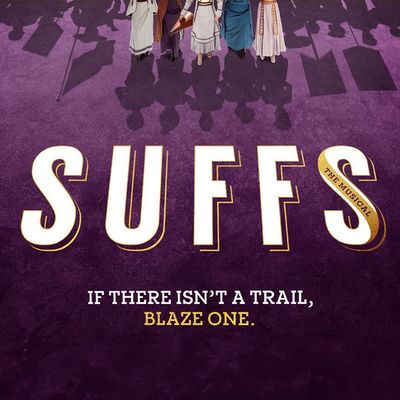
[37:30] Ally Bonino: Yeah. I mean, listen, I always say I'm built like a Sequoia. I am tall. I am, I am wide. I am a big girl in this industry. And it's, it's been, I don't want to say a challenge because well, it has, it's been a challenge. It's, it's, it's a, you know, I exist in a body that this industry sees in a very specific way. The problem with that is that my voice does not support that. I have the voice of an ingenue in the body of a character actor. And it's, it's tricky sometimes to get people to see that come together. On a project like Suffs, it was never once discussed. It was not a thing, you know, they made a point to put on the poster, the girl in the blue dress is plus size. And Rachel Sussman, who was one of our producers was like, it was very important to us that that was represented.
So like we have change makers in the industry who are moving toward a more diverse in every aspect of the word, you know, community. And at the same time, there are still so many hurdles to overcome. I think in this current Broadway season, there is one plus size body on stage right now, which is just crazy to me, since I believe the national average is a size 16. You know, like we are, we are not a tiny nation. And what a, what an incredible opportunity we have here to let people see themselves fully reflected on stage. That's why when we say representation matters, it does. It absolutely matters. So my, my little mission statement is, is really more of a calling in and a handout and a little bit of a gauntlet thrown to be like, yeah, we are casting this.
Why does it have to look this way? Why does it have to be this body or this, this type, you know? I think we are seeing in the, in the regional circuit, specifically, we're seeing a lot of openness to this, which is, which is really exciting, but it still is not quite breaking through on Broadway. And it's, it's really unfortunate to me. It's such an incredible, it's incredible, an incredible missed opportunity to, to sort of still have this antiquated idea of what things could be and how they could look. I always, I always say it's like, like, I think about, I think about this idea of like the suspension of disbelief, right? Like we, as an audience are completely on board with the fact that everybody up on that stage at some point is going to sing and dance at the drop of a hat.
We're okay with that. That's 100% fine. But the idea of a plus size person leading in an ingenue role or a person of color leading in a leading man or a leading woman role, like that's too much. That's where the suspension gets, gets blown away. And it's like, we can't do it. And I don't think that audiences feel that way.
[40:58] Charlie Murphy: It is complicated in the same ways that in different ways, but in similar ways to race and gender that like, sometimes it is a plot point. If you're doing Dogfight, it is a plot point versus if you're doing Suffs, it's not. And so how might you think about casting differently when you are quote unquote, casting a plus-size role versus casting somebody who is plus size, or again, when I talk about spectrum, somewhat plus size or something like not, it's not like you're either, well, we have to cast a fat person, like a black or a white person. I kind of wonder, how do you think about size in that question?
[43:51] Ally Bonino: My metric for this is if it's not mentioned in the script specifically, it shouldn't matter. It shouldn't matter. Like if you're playing, if you're playing, maybe with the caveat that like if you're playing a person that actually existed in real life, like I get called in for Carole King all the time because I do a fantastic Carole King, but no other part of me is giving Carole King. And in that respect, I'm like, I buy that. Carole King looks the way that Carole King looks. Now I'm personally waiting for someone to write the Mama Cass musical and then we can really just go all in for that. But you know what I mean? It's like, unless it is specifically mentioned in the script, if it's a plot point or you are basing it off of a real person, it shouldn't matter.
[44:39] Ally Bonino: Yeah. I mean, it's interesting in a world where even the other sort of side of it that you're talking about of like vocal type or whatever is, is its own sort of box, its own sort of musical theater seems to have a more natural boxes that it wants to put people into.
[44:58] Ally Bonino: I think it's really a little bit of laziness. I think it's a little bit of laziness. I think it's a little bit of going off of how things have always been and being like, well, there is a box for this. So I know what to do with this box. And yet time and time again, the most exciting work that we've seen is when those boxes get completely deconstructed. The work that I think about, I think about the Oklahoma revival a lot. I'm like, that is fantastic. They took the box of this standard, like iconic golden age musical and they tore it apart and they didn't even build a new box. I don't even know what, I don't even know what shape that container is in, but like it's work like that, that creates such a visceral reaction is when we actively make a choice to do something different and new and exciting. And I want more of that.
[45:54] Ally Bonino: I love the phrase and didn't build a new box. Cause I feel like, yeah, when, when we, you know, Hamilton was at its time revolutionary and then it's sort of like, as it gets reproduced, it's like it is creating new boxes. I know you're so right for this new part. That's been great. I see it in, in sort of regional theater and certainly like community theater productions, even like youth theater productions, you get very excited of like, Oh my God, she's perfect for this or whatever. And even in the, she's perfect for, there is a, it's like what is being satisfied in that human experience is the placing of somebody in a box and going.
[46:27] Charlie Murphy: It's a very human thing though. Like our brains love patterns. Our brain loves to be able to categorize things. And also we get really excited when we see something different than the pattern. So it's like, how do we, how do we marry those two things? How do we, how do we have the boxes, but also make room for the dismantling of some of those boxes to build something new?
[46:52] Ally Bonino: Oh yeah. I love that. Okay. Let's talk about teaching a little bit. So first off, unfired as you are, I'd love to hear like, what is, what drew you to teaching in the first place? What do you love about teaching? What's your favorite thing maybe about teaching and maybe especially this age group?
[47:08] Ally Bonino: Yeah. I, the thing I love most about teaching is really, it just gives me an excuse to talk about theater stuff. It's just, it's my, this is my favorite thing. And it's, it's talking with other people who have an intense appreciation for it. I mean, Ann Nathan, who is now like becoming a real buddy of mine. Like, we'll just gab about like song rep. It's great. I love it.
[47:29] Charlie Murphy: Yep. She texted me at the beginning of this podcast of all things. Ann, shut up. She leaves me 20 minutes.
[47:36] Ally Bonino: She's always here.
[47:37] Ally Bonino: She's my podcast inspiration. Cause she leaves me 20 minute voice memos for Azure. Like she'll be like parking her car and leaving me long life voice memos. I'll be like, Ann, who's got the time for this?
[47:45] Ally Bonino: But I love it. I love it. Like we have like such a great back and forth, just like talking about rep and, and like song cuts and it's, it's so, it's so my bread and butter. And I'm so glad that I have this like landing pad for it.
[47:59] Charlie Murphy: What do you feel like? Is there something that has been a learning for you in, especially like diving into this group of students? Like, is there something that maybe you've learned from the experience of working with students, like learn from them or from as you've sort of, you know, re-dived into this college experience that you yourself went through, what do you feel like you've learned? What surprised you? What's been new to you?
[48:20] Ally Bonino: Oh yeah. I think the, the thing that I'm learning is the intensity around this is so much stronger than when I was going through this process. And it's, it's beautiful because these kids have such an incredible work ethic and on top of, of doing, you know, MTCA, they're also doing their school shows. A lot of them are doing competitions, they're volunteering, they have jobs like there is, I have such an immense respect for this age group and the capacity that they are able to take things on with. And also like, sometimes I do feel a very strong need to be like, Hey, have you had water in the last day and a half? Like have you, are you eating? Like, have you slept? There is that element as well, but it's, you know, it's such a hard age.
You're not a kid anymore, but you're not an adult, but you're, you're not being treated like a kid. You have all this responsibility, but they don't take you as seriously as an adult. It's like, it's such a hard age. And I mean, I, I can only speak for my group of students, but they are all navigating it with such grace and curiosity, which is wonderful to see. And just like a real eagerness to learn and grow and absorb, which is, which is really fun to see.
[49:40] Charlie Murphy: That's beautifully said. And I think so often we'll talk, I think sort of like an old person generationally, I'll talk about the ways in which they feel really young. Like I'll be like, Oh, back in my day, we used to do this. I've been down to school every day, but like that there was a, I don't know who that voice was.
[49:56] Ally Bonino: I liked it a lot. We're going to, we're going to dive into that later.
[49:59] Charlie Murphy: Yeah, we have to dive into that. That'll be another hour of therapy after this, where that came from. But then we talk about the ways in which they're younger in some ways, but also then in some ways they're so much older and more mature than, I mean, there's so many aspects, I'm like way more capacity to handle things than I had at 17.
[50:13] Ally Bonino: Well, and I also think this generation has such incredible access to a whole vocabulary of expressing what they need. And it's, it's not necessarily that like at that age, I didn't know what I needed, but I didn't know that it was okay to say what I needed. And this generation will be like, Hey, I need this, or like, I need to do this, or I'm going to do this. And it's just like, yeah, great.
[50:39] Charlie Murphy: Yeah, that took me three years of therapy.
[50:42] Ally Bonino: And like, and honestly, like, like as an adult now, some days I'm like, can I say, can I say that though? Like, can I say, can I, I'm sorry, can I say this? And they're just like, this is what I need. This is how I need to do it. And it's, it's really inspiring. It's really inspiring.
[50:56] Charlie Murphy: Is there something that you feel like, do you have a lesson that you feel you, that you are often saying to your students that you're repeating on that you've got on repeat or that maybe your favorite, like bit of, whether it's advice or a bit of learning or where you go, Hey, when I do encounter these students, the thing I'm often helping them to is this, like, is there something that you're, you're, you're working on them to get to?
[51:18] Ally Bonino: Yes. I think I've noticed this real trend with, with kids this age where there's a real desire to do something like someone else. Like, well, I heard that I heard someone do it this way. And I'm like, great, but now show me how you do it your way. Like, I want, I want to see your version of that. I want you to be authentic to you because at the end of the day, you know, if you're trying to get a riff or a run or a tone, just like someone else, it's never going to be that it's always going to be a lesser version of that. So why not then channel your energy as opposed to having like a 70% version of an imitation? Why not just have a hundred percent version that is 100% you.
[52:07] Charlie Murphy: And how do you help them do that? So if I'm a student and I hear that and I go, Oh God, you're right, Allie, I am impersonating this YouTube video. Oh God. What is, what is Charlie's version? How do you help a student find their own authentic version?
[52:21] Ally Bonino: We go through very silly physical things. Like, like there's a lot of like arms swinging. There's a lot, we do a lot of squatting. We do a lot of ways to just like get you out of your head and into your body. And it's amazing because they'll do something. And then I had this one student the other day that like hit a note that they'd been trying to hit, but they were coming out of the rut and like they, they did it and their entire face lit up. And I was like, yes. And that was you. That came from you because you found a way through that was motivated by something that you had a connection to, as opposed to just being like, I have to hit that because that's what it is. And that's how they did on the recording.
But it's like, it's a lot of, it's a lot of getting them out of their own head and just dropping them into their body. Sort of like turning on the lizard brain where it's like, you just, it kind of goes back to what we were talking about in the first half of that, like sink or swim thing. It's like, you have to turn your brain off and just remember how to kick your legs. And then once you you're like, oh no, I know how to kick my legs. It's like, yeah, of course you do. Of course you do. You always did.
[53:21] Charlie Murphy: It's so well said. And you know, of course, now I relate everything to parenting because I have a four-year-old, but I was this weekend at a four-year-old's birthday party. And my daughter was, my daughter's pretty shy and pretty, I'm trying to use that word in front of her. So don't listen to the soul, but she's, she's, is a reticent to socialize at times. And she clearly so badly, like all the kids were like running around, like throwing a balloon in the air, kind of playing tag, but not really playing tag. There was some sort of game happening. And she was like clinging to my leg, but she definitely wanted to join in. And she was like, I know how to do everything, but I don't know how to join in.
It's like, I don't know how to, I don't know how to join. And I want, but when you say that physical thing, like I literally at one point was like, just gave her a push. Like I was trying to be like, run. Once you're in the circle, once your body's in the circle with everyone, you'll be fine. And then she was once she was like in the running around there. I was like, I promise nobody, everyone else seems like they know what they're doing. I promise they don't.
[54:30] Ally Bonino: This is also something I say to my students all the time. I'm like, what's the worst thing that could happen in this space, in this, in this like.
[54:38] Ally Bonino: When you asked people to quiz you on the social media world, what was the worst thing that could happen? Can you explain that to us? So good question. So in my teaching career, only a group of people know it because it's individual. But as your controlling trouver, software like Chrome really like outsourcing the word and then people are like, okay, really? And I was like, Oh yeah, if they were to bring up the social media sector over there? People will know that they're doing great, because they know? They know how to do great. And what happened in my expert classes is they realized that we never have been perfect and I couldn't expect them to be perfect. And then where we only ever see like 30 second, completely tailor made, edited, glossed over clips.
And it's like, that's not reality. You know? And that's not what makes theater special. Theater is live. Yeah. People love seeing the people. Do what you said about new work. It's like the vulnerability to try a risk and to make a choice. And it could be bad, but that in some ways I'm like, but that is how new stuff gets developed. If you're applying to new for new works via social media, perfect stuff. I haven't really met you. And I don't know what you're like as an actor. Really? I know you're most perfect schlaxo.
[55:40] Charlie Murphy: All right. Let's move toward wrapping. And we always wrap with a little bit of advice. If there is somebody out there listening who just thinks Ally Bonino knows the bee's knees, which I imagine many of others do, and they go, you know, I would be interested in a career, of course my own authentic career, but a career like yours. What advice would you have to that listener, that young listener about how they could follow in somewhat your footsteps?
[56:03] Ally Bonino: Oh my gosh. What a question. Try to end with the big ones, you know? Oh, wow. I mean, I think, okay. I think, especially if you are someone, perhaps you are a wee baby Sequoia, a sapling Sequoia yourself, you know, there is no one path through. There is no one right way to do this. And releasing this idea that like, I have to do it the way that that person over there did it, or that person over there, you are on your own path, and it is beautiful, and it is important, and you are worthy of being on that path. And there will be people who will try to be like, yeah, but what if you did it this way? You just have to stay true to yourself, because again, you are the only you. You are the only one. And if you tried to walk down someone else's path, it's never gonna feel as right, and as authentic, as if you just went bushwhacking, and made your own path for yourself.
[57:12] Charlie Murphy: I love it. We're bushwhacking into the Sequoias, the Sequoias on the path, and the path full of trees. Some are thicker and thinner trees.
[57:20] Ally Bonino: Yes. We love it. Join us in the Redwoods. It's beautiful up here.
[57:26] Charlie Murphy: I love it, Ally. Thank you so much for the time today.
[57:27] Ally Bonino: Of course. It was so fun.
[57:29] Charlie Murphy: Yeah. Yes, yes, yes. Great conversation with Ally there. I am just a big fan of hers. This really cool thing happened a while back, where people would come in to audition and interview for MTCA, and I would just be like, God, we are so lucky. I'm a fan of this person, and they wanna work for us. And that is true of so many of the coaches we bring on these days. Ally is just like no exception to that rule. And I will say, I feel very proud to have created a team that has been so successful. And I'm so proud of it. I feel very proud to have created a team with a strong enough brand and a strong enough ethos that people who I respect so much, so often wanna work for us. It is touching and humbling and a bit overwhelming at times. So I just really appreciate seeing that integrity kind of reflected back to us in that way from the coaches who wanna work for us.
[58:17] Ally Bonino: Okay, onto some takeaways before I get too misty with all of this. I think I said it enough in the episode, but just worth noting that conversation about emerging programs and what Pace was when Ally attended it, which really was an emerging program at the time. As we do all these end of year consultations with seniors, they're debating this currently with sort of deciding what school to attend, especially as they factor in stuff like reputation when they look at potential emerging programs. And this is really just a great example of that, right? At the time when Ally attended Pace, it was not nearly as competitive as the stats you just heard Amanda Flynn give of 2000 applicants to yield a class of 20 something.
That was not the case in those early years, right? But Ally gets the benefit from that reputational surge as much as anyone, right? That's why I often talk about programs a bit like this idea of picking stocks. You do your best to guess where a program is gonna be in the future based on its history and also based on trends and where you see it growing and all that kind of stuff, right? Some emerging programs really do emerge into becoming the most competitive programs. Of course, not that being most competitive is the most important thing in the world, that's not the most important thing, but then some really don't. So you're not, it's gonna be you doing your best to go, where do I think this program's headed?
It's not necessarily a guarantee, right? But just interesting to think about that of which programs will be the Paces of the World 15 years from now that are still in their emergent state at the moment.
[59:37] Charlie Murphy: And I think we spent a lot of ground on the podcast chatting about these advantages and disadvantages of school in New York City. You know, I always try to caution people who think of it as all upside, that New York City is not necessarily the right fit for everybody at 18 years old, but definitely you're gonna hear about some of the advantages from Ally's perspective in terms of like Shana seeing her in what I think she said was a classroom project, I don't remember exactly what that project was, but it's a notable difference compared to the kind of exposure you might have at other schools, right? Certainly there's the advantage of being in more of a bubble and that it really becomes about the educational experience when you're doing your performance, as opposed to the idea of industry exposure, which I do think can tend to make it more effective educationally if you know, this is safe, this is just for us, right? But the flip side can be real. If you happen to have a future amazing composer see you in a classroom project, obviously it's not a bad thing, especially if you're doing a good job, right?
[1:00:31] Ally Bonino: But I do think it's probably worth noting, and we've chatted about this before, that any school that you're at, you're gonna have exposure to future collaborators, right? You might not literally have the Shana Tobbs of the world, right? But you're gonna have these future collaborators who are your fellow schoolmates who are then gonna enter the industry with you and wanna work with you, right? Just like in that conversation of what are the Paces of the world gonna be 15 years from now as they emerge? It's like, what are the Shana Tobbs of the world gonna be 15 years from now, right? If you go into school in New York City, you might literally meet her, or you might meet Ryan Scott Oliver at Pace, or whatever it might be, right?
But if you go to school in Cincinnati, you might just be meeting the future version of that person. Like I went to school with Joshua Harmon, he was one year behind me in school, as a playwright. Before then he goes on and authors a whole bunch of Broadway shows and casts a lot of CMU alumni. Not me, of course, it's fine. But we've also had the Dan Weschler's of the world from Pigpen on, where like literally all of those classmates formed a theater company themselves, which then gave them amazing Broadway and professional opportunities that they created for themselves with their own schoolmates. So it's not like, it's not one thing. When you talk about the industry, it's not like there's this monolith of like the industry sees you, right?
I will say the industry in general is made up of individual human beings who you then meet and are exposed to and of course there are things like viral moments or whatever, where it feels like you're really hitting the industry at one time, right? But in general, the idea of like exposure at an early age, you are certainly gonna get more of that if you're going to school in New York City than you're gonna get if you're going to school somewhere else, right? With all the positives and negatives associated with that.
[1:02:10] Charlie Murphy: And last but not least, I just wanna talk a little bit about that conversation surrounding fear. I really liked Ally asking that question of like, what's the worst thing that can happen here? I used to do that like with my students a lot, I would do like visualization, both like this idea of it's helpful, I think, to visualize what an incredibly successful audition would look like, like what's the dream scenario? And then also kind of visualize absolutely everything you can imagine going wrong and realizing you're gonna be okay in both situations. You're actually gonna walk out of that room pretty much the same person in both of those potential situations, right? I think some of this, the stakes can feel so high and I'm not gonna pretend the stakes aren't there, but they feel even higher because we put all this extra stuff on top of the audition itself.
I understand if like, if you've worked a school into your dream school and then you've put the school on a pedestal, that's its own kind of problem, which we'll talk about, but sometimes students will do that to themselves even in lower stakes auditions. To Ally's point, sometimes it'll be in a coaching scenario where it's just me and a student, or it's a mock audition where we know there's no acceptances or rejections happening that day, but it'll be these like self-imposed stakes that are gonna get in the way and add all this stuff on top of it, right? They'll have this idea of like, if I don't do well today, that means I'm a failure, or if I don't get amazing feedback on this song, that means I'm a bad singer, or whatever it is they've done themselves, and it's just supremely unhelpful and you don't always even realize that those are the stakes that you're creating, right?
[1:04:00] Ally Bonino: And I think it's nice to start, when you talk about a coaching or talk about a low stakes mock scenario, I think it's helpful just to like name those stakes, name what is happening, and then you can start to unravel some of those added stakes that you added on top where we go, wait a second, that's not happening today, that's actually not what's happening, right? And then you can try to drill down to what the stakes actually are for you, right? That'll help you realize, there are actual stakes when you're auditioning for a big school, which of course you can also dissipate the stakes if they get too high with the idea of like, a dream school is not necessarily the reality, often you're making up that pedestal, right?
And then as you go about your process, of course, you're gonna discover so much more that you don't know about schools alongside the schools that you thought you're gonna love. Sometimes you think you're gonna love a school and you do, it's not that everything is wrong, but you're gonna learn so much more. So this idea of this one dream school, often you can dissipate that for yourself.
[1:05:25] Charlie Murphy: And also, as you go deeper into the process, you're gonna realize that the thing that's preventing a good audition, there isn't so much this thing as like, I bombed this audition as like a singular moment going wrong. There can absolutely be an instance where like something goes wrong in an audition, but I would say if you've prepared yourself and put yourself in the right headspace, most of those individual mistakes that can happen in an audition actually become opportunities. If you crack or if you mess up your slate or whatever it is, if you're present and you're joyful in the audition room and curious to the experience, so often those mistakes turn into a great opportunity to show how you deal with adversity.
We've had lots of great stories, of course, about exactly this on the pod before, but it's really true. Showing you're alive in the room and not robotic can end up paying off more than having your audition go perfectly according to plan, right? And of course, that's not to say that the goal is to mess something up. Of course, that's not what we're trying to do, but just to note that when an audition feels like a bomb, it's usually because there was part of the preparation that went awry, and you weren't able to be alive and present in that way more than just like something went wrong and that's what ruined it, right? Of course, it's not universal. Things can go wrong. It could be you prepare yourself in all the right ways, and there's just this weird unexplainable energy in the room or something you can't control that totally throws it off, right?
But what we can control is what we bring into the room, and if we're bringing in that fear-based version of ourselves, which is saying, hey, Charlie, don't mess up, or don't embarrass yourself in there, or even more something like, don't lose your one chance to be a success by blowing this audition for yourself, then you're adding those stakes and just making this process so much harder for yourself than it has to be.
[1:06:07] Ally Bonino: And the reason of that whole monologue is to your point of what you're saying, which is, what are you really afraid of? Can we get to the root of what I'm actually afraid of is gonna happen? How much of my decision-making in life, but especially when we talk about in the audition rooms, is based on fear, whether that fear is fear of failure, fear of not being enough, fear of disappointing my parents, fear of not getting into school, and I don't know what happens to you if you don't get into school. Sometimes it's fear of really being seen, to actually be seen as myself and what that would be like, right? Whatever it is for you. But as you identify that fear, then hopefully you can release some of those things and actually have the appropriate stakes for an audition, because an audition should have stakes.
You don't wanna not care at all. Stakes are good, right? But if the stakes are, maybe I'll get into the school and maybe I won't, the fear is right next to the possibility and excitement. Those are appropriate stakes, right? But if the stakes become, maybe I'm a failure as a human being if I do a bad job in this one audition, those are not exciting stakes that are fun to play in, right? Adjusting those stakes can then adjust your ability to have fun and play in the room, and we know how essential it is to have a good audition.
[1:07:19] Charlie Murphy: Okay, let's wrap there on another episode of Mapping the College Audition, produced by Kelly Prendergast with social media work by Jordan Rice. Please hit us with those likes and subscriptions wherever you can watch or listen to these podcasts. And of course, a beautiful, sweet rating and review would not go amiss as we keep trying to roll this positive March momentum into April and beyond. You know you can follow us at Mapping the College Audition on Instagram and check us out at mtca.com for help with your individual college process. To my young artists out there mapping their journeys, please trust that you're enough for the right program exactly as you are right now. Now keep striving. We'll catch you next week.
© Broadway Podcast Network, All Rights Reserved