

In this College Deep Dive, Kaitlin and Charlie discuss being a healthy repeatable sustainable artist, getting a debt free BFA, the social justice mindset of Texas State students and debunking the myths of type... Read More
From the show: Mapping The College Audition: An MTCA Podcast
Featured Shows
About
In this College Deep Dive, Kaitlin and Charlie discuss being a healthy repeatable sustainable artist, getting a debt free BFA, the social justice mindset of Texas State students and debunking the myths of type.
If you would like to learn more about Texas State University, visit the following places:
- Youtube: TXSTMusicalTheatre
- Instagram: @txstmt
- Facebook: @txstmt
- TikTok: @txstmt
- Texas State University Website
If you have any questions about the college audition process, feel free to reach out at mailbag@mappingthecollegeaudition.com. If you’re interested in working with MTCA for help with your individualized preparation for your College Audition journey, please check us out at mtcollegeauditions.com, or on Instagram or Facebook.
About MTCA:
Musical Theater College Auditions (MTCA) is the leader in coaching acting and musical theater students through the college audition process and beyond with superlative results. MTCA has assembled a roster of expert artist-educators who can guide students artistically, organizationally, strategically, and psychologically through the competitive college audition process. MTCA provides the tools, resources, and expertise along with a vast and strong support system. They train the unique individual, empowering the artist to bring their true, authentic self to their work. MTCA believes that by helping students reveal their potential it allows each school to connect with those who are truly right for their programs, which in turn guides each student toward their best college fit.
About Charlie Murphy:
Charlie is a proud graduate of Carnegie Mellon University’s BFA program. As an Actor he has performed with theaters such as: NY Public Theatre’s “Shakespeare in the Park”, The Pearl Theatre Company, Hudson Valley Shakespeare Festival, Chautauqua Theatre Company, Kinetic Theatre Company, and the Shakespeare Theatre of DC.
With MTCA [Musical Theater College Auditions -- mtca.nyc], he has been helping prospective theatre students through the college process for over 15 years. As a Teacher and Director, he is able to do a few of his favorite things in life: help students to find their authentic selves as artists, and then help them find their best fit for their collegiate journey. Through this podcast, he hopes to continue that work as well as help demystify this intricate process.
This episode was produced by Meghan Cordier and Charlie Murphy. Episode theme music is created by Will Reynolds.
Transcript
This transcript was automatically generated and might contain errors.
[0:00] Charlie Murphy: Hello, my dear listeners. This is your favorite podcast host, Charlie, from June of 2025. If you're hearing one of these episode toppers, it means this episode is no longer totally current in some way.
[0:14] Charlie Murphy: Now, this may be obvious to you if you've like scrolled deep into our episode archive of all these past dates, but just in case it was not, please receive this content warning that what you're about to listen to is not completely current. In an effort to avoid confusion over the general state of the landscape, but still try to maintain some of the transparency of the project that this podcast has been, as well as I think some of that valuable process-based information that's present in all of our episodes, I have decided just to leave like all of our older episodes up, even if the landscape has shifted significantly since the recording occurred.
[0:46] Charlie Murphy: So when we become aware of a big change, I'm just adding a topper to the episode like this to make clear what is current as of now in the middle of 2025. Of course, now as soon as I release these episode toppers into the ether, my information becomes immediately not current. So we appreciate your grace there. And we also can't commit to catching every single small shift in the landscape that may happen when you're talking about over 200 episodes so far. But we're gonna do our best.
[1:26] Charlie Murphy: But just in general, one faculty member does not make an entire program, in our opinion, right? Obviously, there are some program heads and really valued professors that have had those outsized impacts on their programs and have built reputations with their strong hands, but nobody does that alone. And the legacy of that work that doesn't disappear with a person's leaving, right? So while someone leaving a program that might really shift your opinion on the school, and it's fair to allow it to, it shouldn't completely invalidate that school in your mind, certainly not automatically, right? Both factors, the specific faculty and the institution itself around them, should weigh heavily in your mind.
[2:00] Charlie Murphy: And each situation, it's gonna be unique about how much influence you think a shift might have, right? There are no easy answers, but each situation should be weighed individually based on those variety of factors. So it was my goal with this podcast to give you that intimate look into a given program so that you could pick up the vibes of specific professors, hopefully better than you're able to read data off a website. But hopefully, to some extent, you're able to extrapolate that vibe as best as you can to the program at large.
[2:28] Charlie Murphy: Right? Of course, not every professor is going to be fully representative of every other professor at the program. How could they be? But at least gives you a nice data point and a window in, a vibe data point. And I hope you feel that it's relevant to the program at large, beyond just that specific person. Okay, but let's get to your specific episode.
[2:46] Charlie Murphy: Okay, for this episode with Texas State, this was released back in June of 2021. Since then, Kaitlin executed a years-long handoff that I think was handled with a lot of forethought and conscientiousness. You know, we often talk about this when program heads leave, which when you're listening to all of these toppers, you'll notice happens quite a great deal. Uh, but I think this is like nearly the dream version of what could happen when a faculty member leaves, in that the students and faculty were well informed in advance.
[3:13] Charlie Murphy: It happened slowly over the course of years, and that Kaitlin continues to be involved in the program. That is very often not the case that you get all of those factors the way you do here, right? Uh, I believe this one was officially executed in the fall of 2023, though again, many years in the making, that Kaitlin then handed the program off to the joint leadership of three of her colleagues, but she continues to be involved and present in the program with their showcase and with Texas State alumni and lots of other cool stuff.
[3:37] Charlie Murphy: So this episode really does continue to be relevant in almost every way, other than the fact that Kaitlin has now shifted from founder and head to now just founder. We'll absolutely be having Texas State back on. It's been in the works for a while that we're gonna get them back on with one of those updated Act Two, Act Three episodes, technically, I guess, because we had Neil Patrick Seward on, but one of those Act Two, Act Three episodes as soon as possible.
[4:00] Charlie Murphy: You know, because this transition was a smooth one and there was less confusion from our students and parents. We didn't rush this with the same urgency that we have in some other case, but we're still, of course, excited to hear the latest from that program. But for the foundation of what Kaitlin built in terms of Texas State, it's still absolutely there. And I think you'll really be able to get a lot from this episode. I hope you enjoy.
[4:29] Charlie Murphy: Hello, hello, and welcome to Mapping the College Audition, a podcast where we explore the landscape of the college theater world and try to demystify this daunting audition process. I'm your host, Charlie Murphy, director of MTCA, Musical Theater College Auditions. And today we have a really fun show lined up for you.
[4:48] Charlie Murphy: Um, we have Kaitlin Hopkins from Texas State. Uh, Kaitlin has worked with us for years at MTCA and is a really good friend of my partner, Leo, um, as well as a phenomenally successful woman in so many aspects, many of which you'll hear about today. Um, this is another one of our college deep dive episodes. So we're gonna give you that snackable audio tour of various great theater programs around the country.
[5:10] Charlie Murphy: Um, I hope you enjoy this one. Today we got into what it means to be a sustainable, healthy artist and some of the life skills that Texas State offers their students. Um, getting a BFA for cheap. Uh, we talk about the social justice mindset of Texas State students and what it is to bring your whole person in the room and debunking some of the myths of type. So I hope you enjoy that.
[5:33] Charlie Murphy: Up next, we're gonna have Elizabeth Stanley. You may know her as a Grammy Award winning and Tony nominated actress, but I know her as the person who yells at me to unload the dishwasher. So that will be a unique podcast. I think you guys will really enjoy. But till then, let's get to Kaitlin.
[5:54] Charlie Murphy: All right, I'm here with Kaitlin Hopkins. Uh, Kaitlin is an actor, a producer, an educator, and a consultant. Um, she's the creator and president of Fontus Lozenges and the co-founder of Living Mental Wellness, which we're gonna talk about today in the interview. She has a number of Broadway credits, including Noises Off and Anything Goes with Patti LuPone.
[6:13] Charlie Murphy: Um, she originated the role of Mama Who in How the Grinch Stole Christmas, and originated a number of off-Broadway roles, including Bat Boy the Musical, for which she received a Drama Desk and Ovation Award nomination and a standing ovation from my high school age self. She was fantastic in the role. Um, she was also in Bear, a pop opera, and the Great American Trailer Park Musical.
[6:34] Charlie Murphy: Uh, she's done a number of national tours, including she originated the role of Diane in Disney's On the Record, where she worked with MTCA's own Leo Ash Evans. Uh, Kaitlin's also appeared in over 50 television shows. She directed, co-wrote, and co-produced the world premiere of The World According to Snoopy.
[6:50] Charlie Murphy: Um, she's received the 2016 Presidential Award for Excellence in Teaching from Texas State University. And in 2009, she created the BFA Musical Theater Program at Texas State University. Oh my, what a bio. Caitlin, how are you? How are you doing?
[7:03] Kaitlin Hopkins: I'm doing really well, thank you.
[7:06] Charlie Murphy: Great. Um, a little bit about Texas State. Uh, Texas State is located in San Marcos, Texas. The average class size is a very small 12 to 14 students. They have a BFA in musical theater and a BFA in acting, as well as a number of other BAs and BFAs in the theater world.
[7:23] Charlie Murphy: Caitlin, it's so exciting to have you on the program to talk a bit about Texas State.
[7:28] Kaitlin Hopkins: Thank you. Thanks so much for having me.
[7:30] Charlie Murphy: So, Kaitlin, tell me a little bit about your background. I'd love to hear how you came to be at your current position at Texas State.
[7:35] Kaitlin Hopkins: Oh, well, actually, I was on tour with another national tour at the time. I was doing Dirty Dancing the Musical. And I was um after that, my husband and I were supposed to go back to New York. I had been asked to do um, they were doing a Broadway revival of Bye Bye Birdie at the Roundabout, and I was gonna finish the tour and go do that.
[7:54] Kaitlin Hopkins: And got a call uh from Texas State University asking if I would be interested in coming to interview for a position to create a new BFA in musical theater program. Um, it wasn't uh I had never heard of Texas State University, to be honest. I was like, oh, UT in Austin, and they said, no, no, we're in we're in San we're south of that, we're in San Marcos, we're between Austin and San Antonio. I'm like, oh cool.
[8:15] Kaitlin Hopkins: Um, but they were really interested in um having a BFA degree designed by professionals for young professionals and thinking a little outside of the traditional musical theater um BFA degree, um, and having everything sort of housed under one umbrella, um, having all, you know, having the musical theater faculty specifically just serving the musical theater students and not farming classes out to a dance school, a music school, an acting school, um, which was very intriguing to me and very exciting.
[8:48] Kaitlin Hopkins: Um, and so that was sort of how I I uh my husband and I ended up here uh was was because they asked if we would come and consider it and we came down on my day off. We like flew in on a Monday and I was back in time to do my show Tuesday night and um had a chance to sort of get a sense of what they were looking for.
[9:08] Charlie Murphy: Um and yeah.
[9:09] Kaitlin Hopkins: I love that. It feels like so many cool things that artists do in their lives, like take that little bit of a jump, take a little bit of going, I'm gonna make a switch, I'm gonna make a I'm gonna take take this opportunity that comes.
[9:20] Kaitlin Hopkins: That's so much of what it is, isn't it? Is that you, you know, you just sort of say yes to things and and you know, I thought, well, if if I don't like it or I'm not good at it, I just I'll go go back to New York and you know, we were having a great time.
[9:33] Kaitlin Hopkins: Um, but it was such an incredible opportunity uh as well because one because I had started to discover that I just was so passionate about teaching and working with a young artist, but it also meant I would have an opportunity to direct and that was also another, you know, reason why I was very, very interested in looking here as a is a place to develop a a new a new program.
[9:55] Charlie Murphy: I love that. Um so let's get into Texas State a little bit. Um I'd love in in brief, sort of what does it mean to you to be a Texas State student? So what are you kind of looking for in your students?
[10:05] Kaitlin Hopkins: That's a good question. Um, I'm looking for artists, you know, I'm looking for young artists who want to work professionally, like that, you know, that know that this is that's what they want to do and what they want to pursue, and are looking to be leaders in the industry, to create the work.
[10:25] Kaitlin Hopkins: Um, so um, you know, uh everyone wants to be on Broadway, right? Like that's just you know, everyone has that dream, absolutely. Um, but what I'm also looking for is somebody who wants to be an artist, period, right? Like in, you know, be a working actor and wants to be in an environment where they can explore their artistry on a lot of different levels.
[10:47] Kaitlin Hopkins: Maybe um we tend to also look for the students who also want to be choreographers, also are interested in exploring playwriting or directing or music direction or composition, um, because we have a lot of opportunities here to first facilitate and produce um student-driven work, which is very exciting to us.
[11:06] Kaitlin Hopkins: I'm looking for people with integrity, with a willingness to play, um, who want to be in a room with a bunch of other really talented people and be challenged, um, you know, to explore um their art form, you know, and it's it's a it's an art form that's ever changing, it's very fluid.
[11:29] Kaitlin Hopkins: And I also want people who like are interested in really unpacking and questioning and researching traditional musical theater pedagogy versus um today and what is needed and required of artists today, um, and continuing to, you know, evolve a new vocabulary for how to approach the work as musical theater artists.
[11:55] Charlie Murphy: Now, specifically to the training, you know, if you get a freshman uh and then you get him for four years, how do you feel like over those four years a Texas State student is going to change? So, what are they gonna learn? How are they gonna come out different than they entered your school?
[12:07] Kaitlin Hopkins: Oh, also a great question. Um, well, you know, the first year here is is really about exploring who you are as a person as an artist. What kind of work do you want to do? Um, you know, foundationally that first year, there's um a lot of attention paid to um us all getting to know each other, right?
[12:29] Kaitlin Hopkins: Like you, you know, people talk a lot about, well, you've got to bring yourself to the work. Well, what does that even mean? How do you do that? Right. I want to know about each student's um culture, their ethnicity, their where they come from, their economic backgrounds, their, you know, what type of material speaks to them, what resonates with them, why?
[12:52] Kaitlin Hopkins: If you could sing anything, if you had no limitations based on boxes that other people created, types that other, you know, some sort of preferred body type, preferred sound type, preferred whatever, right? If if you are the box, if there's no box, what stories do you want to tell? And how do you want to tell them?
[13:14] Kaitlin Hopkins: What narratives do you want to put out into the world? And we can't do that unless we get to know the artist and then foundationally train that, you know, human to take care of their voices, to take care of their bodies, to take care of their mental health, to take care of, you know, uh just just foundationally looking at the life skills, the business skills that you need to do this in a healthy, sustainable, repeatable way.
[13:39] Kaitlin Hopkins: That's what technique offers you, right? It's a it's a structure, it's a delivery system, if you will, for your artistry. They're already artists, like they're they already are extraordinary at what they do. That's not the question, right? That's not, we're not teaching them how to be good. We're teaching them how to be healthy so that they can have long successful careers where they can pursue any medium in any way, right?
[14:06] Kaitlin Hopkins: Like and and define the art form and be leaders in the art form.
[14:10] Charlie Murphy: Absolutely. I'd love to get a little into the some of the specifics, um, because I can echo both the things you've talked about, or two of things you talked about, both in terms of wellness and in terms of the kind of currentness of your program. I think that's something that certainly students will echo back to us and say, this is what we know about Texas State.
[14:25] Kaitlin Hopkins: I'd love to get into some of the specifically some of those innovations. So what does that mean in terms of what is wellness mean for a freshman if I'm coming into your program? And then some of the ways that you're able to stay current to the industry. Great. So the wellness stuff. So they're going to learn about vocal health to take care of their voices, to take care of their bodies, so that they are strong and versatile and flexible, right? Like in every way. In terms of sort of the mental wellness aspect, that's approached on a couple different ways. So we did research here with a top sports psychologist, meditation expert, communications expert, all kinds of amazing people who came together and did research on mental wellness for performing artists and athletes.
And the living mental wellness program is now something that isn't just taught in my program, but the university and the department noticed that we had the highest academic achievers, we had the highest graduation rates of any program at the university. It's a university of 39,000 students. So I'm very proud of that, right? So they have sort of looked at us and they're like, well, what are they doing differently over there? So this life skills program, first and foremost, they're learning about the science of the brain and how the brain works under stress. They're learning how to self-regulate their own body chemistry, and that brain science is really foundational to everything else because you can totally learn how to self-regulate your nervous system, heal your nervous system with tools and techniques to do that, right?
So that's sort of foundational. And then you get a lot of mindfulness techniques, meditation techniques, and then we have this developmental model that's evidence-based. We did research on, and it has six different module components, and they are these. They are time management, goal setting skills, coping skills, communication skills, leadership skills, and problem solving skills. And all of those are built one skill on top of the other, ultimately used together, right? All of that together for those advanced problem solving skills. Now, what the research proves is that when you increase someone's life skills, you decrease their anxiety and depression. And we're also looking at things like social media addictions and perfectionism and the imposter syndrome, like how do you navigate a lot of the negative self-talk and giving them tools and vocabulary around that and ways to utilize that in their work and application in the work, right?
So that's what some of that mental wellness curriculum looks like. And that's all fall semester of freshman year as part of their, it's literally part of their intro to musical theater class, but all the students in the department take the living mental wellness curriculum as part of their theater activities class. And we're the second largest theater department in the country. We have over a thousand majors, if you can believe it, which is so funny because it was like this little tiny program within this huge department, but it's really exciting because it means they have a lot of performance opportunities and just you know, we have a huge film and television division with a brand new building, and so you know, they're getting so much experience, you know, on camera, on stage, musicals, plays, you know, getting to perform in plays as well as musicals. So they really are sort of coming out with a very, very well-rounded resume and experience related to being a working actor, not just myself.
[18:12] Kaitlin Hopkins: I love both those things. And I think it's something we hear a lot. One of the questions I'm asking all of our artists when we have artists on, or non-faculty artists, I should say, about how what they might do to change their program. A lot of people will either talk about wellness or they'll talk about business of the business. How do I survive once I move to New York City kind of skills? Yeah, well, that's very foundational here. You know, I mean, I think as part of the maybe why they were interested in me designing the program was because I had a lot of producing background as well as performance work, obviously. And so you know, that allowed me to design a whole series of business of the business labs, and those, although most of them are junior and senior year, there are foundational ones that are freshman year, right?
So we're already looking at things like financial planning and having the VP of Merrill Lynch come in and you know, talk to them about financial planning and helping them save and helping them create budgets and a one-year plan, a five-year plan out of school. And sort of, you know, looking at it both short-term and long-term goals, and all of that are again is part of that mental wellness curriculum, right? This they have goal setting and time management skills built in freshman year, and so we're looking at both the short, like the sprint and the marathon, right? You're sort of looking at the whole career. And we are transitioning in them into the career. We're very much a forever program, is what we say.
We're not a four-year program, we're a forever program, and that fifth year and sixth year, especially transitioning into the industry, we are very, very, very hands-on with our graduates. So those business to the business labs are things like how to read a contract, understanding contract terminology, knowing all the different contracts that you are going to work under, having a working knowledge of what's the difference between theater contracts, film and television contracts, commercial contracts, cruise lines, summer stock, what are they called? What should you be looking for? In those contracts. How do you negotiate it if you don't have an agent? And even if you do have an agent, how do you participate, right?
And have agency in your own career and the decisions that you're making. How to do interviews, how to give good interviews, how to get an agent. You know, like there's all of these sort of different aspects of the like you are the business, like it's sort of like Apple's the company, right? But within Apple, Apple's got all these different products that they're selling, right? Well, you're we're sort of looking at that the same way. If you're looking at branding, you are the company, but you have all of these different things that you're selling within that. You want to do film, you want to do television, you want to do voiceovers, you want to do commercials, you want to do musicals, you want to do you know, comedy, drama, whatever it is, right?
You also do improv. And so you're looking at how do you how do you brand that? How do you use social media for you, not against you? You know, a lot of people early on make some not great decisions that I think really negatively impact their lives and their careers and understanding how connected that is, you know. So there's that business stuff is really important. It's really important because no matter how talented they are, no matter how well trained they are, if they don't know how to manage their lives and they don't know how to manage their careers, we have failed them as educators. I think it is a failure in education to not foundationally address business skills and self-care skills, period.
They have to understand how to balance their lives and their careers. And this is not an industry that has supported that in the past. You know, there's a lot of myth, and like what I'm gonna call myths and BS out there, that people believe you know, you have to sacrifice yourself for the show, you have to dance through the pain, the show must go on, like all of these sort of things. Like, who made that up? Boy, are we questioning that during COVID? I mean, everyone was saying that like, you know, my partner's in the cast of Jagged Little Pill, and like everyone was like sick at the time, and they were like, should we be pushing through right now during the pandemic? You know, it's like we kind of realize maybe we should go home when we're sick.
[22:47] Kaitlin Hopkins: Exactly. Yeah, you know, so looking at how do you train and help develop a healthy artist? Because a healthy artist is a sustainable artist, and at the end of the day, the producers and the casting directors and the creative teams, they need healthy, repeatable, sustainable, right? So if you're sacrificing that from the get-go, then how do you ever achieve it? Okay, so this is a lot of great reasons to go to your school. Um, why might a student not go to your school? So these are all these wonderful things. If you're, you know, deciding with a student and maybe they're maybe this is about a week ago, this was happening to you as we came up to the decision day, and some people are deciding between your school and another school, why do you find that students end up saying, I'm gonna go somewhere else?
Yeah, I think, you know, I think it's a really, really good question, an important one. And I always feel like part of my job with the students that we make offers to is helping them make the right decision, even if it's not us, right? Like we're there to, it's not about us, it's about them. And it doesn't serve us or them to make the wrong decision, right? So I think questions to ask yourself when you're in that position is do I really want a liberal arts education or do I really want a conservatory education? Right? What am I looking for? Um, and really understanding the difference and what that means, you know. We run the program like a conservatory, right? So the training is like that, but the degree plan is a liberal arts degree plan.
So what that means is most of my students are minoring in other things, they're graduating Magna Cum Laude, they're in the honors college, you know, that stimulus, that global perspective is really, really important to them. If social justice and diversity, equity, and inclusion are not important to you, we're not the right place for you. Our program is founded in, you know, artists, activists, artists who are interested in healing their communities, serving their communities, understand that it's about something bigger than that. We're a Hispanic serving institution, right? 56% of our student body at the entire university are students of color. If you want a melting pot, right? If you want a place where we are having the hard conversations and making decisions with our students about the season, the concepts for the shows, the casting for the shows, really unpacking the pedagogy, really looking, taking deep dives into what we do and why we do it and what we want and all those things.
Like we're not the right place for you if that's not sexy. That's what I say, is if that isn't sexy to you, we're not the right place. And that's okay. You know, we're not going to be the right place for everybody.
[25:45] Kaitlin Hopkins: But this university was founded in social justice. Um, I'd love to know about kind of outside of the theater program and maybe outside of the musical theater program and outside of the theater program at large. Um, what does Texas State afford a prospective student in the larger university sense? Yeah, um, well, it's a beautiful campus. It's just gorgeous. We're in the hill country, and you know, I'm a girl from New York City. So, you know, every day when I see deer and turtles and foxes and stuff, I'm, you know, hawks fly by, and I'm like, oh my God, what is happening? But it's very beautiful, very, very beautiful here. And we're between Austin and San Antonio, which are two incredible cities that have so much music and film festivals and dance, and just if you're a foodie, this is the place to be.
Like San Marcos and Austin and San Antonio, like just so much incredible food. We're this whole program is like we're all obsessed with food. Um there's a river here that runs through campus that is the water's 72 degrees all year long, and tubing and snorkeling and kayaking is like a thing here. It's like part of the culture of the university and the program, and the kids just love it. I mean, there's nothing more fun than Riverfest, which is you know, all the kids are like tubing down the river, and there's live bands like just for miles on either side of the river, and they have their coolers full of food and beverages, you know, they're floating the river and having a great time. You know, I think it's a proper university campus, you know, and it's sort of a good because of our guest artist program, you know, we have four or five industry professionals a semester coming down here and doing master classes with the students.
So, you know, their connection to New York and to the relationships that they develop with industry professionals here over the four years that they're here is something that I think is sort of unique to the program and really serves them. And the university itself, you know, there's the honors college, and again, like I said, a lot of our students are minoring in other subjects. It's just a very, there's just a lot of stimulus here in a really, really good way, you know. It allows you a real global perspective.
[28:08] Kaitlin Hopkins: Very, very cool. Um, and we did get to talk to Neil a bit. Neil did one of our preview episodes, so he he was like our practice, which we're a good friend of mine. But I'd love to hear, because the listeners won't yet have heard that episode when this airs, um, a little bit about how the acting and musical theater schools intersect or how they work together. Oh, um, your sort of acting students and musical theater students. Yeah, so so the musical theater program has, you know, on average about 50 some odd students in it. We take retake 12 to 14 a year. The acting program's a little bit bigger, but not much. I think they take more like 16 a year-ish.
[28:42] Kaitlin Hopkins: Um, and the two programs are connected in many ways. We share a voice and speech teacher. And although we have our own musical theater acting teacher who teaches beginning and intermediate acting, the freshman year acting, we share acting teachers for realism, characterization, improv, Shakespeare, on camera. They have a whole semester of on-camera acting. Um, so we're sharing four or five acting teachers and a voice and speech teacher. And the students are auditioning for all the plays, and there are many students in the acting program who are incredible dancers and singers who, um, you know, maybe considered musical theater or also want to do musical theater, but chose to go into a BFA acting program.
So they're also auditioning for our musicals, our musical kids are auditioning for the plays. Um, so there's a lot of crossover and cross-pollination in a lot of the performance opportunities. Um, and they all live in the same dorm freshman year. And so that's really great. So they're really, you know, creating community and creating relationships from the get-go in their freshman dorm experience. Having beverages on rivers together, you know, all of it. That's the whole thing. Um, I'd love to turn a little bit to the audition, because now many of our students, especially maybe our 16, 17-year-old listeners and potentially their parents, um, are gonna be thinking a lot about the audition. Um, if you give me in short, what do you think makes a great audition for you? What do you really look to see in an audition?
[30:14] Kaitlin Hopkins: That they love what they're doing, joy in the work, joy in the work, joy in the work, right? So, you know, I think it's really easy to get stuck in overthinking the material they're doing. Like, is it overdone? Or, you know, my voice teacher said this is a good choice for me, so I'm gonna do it, but I don't really like it. You know, at the end of the day, uh, we don't care what they do. I don't care if I hear "Gimme Gimme" ten times in a row. If they do it well, that's awesome. If it's the thing that they love to do the best, double awesome. They're going to bring like there are no ten people in the world that are gonna do it the same way because you're all different people. Right. So don't worry, there's no such thing as like overdone material.
Right? So to me, I'm looking for them to give me a sense of who they are, right? And the choices they make and how they interpret it, and just to be present in the room with me and be willing just to um have a conversation about the work, maybe take some adjustments just to play a little. Um, you know, and then the pre-screens, honestly, you know, the pre-screens are just about and maybe, you know, this is I don't know if it's a good thing or a bad thing to say, it's just the truth. Like, really, the pre-screens are just about making a cut, right? Like you're just you're not trying to cast somebody from a pre-screen, you know, or select your class, you're just looking at that information. And I actually like read the essays and watch the wild card and do all that, right?
And you're just trying to get a sense of, oh, could we serve this student? Are we the right place for this student? You know, with the number of applicants all these programs have, we say no in pre-screens to students who are really good, really good. So, what I say to the parents is please don't think if a kid doesn't pass a pre-screen, it means they're not good enough or they're not competitive. It doesn't mean that at all. It means I don't think I can serve them. I'm looking for the students that I really think are a good fit for us, and we would also be a good fit for them. And you know, that that so I don't know if that's helpful, right? But you really just have to kind of not play the comparison game, like not compare yourself to other students and where they are, and like you just have to do your work and love what you do and trust that you're gonna end up in the right place.
[32:45] Kaitlin Hopkins: I love that. Um, okay, my personal favorite question. This is really just like my personal poll because I'm interested in hearing this from all the faculty heads. Um, how much if you had to estimate, however you want to estimate, um, how much of your decision artistically in the room is based on the kind of skill displayed in the work, you know, singing, dancing, acting, versus those kind of intangibles, the adjustments, the interview. How much would you say is one versus the other if you can parse it?
[33:12] Kaitlin Hopkins: Oh, good question. Um, it's really both. It really is both. It really feels almost split down the middle to me. Um, here's what I mean by that. Of course, we're all looking for talented people. At the level that you all are competing, you're all good, right? Like I very rarely see a student that I don't think is good, right? I'm like, wow, you're really good. So and when we look for talent, it doesn't necessarily mean that we have to have the same ability level in all three areas, right? That's what you're going to school for. So you know, maybe you've spent years dancing and you haven't worked much on your singing and your acting yet, or vice versa, right? So we're not necessarily looking for someone to have the same level of ability across the board.
What we're looking for is potential. What we're looking for is that intangible thing too, that you can't explain why you think it's extraordinary. You just do. Like you just have a gut response, you have a heart response. I mean, I can tell you so I remember the auditions of so many students where I started crying because I had such um a deep response to what that artist was doing in the room, right? And that's not I don't know that that's talent. It's just something you can't explain, right? It's that untan intangible thing. Um, the interview matters and the essay matter. I mean, here, you know, I can't speak for other schools, but you know, here all of that matters because we're looking to commit to these artists for the rest of, you know, as long as we're here, right?
The rest of their lives, the rest of our life, you know, like we're in it for the long haul. And because we're a small program, like you really want to like people and you want to feel like I want to be in a room with these 14 people every day, even when I'm having a bad day, even when they're having a bad day, right? It's not when we're all at our best that's hard. It's that what we do is hard and often, you know, you have a bad day, right? But are these the students that you want to be challenged by that you want to give every ounce of everything that you have to offer? Um, are the, you know, we're also looking not just at the individuals, right Charlie, like we're looking at what 14 individuals if I put them together make a really interesting ensemble and group of humans that are going to make some noise, right and do some stuff, right?
So you're also thinking about well which 14 people do I want to put in a room, right? And that's not about the individual that's about a larger idea. Um, their grades matter to us anyway, you know, like I really I care about their grades I care about their essay, you know, all of it it all matters.
[35:02] Kaitlin Hopkins: I was gonna ask exactly that, how does that work with your school in terms of if you want a student artistically? Um, how does that work with their academics in the university itself in terms of your ability to borrow?
[35:02] Kaitlin Hopkins: Yeah, so the students also apply to the university and they have to be accepted into the university obviously for ultimately for us to make them an offer. Um, and we just ask that they apply to the university at the same time that they apply to the program so that we have that information so that they're not wasting time and money like if they can't get into the university.
[36:45] Kaitlin Hopkins: Now, Kaitlin, I have to just take a pause and say, how have we not talked about the cost of your school? Neil must have spent 20 minutes talking about the cost. It's one of the best things about that's the other thing that students will always come back and they'll go, it costs how much? Fantastic.
[36:59] Kaitlin Hopkins: Yeah. Well, we're very, very lucky. You know, we are allowed to offer all of our out-of-state students in-state tuition. And the way that works is um we're able to give them a thousand dollar scholarship a year. And that thousand dollar scholarship qualifies them for in-state tuition, which saves them almost $13,000 in out-of-state tuition costs and fees. And that a thousand dollars gets applied to their tuition bill automatically, right? So it reduces now that's before they have academic scholarships or merit-based, like that's before any other money that we or the university may give them. Most of our students have anywhere from 50 to 80 or 90 percent academic scholarships as well. So we have students who've actually made money on the deal, right?
Like the presidential scholarship here is like 12 grand a year. Well, our tuition's only twelve thousand six hundred. So if you're also getting a grand from us, like that just covered your tuition. Right. So um our tuition still, you know, is very low for our in-state students. It's under $13,000 a year. And um, then if you add room and board onto that, you know, um, that's usually they tell you to double it, right? So if you're budgeting $25 to $26 grand a year, um, that's about what it's gonna cost before scholarships, right? Before any other additional scholarships. Um, and we've got lots of good stuff here related to that too. It's a huge boon for, you know, a business that I think people often talk about. It's hard to have access into it if you don't come from means, and I think not having to pay eighty thousand dollars a year to get into the business is certainly a helpful step in that direction.
[38:46] Kaitlin Hopkins: Um, I could talk about this with you for like the next three hours, but I know we have we've got to let you go because we're already at time. Um, I'd love to. Is there anything else that you kind of want to plug um or things they should places people should be following you if they loved hearing you and want to follow more of you in Texas State?
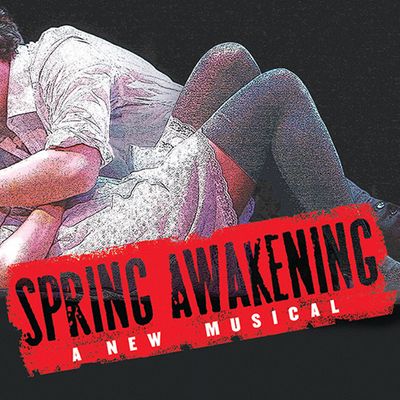
[39:01] Kaitlin Hopkins: Yeah, I would love for people to check out our YouTube channel. I think that's a really great way to learn about the program because there's so much original work by our students on there and a lot of our production work. So I think you get a real sense of the program and the level of work that's being done here. Um, you can follow us on all the social media platforms. We just started a TikTok. Um, our production of "Spring Awakening" is airing this weekend, which we're very, very proud of. And yeah, so I would say, you know, do the social media thing, do the YouTube thing, um, and go to the website, you know. There's a lot of good information there about sort of who we are and what we're about and what we're interested in doing in a room together. You know, I think it's all there and reach out to our students. I think they're always happy and proud to talk about their experiences here.
[39:56] Charlie Murphy: Well, I just want to say thank you so much for coming on, Kaitlin. It's such an honor. It's always an honor to have us have you teach masterclasses for us, and anytime we get to interact with you is such a pleasure. But it was such an honor to have you on the podcast today. Thank you.
[39:56] Kaitlin Hopkins: Thank you so much. Thanks for all you're doing.
[40:16] Charlie Murphy: Okay, so I hope you enjoyed listening to Kaitlin as much as I did. Uh, she's such a beautiful spirit. Um, I feel like I can just listen to her talk about art for days. Um, this is a place where I'm gonna do a little bit of a deeper dive into something that came up during the interview. Um, I just really want to highlight Kaitlin's conversation about type and that idea of kind of breaking out of the boxes that the world can sometimes try to put us in. There are very few things in college prep that I'm gonna say I think are like capital T true. Um, but this is one of those, um, which is I think a lot of high school teachers, or potentially maybe some less knowledgeable people who are helping with college prep, from a very well-intentioned perspective, often will try to type their students.
And it may come from the training that they got. And so they said, well, I was told you're an ingenue, so you should sing ingenue songs. I was told you look like this, so you're a character actress. Um, and I think uh I'm just gonna really agree with what Kaitlin said, and it's certainly something MTCA has always taught, which is that we want you to work from the inside out, not the outside in, right? You're going in there and telling the story of you. You are not going in there trying to fit into the box of some playwright from 50 years ago or some person who wrote a musical and thought that this person has to look like this, or you know, people who sound like this have to be like this, anything like that.
It's uh I think it's not that those people are necessarily wrong, but I do think their information is a little outdated, certainly in terms of the way that college faculty are gonna be looking at students, um, but even in terms of the way the business is going. Um, this modern business that we're building, it has changed from what it was 30 years ago, and it is changing literally by the day in some of these conversations. And the artists that are coming getting into these schools are gonna create a business that is more inclusive and that thinks more creatively and thinks more outside the box. So I just really want to echo what Kaitlin said. I think that is a really helpful way to approach your material and approach your artistry um from the inside out, not the outside in.
And that's certainly what we do at MTCA. If you enjoyed this episode and want to hear more, please hit that subscribe button. Follow us wherever you can follow us. If you have questions for us at the pod, you can email us at mailbag at mappingthecollegeaudition.com, and we will try to answer a few of those questions in some mailbag segments. If you are interested in working with MTCA for help with your individual preparation for your college audition journey, please check us out at mtcollegeauditions.com. To my young artists out there mapping their journey, like any good recycling person, keep breaking down those boxes. I'll see you soon.
© Broadway Podcast Network, All Rights Reserved