

Steve is Love: Merrily We Play Along. Celebrate the upcoming cinematic release of Broadway’s Merrily We Roll Along with this special episode, including an interview with Maria Friedman, the show’s innovative director... Read More
From the show: Matching Minds with Sondheim: The Podcast
Guests
Featured Shows
About
Steve is Love: Merrily We Play Along
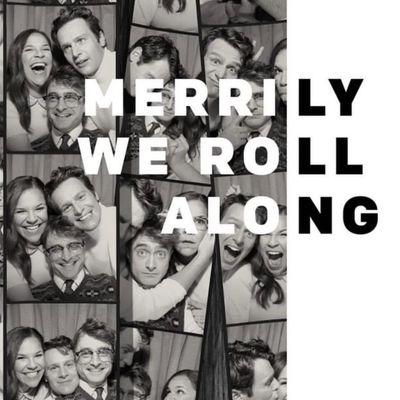
Celebrate the upcoming cinematic release of Broadway’s Merrily We Roll Along with this special episode, including an interview with Maria Friedman, the show’s innovative director. Maria shares insights into Sondheim's work, his love for puzzles and games, and how her production managed to solve the notoriously challenging musical. The episode also includes reflections on the autobiographical nature of Sondheim's writing, the role of games like Hostilities in his life and work, and excerpts from the upcoming proshot film release of Merrily We Roll Along.
Make sure to get the book everywhere books are found, or click here.
00:00 Cold Open
00:14 Barry's post-theme opening
05:24 Trailer for Proshot of Merrily
07:03 Barry Interstitial
08:25 Maria Friedman interview: Part 1
15:21 Barry Interstitial
18:56 Excerpt from Podcast 1 analyzing Merrily
25:47 Barry Interstitial
26:04 Maria Friedman interview: Part 2
36:09 Barry's final interstitial
Special Links:
Thanks to everyone who contributed behind the scenes to this episode: the Musical Stingers composed by Mateo Chavez Lewis, our line producer Dennis Caouki, and the theme song to our podcast with lyrics and music by Colm Molloy and sung by the one only Anne Morrison, currently on the road starring in Kimberly Akimbo. Of course, I'd also like to thank Maria Friedman and the full PR team that made her accessible for my interview.
Transcript
Maria Friedman: And you need to push love into every corner of Steve's work because that's who he is. Steve is love. That's what he writes about. And so the duty is to push love into every character.
Barry Joseph: Yes, that was Maria Friedman, director of the recent Broadway Hit Merrily We Roll Along, in interview with me! And we'll have much more to hear from that interview in this special edition of the Matching Minds podcast, to help promote the proshot of the recent Broadway production of Merrily We Roll Along, being released in movie theaters on December 5th, 2025.
Merrily isn't only my favorite Sondheim musical, it's also the reason for my book. Many of you have heard the origin story. In James Lapine oral history, Putting It Together: How Stephen Sondheim and I created Sunday In The Park With George, Lapine recounts, in discussion with Sondheim, how the two first met. "You were coming off of Merrily We Roll Along, which closed on Broadway prematurely a few months prior." Lapine reminds his close collaborator and friend. "You were in a pretty dark place". "Well... yes", Sondheim replied, "that was a bad time. They couldn't wait to shoot us down". He recalled nearly four decades later. "I thought, I don't wanna be in this profession. It's just too hostile and mean-spirited." When he met Lapine for the first time, with whom he would go on to create Sunday In The Park with George, Sondheim was also thinking to himself, what else can I do? As Lapine recounts it, Sondheim told him what career he had in mind. I thought I'd love to invent games. Video games! That was what I really wanted to do. When I read that, I thought, who are you and what did you do with Stephen Sondheim? That sent me down the rabbit hole that would lead to me emerging with Matching Minds in hand. So if Merrily hadn't failed so miserably, if Sondheim hadn't thought about leaving to work in video games, if Lapine hadn't documented Sondheim's memories, I would never have been inspired to write Matching Minds With Sondheim.
That's why it was quite special for me to see the recent production with my daughter when it was on Broadway, and I'm quite excited now to return with my family to the theater, this time a movie theater, to watch it this Friday. So this episode is all about Merrily and where it intersects with my lens, my ludological lens or playful lens.
The centerpiece is my interview with director Maria Friedman, who not only directed it, but is considered by many the first person to have "solved the show". I have seen many productions over the years, including Encores and others. When I saw Encores, I thought, ah, now I see why it failed. In that production, I didn't care about one of the characters, as they kept making what seemed to be such stupid decisions. How challenged must the show be to make me not care about Lin Manuel, who played Charles in this Encores production? Attending a production of Merrily had become its own game. Note the changes and judge whether the new creative team managed to solve it. I still enjoyed them all, my eyes welling up during many a number, but none solved it as successfully as Maria Friedman's production.
First staged at London's Menier Chocolate Factory before transferring to the West End, and then further along in its redemption journey, in 2022, transferring from New York Theater Workshop to Broadway's Hudson Theater. Eventually earning seven Tony nominations, including Best Director of a Musical for Freedman, and winning Best Revival of a Musical, Best Actor in a musical for Groff, Best Featured A ctor in a Musical for Radcliffe, and Best Orchestrations for Jonathan Tunick. And now the end of that journey, the acclaimed Broadway production, has been captured on film.
A short word on the company behind that film. It was produced and created by Radical Media. I happened to work for Radical Media 30 years ago. It was a heady time, as this major commercial production house with a more aesthetic bent, spun up what was called a new media division.
I produced the first website for Sotheby's Auction House for their T-Rex Auction. I was the first web producer for magazines like Car and Driver and Premiere, and I even made a website for Kevin Bacon. How's that for Six Degrees? That means if you read my book, you're that much closer to Kevin. I have loved watching under John Kamen's leadership, their remarkable work capturing the stagings of important Broadway shows.
David Byrne's American Utopia, Spring Awakening, Come from Away. And yes, that version of Hamilton you probably watched on Disney. I had nothing to do with any of those, but I still consider myself a proud alumnus of John Kamen and I'm excited to promote their work here today. Okay, so let's start by listening to the trailer for the proshot, which is the industry term for a live recording on the stage in front of an audience. That means when you watch the film, you are safely seated within spitting range of its star, Jonathan Groff, along with Daniel Radcliffe and Lindsay Mendez. Now, please, turn off your cell phones and unwrap that candy as the show is about to begin.
Cast of Merrily We Roll Along: I've made only one mistake in my life. How did you get to be here? But I've made it over and over. What was the moment?
If I could go back to the beginning, I would give all this up like that.
Traveling's the fun, flashing by the countryside. Merrily we roll along, roll along catching at dreams.
I've never seen so many famous people. Ah! What? Who? Where? Oh...
I think Charlie and I will handle success very well.
Look how well we've handled failure.
We can change the world.
Get rid of this whole pathetic life.
Charlie, I love success. I am telling you, trust me. Charlie, listen.
Hey. Old. Friends. How do we stay old friends.
Who is the same old friends power, how an old friendship survives. One day.
Is Frank the only person who doesn't know you're in love with him?
It's one day comes and they're a part of your life.
You gotta help save him, Charlie.
Frank and I are not that close, not like we used to be. And you know what? I miss it.
Here's to us. Who's like us? Damn few.
Barry Joseph: Oh, that score! Gives me chills every single time. So lush, so soaring, so hopeful, and ultimately so tragic. So, recently I learned from Dennis Hensley, who had me on his podcast that to promote the upcoming movie theater release of the proshot for Merrily they were holding a virtual press junket and podcasters could apply.
I threw my hat into the ring, expecting nothing. I couldn't imagine I might have a chance to speak with anyone involved with the production, but a boy can dream! Then the impossible happened. I received an email that I would have an opportunity to speak with the show's director Maria Friedman. This was like hitting the jackpot, as you'll soon hear. On Monday, November 24th, I logged into the virtual green room, along with all the other press. Dennis was there, a reporter from Playbill, and many others. My interview was not until 11. But at 9:30, I virtually shuffled in and then patiently waited my turn, and while I waited, Maria was speaking to a string of press that would last her three hours, back to back. I don't know how people like her do it. And then an hour and a half later I was ushered from the green room into a separate space where it would just be Maria and I. So please join me now as the first part of my interview with Maria begins.
Thank you so much for joining us today.
Are you ready for something completely different?
Maria Friedman: Very nice to be here.
Barry Joseph: To get started, let me see if I have this right. You've performed in British Productions of Sunday in the Park of George, A Little Night Music, Merrily We Roll Along, Passion, Sweeney Todd, and Anyone Can Whistle.
Maria Friedman: And Follies.
Barry Joseph: And Follies. Thank you. I knew I missed something. Follies. And you performed in many Sondheim revues and celebrations, such as his online 90th birthday celebration that many of us watched live. And now you're being celebrated for your direction of Merrily We Roll Along, whose cinematic version is about to hit the theaters. Other than Follies, did I miss anything else Sondheim related?
Maria Friedman: You know? Probably yes, but I can't remember either. Most of my professional life has been working with him or with his work.
Barry Joseph: And with that as context, that's actually not what I want to talk to you about today.
Maria Friedman: Okay, great.
Barry Joseph: You have said before of Sondheim, he was a personal friend for 40 years, and I'd love to know more from you about what it was like, not just to creatively collaborate with Stephen Sondheim, but what it was like to play with your friend.
Maria Friedman: Ah, well. I'll start off by saying I miss him profoundly. Everybody who knows Steve will let you know that he was the best listener in the world. The reason he was able to do what he did is he listened in a way that was very exacting. You had to show up when you were with Steve. He would ask you a question, you answered it, he would listen. And he'd have a, point of view about pretty well everything. He liked a good, robust discussion. He loved to laugh. He would be very irreverent about things and could be caustic. But equally, I think the man's heart was immense, as you can feel in the amount of humanity he can pour into his characters. And he was loyal to a point of if you were lucky enough to be considered his friend, you had a. better life with him in it than you could possibly imagine.
Barry Joseph: Did you ever have an opportunity to be involved with any of his puzzle events or games parties?
Maria Friedman: Well, yes I did. , Some treasure hunts and also I bought him games and I used to, you know, I'd find him things in various little kind of junk shops and stuff. But, yeah, 'cause I live in this country, you know, it was rare, but you know, he had his puzzlers. I was not one of those. I didn't really talk about it with lots of people because I think it was sort of, it was just his world. They were always too difficult clues. You would always have to, you know, gather with somebody cleverer than you to even be able to.... I just remember sort of traipsing around New York, baffled, but, you know, it's fine. We stopped at some places, had some vodka and, carried on happily. You know, in every meeting you had, there would be sort of quizzy questions or, you know, I mean. He just lived like that.
Barry Joseph: Starting in the early nineties, as you might be aware, his gift of choice for opening nights was a customized, personalized jigsaw puzzle. Do you have any memories of receiving them or the first time you got one and discovered your initials in it , once you constructed it?
Maria Friedman: I don't remember the very first one. No. But I've got a couple of them. I have a couple of them. Yeah. They're, they're wonderful things. Yeah. Very, very, very smart. Beautiful.
Barry Joseph: Alright, let's shift over to Merrily, which you mentioned being constructed in a very much a puzzling way where it's being put back together.
Maria Friedman: The reason I love doing his work, 'cause they are puzzles, they're putting together bit by bit, putting them together, they're all a collection of moments that you need to be mindful of and the indications in scenes before and afterwards that you need to, you know, start pulling out.
Barry Joseph: When you think about the puzzling aspects of the construction of Merrily, can you say more about how it looks like to you?
Maria Friedman: Well, obviously the show going backwards is where you start. And you have to allow the alienation of your audience for the first sort of 15 minutes who think they're coming to see, you know, a musical and the most catastrophic party you've ever been to happens. And these toxic people that you don't wanna spend a minute with. To dare to push into that... that alienation. And then to build back the humanity through. The puzzling of that is, is that an actor's life normally you are gathering information, emotional information, and going forward with it. Something happens, you add it to your palette, and you move forward. We had to take away from the palette to get more and more open, naive, gentle, hopeful as we went along, playful, young. So, if you can imagine as an actor having to finish a scene at its kind of critical peak and then jump into a happy moment, literally the next moment, but instead of going forward with the tragedy, they can't know. And it is very interesting, it's a thing that actors fall into a lot when we've read the script of, without even knowing it, you are signaling, you know the end of the piece. You don't know you're doing it. And it takes a very smart person to recognize that: ah, you said you knew she was ill, but actually you knew she was gonna get better. There's something in the way you approach that piece of information. You can't have that in Merrily. You haven't got the information in the scene before. You don't know that you're gonna fall off the cliff. You have to arrive clean. So that in itself is a wonderful kind of non-typical way of being an actor. It's very untypical. On the other hand, what you are doing in those scenes, you are planting clues that you will pick up later. Retrospectively thinking, no, you shouldn't have done that because look it, but you've already done it. So it's about being really precise with those tiny moments. For anybody who doesn't know what I'm talking about, the play goes backwards and we end in their twenties, we start in their forties, so we are watching them, like shed skin. But we know that they didn't end up the way that maybe they thought they would, but we are watching where they went wrong, which paths they took that led them down the wrong road, when sometimes in the scene they have options. They have options of one path, which is gonna take them where we want them to go, and they take the other . That's the gaming side of it. The puzzle side of it for me,
Barry Joseph: And as an audience member, for me, what I'm experiencing is being given pieces where cause and effect is inverted and I have to construct that piece. Of the whole.
Maria Friedman: Correct. Correct
You just heard the first of two segments from my interview with Merrily We Roll Along director Maria Friedman. In it, we discuss Sondheim's games in his personal life and how melee is constructed like a puzzle. In the next segment, we will look at what is the only example of Sondheim's personal interest in games appearing within one of his major musical works. That is the characters in Merrily play a game from Sondheim's own life.
Before I share what Maria had to say about that, let's first listen to this clip from the upcoming pro shot, which contains this very scene. Let me set it up. You'll be hearing Jonathan Groff's character Frank meeting Gussy played by Crystal Joy Brown for the first time. They're at a party, and Gussy has taken Frank aside to have a private conversation. Since the show runs in reverse, we already know that this is both the beginning of a romance between the two and a collaboration that will move Frank from works true to his heart to commercial work that separates him from his friends. But first, Gussy needs to figure out a way to build trust with whom she hopes will become the composer of her next hit show.
Gussie: How old are you?
Frank: 25, which doesn't bother me. And then I think I'm a quarter of a century and I panic. There's so much I wanna do and I can't get started. I can't even... what?
Gussie: Here's something I like to do when I want to get to know someone very well, very fast. It's a game. I tell you something honest about me, and you answer me right away with something honest about you. I call it "Trading Hostages". I'm not very happy. Go on. I'm not very happy.
Frank: I'm very happy.
Gussie: Huh? I am inches away from the top.
Frank: I am miles away from the top. Make that hundreds of thousands of miles away.
Gussie: Performing is my life.
Frank: Composing is my life.
Gussie: Success is not happening fast enough.
Frank: Success is not happening at all.
Gussie: I have been in five Broadway shows.
Frank: I have seen the second act of every one.
Gussie: Someone's cheating. I've done five Broadway shows.
Frank: Me I can't get started. I can't even.
Gussie: My first love is singing.
Frank: My first love is music.
Gussie: My second love is acting.
Frank: My second love is music.
Gussie: Oh, I think it's fate that brought us together.
Barry Joseph: I think it's fate that brought us together. Gussy says, and the two almost kiss. So the thing about "Trading Hostages", it sounds like a theatrical adaption of the game "Hostilities", a parlor game Sondheim would play in the 1960s. Let's now hear more about hostilities in this clip from my first yes, first podcast episode for Matching Minds with Sondheim.
In it we'll be listening to Eric Henwood Greer, Mark Halpin, Gail Leondar-Wright, and Natalie Gerber. Reflect on the game of "Hostilities" and its role in Merrily. Then afterwards we'll return to my interview with Maria, where for the first time, I can finally ask someone who might know, is this just a crazy coincidence, or did Sondheim actually dramatize a parlor game he liked to play to advance the plot in one of his shows?
Now in the episode you're about to hear a clip from, we literally spun a wheel with the names of Sondheim's shows on it. This was a playful way to structure the episode. Here now is what happened when the wheel landed on Merrily We Roll Along.
Barry Joseph: Let's turn now to our Sondheim O'Matic to decide what we're going to talk about next across Sondheim's musical creations. Ah, my favorite. Merrily We Roll Along.
Eric Henwood-Greer: long.
Mark Halpin: It's poetic that the wheel had to rotate backwards a little bit to land on that one.
Gail Leondar-Wright: Great. So, maybe we should start with the game called "Trading Hostages". And Barry, you mentioned, and of course you're right, that this is so similar to the game that Mary Rodgers talks about in her book, Shy, called "Hostilities", the game that Sondheim and friends used to play. The way you play the game is everybody's got a piece of paper, and they write an impertinent question addressed to another specific person in the room. Now, each of these people have numbers assigned to them. So, let's say I'm number one and Eric's number two, and I am writing the question targeted to Eric. So, I write number two on the outside in light pencil. On the inside, I write my impertinent question, perhaps about Eric's private life or his opinion that might theoretically hurt somebody in the room. I write number two on the outside, put it in the middle, Eric gets that question, he reads it, he writes his answer, he erases the number two, so nobody knows who's answering the question, sticks it back in the middle, and then they're read to, I guess, great hilarity. And what, Mary said is the real purpose of this is to give players an opportunity to be nasty. So, does anybody else have thoughts about this game as it's played in Merrily, perhaps, or what it says about Sondheim and his friendship group, or what have you?
Mark Halpin: It's so interesting because the nature of a game like that is so fascinating because it's so different to what we think of as the function of games now, which is often to socialize in a cordial way. And that feels a little antithetical to that.
Gail Leondar-Wright: And Mark, does it feel of its era because we're into games like, reveal your inner kishkis for everybody, like group therapy kinds of made into playfulness- but you're saying the nasty twist also feels of its era.
Mark Halpin: I think that's what I mean. And maybe that's just a personal take on it. I fully admit. But yeah, the nastiness of it. The point of the game is sort of a social exposure. Which feels, as I say, really different to the social bonding that we usually think of as games now. At least when I think of games, I may be hanging around with very boring gaming circles, but-
Eric Henwood-Greer: I do agree that it's very much of its era, because when I read about that game, I immediately thought of the telephone game scene in The Boys in the Band. If people know that, which is very similar, it's to sort of reveal secrets that are going to hurt people.
Mark Halpin: There's a real "claws out-ness" to it
Gail Leondar-Wright: But I don't know if it's just of its era, or if it's also of its subculture? The idea, I mean, Boys in the Band, say what you will about what it says about gay subcultures, but Mart Crowley, the playwright, is talking about a particular nasty kind of pre Stonewall gay male culture. I'd also argue that perhaps the games that Mary Rodgers and her friends played are around a particular social class and a particular theater insight. I don't know that you'd find other folks playing these kinds of nasty games at parties. in the 60s, 70s.
Mark Halpin: "Of its Culture"" is probably a much better way of saying it than "of its era".
Eric Henwood-Greer: I agree.
Barry Joseph: That's my question. I did theater in high school, I did theater in college . And when we played theater games... This has an echo of- how can you be brutally frank with people as a way to be honest and fully present? And even if it was hostile, as the name is called, at its core, it was about how do we be completely raw and vulnerable in front of each other? Which is often what I see theater games trying to do. And so I wonder when I hear how "Hostilities" is played, if it was, not a coincidence, it was being played amongst people who were in the theater community.
Mark Halpin: Yes, you're absolutely correct in that, a lot of theater exercises are designed to expose oneself, to be vulnerable, to be open to possibility and creativity. This feels like maybe exploiting that vulnerability a little bit for cocktail entertainment.
Natalie Gerber: Mark, I agree with you so much that it's exploiting that vulnerability. It's coming at the moment of singing the song "Growing Up", giving him choices that will ultimately take him away from his friends. Sometimes I think about the hit games in Sondheim, which we get to with Assassins, but it's Gussie's wanting to take work with Frank, make a hit rather than Take a Left with Charlie, that leads to "It's a Hit" and, making hits instead of hats, which is something I'm working on for an article. But he doesn't want to be a hit maker, he wants to be a hat maker, but he has over and over again in shows instances where people are taking hits because of choices that they're making. I mean, Assassins does it the most, but here, the hit that he takes first from Gussie, that pulls him away from his first wife, from his child, um, from hit to hit to hit. Which seems like it's a good thing, but a la Hamlet, it's actually a palpable "hit" where friendships are dead on the stage, even if the people are alive.
Barry Joseph: Before we move on to the structure of Merrily, which of course we have to address, we can't leave this description of a game in the show that's based on hostilities without talking about the role that "Hostilities" plays. "Hostilities" in its very name sounds like a brutal thing to do with the people you care about. In researching 70 years of Sondheim playing and making games what I found most remarkable and taught me so much about the arc of his life was that I mentioned in the beginning that Mark and others played some of his treasure hunts with me. The language that came through when I asked them to give me a word to describe how the game felt , the most common word was "generous". The Sondheim who was playing "Hostilities" in the early sixties was a very different person than the one designing games in his 60s, 70s, and 80s. When you look at the games he played, and the arc of those games, they trace the shift in him dealing with, at some level, those inner demons, so that he could be more generous and connect with the people he was playing with.
So with that, let's return to the second half of my interview with Maria Friedman and learn whether we are right to see a link between "Hostilities" and "Trading Hostages".
Now, there is a game in the show. In the musicals called "Trading Hostages."
Maria Friedman: Yes.
Barry Joseph: And some people say it's a barely veiled reference to the game of "Hostilities" that Sondheim liked to play in the 1960s, and Mary Rogers documented in her autobiography: Shy.
Maria Friedman: Well done. Well done. Very smart.
Barry Joseph: It's in the book but not in the music, so I've never been able to find a connection to say that, yes, it did come from Stephen Sondheim's experience and his influence over the book.
Maria Friedman: Everything Steve wrote was autobiographical, so he, even if he didn't see it himself. I mean, how does anybody write anything that they don't know? Write what you know, not what you know, which, this is me pointing to my heart. Write what you know from your heart, not what you know from your head. That the reason he is this extraordinary genius, universal ideas, is because he wrote. He intuited, he didn't even, you know, it, it came through him. His humanity came through him, his experiences came through him. He didn't write consciously, like, oh, this is something I did with... it's just part of the play. And as he said in terms of, " Opening Doors" is the most autobiographical number he ever made because it was him in his halycon days with Hal Prince, and George Firth, and Mary Rogers, where they would stay up through the night making things, playing things. And they weren't afraid of failing or falling, but they'd had many doors shut on them and many doors open to them. And it was that capturing, bottling that moment. And of course they're the games they played. Of course, of course. But it's never been said directly. But I don't believe, you know, when you are, when you are that sort of genius and you are, you are channeling your life into other people's lives, you have to have some context to that, right?
Barry Joseph: The last question I have has to do with the history of the show itself being a puzzle. Hmm. Many people felt like it was a puzzle that was missing a piece, and it needed to be solved, and many said your direction finally solved it. Can you say in a sentence or two, what specific things you figured out to do to correct over time that helped people find the Merrily we've all been waiting for?
Maria Friedman: Yep. I think three things straight away. One is don't cast the characters in their twenties because for the first half you are meant to believe they're double divorcees, alcoholics, lawyers, successful film producers. If you have a 20-year-old, it feels like playing mommy's dress-up. You are asking an audience to suspend disbelief. For my taste. I like to believe what I'm watching. I like the ideas to be something I can relate to, coming from mouths of people, I can relate to. As you get older, we still feel 15, 25, whatever it is, you know, that that comes with us. But I can't feel what it's like to be 60 at 20. That's that. That's number one. Number two, I made sure that it came from a perspective so that it was Frank's perspective. In the piece, when you look at the script, everybody comes on stage at once. They're all there together. You don't dunno who you're following. So, I think it's really important to always have a point of view that you are looking at, and then of course you can extrapolate and start to find the tentacles and the veins that belong to other people. But, I wanted it a Frank's memory tale. That's something I put into it, which isn't in the original. And I think casting people with big hearts, particularly Frank, has to be not a clothes horse, good looking, shallow, tough cold man. He's a good man who made some silly choices. And he's a man full of potential and love. And you need to push love into every corner of Steve's work because that's who he is. Steve is love. That's what he writes about. And so the duty is to push love into every character and humanity. And the complexity of being alive, 'cause it's pretty tough.
Barry Joseph: Maria, thank you so much for both what you've done with the show and for chatting with me today.
Maria Friedman: It's my pleasure. Keep playing. I love games. Send me some.
Barry Joseph: So what did Maria say? "Well done. Very smart. Everything he wrote is autobiographical, and... it's never been said directly." In fact, Sondheim might not have even known he did it. I'll take that. And this: " you need to push love into every corner of Steve's work because that's who he is. Steve is love. That's what he writes about". I think that's just beautiful and that's something I'm gonna definitely take away from my interview.
Let's finish up now by returning to the crew from my first episode chatting about Merrily and revisit what they had to say about the game structures within the show as a great way to prepare for those like me who can't wait to see the proshot in theaters.
Gail Leondar-Wright: The other thing that we were hoping to talk about is the way that the score works backwards in support of the narrative working backwards. And Mark, Barry had quoted you so beautifully, introducing that. I think you said it so well. Do you want to riff a little bit on that? .
Mark Halpin: Oh, I'm sure others can speak to this much more authoritatively than I can. It was simply the observation that, the score itself functions backwards. The traditional, ordering, for example, things we sort of expect, an 11th hour number, that happens later in the show happens very early in this show. We expect to hear a song and then get that motifs from that song later. That happens in chronologically reverse order. The show opens with kind of a finale number.
Gail Leondar-Wright: So when you're hearing the score as an audience member, you're hearing a reprise. And don't know it because it's not till an hour and a half later that you actually hear the song proper. It's just brilliant, isn't it?
Mark Halpin: It's brilliant. And it makes me wonder if that's one of the reasons why this show has had the troubled history it has, because it feels like a show designed for a very particular sort of audience. The show, I think, lands better with a puzzly audience that is prepared to give the show the concentration it really needs to be a successful evening. I think it's not the kind of show you sort of sit back and let wash over you. You have to focus on it. As somebody has mentioned, you get the payoff first and then you get the set up in this show and you have to really be concentrating for that to make sense and land I think in a satisfying way.
Eric Henwood-Greer: I wonder if the show would have been more successful if the audience had been clued in or told from the start to start looking for how this is going to resolve itself, how this is going to connect, because I think most audiences, they know it's going to go backwards.
But they don't really know that they're not going to really understand the relationship between certain characters until Act 2, for example. And maybe if they were told somehow to start paying attention and to start thinking about how people connect, how plot points connect, then they'd be more welcome to following along. And not just give up.
Mark Halpin: It's interesting that you say that because he does ask that question. I mean the repeated motif is "how did we get to be here?"
Eric Henwood-Greer: That's true.
Mark Halpin: But you're right so he does pose the question, but you're right, he doesn't really follow that up with pay attention if you want to find out how we get to be here.
Gail Leondar-Wright: But that's true of a lot of Sondheim scores that you hear it the first time, you maybe get a little bit, maybe you get more. It's on repeated listenings that the beauty really emerges. And I don't ask of Mr. Sondheim to make it easier for me. I mean, what Sondheim said is, so maybe you don't get that, and if you don't get it, that's okay, but if you get it, that's good. I put it there for your enjoyment. I don't know. And I'm of the camp that that's really not why Merrily didn't work in its original iteration. I'm not sure that the backward structure was really the problem. We, all know of other problems.
Eric Henwood-Greer: Gail, I think you're quite right that the problems with the original production were due to the original production. We know now that it has become a success on Broadway. And so maybe people did have to catch up to it. And I do think there's also a point that people at the time weren't accepting very experimental, dramatic structures in musical theatre. They were starting to in actual drama. You had Pinter's Betrayal. But with a musical, they didn't think that you'd have to pay attention to the structure of a show the way you did with Merrily. And maybe now, 40, 45 years later, they can accept that about a musical.
Natalie Gerber: I think the show brings together two things that are challenging in Sondheim, and we love him for being challenging, but one, that tendency to confront the audiences with things they may not want to be confronted by. The upper middle class audience that goes to the theater in the era of Rodgers and Hammerstein to escape their lives and instead are confronted by their lives in, this string of, Sondheim, Hal Prince, and collaborator shows. And then also the challenge of the backward structure. I wonder if part of it is that the audiences grew up along with the show and could recognize themselves in it because they had the reference points. By the time it came back successfully, they embodied the experience of youth, they embodied the experience of disappointed, frustrated middle age, and they could now trace the figure in the carpet. Sondheim he's always thinking about the entire show and its structure before he starts to write a single song.
Thank you for joining me today for this journey through Merrily We Roll Along I hope you enjoyed revisiting my most favorite of Sondheim musicals, and that if you choose to watch the magnificent Broadway production on the big screen, some of what you learned today makes the experience that much deeper, that much more impactful, and that much more full of love.
Barry Joseph: I also would like to thank everyone who contributed behind the scenes to this episode, the Musical Stingers composed by Mateo Chavez Lewis, our line producer Dennis Caouki, and the theme song to our podcast with lyrics and music by Colm Molloy and sung by the one only Anne Morrison, currently on the road starring in Kimberly Akimbo. Of course, I'd also like to thank Maria Friedman and the full PR team that made her accessible for my interview. Until next time, remember, someone is on your side. Especially when Matching Minds With Sondheim
Producer: Hey Barry, give us your name and outlet for the tape and then take it away.
Barry Joseph: Barry Joseph. Matching Minds with Sondheim.
Maria Friedman: Hello? Just one second. I'm just getting my son to get my dog out of the garden 'cause he's barking.
© Broadway Podcast Network, All Rights Reserved