

Do we really need another book on Sondheim? That’s the driving question behind Barry’s recent appearance at the venerable Drama Book Shop in New York City. For the 20th episode of the Matching Minds with Sondheim podcast, explore the book-ey-ness of Matching Minds... Read More
From the show: Matching Minds with Sondheim: The Podcast
Guests

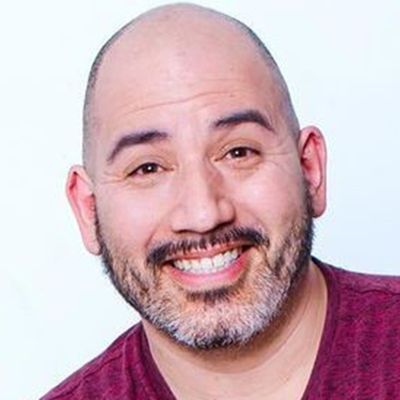
About
Do we really need another book on Sondheim? That’s the driving question behind Barry’s recent appearance at the venerable Drama Book Shop in New York City. For the 20th episode of the Matching Minds with Sondheim podcast, explore the book-ey-ness of Matching Minds. Michael Mitnick interviews Barry in front of a live audience where together they discuss the creative challenges and the biographical insights gained during its writing.
Make sure to get the book everywhere books are found, or click here.
00:00 Introduction and Podcast Milestones
04:36 Drama Book Show Commentary
05:04 Sondheim's Love for Puzzles
08:19 Barry Joseph's Presentation
12:43 Audience Q&A and Research Insights
26:15 The Last of Sheila: A Real-Life Inspired Murder Mystery
26:42 Sondheim's Custom Puzzle for Games Magazine
28:38 Sondheim's Influence in Glass Onion
30:16 Sondheim's Treasure Hunts and Puzzle Designs
31:36 Sondheim's Cryptic Crosswords Legacy
33:14 The Emotional Impact of Sondheim's Work
36:35 Recreating Sondheim's Games for Research
38:23 Sondheim's Board Games and Auctions
41:03 Sondheim's Influence on Musical Theater
45:47 Final Reflections and Audience Questions
Special Links:
Thanks to everyone who contributed behind the scenes to this episode: the Musical Stingers composed by Mateo Chavez Lewis, our line producer Dennis Caouki, and the theme song to our podcast with lyrics and music by Colm Molloy and sung by the one only Anne Morrison, currently on the road starring in Kimberly Akimbo. Of course, I'd also like to thank the staff of the Drama Book Shop.
Transcript
Barry Joseph: Welcome to Matching Minds with Sondheim. This is our 20th episode of the podcast series produced weekly since August, and now our last of 2025.
Matching Minds was released October 2nd in the United States, and this month in England. During this period, I've spoken at libraries and bookshops, resort hotels and museums, conferences and book festivals, houses of worship and people's houses. I've delighted in meeting fans and hearing how much the topic means to all of you. And the reviews.
The reviews from Australia: aussietheater.com described the book as "a new way to understand one of musical theater's most influential figures." From England, the Times of London. Said, read the book. I agree. Back in the states slate's cultural gabfest called it "totally nerdy, totally delightful." The Bay Area reporter called it "Nifty" and the Wall Street Journal called it rambling.
But who is asking them? And most recently, the New Yorker called the book "Clever and Appropriately Obsessive," a phrase you'll see on a T-shirt I'll be wearing very soon. And the book has sold well. In just the middle of October, my editor told me we were already going into a second printing, and just last week, we're ready to go into a third. To all of you who've bought copies for yourselves, for your friends, for your loved ones. Thank you so much. This podcast will be back in 2026, but with a new schedule. We'll talk more about that then. We'll be starting off with an episode about crossword puzzles and there'll be much more to follow.
Until then, have a happy New Year and enjoy this presentation from last October at the Drama Bookshop in New York City. Founded in 1917, the Drama Bookshop has been deemed a quintessential New York City cultural institution. Over the past 100 years, the Drama Bookshop has secured its reputation as New York City's best source for theatrical works, with over 8,000 plays regularly in stock. The drama Bookshop opened in its current home on West 39th Street in 2020, under new ownership. Longtime friends and patrons of the bookstore, Thomas Kail and Lin-Manuel Miranda purchased a store and at a new location designed by Hamilton Scenic Designer David Koran's and team paying homage to 20th century European cafes and reading rooms, and featuring a full service cafe serving coffee teas and light snacks.
And yes, they even have their own podcast. I was so excited last January when Mark Eugene Garcia, the store's assistant manager and event coordinator, accepted my offer to present at the shop. Mark and everyone at the shop have been simply amazing. They gave me two magnificent display cases to run a pop-up exhibit, which you can still explore on my website, composed of my favorite Sondheim games and puzzles that I acquired during my research. They agreed to give out hundreds of Matching Minds bookmarks to patrons, and yes, they sell my book.
As you'll hear in this episode, they say, "it's so popular we can't keep it on our shelves." I had most of this year to plan this event. As you know, I try to do something different everywhere I go. What can I possibly do at a bookshop? And then it hit me. It was so obvious it was right in my face the whole time.
I'm in a bookshop. I shouldn't talk about the content of the book, but about the book itself as a book. Let's get into the bookey-ness of it. And then the title came to me: Do we really need another book on Sondheim? Spoiler: yes, but I'd have to make the case. I invited Michael Minnick to interview me, and I was delighted when he accepted.
Then when the night arrived, people came from all over. Someone from even Rochester, New York flew in and gifted me an unrepped Last of Sheila ticket from Japan, which I promptly put into the exhibit. It was a great night and I look forward to revisiting it with you now. So let's jump into not only my appearance at the Drama bookshop, but the luscious wraparound commentary provided by Mark and his colleague David Rigano.
Enjoy.
Mark-Eugene Garcia: Hello and welcome to the Drama Book Show. My name is Mark Eugene Garcia.
David Rigano : My name is David Rigano.
Mark-Eugene Garcia: And today's episode is Matching Minds with Sondheim, the Puzzles and Games of the Broadway Legend.
David Rigano: Which if you never have attempted to match minds with Sondheim, I would recommend don't. No, but do read the book.
Mark-Eugene Garcia: Absolutely. I mean, his. Just the way his mind worked. Yeah, just listening to his lyrics and listening to his music like it is-.
David Rigano : Right there. You gotta know
Mark-Eugene Garcia: that he likes puzzles.
David Rigano : He likes puzzles.
Mark-Eugene Garcia: Yeah.
David Rigano : But if you weren't aware of that, he was an infamous puzzler and was constantly not only doing puzzles and looking forward to new types of puzzles, but he would create puzzles and at one point, I think it was like right after Anyone Can Whistle or something like that when he needed some money.
Mark-Eugene Garcia: Yeah.
David Rigano : That Broadway wasn't bringing in. He wrote word puzzles for I think the New Yorker.
Mark-Eugene Garcia: Oh
wow.
Okay.
Yeah.
David Rigano : Some, something like that. Yeah, like a major publication. He. He wrote word puzzles and that's how it was like his day job.
Mark-Eugene Garcia: We had some of the examples, 'cause we had a really cool exhibit here that Barry Joseph brought
David Rigano : Yes.
Mark-Eugene Garcia: In of many of Sondheim's puzzles, whether it was the puzzles that were cast gifts, cast and crew gifts.
David Rigano : Yeah.
Mark-Eugene Garcia: After the show or puzzles that he wrote. And it was really incredible to see. There was one that it was an invitation for a dinosaur scavenger hunt.
David Rigano : He wrote the scavenger hunts
Mark-Eugene Garcia: hosted by Matthew Broderick and Sarah Jessica Parker at,
David Rigano : oh my God, of course,
Mark-Eugene Garcia: the Natural History and Museum. Obviously written or created by Stephen Sondheim, and I looked at that invitation and thought, there is nothing on here that does not call my name. Sondheim, Dinosaurs, Matthew Broderick, Sarah Jessica Parker, like all of it.
David Rigano : I mean, imagine, imagine also like being Matthew Broderick and Sarah Jessica Parker, so that you can just be like. Let's ask Steve Sondheim to make a puzzle for us. Yeah.
Mark-Eugene Garcia: Oh my gosh. I would've loved to have had Steve Sondheim
write a puzzle for me.
David Rigano : And at one point, at one point Greg Edelman was just in the store.
Mark-Eugene Garcia: Yeah.
David Rigano : Just in here. And so we started talking about Sondheim and he's, oh, I have that Passion puzzle at home. That was an opening night gift.
Mark-Eugene Garcia: Yeah. With the, with his initials on it. 'cause the one we had here, the poster we had here of the puzzle was Marin Mazzie's, , and then he, we had another one of the puzzles.
Uh, for Into the Woods, the revival, uh, not the recent revival, but the Yes. Yeah. The.
David Rigano : Early two thousands. Yeah,
Mark-Eugene Garcia: exactly. What was fun is I got to help put together that puzzle inside the display. Oh. And it took us so long, I thought, I'm gonna hop over here. There, there's not a line at the register. And Lauren looks pretty covered, so I'm gonna help.
He said, do you wanna help me put this together? And I was like, absolutely. I'm so honored. And then we were going for a while and he had a time lapse camera going. And I'm so glad because it would've been so long. And there's, I know he posted on Instagram a, a video of us putting together that puzzle. But what's really interesting.
Putting together that puzzle,
David Rigano : Uhhuh putting it together?
Mark-Eugene Garcia: Yes. What was really interesting though is the puzzles don't have flat edges. So you don't know if you're working with the sides of a puzzle, like you know how we get like the corners, those little corner pieces, those side pieces. That does not happen with these like it's kinda like his songs.
David Rigano : Yeah.
Mark-Eugene Garcia: There's no edges there. You don't know if you're the beginning of edge. Of course. Edges pace to Paul. Exactly. But you get to the end of it and suddenly you're like, oh, now I get it.
David Rigano : It all makes sense. Yeah,
Mark-Eugene Garcia: it all makes sense. It's all coming back to me now. Famous song lyric, right?
David Rigano : We could,
yes. Yeah.
Infamously, we could go on and on about our experience with Heim and puzzles, but why don't we listen to Barry talk about how he put together this entire book of and about Sondheim puzzles.
Mark-Eugene Garcia: Absolutely. Let's do it.
Barry Joseph: First of all, thank you all so much for being here. I am really excited to be at the Drama Bookshop. I wanna thank David and Mark for organizing tonight. It's been really exciting to think about getting to be here with all of you and also getting to set up for the month of October the pop-up exhibit from the collections of all the magnificent games and puzzles that were sent to me over the course of my research that have been sitting in a drawer that were required to write this book that I can now make available for folks to see, over this month, thanks to the bookshop here. So let's give it up for them and thank them.
And I'm especially thrilled to be sitting next to my friend. Michael Mitnick, without whom this book would not exist, if you haven't had a chance to look at it yet the acknowledgements section is three pages long. Three pages long, towards the end, I thank my family, and then after my family, I thank Michael. I say lastly, there is the singular Michael Mitnick. From the very beginning, he offered his vast contacts, incomparable collection and deep knowledge of all things Sondheim. Whenever I hit a wall, he showed me how to build a door and encouraged me to walk through it. Together with Dan Okrand, we shared a multi-year email chain that was a wellspring of inspiration, encouraging each other in our distinct but equally obsessive Sondheim pursuits. Michael, thank you so much for doing this with me tonight.
Michael Mitnick: Thank you. And Barry, when I read that I was just really honored and touched and so thank you for writing that, man.
Barry Joseph: Least I could do.
Michael Mitnick: I wanna return your kindness with this question to kick us off.
Barry Joseph: Alright.
Michael Mitnick: Do we really need another book on Sondheim?
Barry Joseph: I love that. That's a great question. Three things come to mind. The first one is, yes, if we have changed enough. It's almost like asking do we need another Sondheim revival? Yeah. Do we have a new perspective to look at his work? We, in the last 10, 20, 30 years, I think have a new understanding and appreciation of puzzles and games. So I think we have a new perspective to look back at that piece of his life. So a book about that topic. I think we're ready. Number two, has Sondheim changed enough? And unfortunately he's no longer with us, but we are also a few years passed when he passed away. So there was a period of time when we were in kind of public mourning, recognizing his passing. This book is now coming out towards the end of that phase or into the next phase, let's say.
So we are ready to look back and look in a comprehensive way at his whole life. His oeuvre, as it were, but also the arc of his life and how he changed. And part of what I try and do in the book is look at what he was like when he was a teenager, what he was like when he was in his twenties. And seventies, eighties and the had whole arc and we were able to do that.
And so I think finally, is there something new to say? We haven't had a book yet about his puzzles and games. This is the first one, not the first person to talk about it, nor write about it. But this is the first book that really addresses this whole part of his life. So I think for now, yes, I think we need a new book. And this one's it..
Michael Mitnick: I will take it. How did you balance scholarship and accessibility? Writing something rigorous enough for diehard fans, but still inviting enough for newcomers?
Barry Joseph: That's, oh, that's nice. I am someone who loves research. We wanted all the citations you needed in the back of the book to follow up on your own, but never to have that be a distraction from letting you just immerse yourself in the story and immerse yourself in what we find through that research process. So I try and make everything always accessible. I'm always explaining terms. Maybe you're not coming into the book with Sondheim, so I'm gonna explain these references. Maybe you love Sondheim, but you're not a puzzle or a games person. Again, I'm gonna then explain those things. So I try and make the book as welcoming, inviting as possible, free of lingo or lingo that will make someone feel on the outside and just try and make everyone feel welcome. So keep keeping the citations strong and deep. Pack 'em at the end of the book, and then just really make dramatic stories that make the research come alive, put you in those moments.
When I interviewed somebody, they told me about that time in the 1960s where they almost ruined one of Sondheim's games, or it was the 1990s when they were so excited to be the winner in one of his treasure hunts, and then put the reader in that moment from their perspective, and then just use that to flesh out the larger lessons that we can take from it about who he was, how his mind worked, and the game and design values that we can all apply in our own lives.
Michael Mitnick: Now I'm gonna ask a question and then we can go to the audience for some questions. And I have a few more, but I was wondering if you would tell the one of my favorite anecdotes in the book of Sondheim at the escape room and crawling.
Barry Joseph: Excellent, excellent. Stephen Sondheim was in living in New York City when escape rooms arrived. That was in the teens, I wanna say. 2016 maybe is when he went to his first one. So if you do the math for a moment, he's 86 years old and he is going to escape rooms. So what are escape rooms? They're an opportunity to pay for an event that's gonna be hosted for you and your friends and loved ones that's gonna challenge you with a narrative that's gonna present you a number of puzzles and give you an opportunity to work with each other to hopefully within an hour solve that problem over Sondheim's life.
What was he doing? He was spending time. Organizing games, parties, designing his own parlor games, designing his own treasure hunts, or bringing people together to give him these moments of clarity when they would solve his puzzles, moments of connection when they would play with each other. And now here come escape rooms where they're gonna do it all for him.
He must have loved that. I have no direct connection to know exactly what he felt about them other than that he thought they were a swell idea. I'm quoting him a swell idea. He said that in 2021 in an interview for Games magazine, and so during the teens he would go with his friends to escape rooms. Who are some of these friends? John Weidman, Jonathan Mark Sherman,, Bernadette Peters, Mia Farrow's son, Ronan Farrow. The woman who worked with him, who did-
Michael Mitnick: Mary Pat Walsh, his friend and chef.
Barry Joseph: His friend and chef. Thank you. And so on. Right. And his boyfriend and fiance, then husband. So you're specifically asking about a particular moment where there was a Midtown Escape room that was one of the first ones that also had actors in it. So maybe the actors were gonna help you solve the puzzles, or maybe they were part of the obstacle you didn't know. One of his friends contacted them and said, I, my friend Stephen Sondheim wants to come with me. We're gonna get some folks together, or we're gonna try out your room. And in one of them, yeah, there's a tunnel. Now, if you didn't wanna do the tunnel, it was an accessible escape room. You can go around it, but we know he went through the tunnel.
Let me go back a moment and say, how do we know that? Because there were actors there. Someone needed to be giving the actors notes. So it had someone who was responsible for helping people solve the puzzles in the escape room, but also someone whose job was to make sure the actors were on point. And that person who was the director of the actors was there that night when Stephen Sondheim was there and still has his notes.
From that remembers what the security cameras looked like and was able to share those descriptions with me, which were in the book. And he describes how spry Sondheim was, and willing to crawl through that tunnel at 80, 86 years old, and how excited he was to come out the other side. You can ask me what was on the other side.
Michael Mitnick: What was on the other side?
Barry Joseph: What was on the other side? This is 2016, was a puzzle he had created in 1968. There was a treasure hunt that he designed with Anthony Perkins. And there was a particular puzzle that was often spoken about. It had to do with a song that the lyric was, "it's a quarter to three", so the answer was 2, 4, 5, right? And when he climbed out of that tunnel, he heard the song playing, and then he needed to resolve with the 245. And he got a big smile on his face. And it wasn't a coincidence when that room was designed. The person who designed it knew about this, purposely included it, but never knew that Stephen Sondheim was going to one day come and experience it.
Michael Mitnick: Oh, I didn't realize that it wasn't done, especially for him on that night. No, that's, that's incredible. And two and 245 referred to a, I think an apartment number.
Barry Joseph: That's right.
Michael Mitnick: So you know where to go.
Barry Joseph: Yeah.
Michael Mitnick: Let's go to the audience for some questions.
We're gonna go back and forth, so end your, you're like suddenly on the spot, but that's a person who, maybe it's called Melissa.
Audience Member 1: So how long have you spent doing all this research?
Barry Joseph: I started, so how long have I done the research? I'm repeating the question so it could be heard for the microphones and the podcast. Hi podcasters. This project started in April, 2022, just a few months after Sondheim had passed away, and it started on the afternoon when I literally turned in a manuscript for my previous book.
Michael Mitnick: Which is, when is that?
Barry Joseph: Making Dinosaurs dance: toolkit for digital design, which is about six years at the American Museum of Natural History. And if you'd asked me that morning, if I'd had an idea for a next book, I would say, don't talk to me. I'm done. I'm turning in a manuscript. I'm not writing anything for a decade.
Within an hour of sending send on that email, I said, wait a second. I think I have an idea. And the reason I had the idea was I just read three books that my wife had gave me for my birthday in March about Sondheim. And I learned this idea that he once said he wanted to go into video game design. And that got me to start exploring what could this possibly mean?
What was going on in this man's life that I knew so little about clearly. And again, we're talking about 1982 when he was saying this. So I spent two years doing research. And that research meant contacting research institutions and finding out if they had anything related to his games and puzzles. It meant talking to people who were in the room where it happened, as it were, right?
People who played games with Sondheim, people who party managed some of the events where he was at, people who had even co-designed some of them with him, and it meant really, again, this was a few months after Sondheim had passed away. And it meant saying, hi, you don't know me. Would you be willing to open up your memory box and trust me with this piece?
And you can imagine many of these people had been spending months talking about this is what it was like to work with Stephen Sondheim. Here's how brilliant he was. Here's what, how remarkable it was to have him in my life. But no one was asking 'em. I think what I was asking, what was it like to play with Stephen Sondheim?
And so for many of them it was an opportunity to explore an aspect of their relationship that they had never had a chance to do publicly and maybe hadn't even done privately. For years and often in the beginning they would say, I'm sorry, I'm not gonna remember what I was doing in 1970 in a particular evening. We'll see if I can do anything. And then we would start and they would never wanna stop because once they got rolling, not only would the memories flood back, but their memories would overwhelm them in a way where they were so excited and passionate to share them. And so that created both an honor for me, but also responsibility to own those stories until I could shape them together for the book. So that took about two years to put that all together, because the third thing was I needed the games and puzzles, of which I had none, and I didn't know if any of them still existed. That meant someone, for example, who was in the cast of A LIttle Night Music, had saved her winning sheet from the treasure hunt, Stephen Sondheim designed from 1973 and still had it in a drawer and could share it. And then people who had party managed his last treasure hunt at city center, who still had all the print materials that had never been used and can make them all available. So it took these years in part just to build the relationships. And then sometime towards the end of those second years, that second year, I could start the writing. 'Cause I saw how it's coming together. But the research never ended. The research continues today. Michael, you just brought me something new tonight, right?
Michael Mitnick: Yeah. Yes.
Barry Joseph: Yeah. From Putting It Together, the Broadway production in 1998.
Michael Mitnick: I think so.
Barry Joseph: Yeah. The stage manager prepared as the opening night gift, a collection of logic puzzles, that it must be 24 pages long. That traces the whole narrative of the history of the production of the show, but all in puzzle form, and we just got it. I say we, 'cause we did it together on eBay, so it's never ending.
Michael Mitnick: So we just talked about the research process, but I wanna talk about the structure of the book, the journey that it takes the readers on. How would you explain that?
Barry Joseph: I talked a bit about how now is the time to get to write a book about his whole life, right? And so I didn't plan to do that in the beginning, but when I started looking about how to structure the material, I landed on focusing on first, the genres. So Stephen Sondheim and Parlor Games. Stephen Sondheim and board games, treasure hunts, word puzzles, specifically crossword puzzles, and then physical puzzles, jigsaw puzzles, puzzle boxes, and escape rooms. And so I did write about them separately, but when I started looking at where they fell in his life, they actually had a chronology. Obviously, escape rooms weren't until later in his life, and the board games he made were in the 1950s and 60s.. So as I started structuring the order of those chapters, they had a natural organic feel to them that even though we were going in loops, so he would pass away and we'd be talking about after he passed away in a number of the chapters, you still had a sense that you were moving through the eras and I say not era, but eras in Sondheim's life.
So the bulk of the book, about 250 pages of it, is a biography, which I never planned to write, but told through looking at his games, I study games. That means I'm a ludologist. Ludology is a study of games. This is a ludological biography. It's looking at Stephen Sondheim's life from the very thin perspective and lens of games and play. But then I had an opportunity to share some of what I found, the things that people had rights to, that they were able to ascribe to me for the book. So people who designed crossword puzzles for Stephen Sondheim. Some of the parlor games are oral histories, so I can recount them in my own words. And so the last section of the book are the games and puzzles of Stephen Sondheim that you can do yourself and more interesting to me as a ludologist is the design values. What are the things that we can learn from Stephen Sondheim's game designs and puzzle designs? Those who know Stephen Sondheim's. Two books of lyrics opens with his description of three principles.
With a fourth one on top. We don't have him writing that for games and puzzles, but he gave us enough clues to pull from, 'cause he gave instructions to people for how to do some of his treasure hunts. You can see embedded in the game, certain values that are consistent. So the end of the book talks about these values and gives you access to them as well.
And then I will say, because I've been asked this a few times, at a number of these events, there is a structure to the book. There's a place that one would go to find the structure in the book. And there's also. Alright, I'll say it. There's two puzzles hidden in the book, and if you're trying to solve them and you think about what I just said about the structures of books and how those are documented within its pages, that'll help you solve at least one of them.
Michael Mitnick: Would you talk quickly? We'll go to another question. Just one second. I just, I would love for you to talk about "The Murder Game" and what that is?
Barry Joseph: We have a few hours, is that right? "The Murder Game".. So do you have a place you want me to start with it or do you want me just to jump in? Jump in. I love the murder game.
If I had to choose. One thing to write the entire book about it is "The Murder Game".. There was a while, I gotta interrupt myself for a moment 'cause I forgot to introduce him. In the back is Chris Chappelle, who is my editor, who I am meeting for the first time in person. I'm so excited he's here. I thanked Michael. I'm also... thanks Chris. Without him, the book could not be, it wouldn't be available for you right now and certainly not in the format that it currently is. And one of the questions that I had early on was, can it be structured the way it is? Is it boring or pedantic to go from one genre to another? Does it need a through line? And "The Murder Game" creates that through line. So even though I didn't write it that way, I often give presentations based around this. So "The Murder Game" is a parlor game that Stephen Sondheim designed in 1965, I believe, for a friend of his, the murder game. Many of games like the murder game where everyone gets something like a piece of paper and someone gets like an X on it, and that means they're the secret murderer, and then they have to, depending on how you play the game, murder people that way, whether it's like winking at them or shaking their hand with a squeeze or whatever it might be. And these are games that Heim had been playing for at least 15 years, and he liked the mystery of it and the drama, but there was things about it he thought were just bad design. If you died, you were done.
You're out for the rest of the game. You know who the murderer is. You don't get to take part in trying to argue for who it is and what are you gonna do? And then the people who were arguing for the murder, he found that wasn't really engaging. They didn't really have a lot of information. So for him, he saw it as a design problem and he wanted to solve it. So he had the opportunity in 1965, he was with his friend , Phylis Newman. She had a show outta town. It flopped. He went backstage. He spoke to her and said, "don't worry, I'm so sorry. There'll be other things. What can I do for you?" And she said, when I come back to New York, "I want you to make a games night party for me, and I want you to design me a new game." So he went home. I think it was about March, 1965, and he started coming up with this idea for a new way to do "The Murder Game" that would solve this design problem that he had, and he started working on it something around eight o'clock at night.
He tells it differently every time, but roughly around eight o'clock and then eight in the next morning, he realized he was done and then he'd been sitting there for 12 hours in this flow state. Creating, and he loved the game that he created, but he also loved the experience of creating it. So then he did the game. It was really popular amongst his friends people. He went to England, people would ask him to do it there. And one of the people who did it was Peter Schaffer, who wrote a play called Sleuth, which was made to a movie called Sleuth.
Mark-Eugene Garcia: That was in Anthony Schaffer.
Barry Joseph: You're right, Anthony, his brother. And so that movie Sleuth has a character who's very much like Stephen Sondheim that inspired not just that play and movie, but a whole series of versions of it. Here and in Indian Pakistan as well. It turns out. There's a web version of it. Oh, I didn't know that. Yeah. But what we experienced here was the one, the movie that was based on it, that Herbert Ross directed. It might have been his first or one of his first movies. He'd been at the murder game and he said to Sondheim, I'd love to turn this into a movie. And Stephen Sondheim said, I am willing to do that, but not on my own. He contacted Anthony Perkins for whom he had designed a number of puzzles before, like the 68 Treasure Hunt that I mentioned earlier. And so the two of them then made this movie called The Last of Sheila, right? The Last of Sheila is a fun cheesy, intricate murder mystery, and the first half of the movie could essentially have a little caption that says, based on a true story. 'Cause it's based on the murder game, but also two other series of puzzles and games that Sondheim made. That's not the end of it. In 1983, in the January issue of Games Magazine, there's a five page profile of Stephen Sondheim and about his connections with puzzles and games, and they invited Sondheim to create a custom puzzle for that issue He adopted ""The Murder Game" for it. And in it, it says, Stephen Sondheim invites you to solve this murder mystery. And he writes a narrative as if you're at his house in the 1960s and all the other people you're playing with are all the people who he played with at the time. And he didn't want them to print the solution because... the way it's designed is that once it's solved, you can never play it again. So it's a game, but there's a puzzle built into the core of the game. That's what made it so different from all the other murder games. And so he didn't want Games magazine to print the solution 'cause he said, I'll never be able to do the game again. And they said, I'm sorry, we're a games magazine with puzzles. We have to put the answers in. And so they did. And then two months later someone wrote in a letter explaining there was something wrong with how it was printed. That was Stephen Sondheim. He noticed something and so he, he printed the correction and that's still not the end of "The Murder Game".. Did anyone here ever hear of a show of Sondheim's called Sunday in the Park with George, and there's a song in it called "Finishing the Hat". And for those who know the show, they know it's about this artist on the stage who's making a painting, who's finishing a hat. That's only in his mind. It doesn't exist in the real world, and it's being created out of nothing. And, to us in the audience, we are seeing that act of creation. It's about not just that character George on the stage painting, it's about all of art and creativity. Maybe as Sondheim talking about writing his own pieces.
Actually what he was writing about was those 12 hours creating the game and he's been, he said this in many interviews, this is quite definitive and it wasn't 'cause he loved making the game. It was that flow state that he was in and writing about being in that flow state. And then that moment of breaking out of it is what happens in that song.
And that's what he wanted to capture. And yet there's one more thing. Who saw the movie? Glass Onion, which was the second movie of Knives Out. So who remembers Sondheim's appearance in that movie? It's in the opening scenes when we first meet our detective, who was returning from the first movie, and he's in the bathtub with Stephen Sondheim and Angela Lansbury, and right here, Natasha Leone, and one more person.
Michael Mitnick: Kareem Abdul.
Barry Joseph: Kareem Abdul-Jabbar, except they're all on the screen on his laptop. 'Cause he's in the bathtub playing the pandemic-era hit "Among Us", which is a game where all the characters are in a spaceship and people have tasks to do and someone's the murderer and they have to figure out who it is. And in it, our detective is the murderer. And Sondheim is one of the many saying, you did a terrible job. They throw him out the airlock. But that game that they're playing among us is a version of "The Murder Game".. And what among us did that made it work so well is it gave people tasks to do. And that's exactly how Sondheim solved it in 1965.
He gave all the players a task, go to a room, get a photo, and bring it back. And so Sondheim's last in person himself, his face, his voice in a movie was him playing "Among Us", which is coincidentally a version of the game that he innovated in 1965 and kept returning to throughout his life.
Michael Mitnick: Wow, that's incredible.
Barry Joseph: You see a whole book on that, right?
Michael Mitnick: Can we go to another question?
Barry Joseph: Yes. The gentleman who, I think his name might be Sandy.
Audience Member 2: Are there any artifacts that you wish were in the book ?
Barry Joseph: So the question was are there any artifacts that aren't in the book, but I wish were. I adore his treasure hunts. They are events that were created for groups of people, either because they were his friends or because someone asked him who was his friend. So they were opportunities to think about large groups of people who can be together at the same time.
They had to be designed to meet different people in different places. Some people might love puzzles, some might hate them. Some might like the people they're with. They might not like them, but this was gonna be a design group experience to give them something that was gonna give them, as I described earlier, these moments of clarity. He often said, right art is order outta chaos. He said that about jigsaw puzzles also. He was creating those moments in his games and also to create these moments of connection. And so looking at how he thought about groups of people and how he designed them, I find really exciting and inspiring.
And so I'm able to show pieces of some of those games in the book, but what I would love is to be able to, for people some day, to be able to look at a collection of those puzzles. Some of them require you to be in a space. To do them, but many of them don't. So they can be solved at home. And for people who like to design games, they still give you an opportunity to think about how you might adapt them in your own places.
Many of you know I have a museum background. So I love thinking about how to design games in museums and a lot of his designs can work really well in a museum space. So that's one. And the other one is the thing that people know most about him in the puzzle world. That is that he was the puzzle editor of New York Magazine when it was founded in 1968 and early 1969. He created crypto crosswords, which Will Shortz called the hardest word puzzles in the English language. And Stephen Sondheim learned them when he was younger and. From the original British sources and was the first one to really successfully adapt them for an American audience.
So I like to say that if Sondheim had never written a single musical, he still would've had an obituary in the New York Times because of the impact he had on American puzzles through those cryptics. And there was a version of them that New York Magazine reprinted in the early eighties, and it's a collector's item. Do you have a sense of what they sell for now in eBay?
Michael Mitnick: One just sold for $4,500.
Barry Joseph: Some people, the audience have one, right? And so sometimes you can find A PDF passing around. You have one?
Audience Member 3: I have a PDF of one that I certainly did not spend $4500 on it.
Barry Joseph: So to be able to spend $30 and get 'em in a store, people would love them. And Stephen Sondheim liked to design his puzzles usually, so they weren't time-sensitive. They weren't based on where you were culturally or where you were in time. There's a few exceptions to that, but most of the puzzles hold up and their designs are brilliant. I can't solve most cryptic crosswords, but I love understanding the meta puzzles that he loved to explore, where, you know, maybe in one of the puzzles it's like. You have a six-sided cube, but then you've unfolded it and flattened it. But then you have to rebuild the words as if they connect in that form. And then you have to cut out the lines and the all their jigsaw puzzles and you put them back together and then they create a logic puzzle and you have to figure out the logic. It just goes on and on. And I don't say that because, oh, they're so hard, but because they're so brilliant and they're designed 'cause they just keep challenging you at every stage of the game and rewarding you all along.
Michael Mitnick: What do you hope readers will take away from your book?
Barry Joseph: The last person to tell me what they took away from it was someone just a few days ago, and they said it was a healing experience. That is not what I was expecting. This is someone who's involved in musical theater and it helped him think through his own relationship with Stephen Sondheim and his regrets and opportunities, and I've heard this from a few people seeing how even just tonight, how Sondheim connected with people to mentor them, to respond to their letters, to give them critical feedback, to sometimes be harsh in his response, but truthful meant a lot to a lot of people and people reading about that, not just in my book, but things like the Instagram group, what is that called? Sondheim's Letters, I believe, where people share their letters from him. Seeing this community that existed out in the world that Sondheim was part of. We've usually seen it only in the theater space, but in the book you get to see it in the puzzles and game space as well. That seems to touch people in some ways, but again, that's not what I wrote it for. I'm happy it's had that impact. I wrote the book 'cause I want people to understand how Stephen Sondheim's mind worked in the way that you can by looking at how he constructed his puzzles and games. Many of us who love his songs and adore his shows are not just appreciating what they give us directly, but the insights it gives us into who he was and how he changed over his life. And when I look at the games and puzzles, it gives me a new way to understand that. I look at how in the 1960s he played games with names like the "The Murder Game", "Hostilities", "Cutthroat Anagrams". You might start seeing some themes, but later in his life when I'd talk with people about what it was like to play games with him, the term rather, the word that came up most often was generous. Even when they were playing "Cutthroat Anagrams", it became a very different game. The Leonard Bernstein children played "cutthroat anagrams" with Stephen Sondheim when they were growing up in the sixties, it was required, as they had said in their household, if you wanted to engage with any of the adults, and they were playing with him in the years before he passed away. So you can do the math there from the sixties to late teens, early twenties.
And they talked about how much more avuncular he became, how he would tease them when they won something versus being actually angry about it. And so that level of generosity says a lot about how his personality changed over the years and how again, the games and puzzles give us that insight. Like I said, I wasn't playing to write a biography, but I think it helps us understand him in a new way.
And I'm also hoping what it'll do is inspire people. If you come into the book from puzzles and games, I hope it makes you wanna learn more about Stephen Sondheim. And if you come in from the Sondheim perspective, I hope it teaches you how to look at his work in a new way from a ludological lens. One of the people who was so significant in helping with my book is Gail. And she said, and she teaches Sondheim, she runs communities that get together of people who study Stephen Sondheim, like she's in the Sondheim world. But she said after reading the book, she now approaches anything that's comes from Sondheim and says, how is it playful? So it just gives her a new lens to understand the work.
Michael Mitnick: It's wonderful. Yes.
Audience Member 3: I was wondering, as part of your process of doing the research and learning about needs, did you try playing or recreating most of the games. And can you talk a little bit about that process of getting people together?
Michael Mitnick: The question was, in the process of writing the book, did you actually recreate any of the games and play them yourself?
Barry Joseph: One of the wonderful things about Sondheim's treasure hunts is that he knew all the answers. So the party planners who were able to give me. Almost everything that came from the event, all of the hints and clues, the instructions, the invitations, the actual puzzle sheets. The one thing they couldn't provide me. The answers. It made sense. Sondheim was there. But now here I am a decade later, a few decades later, trying to understand his designs. And if I don't know what the answers are, I can't understand the designs. So it meant I had to bring people together to play them. And so to do that, I invited people together who both knew Stephen Sondheim and were somehow connected with puzzles and games.
One of 'em is sitting right next to me, to my left, and we would get together on Zoom and we would have recreations. And I would pretend to be almost like we're playing Dungeons and Dragons. Okay. Imagine we're now at City Center. It's the first Sunday in March, 2011, and you're at the cocktail party, and , Stephen Sondheim walks up to the mic and says, we're now gonna play a treasure hunt.
And so we'd walk through them, but after each puzzle was solved, we would then pause and say, okay, teach me what kind of puzzle is this, and now teach me, what does this tell you about Stephen Sondheim? What does it tell you about his personality? What does it tell you about how he thought about people? And sometimes how does it connect with the way he designed musical theater, and how does it just talk about his hobbies and his interests?
So we did that for the treasure hunts, for the board games, which were crazy. The timing of this book is crazy. I talk about how I started the research right after he passed away, not really realizing that I was talking to people while they were in mourning, even for the first year and a half, two and years.
Every interview with someone who knew Stephen Sondheim was dealing with that mourning period. But part of what that meant was this was the period where his homes were being sold. His home in Turtle Bay. In New York City. His home in Connecticut. And that meant Chris, was it like the week before he was supposed to turn the manuscript, the Doyle auction was being held.
For those who don't know, that was the auction of Stephen Sondheim's, items from both of his homes. They had to sell the homes and all of his, I'd just say his extra stuff, the stuff that wasn't, could be donated to Library of Congress, the stuff that might not end up in a Sondheim museum, I'd love to visit someday. It's the other stuff like the cat box in his house and some half used pencils, right? But what that also meant was about a third to maybe 40% of the items were all puzzles and game related. That means the board games that he hung on his walls that were decorative from the 18th century France. It meant his remarkable collection of games magazines, and periodicals, which totaled almost a thousand individual issues. It meant his books on puzzles and games, just so much stuff. And two boxes were found in that collection that were not, I believe, intended. And they were both board games that we thought were lost from the 1950s. And so for the first time, things that I heard Stephen Sondheim talk about as being lost in a fire were suddenly available on the website for the auction 'cause they photographed everything to show you look what we have to sell. And did I mention it was a week before my manuscript was due. So luckily my epilogue of the book was about the experience of going to both the exhibit, that was available for the public to come in before the auction so everyone can touch the objects and imagine buying them and taking them home and then being at the auction itself. But by the time we got to the auction, those board games were no longer available. They were both pulled and in fact, they were still in the slide deck during the auction. So when they appeared on making up the lot number lot 122. And everyone saw it and then they skipped it. Everyone started booing. They're like, oh. 'cause we knew. But what it meant was we got to read the instructions for the board game of "Stardom". Or a game that also had the name of "Camp", because you're supposed to camp it up. So did I get to play the game? No. But I got to read the game instructions with someone who is a game designer. Jeffrey Engelstein, whose game came out last year. Get Ready. The board game that was created by Kurt Vonnegut. If you're saying, I didn't know Kurt Vonnegut made a game, most people didn't.
He wrote a novel. It didn't succeed, and he thought maybe I'll go into board game design. The board game didn't work, and then he went back into novels. The rest is history. Jeff learned about this and recovered it and brought it back out. So I said, great. You know about working with someone who don't expect to be writing a board game.
Can you walk through the whole game with me and help me understand it? So I got to do walkthroughs like that. Sorry. A very long answer to an excellent question. Yeah. Cool.
Audience Member 3: Looking at through, looking at this through the puzzle and games lens, I can't stop thinking about Into the Woods being a game now.
Barry Joseph: You're not alone.
Audience Member 3: Yeah. What other musicals of his are particularly gamey.
Michael Mitnick: "No one is Alone."
Barry Joseph: Sorry, we gotta start with Into the Woods. So the question was Into The Woods Feels so gamey. Are there other gamey shows? But let's start with Into The Woods. In the late eighties, it would be wrong to say Stephen Sondheim played Point and Click Adventure Games. But it's also hard to look it into the woods and not recognize that. It feels almost just like one. He did play a number of Macintosh based puzzle games in the late eighties by a gentleman who made a game called, for example, three and three and one of those games in the credits thanks Stephen Sondheim, 'cause he play tested it because they contacted each other. And something about that experience came up when he sat with James Lapine. Who said, okay, we're gonna do a new show. What are you interested in that we might adapt? And he said, I like these games, these puzzle games. And James Lapine said, I like fairytales. Let's combine the two. So can you help me share the rules and Into the Woods of what the characters in the woods have to go get?
Michael Mitnick: Oh yeah. Can we all do it? "A cape as red as, cape as red as blood. Cape as red as blood. Cow as white as milk. Hair as yellow as Corn. Slipper pure as gold."
Barry Joseph: Just like a point and click adventure game. Right? So it had that format to it. So after the show came out, Stephen Sondheim had the idea of doing an educational CD rom. To teach music. Some of this is a bit blurry 'cause we get pieces. We know there was a period in the early nineties where he brought a number of performers together to perform the cut songs from that show. Why? He didn't make the game, he said because of the movie. company that owned Into the Woods the rights to it, rather to make the movie controlled the songs. Maybe they didn't control the cut songs. The people who were recording it said they don't know why they were recording it, except for that it was for a CD ROM and something educational.
So I think we can put two and two together and think he was in the process of thinking about making an educational game using Into the Woods. There's even like a Comp-User forum transcript from the early nineties where he was talking about it. Yeah. And saying, yeah, you're not gonna make a game about Carousel. There's no mystery in that, but Into the Woods had that structure. So that's a long answer to that first question. 'cause you can't jump over Into the Woods. Maybe someday we'll see his notes. He emailed with Doug from the new Public Library. Reside. And in that, he described that he did take some notes at the time, so maybe they'll end up somewhere. We don't think they're in the Library of Congress collection that arrived this summer. But there's a lot there. We'll still see. So as far as we know, he took, he made notes and he recorded some songs for some reason how they would be using it. We don't know. That's as far as we, when I say we, we have seen publicly. There's people who know more. And maybe they'll share more and we'll learn more. But can you look at games and puzzles in his shows? Could you look at one of his shows and not see one, the opposite order of Merrily We Roll Along? It feels like a jigsaw puzzle that you're constructing as you go through it. His last show, Here We Are, where the first act is essentially a board game. Remember it used to be called square one before it was changed. Going back to square one is the first square of a board game. They keep having to repeat starting the game over and over 'cause they keep going to restaurants and not getting fed. What's the second act? They finally get fed. They can't get out of a room until they solve the puzzles.
An escape room, maybe anyone. Right? And so all of his shows have things like that, whether it's moments in the show where characters are playing with each other in Pacific Overtures when the two characters are doing the "Poems" with each other. Or "A Little Priest" in Sweeney Todd where they're trying to rhyme with each other in fun, playful ways to talk about who they might eat next.
It's throughout his shows. And of course, many of the shows actually have puzzles and games in "Merrily We Roll Along" they play a game called "Taking Hostages". And that game very much sounds like the game of "Hostilities" that he played back in the sixties. Now, he didn't write the book for merrily, but I heard that. I'm like, wait a second. Is this a coincidence? What happened here? So when you go back at all of his shows, and I have a whole chapter in the appendices doing just that because Gail, who I mentioned earlier, said, you've gotta do that. You can't not talk about this. And I said, no, I'm gonna write about the puzzles and games. I'll let everyone else do the analysis in the shows, and she was like, no, we'll get it started. And so we actually crowdsourced it. We made a spreadsheet and we went to "Finishing the Chat", which is the Facebook group. That's been a tremendous resource for me. And we said, fill it in. Go to the shows that you know and write every time, games and puzzles in the structure of the show. Played out in the mention of the show or something, even in the book, and so then using that crowdsource spreadsheet, we then built out this chapter where we go show by show and talk about all the ways that games and puzzles had impact in his musical theaters. An afterthought for me, like I said, an appendices, but I'm hoping it is then the platform to help others go much deeper.
Michael Mitnick: Terrific. I think we have time for about one, one or two more. Yes.
Audience Member 4: What can you tell us about the play, Getting Away With Murder?
Barry Joseph: Getting Away With Murder is the murder mystery that Stephen Sondheim wrote in the nineties. I am not coming to this as a murder mystery person. I talk about last of Sheila 'cause we need to, 'cause it's based on the puzzles and games. But I'm hoping someone else is gonna write that book about Stephen Sondheim and his love for murder mysteries, both for what he did with things like Last of Sheila, like he did with "The Murder Game" like he did with the cryptic crossword puzzle he did in New York Magazine. That is based on a format of a murder mystery story and some of his unpublished works that are awesome murder mysteries as well, Damien, right? Yeah. When you write it, let me know. I'm gonna be the first one to read it and I want you to sign it.
David Rigano : This doesn't have too much to do with the book specifically, but you said that your birthday is in March and I was wondering how close it was to Stephen Sondheim's birthday?
Barry Joseph: He's asking when my birthday is in March, because I mentioned it was close to Stephen Sondheim's. It's two days after his.
Michael Mitnick: All right. I'm gonna wrap things up with my own question. Do you have a favorite line in the book that always makes you laugh? And how about one that also makes you cry?
Barry Joseph: Oh boy, that's risky. 'Cause I might. Well, okay. Always makes me laugh. This is the beginning of the second section in the chapter Sondheim, at play. The section is called The Parlor Games of Sondheim's Creation. Sorry, I'm laughing already. I just loved this. I just, I loved writing it 'cause it always made me laugh. I wrote it 20 different ways. They all made me laugh. Okay, this starts with a quote. Quote. "Everyone I used to have games nights with is either divorced or dead, sondheim once lamented to his friend, Sherm, neither divorced nor dead, Sherm was not buying it."
I really wanted to open the book with that. Chris was right to shift it back a little bit, but that to me is the spirit of the whole book. You're in there at that moment when Sondheim is talking with his friends. It's playful, it's edgy, you're like, where is this coming from? And especially, where is it going? Alright. What was the second half of that question?
Michael Mitnick: One that makes you cry.
Barry Joseph: Oh boy. Okay. So you asked me, Michael, about that escape room. We're gonna go back to that escape room. We're gonna go back to that escape room now and I'm gonna pull to the back of it. And this is pretty much technically for me, the end of the book.
This is the end of the first section I was talking about and after. This is the analysis of his game values and the his ludological timeline that shows you everything. He created games and puzzles like one year after another, and the analysis of his shows and the games and puzzles you can play. But of the story of the book, this is the end. So here he is in Paradiso. That's the name of the escape room. "In the final moments of Paradiso, Sondheim and his friends disarmed a bomb solved a crossword puzzle, and then a door, the final door opened into a hallway outside the boundaries of the escape room's magic circle, that separates the play space from the real world. The hallway was filled with staff and performers ready to receive them, as if at the end of a play. Let Sondheim and his friends take their final bow and victory photo. And deliver to them the final lines of the show. Your escape test has completed, but your journey toward liberation has just begun. They did it.
They beat the room with only a minute left to spare. Before anyone left the room. However, when that door first opened, Sondheim looked up and declared loud enough to be heard through a microphone by a director in a security booth. "But I wanna stay". Sondheim had spent the past hour treating the world around him as one great puzzle to be solved, matching minds with designers, offering him a path from chaos to order.
More importantly, he was never alone. Walking that path and sometimes crawling along it with friends to be with the people he loved and who loved him. In return, I would like to think that Sondheim savored all this. As he looked over at that waiting door, at that transitional hallway ready to take him out when he playfully uttered his childlike cry in resistance to facing the end. Thank you so much.
Mark-Eugene Garcia: That solves everything.
David Rigano : And, and everything that they talked about. And it can't even like really scratch the surface. No. And what this book goes into,
Mark-Eugene Garcia: Which is why it's so popular we can't keep it on our shelves.
David Rigano : Oh yeah.
Mark-Eugene Garcia: Like even just to do the podcast and I had to go get one of the ones on hold and now I have to put it back because it keeps selling out.
Yeah. Yeah. Which. To Barry, if you're listening, congrats.
David Rigano : Yes.
And the fact that I haven't even had the time to like really go through, because as he mentioned in the interview, he snuck puzzles into the book.
Mark-Eugene Garcia: Ah.
David Rigano : So I'm like, oh God, I have, so I have to read this book, not just. With not just for pleasure, but with a really critical eye for puzzles, trying find the puzzles in the writing of the book.
Mark-Eugene Garcia: Yeah. It's, it, it is just incredible. An incredible night. I, and the fact that we had that, that display up for well over a month, it was so interesting. Yes. That we never took it down
David Rigano : and people kept coming in
Mark-Eugene Garcia: and taking pictures of it.
David Rigano : Like some, not just fans, but like some Broadway people. Yeah.
Mark-Eugene Garcia: Nice. Nice. So remember, follow us on Instagram at Drama Book Show podcast.
David Rigano : Please remember to subscribe to our Eventbrite so that you can be alerted every time we add a new in-person event to our calendar
Mark-Eugene Garcia: in subscribe and Heart and comment on, on all things Spotify and Apple Podcasts just 'cause it helps us or just a little podcast that that can.
And remember, all of the books we talk about can be found here at the Drama Bookshop and so can we, and we will. See you at the Bookshop.
Mark-Eugene Garcia: Which is why it's so popular we can't keep it on our shelves.
David Rigano : Oh yeah.
Mark-Eugene Garcia: Like even just to do the podcast and I had to go get one of the ones on hold and now I have to put it back because it keeps selling out.
Yeah. Yeah. Which. To Barry, if you're listening, congrats.
David Rigano : Yes.
© Broadway Podcast Network, All Rights Reserved