

The Ken Burns documentary series The American Revolution will premiere on PBS on November 16, 2025. This six-part, 12-hour series will explore the war for American independence from the perspectives of various individuals, including political leaders, soldiers, civilians, Native Americans, and enslaved people... Read More
From the show: Mentors on the Mic: Your guide to pursuing a career in the Entertainment industry
Guests
About
The Ken Burns documentary series The American Revolution will premiere on PBS on November 16, 2025.
This six-part, 12-hour series will explore the war for American independence from the perspectives of various individuals, including political leaders, soldiers, civilians, Native Americans, and enslaved people.
These red carpet interviews were conducted by Annika Horne.
Interviews include:
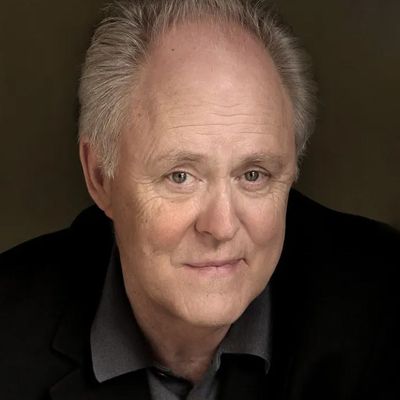
- Emmy-winning Actor John Lithgow (Conclave, Interstellar, Bombshell, 3rd Rock from the Sun, Dexter, The Crown)
- Documentary filmmaker Ken Burns (The Dust Bowl, The Central Park Five, Benjamin Franklin, The Civil War)
- Academy Award nominated actor Lucas Hedges (Manchester by the Sea, Ben is Back, Boy Erased, Mid90s, Lady Bird)
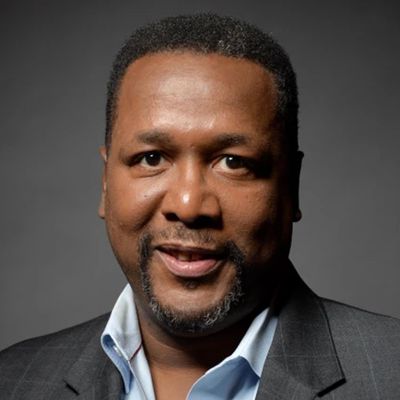
- Award-winning Actor Wendell Pierce (The Wire, Treme, Suits, Selma, Horrible Bosses, Elsbeth)
- Actress Carolyn McCormick (Law & Order, Candlewood, Mapplethorpe)
This episode is brought to you by The Atlantic Festival, which took place September 18-20, 2025 in NYC. Atlantic journalists explored the most consequential issues of our time alongside an outstanding slate of expert speakers. For the full panel, here's a link to The American Revolution panel.
Host:
Instagram:@MentorsontheMic@MichelleSimoneMiller
Twitter:@MentorsontheMic@MichelleSimoneM
Facebook page:
https://www.facebook.com/mentorsonthemic
Website: www.michellesimonemiller.com and www.mentorsonthemic.com
Youtube:https://www.youtube.com/user/24mmichelle
If you like this episode, check out:
TRIBECA: Tim Blake Nelson, Andrew Liner and Vincent Grashaw for "BANG BANG"
Transcript
This transcript was automatically generated and might contain errors.
[0:09] Michelle Simone Miller: Hello and welcome to a very special episode of Mentors on the Mic podcast. This is a red carpet episode, and it is a little different than any other episode I've ever done. I this is the first episode that I am not leading the show on this one. Um I could not make it to a red carpet for the first time. Um I had an incredible opportunity to see a documentary called American Revolution, which I highly recommend. I've heard it's amazing. I didn't get to go. I was supposed to go, didn't get to go. It is a six-part documentary series by director Ken Burns, and it will premiere on PBS on November 16th. It is a 12-hour series, which explores the country's founding struggle of you know the eight-year war of independence and how you know the US was shaped into what it is today.
So super timely, and uh it covers a lot of stuff, and it also stars a lot of really cool people, which I'll talk about. And this is, I was so disappointed that I couldn't make it, but luckily um I have someone who's absolutely incredible, who's helped me with numerous red carpets in the past, Annika Horne. And Annika was able to fill in for me and do such an incredible job because the people guys on this red carpet are so cool. So we've got John Lithgow, Ken Burns, Lucas Hedges, Wendell Pierce, and Carolyn McCormick. She did such a wonderful job. I want to thank you, Annika, for covering for me and for providing these awesome interviews that we get to share on the podcast. So without further ado, here is the wonderful team behind American Revolution.
[1:56] John Lithgow: Hi, I'm John Lithgow. My very first step into the entertainment industry was the day I was born. Because I was born into a theater family. I do believe the first role I ever played was one of Nora's children in the doll's house. And my father in the play was played by my father. And I don't know I was about two years old. My older sister was playing my big sister in the play. I don't remember anything about it at all, but I'm told I was very, very good. So on November 16th, PBS is gonna begin broadcasting and streaming our six-part 12-hour series on the history of the American Revolution, which we've been working on since Barack Obama had 13 months to go in his presidency. So a lot of water under the bridge, a lot of research, a lot of struggling to tell the story with no photographs and no newsreels of what happened at our birth.
So well, we have lots of paintings, we have lots of drawings, we have lots of maps, lots of documents, and but we also followed around a lot of reenactors who were dressed in all the different costumes of the participants from Native Americans to black regiments to you know uh British soldiers to French and whatever, and and just made the story come alive.
[3:17] Lucas Hedges: I'm Lucas Hedges. So my first role. Oh man. Well, my first role was actually in my dad's film. My dad directed a movie, and it's I I play Lily's dance partner in the credit sequence, and I look right into the camera. So if you go to the end, you can see that. But my first like legit role that I got was in Moonrise Kingdom, the Wes Anderson film in eighth when I was in eighth grade. Um can you talk about what makes you passionate about acting? Good question. Yeah, what makes me passionate about acting? Well, I always feel like I'm in like I always say I have condition I I love acting conditionally, like I'm not an actor unconditionally in love with it. But I think what I do love about it is it allows me to um gain skills I wouldn't have otherwise, like to learn a language or a new trait, or oftentimes I feel like the characters I play have things that I don't, and so I get to I get to inherit them.
So in a way it's like getting to be different people can make you more uh like a more of a full person yourself. Yeah. It's a good question. You know, the new thing I like to do to get ready for a role is I like go to a grocery store and I pick all the like I'll pick like okay, what's the yogurt I want to eat, and then I I just try to accu uh acquaint myself with what the character likes on an on a personal level in terms of flavor and in terms of smell, I think smell is important. And uh I like to try to try to see the ways in which I'm different from the character and and the ways in which I'm not, and then try I just try to eliminate any differences, and so we're we become like one thing.
Yeah, um do you probably need creative circles other than other than acting? Oh no, I've done it all. Oh I think I'd like to write and be a writer more and make my own films. Um, but I think in in terms of acting, I'd like to play more silly characters, more absurd characters with accents. Um, like Austin Powers was my favorite growing up, so I like that kind of stuff. Yeah, thank you.
[5:33] Wendell Pierce: My name is Wendell Pierce. I am a actor and uh producer. Uh and I uh from New Orleans, but I came to New York to study at Juilliard, classically trained actor, and I've been fortunate enough to work in theater, television and film. Uh this is my 40th year, 40th anniversary. So those of you who are starting out, I recommend diversifying your career, making sure you do theater, television and film as much as possible. Uh work in Los Angeles, work in London, uh work in Africa, uh, work in New York. Uh so the more opportunities uh you give yourself uh the the um the greater the likelihood uh that you work. How do you approach a role that's voice only versus a stage role versus something that was film?
Uh well I approach it the same. You know, um I approach it the same. You want to be authentic, you want to be truthful, especially when it's a person who uh um you are you are um voicing someone who lived, you want to be exact and truthful to their experience. So uh you do as much research as you can about that or ask the producers to give you as much information about the character and uh you learn from the work. You know, you learn from what they did, and then put yourself in their shoes. If this was me at this time, what are the things that would be uh of cons of concern for me? Uh and with this project, uh, it was easy for the you think of the African Americans who were facing slavery at the time, and they said this is going to be the discussion of our new nation if we fight the British.
And uh that was uh a part of what they were negotiating for and fighting for all the way back to the beginning of this nation. You know, uh, if we are going to fight for freedom, you cannot have slavery. And uh we'll fight for that. And uh unfortunately, they kicked the can down the road. Right. Um, can you talk about some of the history that you've learned in working on this project and the characters for trade? Well, that was that was one of them. That uh there were so many African Americans who were patriots and were asked to be patriots from the beginning of the war. Uh, and then also um that the British offered those people that were enslaved freedom that they fought on their side, and so many people uh found it hypocritical for the Patriots to say they want to fight for freedom, but uh uh but weren't allowing people to have it. So uh so that was the thing I learned how how people fought on both sides.
[8:22] Carolyn McCormick: I'm Carolyn McCormick, and I do multiple voices on the American Revolution, and I've been working with Ken for the last I think 30 years, starting with jazz. Um well, I grew up in Texas, and I used to do speech tournaments and plays, and then I went to Williams College in Massachusetts and did more plays there, and then suddenly I'm doing, I went to grad school at ACT in San Francisco, and then I was asked to join the company, and suddenly I was just working as an actor uh professionally, and it just sort of happened. It seemed I kept following the yeses, the yeses kept saying, keep doing this, keep doing this, keep doing this, and so I did. Right, basically. I was like, the difference between how you approach like an on-camera role versus a voice role.
Um that's so interesting because I teach a class which is basically called Stage to Screen, which deals with learning how to transition from the stage acting to film acting and the lack of rehearsal that you have when you work in front of a camera and the lack of and the indulgence of rehearsal you have when you do a play, and that that's a very different kind of orientation to how we work. And voiceovers are more like film in the sense that you just get the copy and then you just read it, and you really have to go with what your first instinct is, versus rehearsing and trying this out, and then the next day in rehearsal you can try something else out, and you keep working out all the little bugaboos until you figure out okay, this is how I want to play this moment.
And in film, you kind of have to decide on the fly in the moment, and then it's locked. You don't get to go back the next night and go, oh, I'm gonna redo that because it's locked. Right, right. That would be my main the main difference. But they're both fun, and to be good at any of them, I applaud stage acting, film acting, voiceover, I think it's an art form. Um, do you enjoy watching watching documentary series like this? I love watching Ken's stuff because I like how much he emphasizes the everyman of the story, and it isn't always about the famous, well-known person. It's seen through the eyes of the people in this country and it's their life and how things, choices that are made by the powerful people affect their lives. And so I love seeing it from that POV. Thank you so much for this interview.
[10:46] Annika Horne: You're welcome. I took meeting you.
[10:49] Michelle Simone Miller: Thank you so much for listening to Mentors on the Mic. If you enjoyed the episode, please share it with a friend in entertainment you know would love it. Let me know what you learned or what stayed with you on our Instagram at mentors on the mic. I love reading your messages. You can also find me at Michelle Simone Miller on Instagram. On both accounts, I'll be sharing even more information about our mentors. Talk to someone about what you learned today who would really appreciate it and send them the episode. Also, if you love the show, please go ahead and leave us a rating and review on iTunes. It really makes a huge difference in growing this. It makes it easier for people to find our podcast, and I love reading your reviews. So thank you so much, and I'll see you next week.
© Broadway Podcast Network, All Rights Reserved