

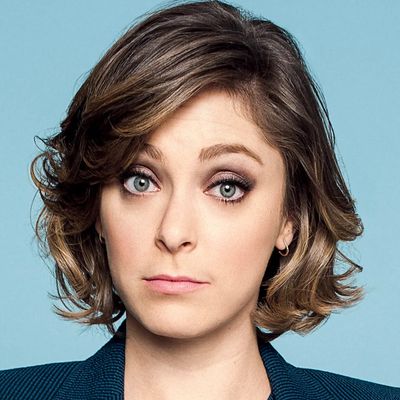
ROLE MODEL ALERT. Eva talks to the one and only Rachel Bloom, creator and star of "Crazy Ex-Girlfriend," new mom, and general delight. Tune in to hear about how Rachel found her niche, combining musical theater and sketch comedy, and an armchair psychology session for Harold Hill... Read More
From the show: My First Show
Guests
About
ROLE MODEL ALERT. Eva talks to the one and only Rachel Bloom, creator and star of "Crazy Ex-Girlfriend," new mom, and general delight. Tune in to hear about how Rachel found her niche, combining musical theater and sketch comedy, and an armchair psychology session for Harold Hill. Our tenth episode is not to be missed.
Part of the Broadway Podcast Network.
Transcript
This transcript was automatically generated and might contain errors.
[0:15] Eva: Hello and welcome to this episode of My First Show.
[0:20] Eva: Today's guest is a friend, a colleague, a brilliant performer, brilliant theater maker, brilliant musician, and a brilliant human just all around.
[0:33] Eva: And someone I'm a big fan of and have been for a long time. Rachel Bloom, thank you.
[0:39] Rachel Bloom: Thank you for being here.
[0:40] Rachel Bloom: Oh, that was such a lovely introduction.
[0:42] Rachel Bloom: That was so sweet.
[0:44] Rachel Bloom: Thank you for having me.
[0:45] Eva: It's all true.
[0:47] Eva: We only speak the truth on my first show.
[0:49] Eva: Congratulations.
[0:51] Rachel Bloom: Thank you.
[0:52] Rachel Bloom: Thank you.
[0:53] Rachel Bloom: And I'm sorry, but congrats to you because last time I saw you, there was a bump on your belly.
[1:01] Rachel Bloom: And that was before so much has happened, including the world falling apart.
[1:06] Rachel Bloom: But that is joy.
[1:11] Eva: So can we start there?
[1:12] Rachel Bloom: Yes.
[1:13] Rachel Bloom: Oh, you can always start there.
[1:15] Rachel Bloom: I just got done breastfeeding.
[1:17] Rachel Bloom: Um it's it's so trippy.
[1:20] Rachel Bloom: I mean, it's it's the craziest um.
[1:25] Rachel Bloom: I don't know.
[1:25] Rachel Bloom: There's so many ways to describe it.
[1:28] Rachel Bloom: There are so many things that make sense about the world now.
[1:31] Rachel Bloom: Um, about I don't know.
[1:32] Rachel Bloom: I I think whenever I saw storylines in movies and TV where it was just like, but my kids, I can't leave my kids, I'd be like, boring.
[1:39] Rachel Bloom: And now I suddenly relate to it.
[1:42] Rachel Bloom: I basically suddenly relate to every story that I um uh about like being a parent that I that I hadn't like related to before.
[1:53] Rachel Bloom: Um, and then also I have a lot more and a and many new emotional triggers.
[1:58] Rachel Bloom: Um, any story that not only I hear but have ever heard about cruelty to children uh bothers me immensely.
[2:07] Eva: So that's a new thing as well.
[2:09] Eva: Yeah, that makes sense.
[2:11] Eva: You you gave birth mid pandemic, is that right?
[2:13] Rachel Bloom: Oh, thick of the pandemic.
[2:15] Rachel Bloom: In fact, I got induced um specifically because so I was I was due right around the time New York was getting really bad and the hospitals were getting bad and and fathers were starting to get barred from the delivery room.
[2:32] Rachel Bloom: And so my doctor had said to me, um, and you may hear a baby crying in the background.
[2:38] Rachel Bloom: Um, my doctor said, you know, I I think I want to get you in and out of the hospital as quick as possible.
[2:42] Rachel Bloom: And so the you can safely induce at 39 weeks, uh, which is a week before your set due date.
[2:49] Rachel Bloom: Uh, but the baby is done and cooked at 39 weeks.
[2:51] Rachel Bloom: So that's what I I did.
[2:53] Rachel Bloom: Um I gave birth.
[2:55] Rachel Bloom: And around us, as I was recuperating, they were turning the floor below the maternity ward into an all COVID floor.
[3:03] Rachel Bloom: So they were bringing furniture from that floor up to the maternity ward, and then my daughter was in the NICU, which is um such a scary uh awful thing to go through.
[3:15] Rachel Bloom: Um, and my husband and I couldn't be in the NICU at the same time because of COVID regulations.
[3:20] Rachel Bloom: She was in the hospital for a few days after we left, and my husband couldn't go back and see her, and I could only go back once a day.
[3:27] Rachel Bloom: Again, it was all COVID regulations, and and I watched the NICU people, NICU people, I watched the healthcare workers um get new guidelines from the CDC kind of on the hour.
[3:40] Rachel Bloom: They were just scrambling.
[3:43] Rachel Bloom: And it was really it was just a an incredibly incredibly intense time.
[3:50] Eva: Yeah.
[3:50] Eva: Because everything was changing and no one had ever seen this before, and everyone was running the rules as they went along, right?
[3:56] Rachel Bloom: So that's why.
[3:58] Rachel Bloom: It felt it and it felt truly apocalyptic.
[4:00] Rachel Bloom: And then and then the night I gave birth is when I found out Adam was on a ventilator.
[4:05] Rachel Bloom: Um I had no idea he had COVID.
[4:08] Rachel Bloom: So you know, I'm like punched drunk from giving birth, and I was like, let me check my emails.
[4:15] Rachel Bloom: Um and it was it was by far the most intense and somewhat you know, the lows being traumatic and the highs being um I guess like cosmically wonderful, like the the kind of most intense two weeks of my life by far.
[4:38] Eva: I can only imagine the high those highs and those lows.
[4:42] Eva: I mean you lost a great collaborator and someone that is so important to you, but also we as the world lost an amazing person and Adam Schlesinger, and I'm just I'm curious how you're doing emotionally and feeling about creation and all the future creation you're going to do um without him in your life.
[5:07] Rachel Bloom: Yeah, well, I as anyone who's lost someone knows uh who's listening to this.
[5:12] Rachel Bloom: This this is really my one of my first experiences with grief.
[5:15] Rachel Bloom: I've I with with grief, I have lost grandparents.
[5:18] Rachel Bloom: Um but there's something about when you you know when you lose grandparents and and really I was only old enough to remember two of them passing away.
[5:28] Rachel Bloom: Um there's there's just something fundamentally different about that.
[5:33] Rachel Bloom: Um and unfortunately there's you know an illness that precedes a grandparent passing away.
[5:38] Rachel Bloom: This this was the first time I've I have been so close to something so sudden happening to someone so young.
[5:45] Rachel Bloom: Um the and it you know it comes in waves.
[5:48] Rachel Bloom: It's you're it's uh an ocean, you're you're riding this kind of boat on an ocean, and I the thing that I'm definitely feeling right now as I'm also getting back into work, and also I've been doing my part and quarantining.
[6:07] Rachel Bloom: I have a newborn, so the definition of an immunocompromised person.
[6:11] Rachel Bloom: We've been doing nothing.
[6:11] Rachel Bloom: And as I'm quarantining and being a good girl and doing everything I should, and then I hear about these can I curse?
[6:11] Eva: Please, absolutely.
[6:11] Rachel Bloom: And then I hear about the fucking ludlace.
[6:22] Rachel Bloom: And then I hear about these just these selfish motherfuckers who are walking around ruining California.
[6:29] Eva: Yeah.
[6:30] Rachel Bloom: I used to think, oh, you know, America has its problems, but I live in California.
[6:36] Rachel Bloom: And no, you hear about what's happening in uh my hometown of Manhattan Beach.
[6:43] Rachel Bloom: I hear people, I I I know a friend who went to walk on the beach there the other day, and no one was wearing masks, and it's all these young fucks.
[6:49] Rachel Bloom: I mean, a lot some of them are old are older fucks, but I really resent the young, like the young kind of hot fucks who are just going to the beach and not wearing masks and breathing on each other and like tongue kissing each other, being like, I'll never die.
[7:04] Rachel Bloom: And I just, I'm just like, fuck you.
[7:04] Rachel Bloom: Like, fuck you.
[7:10] Rachel Bloom: My daughter hasn't been held by any of her grandparents yet.
[7:14] Rachel Bloom: Eat my fucking ass, wear a fucking mask.
[7:18] Rachel Bloom: You selfish pieces of shit.
[7:19] Rachel Bloom: Like, so I just feel this general uh anger.
[7:24] Rachel Bloom: And and then there's a creative anger of Adam was doing our I was just talking to someone about this the other day.
[7:31] Rachel Bloom: I think doing Crazy Ex especially was so exciting for him because we we opened we wrote 157 original songs and and I truly believe he was in the middle of his career.
[7:42] Rachel Bloom: Truly.
[7:44] Rachel Bloom: And just all of the songs that will never get written and all the things he had to say that will never get said, and I'm very practically going through this process now because he and I were working on the nanny together.
[7:59] Rachel Bloom: And so there is a literal thought process of how do you replace him.
[8:03] Rachel Bloom: It's when you when you when you grieve someone, there's an existential they can never be replaced.
[8:09] Rachel Bloom: Um but in this in this case, it's it's literal.
[8:14] Rachel Bloom: I have to suddenly replace someone, and it just uh it makes me so mad and sad, and I and at the same time I feel bad about my anger because I know that people are in quarantine and it's a really difficult situation, and it's a mental health issue of being isolated, isolated from the outside world, isolated from our friends, our loved ones.
[8:41] Eva: So I also understand people not wanting to wear masks and going outside and just wanting to go to a fucking restaurant and be normal again.
[8:48] Eva: I I also understand that I want to balance out my anger by saying I understand where it's coming from.
[8:54] Rachel Bloom: I am just um and I don't think that the people not wearing masks or anyone who's inadvertently spreading COVID.
[9:02] Rachel Bloom: I don't think they're necessarily bad people.
[9:04] Rachel Bloom: Um I have an understanding and empathy for what it's like to be in quarantine.
[9:11] Rachel Bloom: Um, but I just I feel uh, you know, I I think a lot of us feel angry and helpless.
[9:18] Eva: Yeah.
[9:19] Eva: Yeah.
[9:20] Eva: No, that's really beautifully put.
[9:22] Eva: And uh there are no words, right?
[9:26] Eva: There are you're absolutely right.
[9:27] Eva: It it is it is anger-inducing and infuriating to to see carelessness in the face of this as we as we think about all the things we've lost and the people we've lost.
[9:39] Eva: But we have our health and we're alive, and so that's actually first and paramount, and and that has to drive everything else.
[9:50] Eva: We can go to bars later, we can go shopping again later, but we can't live again or hug our grandma again or our mother or our friend again.
[10:00] Eva: Um so I'm with you in that anger and I'm with you in that frustration, and I'm also with you in that empathy.
[10:08] Eva: Um, and that's why now is so confusing and very hard.
[10:13] Rachel Bloom: It's it's very hard, and I have to remember whenever I get angry about it.
[10:18] Rachel Bloom: Um, and I'm angry about obviously because I had this very personal loss, but I I I have to remember Adam didn't die from him trying to quarantine and someone not wearing a mask in his face.
[10:29] Rachel Bloom: He died from the world going about as business as usual, which um was he he was in the wrong place at the wrong time.
[10:38] Rachel Bloom: There's an unluckiness to New York City in general, and then a a failure of the system.
[10:45] Rachel Bloom: Um, you know, starting from the president and of course extending to de Blasio, who on March 2nd told New Yorkers to live their lives like normal, which is probably around when Adam caught it.
[10:58] Rachel Bloom: So the the blame I I'm trying to reorient, I'm trying to redirect my anger and just put it in put it into like love for my daughter and protecting my family and and trying to be grateful for all the things I have.
[11:12] Rachel Bloom: But it's hard not to be angry because there's nowhere to put that anger.
[11:15] Rachel Bloom: There's nothing I can say with my limited social media reach that's gonna really change anything.
[11:23] Rachel Bloom: Um it's such a it's such an expansive existential massive problem.
[11:30] Eva: And I mean, this is you know, podcast about the theater, talking about I think be being a live performer now, I mean it's it's the hardest to do what we do, right?
[11:44] Eva: It's I mean, that's the thing that that makes this show so important and this time so difficult.
[11:49] Eva: Because the thing we love to do, and forget like our work, the thing we love to do as fans, which is go to shows.
[11:57] Eva: Yeah, we can't do the thing that makes us feel more alive, we can't do.
[12:02] Rachel Bloom: And that's that's what makes everything that much more upsetting and frustrating.
[12:07] Eva: I I hear you.
[12:08] Eva: Listen, I think putting that anger into the love of your daughter, into the the growth of yourself, into however you can be and and create in this next phase of your life, that is doing something that that is, and you know, I applaud it and I appreciate it.
[12:29] Rachel Bloom: Thank you.
[12:30] Rachel Bloom: And I just I again want to reiterate because this is such a polarizing time, and I don't want to just put anger out in the world.
[12:37] Rachel Bloom: I I also want to acknowledge that it's easier for me to quarantine in that I have a house where I don't live in a one-bedroom apartment.
[12:47] Rachel Bloom: I live in a house with room.
[12:49] Rachel Bloom: I have a front yard, I have a backyard, I have I have a a space uh that I could that I can be in.
[12:56] Rachel Bloom: I live with people.
[12:57] Rachel Bloom: I I live with my husband, I have a partner.
[12:59] Rachel Bloom: So I I have um uh emotional support during this quarantine.
[13:06] Eva: I've been thinking about you for the last few months, and I'm I'm glad I'm glad you're okay and that you and your family are healthy, and I'm I'm happy to hear where you're at as tough as it is.
[13:18] Rachel Bloom: It's it's just good to know how real you are and how you're facing real challenges and questions.
[13:25] Eva: And um, and you know, with that, let's reminisce.
[13:30] Eva: Let's remember where it all began, which is what was the first show you ever saw.
[13:40] Rachel Bloom: So I'm pretty sure I'd seen other shows, but the first one that really made an impact was Guys and Dolls.
[13:47] Rachel Bloom: I saw it when I was uh five years old at a local at a community theater called the Kentwood Players, which still exists in Southern California, and my grandfather had been directing and performing there.
[14:00] Rachel Bloom: My grandfather was an amateur um actor, director, and stand-up comic, and he'd been doing stuff at the Kentwood Players since the 50s.
[14:09] Rachel Bloom: And so my my grandparents took me to see Guys and Dolls, and I just I have this memory of watching Adelaide sing Bush Linap and like pointing at me when she said, I love you.
[14:19] Rachel Bloom: And like I knew I liked theater, but there was something about that night that was incredibly impactful.
[14:28] Eva: And is that why I've heard that you like to perform Adelaide's Lament, which let's just say you're not the only girl on the radio right now with you that likes to perform Adelaide's Lament.
[14:39] Rachel Bloom: Oh yeah. And I is that where that came from? Oh yeah. I did Adelaide's Lament. I mean that was an audition song I had for a long time of course. I did it for my middle school lip sync contest, um, which went over, uh, you know, as you'd imagine, um, I need a little more, yeah, not a win. Uh, I mean I got a, I got, I actually got third place. It's just the type of thing where like you're, uh, a lip sync contest, it's also like it was an outdoor amphitheater because I grew up in Southern California. Our kind of quad space was outdoors and the lip sync contest was on this kind of stage that was outdoors in this big quad. So it's not like people could see me up close and Adelaide's Lament is, you know, uh, it is a talk song.
[15:30] Rachel Bloom: Oh yeah, a patter song they say. Yeah, it's a patter song. You're sitting, you're sitting for it. So I'm surprised I placed third considering, uh, that like no one, it just looked like a person that was sitting in a chair. Um, I mean I, yeah, it's a classic. I think it's also Adelaide's Lament is a classic comedy song. Cause I know as a musical theater major something that was something that motivated me to get into songwriting was the lack of audition material, like the lack of good comedy song audition material for women. And the fact that Adelaide's Lament is such a staple in that area, I think is also a testament to, and it's getting better. The lack of just good audition material for women who wanted to do something funny.
[16:20] Rachel Bloom: Yeah, yeah. And didn't need to be a oversexed, underappreciated, um, uh, matron also at 11. Yeah, yeah, yeah. It's a, it's um, it's a nuanced song with, I mean, it's dated and that she's talking about, you know, being an old maid, um, and needing to get married, that her health is literally predicated on the idea of, uh, needing to get married. There are a lot of problematic things in it. Um, but it's hey, it's a classic. Oh, it's so good. It's so good. I agree. Maybe, maybe one day we'll do ours for each other. If you're a couple. I haven't done it in a solid ten years. I'd be interested in, I bet you have every lyric. I promise. You have it. You know, I sent in a tape, uh, four years ago. There was a movie, there was a Guys and Dolls movie that was, I think it was Tom Hooper. I don't know where it's at now, but I had sent in an audition tape for Adelaide. I never heard back.
[17:27] Rachel Bloom: Uh, first show you were in. I was in the Three Little Pigs when I was, uh, about I think four years old. And it was the type of thing where three different kids would play each pig and they'd say the lines at the same time. So which pig were you? Truly don't remember. But I just remember that I was a little pig. Because one liked houses of wood and one of brick. And one, what was the third? I can't even remember. Uh, it was, I think it was straw, sticks, and brick. So I wanna say I was, I have nothing to back this up, but I think I was the stick pig. I can hear it. Yes. And that was community theater. My, uh, for, you know, those, the people may not all be wearing masks in Manhattan Beach, but at the time that I was a child, there was a nice, uh, city-sponsored children's, uh, community theater class in the community center.
[18:34] Rachel Bloom: And did you ask to audition? Did your mom put you up for it? Like what was the casting process? Oh, it wasn't an audition, it was a children's theater class that culminated in us all doing the Three Little Pigs. Um, my first audition because that, that was a lot of my early theater experience were these, these theater programs or these theater camps through the city where everyone would just automatically get cast. Got it in, you know, whatever play. Um, I first audition. I remember auditioning at the local community college, they were doing The Music Man, and I auditioned for Amaryllis. And that was my first, I was like eight years old, and that was my first real audition, and we had to audition with the people playing the parts in front of all the other kids.
[19:29] Rachel Bloom: Oh wow, that's like very 19 Broadway. Yeah, it was, it felt very old school, it was very intimidating. So I got to see all the other little girls and their interpretation. Um, I saw the girl who got it, I was like, this girl's gonna get Amaryllis, she's the best, and then I got in the chorus, and but then I was like, I don't want to be in the chorus, so I dropped out. Good girl. Say save it for a lead. That's what I said. I should have stayed in. I don't know. And so your first professional show, I guess wasn't quite that. The first show for which I was ever paid. I had just gotten out of college. My friend was the accompanist for a topical musical political parody show.
[20:21] Rachel Bloom: Oh. And, uh, and actually my friend Jill Donnelly was a mainstay of the show, but she couldn't make one of the performances, which was being done at a theater in Queens, right near the site of the World's Fair, and so I stepped in for her, and I think I got paid for that, and that was my first paid theater gig. Was that Queen's Theater in the Park? It was an indoor space, yeah. It was an indoor space. I played Sarah Palin. Um, in a parody of, uh, because I'm a woman, that, um, yeah, I think that space is called Q tip or was, even though it's indoors. I mean still. Oh interesting. I think so. I remember being in a beautiful space, yeah. Um, so that was, I mean, yeah, that was, uh, about say like twelve years ago.
[21:19] Rachel Bloom: And so doing that show, even doing Three Little Pigs and Music Man for three weeks and all of this. I mean, there are a lot of shows in between. In between those two, I'll say. I'm sure, I'm sure. And, and like to what degree as you were performing did you sort of look around and say, you know what? I'm gonna keep doing this. I'm gonna be in the world of musical theater somehow. A lot. Um, I have a very, uh, interesting relationship with musical theater. And actually, my book coming out, there's a section on this, but why tell us more? Well, the problem that I had is for so long I was a musical kid that that it defined every part of my identity and my self-esteem was completely wrapped up in my talent.
[22:15] Rachel Bloom: So when I auditioned and I didn't get a part, it wasn't just devastation, it was I am lesser than. But I, it, I, when I got to college, I realized how much my self-esteem was wrapped up in my natural ability. Because I, in thinking about the way I used to audition, it was like I, I also had some attention issues. I would really rely on my natural ability to get me through auditions. You can't really rely on that to get you through rehearsals because rehearsals are rehearsals, but there was a lot of like my natural talent. And when I got to college, and I knew I would be in college with people who were more talented than I was, I, I intellectually knew that. But actually getting to college and really being around some of these talented people, um, a lot of whom, no fault of their own, but they all, they knew each other because a lot of them had gone to either stage door, um, or they had done the NYU, uh, I think it was the NYU high school musical theater program.
[23:21] Rachel Bloom: A lot of them knew each other. It felt like a lot of the like most talented kids who set the tone of the program knew each other. And so I felt insecure. Um, and I went into school with swollen vocal folds. So I was kind of in this already in this vocal recovery space and, um, and then simultaneous with that, when I talk, I talked earlier about looking for the perfect audition song, um, around the time I got into college, I got on a sketch comedy group and I really started to fall in love with comedy writing. And the more I learned about the technique of comedy writing, the more I noticed when musicals, especially that were dated, uh, weren't funny. And I began to get frustrated at what I felt was the lack of quality and specifically comedic quality in musicals.
[24:29] Rachel Bloom: And so it, it drove me a little bit away from musical theater. I transferred from the musical theater program at NYU to the experimental theater program. And then I spent my last semester, um, not doing theater at all. I was an intern at, uh, the Onion News Network and Saturday Night Live. Um, and I was taking a lot of classes at the Upright Citizens Brigade Theater, um, the New York one, rest in peace. Um, and so it was always, I actually, for my own, I think, relationship with musical theater, I needed to leave it and then come back to it voluntarily because I was, I left it and I said, okay, I'm gonna go into comedy.
[25:08] Rachel Bloom: Because everyone said you need to choose. You need to choose if you're gonna do musical theater, if you're gonna do comedy, you can't do both. It, it just at the time I was in school, there, there wasn't, I had never heard the term multi-hyphen it. The only comps that I had of people who did multiple things were John Leguizamo and Lily Tomlin. Those were the two people I could think of who combined their writing with theater somehow. Otherwise it was this binary choice from the comedy side too. Comedians would be like, when are you gonna stop that dumb musical theater thing and just focus on comedy? So when I wanted to put a show up at UCB, I wanted to make a name for myself. Uh, I, I kind of thought, okay, well, what do I bring to the table as a comedian that no one else is doing?
[25:54] Rachel Bloom: And I had taken a musical theater writing class at the, uh, at the grad musical theater writing program at NYU a couple summers before. And I'd never thought to combine it with sketch comedy, but for whatever reason, I, I decided to do a sketch show that took place within the context of the musical, A Chorus Line. Um, and my director, I was directing this developing the show, my director said, well, you gotta do a song. You can't do a show that takes place within A Chorus Line. It was originally like a sketch show. It was like every person would step forward and share their story and it would kind of dissolve or turn into a sketch.
[26:32] Rachel Bloom: Um, and so she said, well, you gotta write a song, and I settled on writing a song about the movie Space Jam that this person would come forward and say, I have an important story to tell. And then it was just about their love of the movie Space Jam. So that was the first real comedic song I ever wrote. And my boyfriend at the time, who is now my husband and the father of my daughter, um, I was playing the song for him, and he was a, uh, more established at that theater and, and a more experienced comedian, and he was like, you should do more of this musical stuff. No one's doing this. This is interesting. Everyone's doing sketch, but no one's doing musical comedy.
[27:10] Rachel Bloom: And that kind of got me on this trajectory, and now that I wasn't, um, hitching my horse to being a musical theater star anymore, I could come back to musical theater and be more of a fan looking at it from the kind of the outside in. And that was my way back into loving musical theater. Wow. Wow. And, and that's a direct path to Crazy Ex, right? Oh, yeah, totally. It, that, that it very quickly that became my thing. I wanted to combine my knowledge of, uh, comedy and sketch and then TV writing, the efficiency of TV writing because I took a TV writing class and the efficiency of the narrative I learned a very, I learned like a great technique in sitcom writing.
[28:02] Rachel Bloom: I felt like was lacking in, in musicals. There's a lot of, I felt shagginess in musical theater that like if I always said like, oh, if but if musical people could just take a single TV writing class, the musicals would be so much tighter and better and more focused, which I still believe. I think that there can be a lot more, um, kind of, um, melding of the techniques that you learn in, in television, um, and to some extent film and putting it into, into theater. Um, but yeah, and, and this NYU class was full of crazy talent if I'm not mistaken, right? This is Allie Stroker. Oh yes, right. Yeah, and, and I have to say everyone was nice. I was just more intimidated. And then the interesting thing is as I got, as I got older and, and as we, as we got on in school, um, a lot of them also, uh, stepped away from musical theater for a second to do other things.
So I went to Amsterdam, uh, I went to the experimental theater program in Amsterdam with, uh, Ali Stroker as well as he wasn't in cap, but, uh, John Early was in that program, um, Shana and I were in the experimental wing, uh, transfer track together, um, and her now husband I was on a sketch group with. So there's a lot of, and then Skylar, Skylar Lipstein, um, otherwise known as Skylar Aston was of course in that class, but he left, he left kind of early on because I think in our freshman year he was already doing Spring Awakening.
[29:40] Rachel Bloom: Um dream time Rachel if you could be in any show anywhere at any moment in history.
[29:48] Eva: Oh, the history or the culture or the future.
[29:52] Rachel Bloom: Whatever, whatever you wish.
[29:55] Eva: Oh my god.
[29:56] Rachel Bloom: What would be Oh, I hadn't taken to account historical context.
[30:01] Eva: Yes.
[30:03] Rachel Bloom: Yes. Well, I mean, to be in the original. I mean, I think to be in that original cast of a chorus line and to just witness that happening and the fact that the actors were so um that that that actor feedback was so important developing that show. I'm I'm in the middle of watching every little step. That just sounds so special and amazing. And then um same thing with I think about I mean being in that that uh the that original cast of Rent sounds so incredibly special. But my dream role really is uh I I would love to play Harold Hill in the music man. Back to a fun role. What a f I just it's all Patter songs. Um there's a there's definitely a safety to like you can speak sing it, so even if you're having a bad vocal day, it's not the end of the world.
[31:04] Eva: Right.
[31:04] Rachel Bloom: Right, right. There's no like it's not like when you're doing Alpha Bun, it's just like if I don't get oh like if I don't get that and I crack, everyone's like, she's a failure. There's a there's a you know Harold Hell Harold Hill is a general wash, washes over you, but also what a fun part, yeah, and like sort of a um a lovely um um antagonist as well, right?
[31:36] Eva: Like an empathetic, actually, you know, very good with uh with a stripe of evil.
[31:43] Rachel Bloom: Yeah, you're totally right. Actually, you're totally right. He actually is can I say this? He has some similarities to Rebecca Bunch in that way.
[31:52] Eva: I'm flattered.
[31:54] Rachel Bloom: You can absolutely say that. You know, I never even put that together, but you're completely right. He's a shithead.
[32:01] Eva: No, he's a real problematic shithead.
[32:03] Rachel Bloom: He's a con man. And the fact that the show isn't about the town, like if you were doing that as a TV show, I feel like the note from executives would be like, well, can't we can't the lead really be someone in the town? And he comes in and it's their experience of him. But the fact it starts with him and you're from his POV is really unique and interesting.
[32:27] Eva: Yeah.
[32:28] Rachel Bloom: Yeah. Yeah. He's a he's a conflicted protagonist or or a kind antagonist, whoever you want to look at.
[32:36] Eva: Yeah.
[32:37] Rachel Bloom: I love that. That's great. Well, is this a sociopath?
[32:41] Eva: Yes.
[32:41] Rachel Bloom: Harold Hill has some he he seems to have some um real problems with empathy. And he definitely has the thing where he looks at other people smiling and then is like, oh, I should be smiling right now.
[32:57] Eva: Right.
[32:58] Rachel Bloom: Yeah. Wow, what a sociopath.
[33:01] Eva: Yeah.
[33:03] Rachel Bloom: Um, that's really funny. So um there's a section of the show that we don't tell our guests about.
[33:10] Eva: Right.
[33:10] Rachel Bloom: It's the surprise.
[33:12] Eva: Right.
[33:13] Rachel Bloom: It's a lightning round where we put 30 seconds on the clock and I list off classic musicals from history or from current, and you tell me what you think the emotional theme of that show is.
[33:30] Eva: Ha!
[33:30] Rachel Bloom: I love it. One word, two words, three words, but you know, as succinct as possible.
[33:36] Eva: Okay.
[33:37] Rachel Bloom: Uh if you don't know a show, you can say pass or you can guess.
[33:41] Eva: Yeah.
[33:42] Rachel Bloom: No one will know. Um, so I'm gonna throw 30 seconds on the clock.
[33:46] Eva: Oh, and the and the goal is to like see how in sync you and I are.
[33:50] Rachel Bloom: Only I will know that answer. But I promise.
[33:52] Eva: Great.
[33:53] Rachel Bloom: I would be honest. Um, thirty seconds on the clock, and here we go.
[33:58] Eva: Man of La Mancha.
[33:59] Rachel Bloom: Dreaming is good.
[34:04] Eva: It's good.
[34:05] Rachel Bloom: That was good. Hello, Dolly.
[34:06] Eva: Love everyone.
[34:08] Rachel Bloom: Finding Neverland.
[34:10] Eva: Oh, pass.
[34:11] Rachel Bloom: Evita.
[34:12] Eva: Sometimes it pays to be an asshole.
[34:15] Rachel Bloom: South Pacific.
[34:17] Eva: Don't be racist, but also this show kind of is.
[34:20] Rachel Bloom: Pippin.
[34:21] Eva: Honestly, I have no fucking idea.
[34:23] Rachel Bloom: Pippin is batch it. Music man.
[34:26] Eva: Sometimes sociopaths can be fine if they fall in love.
[34:32] Rachel Bloom: That was really good. That was really good. That was that was funnier than what I had. I will I'll admit it. That was that was great.
[34:40] Eva: Um, will you tell us a little bit about the book that's coming out?
[34:44] Rachel Bloom: Um I think we're gonna be excited. Yeah, so it's called I Wanna Be Where the Normal People Are. Um, and it's it's about really my uh experience with my relationship to normalcy. And uh my experiences trying to fit in, not fitting in, and then of course coming to the conclusion that of course there's no such thing as normal, but it's it starts in childhood and talks about um the bullying experiences I had, um, and goes through uh college and and talks about um me being just the world's worst roommate and uh of course be being intimidated with uh going to school with people who are way more talented than I was, which the story of that is actually told through a musical. Um it's written lyrics, and then I hope to have uh you can listen along if when you read that part of the book.
And then uh it extends into like Crazy X and working on Crazy X and how that was far from a normal show to work on, um, and then going into fame and award shows and how there's there's no normal way to approach that.
[35:50] Eva: Wow, wow, wow. You're a golden globe and an Emmy Award winner, right?
[35:55] Rachel Bloom: Yes.
[35:56] Eva: And you are also a real human.
[36:00] Rachel Bloom: And uh yes, that is that is correct. I mean, it's kind of human.
[36:08] Eva: But it's kind of incredible that and and you know, I say this because we have a lot of theater fans that listen, and I want everyone to know that like you can start out being second guessing and feeling um alone and and questioning your worth, and a lot of great can happen.
[36:27] Rachel Bloom: Um yes, yes. And I find that the people who have always been confident and are just like, I've never doubted myself. I'm I there's an inauthenticity to that because vulnerability is is and doubting ourselves is I think a fundamental part of the human experience. Um I and I think that uh I think that social media is uh is good and bad in the ways that it it sometimes can expose um our mutual vulnerability, but also I think is a way for people to be like, I'm hashtag brave today, and it's like, but that's not how you actually feel. And that filter isn't how you actually feel. So I just wanted to rant about social media. I don't have a point.
[37:09] Eva: No, rant away. I mean, you know, for for um for this moment in time where there's so much anxiety and depression, um, it is very easy to get lost in things like an external view of yourself, which social media um that's all it does actually. Um and so I think it's really important to to rant and um and tell and remind everyone to stay grounded and authentic, even if we're feeling anxious, even if we're feeling depressed. Um ride the roller coaster. That's what I'm trying to do.
[37:47] Rachel Bloom: Yeah, and and I think it's it's hard for theater fans right now, it's hard for theater performers. Um and if just on a separate note, because I talk about this in the book, if you're like me and you have I I think I relied on being a theater kid as like an emotional crutch that I told myself, oh well the reason I don't fit in is because I'm a theater kid, or the reason I'm bad at at school right now is because I'm a theater kid. So I just it's all I'd rather be doing and I don't know. I think I I defined myself so much as a theater kid that it um I didn't I didn't look internally enough and didn't look at all the nuances that made me me enough. So I that's always kind of my I don't know, my message to theater kids um is is uh is just taking a beat and and making sure you're coming from from a an emotionally um authentic place that feels good for you.
[38:31] Eva: I like that I wasn't sure if you're gonna say my message to theater kids is get outside and play a sport.
[38:56] Rachel Bloom: Oh um I wish I'd I wish I had I I again it goes to like the stories we tell ourselves. I wish I hadn't told myself the story of I'm a theater kid who hates sports because being active is healthy and getting outside with sunscreen and a proper hat um because skin cancer runs in my family um if you are uh Irish or English or uh of the Ashkenazi Jewish persuasion would say take special care but everyone should be going to a skin doctor but that's a different podcast check out the skin you're in podcast um uh I've I've sorry now I'm just thinking about melanoma so I got myself off topic we're that's okay we're we're gonna remind everyone to be themselves to but wear a hat to get outside but wear a hat.
[39:48] Rachel Bloom: Yeah um brought to you be yourself but wear a hat is actually I think that's my new motto.
[39:54] Eva: I I think that could be a song.
[39:56] Rachel Bloom: I mean I kind of think it could itself that actually kind of is a funny I'm sorry I'm writing down be yourself but wear a hat. Is that dorky to be like oh my god I'm so smart but I really I just think that's a nice motto you're amazing you're such a delight you inspire me um, you make me happy, and I know our listeners are feeling the same way. So thank you for being with us today.
[40:20] Rachel Bloom: Thank you so much for having me. Give so nice to talk to you. Give a big hug to your little baby, and um stay safe.
[40:31] Eva: You too to some long frustration, may react with psychosomatic symptoms, difficult to endure, affecting the upper My First Show is produced by Josh Alman, MEP, Dory Berenstein, and Alan Seals, and is part of the Broadway Podcast Network.
[40:55] Rachel Bloom: This episode was edited by Derek Gunther. Special thanks to Leslie Papa and Whitney Holden Gore at Vibacity Media. For more info about the podcast, visit BPN.fm backslash my first show. Follow me on Instagram at Eva R price.
[41:12] Rachel Bloom: But it just won't work if she's tired of getting that fish eye from the hotel plake. A patient can develop a cold.
[41:26] Rachel Bloom: It says here the female remaining single, constantly in suspense, shows a neurotic tendency. Note chronic organic syndromes, toxic or hypertense, involving the eye, the ear, the nose, and throat.
[41:58] Rachel Bloom: In other words, just from wondering whether the wedding is on a roof. A paysan can develop a core. You can feed her all day with the vitamin A and the bromo fizz. But the medicine never gets anywhere near where the trouble is.
[42:19] Rachel Bloom: If she's getting a kind of a name for herself and the name ain't a paysan can develop a call. And fade them all just from stalling and stalling and stalling the wedding trip. Her paysan can develop la grip.
[42:39] Rachel Bloom: When they get on the train for Niagara, and she can hear church bells chime. The compartment is air conditioned. And the mood sub. Then they get off at Yonka's racetrack for the 14th time. Her payson can develop la grip.
[43:07] Rachel Bloom: La grip. With the wheezes and the sneezes. And the sinus area pip. From a lack of community property and a feeling she's getting too old. Her payson can develop a bad bad call.
© Broadway Podcast Network, All Rights Reserved