

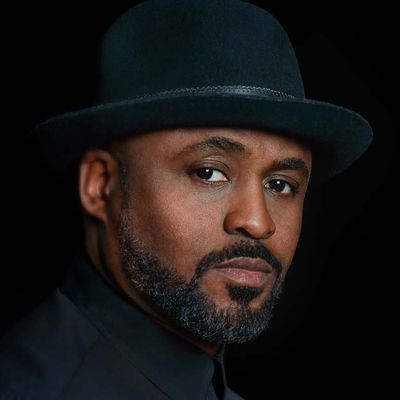
Eva talks to Wayne about his early days as a performer at Walt Disney World, the 1970s revival he wishes he could have been a part of, and one his favorite duets from the musical theater canon. Recorded on Juneteenth. Part of the Broadway Podcast Network... Read More
From the show: My First Show
Guests
Featured Shows

About
Eva talks to Wayne about his early days as a performer at Walt Disney World, the 1970s revival he wishes he could have been a part of, and one his favorite duets from the musical theater canon. Recorded on Juneteenth.
Part of the Broadway Podcast Network.
Transcript
This transcript was automatically generated and might contain errors.
[0:16] Eva: Hello, everyone. We are here today on a really special day with a really special guest. Um, I'm beyond thrilled. He's been entertaining me for years, but um most specifically in quarantine via his fantastic Instagram. Um that's my friend Wayne Brady. Hi, Wayne.
[0:37] Wayne Brady: Thank you, Miss Eva. Oh man, you um you've been living a modern family life, I would say, uh these last several weeks, have you not?
[0:50] Wayne Brady: Well, actually, I've been living a modern family life the entire time that my daughter's been alive. So for me, it's nothing uh new or out of the ordinary. I think there are more people that are that are um in a positive relationship of family love with their extended give credit for. Like we we just go, oh, that's so weird. But the question I ask is why would it be weird to be friends and to love the person that gave you a child and that you helped make an amazing human being with if neither one of you have done nothing to harm nor hurt nor hinder the other person? So it is the best of all worlds. You're supposed to marry your best friend, but if the marriage doesn't work out, you still have the best friend part.
And that's what what Mandy, who is my uh ex-wife and and my business partner, my producing partner and co-director in a lot of the stuff I've done, we we have that kind of relationship, but I guess because of social media and all of us being at home and TikTok being this thing, it's kind of offered a little bit of an insight to it. So to the uninitiated, it seems like, oh, that's weird. But it's been great. It's been absolutely great. Because if we can further the conversation, then cool.
[2:15] Eva: I love that. I love that. I think what's really special is you know, everyone's having their own quarantine experience with family and with their true life, their true inner self-life. And we're getting to see yours in our sort of bizarre world of quarantine. And I think it's been really fun for a lot of people.
[2:41] Eva: It's a very odd world right now. Um, yeah, how are you, Wayne? Tell me how you are today. Tell me how you've been. Tell me what COVID-19 and this current social political race crisis that our country is feeling has been for you.
[2:59] Wayne Brady: Well, to be honest, I mean, I wake up most days frustrated and a little pissed off because I'm pissed off at the COVID situation, not because I'm pissed off at COVID. It's a virus, it's something that I cannot control, but I'm pissed off at our country's handling of it. I'm uh pissed off at the dismissive nature that some people seem to have when I turn on the TV. I look on Instagram, there's somebody who says that they will not wear masks because it's their right, and if God intended for us to wear masks, we would have had them, and you can't tell me what to do in this country was built on idealism and individualism, and well, that's a problem. It's a problem in the sense of just because you don't care for you, that means that you person coughing or just walking around breathing in my space you don't care for my grandmother, you don't care for my daughter, you don't care for me, you don't know what I have in my body.
Most of us don't know what is that invisible trigger that detonates inside some of us when they're infected, so why risk it? And that's the frustrating part and that's linked into the socioeconomic imbalance of the people on the front lines putting up with people that sometimes are in a better financial place than them that walk into their place of business without a mask, forcing their own life agenda on them, and that gets their family sick and it takes someone else out of the picture, and sometimes a lot of times rather that person is a black or brown person, and that hurts me and that frustrates me. I see the pain that we go through and we're telling all these stories now and I've shared a couple of mine on Instagram about feeling waking up every day.
And by the way, these are feelings that I felt before this happened, these are feelings that I felt while I've been on TV smiling and making folks happy for years. It's just that there when we talk about some of these things they were batted aside sometimes as why are you talking about race stuff again? Huh? It's okay. And only now are we really paying attention because the straw finally broke the camel's back and people are listening. And it's not that I need a big maya culpa from people. I personally need people to listen. Just like all of my brothers and sisters, you just have to listen. It's been the same old song. Um, so that's the long-winded answer to your question. Some days are better than others.
I advocate mental health in the black community. Um, I've had a couple days, two days last week. I will absolutely admit that I couldn't really get up and function because I was so distraught that I shut down and I had to get up and get going. But if I can do it, and I own up to the fact that I'm very privileged, I have a great life out here, I have a beautiful home, I've got a place far out in the woods where I don't need to worry about bumping into people and whatnot, but that doesn't affect the fact that my mind and my heart are still troubled, and so I know that if I'm in that state, there are lots of brothers and sisters who are not in that place that wake up feeling that are damaged and that feel like they cannot get up and they cannot get up from underneath this dark cloud.
[6:41] Eva: Yeah.
[6:41] Wayne Brady: So I try to fight for that. So that's how I feel.
[6:44] Eva: Yeah, thank you for that. I mean, the mental health crisis that is happening right now for everyone, right? The humanity of every child who's being raised right now. That's something that I'm constantly struck by as I talk to parents about their five-year-old and their six-year-old having a Zoom birthday party and not having the touch of another kid. I mean, that's so affected. Never mind everything else going on in the world and between us as humans. Um, it is a moment, and you're absolutely right, that this COVID moment brought us to this reckoning, to this place of straws breaking camels' backs in order for change to be instigated and change to happen. And I think the fact that it's happening is the one thing that helps me sleep at night, as upset and angry as I am, I think, but I think it's all gonna get better. I think we're on a path for better with this.
[7:52] Wayne Brady: Well, we have to think that. I mean, right? Um, because thinking the alternative is to just give in and give up. And that goes against the humans at our heart, I think are survivors. Um, no one wants to die.
[8:12] Eva: Yeah.
[8:12] Wayne Brady: Most people do not just want to die. We do not want to give up. We want to make our situations better. We want to get out from underneath that rock. Um, if there's a rock on us. So it's good for us to feel that it will get better because there's a pushing happening, and that's why that's frustrating as well when you look online, especially in the light of everything that's been brought to light, and there's still people showing their ignorance left and right and digging in. That's the thing I think is when you see someone ignorant, if you want to go up to them and go, hey, let's have a conversation, or watch this piece of art. Watch this play. Watch this music video. Watch this thing, listen to this poem, and maybe it'll change your heart.
When you see someone go, hell no, I believe what I believe. I believe I'm better than you. Screw your ma, screw your black lives. Get these gays out of here. I don't want to hear it. Build that wall. Get out of here. When that person is dug in so hard, it does nothing but you're like, wow, you really feel that? You really hate me that much, and you don't even know me. That's deep. So I have no, so we have to believe it's getting better.
[9:23] Eva: Yeah, yeah, yeah. Because how else do we continue?
[9:26] Wayne Brady: No, that's it. That's exactly right. I mean, listen, this the show stemmed out of the idea of nostalgia and thinking about my past and thinking about what inspired me to become a Broadway producer, what inspired me to enjoy my life and my free time and my hobbies as a kid that helped me find who I am, helped me find my voice, was the shows I was in and the fantasy world and my deep dive into musical theater to teach me about emotions, history, society, relationship, heartbreak, dreams coming true. I mean, that's what shows were for me. And I think I've been thinking a lot about my past as I think about what our future will be. I think that's an intended consequence, right? When you're at a period of change, you reflect on your past and your beginnings.
What every kid's early shows did for them as artists and performers that they became today, I think actually set them apart to be the people of right, to be the people who aren't sitting here closing their eyes to the change happening, who aren't pointing fingers at, you know, we don't need to hear that black lives matter, no, we don't need to hear that you have to wear a mask. I think early experiences with storytelling, which is what theater is, help make us better listeners and better communicators. And um, you know, so everything you're describing that frustrates you about people today, people in our present, um, I think it's because they didn't have theater as a kid.
[11:10] Wayne Brady: I'm gonna put it there.
[11:12] Eva: You know what? I like that. I agree with you about those formative experiences. Uh, the sad part is I think that there are two people who are super super duper ignorant. There are the people who I'm envisioning as you were talking. I'm envisioning people that never had access. And that's a shame. Um, there are people that never had access and so they're entrenched in their ways. But then there's the flip side. There's the very wealthy person who did have access, if they wanted it.
[11:49] Wayne Brady: That that they they could go to see a piece of theater. Their their family is very well to do. But an experience like that doesn't jibe with them. They they don't necessarily want to go. They're like, uh, you know, I don't want to go and and sit through through that boring crap, and thus they they don't expose their kids to it either. So no one gets the experience in that family of connection of even the communal experience of sitting and watching a story being told and and having that little bit of magic touch them. So they've they also believe that they exist um um I'm above the fray because they don't get the human connection like that because they're better so I completely agree with you about theater um I remember my the very first thing that I think I ever saw that uh that touched me live was uh because of the neighborhood that I was raised in this place called T'Angelo Park uh in Florida I was raised raised in what what one would call call call the hood you know it's a neighborhood and and and it was a black neighborhood and I and um I was bust out to see Peter and the wolf and I think you think a lot of kids see see that first and I was bust to go see that and that was that an opera or was it a ballet?
[13:11] Eva: It was the ballet.
[13:12] Wayne Brady: Okay was the ballet and the symphony and it touched me so much and I'd already been primed for theater because I grew up watching a lot of PBS so I was already a a bit of a nerd and and um and uh and different from some of the other kids kids that I knew because I grew up watching a lot of PBS so I watched upstairs downstairs so I watched great performances um the great performances series I watched a lot of uh old uh Sammy Davis Jr. and in in black and white and Sid Caesar Ernie Kovacs the show of shows um that Nat can cole all of the old variety specials so I knew that I loved that I loved watching the the Oklahoma musical um when it was presented on PBS and and was just amazed and old uh black and whites of Porgy and Bess. So when I first so when I saw Peter and the wolf and was touched by that music, it it touched me in a way that nothing ever had. And then I had to wait until I was 14 and I s uh and and I saw Children of a Lesser God.
[14:16] Eva: Oh wow.
[14:17] Wayne Brady: And they came to my school, one of the touring companies, and I I got a chance to meet meet the cast and the director later. And I was so starstruck that the fact that these people did this story in front of me, and I was able to, you know, and for a 14-year-old to sit in place for two and a half hours, um was amazing. Uh so I know that theater touched me and uh shaped a lot of my worldview.
[14:46] Eva: Wayne, what town was that in? Where did you grow up?
[14:50] Wayne Brady: In Orlando.
[14:51] Eva: Right, right, right, right. So so the do you remember the um the call letters of your local PBS station?
[15:00] Wayne Brady: Oh man, you're gonna put me on the spot. Let me see. Because I grew up in Boston and it was WGBH, and for whatever reason, I will never forget those call letters because you know, I I'm a little younger than you, but I I grew up in the days, you know, we we didn't have cable um for for many years. So I I like you, I watched so much PBS, and so I was I was early watching those broadcasts on great performances.
[15:24] Wayne Brady: It's alright. Don't worry if you remember your comments.
[15:26] Eva: No, I can tell tell you because I remember, but it's funny, your the Boston PBS actually generated a lot of programming.
[15:36] Wayne Brady: It did.
[15:36] Wayne Brady: I remember watching the Boston Pops on PBS, but also a lot of um a lot of the educational shows, I believe Zoom came out of Boston for for a while, because it was always presented by children's Health and Workshop, I think there.
[15:51] Eva: Yeah.
[15:51] Wayne Brady: Yeah, so I remember that. But I can tell you, I wanna say it was WMFE.
[15:58] Eva: W M F E.
[16:01] Wayne Brady: And I remember that because of the um the pledge drives. You're watching WMFE PBS. With your contribution, all of this programming can come to you. It's provided for you, for the people and by the people. Up next, we have Upstairs, Downstairs, followed by iClaudius next on PBS. Isn't it funny how our memory works? The things that just stick in there years ago.
[16:33] Eva: But actually quite meaningful.
[16:35] Wayne Brady: Very much so.
[16:36] Wayne Brady: Yeah, yeah, yeah. That that's great. Tell tell us about what the first show that you were in was.
[16:39] Wayne Brady: The first show that I was in was um a play called Dark of the Moon. And I played a character named Uncle Smelly Q Jed. And that play, I've told this story so many times in my life because it's like my superhero origin story. I was a painfully shy kid. Um my folks are from the U.S. Virgin Islands from St. Thomas and St. Croix. And in the neighborhood that I was raised in, not a lot of people talked like them. They had a very strong, strong uh accent. Um, and so if you did talk like them, then you were either Haitian or Jamaican. And for whatever reason, in the early 80s, I believe there was a thing going on where a lot of Haitian and Jamaican immigrants were coming over, and it's that silly American thing that we do.
They're coming, they're gonna take our jobs, we we don't want them around. But the but it was in Florida, it was about the Haitians, the Jamaicans, and sometimes the Cubans. So there was a whole thing in my neighborhood. So people made fun of me because of my grandma's accent. They made fun of me because they thought that we had money, even though we we didn't have any money. She just made sure that I was clean. And I left left the house. She dressed me like little Lord Fauntleroy sometimes. Um so I kept to myself. So no one ever knew that I wanted to perform. No one knew that I could. I knew that I could. I practiced in my room. I would sing, I would dance, I would do um, I would uh record myself reading books and reading plays and do all the character voices and uh act things out and build sets and do all this stuff, stuff in my backyard and in my room.
So fast forward to I'm in 10th, uh ninth and tenth grade and I'm in ROTC. And I choose to do that, A, because I'm trying to develop a relationship with my father, who was in the picture, but he was in the military on all over the world, so he let me live to my with my grandmother so that I wouldn't have to uh move around. So I figured being in the military or being in RTC was the closest this bond that I can have with him, so we can have something in common. So I'm an ROTC, and also, and my daughter makes fun of me for this. In my mind, I'm playing the role of a soldier. I loved wearing the uniform. When I was in private, I called my uniform a costume. So it's so I'm playing playing the role of a cadet.
So I figured I'm gonna play this role so well, and I'm gonna get get promoted and I'll get advanced because I'm doing this thing. And I loved marching because it gave me a chance because I wasn't dancing, but I had to step in rhythm, and I was really good at it, and I was on the saber team, so I did all this stuff with a sword. You know, you flip it and you throw it, and and it was and it was a way for someone who was very shy to get attention without standing out because I'm part of a unit. Um, but I envied every single kid at my school who was in the thespian society. And um in my 10th grade year, uh one of the guys who was in ROTC with me had to take acting as one of his electives. He had to drop out of the play.
So he came and he said, uh, hey, does anyone want to take my place in this school play? And of course I'm with the fellas, and I'm using the air quotes. It was like, yeah, or the school play, that's so stupid. They're just running around, and it was a thespian initiation week. So they're all running around in um in togas and and doing all of the silly stuff that you do during that time. Right. And uh we're like, yeah, you know what it'd be fun is I should take your place in the play, and then I'll just be stupid and make it look dumb, and all you guys can see me because we'll laugh at them. Yeah, bro, that's awesome. Great. Man, I walked into that theater and it changed my life. It was like an after school special.
The door opened up, and I see see these kids playing around the piano, people in costume. It was like fame. Um and uh and I knew from that second, and it sounds it so sounds like an after school special. I knew even before I didn't know what the play was, I didn't know what the hell I was gonna do. I just knew that I was home. I knew that I was there with other weirdos like me. Yeah, and they and and the teacher that I met that day has been a lifelong friend, Karen Karen Reguerio, and I flew her out to all my broad to any show on Broadway or to any TV show that I'm shooting or any movie. She is right there.
[21:10] Wayne Brady: Wow. Um, because I I owe that lady for saying, you can do this. And she cast me and she said, Well, you're gonna be Uncle Smilly Q Jed. And I was able to make people laugh with this character. And as soon as I got that laugh, I went, Oh, this is what this is. And I auditioned immediately. I thought, oh, well, now that I'm an actor, because I'm in a school play, I'm just gonna go audition for something. So I went out and I auditioned. Our local community theater was doing a production of uh Raisin in the Sun, and I went out and uh and I auditioned and got a role in that. And from that, I actually got my first real gig um in a touring production of uh this show called True Colors, which was an equity show. It toured all of Florida doing all these schools. So I started working immediately.
[22:01] Eva: Well, let's go back to the high school for a minute. Um, because you're describing something that, you know, you you made a joke, of course, it it it would be hard to believe that what I'm saying is true. It'd be like an after school special or whatever you said. And the truth of the matter is because we're all theater geeks, and my guess is everyone who listens to us, both on this podcast and in regular life, is also a theater geek that we we get it. We get exactly what you're talking about with that feeling when you suddenly know you belong somewhere and that you were always meant to to be an actor and to be in uh to be a theater kid in high school. So that's amazing. But my my question actually for you is you had a stutter at one point. And I'm curious, was it gone by the time you were auditioning in high school, or did you find a way to to fix it to be an actor? What what was that process?
[22:56] Wayne Brady: Well, I've talked about this too, and it's still kind of it's it's interesting to me. I don't like to say that I had a debilitating stutter because it wasn't that. Um I've worked with with the stuttering um association and and a couple other uh groups and and to see the children who do have that block that they struggle to form a word and and to get their thoughts out. Mine wasn't like that. I believe I'm a doctor, but my stutter was a product of anxiety.
[23:30] Wayne Brady: It's A, anxiety and B excitement. So if I felt very intimidated or very anxious, like I was gonna be made fun of, like I couldn't speak, like I couldn't get the words out. If I talked, then I would um get shut down, then I would stutter because I couldn't get it past. I could feel the word one wanting to come out, and I'm trying my best to make it happen. Or if I got incredibly excited about something, then it would be hard to get the word out, and I would get stuck on a letter. Um as I became older, uh, and as I started acting, it of course went away if I was auditioning, and it went away if I was speaking, because oddly enough, that the time when you're supposed to be the most nervous when you're auditioning, I had to be super focused.
And when that happened, it just went away. No stutter. And through that, and through starting to act in high school, I learned to be able to communicate and slow what I had to say down enough in my own mind so that I could get my thoughts across. It's like Mel Tillis, the famous uh country singer who was a stutterer, a very, very uh his stutter was very hard. When he sang, he had the most gorgeous voice, and he wouldn't know it, but it accessed a different part of the brain. So I guess I learned to use that and to calm myself down. But even now, you know, in this day, uh, there are times when I get super excited about something when I'm explaining it to my daughter, or um, or I get an idea, or I am talking to someone, that it will come and it's hard for me to form that thought, and I do have to breathe and take a second, but there are times when you would never know that I had to stutter, and then there are other times when when you can definitely detect when when it's there and I get locked on a word and I have to repeat it.
When when I'm on stage, even when I'm doing improvisation, I haven't any time to stutter because my mind is moving a million miles a minute to connect the thoughts that I need to do this thing in the second. There's no time.
[25:46] Eva: That makes sense. I had a Lisp, Wayne, when I was um 10, 11, 12, and um I really wanted to act, and I remember going to speech therapy and the therapist letting me graduate from speech therapy class and said, You're not you're not cured, you haven't solved it, but you you claim you want to act. So I'm graduating you, and you're gonna have to figure it out. And so I started, I I I I graduated elementary school, went to middle school, and said, Well, I want to act. And she said I had to just figure it out. So, and my list was gone. It was that it was that easy or that hard, however you want to look at it. But I I went to therapy for four years for it.
[26:34] Wayne Brady: Wow.
[26:35] Eva: And then finally you were able to get rid of it by yourself.
[26:38] Wayne Brady: Yeah, by just saying, I don't want it anymore because I'd like to be an actor.
[26:43] Eva: The mind is a powerful thing.
[26:45] Wayne Brady: Yeah. Such a powerful thing. So let tell me tell me uh more about your first professional gig. So this was the touring, this was a touring production you said? Because when we asked this question uh on my first show, what was your first professional? It could be anything. It could be any as long as it's paid professional. So this week could could even be stage crew or or being an usher, but if it's a performer, that's the best.
[27:09] Wayne Brady: Yeah, I was very lucky. Um now now that I look back, and and you and I both know, and and to the people listening, we know the lottery ticket slash odds of getting hit by a meteor that it is each job, right? Even if you're talented. Each job, much less if the first thing that you audition for, and the second and the third, that's just a it's talent, but it was so many other things that that I was lucky. Yeah, uh, growing up in Orlando in the late 80s, early 90s was a beautiful time because um Universal was just built and they wanted to be uh be Hollywood um East, uh Southeast, and uh we had a great dinner theater called the Mark II Dinner Theater.
[28:01] Eva: Oh no, I know that yeah, yeah.
[28:03] Wayne Brady: Um I did chorus line there. I can say with pride and a little bit of embarrassment that I probably was the worst Richie to ever professionally perform that role. I challenged someone to be a worse Richie than myself. Because Richie needs to be like the dancer dancer. I could dance, but even at that point, I wasn't trained and I wasn't flexible. I'd never taken a ballet class. I was a hip hop dancer, and and I had rudimentary jazz. I should not have been Richie. It was because I sang the crap out of it. And because of the talent pool in Orlando at that point with young brothers, it was like, well, this other guy, Joey, uh Joey Dowdy used to dance for Disney. Joey was busy. This other brother, Rob, who who worked for a Disney was doing something else.
Sure, Wayne. Come on, let's go. I was like, yay, it's my first equity gig. This is amazing. Um, so uh so I uh got the best of all worlds. The talent pool was small enough that I could rise um to to a working place pretty quickly, and we had tons of opportunities. Disney was there. I I was a singer dancer for a Disney. Um I worked off property at this resort they had um at this uh nighttime dinner show called Memory Lane. So that that was one of my first gigs, but my absolute first paying gig was I was a character at Walt Disney World. That was the first real paycheck, and that happened when I was a senior in high school, and and and I was uh I was a dancer in the electrical light parade, and I was a toy soldier in the Christmas parade, and um I did events as a uh as a hip hop dancer.
[29:55] Eva: Um that is hilarious. Um obviously you'll be sending us a photo.
[30:01] Wayne Brady: If I can find one, I I absolutely will. There's a picture somewhere on the internet of myself and Chris Judd, who who's uh who's an amazing dancer and choreographer and director, but his big claim to fame at one point was he was J Lo's, I think, second husband. Um, and uh and we were arch pushers, which was the name of the role. We were best friends at Disney. So there's some picture of both of us standing with small world dolls in our Disney costumes uh doing bell kicks.
[30:30] Eva: So when you when you were starring in a Disney show, are you performing on concrete on the sidewalks? Are you inside uh a proscenium theater? Like, please draw us the picture of this insanity.
[30:47] Wayne Brady: Well, it all depends on which show you were in. Um my whole thing, my goal in life when I auditioned for Disney as as a character was I wanted to become a character so I could get in, so I could audition for for the shows. If you're doing the parades and you're a character, then you're you know, you're goofy or you're whatever the character is, and you're marching on Main Street. So you're on the road, you know, that big long road that winds all the way through. So you're on Main Street dancing. I also was a scarecrow uh in the daytime parade in the scare scarecrow unit. So we're all the dancing scarecrows dancing with our um with our farm farm girls, and and so talk about shin splints and we're dancing in those old re rebuck high high tops, doing like uh, you know, the whole thing was like you run, run, run, run, run, bot ma, jump, jump, jump, jump, jump, you jump on top of the float, you jump off again, and then you're doing floating in the middle of the street, and then you run over here.
My knees were messed up, but I was having the best time of my life. And um, then I wanted to be in the rap and roll show, which that is a proscenium art show. So you're inside a theater, and I wanted to be the singer in the rap and roll show. And this is another one of those examples of I I'm not gonna harp on it here, but back in the day, it was a joke that if you got cast at cast at Disney, if you were the black performer in a cast, you were the black performer in the cast. So don't so don't think there's gonna be two of you or or hey, there's the other, because it was gonna be you. So this dude named Rob, I I remember Rob like it was yesterday, because I looked at Rob as like, I wanna be Rob.
I want I want to be a kid of the kingdom. So I want to be Rob's job because Rob is the one black dude in that show. So either I can be a kid of the kingdom or I want to be the singer at Rap and Roll. And to my knowledge, there hadn't been a been a black singer at Rap and Roll, and I wanted to be that guy. So that was so that was my whole aim. You know, it's funny how you look at your goals and the goals that you had when you were a kid, versus the goals I had when I was 16 were different than the goals I had when I was 20. Yeah. Then when I was 25, then 30, then 40, then now. Um, and so to think that at one point my biggest aspiration was to be the lead singer in rap and roll, and then I figured at some point, maybe I can try to get to Broadway.
I ultimately would love to be on Broadway, but God, there's so many people, and how do you even get to Broadway? And maybe I can be a headliner on a cruise ship. Maybe I can sing and dance in a review. That like the goals that you have that shift.
[33:36] Eva: Yeah. It it's very hard to know. It's very hard to know you can think bigger, I'm sure, as a as a kid in Orlando, having having these opportunities to know what was possible. It's um, I mean, it's it's why you're an inspiration, frankly, I think to so many people, because so many people are getting to see what is possible through through your life and through the work you've done. It's it's really amazing. And um I I think it's a moment, if we can, to just sort of talk about today and and the fact that today's also Juneteenth, and this is a really meaningful day, and yet I feel like this year it is a really meaningful day to more Americans than it has ever been. And I'm noticing that as a white person, as someone who's known about Juneteenth, um, for for a few years now, not forever, not for my whole life.
It it I really didn't really know about it till later in life. Um, and I think there was a blackish episode a couple of years ago that that really taught me it, and I've been obsessed with that ever since. And this year, it's um I'm sure it's bringing up all sorts of feelings. So I I just would love to hear how you're feeling today.
[34:58] Wayne Brady: I feel good because out of this tumult and out of all of this pain that's happening right now, I'm not gonna speak of in the past tense because it's happening right now. America has never been more aware.
[35:14] Wayne Brady: And like you say, you're aware of Juneteenth. That is a beautiful thing. The sad part is, you know that there are lots of black people who weren't aware of Juneteenth at one point because we just didn't know. Information in our community was never disseminated properly in schools. And I'm not just gonna say that to the black community, but in public schools, you aren't taught the true in-depth history of the US. We're taught, oh hey, look, there's Vasco da Gama, there's a map, America Vespucci, there's Columbus. Now there's settlers. Oh, they're so brave they came over from England. Hey, Indians, thanks. Bye-bye. And by the way, don't call them that because that's inappropriate. There's some land.
Let's bring over some black people. And there's some Chinese. Look at us. And now I wave a flag. No, it's so much bigger than that. And the pieces that are left out are things like Juneteenth, like Tulsa, Oklahoma, like Black Wall Street, like Rosewood, like the Harlem Renaissance, like the communities, the work done by the indigenous people that were here before the white settlers. So the fact that we there's such a gap in what we know. Fast forward to right now, in the middle of all this, we have white people all over this country giving Juneteenth shout-outs. Yeah, there are Juneteenth specials on Instagram, led by big black pop stars and movie stars and business people and folks are noting this.
Last year, there wasn't this type of attention on Juneteenth. That's amazing. The BET Awards this year that I'm a part of, I'm doing a tribute to Little Richard in it. The BET awards this year are going to be simulcast on BET and on CBS because they're owned by Viacom. But on CBS, which is my home network for Let's Make a Deal and some of the other things I do, but I can honestly say because I joke about it all the time, you can count the black people on CBS at a certain point. Things maybe they're not changing quickly, but there is a spotlight on right now, which is so exciting, which is why this Juneteenth is so amazing, because people are paying attention.
[37:47] Eva: Yeah, yeah, yeah. So that's beautiful. So I woke up today, I'm happy. I'm gonna do some work as soon as we finish talking. I've got a session to do for this Disney project, and then I'm gonna go support a black-owned restaurant and buy Juneteenth lunch and dinner for a bunch of my friends and enjoy. And I think that that is why this is a beautiful day.
[38:11] Wayne Brady: Yeah, I love that. I love that. I totally agree. I totally agree. The last question we ask on each episode is it's dream time, Wayne. If you could be in any show, anywhere at any time, what would it be?
[38:22] Wayne Brady: Any show, anywhere at any time. You know that's a big question, right? Like, that is such a huge question because of course the narcissist inside every actor, you think that there are 44 roles that you can play that should have been yours. At any time, going right now, wow, that is such a okay. So shows that have already run, right? It could be a dream scenario that you have in your head that has never happened. It could be, you know, Guys and Dolls on Mars, which I want to see. I want to see that happen. It could be Into the Woods in the Amazon. It's whatever or it could be something that happened in the past.
[39:41] Wayne Brady: Well, okay. So I've got a couple dreams then. I would have loved to have been in Guys and Dolls. But specifically, if I could go back in time, it would have been great to be in Guys and Dolls in the Motown produced revival that I believe Ken Page starred in. That would have been amazing. I would love to at some point, and I don't, and I want to do it before, you know, I it in 10, 12 years from now, before I become too old for it, I would love to do Burr on Broadway. Because I had an amazing time doing it with the second cast in Chicago. That's a dream of mine. And I would have loved to, when I was younger, I so wanted to be one of the princes in Into the Woods. That was a dream role. And I want to be Joe Hardy in Damn Yankees.
[40:38] Eva: Wow. Wow. I feel like all of those, I can't guarantee, but I feel like all of those are pretty possible, Wayne. I can hear your agony now, and it sounds breathing.
[40:54] Wayne Brady: I love that is one of the oh, that song. That song is one of the most amazing songs for my money in musical theater as a guy. Like that, that is really a number that is just gorgeous.
[41:09] Eva: It is, it is, and it's so layered because Steven Sondheim is so genius with every lyric he writes. My God. So there's actually a surprise section of the show that we never tell our guests. Because we like to keep you on your toes, and it's a lightning round. Surprise. And surprise. And, you know, I've been very inspired by this conversation. Your passion is contagious, and what we do in our lightning round is we list off classic musicals and we put 30 seconds on the clock, and the goal is to have you do a free association of the first emotional theme that comes to your mind from that musical.
[41:58] Wayne Brady: Okay, and then I sort of track how close and matched we are. There's no wrong answer. Everyone has different emotional themes that they're connected to in these shows, but it's really fun to see how close everyone is to each other. So, and if you don't know a show, just say pass and I'll move on to the next one.
[42:20] Wayne Brady: Got it. Got it? All right. 30 seconds is on the clock. And the first show is Company.
[42:30] Wayne Brady: Um, pass.
[42:30] Eva: Into the Woods.
[42:34] Wayne Brady: Oh, um, loss.
[42:36] Eva: Guys and Dolls.
[42:38] Wayne Brady: Uh, love.
[42:41] Eva: Oliver.
[42:43] Wayne Brady: Um, trust.
[42:45] Eva: Hello, Dolly.
[42:48] Wayne Brady: Uh, the emotional theme. Hello, Dolly. Uh, reminiscing.
[42:53] Eva: The Whiz.
[42:55] Wayne Brady: Pride.
[42:56] Eva: Footloose.
[42:58] Wayne Brady: Joy.
[42:59] Eva: Hair.
[43:01] Wayne Brady: Um, guilt.
[43:04] Eva: Hamilton.
[43:06] Wayne Brady: Oh.
[43:08] Eva: Um, dream.
[43:10] Wayne Brady: Perfect. You did good. You did really good. Why were you nervous?
[43:16] Wayne Brady: Because I wanted to make because the words hit me all at once. It's like, how can I express everything I feel about this musical in just one word? Okay, just go. Um, yeah. And Company, that's one of the ones that I have never seen a full production of Company.
[43:32] Eva: You have to. You have to.
[43:34] Wayne Brady: Um, I'd go with loneliness, I think, on that one. That's something I think about a lot with that show. But you'll see it, and then you'll know, and then we'll talk again.
[43:48] Eva: Yes, ma'am. Wayne Brady, this was such a delight. I really appreciate you sharing today with us, and I appreciate everything you're doing for the world right now and for entertainment and to make us laugh and to make us feel. And I just think you're the best. So I thank you for today and for always.
[44:09] Wayne Brady: No, I thank you so much for having me. And thank you for pushing the conversation every single time that someone does a podcast, especially with love. You aren't doing this because you are bored. You're doing this out of passion and out of what's in your heart. So every time someone does something like this with that behind it, it just spreads out. And I'm so happy to be a part of it. And I'm looking forward to us being able to work together and bring joy in some way to people because that's what this is needed right now. Joy in some form.
[44:45] Eva: Amen, my friend. Thank you. Be well, be strong, and thanks for listening.
[44:58] Eva: My First Show is produced by Josh Altman, MEP, Dory Berenstein, and Alan Seals, and is part of the Broadway Podcast Network. This episode was edited by Derek Gunther. Special thanks to Leslie Papa and Whitney Holden Gore at Vivacity Media Group. For more info about the podcast, visit bpn.fm backslash my first show. Follow me on Instagram at Eva R. Price.
[46:36] ♪ Musical number ♪
© Broadway Podcast Network, All Rights Reserved