

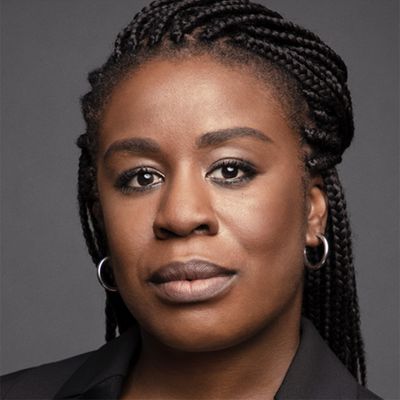
Originally released August 25, 2020. Eva talks to the always funny and totally remarkable Uzo Aduba (star of CLDYE’S on Broadway) about the production of A CHRISTMAS CAROL that started it all, the art of the talk-sing, and a misunderstanding that may have invented the greatest musical mashup of all time... Read More
From the show: My First Show
Guests
Featured Shows
About
Originally released August 25, 2020. Eva talks to the always funny and totally remarkable Uzo Aduba (star of CLDYE’S on Broadway) about the production of A CHRISTMAS CAROL that started it all, the art of the talk-sing, and a misunderstanding that may have invented the greatest musical mashup of all time.
Transcript
This transcript was automatically generated and might contain errors.
[0:01] Eva: Hey everyone, hope you're doing okay. Strange how it feels like 2020 again when we're in 2022. And for that reason, we're throwing back to some of our favorite episodes of My First Show, which premiered at the start of the pandemic in the summer of 2020. We originally released this episode on August 25th, 2020. My interview with Uzo Aduba, the Emmy Award-winning star of Orange is the New Black and In Treatment, and currently starring in my favorite play of the season, Clydes, which runs through January 16th in person and also has live stream performances that you can watch from home. I loved Clydes. It made me laugh, it made me feel, it made me angry, it made me sad. It made me joyful. It made me what all theater should make me do. It made me respond to something. Enjoy our conversation. Try and enjoy this moment and try and respond to something. It's all we can do.
[1:37] Eva: And that's Uzo Aduba. It's so nice to meet you.
[1:39] Uzo Aduba: You as well.
[1:44] Eva: What do I say after that? It's the kind of thing where like you just you I maybe you feel this way too, but when you watch people on television and you get to know them and then you watch them in interviews, you sort of think like, oh, we'd be friends.
[1:58] Uzo Aduba: We would say that about Beyoncé.
[2:03] Eva: I have felt that way about Barack Obama my entire life. I was like, we would be friends. I'm really we have the same humor. But I feel that way about you. So I'm really excited to talk with you today. I'm gonna ask you a question that we ask everyone in these times, which is how are you doing?
[2:28] Uzo Aduba: I am doing is what I answer in these times because I think that's as much as all we can do, you know. I am I am some days it's it's a wave, you know. Some days I can stand on the surfboard, do every trick, catch every wave. Sometimes I keep getting I'll get knocked down every time depending on what's happening out in the world at any given moment. But I'm doing, you know. I am fortunate and I have been able to sit down and be at home because I take this very seriously for both myself and for my neighbors. And I think I had a time where it was like, you know, lockdown, like, okay, we're all in the beginning, you know, like this is so new, and then it's like we're still in lockdown, you know, like and then now have sort of adjusted and found a rhythm to life in this new normal.
[3:40] Uzo Aduba: Yeah. That has brought some, I guess, a joy back into it. I think it is pretty vital that we find that joy however we can, otherwise oof heavy. And you're in LA?
[3:40] Eva: In New York.
[3:40] Uzo Aduba: New York? Okay. I've been doing quarantine in New York.
[3:40] Eva: Excellent, excellent. I know that New York has found its light in a way amidst the rest of the country and that's something to be really proud of.
[4:23] Uzo Aduba: Absolutely. And I mean, I think that's reflective also of like the feeling of a lot of New York is what I was saying for myself. You know, it started off so intensely here because at one point, you know, in the very beginning we were the epicenter and you know we had a very real experience with it as far as you know the first thing I remember about it was the constant drone of ambulances all the time. And the lines out of the hospital and you know the refrigerator trucks, all of these things were very real for us and as our numbers have come down as we New Yorkers often do, we've come together and united towards a common purpose, a common goal. We've watched those things slowly and surely reduce. Watch our numbers reduce, watch the everyday traumas reduce. And we live in a city where we just have to take care of each other.
[5:31] Eva: Yeah, I didn't realize how neighborly New York was until we were in this pandemic. For some reason this morning in the shower where I have all my brilliant thoughts, I actually thought about what is a positivity from all this and that was something that struck me as well was our care for each other.
[5:49] Uzo Aduba: Mm-hmm.
[5:50] Eva: That is abundant and clear now in a way where I don't know if it always was. I never thought of New York City as a small town and yet we have a lot of small town sensibilities at least in this moment, you know, of really looking after each other and doing what we gotta do and taking care of each other. In a way that's just, you know, as early as this morning, you know, I just was out walking my dog and stood in this line for this little bitty coffee shop that is open, you know, just through the front of their door and the guy who was standing at the counter didn't have any change on him, enough change for a dog treat and the owner just gave one out, you know what I mean? It's just, I just gave one to him anyway and I just thought, you know, that's such a, I grew up in a small town and that's something that would happen in my hometown. But here we are in New York displaying our very best of ourselves.
[6:46] Uzo Aduba: I love that, I really do. I love a lot of things you've been doing lately, I must say, and you know, I hope you're finding the joy of your success in all this. I know probably as a very deep human, you recognize the pain, but you know, you had this groundbreaking performance of Shirley Chisholm in what I think was a monumental series, Mrs. America. And I have to believe that that performance is taking on some renewed meaning now that Kamala Harris will be the first black woman on a presidential ticket. I just, for someone who studied and lived within Shirley for so long, what does it feel like?
[7:32] Uzo Aduba: It feels incredible. It feels like a dream answered. You know, she famously had said she wanted to create space for not just herself but for all women. And that she wanted to carve out seats at the table. And I think, you know, like there's that hashtag because of you. You know, and because of her, there is a, there gets to be a Kamala Harris. There gets to be all of the women, there gets to be an Elizabeth Warren, there gets to be, you know, all of these women in this penultimate top note moment. Kamala gets to have that moment and answer a dream of Congresswoman Chisholm's in such a bright and loud and spacious way that I think is important. And she has now answered the call that Shirley Chisholm was given, you know, some 50 plus years ago. She is now going to be to this next generation of women and women who stand beside her as well to have and hold space.
[8:56] Eva: Um, so it's really exciting to see it, you know, especially we're telling this story at a time where she, you know, Shirley Chisholm was a trailblazer. She was the first one to do it.
[9:07] Uzo Aduba: Yeah.
[9:08] Eva: And what that feels like to be the first, um, it's not a light thing to carry when you do it, to be the first of anything is not easy. And um, it's just really wonderful to see what that effort and what that flag planting has now produced and will continue to produce. What was it like to research and prepare for the role? What did you learn about yourself in the process?
[9:43] Uzo Aduba: Oh my gosh. To prepare for the role, I was like, I didn't realize how I knew a bit about Shirley Chisholm. I knew that she was everything about her as far as being the first, but I didn't know much about her policies, which was exciting to see how much of her policy positions were like major points throughout this 2020 primary, especially for most candidates. And then I also didn't know how much her campaign leaned into the conversation of hope and possibility. And she spoke all the time about possibility, what was possible for people if they thought beyond limitations. I thought I think that resonated so strongly for her because you have to remember, you know, this is a woman who's running at a time where she's standing in the shadow of the Civil Rights Voting Act, the assassination of Martin Luther King, segregation, Jim Crow, you know, all of these things, and is elected as the first black woman to Congress in 1968, is running for president in 1972, right?
[10:59] Uzo Aduba: Yeah, and she is talking about these things about possibility, and so it's clear that the definition she held for herself was wholly different than the definitions people had for her, and I think that was what I was reminded of for myself because I know what that feels like to have people have a definition of what is possible for you and what you know is possible for yourself, and to not subscribe to that limited view. And I think being in her space wearing her shoes, it just reminded me to hold firm to my ideas and beliefs.
[11:52] Eva: That's really beautiful to hear and quite inspiring. And I think actually maybe this is a great segue to the first question that we love to ask our guests, which is what was the first show you saw? And perhaps what did it mean to you?
[12:14] Uzo Aduba: The first theater show, I can well, I remember seeing well, there's I want to say like almost two, because it's like the first theater show I ever saw was in second grade was Mr. Popper's Penguins at the Wheelock Primary Theater. That was like the first show I ever saw that I can remember seeing, but I don't really remember much about it because what I remember was, well, what I remember is we had read the book in class, and now we were seeing the show, and I just remember a lot of penguins. People dressed as penguins, which is both horrifying and funny.
[12:59] Uzo Aduba: And but then the show that had the biggest impact on me that I really remember was my school again. We went to go see A CHRISTMAS CAROL at the North Shore Playhouse, North Shore Theater, music theater. And what I remember was everybody, all the kids kept talking a lot, and you know, you don't want to like stand out, but so you want to like a little bit fit in, and you're like, ha ha, it's so weird. But I also was like, shh, I want to like hear what's going on, because I'm actually really fascinated with what's going on. And I remember there was all this pyro when Jacob Marley came out. And I remember the guy who was playing Jacob Marley, he either had like green light on him coming from the lights were coming from the ground.
There was a lot of pyro, a lot of like steam, um, uh, uh, fog, dry ice, you know. And he was leaning back a lot, and he had chains on his arm, and he was like, screw, and it was so intense. And I remember being like, Wow, this is cra— and I remember like because he appeared out of nowhere, and it was the first time I'd ever seen theater magic before. And I thought, wow, that's amazing. And I just wanted all the kids around me to stop talking. You could not see them. The guy came out of nowhere, you know, like it actually makes you believe in magic, like as though magic was real when you see it work like that, right?
[14:40] Eva: Yes, absolutely.
[14:42] Uzo Aduba: I was like, he wasn't there, and then he disappeared after he was like, You'll be visited by three ghosts, like you know, that whole section, and then like was gone, and it was like electric, and it was like it popped. I just remember being immediately captured. Like that was crazy. Wow, wow. What was the first theater show you were in?
[15:05] Uzo Aduba: The first, you know, it's so funny. I was just I just commented on Mindy Kaling's post the other day on IG about this. The first show I ever was in was in my preschool daycare, a production of Caps for Sale, and I commented because she had just put this funny post up that was like not to brag. It's her reading like all these children's books, and she's like, not to brag, but I just completed like my 10th uh I fit completed my goal of reading 10 books this lockdown during quarantine or whatever, and one of the books on the stack was, you know, she had like Curious George, all these books, whatever, and one of the books was Caps for Sale. And I wrote on our comments, I was like, not to brag, but Caps for Sale was my theatrical debut.
[15:58] Eva: I don't know Caps for Sale. Will you give us just a quick rundown?
[16:03] Uzo Aduba: Yeah, I mean, I'm like four or five years old. All I remember is it was a book about a man who sold hats, and he had like a stack on his head, like 50 caps all stacked on top of one another. And like he's selling them about town, I want to say, and they keep disappearing because it's like monkeys are like taking the caps, and then like at the end of the book, it's like ha ha ha ha ha, all these monkeys are in the tree wearing hats. You know what I mean? And it's like we were like in the tree, like a bunch of kids are like playing hats, like a bunch of kids are playing monkeys, a bunch of kids or no, yeah. And then there's like the one person who's the Caps for Sale salesman. That is my— I've not read that book since that age. I have no idea if that's just those were just the parts that I liked, but that was essentially the book. And hats and caps and monkeys, that's it.
[16:57] Eva: So I at first I thought you said Cats for Sale. And so because I'm a musical theater nerd, I went to oh, it's a parody of the Cats musical, but they're all getting sold.
[17:11] Uzo Aduba: No, no, no. Caps, like hats.
[17:16] Eva: No, caps.
[17:17] Uzo Aduba: Yeah. It was, it was, I was, yeah, all caps.
[17:20] Eva: No, I got it now, sadly, but I still wish it was.
[17:26] Uzo Aduba: It was a young jelly cooker who got brought down to the dock.
[17:32] Eva: Exactly.
[17:33] Uzo Aduba: For first for the selling. It's like a mixture of Les Mis and Cats.
[17:39] Eva: Yeah, exactly.
[17:41] Uzo Aduba: Exactly. A Fantine, I love it.
[17:47] Eva: I love it. See my— she's cutting her hair, it's her fur.
[17:49] Uzo Aduba: That's what exactly.
[17:51] Uzo Aduba: It's my goal that this show inspires theater making, actually. Like I want like as we get into dream roles and things like that, I want, you know, five years from now for that to then happen and someone hearken back to that episode of My First Show. So my dream is that Andrew Lloyd Webber hears us or Cameron Mackintosh and is like, you know what? We need to mix up.
[18:15] Eva: And Cats.
[18:16] Uzo Aduba: I mean just to say I feel like we may have already written it. I feel like all we really need to go out and figure out is how to workshop it over Zoom.
[18:30] Eva: Yeah, exactly.
[18:32] Uzo Aduba: I think we just need a 29-hour reading of the production and we're kind of set.
[18:37] Eva: We certainly, certainly have one amazing. We'll go up to Vassar next year.
[18:46] Eva: So what was your first professional theater show then? And this could be anything like this can be you were on a crew or an usher or, you know, Summerstock but you got paid. It or it could be Broadway but, you know, anything but I got paid for it.
[19:01] Uzo Aduba: Yes, professional. The first job I ever got paid for was this, um, like this theater, the school theater play, um, called Roots of Rap; poetry and it was connecting. We would go to these school functions, um, and basically it was actually kind of cool and kids loved it. It was like we'd go and would like sing or do some raps that kids were familiar with and then loop it all, connect it all back to like all of these poems and poets who were phenomenal, Langston Hughes, Nikki Giovanni. Um, I wear the mask, you know, ego tripping, all these pieces of poetry, um, beat poetry so that kids could understand that the etymology of like hip hop rap and what its purpose began as and where it extended from its roots extended to.
[20:22] Uzo Aduba: Where was the first? We I did it here in New York. It was here in New York. Um, oh gosh, the name of the theater company is escaping me right now, but um, we would go to schools. It would be like, you know, they would come and gather at various auditoriums and spaces and various schools would come in and we would do these pieces and the kids would love it. And I think they— I think what I remember what the thing was that felt like they loved most is like we were connecting to something that was theirs and not talking at them about it. It was just, um, it wasn't, you know, hip hop that necessarily our parents listened to. It was like, what do y'all listen to? And what we want to give you that connection back to, um, all this stuff that came out of the 1920s, 30s.
[21:14] Eva: So were you a working actor in New York when you got this first gig?
[21:20] Uzo Aduba: No, I was, I mean, I was working, I was do I had done other shows before I had done an equity showcase. I mean, I guess this would be the first time I ever got paid, but not weekly. I just got an equity stipend, you know. I wasn't equity myself, but I got a stipend for a musical that I did yet down at the Greenwich Street Theater called Love According to Luke, just before that. And when I was doing that along with another show I had done before it, I had, um, because I wasn't really making any money, um, this show I did a showcase for, I made $75, so obviously you can't live on that. And so I was still waiting tables. And um when I got Roots of Rap, poetry, um, that was the first job that I was making, not a t— uh making money, a weekly salary, but it was not a lot of money, but it was enough money that I didn't have to wait tables anymore. And um, I never looked back at the minute.
[22:25] Eva: That's amazing. And so what how many years had you been in New York when you got that first job?
[22:33] Uzo Aduba: When I got that first job, I had been in New York probably maybe a year or two.
[22:44] Eva: Mm-hmm.
[22:45] Uzo Aduba: I'd been in New York probably let's say two, let's say two years at that point.
[22:51] Eva: That wasn't the Epic Theater Ensemble by chance, was it?
[22:56] Uzo Aduba: That sounds kind of familiar.
[23:01] Uzo Aduba: That actually does sound familiar. I think that might actually have been its name. Because I went to a rap-based student performance at a middle school in Midtown once. And this all feels very like I'm very deja moving.
[23:27] Eva: Well, that's kind of amazing. So I mean, you were you were then on a path to be like, I can keep doing this, I can make money, or were you deflated that it was not, you know, in a theater with, um, with you know, with the lights on, like at, you know, at eight o'clock on a Saturday, or you know, what how did that experience keep you going and and sort of push you forward?
[23:54] Uzo Aduba: Oh, I felt so excited. Uh when I got that job, I was very proud of it. I was very excited about it. Um I felt so proud that I was like, wow, they're gonna pay me. I think it was like like 239 dollars a week before taxes to do you know, to do this job. I thought that was phenomenal, and it was, you know, I mean, and it kept my lights on, yeah, it kept me fed, it get me on the subway. You know what I mean? It was uh it meant a lot to me. I was very proud of that job, and I got to do what I came to New York to do, which is be an artist. I was even more thrilled and excited that I was able to speak to young people, particularly I remember a lot of the schools who were coming in were um more disadvantaged schools, inner cities, schools who didn't have a lot of resources and exposure to the arts.
And so I was especially glad that kids who maybe weren't able to have the experience of going to see whatever Broadway show this city offers just because they simply didn't have the money, we're getting to have some experience and exposure to the arts. Yeah, I and and you know, and kind of like what I was just talking about, you know, the show that I got to see as a kid, you know, it was my first time and it blew my mind the idea that who knows out there whose mind is being blown by seeing us up here.
[25:25] Eva: Yeah.
[25:26] Uzo Aduba: I loved it. I loved it. And did that lead to Corm Boy and to Godspell? Like, do you did did each sort of experience beget the next in a way?
[25:36] Uzo Aduba: Kind of, yeah. Like I then I fur I went from that and then I went into my first equity show, which led to um which was out of uh which was in Pennsylvania, then which led to me full circle moment getting my next job, which was at uh North Shore Music Theater, where I've where I first saw um uh Scrooge. Um I got a job with the same theater company and was stoked for that for that reason, um, which then led to working at my first off-Broadway job with New York Theater Workshop. Um, and then so on and so forth after that.
[26:20] Eva: Amazing.
[26:21] Uzo Aduba: Amazing. I I had the pleasure of of speaking to a a former director of yours, Danny Goldstein, uh from your production of Godspell. And um, besides besides saying how brilliant and decent and humble and smart you are, um, he also told me about the Godspell Project Runway episode that you did together.
[26:43] Uzo Aduba: Oh my gosh.
[26:45] Uzo Aduba: Yes. Can you explain, please?
[26:50] Uzo Aduba: Yes. Okay, so I was a huge fan of Project Runway to begin with. And um let's start like full disclosure. Um, and they were doing an episode, Project Runway All-Stars, I believe it was. Uh was doing an episode uh where they were getting to design um, like it was like if maybe the challenge was like theatrical something like this. And then getting to design something for um a production of Godspell and which was the show we were doing, uh, Danny and I on Broadway at the time. And yeah, I got to be a guest judge. Go ahead, YouTube, have a field day. I got to be a guest judge on the show, um, which was so cool and exciting at the time. Um I couldn't believe it because I was I was excited because I I mean I first of all loved the show and watched the show.
Right. You know, um, and I was it was also like I never I don't think at that point they had ever even married Broadway and Project. I think that was the first broad if they've ever had any after the first Broadway challenge that they had ever had. And I was just so excited, I was over the moon.
[28:08] Uzo Aduba: I've since seen, like, I have a picture from that, um, being in the Heron makeup chair and the makeup artist, you know, put putting makeup on me, and we were in um we were in the dressing room for Godspell. It was just so great, so cool. Um the costume they made was great too, and it was in the show.
[28:29] Eva: Oh wow.
[28:30] Eva: Oh wow, that's cool. And you met Heidi Klum and Tim Gunn, I'm guessing.
[28:34] Uzo Aduba: I mean it was a win all around.
[28:38] Eva: It is.
[28:40] Uzo Aduba: It is. It is. Oh, that's so funny. And um, and and at that moment, I mean, that's that's still early in your career, right? That you're having this sort of like out-of-body, very surprising television moment. Did you did you think a lot about the medium of television and how that was uh a direct path for you and something you were itching to do and and destined to do?
[29:05] Uzo Aduba: I hadn't thought of it in that capacity. I had I had thought of it um before that time, um, and then very quickly um pushed it out of my mind. I hadn't thought of it because as something that was necessarily for me, because I didn't see many examples of it in there for me. I didn't see examples of myself in Salem and television, and so I didn't think there was gonna be space for me. So I kind of dampened those feelings down, stamped them down in myself, and then um my manager who came to see God's spell um and saw me in the show, and who I started working with, she was who really um inspired me to pull those feelings back up because she and I were talking and she asked me if I'd ever thought about doing film and television before, and she was from LA.
So I thought, oh, this woman's from Hollywood. You know, she knows what she's talking about, I guess. She would know better than anybody. She said to me, Have I ever given a thought to doing film and television? And I said, No. And she said, I think you should think about it. I think you I think you might have a real life in that. And um, that was the first time I really let those feelings in for real for real.
[30:32] Uzo Aduba: Um, and going back to your first question, um, it reminded me to just hold on to the truth of my own possibility, you know. Um just just to not let the definition, you know, um the definitions that people have for you versus the definitions and ideas you have for yourself to really hold on to those things and not stamp them down, not cheapen them because of another person's view.
[31:09] Eva: That's interesting because you are one of the few people, I think one of two in history to win an Emmy in two different categories, but for the same role in the same show, the comedy and drama categories. And I was thinking about that, and I've been I was thinking about your role of of Crazy Eyes Suzanne and Orange is the New Black, and I was thinking about how historic that is, but also how adept you are as an actor at both comedy and drama, which are opposing genres in theory, but actually are much more connected than we all realize.
[31:50] Uzo Aduba: And I I'm just curious, what do you enjoy more? Comedy or drama?
[31:58] Uzo Aduba: Neither. To be honest. I don't I don't enjoy either one more than the other. And I mean that seriously because as soon as I start doing a bunch of comedies, I'm like, I want to do drama. As soon as I do a bunch of dramas, I'm like, I want to do comedy. And they both satisfy two different sides of who I am, I guess. Um, that I want to do them both as often uh as possible. I don't have I don't and I know that sounds probably like a little dodgy of the question, but I I um I genuinely enjoy boy doing both for totally different reasons.
[32:36] Uzo Aduba: Which are I enjoy comedy for its release the absurdity, like I like fitting and trying to think of okay, how is this supposed to be funny? And what is the craziest way I could make it funny? You know, this is how it's supposed to read, and um let's let's find another way that how far can I push this? And it's still be funny. Um I also like I'll also say this um because it makes me actually think of the first TV job right the week before I started on Orange, I had shot a small part on the show um called Blue Bloods, and I had a line in this in my sides for the audition that was actually supposed to be said very seriously, but I also like playing with language that's supposed to be serious and making it funny. Do you know what I mean?
[33:47] Eva: Yep.
[33:56] Uzo Aduba: You know, um, I I like doing that, and then uh and it makes me even think of when I went, um, I saw um the production of Hamlet, the most recent production of Hamlet at The Public, um with um Keegan Michael Key. He was the Horatio, and I remembered like that's what I think is so beautiful. Like he had a line. I'm trying I can remember what the line is. It's right after this, it's like right in the beginning of Act One Scene One, uh, I think even on his exit, and it's normally uh traditionally done dramatically, and I remember he made it funny, and I was like, that's that's brilliant. He was brilliant in it too. And I was like, this is what makes this genius right here, because you can play with it.
[34:43] Uzo Aduba: Um, and then for the drama side, um I love what do I love? I love the feeling of trying to shoot an arrow through a needle. Right. Just that accuracy. Um, and I guess that also lives in comedy too, because comedy I often think of as math. Right. Um it's timing, but there's something about like the way the way you have to throw your hand to really hit that target and make it make the point really land and vibrate through your bones. That's what feels and it's when it's cooking when it's when it's when it's simmering is what feels the nicest about drama.
[35:36] Uzo Aduba: Yeah, you know.
[35:37] Uzo Aduba: Yeah, that makes a lot of sense to me.
[35:39] Uzo Aduba: I mean, the best films and television shows in history have equal parts both and use them as superpowers in their storytelling.
[35:52] Uzo Aduba: When it's best for humor to be revealed, there's a crazy, you know, punchline.
[35:59] Uzo Aduba: And when it's best for the dramatic emotional arc to be revealed, it's silence and power.
[36:06] Uzo Aduba: And you know, I think *Orange is the New Black* just really did that so well all those seasons, um, which is why I think that show was so groundbreaking and your performance was so brilliant.
[36:19] Uzo Aduba: So um, yeah, comedy and drama.
[36:22] Uzo Aduba: It's why there's two masks sitting right on my childhood bedroom wall.
[36:30] Uzo Aduba: Yeah, it's so powerful, and I have to say also like it's hard for me to pick the two because both of them feel like flying, and that's what I love, you know.
[36:42] Uzo Aduba: I can't, they both feel like flying, like just a freedom, different ways of expressing it.
[36:49] Uzo Aduba: But I love that feeling.
[36:51] Uzo Aduba: I went skydiving a couple years ago, which I was terrified to do because I have a horrible fear of heights.
[36:57] Uzo Aduba: And thought I was going to die.
[36:59] Uzo Aduba: I was like, I'm going to die. Tell my mother I love her.
[37:02] Uzo Aduba: You know what I mean?
[37:04] Uzo Aduba: Like tell, you know, like all of it.
[37:08] Uzo Aduba: And I jumped out of that plane, and it's the closest thing I have ever felt to making art.
[37:15] Uzo Aduba: That freedom.
[37:16] Uzo Aduba: Outside of also wanting to jump out of the plane and be like, it's me!
[37:24] Uzo Aduba: Alphaba moment.
[37:25] Uzo Aduba: Yeah, yeah.
[37:26] Uzo Aduba: I mean, it's utter loss of control.
[37:28] Uzo Aduba: I imagine, I've never jumped out of a plane, but I imagine that's the most loss of control, you know, magical moment.
[37:36] Uzo Aduba: Yes.
[37:37] Uzo Aduba: It was everything.
[37:38] Eva: Okay, dream time. If you could be in any show anywhere, at any time, what would it be?
[37:46] Uzo Aduba: One, it hasn't happened.
[37:49] Uzo Aduba: But two, if I was held to the ground, like ants are gonna be poured on my body.
[38:01] Uzo Aduba: Have to pick.
[38:04] Uzo Aduba: I would want to be in whatever production Rex Harrison is in of *My Fair Lady*.
[38:15] Uzo Aduba: Oh, the first, I guess.
[38:17] Eva: Yeah.
[38:18] Uzo Aduba: Yeah.
[38:20] Uzo Aduba: Love that show.
[38:21] Eva: Yeah.
[38:23] Uzo Aduba: Oh, but that sexy British accent.
[38:26] Eva: Yes.
[38:27] Uzo Aduba: The originator of the like patterns.
[38:31] Uzo Aduba: Never could sing.
[38:32] Eva: The guy couldn't sing.
[38:33] Uzo Aduba: No, I don't know not a note.
[38:34] Uzo Aduba: But I thought somehow we fell in love with the voice anyway.
[38:39] Uzo Aduba: Well, and then isn't that, isn't that I also thought, like, I mean, I was just having this conversation some weeks ago as well, my family loved my movie.
[38:46] Uzo Aduba: And iconic, and you love his voice, and just like, what is singing is begs the question because I love what he's doing.
[38:54] Eva: Yeah.
[38:54] Uzo Aduba: So it's like I couldn't not hear it done that way, you know.
[39:00] Uzo Aduba: So is that not expression through song?
[39:03] Eva: Yeah.
[39:04] Uzo Aduba: You know?
[39:04] Uzo Aduba: Yeah.
[39:04] Uzo Aduba: Um, so so great.
[39:08] Uzo Aduba: Love loved it.
[39:09] Uzo Aduba: Loved it.
[39:10] Uzo Aduba: A lot of men have got over history have gotten away with the talk sing as sufficient.
[39:16] Eva: Yes.
[39:19] Uzo Aduba: Absolutely.
[39:20] Uzo Aduba: It's sort of infuriating.
[39:21] Eva: Absolutely.
[39:22] Uzo Aduba: Well, yeah, well, it's like landing in the zone.
[39:24] Uzo Aduba: Like it, well, I mean, and it's emblematic, let's just be clear.
[39:27] Uzo Aduba: So it's like landing somewhere in the zone of what the tune is supposed to sound like, and we'll take it from here.
[39:34] Eva: Um, I'm excited about your Eliza Doolittle.
[39:41] Uzo Aduba: So let's do this.
[39:43] Uzo Aduba: Uh too bad Rex is gone, but there's other Rexes out there.
[39:50] Uzo Aduba: What uh where what other show would I, you know, work on at any time place?
[39:56] Uzo Aduba: Another, I mean like I'll be the usher at the original *Dreamgirls*.
[40:00] Uzo Aduba: You know what I mean?
[40:01] Uzo Aduba: Like I will be seating people just to see that show go off every night.
[40:06] Uzo Aduba: See Jennifer Holliday, Charlie Ralph, you know, um, uh, uh, Obba Babatundé, the list goes on Loretta Devine, you know, uh, original choreography, all of it.
[40:22] Uzo Aduba: I see all of that.
[40:23] Uzo Aduba: Yeah, magical for sure.
[40:25] Uzo Aduba: What a moment too.
[40:28] Eva: Um that's perfect.
[40:30] Eva: That's perfect.
[40:31] Eva: Well, we um we aim to make dreams come true.
[40:35] Eva: So do you have a time?
[40:37] Uzo Aduba: I don't have a time either.
[40:39] Uzo Aduba: My next comment was so I think we'll dr we'll go to sleep tonight and we'll dream and we'll dream the reality of that happening for you.
[40:51] Uzo Aduba: I thought you were gonna be like, if you look out your window, we have a DeLorean that we have.
[40:57] Uzo Aduba: Um, it's um it's the final section of the show that we do not tell our guests about, so you don't know what I'm about to say and ask, unless you're a big fan and you listen every week and then maybe you know.
[41:10] Eva: Um, and this is a lightning round where uh I put 30 seconds on the clock and I list off classic American plays and musicals, and you give me the emotional theme that you think is in that musical, and we see how matched up we are, and it's like one word, two words, three words, so you know, nothing, nothing lengthy, just what comes to mind that you think that musical is about.
[41:42] Uzo Aduba: Got it.
[41:44] Eva: Okay, 30 seconds around the clock, and we're gonna go.
[41:48] Eva: *My Fair Lady*.
[41:51] Uzo Aduba: Transformation.
[41:55] Eva: *Cinderella*.
[41:57] Uzo Aduba: Happily ever after.
[41:59] Eva: *Evita*.
[41:57] Uzo Aduba: Power of women.
[42:03] Eva: *Funny Girl*.
[42:03] Uzo Aduba: Power of women.
[42:03] Eva: *Godspell*.
[42:03] Uzo Aduba: Joy personified.
[42:09] Eva: *Ragtime*.
[42:09] Uzo Aduba: American dream.
[42:17] Eva: *Gypsy*.
[42:19] Uzo Aduba: Oh.
[42:19] Eva: Ambition is good.
[42:23] Uzo Aduba: Yes.
[42:24] Uzo Aduba: And I agree with that.
[42:27] Eva: We had final sentiment.
[42:30] Uzo Aduba: Ambition is good.
[42:32] Uzo Aduba: Ambition is good.
[42:33] Uzo Aduba: Um God, I love that musical so much.
[42:37] Uzo Aduba: It's actually my favorite, I think, of all time.
[42:40] Uzo Aduba: I could sing the entire score.
[42:42] Uzo Aduba: And I'm not sure I've ever thought specifically those three words as a theme.
[42:48] Uzo Aduba: Ambition is good.
[42:50] Eva: But look what it produced.
[42:52] Uzo Aduba: Hell yeah.
[42:53] Uzo Aduba: What she was able to produce.
[42:55] Uzo Aduba: And had she been any, had she been a man, would we have questioned it?
[43:03] Uzo Aduba: You know.
[43:03] Uzo Aduba: Um, and you know, you just even obviously we know everything's coming up roses, you know, but um she starts the song saying, I had a dream.
[43:15] Uzo Aduba: That's all it was.
[43:17] Uzo Aduba: Yeah, she went after her dream.
[43:19] Eva: Yeah, yeah.
[43:20] Uzo Aduba: And I think what's so wrong with that, agreed, and I think a reminder of ambition is good, is good, even in these times.
[43:28] Uzo Aduba: Um, because we're gonna come out of it, and we need to stay ambitious and focused, and that's how we'll find out what's good.
[43:38] Eva: That's right, yeah, yeah.
[43:40] Uzo Aduba: That's right, love that show.
[43:42] Uzo Aduba: Love that show.
[43:43] Uzo Aduba: Oh, one of the reasons I miss Marie's Crisis the most is singing that score around that piano in the it's a timeless show.
[43:55] Uzo Aduba: That's a sh I mean, you know.
[43:56] Uzo Aduba: Sometimes there's just some shows that just can live forever.
[43:58] Uzo Aduba: That's a show will live forever.
[44:00] Eva: I agree.
[44:01] Uzo Aduba: The book is excellent, score is excellent.
[44:05] Uzo Aduba: You know, there's just so much to be done in it.
[44:08] Uzo Aduba: Such a great show.
[44:09] Eva: I agree.
[44:10] Uzo Aduba: I agree.
[44:11] Uzo Aduba: Um, well I had a dream, and in it uh Uzo Aduba was the usher of *Dreamgirls*, my telling Eliza Doolittle.
[44:22] Eva: So thank you for joining us today, and thank you for doing all you do on the screen, and hopefully you'll come back to the stage soon and do it again there.
[44:32] Eva: Um, you are you are a genius, and I and I honor your art.
[44:38] Uzo Aduba: So thank you.
[44:39] Uzo Aduba: Thank you.
[44:44] Uzo Aduba: A dream about you, baby.
[44:49] Uzo Aduba: It's gonna come true, baby.
[44:54] Uzo Aduba: They think that with the road.
[45:02] Uzo Aduba: You'll be swell.
[45:06] Uzo Aduba: You'll be great.
[45:08] Eva: My first show is produced by Josh Altman, MEP, Dory Berenstein, and Alan Seales, and is part of the Broadway Podcast Network.
[45:15] Eva: This episode was edited by Derek Gunner.
[45:18] Eva: Special thanks to Leslie Papa and Whitney Holden Gore at Vivacity Media Group.
[45:24] Eva: For more info about the podcast, visit bpn.fm backslash my first show.
[45:29] Eva: Follow me on Instagram at Either RPR.
[45:37] Uzo Aduba: Now it's your name.
[45:41] Uzo Aduba: Samo world on its way.
[45:45] Uzo Aduba: Spinning.
[45:47] Uzo Aduba: That'll be just a bigger tana.
[45:51] Uzo Aduba: Light the light.
[45:53] Uzo Aduba: You got my thunder in but behind.
[45:56] Uzo Aduba: You'll be swell.
[45:58] Uzo Aduba: You'll be great.
[46:00] Uzo Aduba: I can't have just a way.
[46:03] Uzo Aduba: That lucky star I talk about is you everything's coming up.
[46:13] Uzo Aduba: Roses for me and for you.
[46:20] Uzo Aduba: You can do it.
[46:24] Uzo Aduba: All you need is a hand.
[46:28] Uzo Aduba: We can do it.
[46:32] Uzo Aduba: Mama is gonna say to it.
[46:37] Uzo Aduba: Like the light.
[46:39] Uzo Aduba: We got nothing to hit but behind.
[46:42] Uzo Aduba: I can tell wait and see.
[46:45] Uzo Aduba: There's the battle follow me.
[46:49] Uzo Aduba: But nothing's gonna stop us to ever.
[46:55] Uzo Aduba: Honey, everything's coming up.
[46:58] Uzo Aduba: Roses and daffodils, everything's coming up, sunshine and Santa Claus, everything's gonna have a bright light and lovely boss.
[47:10] Uzo Aduba: Everything's coming up, roses for me and for...
© Broadway Podcast Network, All Rights Reserved