

Tony-Nominated composer Scott Frankel is truly one of the best. U Guys, get the latest Bway updates in my segment, the BroadwayWorld Recap. Then I'm joined by the incredible Bway composer and conductor, Scott Frankel, to chat about his incredible works... Read More
From the show: Oh My Pod U Guys
Guests

Featured Shows
About
Tony-Nominated composer Scott Frankel is truly one of the best.
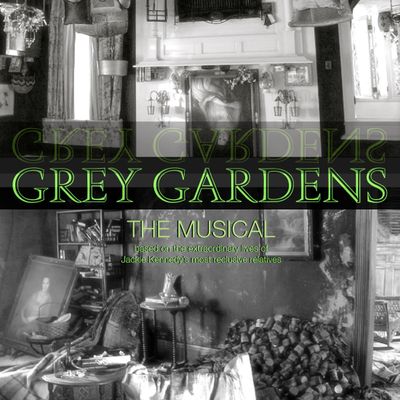
U Guys, get the latest Bway updates in my segment, the BroadwayWorld Recap. Then I'm joined by the incredible Bway composer and conductor, Scott Frankel, to chat about his incredible works. Scott shares about his process as a composer, as well as his collaborations with other artists like Michael Korie. From being nominated for a Tony Award for his incredible score of Grey Gardens, to writing War Paint for such heavy-hitters as Patti LuPone and Christine Ebersole, Scott has truly put his stamp on the world of Musical Theater writing. We talk about his influences as a musician, and how his own works have influenced future composers and artists. Scott is such a delight, U don't wanna miss this episode!
Transcript
This transcript was automatically generated and might contain errors.
[0:00] Jayke Workman: Okay, everyone is talking about Saltburn like Barry Keoghan this, Jacob Elordi that. Where is the talk about the queen of the movie, Rosamund Pike? I will not stand for this erasure.
[0:18] Jayke Workman: Oh my god, did you hear? Did you hear? Did you hear, my god, guys? Take that hot. Oh my god, my god! Oh my god, you guys! What's up, everybody? My name is Jayke Workman, and this is Oh My Pod, you guys, a musical theater and pop culture podcast.
[0:40] Jayke Workman: You guys, we did it. We did it. We made it to the new year. 2023 is gone. And darlings, she was something, I gotta say, and without, you know, sounding just so sappy and annoying. All things considered, last year was pretty amazing. I had the opportunity to do some amazing things, and I feel so grateful and fortunate. And I started this podcast almost a full year ago, and I'm just so proud of where we are now, and I'm so excited for what 2024 has for us.
[1:18] Jayke Workman: So just wanted to say thanks to everybody for listening and for all of your amazing support, because I've just received nothing but love for this show and for where I am in my life, and yeah, I'm wishing you guys all the best in the new year. I have an amazing guest for you guys this week, but before I introduce you to Scott Frankel, we have to dive right into this week's BroadwayWorld Recap brought to you by my amazing friends at Broadwayworld.com.
[1:47] Jayke Workman: First, you guys, we must talk about the absolutely insane performances at the 45th annual Kennedy Center Honors that were on December 27th. You guys, the performers. I mean, okay, first of all, we're honoring some unbelievable people. Billy Crystal, Renée Fleming, Barry Gibb, Queen Latifah, and Dionne Warwick. Like, this Kennedy Center Honors was just bound to be incredible.
[2:15] Jayke Workman: But then we got performances by frickin' Tituss Burgess, Dove Cameron, Lin-Manuel Miranda, Ariana DeBose, Cynthia Erivo, Mama, Cynthia in that green gown singing the house down. You guys, you have to look up these videos. It's insane. I just love the Kennedy Center Honors, you guys. I just think it's such a beautiful celebration of art and culture. And Broadway World actually put together a collection of some of the highlights from previous Kennedy Center Honors, including Carol Burnett, Shirley MacLaine. Like, you guys, go to Broadwayworld.com and look at this amazing collection of these highlights. The Kennedy Center Honors are just the best.
[2:58] Jayke Workman: Next, you guys, we have to talk about The Color Purple topping the Christmas Day box office with an $18 million debut. Like, this is insane. I mean, we haven't seen numbers like this since 2012 when Les Mis came out, and now The Color Purple is tied with them for the highest grossing Christmas Day debut. So sending a huge Oh My Pod, you guys, congrats to everyone involved in the making of this iconic movie. I cannot wait to see it.
[3:27] Jayke Workman: And lastly, you guys, we got a very fun casting announcement that Little Shop of Horrors is going to welcome Darren Criss and Evan Rachel Wood into the roles of Seymour and Audrey in January. The show has been running off-Broadway at the West Side Theater since 2019, and they have certainly had their fair share of, you know, celebrity stunt casting in these roles. But I think Darren and Evan Rachel Wood are gonna be amazing as Seymour and Audrey. I will say though, it is funny just because Darren is so, so handsome, and Seymour is supposed to be like this, oh, I don't know, like, will Audrey like me? And I'm like, girl, it's Darren Criss. But hey, he's a great actor, he's a great singer, he will be excellent. I have seen the show three times, you guys. Like, this production is amazing, and I'm so excited to see how Darren and Evan make these roles their own.
[4:22] Jayke Workman: And you guys, this has been the BroadwayWorld Recap. Oh My Pod, you guys, I am so excited to welcome my next guest to the show. I am completely in awe of this person. He is a phenomenal musical theater composer, a music director, conductor, pianist, a genius, and also just an absolutely lovely person. Please welcome Mr. Scott Frankel.
[4:47] Scott Frankel: Thank you, Jayke. That's a lot to live up to so early in the day for me.
[4:54] Scott Frankel: But it's the crack of noon.
[4:57] Jayke Workman: Yeah. Dawn has struck.
[5:00] Scott Frankel: Yes.
[5:01] Jayke Workman: And I'm forcing you out into the world. Thank you so much for being here, Scott. I'm going to chat with you. I have been a fan of your work for quite some time, and then I had the absolute immense pleasure of getting to see you work in the room on The Flamingo Kid at Hartford Stage.
[5:20] Scott Frankel: So long ago, before the pandemic.
[5:23] Scott Frankel: Yes.
[5:23] Jayke Workman: Crazy.
[5:24] Scott Frankel: Cray Z.
[5:25] Jayke Workman: But I'm so glad that we've been able to stay like semi-in-touch through all the social media worlds and everything because I truly, I'm just such a fan of your work, and I can't believe you're here. I've seen you in many more different looks than you've seen me, though, I think, in those years.
[5:42] Scott Frankel: Because you like to rock different looks.
[5:45] Jayke Workman: I surely do. I went platinum. I just shaved my head completely bald. We are my looks have remained more constant, but I have less to work with than you do.
[5:54] Scott Frankel: Oh, please.
[5:55] Jayke Workman: No, I'm just sticking with the signature.
[5:59] Scott Frankel: Well, I have many, many questions to ask you because I'm just so excited to pick up.
[6:04] Scott Frankel: I will answer them all with a reasonable degree of candor.
[6:07] Scott Frankel: And, uh, thank you. I'm here all with you.
[6:09] Jayke Workman: Thank you. But I'm not sure. Well, you started it with Oh My Pod, you guys, which is kind of brilliant. Period. I wish I had written that.
[6:15] Scott Frankel: I wish I had written that song.
[6:19] Jayke Workman: Oh my god. Well, feel free to write the next or the themes of the theme song for Oh My Pod, you guys.
[6:24] Scott Frankel: Yeah.
[6:25] Jayke Workman: It's not when you think it is. Well, okay. So starting off strong, we have to talk about The Flamingo Kid because that is where our paths first crossed. And it was something that, to say it plainly, changed my life because I met you and I met Darko and I met Robert and everybody in that cast. I mean, it was one cast stacked full of...
[6:49] Scott Frankel: And am I remembering that you had just come out of Hart?
[6:54] Jayke Workman: Yes, I was in my senior year. I was, it was fine.
[6:57] Scott Frankel: Hart with two T's. Don't you forget it.
[7:00] Jayke Workman: Yeah.
[7:00] Scott Frankel: And it was, yeah, that was my first foray into like the real heavy hitting.
[7:00] Jayke Workman: You were plucked from academia into the Broadway.
[7:13] Scott Frankel: The sprightly young age of 22.
[7:18] Jayke Workman: I don't want to hear it. I don't remember 22.
[7:20] Scott Frankel: Well, tell me, how did you first become involved with The Flamingo Kid?
[7:24] Scott Frankel: Sure. So, um, many, many years ago, I had a meeting with some producers, um, probably about 10 years ago at this point, and maybe even, maybe even 12, and they had a list of movie titles, and they got to that one, and I said, oh, well, I've always had a lot of affection for the film. For people who don't know, it's a kind of coming-of-age story. Starred, uh, Matt Dillon, very young, handsome Matt Dillon is a kid at a Long Island Beach Club. He's from a more modest economic circumstance in Brooklyn, but he kind of gets swept up into a more affluent beach club, and he learns about life and love and card playing and how to be a good person and what to do and what not to do in life.
[8:12] Scott Frankel: So I thought it had some potential, and I've got, you know, I was born in 1963, and the show takes place in 1963. So it's not exactly the music of my childhood, but I've got a lot of affection for that. You know, that was the great kind of Brill Building sound, kind of early Carole King and Neil Sedaka and, you know, the Shirelles and all. It was a kind of great time in American popular music, so I thought it might be fun to dip into that sound as well.
[8:41] Jayke Workman: Absolutely. And then you created so beautifully this sort of landscape of sound for the beach club that we got to go to, which was so fun.
[8:53] Scott Frankel: Thank you. Um, my dog is, my dog, he's trying to jump in my lap. No, Piper.
[8:57] Jayke Workman: Piper's welcome on the pod.
[9:01] Scott Frankel: Piper would love, Piper would take over the pod. She's not so good with the boundaries, but we're working on that.
[9:07] Jayke Workman: Sure.
[9:08] Scott Frankel: My husband was like, we're not gonna raise her with treats as motivation. We're gonna, I'm like, alright, girl. Good luck with that.
[9:16] Jayke Workman: Dogs want treats.
[9:18] Scott Frankel: So now we're back to the treats.
[9:20] Scott Frankel: Now we're back to the, we're back to the treats of the talking. And, uh, anyway, so we, uh, that show went on, and then I've, uh, had always been a great fan of Robert Friedman, who wrote the book and lyrics for A Gentleman's Guide, among others, and, uh, so, uh, I asked him, and he had a great affection for that film in that period too. So we, uh, we started to work together.
[9:43] Scott Frankel: And I can't believe that's four, almost five years ago in Hartford now.
[9:47] Jayke Workman: I know, incredible. And I also think it's just for listeners who may not, you know, even be familiar with like the world of creating a show, it is always surprising, I think, to hear how long it takes to get to wherever, to get to a workshop stage, and then to be out of town, and then to Broadway or off-Broadway. And it's, I just am so in awe of you and your work because you have so many things that have made it so far.
[10:16] Scott Frankel: Well, you know, I think partly the reason that's true is, well, it's twofold at least. One, uh, because of the economics that because everything is so expensive, you really want to make sure what you have is good enough to kind of go on to the next level before people want to, before everything will become that much more expensive.
[10:39] Scott Frankel: Yeah, but then also I think because, you know, they say that musicals are the one true American art form, because it's a combination of so many individual components, music and lyrics and script and sets and lights and costumes and dance and acting and storytelling. You know, because there's so many elements when you put them together in different ways, one little change will affect all the other departments too. So you like to think, you know, I like to think I know what I'm doing, but as you get into things, you know, certain things you don't really find out until you actually do it or see it or hear it.
[11:21] Scott Frankel: So that's another reason why they take so long because you, well, the other thing they say is you never really finish, you never really finish writing a musical, you just open it. And there's a certain truth to that too. So you can, you can be tinkering, you keep tinkering away at it, which we have been doing and which we are continuing to do.
[11:37] Jayke Workman: Yeah. And it's so interesting too, because as the creator, as the writer of the music, you're kind of holding everything else up. I mean, that's what we're there for. And so you have to have, I would imagine, like such a fine balance between like ownership over it and being able to just like throw things to the cutting room floor and be like, alright, moving on, next thing. Like, how do you think about it?
[12:02] Scott Frankel: Absolutely, and I, and that, and I, that's something I tell, I teach, uh, uh, music theater composition class at Yale these days. It's actually a class that I took 40 years ago. So I remember Maurice and was my professor. So I remember being in that class, and now it's in a kind of weird flip of the telescope. I'm teaching that class. But I tell those students, you know, um, you really have to be selfless and willing to kill your children in terms of musicals. Because if you hang on to a song that you love, love, love and say, no, I'm not gonna change it, I'm not gonna shorten it, I'm not gonna cut it, you could end up having the greatest song in a musical that didn't work.
[12:48] Scott Frankel: So you can win the battle and lose the war. Right. And, you know, nobody really wants that. We all want to see our shows on stage and we all want to see them connect with an audience. So that kind of absolutism, if you're content to have your show done in your living room, you can be like that. But otherwise, you really need to be more open to listening to your collaborators and listening to audiences about, you know, if they're engaged, if they're way past you, you know, they'll give you clues. And so it's important to be able to listen to those two.
[13:21] Scott Frankel: Yes. If one audience is like flapping their playbills at a performance, you can go like, oh, well, maybe they're hungover, they had a whatever. If like if those, if five performances in a row, that same place and they're, everybody's jostling their playbills, you're like, they're right and I'm wrong.
[13:39] Scott Frankel: Sure.
[13:40] Scott Frankel: Which is just hilarious. So tell me, I mean, you mentioned the incredible Mori Eston, but I would love to know who are the people or are there people who inspired you and whose work sort of informed the way that you go about creating a score or a song or a melodic line.
[14:02] Scott Frankel: Absolutely. Well, Sarah, sure. Well, of course, you have to start with Sondheim, the late great. I mean, of course. Uh I, you know, in the 70s, I was uh seven to 17 years old in the 70s, and those were the particular um, you know, very large looming years for him. Yes. Company, night music, follies, Pacific Overtures, and Sweeney. And those hit me very, very hard as an adolescent. And uh so that influence is strong. I'm a huge Bernstein fan, I'm a huge Julie Stein fan. Uh I'm a Kurt Weil fan. I'm an occasional Jerry Herman fan. Uh yes, like, you know, I mean, I love Psycholman. Um, well, now there's a lot of discussion about um influences and appropriations, but I think um we all have influences and we all listen to things out there, and I think in the best way, it's you take what has impacted you and you uh let it kind of soak in, and then you put it in the cuisin art in your head and you and you put all those influences in and you hit you hit on, and then it spins hopefully into something that uh both acknowledges those influences but also sounds like what we all want, which is to sound like ourselves.
[15:34] Scott Frankel: Right. And that's really hard to do. It's really hard to do as young writers, which I also, you know, to um, you know, I I all during my 20s I would ask myself, is it fresh enough? Is it this enough? Does it sound too much like that? Is it too reminiscent of that? Uh I've turned it's taken me, it took a lot of years to kind of turn the volume down on those questions because if you are aficionado of the great writers, it's hard not to be influenced by them. But ultimately, ultimately you want to take those influences, but make them your own.
[16:09] Scott Frankel: Right. And I would think too that there has to be some sort of honor in that because you also now have become a fixture of the musical theater canon. And so how could someone not listen to a score like Grey Gardens and be influenced in their writing as well, you know, and like you know, how you teach.
[16:30] Scott Frankel: Well, I hope so. That's thank you, Jake. That's I mean, I don't like, you know, I mean, I think the young writers are particularly obsessed with Jason Robert Brown. Like that is the so a lot of young writers. Well, no, a lot of young writers kind of end up because uh, you know, they're his songs are really uh active and and usually um energetic and their story songs and they're super popular, uh, and you sing the you know last five years and and uh those loomed very large to to younger uh writers and performers, and uh so now we have a whole generation of people who are kind of sounding like little mini Jasons, but but they'll they'll they'll figure out they'll figure out their way past that too.
But I I did think too that you know what I tell students now, it's really sure you should know all the writers that have influenced you, but then you should know their influences. So like Sondheim was a huge of a huge Maurice Ravel, um a classical composer fan, and so, like, sure, listen to Sonny, but like then go back one era earlier and listen to who was in his ear, and then maybe that might give you that might unlock some other things uh for you as opposed to playing Sweeney Todd 247.
[17:51] Scott Frankel: Sure. Which which I which I did anyway, but read me Scott, yeah. Well, it's funny that you you um mentioned that you are an occasional listener of uh Mr. Jerry Herman because I asked one of my dear friends, um, shout out, Colin Perth, one of my dear friends, um, how he would um or or what he would want to know from you because he is a fan of yours. And he said that he has compared you to Jerry Herman before because you both write for the dames. You write for these ladies. And are there, you know, Jerry Herman talks a lot about how he was inspired. The people that he writes were inspired by his mother, and so um I would love to know, and so would Cullen. Um, if there are women in your life who have inspired these these women that you write and the really good question.
[18:46] Scott Frankel: I mean, um not specifically. I mean, I certainly came of age when um, you know, Merman is is before me, but like, you know, Patty and Angela Lansbury and uh, you know, uh uh Christine, people people who um the the large the large female outsized personality, but maybe more fragile on the inside. Sure. I mean, I think a lot, I think I do think too that that the kind of there's a lot of symbiosis between gay men of my era and those ladies, too. Yeah I think partly because the younger gays don't don't don't remember this, but like, you know, there was a time when dinosaurs roamed the earth when things were not so accepting and things were against the law, and there was no marriage and there was no possibility of serving in the armed forces, and you really were second class citizens and criminalized and penalized.
And so I think uh I and and gay male writers of my era kind of would sometimes maybe identify with these strong, larger than life female characters and actresses and personalities that they would um they would they would face their lives with energy and style, but they it was all some of it was also kind of a mask of bravado that maybe they were more fragile and injured on the inside, but they didn't want to show that except you know, maybe for a big 11 o'clock number, like if you walked into my life or something, right?
[20:33] Scott Frankel: Uh where you really got got to feel the pain and or uh or uh frustration or or fear or anxiety of those characters. And uh I mean uh I'm not really answering your question. I mean, I have a very fraught kind of I mean, I'm really pretty much entirely estranged from my mother, so like I can't look to that as a reason why uh uh although she although she might look to that because I think she thinks she writes some of those shows. But anyway, that's a whole nother, that's a whole nother oh my oh my pod, you guys, episode. Um yeah, I mean, I think I like I think I write for men well too, and it's, you know, it's interesting. Um now we're in this, I think, really unfortunate era where you're only supposed to write your immediate experience according to the the social justice warriors.
And I don't I just don't believe in that at all. It's like I I'm writing for the human experience. And I, you know, I think that uh you don't need to be a certain uh gender or sexual orientation or uh you don't need to be I don't think you need to be a murderous barber to play Sweeney Todd. I mean I think that we're all uh I l I look to the theater for the kind of larger themes of humanity and humanness, and I think that's that's that's the watch word for me. So I'm trying to I'm trying to explore my own humanity in the in wrestling with these characters uh and particularly some of these larger than life female female characters.
[22:07] Scott Frankel: Sure. And I think you you touched on it too, but the the um sort of symbiosis of of being a gay man in a world that wasn't um uh open to that. Yeah, these these women sort of act as conduits to telling your message, and I think it's a really sort of like poetic way that you get to do that, which is through music, because you're not even using words necessarily, but these are well and maybe also too, like that in Hollywood movies, like it's usually and musicals, I suppose, it's usually the men, the male characters, the sister of your male characters that are more stoic and less emotionally available, and it's usually the female characters that are more emotionally available. So I think as a young gayling, I would look to Hollywood and look to Broadway.
Uh you know, so I guess I was when I would see the king and I, I guess I was more of a, you know, I could I guess I identified more with Mrs. Mrs. Anna because ballgowns. Because of the ballgown, of course, and I could polka. Because he was he was more guarded, and you all you only got to see he only let his veil down in terms of his feelings and emotional life. Uh only sometimes in that show, but she and the female characters by large, you you can access those those emotions and those thoughts and feelings and sensibilities more easily. So I think that's maybe why.
[23:37] Scott Frankel: Something wonderful that that way in to seeing him and well, I just love that song. Of course, it's fabulous. And it's interesting too, like also, sorry, not to gripe, not to gripe Jake, but like I hear a lot from young audiences these days. They say things like, Well, I didn't see myself up there. Uh when they'll when they'll see a show. Like, I didn't see my yeah, I didn't see myself up there. And I'm thinking, like, okay, like if it's a historical piece, you've just seen you're not gonna see characters in in present-day street clothes, and they're not gonna be texting each other on devices, uh, and they're not gonna be on apps. But like when I look at the king and I, I can certainly see myself in both of those main characters and in Tub Team.
I mean, again, to kind of look and see the, you know, have you felt unrequited love? Have you been rebuffed? Have you longed for someone? Have you uh been frustrated in a relationship? So I I tend to look uh and see myself in a non-literal way in stories, and I think that's what that's what the humanness and humanity is. So like I wish I could sometimes shake young audiences, like, you know, it's like, do you really only want to see musicals that take place at the present where everybody's texting each other? I mean, sure, if it's a good story, but like you also exist in other musicals too. If you if you if you could just imagine.
[25:02] Scott Frankel: And and that I think you've hit the nail on the head. That is what I think is missing from contemporary, or not contemporary to use that word, or that genre, but like current musicals, there just isn't that sense of spirit and the the my voice teacher Mark always called it the folly of life of just like that the little melancholy twinge that like ooh, that hit a little hard, and like that's not who I am. That's not characters couldn't be me, but I'm just But I've been an experience I've felt something like that in my own life and in with my own characters. So yeah, I I that's what that when I can find when I can have that little emotional catch in my chest in the theater, um I I thrill to that.
That's why I like to go to the theater. Like in whatever whatever specific story they're trying to tell me, if I can uh kind of involuntarily have a moment like, oh my god, like something like that, like I I know just what that's like, or that happened to me when I was younger, or I wish that could happen to me going forward, or you know, like if you can if you can find those moments, I think that's that becomes the dialogue between your life and the life of the characters.
[26:12] Jayke Workman: Well, and that is why I um I mean, switching gears a little bit, but of course, have to talk to you about Grey Gardens because I it's been one of my favorite scores forever. And uh I've actually heard you sing from Grey Gardens, and I'm gonna say, even in Christine's original key.
[26:30] Scott Frankel: Oh, and the way that I am about to blush like no other Mr. Frankel embarrassing.
[26:35] Jayke Workman: No, it was great. I remember I remember that. But that that is how I feel about that role. Like I obviously am not Edie. I'm not Christine, but I feel the emotions and the passion and the ache in those songs.
[26:55] Scott Frankel: And so singing a song like Another Winter in a Summer Town and those those melodic phrases is just it transforms me. It takes me somewhere else. And so I love getting to do that for other people too. I mean, I think that's what drew me to that project and that to that character, you know.
[27:12] Scott Frankel: Uh little Edie in particular, I mean, she's so uh I mean, obviously uh fascinating and eccentric and beautiful, but also a little bit touched in a in some sort of way.
[27:25] Jayke Workman: Right.
[27:25] Scott Frankel: But that she uh has such hope for tomorrow, you know, that she'll find that Libra man, or she'll, you know, someone will rescue the sleeping beauty and and and and and that or she'll make it to New York finally, or she'll be able to do her dance. And uh I think you know, I've had some melancholic uh things in my own personal life, and I I wish I had as much um energy and positivity as Edie did. And I think that's also why a lot of gay men gravitate toward that character that she that what regardless of the disappointments that she's real very real disappointments that she's had in her life, she faces the day with incredible purpose and energy, and she puts on her revolutionary costume and she goes to do battle uh and to make it through another day.
And I think that's that's a very hopeful, survivalist, triumphant uh color that resonates with a lot of gay men who, particularly when the movie came out in the 70s and in the 70s, 80s, 90s, and the aughts, you know, when again when life for gays in this country was not so good, you could argue that we still haven't gotten past the worst of it, but it things are certainly better now. But that she uh she doesn't collapse, she she starts, she she keeps pushing and hoping. And I think that I think that's what connects with a lot of people watching that show.
[28:59] Jayke Workman: Yeah.
[29:00] Scott Frankel: So then uh can I ask, just because I'm so fascinated, how how do you go about saying that without words? Because I'm just so I'm always so fascinated when when you know music and and lyrics are written by different people who work so beautifully together, and you know, you have found an incredible writing partner in Mr. Michael Korie.
[29:19] Scott Frankel: Yeah, I mean, he's uh it's a really good question. You know, music uh nonverbal communication, in this instance, music, has this intangible ability to move people, to affect people, and even involuntarily, like you could play something. I mean, that's what that's what film scoring is to a lot to a large degree. You there it's a it's getting you to feel excited or getting you to feel anxiety or fear in a horror film, or getting you to feel um emotions in a a love story or uh or or anguish in a an anguish love story. And so yeah, it's a little bit mysterious to me too. I mean, I we work, I when I first met Michael, I used to love getting lyrics, you have the lyric first. So he wouldn't do the lyric first, and then I would respond to it.
It gives me so much more information. Like if I have, I can see structure, I can see language, I can see uh how he has chosen to have the characters uh speak and sound. Uh but we can go the other way too. Uh I I I don't mind, I go both ways, Jake, is what I'm saying. And uh it's uh it's uh on my pod, it's an on my pod, you guys, exclusive scoop. I go both ways.
[30:46] Jayke Workman: Scott Frankel outed on the pod.
[30:48] Scott Frankel: Oh my god, I outed myself. Um but uh but uh you know, certain keys, like I like to write in flat keys. For your listeners who don't know, there are there are sharp keys and flat keys, and this is based on the notes on a on a piano. And uh, you know, C D E F sharp, G sharp, like those are an A. Those are sharp keys, but I like to write in D flat and G flat. And you might think, oh well, what's the difference? They're all just you know a half step different from each other. The flat keys tend to have a kind of richer, warmer, um, a little bit sadder, uh lusher sound um as opposed to something like A or G, which has a very bright, sharp, metallic, more I guess you could say, posit happy sound. And so I tend to write in those darker keys and then harmonically, you know, um I like a pretty rich and lush palette of sound, and so I'm gonna be using chords and harmonic gestures that are um a little more aching and and uh I don't do it intentionally, but it kind of if I feel it's right for the moment, which uh I tend to write about a lot of sad moments, so I guess I use that a lot, but um yeah, that all of that can kind of help again, even if you're not musically knowledgeable, uh, as most people I'm trying to connect with are not, they're sitting there in the audience and unbeknownst to them, I'm stacking the deck in terms of not exactly being a uh puppet master, but I'm doing things that I know can subliminally affect them.
[32:35] Jayke Workman: Yeah, this is a massive thing.
[32:36] Scott Frankel: This is a fl this is a flat key, so I'm gonna get you, I'm gonna get your ear that way. And this is a instead of just a triad or a simple chord, this is gonna be a really sophisticated uh uh uh almost a jazz chord that has lots and lots of notes in it, that some of which that rub against each other in a way that's almost dissonant, but it's also kind of anguished. And so, like you can you can do things that um help that help support the storytelling and the character painting that you're doing.
[33:11] Jayke Workman: God, it's just fascinating.
[33:13] Scott Frankel: And I I think too that you are I mean, frankly, I think you're a genius.
[33:18] Jayke Workman: But I also...
[33:18] Scott Frankel: Thank you, Jake. But you do things so beautifully, like you you can um draw a listener in um with something that they already are so familiar with, the bum bum bum bum in another winter, it's it's different, and you you have connected someone to the song through a way that they didn't even really realize, probably the it's it's exquisite. I mean, it's just taking something that everyone is so familiar with and turning it on its head in a way that makes you feel something like, oh my god.
[33:55] Scott Frankel: Well, that's the other great thing about music, you know, you can have you can have a bunch of things going on at the same time, and your ear and your brain are able to process them. So um, you know, yeah, I mean, just as you maybe wouldn't write that for a child unless it was a very precocious child, but you know, if you if you're writing for an adult who has a complicated um emotional life, then you can throw more stuff in there because um I mean not to get too literal about it, but like we were struck by that too in Grey Gardens that it's there's a reason there's it's not called gray for nothing because a lot of those characters are not black and white, though they're problems, it's not one thing or the other. It's not that uh it's not that Edie's mother ruined her life and that Edie was uh, you know, I mean it it's it's it they're more complicated than that, and the truth is literally kind of gray. It's kind of not one it's not one or the other.
[34:55] Jayke Workman: Yes, so so too, I think in music that uh there's a way to write ambivalence and bake it into the progressions and the and the tonalities and the keys and the ranges, and so you can just in that same way like you, like if you were baking, if you were baking like a like uh lasagna, like you wouldn't have like you would want it to all be kind of creamy and rich and and lush, and you'd want the many different kinds of cheeses in impacting each other, and you'd want a lot of compliment herbs, you know, you'd want oregano and maybe some parsley, and like you wouldn't want sesame seeds in there or something crunchy or like something or or cinnamon or something or something sweet wouldn't be right in there, and so but you but you can find um I mean I guess they do that in painting too in a dance.
I don't know. I'm I'm I'm amazed by other fields that are non-verbal, like the the visual arts and like dance, uh that in the way maybe some people are don't uh you know are kind of amazed by music. I I too am amazed by the others, like how how can you distill these thoughts in a brush stroke or in a pencil line, or how can there be so much life in this in this seemingly one-dimensional or two-dimensional thing? Um so yeah.
[36:25] Jayke Workman: It's just wild.
[36:26] Scott Frankel: Well, you you spoke about it a little bit, but um, you know, the sense of like you never really finish a project, you never really finish writing. Um, but you were nominated for a Tony for greatness for that score. So did that give you any sense of um like completion or like I I did it with that?
[36:45] Scott Frankel: Um I mean, yes, I mean the real I mean it was my idea to uh adapt the documentary into a stage musical, and at that point no one had ever uh used the documentary as as source material. I mean, usually musicals are made from films or from plays or from books or from popular events or from short stories or what have you, or or from or from uh original ideas, but but no one had ever done it based on a documentary film. And so um kind of going from that idea and then getting the rights and then getting my collaborators on board and then writing it and then getting it to Sundance and then to Player's Horizons and then to Broadway. I mean, that was a huge um, you know, there that's why, you know, there are they're basically really at this point, there are there are kind of two kinds of projects out there for writers.
One is the kind of old fashioned way when a producer calls you up and says, Hey kid, uh I want you to write, I want you to write a musical of Death Becomes Her. Okay, it's a movie and it's uh, you know, it's uh it's Merrill Street, but it's Goldie Hahn, and it's about old, it's about uh aging and and um plastic surgery. It anyway, and then the other way is kind of what I did, which is more kind of an artist-driven project where one of the creators, uh in this case the composer, has an idea of for a musical, and then it becomes a question of me pushing the rock uphill the whole way without being asked to do so. And uh, you know, I love all my children equally, but there is maybe something to be said for those projects where you have to go the extra mile and have to really convince people that your crazy idea isn't so crazy and has and and is valid and has worth.
And so um I tell my students that too. Like if you can find an idea that's your own and and sometimes when, you know, sometimes when I hear a projects, um other people's projects, and I think like, whoa, uh that seems crazy. I uh I'm really curious to see how if they can make that work, because like they see they obviously see something in it that I don't. In that same way that people thought that, well, why is he making music a lot of great gardens? You can't do that. And when I and then when I go see these shows, uh, you know, some of the times I'm like, oh my god, yes, I totally see what they saw in it because they were so convincing and how they did it. And other times I'm like, not so much. I was actually kind of I was I was I was dubious and they and they didn't and they didn't convince me.
[39:14] Jayke Workman: Right.
[39:21] Scott Frankel: But it but yeah, it was satisfying, you know, and and uh and to get that and to get that cast and be able to be able to write for Christine is uh was a great, great uh uh thrill. You know, it's um I will say I told the story before, but like when we were at Sundance uh with the show, we had we we had all of Act One and we wrote a lot of act two during the two weeks that we were there, and uh uh I had written a big act two song for Christine called Around the World, and then and and but I the two days or maybe the day before we were supposed to do the presentation of both acts of what we had been working on, and Michael handed me the lyric to Another Winter in a Summer Town, and uh which happens at the very end of the show and just before the end of the show, and she's you know, in those um summer communities like Cape Cod and East Hampton and Jersey Shore, you know, when Labor Day comes and you feel the first autumn chill in the air, and the the summer people, as they call them, the summer renters go home, and uh, and you can really you really feel it uh there's a change in the light and there's a change in the temperature, and there are fewer people, and you can really kind of uh see that there's winter ahead, and and in Edie's case, you know, she loved to swim in the ocean, and there'd be no more of that, and it means she'd be that much more isolated with a whole nother winter arguing with her mother in this house that wasn't gonna be warm enough, and so that sense of uh fear and foreboding.
[40:53] Scott Frankel: And uh anyway, Michael wrote this amazing lyric, and he handed it to me, and I just did not feel like I had it in me to write the music that quickly. I just I'm like this has to be really good, and I just feel burnt out now. And so when we did the run through of the show at Sundance, we did the whole show, and then it was agreed. Michael Grife said to Christine, well, you know, when you get to that 11 o'clock spot in the show, uh, why don't you read the lyric to another winter in a summer town as if it were script? Just read it as if it were text. And so she did, and it was so effective, uh, partly because uh the lyric is so good, but also because she was so convincing doing it that people came out to me afterwards, they were like, Well, maybe you don't need any music.
Maybe you could maybe she could just at that point, even though it's a musical, maybe at that point she could just kind of recite a poem. A poem about another winter in a summer town. And I'm like, no. No. No, she's not reciting a fucking poem at 10:35 in the evening. No, no, no, no, no, no, no, no. You have to let me have a week. If you give me a week and a little bit of vodka. So I went back to New York, and I had my week, and I had my vodka, and then I wrote the song, and then everyone's like, oh, you write it. Glad we didn't, glad we didn't make it a poem. Right. And I can truly say that that song is one of my uh all-time favorite songs ever to sing to listen to I mean it's just brilliant it's absolutely beautiful you know she she tried to get out of Grey Gardens well I'm just we both acts are kind of the same in a way like in the first act she tries to get out of Grey Gardens and out from under the influence of her domineering mother and she succeeds and then in the intermission of Grey Gardens all sorts of things happen to her in New York that we don't really know exactly what and and the Kennedy assassination and World War II and Vietnam and Water and all of that.
A lot happens in intermission. So like while you're getting your drink while you're getting your drink like all sorts of shit's happening in the country. And then you come back 30 plus late years later and uh where was I going with this all true uh Christine oh yeah so that so yeah so then in the second act she tries to leave again uh at the end she just can't live with her mother and she's she's almost out the door with her suitcase and she's in her fur coat and it's turning to autumn and then her mother can't uh open a can of soup which is you know the way they they had very little to eat and so uh she's torn she's torn between wanting to be free but also feeling this duty slash guilt to looking after her mother.
But I was gonna say after her mother died, she did sell the house and she did finally get out of Grey Gardens and she moved to Florida, and uh she lived by herself, she did not have any cats in Florida, apparently, and uh she uh you know when we first started working on it, you know, uh Albert Mazels, the filmmaker, uh, we would have we we needed Edie's life rights because you could argue that she was not really a public figure. So Albert wrote her this letter saying these guys want to turn Great Gardens into a musical, and I I'm behind it. I think it's worthwhile, and I think they're worthwhile. And she wrote back that she loved the idea of Great Gardens as a musical. She goes, Love, love, love, she wrote three times.
Um my entire life was music and song for all that I didn't have, my life was still joyous. Oh my gosh, which was kind of heartbreaking, and then she died, and then and then you know, in a completely cold and mercenary way, life privacy rights end in death in the state of Florida where she died, and so I no longer needed those rights, which I was happy to try to get, and I think I would have gotten them. Yeah, but the the other thing that I you know, apparently, when the documentary was first shown to the women, they screened it for them, and little Edie said, Well, I think it's good, but I really wish there was more singing and dancing. And so I like to think that we gave her posthumously uh the more singing and dancing that she said she wanted. Wow, I love that. Well, you have obviously mentioned both Christine and Patty, but in talking about war paint, which I would love to ask about.
[45:45] Scott Frankel: Sure, I feel like there kind of isn't a conversation about it without those two, because it was in—this could be—I could be totally wrong, but my impression is that this was written for these two women to sing these roles.
[46:03] Scott Frankel: It was and it was it, we actually started developmentally with uh Patty and Donna Murphy. Oh sure, okay. Uh and uh after several readings then Donna's husband sadly got quite ill and died and she withdrew uh and uh and then Christine entered the picture and so uh but a lot of the show was rewritten for Christine. There was a song called Pink that Donna sang it was almost entirely different song. Cause though those Christine and Donna are both wonderful but so different different looks and different voices and different sweet spots and I played the Donna version for Christine and she looked at me and looked like oh it's pretty good. She goes, well what about what if we did what about here if we did or maybe we could look at this part.
So then I rewrote part of it and she goes oh yeah and then I was like okay so you really what you really want me to do is rewrite the whole thing. Right. You're not really saying so. But I'm like okay I can I can do that. And and she was right and it was much better for her. But uh we ended up yes writing a lot of new stuff for Christine and truthfully, um, you know, in some ways uh Christine and Patty are much more opposites than Donna and Patty. Yeah. I mean, obviously there would have been wigging, but like Christine is uh very tall and past Patty is very short, and Christine is very blonde, and Patty is very dark, and Christine is uh you know, very soprano-y, and Patty, although she has those notes, is really we know her mostly as a we know her more as a belter.
And so there were so many. So if you're doing a uh uh a show about two women who are who are enemies and also uh uh foils that had different, you know, uh you would say that Elizabeth Arden was uh she had kind of a preppy aesthetic, a kind of Ralph Lauren, you would say, and and Helena Rubinstein was uh her clientele, her products were for the exotic woman, which really was kind of code for Jewish and ethnic. Yes. Uh and so um it I think it ended up the way it was supposed to, and uh and uh you know, Patty and Christine knew each other for so long. I found this amazing picture of them from the late 70s or maybe around 1980, uh with the two of them and Christine Andreas, and they were all on Broadway at like I think it was I think it was Evita, Oklahoma, and and and something else.
And uh Wow. So they had a lot of history, but they had never worked together, so that was really interesting too. And and in a show where where uh, you know, even though they had salons and businesses around the corner from each other their whole lives, uh the urban legend was that uh Helena Rubenstein and Elizabeth Arden never met face to face. And so uh we kind of played with that in the show, and and uh they don't meet, but they kind of imagine what life would be like if they could talk to each other, and then they sing similar thoughts in different locations, and then finally at the end of the show, we uh Doug kind of brilliantly imagines a scene where they finally uh get to get to be in the same room with each other. Totally.
[49:24] Scott Frankel: And I bet too that just like that that level of you know going against each other or whatever, or vying for that um power and everything, was was a fun dynamic to explore in the rehearsal room because Patty and Christina are both so open and uh from what I've gathered, just like the loveliest, warmest artists. Yes, and you know, I have to say that that so we're we're three gay men writing this show about two women, and uh we were very, very encouraging to both women that we desperately wanted their input, and they really pushed us. They said, you know, it would be the easiest thing to do to write like if the whole thing was like a cat fight, uh and it but and they said, you know, that's just too easy and too fast, and you really should go deeper than that.
And so then we started um at their behest looking at things like well, you know, what are the plus sides to like it? Does your fiercest competitor actually make you innovate more? Does it actually make you work harder? Do they make you uh be better at what you do? And also, like particularly in the case of these two women who had companies that had their own names on them. I mean, they were like Henry Ford. I mean, they were they were rich and powerful, and at a time when women uh were not uh uh business titans like that, and so you know, they were we started to think like, you know, you may say you hate this other person, but like in a way, isn't that other person the only other person who knows what it's like to be on the top of the mountain like that and to be breathing that rarefied air?
Like, what are the things that you know you wish you could talk to someone when because no one else would really understand what it's like to have all that on your shoulders or to have you know younger competitors nipping at your heels or to have to constantly be told no by men or to constantly uh have your personal life upended uh by uh the demands of your business. So uh they were really helpful to us in in getting us to make it deeper and more multidimensional than just like uh a bitchy cat fight between the two ladies. Totally.
[51:51] Scott Frankel: So then in writing for both for Patti LuPone and then for Christine Ebersole, um, do you just sort of grow familiar and comfortable with their voices and their you know, like the tessatura or whatever you want to call it, the range and the the where things sit comfortably, and and you just have that vocabulary with them, so you just know how to write that? I mean, obviously, yeah. I mean, obviously with Christine, uh I had her voice so much in my ear, or I should say voices. I mean, she has so many, you know, she could be a kind of coloratura operetta style soprano, she can she can belt, uh she has, she's not afraid to have her voice sound ugly as she does in in uh in Grey Gardens sometimes, and also very beautiful, and she can be funny, and you know, Patty, when I was uh oh god, I'll tell it.
When I was 16 years old, I I grew up in Cleveland, Ohio, and I was I told my parents that I was coming to New York to see Patty in a Vita, and there was nothing they could do to stop me. And yet they were surprised when I when I came out to them. No. Um and so they thought they're like, yeah, okay. So I got on the plane by myself, and I came to New York, and I got a ticket at the Broadway Theater in 1979. And so I've had Patty's voice, she just that performance live was just beyond the beyond. And so I've had her voice, I guess I could say voices as well, because Patty, uh, although known for that, you know, uh once in a lifetime belt. I mean, Patty will say herself that in those years she felt she was really singing incorrectly and didn't have a lot of technique.
But as she's gotten older and worked with Joan later, I mean Patty now has incredible upper register and and many more voices in there and has so much more uh ability to spin different colors and different ranges in her voices. So she's in in singing more correctly, uh, she's also really expanded the width and breadth and depth of her instrument, and so uh that was really thrilling too. So most of the show when they sing together, Christine is on the higher part, but there's sometimes when Patty is. Uh and so I thought that was interesting too. And that was that was a record that was a request that also kind of worked for the character moment.
[54:20] Scott Frankel: So I've known both of their instruments, and since the Vita, of course, I've seen everything that Patti's ever done. I've seen her a lot in cabaret, and she's fantastic with Kurt Weill songs. She sings "Surabaya, Johnny" magnificently, and she did an incredible "Hagani" with Audra in LA, and she did "Seven Deadly Sins" at Lincoln Center. For her 11 o'clock number, which is called "Forever Beautiful," where Rubenstein had all these great artists—Picasso and Duffy and Lempicka and Giacometti—all did renderings of her, paintings of her. In a way, she was a great art collector, but she was also, I think, trying to stop time. With a painting, you don't get older; you're frozen in whatever period the artist captured her.
When I was writing that 11 o'clock number for her, I thought, well, okay, I'm gonna give her something that evokes a little bit of a Kurt Weill kind of angular, slightly German-sounding song because I know she's gonna knock it out of the park, and she did. I've worked with Christine, and I knew Patti for 30 years, but I'd never worked with her. The very first time I did material for her, when I'm at my piano, I'm singing it myself as I'm writing, and I'm trying to channel Patti. But when I actually get in the room with Patti to play her the material, I don't want to do Patti to Patti because that kind of dances right up into the edge of impersonation. There are great Patti impersonators out there.
Do you know that guy, Jonathan Hoover? He has an Instagram handle called "Inappropriate Patti." He does unbelievable Patti impersonations. He was on "American Horror Story" with her, doing Patti to Patti. Very meta. Another meta moment was he did a few years ago; he did Patti doing Christine doing Edie, doing a revolutionary costume. I was like, whoa, this is just blowing my mind. Just way too specific. But anyway, I'm there, and I'm trying to give Patti a flavor of Patti because I don't want her to sound like me, but I also don't want it to be like, okay, then I'm gonna do this. You're gonna sing it just like this, Patti. I want her to interpret it. I don't want her to mimic me doing it before she has a chance to think about how she wants to do it herself.
[57:20] Jayke Workman: Wow, that is wild.
[57:22] Scott Frankel: The very first, you know, both women were well into their 60s when we did that show. Patti's gone on record, and I think rightly so, she's called Andrew Lloyd Webber woman-hating for making Evita sit so high all the time. I love singing high, and she likes singing high, but there's no reason for it to be high when you don't need it to be high. It's gotta be a why. She thinks, and I understand her point, that a lot of it sits needlessly, unnecessarily high. You want the high stuff to be accent moments that really pop, but if you're doing red, red, red, red, red, red all the time, it starts to lose some of its impact. When I was writing it, I wanted these women, who both have great instruments and a lot of technique, to be able to do eight shows a week for a good long time.
I think maybe I erred a little too much on the other side of it because the first notes I got back from the producer—they weren't as blunt as this—but essentially it was, "Patti wants to sing higher, longer, and more often." I was thinking, well, Jesus Christ, I want that too! I was trying to be polite and respectful. I was trying to not be woman-hating, but of course, of course we can sing higher, longer, more often. Everybody wants that. Who doesn't want that? And we got it.
[58:59] Jayke Workman: Well, Scott, before I let you go, I have a series of musical theater rapid-fire questions for every guest. Are you ready?
[59:08] Scott Frankel: Seven and a half inches cut.
[59:11] Jayke Workman: Oh, sorry, not sorry, I'm sorry, not those.
[59:14] Scott Frankel: Oh, different questions.
[59:15] Jayke Workman: Sorry, Jake.
[59:17] Scott Frankel: It wasn't the grinder round.
[59:19] Jayke Workman: Okay.
[59:19] Scott Frankel: No, no, no, no, no.
[59:20] Jayke Workman: This is—we'll get to that.
[59:22] Scott Frankel: We'll get to that.
[59:23] Jayke Workman: Okay. Do you have a favorite musical?
[59:27] Scott Frankel: "Gypsy."
[59:28] Jayke Workman: And?
[59:29] Scott Frankel: "Sweeney."
[59:30] Jayke Workman: Oh, love. Do you have a least favorite musical?
[59:35] Scott Frankel: I saw something called "Into the Light." It was a musical about the Shroud of Turin.
[59:41] Jayke Workman: Okay.
[59:42] Scott Frankel: One of the characters was a mime who appeared seemingly without reason in many scenes. That was really bad.
[59:55] Jayke Workman: Your least favorite musical. Are you a Shroud of Turin and a mime? Go.
[1:00:01] Scott Frankel: It'll be brilliant. What could go wrong?
[1:00:05] Jayke Workman: Oh my god, we have a hit.
[1:00:07] Scott Frankel: Are you a morning person or a night owl?
[1:00:11] Scott Frankel: One thousand billion percent night owl.
[1:00:16] Jayke Workman: What is the craziest thing that a director has asked of you?
[1:00:23] Scott Frankel: I'm gonna pivot and say this; I swear this kind of answers your question. When I was musical directing "Falsettos" on Broadway in 1992, Barry and Fran Weisler, the producers, took me after dinner, and we were in previews. They said to me, "You've got to get James Lapine to cut act one." I'm like, well, which part of act one? They're like, "The whole thing." I'm thinking, like, you want me, the music director, to ask James—James Sunday in the Park with George, Into the Woods, James—to cut the entire first act? I was like, good luck with that.
[1:01:15] Jayke Workman: What?
[1:01:16] Scott Frankel: Just, yeah, good luck. Yeah, I'll get right on that. I'm sure he'll be thrilled.
[1:01:20] Jayke Workman: I'm sure he'll be thrilled, and he'll do it immediately.
[1:01:24] Scott Frankel: Barry and Fran.
[1:01:25] Jayke Workman: Right.
[1:01:26] Scott Frankel: Oh my god. Do you have a favorite score that you have ever written? You said you love all your children equally, but there's gotta be a favorite.
[1:01:36] Scott Frankel: I mean, I suppose "Grey Gardens," but I would also say before we were all fired by Harvey Weinstein, Michael and I and Alan Lee and Rob Astro did a musical version of "Finding Neverland" in England, and that's some of my very, very, very, very, very best and most favorite work. Oh my god. Then he decided what it really needed after our out-of-town tryout in England was a pop score and an entirely new composer, lyricist, book writer, director, choreographer, and cast.
[1:02:12] Jayke Workman: Insane.
[1:02:13] Scott Frankel: Insane. But there's some beautiful work with that. I mean, on the plus side, he's in jail, so, you know, there is some artistic satisfaction I get in that. Speaking of which, I own the score; Michael and I own the score entirely. One day I would love to do a concert version of that for people to hear. It's some of my very most beautiful work.
[1:02:35] Jayke Workman: Wow. Oh my god, I can't wait. Are you a coffee or tea person?
[1:02:41] Scott Frankel: Thousand percent coffee.
[1:02:43] Jayke Workman: Are you a cocaine person or a—
[1:02:50] Scott Frankel: Yeah.
[1:02:51] Jayke Workman: I'm not answering that.
[1:02:53] Scott Frankel: Yeah. But if you say, but if you have the night owl and the coffee, I suppose there are clues in there.
[1:02:59] Jayke Workman: Yes, indeed. Who is the silliest person that you have ever collaborated with?
[1:03:07] Scott Frankel: That's a great question. Doug Wright.
[1:03:10] Jayke Workman: Amazing.
[1:03:14] Scott Frankel: You know, Oscar Lavant on my own wife, Doug Wright. I don't tell the story very often, but I went to college with Doug, and somehow, right at graduation, I had this idea that we needed to turn "Gilligan's Island" into a musical. Doug, I'm going to win a Pulitzer Prize and Tony later in my life, was the perfect person to do it. Of course, I contacted Sherwood Schwartz, who invented "Gilligan's Island" and "The Brady Bunch." He said, well, why don't you write three songs on spec and send them to us? So Doug and I and a lyricist, David Sean Klein, wrote these three songs and a treatment. We got on the plane and went to California to meet Sherwood Schwartz at his house, where he ate on Brady Bunch plates and slept on "Gilligan's Island" sheets.
Doug had written, we were laughing and writing silly, funny, goofy stuff. We wanted it to be kind of like "Little Shop of Horrors," goofy fun. We wrote these three songs, and he goes, "You kids, you're very talented, but listen, that's not at all what I have in mind. What I have in mind is this, okay? You ready? The castaways are the very last people left on Earth as the result of a nuclear winter, and so they are forced to continue the survival of the human species." We thought, like, maybe like "Little Shop of Horrors," maybe we're thinking something a little more fun. Doug and I, he's very silly to this day—brilliant and silly.
[1:05:00] Jayke Workman: Love it. Well, my final question for you is what is one thing that you would tell young baby Scott?
[1:05:10] Scott Frankel: Don't worry so much about pleasing other people or what other people think. Try to rely, try to have more confidence in what you think and what you want.
[1:05:26] Jayke Workman: Love that.
[1:05:27] Scott Frankel: Yeah.
[1:05:28] Jayke Workman: Well, Scott, thank you so much for being on the pod. You are such a dream.
[1:05:33] Scott Frankel: Oh my pod, you guys!
[1:05:36] Jayke Workman: Oh my pod!
[1:05:38] Scott Frankel: We did it!
[1:05:39] Jayke Workman: It was my pleasure. Thank you for being so unbelievably well prepared, and thank you for being a fan, and thank you for asking such good questions, Jake.
[1:05:46] Scott Frankel: Oh my gosh, I try. And now, oh, I should ask you something. Who, what, when—who are you gonna—who do you want to play opposite in the two-star role musical that you're going to do with your competitor-slash-enemy?
[1:06:02] Jayke Workman: Oh my god, this is such a good question. Ooh, who I want to play opposite?
[1:06:08] Scott Frankel: Yeah.
[1:06:09] Jayke Workman: Someone who you're competitive with, but also admire, but also kind of a little bit jealous of, but also really support.
[1:06:19] Scott Frankel: Oh my god, this is gonna go on forever. I have too many options; they're all rattling through my brain. Oh, you know who it is?
[1:06:25] Scott Frankel: Who?
[1:06:26] Jayke Workman: Kelly O'Hara.
[1:06:27] Scott Frankel: Interesting.
[1:06:29] Jayke Workman: What about Kelly O'Hara and Sutton in a warped revival?
[1:06:32] Scott Frankel: Oh my god. Twenty years from now.
[1:06:35] Jayke Workman: Period.
[1:06:36] Scott Frankel: I would see it. I'll be a very Botoxed 80, but still, you know, looking, still appreciating the young male form. Yes, Kelly and maybe Kelly and Sutton.
[1:06:51] Jayke Workman: Kelly and Sutton, come on.
[1:06:53] Scott Frankel: And then you and you.
[1:06:57] Jayke Workman: We could write you in. You could come in, you could be Estee Lauder. We could write you in, and you could come in like, "Fuck you, bitches! My cosmetics are the best. Fuck you. Maybe it's Maybelline."
[1:07:12] Scott Frankel: Right, exactly.
[1:07:15] Jayke Workman: Oh my god, Scott, you're such a treat. Thank you, thank you, thank you.
[1:07:18] Scott Frankel: Thanks, Jacob. Thank you very kindly for scheduling this at noon and not at nine in the morning when I would have had to say, "Oh, I'm so unavailable."
[1:07:32] Jayke Workman: You guys, that's it for episode number 50 of "Oh My Pod, You Guys." Thank you so, so much for listening. You can follow the show on Instagram at @ohmypodyouguys, and please, please rate, review, and subscribe anywhere you listen to the pod. Love you guys. Talk soon. Bye!
[1:07:49] Scott Frankel: Oh my god, oh bye bye, you guys.
© Broadway Podcast Network, All Rights Reserved