

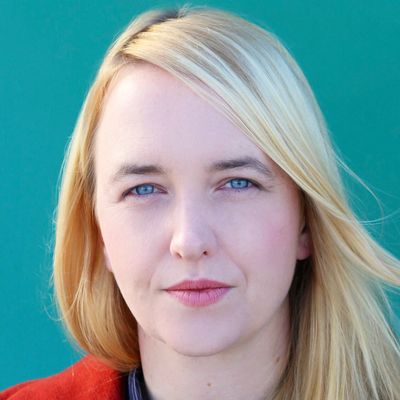
Meghan Finn is the Artistic Director of The Tank. Her work has been seen at the Tank, the V&A, Serpentine Galleries, The Wexner Center, SCAD, The Logan Center for the Arts, Museo Jumex Mexico City, The Power Plant, Canadian Stage, Carnegie Mellon, Brooklyn College, MIT, the Great Plains Theater Conference and others... Read More
From the show: Page To Stage
Guests
About
Meghan Finn is the Artistic Director of The Tank. Her work has been seen at the Tank, the V&A, Serpentine Galleries, The Wexner Center, SCAD, The Logan Center for the Arts, Museo Jumex Mexico City, The Power Plant, Canadian Stage, Carnegie Mellon, Brooklyn College, MIT, the Great Plains Theater Conference and others. She has directed three world premieres by playwright Mac Wellman, including most recently The Invention of Tragedy at The Flea. Finn is currently directing the world premiere of I am Nobody a new musical by Greg Kotis at The Tank; as well as The Nine Dreams: Blake & the Apocalypse by writer Nick Flynn as an immersive performance installation at The Silos at Sawyer Yards for CounterCurrent Festival, Houston. She is a frequent collaborator of conceptual artist and sculptor Pedro Reyes, and directed DOOMOCRACY for Creative Time. She has collaborated with photographer Mitch Epstein on a live performance with cellist Erik Friedlander as well as premieres by Erin Courtney, Peggy Stafford, Gary Winter, Ben Gassman, Alexandra Collier, Carl Holder, Eliza Bent and Cori Copp. WHEN WE WENT ELECTRONIC by Caitlyn Saylor Stephens which premiered at The Tank in 2018 will tour in 2020 to ART HOUSE, The Koun Theater in Athens Greece and OnStage! Festival Rome.
Check out all The Tank has to offer at www.thetanknyc.org
Check out The Tank's Podcast, TANKED.
Go check out the shows she's working on:
- I Am Nobody by Greg Kotis | March 5 - 28, 2020
- When We Went Electronic by Caitlin Saylor Stephens | March 19 - April 5, 2020
- The Nine Dreams: Blake & the Apocalypse by Nick Flynn
Follow us:
PAGE TO STAGE: Instagram or Facebook
MARY DINA: Instagram or Twitter
BRIAN SEDITA: Instagram or Website
BROADWAY PODCAST NETWORK: Website or Instagram
#PageToStagePodcast
Transcript
This transcript was automatically generated and might contain errors.
[0:07] BRIAN SEDITA: Hey everyone and welcome back to Page to Stage.
[0:10] Mary Dina: A conversation with theater makers.
[0:12] BRIAN SEDITA: We're your hosts. That's Brian.
[0:13] Mary Dina: That's Mary.
[0:14] BRIAN SEDITA: To put it simply, we're both theater nerds.
[0:17] Mary Dina: So let's pull back the curtain and get a glimpse at the artists' process while creating their art.
[0:28] Meghan Finn: Hi, I'm Meghan Finn. I'm the artistic director of The Tank Theater. We're a nonprofit home for merging artists in Manhattan. And yeah, that's what I know.
[0:39] BRIAN SEDITA: Awesome. Well, thank you for having us here at The Tank.
[0:42] Meghan Finn: Of course. Thanks for coming.
[0:44] Mary Dina: Just to dive right in, where did you go to school?
[0:48] Meghan Finn: Uh, I went to undergrad at the University of Southern California. I studied theater. I got in there the old-fashioned way. They did not buy my way onto the rowing team. I just had okay grades and they let me in. Um, and it was a different time. It was a lot easier to get in back then. I have a BA in theater, and then I got my master's at Brooklyn College in directing.
[1:11] BRIAN SEDITA: So when you went for your BA in theater, did you have a direct focus in that you wanted to become a director eventually, or did you find that through college?
[1:20] Meghan Finn: I think I really wanted to be on The OC. Just kidding. The OC wasn't even a thing when I went to college. In fact, one of the girls I went to college with was on The OC. Um, no, uh, I think I just wanted to get the hell out of Michigan, and um, I I wasn't I knew I liked acting and I knew I was good at it, but I didn't know I didn't know what I wanted to do at all. I just knew I wanted to, you know, I thought, oh, I'm gonna study theater because I want to be an actor, and that's all I knew. And so it was a pretty broad program.
[1:48] Meghan Finn: Yeah, I mean, it was, you know, a lot of people that went there are still working. Um, a lot of there's some Broadway actors, uh, a lot of TV actors, and people are still working in the theater that went there. But um, it really was I I don't know about designers, if there's designer, a lot of designers from USC, but um, but yeah, it was you kind of studied everything.
[2:11] BRIAN SEDITA: Do you remember the first time that you got involved as a director in a project?
[2:15] Meghan Finn: I actually went to the National Theater Institute at The O'Neill. Back when you were born, the year you were born, I'm sure. Um, no, no, you're you guys graduated. You're when you were four years old, I went to the National Theater Institute. And um, yeah, and that's where I started studying directing, and I was like, oh, this is what I want to do. And so then I went back to USC and made them do a Chekhov play. So I was like, you guys, I have to be doing Chekhov.
[2:48] Mary Dina: Um, wait, so what kind of art were they doing at USC?
[2:53] Meghan Finn: Well, you know, there was definitely Shakespeare and I remember doing a scene from Uncommon Women and Others. There was a really good professor named L. Zane, goes by El Zane now, um, who had a class called Sex on Stage. So we did Mac Wellman, um, and Phyllis Nagy, uh, and so the challenge. Oh, recesses of my brain. Um, but more contemporary uh writers, you know, obviously, like, you know, Angels in America. I was gonna say Tony Kushner. Tony Kushner and all that. So uh, but yeah, so it was contemporary drama primarily and some Shakespeare.
[3:43] Meghan Finn: And I was in a lot of plays. I was in a Greek, I was in Timberlake Wertenbaker's um The Love of the Nightingale, uh, which was directed by my professor Brian Nelson, who's uh still a supporter and donor actually of The Tank, very uh a really um accomplished screenwriter. Yeah, a lot of contemporary plays primarily, but not the weird stuff, not like except for the with the exception of the Mac Wellman um and Phyllis Nagy, I think, for the most part, it was pretty straight ahead. And then big musicals. This guy named Kelly Ward used to do these big musicals, and that's where the kids had ended up being musical theater Broadway stars, they went through that program.
[4:26] Meghan Finn: So yeah, so we went to uh so I came back to USC and I yeah, I knew I wanted to be a director. I directed my first play, which was Fefu and Her Friends.
[4:35] Mary Dina: Oh, yeah.
[4:36] Meghan Finn: Um, and yeah, that was that. Was there anyone at your school at that point, or maybe even at um NTI that you kind of dubbed or had as your mentor to kind of guide you through your early years of being a director?
[4:50] Meghan Finn: No, I was completely on my own. No, I'm just kidding. Okay, I was like, wow, I sort of was. I mean, I well, I had learned I'd picked up I had I acted a lot in college, so I was in a lot of plays, so I kind of picked up a lot from the directors. We had a lot of outside directors, um, and just kind of learned by seeing what they did and how their process went. Um, I read um, I guess I took I took a directing class with this guy, Donnie Levitt, who I think is quit quit directing. My friend is friends with him, and it's like he just he quit recently. But I was really kind of figuring it out on my own, reading books, you know, read like Anne Bogart's book and read um William Ball's Sense of Direction and kind of was like, Okay, these are the rules. And then as I kind of kept going, pick like as I always did with acting techniques, kind of chose figured out what I needed to get to the finish line.
[5:47] Meghan Finn: And so I think I learned a lot just by doing. And I think as a young director, you really feel there's a lot of pressure to just do the right thing, and plus you have these big lofty ideas of how you see the show in your head, and it's really, you know, at this point, um, I have a very different process that uh other it's a lot more collaborative than I uh was initially.
[6:09] BRIAN SEDITA: So did you go right from grads? I'm sorry, undergrad to grad school, or how much time was in between?
[6:15] Meghan Finn: Um, I started a company with my friends. There was a place called Stages Theater Center um in LA, uh, which was run at the time by this actor Ari Gross, who's still a well-regarded film and theater actor. Um, and he was great, and he so he had this house theater that he had it was founded by Ionesco and he had taken over as artistic director. And my friends and I my friends, we wanted to start this theater company, and so we wrote this like mission statement that was like, we will come and work at this theater as we are a triumvirate of artists, and we've come here and we'd like to do a show, and we'll be here to do as much work as you need us to. And and he was like, and we gave him this letter, we got so nervous, you know.
We put together this whole proposal for him and he gave it to him, and he's like, You guys, just chill out. He's like, you can come and work for free, and then yeah, he's the theater. And we're like, okay, so that's how it works. And um, and that's really is how it works. Still, uh, but so then I started producing my own work in LA, and then I just needed, I knew I needed to get out of there.
[7:16] Meghan Finn: Because people at that at the time, and I think things have changed a little bit. Um, but at the time people really didn't know how to go to the theater in LA. It was they didn't know how to come on time. Like you know, like oh, that's so interesting. Like they it wasn't like there just wasn't a theater culture where where people really knew how to see theater. And I got and it was really funny. I was um I got a uh internship unquote, working on a show that um David Schwimmer and um his friend and a couple other actors that you probably recognize, but I don't know their names, um, were in that like a TV director friend of theirs directed, very sitcom style. And it was like in this little theater in in LA, but they just said that like, you know, they had made all this money doing Friends, and they were like, okay, let's let's just do a play.
You know, we want to do a play. Actually, you know what? David Schwimmer has come and seen my work twice. He came to see a show that I did, DOOMOCRACY, and he also came to see The Offending Gesture, and I don't think he realizes that there was no way that he'd ever realize that I was an intern for him. Um, but I was I used to watch him do his yoga before the show. Um, and um, and it was like fun for me because it was like, oh, you know, it was kind of novel, just living in LA, you end up in these weird, especially in your 20s, you just end up in these weird, weird, weird scenarios. Cause there's like all this money and fame that's just like kind of like doesn't matter at all, you know, and um especially at a school like USC, so you kind of find yourself just in these circumstances where you're around celebrity and wealth, and you ki it kind of um it's normalizes it.
[8:53] Meghan Finn: It normalizes it and also unravels the uh the the romance.
[8:59] BRIAN SEDITA: Includes and glam.
[9:00] Meghan Finn: Yeah. So then you realize, okay, wait, I want to make plays and I'm in the wrong town. You know, um, even when I'm around like the celebs making plays, these aren't the plays I want to make. I want to get, I wanna figure out how to get to New York.
[9:13] Mary Dina: So did you find pretty early on in your career that you knew exactly what types of plays that you wanted to work on?
[9:20] Meghan Finn: I was I found myself in a difficult situation as an early career director because I was truly not interested in directing Shakespeare. I did not want to direct um plays that I had seen. You know, it was this feeling of, well, if I'm gonna tell a story, I would like to tell a story, a brand new one. And create that and be a part of that creative process.
[9:47] BRIAN SEDITA: Correct, and not try to do it my way.
[9:50] Meghan Finn: Um, and so I think as I was trying to come into my identity as a director, there is a lot of pressure to kind of figure out how to be the director that you are, like um in a kind of more German way, you know, which is you know, or Eastern European way, where it's like, well, this is what I'm gonna do to this play. This is the me version of this play. Um, and that was just never what I was drawn to. I knew I wanted to work on new writing. Plus the voices that I was interested in hearing from there just weren't plays by them.
[10:17] Mary Dina: So then I'm assuming your relationships, you were having to make relationships with writers very early on to get to that new work.
[10:24] Meghan Finn: Yeah. So I yeah, there's nothing people talk a lot like very romantically about um their time at the drama bookshop, and thanks, you know, thank you, Lin-Manuel, for for resurrecting it, and it's gonna be great. And I love the drama bookshop. No hatred towards the drama bookshop. But there's nothing worse to me than like wandering aimlessly looking for a play. Because you know, like what these poor actors when they're looking for monologues, it's like, oh my god, I just wanna hold them and say, like, I'm I've but I'll go through my cell phone and give you like the number of five playwrights so you can like leave this place right now. Um anyway, looking for a play, that that period of time where I had to look for a play, I just it's it's a terrible feeling, I think, because you feel like, oh, I have all this art to give, but I don't know where to put it, and I don't know what I'm gonna make next. And that's terrifying to me.
[11:16] BRIAN SEDITA: So are you saying you were one of those people wandering through the drama bookshop?
[11:20] Meghan Finn: Yeah, yeah, yeah. Like, what do I read? Picking up play after play, just being like, I don't like this.
[11:24] BRIAN SEDITA: Were you trying to find playwrights that you liked and then maybe try and find what they're doing next? Or were you looking you weren't looking to tell that same story again, like a revival?
[11:35] Meghan Finn: I mean, I would revive a script if it had like a production that I hadn't seen and no one else had. Um, I did a play by this my first play in New York, which I produced. Um, I got um I just moved here and got a job and saved money and produced a show as soon as I could get enough people and money together, was by a playwright named John Mighton, um, who's Canadian. I found the play completely randomly at the library in Los Angeles, and I was like, Oh, I like this play.
[12:02] Meghan Finn: Oh, thank God. Yeah, because when you find that play, you buy it.
[12:07] Meghan Finn: Yeah, I'm like, I'm gonna do this play. Um, so I was and I was able to get the rights. Um and then...
[12:11] Mary Dina: And what did you like about the play?
[12:13] Meghan Finn: Like what it was funny. Um it was about, it was called Scientific Americans. It was about um the scientist uh working on atomic uh atomic um energy and the kind of pitfalls of having a kind of insular scientific process where you're you're only looking at whatever problem you're looking at and not thinking about the the larger ramifications of that.
[12:43] Meghan Finn: And then it kind of um there it kind of from there, he's living on an army base with his lover who's like the voice of reason for him, you know, trying to like get him to see the fallacy of trying to just focus on your work and not thinking about um what the ramifications of your work are.
[13:06] Meghan Finn: Um and it's about science, a lot of interesting uh thoughts about about science. So anyway, I I think I was concerned about with those things at the time because it was um 2003, uh when the Iraq war was declared. I had just graduated from college, and so I was really active in protesting the war.
[13:29] Meghan Finn: And um, and I had a friend, we had a friend that we graduated college with. My husband and I had met, we were boyfriend and girlfriend, and one of his friends was one of his best friends in school, and his roommate was a very smart engineer, and he got a job working for Lockheed Martin.
[13:44] Meghan Finn: And so it was like this moment where our friend was going off to build bombs and we were protesting the Iraq war, and the thing that, you know, I'm a little like a broken record right now, but we're at a different political moment, but it bears a lot of similarities to that time. The thing to remember the difference between now and then is that generally like left-leaning young people who had just graduated from college were before the war. So it's like it's all well and good to like point to these politicians and be like, you voted for the war, and you're the one person who didn't. But people were afraid because immediately after September 11th, it was like our worlds turned upside down, and people were genuinely afraid that people were gonna come and kill them.
And so a lot of people signed up. And so I had a lot of uncomfortable conversations with young and they'd and they're all liberal people. Um now, you know, but I think it's easy to look at the past and judge politicians and judge people and think, oh, well, you should have known. And I think we don't always contextualize those things in the same way. Anyway, so that's why I was interested in doing that play. And so yeah, I moved here and made it happen.
[14:59] BRIAN SEDITA: And did you do a lot of associate work in the beginning?
[15:02] Meghan Finn: Assistant work.
[15:04] BRIAN SEDITA: How did you make a name for yourself?
[15:06] Meghan Finn: Oh, I did it for myself. Let theater did you yeah. Well, okay, so I had this big plan. So I um so it's just kind of you know, I had my friends from NTI, National Theater Institute in New York, but I didn't really know anybody here. My first job, I got a job as a um, it's very funny. I had an internship at this place called the Adirondack Theater Festival. Have you ever heard of it?
[15:31] BRIAN SEDITA: We actually took a road trip up there this summer to see a musical for that one of our guests.
[15:37] Meghan Finn: Oh, cool. Was it uh where was it? Was it in a Woolworths?
[15:41] BRIAN SEDITA: It's now a theater.
[15:42] Meghan Finn: It's in a beautiful theater that they've I want to say within the. I think it was an old storefront or something.
[15:47] BRIAN SEDITA: Yeah, yeah.
[15:51] Meghan Finn: Okay. So that used to be just an old Woolworths building. I mean, I probably am gonna die early from cancer because my experience in this at this internship, which paid me a hundred dollars in beer and a place to stay.
[16:01] BRIAN SEDITA: $100 in beer.
[16:03] Meghan Finn: Sorry, let me clarify. Free beer, $100, free place to stay for the summer. But we built the theater. They would build it in there every summer. Michael Greif was actually directing the musical at the time. He um he directed Rent. I don't know if anybody was.
[16:16] BRIAN SEDITA: Yeah, no, we definitely know Michael Greif.
[16:19] Meghan Finn: I'm like, no, because I'm like, maybe Michael Greif isn't a thing anymore. Oh, dear of it. Okay. So I went up to I did that internship. So I had some connections from that internship, and I told them I was moving to New York, and they said, Oh, well, we have this Broadway musical you can work on. Michael Greif's directing it. It's called Never Gonna Dance. They everybody used to call it Never Gonna Run.
[16:41] BRIAN SEDITA: Um And it was a direct transfer from Adirondack, you're saying?
[16:46] Meghan Finn: No, no. It was just that there were all the managing company was somehow related to the people to Martha Banta who worked as uh at running that theater with her husband. So my first three weeks in New York, I was a PA on a Broadway musical in a Broadway theater. And it was I was like, well, I've arrived. Here I am. I just moved to New York and I'm working on Broadway. How perfect. How normal.
[17:10] BRIAN SEDITA: How normal?
[17:11] Meghan Finn: How common? But I was like, I'm not getting paid enough. And I like meanwhile, I was like, I know. I was thinking about, oh, I should get it. It was, I think they were paying me like $200 a week, which is like fucking great. Um just like just like you know, if you're gonna be a if you're gonna be an intern, basically, like so like you know, I wanted to be a director, so I was like, you know, walking around and there were two other PAs on the musical. Huge musical, by the way. Huge. It was so full cool. Because you get to see um, I'm such an asshole. Jerry, he directs now.
[17:42] BRIAN SEDITA: Jerry Mitchell?
[17:43] Meghan Finn: Yes, Jerry Mitchell was a choreographer on it. So, like watching Jerry Mitchell and choreographies, it was amazing. I mean, it was just it was so cool. Even the props, watching the props guys, you know, make the props. I was just in heaven, like watching these dancers. Um, and it was a huge it was a it was a Fred Astaire, it was based on a Fred Astaire uh musical. So, you know, it was just beautiful dancing, and um yeah, I was in heaven, and uh the other PAs, I was like, Well, why do you want to be when you grow up? I want to be a director. They're like, We want to be stage managers, we are equity stage managers. It's like on our level, so good on our level or get out. And I was like, Okay, so I mean I worked my butt off, but um actually Lee Silverman was the assistant on that show, and um, she she was out, like she got sick. What or no, no, no, no, no, she had to go to a wedding. Michael Greif was pulling his hair out because she was gonna be gone for a whole day.
[18:39] BRIAN SEDITA: You didn't push her down a staircase.
[18:41] Meghan Finn: No, no, she was great. No, no, I'm sorry, I'm getting to the point. The question was, did I associate to direct? Anyway, so I talked to her. I was like, So what did you do? You're you're you know an up and coming director, you know. She was like, you know, I'm associate directing because you know, I don't want to do it in a basement forever. I don't want to just direct in garages. I want to, you know, I want to get there. And um, and the day she was out for one day at this wedding, and she got her friend to assist, and her friend who filled in for her that day was Sam Gold. And so within like three weeks, I had met like Lee Silverman, Sam Gold, and Sam Gold, it was like, Yeah, I'm I'm working over at uh the Wooster Group. And I was like, what's that? You know, and um, so it just was like a very it was a very interesting like learning. And then that show bombed.
[19:26] BRIAN SEDITA: Never gonna run.
[19:26] Meghan Finn: Never gonna run. So then it was interesting to see all that money and time and effort and choreography and rewrites and you know rehearsals hopes and dreams just like ran for a couple months and then I was done and so then I was back at the bottom and and so it was an inter it was a learning for me. It was like oh you know you can you can succeed you can fail at all levels. So I kind of learned that right away. And then I was doing my thing for a couple years and you know young people ask me for advice and I'm always like well try to get a job where you can make enough money but you don't get stuck because if you're a smart person and you get a job I'm sure you guys find this you're there for a second and then they want to promote you know in a couple weeks you know and they want to give you more responsibility and pretty soon that's who you are. It's like don't it it's always like don't have anything to fall back on or you're gonna fall back just figure out how you're gonna make enough money to keep doing what you want to do.
[20:31] Meghan Finn: So I was working at I got an administrative job at a school and I was um so I was it was a dance school and um I so it was like tangentially related to what I was doing and I was doing the job very well um but it wasn't where I was supposed to be and then Julie Taymor was filming Across the Universe on the building next at the like scene on the rooftop on the building next to where I was my office was I had this beautiful window. Imagine there was a window in my current office if it was a beautiful big window here, you know, right where a window should be. Anyway, um, and I was like, I'm gonna walk away from this beautiful window and go work in the basement. Thanks, Lee Silverman.
[21:13] Meghan Finn: Anyway, so and and I so I was watching her for a week, and I thought to myself, I don't wanna be here, I should not be here, I need to be over there. And that's when I applied to Brooklyn College. So that's when I thought my big plan was, oh, I'm gonna assist. I'm an associate, I'm gonna get an MFA and I'm gonna just gonna assist. That's my plan. And I was really sick um when we had a uh masterclass with Ann Bogart. And we were supposed to go and sit around a table and listen to Ann Bogart talk to us. And I can tell you, like, I think I th I think maybe one of the six directors, because it was the other, there were two directing classes, there were only about five of us a year, um, and only a few of us went. And um, I think probably I was maybe the only one that I read her book. Like, I don't think it was I don't think you know what I'm saying?
[22:06] BRIAN SEDITA: Yeah, like I was like, you you don't know me, lady.
[22:11] Meghan Finn: Like, I'm the one. I know you like, and if I would die if like one of my classmates heard this and heard me saying, like, I'm the one. It's not like you know, it there's no one path in this, and everybody that I went to school with has done their own thing and they continue to do their own thing. But like, I was like, I'm gonna be doing a new place. That's what I'm gonna do. It was like a look at me kind of moment. And um, and she was like, and so we were supposed to go around and all talk and tell what we were gonna do. And so, like, people were going around talking and like and the bullshitting and stuff, and I was like, You're full of shit, you're full of shit. This was not my class, and in I just want to clarify this. It's not my class or Brooklyn. This is like other years' class, and I'm like, well, you're full of shit, and you're full of shit. Um, and then, but I'm also sick as a dog.
[22:56] Meghan Finn: Like, I I could I would have a fever of like a high. Well, no, because I wanted to meet Ann Bogart. I had a high fever.
[23:06] BRIAN SEDITA: Yeah, yeah, yeah.
[23:06] Meghan Finn: I was very delirious. So just watch out, yeah. Bogart. If you're if you ever hear this, like who you're shaking hands with, because they're there. They're sick. Because they're sick. And they'll shake your hand and they don't give a fuck if they have the flu. Um, so I just wanted to meet her. She had these huge hands. And so she's going around the table, and like people are telling, like, you know, yeah, what they want to do. And I'm like, you're full of shit. You're full of shit. She gets to me and I'm like, I don't know. I'm like hi, high with fever, you know. I'm like, I want to do a show in a barn. I do, I still do. I would really want to do a show in a barn.
[23:09] BRIAN SEDITA: Yeah.
[23:09] Meghan Finn: I had a high go if I had the flu.
[23:43] BRIAN SEDITA: Do you want to do that in a barn?
[23:44] Meghan Finn: Yes. That would have been so fucking cool. It's going to be cool. One day it's going to be in an actual barn instead of just in a theater. But yes, I did that at Montclair.
[23:52] BRIAN SEDITA: Yeah.
[23:52] Meghan Finn: So I was like, I want to do a show in a month.
[23:54] BRIAN SEDITA: Yeah, a warm, a warm barn.
[23:56] Meghan Finn: Yeah, no. During the summer, like it's a hot barn. This Michigan murders everyone. You haven't heard of it?
[24:01] BRIAN SEDITA: Michigan murders.
[24:02] Meghan Finn: It's gonna happen though. You're gonna hear of it. You're gonna hear of it. Um, so anyway, so I don't know what I said. And and then I was like, and then I want to assist. And she reaches her giant hand over across the table. She's like, assisting is director death. And she's like, You're all over the place. You need to get focused. And like, and then she moves on to the next person. And I'm sitting there and just like, I mean, the tears just the tears just came. I was just so tired and sick.
[24:38] BRIAN SEDITA: No.
[24:38] Meghan Finn: And I had climbed all the way from Williamsburg, which used to be a cool place to live. And I went all the way, like got all the way up to 116th Street to like meet Ann Bogart. And she was like, you. You know, she basically called me a mess in front of everybody and made me cry. And so then I was like, well, I guess I shouldn't assist. So now I'm here.
[25:07] BRIAN SEDITA: No windows. Next question.
[25:09] BRIAN SEDITA: Wait, so you so you actually never ended up assisting?
[25:12] Meghan Finn: I the only people okay. I should clarify that. So actually at Brooklyn College, I did assist. I started assisting Sarah Benson at um Soho Rep. Um, and you know, I got to assist on a really big production that happened in 2008 of Sarah Kane's Blasted, which was a big deal, and that helped me here and there get things. And then we worked together on a musical called Futurity that Soho Rep co-produced with Arsenova. Um, and uh I worked with her at MTC on a show called That Face, which we we did, um, and I got a fellowship to do that. So I you know, I did some assisting, but it was really for it was kind of like it wasn't ever on a big big Broadway show. It wasn't some of my friends do that, and and some friends I have are have directed on Broadway as a result.
[26:00] BRIAN SEDITA: So have you Ann Bogart?
[26:02] Meghan Finn: Are you on Broadway? Maybe I should have listened to Lee Silverman and not Ann Bogart, but there you go.
[26:06] BRIAN SEDITA: Would you give the same advice to like your students or people who you mentor now of saying don't don't assist, just go off and direct?
[26:14] Meghan Finn: Assisting can be excruciating because you're like sitting there kind of stewing in your own impulses and you have no way of um getting them out. And if you're really there for you, it's a mess. Cause I don't think I don't think you're able to get your voice heard in a way that would be it's not, it's just not fun. But, you know, something I heard uh artist, Reggie Watts say once, because he is like, he started as a downtown performer. I think now he's like the musician on one of the late shows. Um he and he's a really like talented artist. He was like, he's always working all stratospheres at the same time. So he's not like he was not trying to just not do commercial or only do experimental, only do commercial and ignore that part.
He's trying to work on different levels at the same time. And I think you shouldn't make a call about what kind of artist you are before you've even gotten out there. And I think assisting is a really smart way to get to know people and it's a lot easier for people to hire you when they know you. Um, and so, and people want to hire you when they know you. So I think it's a great idea to assist.
[27:25] Meghan Finn: I think you need to continue to grow as a director, not just be in someone else's room. But if you can approach the process as what the how how can you can be a part of making a safe space for the director, because the director is in charge and the director is the one responsible for like everybody's fucking ego, they do not need one more. They do not need you as an assistant trying to get your ideas in there at the expense of their own. If you're looking at what the director is trying to do, and as they articulate the process, helping them shape what their project is, then it can be a really fun process for you. And then you become part of the collaboration. And it's if you think about it like a collaboration like you would with anyone else, then you have a good time. If you think about it like I have to someone is sit in someone else's room and, you know, I really want to hang out with the actors and don't do it. That's that's my advice.
[28:15] BRIAN SEDITA: In terms of your style as a director, I mean I've seen a couple of things that you've directed. I was in something you directed. And I have an observation of some of the type of work you've done. I see a lot of your stuff as a little musical and poetic in a way, and it maybe that's something you're drawn to. I'm wondering, do you see any correlation between your work and something with musicality?
[28:40] Meghan Finn: Sure. I think that you and language. Yeah. To speak very like generally, as a director, rather than thinking about like this is the kind of director I am, if you just keep making things like the kind of director you are, it just comes. It just comes. Because like people like it speaks for itself. Like people are like, okay, well, that's what Meghan Finn does. Right. And then maybe you're being offered something like that, or maybe playwrights that are in that realm are reaching out to you because they've seen that. I was is that conscious? I think like part of it is like for me, I'm always like the play is the thing, the play is the thing. Like I'm trying to listen to the play, and um, and when the play asks for music, like there is like a world where I'm bringing it about in the same way.
You know, I think my big my big scary secret is that I don't like reading plays. Someone would tell me that I have the wrong job because I program a thousand performances a year and I have to read literally hundreds of plays every year. I love but I love reading poetry. So I mean, I could I yeah. So I think when when a script really speaks to me, there's probably just something poetic about it. And and also, um, that's probably why I work a lot with like Mac Wellman and um and playwrights that are that way. And it I think that probably evokes when people think of poetic theater, it probably evokes a kind of kind of style that is not what I'm talking about, which is actually something that is very much avant-garde.
Um anyway, um we know you're listening. Yeah. Listen, Ann. Um anyway, but it's not that it's not kind of like it's not kind of like epic or kind of it's not very viewpoints-y stuff. Like I do new writing, new plays, like that is very uh intention and and driven, but it's it's more that I think I'm interested in writing that surprises me in the way the poetry poetry does.
[30:41] BRIAN SEDITA: If we talk about your process in the room as a director, what kind of room are you trying to create for the actors, your design team, and specifically the playwright too? Do you do you welcome the playwright being in the room?
[30:56] Meghan Finn: Yeah. Or is that really case by case? No, no, no. I studied with Mary Robinson who really taught me how to work with new new writing. And I really learned how to make a lot of room for the writers in the room. And I don't I'm not I don't think it anyone is gains anything by forcing the writer to not speak. I think you need to make a room where you make where the writer can have a free uh free ability to express themselves, and that creates a space where actors too and and designers too, we can all kind of be speaking um about what we're seeing and hearing. Um, because we're making it together. And I think when there's a room where the writer feels like they can't speak, um, it's really bizarre.
I think it's so weird. And I think it's their play. It's like it's their words. If you're sitting in a room and you want to know what this means, you can turn to the writer and say, What does this mean? Yeah. And then if the actor has a different idea, or if um, or if the writer goes, I don't know. That's okay. Yeah, I try to create a space where everybody can do can really do their best work. And I think that comes from a room of yes, where you're making a lot of room for other people's ideas and saying yes to big ideas and letting the bad ideas reveal themselves. And um I think that is where the fun is. And the danger is is like exciting, and that's when you can really, you know, climb mountains when you're when you're making a space where everybody's like, yeah, let's fucking climb the mountain, as opposed to I'm afraid, I'm afraid, I'm afraid.
And I that's that's where me in an uptown room is is still, I'm still figuring it out. Because I think the more kind of moneyed spaces um where there's a lot of ego and people are really worried about their reputation.
[32:44] Meghan Finn: Yeah, we'll see, honestly. I get I get a little, I get a little uh I said to Mac Wellman because when we were working on this last show together, I was like, you know what? I realized about myself. I'm just anti-establishment. He's like, Yeah, he was like, yeah, duh. I mean, Mac Wellman doesn't say duh, but it was essentially duh. It's like, yeah, of course you are. Anyway, um, so yeah, that's the room I try to make.
[33:09] BRIAN SEDITA: Cool.
[33:09] Meghan Finn: Yeah, I feel that.
[33:11] BRIAN SEDITA: Yeah. You're the artistic director of The Tank.
[33:14] Meghan Finn: Yes.
[33:15] BRIAN SEDITA: For five, four years, five years.
[33:17] Meghan Finn: Okay. So I have been the artistic director for I've been a co I was a co-artistic director up until August when I took over as sole artistic director. And you push somebody else down on the staircase.
[33:27] Meghan Finn: No. Frost, my former co-AD went to went to go be a screenwriter in LA, which is her dream. So we made it happen. Um and it was we're I'm very excited for her. Um but yeah, so I have, but I've been the co-artistic director for two and a half years. And then prior to that, I was associate artistic director at a space called Three Legged Dog. And we co-produced a lot of work with The Tank. So I've been working with The Tank for about five years now, but in various capacities.
[33:54] BRIAN SEDITA: And so what was the I guess the jump or what what how did you be I might even know how to word this.
[34:01] Meghan Finn: Yeah, artistic director.
[34:02] BRIAN SEDITA: Well, yeah, but what do you do? Well, how did you go from I mean I I see there's very clear lines in how you could go from being a director working as a director to an artistic director. And also you had you had a company or you've worked with companies that you had a hand in. But I'm always curious as to what each individual artistic director's journey is to that role. Because I feel like you can come from all sorts of angles. You don't necessarily like I know people who have come from working in like a development, like a fundraising background, producing background, also director. So I'm curious as to what that path was for you.
[34:30] Meghan Finn: Well, I was always producing my own work, um, which I think is a necessity for artists. I think, and I think if you're having a hard time getting your head around that, then you probably aren't in the right industry. Like if you want someone to just make your work um and just give you a space to only be doing the fun part that you like, you have to I would say seek out the fun in the other stuff. Um, because uh producing is also very fun. Um, and so I was always producing work. Um I went to grad school and one another thing that Brooklyn College has is was one of was the first arts administration master's programs in the country. And um if you go probably into most organizations and theaters in New York, you'll find a grad of Brooklyn College. Um and so we got to take, you know, a class where we learned about entertainment law and commercial theater contracts versus nonprofit theater versus uh you know off-Broadway and off off Broadway.
[35:31] BRIAN SEDITA: Even though you were in the directing program?
[35:32] Meghan Finn: Yes.
[35:32] BRIAN SEDITA: That's cool.
[35:32] Meghan Finn: So and then I started, I was working at Soho Rep at the time, doing associate directing and doing and getting a space to do my own work and also learned to write grants. And so I was doing development throughout, you know, the time writing grants, doing fundraising. I still have to fundraise for my theater. Grant writing is a whole other skill set.
[35:52] BRIAN SEDITA: I worked in development for three years and I never touched grants. I was like, I will do everything else, but I will not write a grant. I just I mean I was an English major in college, but I just felt like it was a whole other like part of your brain it would required. And if you had that skill, like go for it.
[36:06] Meghan Finn: Right. Well, I have to say, like it's if you're good at writing papers, like if you're good at writing like an analytical paper, you'd be great at writing grants. And actually, you know, I think I actually love writing grants because it's very um, you can be very passionate if you're trying to compose an argument about why something is worthy of funds. And when it's when it's an organization or project that you're particularly excited about, it's actually you're it's it's almost like an op-ed, you know, you have requirements. Um, but yeah, so grant writing is something that I and that was cool because you know, now a lot of the artists that I, you know, or places that I get to work, I've they already know me.
Like I, you know, I wrote grants and so I got to know people. I produced um galas for people, I produced uh auctions for people, and then they got to know me. And so then when I was working there as an artist, it was like, oh, I know you, this person, and I trust this person. Part of being an artistic director is you have to you're you have your head in the whole company. You have to know what your like where you're where the budget's at. You have to make decisions about you're trying to make artistic decisions that are responsible and still like to the fiscal health of the organization. And if you don't you run the risk of, you know, tanking the organization. Tanking about which I don't intend to do.
Um but also, you know, but you have to also be thinking big and trying to make the the best artistic decisions. So I'm still learning, you know, and I've I haven't been doing it by myself for very long. So and I and I have a very unique position because I run a theater that's like th like the combination of three different theaters that I could say that I love all in one theater because we do so much work. Um and so yeah with probably half the staff of all those theaters so I yeah so I'm trying I'm constantly trying to um to do better at my job. I mean that's my resolution.
[38:13] BRIAN SEDITA: What's the biggest challenge? Is it the economic um portion?
[38:19] Meghan Finn: I mean that's always a challenge in the theater. It's a it's it's hard to make money at the theater. I mean a lot of a lot of the things I see you know when what going around social media when people are like railing at the theater for various reasons. I'm like, kids, no one wants to pay for those. So it's like, I'm so sorry that it's so hard. But it's like no one's paying for it, guys. And it's hard to get buttons seats for everybody right now. And so, no, so that's like the sad, sad story, but it's like, I don't care. If if if I was, if I was truly like, if that was the biggest challenge that I'd be in, I would not be in the theater. I think that the big biggest challenge is um time. Just like purely, um, we work with 2500 artists a year on a thousand performances of 400 unique projects that I'm choosing.
And then on top of that, and out of those 400 projects, a 12 to 18 are fully fully produced co-productions of new shows that are, you know, the challenge is just like giving everybody the attention that they need because it's it's an impossible job. But on a good day, it's really fun. Um, I'm still making my own, I'm still directing. Um I love this place, and it's a good energy and it's not wasted resources, you know. I hope that in the next um 10 years, people come around on the model. I think there's like some feeling of if you're doing which model.
[39:49] Meghan Finn: Okay, so The Tank, our mission is to remove the economic barriers from the creation of new work by emerging artists. So we do that by providing free rehearsal and performance space. Um, and then also we fully produce uh these shows. So, like I know what it takes to produce a new play, and so I do a bunch of plays. They don't necessarily cost as much as they would in another theater, but they are all we do we put funds into them and they they're you know, they're fully mounted shows that are up for critical review. We had two New York Times critics picks last year. Um, and we're really I really want to do plays. I'm sick of plays being in drawers and doing workshops of plays that get workshopped to death and no one sees them and no one they never get designed and never get really get figured out because they never really got done.
So um so we're doing plays. Um and I think that there might I think people have a lot of respect for th other theaters where they might do five shows a year. That doesn't mean that all those all five shows are better than the the 18, 12 to 18 shows that I did. In fact you could probably find a handful of shows that you like better that I did. In addition to the shows that we're presenting, which are you know shorter runs and you know different genres um so you might look at a space where there's a lot of use for instance and think, oh okay well I can't really articulate uh what it is all the time that I like about the work there.
[41:08] Meghan Finn: So like it's somehow diffuse or it's not like it's not like focused enough. I can't understand in a in a in a moment like all the work that's happening there. So it's somehow not as good. The other thing is like money doesn't make good work. You could do it was like when we did we did blasted back in the day. Oh my God it was so long ago. Um I was ADing that people used to say to Sarah all the time like you thank God you guys did this play because if we would have done this play, we would have thrown so much money at it and we would have ruined it. And it was the best, you know, Time magazine best play of 2008. It was like a crazy runaway hit. Like we couldn't that's really started the Sohrap that we know now. And that's not the first hit that Sarah has done but it's like it doesn't come because you have money.
[41:52] Meghan Finn: Well it is so interesting um in 2020. Oh my God. It's so interesting to think about what is a uh appealing uh to those commercial audiences versus more niche audiences and like those barriers it seems are are really uh I don't want to say being broken down because they're being kind of like mashed together and people are like really exploring things and you see things on Broadway that are right. You see like Hades Town or Hamilton, Oklahoma, you see well, those are all the directors that I've been just a few years behind, like of and I've been watching for many years their work like Rachel Chavkin and um and yeah, and you see you see this happening. It's always like, well, but if in New York, if you no longer have PS12 as a space where new work is happening, it's moved out to Brooklyn and there are really great spaces in Brooklyn, but where is this work being made? And this who can see it.
[42:49] Meghan Finn: Yeah. So we're and we're here on 36th Street, and you know, there's spaces for out in Brooklyn that are great and I love them. But you know, they're out there and we're really centrally located. So we have artists that work here from that live in the Bronx, that live in up upper Manhattan, that live in Queens, that live in Brooklyn, and it's like a central located place, centrally located place. And I see good work here all the time. And and it's like for me, all a lot of the woes that I hear about, like, oh, New York, where is the new work? Where can it get made? It's like a lot of those woes don't mean a lot to me because I see it here and the kids are all right and they're coming here still and they're they're able to make their work if you give them a free free space.
[43:24] Meghan Finn: So I hope that the city comes I think I hope that the kind of uh culture, the theater culture, like comes along with this because I don't see, especially in a in a time where the world is on fire because we have literally on fire. We haven't been taking care of it. I don't see a lot of value in keeping a space cold and empty all day while you wait for the hour and a half to three hours a night where it's in use. I don't really see that as being an efficient use of space. Whereas in a space where w if we're paying to heat and cool it, might as well have artists using it all damn day. I mean, we gave away 5,000 hours of free rehearsal space last year. And so, and there's a lot of there's a lot of good work towards diversity happening in theater. I think that's happening kind of uh before other industries. I think theater is really doing a good job of this.
[44:23] Meghan Finn: But how much diversity can you have if you do three shows a year? And if and if that's going to be the mission, yeah, then you're not being diverse because you're trying to probably overcompensate and make everything diverse. So, and then also, did all of the playwrights go to Yale? Can they afford to be the playwrights that you are producing? And so we make a space where, I mean, right now we're doing a show, Feel My Pain, um, Miko Gattuso, and uh is has been a longtime tank artist, and he was in the first show that we did here when we moved to the new space, Sam Stack, which I directed with Sam Sogar. And he is doing a show all about his, he's a he's a Latin king, Samigo Gattuso. He's formally incarcerated. He's a comedian, great performer. He's he's currently, you can see him on euphoria um on HBO. But he, you know, he's doing a show with several guys who are all talk talking about, you know, uh the the a life of uh a life after incarceration.
[45:28] Meghan Finn: He came to me with that project and I was able to go, yes, you know. And he giving these giving people a voice and giving these artists free space is a huge resource because, as you know, there are only some people that can afford to rent a space. So when you have a rental or a glorified rental, curated rental, like next door to other theaters, only certain people can take advantage of that. And so I'm really proud of the fact that we are making a space that's really using our resources to make us make a place where the most artists can get their work done.
[46:03] BRIAN SEDITA: I was gonna say, so I was looking at like your staff breakdown on your website. And I because I'm always curious as to when you have an artistic director, who like who are you working with, like what is your team look like? And you have a managing producer, right? Which I thought that was an interesting dynamic between an artistic director. I feel like usually it's managing director. I don't know if there's a difference in like what the breakdown of like responsibilities are and how you guys end up working together. Like an I feel like a lot of times artistic director tends to not focus on budget and staffing, and maybe managing director does. Could you share some shed some light on maybe how you guys work together?
[46:41] Meghan Finn: Danielle is really awesome, by the way. She's a new hire. She came to us, she was formerly director of public programming at LMCC. So she curated she worked on the um River to River Festival. Um and she has a lot of producing experience. She also is a former stage manager. Um and she also um she would actually be a good interviewer for this podcast, but probably you're probably all tanked out. Um but she um but she, you know, she was a stage manager. She just really has a really well-rounded and her husband is a well as a as a very successful uh lighting designer. He won a Tony was here. Um, Bradley King. And um, so she really has a kind of top to bottom awareness of like the world. She's done the avant-garde, she's done contemporary dance, she's done, she's like knows all the knows a lot of Broadway folks.
She's been a stage manager and knows what it's like to like move boxes around and things. So she's kind of an all-hands on deck person, and so am I. So I I think we're really partners in all things. So we um I'm doing all of the programming right now, but we're um, but there's a lot of overlap. Um, and I think we want it to be that way because we're small staff, and I think there's it's just gotta be an all-hands on deck kind of vibe. It can't be a a place where people are very segmented in what they're willing to do to get the job done. As you know, sometimes I have to vacuum. No problem with that.
[48:05] BRIAN SEDITA: Well, yeah, when we got here, we opened the door and Meghan's vacuuming. You know, I was here and I was like, well, I'm here, so I might as well make use of my time. So another venture, or something that I I think you're very passionate about is political and social activism.
[48:20] Meghan Finn: Sure. Can you speak a little bit about what you've been doing recently during the past couple of years with uh reuniting families at the border?
[48:28] Meghan Finn: Sure. Um I work with an organization called Every Last One, um, which is an kind of an offshoot of another organization called Immigrant Families Together, and I'm a part of both of those groups. Immigrant Families Together started um after the uh it became really publicized that the government had been separating children at the border. So I uh it was a playwright friend of mine who we had produced at the tank, Sarah Farrington, who initially texted me and said, you know, I have we have this mom, we're gonna bond her out in Arizona. Aren't you from the Midwest? Um, it just so it happened that I was from Arizona. I I'm sorry, I'm from Michigan. I have family in Arizona and I live in New York.
So within 24 hours, I had kind of mapped out a route for her with care with friends and friends and friends and sanctuary organizations across the country just taking her in short leg legs across the country, um, driving her to New York so she could be reunited with her child three children. Um that just started um my addiction to reunifying families. Um so it just hasn't stopped from there. I just have been working pretty much like weekly on cases, and now I work with a lot of um larger organizations, I'm kind of a point person to help them with trouble cases that where they need to help get families from point A to point B. We've raised um nearly 2 million dollars. We've bonded out over 100 people and reunified reunified them with their families.
We've um help we've kind of created a national network of rapid response um pods of people that help immigrants when they're in trouble. Um yeah, and I met a lot of great families that want to live here, and they're that's their biggest crime. Um, and it's been really uh life-changing.
[50:27] BRIAN SEDITA: Yeah. Do you think that it has affected your work as a theater maker?
[50:33] Meghan Finn: Uh or do you think that that's something that may happen down the line as you look back, hopefully, when things hopefully get better. I think, you know what, it has kept, you know, there was at my at my alma mater at USC outside the theater, it's there was a quote from one of the professors that said, keep the drama on the stage. Um, which is something that I say a lot. Um, and dealing with artists every single day. It has tempered the life or death urgency that something that's a theatrical emergency. The weight that that carries is a lot different to me now that I've dealt now that I've dealt with actual life or death or life or death emergencies on a regular basis. And that kind of it's really put things in perspective. So I think in terms of the day-to-day of this job, it's made me just more tempered in my not your care. No, no, no, no. Not how much I care, but but like being able to put it in perspective. And I think that's a that's a useful thing.
[51:42] Meghan Finn: Um and then I've tr I've struggled with um figuring out how to if I want to make work about this. It feels I've produced work about it. Um and I've been very affected by that work. Um we did uh Sarah Farrington actually wrote a a one-woman show called Honduras, um, which was kind of a um pulled a lot of stories from several of the moms that we've worked with. Um and we and I presented it at the at the tank, and I was a mess when I watched it because it was very surreal. You know, I was like sitting in my theater watching a show about me, sort of, and it was and the like strenuous couple years that it it's been. I mean, it's been um it's taken up a huge amount of my life. Um it's been like a adding another job to an impossible job.
So that's not to say I don't feel sorry for myself about that it's just a reality that it's been a lot of work. And I don't I liked I I'm supportive of that project. And I think art is important, but I struggle with it because I just don't for it doesn't feel like my story to tell.
[52:59] BRIAN SEDITA: I was wondering that if if if that was something that you wanted to directly get go head to head with in your work as a director or because in so many cases theater is that way to advocate and and bring to light issues.
[53:16] Meghan Finn: Plus like it's growth it's insufficient is what it feels. Because the actual event and and the necessity of like I really feel like if everyone had spent if everyone had the wherewithal to spend like a quarter of the time that I've been dealing with these things myself I mean we'd be this wouldn't be an issue be a non-issue. It's not it's a man-made problem. It's not like we're dealing with global warming which is also a man-made problem but it feels like beyond what beyond what we can control. We're talking about a man-made problem with where it's continuing and it's completely within our power to change it. And so um and if we were all working to try to to affect change in the small ways, we could do a huge amount of good and people I know people just don't know how to get involved.
They're afraid there's a lot of propaganda to keep them afraid to get involved. Anyway so all that's to say I'm still I'm right now I'm interested in doing it and trying to still figure out how to balance the work that I have to do, the art that I'm making, and and still do that work. And um, but also happy to make a space for people that are ready to talk about it or ready to make work about it. So um, that's like the way I'm thinking about it now. And then when when it's in the media and stuff, the only reason I ever do those things is because there's a direct correlation between when we have a big story and how much money we can raise to help the families. So it's less gross to me. I like I'm like, I'm gonna just I do an interview about it or whatever, because it's gonna get uh.
[54:49] Meghan Finn: I have seen you in the New York Times and the Washington Post.
[54:52] BRIAN SEDITA: Yeah, so it's like I do those things because it's like someone reads that article and then they give us money and then we can help the family with the money.
[54:57] Meghan Finn: It's very easy, you know?
[54:58] BRIAN SEDITA: Yeah.
[54:59] Meghan Finn: Um I see I wouldn't think of it that way. That's wow.
[55:03] BRIAN SEDITA: That's why, and that's like sadly when it's in the press more, we get more funds to be able to help them.
[55:08] Meghan Finn: Wow. So yeah.
[55:10] BRIAN SEDITA: I wonder, I wonder if the same could be said if you did make it a theater piece or if it became like an art form, if it would reach more people that way.
[55:19] Meghan Finn: I don't know. I mean, I I totally agree with what you were saying, how it's uh it might be too soon or you're too close to where it's not where you're focused on. I wanted to do a piece. I wanted to do a piece. No, I work a lot with this artist named um Pedro Reyes, who's a visual artist.
[55:33] Meghan Finn: Um actually this is the DOOMOCRACY.
[55:36] BRIAN SEDITA: Yeah.
[55:37] Meghan Finn: Um, so I had been just kind of plugging away and directing Mac Wellman plays because I met him at Brooklyn College. And um uh there's this company called Creative Time. They do large scale public art projects. Um and they did they did like the Kara Walker Sphinx of the Domino Sugar Factory. It's kind of anyway. So they do large scale visual art public art projects. And they kind of said to Pedro, Pedro was gonna do this big immersive haunted house leading up to the election. And they said, you know, who do you want to direct it? And Pedro had seen like a Mac Wellman play that I directed three years before, and he kept the program. So he was like, I would like you to find this lady in New York City.
So it was like it was a very like find go to Brooklyn and find this lady. So it was a really huge, I mean, it was a huge uh thing in the visual art world to get to do one of those projects. And I got to hire all my old, all the actors that I'd wanted to give gigs to for years. It's like basically I hired like every good actor that I'd worked with for the last five years, I hired them for this. It was like 40 actors or something. Um, and it ran in the it was in a 50,000 square foot huge thing. Anyway, so yeah, so Pedro and I are working on a project, which may or may not happen. Um initially the idea was to sort of create a um to kind of put people through a kind of fun house that was a detention center, so that to give them kind of a um a visceral experience of uh what intake is at is like at the border, which I think that if the majority of Americans really understood that people are waiting in line at the bridges to go to jail in our country, they're waiting in line for their chance to go to jail so that they might have a chance of staying here.
If people really had that experience in a visceral way, that they would start to think, okay, well, we need to change the system. The system isn't working. If theater does offer a space where people are profoundly changed by an intimate physical real moment, and John what Johnny didn't say is the reason he hates the um the movies is because the movie will just keep going, whether or not he leaves and that creates a kind of terror in him.
[58:03] BRIAN SEDITA: And I'll have to listen to that episode of your podcast called.
[58:07] Meghan Finn: Yes, called Tanked. We have a podcast called Tank where we'll make the link in the description that's fine. If you love podcasts, just don't stop. Just keep write listening to podcasts. Anyway, um, so but Pedro always says something sorry to jump back to Pedro, but Pedro always says um that art, you know, our theater is the most important thing. I mean, I think right after the election I called him and I was a mess, and I think I probably said this to you in rehearsal, but but I was a mess, and he was like, I was like, I just don't know that anything that we do matters. Um and he he said no. He's like, theater? He's like, theater's the most important thing you can do. Coding. Coding is made up and it's gonna be obsolete. Everything you learn in coding is obsolete a few years later. Theater is is the most important thing you can make. So anyway, I don't know if I believe that every day, but I try to anyway.
[59:01] BRIAN SEDITA: Yeah.
[59:01] Meghan Finn: Yeah. It's a nice reminder.
[59:03] BRIAN SEDITA: Yeah. So I'm always curious if you have a mission statement for yourself as a theater maker and what that would be.
[59:09] Meghan Finn: I don't have a mission statement. I probably should. Um, I think I yeah, I don't. I'm sorry, I don't have another answer to that question. Yeah, and I get opportunities to work with these people and it's like I don't even understand how they happen. I was like, oh it's I I think it just comes from me keep go keep keeping going. But I can tell you what I like in a play. I like something that's surprising. Um, I like I wanna make work that um is unexpected and um uh challenges people to have a kind of intimate immediate experience in the theater that I'm not afraid of um of tropes. I'm not afraid of the things that we love and sensation or um and I mean that in the best broad way sense, sensation.
I'm not afraid of doing something sensational or um larger than life or silly. I think I want to make work that is deeply silly in a way that um that reminds people of their own humanity and um ke g wakes people up, you know. We're all kind of in this dream. We just spend so much time on our phones. It's like we I wanna make a world where we're participating in conversations with each other, you know, we're not just gazing into our mirror that follows us around wherever we go, you know? So yeah, it's a rough, rough and tumble mission.
[1:00:42] BRIAN SEDITA: We're recording this in the first week of of the new year, if you will. So I'm curious as to what you would love to see for a theater as a whole going into these next 10 years.
[1:00:52] Meghan Finn: Okay. One thing that I s that I kind of was alluding to before, which is like I would like to see the theater embrace a eco-friendly model of production. And I don't just mean in terms of what the materials are. I mean I would like to see theater like we're kind of are the low budget Netflix of theater, okay? Because we are you know what I'm saying? Cause we are making so many things all the time. Like we're making a space where it's just rapid and there's con you'll you know, in terms of like the kind of work we're we're space that we're making. It's a space where a lot of work is happening. A lot of people are represented, and there's a lot of good stuff happening because we have a very we have a shared resource model.
I would like to see theater do that more because I think theater is really good at that. And I don't actually think that it will function in New York without a good healthy dose of that. So I'd like to see more of that. The thing that's standing in the way of that is real estate. Like the funding, crowdfunding has replaced the NEA in New York City. Crowdfunding's has supported more work than the NEA, I think for the last four years in your in New York City. So we should just get used to it. And if we want theater that's equitable and we want a space where we can hear from a lot of different artists, there's no shame in crowdfunding. In fact, if you're a person of means and you like the theater, you should be, you should be putting your money out.
You should be spending your money like you're spending it like you're giving it to the various candidates that you're supporting right now. Candidates, they've got it. They figured it out, right? There's not a subsidy yet for the candidates. So how have they figured out a way to not have only certain people that have the big money supporting the art, right? They figured it out. So theater can do that too, and it's fine. We can just like, we've already done it. We don't need to, but now we need to let go of the shame in that, right? So I want to see more embracing of like of using spaces in smarter ways. Don't just make a big lobby for the sake of a big lobby and then have it sit empty. Figure out ways that the community can use it.
And that means that means thinking outside the box. In terms of art, it's really hard to know. Because we don't know what's gonna happen. You know, and theater is like responsive to what's happening. Something that I'm really proud of at the Tank is when I program a show that's going to be produced by the by the Tank with another artist, I'm able to give the so much so many resources to that play, and I can get it done in like six months. Most theaters aren't are programming like a year to two years to three years out. The year minimum. So how politically relevant and like important of the moment can something that be, you know, with that much distance. So I like that that I'm able to do that.
I would like to see, I want to make, I want to have that catching. I want to start that. Yeah. Yeah. And I'd like the Tank to become, I'd like the Tank to be valued in the way that PS was a few years ago before the chan transition. I'd like the Tank to be seen as an important part of the ecosystem. And and spaces that support emerging artists, model that you were talking about. Right. Seen as an important part of the ecosystem. And I think the people that have been doing this for years recognize that, but um, but there's a real lack, particularly in Manhattan. So I would like to see that continue to be recognized. Um terms of my own work, and well, or in terms of my own goal. I mean my goal is tied to the Tank.
I would like I want the Tank to grow, but I don't want it to grow too much. Do you know? Like I don't want to get you don't want to fall into traps of the where it eats a snake eating its own tail. But I would like it to grow a little bit so it's a little more comfortable, you know. But but I think we have a pretty great model and I'd like to um see it, you know, continue for the next 20 years.
[1:05:13] BRIAN SEDITA: So beyond 10.
[1:05:15] Meghan Finn: Beyond 10. We always ask our guests as a final question. What was the last great piece of theater that you saw?
[1:05:22] Meghan Finn: You know, Caitlyn Saylor Stephens would murder me if I said this because um, but uh I think yeah, Black Exhibition. I saw it at at the Bushwick Star. I thought that was pretty great. I gave I stood up.
[1:05:35] BRIAN SEDITA: What was it about?
[1:05:37] Meghan Finn: Um it's um it was just very brave and just uh very theatrical and um uh yeah it didn't give a fuck and I liked it.
[1:05:51] BRIAN SEDITA: Cool.
[1:05:51] Meghan Finn: I love how you said that you stood up because I feel like the culture is has become at the end everyone stands up.
[1:05:57] BRIAN SEDITA: Yeah.
[1:05:57] Meghan Finn: I think I I don't think everybody was standing up, but I was I stood up. I feel like the That's another that's another conversation.
[1:06:04] BRIAN SEDITA: Yeah, I know it definitely is. At that point, you're you're not if you sit down, you just can't even see bows anymore.
[1:06:10] Meghan Finn: Yeah.
[1:06:11] BRIAN SEDITA: So you're standing up because you just want to watch the yeah, you just want to see what's happening.
[1:06:16] Meghan Finn: So yeah, I would say that, even though Caitlyn Saylor Stephens would kill me.
[1:06:21] BRIAN SEDITA: Great. Well, thank you for chatting with us.
[1:06:23] Meghan Finn: Thanks, Meghan.
[1:06:24] BRIAN SEDITA: Thanks for having us at the Tank.
[1:06:26] Meghan Finn: Yes.
[1:06:26] BRIAN SEDITA: This was an immersive podcast for us.
[1:06:29] Meghan Finn: So great.
[1:06:29] BRIAN SEDITA: Yes.
[1:06:30] Meghan Finn: Can I can I plug my shows or can I have two guys plug my shows for him?
[1:06:33] BRIAN SEDITA: Please.
[1:06:34] Meghan Finn: Can I say them?
[1:06:35] BRIAN SEDITA: Yeah, go for it.
[1:06:36] Meghan Finn: Yeah. Okay. So in March, I'm uh yeah, I'm directing um Greg Kotis's uh new musical with Greg Kotis, who did You're in Town. It's gonna be here at the Tank. It's called I Am Nobody. Um brand new musical. So we're doing that. Uh I'm doing um a remount of When We Went Electronic at in Jersey City.
[1:07:00] BRIAN SEDITA: That was a great, great play that you directed.
[1:07:01] Meghan Finn: So we're doing it again in Jersey City, so please bring your friends in New Jersey. Um, and it's gonna be at ART HOUSE there. Andreita is just a beast of of theater. She's so good. Um, and then uh so we're remounting that in March and April. So it's gonna run for 12 performances at ART HOUSE. And then I'm doing a piece in Houston with Nick Flynn, who is a well-regarded poet and writer. Um, and yeah, it's called um it's uh it's a collection of William Blake um poetry um set in these in an immersive experience in an a bunch of silos that have been converted into a gallery space.
[1:07:43] BRIAN SEDITA: Thank you.
[1:07:48] Meghan Finn: Thank you.
[1:07:49] BRIAN SEDITA: All right.
[1:07:51] Meghan Finn: All right, bye.
[1:07:52] BRIAN SEDITA: Bye.
[1:07:53] Meghan Finn: Oh, perfect timing.
[1:07:55] BRIAN SEDITA: I'm leaving that.
[1:07:56] Meghan Finn: Great.
[1:07:56] BRIAN SEDITA: All right, great.
[1:07:57] Meghan Finn: Slow faith.
[1:08:00] BRIAN SEDITA: Thanks everyone for listening to this episode of Page to Stage. To keep up with us, you can find us on Instagram and Facebook at Page2Stage Podcast. And if you're enjoying these conversations, we would really appreciate it if you could take a couple minutes to rate and review us wherever you're listening to this podcast. Until next time. That's Brian. That's Mary. And we'll see you later. Bye.
© Broadway Podcast Network, All Rights Reserved