

In the first part of our conversation with Douglas Lyons, playwright of Chicken & Biscuits, we chat all about the process of bringing the show to Broadway, casting, getting your work seen as an artist, and so much more!.. Read More
From the show: Page To Stage
Guests
Miniseries Inclusions
Featured Shows
About
In the first part of our conversation with Douglas Lyons, playwright of Chicken & Biscuits, we chat all about the process of bringing the show to Broadway, casting, getting your work seen as an artist, and so much more!
If you are listening to this on Apple Podcast, we'd love it if you could share your love in a review!
ABOUT DOUGLAS LYONS
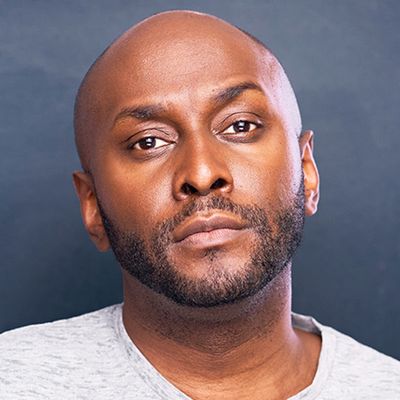
is an award-winning actor, director, composer-lyricist and teacher. TV writing: “Fraggle Rock” (Apple TV). Theatre: the Off-Broadway Alliance-winning Polkadots (Atlantic Theater Company), Beau (Adirondack Theatre Festival) and Five Points (Theater Latte Da), now in development with Hamilton’s Andy Blankenbuehler. Broadway acting: Beautiful: The Carole King Musical (original cast), The Book of Mormon. Tours: Rent, Dreamgirls and The Book of Mormon first national. Douglas wouldn’t be here without Velman and Tilden Lyons, who raised him to be unapologetically fearless. Big love to WME, Grandview, CLA, SRDA, Ethan Pakchar, this incredible cast, producing and creative team. Gaynl, this one’s for you. DouglasLyons.net
Connect with Douglas! @DouglasSings / @ChocolateHipster / www.douglaslyons.net
MENTIONED IN THIS EPISODE:
- Chicken & Biscuits on Instagram: instagram.com/chickenandbiscuitsbway
- Chicken & Biscuits on Facebook: facebook.com/chickenandbiscuitsbway
- Get Your Tickets: chickenandbiscuitsbway.com
Come say hi to us!
Facebook: @PageToStagePodcast @BroadwayPodcastNetwork
Instagram: @PageToStagePodcast @TheMaryDina @BrianSedita @BroadwayPodcastNetwork
Twitter: @TheMaryDina @BwayPodNetwork
YouTube: @PageToStagePodcast @BroadwayPodcastNetwork
#PageToStagePodcast
Transcript
This transcript was automatically generated and might contain errors.
[0:00] Brian Sedita: Hey everyone, welcome to Page to Stage.
[0:03] Mary Dina: A conversation with theater makers.
[0:04] Brian Sedita: We're your hosts.
[0:05] Mary Dina: That's Brian.
[0:06] Brian Sedita: And that's Mary.
[0:07] Mary Dina: This episode is part of our series on Chicken and Biscuits, a new play by Douglas Lyons.
[0:12] Brian Sedita: In this series, we uncover the process behind the play through our central question.
[0:17] Mary Dina: How has this play fed your soul?
[0:19] Brian Sedita: We hope you enjoyed this episode.
[0:26] Douglas Lyons: Hello, I'm Douglas Lyons, and I am the playwright behind Chicken and Biscuits.
[0:31] Mary Dina: Woo! And very special because Douglas is our second guest or our first guest to appear twice on our podcast.
[0:38] Brian Sedita: So very, very excited to sit down with Douglas again.
[0:42] Mary Dina: I actually haven't seen your face in so long.
[0:45] Douglas Lyons: We've been like messaging and all the stuff, but I know, I know.
[0:48] Mary Dina: It's also so exciting because this kicks off our mini-series on Chicken and Biscuits, which Douglas mentioned he's making his playwright debut on Broadway this season.
[1:02] Brian Sedita: They begin previews in September, end of September, and opening night is October 10th.
[1:07] Mary Dina: So that's really exciting.
[1:08] Brian Sedita: We're actually planning to go see October 9th, right before they open.
[1:12] Mary Dina: So you got your tickets yet?
[1:14] Douglas Lyons: We did.
[1:14] Mary Dina: We did.
[1:15] Douglas Lyons: Yeah, okay.
[1:16] Mary Dina: We do.
[1:16] Douglas Lyons: Don't worry.
[1:17] Mary Dina: We read the play last night.
[1:20] Douglas Lyons: It was amazing.
[1:20] Mary Dina: I thought like everything like truly jumped off the page.
[1:23] Douglas Lyons: You know, the characters were so well fleshed out, everything was really nicely balanced.
[1:28] Mary Dina: So I'm so excited to like do this mini series here on Page to Stage.
[1:33] Brian Sedita: So if we could just begin by you, Douglas, explaining when did the idea first come to you for the story? What was your inspiration for it?
[1:40] Douglas Lyons: The original concept was going to be a four-person play with Kenny Logan, Benita, and Reginald. And it was going to be so Reginald is taking over the church, the family church, that Bernard, who was past, used to be the pastor of. Benita is the matriarch of the family. Kenny is her queer son, and Logan, which Michael Uri plays, is the Jewish boyfriend to Kenny. And the original concept was that unannounced, Benita popped over to their apartment, and she was the guarantor of their apartment and saw all these pictures of this white boy who she thought was just his roommate, but learns that it's his partner. And Logan comes home because he left his wallet at the apartment, and Kenny's trying to defuse them meeting each other because this was not a planned meeting, and Logan's like, is somebody else here?
And Kenny's like, absolutely not, and then the toilet flushes, and Logan assumes it's another man, he's cheating, and so he goes to the bathroom door and curses her out before he's even met her. She swings open the door, and that was the beginning of the play. That was the original concept that I was playing with. And then life got busy, things were crazy, and I was like, I love that conceit, but how can I expand it? And I buried a family member in like 2017. And because I have a big family on both sides, I've been to a lot of funerals, and it hit me there's a lot of behavior and a lot of love and reunion and comedy at these black funerals that would be really parallel for the American stage. And so I took the butt of that idea and expanded it into what Chicken and Biscuits has become.
[3:27] Brian Sedita: So when did you first start writing it? You said you in 2017, was that or was it before then?
[3:33] Douglas Lyons: The first draft of Chicken and Biscuits was sent to Jalen Lovingston in August of 2018. Because he sent on the first day of rehearsal, he sent me the email.
[3:43] Mary Dina: Oh, that's special.
[3:44] Douglas Lyons: And I was like, This is the first draft, man. Very nice meeting you. Read it and let's talk. Because we had met at a Britain in the Sting concert, their very first concert. We just happened to be sitting next to each other. And I was like, hey man, I'm a playwright, sort of, and an actor, and I'm working on some things and I'm always looking for black collaborators. He's like, Oh, I'm an actor and writer and director. And I was like, Cool, maybe you want to read this thing. I have 30 pages of. And he read it and I kept working. And then I sent him the full draft in August 2018. We had a reading that Lillius White starred in in November of 2018, and then three readings during 2019, one of which was with the Queen's Theater. And that's where we did the world premiere at the top of the pandemic in 2020, like February, March 2020.
[4:29] Mary Dina: Yeah, yeah, yeah, yeah.
[4:30] Brian Sedita: So as Douglas had said, like the characters really just they're so well fleshed out that they just jump off the page.
[4:37] Mary Dina: And I took a playwrighting class in grad school. I'm not a playwright, but I took that class in grad school and I fully that that was the first time I think where I fully appreciated just how important it is to really work through the characters so that they each have their own voice.
[4:53] Douglas Lyons: And as I was reading it last night, I could I was like hearing their voices in my head.
[4:59] Mary Dina: So I'm super excited to actually hear the actors speak the words. Because I mean, I obviously I have one perspective of how it could be interpreted, but they have a much better and more professional way that it could be interpreted.
[5:13] Douglas Lyons: And so I'm just super excited. So I wanted to just mention that because I know from my class how difficult it was for me to kind of assign a different voice or write it out so that the characters all have very unique voices, especially when you have a lot of characters, because for me at least it was very easy for one voice to kind of blend with the other, especially if they're family. And so I don't know if that was a process that you went through at all. Because was is this your first play that you've written?
[5:44] Douglas Lyons: Yeah, it's my first full-length play. I think as an actor first, you know, I was Broadway actor and touring and things. I learned in studying a lot of television and film, and sort of my style I'm learning is to try to be a bridge between Hollywood and Broadway. So my scripts are intentionally cinematic. Because I feel like I'm not this like highbrow writer, I like writing the human condition. And so my characters are always very accessible by their personalities because that's just how I know how to write. Like I don't write really crazy events and really wild things. I write people that wild things happen to, and then we watch them react. And I think that's the magic of human nature. And that's what makes musicals and plays very relatable.
You know, something like Once, which is just like a guy and a girl, right? But there's something beautiful and magical to the simplicity of that. And so that's always my end as a writer is how can I take the most simplistic people, air quotes, and make them dramatic and make their experience dramatic for the American theater, because that's how you reach the masses. When you come in and you see someone that looks just like you who's been through what you've been through, and then you relate even more. So that's kind of my style.
[7:03] Mary Dina: I love that you mentioned that you write in a cinematic way because I totally felt that reading the play.
[7:08] Brian Sedita: Um, and I'm just wondering, it was just so well balanced, nuanced, and like heartfelt, especially between the comedy and the seriousness of these situations. How do you find that balance in your script?
[7:19] Douglas Lyons: You know, like when you're in the development process, is that a lot of between you and your director, you and other creative team members, producers?
[7:30] Douglas Lyons: I listen, right? So on the first day of rehearsal for Broadway, I can't believe I'm saying that for Broadway. We had a table read and we had a discussion about people's reactions. And some things that, you know, I'm like, oh, oh, I don't want that to be confusing, or I don't want I'm not trying to say that at that moment. And so I listen and I edit, and I always make sure what is landing is what I'm really trying to say. And if it's unclear to the actor, it's gonna be unclear to the audience because they're not gonna know how to relay it. So I feel like especially the theater, the audience is your scene partner, like they will teach you so much. That's why I'm excited for previews, and I don't think I know it all, but I know these characters and I know how they might react if you put them in a different situation.
So there's a big scene towards the end of the play of healing, and it had a different ending during the world premiere. And I rewrote it like overnight in rehearsal, and now it's sort of broken open the play in a brand new way because the discoveries and the conversations during this rehearsal period brought us to a new level of possibilities. So that's kind of how I craft. I really lean on the actors and making sure it's clear.
[8:55] Brian Sedita: Well, it's really interesting because, like, as an actor, you're always seeing the play through the character's eyes. But can you describe what it's like to see it from the playwright's vantage point? Like, versus like if you were in Chicken and Biscuits playing one of these characters, you know, versus now you have this whole you're responsible for this whole vision and storytelling.
[9:17] Douglas Lyons: Well, I like to feed off of what I see. So in the world premiere production at Queen's Theater, during this sort of chaotic scene, Ebony Marshall Oliver, who plays Beverly, she played it there and she's originating on Broadway. She got up one day and she made this face that was not a line at the time, but her face, the subtext of her face said, Oh, you do, huh? And I went, okay, I'm gonna make that a line. And I gave her a line there for that face that she made, that face and line then got a laugh in the play itself. So I'm always watching to see the world that they're creating with the language I've given them. And from that we build. It's all about clarity. It's like all about clarity. What are you trying to say with what you've written?
And is it landing in the way that you intended? Because sometimes you think, you know, at home by yourself, you're writing something, you're like, oh, it's gonna be a beautiful moment, people are gonna be crying, and then everyone's laughing. You're like, oh, we didn't want that, you know. So I'm always watching them build the performances, and I'm trying to figure out a way to help them serve the best performance that they can find. And if the language is getting in the way or they're stumbling on this one line, how do I make it cleaner? How do I make it easier to say? Because if they feel comfortable, then the story will land even the more.
[10:35] Mary Dina: So you've brought up the actors and the cast, and so I'm curious about the casting process, I guess, first and foremost. If we wanted to jump back to the Queen's Theater World premiere, because a lot you said a few of the actors have been are also making their Broadway debut with the show.
[10:51] Douglas Lyons: Um, so how how was the casting process way back in what was that 2020 nineteen? I guess. Yeah, we cast at the end of 2019 for Queen's Theater, and on that specific contract, um, we had to have two non-union actors. So there were six equity actors and two non-union actors. Uh, one of them that was non-union was Anye Mazell, um, who will be making her Broadway debut now as a union actor in the role of Latrice. And something I think I've learned with Jalen over this casting process is unicorns. We are looking for comedians who are unicorns and special and unique and not stock. You may not see these actors everywhere, but when you see them in this play, you're gonna be like, Whoa, that was that was funny.
That was tight. Um, and so with Queens, we found a really nice dynamic of some people that had done readings before, and then some people that were brand new. Uh Alana, who plays Simone, was the only person that had done the majority of the readings um in that particular production. And then three of the actors from Queens are going to be on stage reprising their roles. And uh Jennifer Fouchet, who was Benita in Queens, is now the standby swing for the three women for Broadway, because she's that phenomenal. So Michael Uri had done a fundraiser reading for the next wave initiative that I started in the spring, and Norm Lewis has always been a support and kind person, and it just felt like it was a fit. And then I saw Cleo King when I was in LA on vacation on a TV show on a mic and Molly, and I was like, Who is that? Who is who that? Who was that? And so that's how that happened.
[12:35] Douglas Lyons: Oh, I didn't know that. Oh yeah, yeah, yeah. Like pretty recently. That was right. Or was it? That was June. Yeah, we we so it all happened very quickly. Like the possibility of us going to Broadway was only a thought in like March April because things had shifted with America Buffalo. And then like mid-April, I found myself coming to Midtown and my mask, walking around circling in the square to see if it was a possibility that our show would work. Mind you, this is all during the panorama, all like in secret. You can't say anything. And it's like, well, you could, you might go to Broadway. They had you looking at the theater before you really knew or not. Oh yeah, yeah, yeah. We didn't know because we had to make sure that it was gonna serve the story because Circle and Squares are very specific space.
I was gonna say, I mean, is it a spoiler to say if you guys are doing it in the round or if you guys are doing thrust? I I can't even remember. You bought the tickets, Mary, so I didn't look at the seating. No, it's it's like a three-quarter thrust. Okay. So yeah, yeah, yeah. Um, but you can see that on Ticketmasters. We're not giving anything away. Um but we're like walking through to see if we could do it in this space, and then there had to be some union approvals, and the like call for me that I was going to Broadway was very weird because it was like this step happened, and then this step happened, and then this step happened, and then I was coming home from New Haven where the play takes place, and Hunter Arnold called me and he was like, Hey, you know, let's do it.
Because I couldn't hear him, I had my like headphones in. He was like, We'd love to do it. And I was like, What? And then I get home and I'm on the toilet. He's like, You're gonna be a Broadway playwright. And I was like, What? It was like in steps. Oh my god. So that was that. But so we knew I want to say late May, early June, but because I've been so shifted by this pandemic, I like don't believe anything until I'm on set, until I'm in the room, until the check clears. So I was carrying this thing for like six or seven weeks. I wasn't really telling people, I was sort of telling friends, but I always felt like the world could be pulled, you know, from out under me. And then uh June 24th, they officially announced, and I was like, Well, now you're liable. So I guess this is really happening.
[14:52] Douglas Lyons: Um, and before right before that, I went to LA on a little vacation, air quotes, which turned into casting because Erica Hart, our amazing casting director, and Shaylin were having initial auditions and callbacks from self-tapes, and then he went to Korea to do Hades Town. I came back from LA, we had final callbacks. He zoomed in from Korea, and yeah, and we cast the show like the week before it was announced. Um crazy.
[15:21] Brian Sedita: Were you guys actively pitching this to producers and theaters?
[15:24] Douglas Lyons: Uh like you know, be from Queen's Theater to Broadway. How did Hunter Arnold come to you and eventually say, We're gonna produce this, we're gonna put it up on Broadway, we're getting it in the circle in the square. People are gonna love the story. So in 2019 fall, um, I'm all over the socials. I use social media as a way to promote the work. When you're a new writer and a new actor, I feel like it's the best tool to get your work out there, right? So fall of 2019, Hunter followed me on Instagram, and I don't know if it was just the algorithms or uh how he found me or whatever. And so when I went to look at this new person who's following me, it said Hades Town producer. What do you think? I did.
I slid into his DMs and I said, Hey man, how are you? I'm Douglas Lyons. I'm a writer, actor, I have some shows. You should read them. And every five weeks thereafter, I would send him a message, Hey, have you read Boat? Have you read Chicken and Business? Hey, have you read Boat? Have you read Chicken? Right. And then the pandemic hit. And we all, well, I won't speak for everyone, but I was in my apartment crying and depressed and confused as to what was going on outside. And it was maybe May June. I got a random message from him that was like three paragraphs long that was like, I should have read it, and I should have looked at this a long time ago, and I would love to figure out a way to work with you.
And from that moment for the next year, we were trying to figure out what projects we could or could not do. We hadn't met yet. We didn't meet until 2021 when we could like come outside and hug each other. Um there were conversations about various projects, and then because of his relationship with Once on This Island, um, and Godspell, he was already in with this theater, and there was like a little small possibility that he's like, I think I might be able to get chicken and biscuits. And I was honestly not looking for this. It was not like Broadway is the next stop. That was not the intention. We didn't know what we were gonna do after Queens. And uh he talked to the theater owner, more conversations were happening.
They read the script, people really liked it, and then we were walking around the theater, and so it was a gradual surprise to get us to where we were. But because I slid in the DMs of a Broadway producer, we're now here.
[17:39] Douglas Lyons: I mean, I don't want to say like everyone take note, but like take note. I guess. What do we have to lose? The worst that can happen is you're ignored, or they respond and pass. But you lose nothing by saying, I'm here and I take up space, so read this thing. And if it if you don't like it, cool, but at least I put myself forward. If I remember correctly, back to episode 18 of Page to Stage podcast, our guest, Douglas Lyons, may have said those same words. Literally, I remember you telling the same gist of what do you do to follow up with somebody to make sure they read your work and get your work out there.
[18:14] Brian Sedita: So he's he's made it to Broadway, y'all.
[18:17] Douglas Lyons: Since then, it's gonna be crazy.
[18:20] Brian Sedita: It's so crazy.
[18:21] Douglas Lyons: So wait, so when you were at Queen at the Queen's Theater, but pre-um Panini, um, you were you so Broadway was never for Chicken and Abysses was it was not really like next step or like I mean, I'm sure maybe it was like hopeful wishes, but that was never something you were actively pursuing from Queen's Theater.
[18:41] Douglas Lyons: No, I mean, our our run got interrupted. So I at the same time I was doing Five Guys Name Mo at Westchester Broadway as an actor, and so we pushed back opening a week so I could close five guys and then be there for opening weekend of chicken and biscuits, which was March 6th, 7th and 8th. And that ninth was our like theater industry night, and it was sold out in the box office. But when we showed up, it was like half capacity. And very good. It was like this is strength. How could we be sold out? But I think people had already started hearing about coronavirus. And we were supposed to come back to performance that Thursday night, I believe, and that's when Broadway shut down the 12th.
[19:21] Brian Sedita: Wild.
[19:22] Douglas Lyons: That's wild.
[19:23] Brian Sedita: But no, I I we had just gotten one review, you know, word it just started buzzing about, and like our final performance had sold out, so people were like coming back and stuff. And so there was some energy about it, but Broadway Broadway, I was like, Broad me, playwright. This it's been three years since I put you know pen to page.
[19:43] Douglas Lyons: That's a crazy story.
[19:45] Brian Sedita: Yeah, plus a pandemic in the middle of it, right?
[19:47] Douglas Lyons: But I think a lot of that has to do with it's a testament to your character and your uh dedication, but also passion, like you are very passionate about the stories, but also the people, like you're very invested in the people, your people, the people who are who are in your circle, who you work with, who are helping you develop your stories, and I think that you know it's all like the good graces coming back to you. It's like karma, essentially, good karma.
[20:13] Douglas Lyons: Well, just to speak back off that, like I I think it is as important to make the thing as it is to use the thing to bring people forward. Like what I love about Rent, and I will always go back to it because it was my first show, is that John and Lar Jonathan Larson created a platform that discovered Adam Pascal, right? And Daphne Rubin Vega and Tay Diggs. We didn't know them before Rent the way that we do now. And so, as writers, as you know, up and coming artists, if I have the ability to pull really talented people forward with my work, I'm gonna do that, and I'm gonna shoot from the rooftops and shout about them, right? And let everybody know that they're worth being seen. Because if we do that, the theater can become a more equitable and like large reaching space.
I feel like it's such a small percentage of people that know what it can do. But if we really use our voices to go, hey, this this show is for you, this is cool. You have not seen a character like this before, but it's just like you come see it, more people will come to the theater. And so that's also part of my movement.
[21:18] Mary Dina: Thanks everyone for listening to this episode of Page to Stage. This episode is part one of a two part episode with today's guest. Check back next week for part two. To keep up with us, you can find us on Instagram and Facebook at Page2Stage Podcast. Until next time. That's Brian. That's Mary. We will see you later.
© Broadway Podcast Network, All Rights Reserved