

Van, former programmer, runs a Broadway record label in addition to producing Broadway shows. Thank you for taking the time to listen to our chat with Van Dean! If you are listening to this on Apple Podcast, we'd love it if you could share your love in a review!.. Read More
From the show: Page To Stage
Featured Shows
About
Van, former programmer, runs a Broadway record label in addition to producing Broadway shows.
Thank you for taking the time to listen to our chat with Van Dean!
If you are listening to this on Apple Podcast, we'd love it if you could share your love in a review!
About Van Dean:
Van Dean is a Tony® Award and Grammy® Award-winning producer of 13 Broadway musicals and plays (including Jagged Little Pill, Anastasia, Rodgers and Hammerstein’s Cinderella, The Gershwins’ Porgy & Bess, Big Fish, Catch Me If You Can, Evita, The Best Man, The Velocity of Autumn), 260+ musical theater-related recordings (including Matilda, The Color Purple, Anastasia, My Fair Lady, If The Fates Allow: Hadestown Holiday Album, Caroline, or Change, Assassins, The Lightning Thief), as well as numerous Broadway/National Tours, Off-Broadway musicals, concert events, a West End production and a documentary film. Van is President and Co-Founder of Broadway Records and his philanthropic work includes being a producer of “Broadway For Orlando: What The World Needs Now is Love”, Broadway United’s “We Are The World”, “Broadway Kids Against Bullying: I Have a Voice”, “From Broadway With Love” benefit concerts for Sandy Hook, Orlando (Emmy Award winner for sound design) and Parkland as well his work with NewArts in Sandy Hook/Newtown, CT.
Resources from this episode:
Come say hi to us!
Facebook: @PageToStagePodcast @BroadwayPodcastNetwork
Instagram: @PageToStagePodcast @TheMaryDina @BrianSedita @BroadwayPodcastNetwork
Twitter: @TheMaryDina @BwayPodNetwork
Youtube: @PageToStagePodcast @BroadwayPodcastNetwork
#PageToStagePodcast
Transcript
This transcript was automatically generated and might contain errors.
[0:00] Mary Dina: Hey everyone, welcome to Page to Stage. A conversation with theater makers. We're your hosts. That's Brian. And that's Mary. Join us as we focus the spotlight back on the theater maker to uncover their process. We speak with folks in the industry that often aren't heard from, such as stage managers, producers, crew members, marketing professionals, and everything in between. We hope you enjoy this episode.
[0:26] Van Dean: Hi, my name is Van Dean. I'm president and co-founder of Broadway Records, and I'm a producer so far of 13 Broadway musicals and plays with more in the works.
[0:36] Brian Sedita: Welcome, Van. I'm very excited to have you on the podcast. We have yet to really dive into cast albums and everything that goes behind the scenes there. I know from my own personal experience how vital cast albums are to any musical theater fan out there, no matter the age or the experience. I think the only time we brought up cast album recording was when we had Jess Paz on to talk about her process sound designing Hadestown. She was the first sound designer that we had on the podcast. I was interested to know if the sound designer was part of the recording, the cast recording process as well. I think because cast albums are, for so many of us, the first introduction that we have to Broadway or even off-Broadway musicals.
So, as we kind of said a little bit before off air, we generally explore the careers of our guests and what it took to get them where they are today. I'm curious just to kick things off. Was starting an award-winning record company always part of your plan? Was that something that you were interested in music production growing up?
[1:44] Van Dean: Very good question. I started as a songwriter, and then when I went to college at Syracuse University, I took a lot of music industry classes as part of my greater field of study. I was actually technically a television and film production major, but I did take a lot of theater and I had a concentration in music composition. I built a lot of music industry courses in there, so I knew a lot about the publishing side of things and how royalties work and how all the business side of things work. I had my own small studio in my bedroom growing up, so I knew the production side of it, and as a writer, I was producing my own demos and that sort of thing. Fast forward quite a few years later, when I started producing Broadway shows, actually off-Broadway first, because that's when my first album happened.
I produced Rooms, a rock romance, off-Broadway at New World Stages in 2009. I believe we had about an 81 performance run, and it was a challenge because it was during the economic crash when everything was pretty bad, and we were competing against Broadway shows that were charging the same price as off-Broadway shows. So we only made it to 81 performances, but I knew that the show deserved a much longer life. So of course that meant a cast album because that's really the best and almost only way for a show that has had a run to really get done in high schools and regional theaters and community theaters, etc. is for somebody to listen to the cast album and be inspired to do a production of it.
With Rooms, that was my first time getting involved with a cast recording. I worked with a specific album producer on that and saw the whole process, really quite liked the process, got involved in a couple more, including How to Succeed with Daniel Radcliffe, executive produced that, worked on Phaela, but only doing the art for that. I actually wasn't involved on the music end of that, but those three really led me to want to do a lot more. But I knew to do it the way I would want to, I really needed to form my own label so that I could kind of be in control and make the choices of which projects to take on and really kind of be in the driver's seat creatively and from the business perspective along with the team that I was assembling to work with me.
So that's kind of the short version of how it came to be. Then I was a producer on Bonnie and Clyde on Broadway, which lasted I think around two months. There was a deal in place for the cast recording to happen with a major label, but that fell through when the run was shorter and the reviews were maybe not as good as we would have liked. So I, together with my then partner Kenny Howard and the team behind the show, we did a grassroots campaign to raise the money to put the album together, and it came together pretty quickly. Everybody was really passionate about it. Nobody did it to make money; they did it to preserve what we had all worked on together, and everyone was really passionate about that. The wonderful news is that it's actually still one of our stronger albums in terms of sales and ultimately will recoup and make everybody's money back and then ultimately a profit.
[5:04] Brian Sedita: I mean, I listened to that cast album quite a bit, I will say. So I will take responsibility for it or ownership over a portion of those numbers. I mean, I wasn't able to see the show, but I feel like especially with the shows that don't have the intended life it was meant to have on stage or what anyone would have hoped for, cast albums really fill that for so many fans and so many people who hope to do the show one day in some capacity. In that same vein, I mean, I'm lucky enough to have grown up right outside of New York City, so I was always going to see shows when I was younger. But for some people, all they get is that cast recording. Do you remember what were the cast recordings that you listened to on repeat when you were younger?
[5:53] Van Dean: Absolutely. I mean, my tastes, of course, evolved and expanded as I went along. But the first ones were Phantom of the Opera, Miss Saigon, Les Misérables, and The Secret Garden. Those were kind of the first four that really drew me to the art form. Shortly thereafter came Evita and Jesus Christ Superstar, and then I expanded into Sondheim and others that I still am very passionate about today. In the case of Evita, it was full circle because I ultimately helped produce the Broadway revival with Ricky Martin and Elena Rogers. So that was one of those full circle moments that was very exciting. Those were some of the first cast albums that I paid attention to, and it was really my sister, my older sister, I give credit for that because she's the one who had copies of those and let me listen to it and thought that I would enjoy it.
From there, I went to the library and took out every cast album I could, and then ultimately started buying every cast album I could. I interned at Angel Records. I forgot to mention that in how I came to go where I went professionally. But when I was 20, 21, I interned at Angel Records at the time that they were doing Carousel and Passion. I was actually at the recording session of Passion with Stephen Sondheim and Phil Ramone and everybody. So that was one of my earlier introductions to that side of things and certainly was formative in my view of wanting to do that down the road. It was a number of years later that I actually started Broadway Records, but that was certainly a big step on the way.
Mentioning Bonnie and Clyde earlier, that was the first album under Broadway Records. It wasn't originally supposed to be; it was actually supposed to be the How to Succeed EP with Nick Jonas. But when the deal on the Bonnie and Clyde album fell through with the major label, we stepped up, as I mentioned, did the grassroots campaign to fund it and decided that was now going to be our first album a little bit ahead of schedule. So we started the label earlier than we intended to, only about four months earlier, so it wasn't a huge change, but it did give us an impetus to get everything going faster than we had anticipated. We started officially Broadway Records January 1st of 2012, and our first album came out in April of 2012, so four months later.
Now we're actually quicker about turning albums around, but when it's your first where you're in charge of all aspects, you're learning as you go. The first year we only did about five releases, but in 2020 we had 49, and in 2021 we had 36. So we've increased a lot since then now that we know the process and are much more adept at all aspects of making it happen.
[8:41] Mary Dina: Okay, so I wanted to actually ask you if you could walk us through kind of like the timeline of everything that happens. I know there's a lot of things. I know that you guys have produced the Caroline, or Change cast album that I listened to way too much.
[9:00] Van Dean: Yeah, it's actually out, and it's one of the ones we're most proud of. Brian and I actually saw that together pretty early on in its run. Brian has since gone back to see it many, many, many times. I don't know if you want to use that as an example or if there is another show or album you'd like to use as an example, but just maybe walk us through the process and break down. I guess the first question I have is do you guys approach shows and pitch them? This is why you'd want to produce the album. Do producers come to you to have conversations now that you've been around for many, many years and have quite built up quite a portfolio of work?
[9:40] Van Dean: It's actually both. It happens either way. In the case of Caroline, or Change, we had been talking to Roundabout over two years ago about it, well before the pandemic started. Of course, the pandemic changed plans like it did for so many things. We were just in constant communication with them about when are things coming back, what's the right timeline to make this work? Of course, coming back, everyone had to re-rehearse, so it made it so they had other things to get done before we could really get into the album. We would have loved to record the album before performances started, but that wasn't really possible because of all the things that had to happen. Even getting the star from the UK to New York was a challenge because during COVID, travel was, you know, obviously even at that point, now that we had the vaccine and everything, it was still a challenge.
So that was a little bit more tight of a schedule. In fact, I think we turned it around in about three weeks, which was kind of crazy because it's an enormous amount of music, about a hundred minutes and 53 tracks. In fact, Caroline, or Change is so far the first and only recording we've ever recorded in a particular way, which is that we did it start to finish as a performance in the studio. There were breaks, but we ran it twice, and then we did some what are called pickups where anything we wanted to give another go at, we would do after that. When you say three weeks from start to finish, does that mean from the moment you guys hit the studio to when the album is out and released, or is that from the start to finish of just recording?
[11:23] Van Dean: No, we recorded it in a day and a half and mixed it, I think it was about two and a half to three weeks, and then mastered it in about a day, day and a half, and then it was out less than a week later. The whole technical process was three weeks or so, and then another week to get it out digitally, and then a few weeks later the CD was out. Although we've even done faster than that, The Wiz Live we did in like two days of post-production. But that's the fastest we've ever done and hopefully will ever do. In the case of Caroline, or Change, we wanted it out with a good month to go still in the run so that it would have a chance to be in the theater while the show was still running. Given that it was a limited run to begin with, that was a challenge to try to make that happen, but we did, and we're very proud of that. As I said, we did record it in order, you know, as a performance, which we've never really done before.
[12:22] Van Dean: Usually the way you construct these is a project coordinator or someone from our team or working with the producer of the album will come up with a schedule that makes sense for not only how much you want to tax the vocals at what time in the morning, like if somebody's not a morning person or their vocals are stronger in the afternoon, you want the big number maybe to happen a little later.
[12:44] Van Dean: You also have to look at the fact that most of the time you only get eight hours with each actor because you're paying a week's salary for every eight hours in the studio.
[12:53] Van Dean: So unless you can afford to pay overtime, then you try to keep it to eight hours per person.
[12:59] Van Dean: And in order to do that, it's a bit of a jigsaw puzzle about okay, which song do we do when? Because we have this person. And if it would then we would have this person on these set of songs, and that would keep them for eight hours.
[13:10] Van Dean: And you know, it's a bit of a jigsaw puzzle combining it with the different performers to make sure you're not using anybody more than eight hours unless you absolutely have no choice.
[13:20] Van Dean: And then you of course pay overtime, and that's fine. It's just the budgets of these albums are anywhere from 200 on the low side to 400 or more on the high side, and that's sorry, thousands of dollars.
[13:32] Van Dean: So 200,000 to 400,000 or more. Um, so they're very expensive, and every hour you're in the studio could be 20,000 or more with all the people you have there.
[13:42] Van Dean: So that's why it's important to try to keep it on schedule, because you could be over budget by tens of thousands of dollars if you're not keeping a good schedule going.
[13:51] Van Dean: And we actually have quite a good track record of keeping things on schedule and on budget. It's very rare that we go over budget, and we certainly do our very best to make sure that we don't.
[14:00] Van Dean: Um, so because of that, it's a very tight schedule and things have to run pretty much like clockwork.
[14:06] Mary Dina: What are some of the things that might like push you off of schedule? Is it just like wanting to do more takes to get, you know, change microphones, like anything technical like that?
[14:17] Van Dean: It's been a long time since we've been off schedule, but back in the early days there were a couple times we were in a studio where maybe the equipment was a little bit older and they had a buzz, for example, that was and they had to figure out where is that buzz coming from, which wire, you know, which device was causing it.
[14:35] Van Dean: And so there was a recording, I don't know, seven years ago that we lost a good hour, I think, while the engineers tried to figure out where the buzz was coming from.
[14:43] Van Dean: Because you certainly don't want to be recording the buzz in your recording itself.
[14:48] Van Dean: So that's an example. Uh you know, certainly there are cases where you may want to switch mics or help the performer maybe get more comfortable late, maybe the levels in their headphones aren't good, so you go in to switch it so that they have the right balance, maybe they want to hear more piano or more of their co-star and less of the drums or the bass or you know, whatever it may be, in that particular case, but usually that doesn't take more than a few minutes, so that wouldn't really put us off schedule.
[15:18] Van Dean: Um, but there certainly can be technical issues, or if we just want to do take after take because we're not getting it quite right, that can happen, but that's pretty rare because everybody are such pros and are so comfortable with what they do, and they've already done the show a bunch of times by the time they get to the studio.
[15:35] Mary Dina: And now who's taking on the financial investment? Is it the producers, or are you guys going in as well on the investment portion of the recording so that in the end of, you know, once it recoups, you'd be making back in excess?
[15:51] Van Dean: Uh it's a very good question. And it varies. Uh sometimes the producer comes to us and says, we've got all the funding. Other times we'll go to them and say, we'll split it with you, or we'll raise this amount.
[16:03] Van Dean: Um, you know, as a label, we might put something in, but I also will raise from investors as well.
[16:09] Van Dean: Um, you know, that I think would be attractive to this particular project.
[16:13] Van Dean: The way I tend to work is I'm not comfortable raising money unless I think it's going to make a profit.
[16:18] Van Dean: And most of the time that I do raise money, it does because I only pick those projects to raise money for that I think have a really good chance of making a profit.
[16:27] Van Dean: Because the reality is that investors aren't going to keep investing if they're not doing well with it.
[16:32] Van Dean: So I want to make sure they're having a good track record with us.
[16:35] Van Dean: So it's a balance, but you know, and obviously you don't have a crystal ball, you don't always know when it's going to make money.
[16:42] Van Dean: But having done so many of these, you have a pretty good sense of, well, this one will make money, and this one might be more of an artistic, you know, labor of love.
[16:51] Van Dean: And you may get a few investors because they really believe in it, even though they know in this particular instance they might not make their money back.
[16:57] Van Dean: Um, but certainly most of the time we do make a profit.
[17:01] Van Dean: It may take a number of years, but eventually it gets there in some cases faster than others.
[17:06] Van Dean: Um, but certainly that it is a business, it's a business to preserve an art form.
[17:11] Van Dean: So we certainly have the altruistic intention of trying to preserve as much as we can.
[17:17] Van Dean: And we believe that everything that makes it to Broadway deserves to be preserved.
[17:21] Van Dean: It may not always be financially possible, but we try in every case.
[17:25] Van Dean: Um and obviously we have other there are other labels in the industry that are in there as well.
[17:30] Van Dean: So it's not all on us. Uh there's, you know, Ghost Light and Sony and Atlantic and Concord, you know, that are all in that space as well.
[17:38] Van Dean: So I don't remember the exact statistic, but what is it? They say eight in ten, eight out of ten Broadway musicals don't actually recoup their investments.
[17:46] Mary Dina: 20%, I think.
[17:47] Van Dean: Right. So that's pretty accurate.
[17:50] Van Dean: So like if for a cast album, what does that track record look like?
[17:53] Van Dean: It would probably depend on the time period.
[17:55] Van Dean: I mean, our track record is probably quite a bit better than eight out of ten as an industry, I'm not sure.
[18:01] Van Dean: Because again, we only raise money for those that we think will do well financially, but we'll still absolutely release something that maybe is more of an artistic endeavor, less of a commercial one, but we won't be able to raise money for it unless the investors are willing to do it just because they love it.
[18:17] Van Dean: And there are cases where that happens, certainly, and obviously with Broadway shows as well.
[18:22] Van Dean: And certainly investors know that, or at least the seasoned ones know that four out of five don't recoup, and so they have only a 20% chance of making a profit, and they know that going in, at least statistically speaking, obviously the shows that they choose to invest in may have a better chance because they're handicapping it with whatever they think that the reasons are for choosing that particular project.
[18:46] Van Dean: But I didn't haven't actually run the exact percentages, but I think for us out of the Broadway cast albums we've done, I think more than half either have or will recoup.
[18:59] Van Dean: Um, I don't have an exact number on that.
[19:01] Van Dean: And I'm sure it's a little bit different too compared to like going to see the actual Broadway show because or off Broadway, because you know cast albums live on forever.
[19:11] Van Dean: So like you were saying, you know, how long ago did Bonnie and Clyde close and it's still, you know, it has the ability to keep generating more income as time goes on, versus you know, a Broadway show could end, you know, ultimately, you know, we always hope that doesn't happen, but it you know, realistically it does.
[19:31] Van Dean: So you kind of lose that opportunity there.
[19:33] Mary Dina: In that same vein, I'm wondering so Bonnie and Clyde came out. I would if before streaming was really, really prevalent. Would you say that streaming is the way people are mainly consuming these cast albums now?
[19:45] Van Dean: Well, it's becoming a bigger and bigger percentage all the time.
[19:48] Van Dean: Uh yeah, it's I think surpassing CDs at this point in terms of it.
[19:53] Van Dean: And that may sound strange because obviously I'm sure there are a lot more people streaming than are buying CDs, but it's because you make a fraction of a penny, like four tenths of a penny basically per stream.
[20:06] Van Dean: So it takes a lot of streams, maybe 4,000 to equal one CD.
[20:11] Van Dean: So streaming is starting to be as strong as CDs and vinyl is also a big player these days when there is a vinyl edition.
[20:19] Van Dean: Um, but streaming is getting more and more prevalent.
[20:23] Van Dean: Uh the downside is it takes way more streams, like I said, to make any financial difference.
[20:29] Van Dean: Um, so if you hit it with streaming, you can really hit it.
[20:33] Van Dean: I mean, certainly Be More Chill and Six and out of our titles like Anastasia and Lightning Thief and others are really strong on streaming, but it takes a much higher threshold for it to make a difference to recouping than certainly CDs or vinyl or digital albums.
[20:51] Van Dean: So we still are trying to encourage all forms of consuming our albums because again, streaming just it takes millions of listens for it to actually mean anything financially, many, many millions, um, before it starts to make a dent in covering our costs that it took to actually make the album.
[21:11] Mary Dina: So, question about vinyl, since you brought it up. I've definitely noticed over the last at least five years, it feels like that like a delayed release or even a any release of a vinyl of a cast album is its own like campaign in a way of like marketing and it's very special.
[21:36] Van Dean: Well, it's interesting because a lot of the vinyl consumers are actually quite young, you know, in their 20s or you know, and you wouldn't necessarily expect that a lot of them skipped CDs and went back, you know, to vinyl.
[21:49] Van Dean: And I think that maybe it's because it's a keepsake and it's just something special to have.
[21:53] Van Dean: I don't even know if everybody who buys it actually has a vinyl player, you know, an L, you know, a record player, but or a decent one.
[21:53] Van Dean: Or a decent one, yes.
[22:02] Van Dean: It's not actually gonna ruin your vinyl.
[22:05] Van Dean: Exactly.
[22:06] Van Dean: Um, so there's that, but I think there's a certain, you know, nostalgia for it, there's a certain attraction to it's a much bigger, you know, fold out, it's a bigger version of it, it's a real keepsake from it.
[22:18] Van Dean: It has a warmer sound and it definitely a different, more physical sound, I think.
[22:27] Van Dean: Uh CDs are a little more pristine, you know, they're pretty perfect, and they're actually a much higher quality than most streaming.
[22:35] Van Dean: Uh unless you have high def streaming and even then, you know, CDs are certainly among the higher fi of the options.
[22:44] Van Dean: But I think that the youth of today is maybe more interested in the convenience and the portability than they are in the high-fi aspects, although I'm hopeful that the higher definition streaming options that are starting to become available will become more prevalent so that everyone can hear the music the way it was intended and not, you know, in some loss-filled format that doesn't give you that full experience because certainly the way they're recorded are extremely pristine, and you know, we want everyone to experience it as high definition as possible so they can really enjoy the true nature of it.
[23:21] Mary Dina: So, but when you're mastering or mixing a cast album, is there a different process for each, um I'm trying to think of the word format?
[23:35] Van Dean: Yeah, so like CD versus streaming.
[23:37] Van Dean: Is there a difference there? Like, are you doing anything different versus if you're trying to produce a vinyl?
[23:42] Van Dean: There are some differences for vinyl, for example, we do a master specifically for vinyl.
[23:47] Van Dean: Um, because there are different frequencies that you're trying to focus on.
[23:53] Van Dean: Um, I'm not a master engineer myself, but I, you know, obviously work with the mastering engineers that we employ, and it is a different process.
[24:03] Van Dean: Uh there is also a made-for-iTunes process that's more for like the 24-bit mastering.
[24:09] Van Dean: So there is a more high-def mastering option.
[24:12] Van Dean: There's also, you know, the new formats like Dolby Atmos, where it's like a more of a surround sound format, but that's not just mastering in that case, it actually has to be mixed for that.
[24:23] Van Dean: And there are albums starting to be done that way.
[24:26] Van Dean: It's definitely more of a niche at the moment.
[24:28] Van Dean: There are not a lot of people who listen to Dolby Atmos, but I think that's gonna become more and more available, and so there may be more people who want to hear that, and certainly theater lends itself to it in a way because then you can get more directional with your sound about who's where on the stage, and you know, even though you're not recording on the stage, but you can try to mimic that where the sound effects come from in terms of the space of the room and things like that.
[24:54] Van Dean: So there's definitely real potential there.
[24:57] Mary Dina: Is that something that you're interested in when you're listening to a cast album? Is it recreating the experience of being in the theater, or more of making it? And maybe this really varies depending on whoever you're working with and whatever show you're recording for. But are you interested in creating a recreation of being in the theater or just making it a really perfect version of that song?
[25:26] Van Dean: I think to some degree it's really making a perfect version of that song. I mean, if you notice most of the time in theater, it doesn't actually sound quite as pristine as the cast recording because you can't hear the nuance of every single instrument. You can't hear maybe every last word. It's an extreme challenge, I think, in a large theatrical space to have everyone have the perfect oral experience. Whereas the cast recording, you have a lot more control over that, so you can make sure every last word is heard. For example, Matilda, the accents and the space might have made certain phrases or words harder to understand in the theater, but we made sure that on the recording you could understand every last word and that the accents still came through and you could really appreciate every last of Tim Minchin's brilliant lyrics because there's a lot to be mined there.
So I think it's trying to create the perfect experience, and there I think with Dolby Atmos, it does maybe give the possibility of doing both ultimately. I think it's gonna be a while before all cast recordings are available that way because it is a complete remix of the whole process. So that's a lot, and there has to be, I think, enough demand and interest in that for it to be worth doing yet another mix that might cost several tens of thousands of dollars in addition to what we're already doing to create.
[26:52] Van Dean: Taking Matilda and Caroline, or Change as two great examples that already had cast recordings before you worked on them. The London recording of Matilda and the original Broadway cast of Caroline, or Change. When you're working with that creative team, do they have specific goals or did they in these specific cases going into this next version of what's going to be preserved of their music?
[27:23] Van Dean: Well, I think in the case of Matilda, I was actually the one who made the case for why there should be another recording. Because if you look historically, it's not that common that if you have a London recording, you also have a Broadway recording. It certainly has happened in history, but it's pretty rare, even for some of the biggest musicals. So in that case, I really kind of analyzed the situation and said, well, what has happened since then to the show that would justify this? And if you look in the case of Matilda, it was actually recorded before the West End. It was out of town. And the show had evolved a bit. The orchestrations were thicker and more precise for Broadway and for the West End because West End happened after.
And yes, we had two of the same stars. So that was something else that we had to look at because it is a little rare that you have a cast recording in both London and Broadway, and you have two of the same leads. But in our case, I actually think it's pretty fascinating because if you look at Bertie Carvel's performance in the first recording, and then you look at it two years later, how often do you get that chance to have somebody who is so unbelievably brilliant in a role and look at it when he first started, and then two years later, how much nuance he added after living in it for two years? You almost never get that kind of luxury to have a performance that's that lived in and that in-depth and its nuance.
And even though he's brilliant in the first recording, he's even more brilliant in the second. And to me, it's almost like a master class in acting to look at what he did with it after living in it for so long. And that was one of the many things that attracted me to the idea of doing it, even though it had already been done. You know, again, as I said, the orchestrations were deepened and expanded. There was also material that was not captured in the first recording, a number of musical moments. None of the story songs were captured in the original album, and I made the pitch for doing that. There was a little bit of an artistic discussion. Well, if we do that, is it breaking up the score too much to have these story songs which are mostly telling stories and talking in the middle of a wonderful score?
And so we kind of came up with a compromise. Well, what if we make them bonus tracks? So we did that. But we captured all those. And quite gratifyingly, when I spoke with some of the Matildas later on, like the second and third set of Matildas, they all said, "Oh, I listened to the cast album religiously before I auditioned, and I knew how to do the story songs, and it meant so much to me to hear it." Whereas if you just had the London recording, you wouldn't have had that ability. Like, how would you have auditioned for the story elements of the cast because you wouldn't know it? And so for them, it really attracted them to wanting to audition for the show. So it was kind of a full circle element to it.
So I mean, there were a lot of reasons for wanting to do it, and then I tried to make the case for it, and ultimately it did well both artistically and financially. And so I think we did make the case and it was successful for all the reasons we thought and more. So I'm very proud of that one. That was our first really large cast recording that we did of a major Broadway show, and we've done many since then, but that kind of changed the game for us, and it was one that I've always really had a very personal attachment to, and we're thrilled that we could make the case for why it should exist.
[30:49] Van Dean: And then you asked about Caroline, or Change. I'll do that more briefly. In talking to Janine and Tony about it, originally, we did ask the question, well, since there is a full recording, should we do maybe highlights? Because we wanted to capture the cast, but the question is could we justify recording the entire show again when it already was so brilliantly done, you know, two decades earlier? And you know, there was discussion about doing the highlights, but then ultimately everyone involved with it creatively just felt like this cast is just so brilliant, and it's such a wonderful show that maybe didn't get its due the first time that seemed to get more attention the second time and more understanding and respect that we just felt that this cast had to be captured in full and the performances were so brilliant and nuanced.
And so we decided, okay, let's try to raise enough money to capture the whole thing because it deserves it. So that's what we ultimately obviously did. But it was in concert with talking to Janine and Tony and Roundabout, and we all just ultimately felt like if we could afford to capture the whole thing, if we can raise enough to do it, we should because there's too much artistic merit there to shortchange it with a highlights recording. We really wanted to capture the whole thing because it's also really a song through a score, almost like an opera. While you could do a highlights version, I suppose, and we certainly, if we had to, we would have figured it out a way to do it. There are not a lot of moments that just stand on their own. They're all just so integrated with the rest of the score that it's a bit difficult not to capture the whole thing. And thank God you did. There are people like me who are thanking you profusely.
[32:35] Mary Dina: Well, thank you. So you've done artwork, designed artwork for a bunch of these albums that you've worked on. What is that process like for you? And what are those conversations like with the team going into that?
[32:50] Van Dean: Oh, first of all, I absolutely adore that part of it. And I did most of our first 40 titles. I think one of the last ones I did was Anastasia. Even though at that point we had hired Robbie Rosell to take over for me on doing the package design, I had a personal attachment to Anastasia, so I really wanted to do it and ended up being one of the last ones that I've done. I did help a little bit with Stari because my wife actually designed that one, so I did help a little bit, but it became one of those things where I was so busy running the company and had kind of overseeing everything that I just didn't have the time to do it anymore because it is quite time-consuming. Something that is immensely artistically fulfilling and I love doing, but you know, it's one of the hard parts of being the founder is you wear tons of hats and then over time you have to give up some of those hats because that's what growth is.
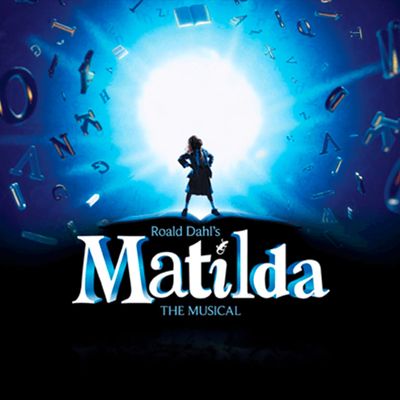
When the label's growing, you can't do everything anymore. But luckily I found Robbie, who's absolutely brilliant to take over and run with it, and he's done now about 200 for us, so he's done it incredibly well. But as far as the process, I know when I did it, and I think it's similar for Robbie, ideally you get to see the show and something about it inspires how you approach it. In the case of Matilda, I used the kids' building blocks. I made all the song titles that had each of the lyric sections out of those. It was pretty painstaking too. It took a long time to mimic that with the font over the building block and to do it for each letter. But that was kind of the concept I had. I also felt like the original London recording really didn't have any photos from the show, and I felt like there's such a brilliant story here, and the visual elements of Matilda are so incredible that we needed to convey that to the kids and everybody else who were listening to this recording to show them what the show is like.
Also, I tried to tell a bit of the story with it, like in the case of Matilda again, because you have the story song, which for those who know that it actually uses the alphabet within the lyrics, and so incredibly brilliantly, where Tim Minchin wrote it that every letter of the British alphabet, which obviously is the same as ours, but you do where you name them a little bit differently, like Z is Z, you know, in the case of the British alphabet, but obviously it looks the same. So what I ended up doing is I made the letters behind each of those elements of the lyrics glow. So it's kind of got a light, and obviously it's not truly glowing, but it's got a brightness to it, so that if you're paying attention, you can actually see how the alphabet is spelled out within the lyrics.
Because I made the letters actually glow behind, visually, so that if you're kind of paying attention to lyrics, you'll see that the story of the alphabet's actually told visually as well. Because I realize if you're not seeing the show and you're just listening to the album, you may not realize what Tim Minchin's doing in that song. And then we try to include as much as possible in what we as fans would want to get out of it. Suddenly as many photos as we can fit in when we can, you know, including the lyrics when it makes sense too. In some cases, if it's the third or fourth revival, maybe we won't include the lyrics because there's other versions that have it. But most of the time we do try to have the synopsis that shows how the songs fit within it.
Ideally, a liner note to give context. Obviously all the credits we want all the amazing artists to be giving credit, and just visually, like I said, trying to represent the show in a way that makes sense for that show. So everyone is different because ideally you're doing something that's in the character of the show, and again, Matilda's maybe one of the best examples of the ones that I personally did, but certainly Anastasia is one of my favorites that I did because I think visually it really tells a story, and I just love those photos.
[36:51] Van Dean: And so I try to also tell the story there. Um, you know, with the way that I laid it out, but that's you know the goal of what you're trying to accomplish. I was gonna ask you what your favorite part of your process is, and it sounds like this is it. Is there something else maybe that that you really really enjoy about about Robbie Records and about your process of producing cast albums? Well, that was certainly one of them, especially while I was doing it. Um now that I don't have the time, unfortunately, because it takes it took me probably 20 to 40 hours to do it, say a Broadway cast recording to design it uh with everything involved, with collecting everything and laying out the lyrics and doing everything that's involved.
And I just unfortunately don't have that luxury of time to spend that much, especially when we're doing you know anywhere from 20 to 50 albums in a year. There's no way that I could do that because it's a full-time job as Robbie can attest to. So that was certainly one of my favorites, but I think just working with the artist and and making you know their dreams a reality to preserve what they've created, because as absolutely incredible as it is to have the album on stage, uh, sorry, the musical on stage, that is a moment in time, and unless you're there in that moment of time to have that experience, you can't experience that unless you have the cast recording. So this is the this is the piece that lives on.
So it's a critical piece for the show to be done and to have a life after it's Broadway or off-Broadway run. Uh it's essential. So knowing that we're a part of making that a reality and working with the artists that I so greatly admire, I think you know, we certainly get great satisfaction out of that. And I know we didn't really get to talk about this too much, but I but I just want to state for the record, if you will, that that Broadway Records actually produces solo albums as well, not just Broadway or even off-Broadway cast albums. And so I know we're we're gonna head into our next lightning round section, but I just wanted to real quick ask is the process for those albums, I know you've produced, I've worked on a few names, Kate Rockwell, Patty Murin, Jessica Voss, just to name a few of the complete library that you guys have.
Is the process for producing those albums uh is it similar to producing a cast album? I mean, I know like the scale might be a big difference um in terms of just number of people involved potentially. Surely the production value I'm I'm sure is is the same, but is there anything that's that's drastically different between those two?
[39:19] Van Dean: Process is fairly different. I mean, a lot of our solo albums are live albums because we created the live at Feinstein's 54 Below series uh in conjunction with 54 Below. And um, so those it's a matter of how you can best capture and then handle the post-production of that performance and try to make someone feel like they're there. And um so that that's more when we are involved before they do the show, we we talk about song selection and what makes the most sense in terms of even from a business standpoint, like getting the rights to the songs. If you have a medley with 10 songs in it, that's gonna be very expensive. And you might want to avoid that if you're thinking to do uh a live album or even a studio album because you're gonna spend a lot of your the sales proceeds and paying for those rights.
Um so I mean it's simple, maybe mundane details like that, but they're important. But whoever is directing the uh the performance, if it is a live album, will be working with the artists and trying to tell a story and uh have an arc to it. Robbie Rosell himself has directed a lot of those um for major artists, including you know, Kate Baldwin, uh Sarico, among others. So it's certainly we come in at different points. We may come in early and therefore have some input in the the song selection, or we may come when it's already done, uh they've already created their show and they just need to have it preserved. Then we just make sure that all the micing is set up the way, you know, the best way possible, make sure there's enough separation so that it can be post-production work can be done on it.
Um, because everything's recorded multi-tracked at 54 below when there is an album to be made so that you can do post-production work on it. If it's a studio album, then obviously that's a bit different because you're not capturing a live performance. And unlike a cast recording where you need to get it done in a day, day and a half, uh, because of the economics of it, a solo album could be done over weeks or months, you know, depending on what the needs are, and and that's fine. Um, so it is a bit of a different process that way. There's also kind of the middle ground, which is studio cast recordings or concept recordings, which is the fourth category. And those are kind of in the middle of all that of how those are done, where they can be, they don't need to be done necessarily in a day, although they can be.
Um, so they're kind of like solo albums that way, but they're aesthetically a little bit more like a cast recording, but certainly a lot cheaper to do. So there's there's a lot of different elements to consider, and that's probably a whole longer conversation, but that's the short version. Um, Mary, do you want to move into our lightning round?
[41:51] Mary Dina: Yes. Our first question is what is one thing in the theater industry that confuses you?
[41:56] Van Dean: I don't know if so much confuses me, but obviously everyone has different tastes. I mean, there's certainly some shows that you wonder, you know, the perspective on it or or whatever. But I mean, for the most part, what makes it to Broadway ends up being something that obviously whoever's behind it hopes that the masses will uh respond to and want to see. Certainly there are some shows here and there that maybe you you wonder why it took the path to Broadway. Maybe it should have gone to Broadway, or maybe it should have gone direct to licensing or um or that sort of thing. But but obviously uh the world is filled with all kinds of perspectives and opinions, and that's what makes it beautiful.
So um everyone has their own perspective on it. Something that I I might say, well, I wonder why that went to Broadway or what you know what the purpose of that was. Maybe somebody else will think is truly brilliant. And uh so I think I I think that's the beauty of uh of art the art form is that everyone has their own perspective.
[42:56] Mary Dina: What are three adjectives that describe your ideal working environment?
[43:00] Van Dean: Friendly, respectful, full of passion for the work. And is there something in your process that you find unique to you?
[43:08] Van Dean: I don't know if it's unique, but I actually was a programmer in my former career, and uh so I definitely have an analytical view in addition to the artistic view, because as I mentioned earlier, uh I did start as a songwriter and I've written musicals as well. So I kind of have both sides. You know, I like to use both sides of my mind and uh both the analytical and logical side as well as the artistic and passionate side. So I do like to use all aspects of who I am and you know, in the way I approach things. So maybe that's slightly unique because I doubt there are too many other computer programmers who are, you know, running uh labels or producing albums or producing shows.
[43:49] Mary Dina: What is one job in the theater industry that you would trade jobs with for one week?
[43:53] Van Dean: Well, writing musicals since uh I have done that, but not at the level of you know that I'm now working in as a producer but uh I would love to you know have a a musical that I wrote on Broadway. Are there any books or resources that you find helpful to you in your process?
[44:06] Van Dean: There are tons. I'm actually a firm believer in really knowing your craft before you enter it. Before I entered this profession I'd read probably well over a hundred books on theater everything from biographies and memoirs to histories of the theater like Ethan Morden for example has a series I don't know if you've seen it of musicals of the 20s and the 30s and the 40s and et cetera and so each book just hit one decade. So because of that he was able to get really in depth which I found fascinating. So whenever I approach anything I kind of all in so I want to know everything about it. And on a practical matter I found it was really helpful because as I started working with the giants of the industry that I always looked up to it it could be a little nerve wracking you being in you know same conversation with somebody like that but knowing your history and really knowing the craft and understanding it I think helps you have a conversation you know almost as if you're you know two equals speaking that somebody who you know you want to be able to speak on that level where you know what you're talking about and you know because I would never want to you know be at a lack of uh perspective or things to be able to say about I want to have that background and I want to approach something knowing everything I possibly can about is history and it's what it is to work in that profession before I actually go all in.
[45:41] Mary Dina: What is one hobby you have outside of the theater?
[45:44] Van Dean: Well, one of them is kind of related, as I mentioned before, is the uh the design element. Uh I did combine it in that I designed many of our early recordings, but certainly uh that aspect then of course, as I also mentioned earlier with songwriting, uh I do still enjoy, although I don't have time to do it as much as I used to, but um writing you know lyrics and music and and I wish I had the time to write more musicals. Uh I used to uh write a few back in the day, but that's such a a time commitment that at the moment I'm too busy producing and and uh to be able to do that more, but would love to have that luxury to be able to do that again.
[46:23] Mary Dina: And then our final question is what's the last great piece of theater that you saw?
[46:28] Van Dean: Very good question. Uh there's actually a few, of course, Carolina Change, definitely being one of them, um, which I know we probably all agree on that. Actually, Lehman trilogy as a play I thought was pretty brilliant too. One of the strongest plays I had seen uh recently uh and uh the inheritance was also uh really brilliant um on the play side. You know, uh and then there's some just like six that's just uh a ton of fun and really brilliant in uh in how it's crafted in terms especially the songs. I mean it's probably one of the greatest earworms of a recent musical that I can can imagine. What is the next rec uh recording that you guys are releasing uh Broadway Records?
[47:08] Van Dean: Well, Assassins, which I'm really excited about. Oh yeah, I heard about that. Yes, uh and and that one, uh actually to come back full circle to your early question about sound designers. Uh the sound designer of Assassins, uh Matt Stein is the producer of the album. And uh he's he's really brilliant. It's our first time working together, but definitely there'll be many more, I'm sure. Um but it's it doesn't always go together like sound designers aren't always uh you know natural album producers because it is a very different skill uh but it certainly has certain foundational skills that are in common and if somebody has that passion and that musical background uh like Matt does I think it can it can work brilliantly because he already knew the show intimately and uh of course knew the sound design elements of it to be able to try to recreate the the feeling of it but that's one of the few instances that I can think of that we've worked with a sound designer also as an album producer but when that is possible and they have that affinity and ability it it can work pretty pretty brilliantly as it is in this case.
[48:09] Mary Dina: Well thank you so much for for speaking with us today this was one of those conversations that I feel like I just have more questions about now. You know I just want to talk to more people I just want to talk to more people that do what you do that you work with um that you know are working together to keep the art form alive which I I think is one of the greatest things about for me about doing this podcast. So thank you so much.
[48:38] Brian Sedita: Thanks everyone for listening to this episode of Page to Stage. To keep up with us you can find us on Instagram and Facebook at Page2Stage podcast. And if you're enjoying these conversations we would really appreciate it if you could take a couple minutes to rate and review us wherever you're listening to this podcast. Until next time that's Brian that's Mary we'll see you later bye.
© Broadway Podcast Network, All Rights Reserved